Gruiformes / Gruidae / Grus
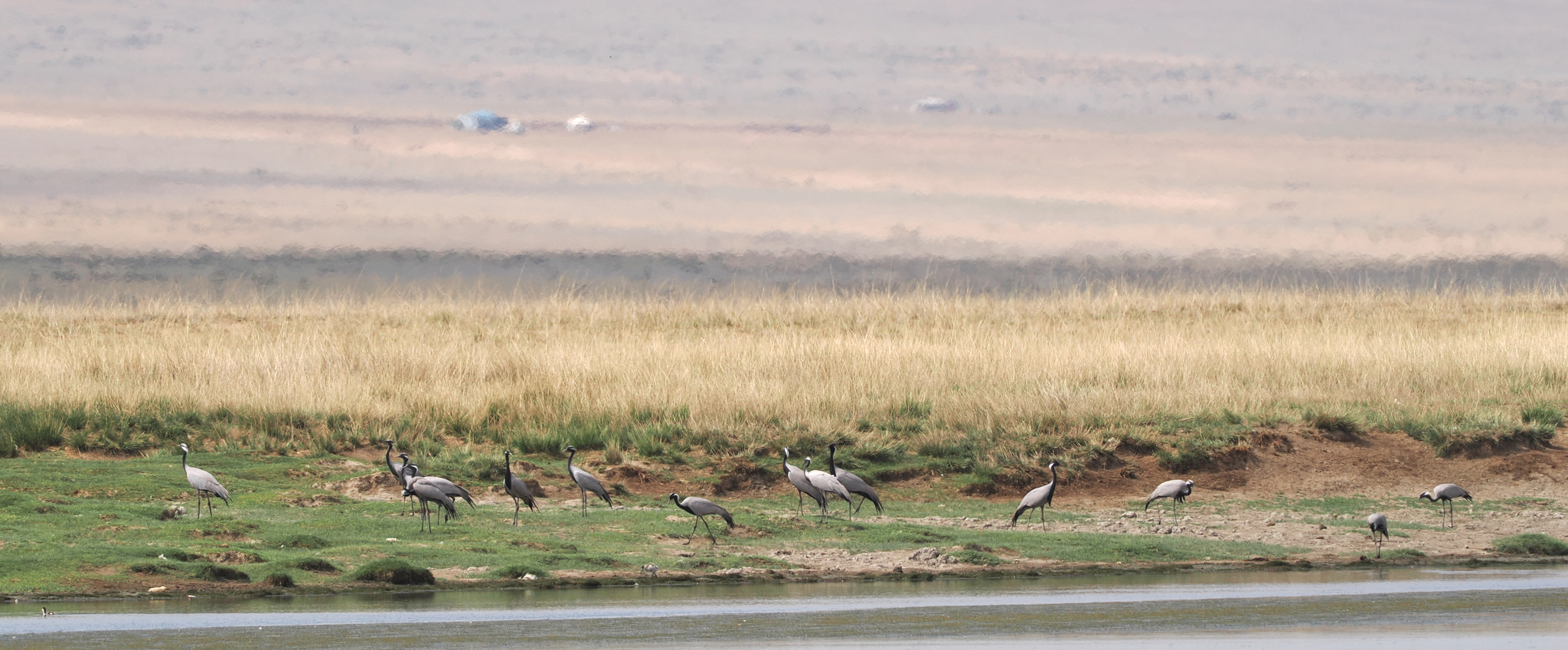
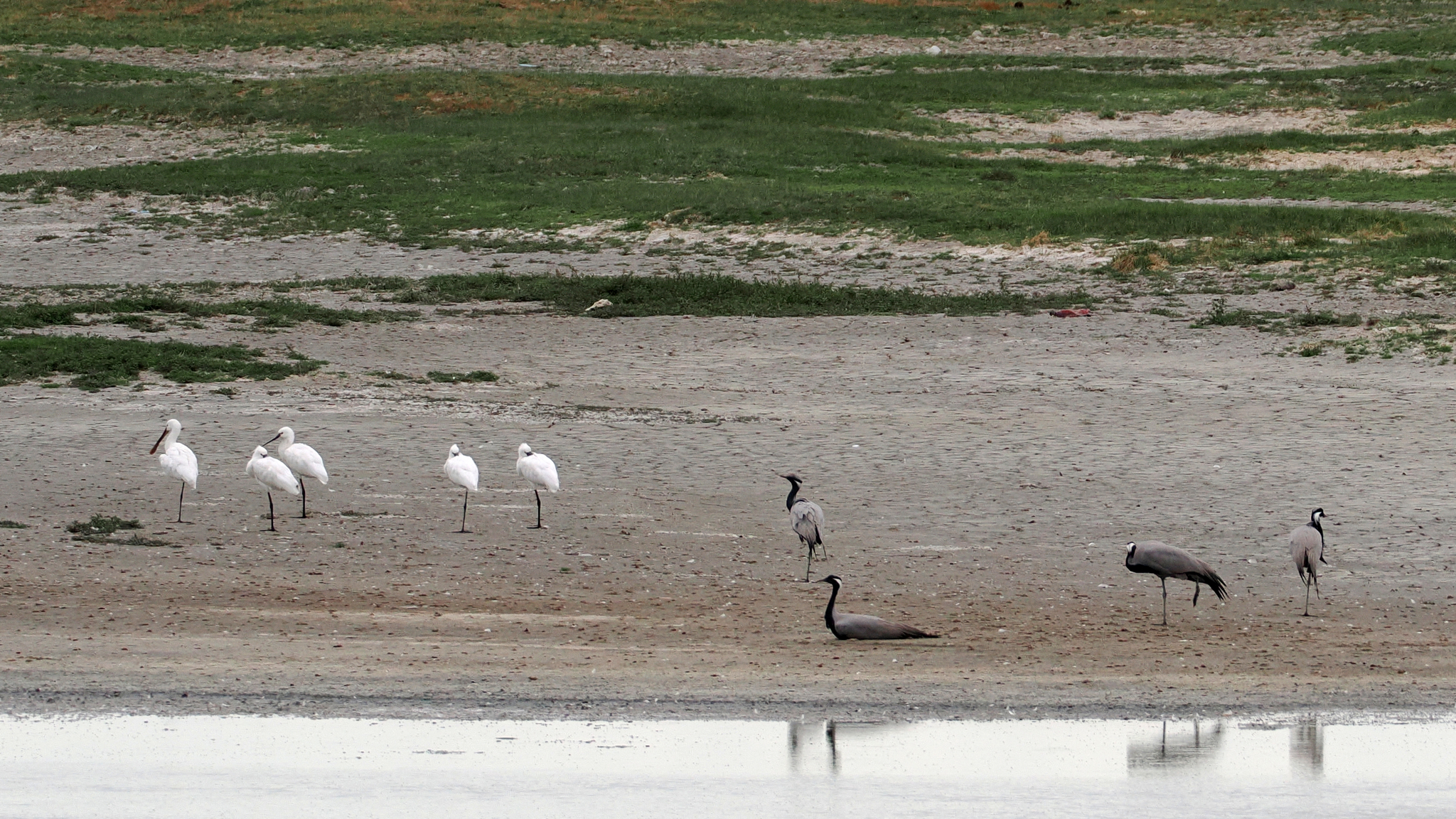
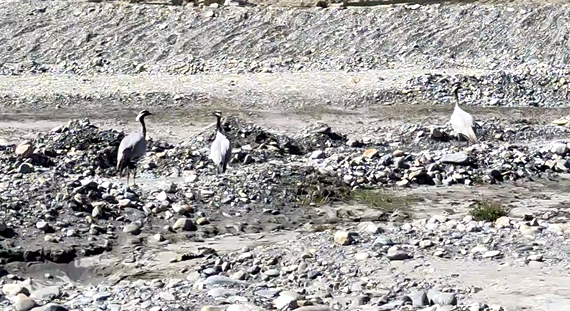
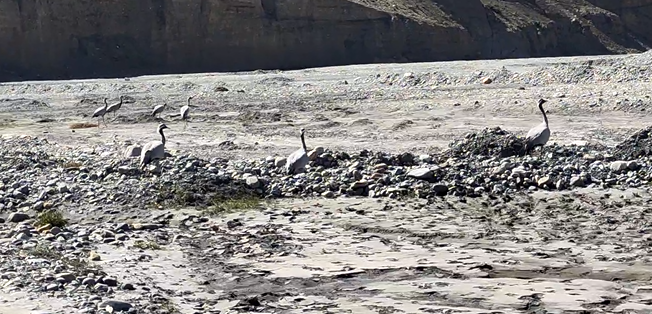
Demoiselle Crane
Grus virgo · 蓑羽鹤
Introduction
A species of crane in the genus Grus, found in central Eurasia from the Black Sea to Mongolia and Northeast China. It is the smallest crane species and is migratory, with western populations wintering in Africa and eastern populations in the Indian subcontinent. The species is monospecific with no recognized subspecies.
Description
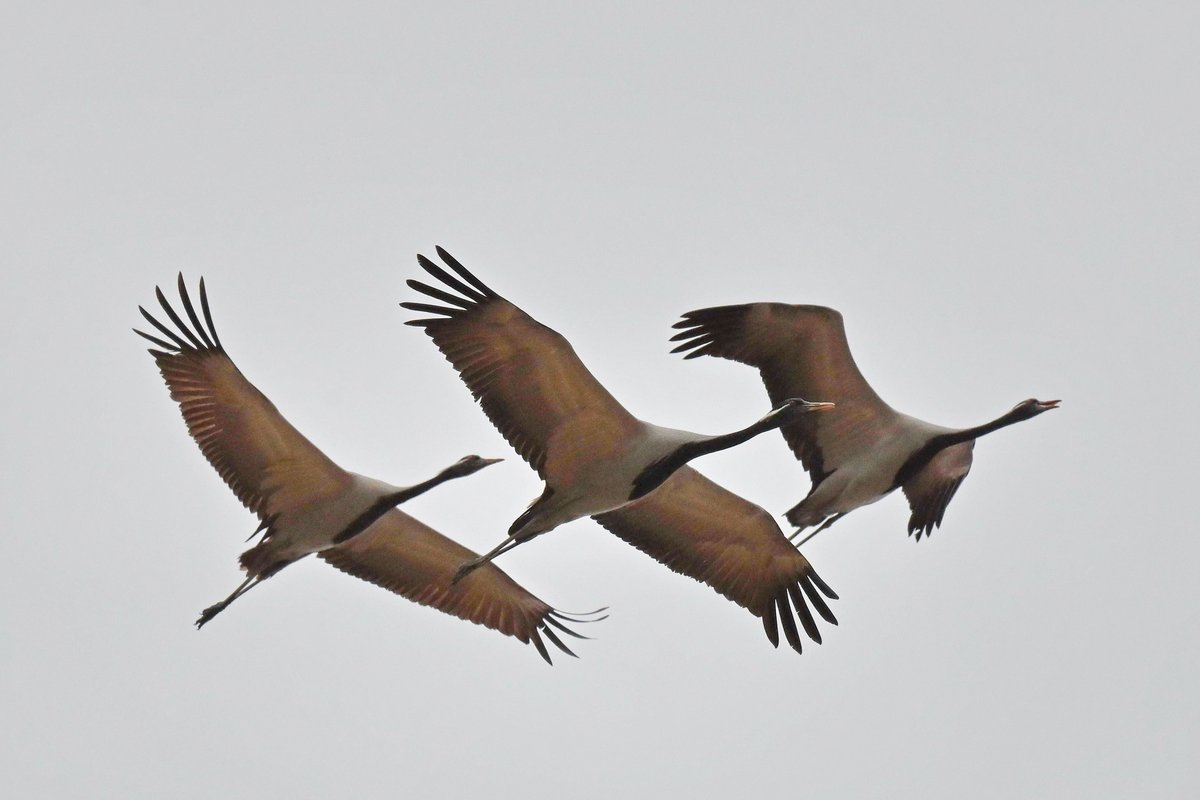
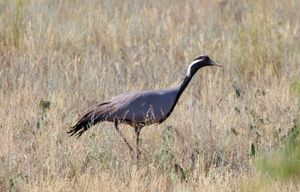
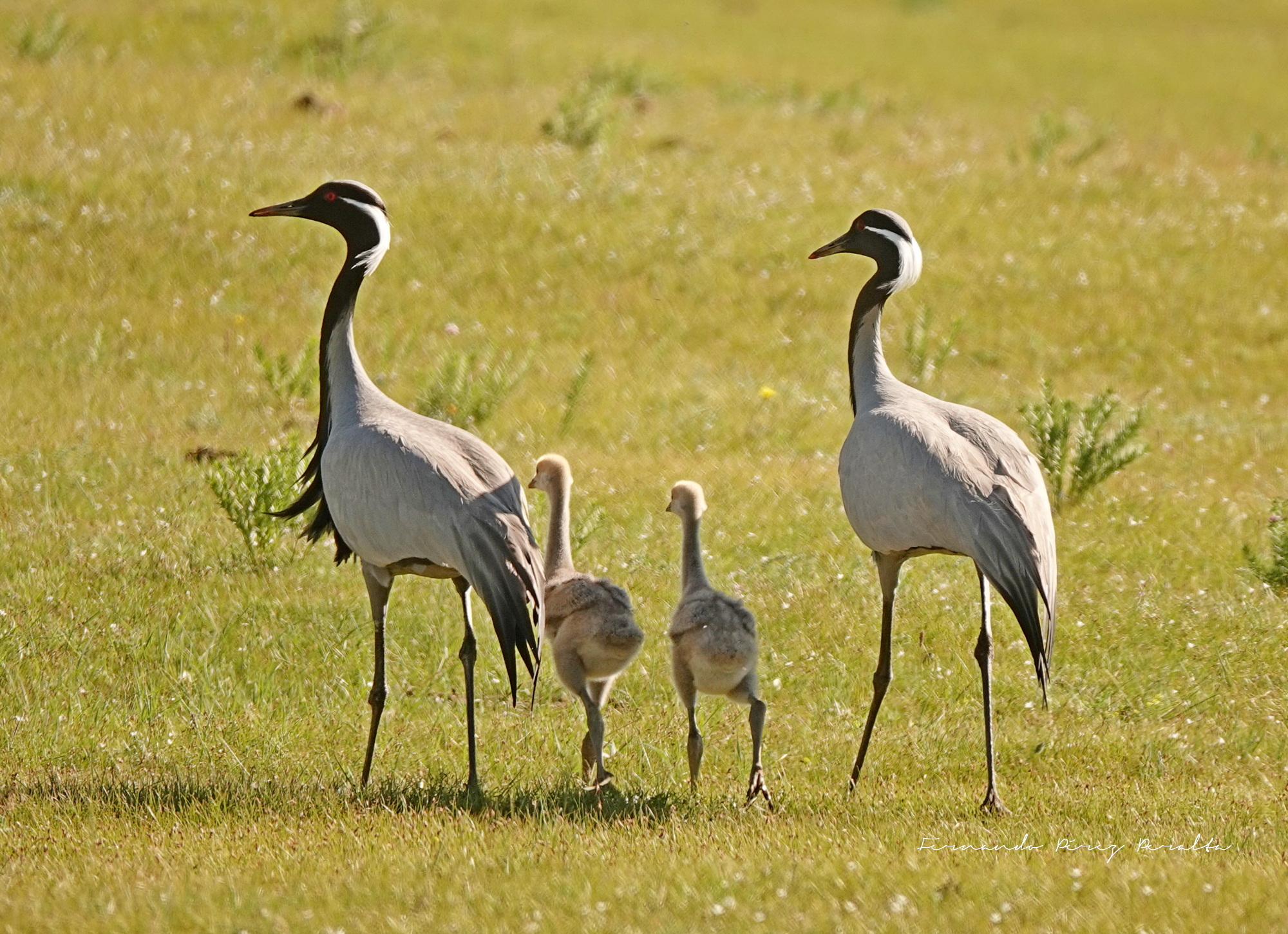
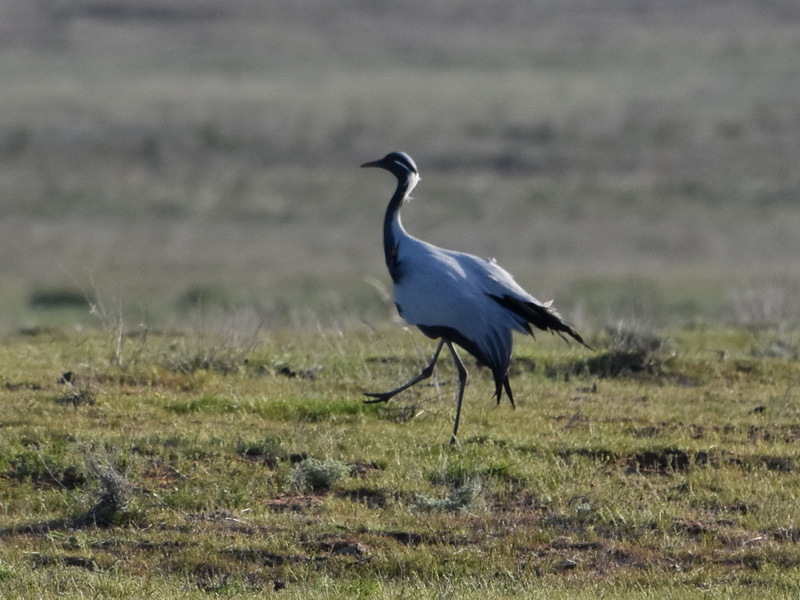
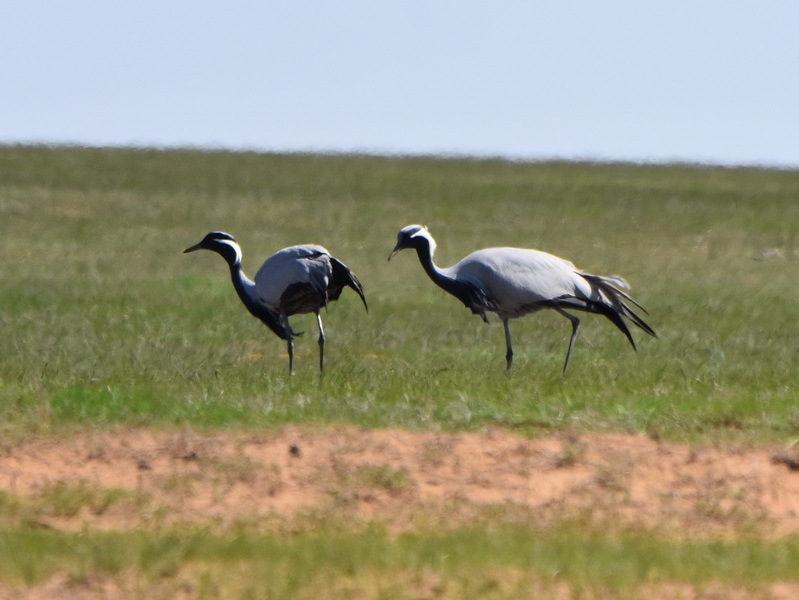
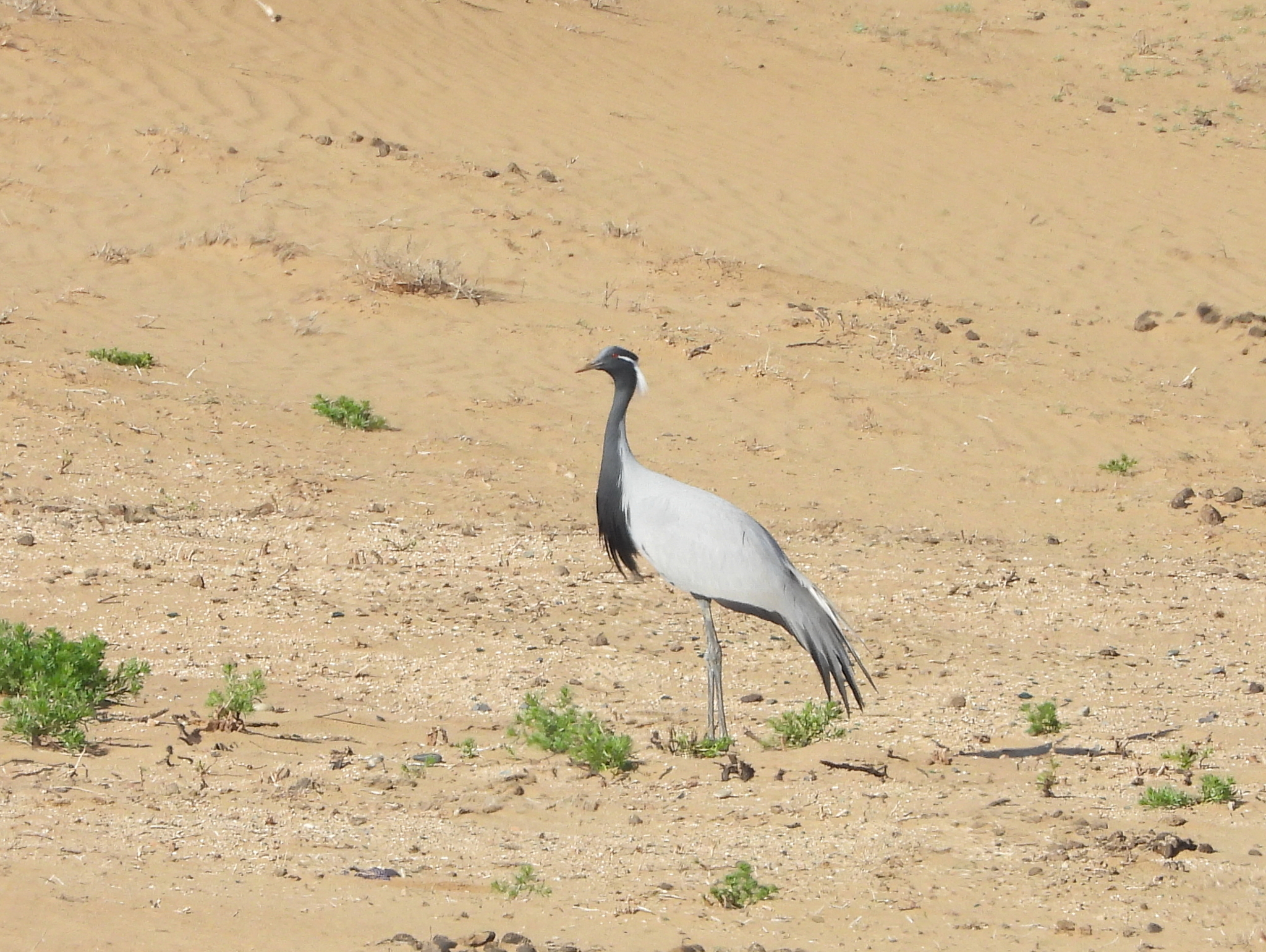
The smallest crane species, measuring 85–100 cm (33.5–39.5 in) in length, 76 cm (30 in) in height, with a wingspan of 155–180 cm (61–71 in). It weighs 2–3 kg (4.4–6.6 lb). Plumage features a long white neck stripe and black foreneck feathers extending down over the chest in a plume. Chicks are pale brown above and greyish white below.
Identification
Slightly smaller than the common crane with similar plumage but distinguished by a long white neck stripe and black plume on the chest. The call is a loud trumpeting sound, higher-pitched than that of the common crane. Display dances are described as more balletic with less leaping compared to the common crane.
Distribution & Habitat
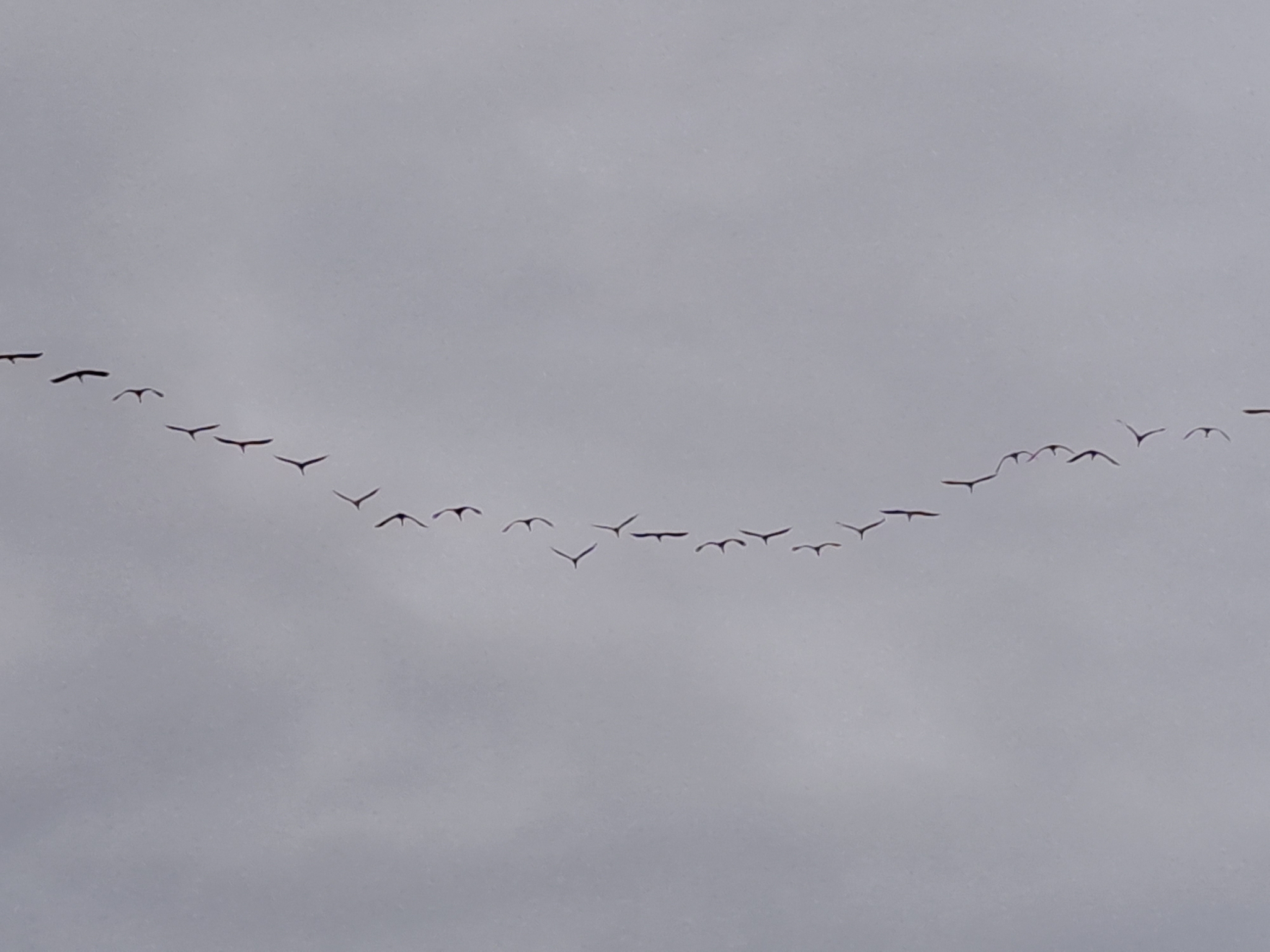
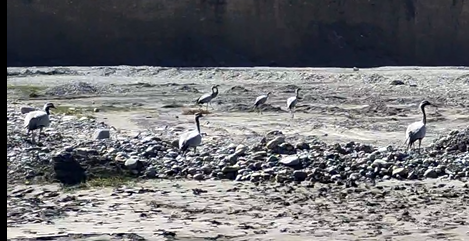
Breeds in central Eurasia from the Black Sea east to Mongolia and northeast China in open habitats with sparse vegetation near water. Migrates to the Sahel region of Africa (Lake Chad to southern Ethiopia) or the western Indian subcontinent for winter. Former populations in Turkey and the Atlas Mountains are now extinct. In India, it forms large flocks on agricultural land and roosts in shallow open water.
Behavior & Ecology
Breeding occurs between April and May with a clutch of two eggs laid at daily intervals on bare ground or open grass. Incubation lasts 27–29 days, performed mainly by the female but assisted by the male. Chicks are cared for by both parents and fledge in 55–65 days. Sexual maturity is reached at two years of age.
Culture
Known as koonj or kurjan in North India, featuring prominently in regional literature and poetry. Beautiful women are compared to the bird for its graceful shape, and it symbolizes those undertaking hazardous journeys. In Hindu tradition, the first human-composed verse in the Ramayana was inspired by a hunter killing a mating pair. Its migration formation influenced ancient Indian infantry tactics described in the Mahabharata.
Source: Wikipedia · CC BY-SA 3.0
Taxonomy
- Order
- Gruiformes
- Family
- Gruidae
- Genus
- Grus
Taxonomy Changes
Anthropoides virgo → Grus virgo
Genus transfer — GBIF Backbone Taxonomy uses the former name; AviList 2025 uses the current name.
Distribution
breeds Palearctic; winters in northeastern Africa and southern Asia
Data Sources
Species description from Wikipedia, licensed under CC BY-SA 3.0.
Bird images and sounds sourced from GBIF, contributed by citizen scientists worldwide under Creative Commons licenses.
Taxonomy data from AviList 2025.