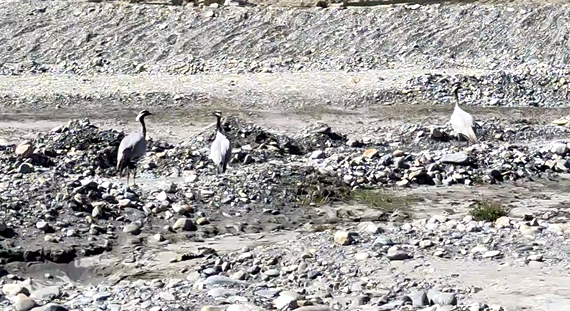
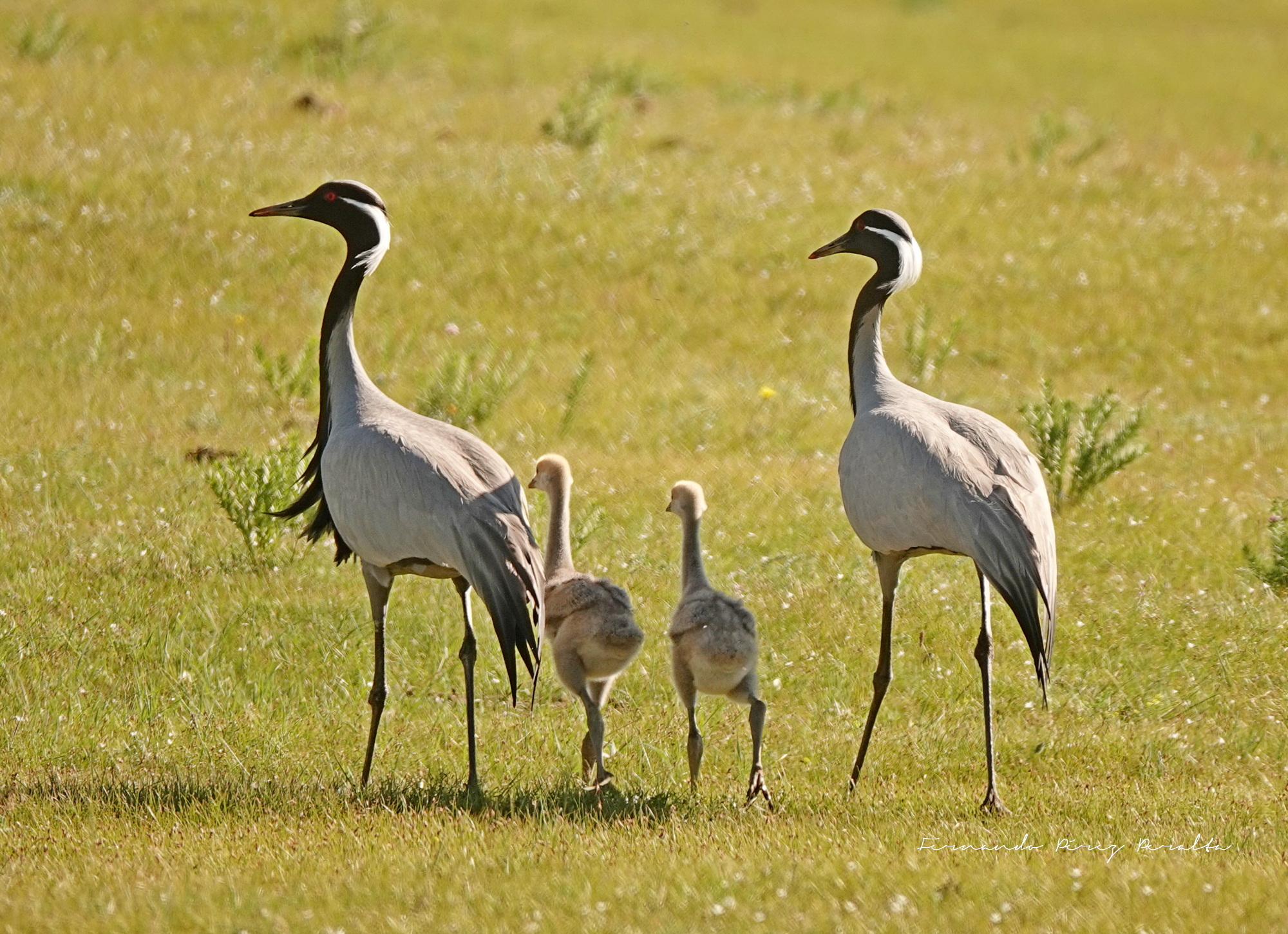
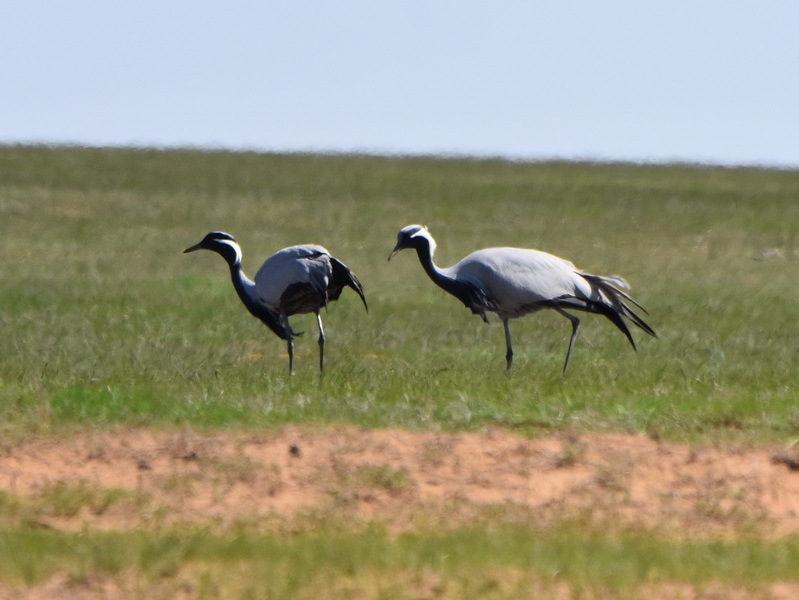
Demoiselle Crane
Grus virgo
蓑羽鹤
Introduction
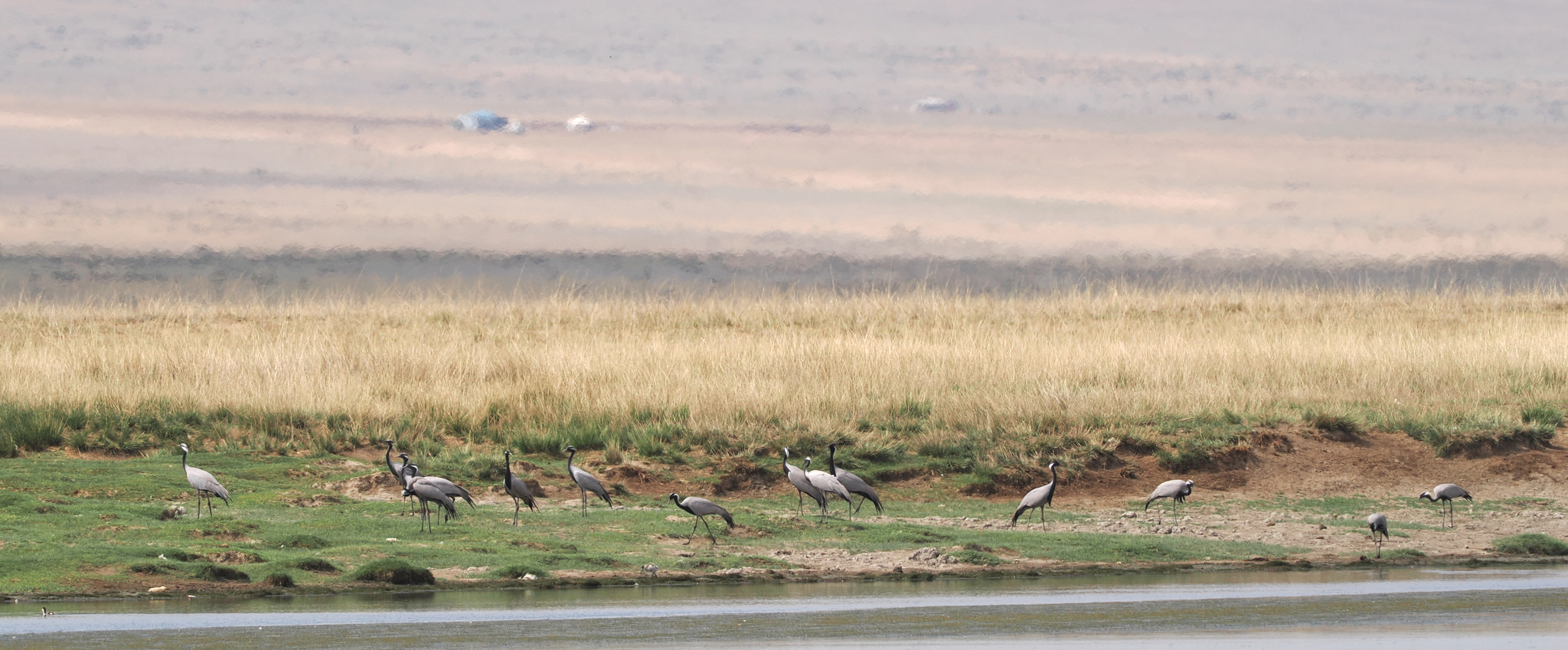
A crane species (Grus virgo) in the family Gruidae. Monotypic genus, no subspecies recognized. Range extends across central Eurosiberia from the Black Sea east to Mongolia and northeast China, with a small breeding population in Turkey. Smallest crane species. Migratory: western Eurasian populations winter in Africa (Sahel region from Lake Chad to southern Ethiopia), while Asian populations winter in the Indian subcontinent. Breeds in open habitats with sparse vegetation near water. Wintering birds gather in large flocks on agricultural land and roost in shallow open water.
Description
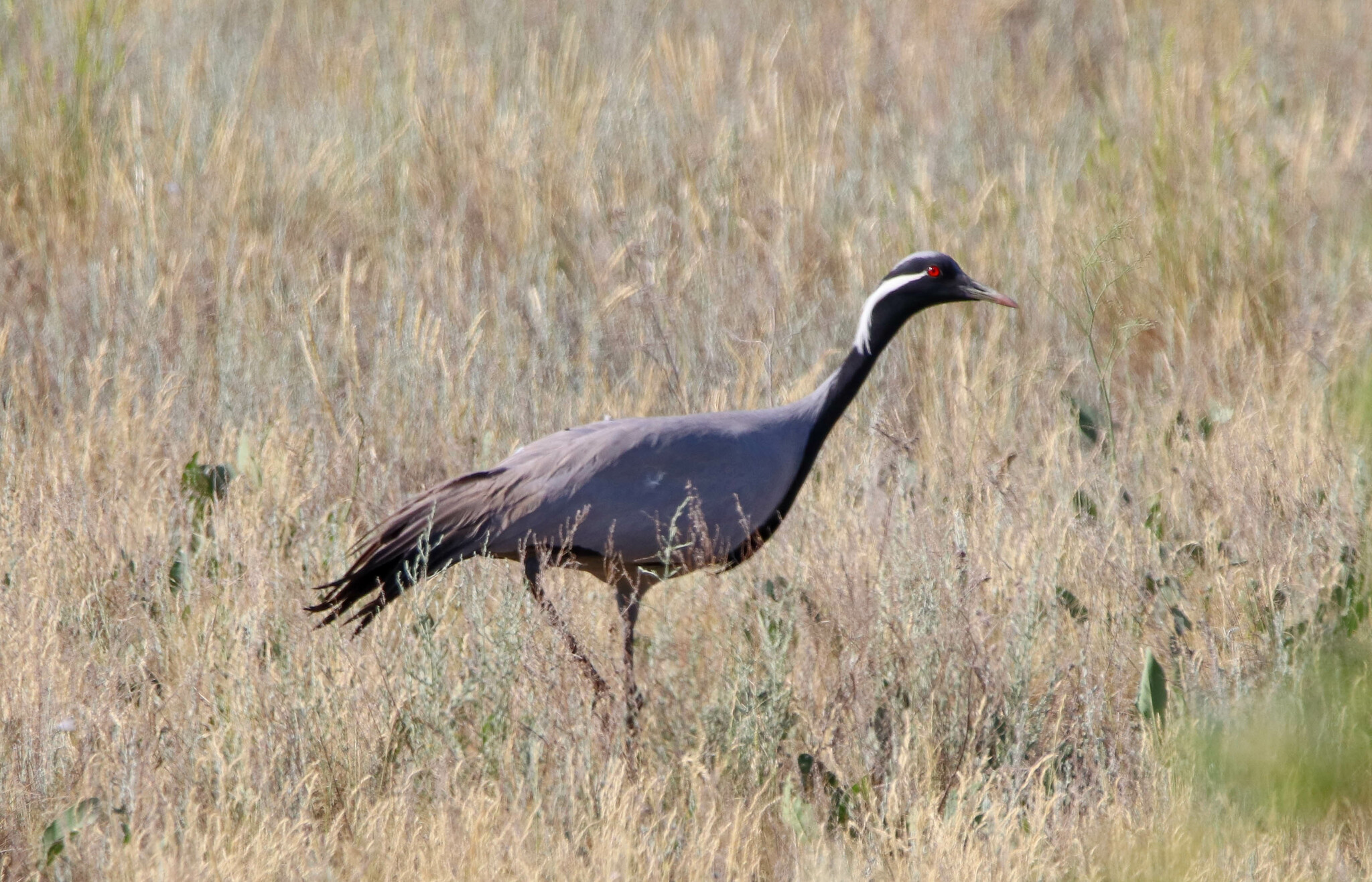
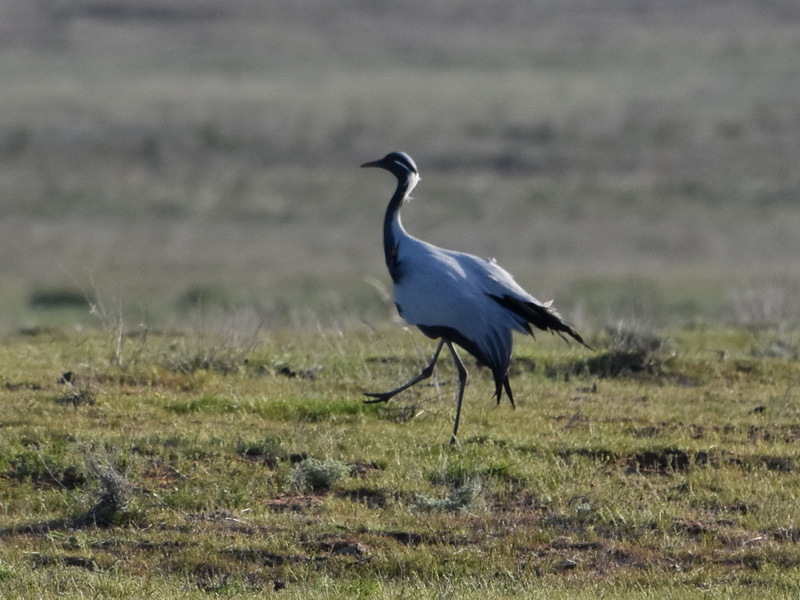
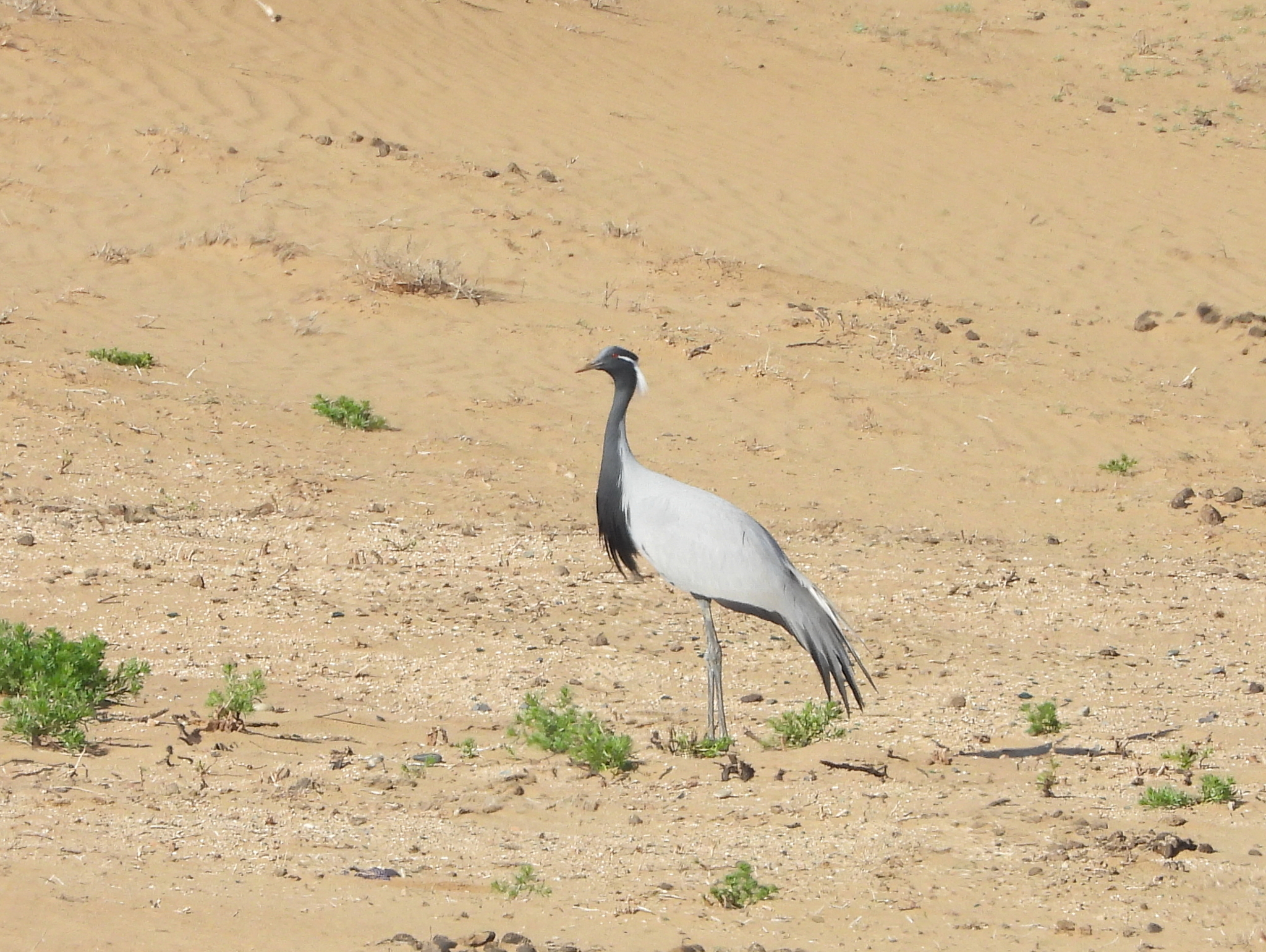
Length 85-100 cm (33.5-39.5 in), height 76 cm (30 in), wingspan 155-180 cm (61-71 in), weight 2-3 kg (4.4-6.6 lb). Slightly smaller than common crane with similar plumage. Distinctive long white neck stripe. Black plumage on foreneck extends down over chest in an elegant plume. Loud trumpeting call, higher-pitched than common crane. Dancing display is more balletic with less leaping compared to other cranes.
Identification
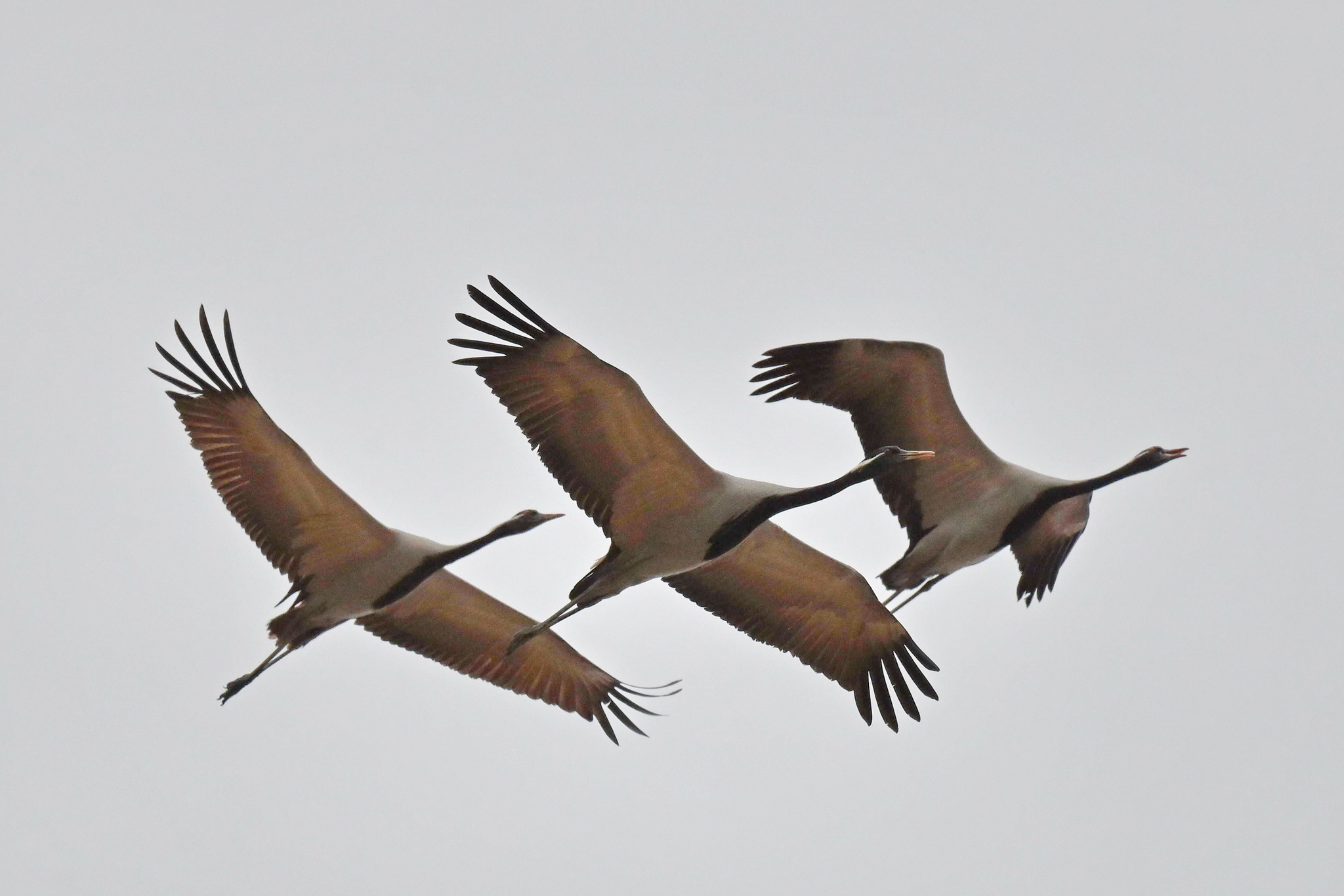
Smallest crane species. Separated from common crane by smaller size and distinctive white neck stripe. The black foreneck plume extending over the chest is a key识别 mark. Higher-pitched trumpeting call distinguishes it vocally from common crane. In flight, the all-dark wingtips and white secondary feathers are visible. The dancing display is more graceful and less athletic than common crane.
Distribution & Habitat
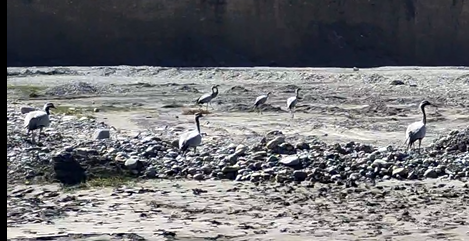
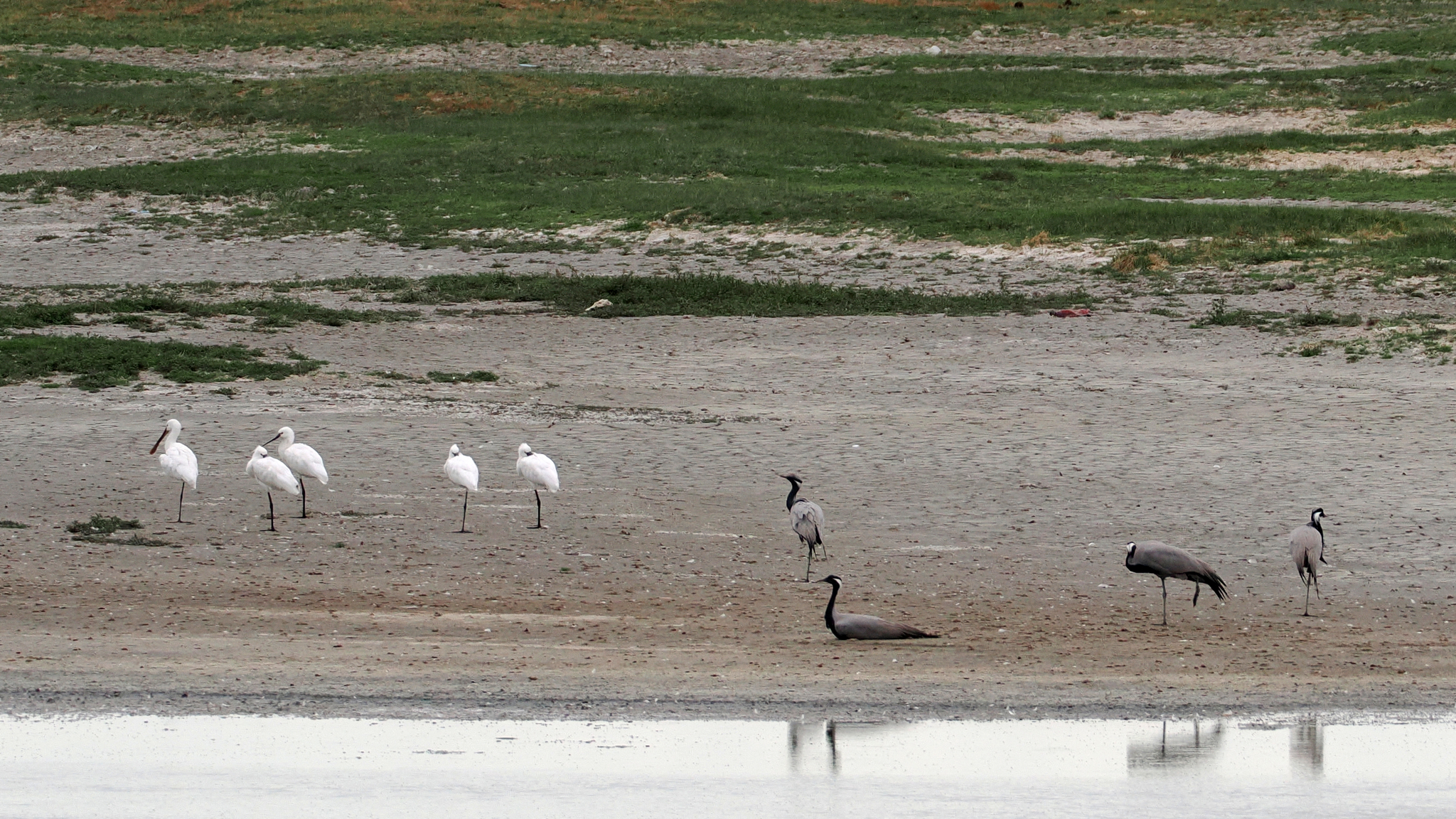
Breeds across central Eurosiberia from Black Sea east to Mongolia and northeast China. Inhabits open habitats with sparse vegetation, usually near water. Migratory: western populations winter in Africa's Sahel region (Lake Chad to southern Ethiopia); Asian populations winter in western Indian subcontinent. Former populations in Turkey and Atlas Mountains of northwest Africa are now extinct. On Indian wintering grounds, forms large flocks on agricultural land, roosting nightly in shallow open water.
Behavior & Ecology
Breeds April-May. Nest placed on open grass or bare ground near water. Clutch of two eggs laid at daily intervals; incubation 27-29 days primarily by female. Chicks pale brown above, greyish-white below, cared for by both parents. Fledging period 55-65 days. First breeds at two years old. Gregarious outside breeding season, forming large winter flocks. Vocalizations include loud, high-pitched trumpeting calls.
Conservation
No IUCN assessment data provided in article. Former populations in Turkey and Atlas Mountains of northwest Africa are now extinct. Migration routes and wintering grounds face pressure from habitat loss and agricultural intensification.
Culture
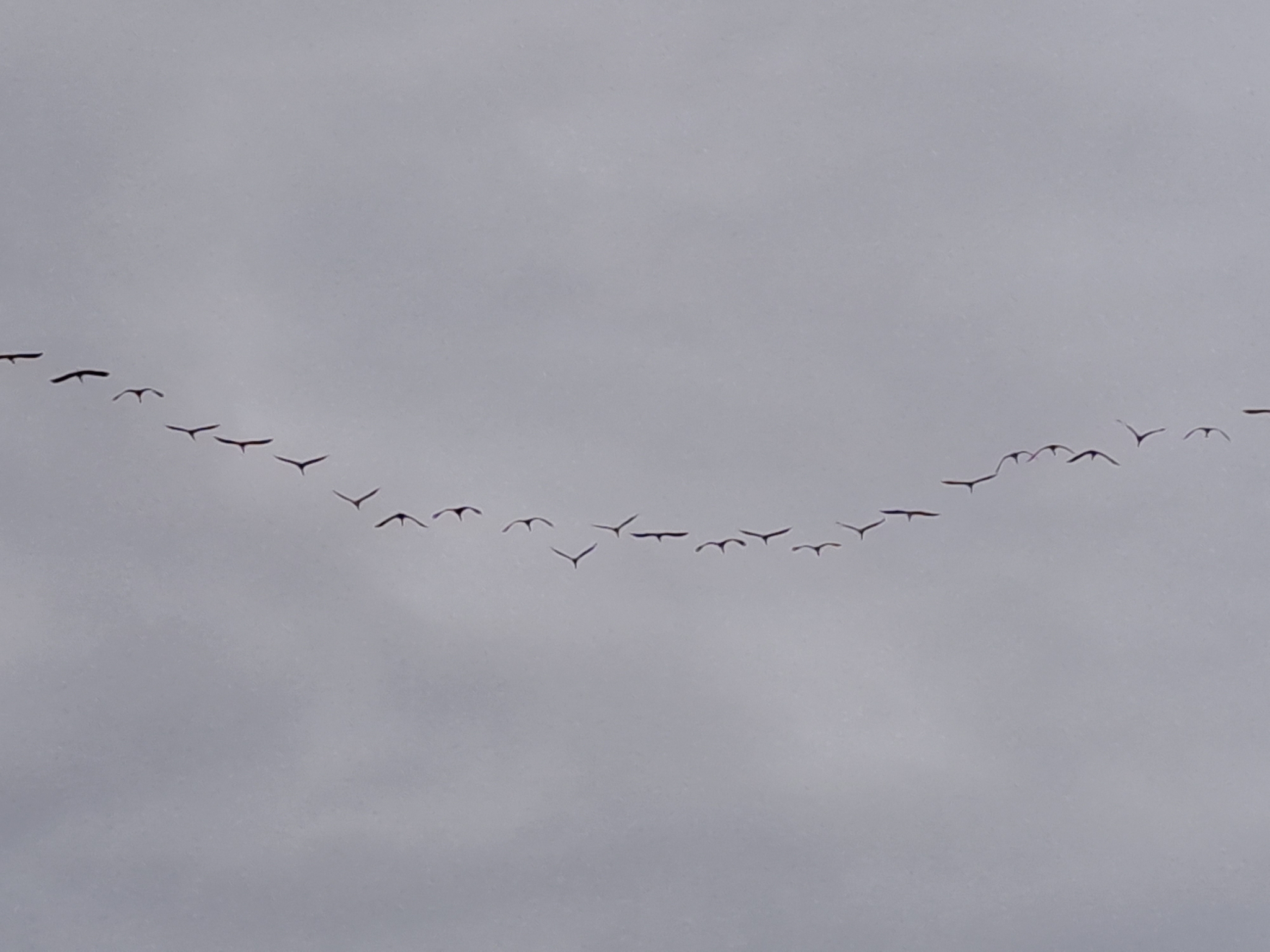
Known as koonj or kurjan in North India. Name derived from Sanskrit word krauncha, an Indo-European cognate for crane. Prominent in regional literature, poetry, and idiom; beautiful women compared to koonj for its graceful form. Ancient Valmiki Ramayana legend claims the poet's first verse was inspired by watching a hunter kill a male demoiselle crane, with the mourning female inspiring his curse in verse. This verse is considered the first human-composed meter. Flying formation during migration inspired infantry formations described in Mahabharata's Kurukshetra War.
Source: Wikipedia · CC BY-SA 3.0
Taxonomy
- Order
- Gruiformes
- Family
- Gruidae
- Genus
- Grus
- eBird Code
- demcra1
Distribution
breeds Palearctic; winters in northeastern Africa and southern Asia
Data Sources
Species description from Wikipedia, licensed under CC BY-SA 3.0.
Bird images and sounds sourced from GBIF, contributed by citizen scientists worldwide under Creative Commons licenses.
Taxonomy data from AviList 2025.