Gruiformes / Gruidae / Grus
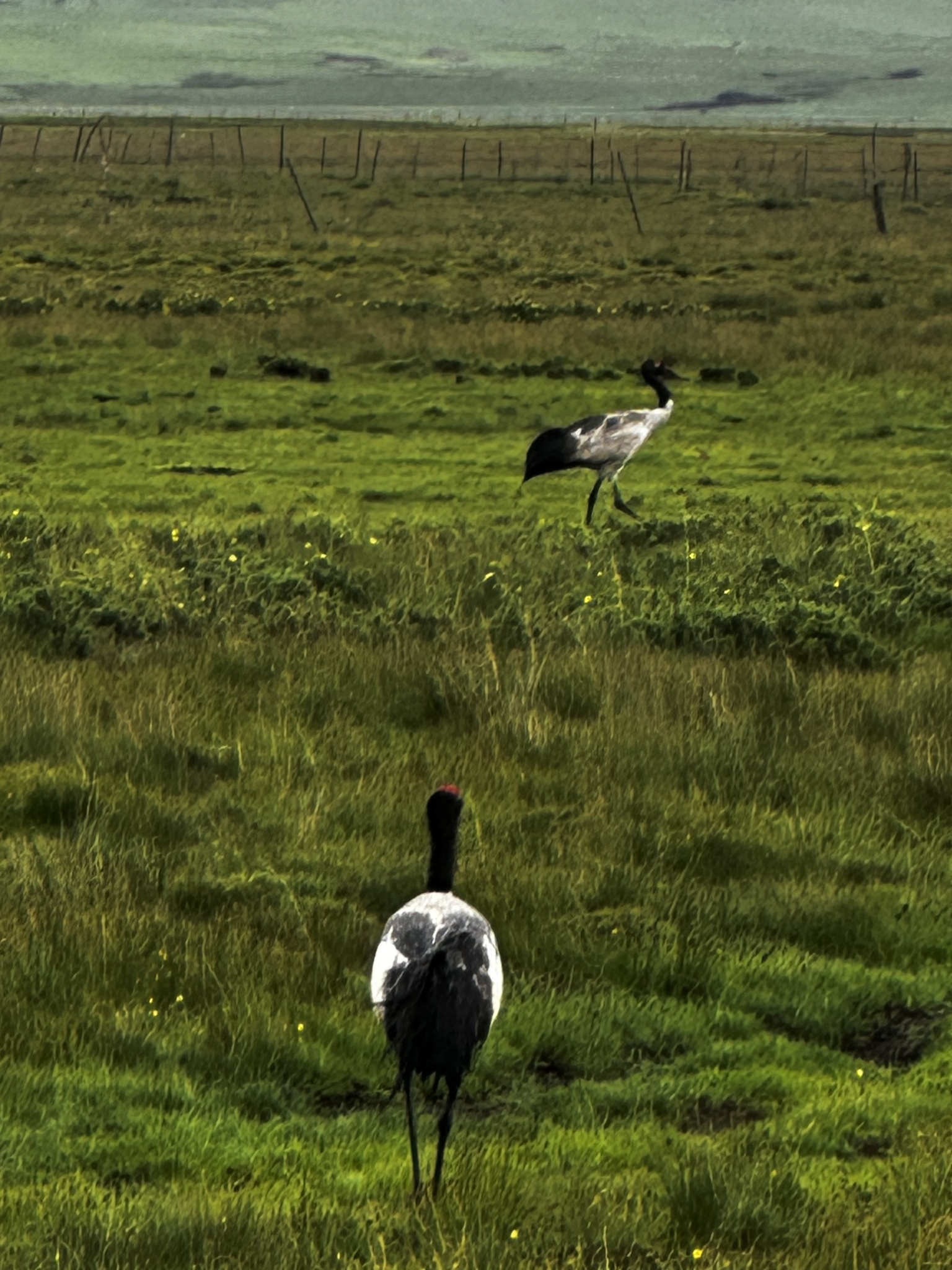
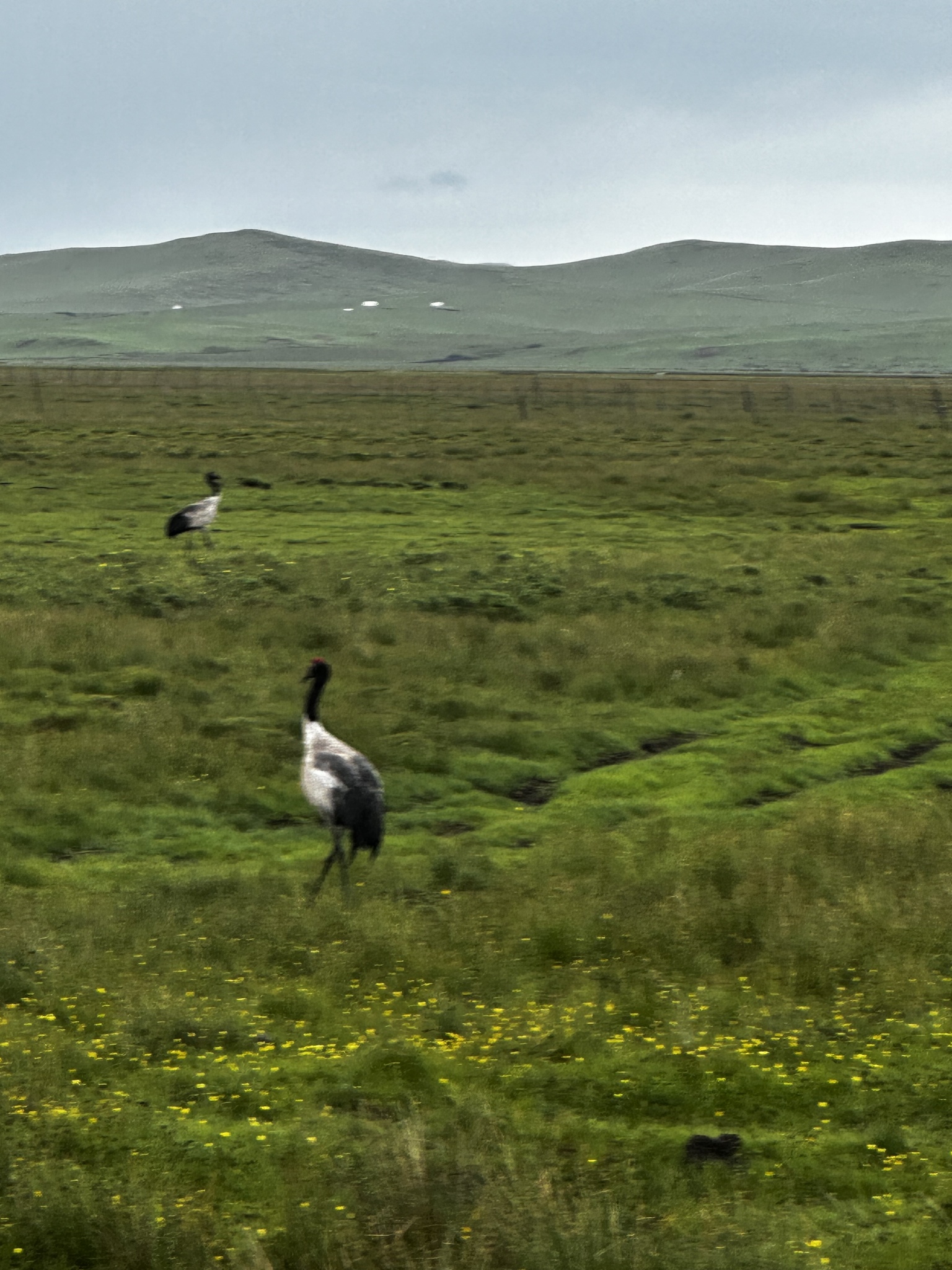
Black-necked Crane
Grus nigricollis · 黑颈鹤
Introduction
Medium-sized crane in Asia breeding on the Tibetan Plateau and remote parts of India and Bhutan. It is 139 cm (55 in) long with a 235 cm (7.71 ft) wingspan and weighs 5.5 kg (12 lb). Distinctive traits include foraging in small groups with a sentinel and forming long-lasting pair bonds. Evaluated as near threatened on the IUCN Red List.
Description
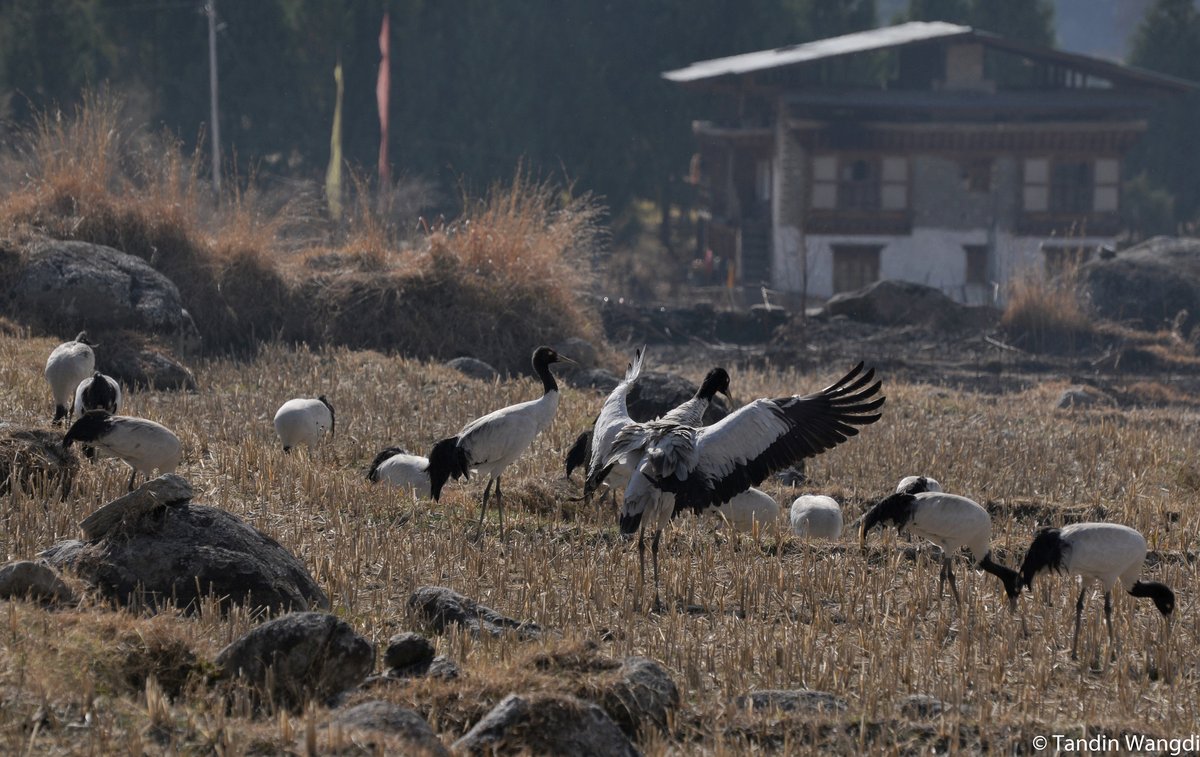
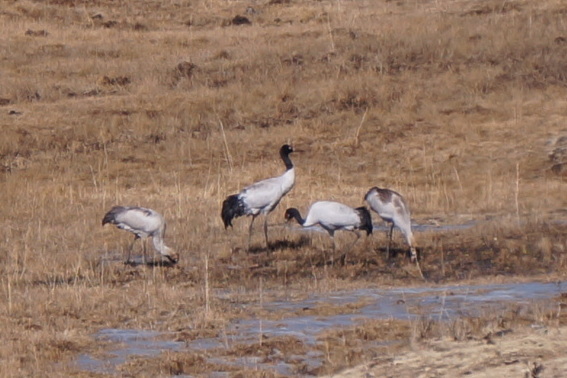
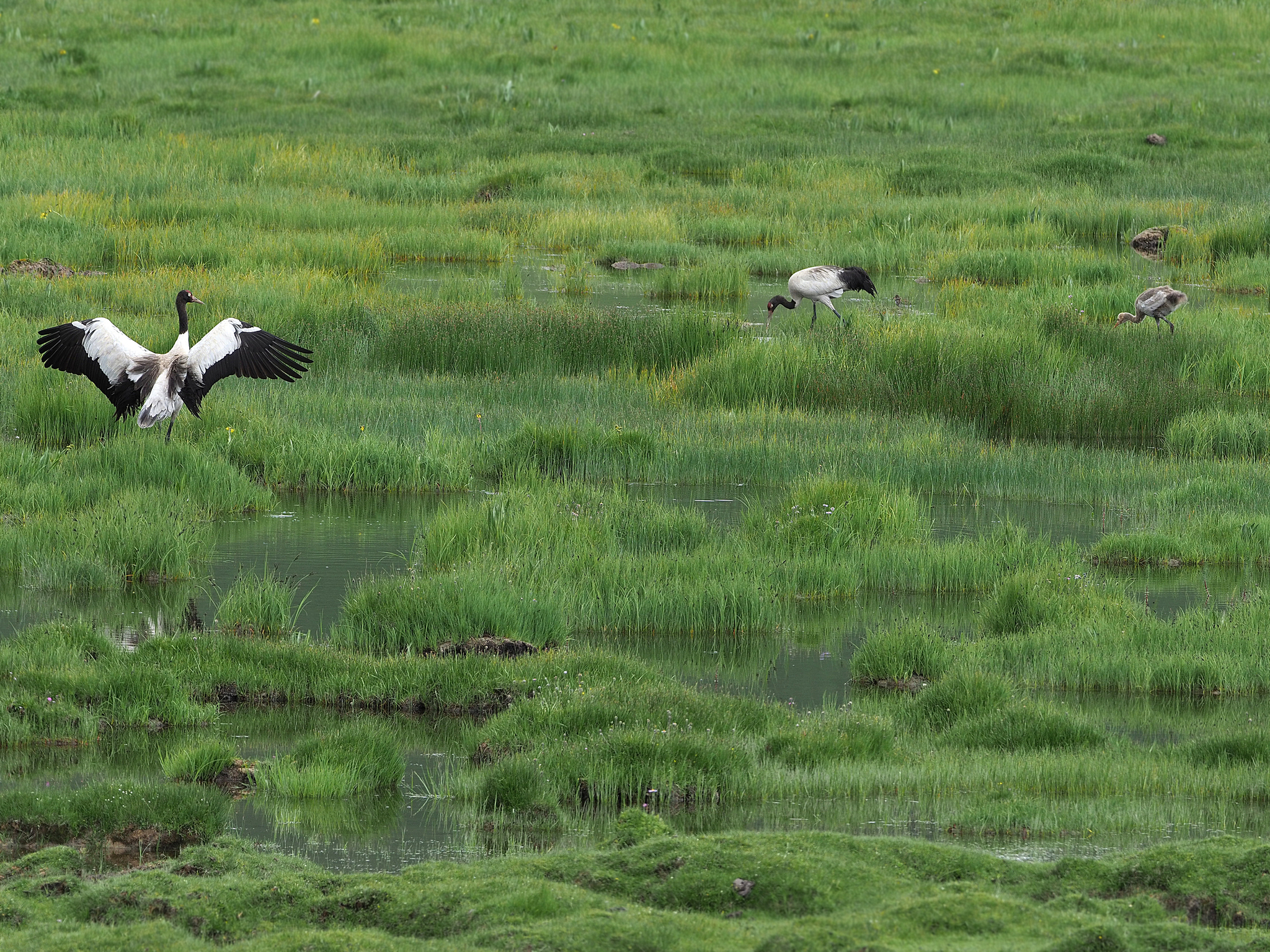
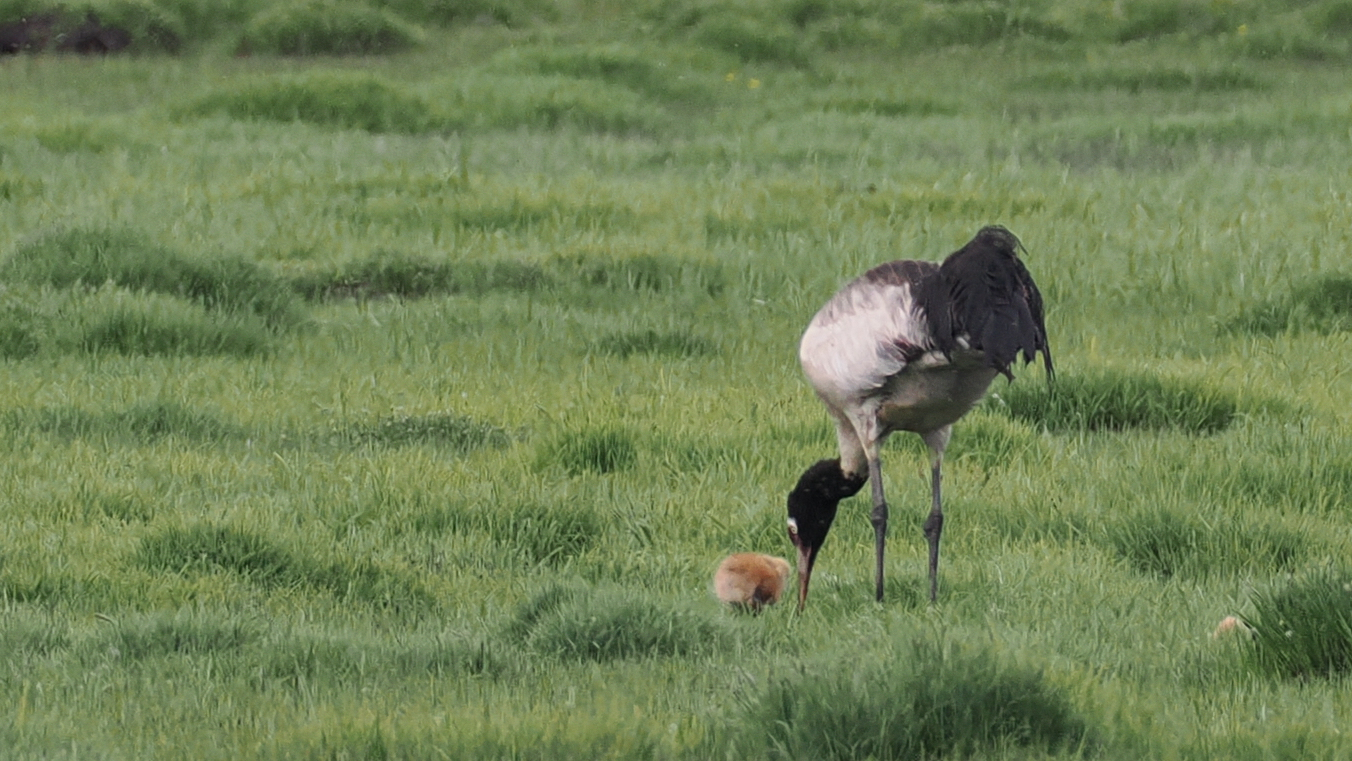
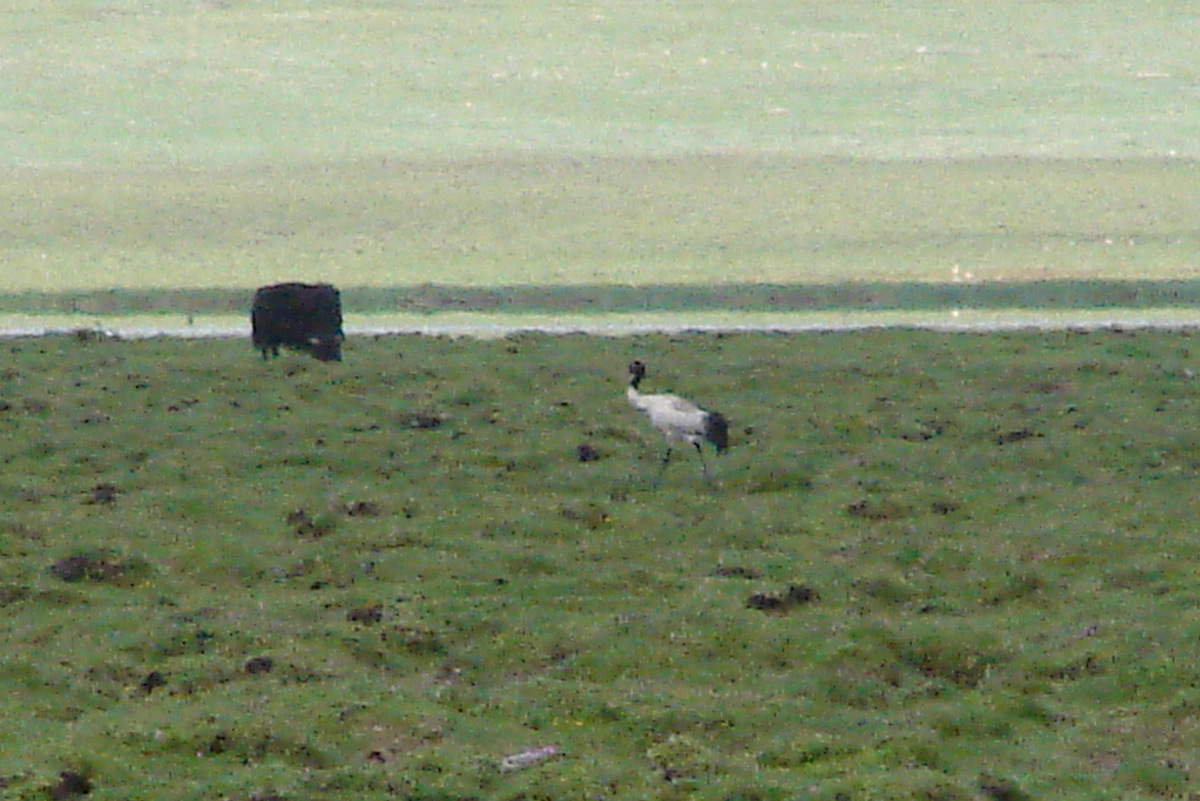
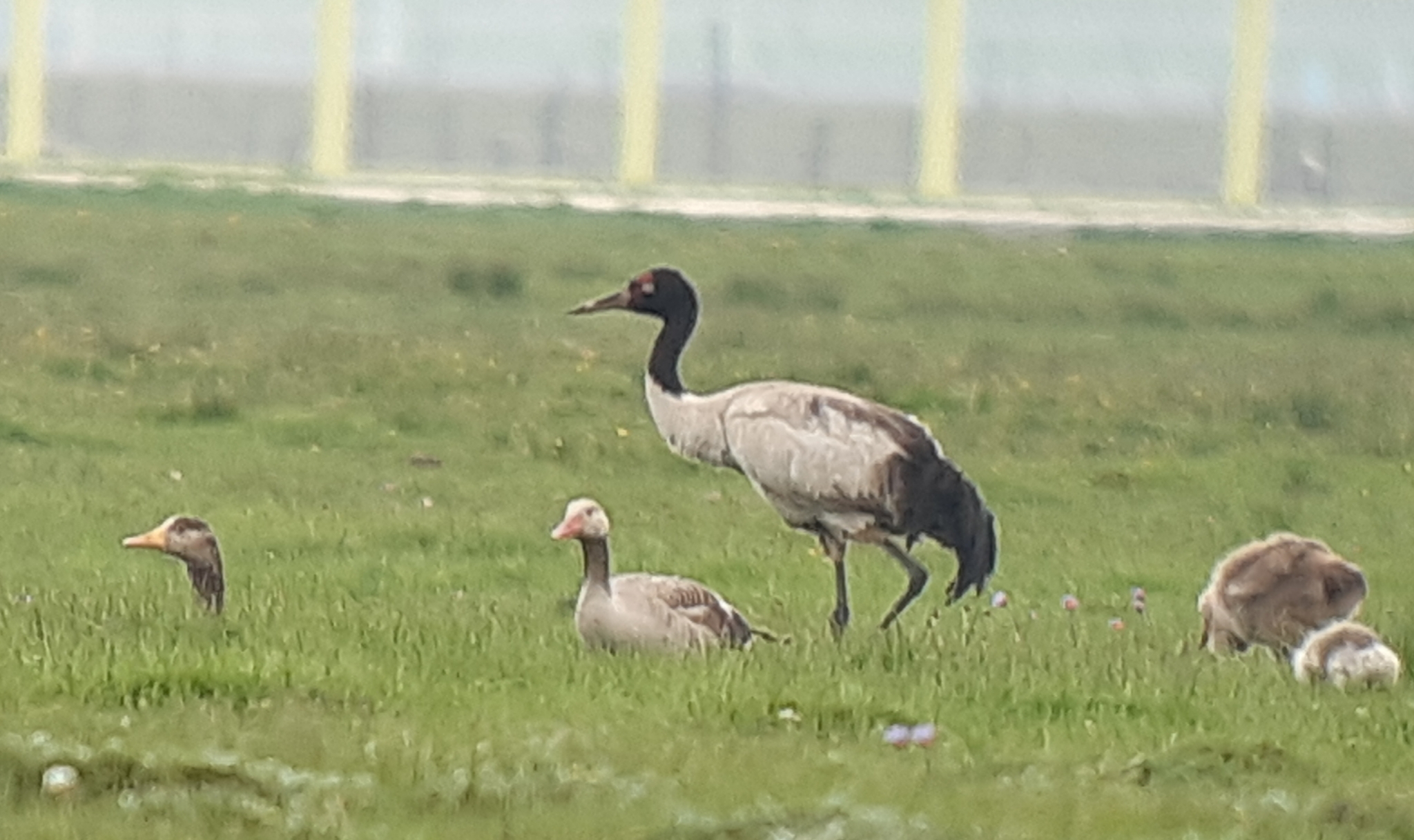
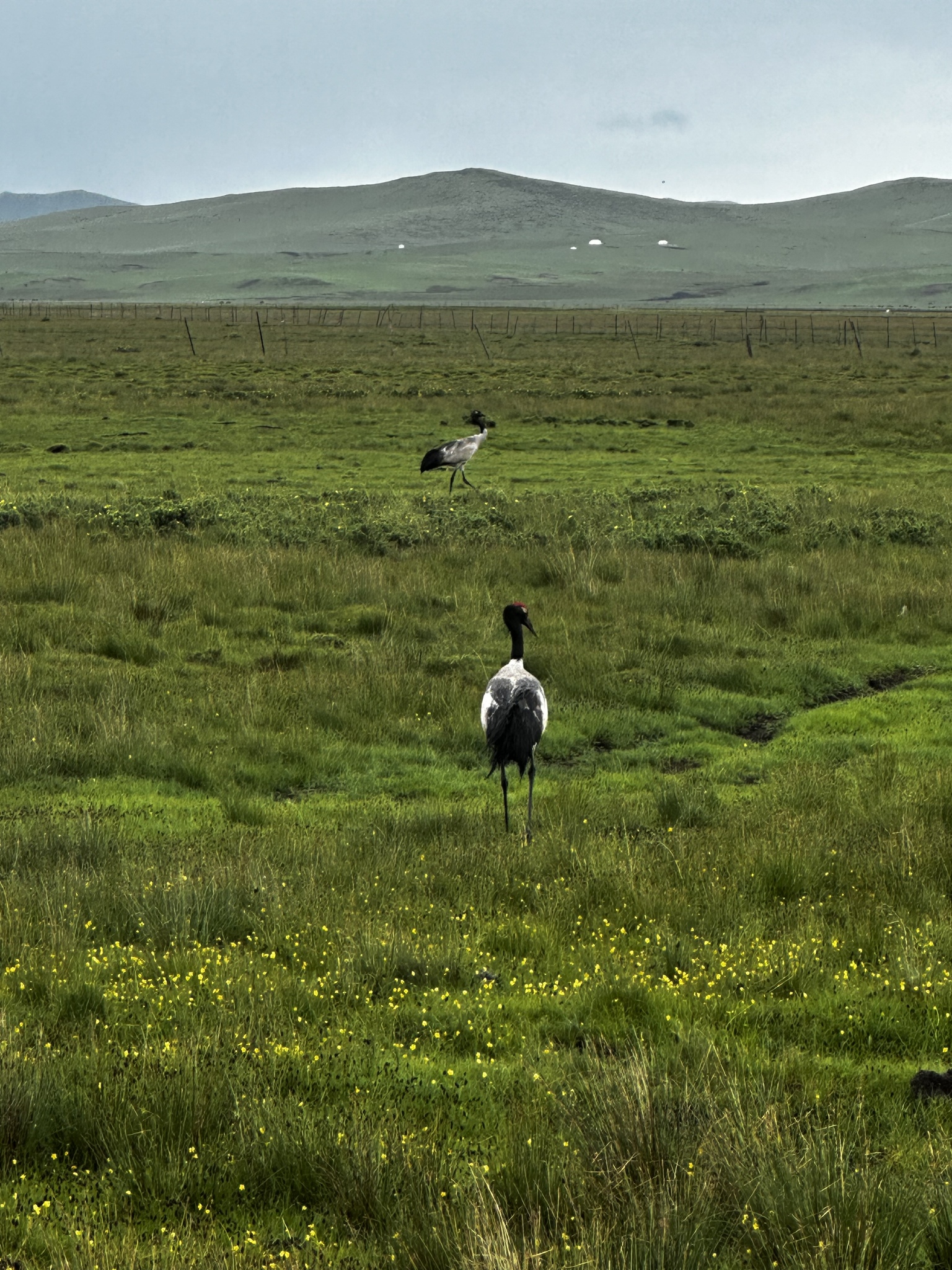
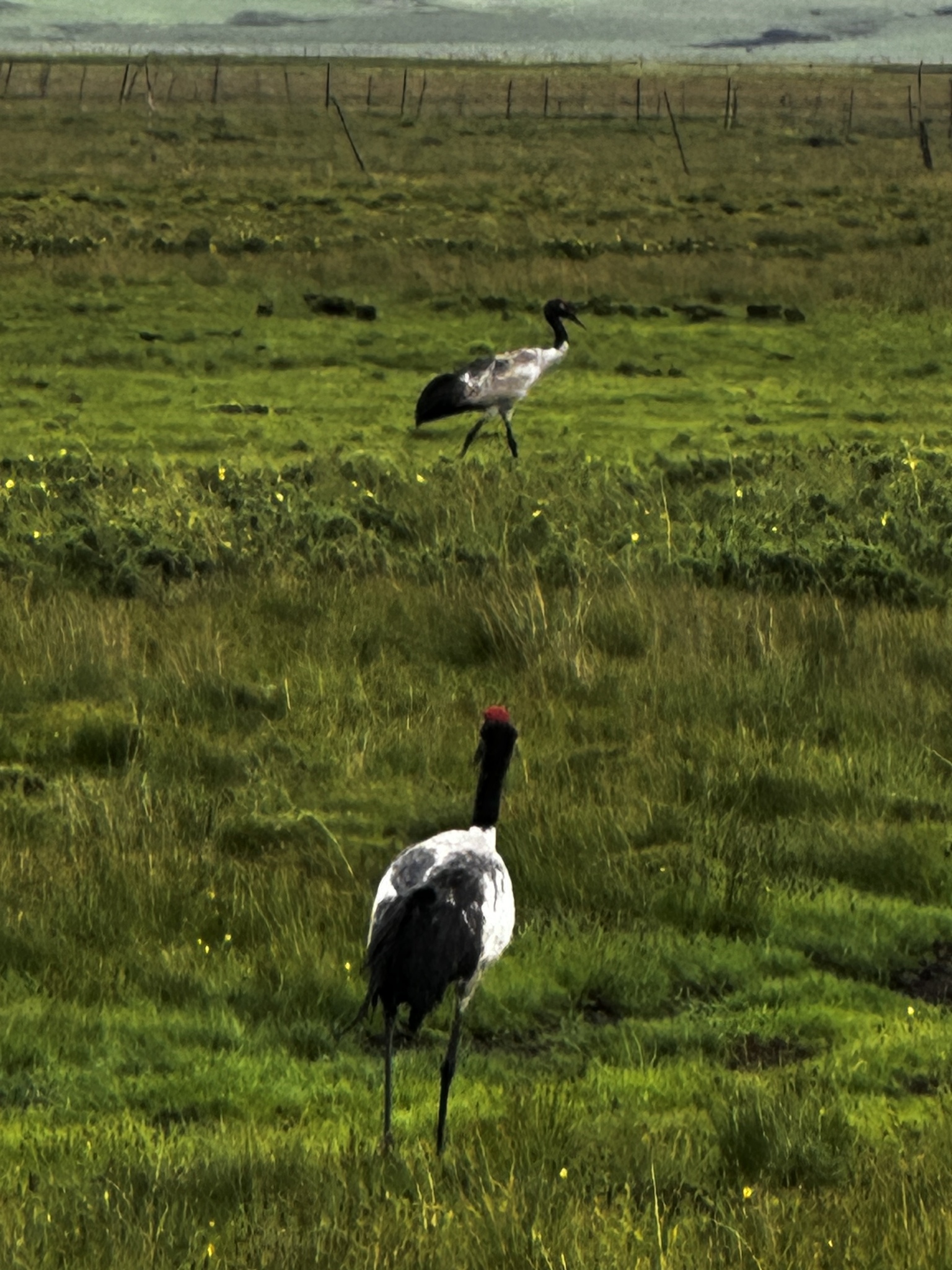
Mostly grey with a black head, black upper neck, and black legs. The lores and crown are naked and dull red. A white patch of feathers is present below and behind the eye. Primaries, secondaries, and tail are black. Both sexes are similar.
Identification
Distinguished from the similar common crane by its black tail, whereas the common crane has a grey tail. Loud trumpeting calls are similar to other cranes. Family members use short, subdued nasal 'kurrr' calls for contact.
Distribution & Habitat
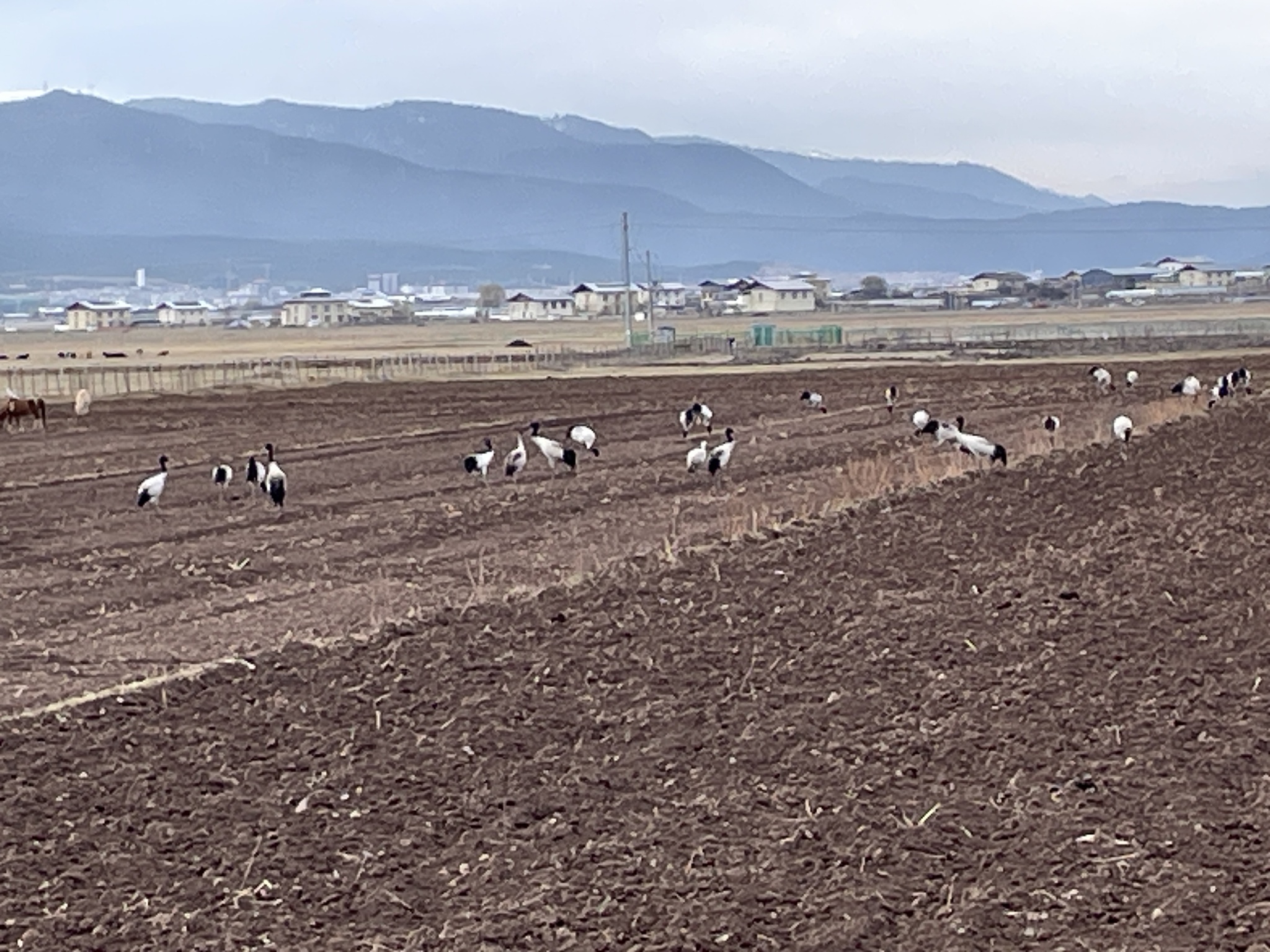
Summers mainly in high-altitude alpine meadows, lakeside and riverine marshes, and river valleys of the Tibetan Plateau. Wintering areas include sheltered valleys in Tibet (Nyanga, Lhasa, Pengbo rivers, Yarlung Tsangpo middle reaches), western Arunachal Pradesh (Sangti and Zemithang valleys), Bhutan, Vietnam, and India. Small populations occur in northern Sikkim; vagrants recorded in Nepal. Important wintering site at Hutoushan Reservoir in Pengbo valley.
Behavior & Ecology
Forages on ground in small groups, often with a sentinel, spending nearly 75% of the day feeding with peaks in early morning and late afternoon. Diet includes sedge tubers, plant roots, earthworms, insects, frogs, small vertebrates, fallen grains (barley, oats, buckwheat), and dug-up potatoes, carrots, and turnips. Adults feed young mainly with fish in Ladakh. Breeding involves territorial defense, dancing displays, and nesting on mud islands in shallow wetlands. One or two eggs laid in May and June. Young accompany parents until able to fly.
Conservation
Evaluated as near threatened on the IUCN Red List and listed on Appendix I of CITES. Estimated population was 10,070–10,970 individuals as of 2013. Threats include habitat modification, drying of lakes, agriculture, hunting, predation by dogs and leopards, collisions with power lines, and disturbance from tourism. Legally protected in China, India, and Bhutan.
Culture
Revered in Buddhist traditions and culturally protected across much of its range. A festival in Bhutan celebrates the bird. Designated as the state bird of the Indian union territory of Ladakh.
Source: Wikipedia · CC BY-SA 3.0
Taxonomy
- Order
- Gruiformes
- Family
- Gruidae
- Genus
- Grus
Distribution
breeds Tibetan plateau; winters to northeastern India and southern China
Vocalizations
Data Sources
Species description from Wikipedia, licensed under CC BY-SA 3.0.
Bird images and sounds sourced from GBIF, contributed by citizen scientists worldwide under Creative Commons licenses.
Taxonomy data from AviList 2025.