Black-necked Crane
Grus nigricollis
黑颈鹤
Introduction
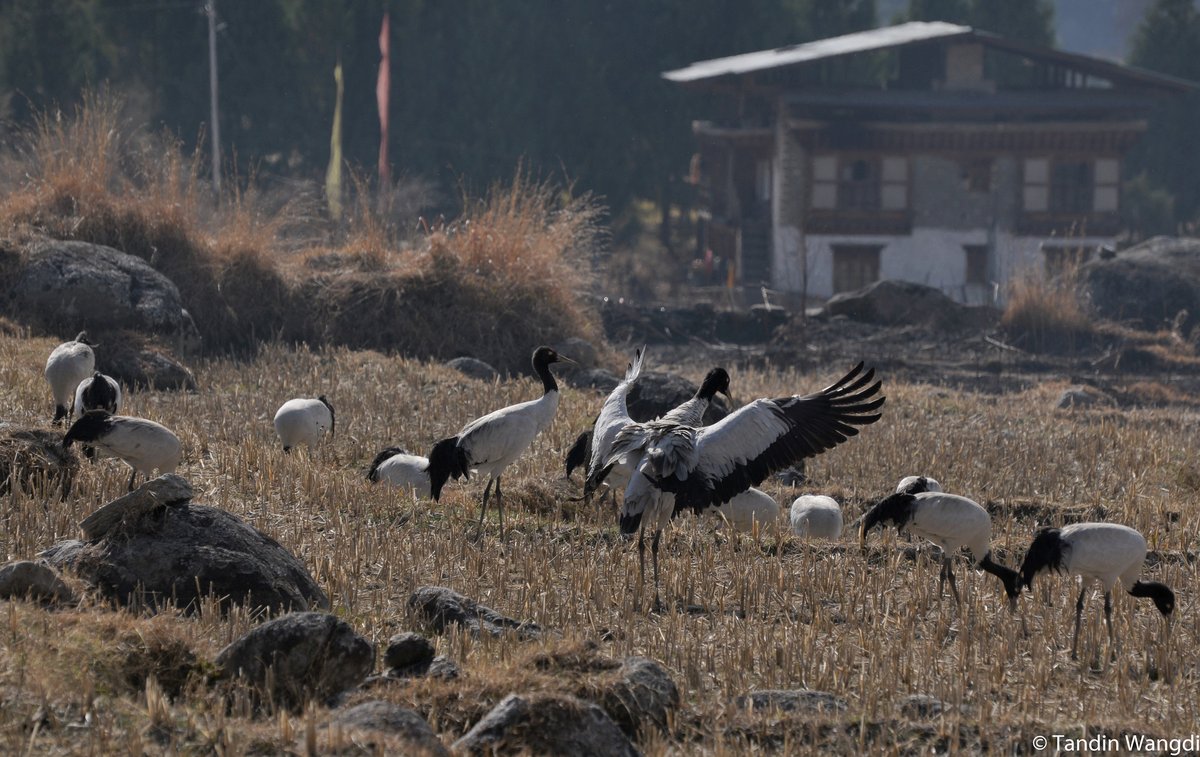
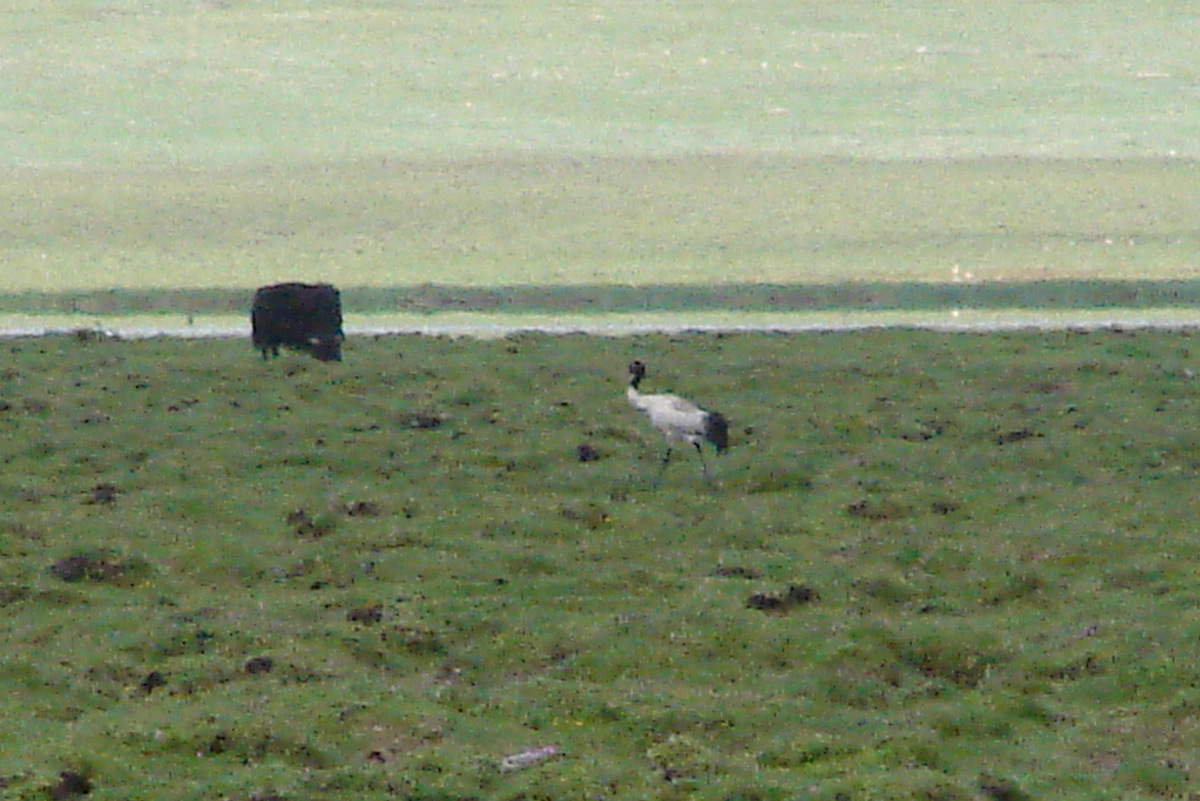
The black-necked crane (Grus nigricollis) is a medium-sized crane species found in Asia. It breeds on the Tibetan Plateau and extends into remote parts of India and Bhutan. Its summer habitat consists of alpine meadows, lakeside and riverine marshes, and river valleys, while wintering occurs in sheltered valleys at lower altitudes. Distinctive features include a black head, red crown patch, black upper neck and legs, and a white patch behind the eye. The species forms seasonal movements between breeding and wintering areas. As of 2013, the global population was estimated at 10,070-10,970 individuals. It is evaluated as Near Threatened on the IUCN Red List and listed on Appendix I of CITES.
Description
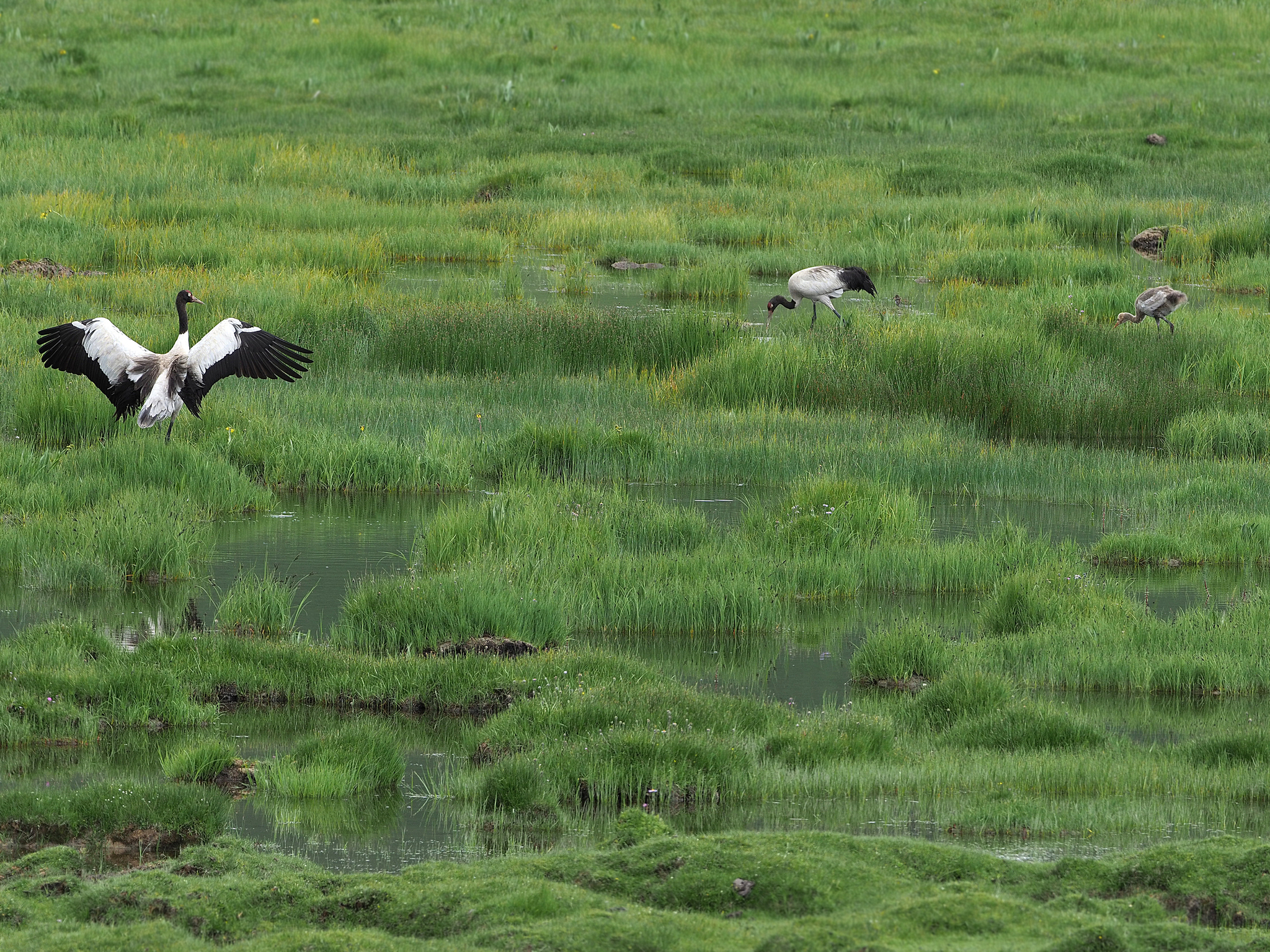
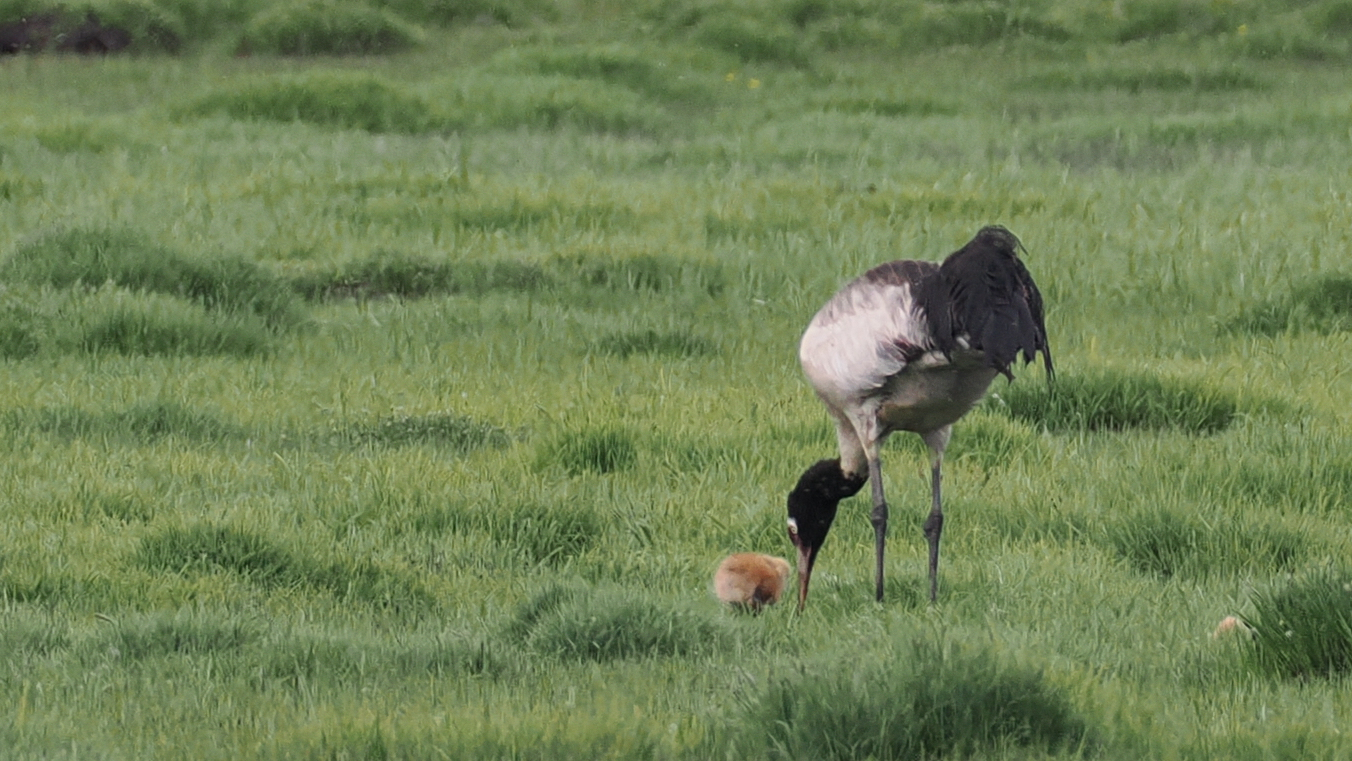
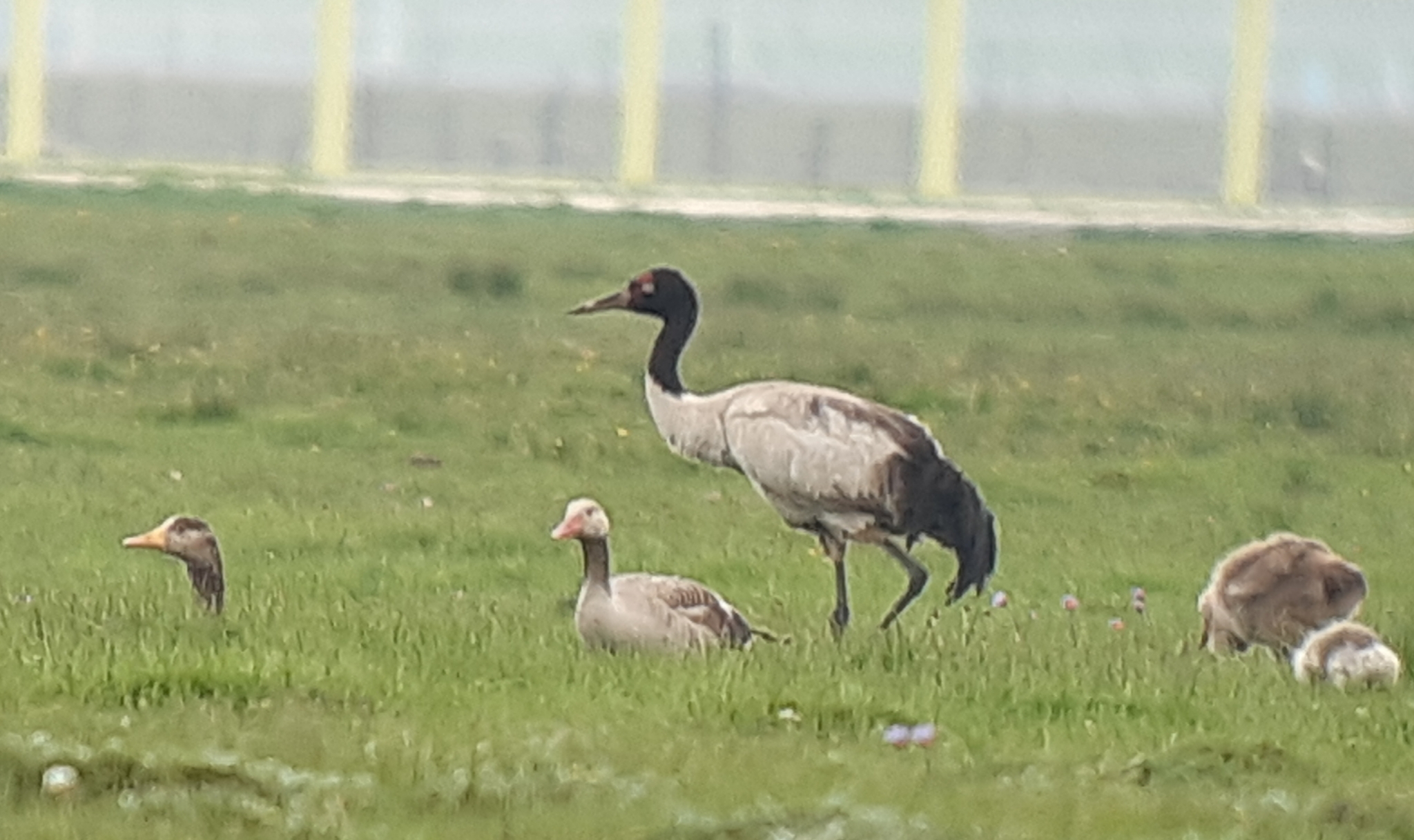
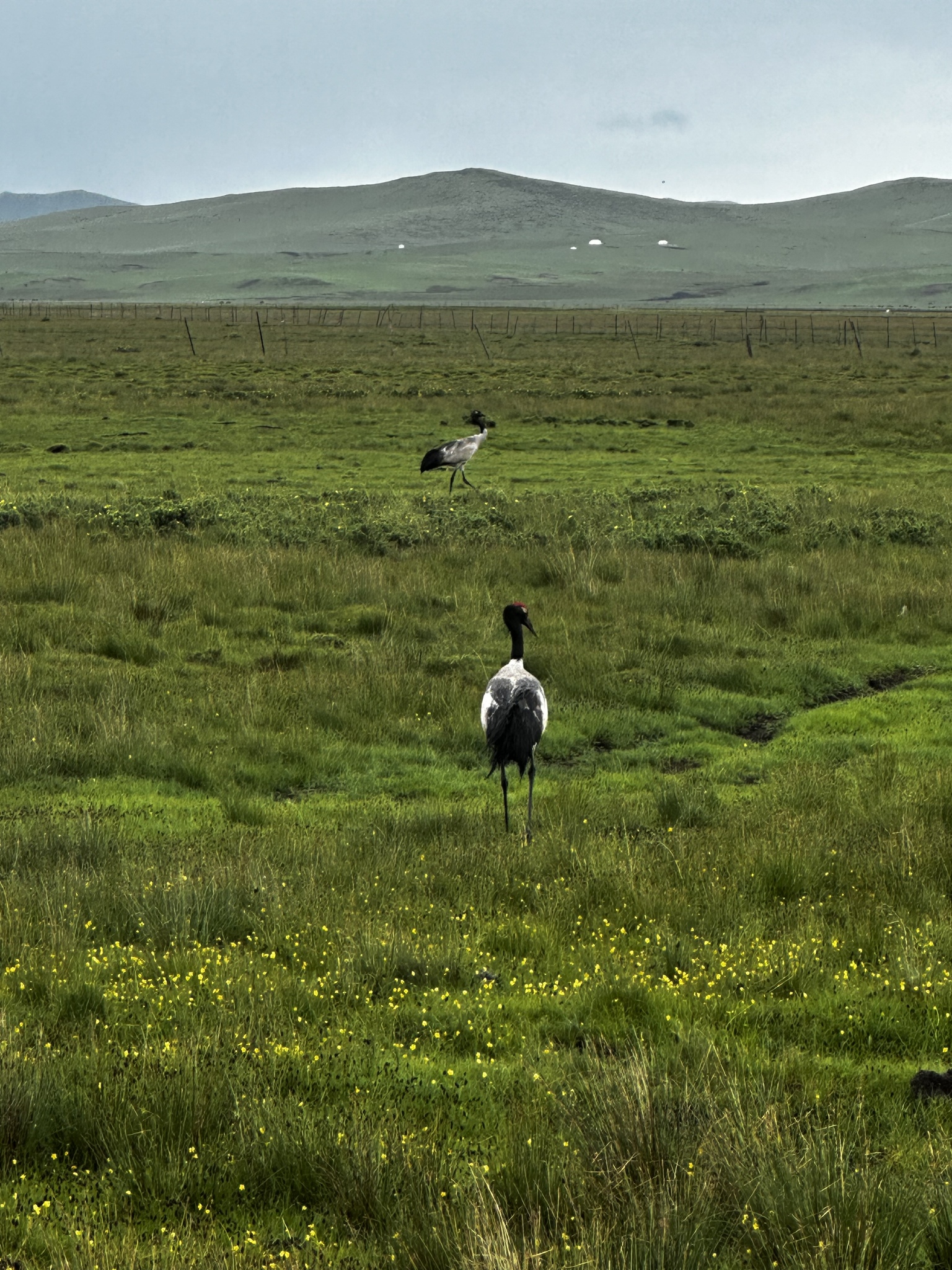
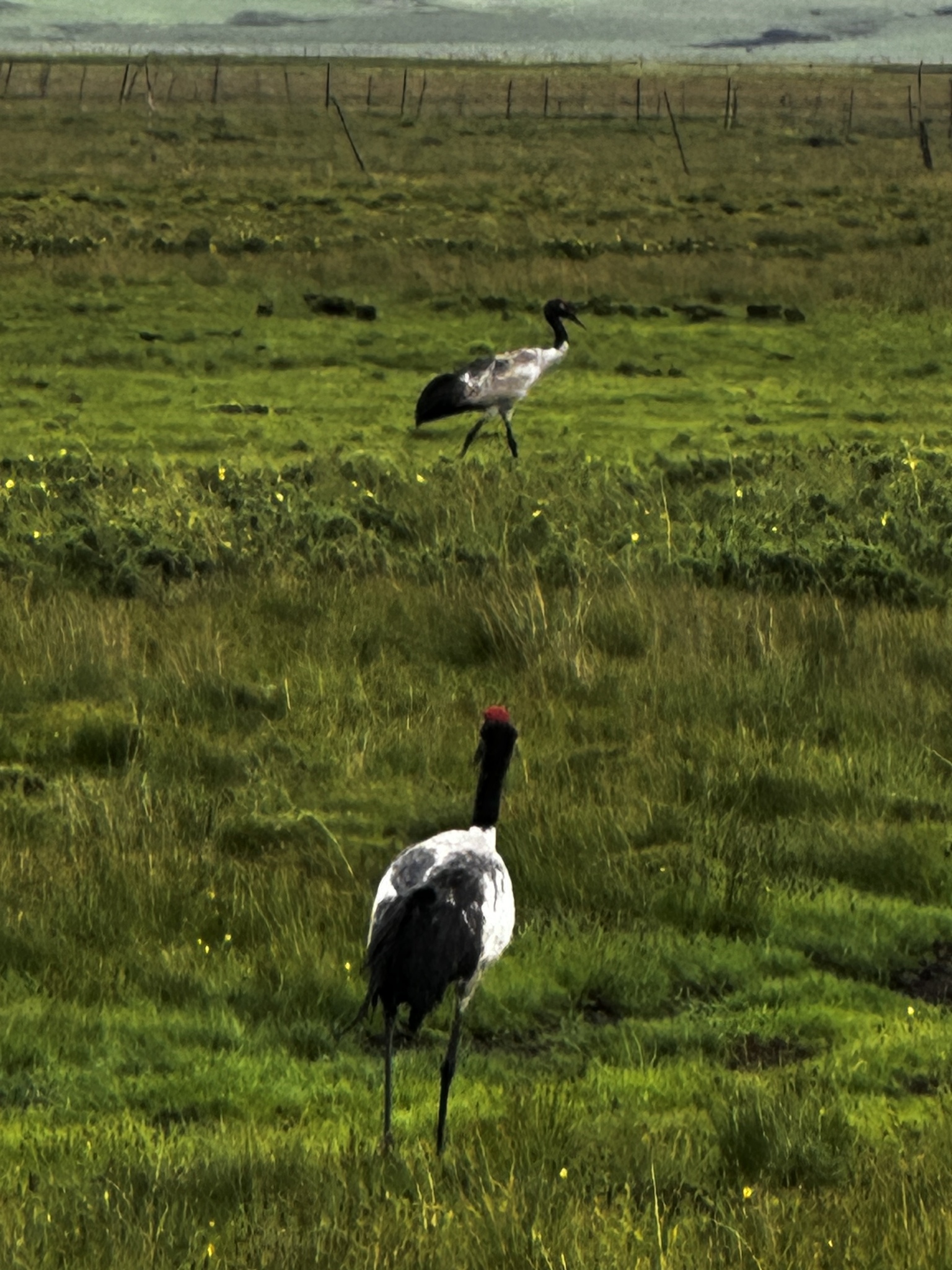
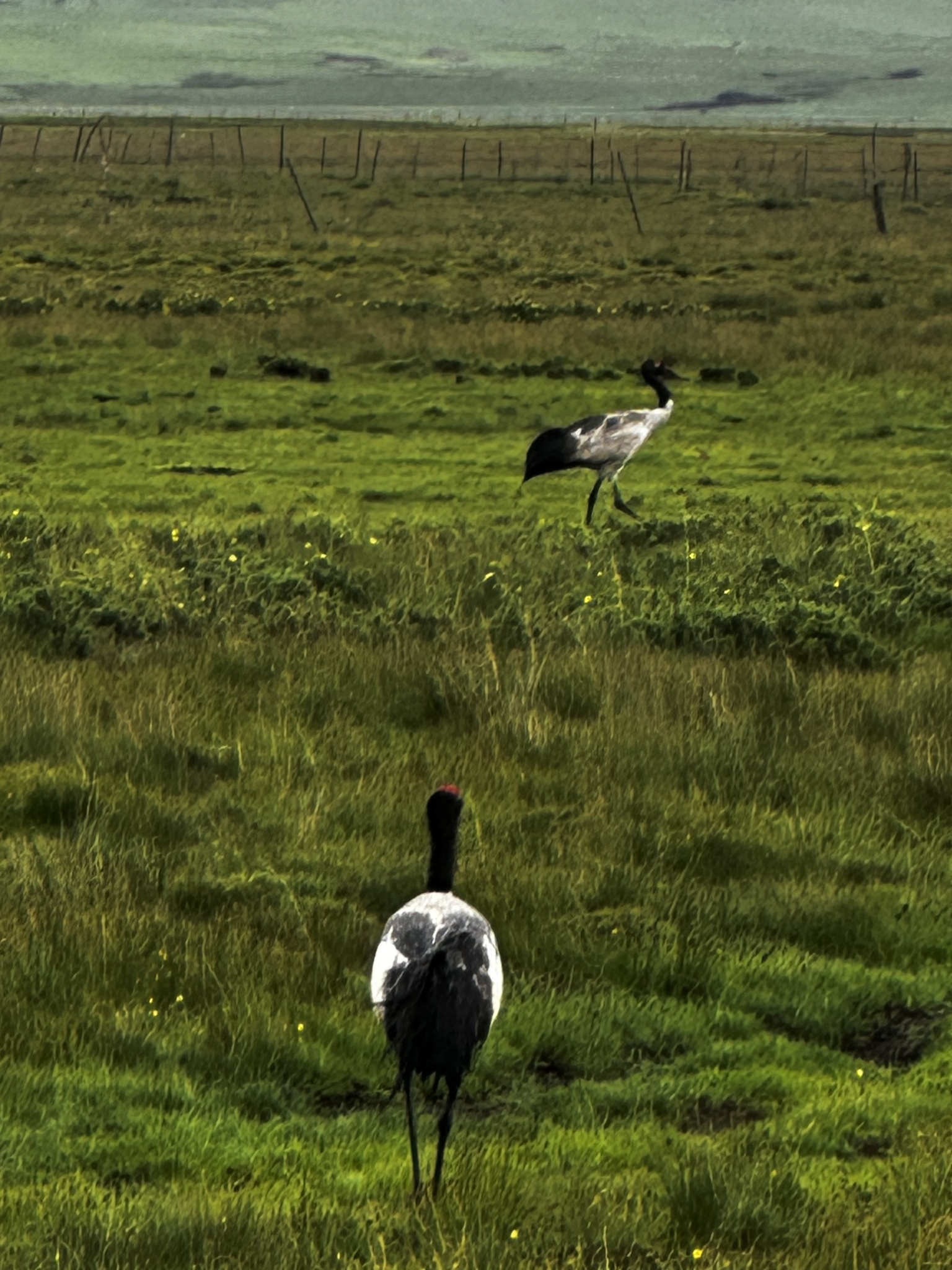
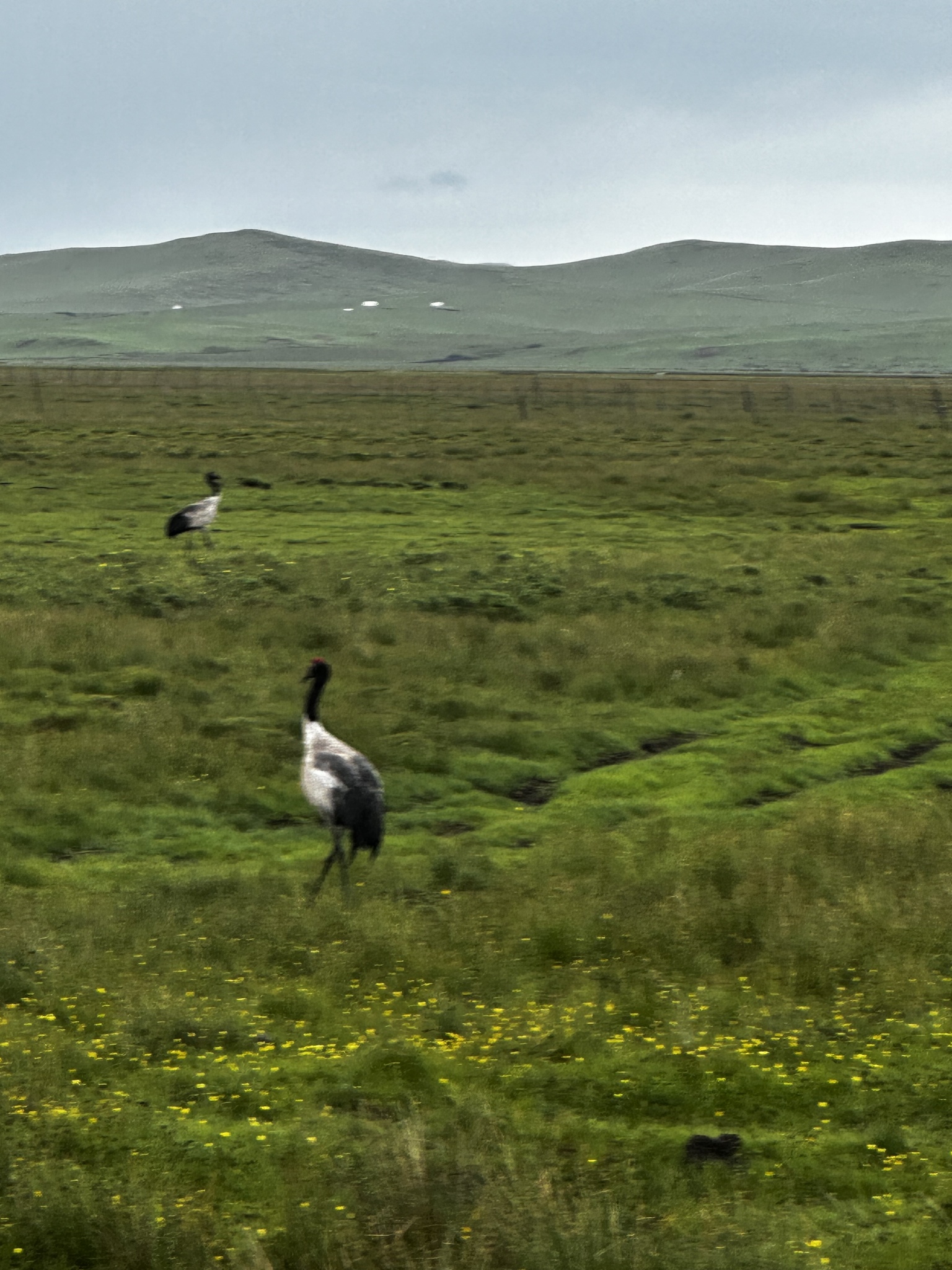
This medium-sized crane measures 139 cm in length with a 235 cm wingspan and weighs approximately 5.5 kg. The plumage is mostly grey with a black head and neck. The lores and crown are naked and appear dull red. A small patch of white feathers is present below and behind the eye. The tail is black, and the primaries and secondaries are also black. Both sexes have similar plumage.
Identification
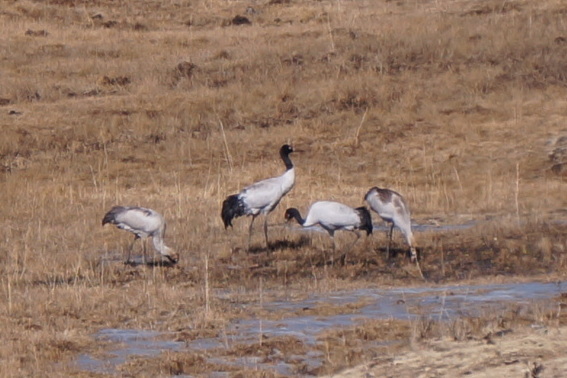
The black tail is the key distinguishing feature that separates this species from the similar-looking common crane, which has a grey tail. At distance, the combination of black head and black tail provides reliable identification. The red crown patch and white post-ocular patch are additional distinguishing features.
Distribution & Habitat
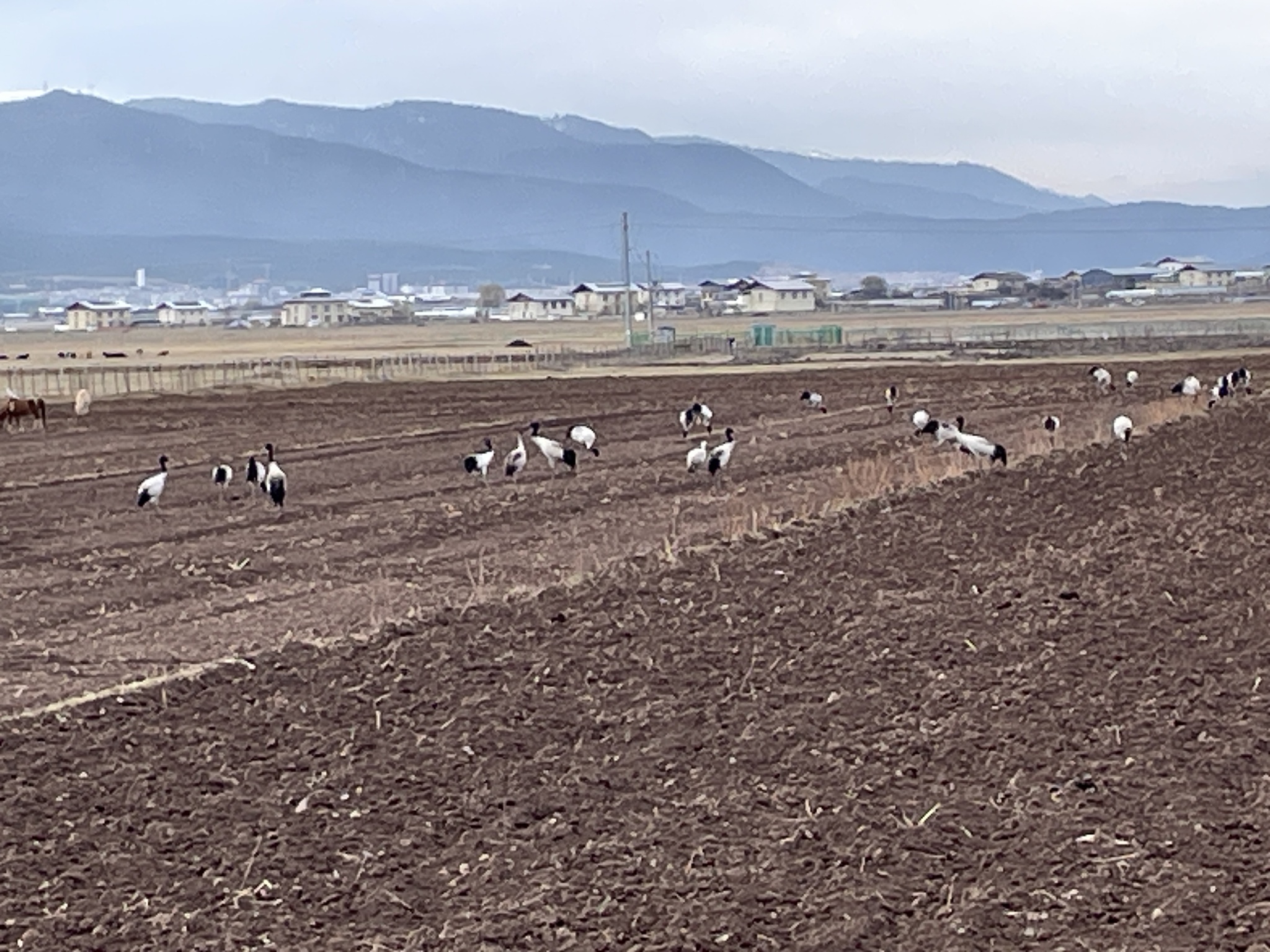
The species summers primarily on the high-altitude Tibetan Plateau, where it inhabits alpine meadows, lakeside and riverine marshes, and river valleys. It also utilizes barley and wheat fields in these areas. Wintering occurs in sheltered valleys at lower altitudes. The largest populations are in China, with smaller numbers in Vietnam, Bhutan and India. In China, important areas include the Hongyuan-Ruoergai Plateau in Sichuan and the Zoigê Marsh, where 893 individuals were recorded in 2013. By 2018, Lhünzhub County hosted over 2,100 birds. Small populations winter in Sangti and Zemithang valleys of western Arunachal Pradesh, India. A preservation zone of 96 square kilometres was established at the Hutoushan Reservoir in the Pengbo valley in 1993.
Behavior & Ecology
These cranes forage on the ground in small groups, with one bird typically acting as a sentinel. They spend nearly 75% of the day foraging, with peak activity in early morning and late afternoon. Feeding involves walking long distances between spots, covering several kilometers daily. The diet includes tubers of sedges, plant roots, earthworms, insects, other invertebrates, frogs and small vertebrates. They also consume fallen grains of barley, oats and buckwheat, and will dig up potatoes, carrots and turnips. Breeding occurs mainly in May and June, with one or two eggs laid on mud islands in wetlands, sometimes shared with bar-headed geese. Nests range from a simple scrape to structures of grass, rushes and weeds. They form long-lasting pair bonds and perform dancing displays during breeding season. The loud trumpeting calls are similar to other crane species. Short, subdued nasal 'kurrr' calls are used for family contact and to indicate food availability.
Conservation
The estimated global population was 10,070-10,970 individuals as of 2013. The species is legally protected in China, India and Bhutan, and is listed on Appendix I of CITES. Main threats include habitat modification, drying of lakes, and agricultural expansion. In Ladakh, herders' dogs are a major threat to young birds, while leopards have been recorded preying on roosting cranes in Bhutan's Phobjika valley. Hunting continues in parts of China and India, and power line collisions cause mortality in Bhutan. Egg predation by ravens increases when human disturbance displaces parents. Wetland drying increases nest accessibility for predators, while rising water levels can submerge nests. Traditional agricultural changes in Tibet have reduced availability of waste barley and spring wheat. Populations in Bhutan benefit from cultural protection alongside legal measures.
Culture
The species is revered in Buddhist traditions and receives cultural protection across much of its range. Bhutan celebrates the black-necked crane with dedicated festivals. The Indian union territory of Ladakh has designated it as the state bird.
Source: Wikipedia · CC BY-SA 3.0
Taxonomy
- Order
- Gruiformes
- Family
- Gruidae
- Genus
- Grus
- eBird Code
- blncra1
Distribution
breeds Tibetan plateau; winters to northeastern India and southern China
Vocalizations
Data Sources
Species description from Wikipedia, licensed under CC BY-SA 3.0.
Bird images and sounds sourced from GBIF, contributed by citizen scientists worldwide under Creative Commons licenses.
Taxonomy data from AviList 2025.