Gruiformes / Gruidae / Grus
Common Crane
Grus grus · 灰鹤
Introduction
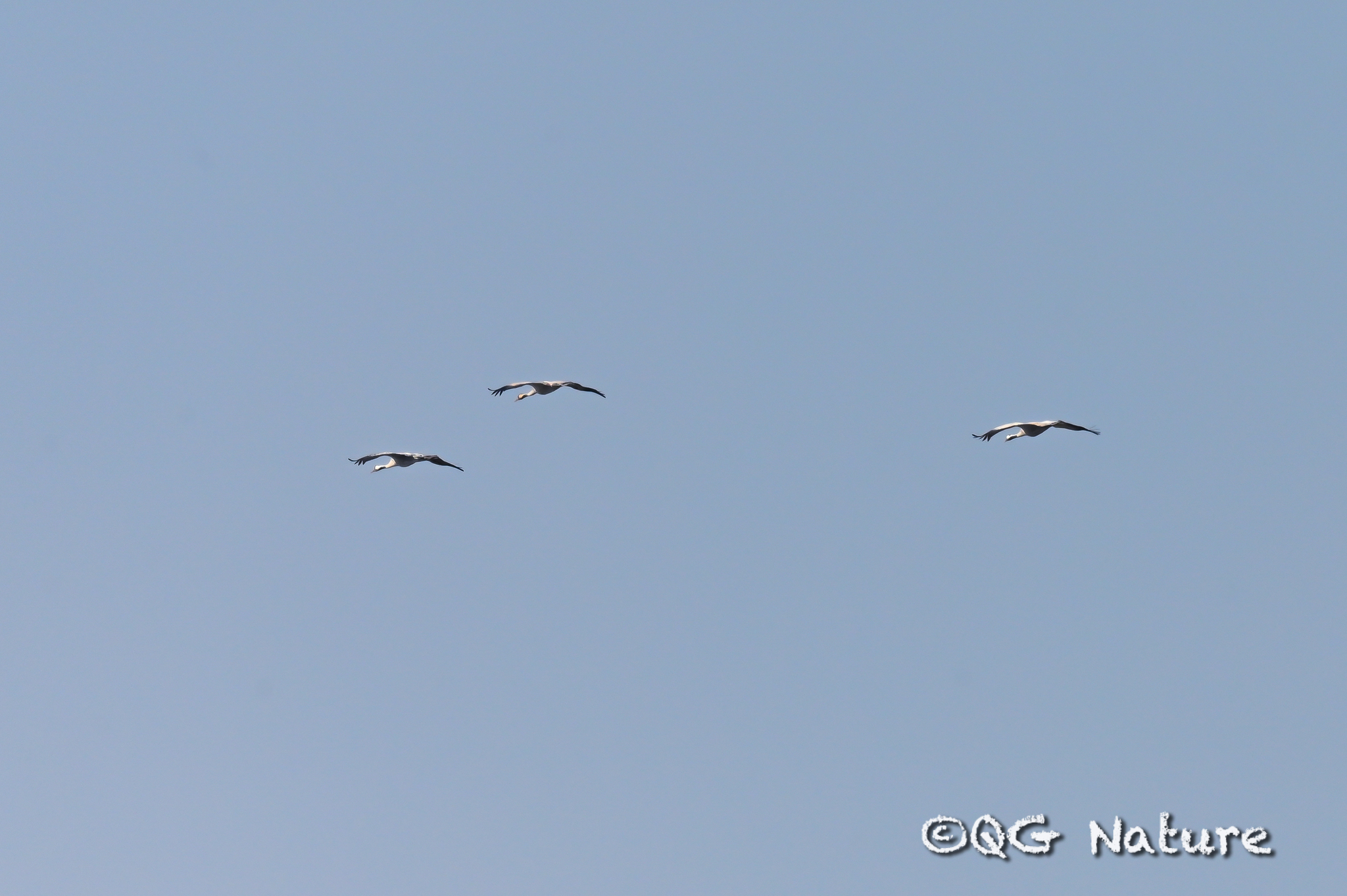
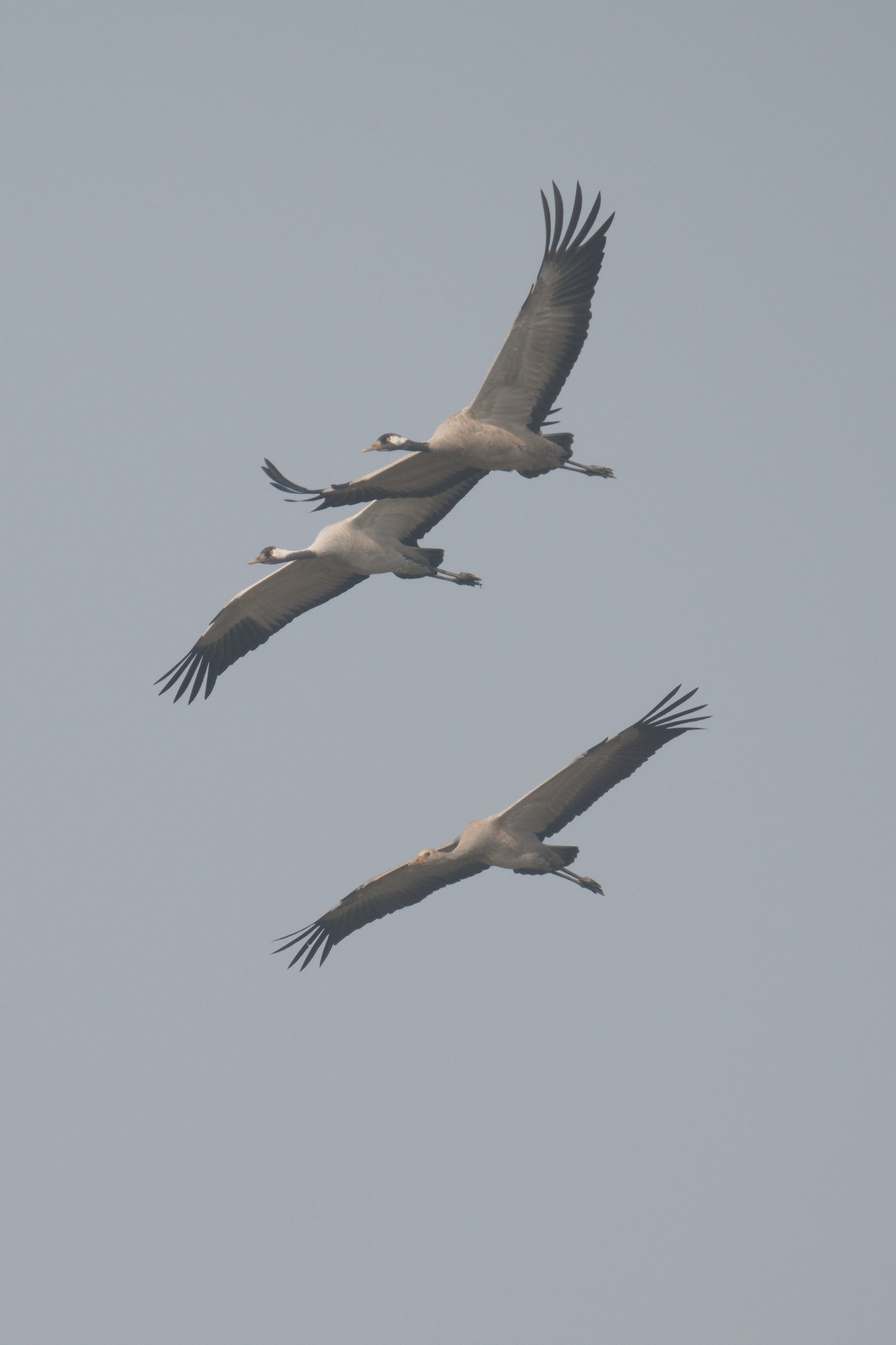
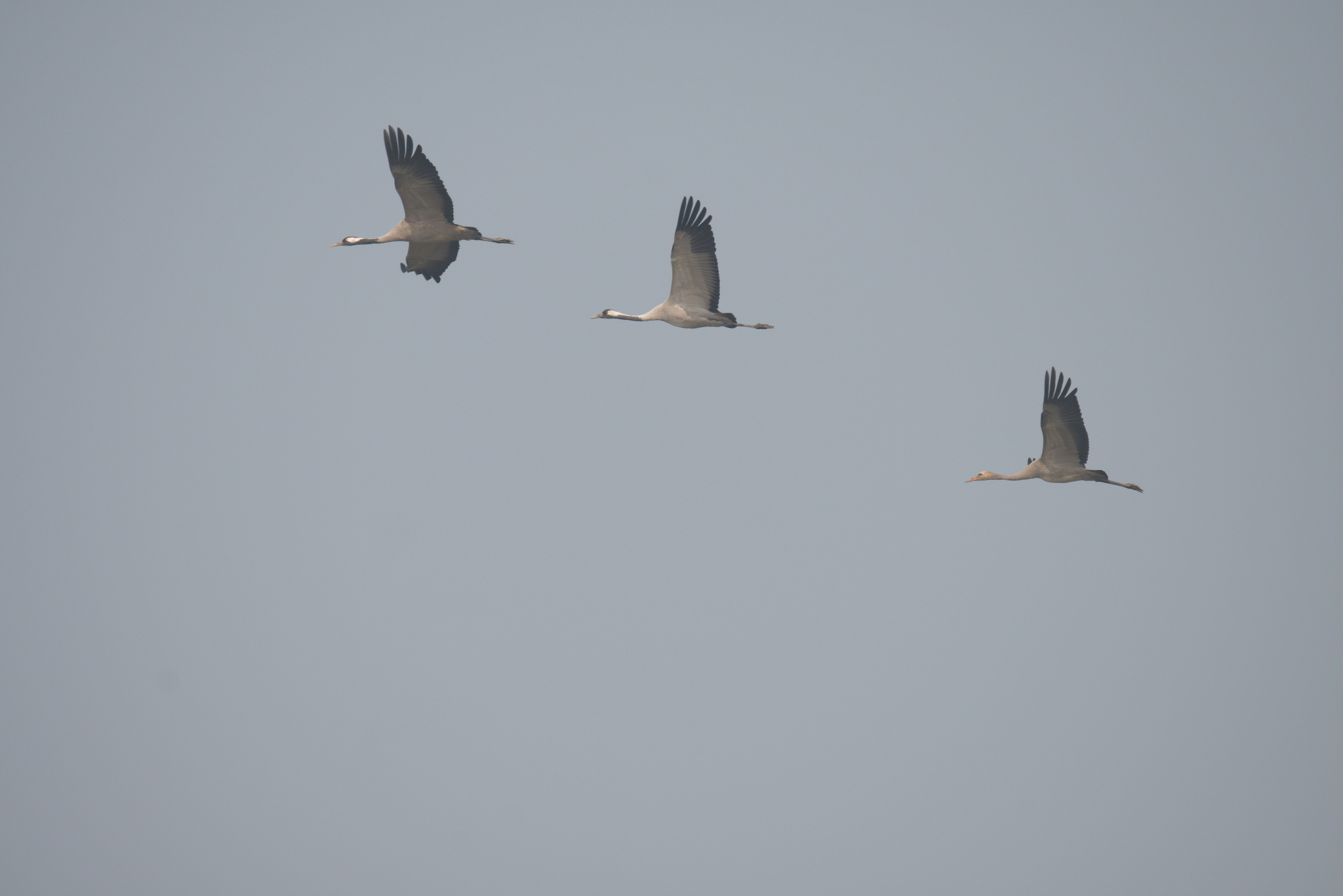
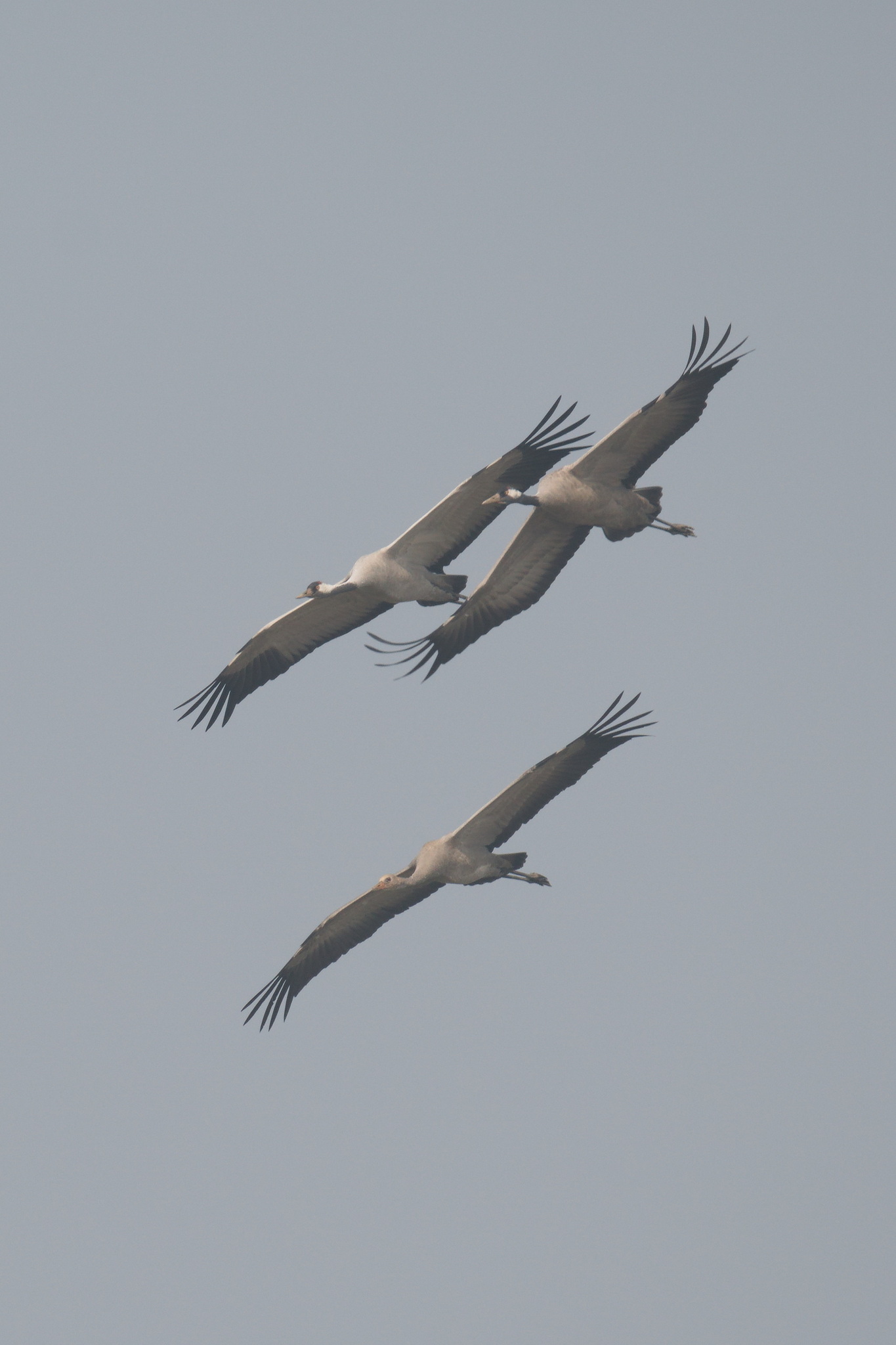
A medium-sized crane of the family Gruidae, this species is the only crane commonly found in Europe besides the demoiselle and Siberian cranes. It breeds across the Palearctic from Europe to Siberia and migrates to wintering grounds in Africa, southern Europe, and Asia. Distinctive traits include a loud trumpeting call, complex dancing displays, and migration in V-formations at altitudes up to 10,000 m. The global population was estimated at about 500,000 individuals in 2015, with an increasing trend in Europe despite local extinctions.
Description
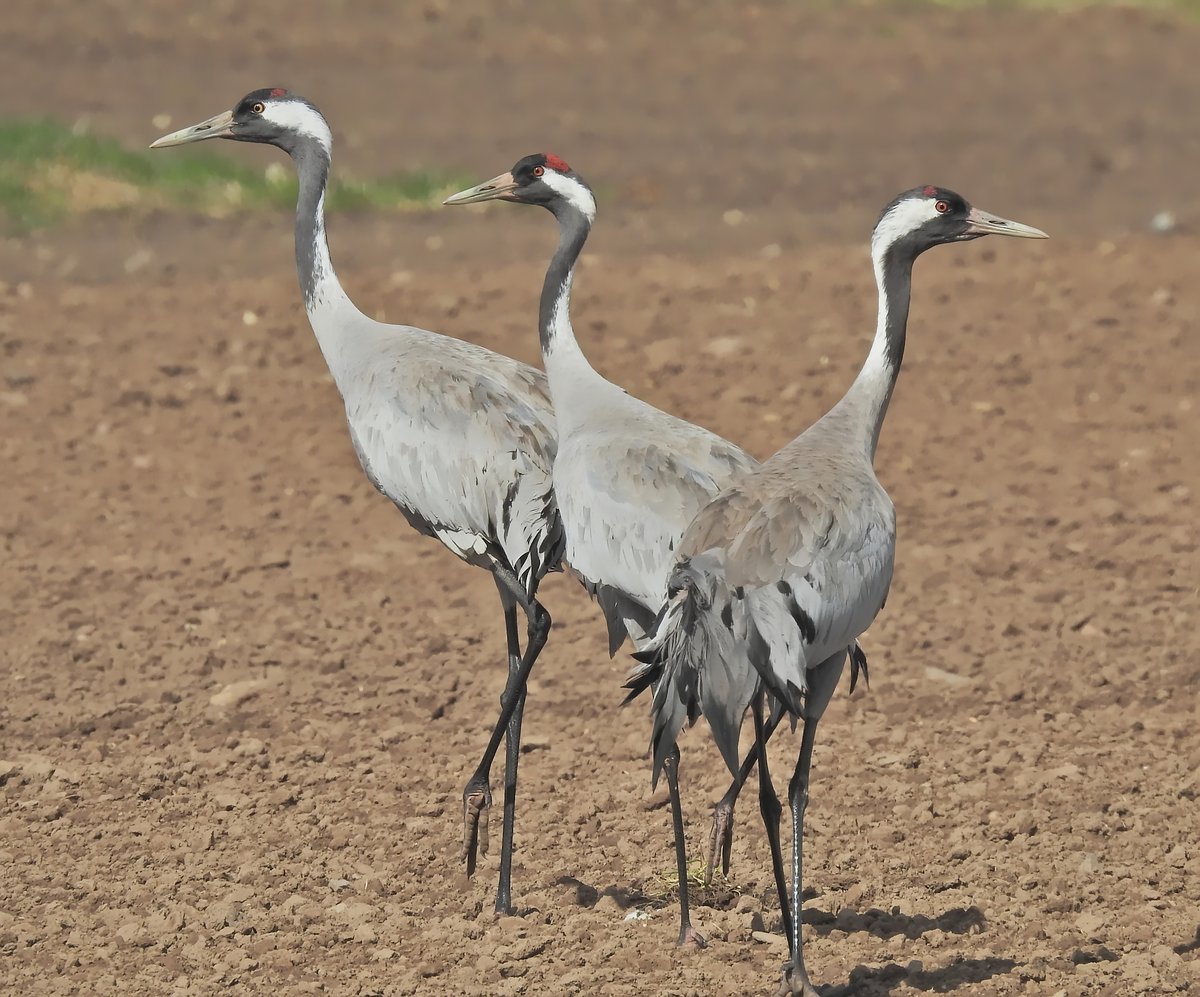
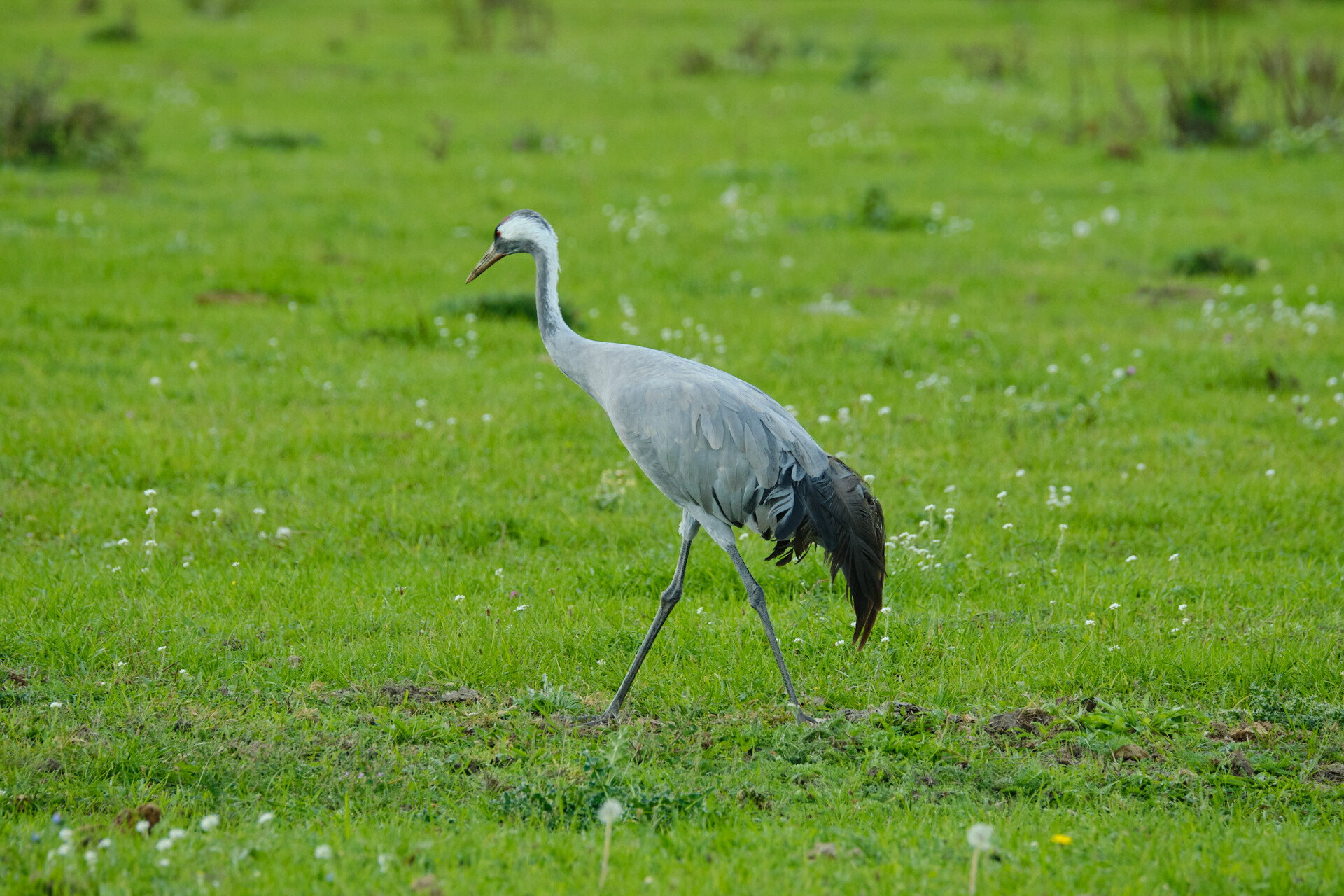
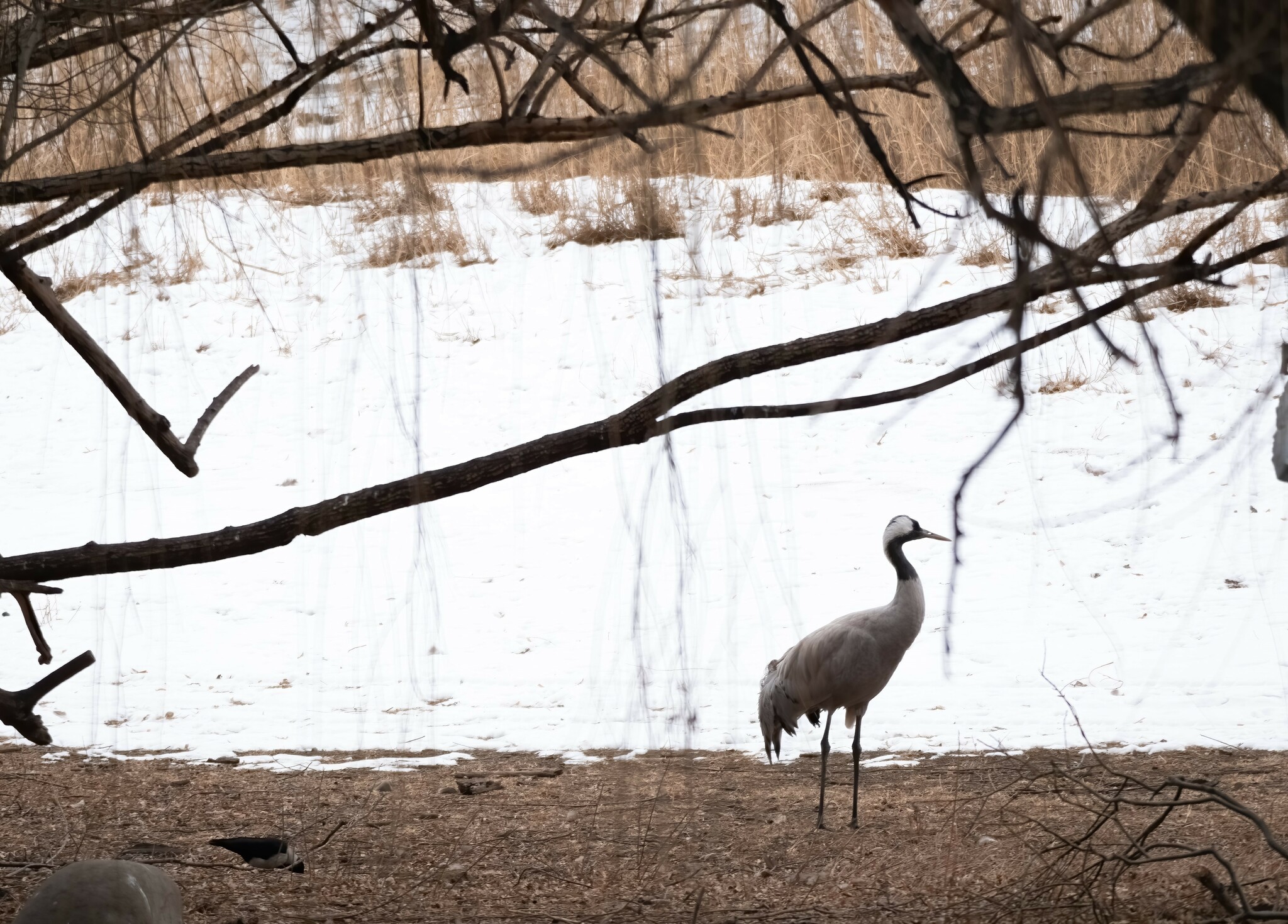
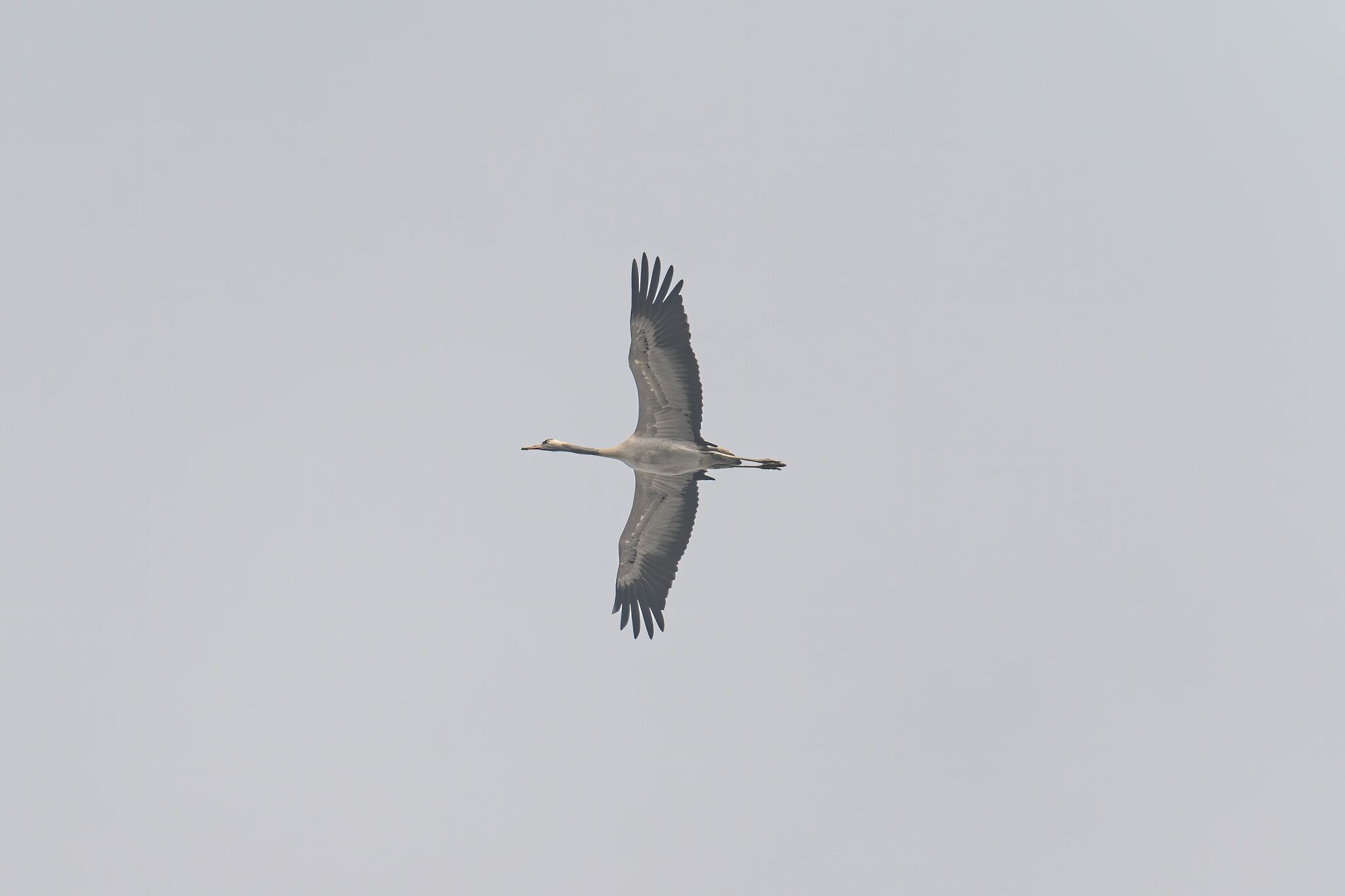
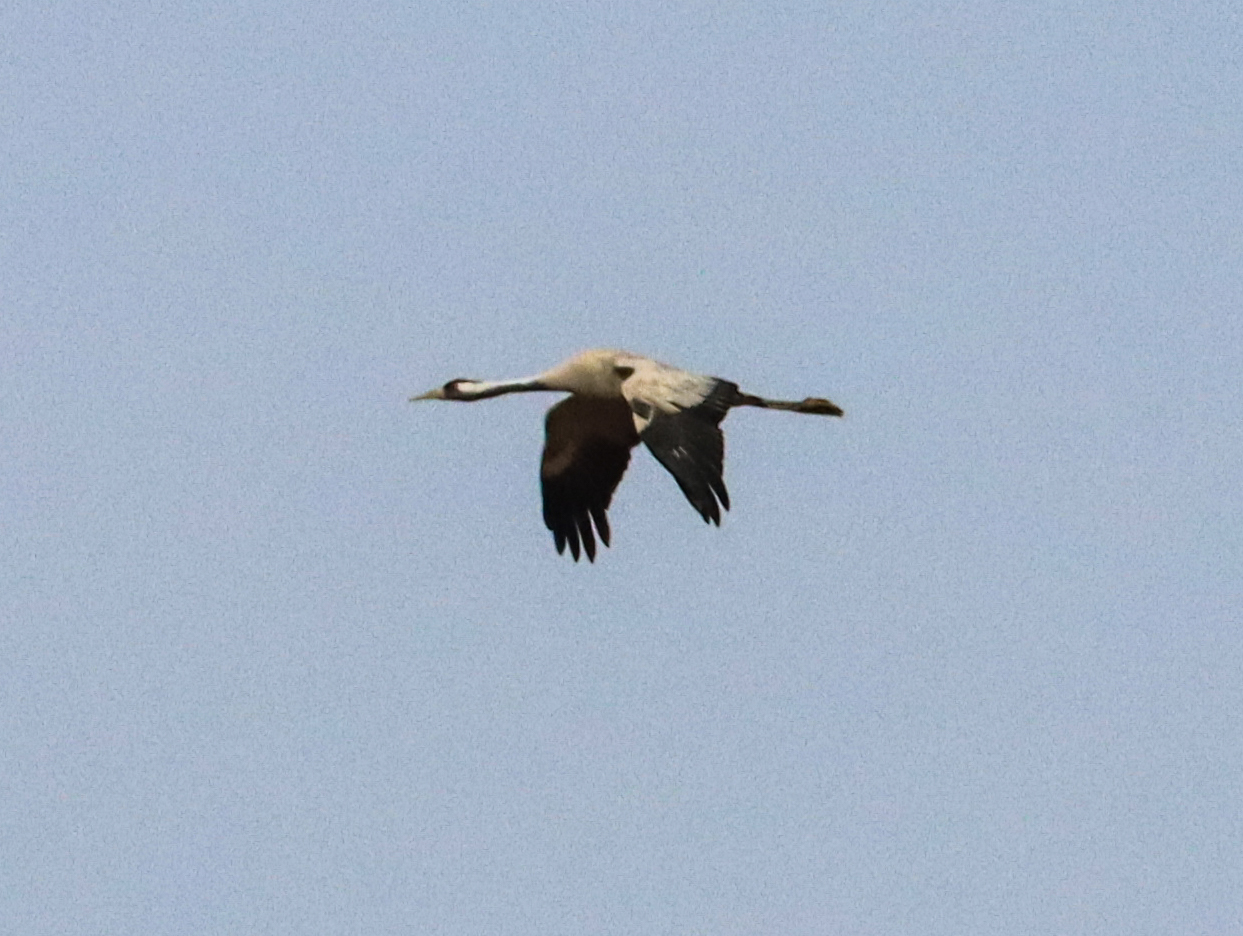
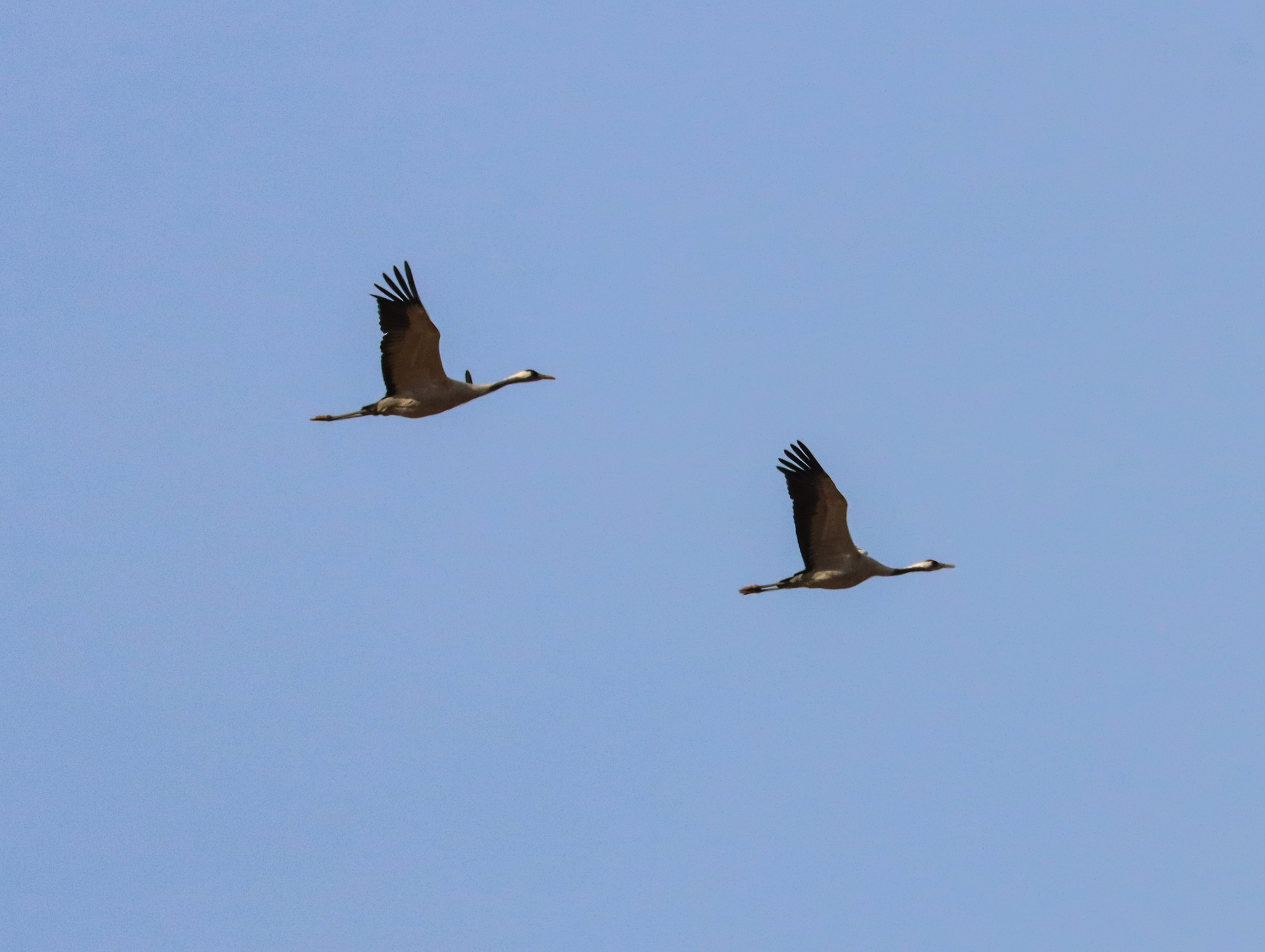
Length 100–130 cm, wingspan 180–240 cm, weight 3–6.1 kg. Males are slightly heavier and larger than females. Plumage is slate-grey overall, darkest on the back and rump, palest on the breast and wings. The forehead and lores are blackish with a bare red crown and a white streak extending from behind the eyes to the upper back. Primaries, secondary tips, alula, tail tip, and upper tail covert edges are black; greater coverts droop into explosive plumes. Juveniles have yellowish-brown feather tips, lack drooping wing feathers and bright neck patterns, and possess a fully feathered crown.
Identification
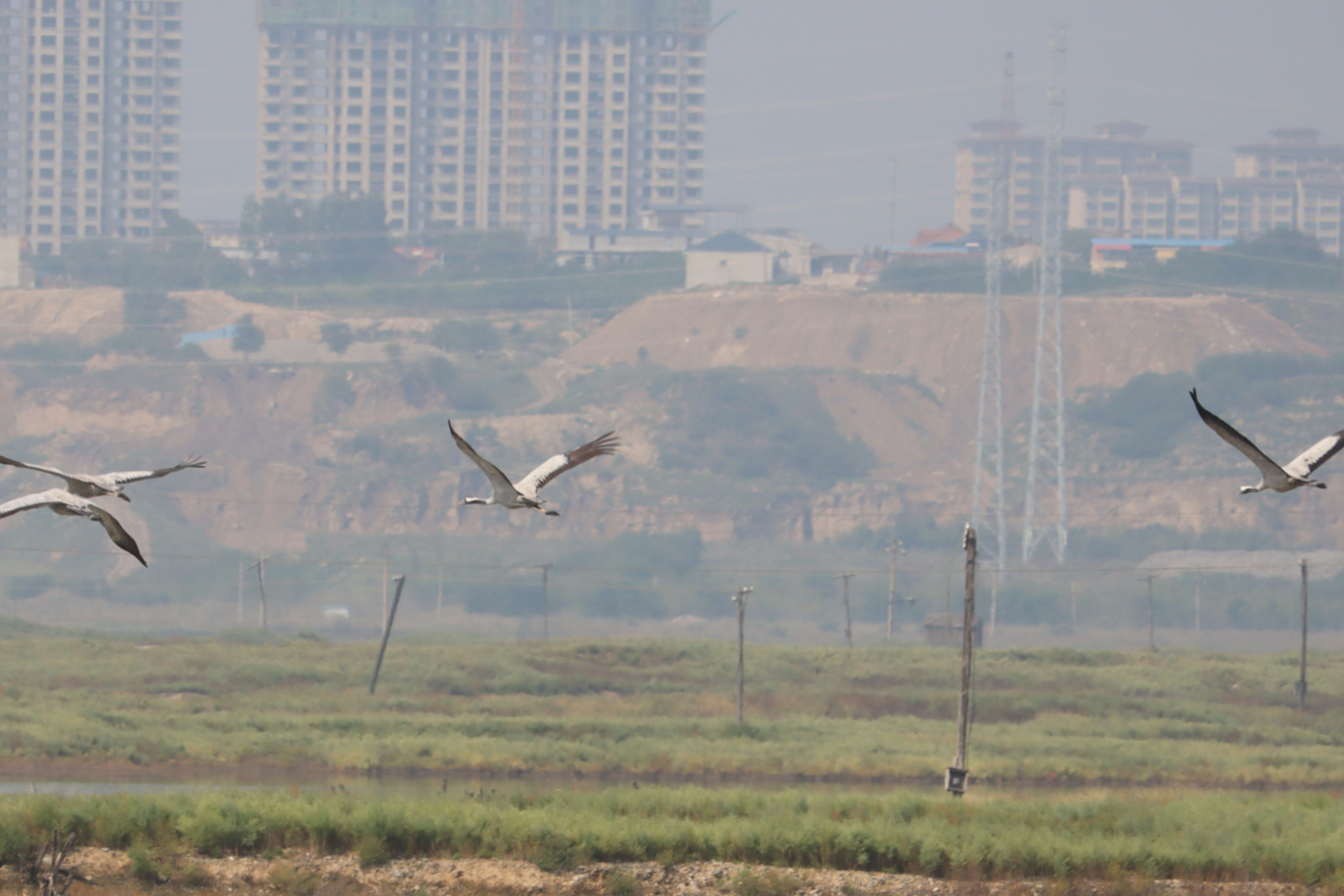
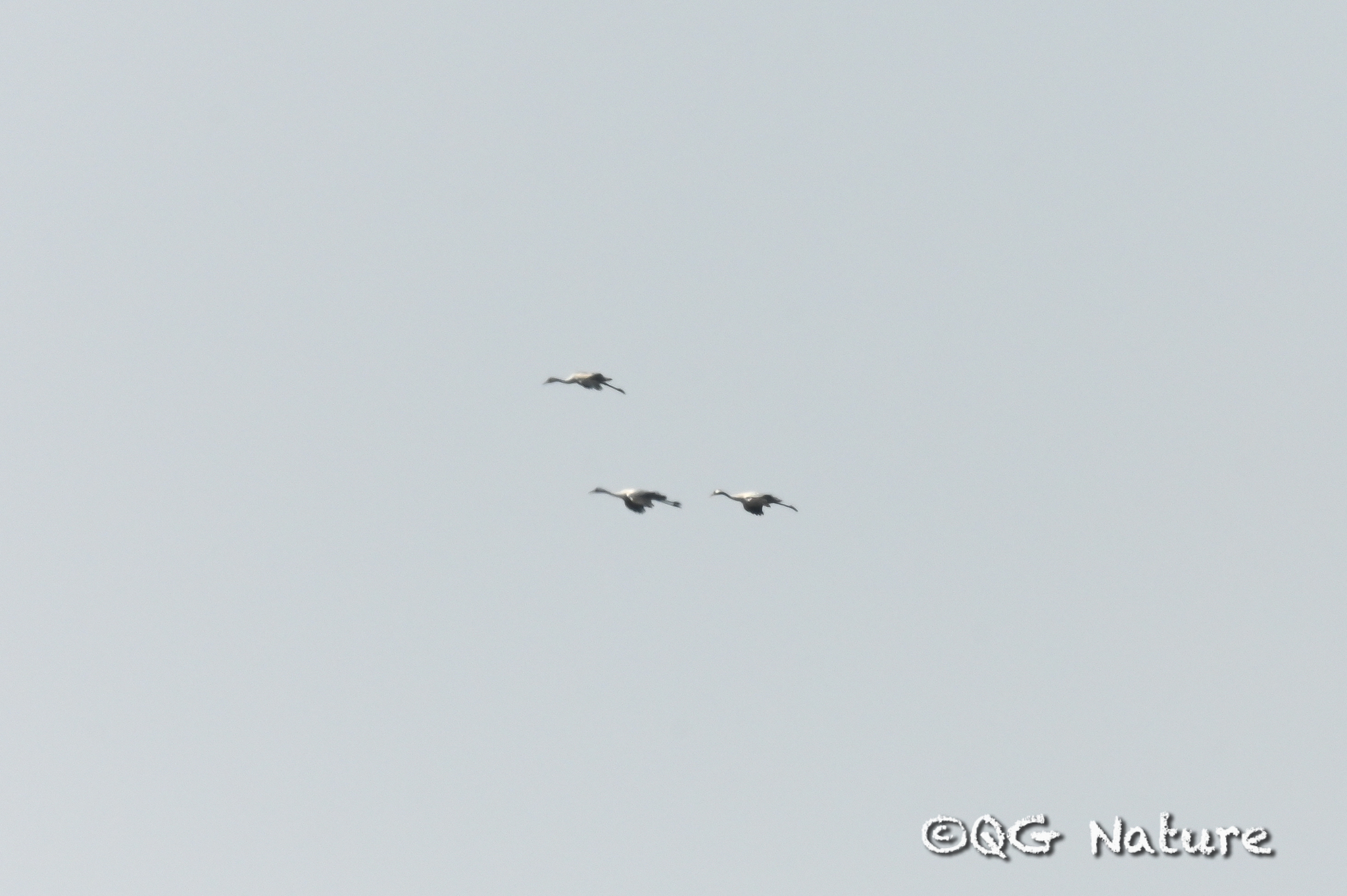
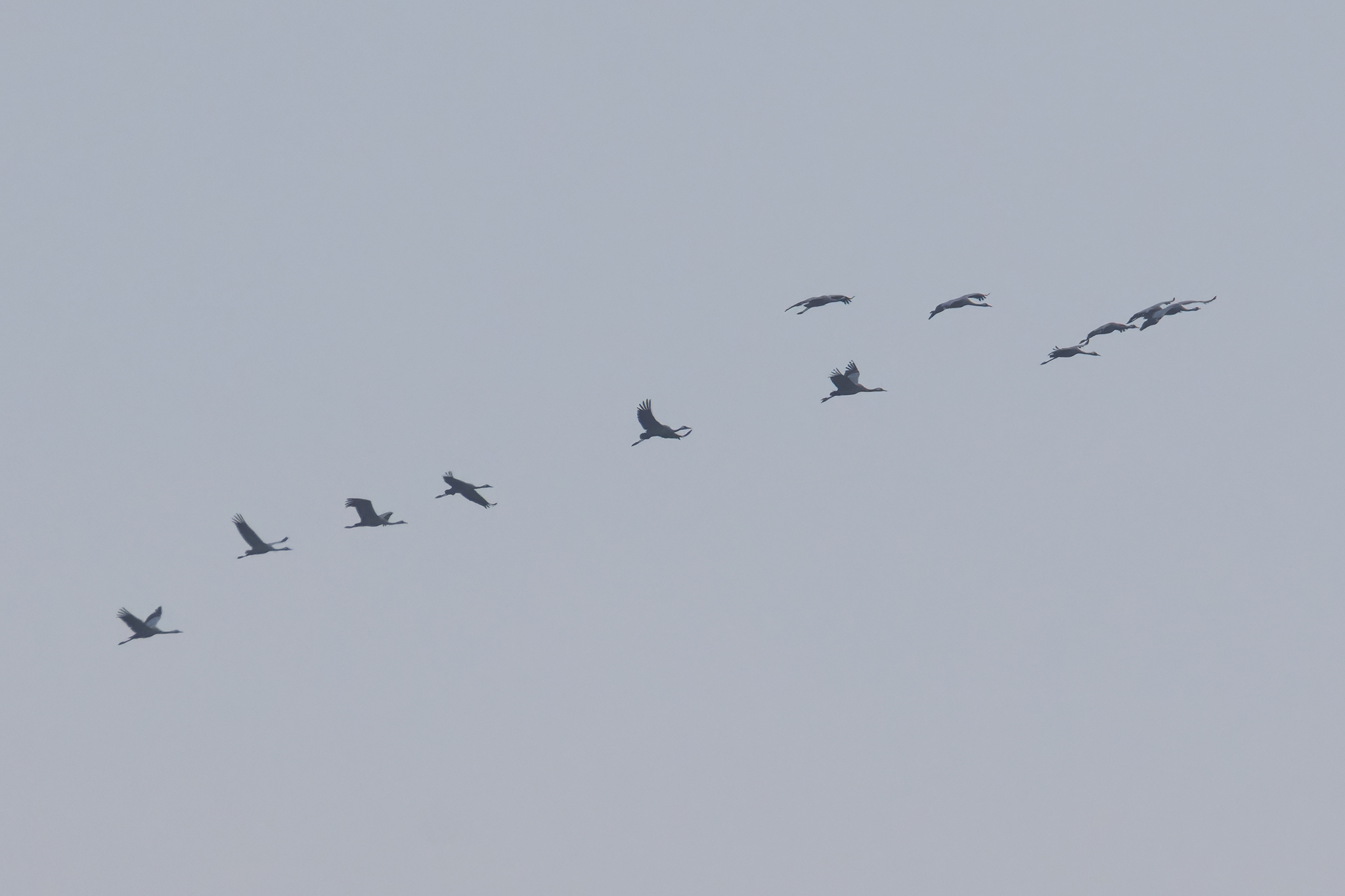
Distinguished from similar Asian species like hooded and black-necked cranes by its slate-grey body, black flight feathers, drooping greater coverts, and specific head pattern (blackish forehead/lores, red crown, white eye-streak). Juveniles lack the adult's bare red crown and drooping plumes. In flight, flocks form a V-shape. Vocalizations include a loud, piercing trumpeting call given in flight and display, consisting of a high note from the female followed by a longer scream from the male.
Distribution & Habitat
Breeds in Europe and across the Palearctic to Siberia, including Russia, Finland, Sweden, northern China, Turkey, and the Caucasus. Rare breeder in southern/western Europe but reappearing in the UK, Ireland, France, and other countries. Migratory: European breeders winter in Portugal, Spain, and North Africa; eastern European breeders winter in Sudan, Ethiopia, and the Indian subcontinent; easternmost breeders winter in eastern China. Staging areas include the Caspian Sea region. Rare vagrant to Japan, Korea, and western North America.
Behavior & Ecology
Omnivorous diet of roots, tubers, seeds, insects, snails, worms, and small vertebrates; forages in shallow water or on land. Monogamous with indefinite pair bonds; courtship involves complex dancing (bobs, bows, pirouettes) and unison calling. Nests in or near shallow water in wetlands, bogs, or marshes; clutch size usually two eggs. Incubation lasts ~30 days, primarily by the female. Chicks fly short distances by 9 weeks. Adults undergo a complete moult every two years, remaining flightless for six weeks. Social outside breeding season, forming large migratory flocks.
Conservation
Global population estimated at 500,000 individuals (2015). Not currently classified as threatened, but faces threats from habitat loss, wetland drainage, dam construction, urbanization, agricultural expansion, collision with utility lines, pesticide poisoning, and hunting. Mass mortality events occurred due to highly pathogenic avian influenza (HPAI) in 2025. Protected under the Agreement on the Conservation of African-Eurasian Migratory Waterbirds (AEWA). Reintroduction projects are active in the UK.
Culture
Plays a significant role in Irish folklore despite historical extinction. Featured in art, such as Józef Chełmoński's 'Departure of Cranes'. A museum in Germany is dedicated to its art and folklore. Sacred to the god Hephaestus in Greek mythology. Appears in folk songs in Indian states like Rajasthan and Gujarat, symbolizing messages between separated lovers.
Source: Wikipedia · CC BY-SA 3.0
Taxonomy
- Order
- Gruiformes
- Family
- Gruidae
- Genus
- Grus
Distribution
breeds northern Eurasia; winters to northern Africa, southern India, and southeastern Asia
Data Sources
Species description from Wikipedia, licensed under CC BY-SA 3.0.
Bird images and sounds sourced from GBIF, contributed by citizen scientists worldwide under Creative Commons licenses.
Taxonomy data from AviList 2025.