


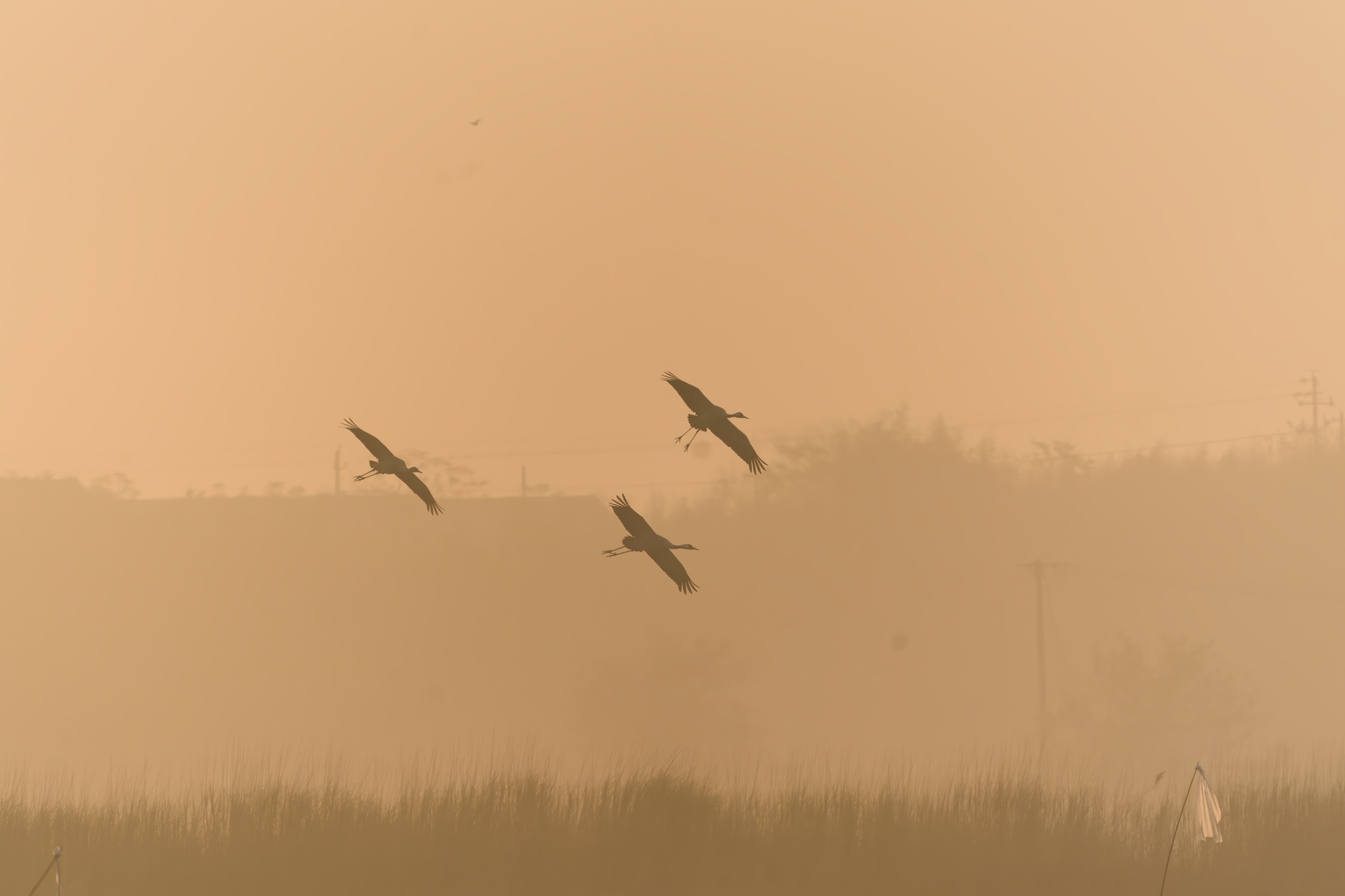

Common Crane
Grus grus
灰鹤
Introduction
The common crane (Grus grus) is the only crane species regularly occurring across most of Europe. It breeds in northern and eastern Europe and winters primarily in the Mediterranean region and western Europe. The species forms large migratory congregations, with thousands of individuals gathering at traditional staging areas during autumn and spring migrations. Its loud, trumpeting calls are audible from considerable distances. Courtship displays involve dancing and leaping with wings outstretched. Following centuries of decline, populations have recovered and the species is expanding its range in western Europe.
Description
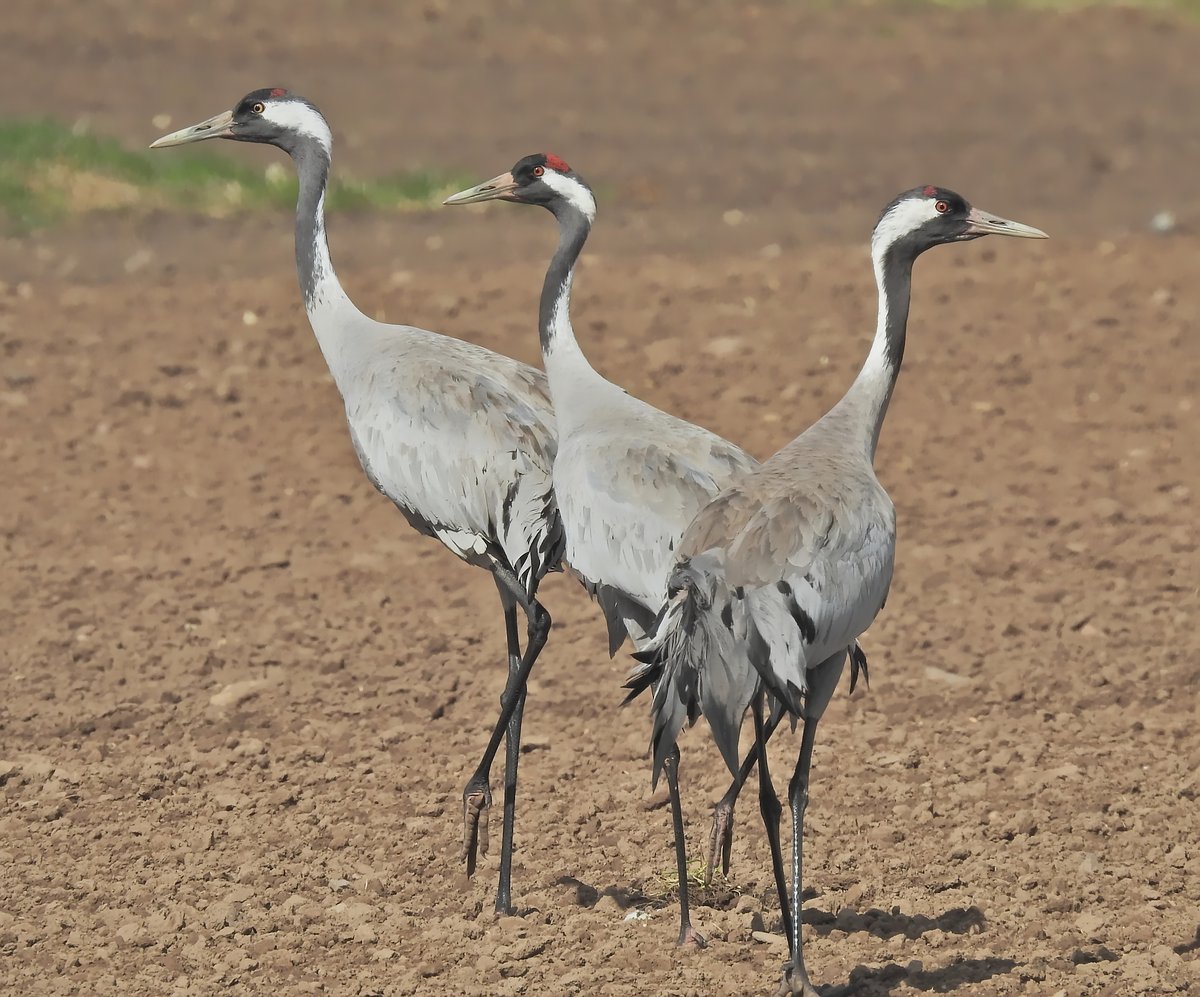
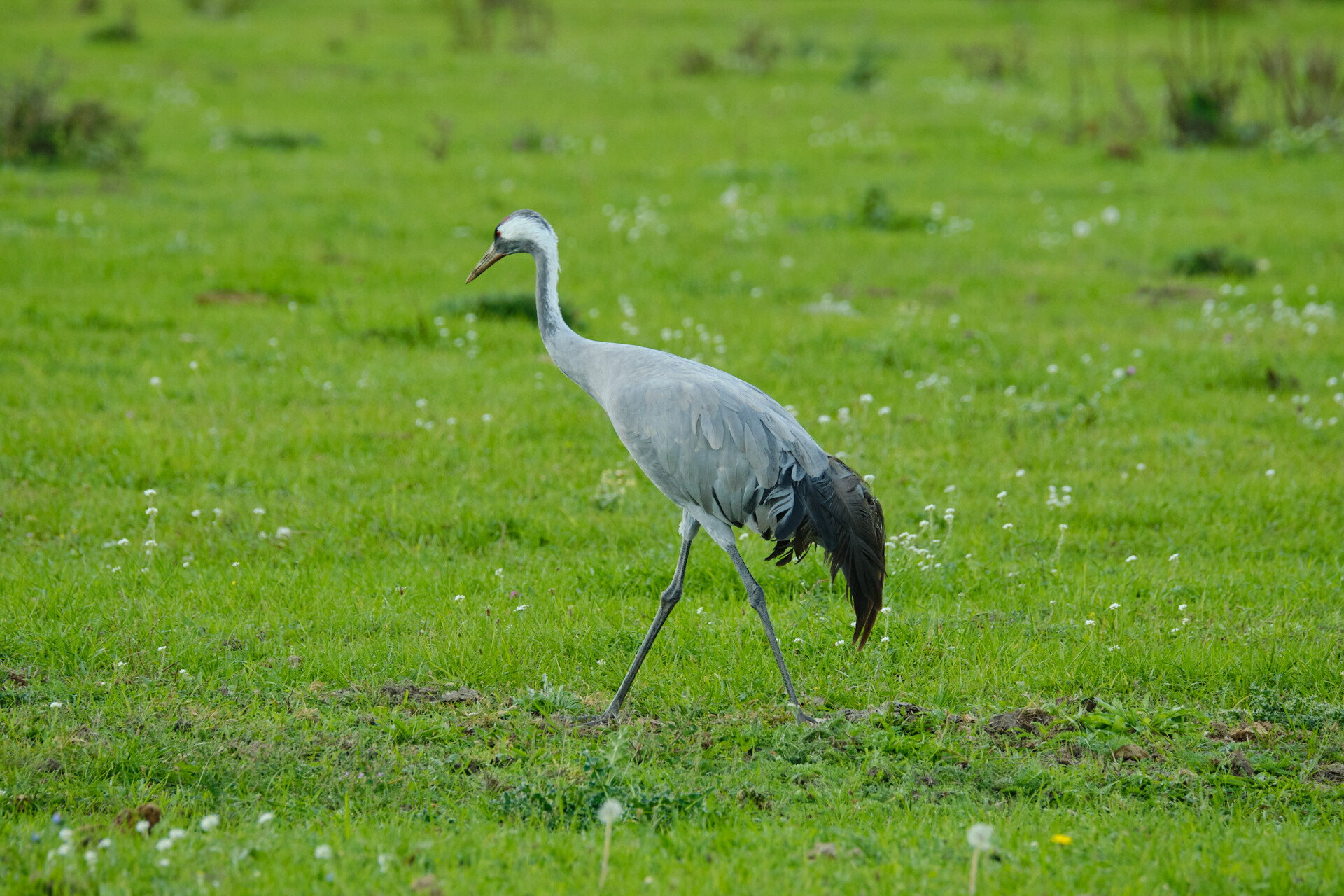
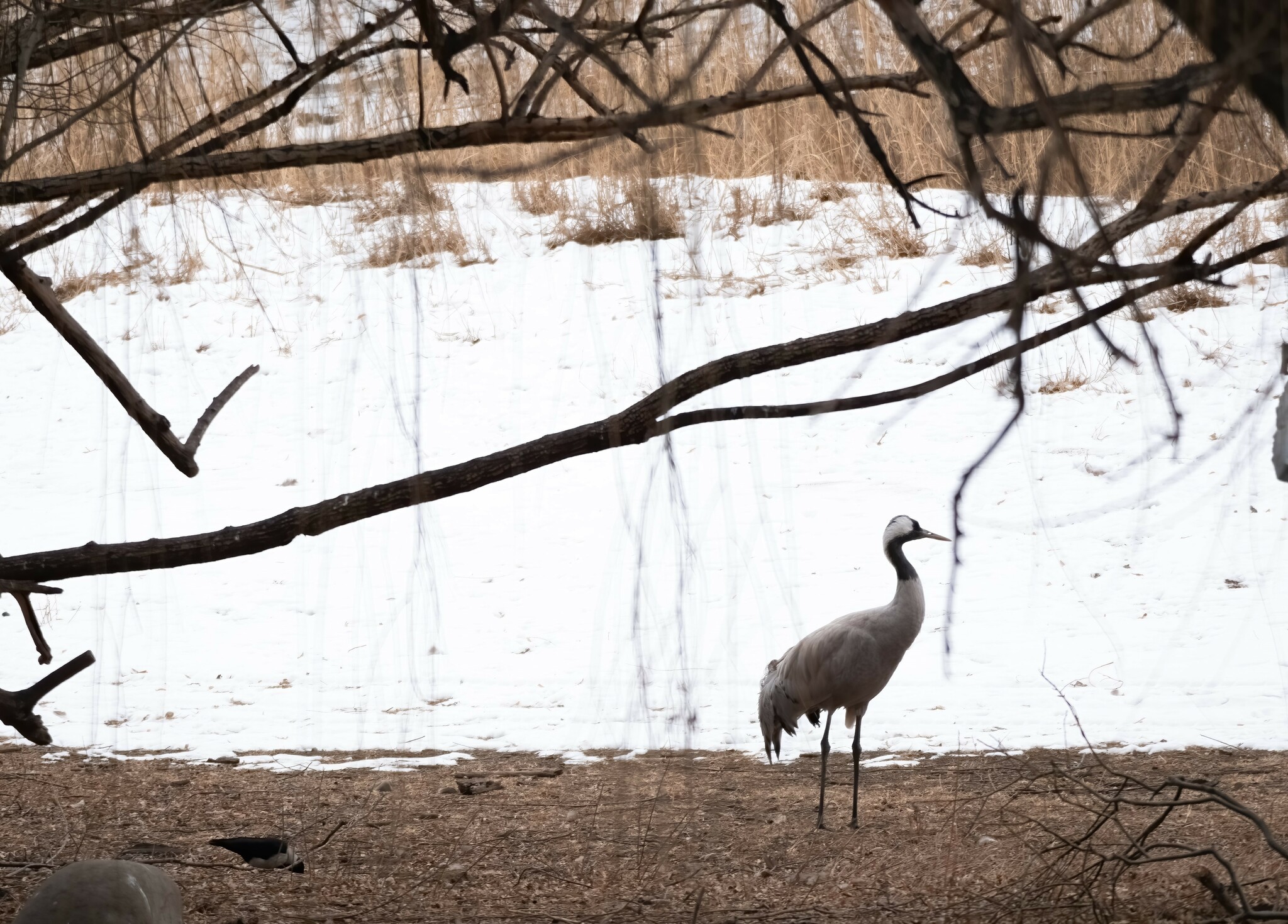
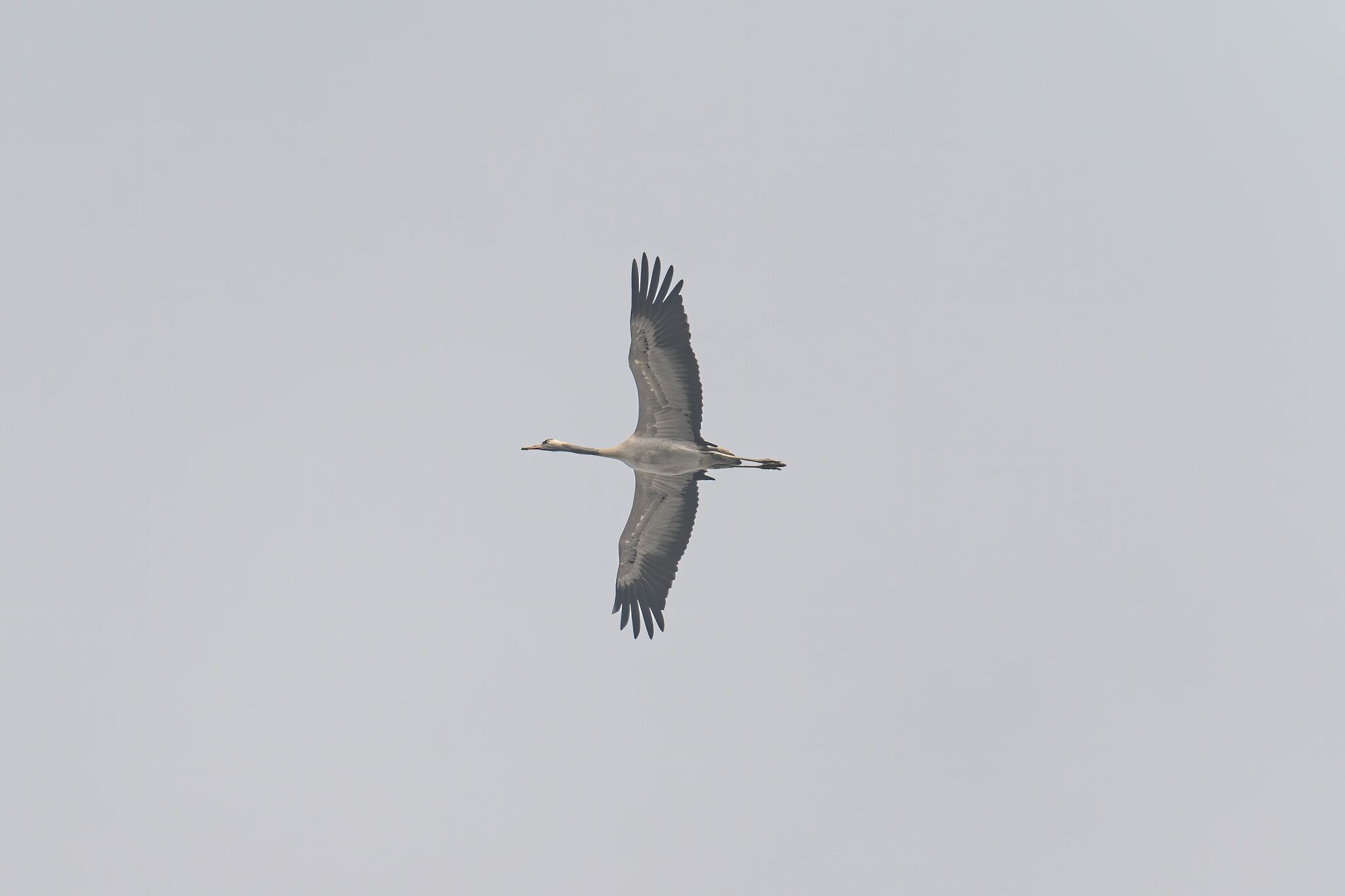
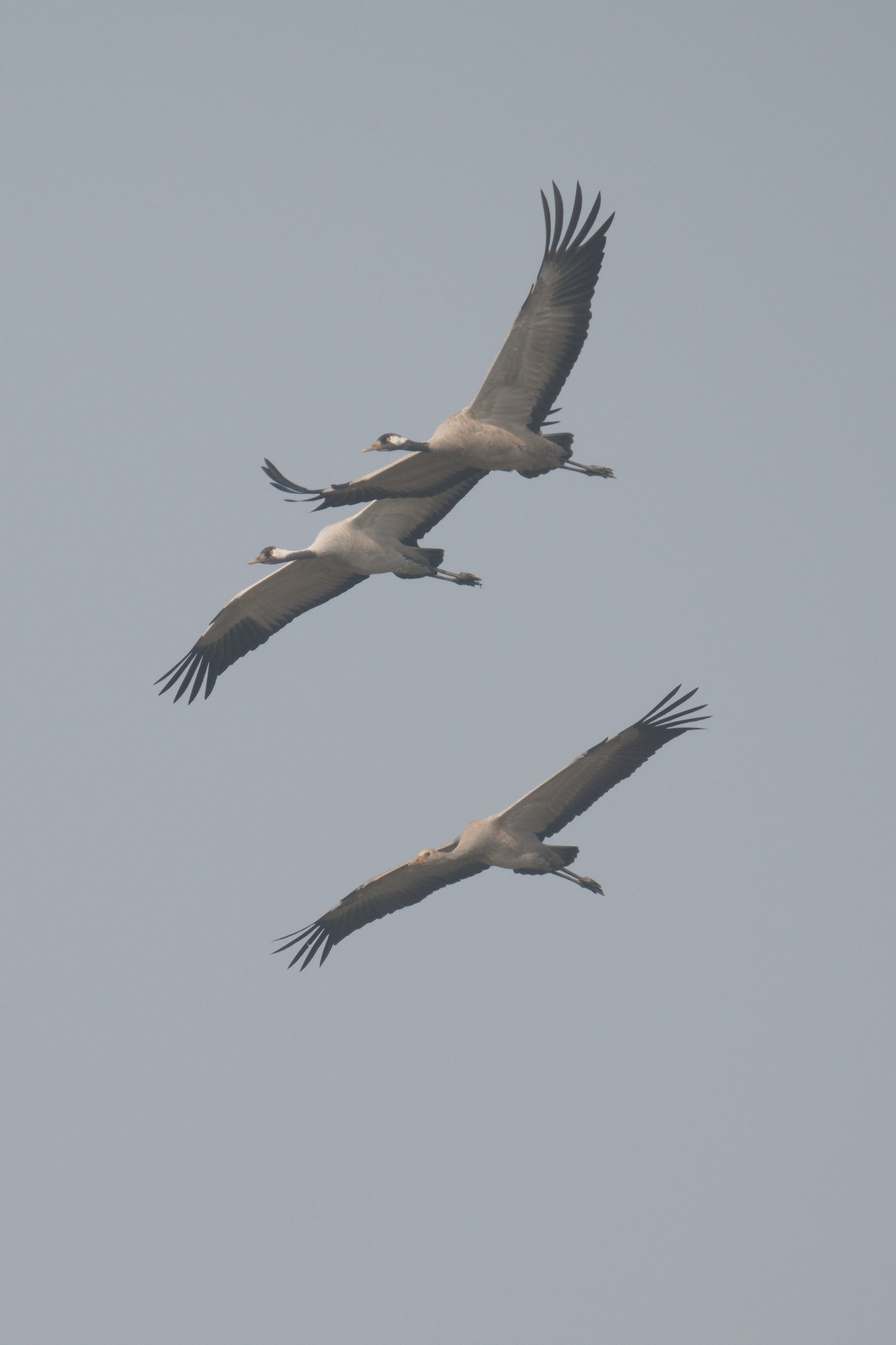
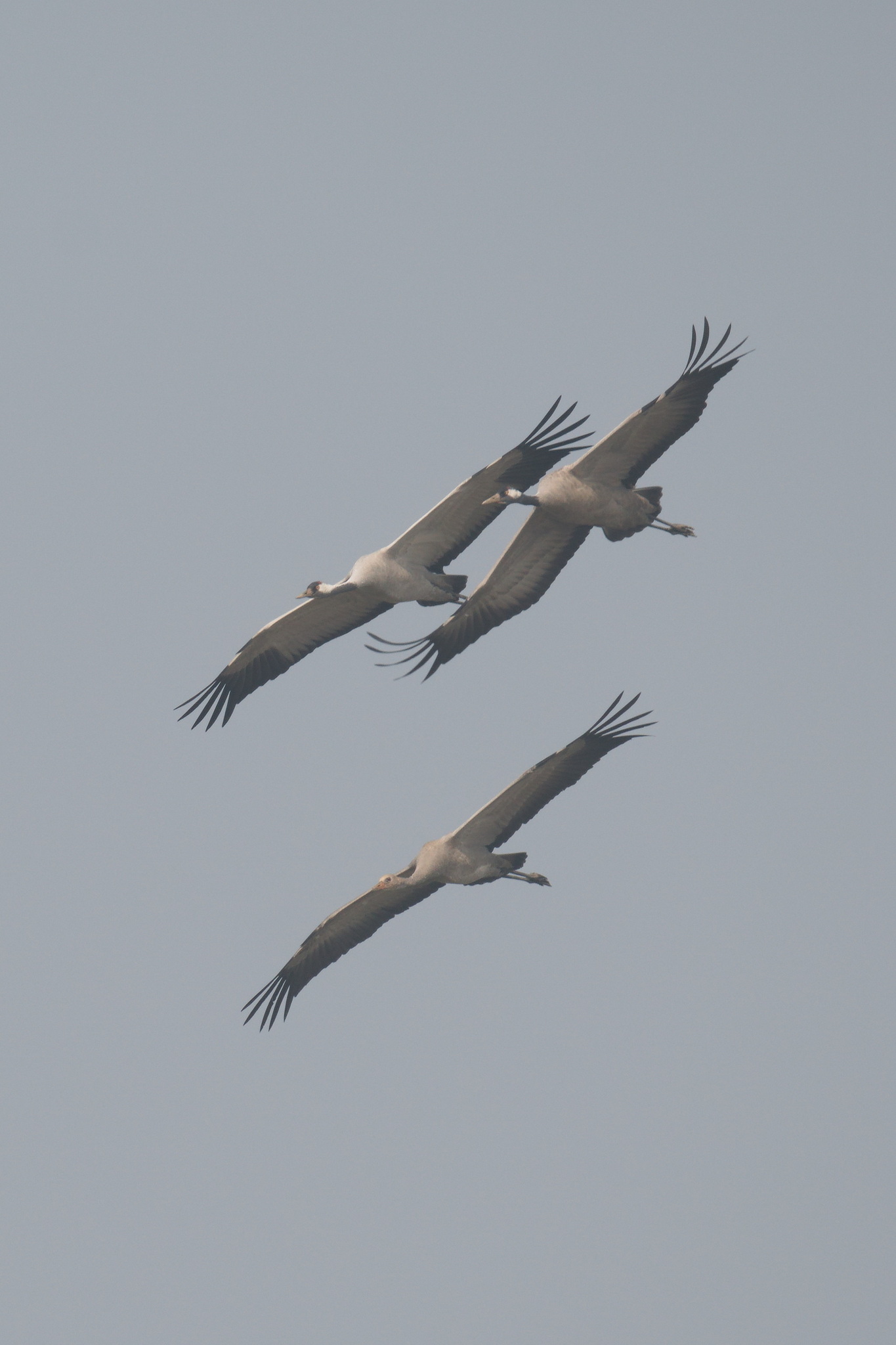
This is a large, imposing crane with a slate-grey body plumage that appears dark overall. Adults measure 100–130 cm in length with an impressive wingspan of 180–240 cm, and weigh between 3–6.1 kg. The head shows striking markings: a blackish forehead and lores contrast with a distinctive bare red crown, while a white streak runs from behind the eye down the sides of the neck to the upper back. The plumage is darkest on the back and rump, becoming paler toward the breast and wings. The wingtips are black, including the primaries, secondary tips, alula, and tail tip, with the greater wing coverts forming dramatic drooping plumes. Males are slightly larger than females. Juveniles lack the adult's bright neck pattern and flowing wing plumes, instead showing yellowish-brown feather tips and a fully feathered crown.
Identification
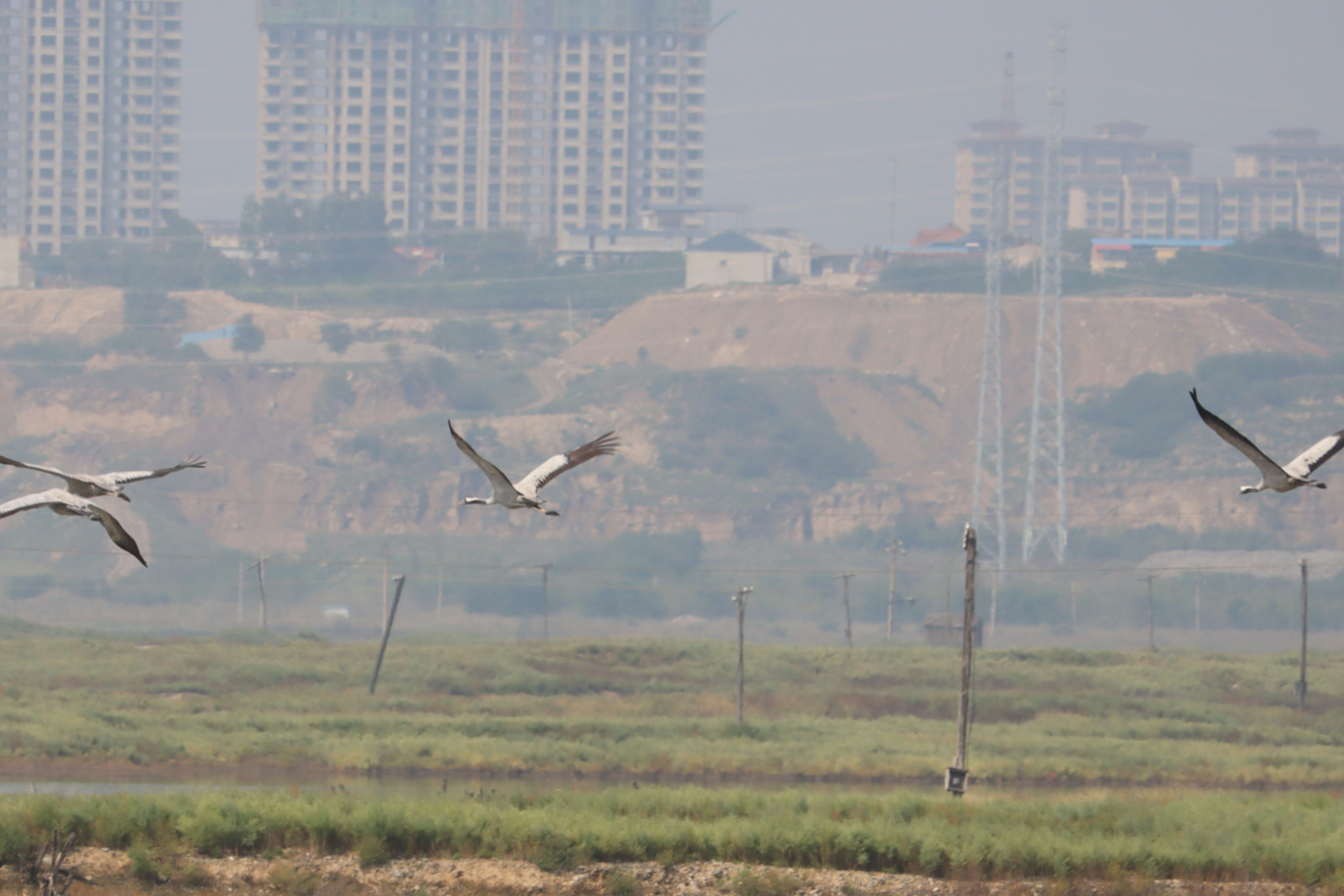
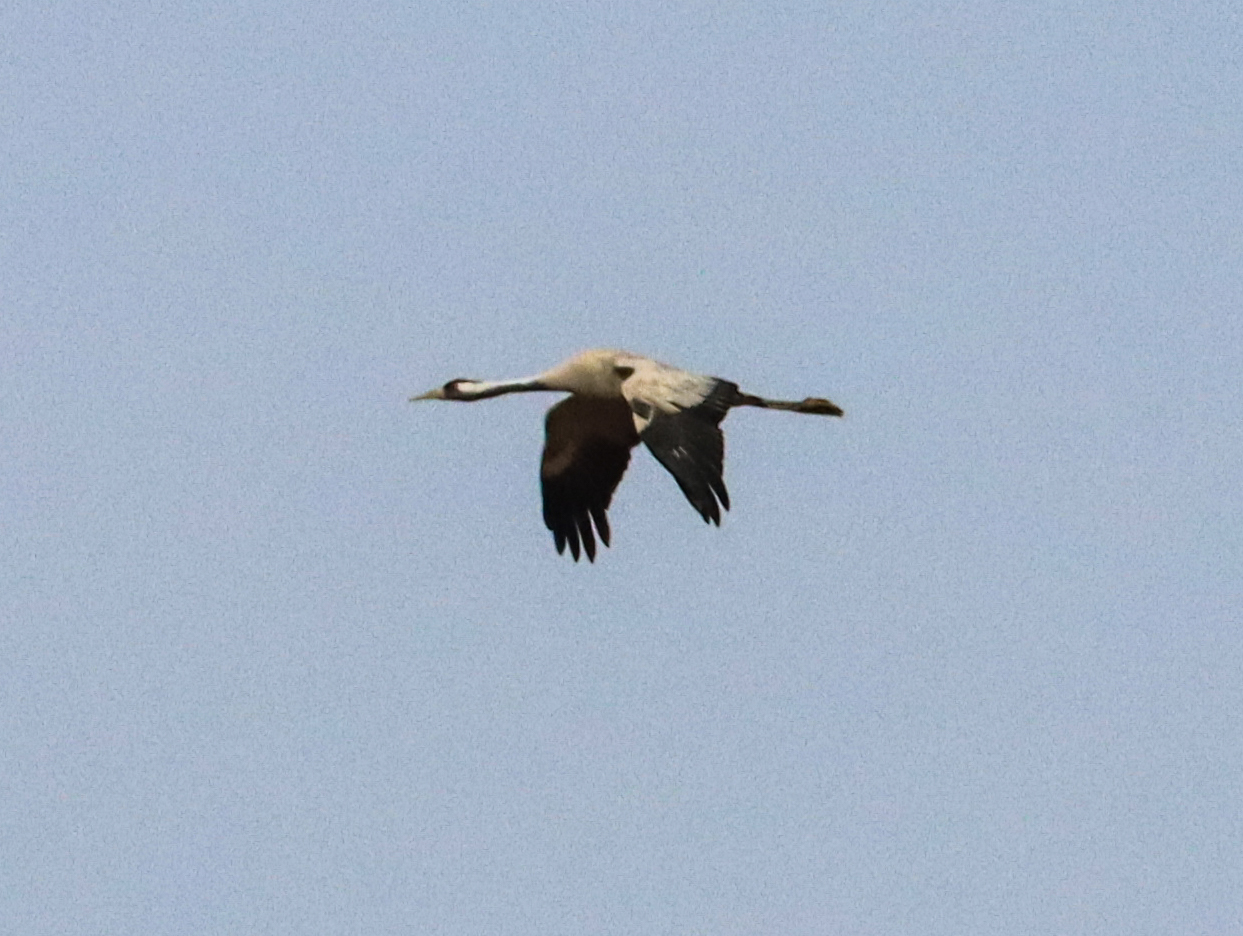
This species is most readily distinguished from similar Asian cranes by its unique combination of plumage features. Unlike the hooded crane and black-necked crane, which it superficially resembles, the common crane shows the distinctive white neck stripe, bare red crown, and the characteristic drooping wing plumes that create a flowing appearance in flight. In flight, the black wingtips and pale body create a striking contrast. The juvenile's yellowish-brown feather tips and lack of adult markings help separate it from experienced birds. The loud, trumpeting call is also characteristic and often the first indication of approaching birds.
Distribution & Habitat
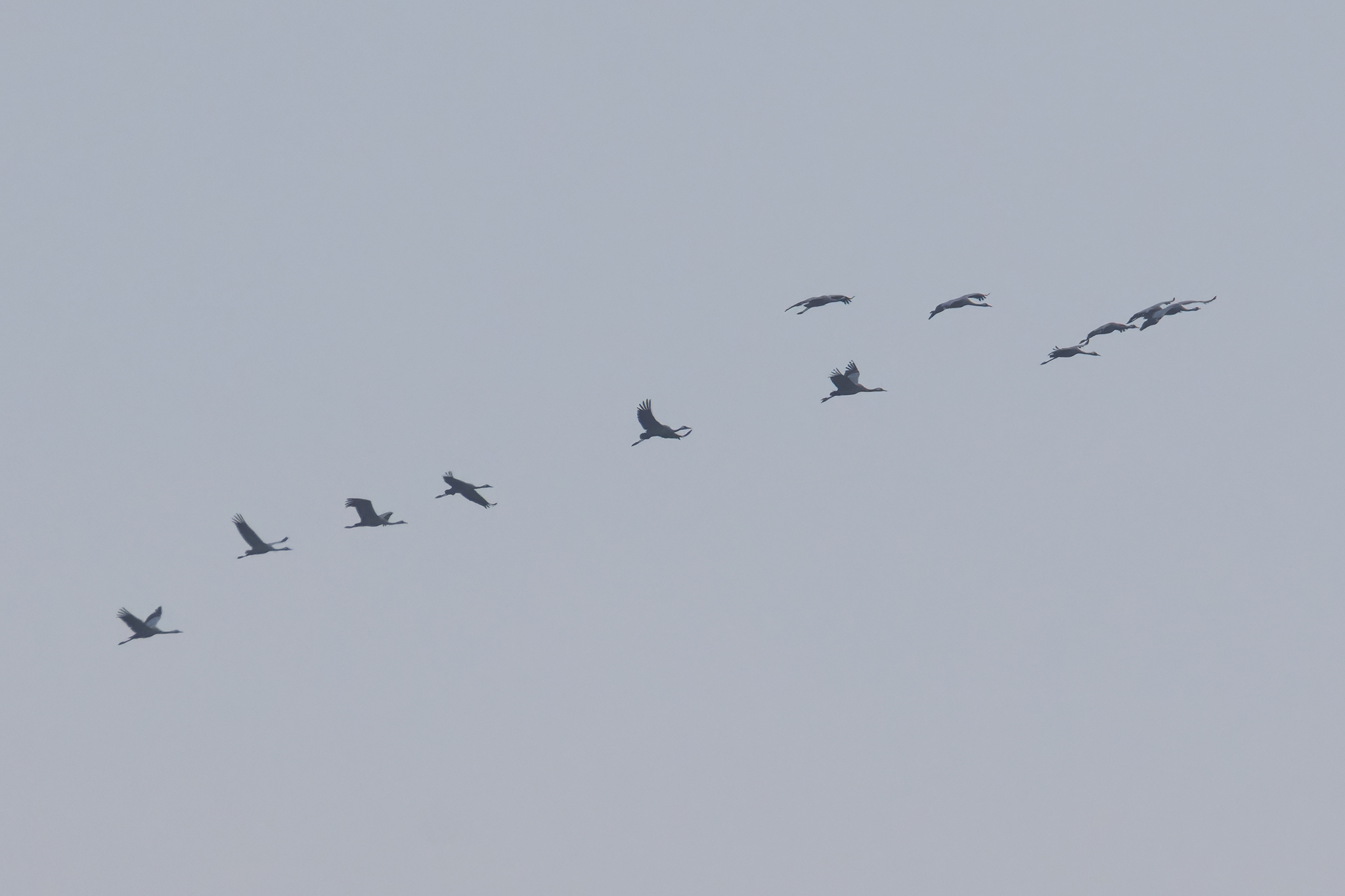
This species breeds across Europe and the Palearctic from the Atlantic coast to Siberia and as far east as the Chukchi Peninsula. The largest populations are found in Russia, Finland and Sweden, with smaller but expanding populations across central and eastern Europe. It inhabits boreal and taiga forests, wetlands, bogs, and marshy areas from sea level to 2,200 m elevation. The species is strongly migratory, with European breeders wintering in Portugal, Spain and northern Africa, while Asian populations winter across the Indian subcontinent, parts of the Middle East, and eastern China. Migration occurs in dramatic flocks flying in V-formation, with major staging sites supporting thousands of birds. Some populations are adapting to milder winters and may now overwinter near breeding areas.
Behavior & Ecology
As an omnivorous species, this crane feeds on plant matter including roots, tubers, seeds, and fruits, while animal foods become more important during breeding season, including insects, amphibians, and small rodents. Foraging occurs in shallow water or on land in small groups. Breeding begins in May, with pairs performing elaborate courtship displays including dances with leaps and pirouettes. The unison call, given by pairs with heads raised, cements the bond between mates. Nests are built in shallow water with dense vegetation nearby, and clutches typically contain two eggs. Both parents share incubation duties and aggressively defend nests from predators. Chicks are precocial, able to walk within 24 hours. The species is highly social outside breeding season, with flocks of up to 400 birds migrating together and thousands gathering at staging areas.
Conservation
The global population was estimated at approximately 500,000 individuals in 2015, with the vast majority nesting in Russia, Finland and Sweden. While the species was once extirpated from much of western Europe, populations have been expanding significantly since the 1980s. Germany now has over 10,000 pairs, and successful recolonization has occurred in Denmark, France, the Netherlands, Czech Republic, and Austria. The United Kingdom hosts a small but growing population of around 72 pairs, supported by reintroduction efforts. However, the species faces threats from habitat loss and degradation due to agricultural expansion, urbanization, wetland drainage, and dam construction. Additional concerns include nest disturbance, utility line collisions, and pesticide poisoning. Mass mortality events from highly pathogenic avian influenza have also been recorded, with over 18,000 birds dying in Germany alone in autumn 2025.
Culture
Despite being extinct in Ireland for over 200 years, this crane holds significant cultural importance in Irish folklore, and recent efforts to reintroduce the species have been met with considerable enthusiasm. In Poland, the artist Józef Chełmoński painted the famous 1870 work 'Departure of Cranes,' now housed in the National Museum in Cracow. The Kranich Museum in Hessenburg, Germany, is dedicated to art and folklore related to the species. In ancient Greek tradition, this bird was sacred to the god Hephaestus and features prominently in his iconography. In the Indian states of Rajasthan and Gujarat, the species appears in numerous folk songs, particularly those sung by newly married women longing for absent husbands, with the crane traditionally viewed as a messenger between loved ones.
Source: Wikipedia · CC BY-SA 3.0
Taxonomy
- Order
- Gruiformes
- Family
- Gruidae
- Genus
- Grus
- eBird Code
- comcra
Distribution
breeds northern Eurasia; winters to northern Africa, southern India, and southeastern Asia
Data Sources
Species description from Wikipedia, licensed under CC BY-SA 3.0.
Bird images and sounds sourced from GBIF, contributed by citizen scientists worldwide under Creative Commons licenses.
Taxonomy data from AviList 2025.