
Passeriformes / Sturnidae / Gracupica
Black-collared Starling
Gracupica nigricollis · 黑领椋鸟
Introduction
A species of starling in the genus Gracupica, native to southern China and mainland Southeast Asia, with introduced populations in Taiwan, Malaysia, and Singapore. It inhabits grasslands, dry forests, and human settlements. The IUCN assesses it as Least Concern.
Description
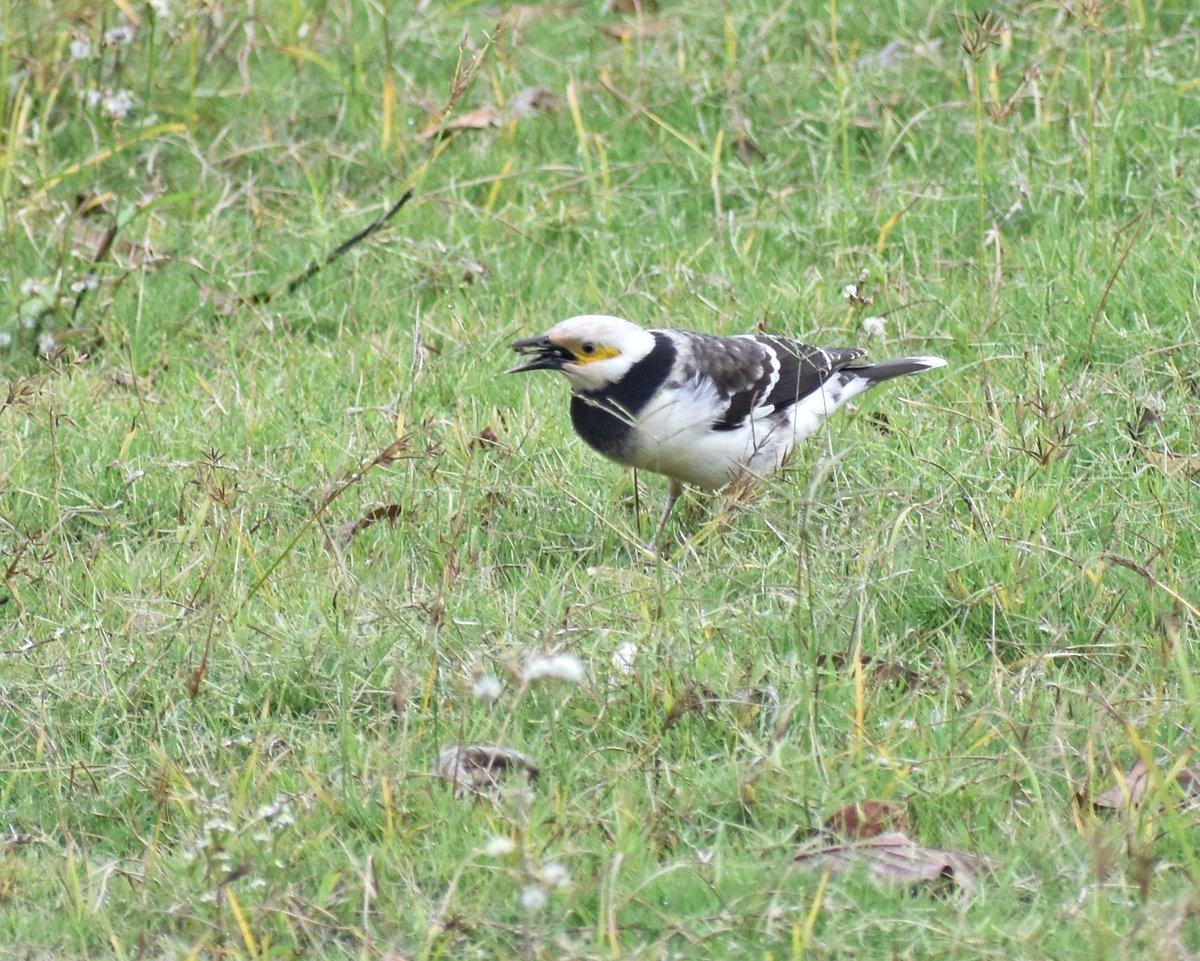
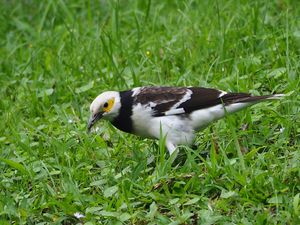
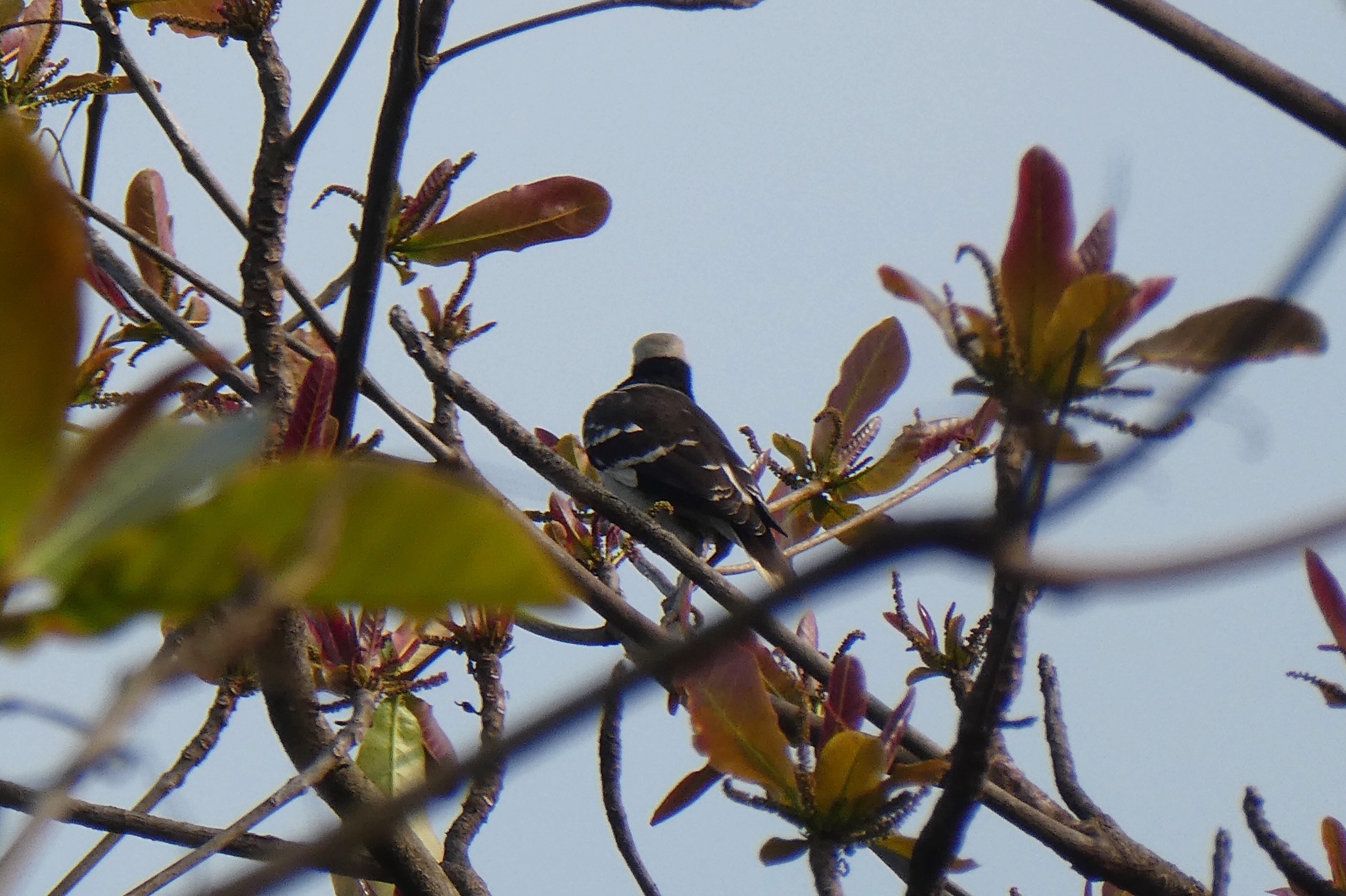
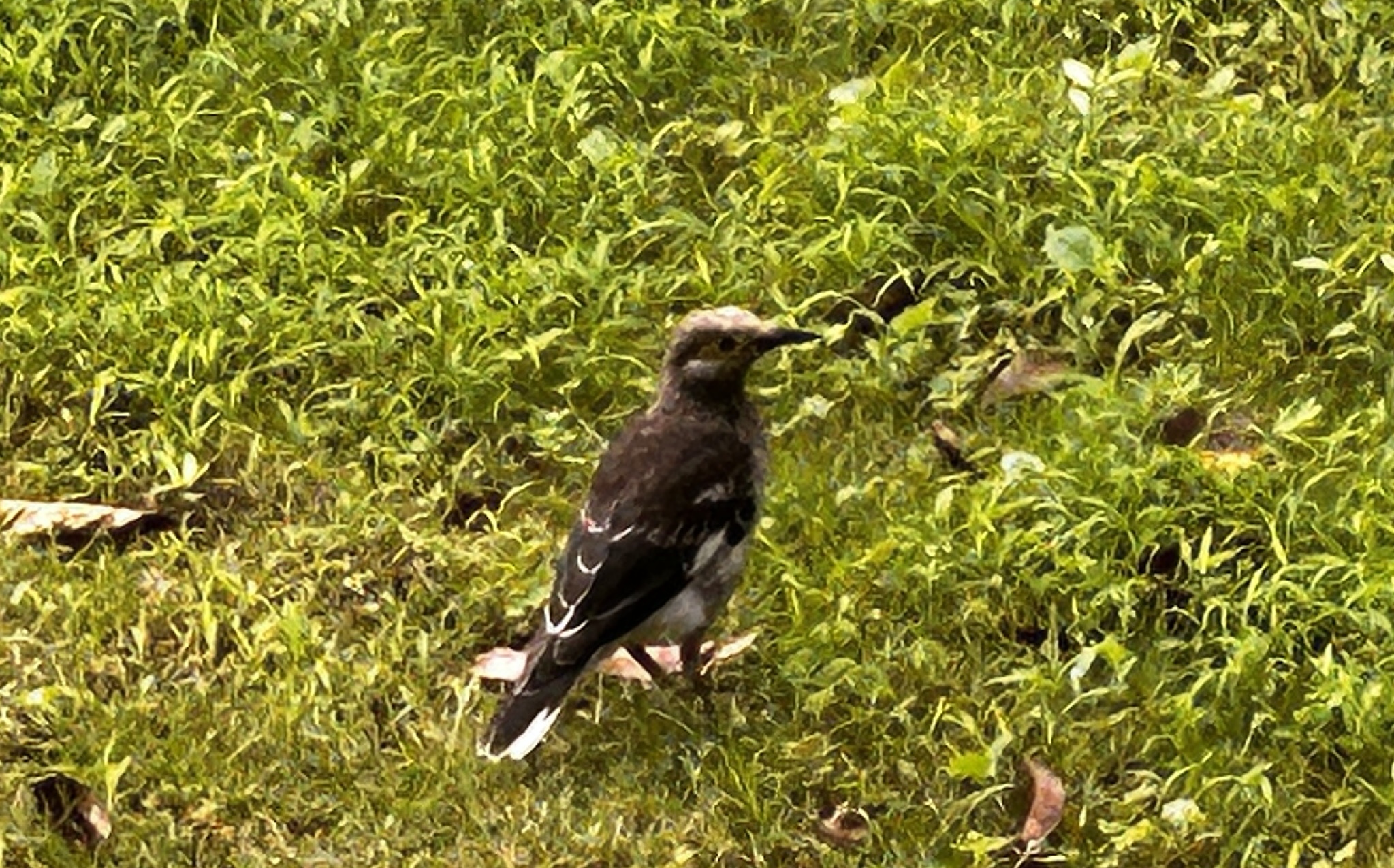
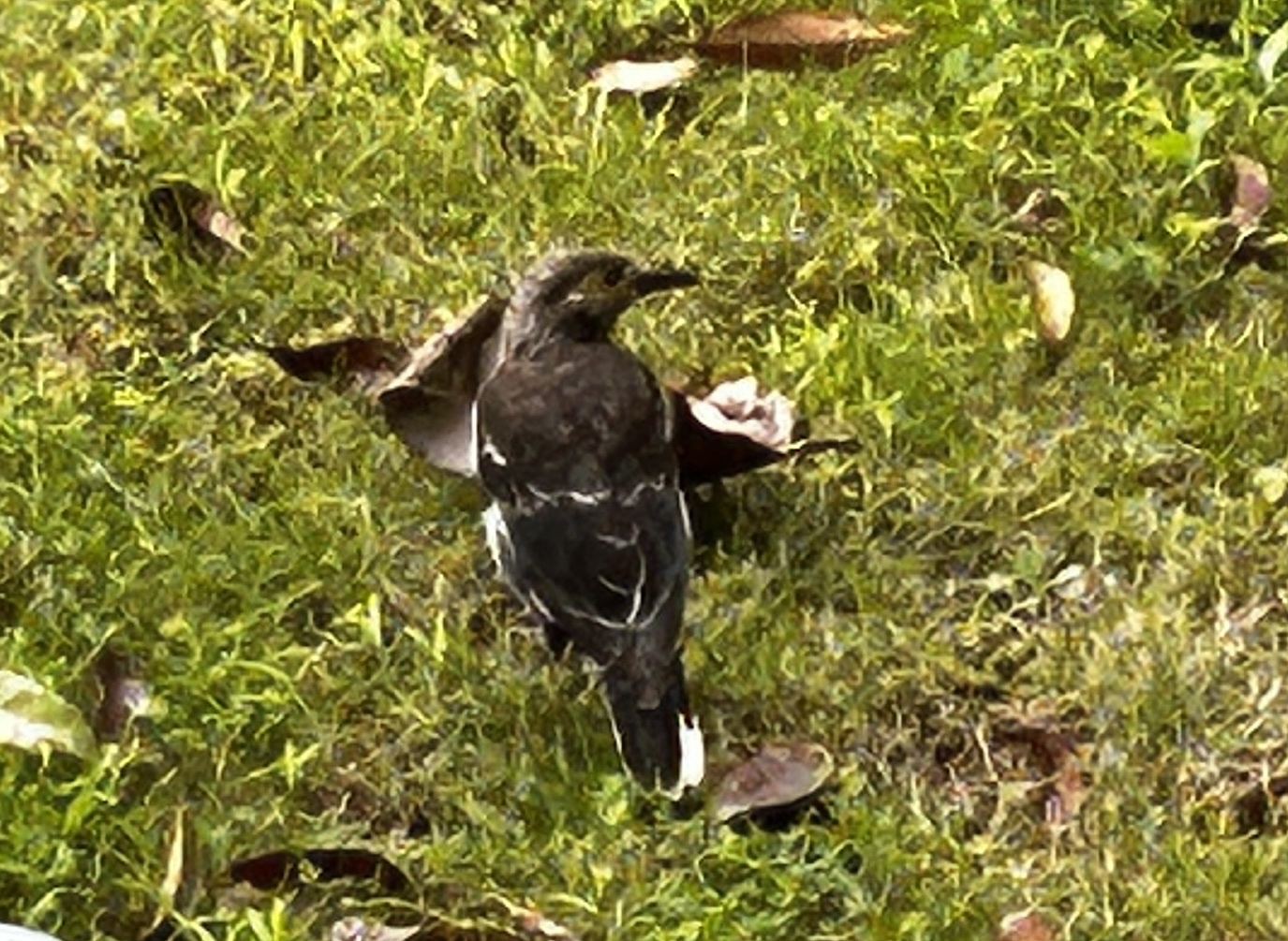
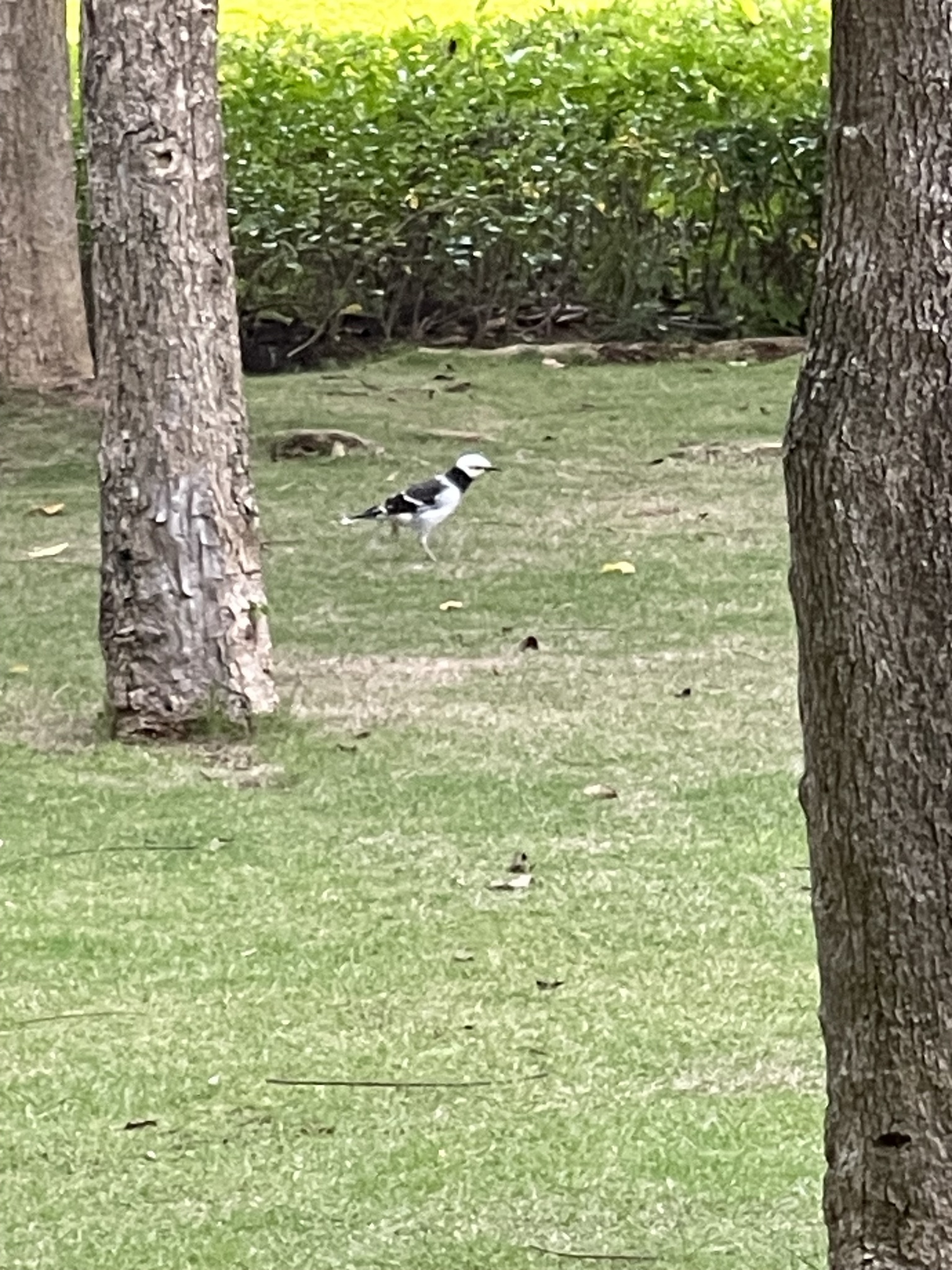
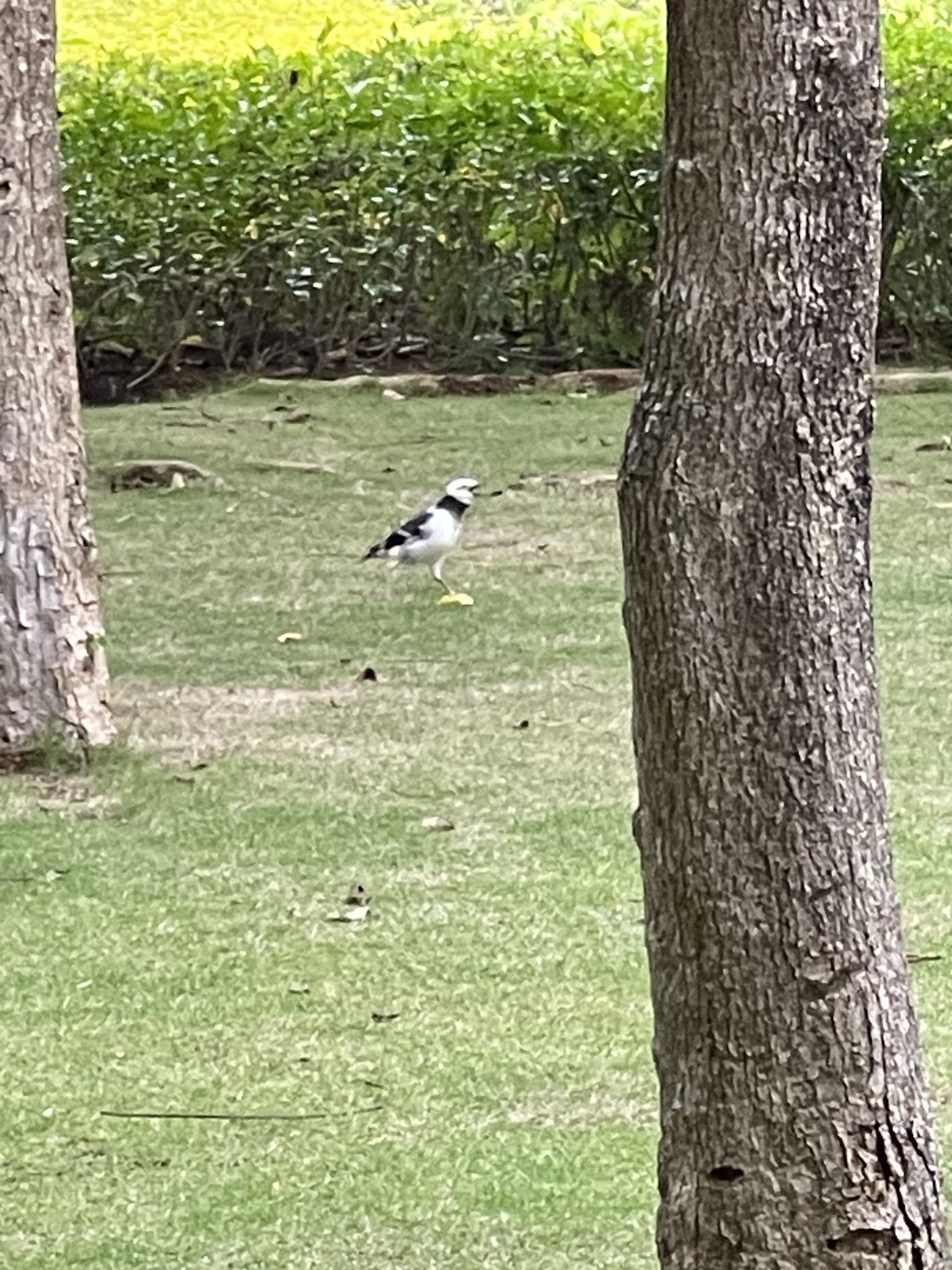
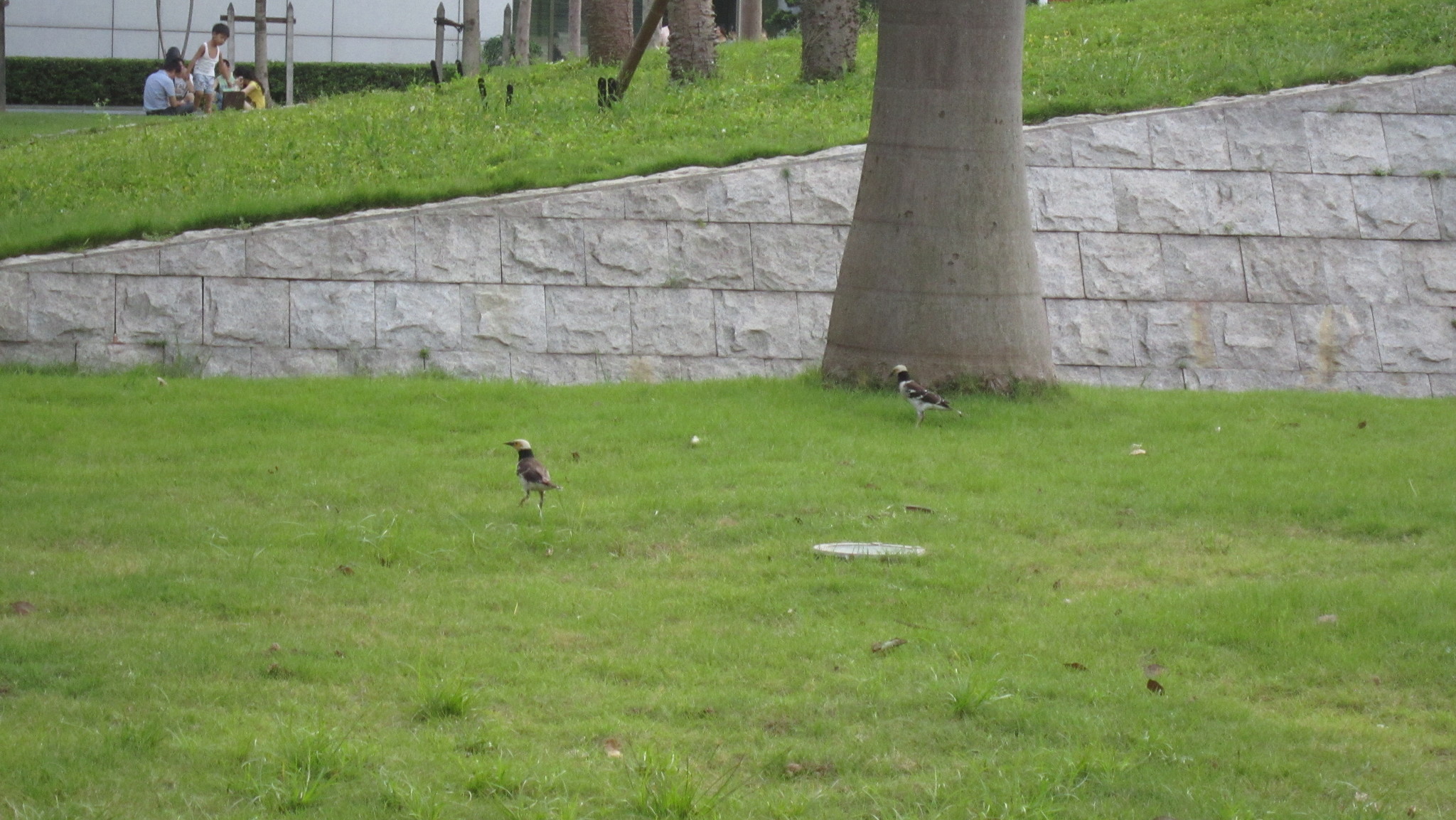
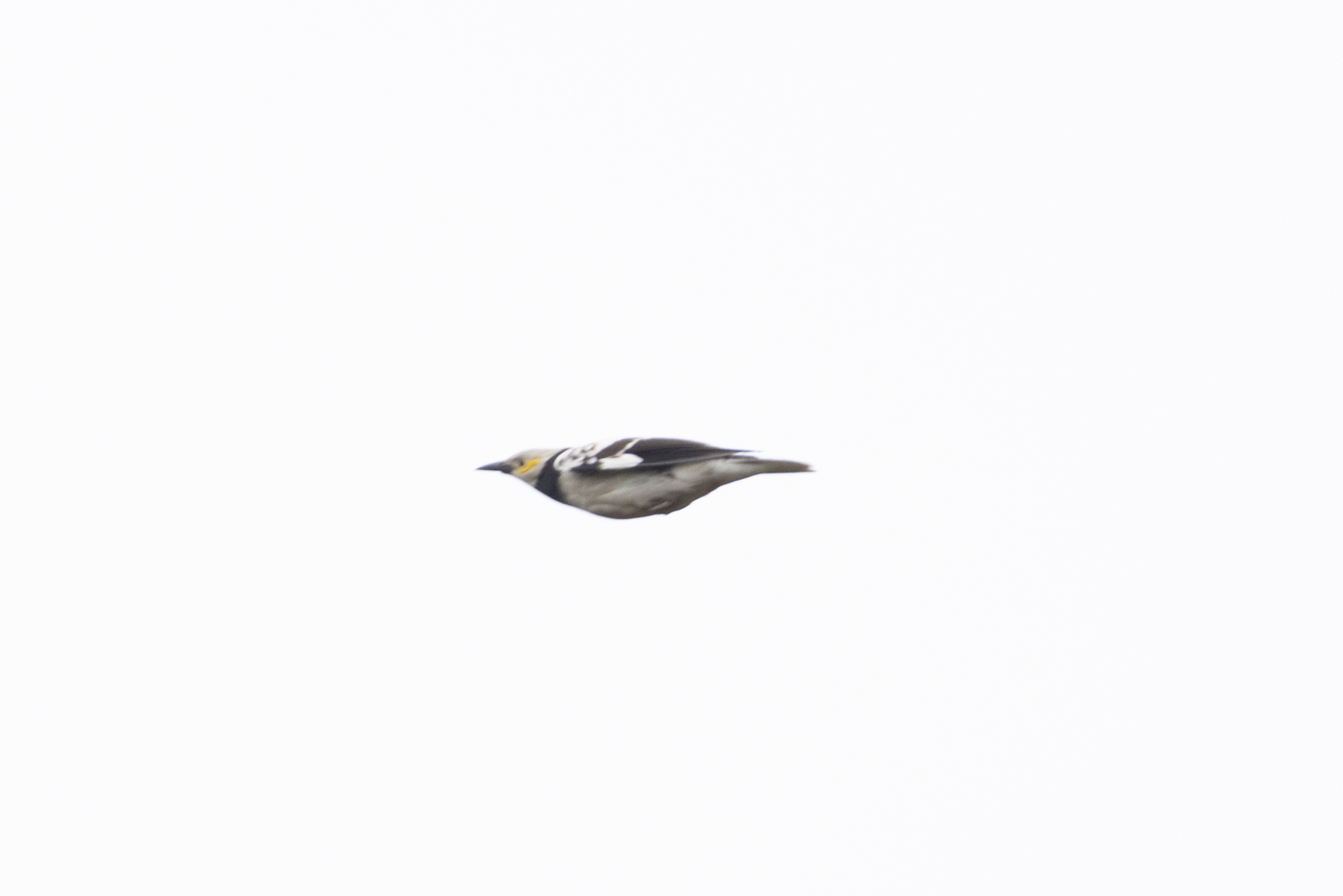
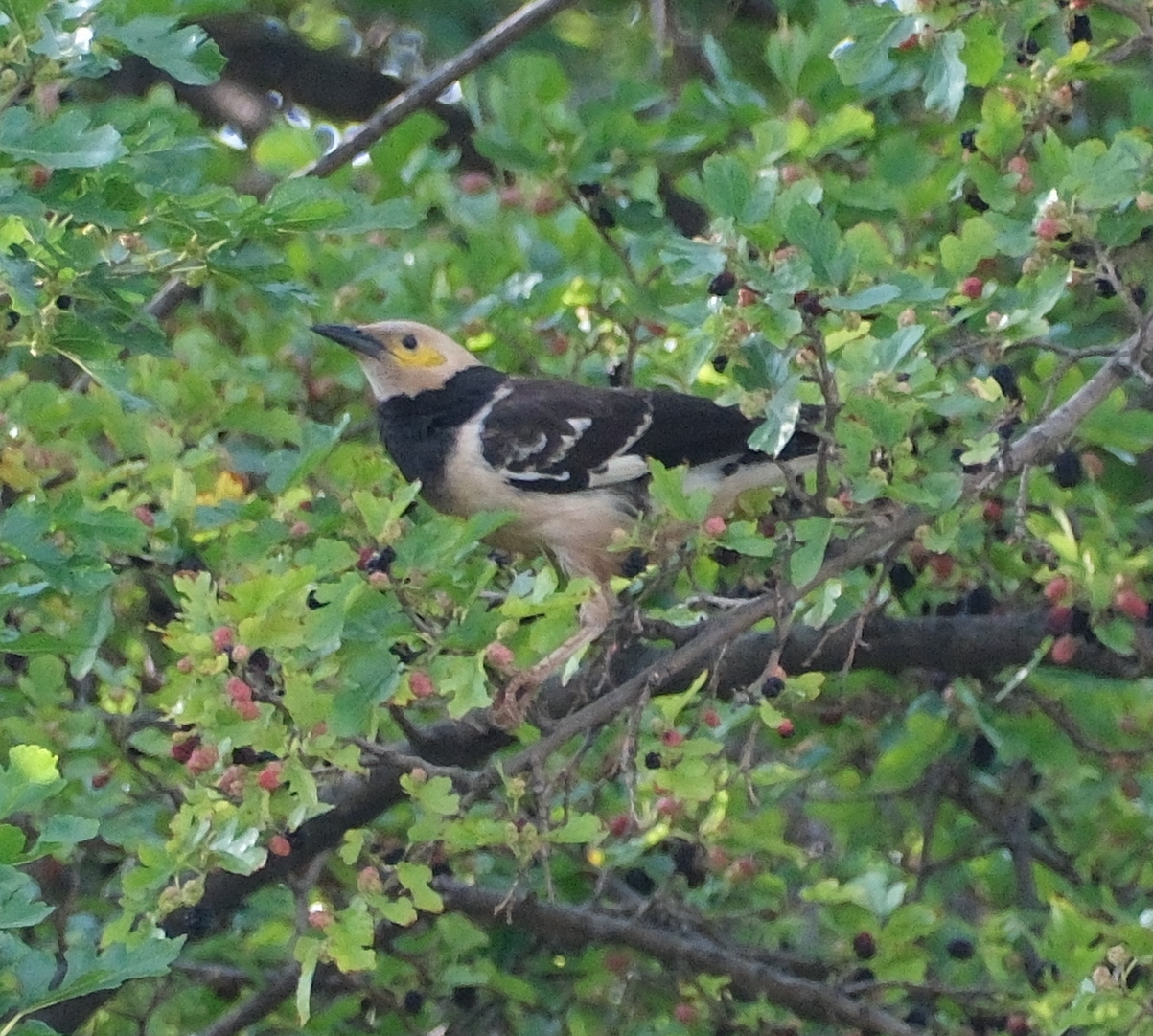
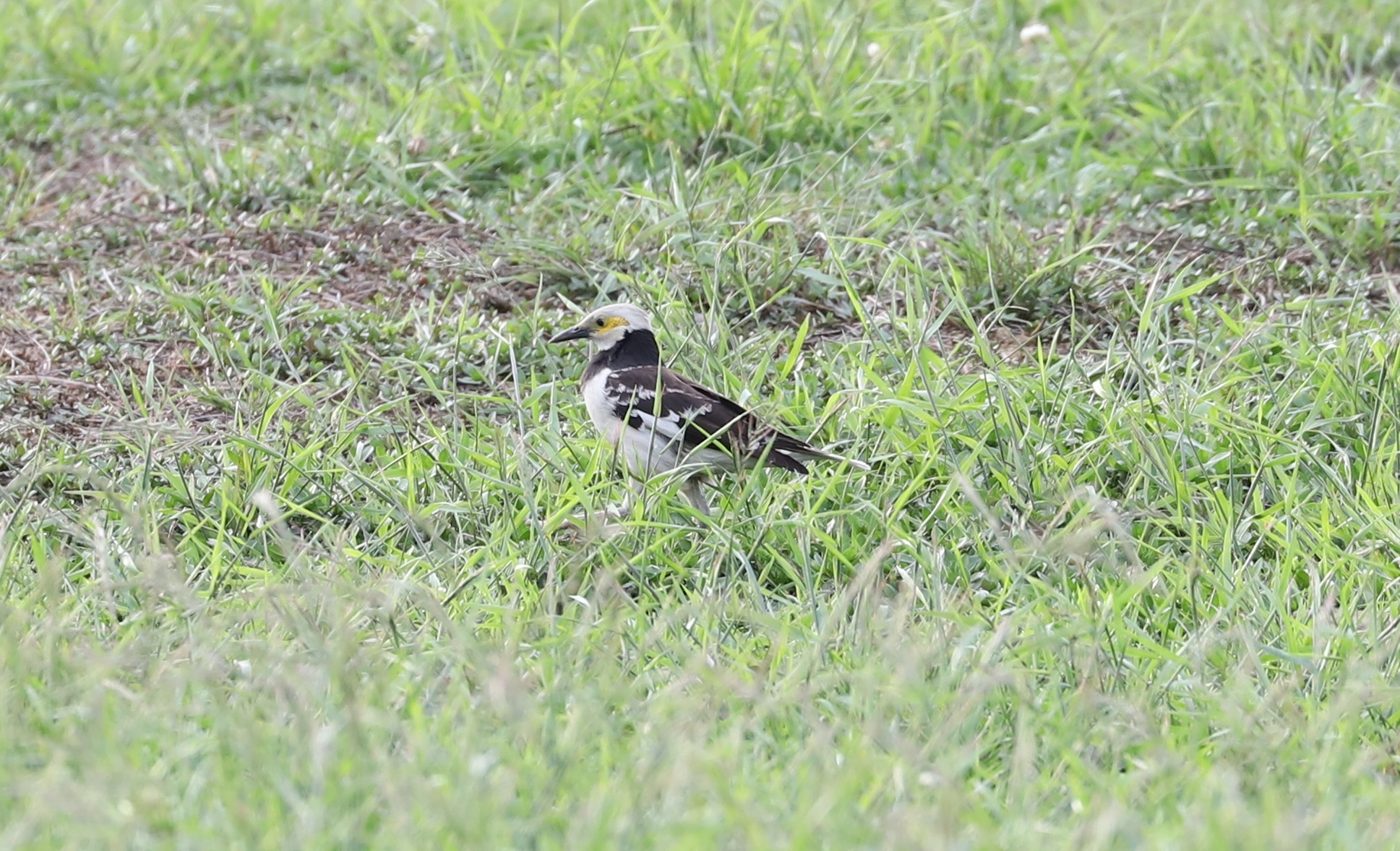
Length is 26–30 cm (10–12 in). The head is white with a yellow patch of bare skin around the eye and a black collar around the neck. The mantle, back, and wings are dark brown, appearing almost black. Underparts are white, often with a grey-brown tinge. Tail and most covert and flight feathers are tipped white, with primary coverts completely white. The beak is black, and legs are pale grey. Males and females are alike. Juveniles are browner with a streaked neck and breast; they have an eye-patch but lack the collar.
Identification
Distinctive white head, black neck collar, and yellow eye-patch differentiate it from similar species. Flight feathers show white tips, and primary coverts are completely white.
Distribution & Habitat
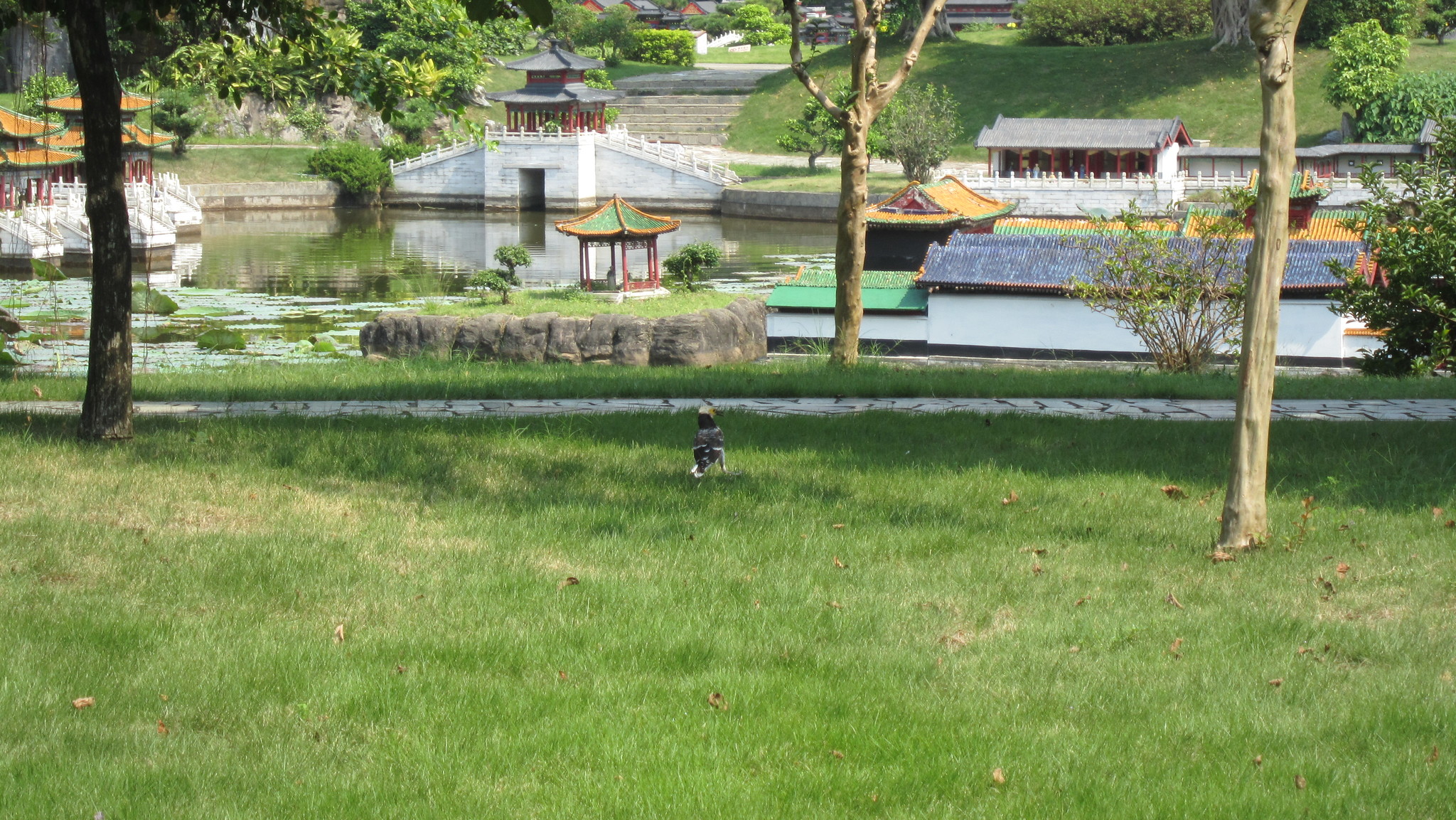
Native range extends from Fujian to Yunnan in southern China, south through Burma, Laos, Cambodia, Vietnam, and Thailand. An individual was recorded in Brunei, possibly as a vagrant or escaped captive. Introduced populations exist in Taiwan, Malaysia, and Singapore. Habitats include grassland, dry forest, cultivated areas, and human settlements, mostly at low elevations but up to 2,000 m (6,600 ft).
Behavior & Ecology
Forages on the ground, sometimes around livestock, feeding on insects, earthworms, and seeds. Highly vocal with calls including a jay-like 'kraak kraak', a whistling 'prrü' resembling a bee-eater, and a 'pü-pü-pü-pü' similar to a rufous-capped babbler. Song is transcribed as 'tcheeuw-tchew-trieuw', accompanied by chest-puffing. Courtship displays involve pairs facing each other with ruffled feathers and open beaks, or drooping wings and bowing heads, interspersed with chasing. Pairs engage in allopreening. Breeding seasons vary: February–May in Thailand, March–July in China, and April–August in Burma. Nests are large, domed structures of twigs, grasses, feathers, and flowers built in trees, often reused. Nesting occurs in colonies with clutches of three to five eggs.
Conservation
Assessed as Least Concern by the IUCN. Deforestation has benefited the species, leading to range expansion and an increasing population trend.
Source: Wikipedia · CC BY-SA 3.0
Taxonomy
- Order
- Passeriformes
- Family
- Sturnidae
- Genus
- Gracupica
Distribution
open country and scrub of southern China and southeastern Asia
Vocalizations
Data Sources
Species description from Wikipedia, licensed under CC BY-SA 3.0.
Bird images and sounds sourced from GBIF, contributed by citizen scientists worldwide under Creative Commons licenses.
Taxonomy data from AviList 2025.