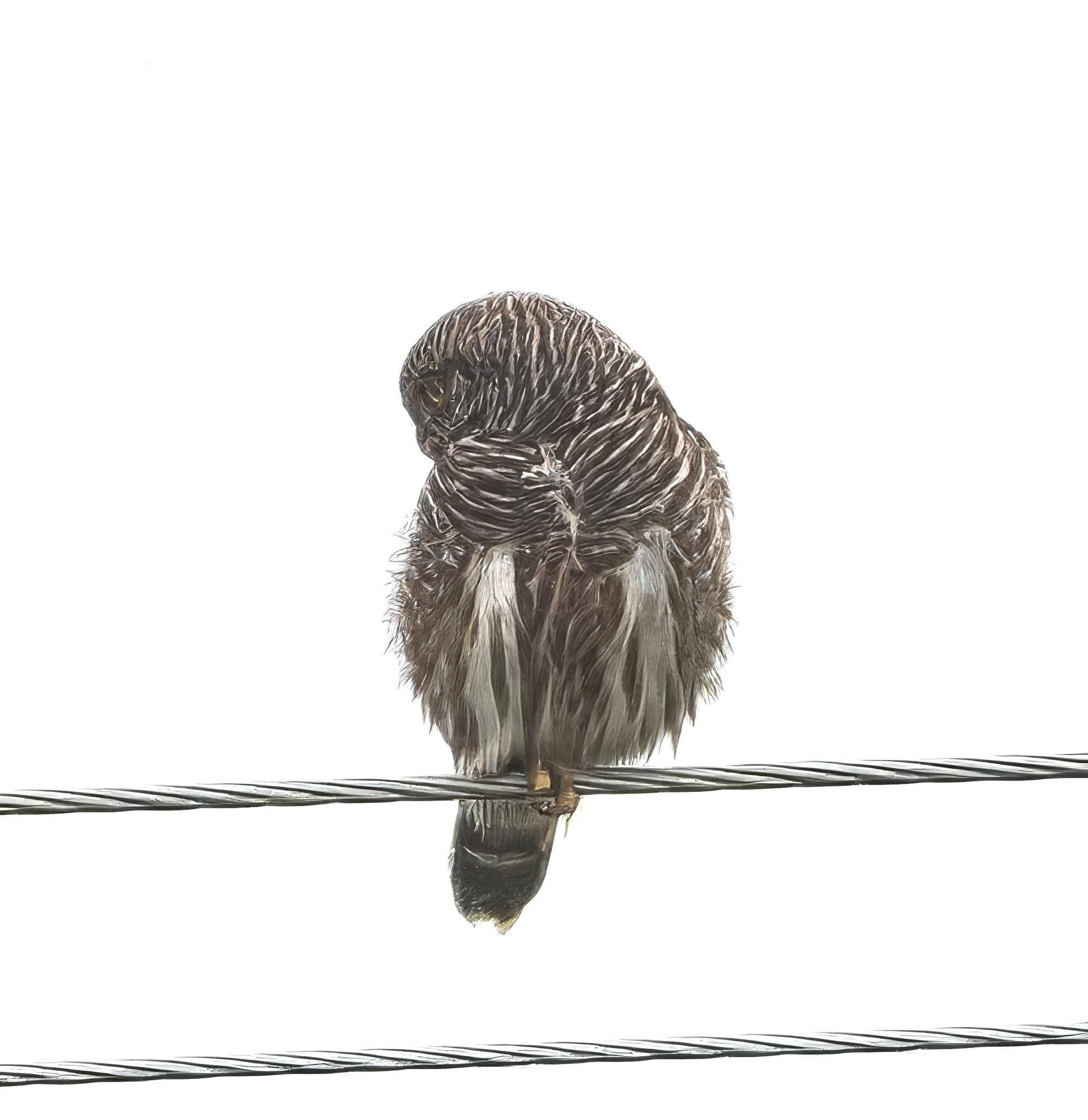
Strigiformes / Strigidae / Glaucidium
Asian Barred Owlet
Glaucidium cuculoides · 斑头鸺鹠
Introduction
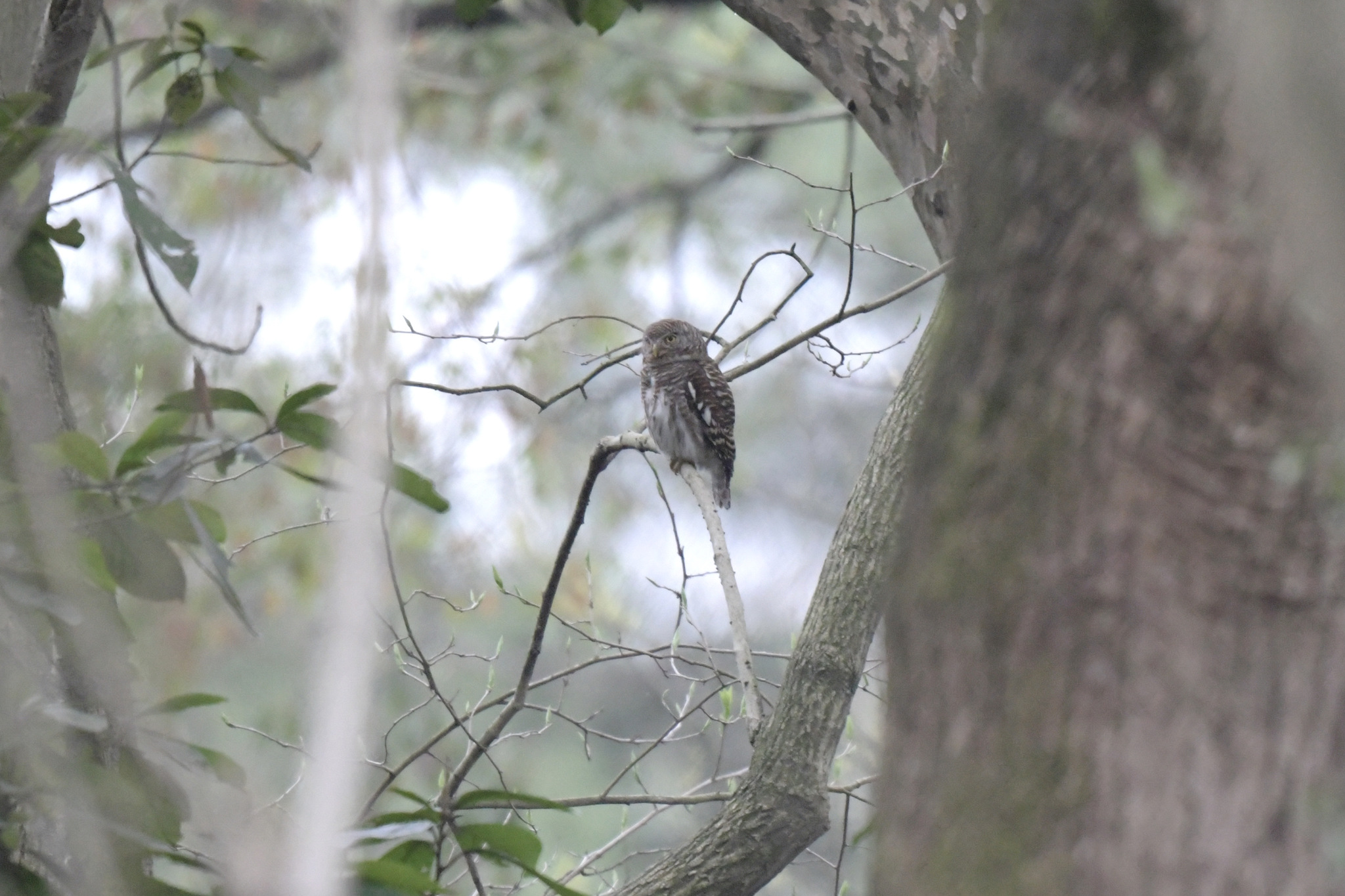
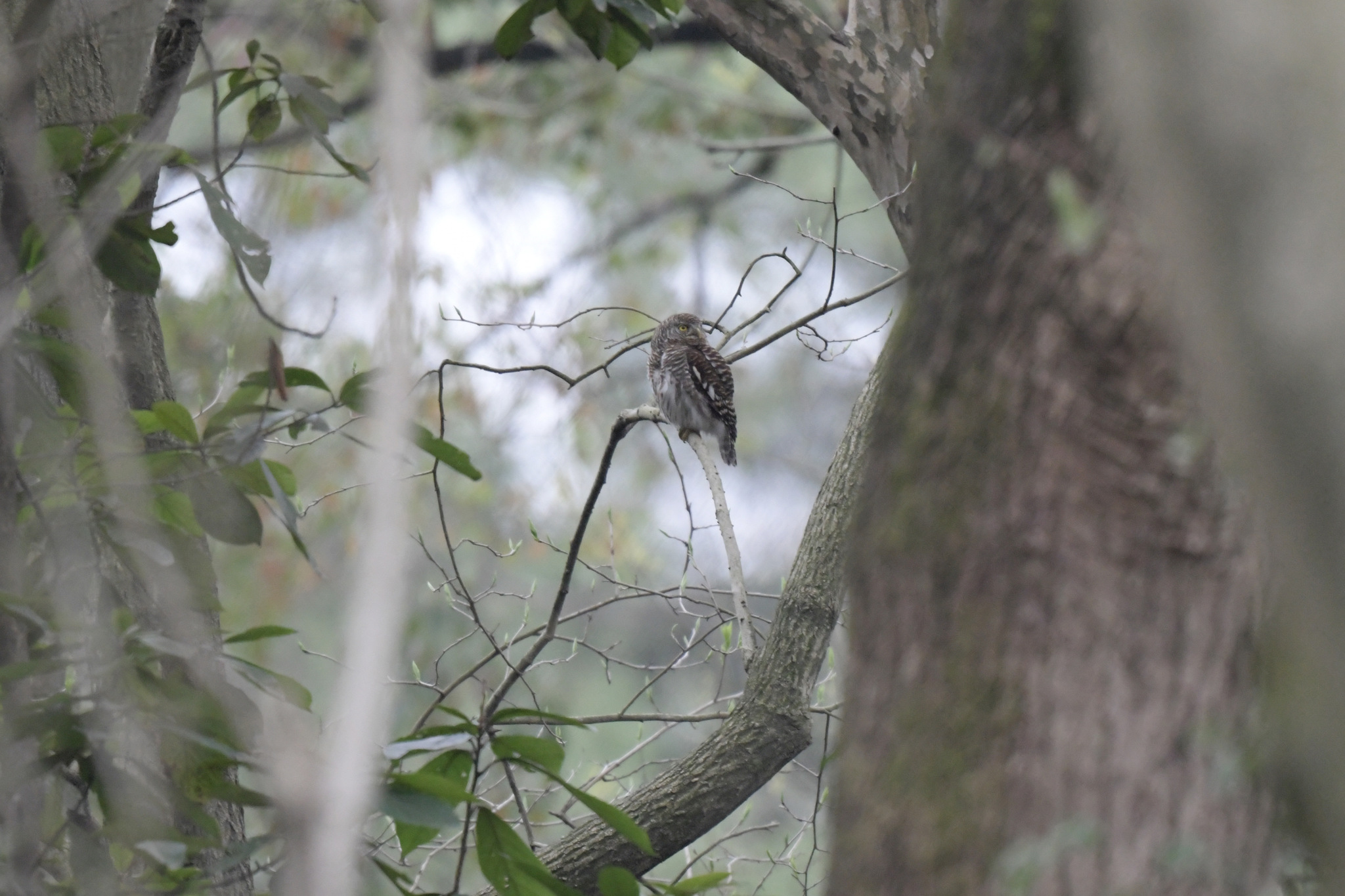
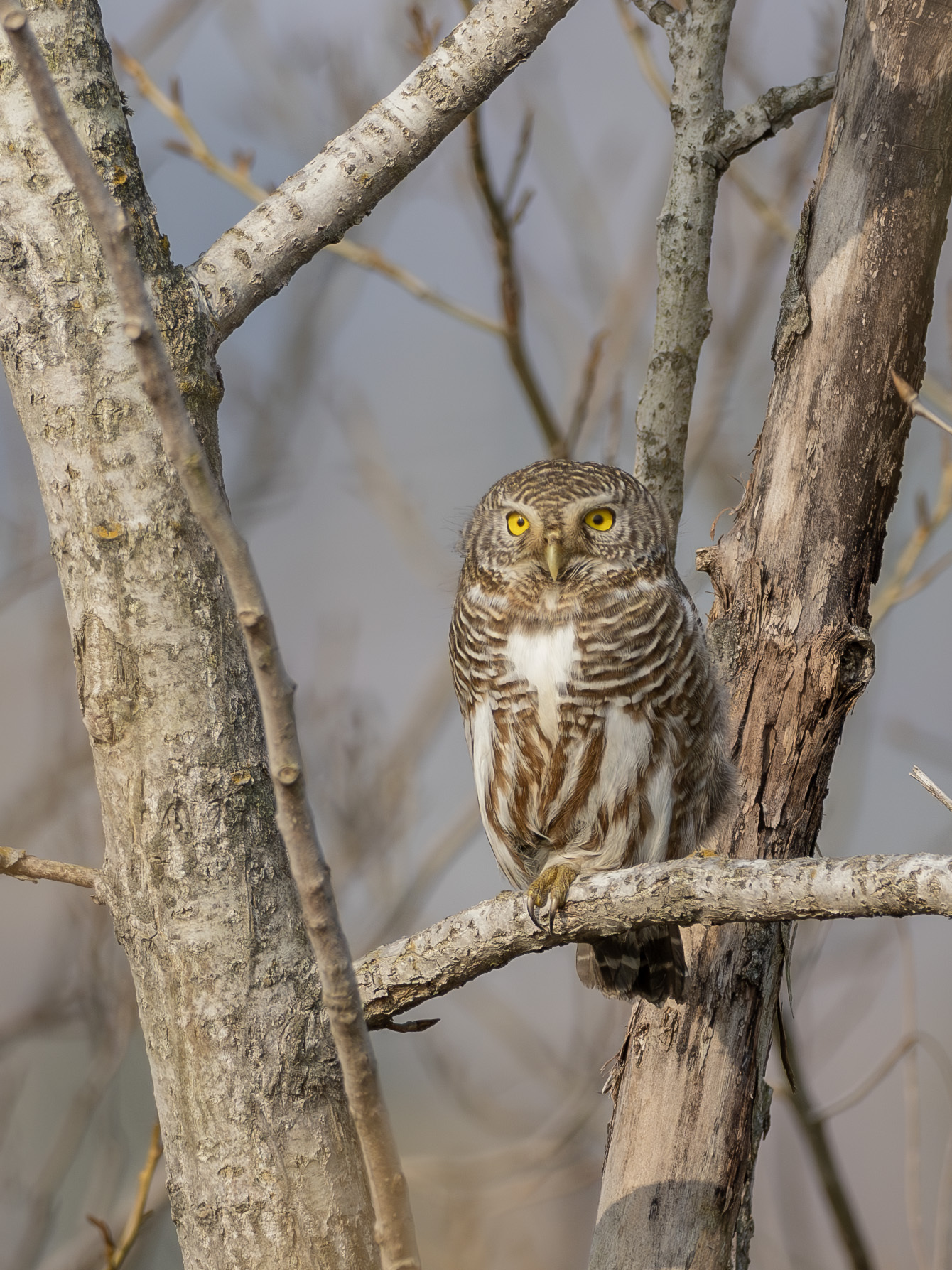
A pygmy owl species in the family Strigidae, native to forests and shrublands from mainland Southeast Asia to the Himalayan foothills of northern Pakistan. It measures 22–25 cm in length, making it one of the larger pygmy owls. Primarily insectivorous, it also consumes lizards, small rodents, and birds. The species is mainly diurnal and lacks false eyespots on the nape.
Description
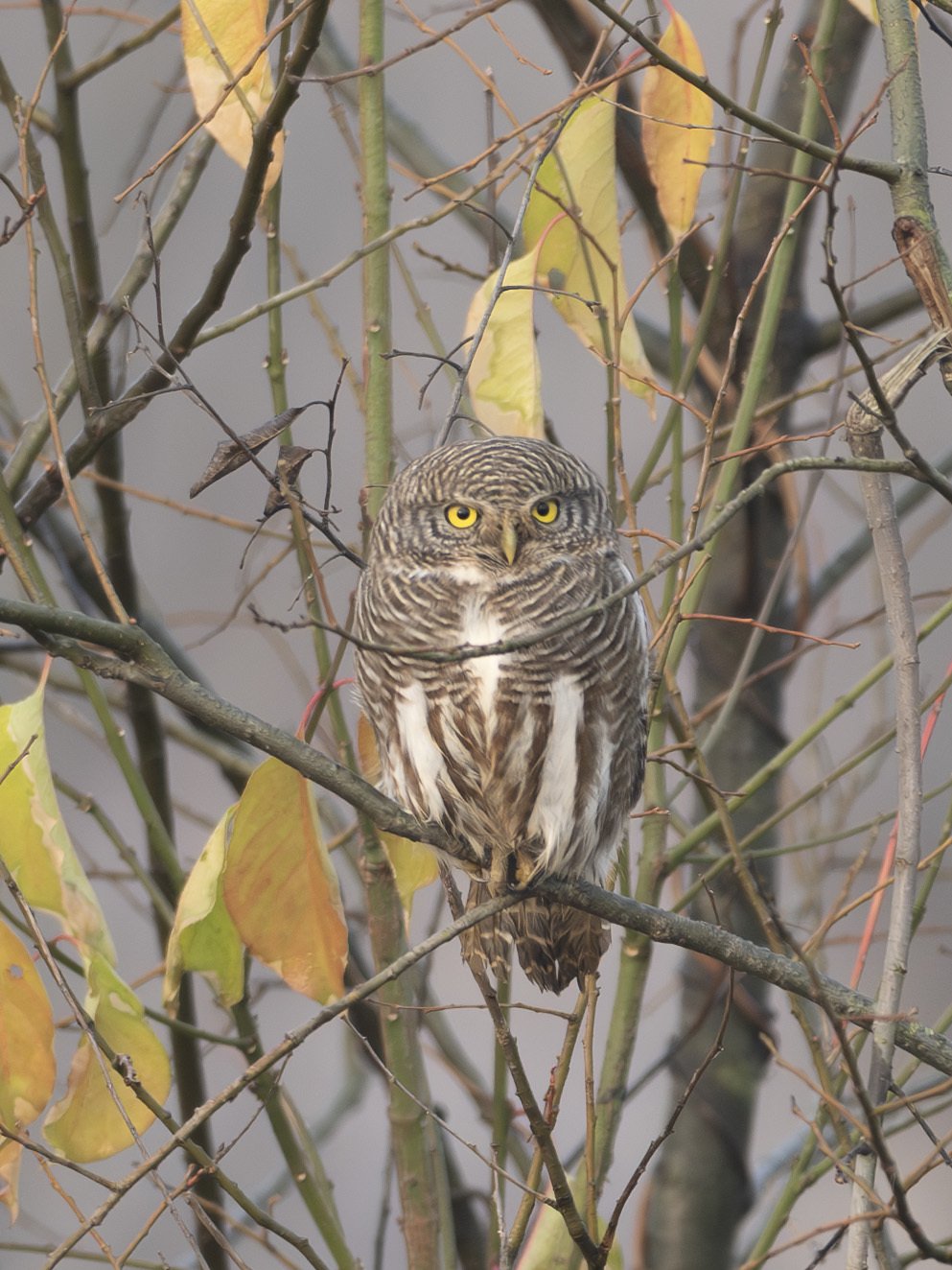
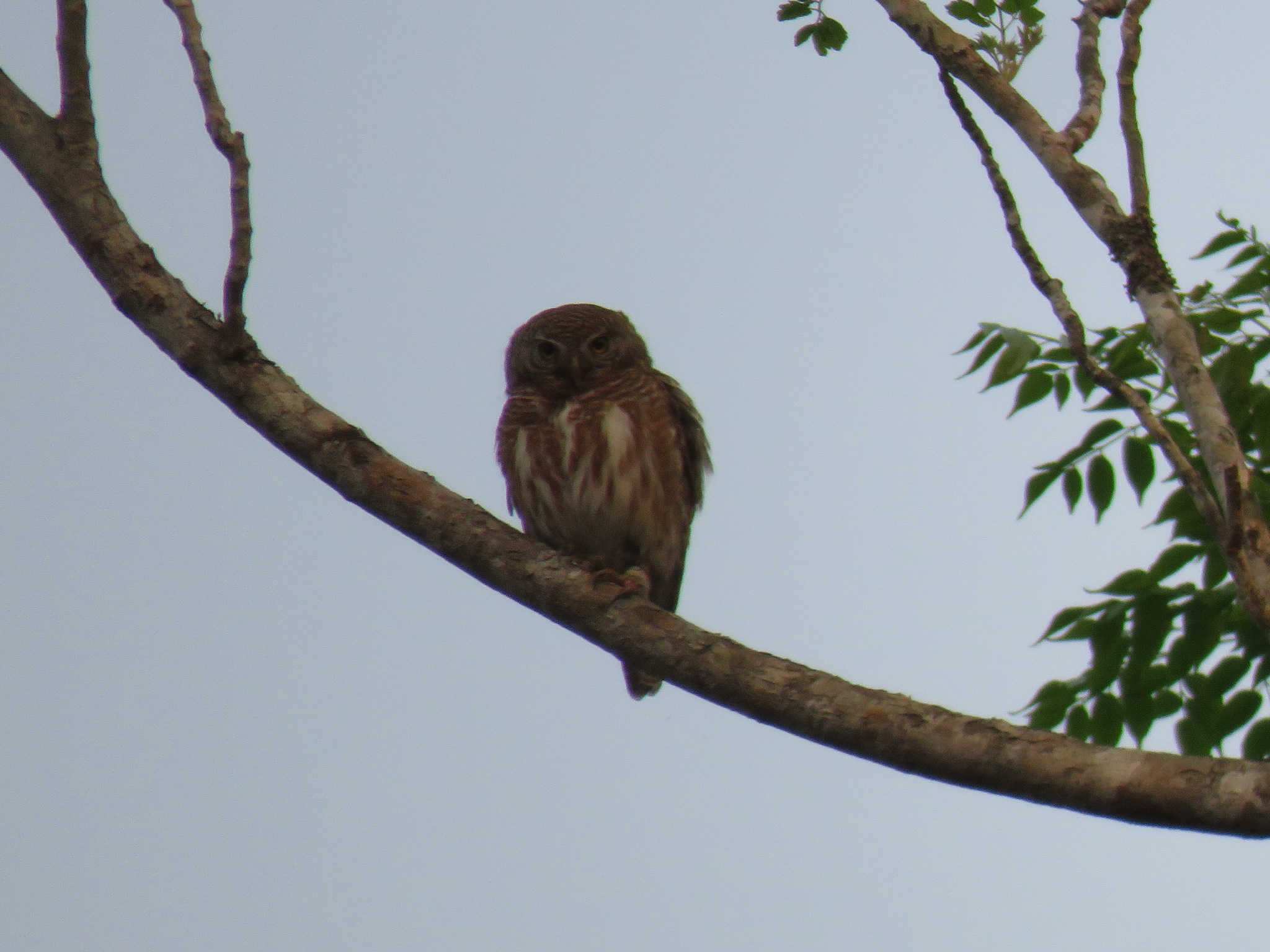
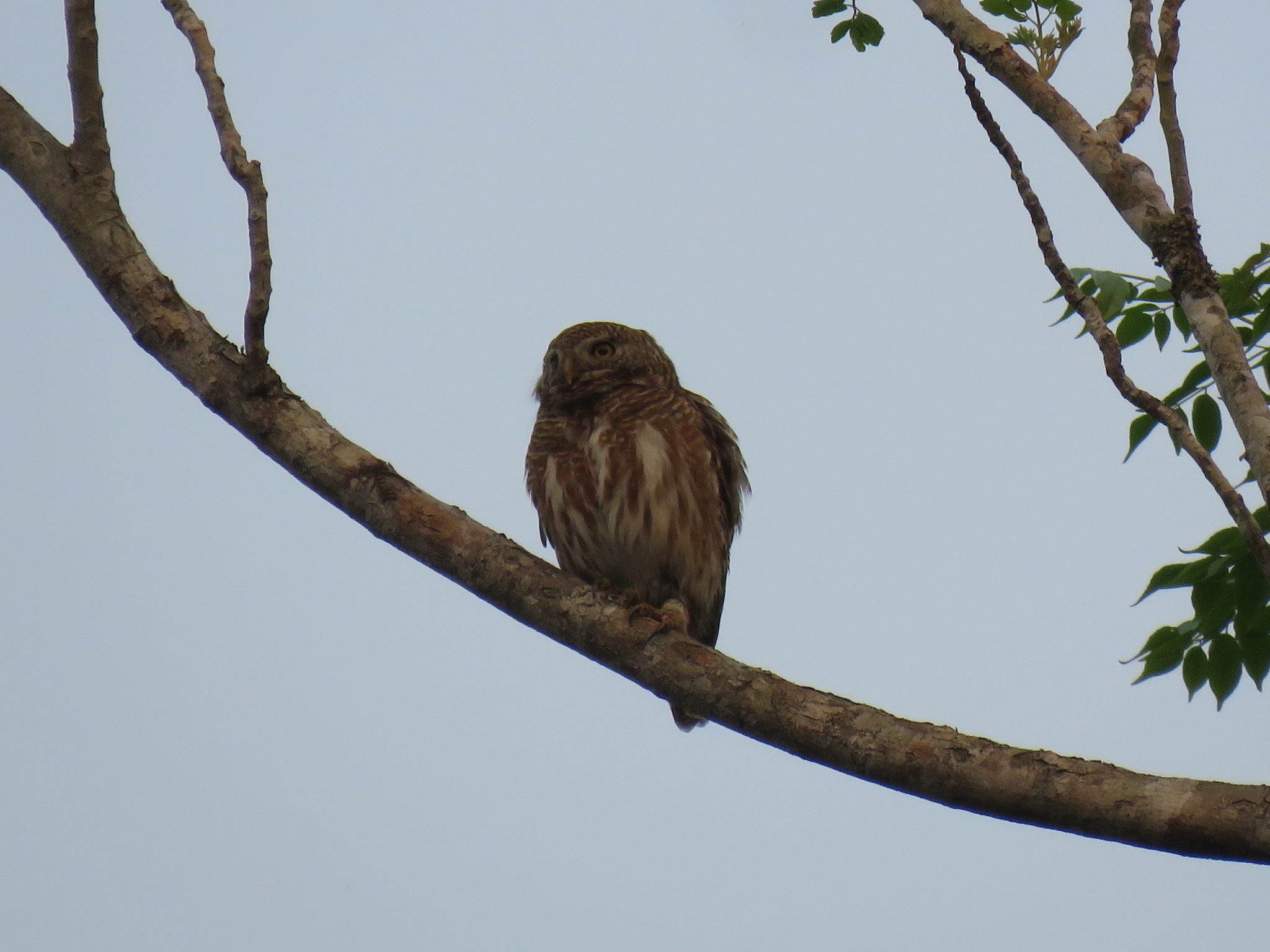
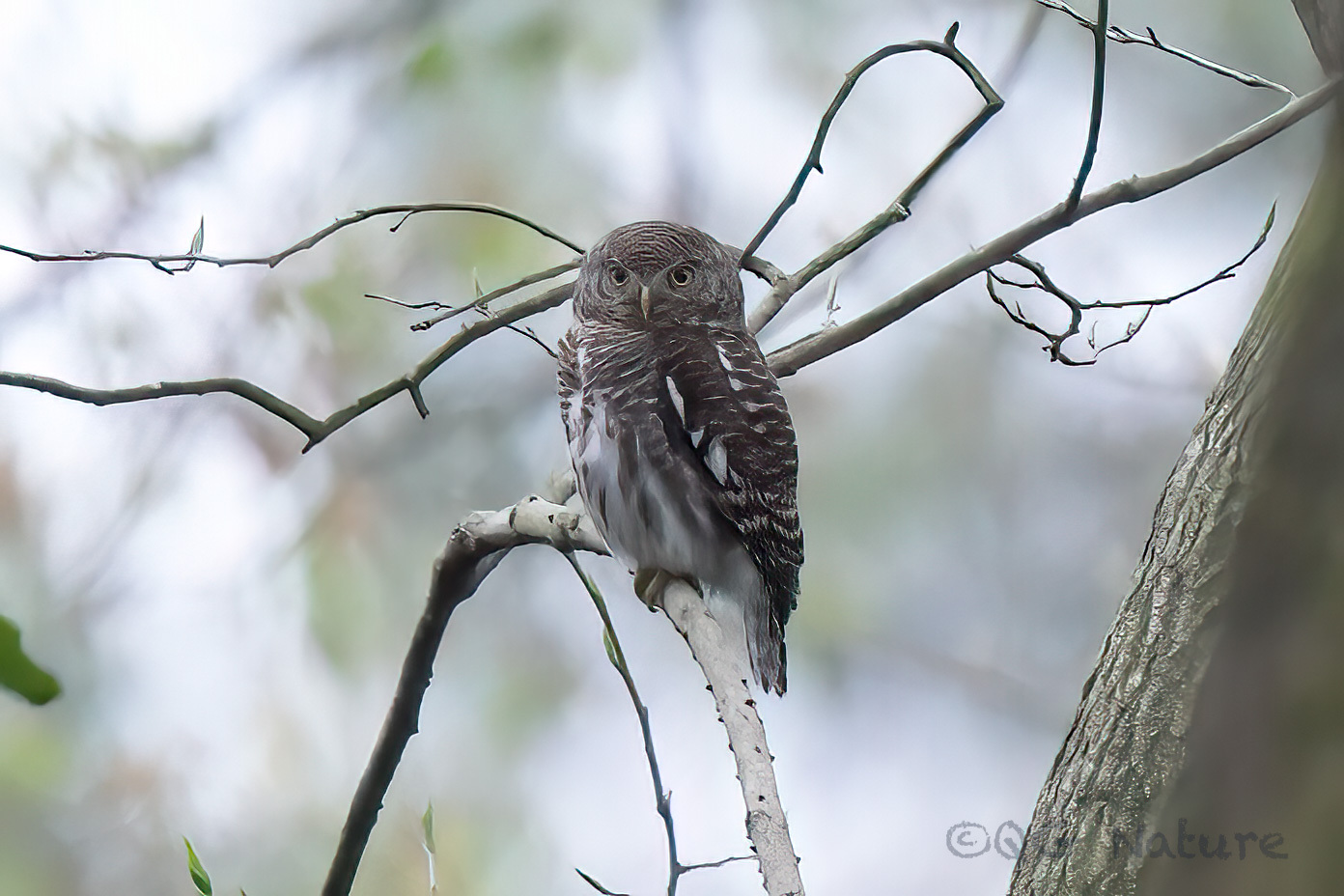
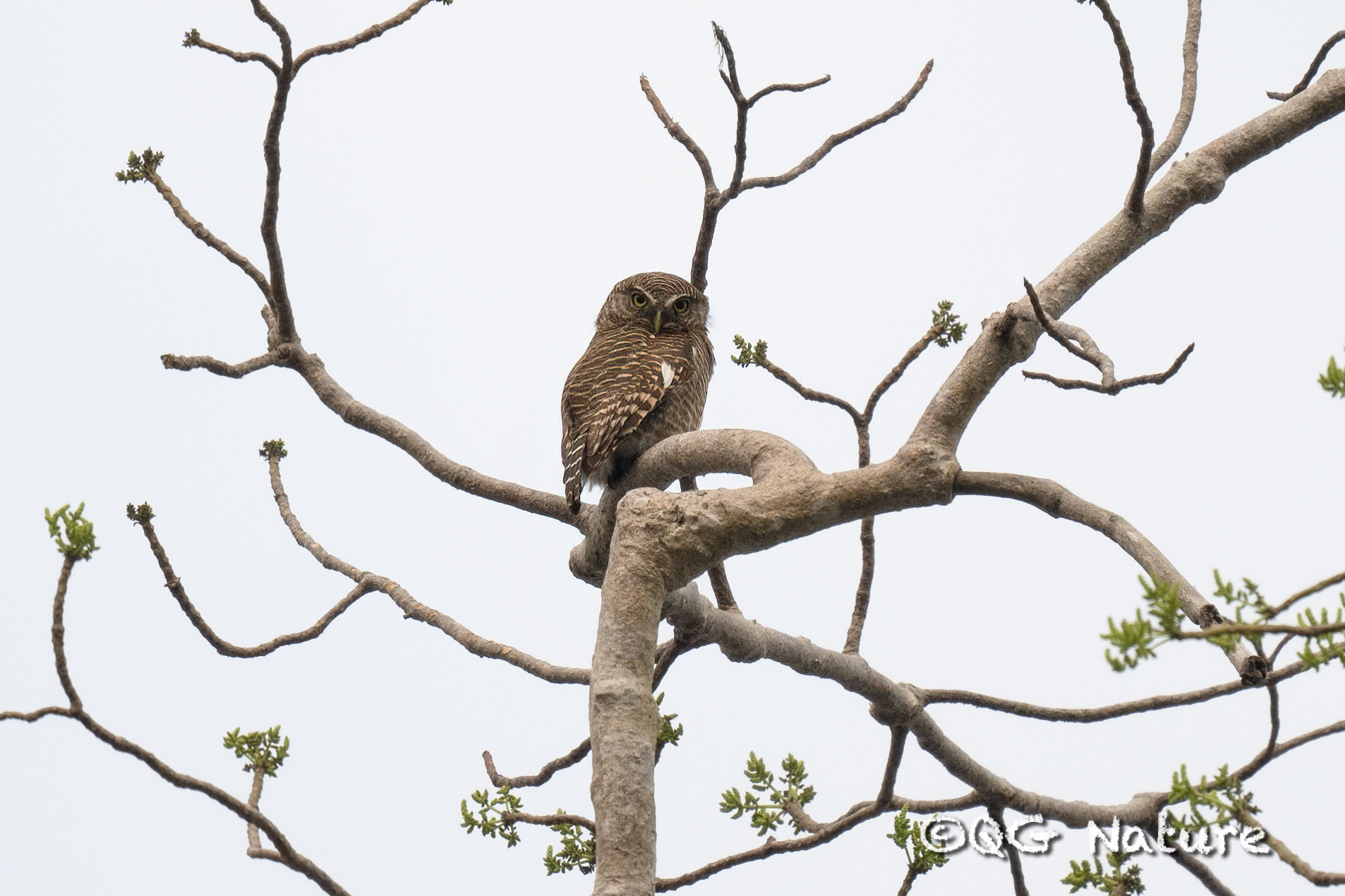
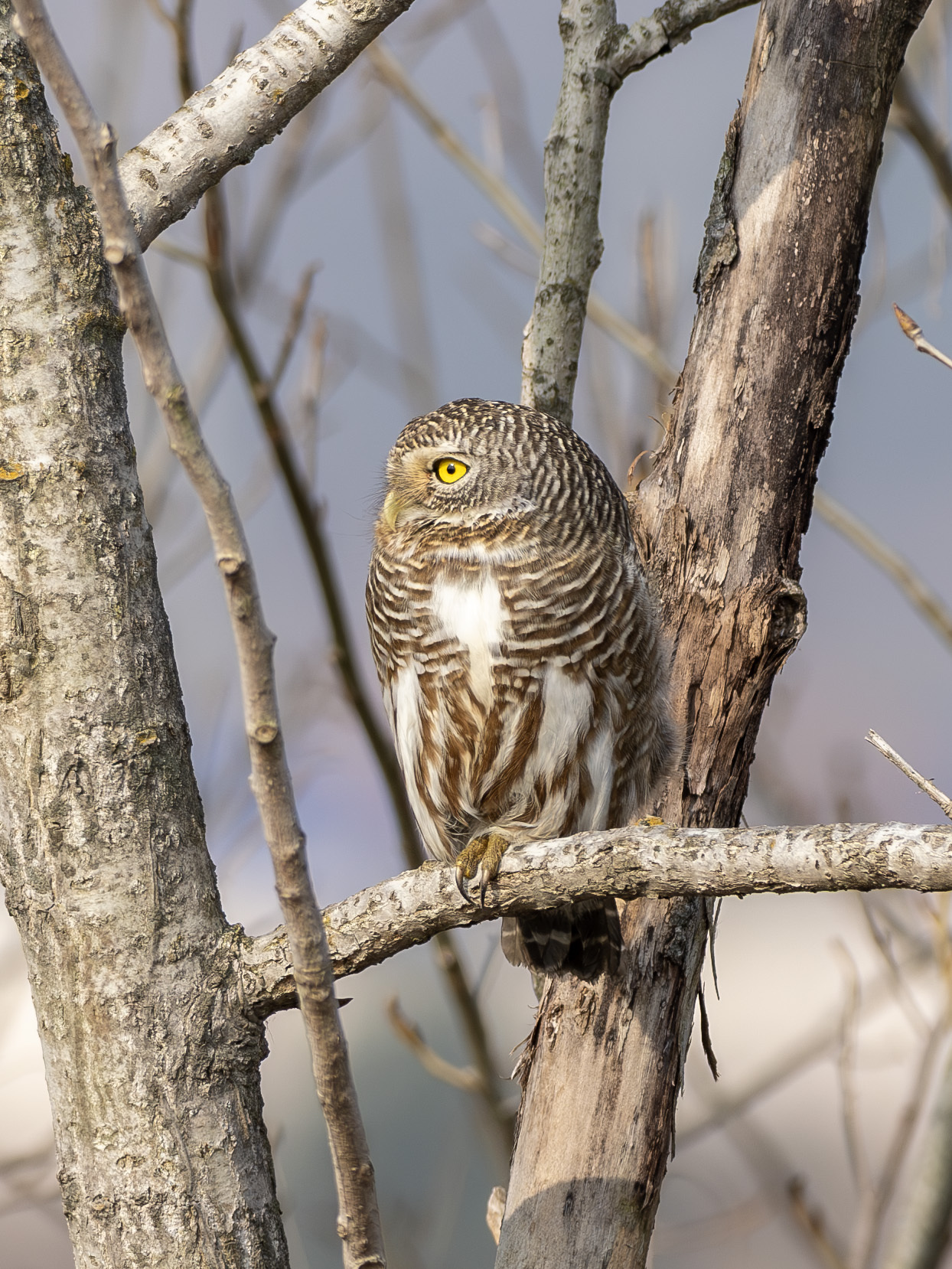
Measures 22–25 cm (8.7–9.8 in). Males weigh 150–176 g (0.331–0.388 lb), while females are larger, weighing up to 240 g (0.53 lb). Plumage is dark brown or olive-brown with dense barring, a white throat patch, and whitish breast and belly with dark brown bars. Wings and tail are dark brown with whitish bars. Juveniles have a ruddy brown head and a streaked rather than barred breast. Unlike other pygmy owls, it lacks false eyespots on the back of the head.
Identification
Key marks include dense barring, a white throat patch, and the absence of false eyespots on the nape. Similar in appearance to the Javan owlet and collared owlet. Flight pattern is undulating, characterized by rapid flaps followed by pauses with closed wings. Vocalizations include a male trill lasting 5–20 seconds that progressively becomes louder and harsher before stopping abruptly, and a smooth hoot.
Distribution & Habitat
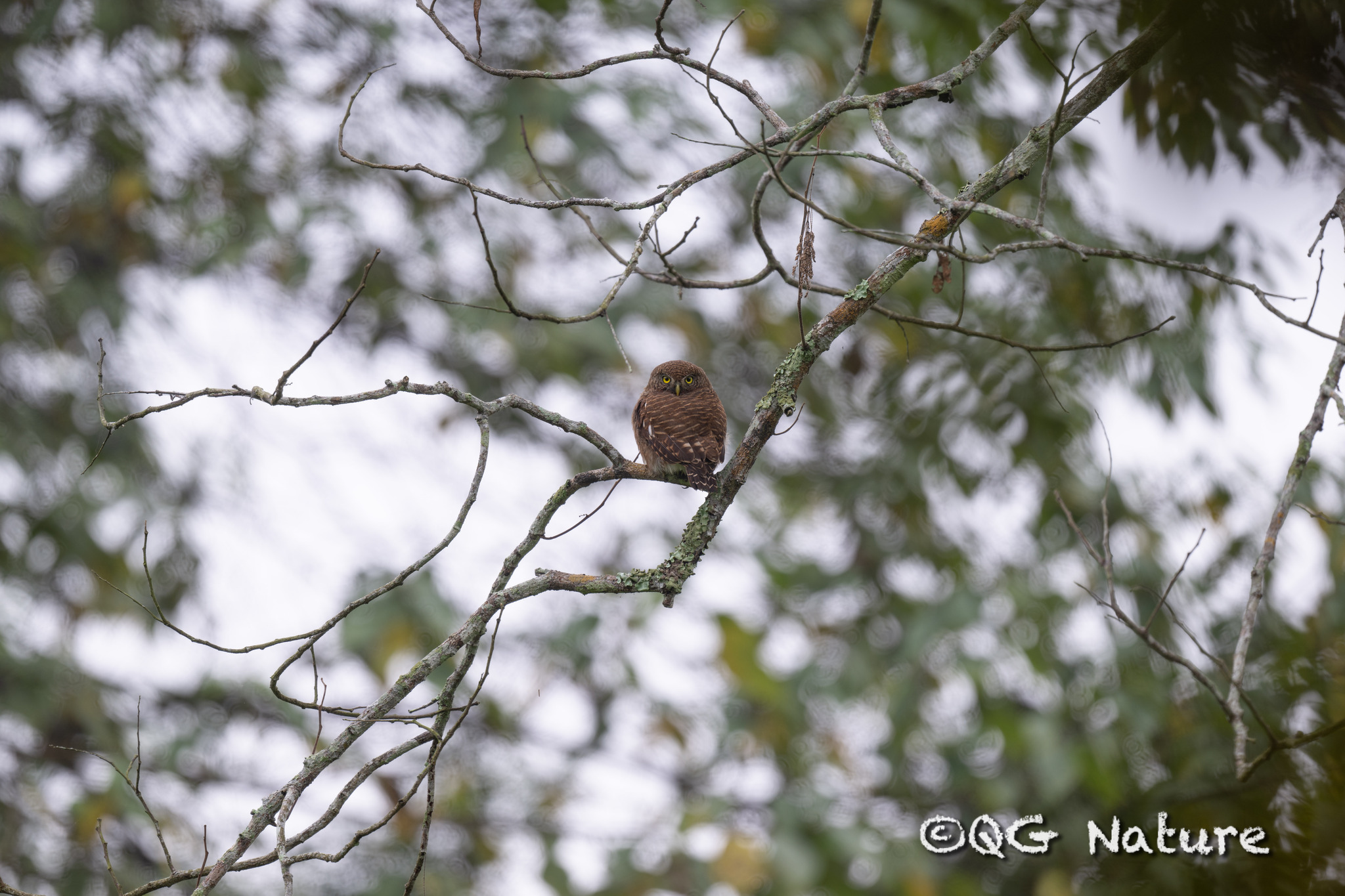
Widespread across mainland Southeast Asia, including southeast China, Bhutan, Myanmar, Laos, Vietnam, Thailand, Nepal, Bangladesh, northeast India, and the Himalayan foothills into Pakistan. Eight recognized subspecies exist. Inhabits pine and oak forests, subtropical and tropical evergreen jungles, and secondary forests at elevations from lower levels up to 2,100 m (6,900 ft), with records as high as 2,700 m (8,900 ft). Also found in gardens and parks.
Behavior & Ecology
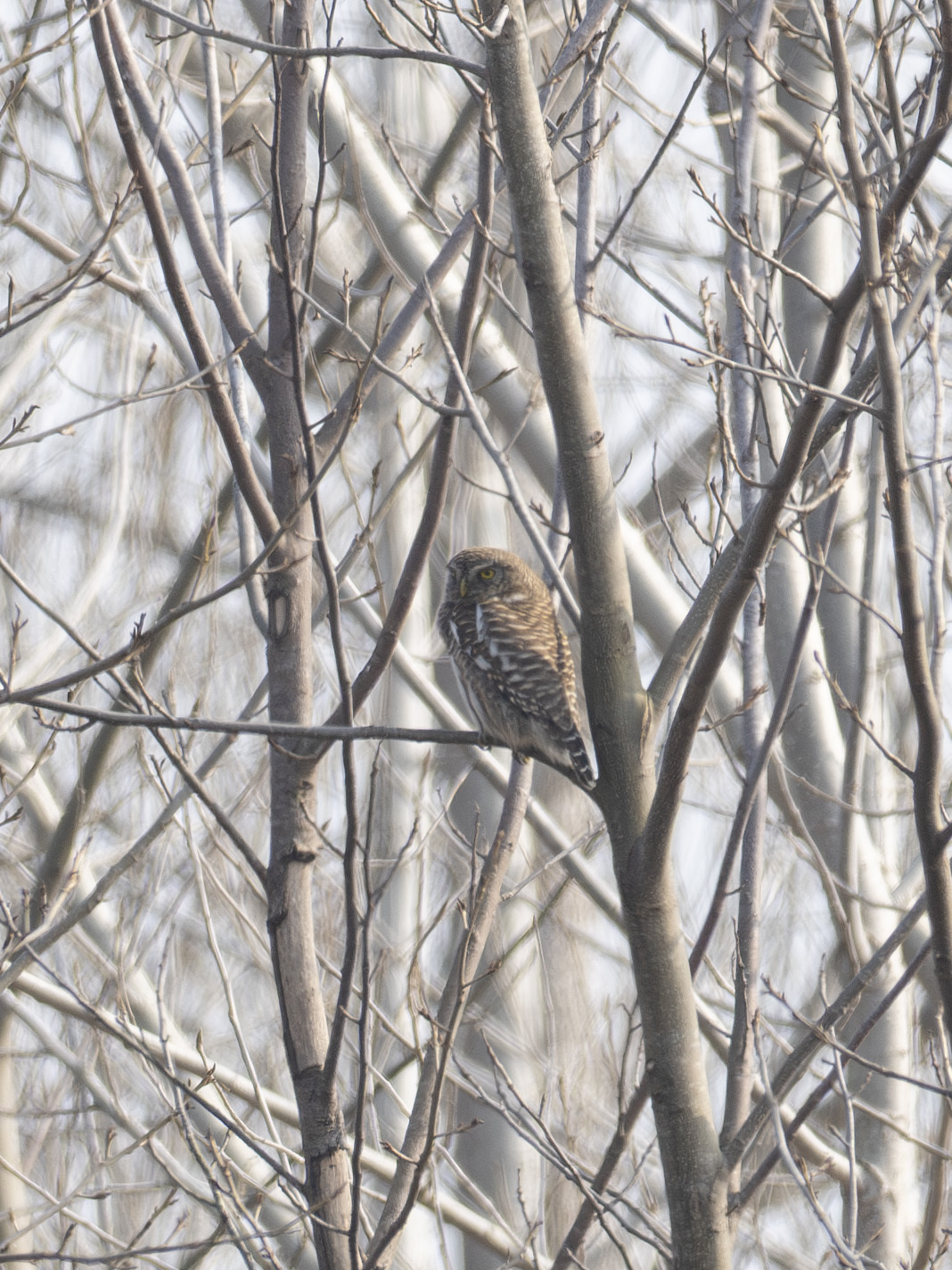
Mainly diurnal, hunting from perches on bare branches. Diet consists primarily of insects like beetles, grasshoppers, and cicadas, but also includes lizards, mice, and small birds; observed catching common quail in flight. Breeding season ranges from January to February in Thailand and March to June elsewhere. Nests in unlined tree cavities, old woodpecker or barbet nests, or occasionally collared scops owl cavities; ground nests have been recorded. Clutch size is 3–5 white rounded eggs. Both parents care for young. Resident with local elevational movements to lower altitudes in the non-breeding season.
Conservation
Threatened by habitat destruction due to urbanization and deforestation. Local persecution occurs in some areas where owls are viewed as bad omens, leading to shooting, egg stealing, and pesticide use.
Source: Wikipedia · CC BY-SA 3.0
Taxonomy
- Order
- Strigiformes
- Family
- Strigidae
- Genus
- Glaucidium
Vocalizations
Subspecies (8)
-
Glaucidium cuculoides austerum
eastern Sikkim to Bhutan, northeastern Assam, and northwestern Myanmar
Data Sources
Species description from Wikipedia, licensed under CC BY-SA 3.0.
Bird images and sounds sourced from GBIF, contributed by citizen scientists worldwide under Creative Commons licenses.
Taxonomy data from AviList 2025.