

Eurasian Jay
Garrulus glandarius
松鸦
Introduction
The Eurasian jay (Garrulus glandarius) is a medium-sized passerine in the crow family (Corvidae). It measures 34-35 cm in length with a wingspan of 52-58 cm. This species occurs across a vast range from western Europe through central Asia to eastern Asia, including Japan, and from Scandinavia south to Southeast Asia. It inhabits deciduous and mixed woodlands and has adapted to urban parks and gardens. The species caches food and demonstrates vocal mimicry of birds of prey. At least 33 subspecies have been described.
Description
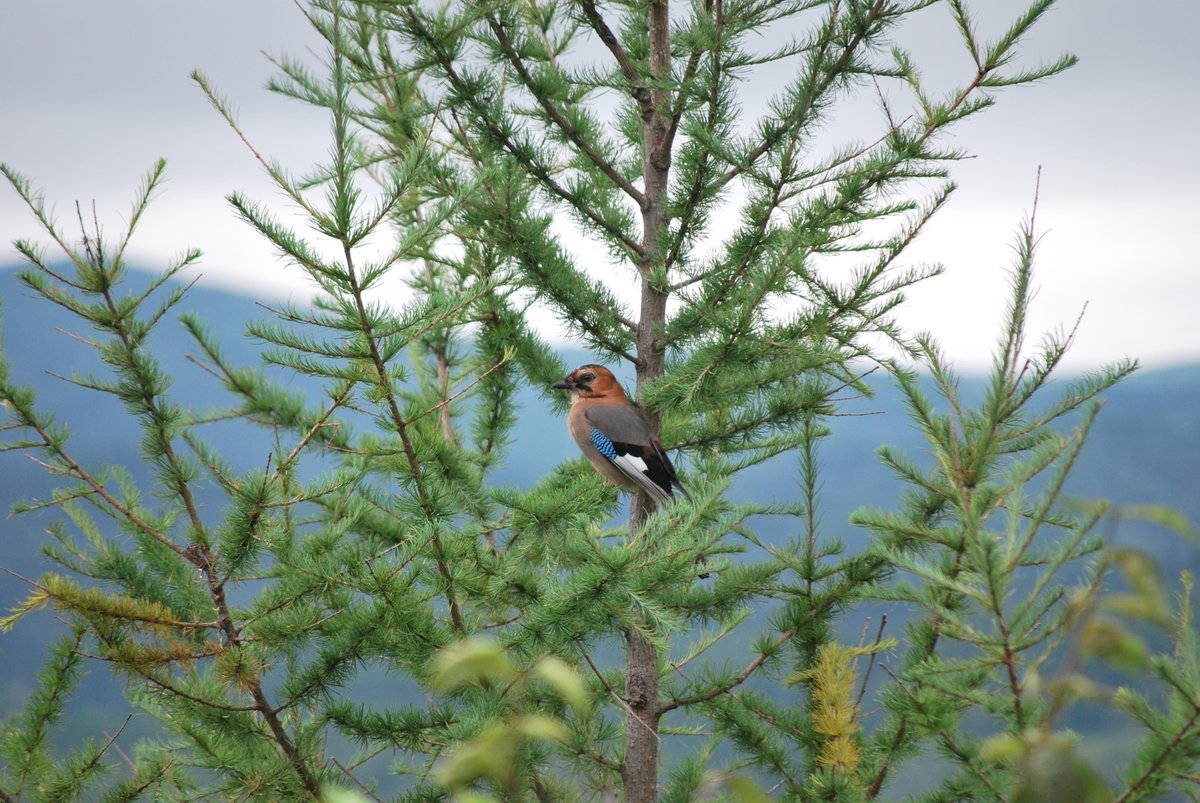
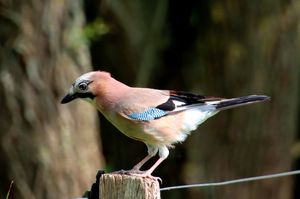
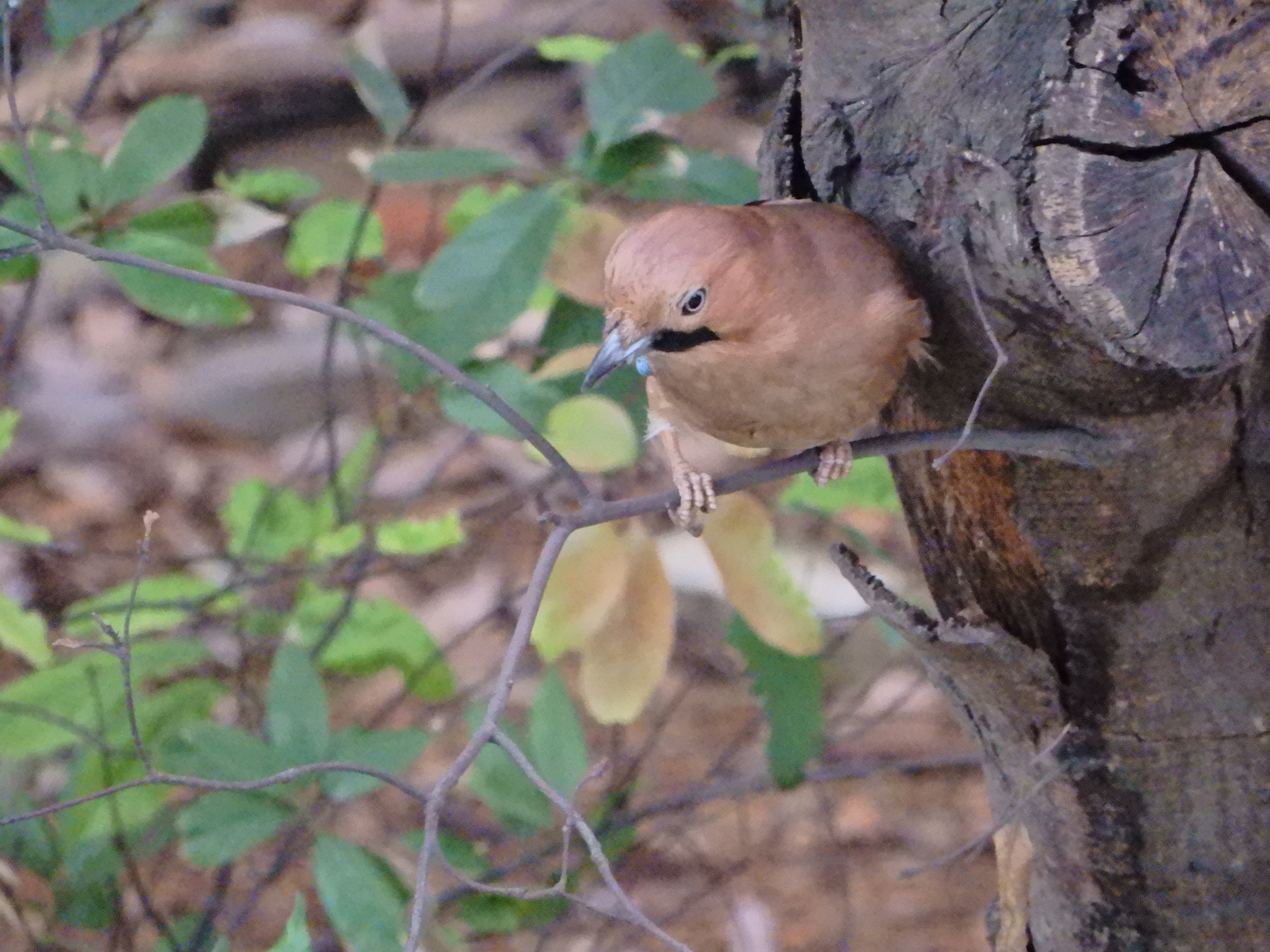
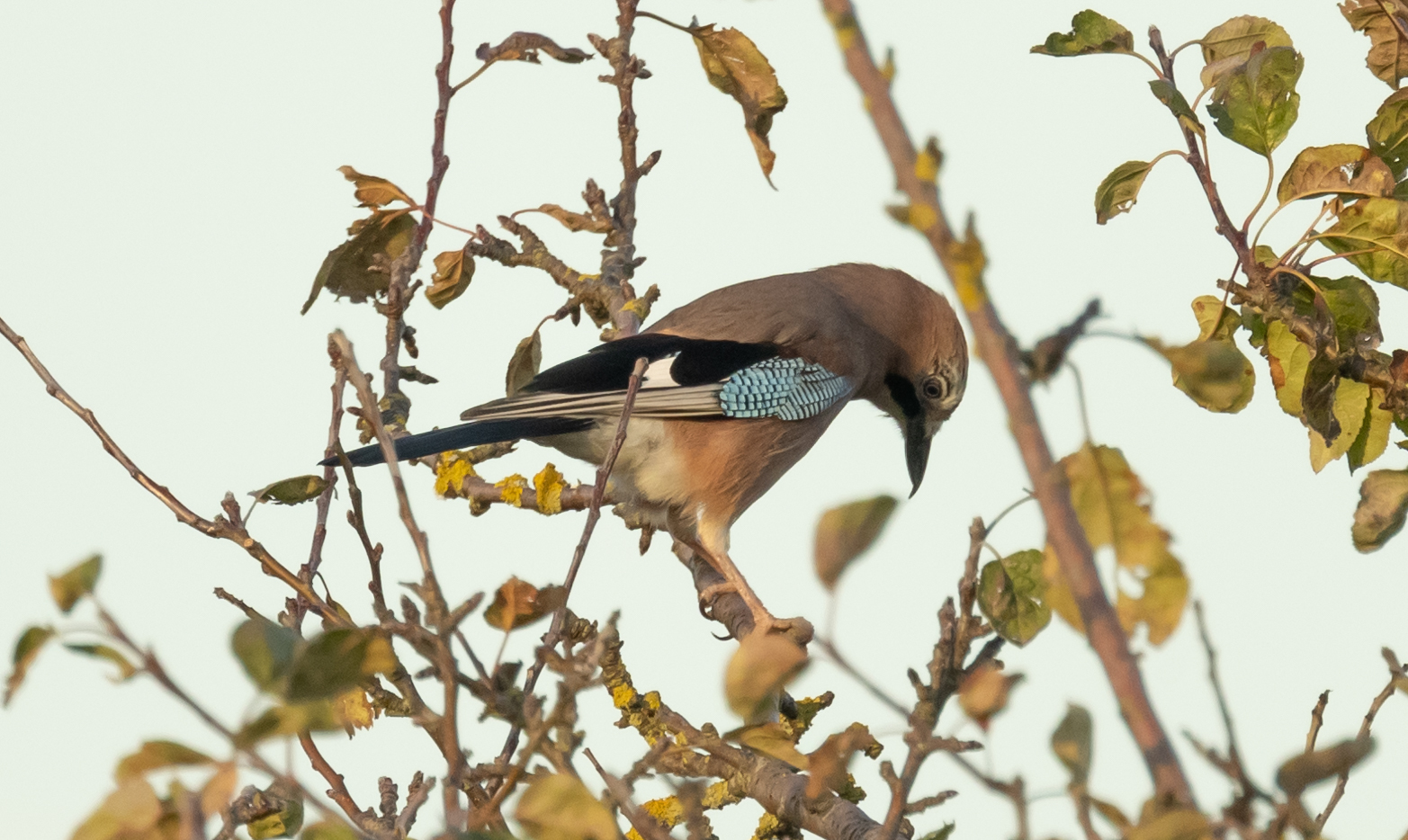
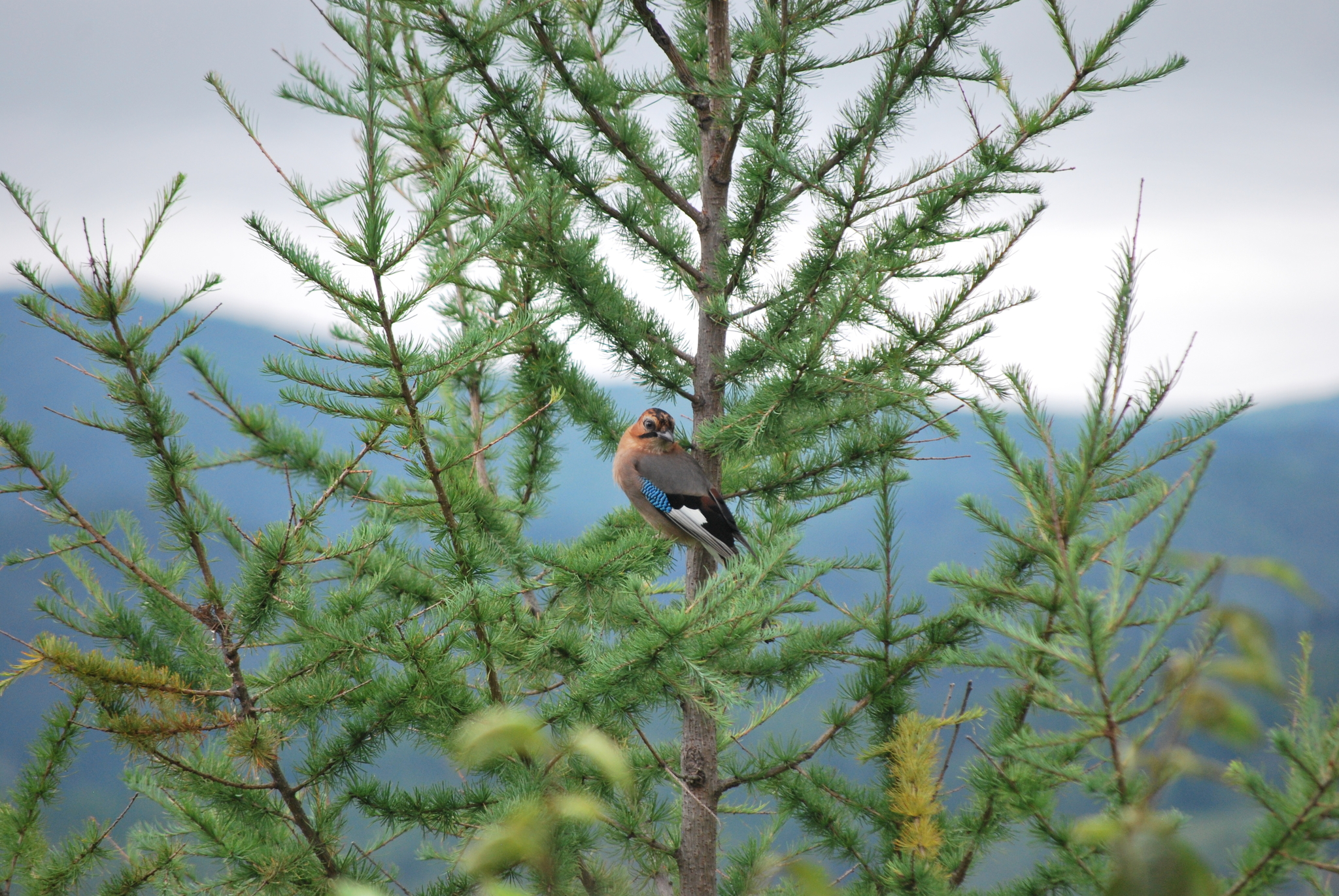
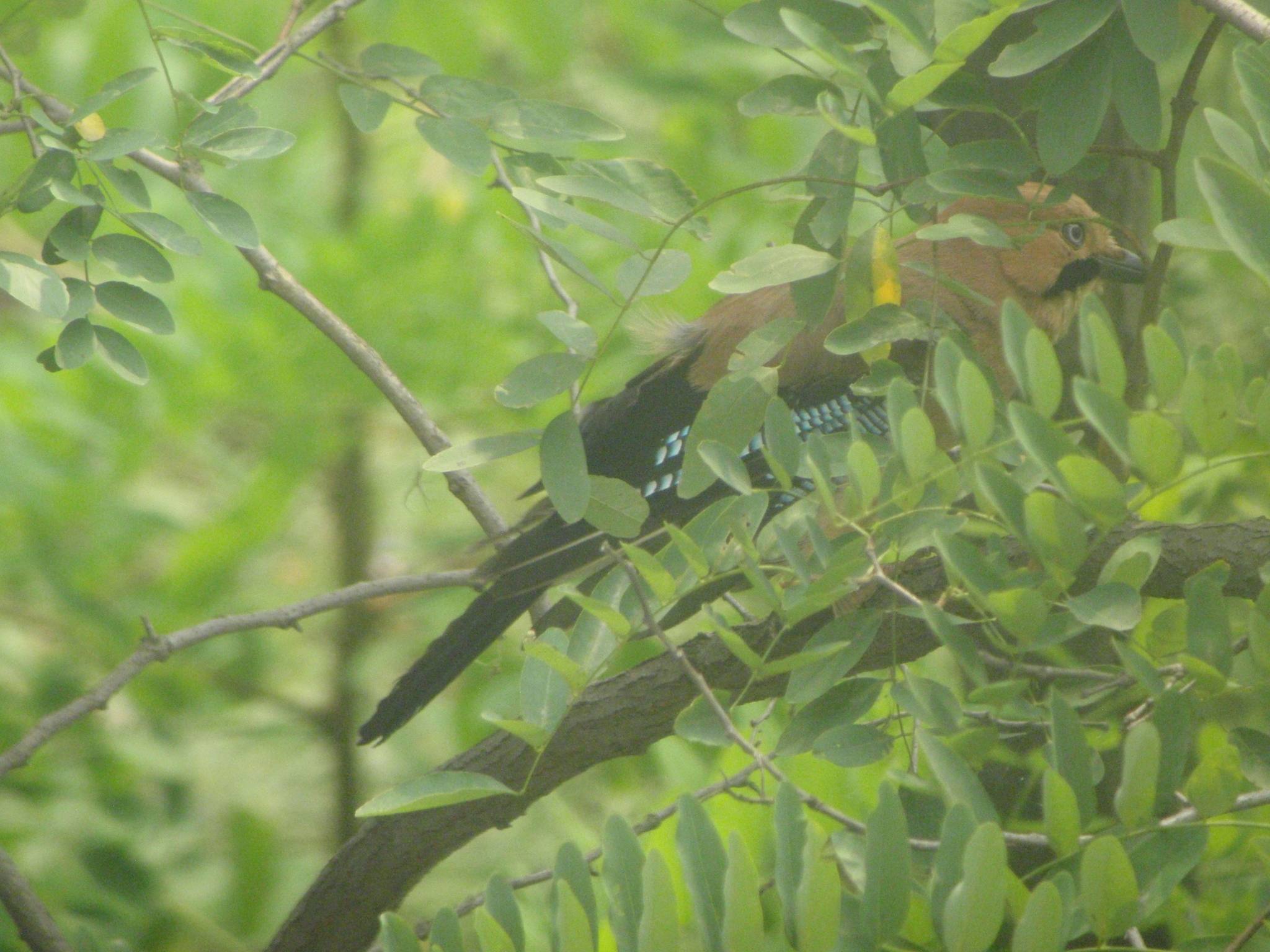
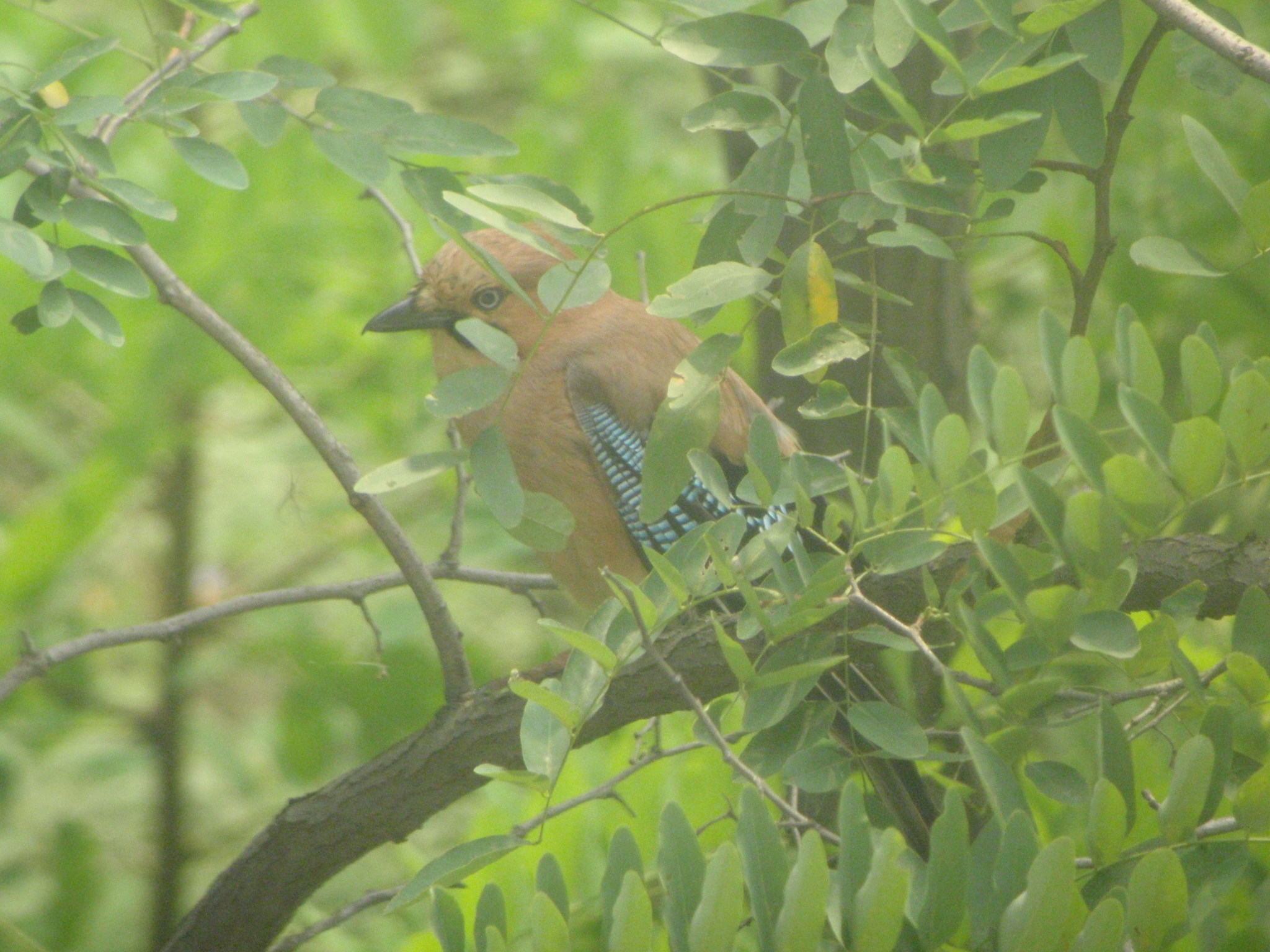
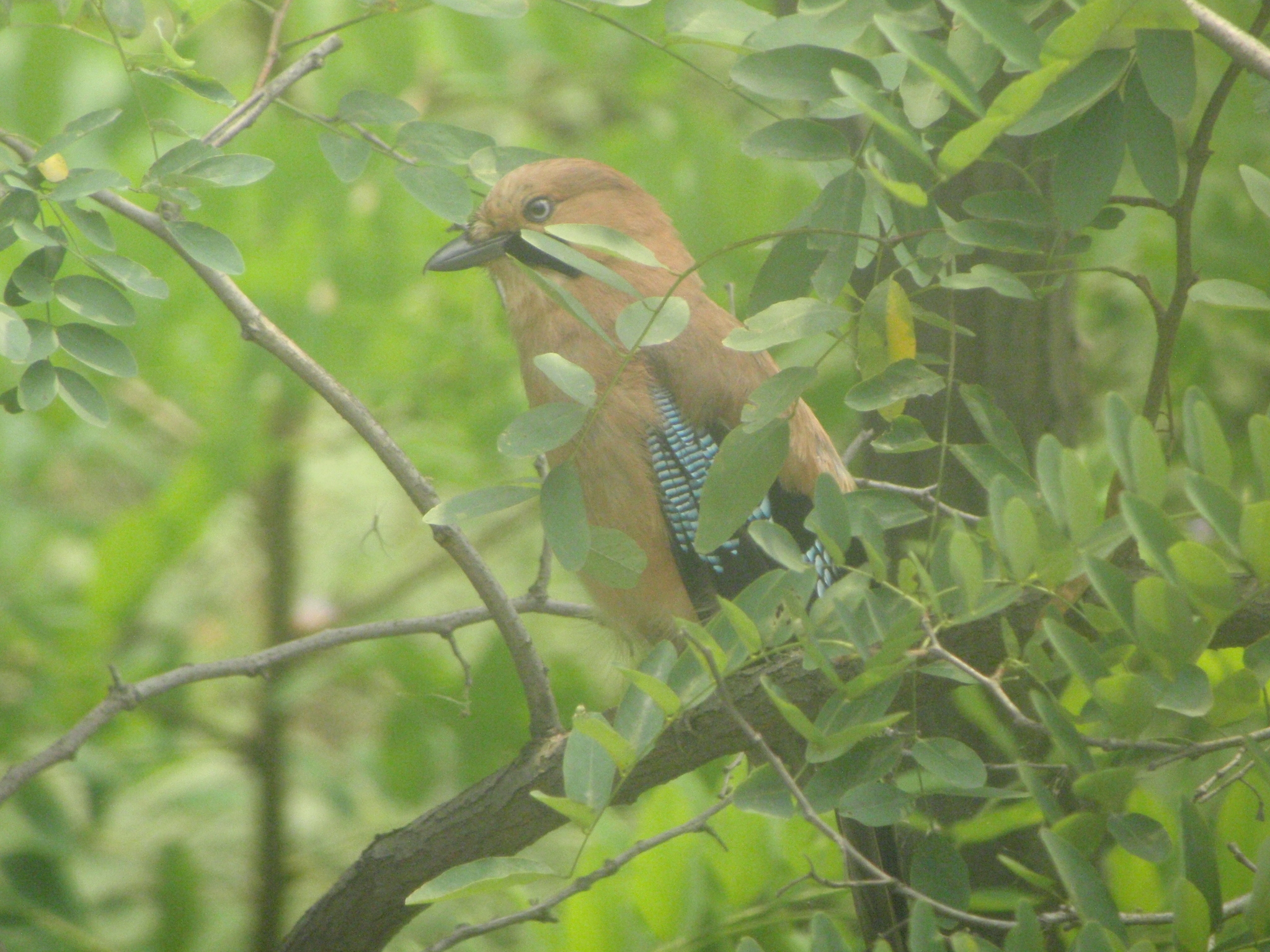
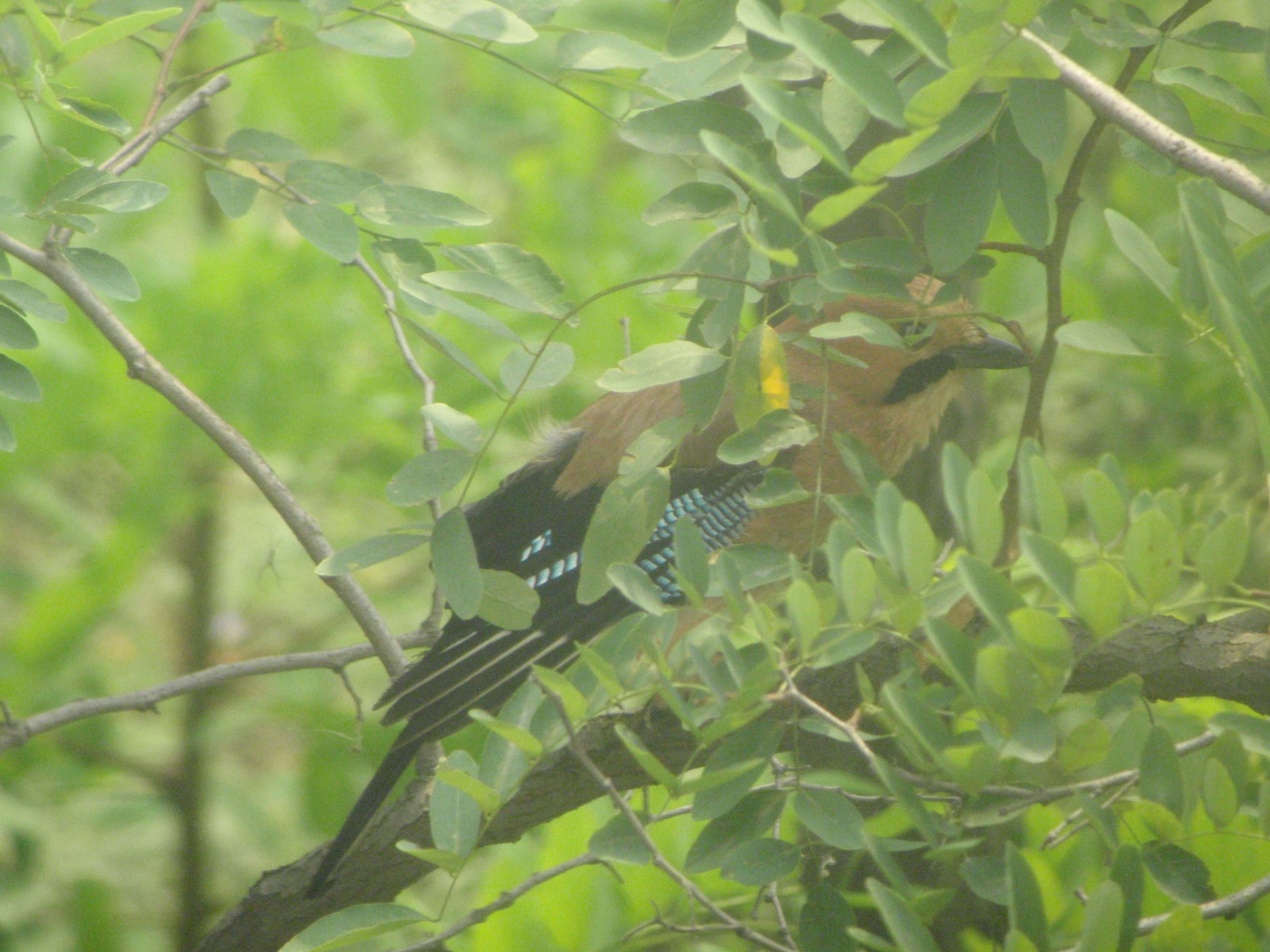
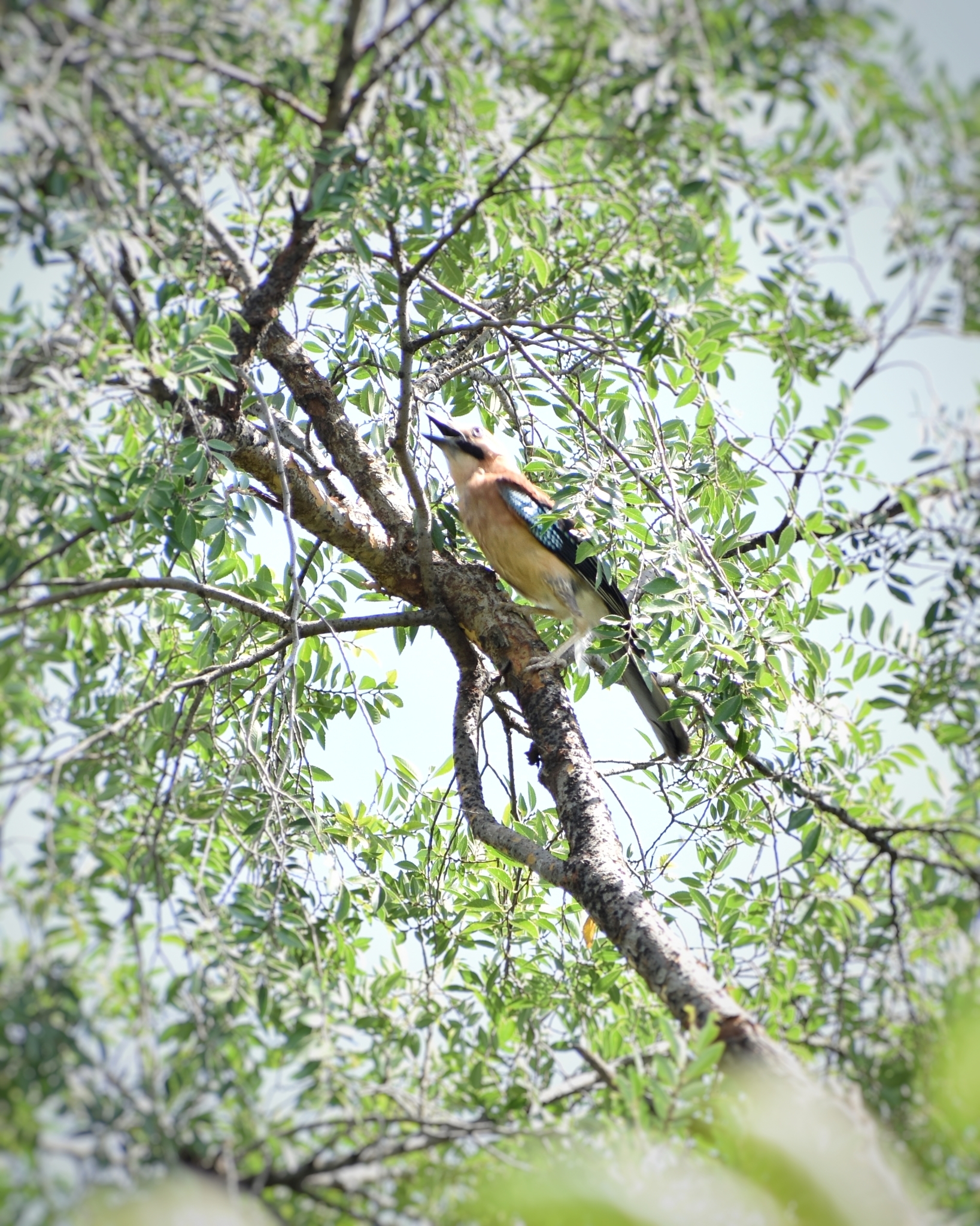
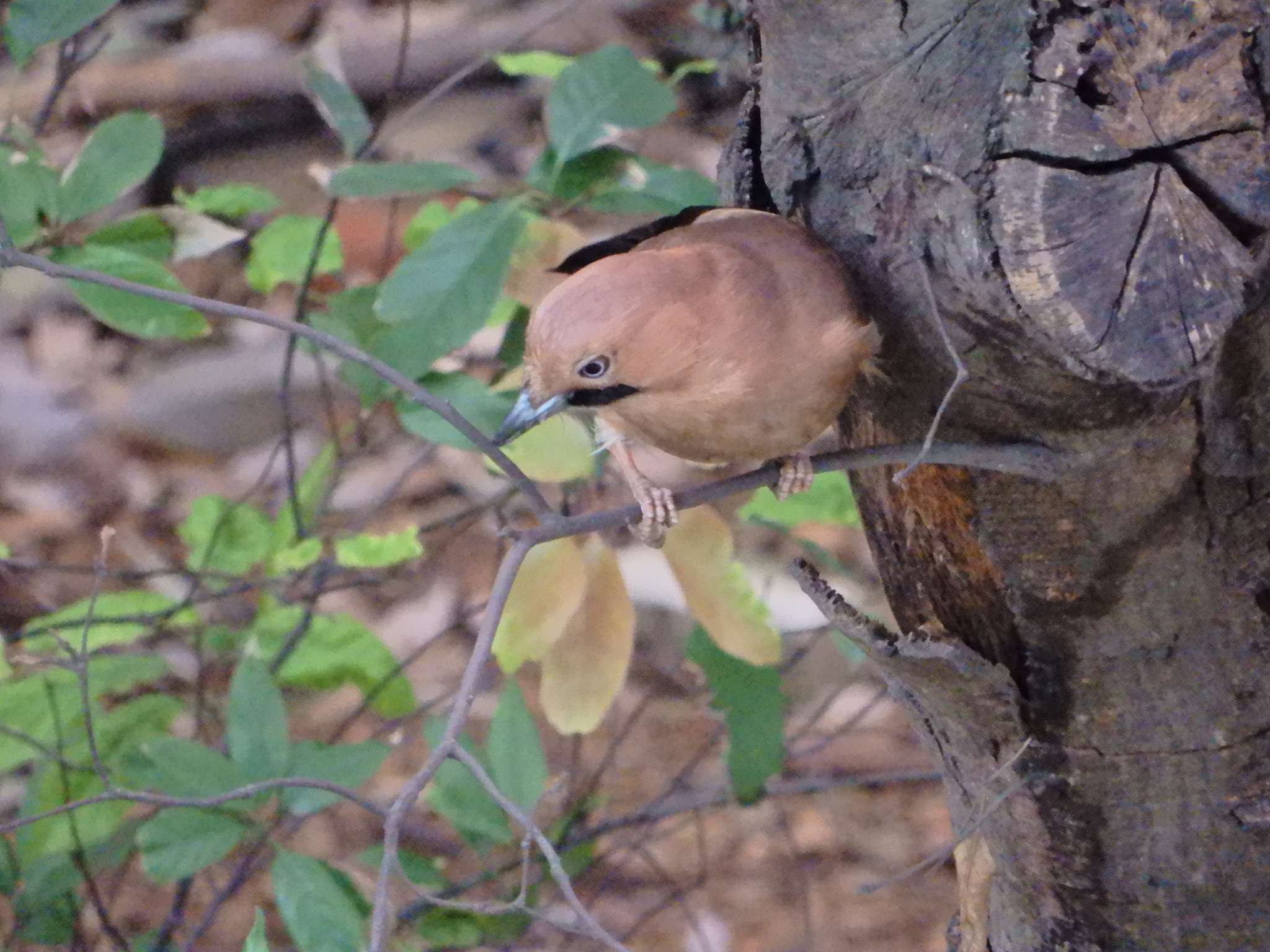
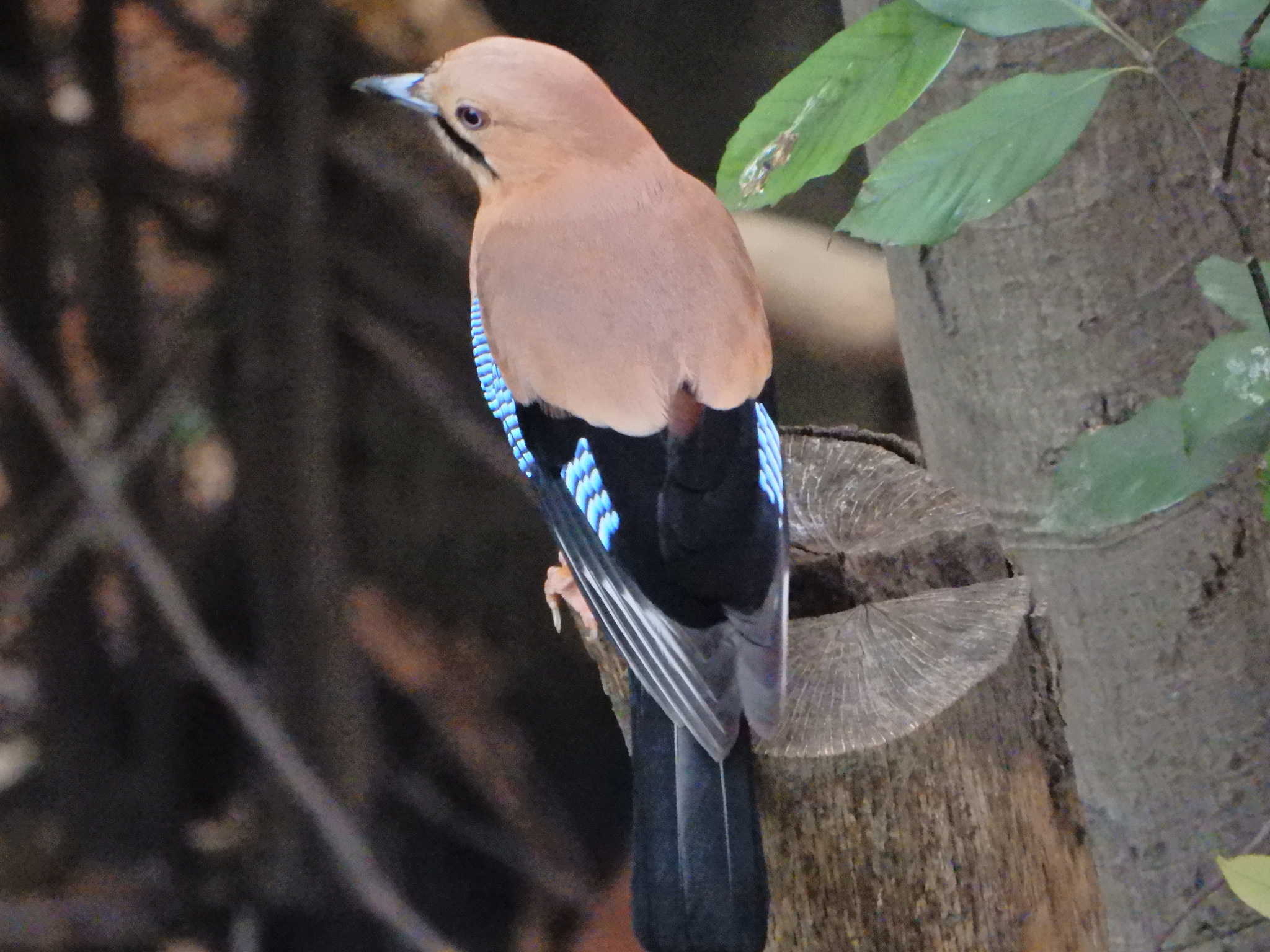
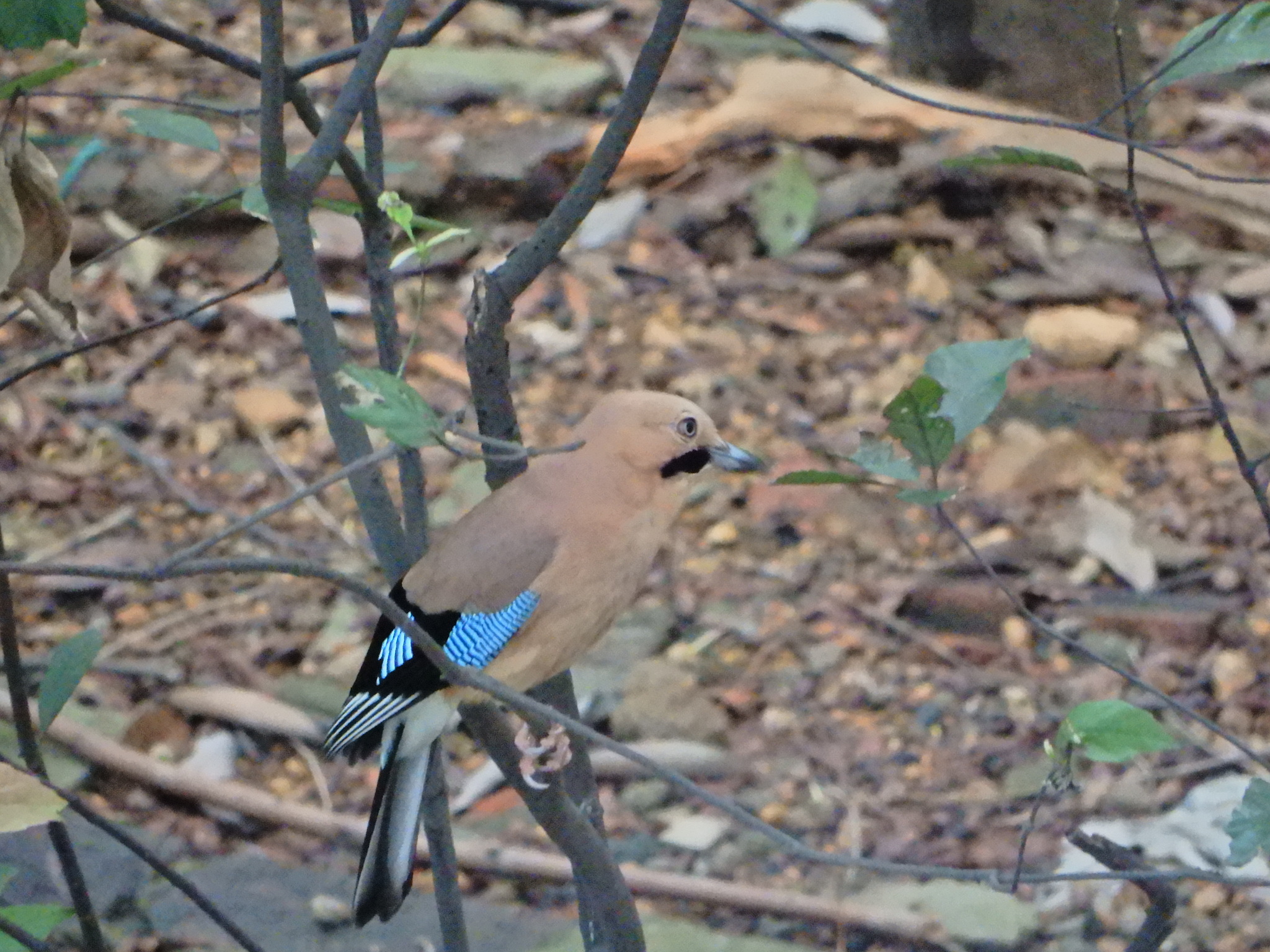
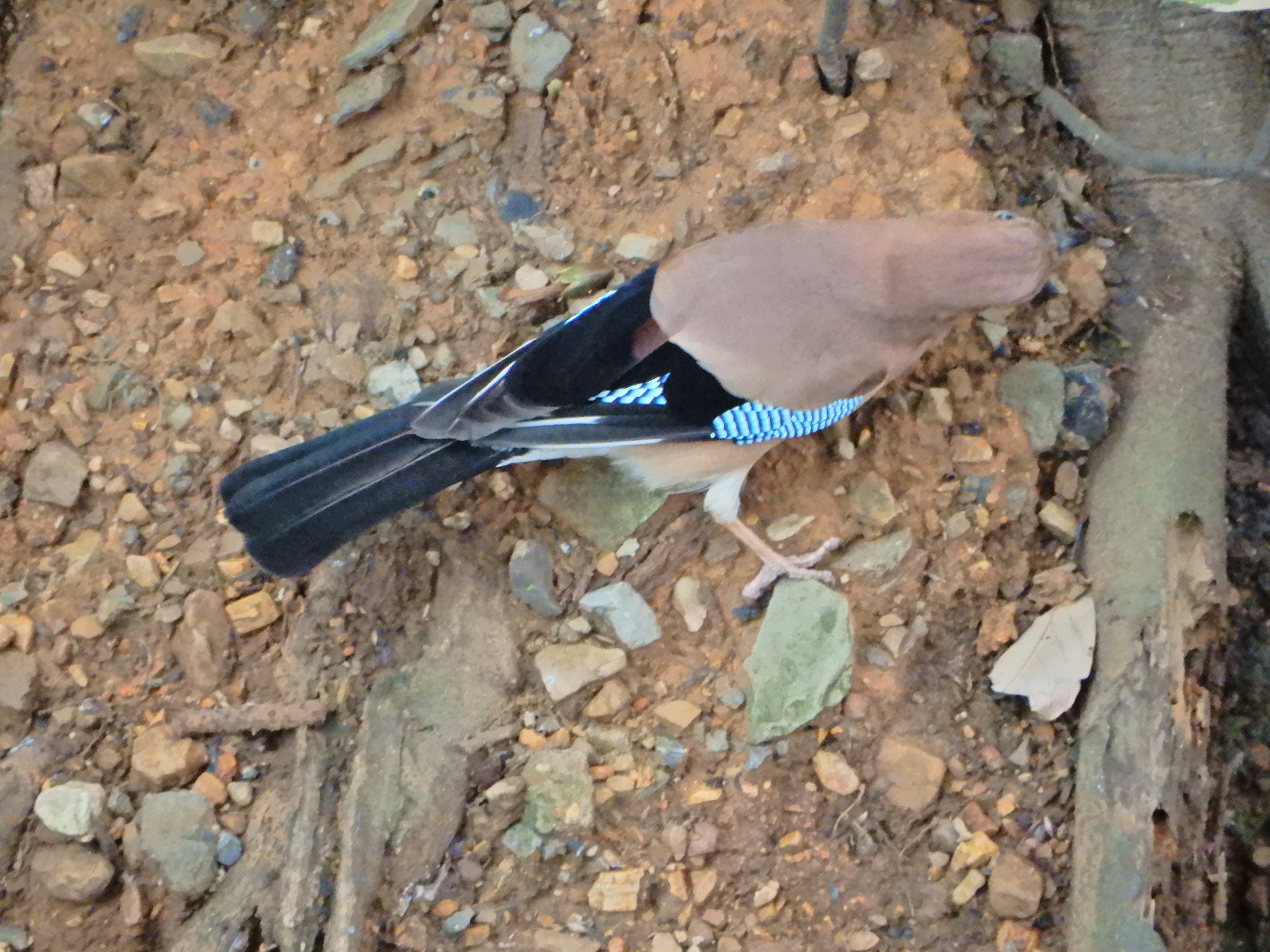
This relatively small corvid has light rufous to pinkish-brown body plumage with a whitish throat bordered on each side by a prominent black moustache stripe. The forehead and crown are whitish with fine black stripes, while the rump appears distinctly white. The upper wing displays complex coloring: black and white bars frame a prominent bright blue patch overlaid with fine black barring. The tail is mainly black. The species measures 34-35 cm in length with a wingspan of 52-58 cm, making it similar in size to a western jackdaw. Juveniles resemble adults but may appear slightly duller until their first molt.
Identification
The bright blue wing panel is the most diagnostic field mark, visible even in flight. The combination of pinkish-brown body, white rump, and black tail helps distinguish it from other corvids. The black moustache stripes bordering the white throat create a distinctive facial pattern. In flight, the blue wing flash and white rump patch are characteristic. The species is larger than blue tits and larger corvids like jackdaws, but smaller than magpies and ravens. Its somewhat slow, floppy flight with rounded wings distinguishes it from more direct-flying crow relatives.
Distribution & Habitat
This woodland bird occurs across an enormous range spanning from western Europe and northwest Africa through the Middle East and Indian subcontinent to eastern Asia and southeast Asia. The nominate race occupies Europe, while numerous other subspecies inhabit regions from Siberia and Japan to the Himalayas and Iran. The species inhabits mixed woodland, particularly stands containing oak trees, and has adapted to commercial forestry and increasingly to urban parks and gardens. Historically the primary propagator of European oak, the bird continues to play a vital role in forest regeneration.
Behavior & Ecology
The diet is highly varied, including invertebrates, insects, acorns, beech and other seeds, fruits, young birds, eggs, bats, and small rodents. Feeding occurs both in trees and on the ground. The species is renowned for its prolific caching of food, especially acorns and beechnuts, burying thousands for winter and spring consumption. Breeding begins at two years, with both sexes constructing a nest of twigs lined with finer materials in a tree fork 2-5 meters high. Clutches of 3-6 pale green to olive-brown speckled eggs are incubated by the female for 16-19 days. Both parents feed fledglings, which leave the nest after 19-23 weeks but continue receiving food for 6-8 weeks. The characteristic call is a harsh, rasping screech used to announce predators and during courtship. The species is an accomplished mimic, accurately imitating birds of prey such as common buzzards and Eurasian goshawks.
Conservation
The species holds a status of Least Concern globally, though populations in some regions face pressures from habitat loss and degradation. The International Union for Conservation of Nature and BirdLife International have recognized the complex as three separate species, with the white-faced jay and plain-crowned jay split from the Eurasian jay proper. The maximum recorded lifespan is 16 years and 9 months.
Culture
Ecologically, the jay has been recognized as critically important in forest regeneration, particularly for oak species. The National Trust has cited it as a major propagator of the largest holm oak population in Northern Europe. The species played a vital historical role in the northward spread of oaks following the last ice age, with individuals recorded carrying acorns up to 20 kilometers.
Source: Wikipedia · CC BY-SA 3.0
Taxonomy
- Order
- Passeriformes
- Family
- Corvidae
- Genus
- Garrulus
- eBird Code
- eurjay1
Subspecies (34)
-
Garrulus glandarius albipectus
Italy, Sicily, and the Dalmatian coast of Croatia
-
Garrulus glandarius anatoliae
western Türkiye and eastern Aegean Sea to northern Iraq and southwestern Iran
-
Garrulus glandarius atricapillus
Lebanon to southern Syria, Israel, and western Jordan
-
Garrulus glandarius bispecularis
Himalayas (Kashmir to Nepal)
-
Garrulus glandarius brandtii
southern Siberia and northern Mongolia eastward through northeastern China, Korean Peninsula, and northern Japan
-
Garrulus glandarius cervicalis
northeastern Algeria and Tunisia
-
Garrulus glandarius corsicanus
Corsica
-
Garrulus glandarius cretorum
Crete
-
Garrulus glandarius fasciatus
Iberian Peninsula
-
Garrulus glandarius ferdinandi
southeastern Bulgaria to northern Türkiye (Istranca Mountains)
-
Garrulus glandarius glandarius
northern and central Europe
-
Garrulus glandarius glaszneri
Cyprus
-
Garrulus glandarius graecus
Kosovo and southern Serbia to southern Bulgaria and mainland Greece
-
Garrulus glandarius haringtoni
southwestern Myanmar (Mount Victoria in south Chin Hills)
-
Garrulus glandarius hibernicus
Ireland
-
Garrulus glandarius hyrcanus
northern Iran (Elburz Mountains and south shore of Caspian Sea)
-
Garrulus glandarius ichnusae
Sardinia
-
Garrulus glandarius interstinctus
eastern Himalayas and southeastern Tibet
-
Garrulus glandarius iphigenia
Crimean Peninsula
-
Garrulus glandarius japonicus
Honshu, Ōshima, and Kyushu (central and southern Japan)
-
Garrulus glandarius kansuensis
Kazakhstan (eastern Tien Shan) and western China (Gansu)
-
Garrulus glandarius krynicki
Caucasus, Transcaucasia, and northern Türkiye
-
Garrulus glandarius leucotis
eastern Myanmar to southern Yunnan and Thailand to central Vietnam
-
Garrulus glandarius minor
Atlas Mountains of Morocco and Algeria
-
Garrulus glandarius oatesi
southwestern and central Myanmar (Chin Hills and upper Chindwin)
-
Garrulus glandarius orii
Yakushima Island (Ryukyu Islands, southern Japan)
-
Garrulus glandarius pekingensis
northern China (Liaoning) and southwestern Manchuria
-
Garrulus glandarius persaturatus
northern India (Khasi Hills of Assam)
-
Garrulus glandarius rufitergum
southern Scotland, England, Wales, and northern France
-
Garrulus glandarius samios
Samos and Ikaria region of eastern Aegean Sea
-
Garrulus glandarius sinensis
western China to northern Yunnan and northeastern Myanmar
-
Garrulus glandarius taivanus
Taiwan
-
Garrulus glandarius tokugawae
Sado Island (Japan)
-
Garrulus glandarius whitakeri
northern Morocco and northwestern Algeria
Data Sources
Species description from Wikipedia, licensed under CC BY-SA 3.0.
Bird images and sounds sourced from GBIF, contributed by citizen scientists worldwide under Creative Commons licenses.
Taxonomy data from AviList 2025.