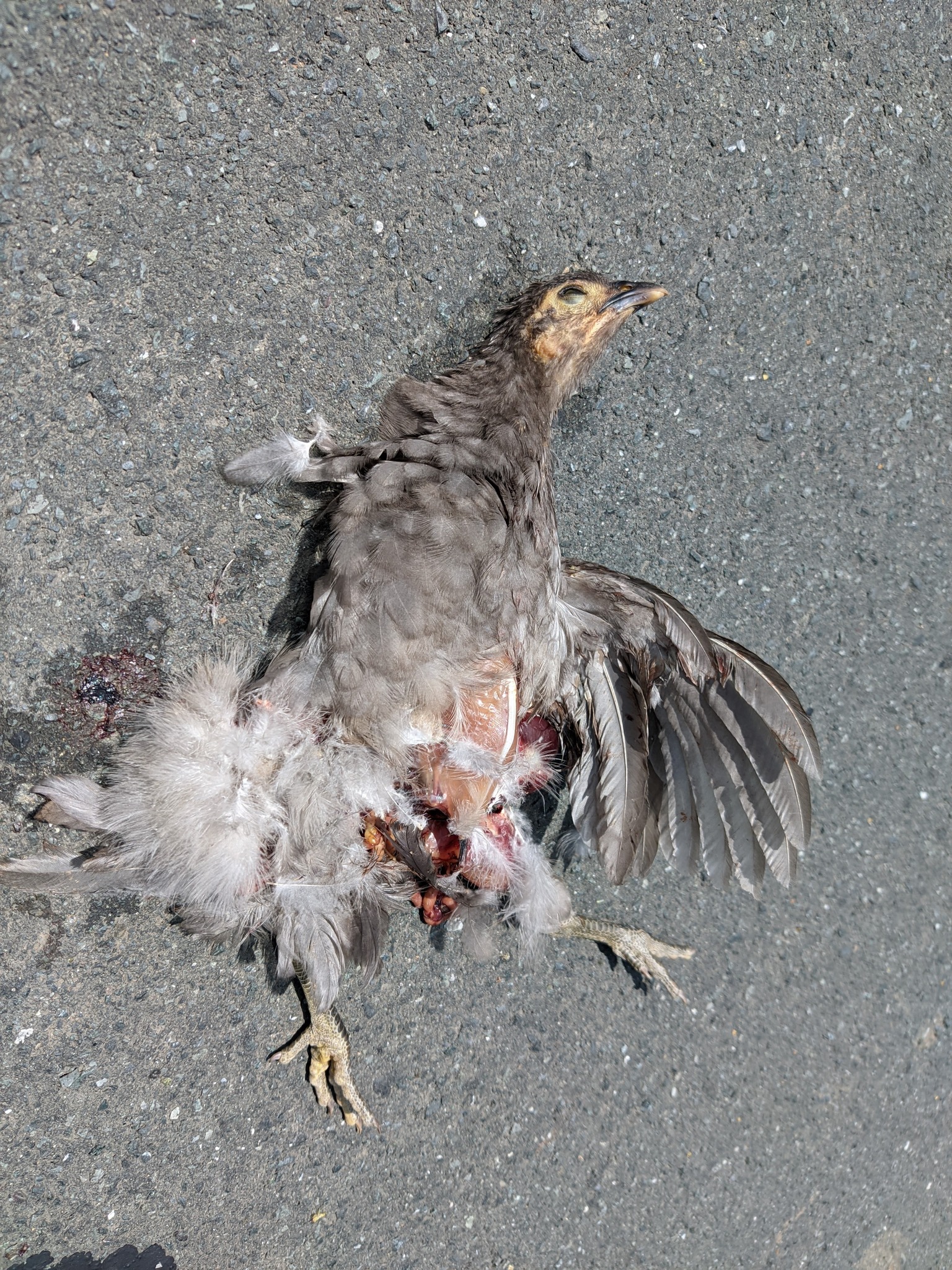
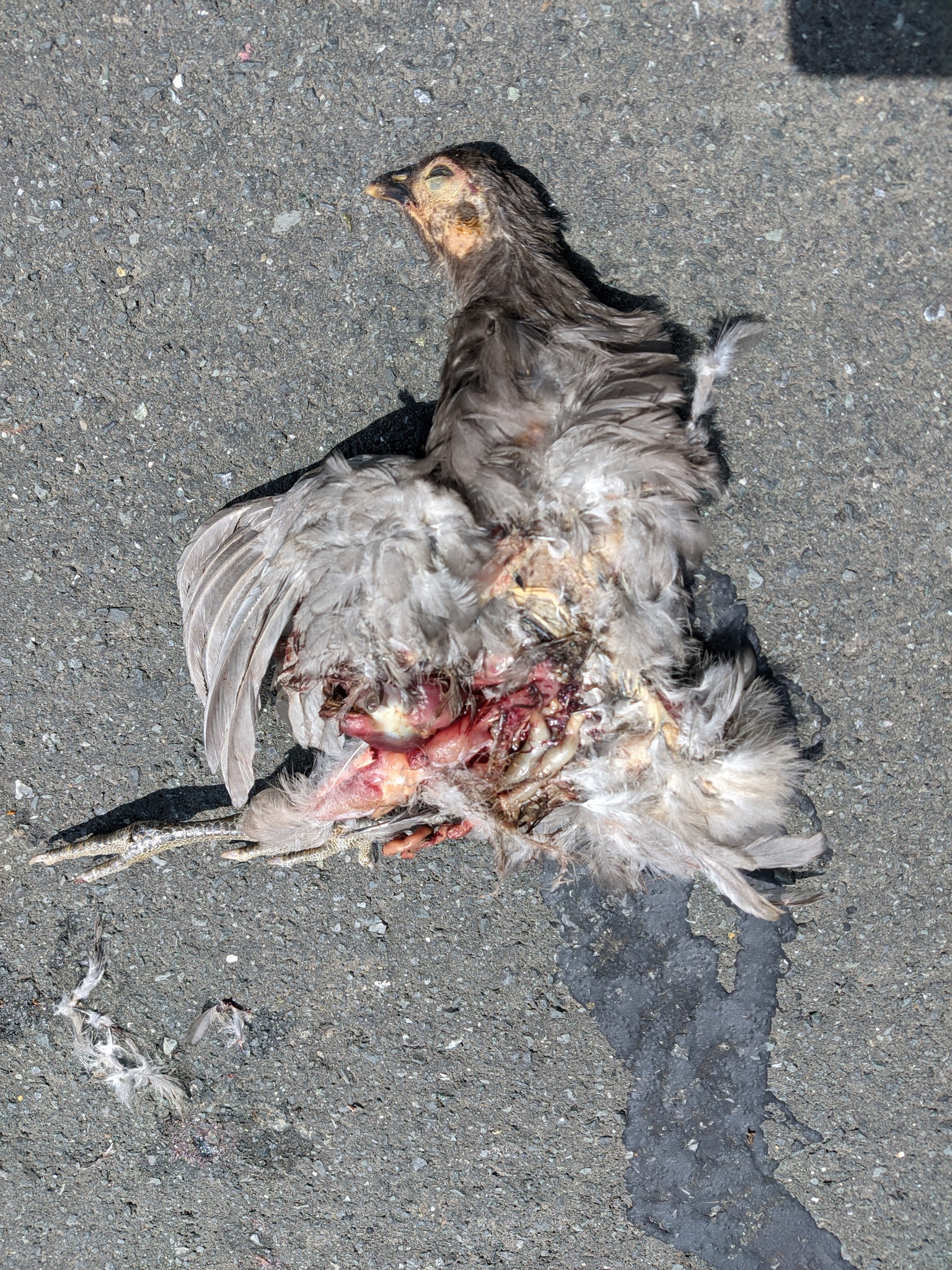
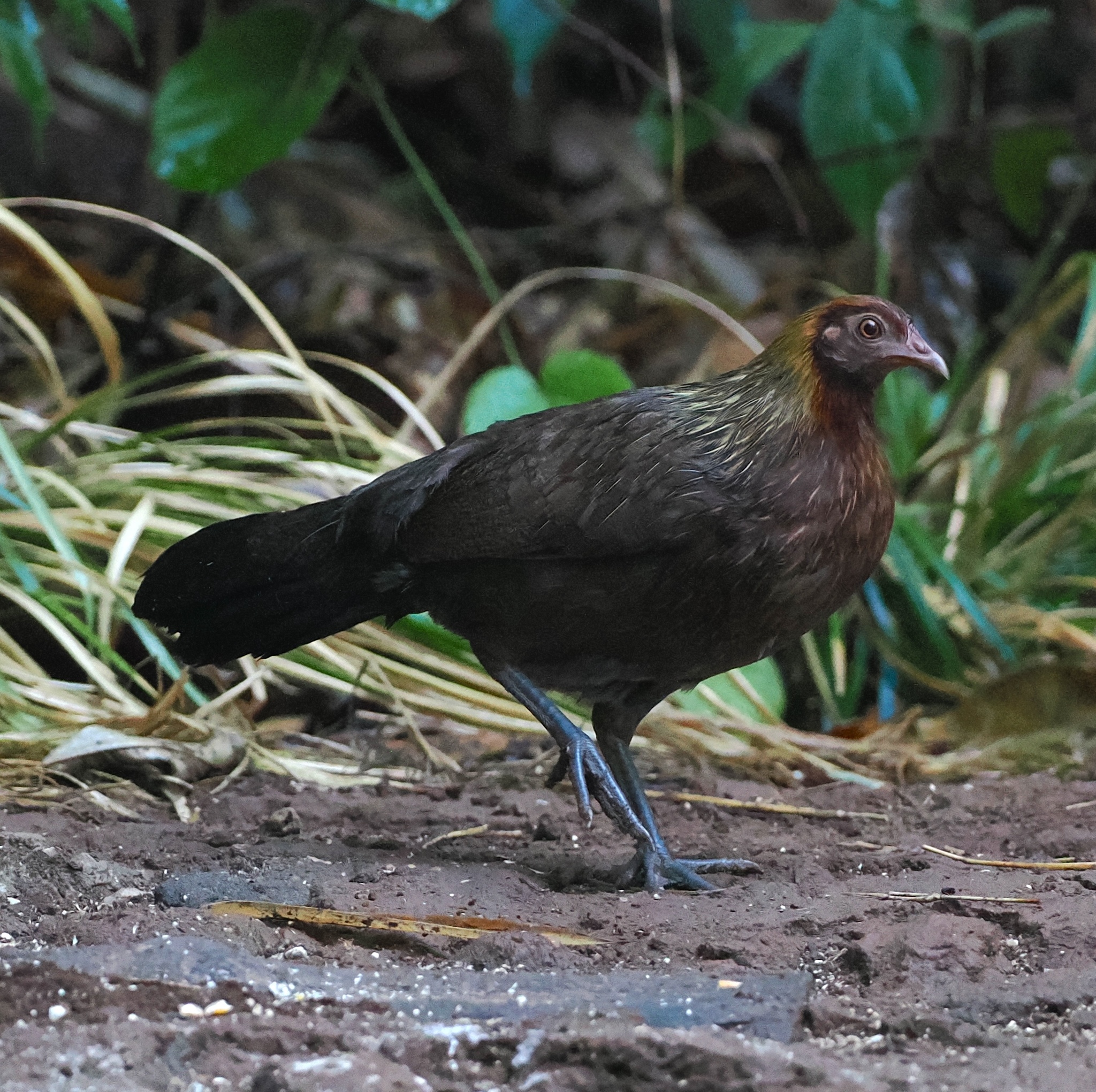
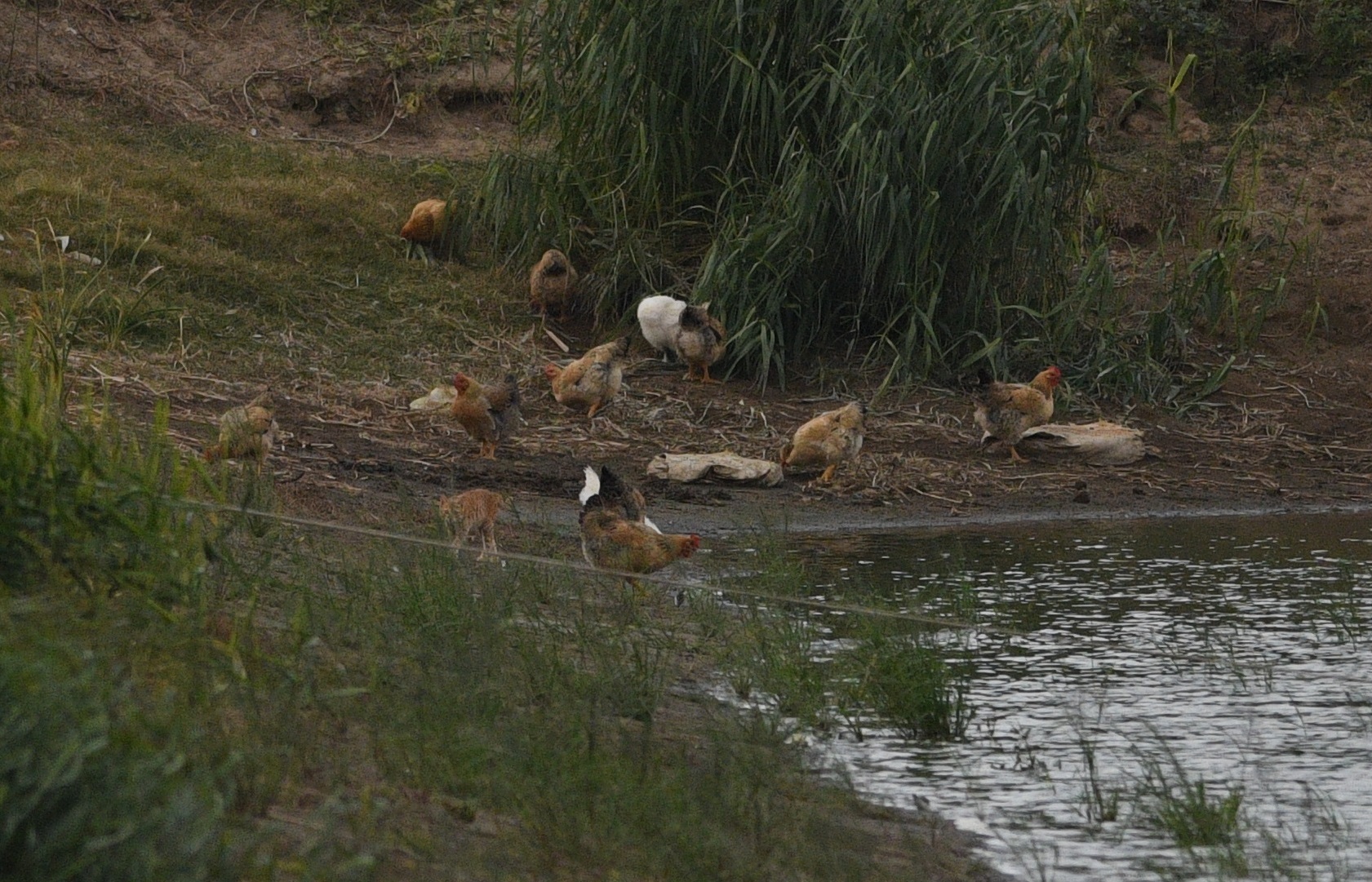
Red Junglefowl
Gallus gallus
红原鸡
Introduction
Galliform bird in the Phasianid family, native to South and Southeast Asia. Native range extends from Pakistan and India across southern China to Myanmar, Thailand, Cambodia, Laos, Vietnam, and south to Malaysia, Singapore, Indonesia, and the Philippines. Prefers disturbed habitats including forest edges, regenerating areas, and human-modified landscapes. Primary ancestor of the domesticated chicken (G. g. domesticus), with genome sequencing confirming domestication approximately 8,000 years ago. Distinguished by pronounced sexual dimorphism and the characteristic crowing call that gave rise to the domestic rooster's vocalization.
Description
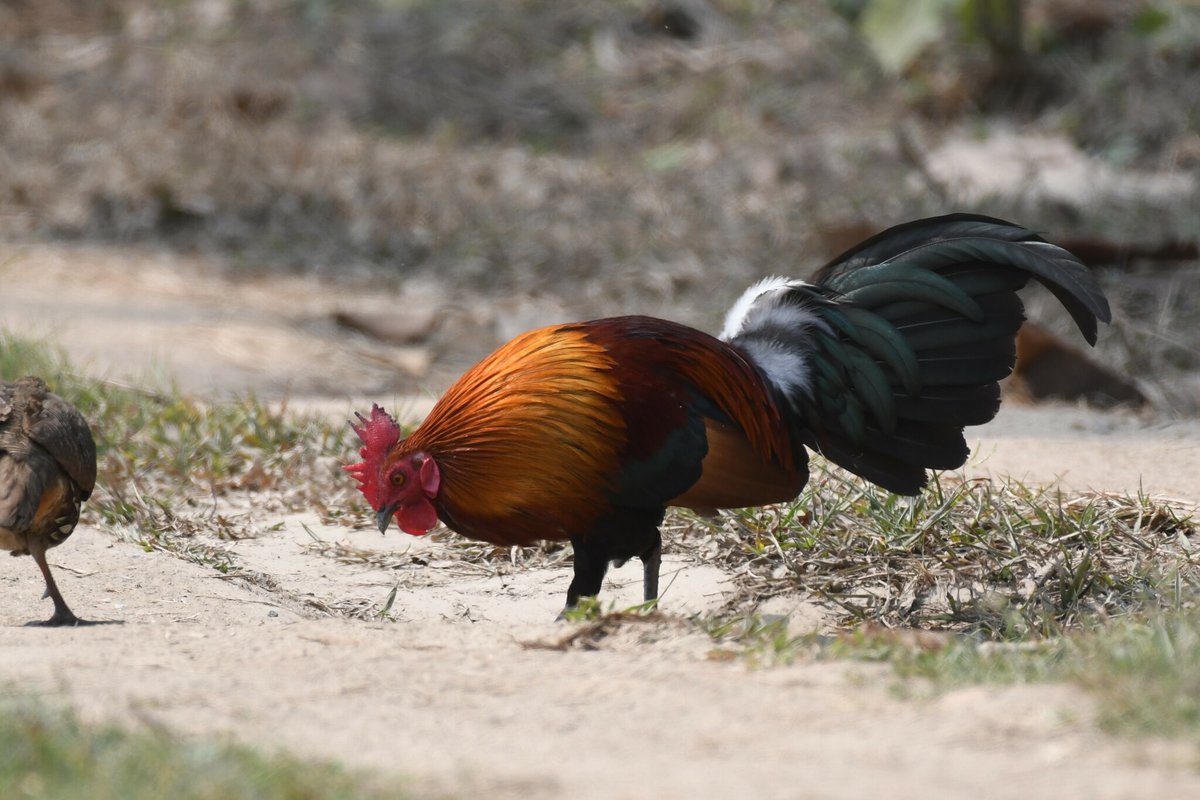
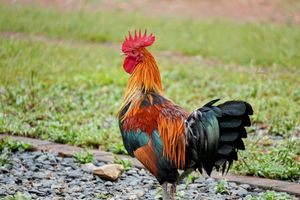
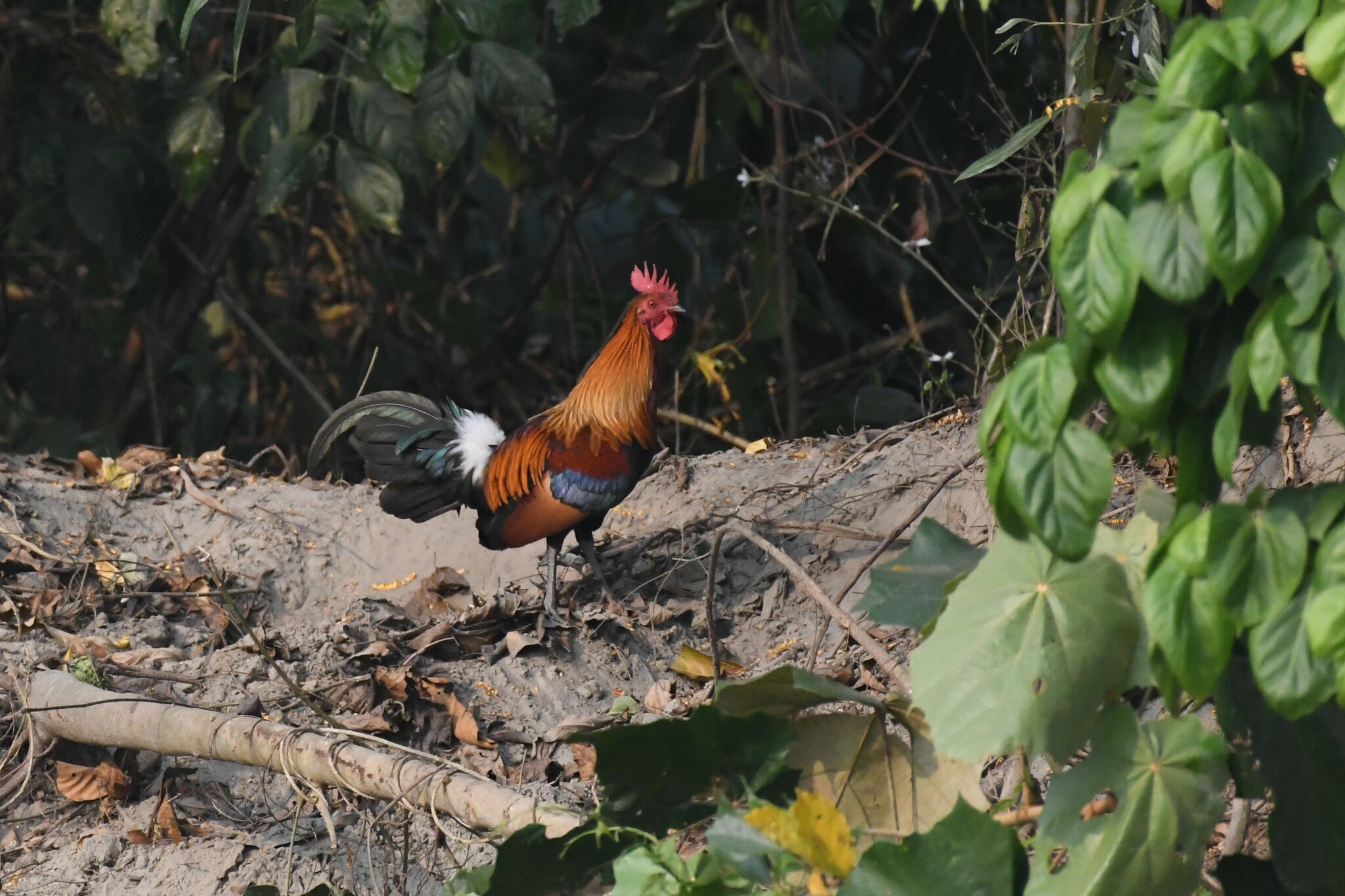
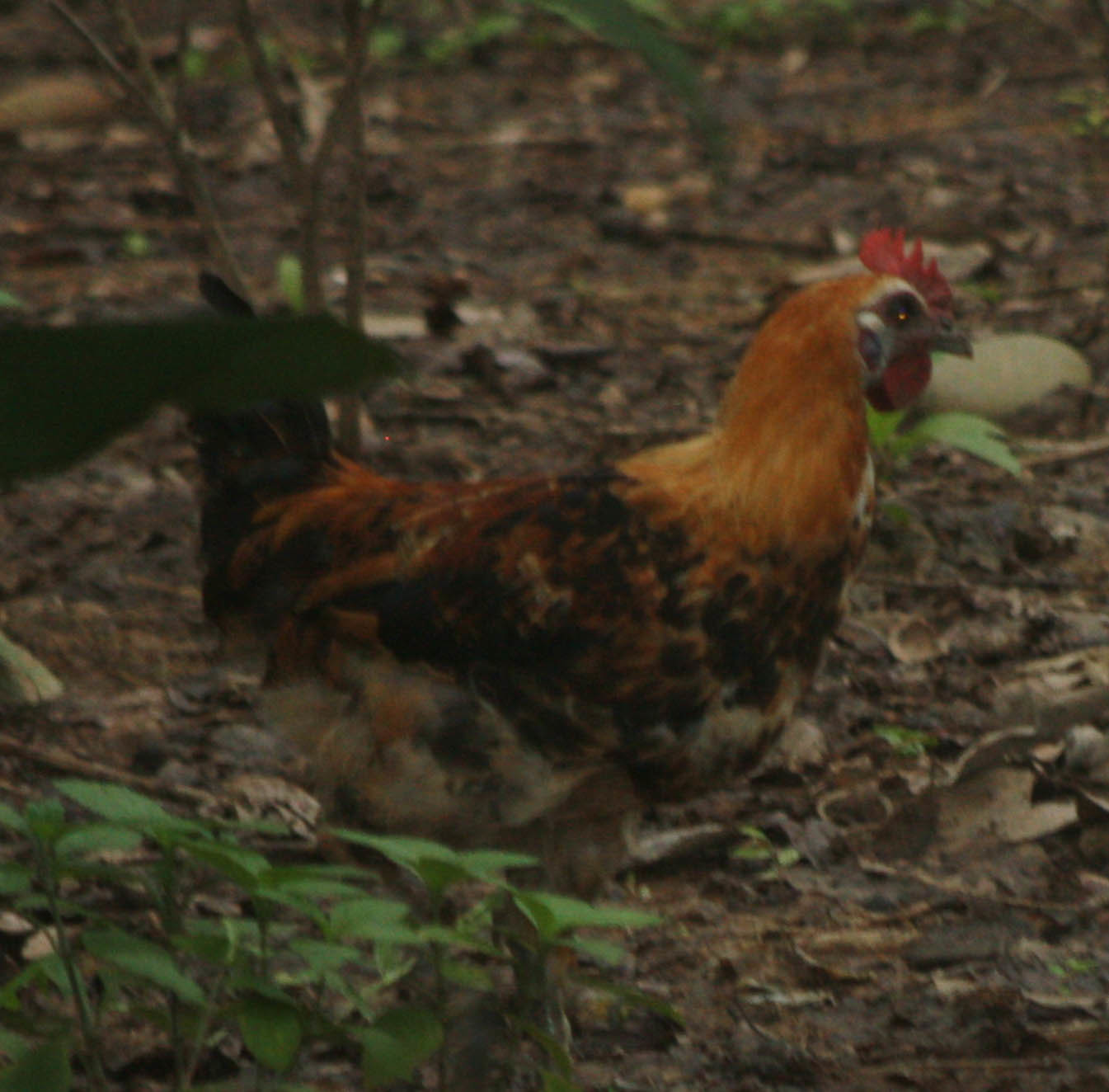
Medium-sized galliform with strong sexual dimorphism. Males weigh approximately 1.5 kg, females around 1 kg. Total body length reaches 70 cm. Males display bright plumage with golden hackle feathers on the mantle and 14 iridescent tail feathers (up to 28 cm long) shimmering blue, purple, and green. Females are drab brown for camouflage. Both sexes have a red comb and wattle, though males are significantly larger. Males possess bony spurs on the legs. A complete moult in June changes breeding plumage to an eclipse pattern through October, featuring black back feathers and red-orange mantle plumes.
Identification
Distinguished from domestic chickens by smaller body size and more compact structure. Males have brighter, more iridescent plumage than domestic roosters and a shorter, abruptly-ending crow. The 14 tail feathers are diagnostic. Females differ from domestic hens in their smaller size, darker overall coloration, and more uniformly brown plumage without the pale chest patterns common in many domestic breeds. The species' smaller comb and wattle relative to body size help distinguish wild individuals from feral or hybrid birds.
Distribution & Habitat
Native range covers Pakistan, India, Nepal, Bhutan, Bangladesh eastward through southern China to Myanmar, Thailand, Cambodia, Laos, Vietnam, and south to Malaysia, Singapore, Philippines, Indonesia, and Timor-Leste. Introduced to Australia, Hawaii, Caribbean islands, and Pacific islands including Fiji, Micronesia, and Palau. Inhabits disturbed habitats and forest edges, utilizing deforested and regenerating areas, agricultural land, tea and palm oil plantations. Requires sufficient cover for nesting and roosting sites in trees (4-12 m high). Does not require surface water but will drink when available.
Behavior & Ecology
Shy and wary of humans. Lives in flocks of one to several males with multiple females, maintaining dominance hierarchies. Males announce presence with a short, sharp crow that cuts off abruptly. Distinct alarm calls differentiate aerial from ground predators. Dust-bathing maintains plumage condition. Flight is used primarily for reaching roosting trees at sunset and escaping immediate danger. Diet includes fallen fruits, seeds, arthropods (including up to 1,000 termites per crop), small lizards, and occasional plant matter. Males perform 'tidbitting' courtship display involving food offerings. Lays eggs daily during breeding season; 21-day incubation; chicks fledge in 4-5 weeks.
Conservation
IUCN Red List classifies as Least Concern globally. Near Threatened in Singapore due to population pressures. Primary threats include hybridisation with free-ranging domestic chickens at forest edges, leading to genetic dilution. Habitat loss from deforestation and urbanisation causes local population declines. Hunting for food and collection for the pet trade threaten populations in unprotected areas. Wild populations remain widespread but face increasing pressure from human encroachment into forested habitats across their range.
Culture
Direct ancestor of the domesticated chicken, providing humanity's most important avian food source. Undomesticated populations continue to provide meat and eggs in endemic regions. Historically used in cockfighting. The bekisar, a hybrid with green junglefowl, holds cultural significance in Indonesia. Carried by Austronesian peoples during Pacific Island colonization approximately 5,000 years ago, contributing to the spread of chickens across Oceania. Represents one of the first domesticated animals and a cornerstone of global agricultural development for nearly eight millennia.
Source: Wikipedia · CC BY-SA 3.0
Taxonomy
- Order
- Galliformes
- Family
- Phasianidae
- Genus
- Gallus
- eBird Code
- redjun
Subspecies (5)
-
Gallus gallus bankiva
southern Sumatra, Java, and Bali
-
Gallus gallus gallus
northern Indochina to eastern Thailand
-
Gallus gallus jabouillei
northern Vietnam to southern China (southeastern Yunnan, Guangxi, and Hainan)
-
Gallus gallus murghi
northern India and adjacent Nepal and Bangladesh
-
Gallus gallus spadiceus
Myanmar to southwestern Yunnan, Malay Peninsula, and northern Sumatra
Data Sources
Species description from Wikipedia, licensed under CC BY-SA 3.0.
Bird images and sounds sourced from GBIF, contributed by citizen scientists worldwide under Creative Commons licenses.
Taxonomy data from AviList 2025.