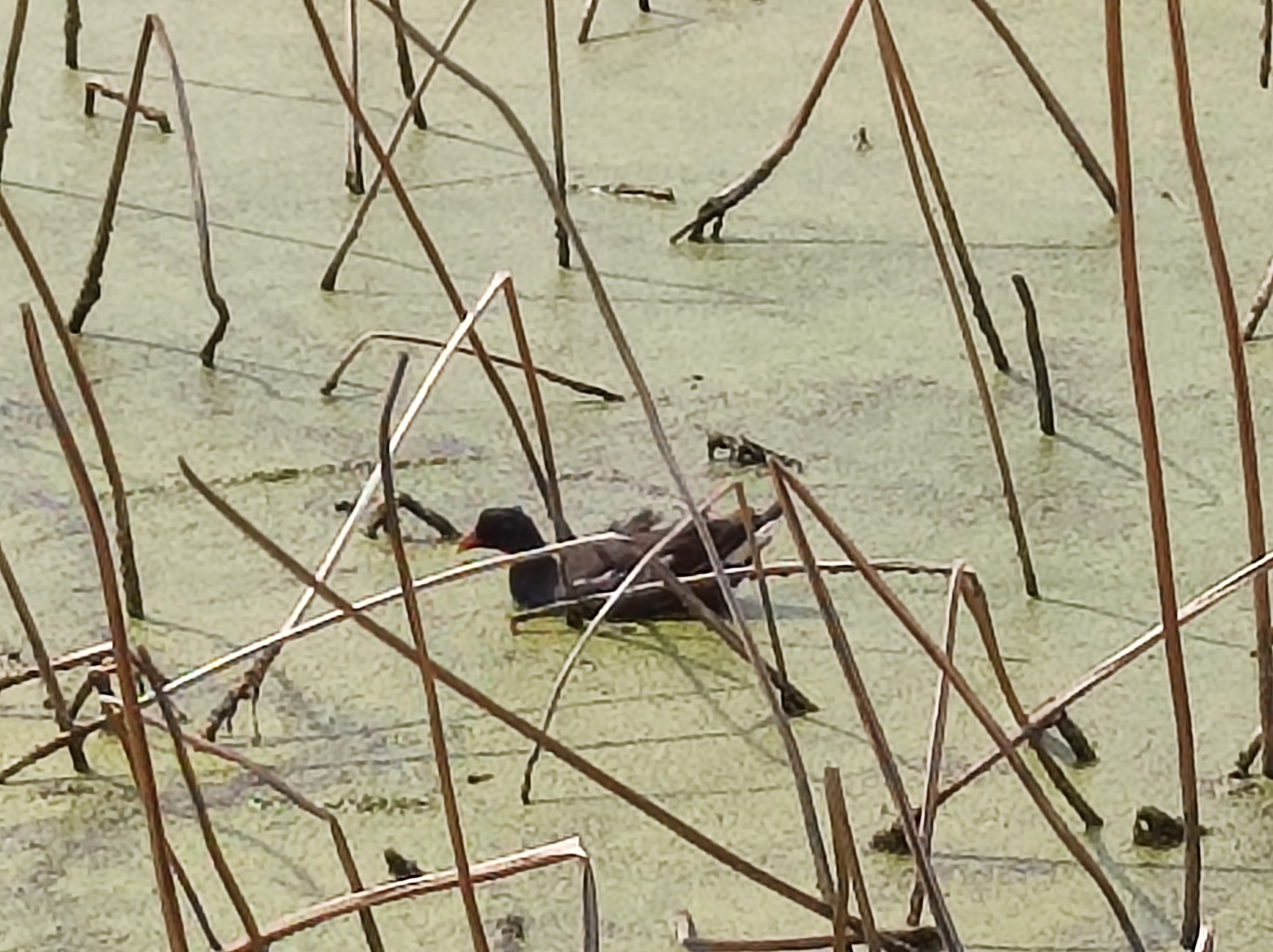
Gruiformes / Rallidae / Gallinula
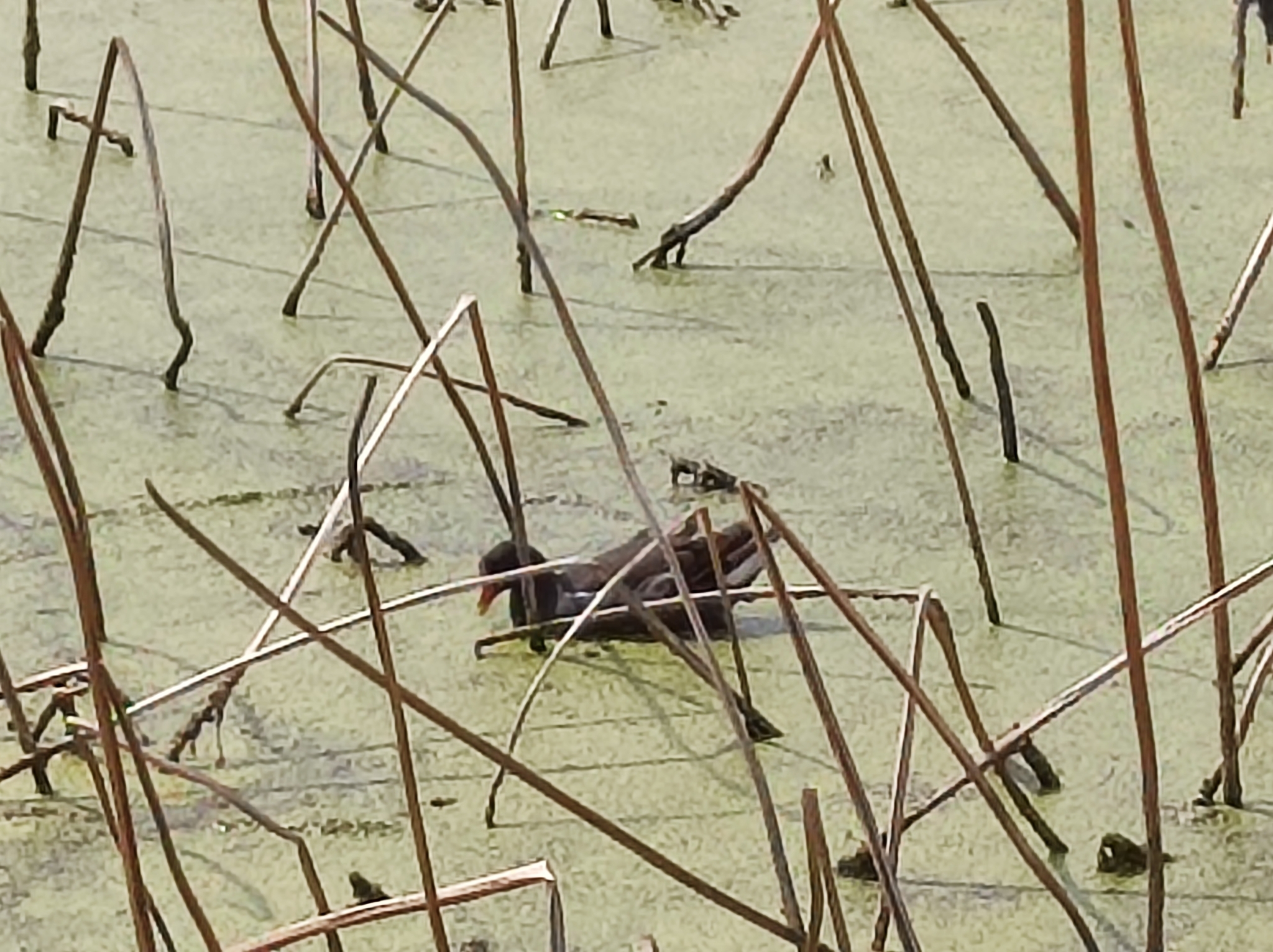
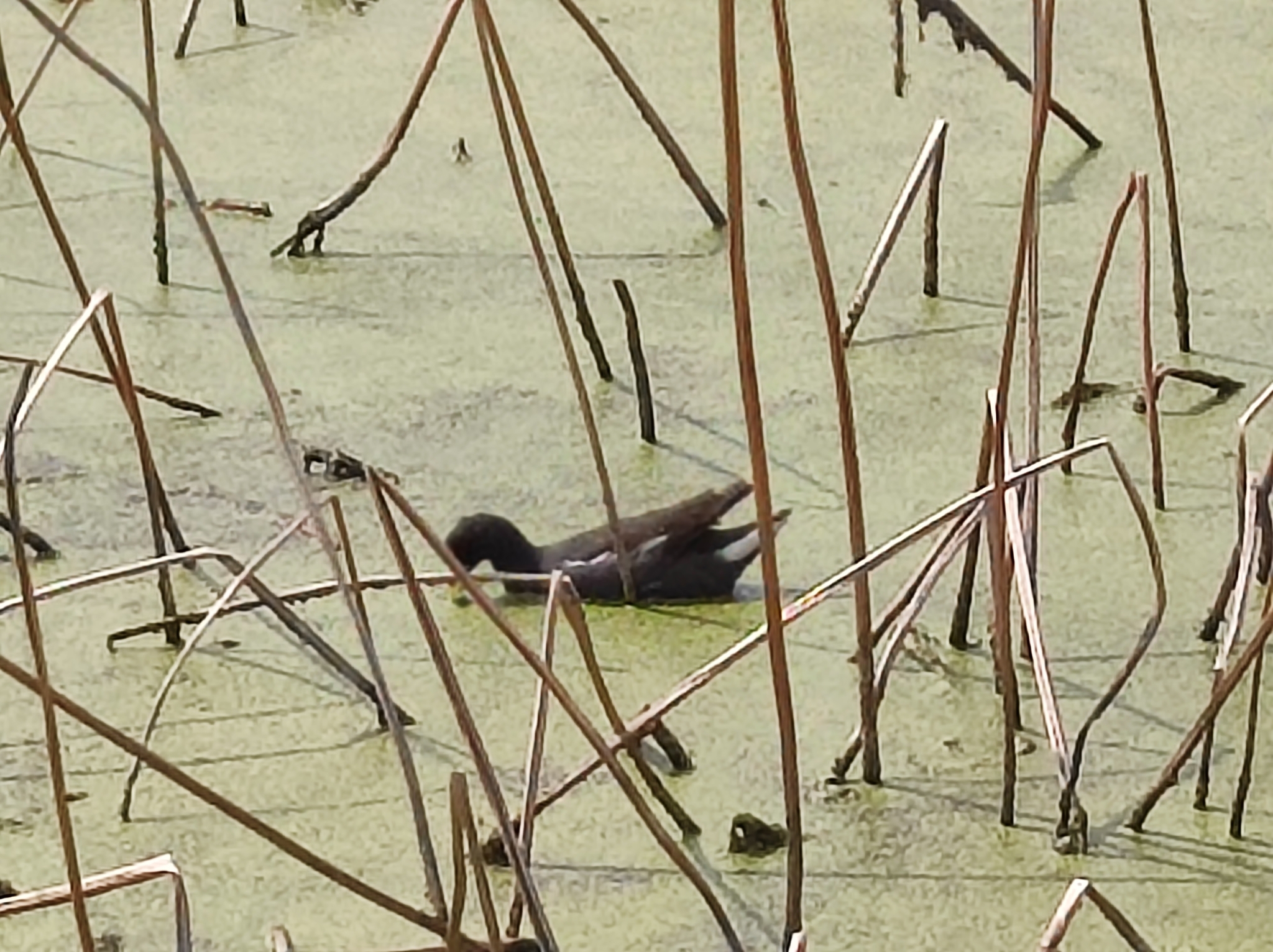
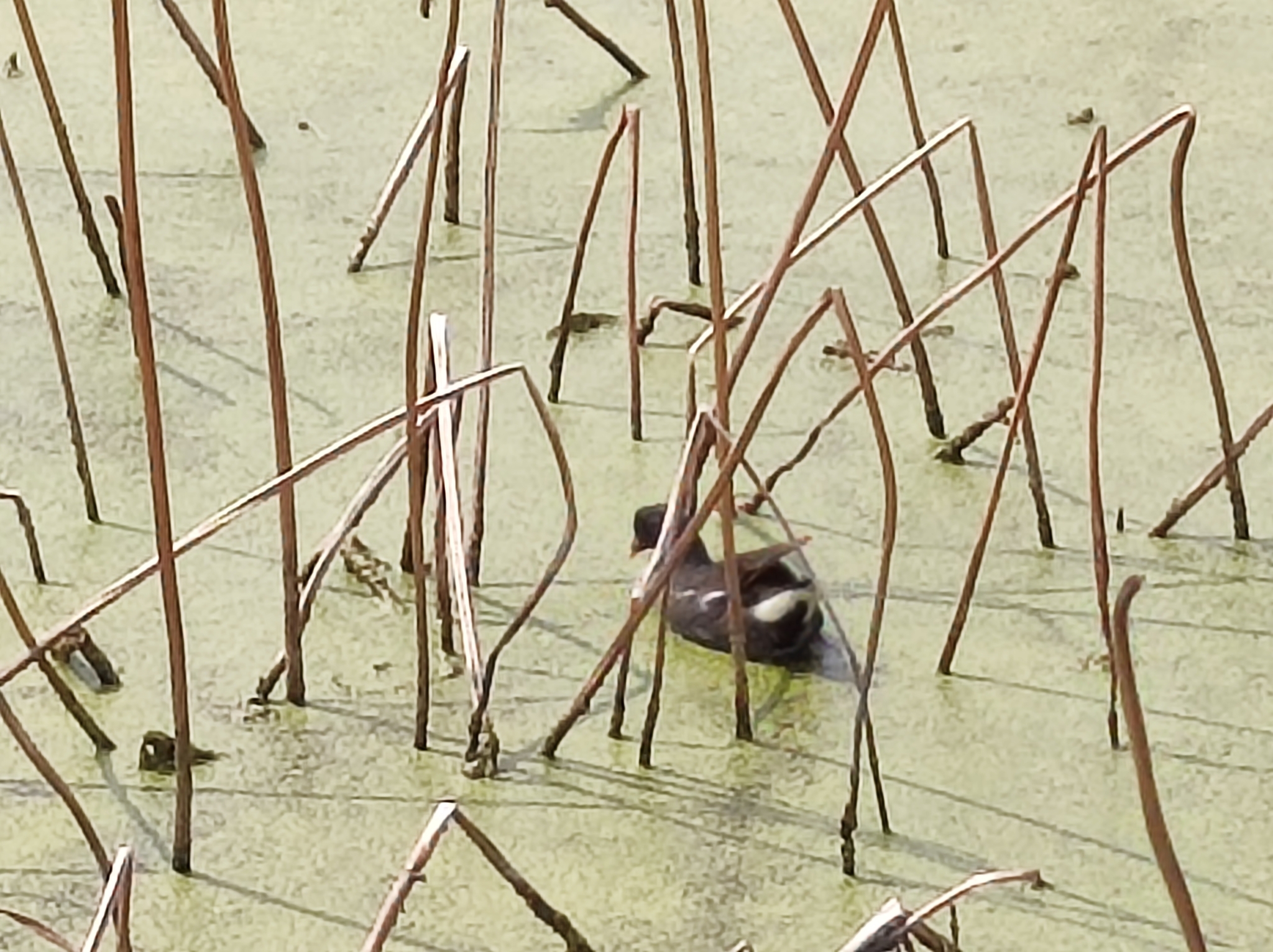
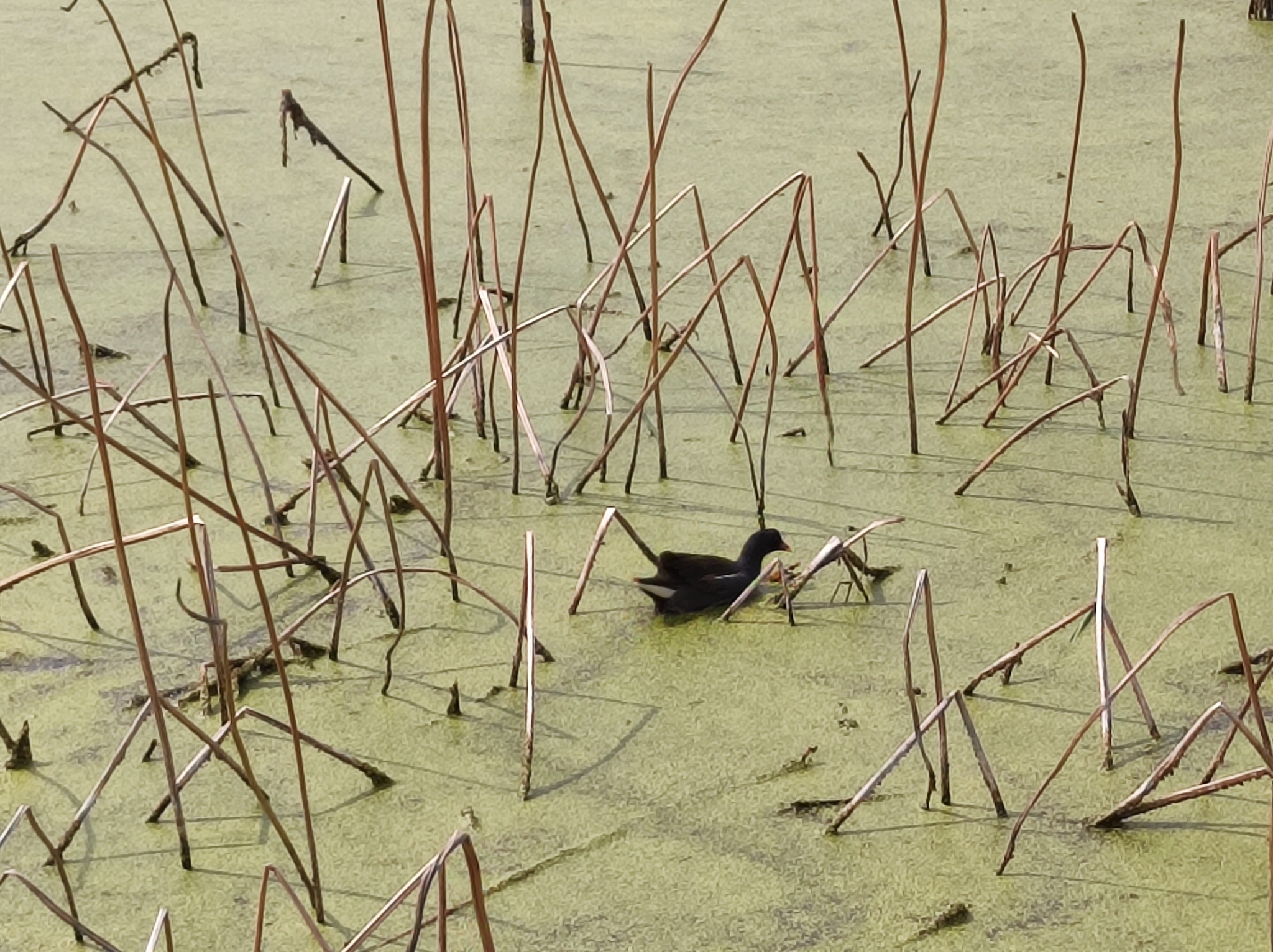
Common Moorhen
Gallinula chloropus · 黑水鸡
Introduction
A bird species in the rail family (Rallidae) distributed across Africa, Europe, and Asia. It inhabits well-vegetated marshes, ponds, canals, and other wetlands, avoiding polar regions and many tropical rainforests. It is one of the most common Old World rail species.
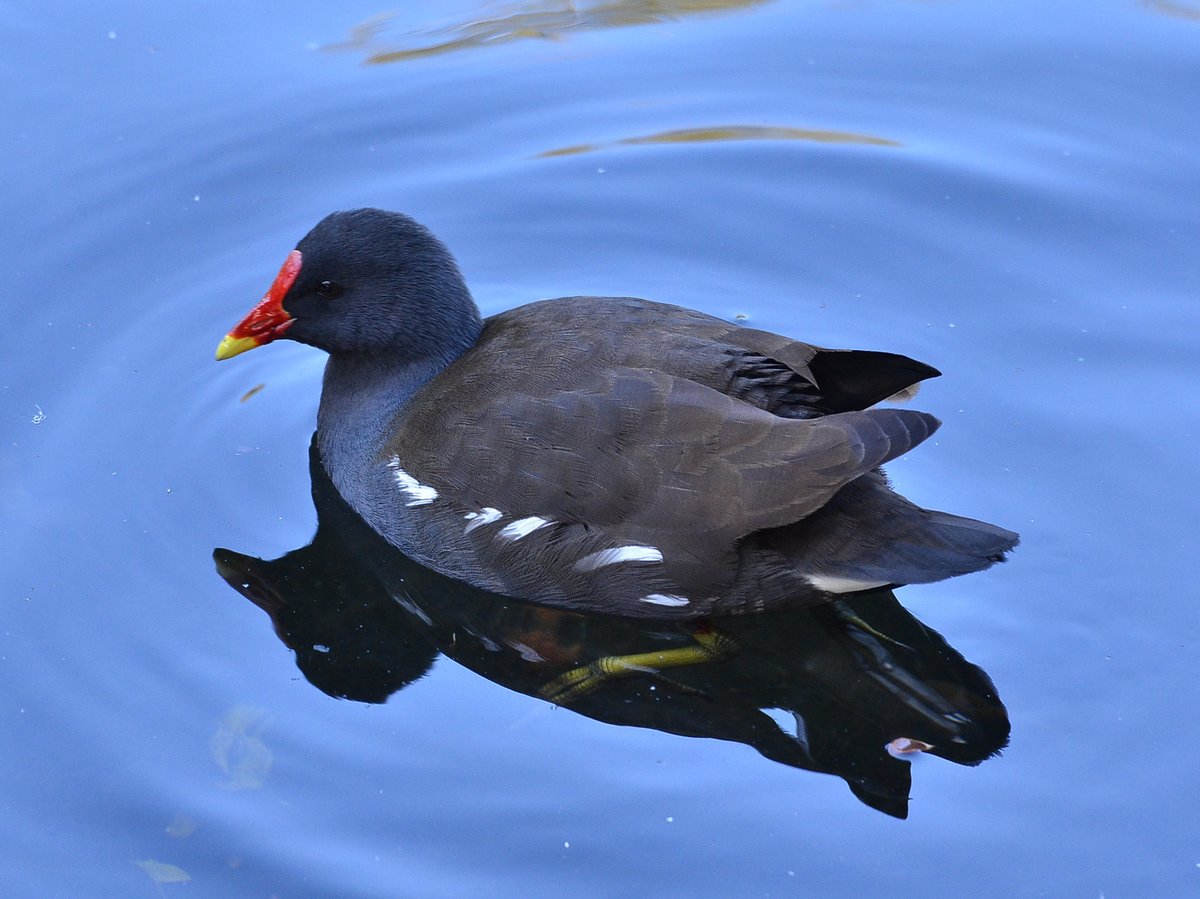
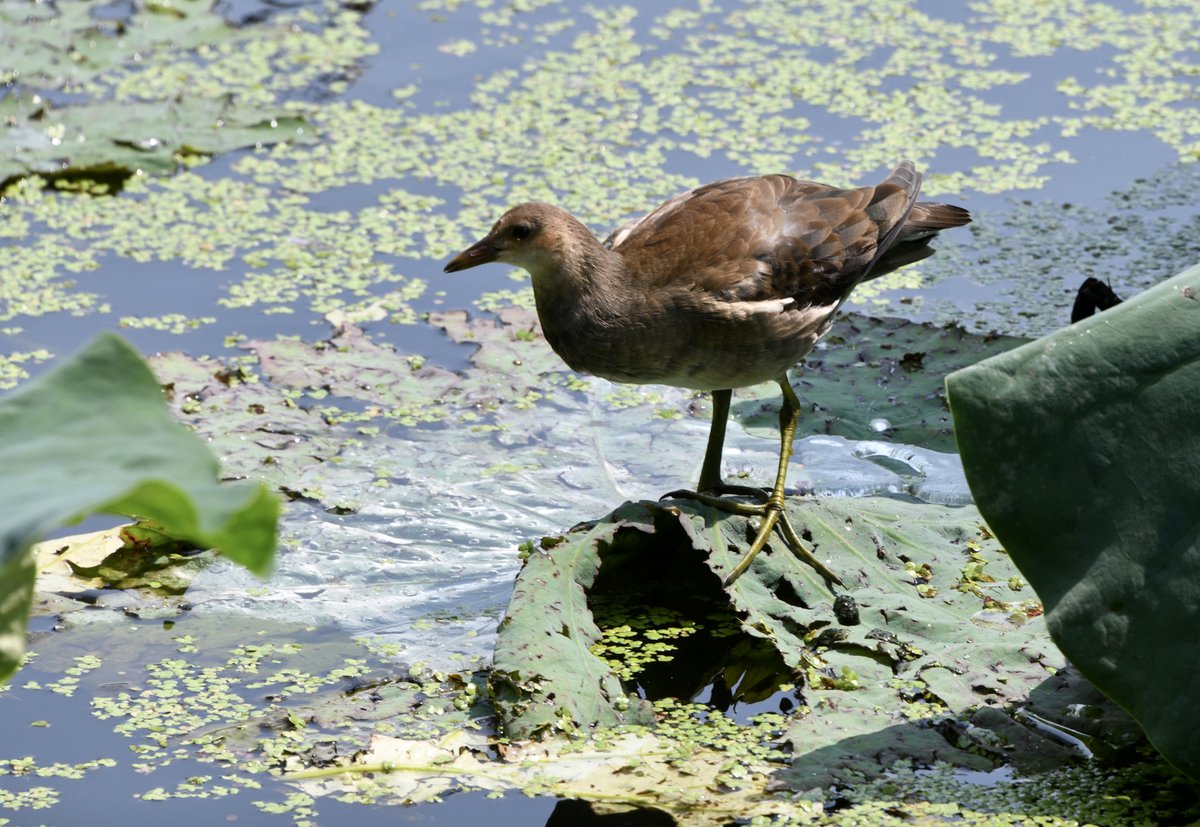
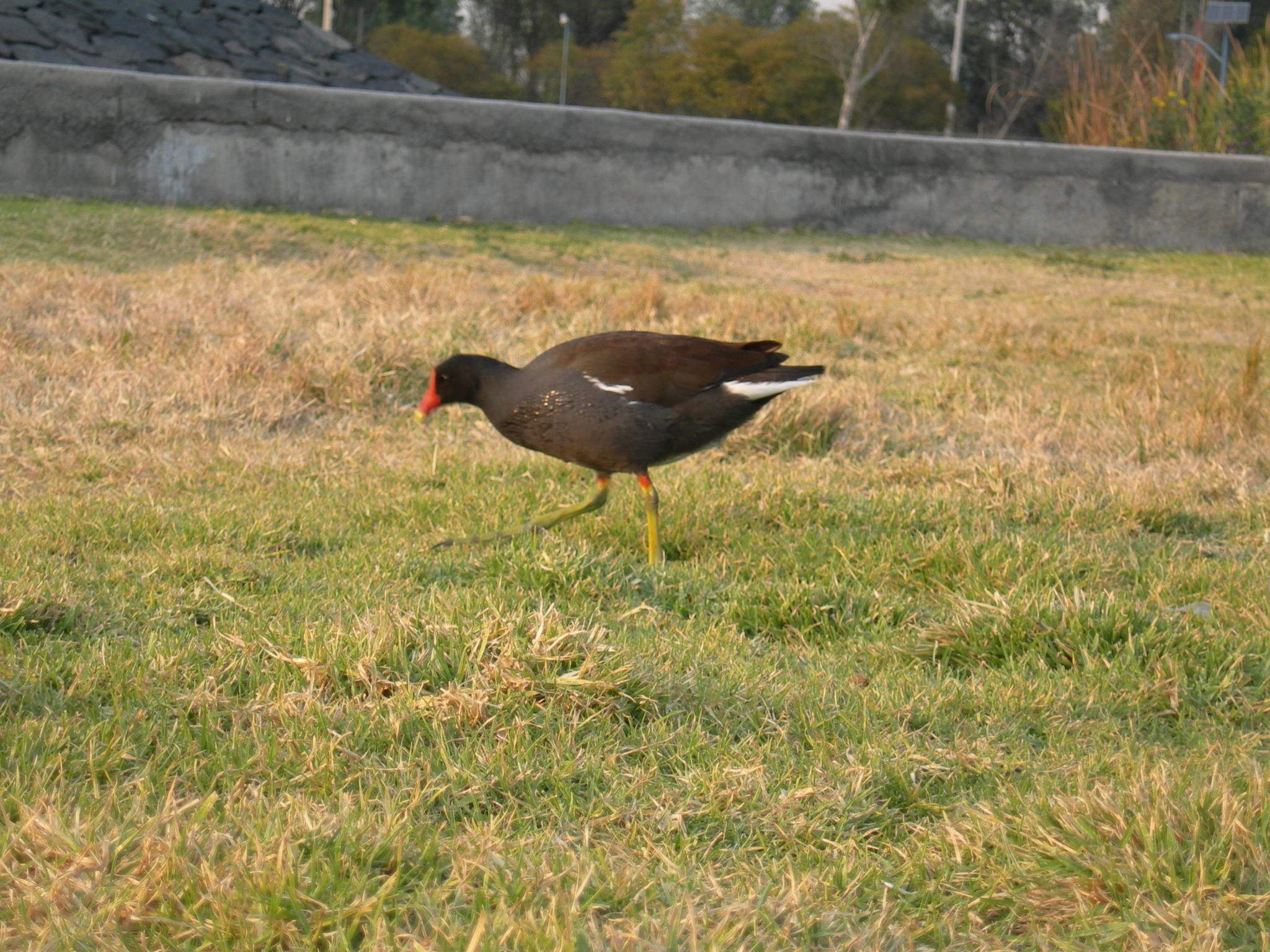
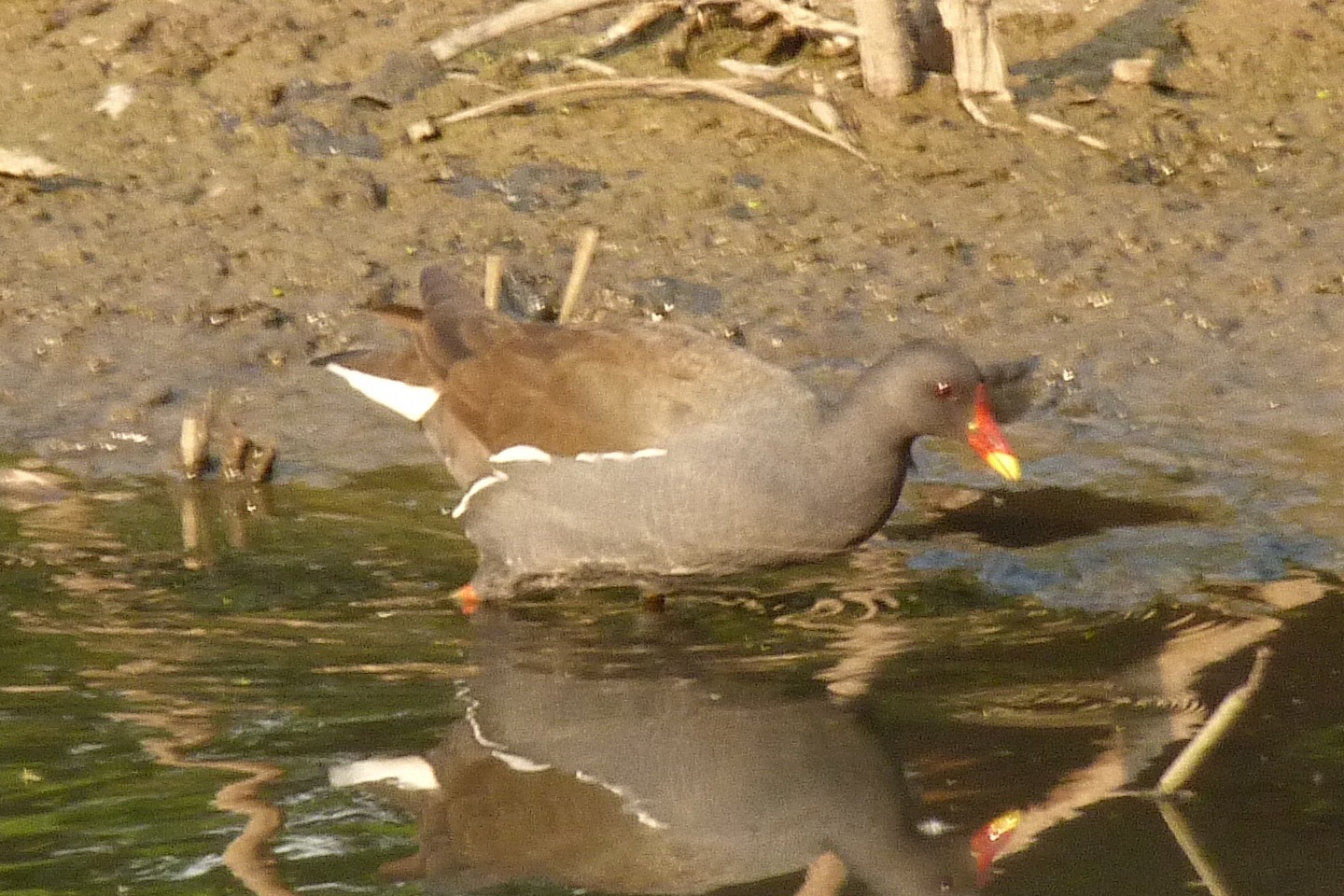
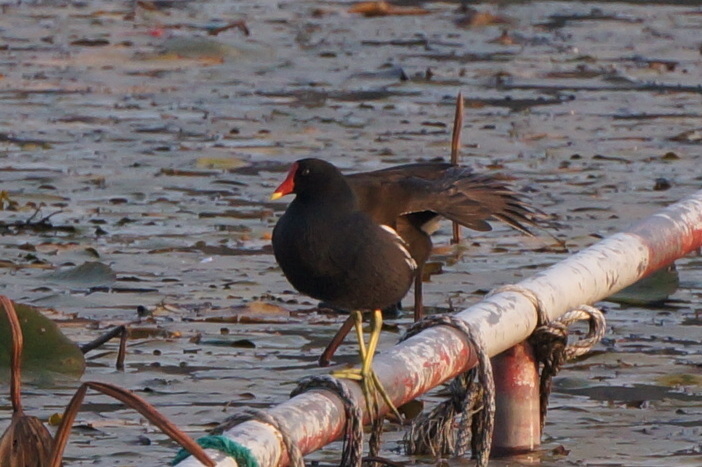
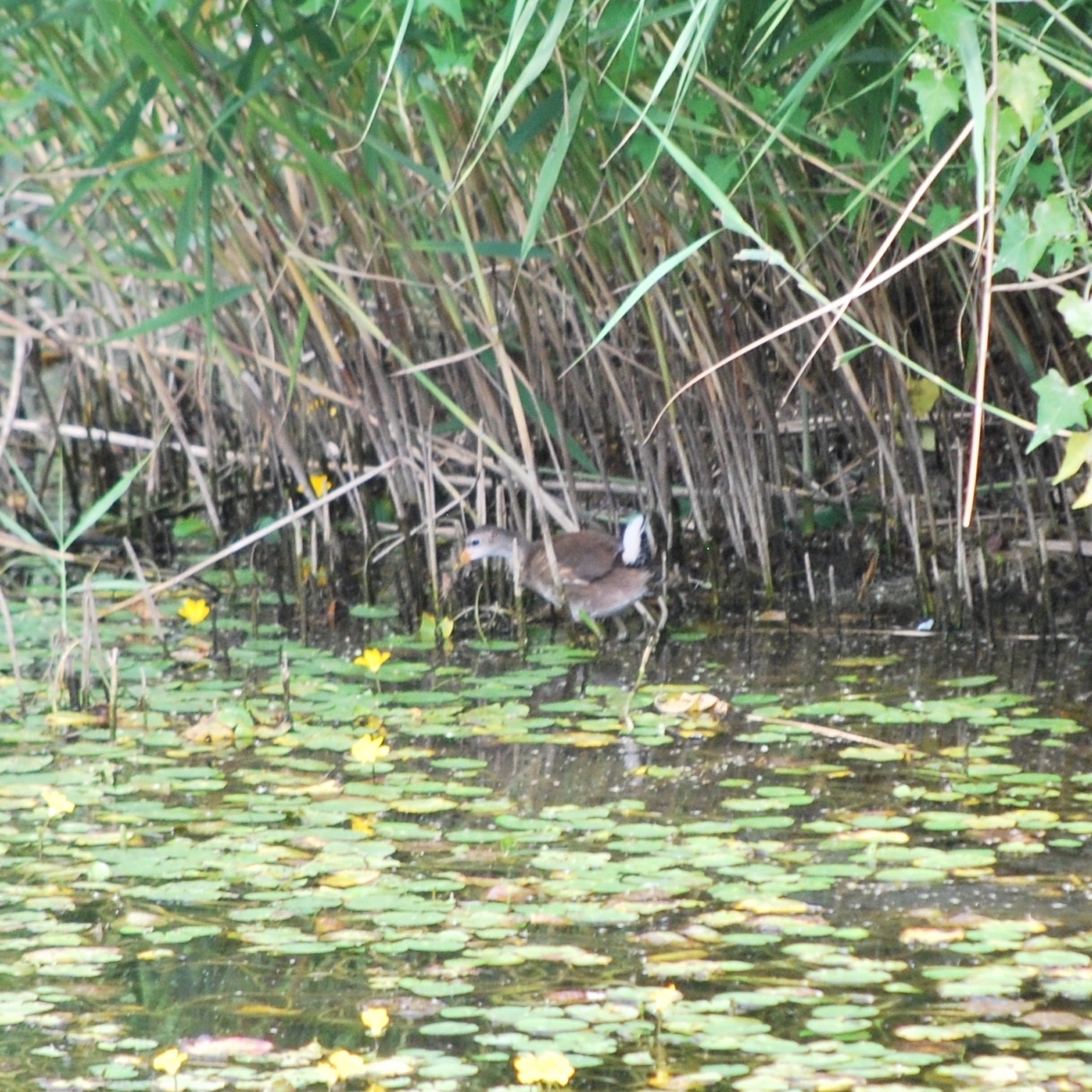
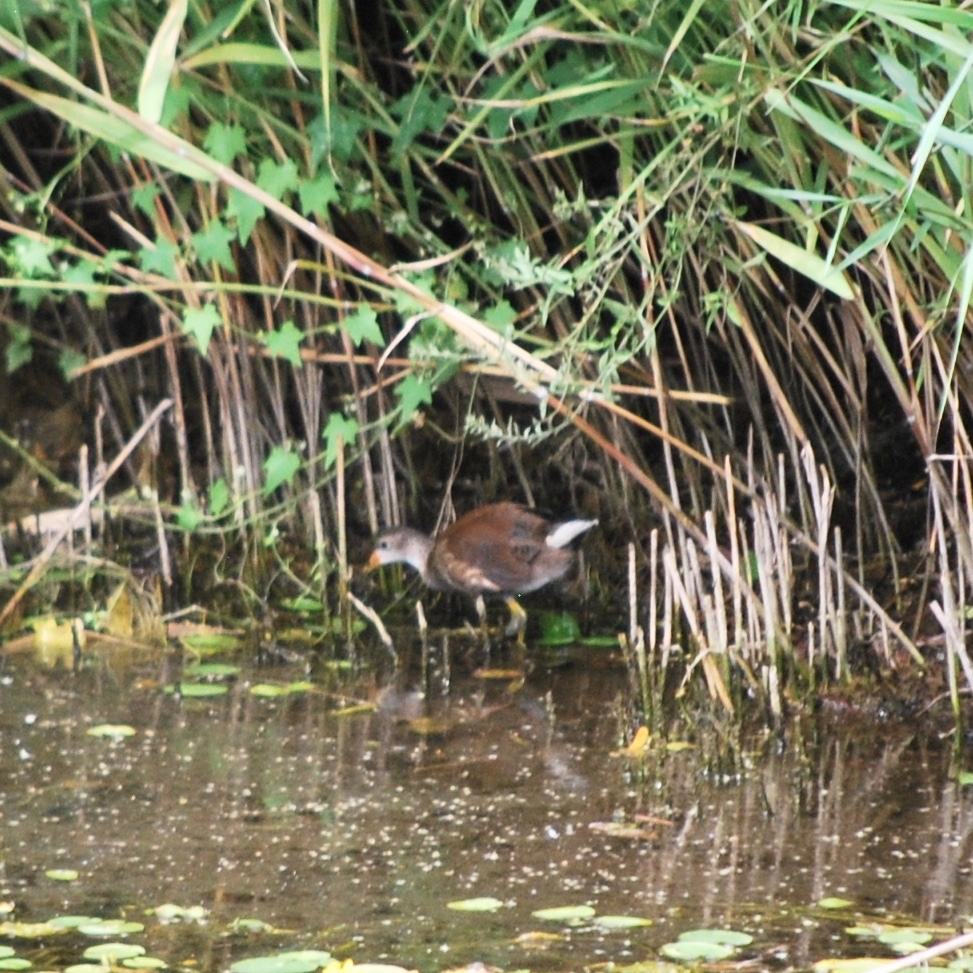
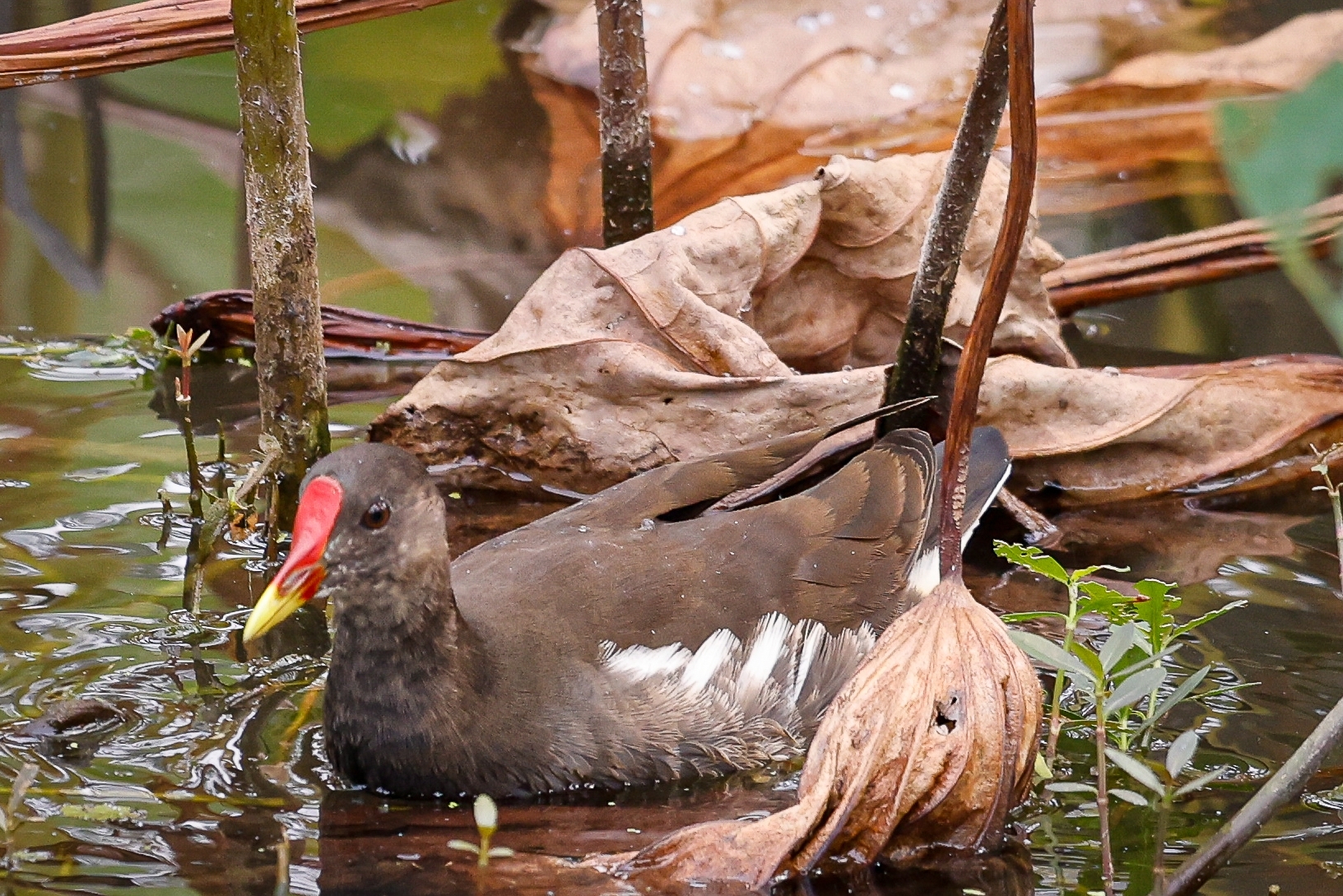
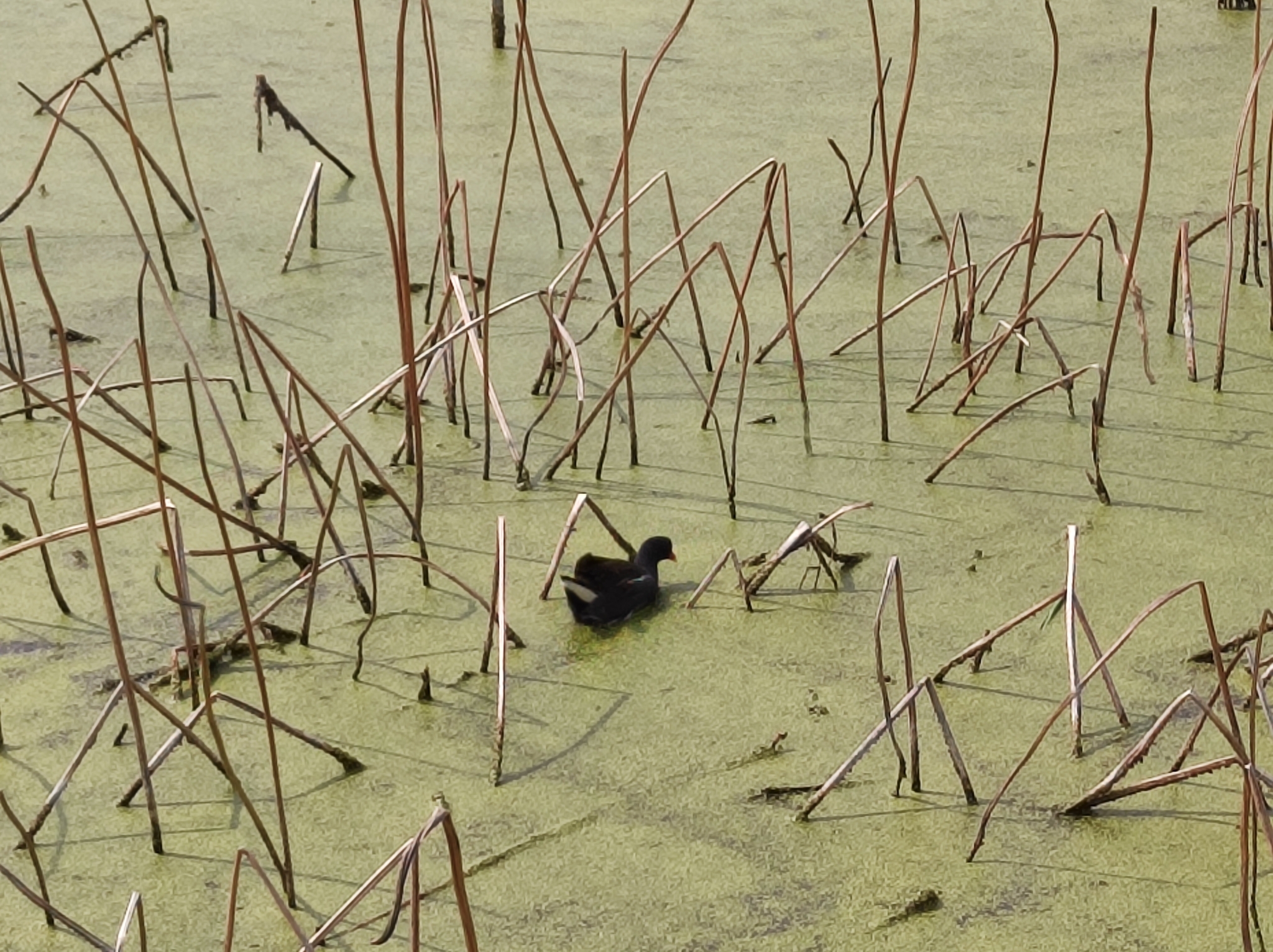
Description
Midsized to large rail, 30–38 cm (12–15 in) in length with a wingspan of 50–62 cm (20–24 in). Body mass ranges from 192 to 500 g. Plumage is predominantly black and brown with white under-tail and white streaks on the flanks. Features yellow legs, a red bill with a yellow tip, and a red frontal shield with a rounded top and fairly parallel sides. Young are browner and lack the red shield. Subspecies G. c. meridionalis is smaller with slaty blue-grey upperwing coverts; G. c. orientalis has a larger shield; G. c. pyrrhorrhoa is darker with buff undertail coverts.
Identification
Distinguished by the red frontal shield with a smooth waving line at the tailward margin, contrasting with the related common gallinule which has a straighter shield top and marked indentation. Emits a wide range of gargling calls and loud hisses when threatened.
Distribution & Habitat
Found across the Old World including Europe, Africa, and Asia. Five subspecies are recognized: G. c. chloropus (Europe, North Africa to Japan, Southeast Asia), G. c. meridionalis (Sub-Saharan Africa, Saint Helena), G. c. pyrrhorrhoa (Comoros, Madagascar, Réunion, Mauritius), G. c. orientalis (Seychelles, Andamans, Malay Peninsula, Sunda Islands, Sulawesi, Philippines), and G. c. guami (Mariana Islands, Guam). Populations in freezing areas, such as eastern Europe and northern China, migrate to temperate climates; others are resident.
Behavior & Ecology
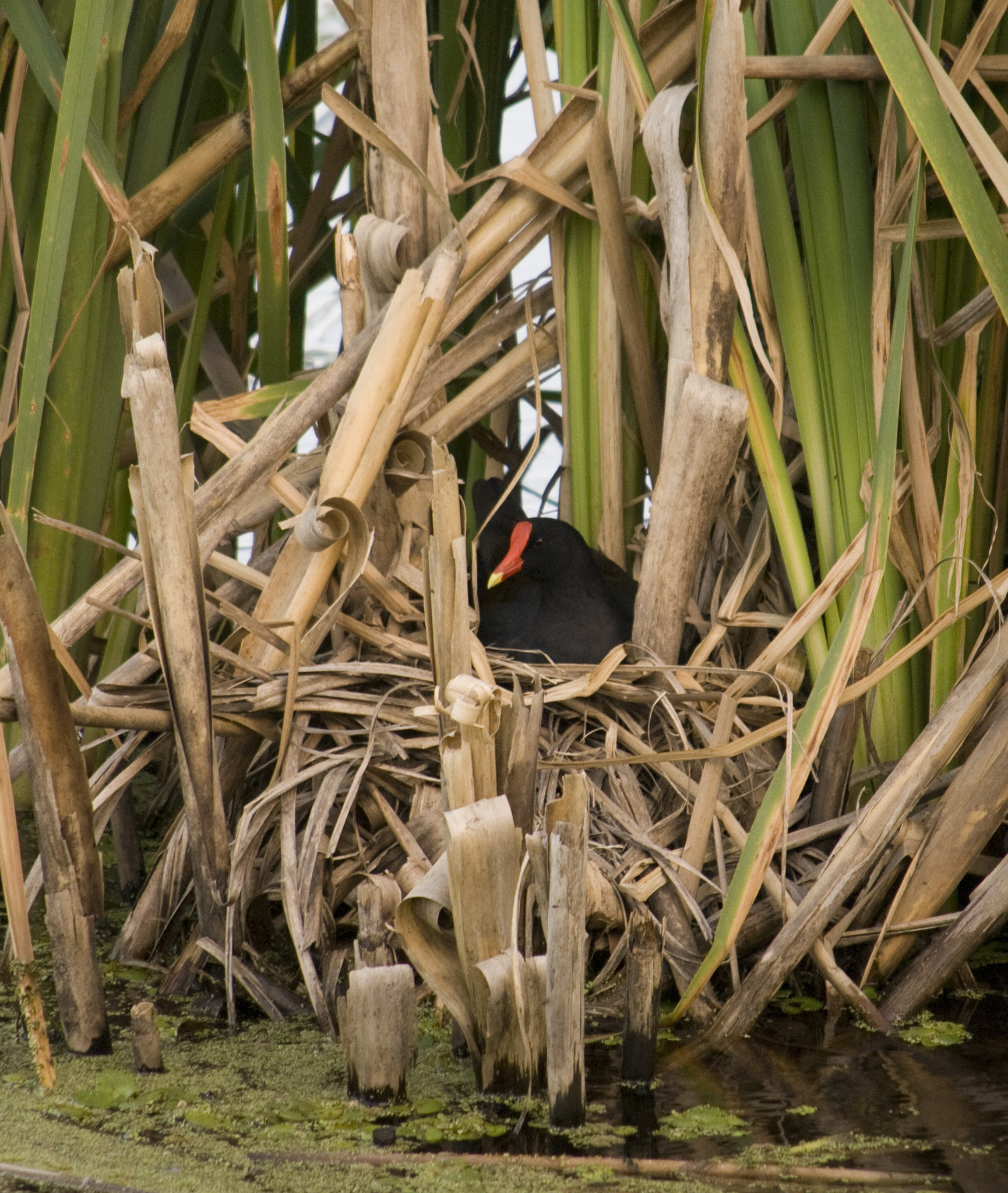
Consumes vegetable material and small aquatic creatures, foraging beside or in water, sometimes walking on lilypads or upending. Territorial during breeding season, fighting conspecifics and other water birds. Nests are baskets built on the ground in dense vegetation. Laying occurs between mid-March and mid-May in the Northern Hemisphere, with about 8 eggs early in the season and fewer later. Incubation lasts about three weeks; both parents incubate and feed young. Chicks fledge after 40–50 days. When threatened, adults may carry clinging young to safety. Engages in intraspecific and interspecific nest parasitism, laying eggs in nests of coots, partridges, mallards, and others.
Conservation
Globally assessed as Least Concern by the IUCN. However, the Palau population is very rare, with fewer than 100 adult birds (usually fewer than 50) encountered in surveys, and faces hunting pressure. In the United Kingdom, it is classified as of moderate concern due to population decline, with breeding pairs at their lowest level since 1966.
Culture
The name 'moorhen' has been recorded in English since the 13th century, with 'moor' referring to marsh. Sultan Abdul Hamid II of the Ottoman Empire kept and raised over fifty individuals in the Yildiz Palace.
Source: Wikipedia · CC BY-SA 3.0
Taxonomy
- Order
- Gruiformes
- Family
- Rallidae
- Genus
- Gallinula
Subspecies (5)
-
Gallinula chloropus chloropus
breeds Europe, northern Africa, and Macaronesian islands eastward through Asia to Japan, and southward to Sri Lanka and central Malayan Peninsula; winters to Arabia and southern China
Data Sources
Species description from Wikipedia, licensed under CC BY-SA 3.0.
Bird images and sounds sourced from GBIF, contributed by citizen scientists worldwide under Creative Commons licenses.
Taxonomy data from AviList 2025.