Common Moorhen
Gallinula chloropus
黑水鸡
Introduction
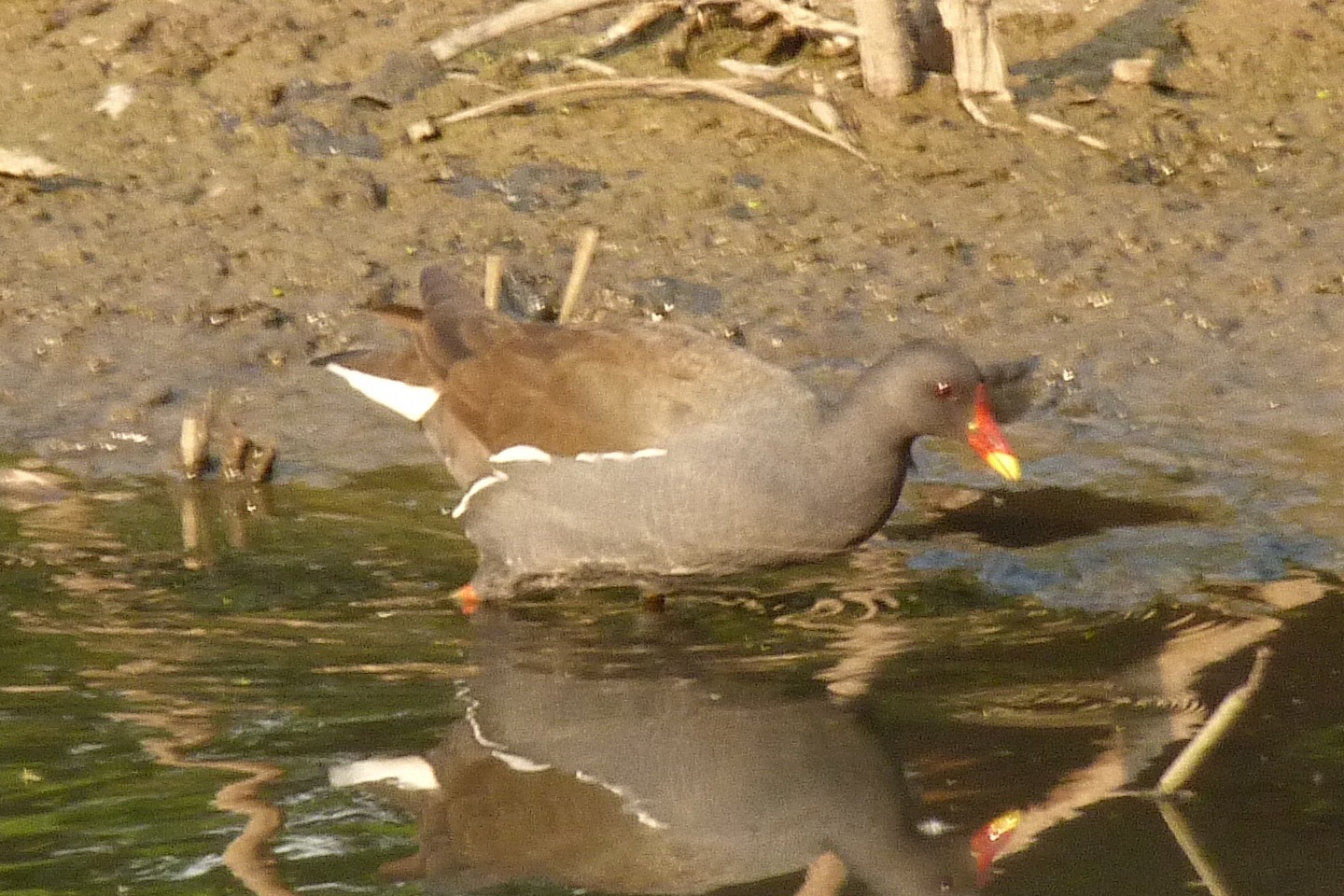
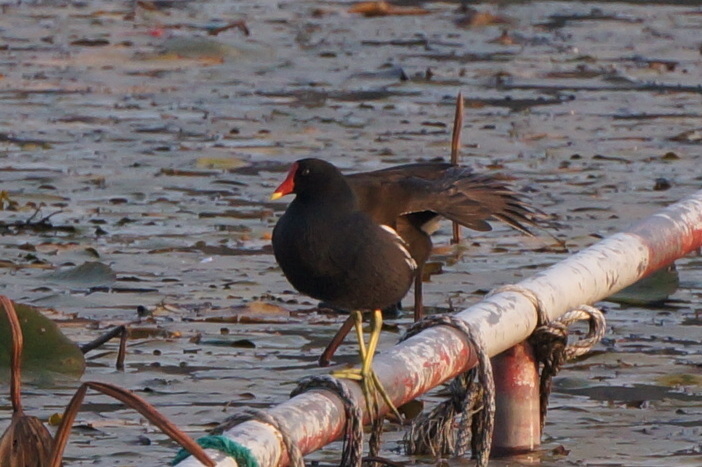
A common waterbird across Africa, Europe, and Asia, this rail species inhabits well-vegetated wetlands including marshes, sluggish rivers, and human-modified waterscapes such as urban parks and garden ponds. It is absent from polar regions and tropical rainforests. The species maintains a secretive preference for emergent vegetation but becomes accustomed to regular human presence. Its white under-tail coverts and yellow legs are distinguishing field marks.
Description
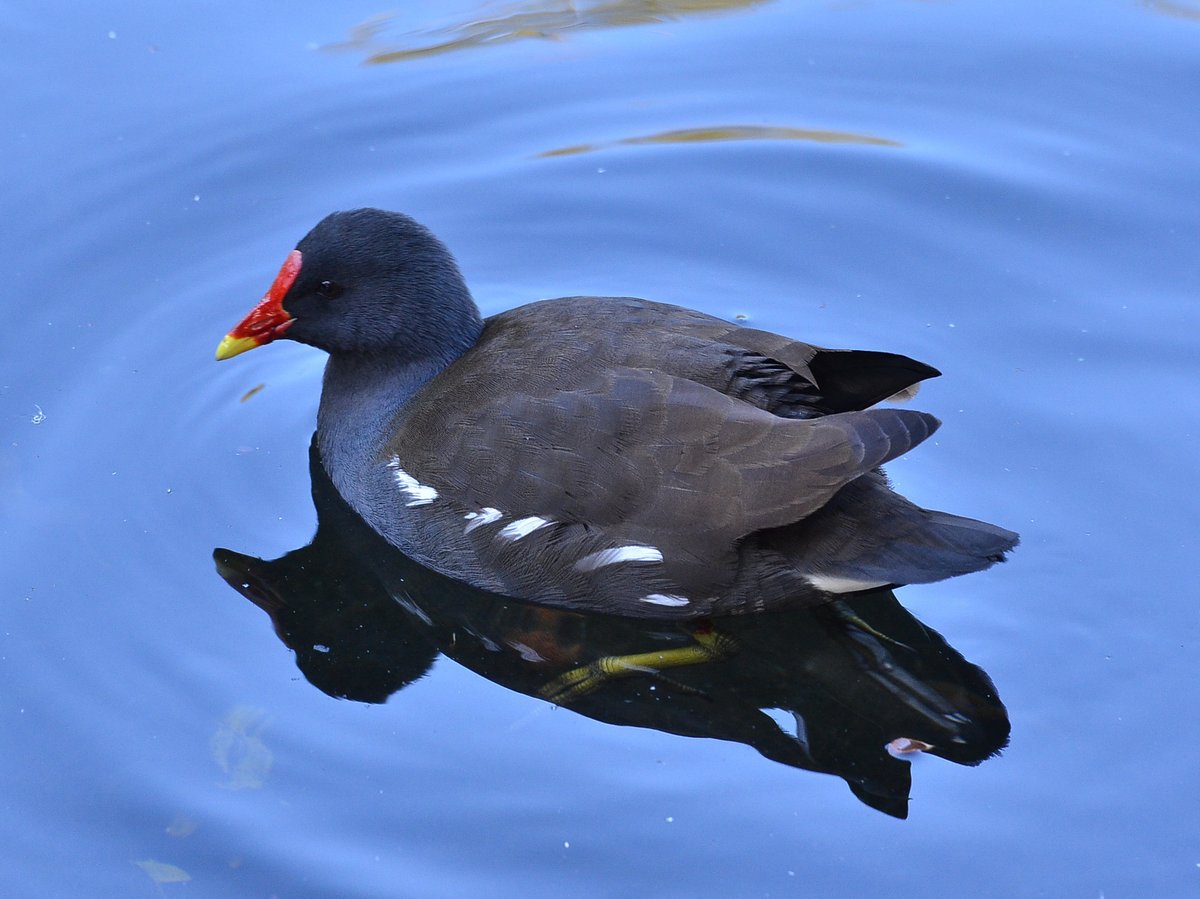
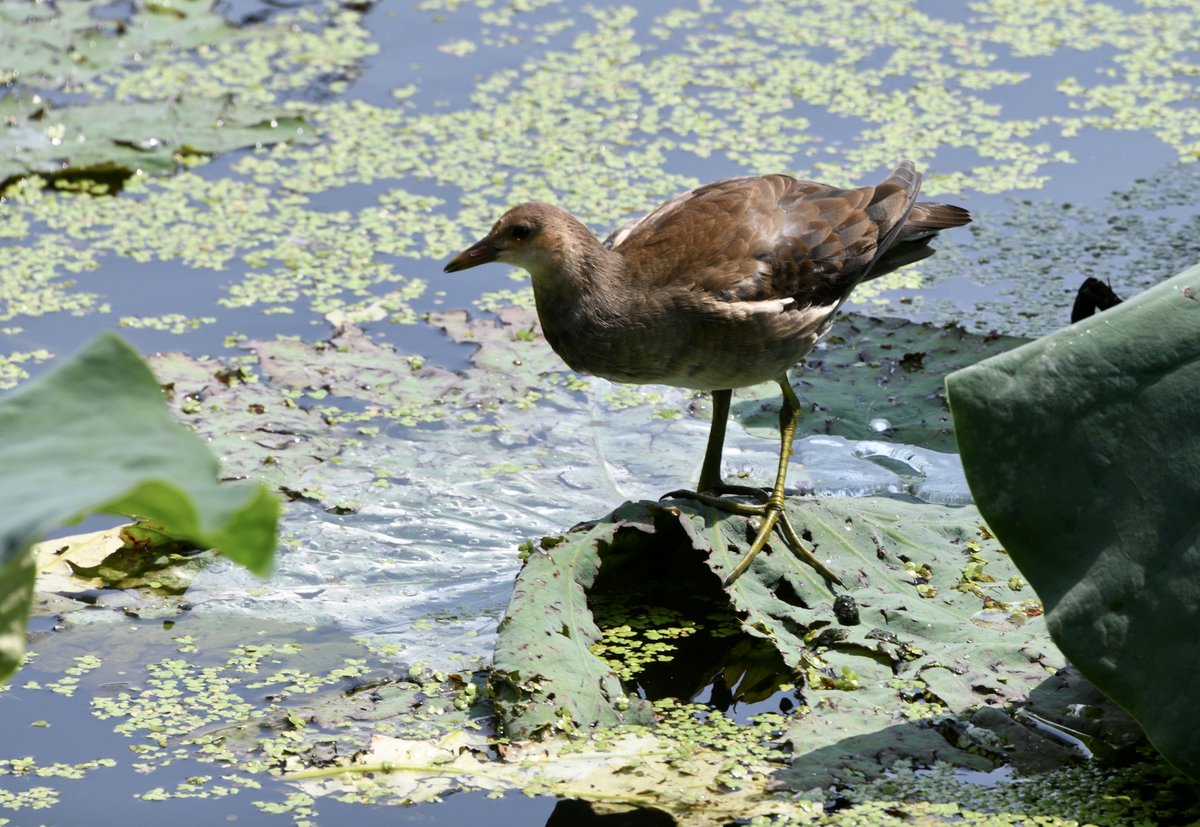
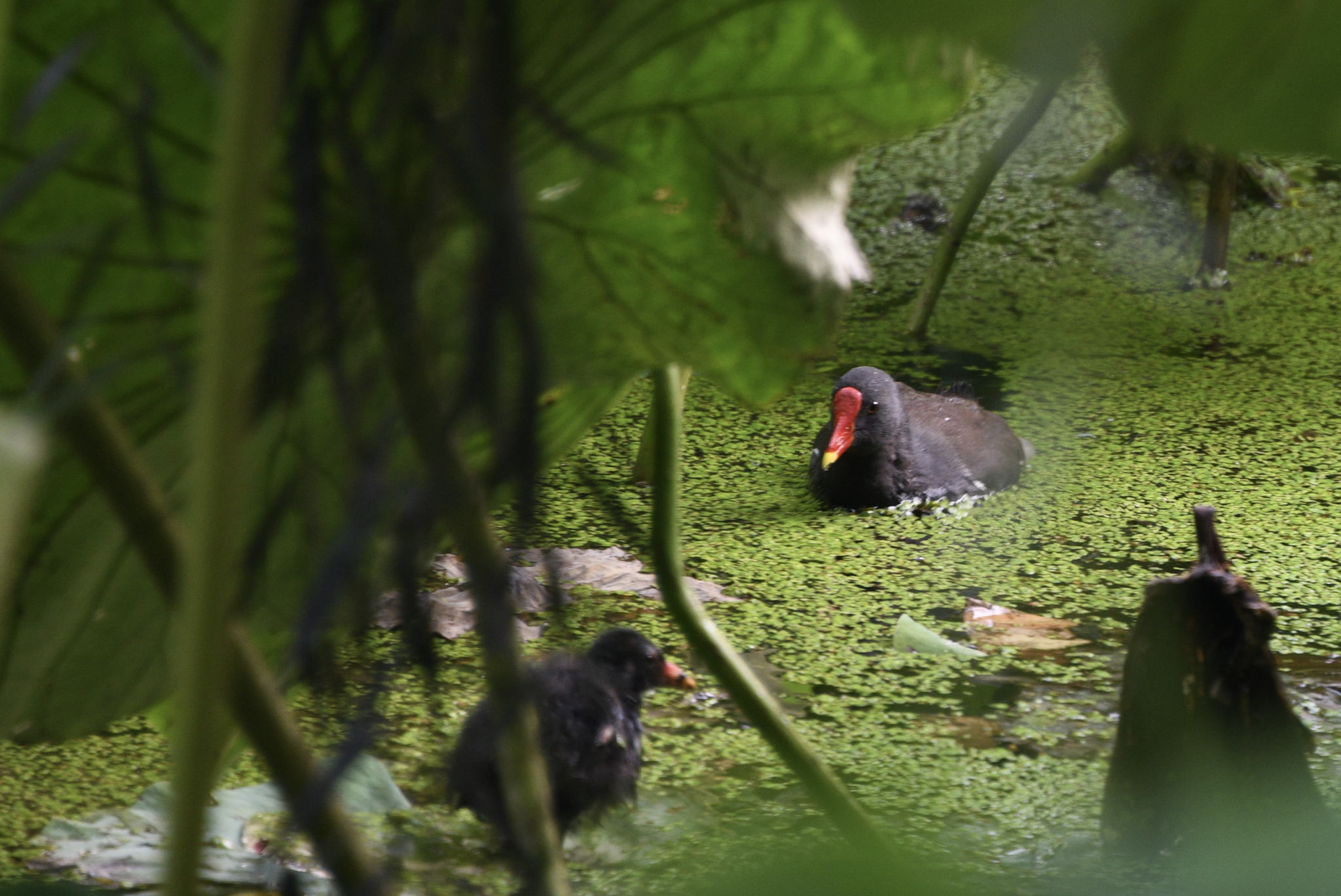
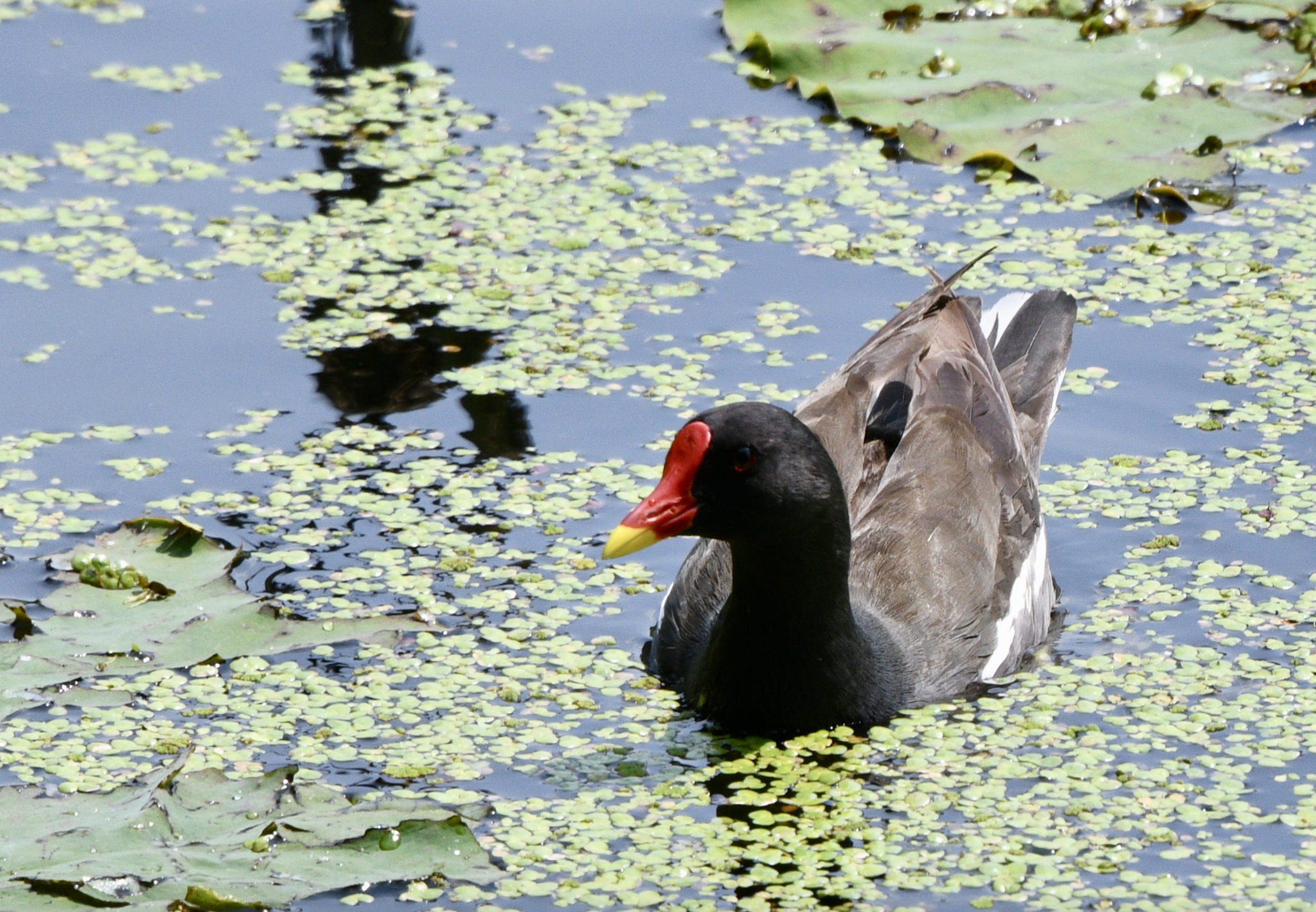
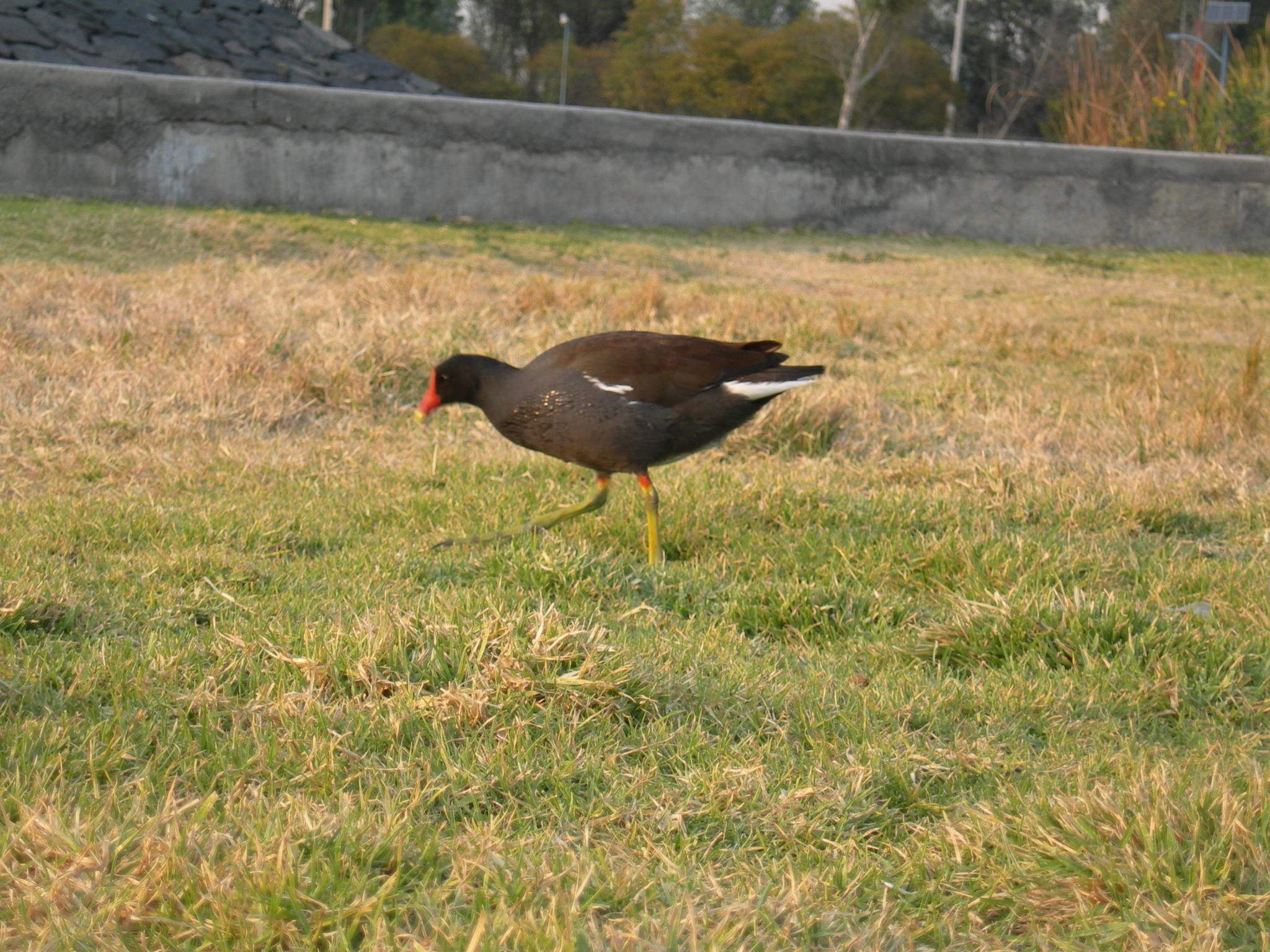
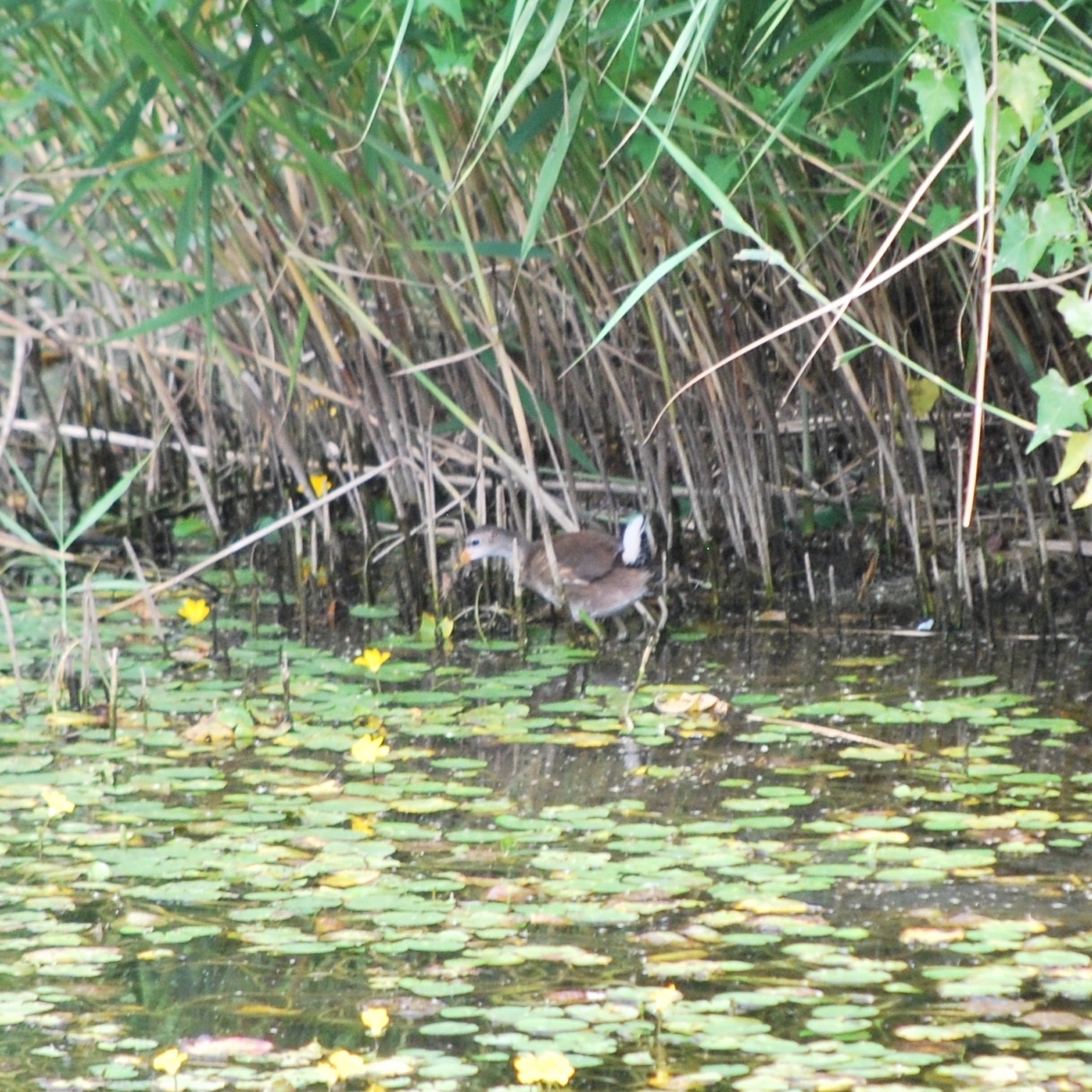
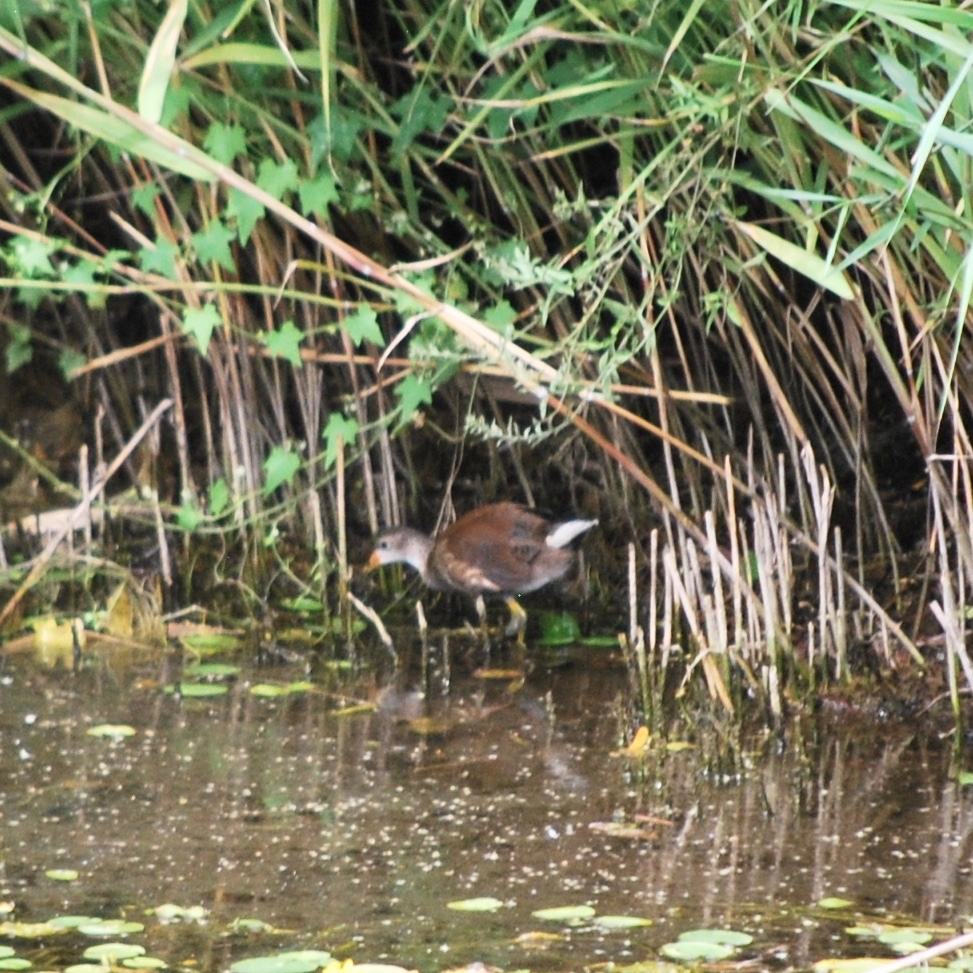
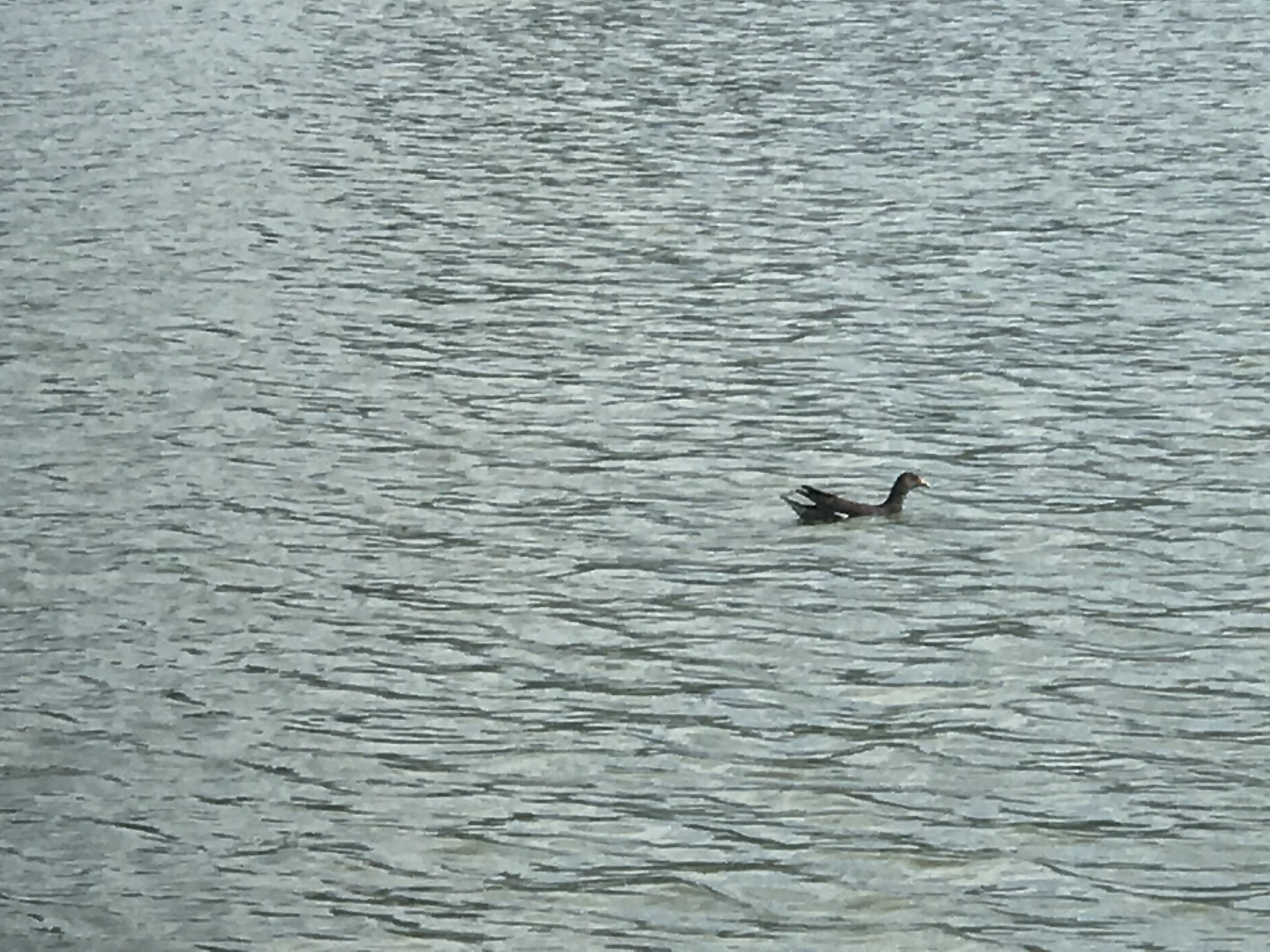
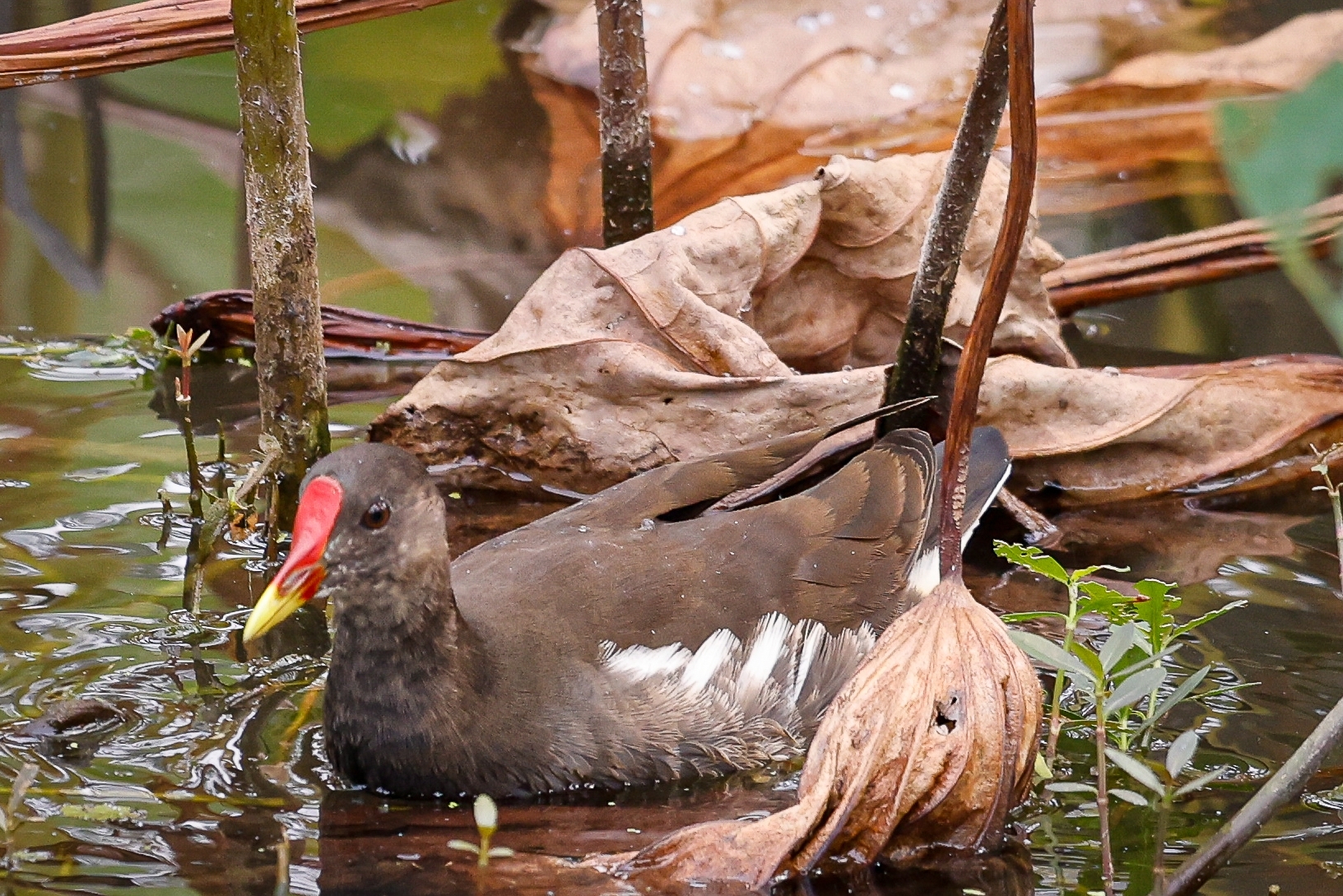
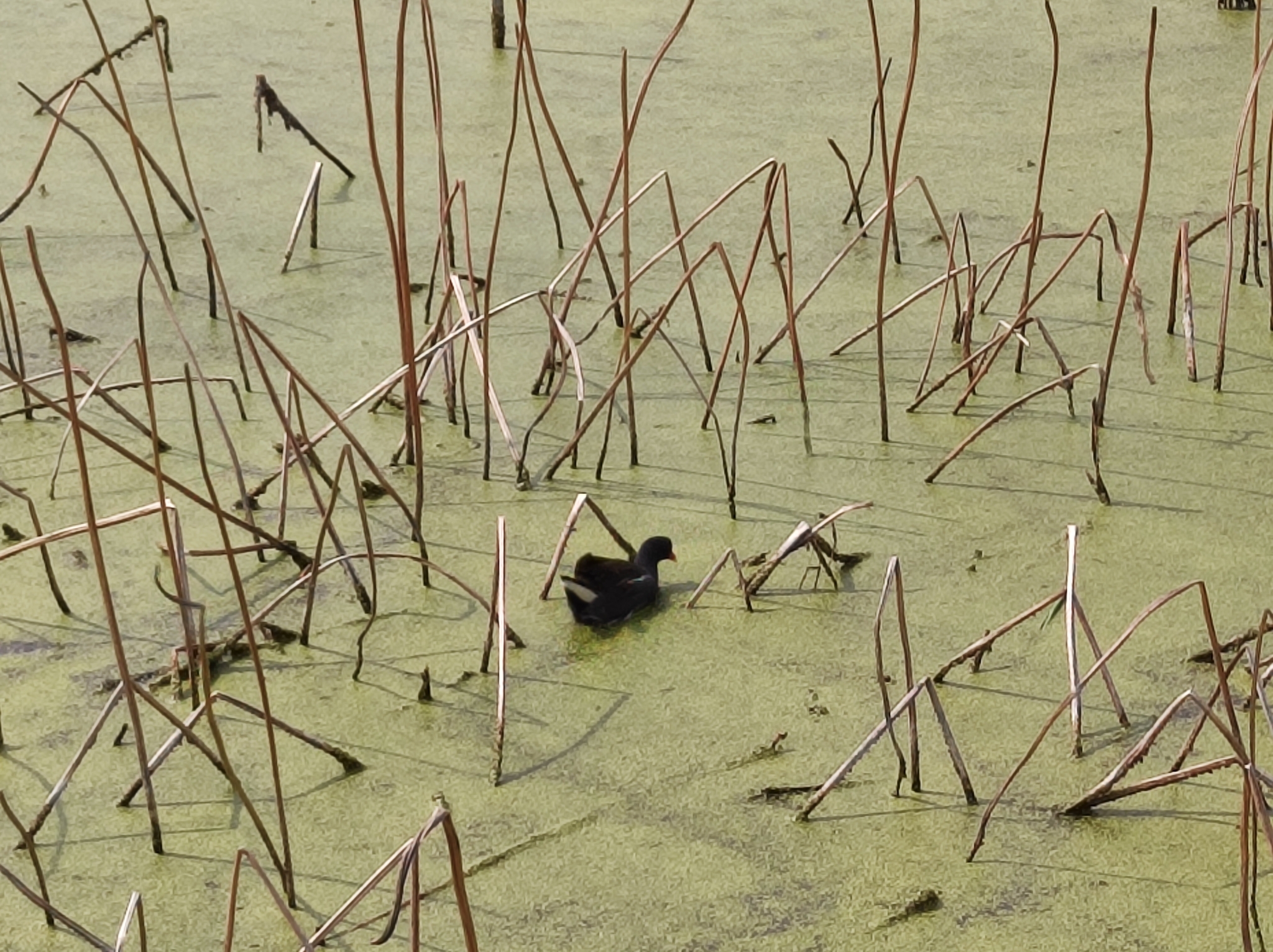
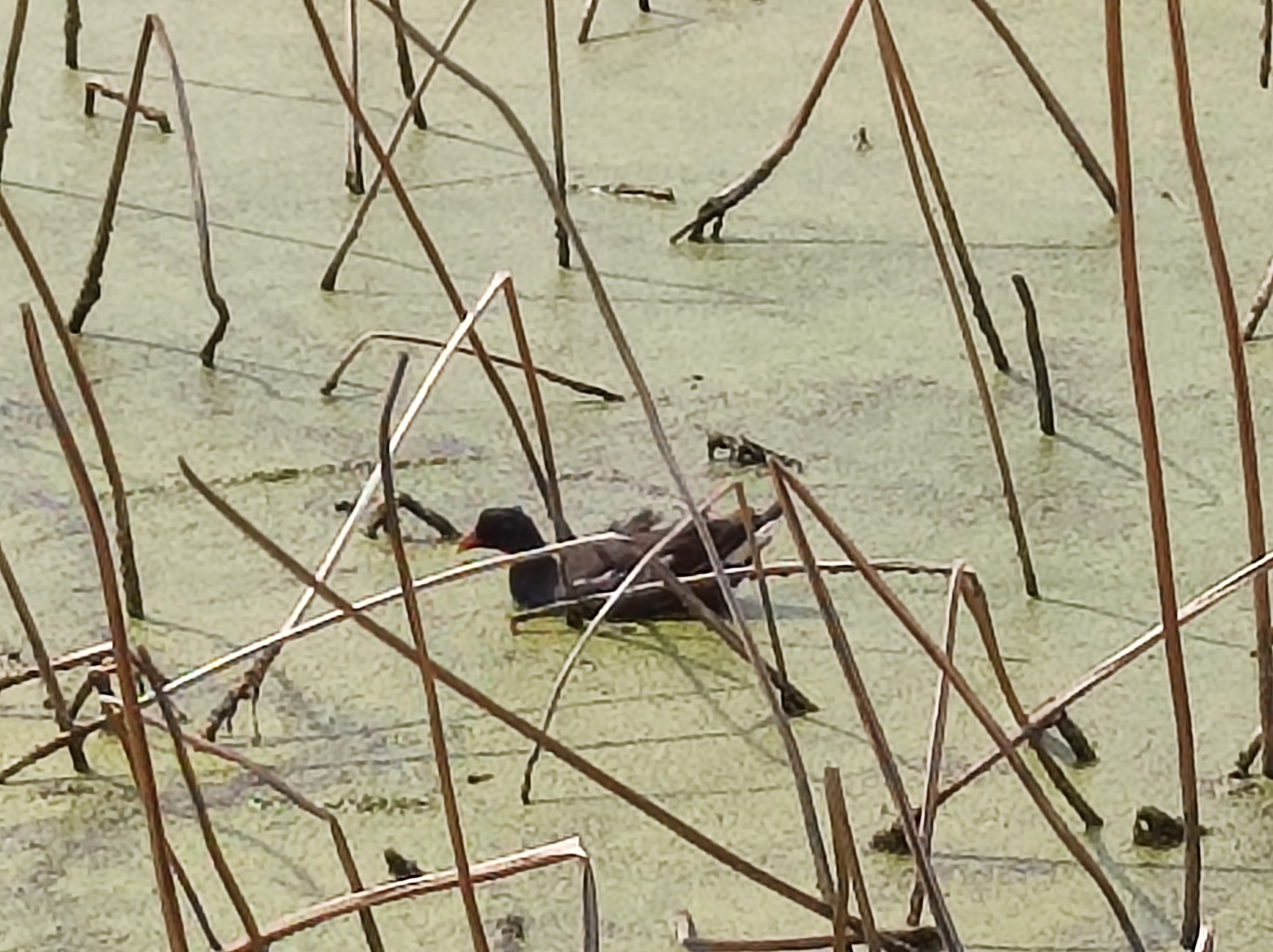
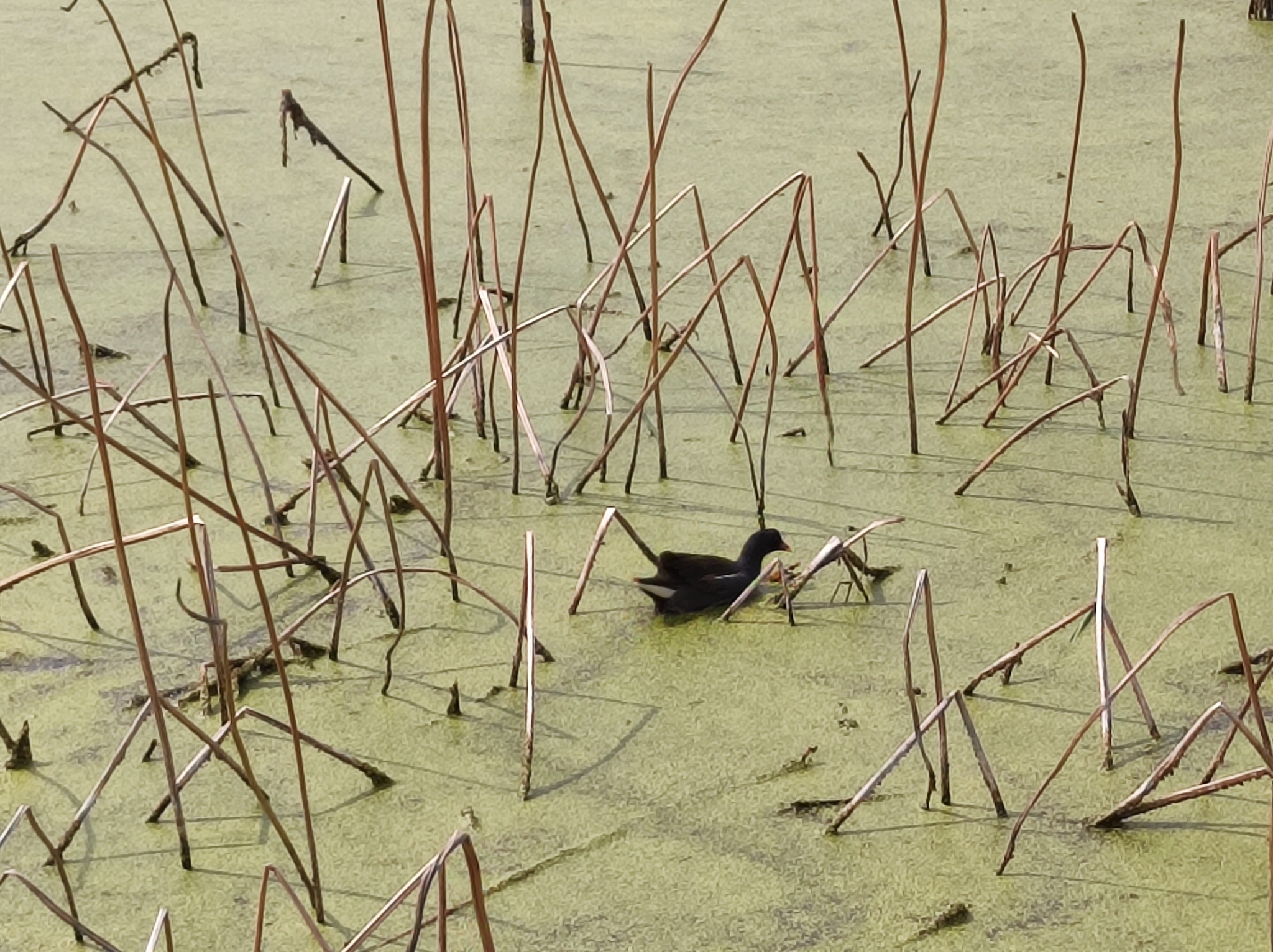
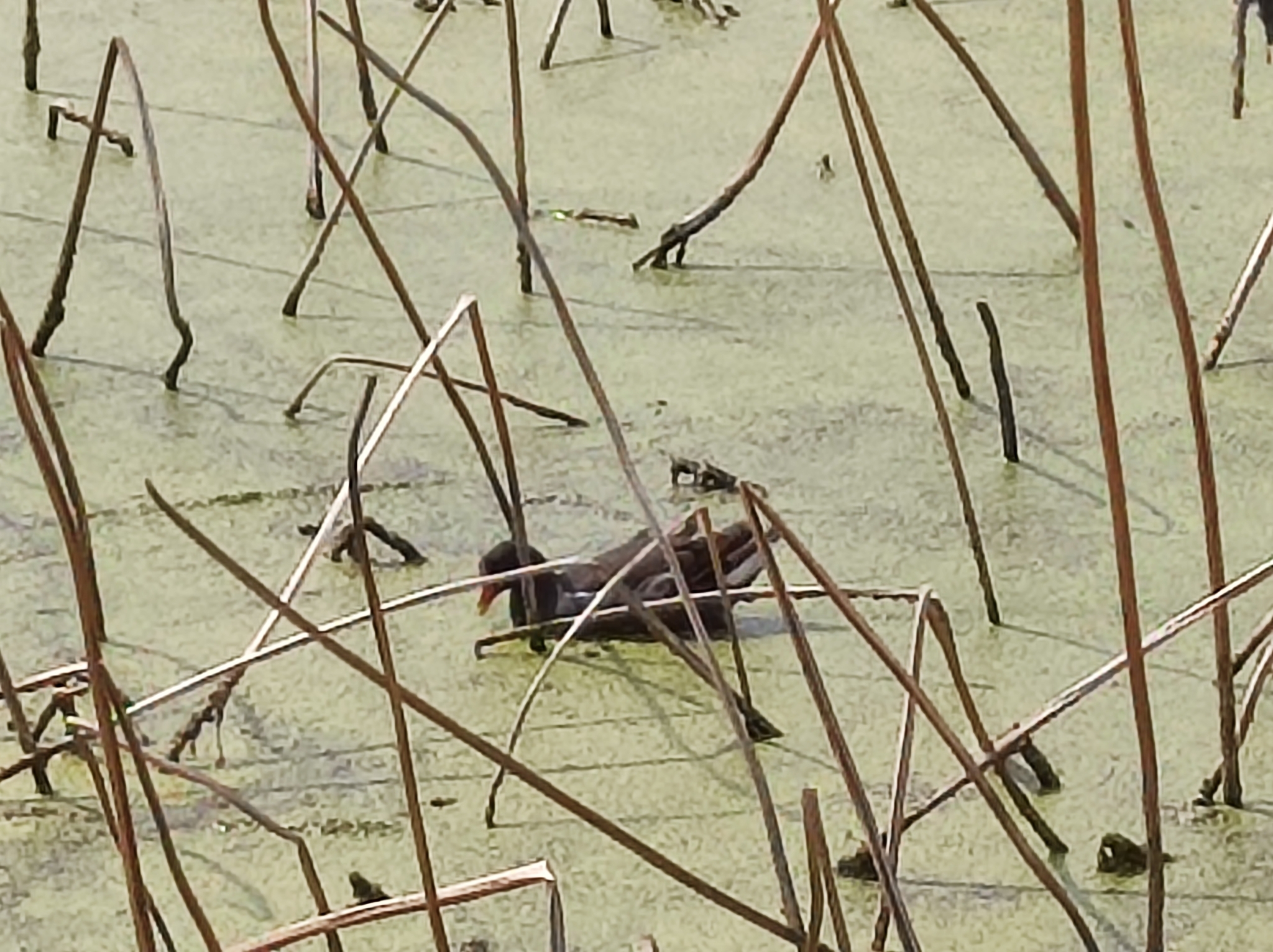
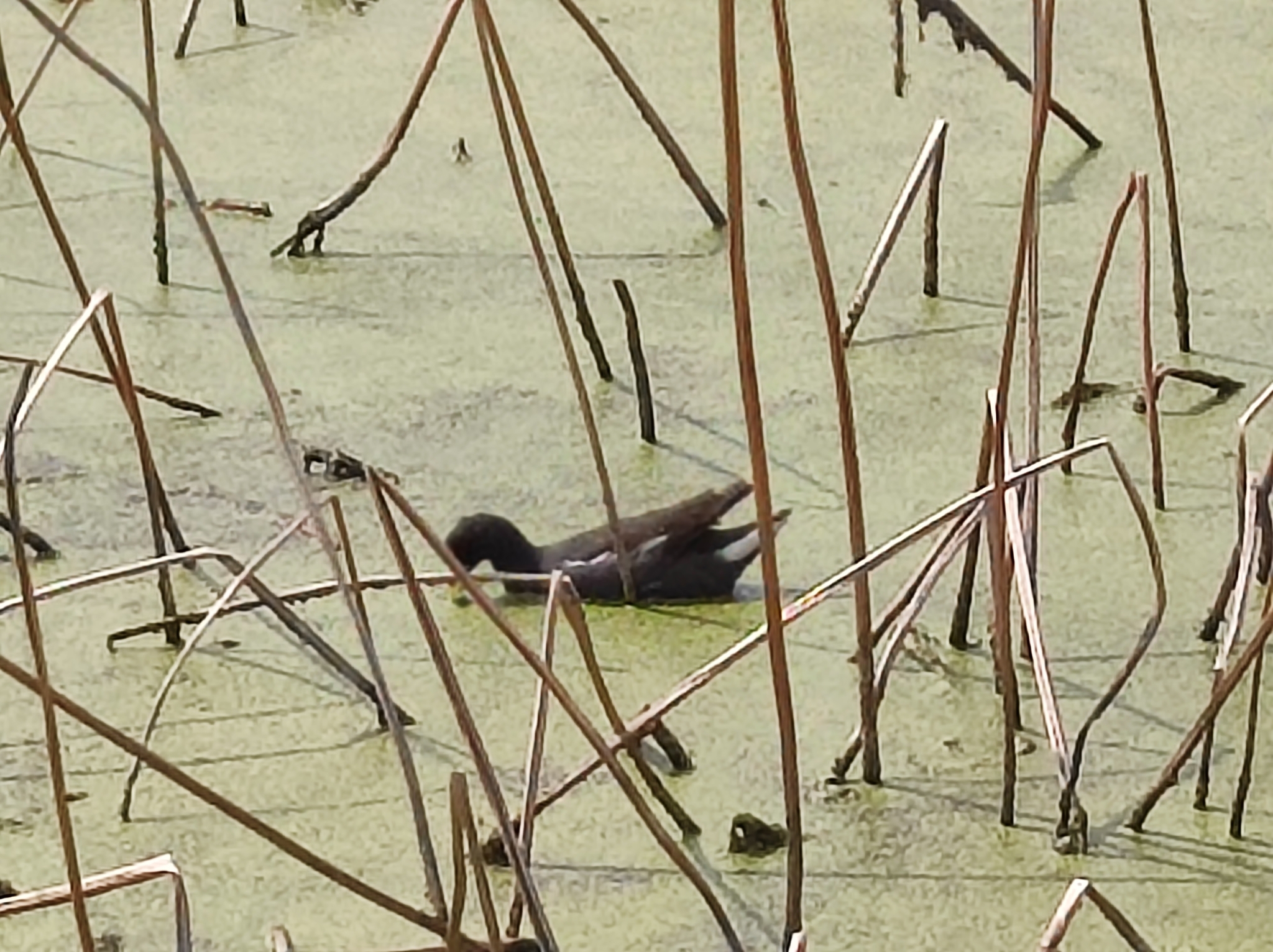
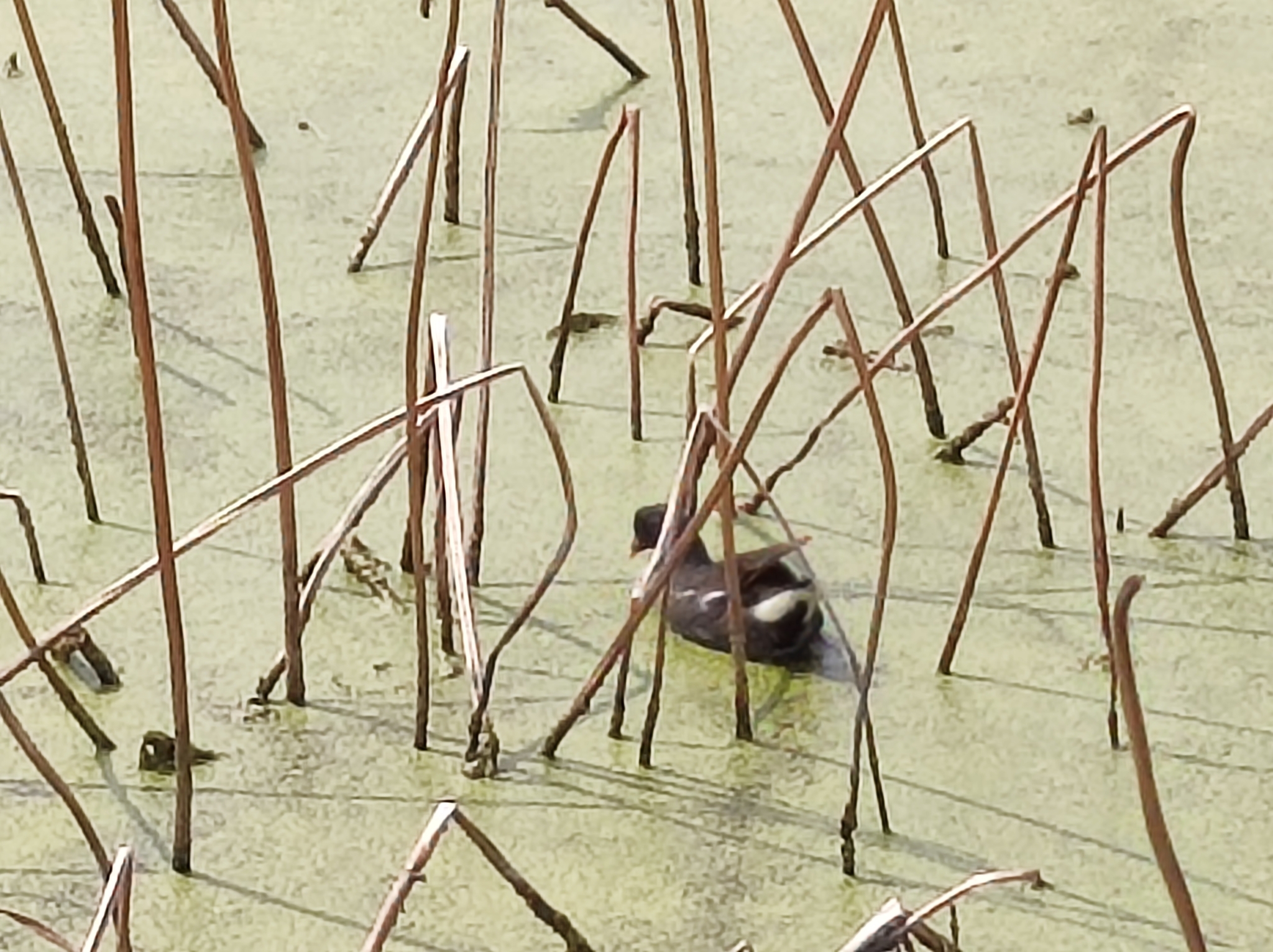
This midsized to large rail measures 30-38 cm in length with a wingspan of 50-62 cm and weighs 192-500 g. The plumage is predominantly blackish-brown overall, providing excellent camouflage among wetland vegetation. The most distinctive features are the white under-tail feathers, conspicuous white streaks along the flanks, and the bright yellow legs that stand out when walking. Adults possess a striking red frontal shield at the base of the bill, which is itself red with a distinctive yellow tip. The shield has a rounded top and parallel sides, creating a smooth, wavy margin at the back. Juveniles are duller brown overall and lack the characteristic red shield entirely. Subspecies show subtle variations in size and plumage tones, with some having slaty blue-grey wing coverts or buff undertail coverts.
Identification
The red frontal shield provides the best clue to identification. Unlike the similar New World common gallinule, which has a relatively straight-topped shield that narrows toward the bill with a marked indentation at the back margin, this species has a shield with a rounded top and nearly parallel sides. The two species also differ vocally. Within its range, it may be confused with the Eurasian coot, but the coot lacks the white under-tail, yellow legs, and red shield, appearing more uniformly dark with a white bill. The yellow legs are diagnostic when visible, and the white flank streaks separate it from most other rails. The distinctive walking style, often on floating vegetation or lily pads, further aids identification.
Distribution & Habitat
This species occupies an extensive range across the Old World, breeding throughout most of Europe, across temperate and tropical Asia, and throughout Africa. It inhabits well-vegetated freshwater wetlands including marshes, ponds, canals, lakes, and rivers. It readily occurs in urban parks and gardens with water features. Populations in regions where frozen water prevents foraging, such as eastern Europe, migrate south for winter. In China, northern populations migrate while those south of the Yangtze River are largely resident. The species is notably absent from polar regions and the interior of tropical rainforests, preferring more open wetland habitats with abundant emergent vegetation.
Behavior & Ecology
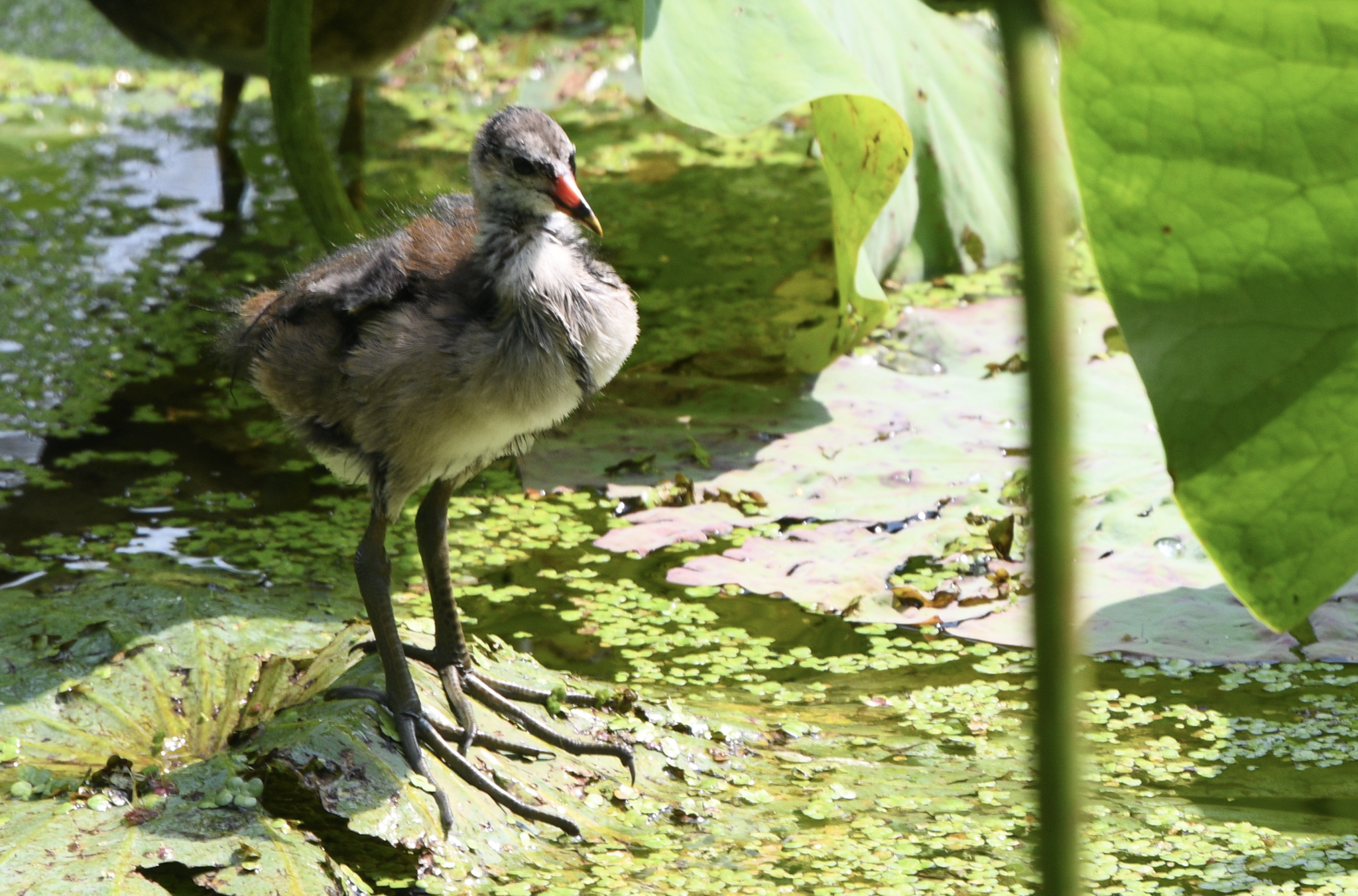
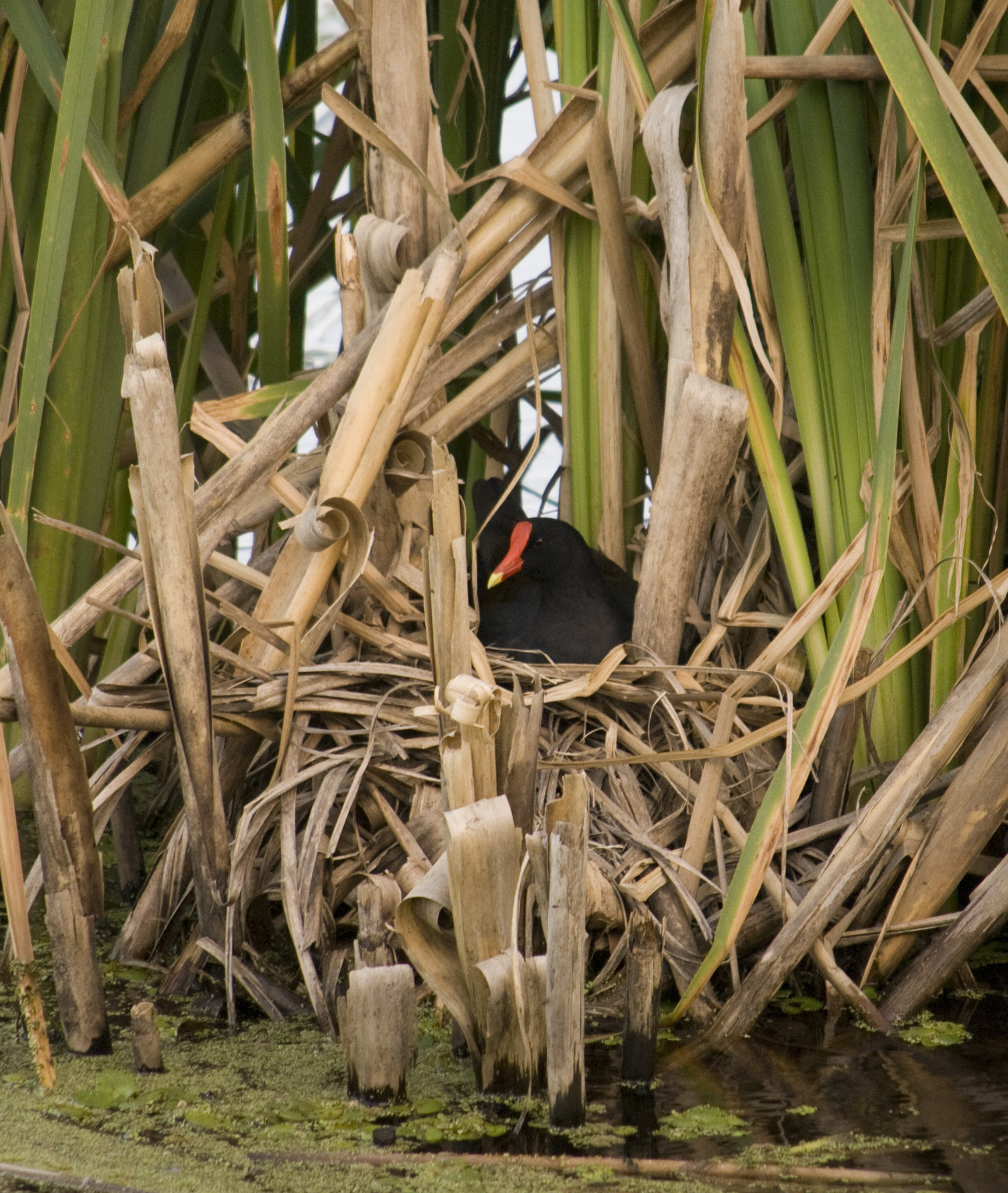
This omnivorous species consumes a wide variety of plant material and small aquatic creatures. It forages while walking beside or within shallow water, often walking on floating vegetation like lily pads, or upending like a duck to reach submerged food. While typically secretive, it can become remarkably tame in areas with regular human activity. During breeding season, pairs become highly territorial and will aggressively expel intruders including other waterfowl. The nest is a basket-like structure built on the ground among dense vegetation. Clutches typically contain 8 eggs early in the season, decreasing to 5-8 later. Both parents share incubation duties over approximately three weeks and continue feeding the young after hatching. Fledging occurs at 40-50 days. The species produces a wide repertoire of gargling calls and will emit loud hisses when threatened. It practices both intraspecific and interspecific nest parasitism, laying eggs in the nests of other moorhens and other species.
Conservation
Globally assessed as Least Concern by the IUCN due to its enormous range and abundant populations. However, localized populations face significant pressures. In Palau, the resident population numbers fewer than 100 adult birds, likely fewer than 50, and is considered very rare due to hunting pressure and habitat limitations. The United Kingdom population has declined significantly, with breeding pair numbers at their lowest since 1966, leading to classification as a species of moderate conservation concern under the Wildlife and Countryside Act. While the species remains widespread and abundant overall, localized habitat loss and degradation continue to impact some populations.
Culture
The species has appeared in various cultural contexts throughout its range. The name 'moorhen' has been recorded in English since the 13th century, derived from the old sense of 'moor' meaning marsh—though notably, the bird is not typically found on modern moorlands. In Turkey, the species held particular significance for Sultan Abdul Hamid II of the Ottoman Empire, who maintained over fifty moorhens at the Yildiz Palace. Local names reflect its habitat preferences, with 'waterhen' being particularly descriptive of its wetland lifestyle. In Palau, it is known locally as 'debar,' a generic term also applied to ducks and roughly translating to waterfowl.
Source: Wikipedia · CC BY-SA 3.0
Taxonomy
- Order
- Gruiformes
- Family
- Rallidae
- Genus
- Gallinula
- eBird Code
- commoo3
Subspecies (5)
-
Gallinula chloropus chloropus
breeds Europe, northern Africa, and Macaronesian islands eastward through Asia to Japan, and southward to Sri Lanka and central Malayan Peninsula; winters to Arabia and southern China
-
Gallinula chloropus guami
Northern Mariana Islands (Pagan, Saipan, and Tinian) and Guam
-
Gallinula chloropus meridionalis
sub-Saharan Africa and St. Helena Island
-
Gallinula chloropus orientalis
Seychelles, Andamans, Malay Peninsula, Indonesian Archipelago, and Philippines
-
Gallinula chloropus pyrrhorrhoa
Madagascar, Réunion, Mauritius, and Comoros
Data Sources
Species description from Wikipedia, licensed under CC BY-SA 3.0.
Bird images and sounds sourced from GBIF, contributed by citizen scientists worldwide under Creative Commons licenses.
Taxonomy data from AviList 2025.