
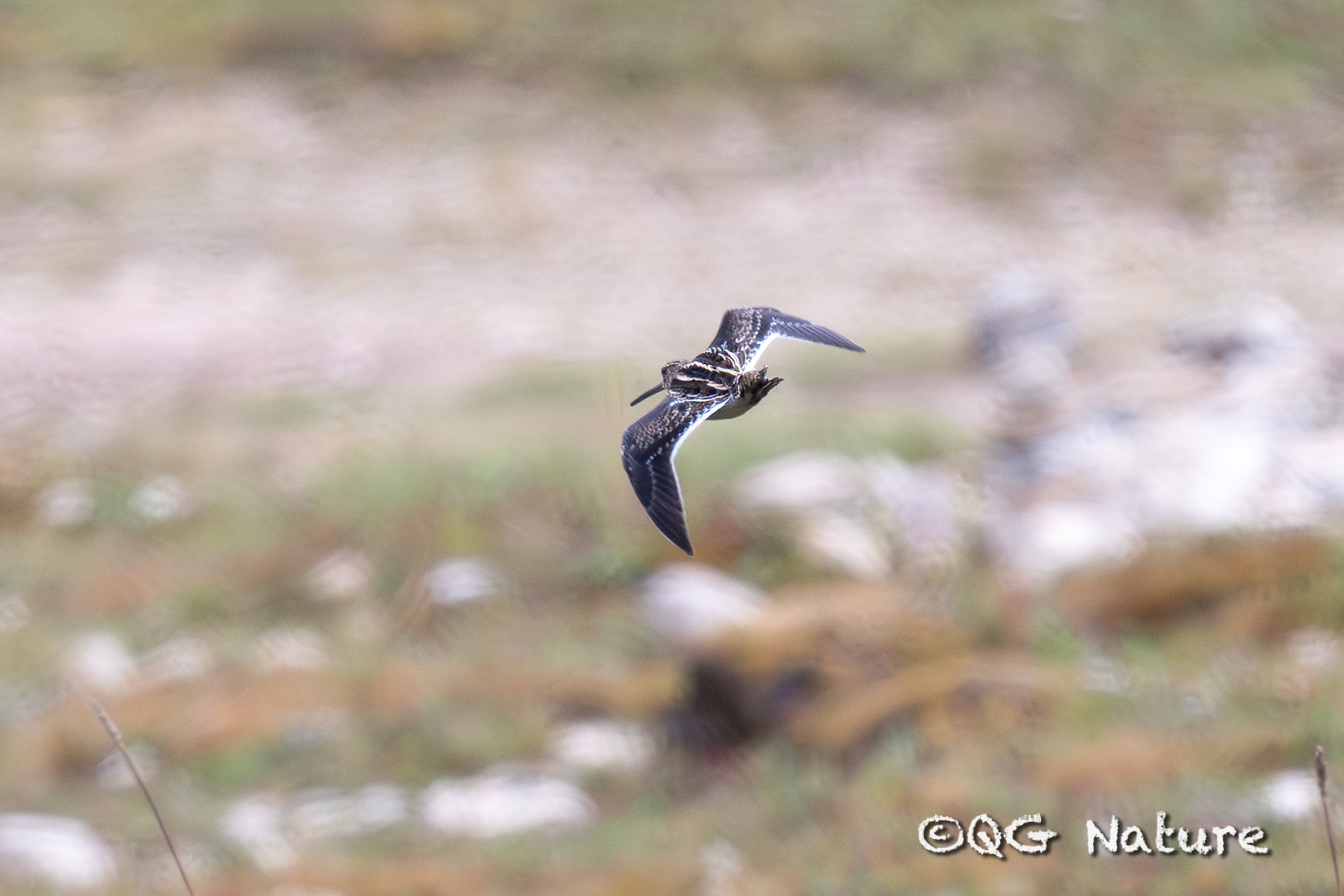
Charadriiformes / Scolopacidae / Gallinago
Common Snipe
Gallinago gallinago · 扇尾沙锥
Introduction
A small, stocky wader native to the Old World, breeding in marshes, bogs, tundra, and wet meadows across the Palearctic. It is shy and well-camouflaged, foraging in soft mud primarily for insects and earthworms. Males perform a distinctive 'winnowing' courtship display, producing a drumming sound by vibrating tail feathers during flight.
Description
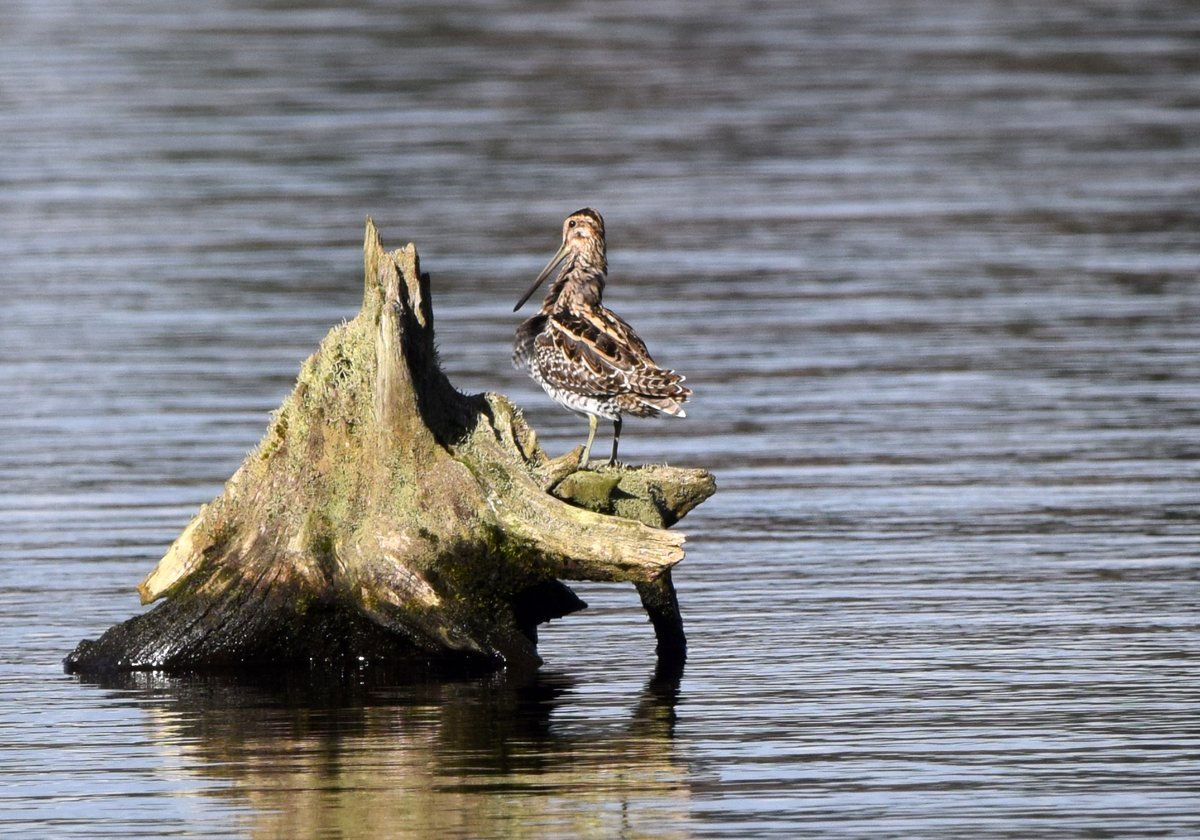
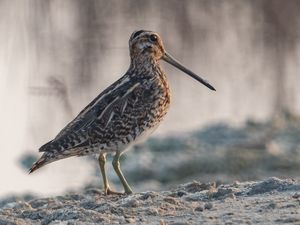
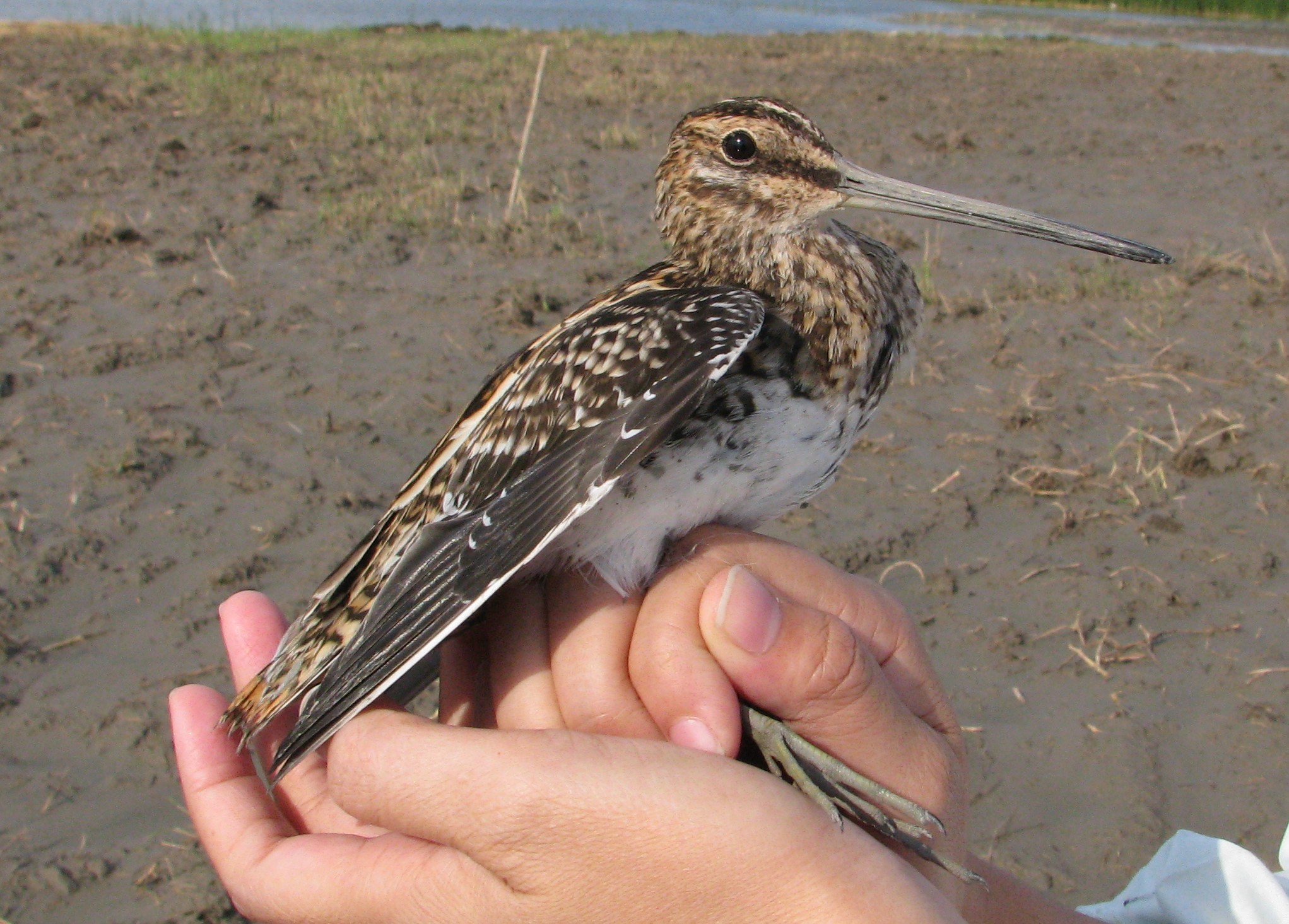
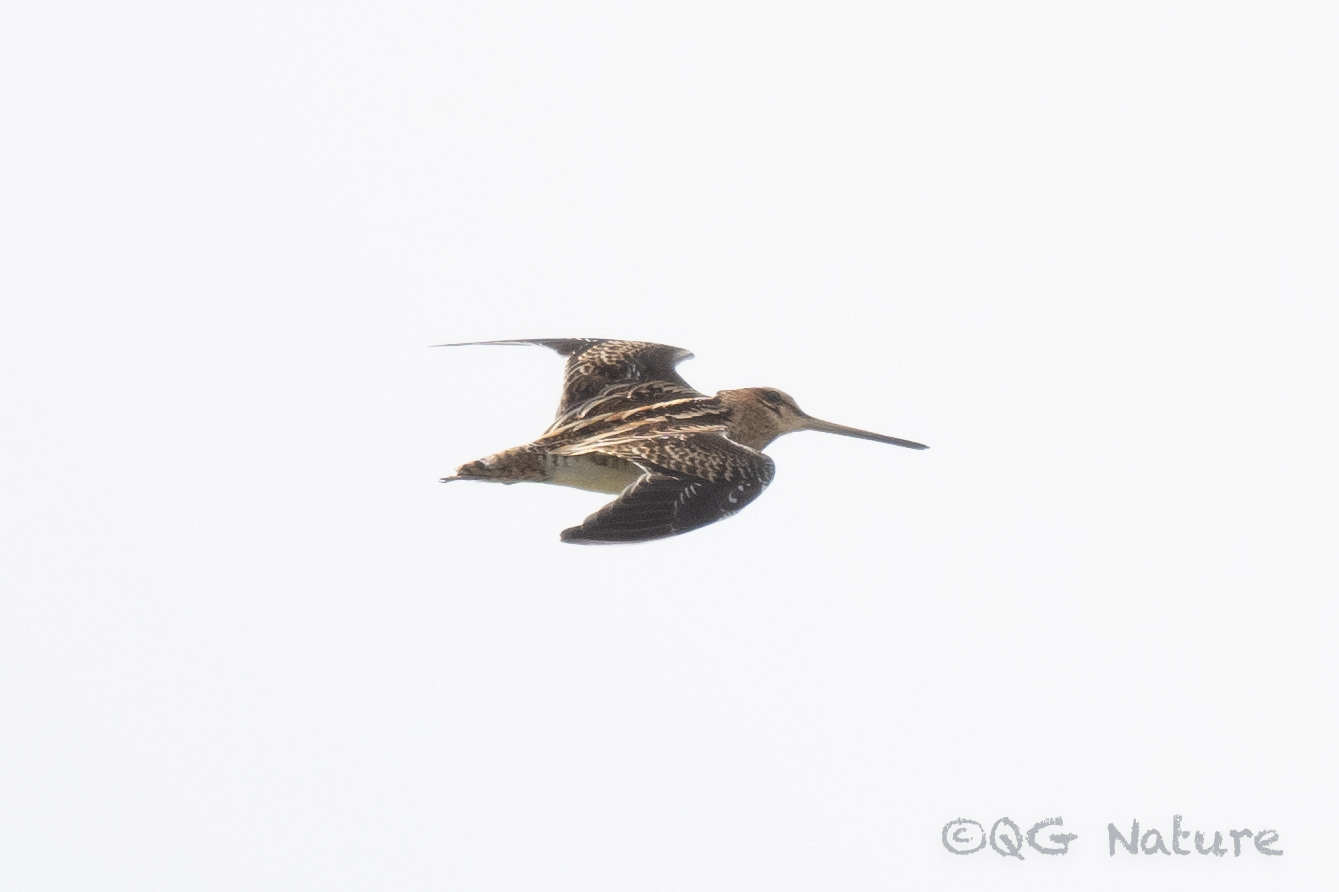
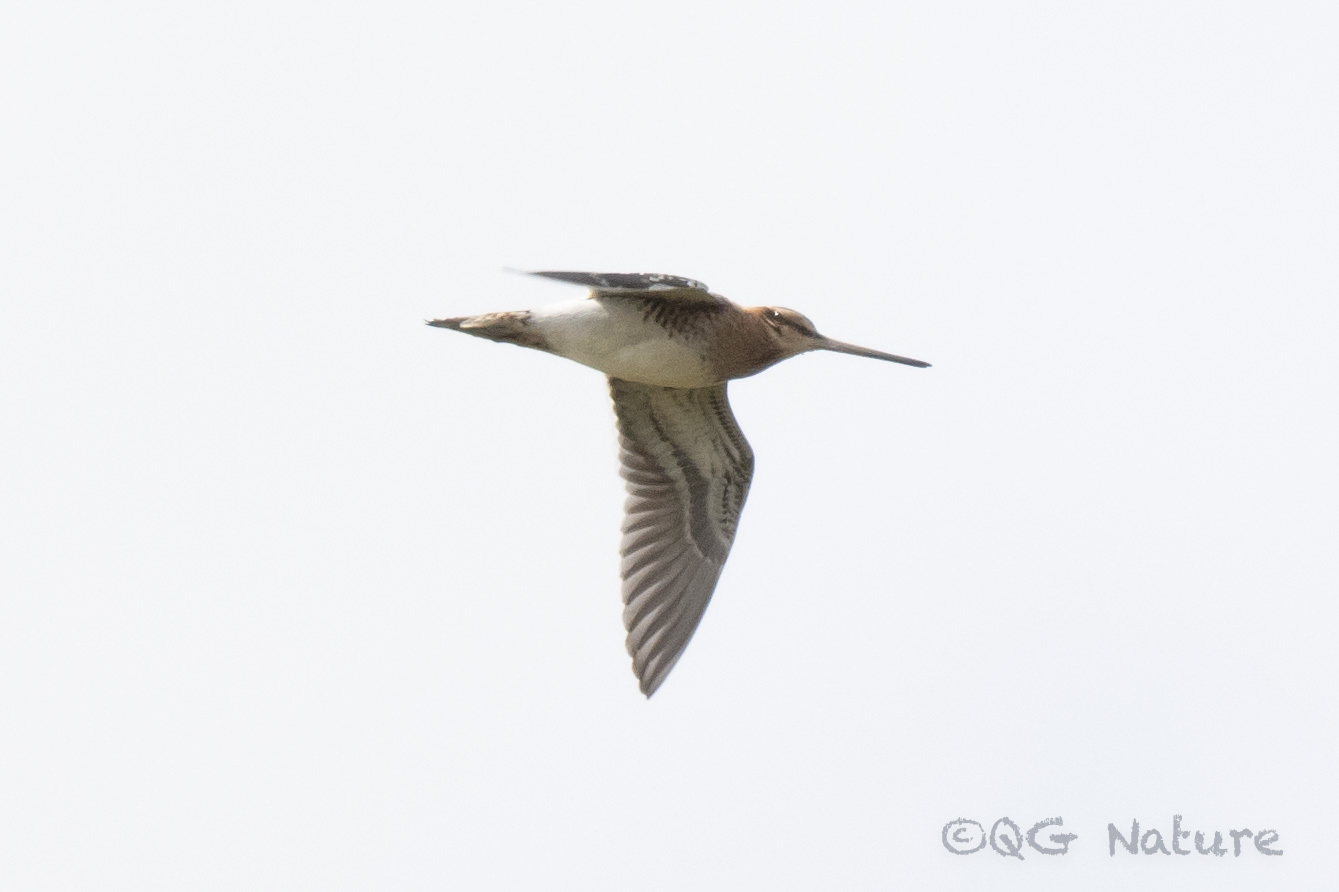
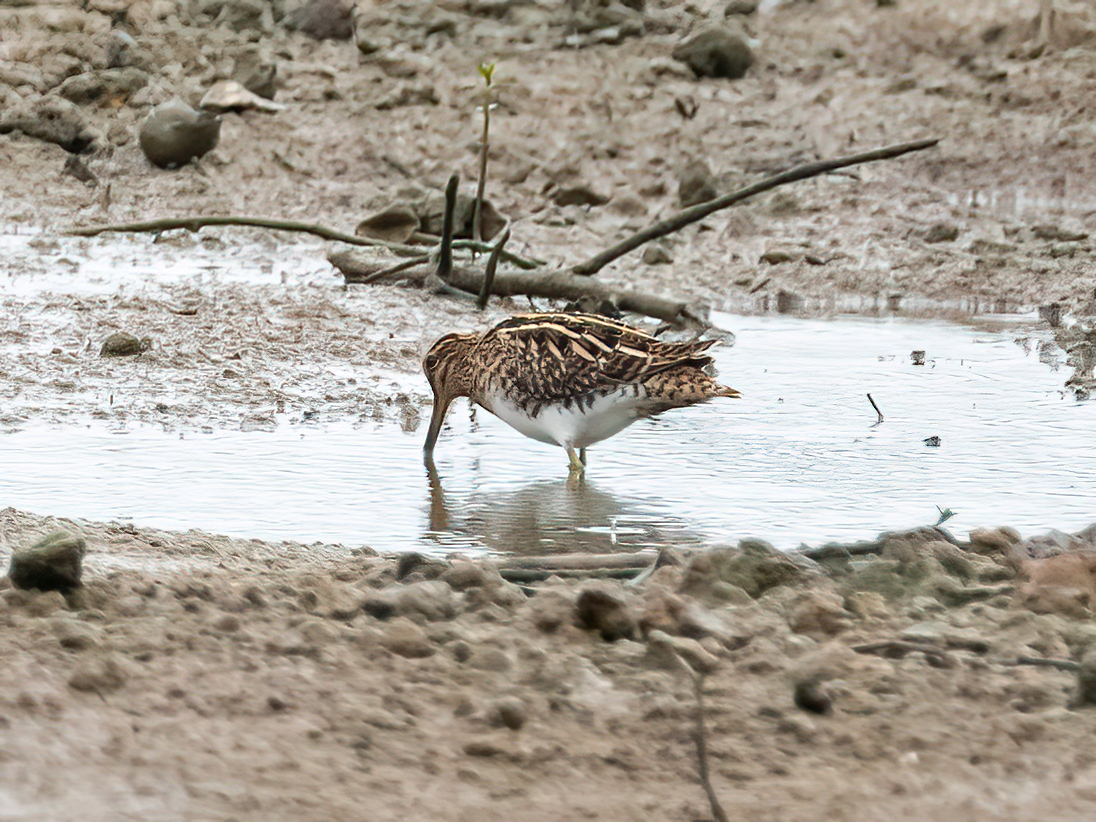
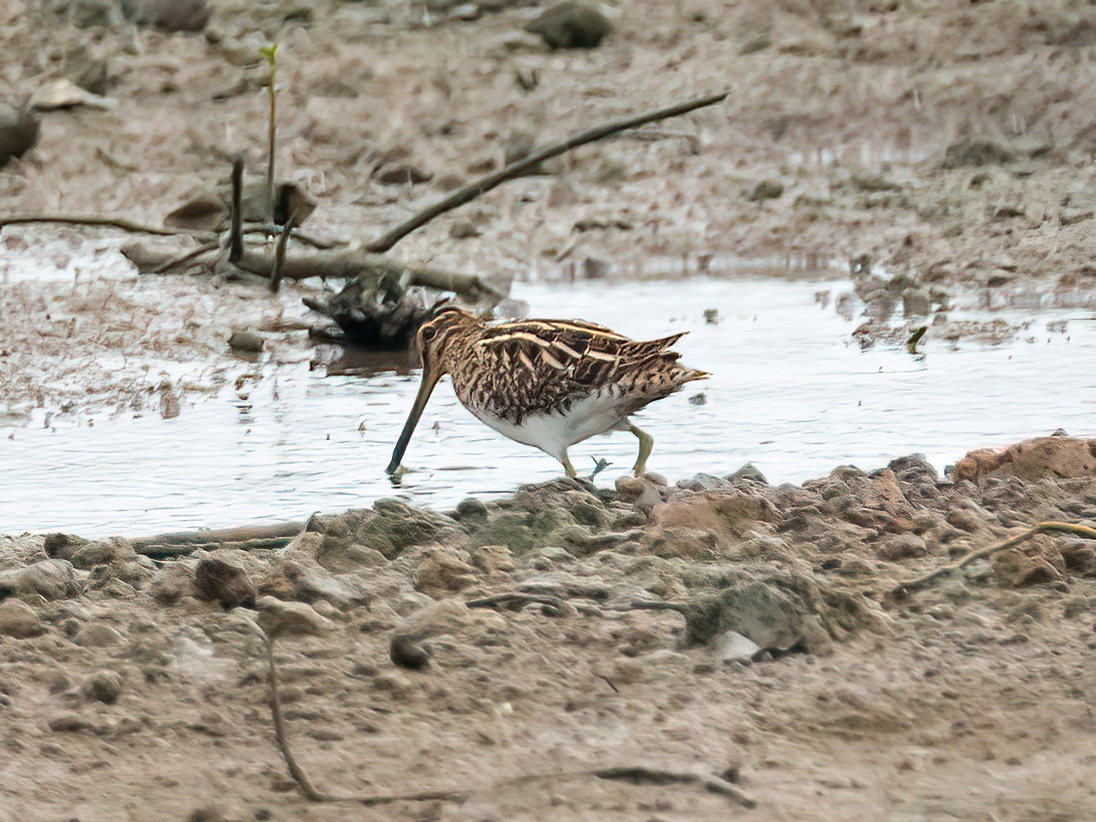
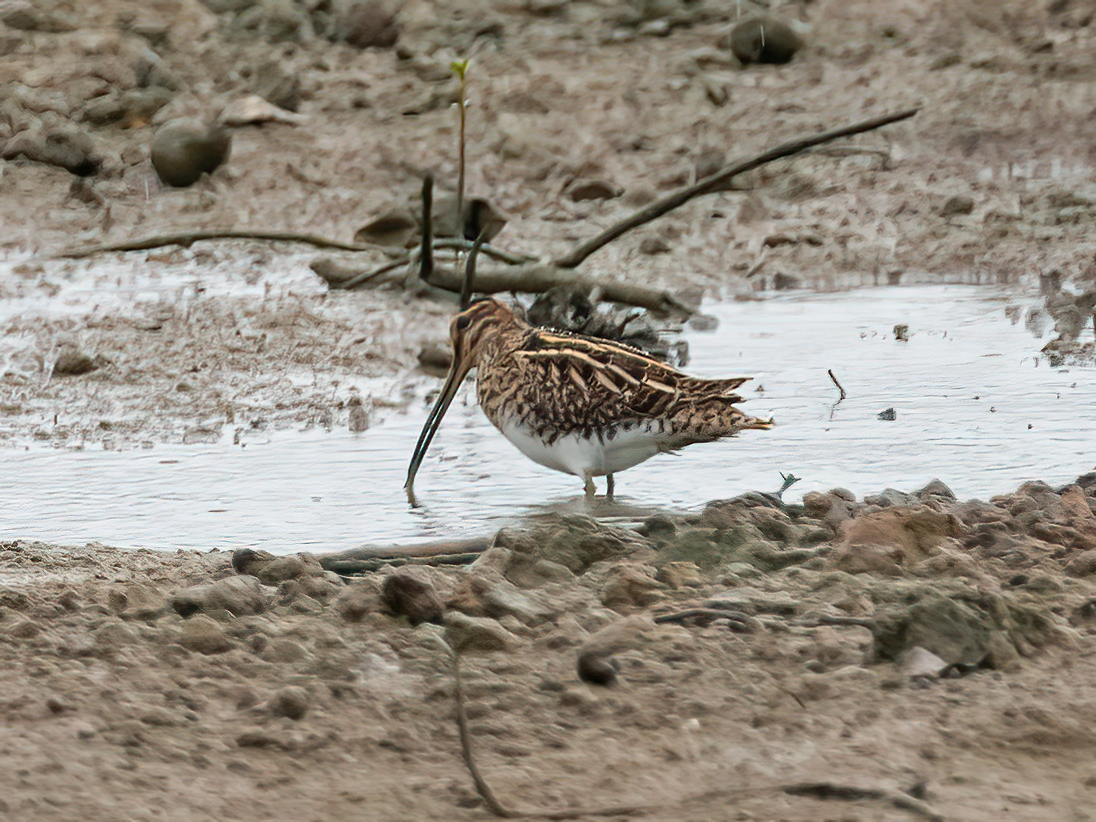
Adults measure 25–27 cm in length with a 44–47 cm wingspan and weigh 80–140 g (up to 180 g pre-migration). They possess short greenish-grey legs and a very long (5.5–7 cm), straight, dark bill. Plumage is mottled brown with straw-yellow stripes on the upperparts and pale underneath. A dark stripe runs through the eye, bordered by light stripes above and below. The subspecies faeroeensis is more richly toned on the breast, upperparts, and head than the nominate subspecies.
Identification
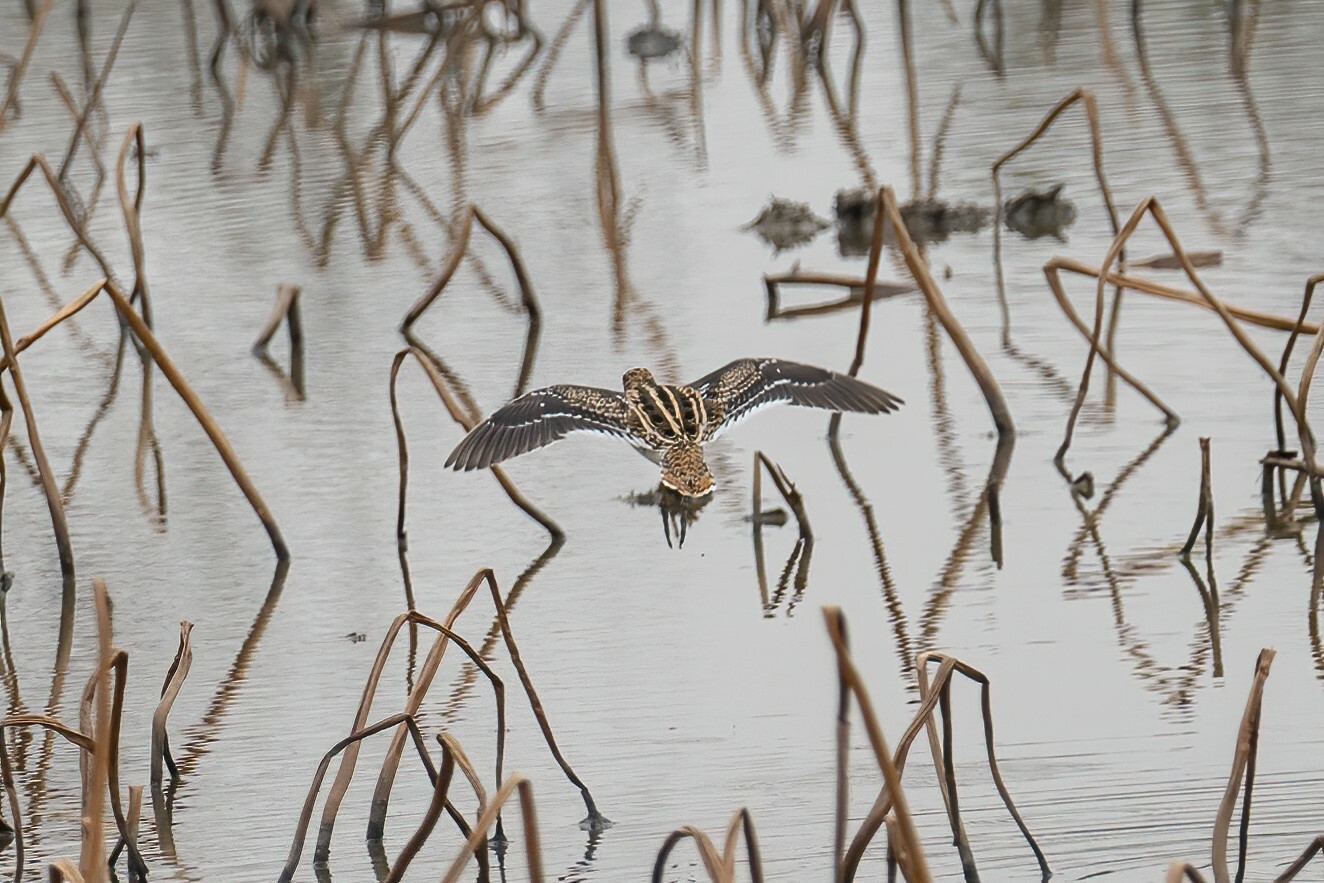
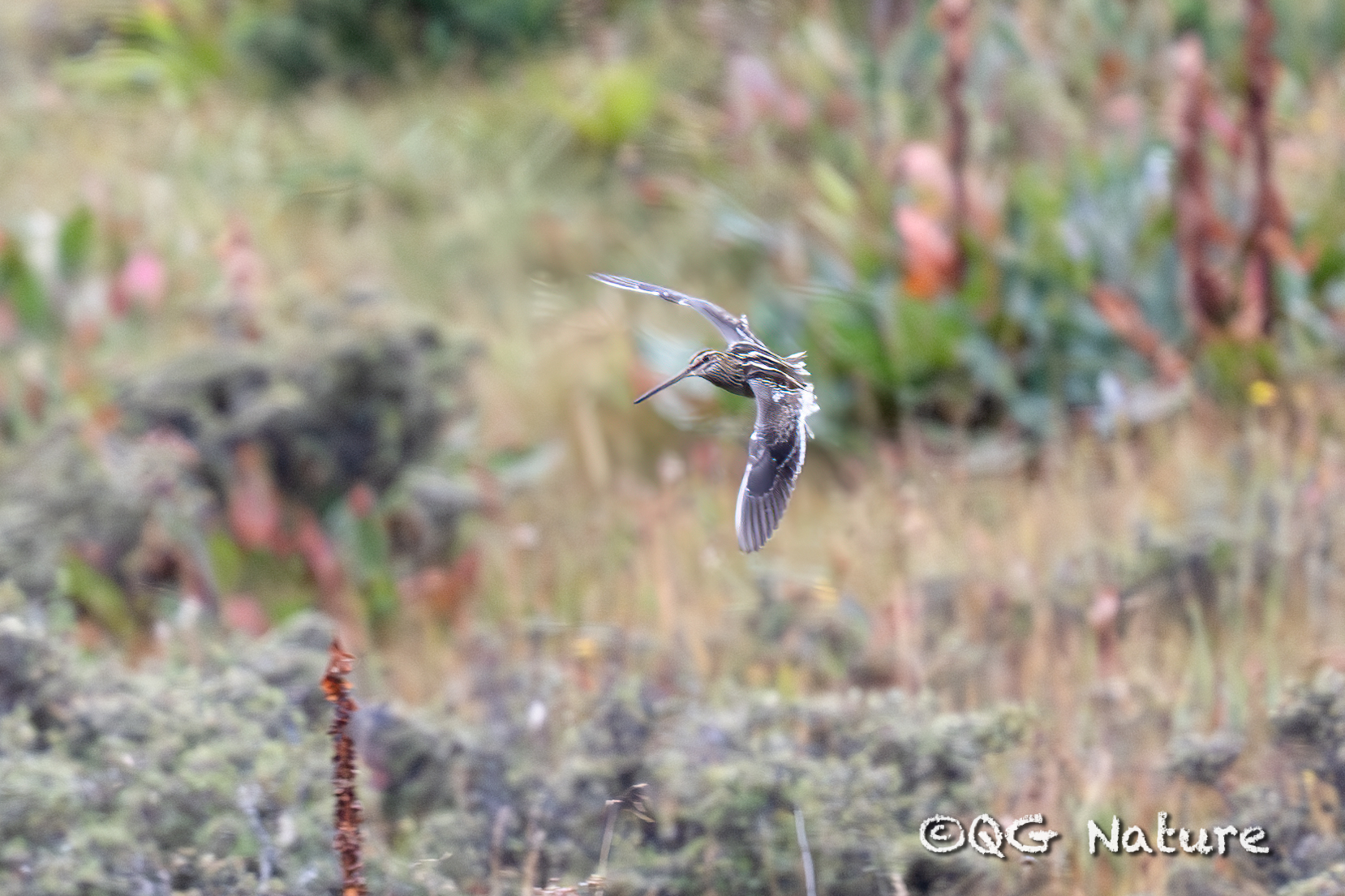
Distinguished from the similar Wilson's snipe by having seven pairs of tail feathers (versus eight) and a broader white trailing edge on the wings. Identification from Pin-tailed and Swinhoe's snipes in eastern Asia is complex. When flushed, it utters a sharp 'scape, scape' note and flies in aerial zig-zags.
Distribution & Habitat
Breeds throughout the Palearctic, including Iceland, northern British Isles, Fennoscandia (up to 74°N on the Taymyr Peninsula), European Russia, Siberia, Anadyr, Kamchatka, Bering Island, and the Kuril Islands. The southern European boundary includes northern Portugal, central France, northern Italy, Bulgaria, and Ukraine. In Asia, it extends south to northern Turkestan, Afghanistan, the Middle East, Altai, Manchuria, and Ussuri. Migratory: European birds winter in southern/western Europe and Africa (south to the Equator); Asian migrants move to tropical southern Asia. Two subspecies: G. g. faeroeensis (Iceland, Faroes, Orkney, Shetland) and G. g. gallinago (central/north Europe and Asia).
Behavior & Ecology
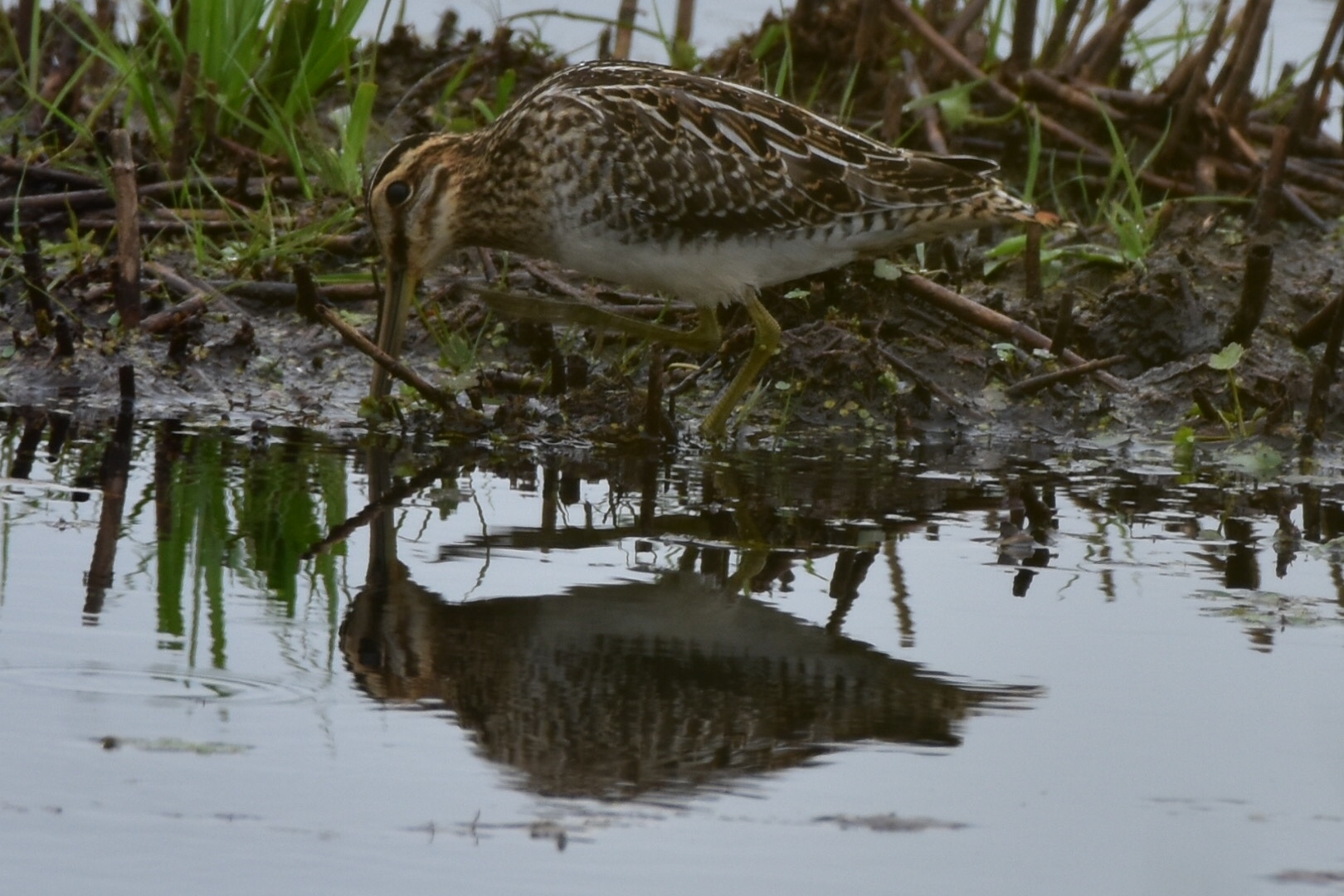
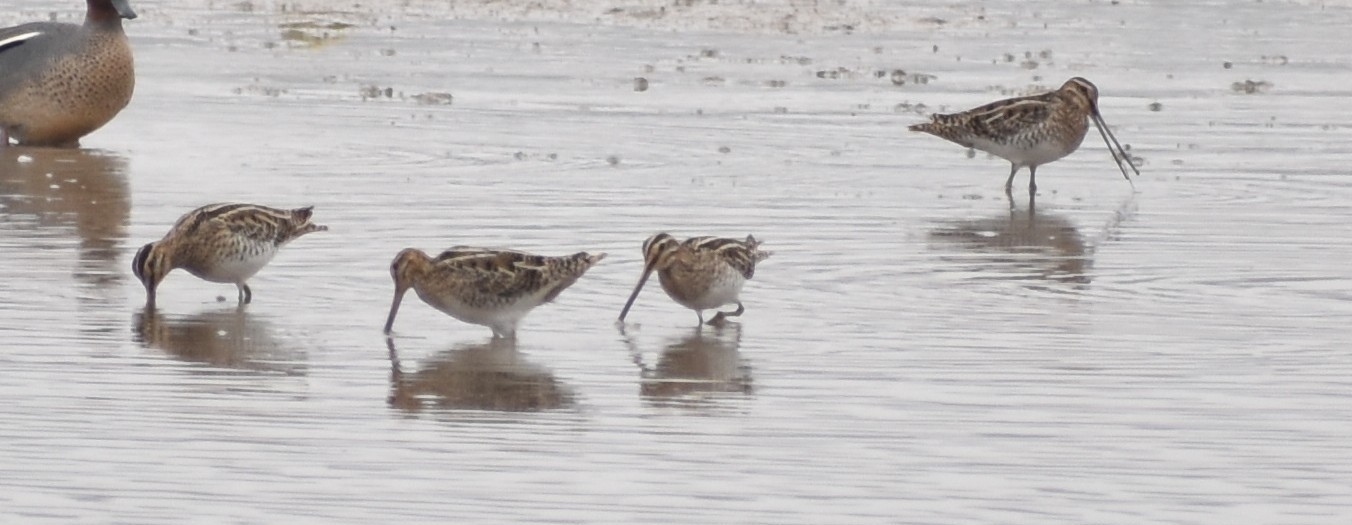
Shy and well-camouflaged, concealing itself in ground vegetation and flushing only when approached closely. Forages in soft mud by probing or sight-feeding on insects, earthworms, and some plant material. During courtship, males fly high in circles and take shallow dives, vibrating two outer tail feathers held at 90 degrees to produce a 'drumming' sound. Nests on the ground in hidden locations; the female lays four dark olive eggs blotched with brown, incubating them for 18–21 days. Both parents care for the young, each looking after half the brood, with fledging occurring in 10–20 days.
Conservation
Overall not threatened, though populations on the southern fringes of the European breeding range are declining, with local extinctions in parts of England and Germany due to field drainage and agricultural intensification. The species is covered by the Agreement on the Conservation of African-Eurasian Migratory Waterbirds (AEWA).
Culture
The drumming sound has led to folk names signifying 'flying goat' or 'heaven's ram,' such as 'heather-bleater' in Scotland and 'taivaanvuohi' ('sky goat') in Finnish. Other old folk names include 'mire snipe,' 'horse gowk,' and 'snite.'
Source: Wikipedia · CC BY-SA 3.0
Taxonomy
- Order
- Charadriiformes
- Family
- Scolopacidae
- Genus
- Gallinago
Subspecies (2)
-
Gallinago gallinago faeroeensis
breeds Iceland, Faroe, Orkney, and Shetland islands; winters in British Islands
Data Sources
Species description from Wikipedia, licensed under CC BY-SA 3.0.
Bird images and sounds sourced from GBIF, contributed by citizen scientists worldwide under Creative Commons licenses.
Taxonomy data from AviList 2025.