
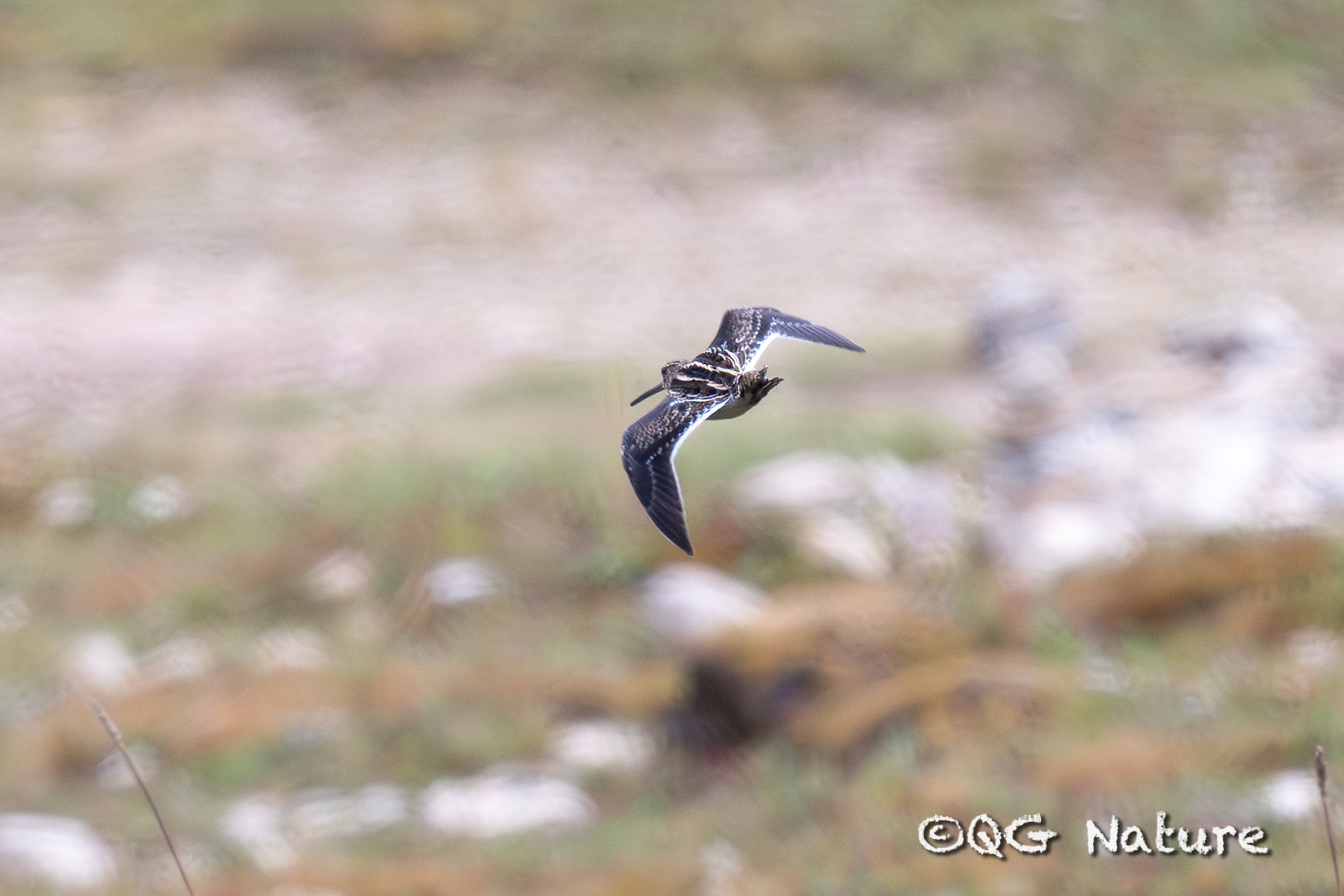
Common Snipe
Gallinago gallinago
扇尾沙锥
Introduction
The species inhabits marshes, bogs, tundra edges, and wet meadows throughout the Palearctic region. Males perform a courtship display involving high-altitude circular flights followed by shallow dives, producing a drumming sound through vibrating tail feathers. Males are most visible during the breeding season when displaying territorially.
Description
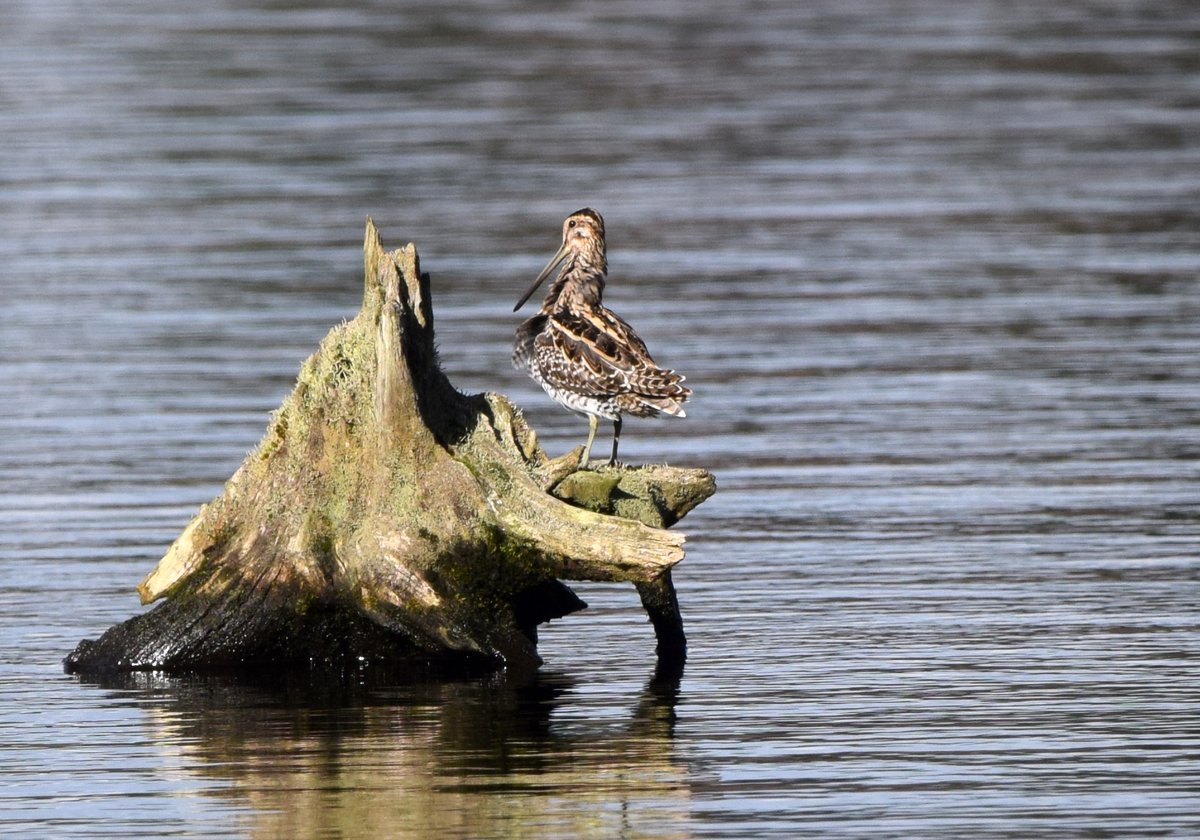
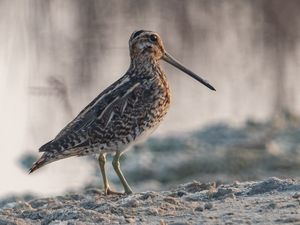
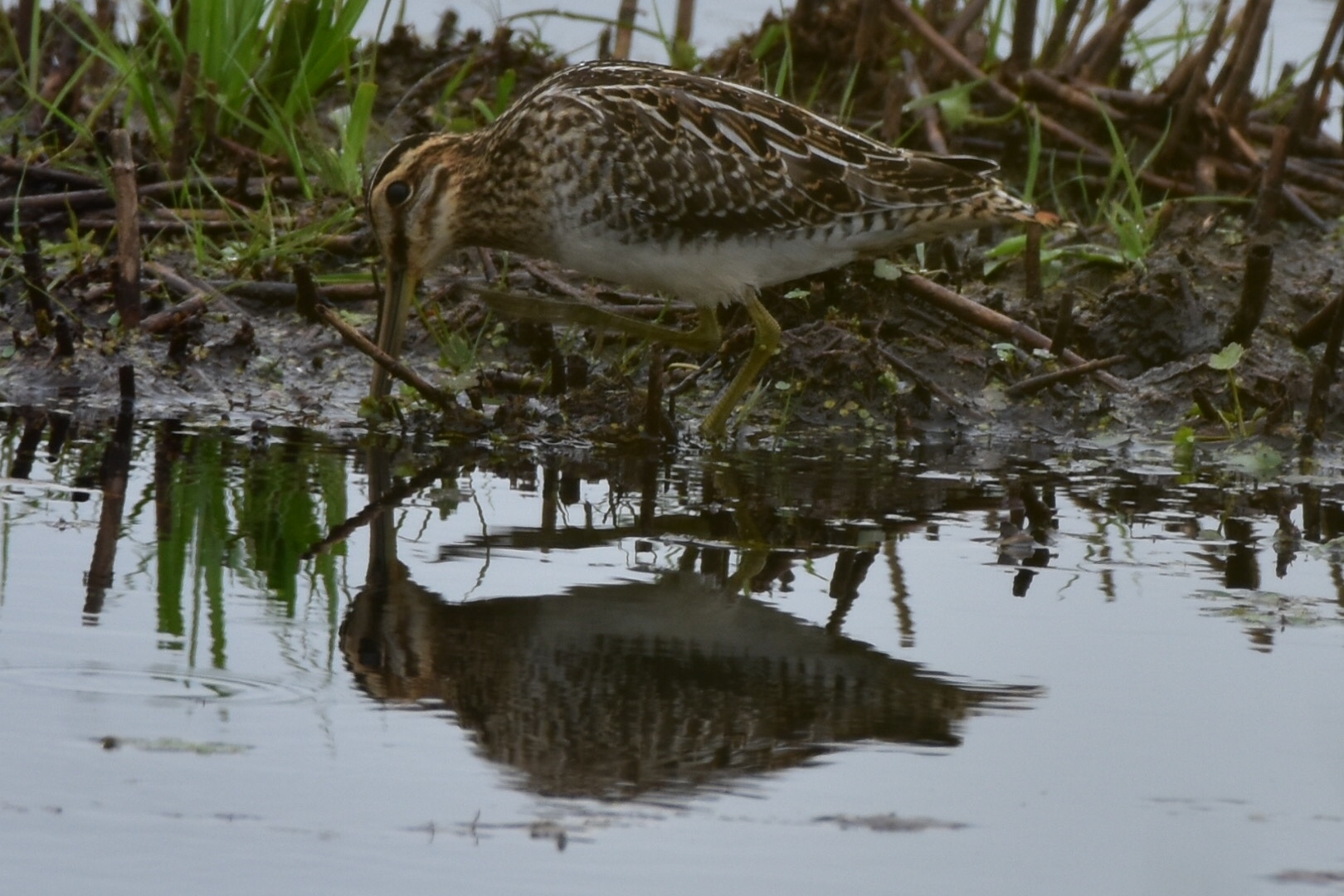
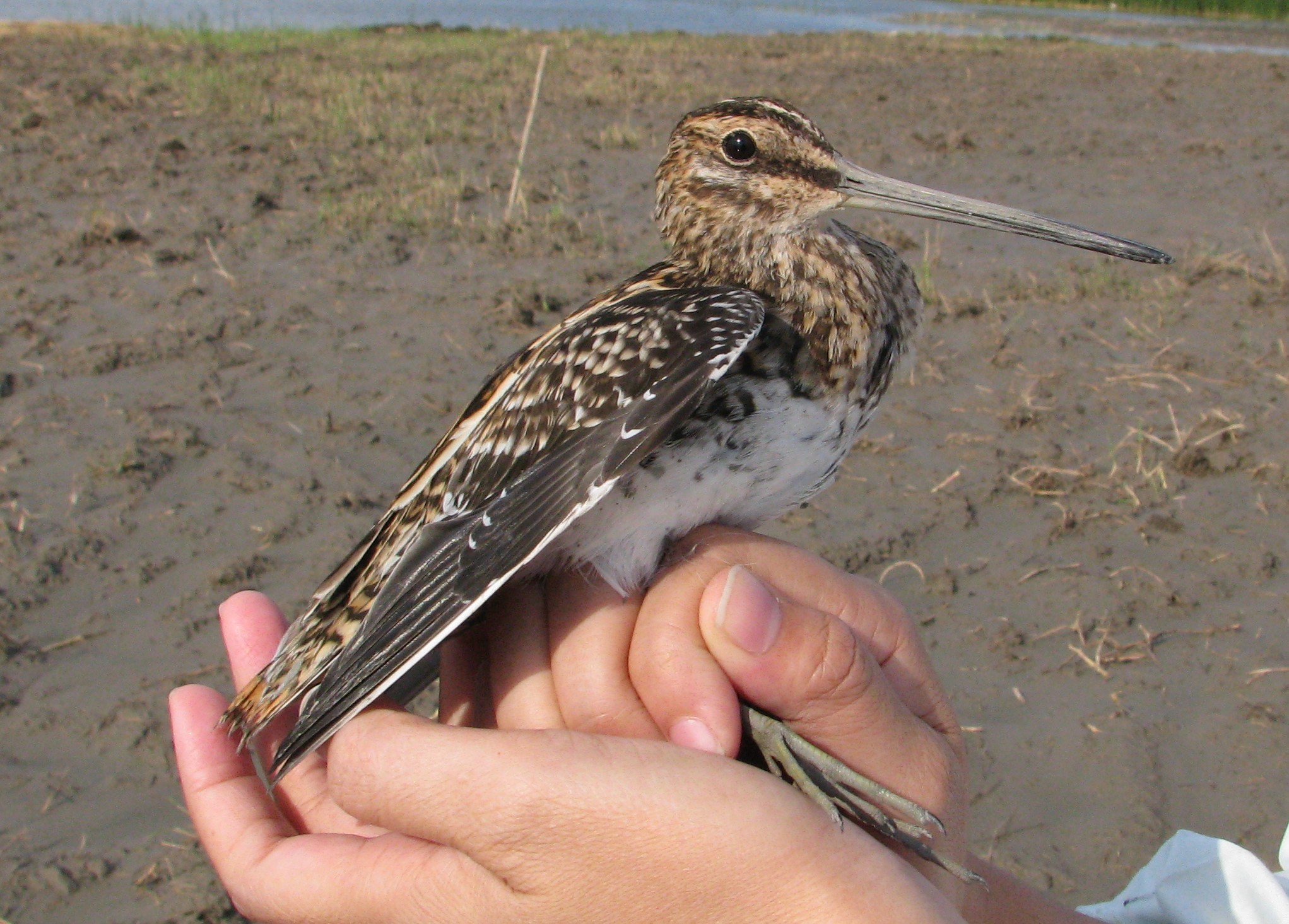
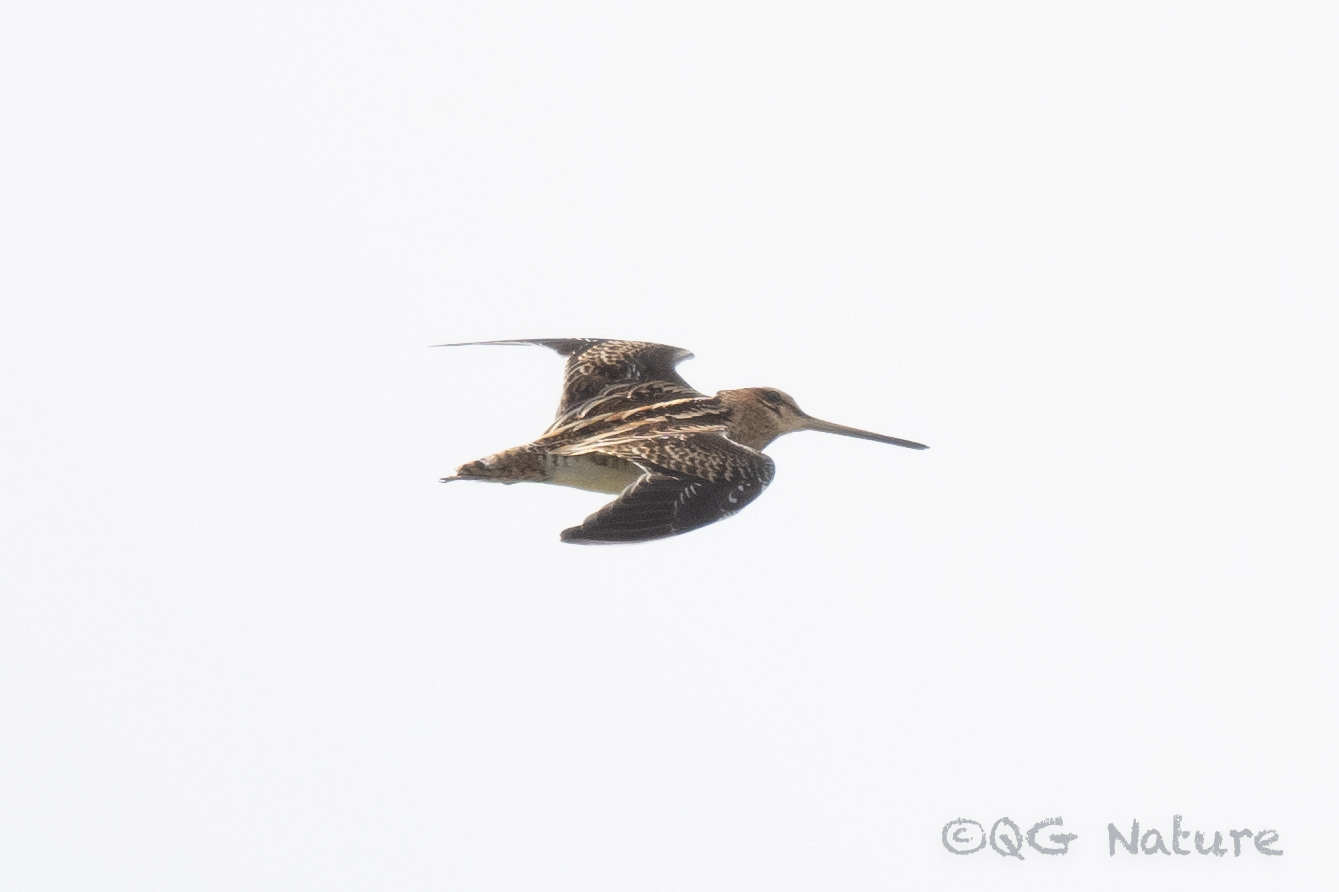
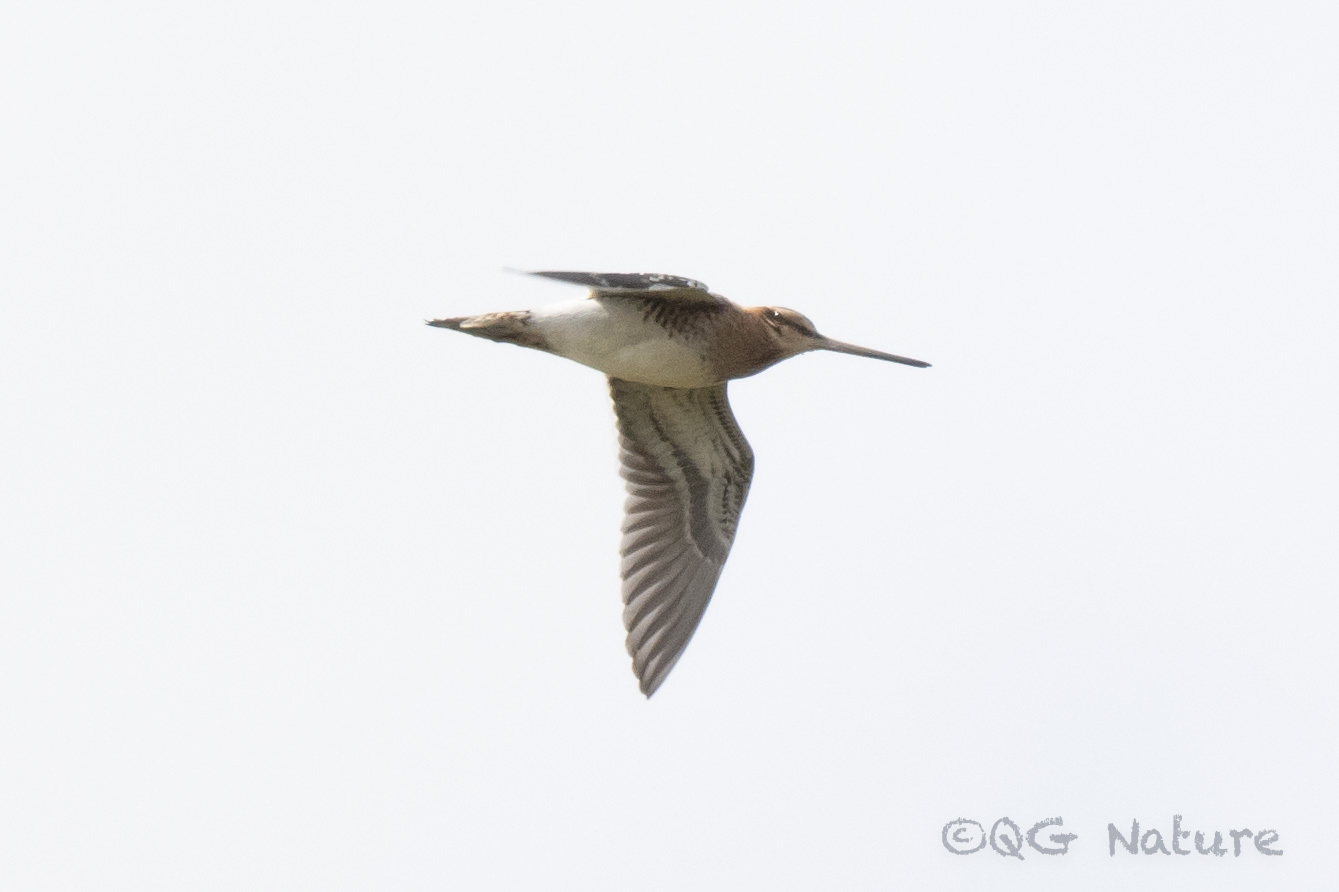
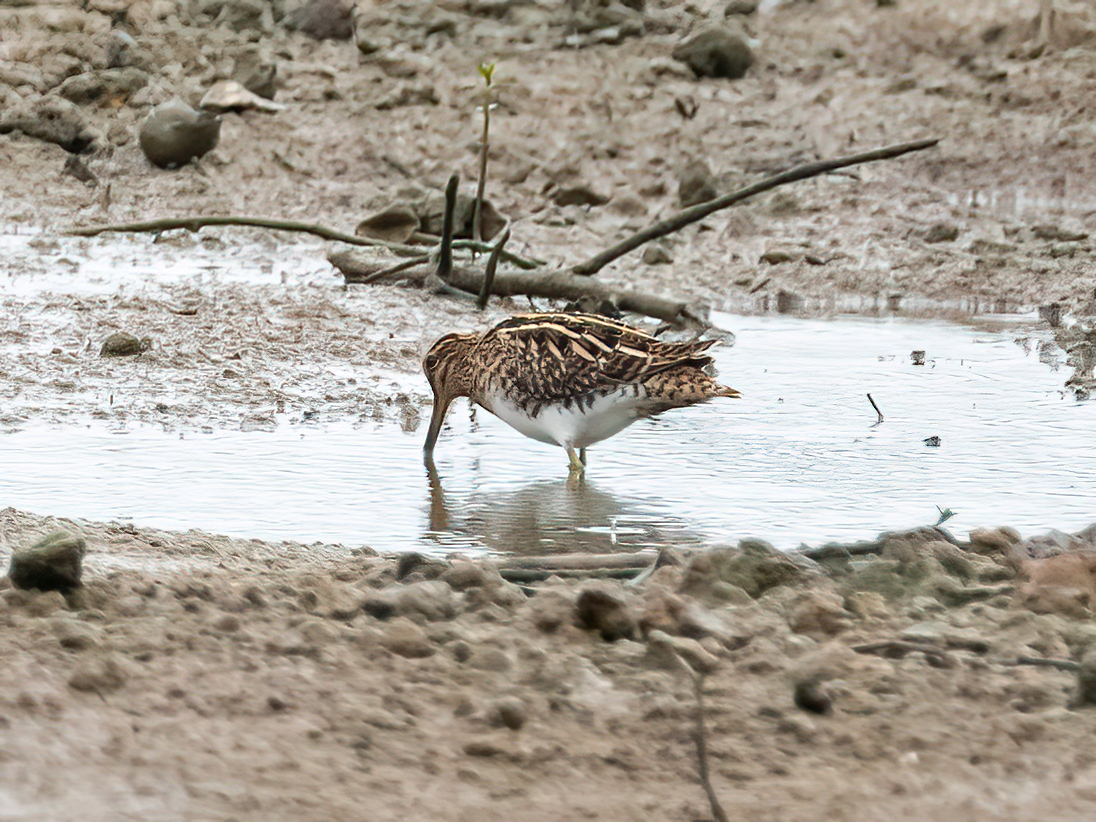
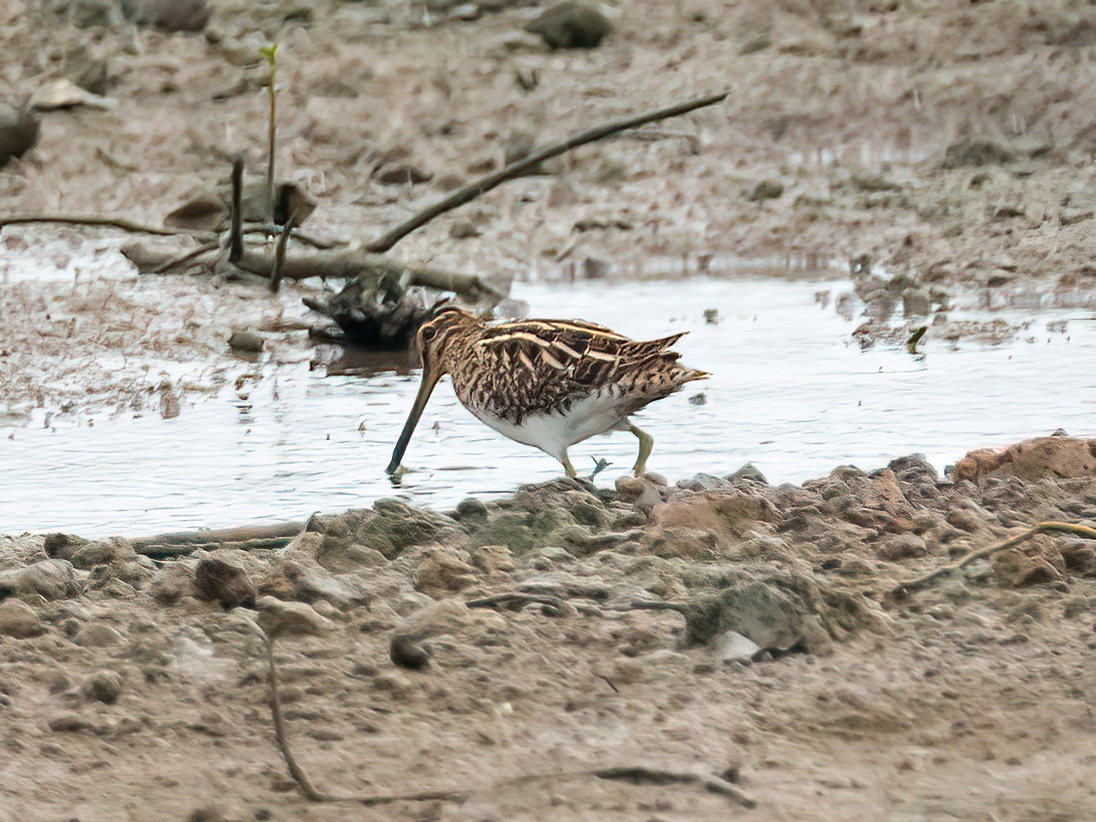
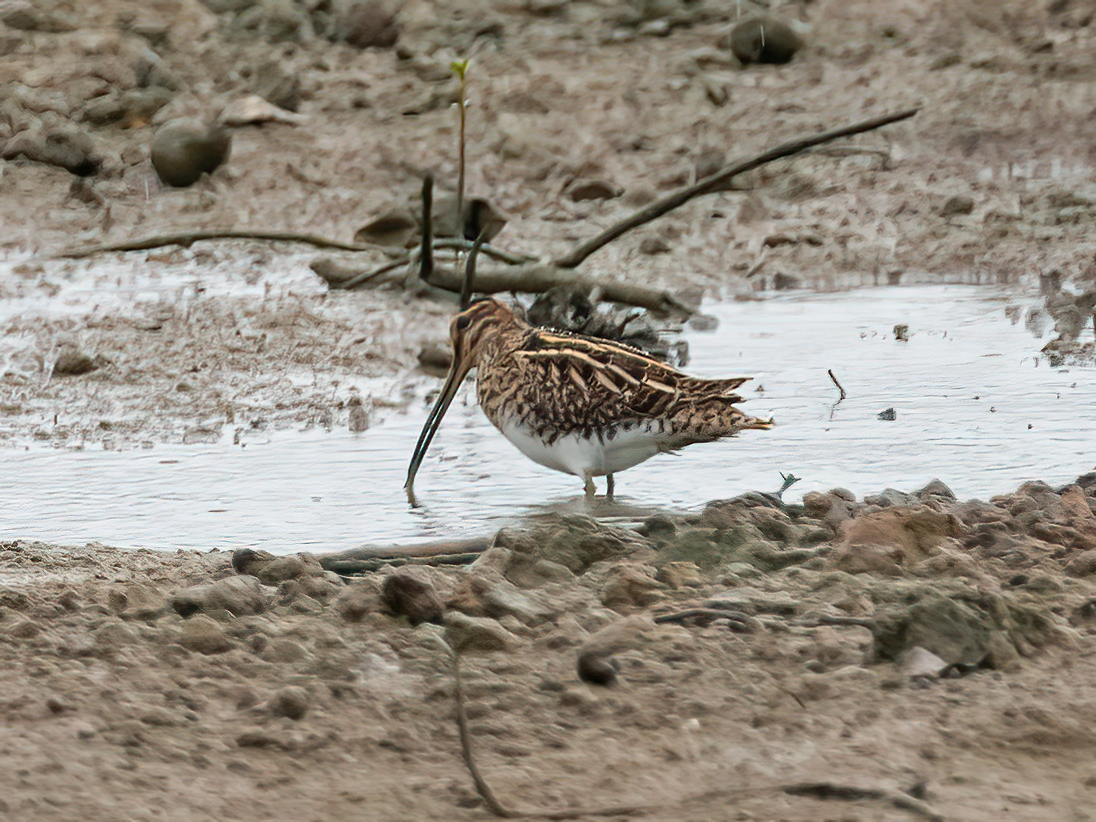
This compact wader measures 25–27 cm in length with a wingspan of 44–47 cm and weighs 80–140 g, swelling to 180 g before migration. The most striking feature is its exceptionally long, straight dark bill measuring 5.5–7 cm, perfectly adapted for probing soft mud. Short greenish-grey legs support the stocky body, which is adorned in intricate mottled brown plumage with straw-yellow stripes along the upperparts and pale underparts. A distinctive dark eye stripe is flanked by lighter stripes above and below, creating a striking facial pattern. The pointed wings and overall cryptic coloration make this bird remarkably difficult to spot when stationary amid wetland vegetation.
Identification
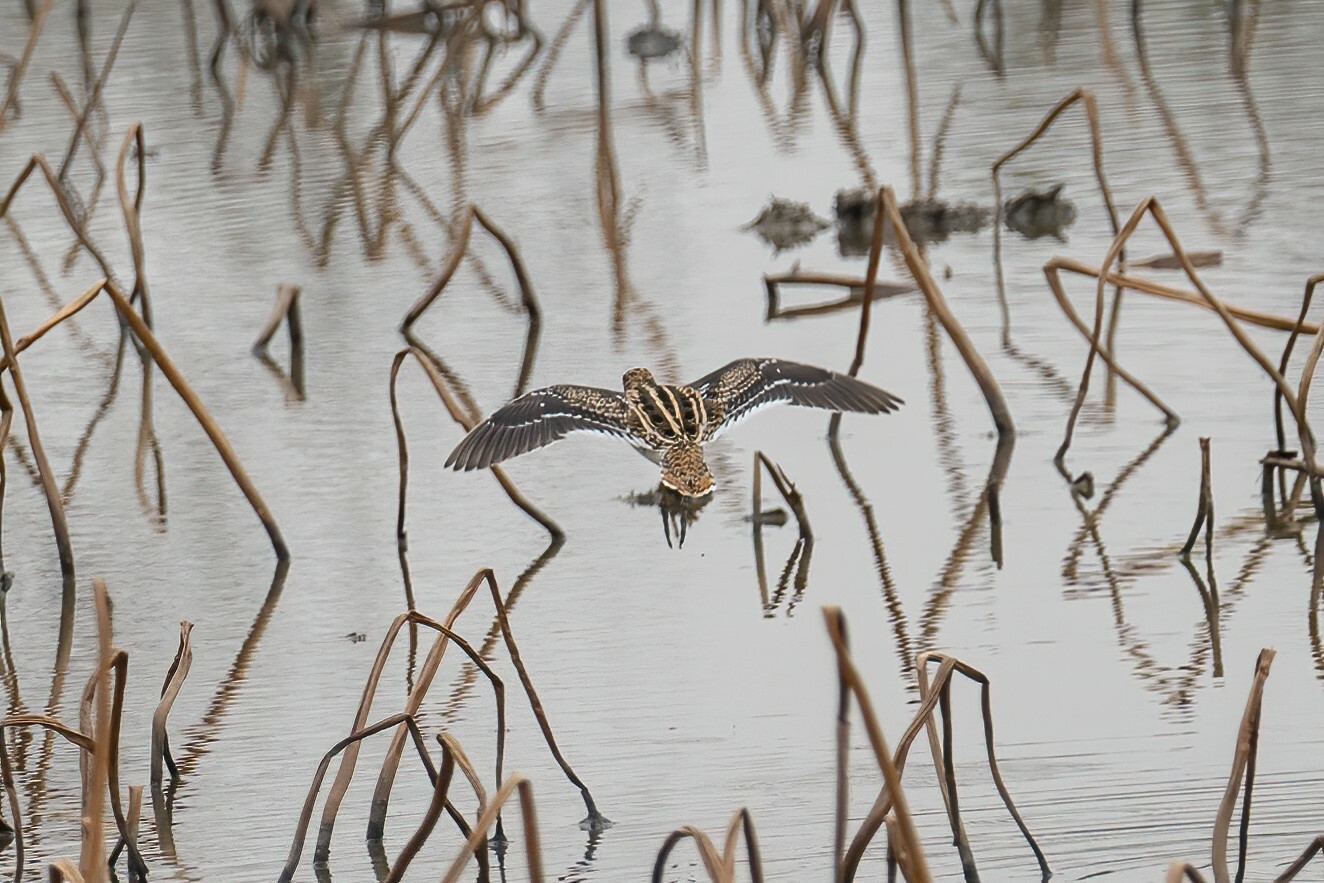
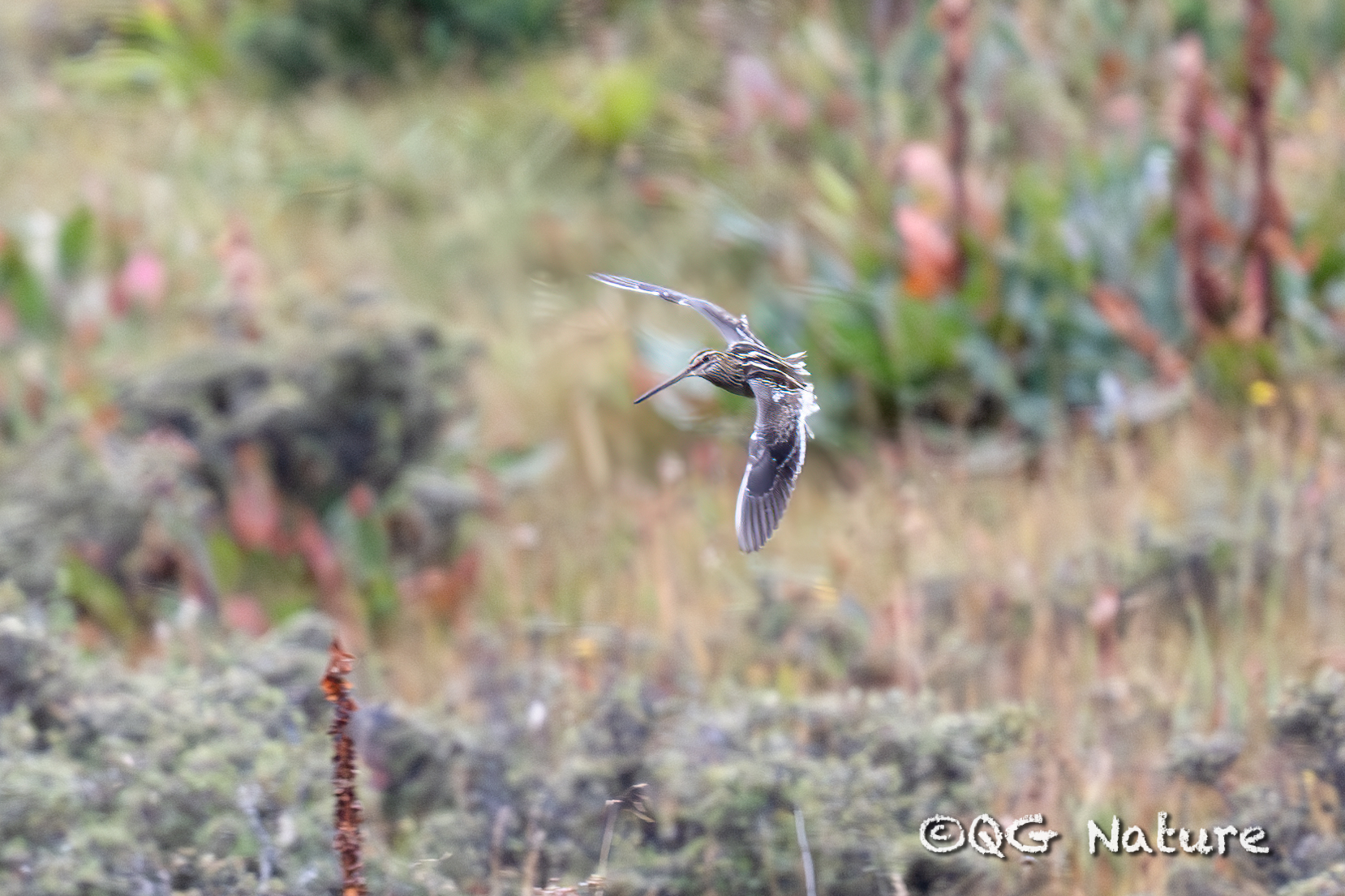
As the most widespread of the similar snipes, this species requires careful attention to field marks. It closely resembles North America's Wilson's snipe, which was recently split from this species; the key distinction lies in tail feather count—seven pairs versus eight pairs in the American species. Wilson's snipe also shows a slightly thinner white trailing edge on the wings, primarily on the secondary tips. In Eurasia, identification becomes more complex when compared to pin-tailed snipe and Swinhoe's snipe of eastern Asia. The subspecies faeroeensis, found in Iceland and northern British Isles, typically shows richer toning on the breast, upperparts, and head compared to the nominate subspecies. When flushed, these birds erupt in characteristic zigzag flights while emitting sharp 'scape, scape' calls.
Distribution & Habitat
Breeding habitats span marshes, bogs, tundra, and wet meadows throughout the Palearctic. The northern range extends from Iceland across the British Isles and northern Fennoscandia to around 70°N, through European Russia and Siberia to 74°N on the Taymyr Peninsula's east coast, and east to Anadyr, Kamchatka, and the Kuril Islands. The southern European boundary runs through northern Portugal, central France, northern Italy, Bulgaria, and Ukraine, with western populations being scattered. In Asia, the range extends to northern Turkestan, Afghanistan, the Middle East, Altai, Manchuria, and Ussuri. The species is migratory, with European birds wintering in southern and western Europe and Africa south to the Equator, while Asian migrants move to tropical southern Asia.
Behavior & Ecology
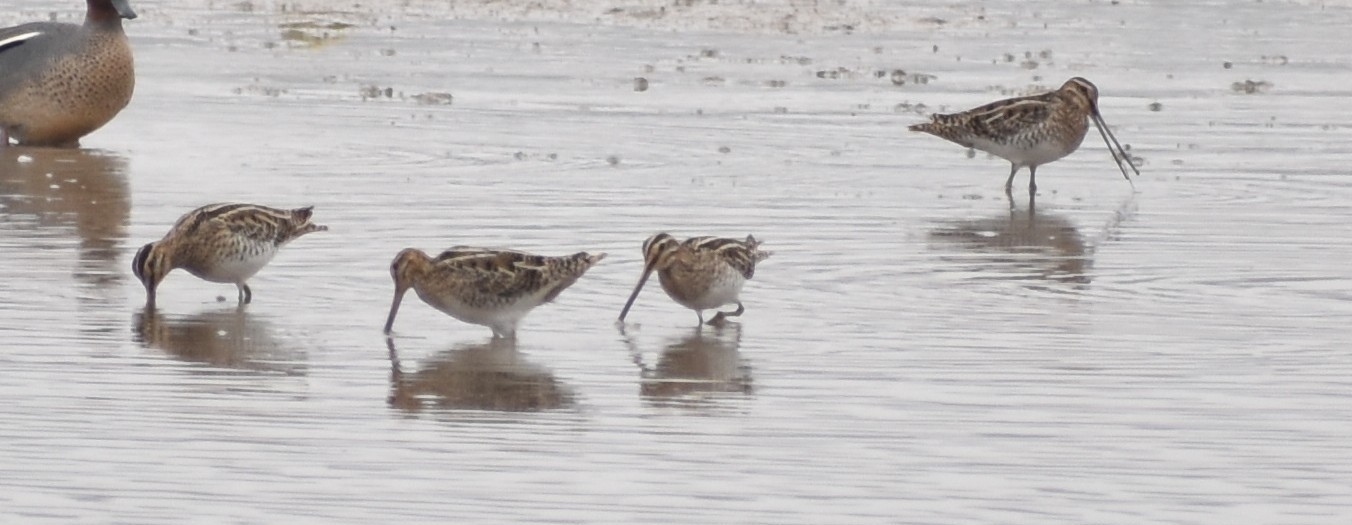
This well-camouflaged bird remains hidden in ground vegetation until almost stepped upon, then erupts with sharp 'scape, scape' calls in a zigzag escape flight. Foraging involves probing soft mud or picking prey by sight, consuming mainly insects and earthworms with some plant material. The male's 'winnowing' courtship display is spectacular: high circular flights followed by shallow dives where specialized tail feathers create a unique breathy drumming sound, compared to a sheep or goat bleating. Nesting occurs on the ground in hidden locations, with females laying four dark olive eggs blotched with rich brown, incubated for 18–21 days. Both parents tend the brood, each caring for half the young, which fledge in 10–20 days. The newly hatched chicks are covered in dark maroon down variegated with black, white, and buff.
Conservation
Overall, the species maintains a stable global population and is not considered threatened. However, breeding populations on the southern fringes of its European range show concerning declines, with local extinctions documented in parts of England and Germany. The primary threats involve agricultural intensification and wetland drainage, which destroy critical habitat. The Agreement on the Conservation of African-Eurasian Migratory Waterbirds (AEWA) provides international protection framework for this migratory species.
Culture
Folk names reveal the species' cultural footprint across Britain and Ireland, including 'mire snipe,' 'horse gowk,' 'heather bleat,' and the variant spelling 'snite.' The evocative 'heather bleat' references the male's courtship sound, which in Finnish becomes 'taivaanvuohi' or 'sky goat,' reflecting a widespread linguistic connection between this bird and goat-like sounds across many European languages. Philip Manson-Brah solved the mystery of the drumming sound's origin, demonstrating to the British Ornithologists Union that two specialized tail feathers positioned at 90 degrees to flight direction generate the sound when diving.
Source: Wikipedia · CC BY-SA 3.0
Taxonomy
- Order
- Charadriiformes
- Family
- Scolopacidae
- Genus
- Gallinago
- eBird Code
- comsni
Subspecies (2)
-
Gallinago gallinago faeroeensis
breeds Iceland, Faroe, Orkney, and Shetland islands; winters in British Islands
-
Gallinago gallinago gallinago
breeds British Isles and Scandinavia eastward to Kamchatka and western Aleutians, and southward in western Himalayas; winters from western Europe to equatorial Africa eastward to southern Japan, Philippines, and Borneo
Data Sources
Species description from Wikipedia, licensed under CC BY-SA 3.0.
Bird images and sounds sourced from GBIF, contributed by citizen scientists worldwide under Creative Commons licenses.
Taxonomy data from AviList 2025.