Crested Lark
Galerida cristata
凤头百灵
Introduction
Species of lark (family Alaudidae) with 35 recognized subspecies. Range extends across temperate Eurasia from Portugal to northeastern China and eastern India, and across northern Africa south to Niger. Non-migratory bird of dry, open habitats including roadsides, cereal fields, and sandy areas. Most distinctive trait is the prominent crest visible at all times. Sings in flight from altitudes of 30-60 meters, producing a liquid, warbling song. Classified as Least Concern on IUCN Red List, though European populations have declined since 1982. Global population estimates range from 22 to 91.2 million mature individuals.
Description
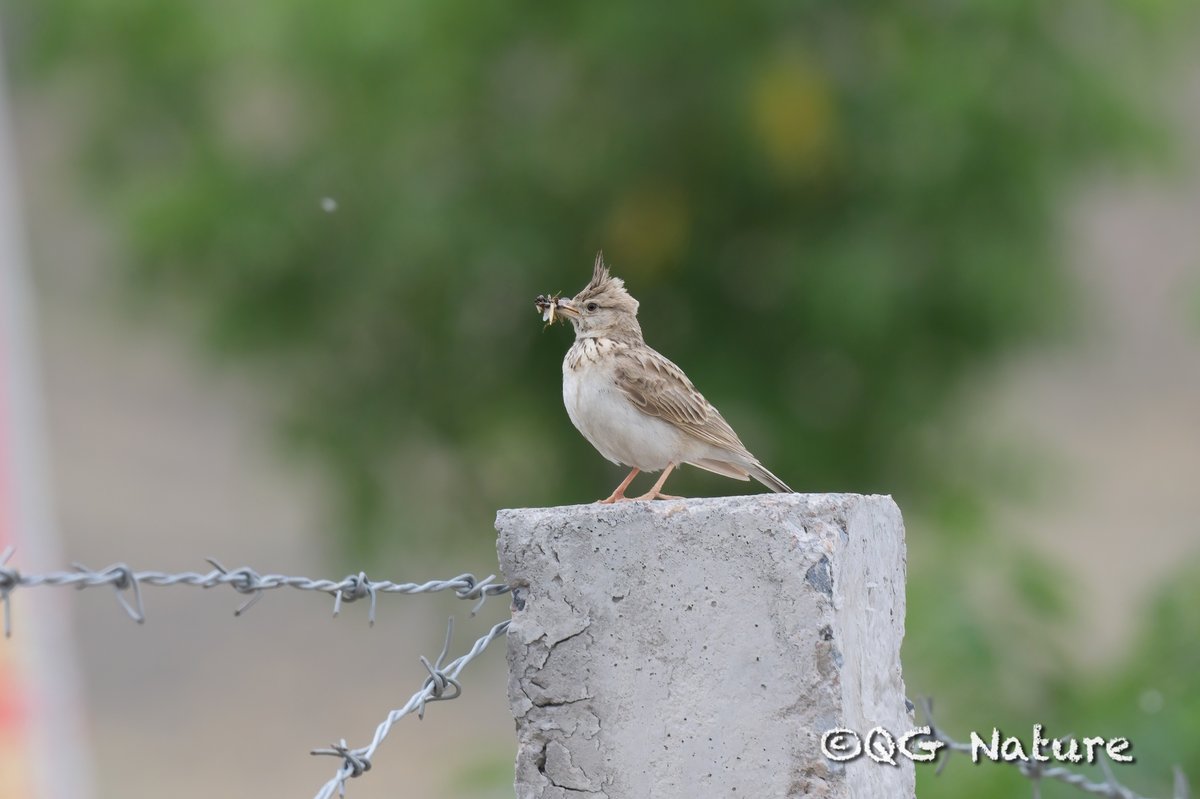
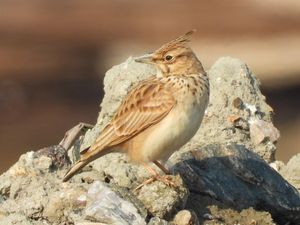
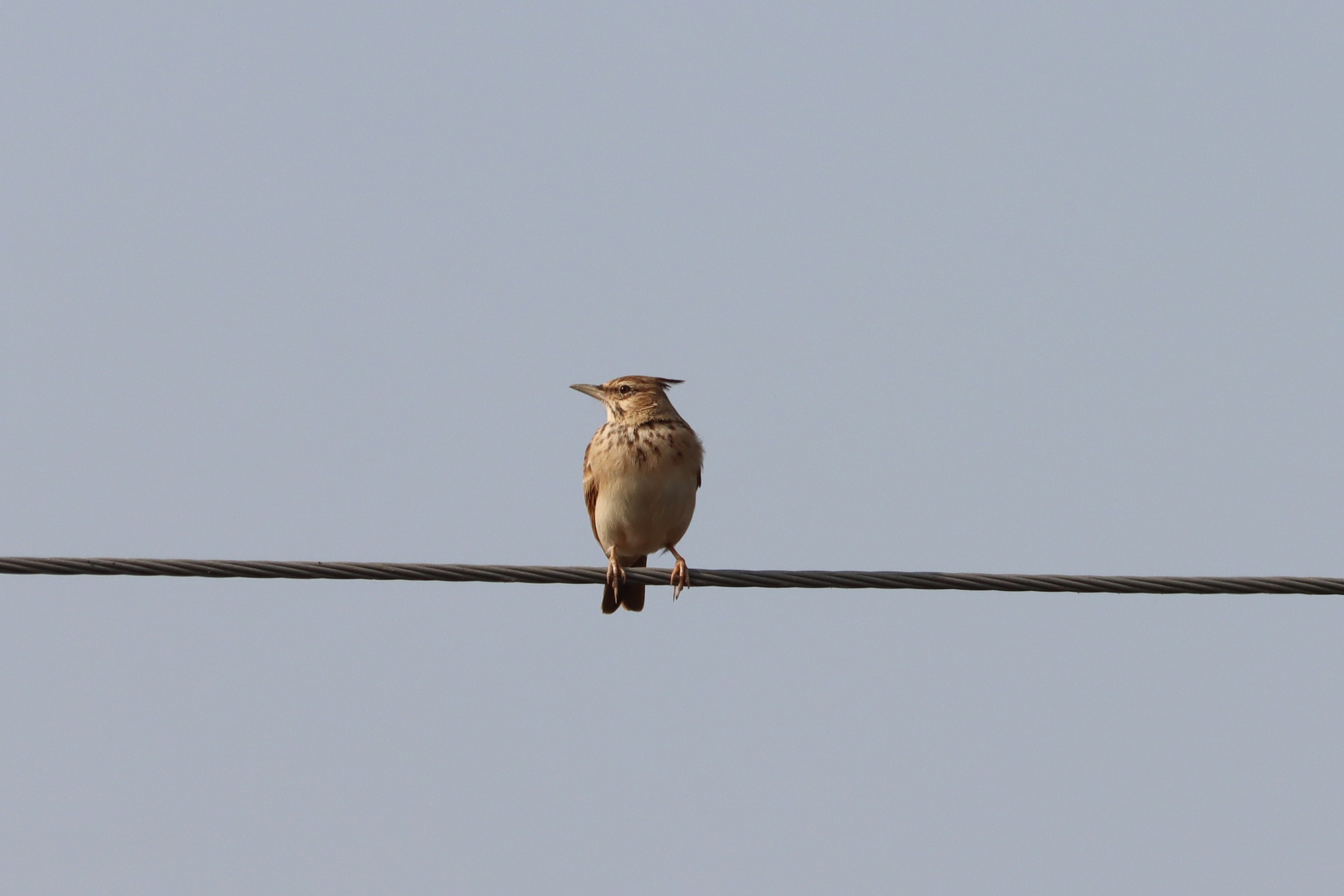
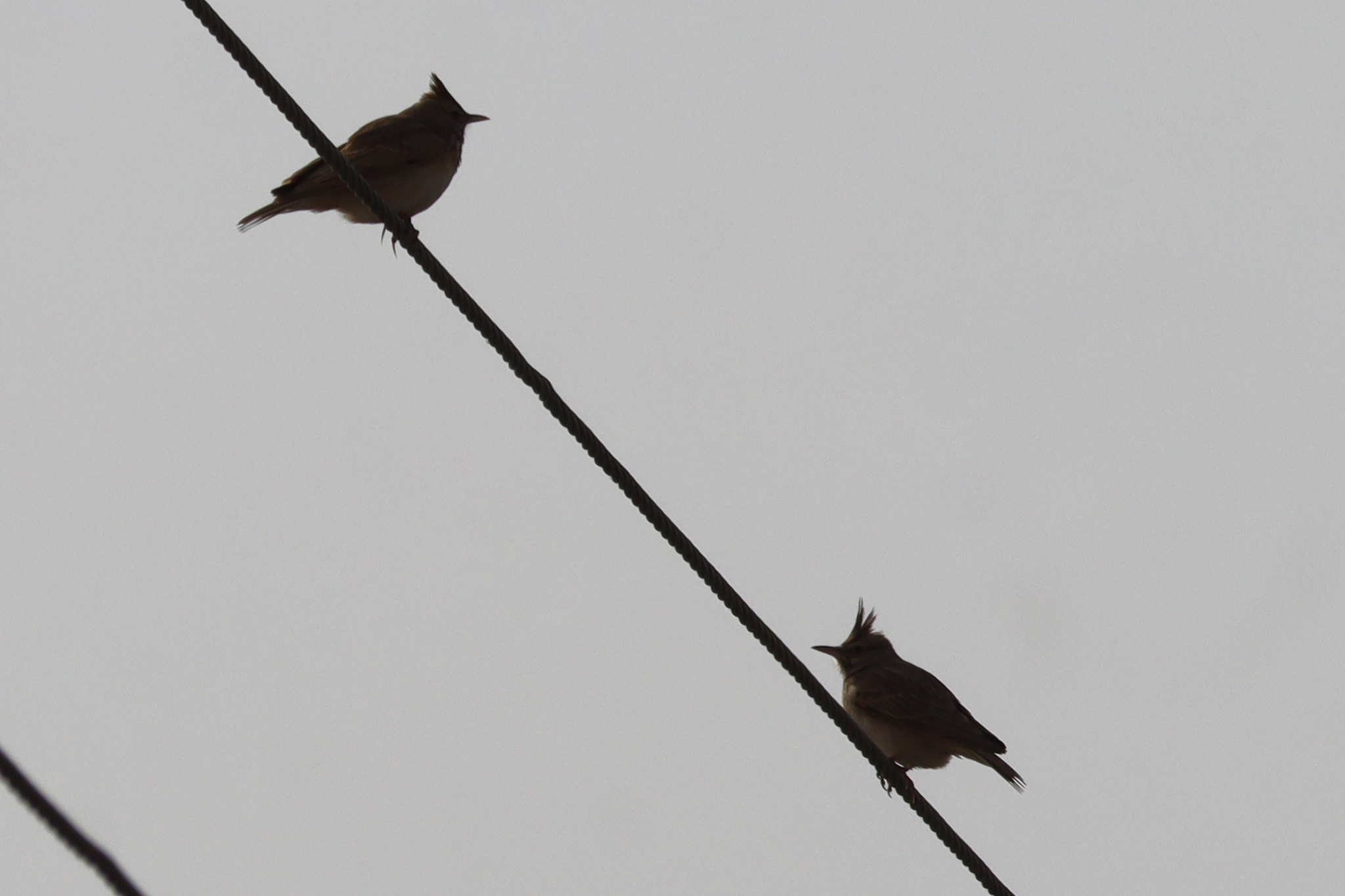
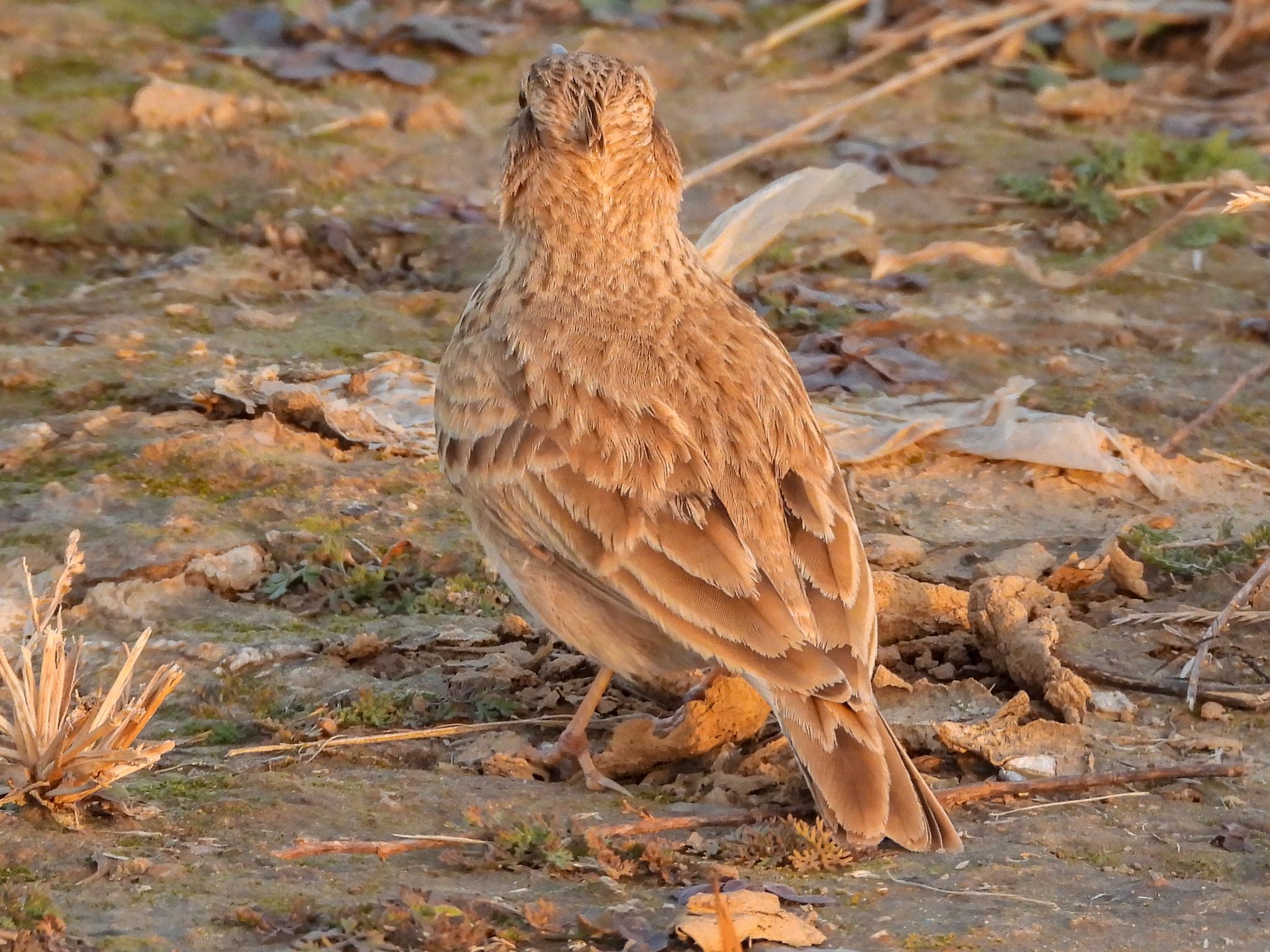
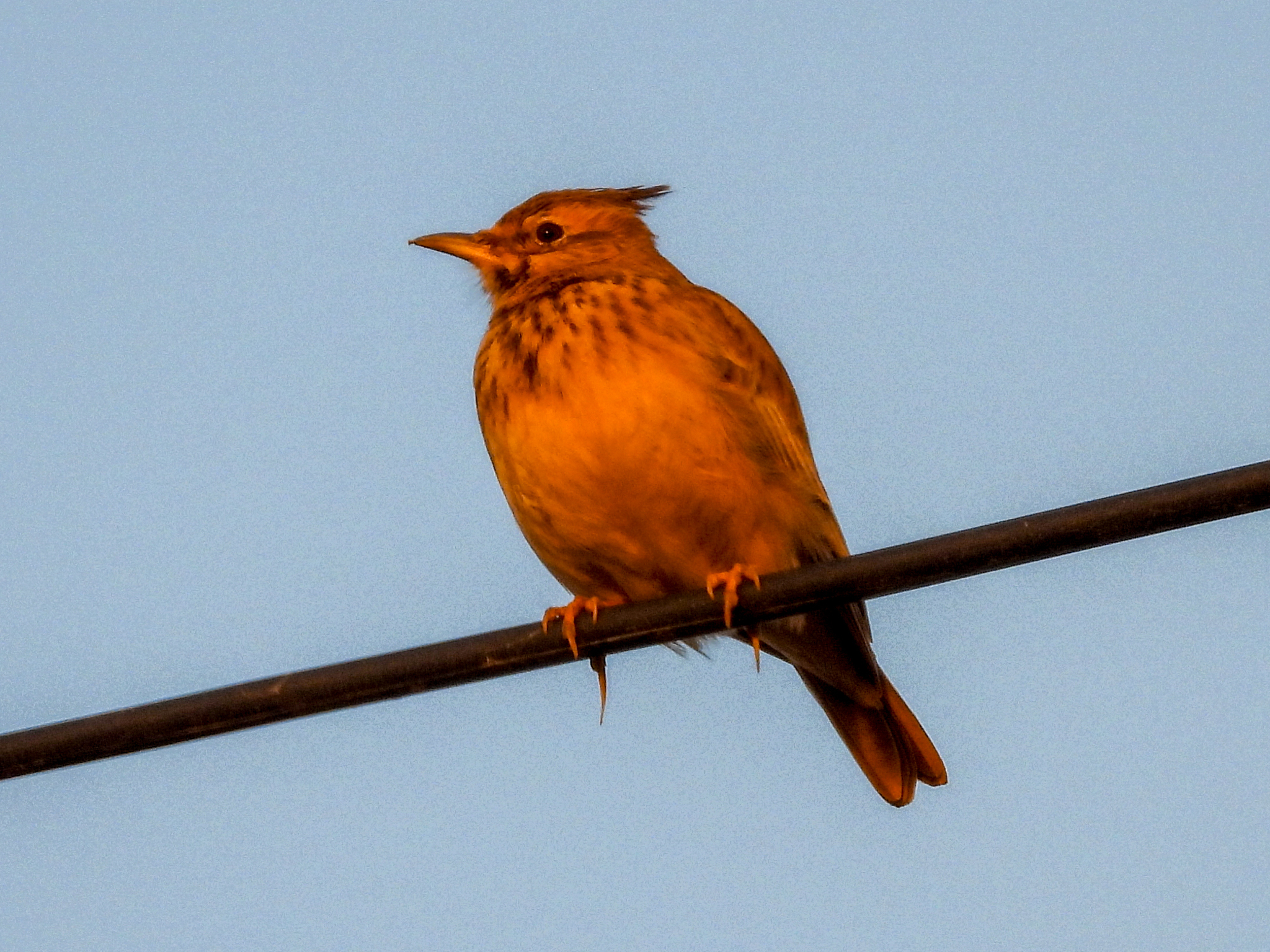
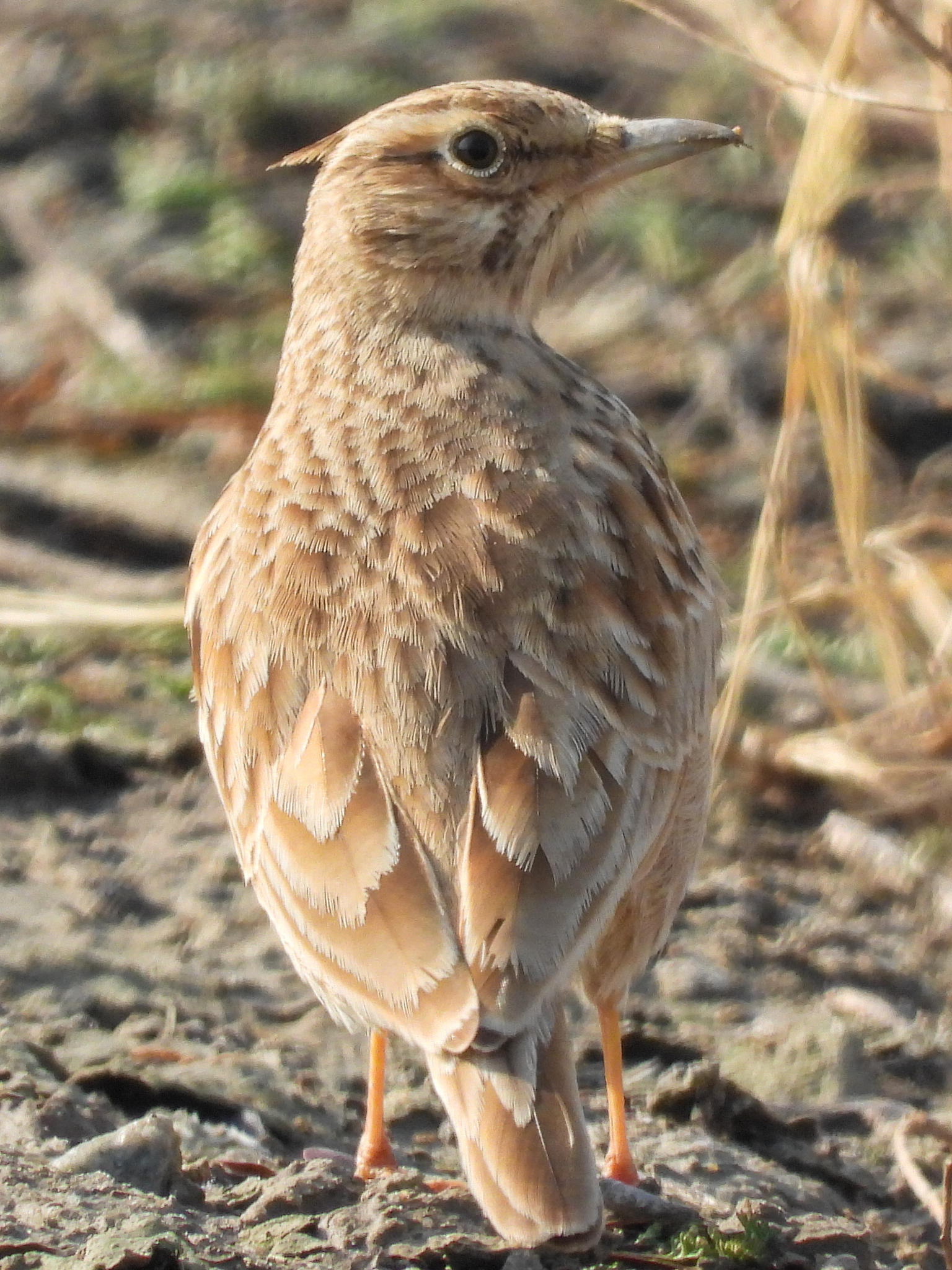
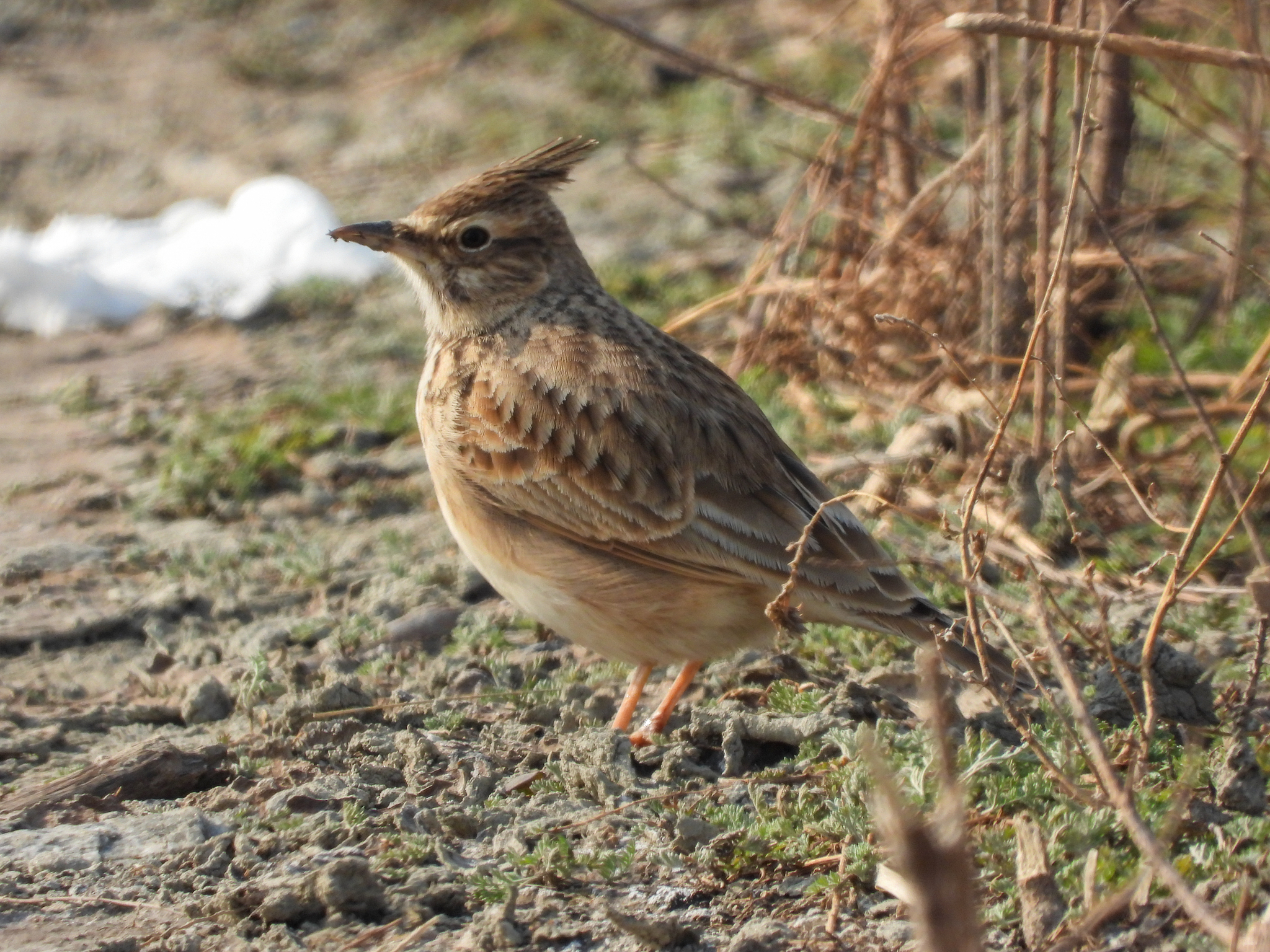
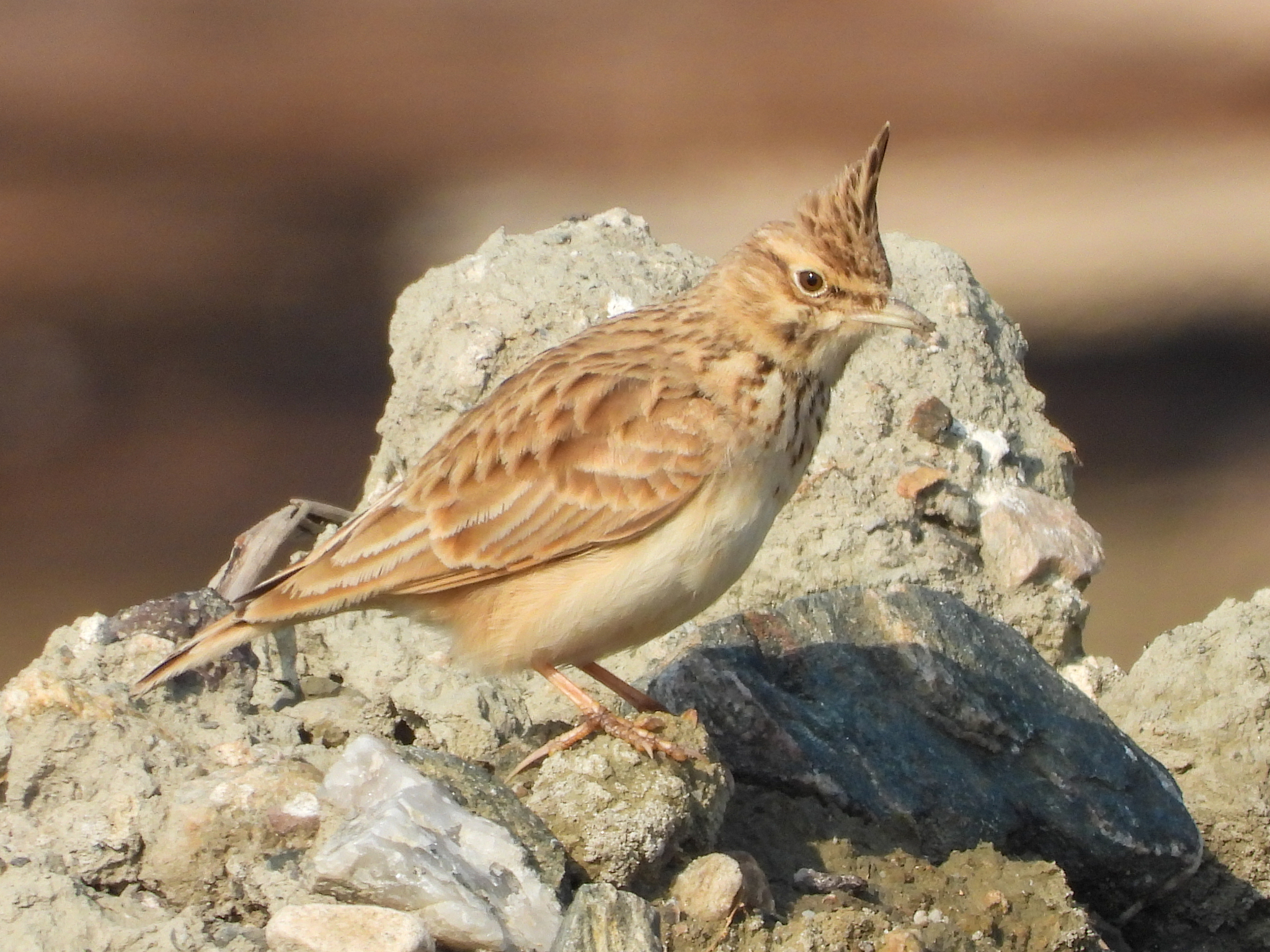
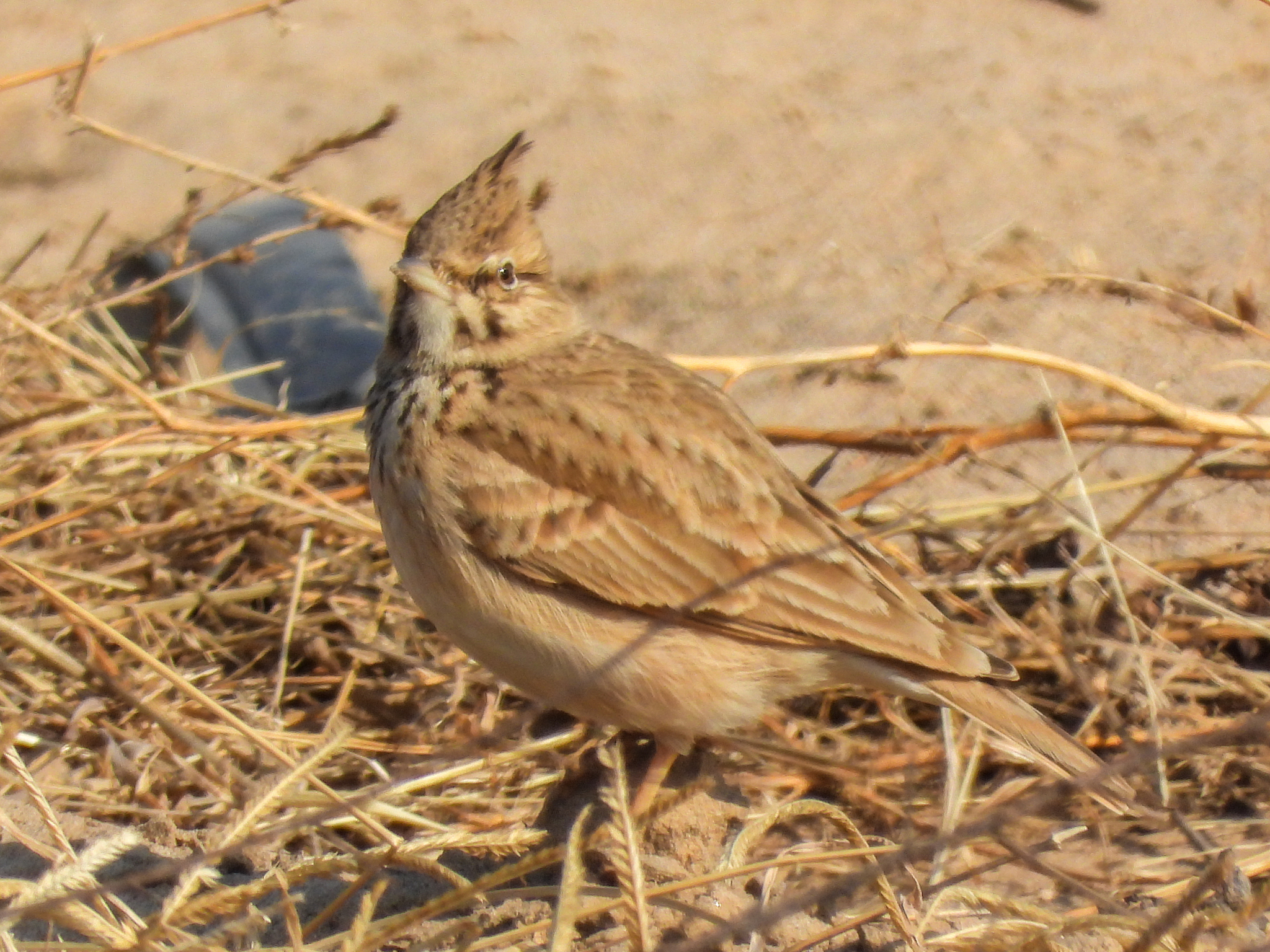
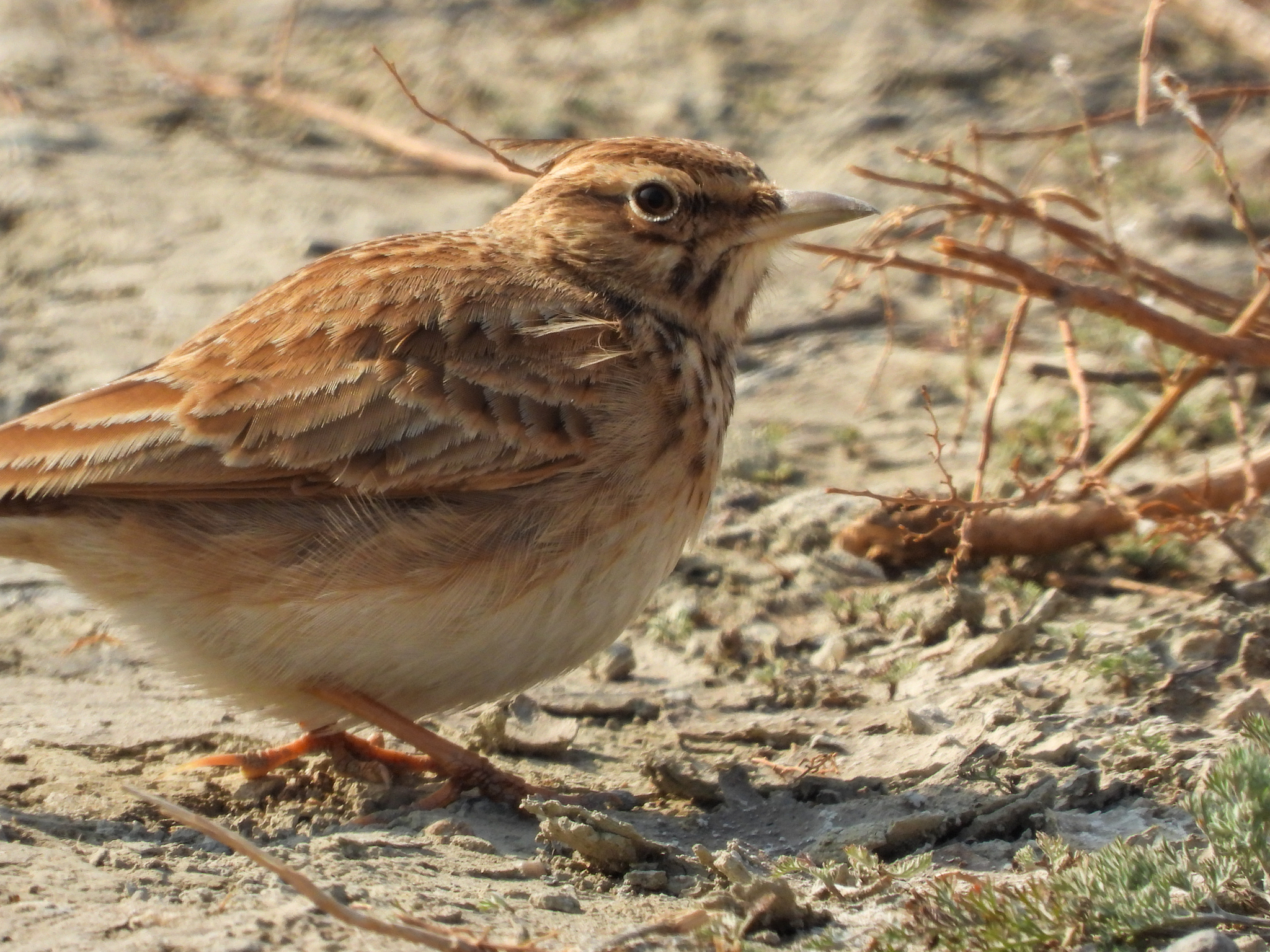
Small brown lark approximately 17 cm in height with wingspan of 29-38 cm and weight of 37-55 g. Bulkier around head and body than Eurasian skylark, though similar in size. Short tail with light brown outer feathers. Plumage is downy but sparse and appears whitish. Conspicuous crest is a defining feature, more pronounced during territorial displays and singing. Underwings appear reddish in flight. Males and females appear similar; juveniles have more spotting on the back than adults. Shares many characteristics with Thekla lark but distinguished by beak shape and underwing coloration.
Identification
Similar in appearance to Eurasian skylark and Thekla lark. Distinguished from Thekla lark by beak morphology and underwing coloration—crested lark shows reddish underwings while Thekla lark has grey underwings in European specimens. Thekla lark also shows heavier black-brown streaking. The prominent crest helps distinguish this species from other larks, though it can be less visible when the bird is at rest. Best identified in flight by the reddish underwing coloration combined with the characteristic crest.
Distribution & Habitat
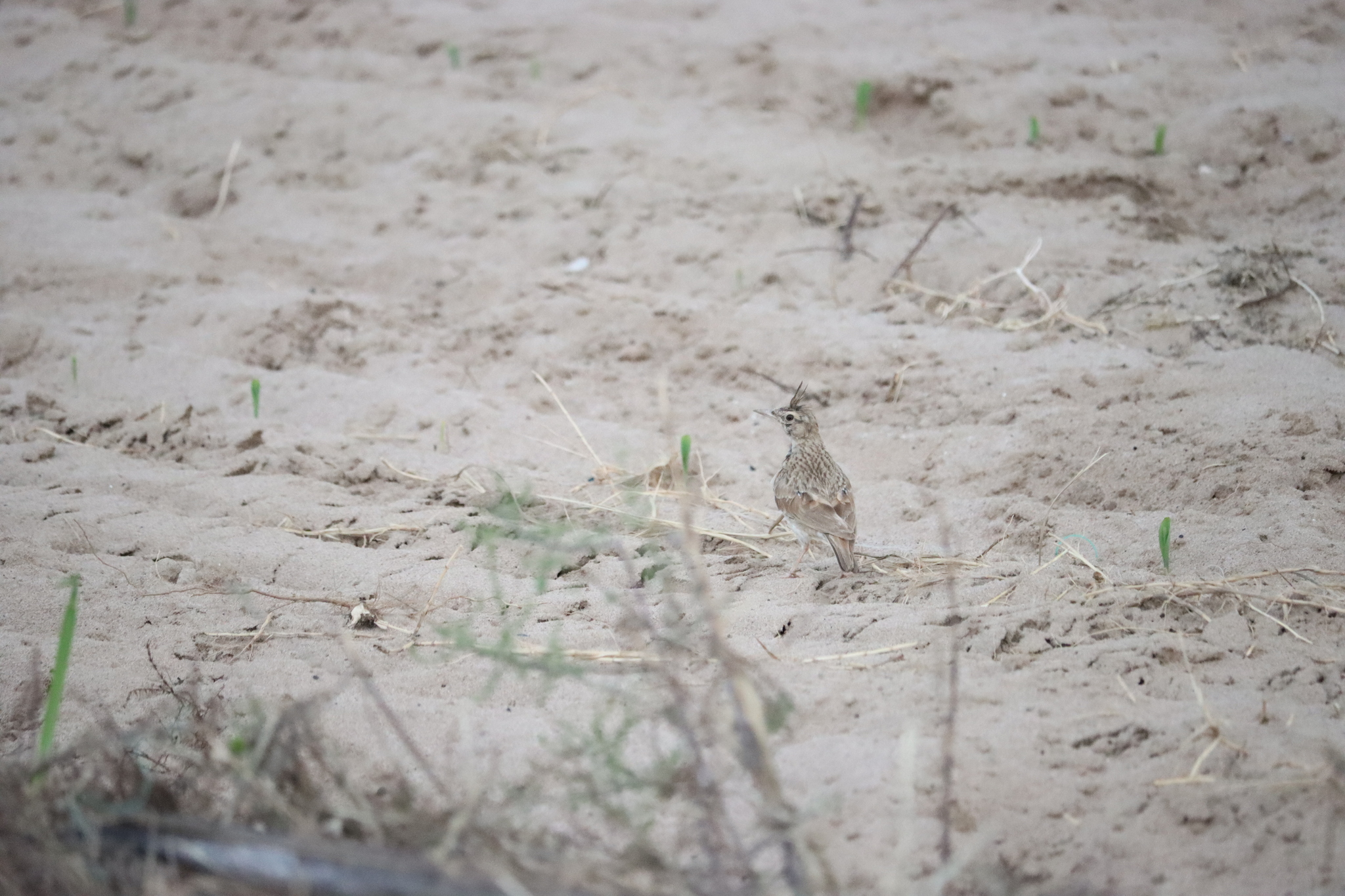
Breeds across most of temperate Eurasia from Portugal east to northeastern China and eastern India, and in Africa from Morocco east to Tunisia and south to Niger. Non-migratory throughout most of range; very rare vagrant to Great Britain despite breeding in northern France. Has been extirpated from Sweden (1993), Norway (1972), Luxembourg (1973), and Switzerland (1980s). Inhabits dry, open country including roadsides, cereal fields, and small sandy patches near railways, docks, and airfields.
Behavior & Ecology
Song is a liquid, warbling series described as whee-whee-wheeoo or twee-tee-too. Sings in flight from heights of 30-60 meters, either at altitude or from the ground. Nests in small ground depressions in wastelands and urban outskirts, constructing untidy structures from dead grasses and roots. Lays 3-5 brown, speckled eggs incubated for 11-12 days. Chicks leave nest at about 8 days and fledge at 15-16 days. Usually raises two broods annually. Diet consists primarily of grains and seeds (oats, wheat, barley) supplemented by insects, especially beetles. Forages on ground by scavenging or digging.
Conservation
IUCN Red List status: Least Concern. Global population estimated at 22-91.2 million mature individuals. European breeding population estimated at 3.6-7.6 million pairs (7.2-15.2 million individuals). European population trends since 1982 show overall decline, leading to assumption of global decline, though populations remain large and the species is considered common across much of its extensive range. No specific threats identified as the species adapts to human-modified landscapes including agricultural areas.
Culture
Considered a bird of special significance by Francis of Assisi, who drew parallels between the species and the life of the Friars Minor. He noted the bird's plain earth-colored plumage resembling a hood, its humility in willingly foraging along waysides, and its devotion to song. These characteristics were perceived as reflecting Franciscan values of humility and spiritual devotion.
Source: Wikipedia · CC BY-SA 3.0
Taxonomy
- Order
- Passeriformes
- Family
- Alaudidae
- Genus
- Galerida
- eBird Code
- crelar1
Subspecies (35)
-
Galerida cristata alexanderi
northern Nigeria to western Sudan and northeastern Democratic Republic of the Congo
-
Galerida cristata altirostris
eastern Sudan and Eritrea
-
Galerida cristata apuliae
southern peninsular Italy and Sicily
-
Galerida cristata arenicola
northeastern Algerian Sahara to southern Tunisia and northwestern Libya
-
Galerida cristata balsaci
coastal Mauritania
-
Galerida cristata brachyura
northeastern Libya to coastal northern Egypt, northern Sinai, northern Saudi Arabia, and southern Iraq
-
Galerida cristata carthaginis
coastal northeastern Morocco to northern Tunisia (eastward to Sousse)
-
Galerida cristata caucasica
eastern Aegean Islands, northern Türkiye, southern Caucasus, and western Transcaucasia
-
Galerida cristata chendoola
foothills of southern Kashmir to eastern Pakistan, western and northern India, and southern Nepal
-
Galerida cristata cinnamomina
western Lebanon (western from Beirut) and northwestern Israel (Mount Carmel and Haifa)
-
Galerida cristata coreensis
Korea
-
Galerida cristata cristata
central Europe to Slovenia, Belarus, northern Hungary, and northern Ukraine
-
Galerida cristata cypriaca
Kárpathos, Rhodes, and Cyprus
-
Galerida cristata festae
coastal northeastern Libya (Benghazi to Tobruq)
-
Galerida cristata halfae
Egypt (Nile Valley south of Aswan) to far northern Sudan (Wadi Halfa)
-
Galerida cristata helenae
southeastern Algeria and immediately adjacent southwestern Libya
-
Galerida cristata isabellina
central Sudan (Kordofan to Nile Valley)
-
Galerida cristata jordansi
northern Niger (Aïr Mountains)
-
Galerida cristata kleinschmidti
northwestern Morocco (eastward to Rif Mountains and southward to Middle Atlas)
-
Galerida cristata leautungensis
Manchuria and northeastern China
-
Galerida cristata lynesi
northern Kashmir (Gilgit Valley)
-
Galerida cristata macrorhyncha
southern Morocco and northwestern Algeria south of Atlas Saharien to west-central Mauritania
-
Galerida cristata maculata
Egypt (Nile Valley from Cairo to Aswan and El Faiyum)
-
Galerida cristata magna
central Iran and central Turkmenistan eastward to southern Mongolia, northwestern China, and southward to northwestern Pakistan
-
Galerida cristata meridionalis
southwestern and southern Balkans, Ionian Islands (western Greece), Crete, and western Anatolian Türkiye
-
Galerida cristata neumanni
Italy (Toscana southward to Rome area)
-
Galerida cristata nigricans
northern Egypt (Nile Delta)
-
Galerida cristata pallida
Iberian Peninsula
-
Galerida cristata randonii
Hauts Plateaux of eastern Morocco and northwestern Algeria
-
Galerida cristata riggenbachi
western Morocco (Casablanca to Sous Valley)
-
Galerida cristata senegallensis
southern Mauritania, Senegambia, and Guinea-Bissau to Niger
-
Galerida cristata somaliensis
northern Somalia, southern Ethiopia, and northern Kenya
-
Galerida cristata subtaurica
central Türkiye to southern Transcaucasia, northwestern Iran, western Turkmenistan, and eastern Iraq
-
Galerida cristata tenuirostris
eastern Hungary and Romania to southern Russia and western Kazakhstan
-
Galerida cristata zion
southern Türkiye, Syria, eastern Lebanon, and eastern Israel (southward to Jerusalem)
Data Sources
Species description from Wikipedia, licensed under CC BY-SA 3.0.
Bird images and sounds sourced from GBIF, contributed by citizen scientists worldwide under Creative Commons licenses.
Taxonomy data from AviList 2025.