Eurasian Coot
Fulica atra
白骨顶
Introduction
The Eurasian coot (Fulica atra) is a medium-sized waterbird in the rail family (Rallidae). It occurs across Europe, Asia, Australia, and parts of Africa. Its habitat includes lakes, ponds, rivers, urban parks, reservoirs, and gardens with water access. It feeds by diving for aquatic vegetation and small invertebrates. The species is characterized by a distinctive head-bobbing motion while swimming. During breeding season, pairs defend their floating nests aggressively against intruders.
Description
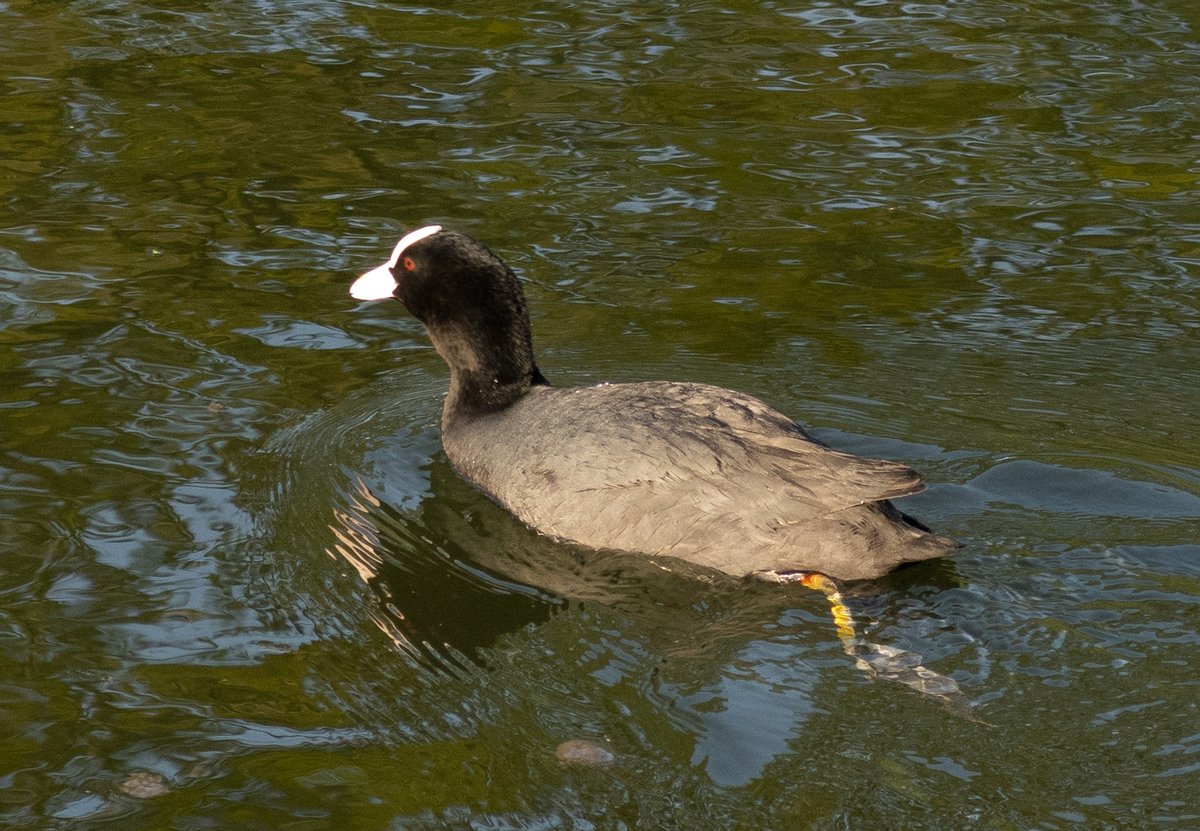
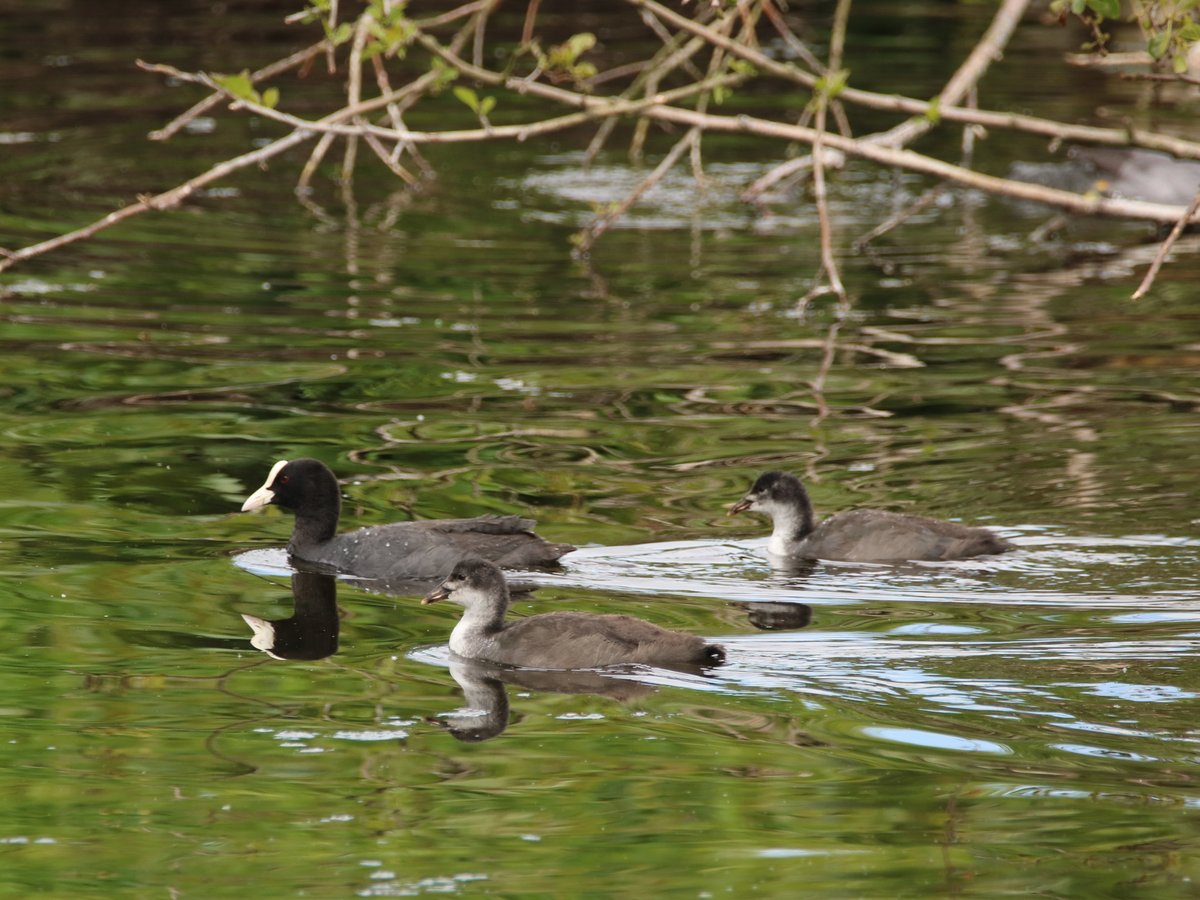
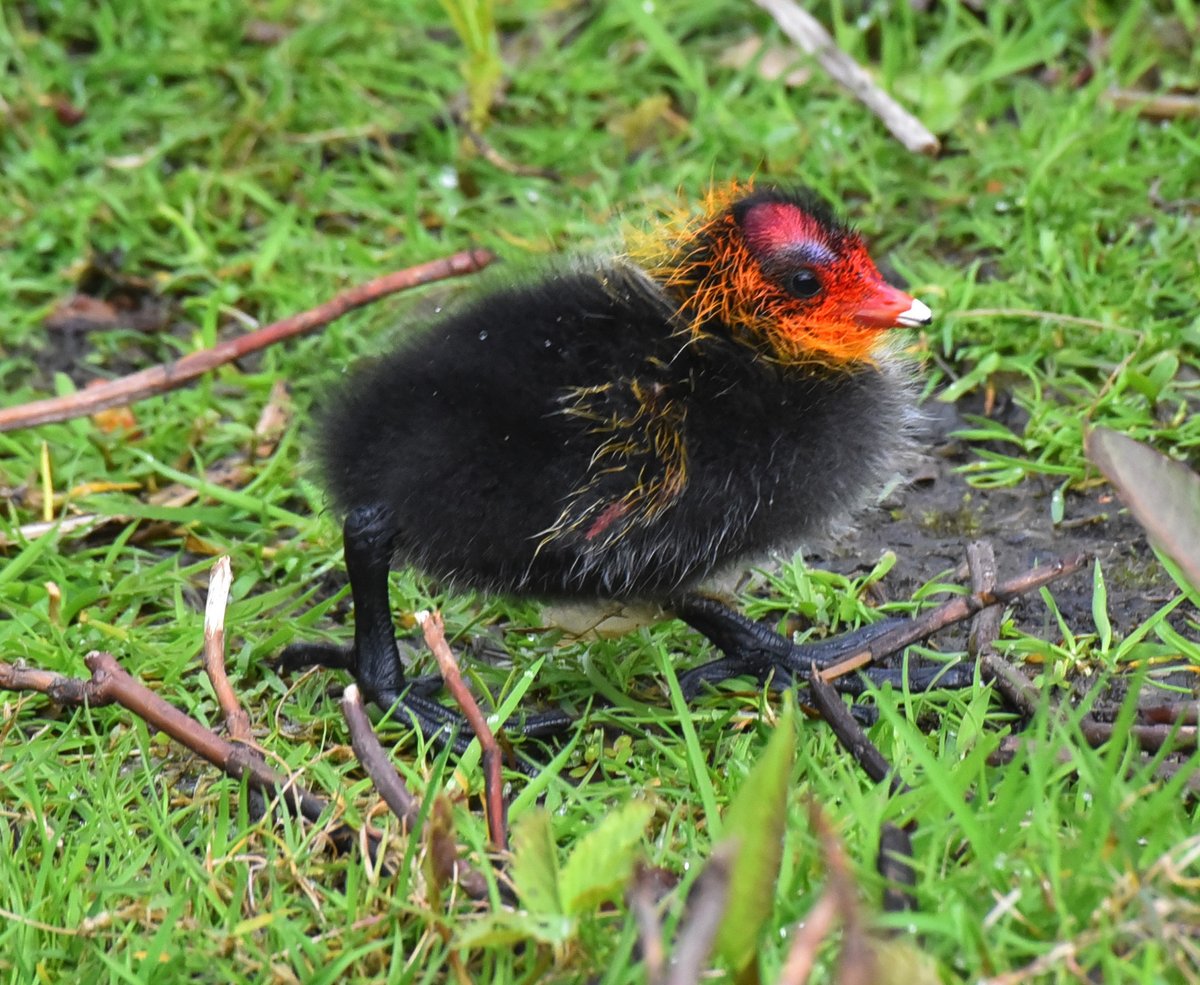
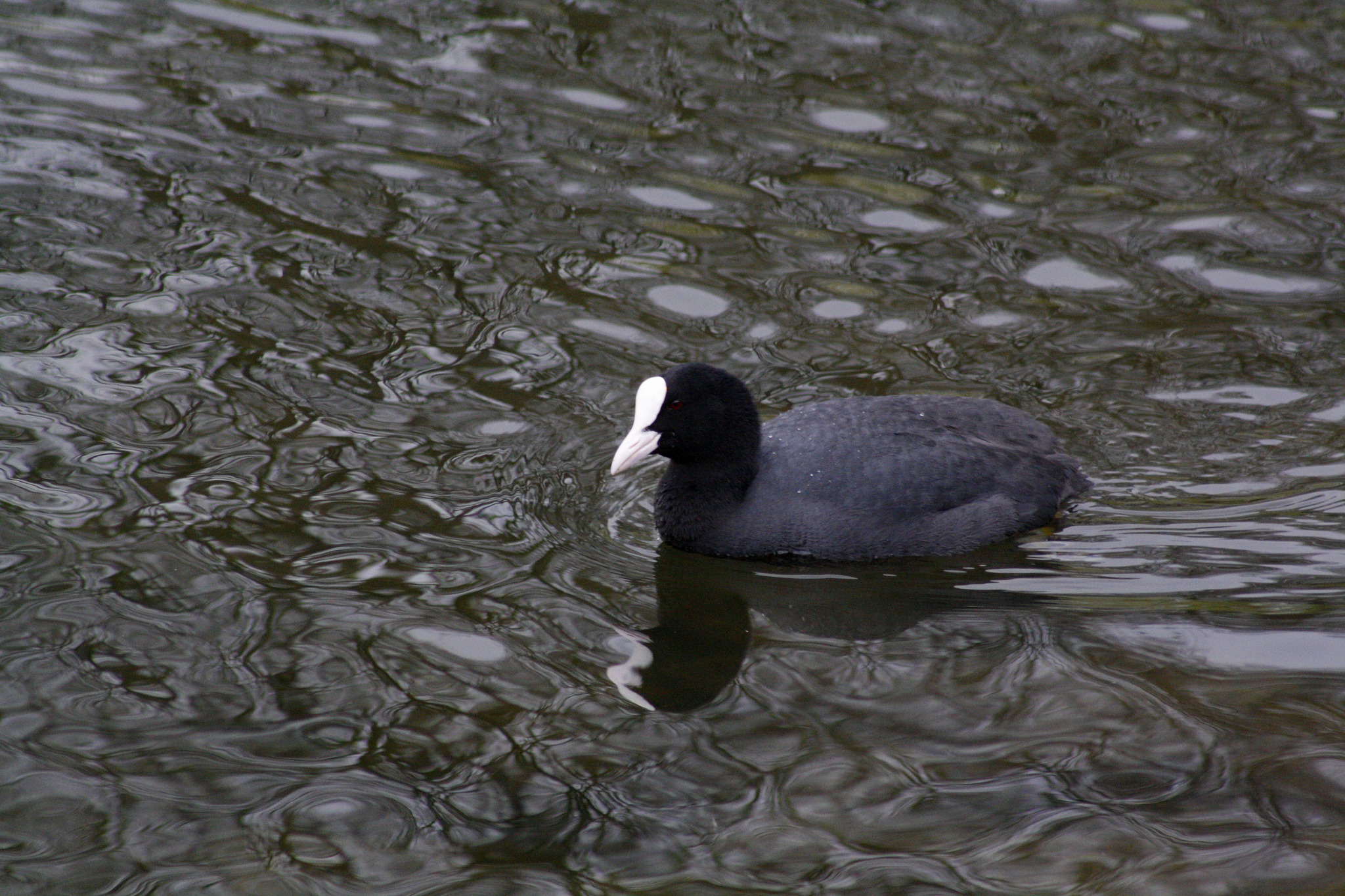
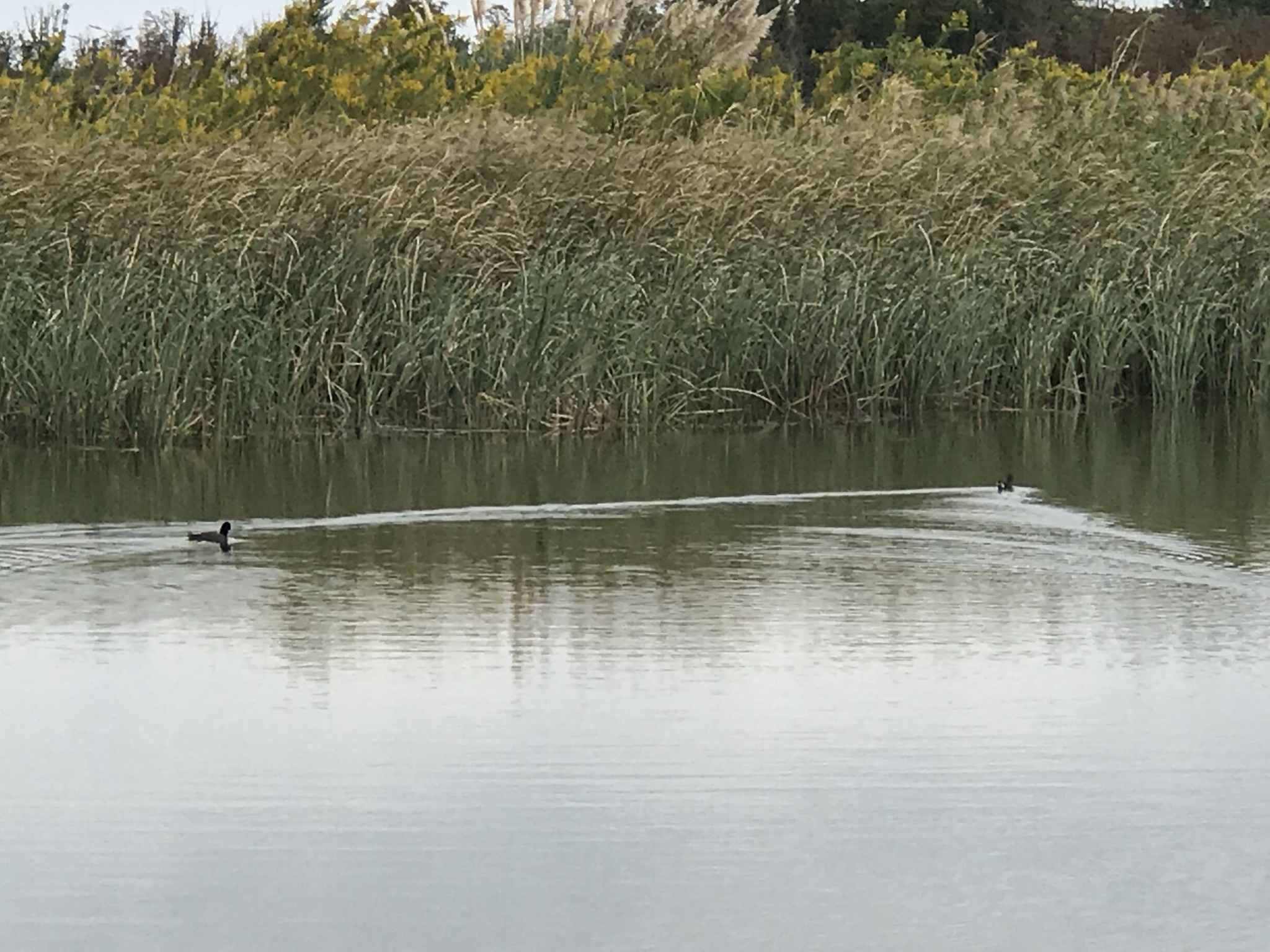
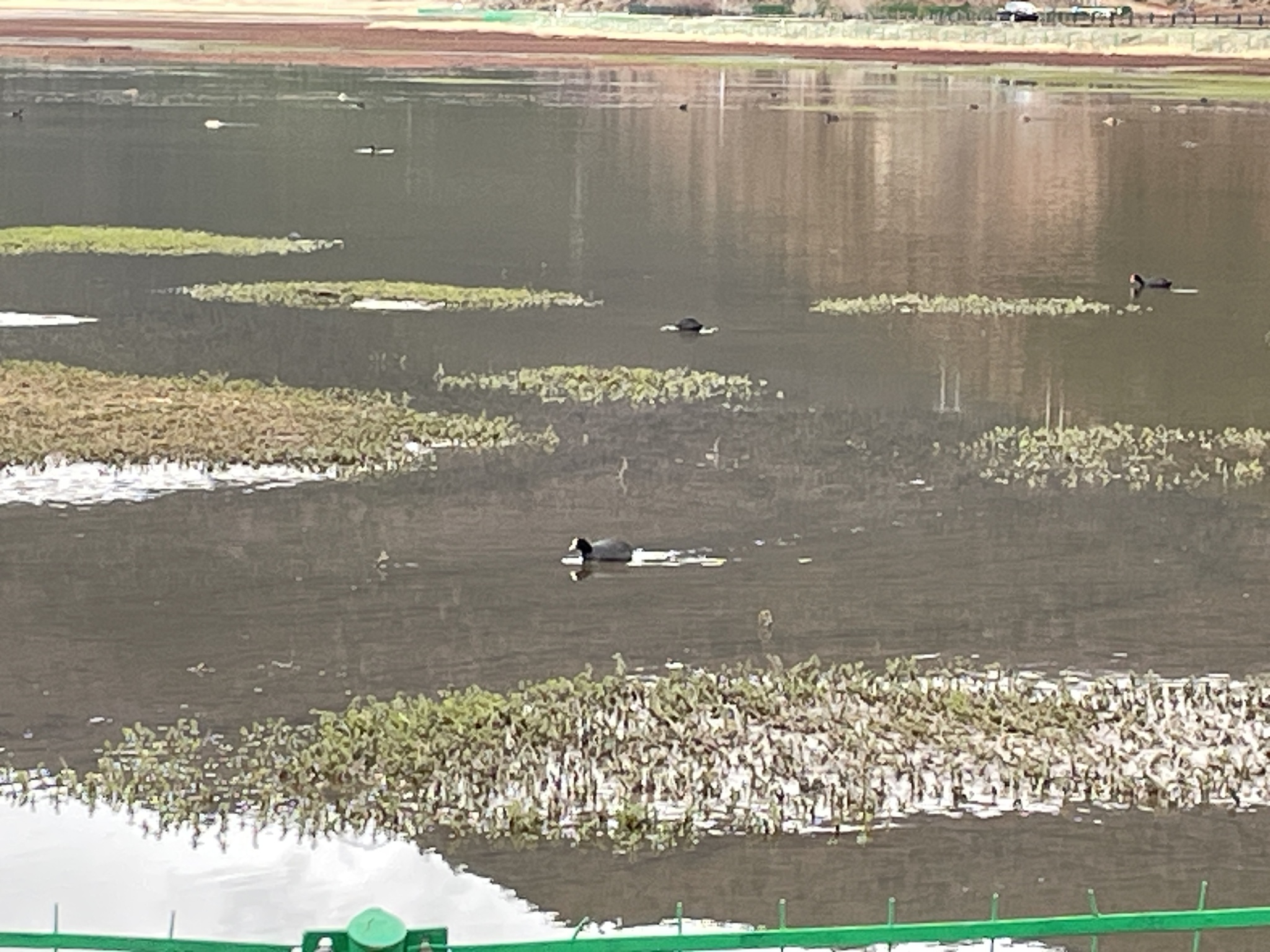
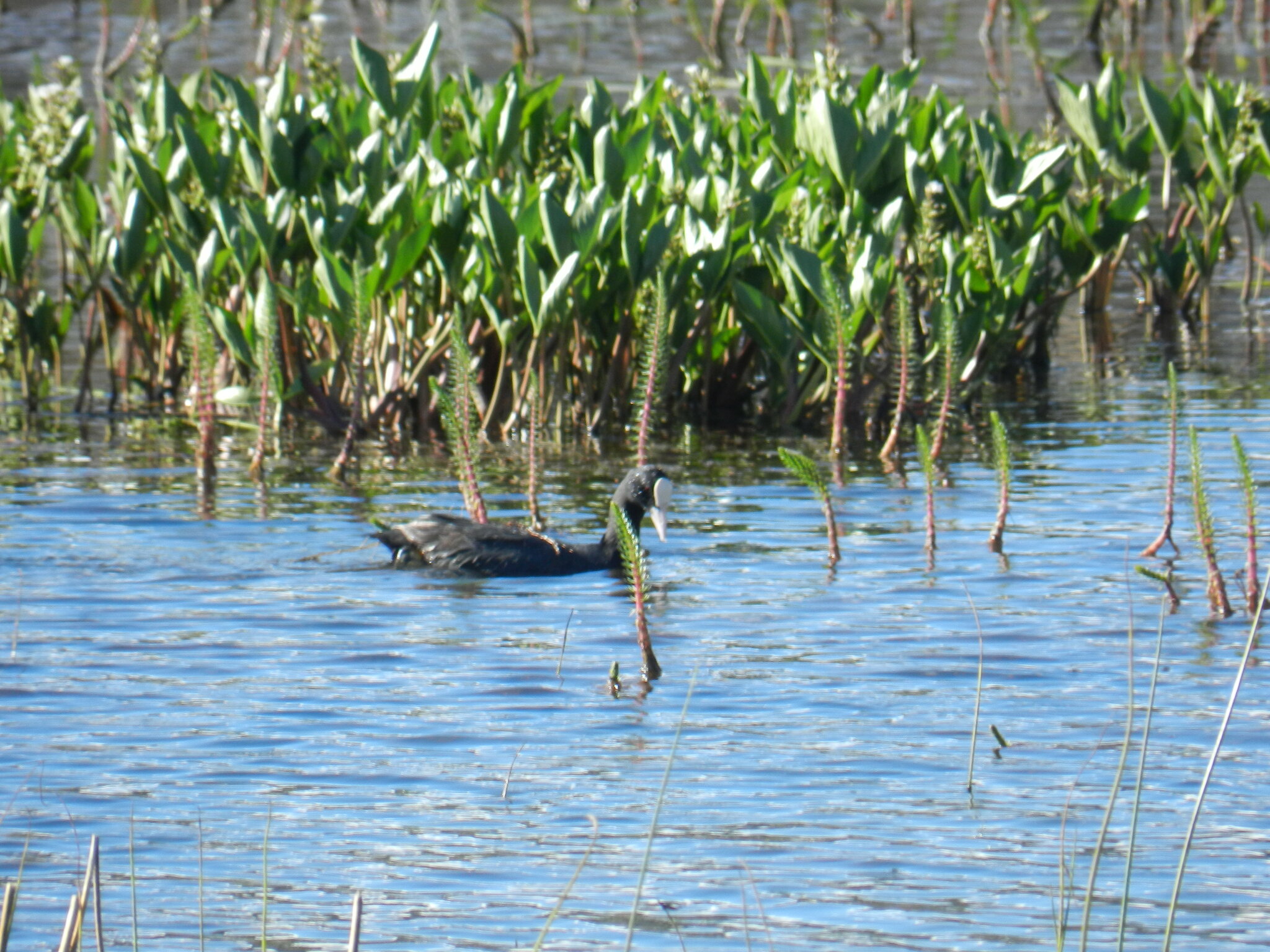
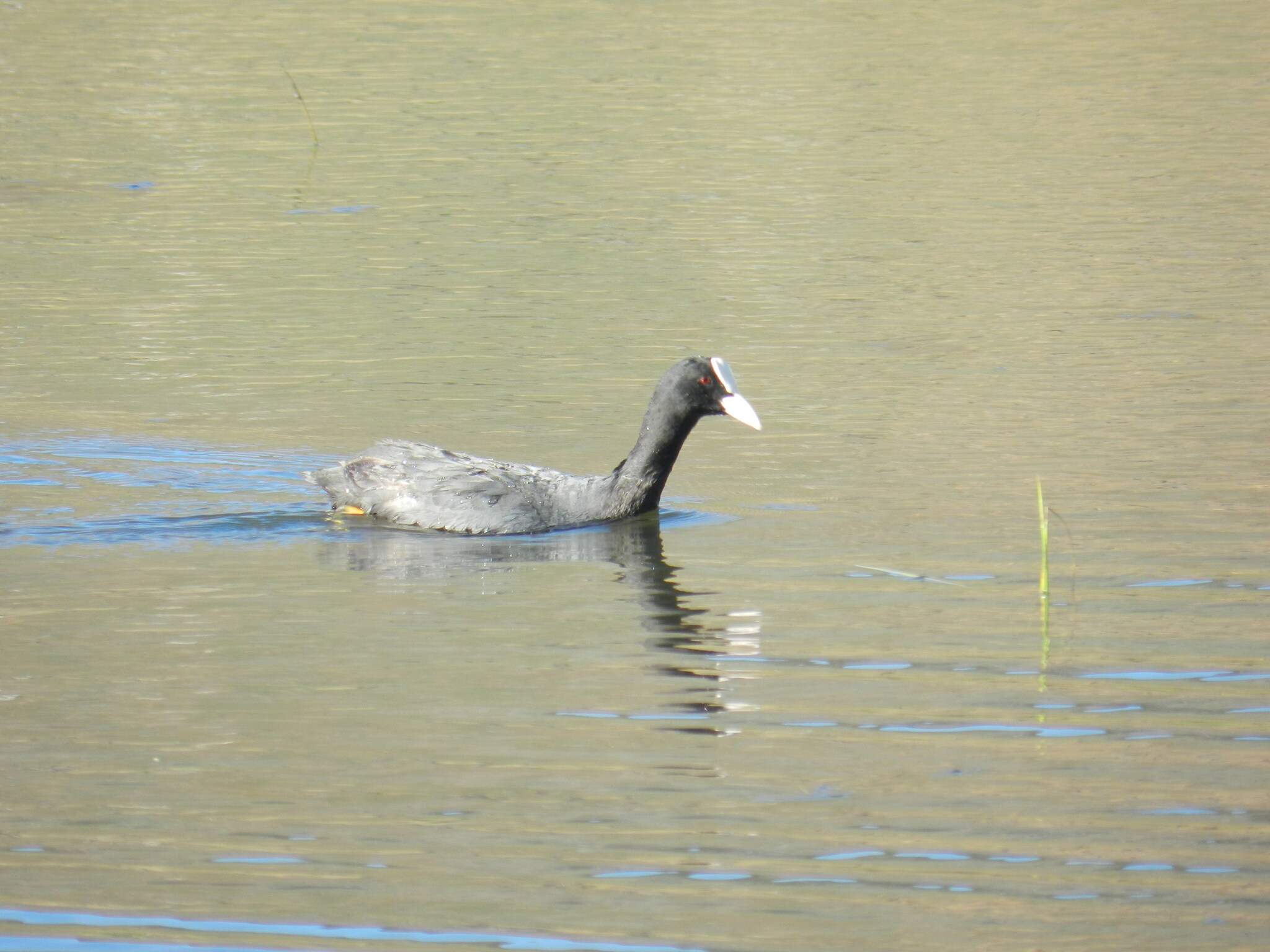
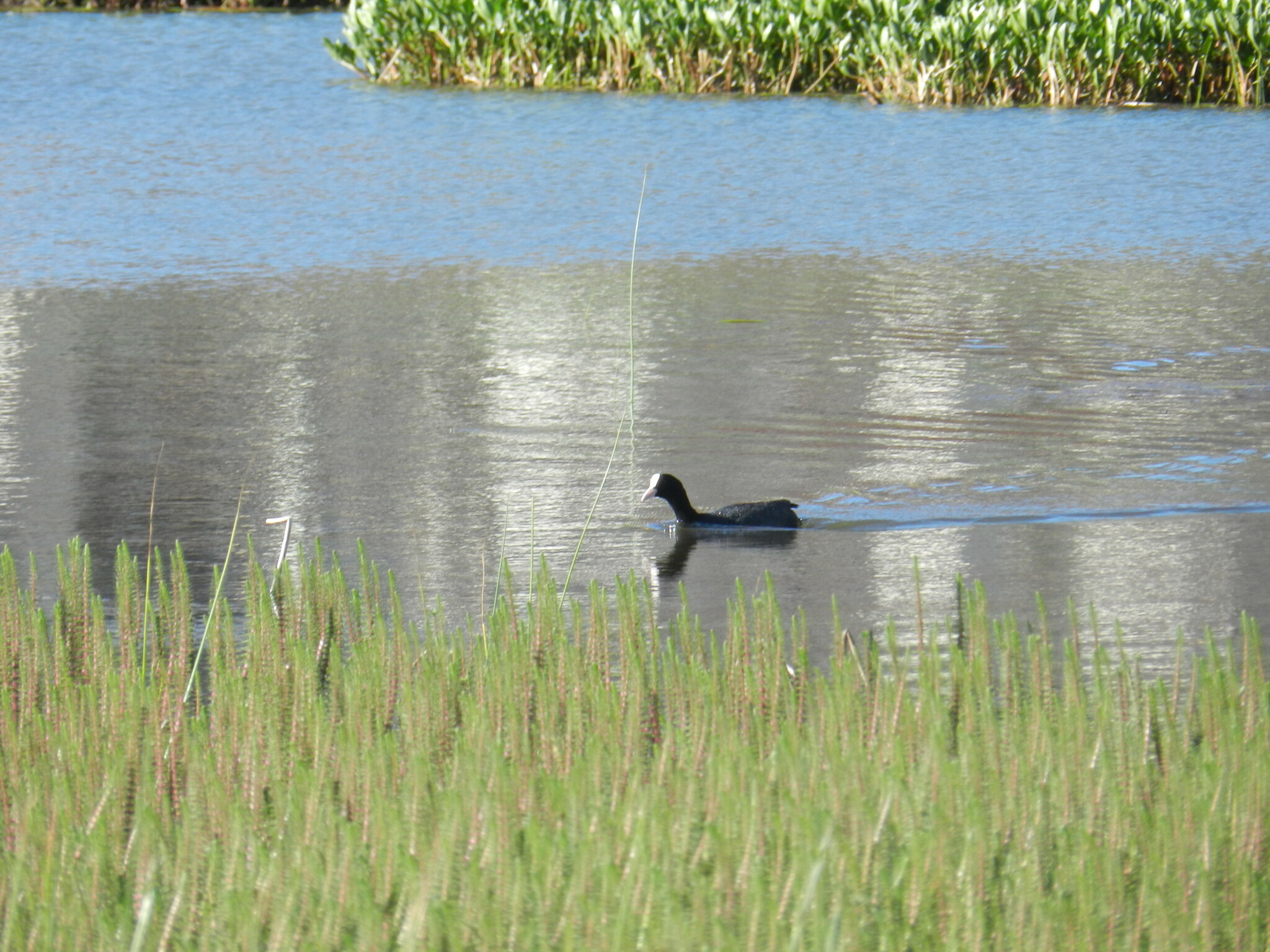
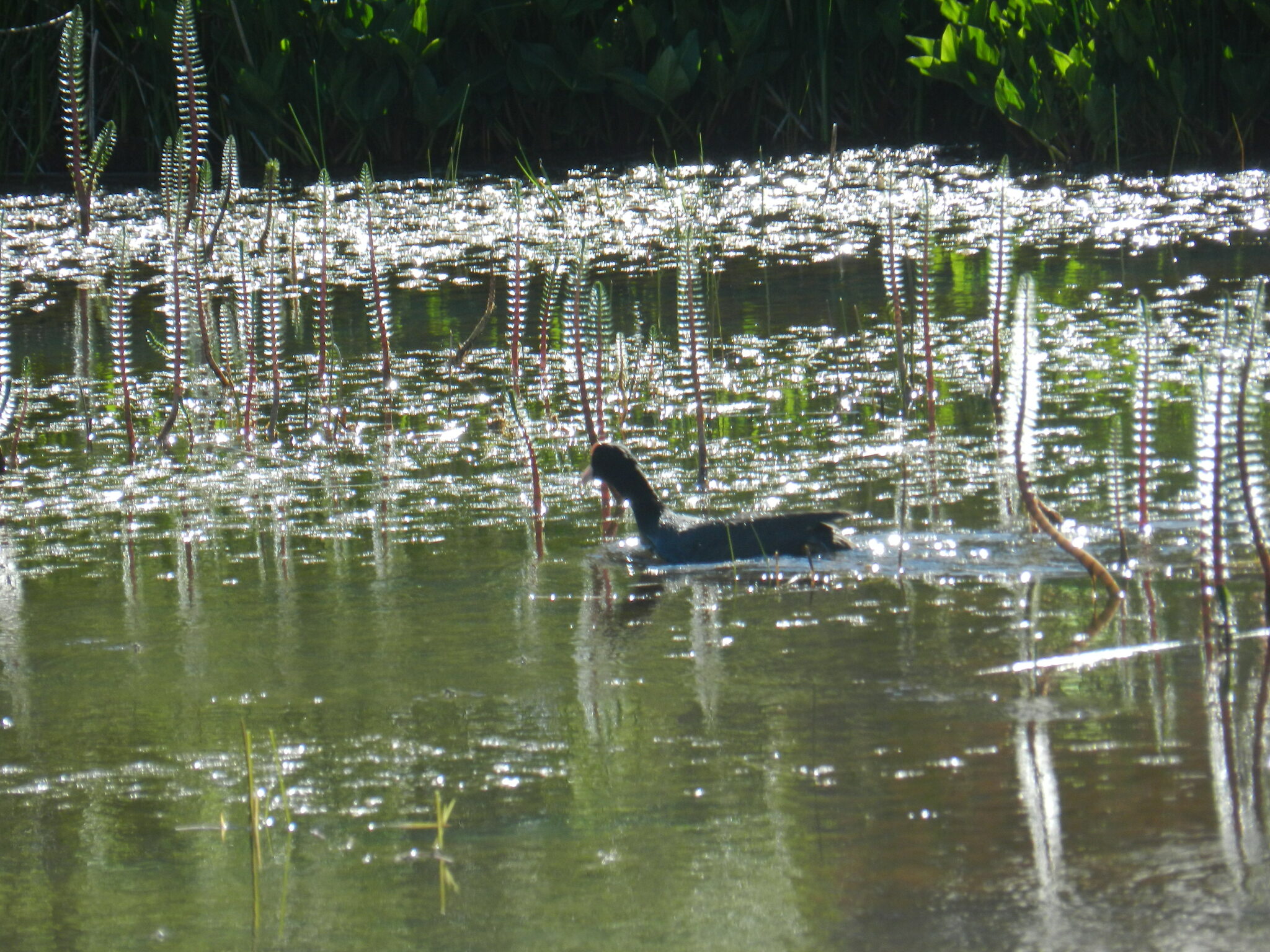
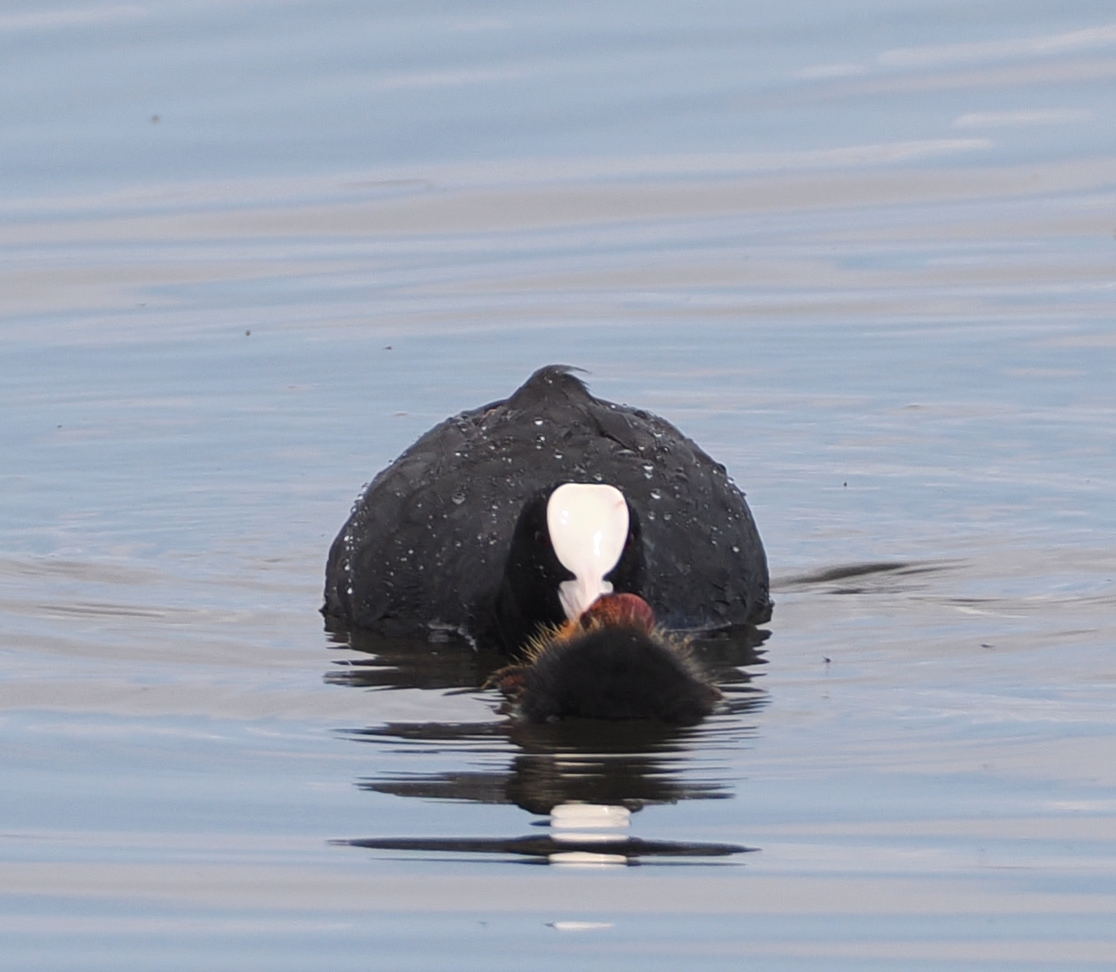
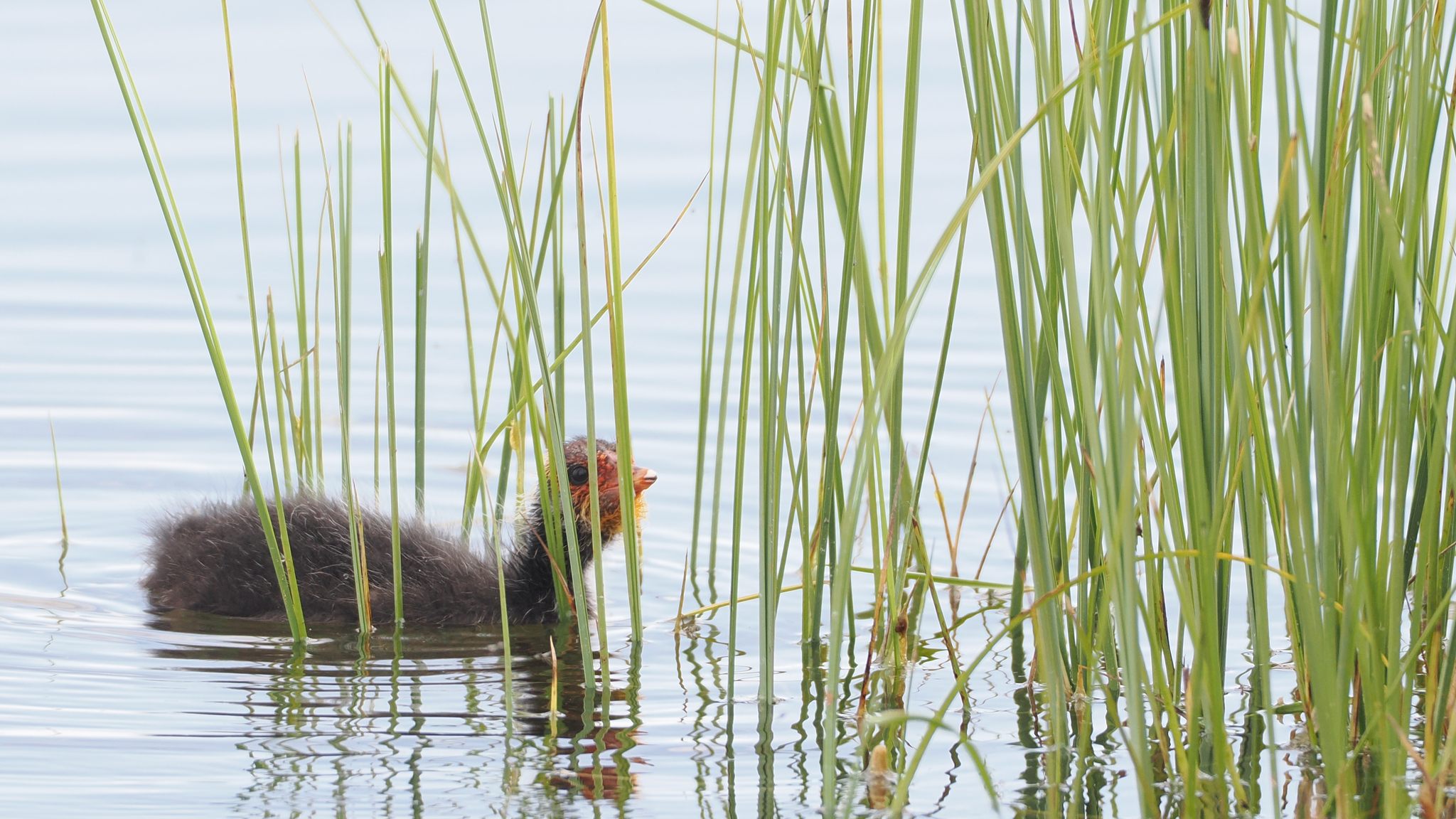
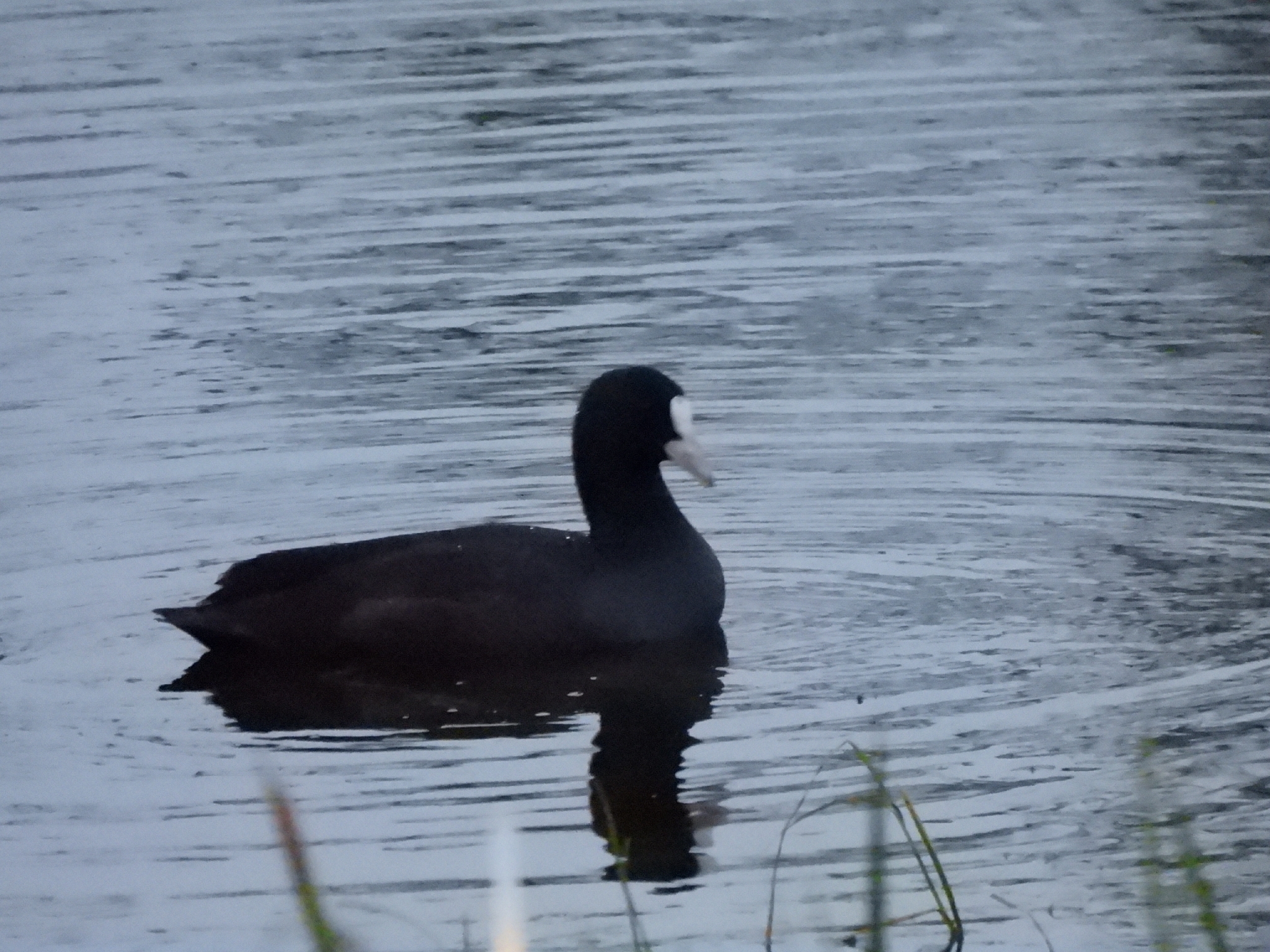
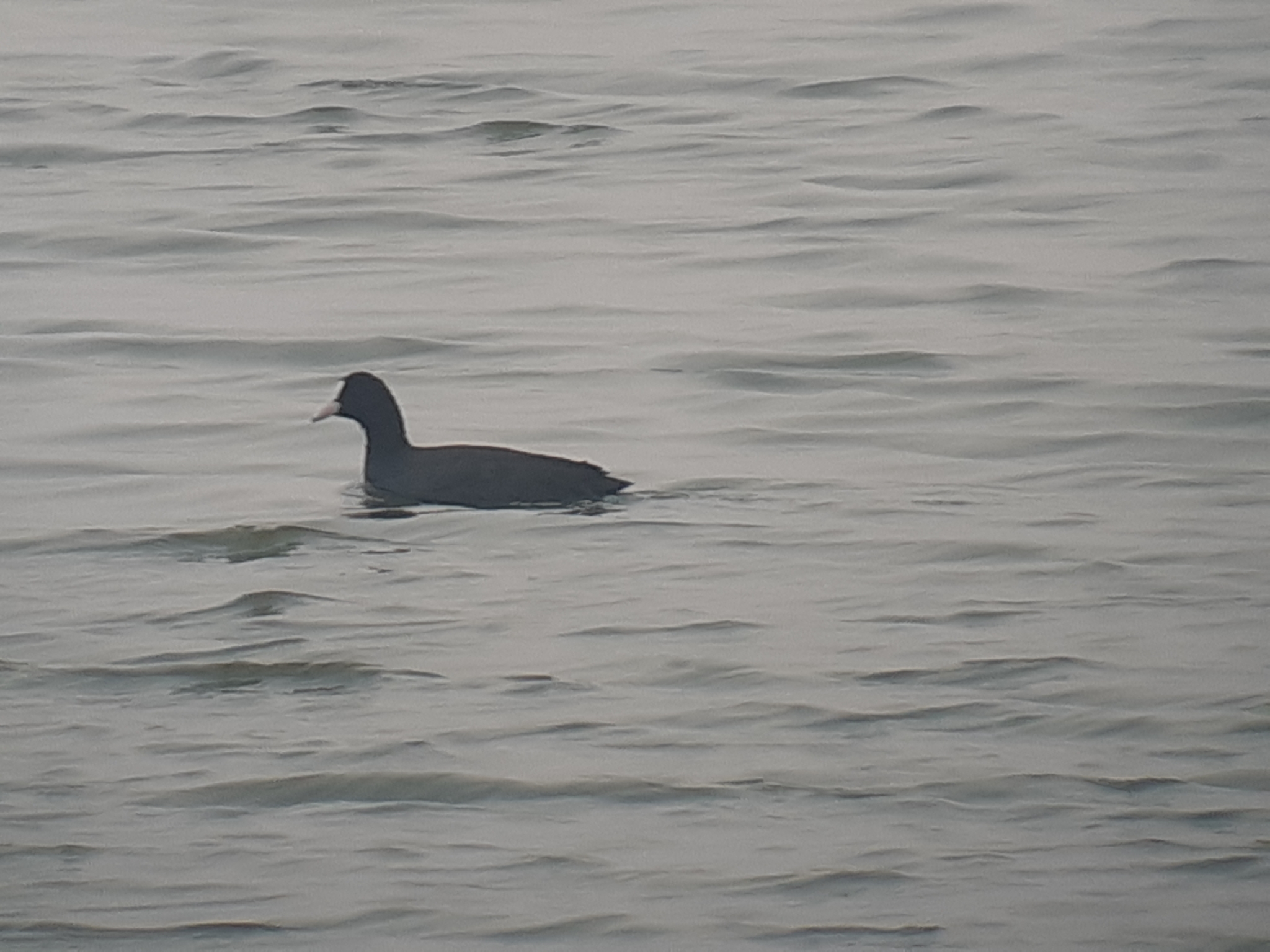
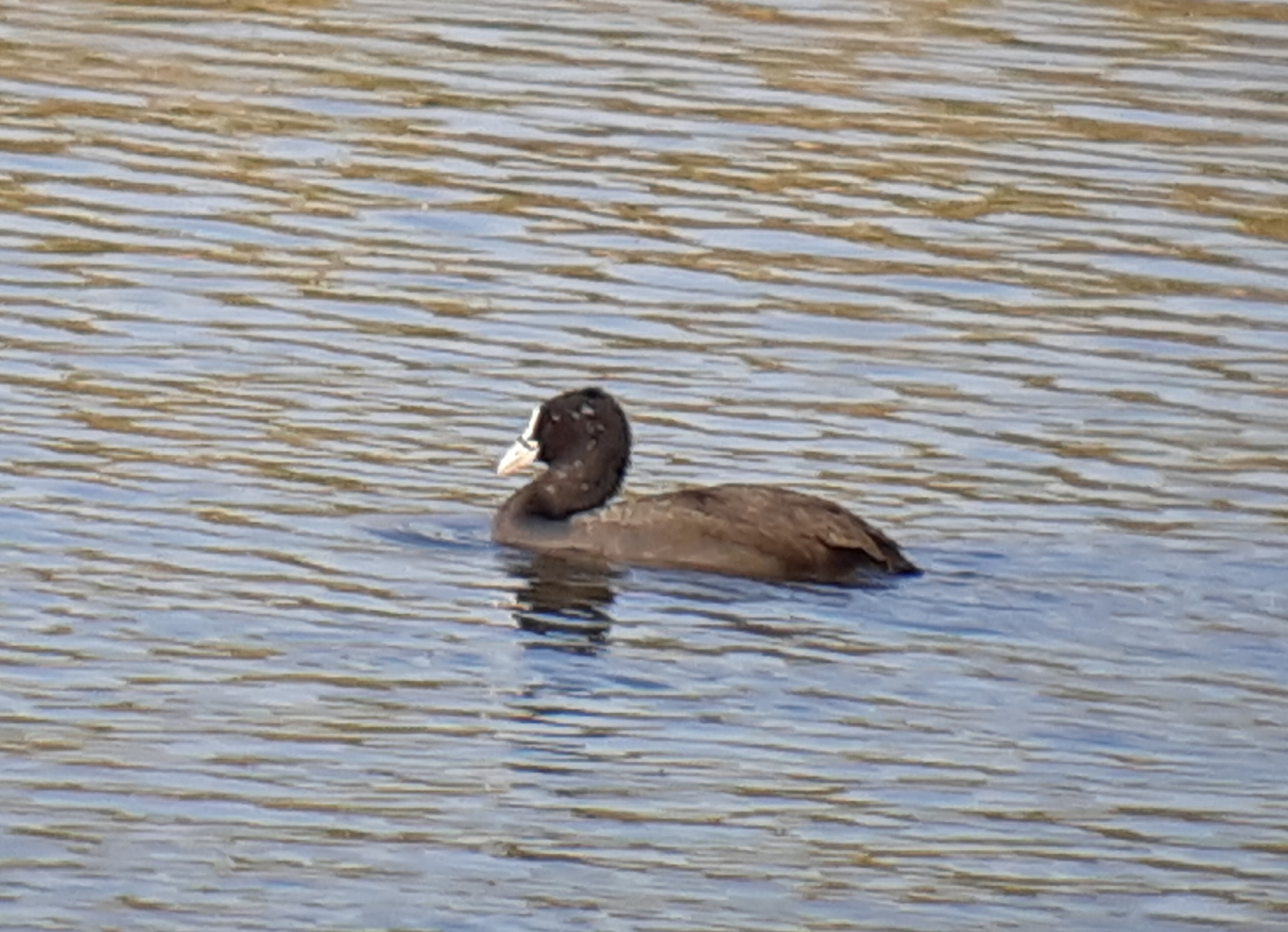
This compact waterbird measures 36-38 cm in length with a wingspan of 70-80 cm. Adults weigh 750-890 g, with males typically heavier than females. The body is uniformly slaty-black, while the head appears glossy black in good light. The most distinctive feature is the prominent white frontal shield extending from the base of the white bill across the forehead. The long, strong toes have partial webbing, an adaptation for swimming. The sexes are identical in appearance. Juveniles are noticeably paler overall with whitish underparts and lack the adult's frontal shield. Full adult plumage develops by 3-4 months of age, though the white shield does not reach full size until the bird is about one year old.
Identification
The Eurasian coot is unlikely to be confused with any other waterbird across most of its range. The combination of entirely black body plumage with the striking white bill and frontal shield is unique among European and Asian waterbirds. The similar-sized moorhen has a distinctive red and yellow bill with a red frontal plate but differs in having white under-tail feathers and a more slender body. The coot's swimming style is quite distinctive, with a jerky head movement and frequent diving. In flight, the white leading edge of the wing is visible, and the legs trail behind the body. The juvenile's pale plumage and lack of facial shield can cause confusion, but the overall shape and behavior are characteristic.
Distribution & Habitat
This species breeds extensively across the Old World, from Iceland and Britain through Europe and Asia to Japan, southeast Asia, and the Philippines. It is also widespread in Australia and New Zealand, with populations in north Africa. The coot favors freshwater habitats including lakes, ponds, slow rivers, marshes, and reservoirs, and has become increasingly common in urban and suburban areas where suitable water bodies exist. Populations in the milder parts of the range are resident year-round, while northern and eastern populations migrate south and west in winter as frozen waters make feeding impossible. Vagrant individuals occasionally reach North America.
Behavior & Ecology
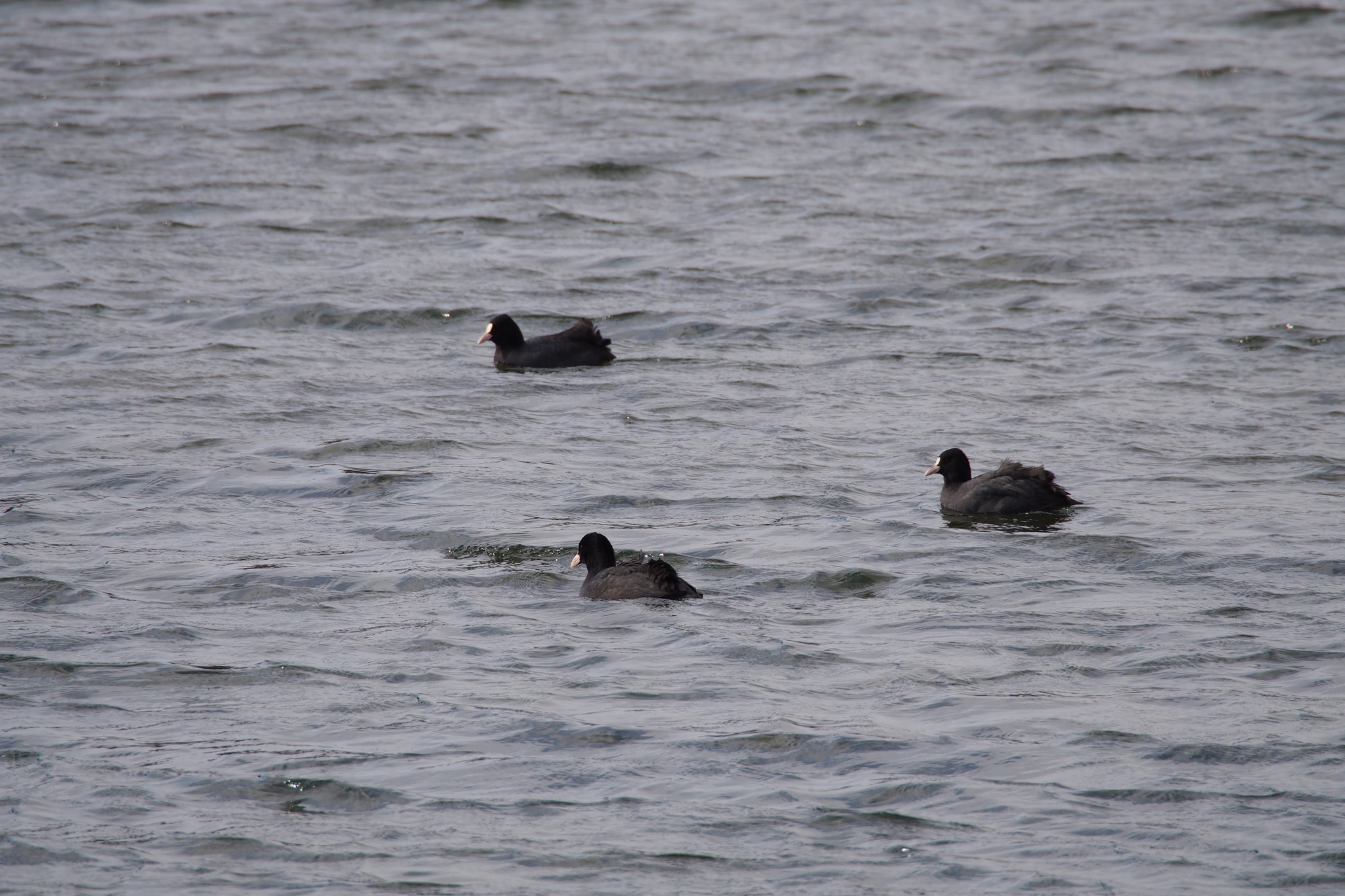
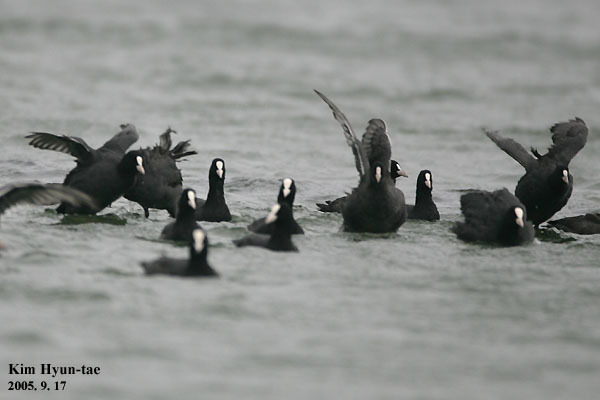
The coot is notably more visible and less secretive than most rail family members, readily swimming in open water and walking across grasslands. It is an aggressive, highly territorial species during breeding season, with both parents actively defending their territory against intruders, including much larger birds. Outside the breeding season, they gather in large flocks, likely as a predator avoidance strategy. The species is omnivorous, feeding on aquatic plants, algae, seeds, fruit, and small prey including the eggs of other waterbirds. Feeding techniques vary: grazing on land, upending in shallow water like a mallard, or diving. The nest is a bulky floating structure built in shallow water, with 6-10 speckled buff eggs incubated by both parents for 21-24 days. The species has a loud, varied repertoire of crackling and trumpeting calls, often given at night.
Conservation
The Eurasian coot remains one of the most abundant and widespread waterbirds globally, classified as Least Concern by the IUCN. Its large range and stable population mean it faces no significant conservation concerns. The species benefits from its adaptability to human-modified habitats and has actually expanded its range in some areas. It is protected under the Agreement on the Conservation of African-Eurasian Migratory Waterbirds, which covers its extensive migratory populations. No major threats have been identified, though local populations can be affected by habitat degradation, pollution, and disturbance at breeding sites.
Culture
The distinctive white frontal shield of this bird gave rise to the English expression "as bald as a coot," which has been in use since at least 1430. This phrase refers to the shield's resemblance to a bald human forehead and remains part of everyday English vocabulary today. Beyond this linguistic legacy, the species holds little particular cultural significance in folklore or mythology compared to some other birds, though its ubiquity in parks and waterways means it features commonly in the everyday experiences of birdwatchers and nature enthusiasts across its range.
Source: Wikipedia · CC BY-SA 3.0
Taxonomy
- Order
- Gruiformes
- Family
- Rallidae
- Genus
- Fulica
- eBird Code
- eurcoo
Subspecies (4)
-
Fulica atra atra
breeds Europe, northern Africa, Azores and Canaries eastward through central Asia to Japan and southward to Indian Subcontinent, including Sri Lanka; winters to Africa, Indonesia, and Philippines
-
Fulica atra australis
Australia including Tasmania, and North and South islands, New Zealand
-
Fulica atra lugubris
Java (formerly), Bali, Lesser Sundas, and northwestern New Guinea
-
Fulica atra novaeguineae
mountains of central New Guinea
Data Sources
CBR Notes: 中文名由骨顶鸡改为白骨顶
Species description from Wikipedia, licensed under CC BY-SA 3.0.
Bird images and sounds sourced from GBIF, contributed by citizen scientists worldwide under Creative Commons licenses.
Taxonomy data from AviList 2025.