Passeriformes / Fringillidae / Fringilla
Brambling
Fringilla montifringilla · 燕雀
Introduction
A small passerine bird in the finch family Fringillidae. It is widespread and migratory, often seen in very large flocks.
Description
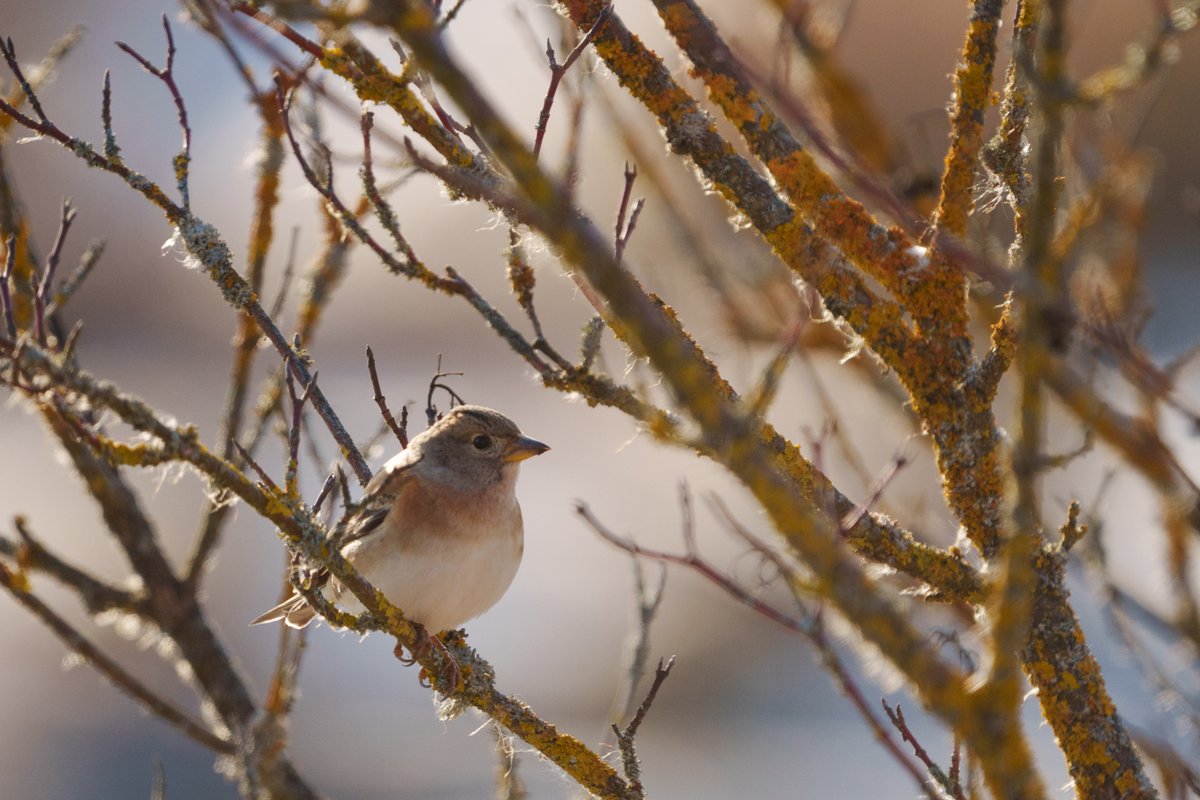
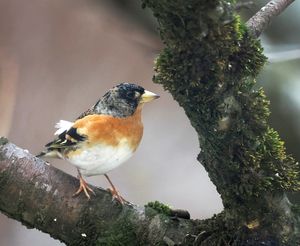
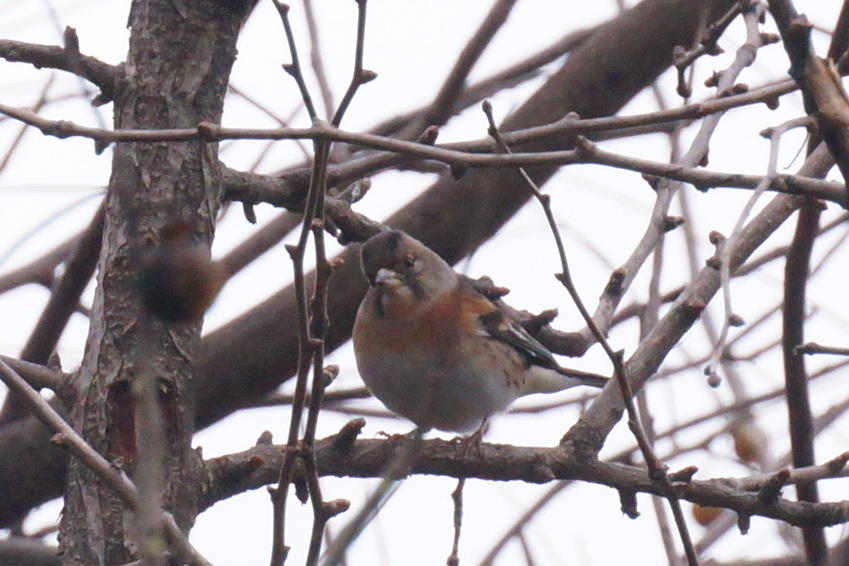
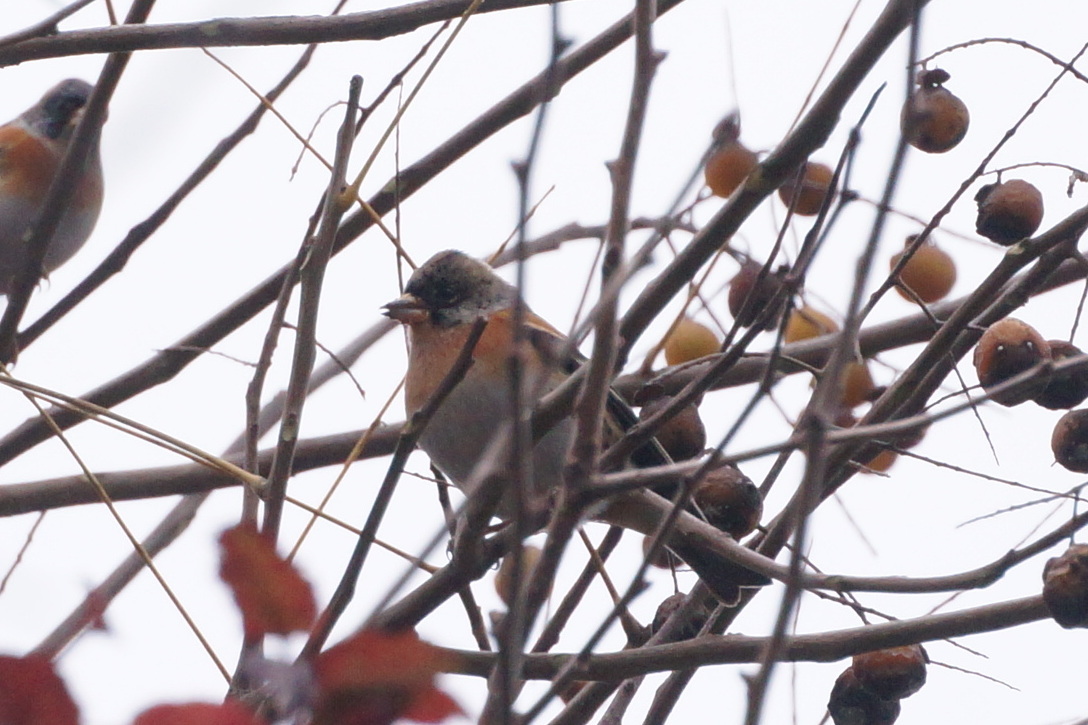
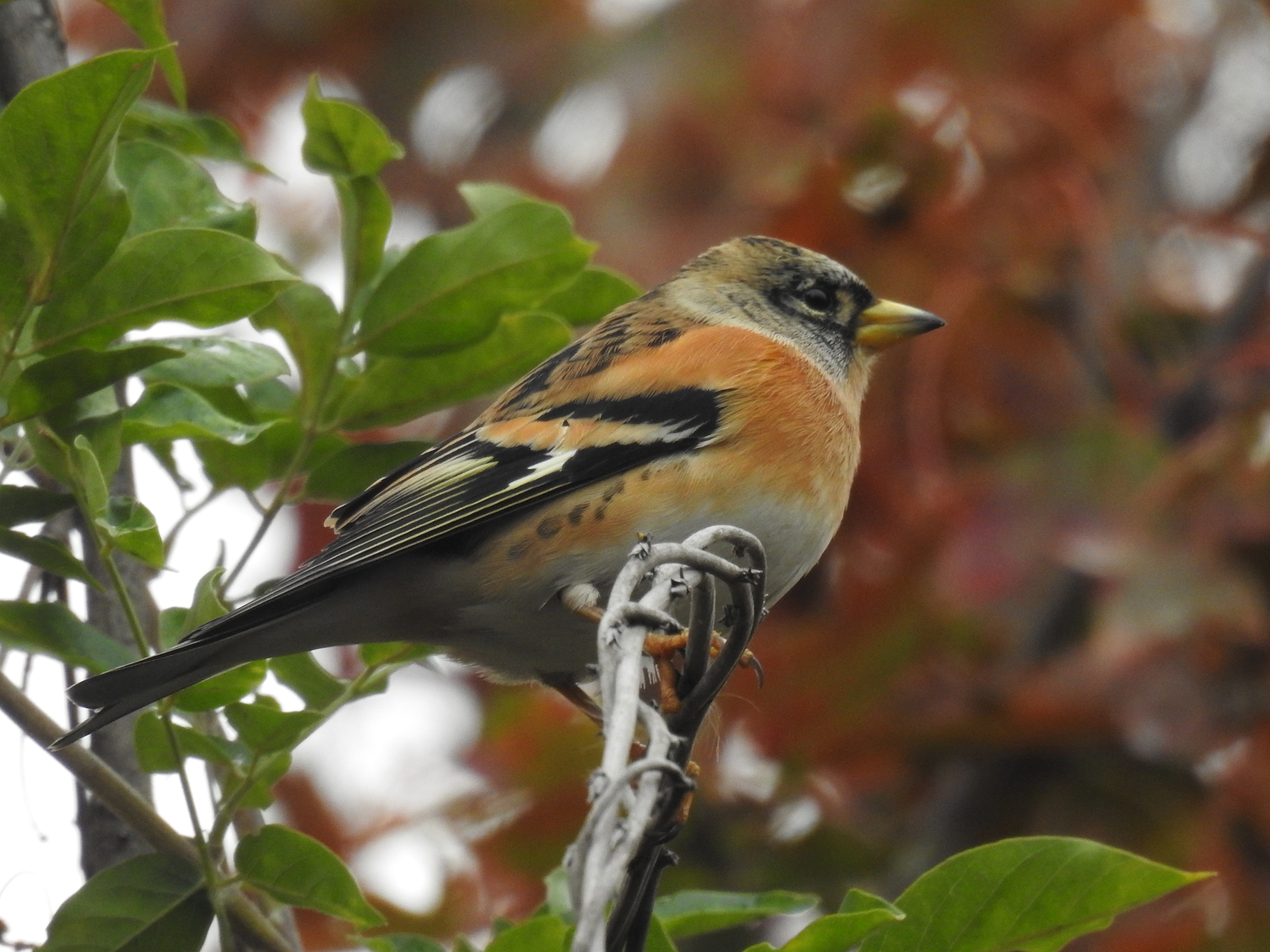
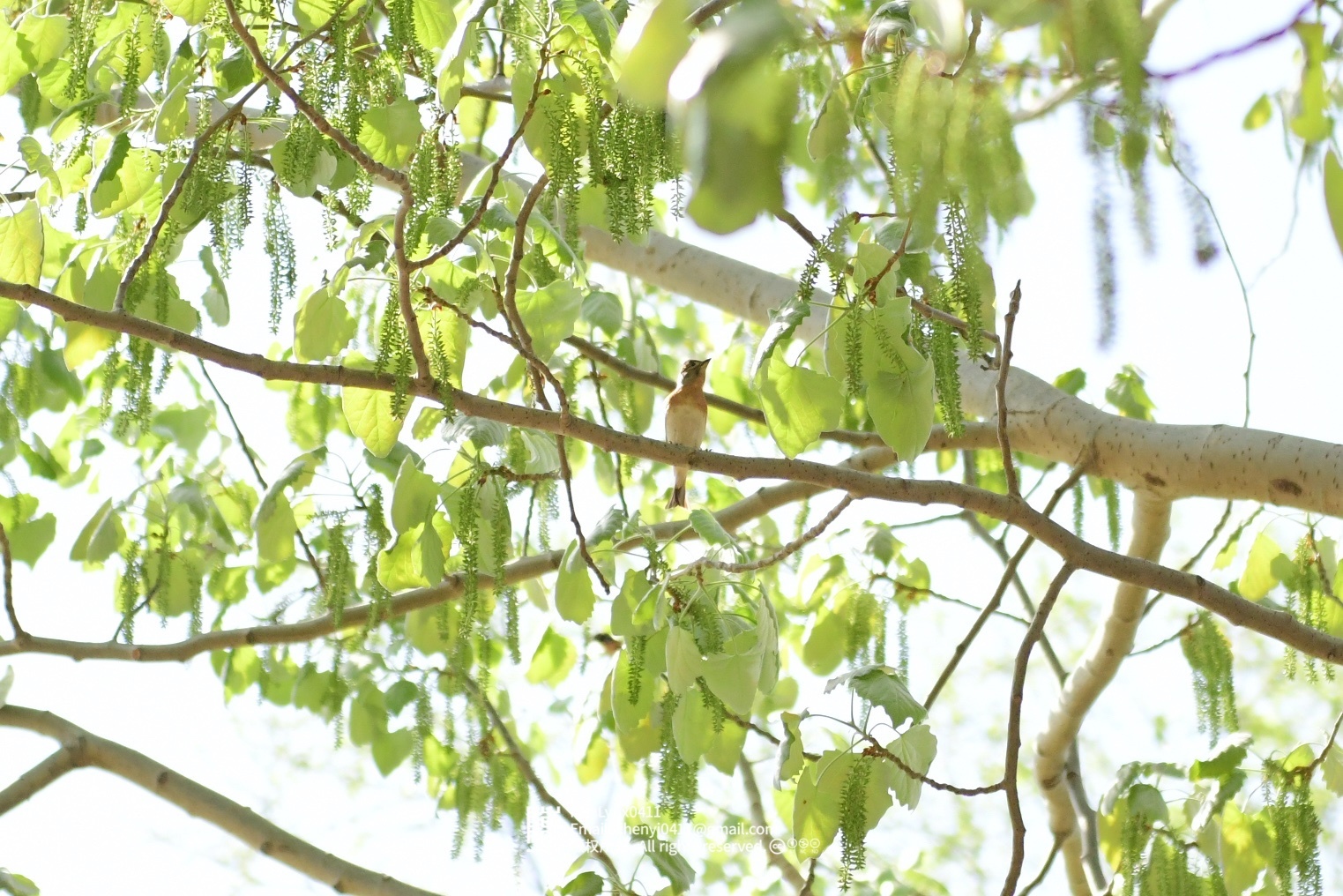
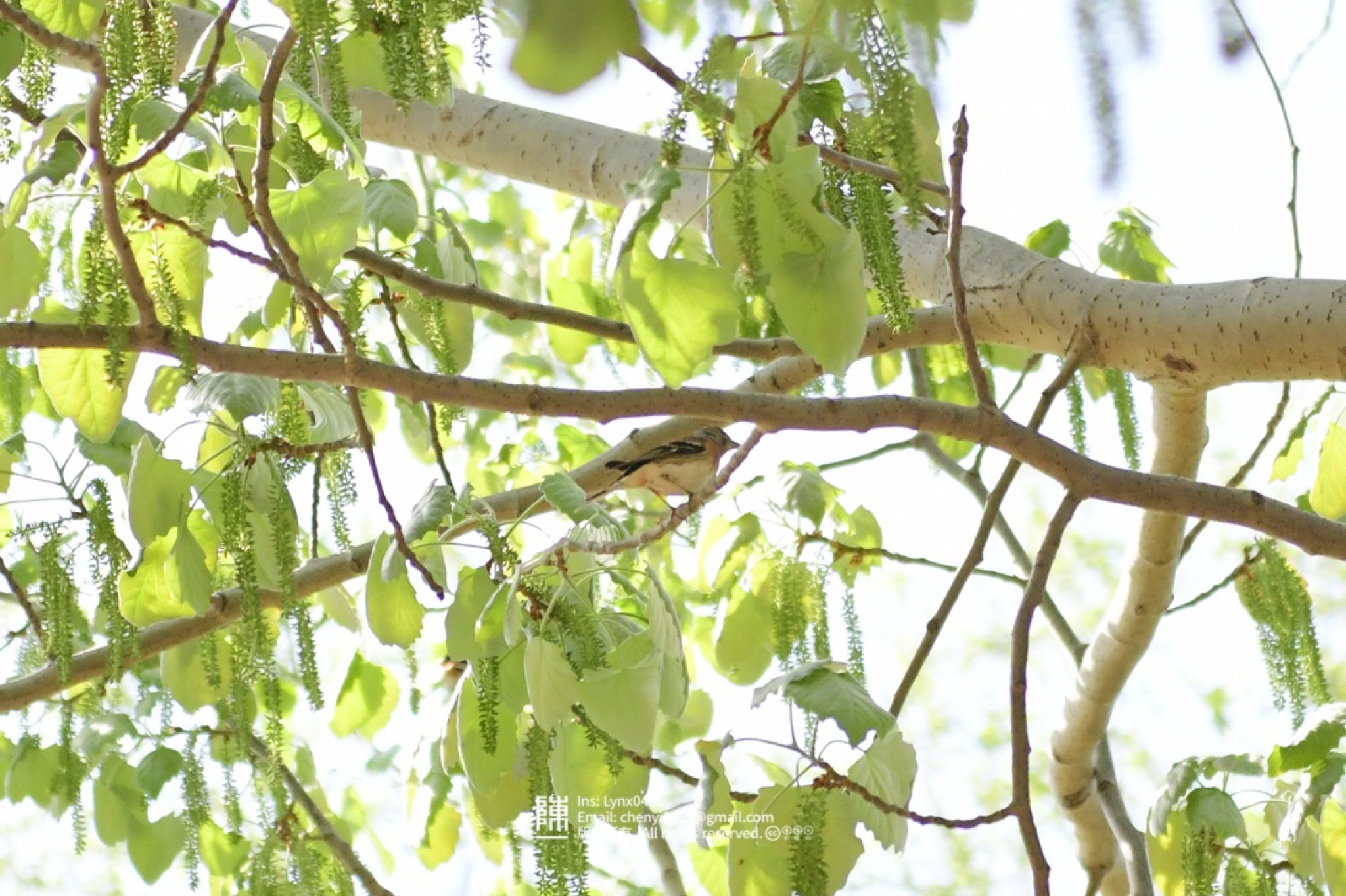
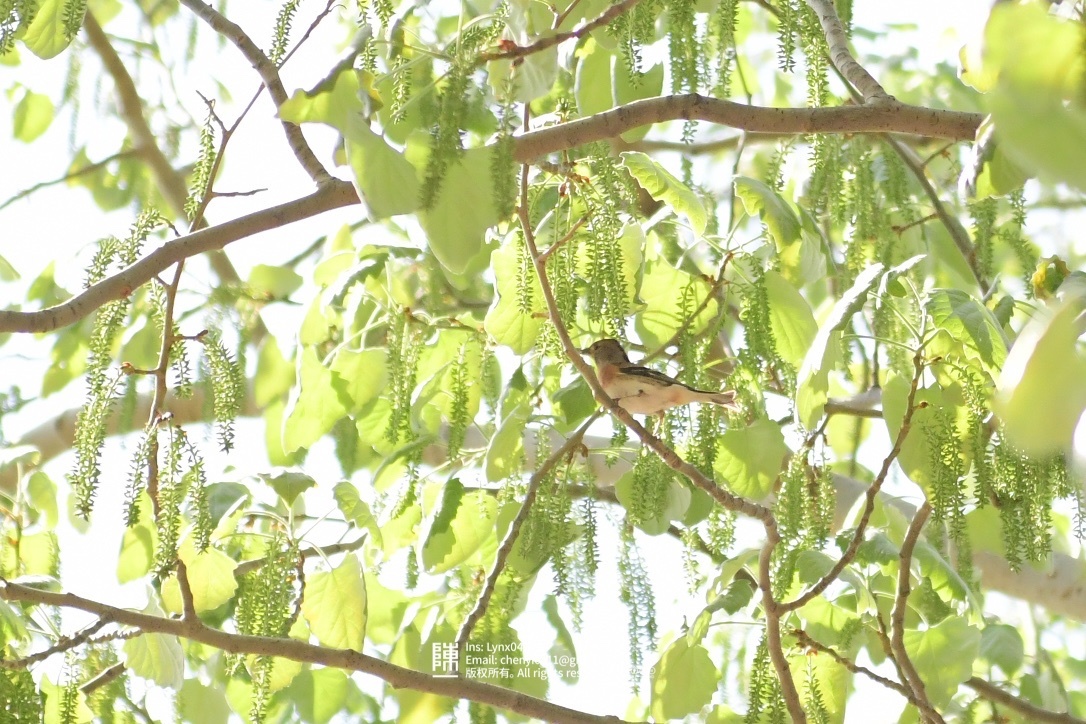
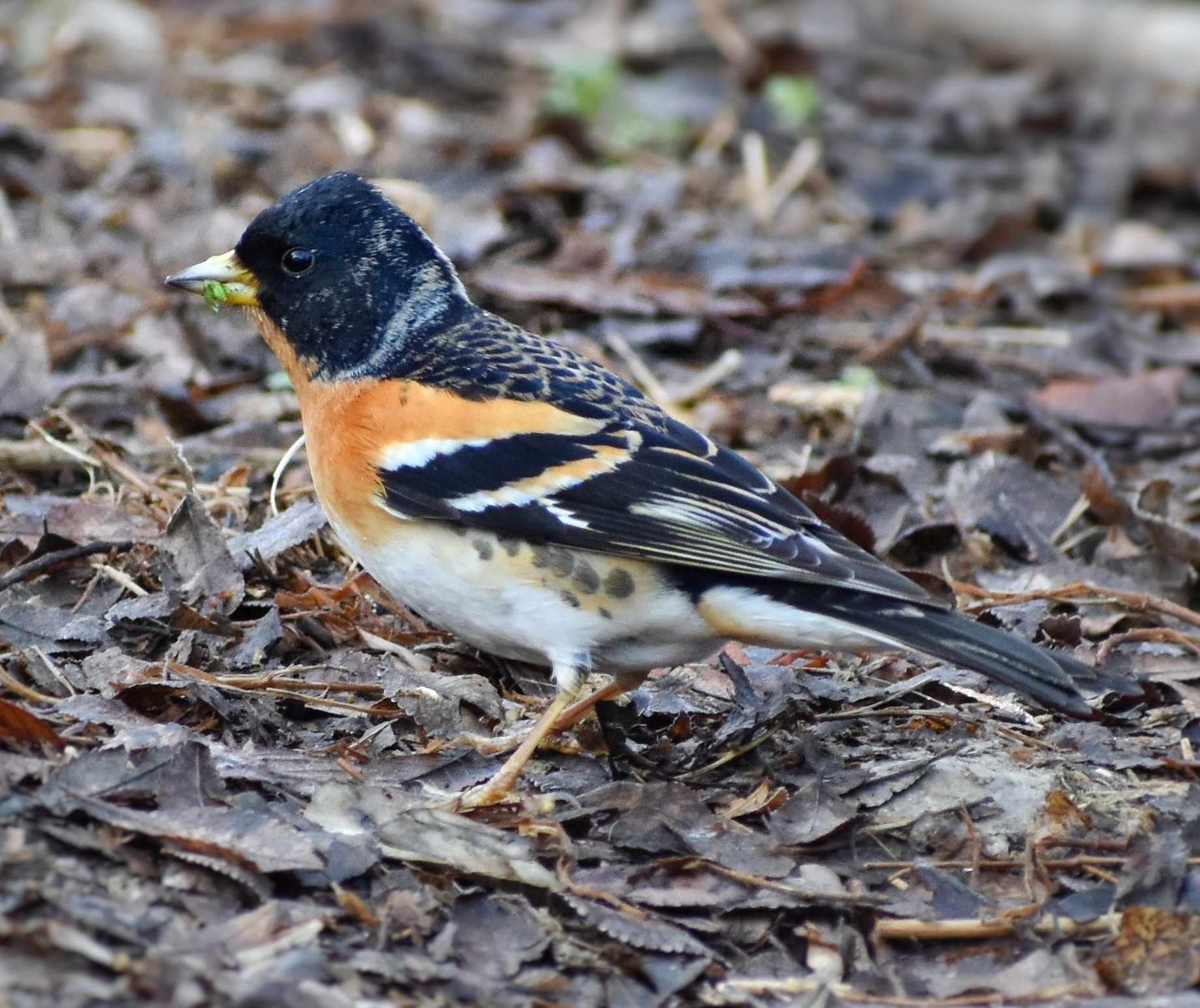
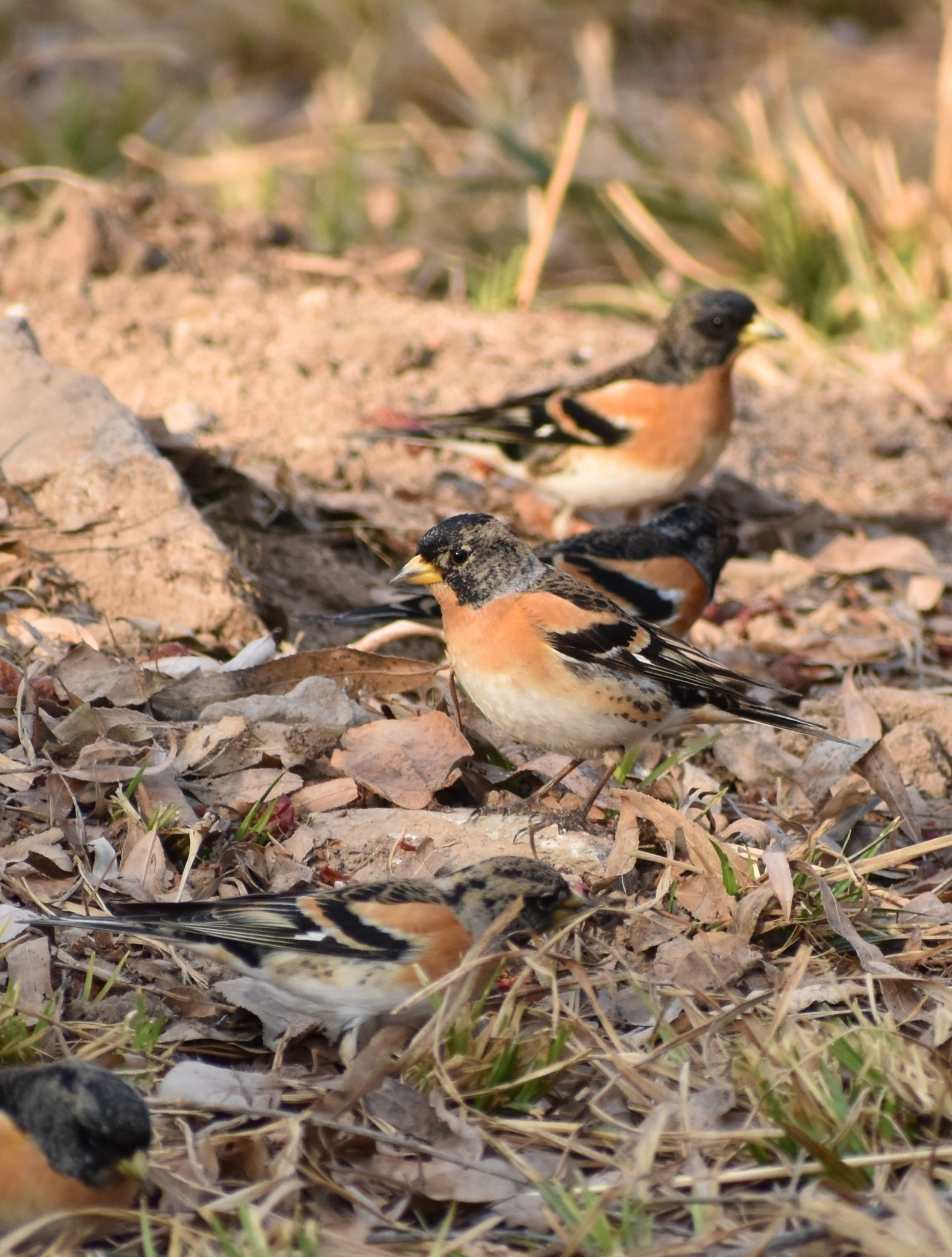
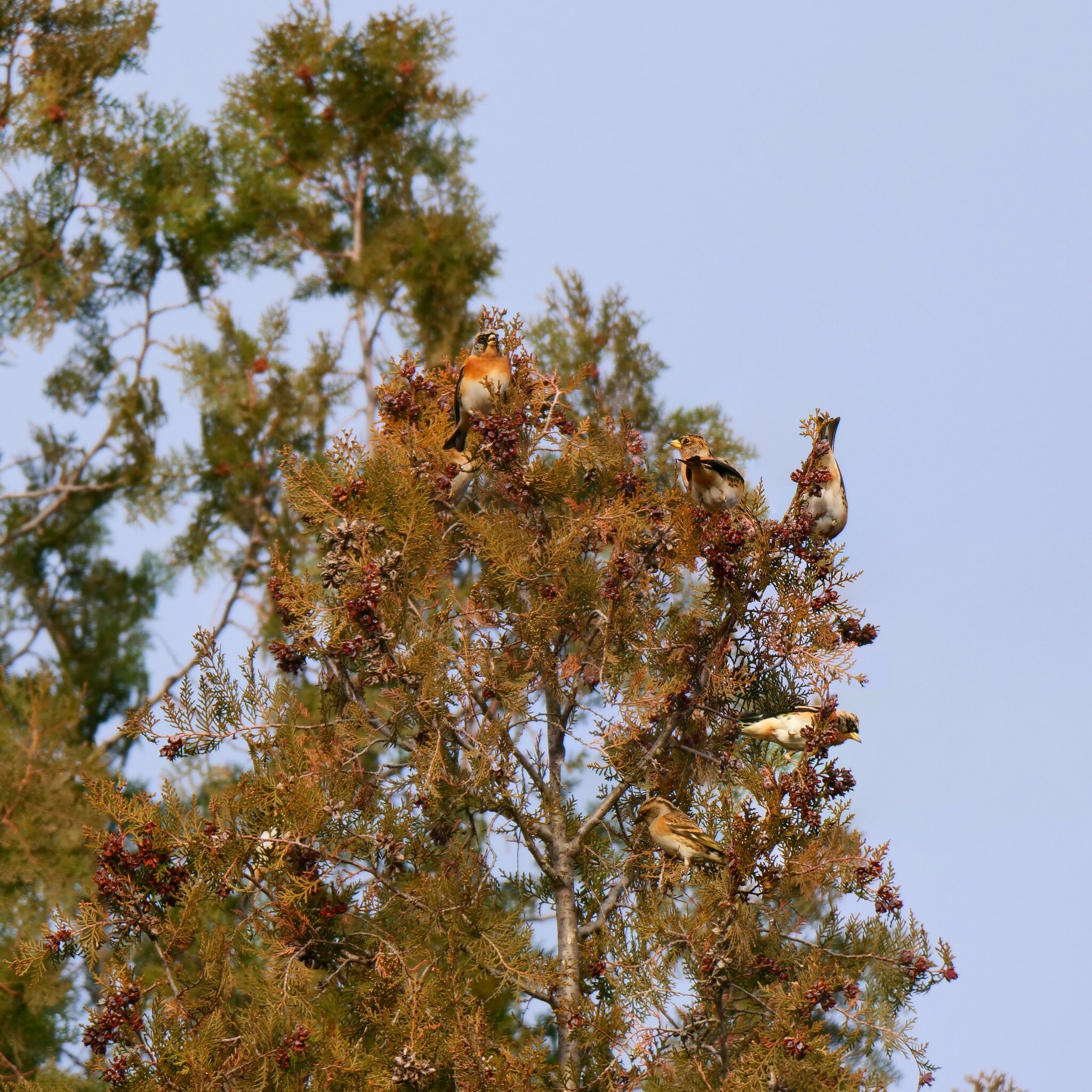
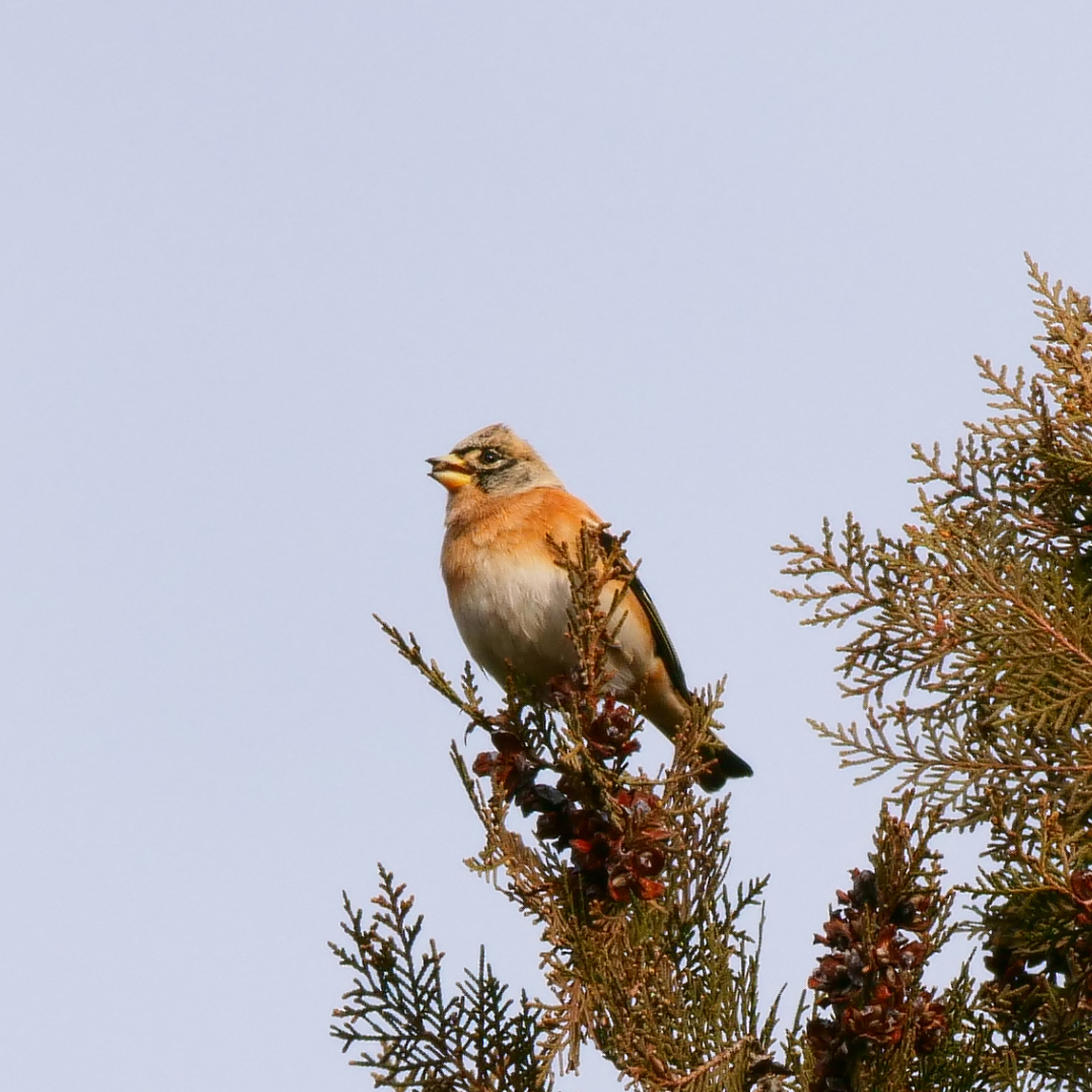
Similar in size and shape to a common chaffinch. Length: 16 cm; Weight: 23–29 g; Wingspan: 25–26 cm. Breeding-plumaged males have a black head, dark upperparts, orange breast, and white belly. Females and younger birds are less distinct. All plumages feature a white rump, orange scapular feathers, and dark-spotted flanks. The breast is orange, contrasting with a white belly. Bramblings lack the white outer tail feathers of common chaffinches. Bill color is yellow in all plumages except breeding males, which have black bills.
Identification
Distinguished from the common chaffinch by a white rump (grey-green in chaffinch), orange breast contrasting with a white belly (uniformly pink or buff in chaffinch), orange scapular feathers (grey or grey-brown in chaffinch), and dark-spotted flanks (plain in chaffinch). Lacks white outer tail feathers. Non-breeding males and females have a yellow bill, whereas common chaffinches have a dull pinkish bill.
Distribution & Habitat
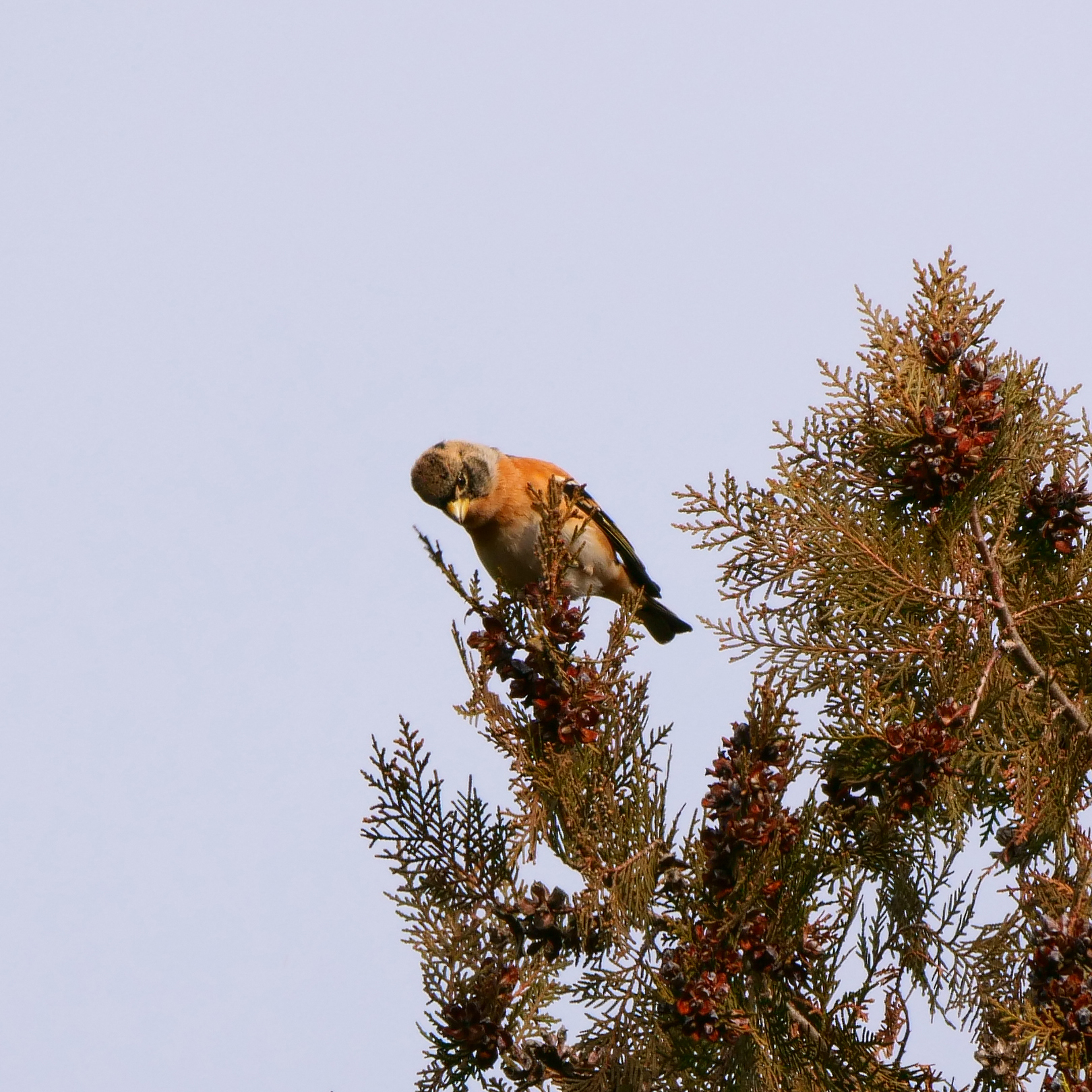
Breeds throughout the forests of northern Europe and east across the Palearctic, favoring open coniferous or birch woodland. Migratory, wintering in southern Europe, North Africa, northern India, northern Pakistan, China, and Japan. Frequently strays into Alaska during migration, with scattered records across the northern United States and southern Canada.
Behavior & Ecology
Almost entirely migratory. Forms large winter flocks, sometimes containing thousands or millions of birds, often moving to find abundant beech mast. Mostly eats seeds in winter and insects in summer. Breeds at one year old. The female builds a nest high in a tree against the trunk, using lichen, grass, heather, cobwebs, and bark strips, lined with feathers, soft grass, and hair. Clutch size is usually 5–7 eggs, laid at daily intervals. Eggs are light blue to dark olive-brown with pink to rusty red spots, measuring 19.4 mm × 14.5 mm. Incubated by the female for 11–12 days. Young are fed by both parents and fledge after 13–14 days. Usually one brood per year, but two in northwest Russia. Nests are predated by carrion crows and Siberian jays, and often parasitized by the common cuckoo.
Source: Wikipedia · CC BY-SA 3.0
Taxonomy
- Order
- Passeriformes
- Family
- Fringillidae
- Genus
- Fringilla
Distribution
breeds northern Eurasia; winters Mediterranean region and southern Asia
Data Sources
Species description from Wikipedia, licensed under CC BY-SA 3.0.
Bird images and sounds sourced from GBIF, contributed by citizen scientists worldwide under Creative Commons licenses.
Taxonomy data from AviList 2025.