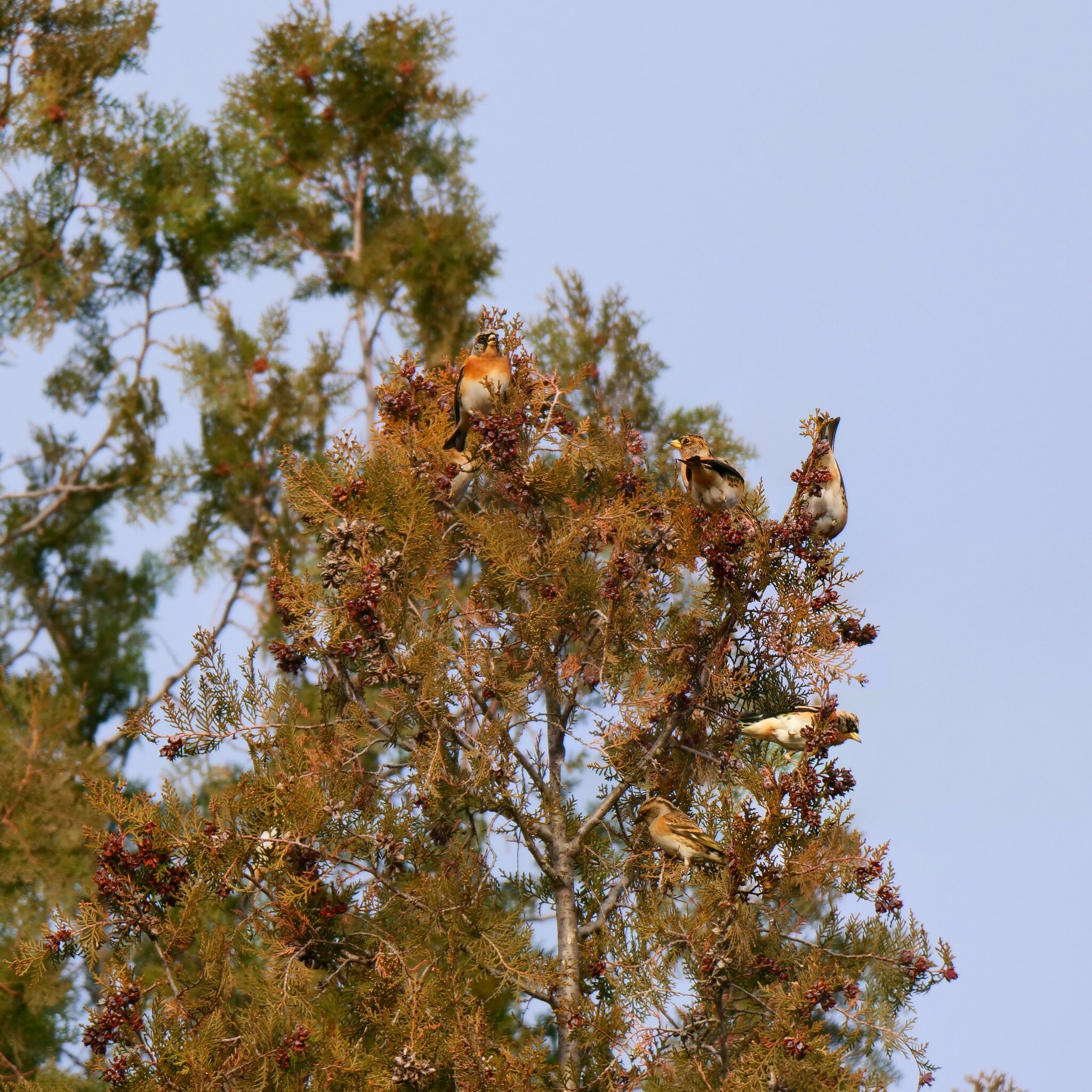
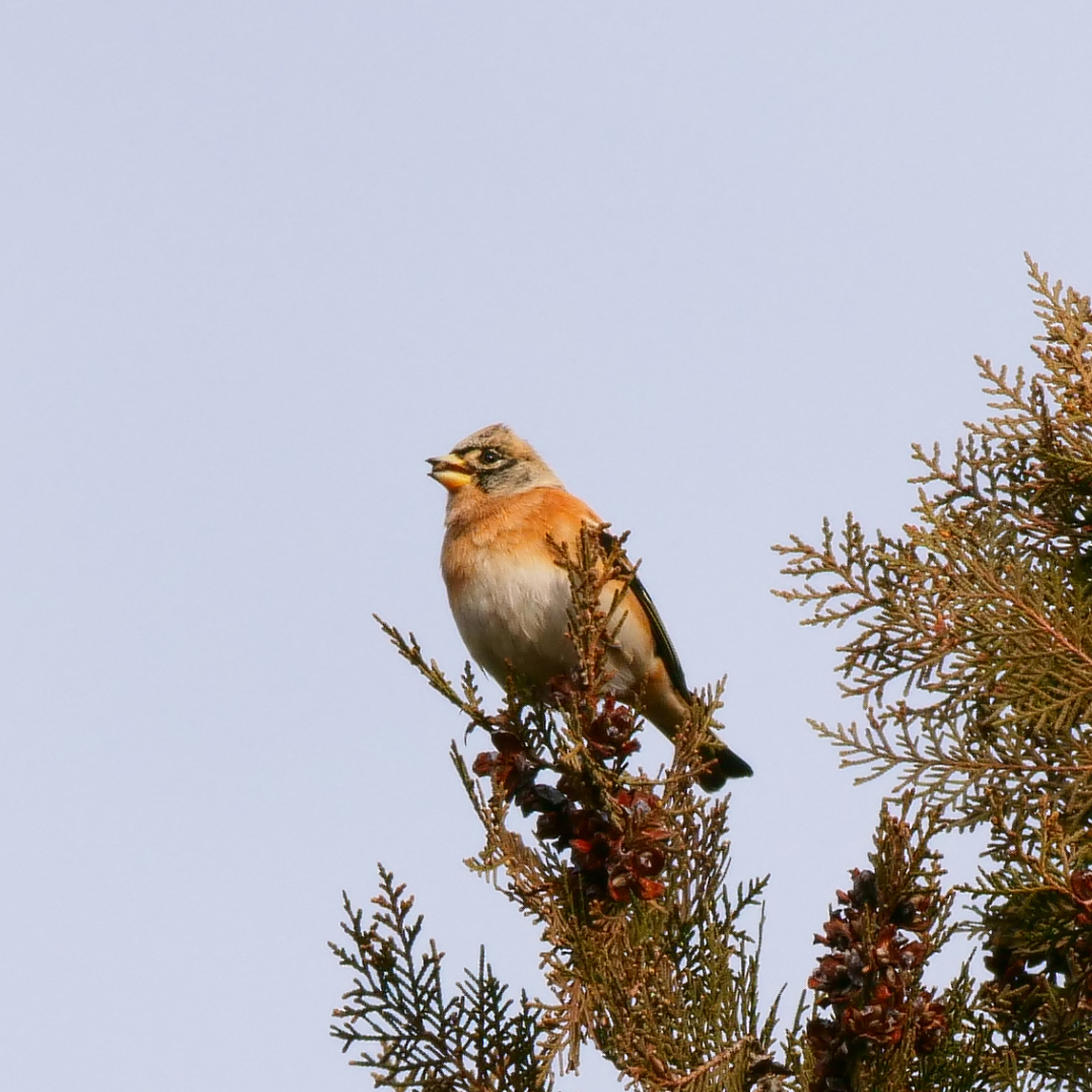
Brambling
Fringilla montifringilla
燕雀
Introduction
This small finch is a winter visitor across much of Europe, forming large flocks that can number in the thousands or millions. In breeding plumage, males have black heads, orange breasts, and white bellies. The species is a characteristic bird of northern and eastern forests during the breeding season, occurring in temperate regions during winter months. It is strongly associated with beech forests and often mixes with chaffinches.
Description
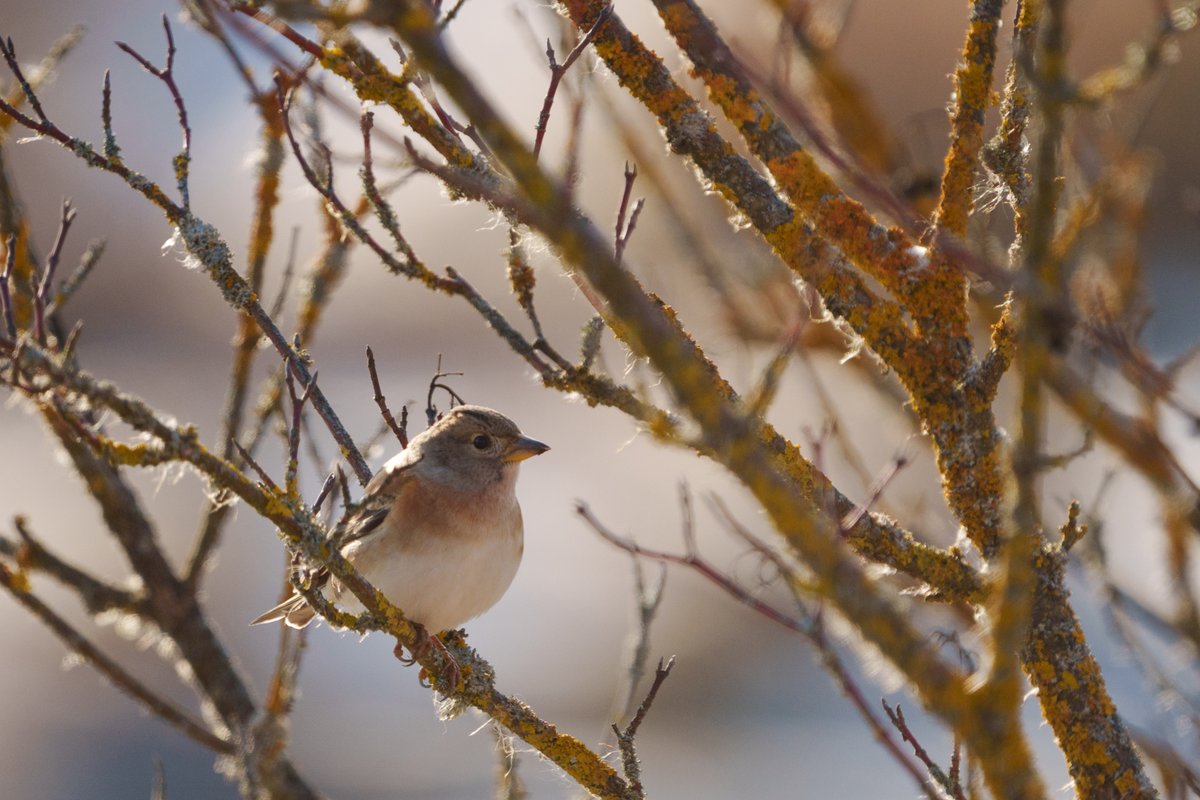
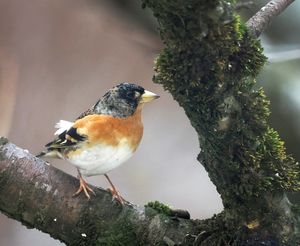
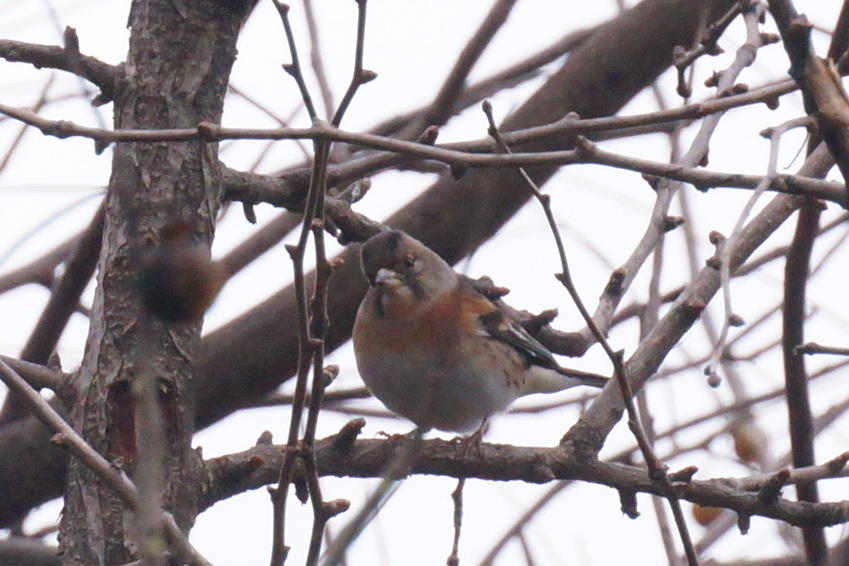
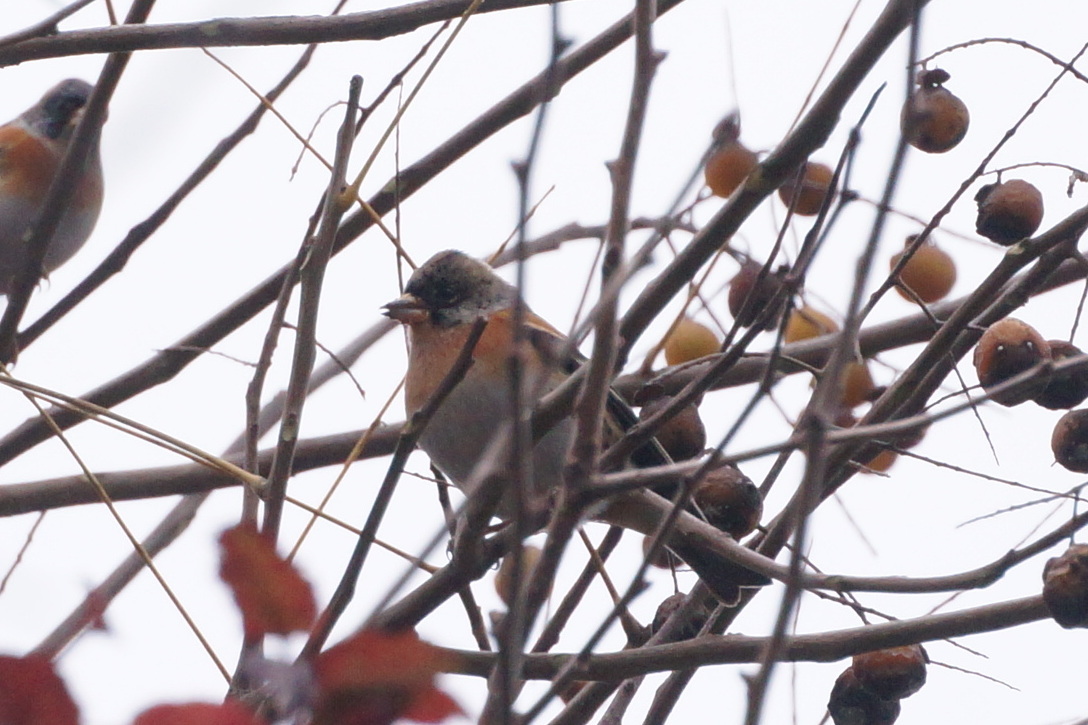
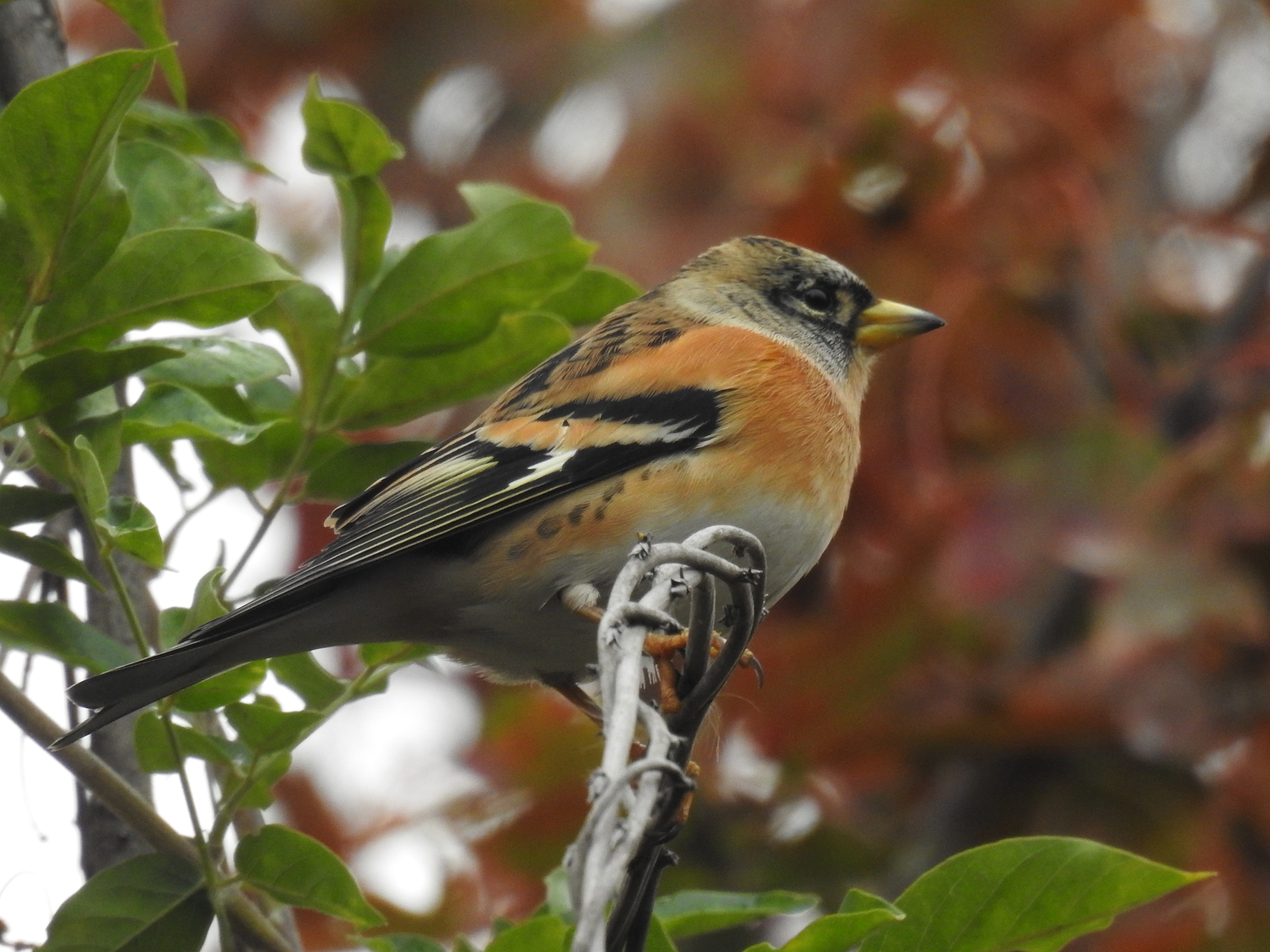
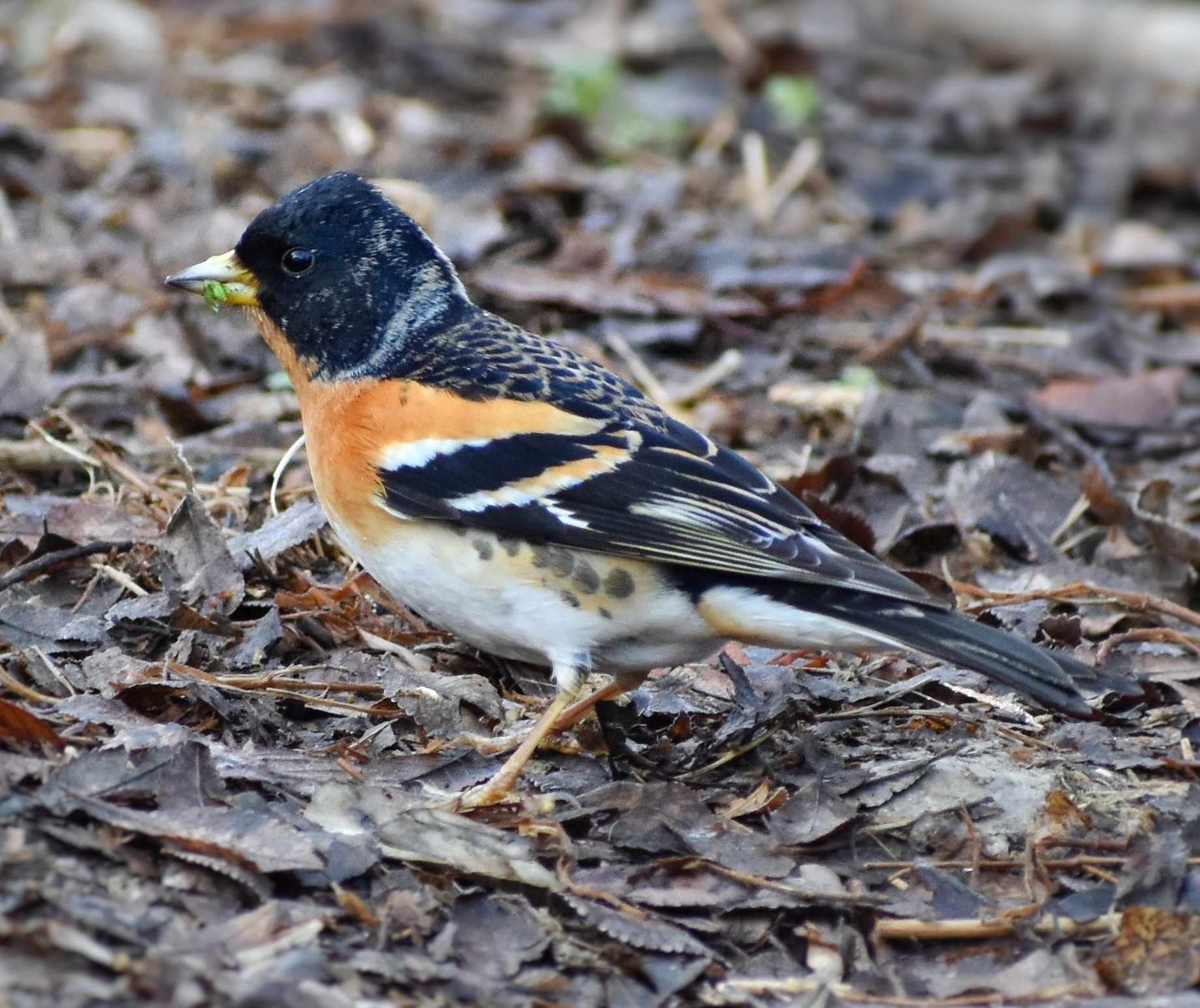
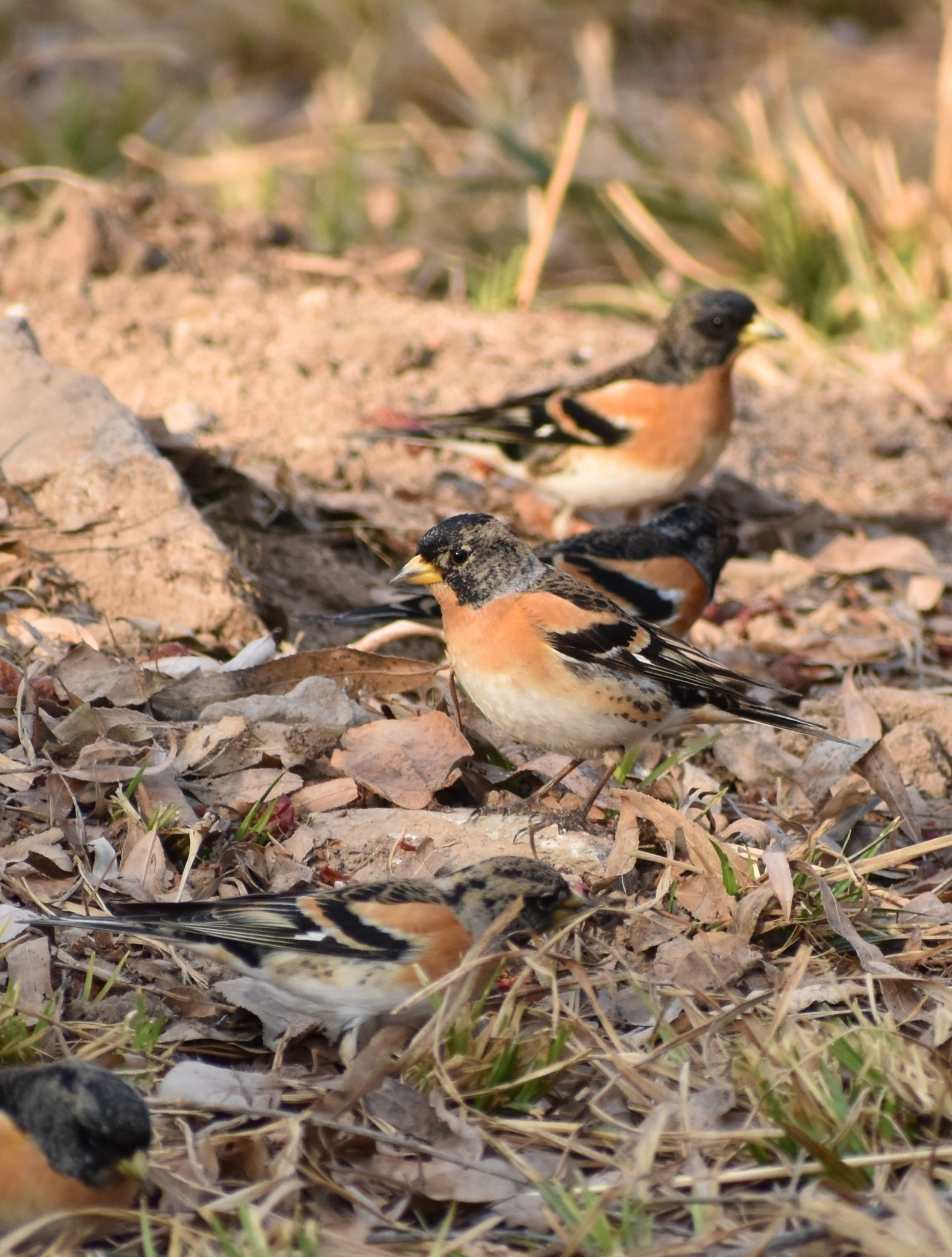
A small finch roughly the size and shape of a chaffinch, this species measures 16 cm in length with a wingspan of 25-26 cm and weighs between 23-29 g. Breeding-plumaged males are unmistakable, featuring entirely black heads, dark upperparts, a vivid orange breast that contrasts sharply with a pure white belly, and orange scapular feathers. Females and immature birds are more subdued, exhibiting brownish upperparts, an orange-tinted breast that fades to a white belly, and overall plumage that can be confusingly similar to certain chaffinch forms. The species' most distinctive feature across all plumages is its white rump, visible in flight and a key identification character. The bill colour varies seasonally: yellow in non-breeding plumages and black in breeding males.
Identification
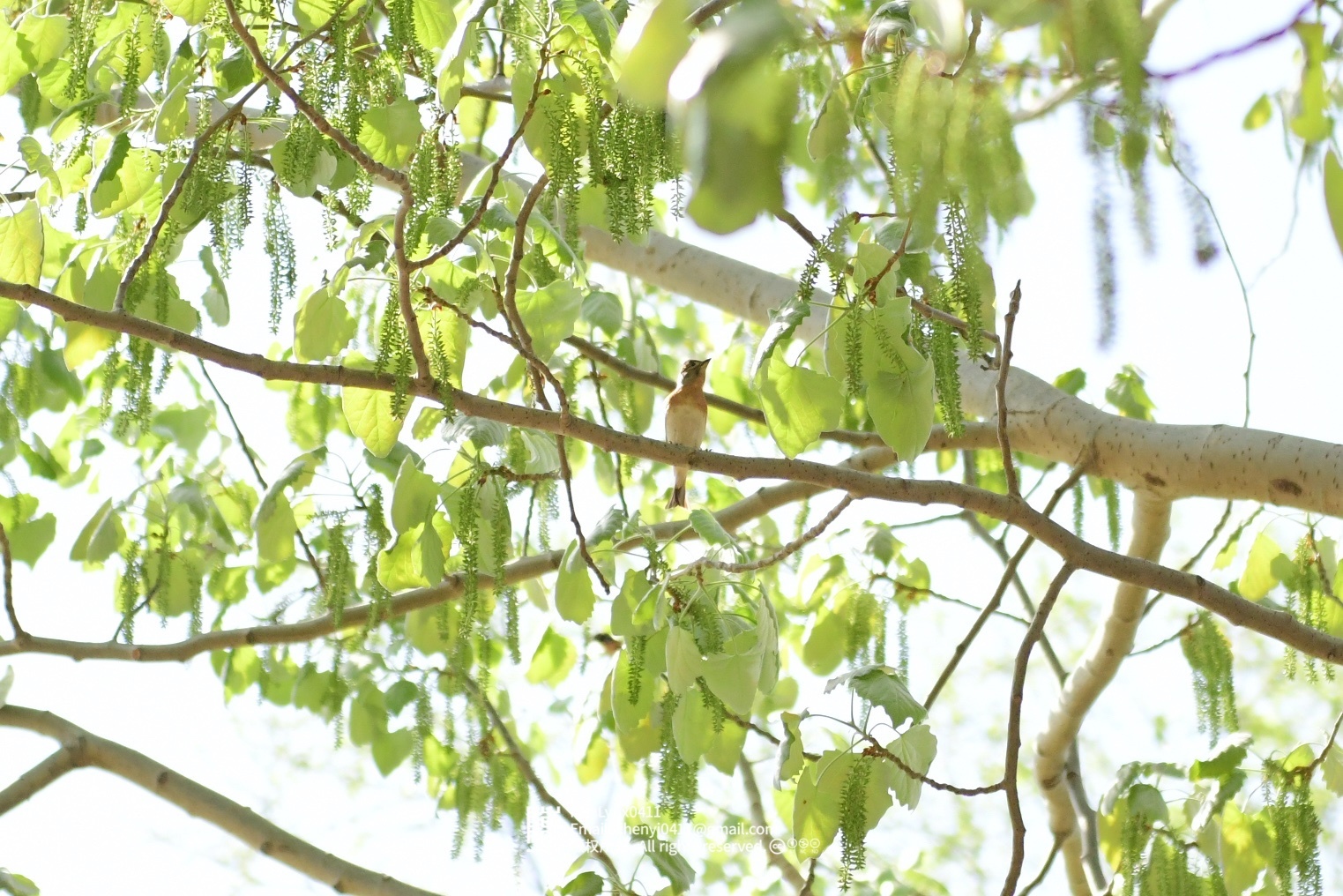
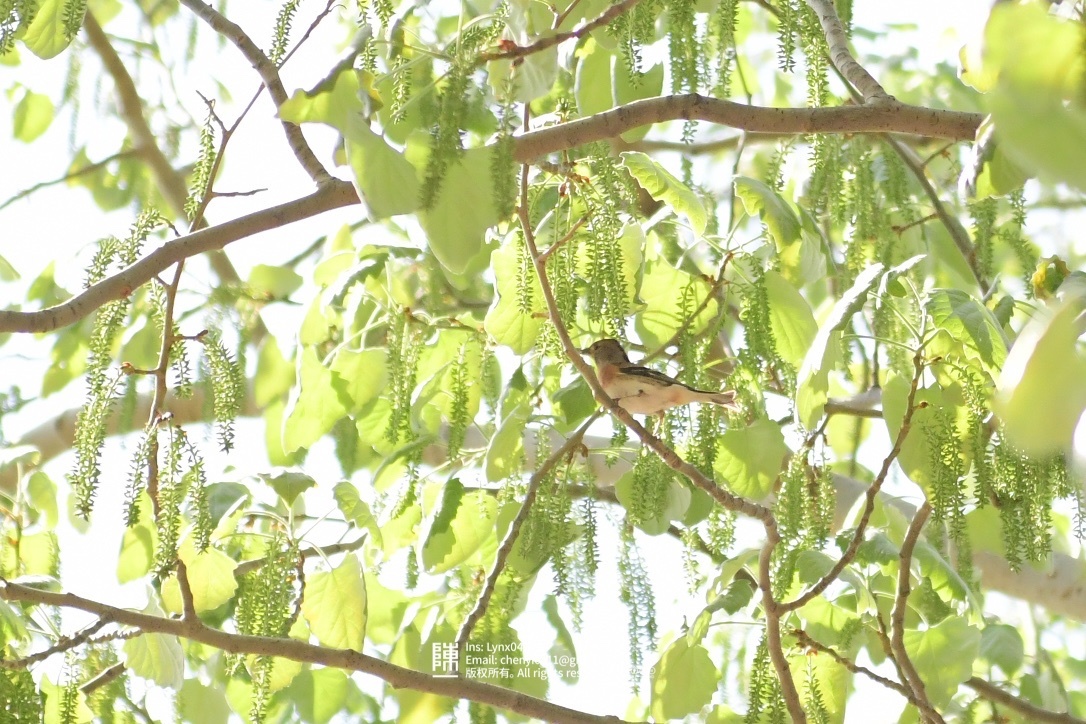
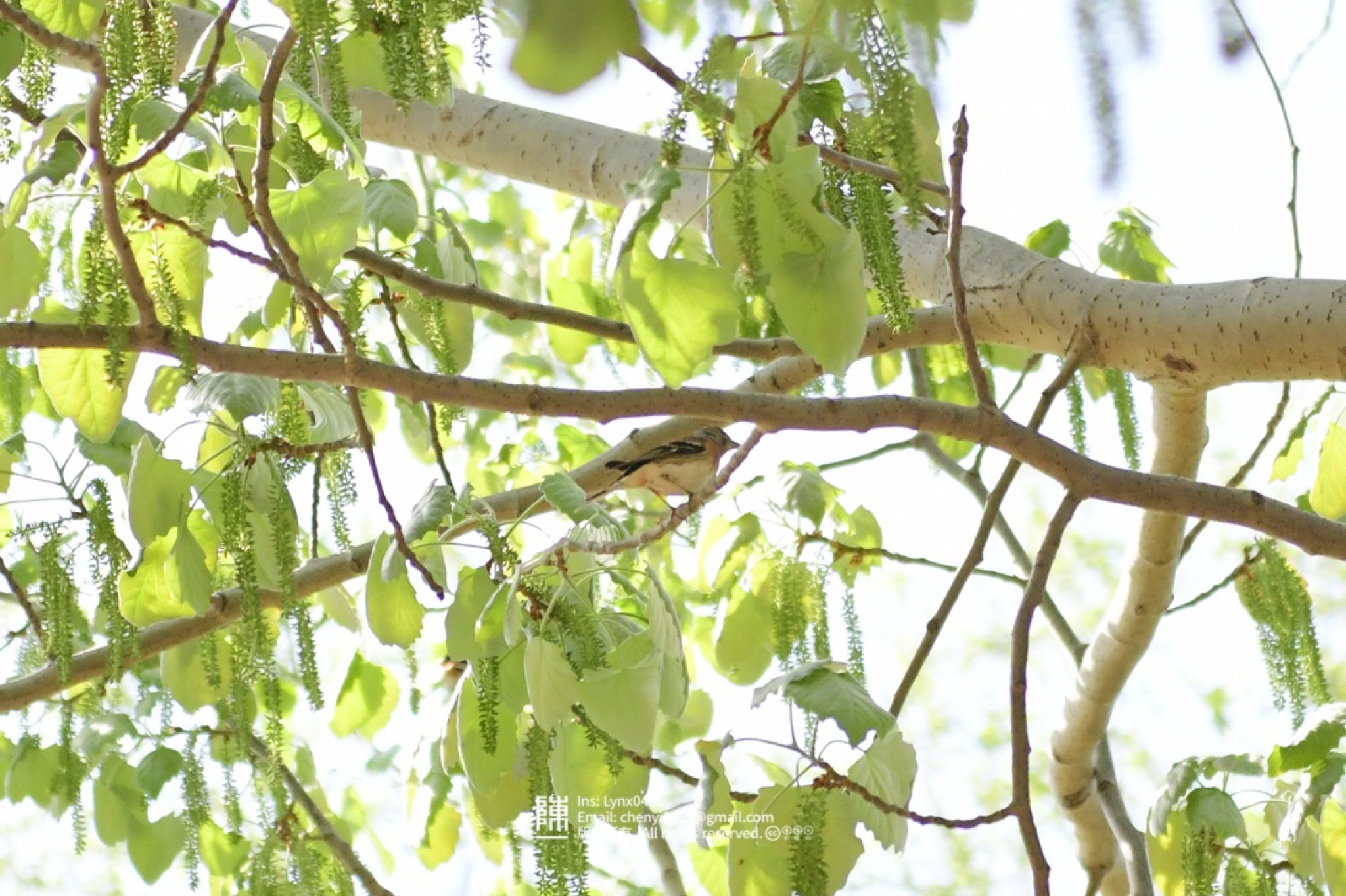
The most reliable distinguishing feature from the similar common chaffinch is the white rump, visible even at distance when the bird flies or moves through trees. The orange breast contrasting with a white belly is another key field mark that separates it from the chaffinch's more uniformly coloured underparts. In all plumages except breeding males, the yellow bill is diagnostic against the chaffinch's dull pinkish bill; breeding males have entirely black bills while corresponding chaffinches have grey bills. The orange scapular feathers, dark-spotted flanks, and absence of white outer tail feathers further distinguish this species. In flight, the combination of white rump and orange breast patch creates a distinctive silhouette.
Distribution & Habitat
This species breeds widely across the forests of northern Europe and eastward through the Palearctic to the Pacific coast. Its breeding habitat consists of open coniferous or birch woodland. It is strongly migratory, spending the winter months in southern Europe, North Africa, northern India, Pakistan, China, and Japan. The species occasionally strays into Alaska during migration, with scattered records from the northern United States and southern Canada. Global population estimates range from 100 to 200 million individuals, though numbers appear to be declining. The winter range is strongly influenced by beech mast availability, as flocks will travel considerable distances to find areas of abundant seed crop.
Behavior & Ecology
Breeding begins at one year of age. The female builds a cup-shaped nest high in a tree against the trunk, incorporating lichen, grass, heather, cobwebs, and birch or juniper bark, lined with feathers and soft material. The clutch of 5-7 eggs ranges from light blue to dark olive-brown with pink to reddish spots, averaging 19.4 × 14.5 mm. The female incubates alone for 11-12 days, and both parents feed the young, which fledge after 13-14 days. Usually one brood is raised, though two occur in northwest Russia. The diet shifts seasonally: seeds dominate in winter, while insects are consumed in summer. Winter flocks can be enormous, particularly around beech woodlands, an adaptation that may reduce competition with the more sedentary chaffinch.
Conservation
The global population of 100-200 million individuals places this species among the more abundant European and Asian birds. However, population trends indicate a decrease, though the specific causes require further investigation. Major threats include habitat loss from forestry practices and agricultural intensification across its range. The species faces predation from carrion crows and Siberian jays at the nest, as well as brood parasitism from common cuckoos. Climate change effects on beech mast production and forest composition may pose future concerns given the species' strong association with specific winter food sources.
Culture
This bird has been known by several folk names, including 'cock o' the north' and 'mountain finch', reflecting its prominent appearance and mountainous breeding habitat. The English name 'bramlyng' was recorded as early as 1544 by William Turner, though the modern spelling 'brambling' appeared later in the 16th century. Despite its striking appearance, the species has not accumulated significant folklore compared to some other finches, though its dramatic winter gatherings have been noted and appreciated by rural communities throughout Europe for centuries.
Source: Wikipedia · CC BY-SA 3.0
Taxonomy
- Order
- Passeriformes
- Family
- Fringillidae
- Genus
- Fringilla
- eBird Code
- brambl
Distribution
breeds northern Eurasia; winters Mediterranean region and southern Asia
Data Sources
Species description from Wikipedia, licensed under CC BY-SA 3.0.
Bird images and sounds sourced from GBIF, contributed by citizen scientists worldwide under Creative Commons licenses.
Taxonomy data from AviList 2025.