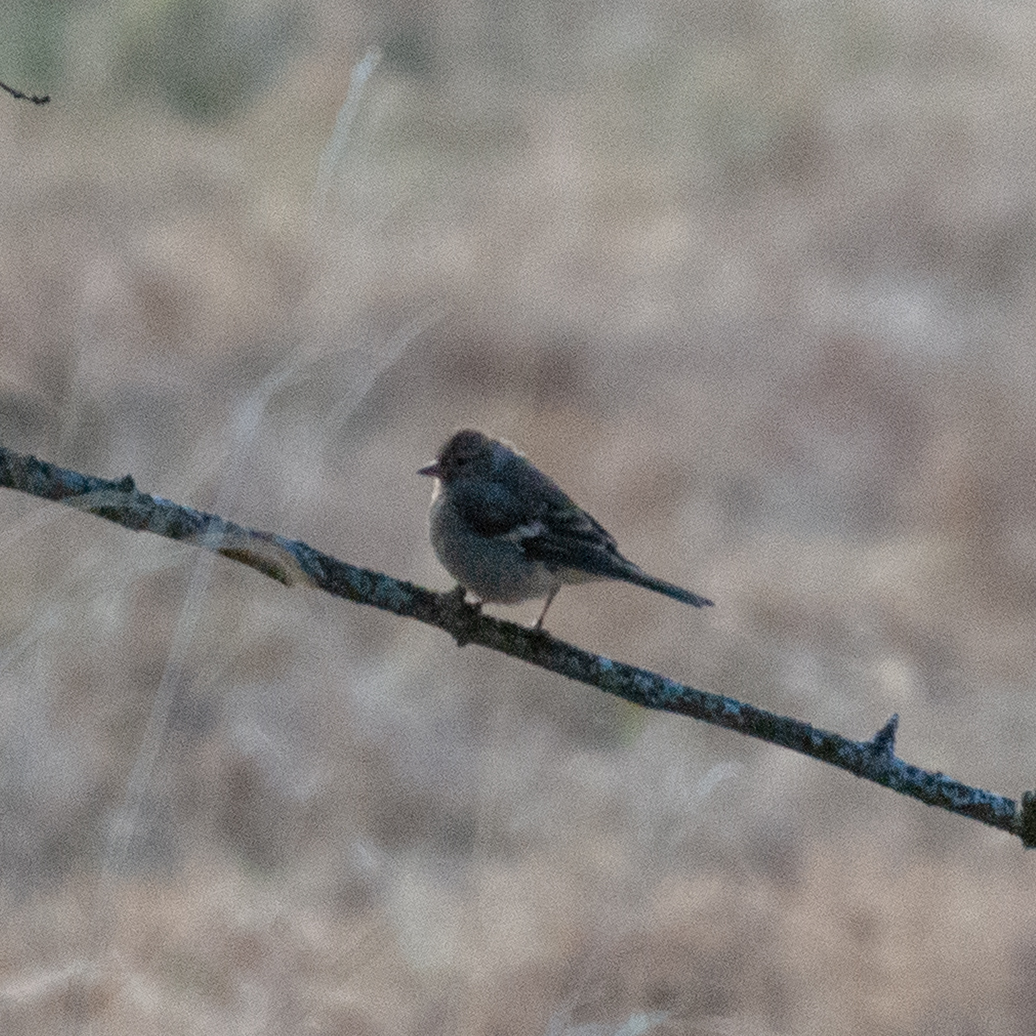
Passeriformes / Fringillidae / Fringilla
Eurasian Chaffinch
Fringilla coelebs · 苍头燕雀
Introduction
A small passerine in the finch family with a vast range across Europe and temperate Asia to Siberia. It inhabits wooded areas and is a partial migrant, with northern populations moving south for winter. The species forms flocks outside the breeding season and forages on the ground for seeds or in trees for invertebrates. Classified as Least Concern by the IUCN due to its large population and extensive range.
Description
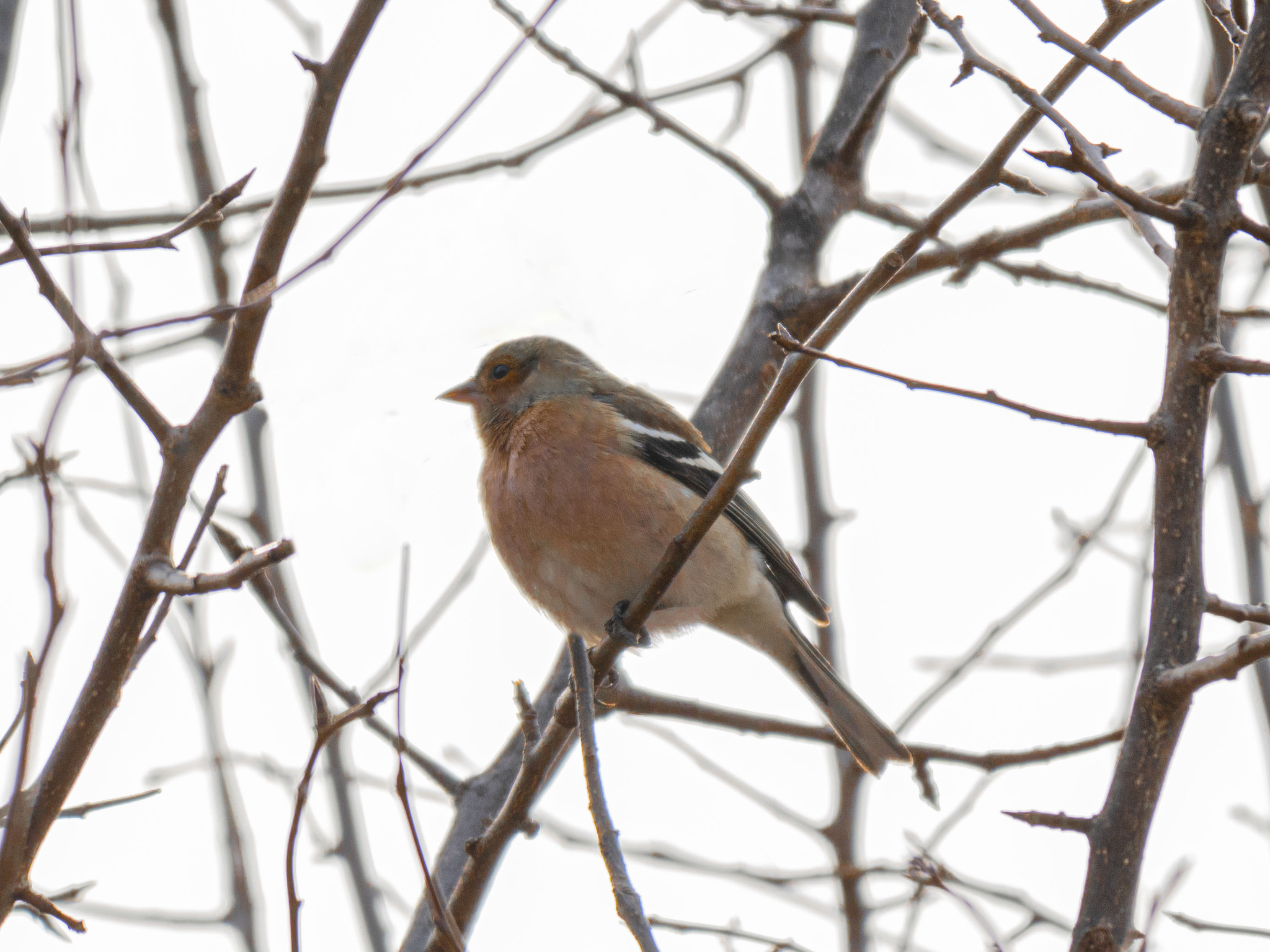
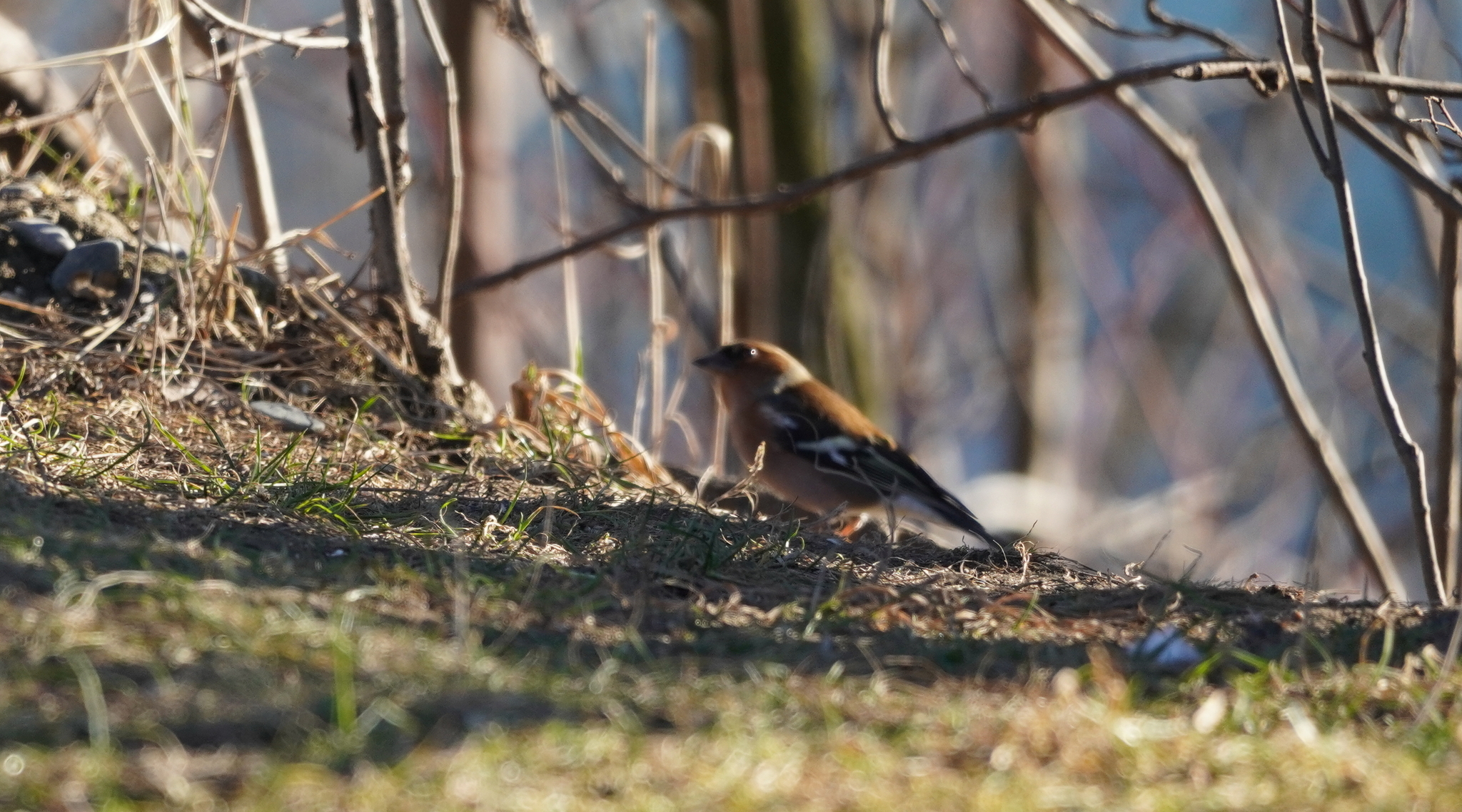
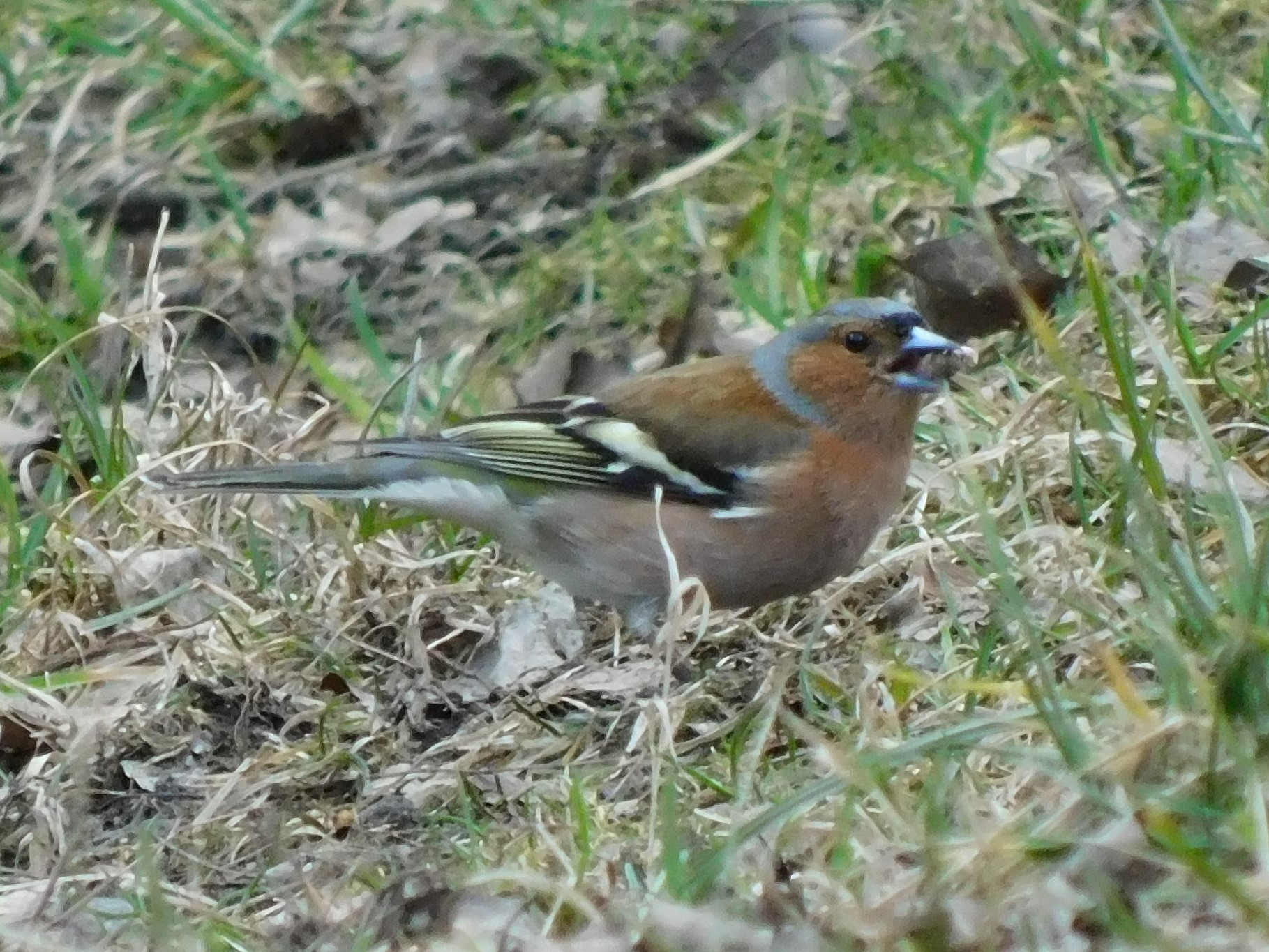
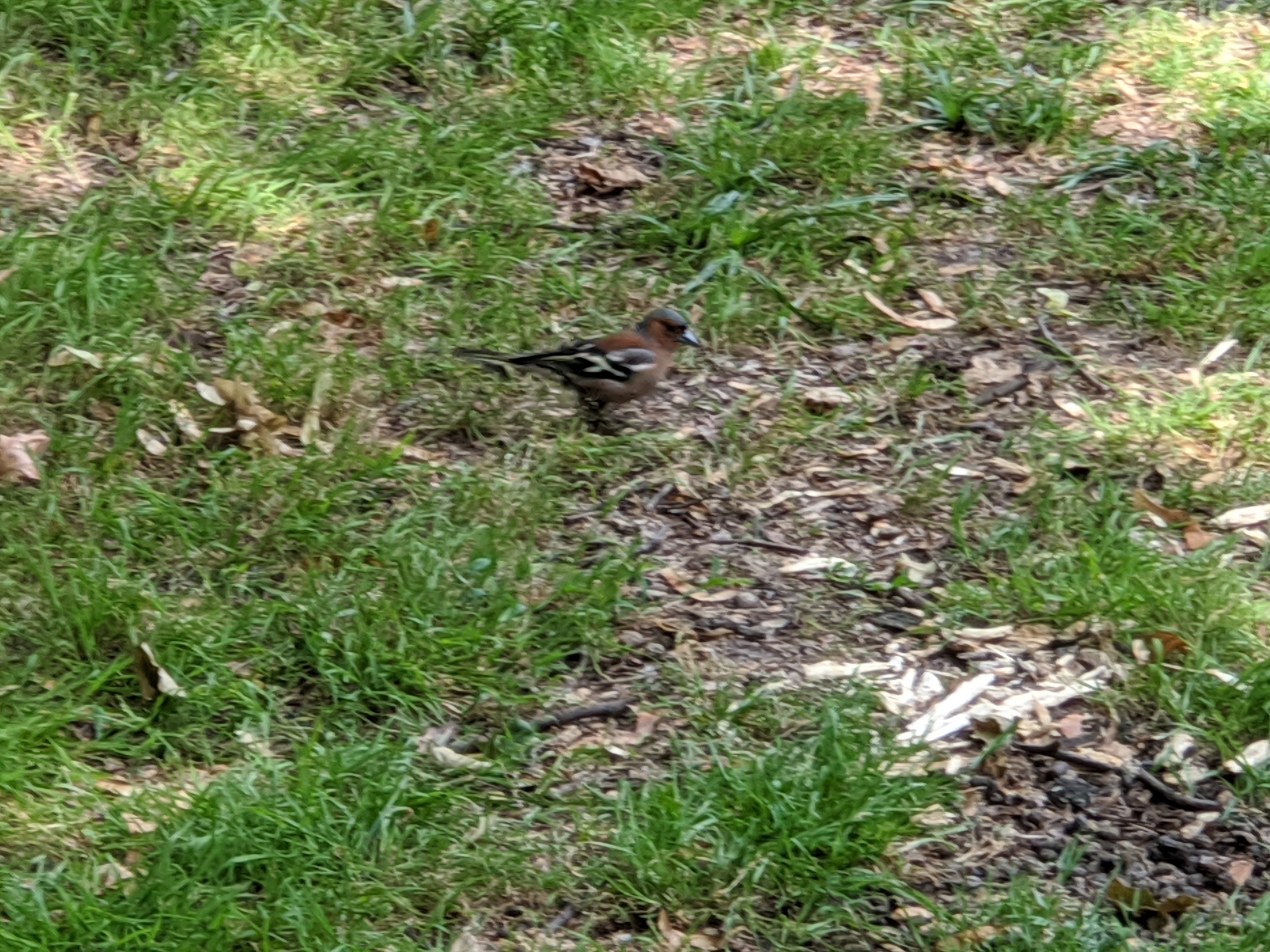
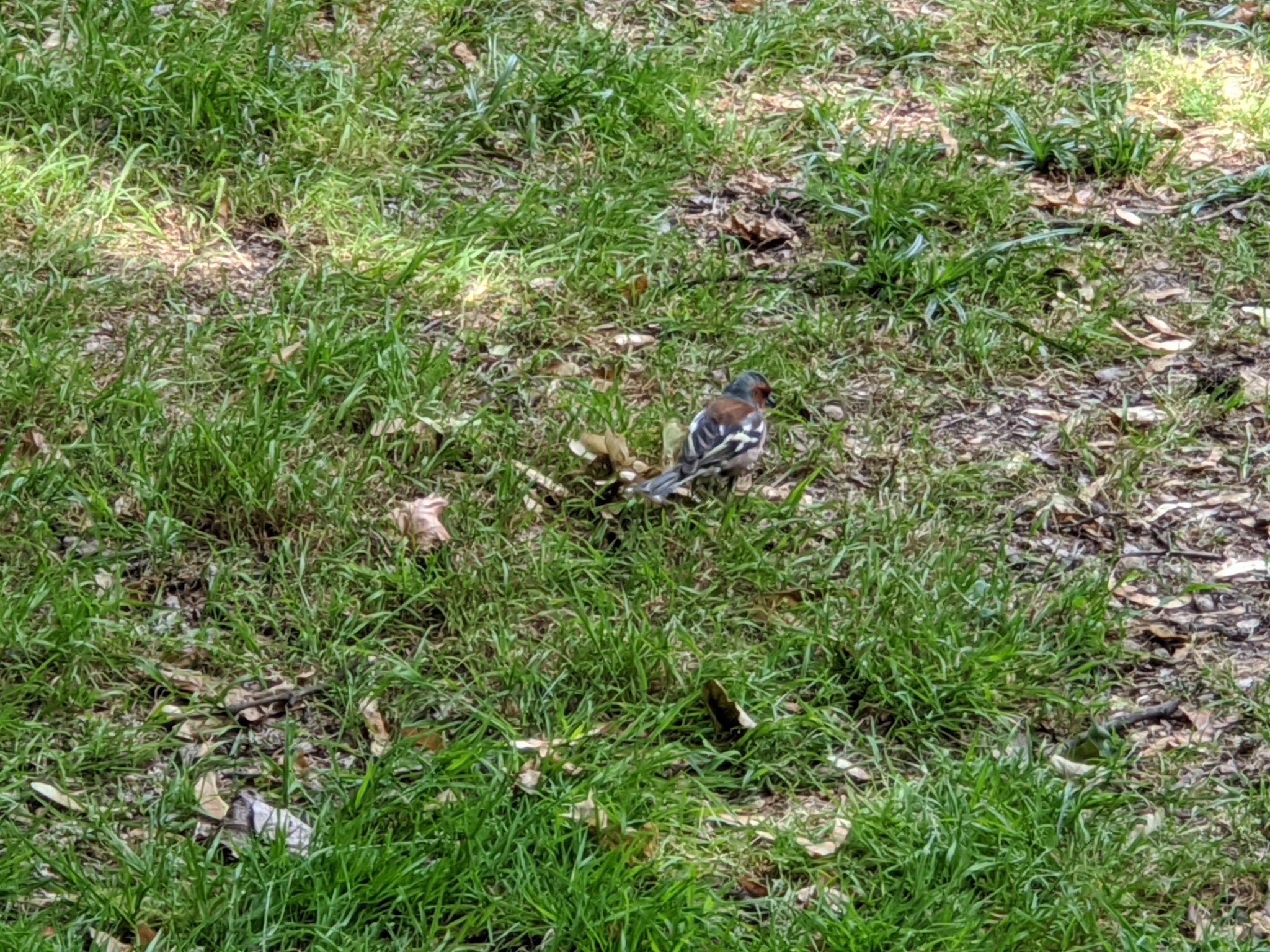
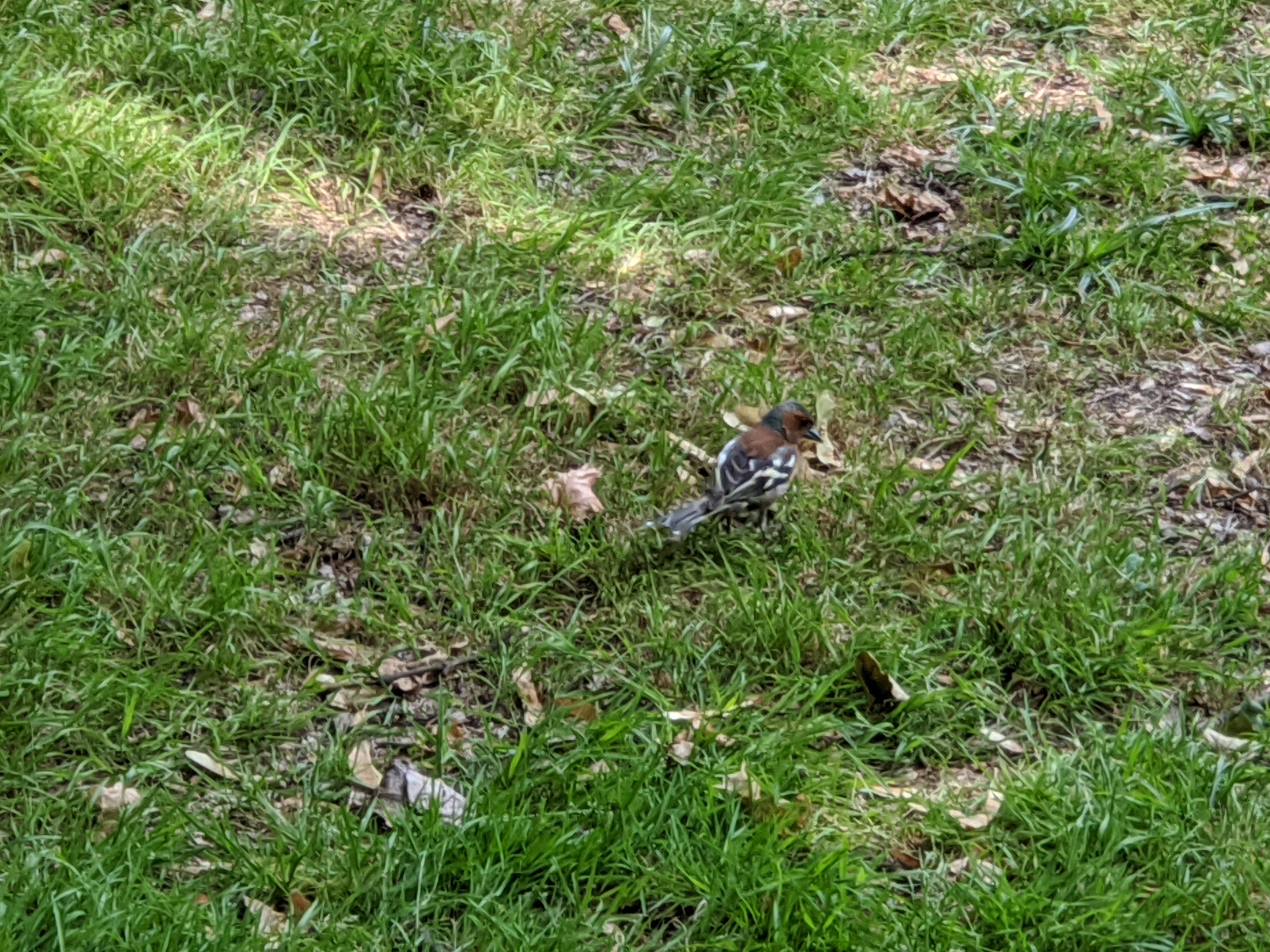
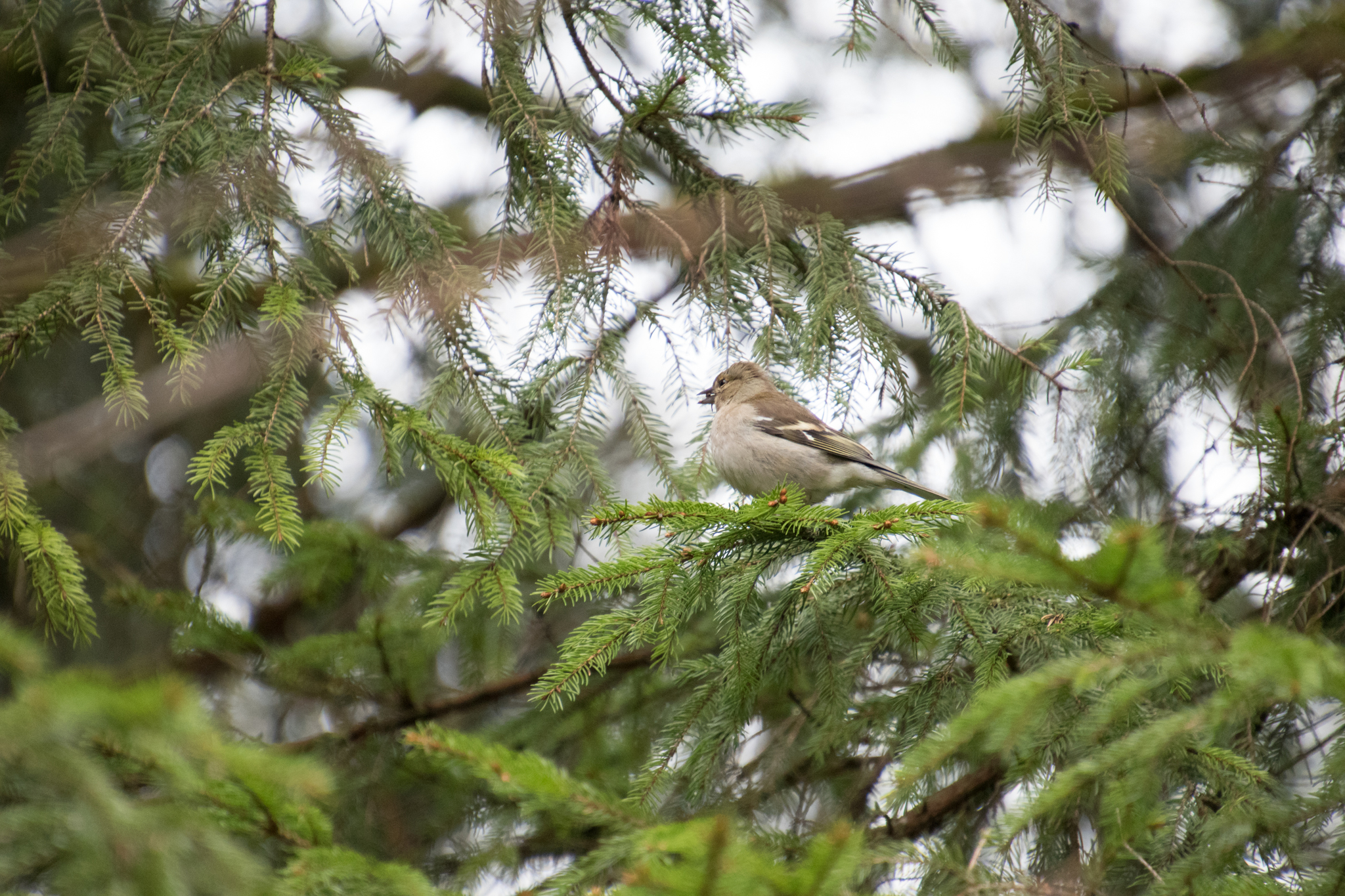
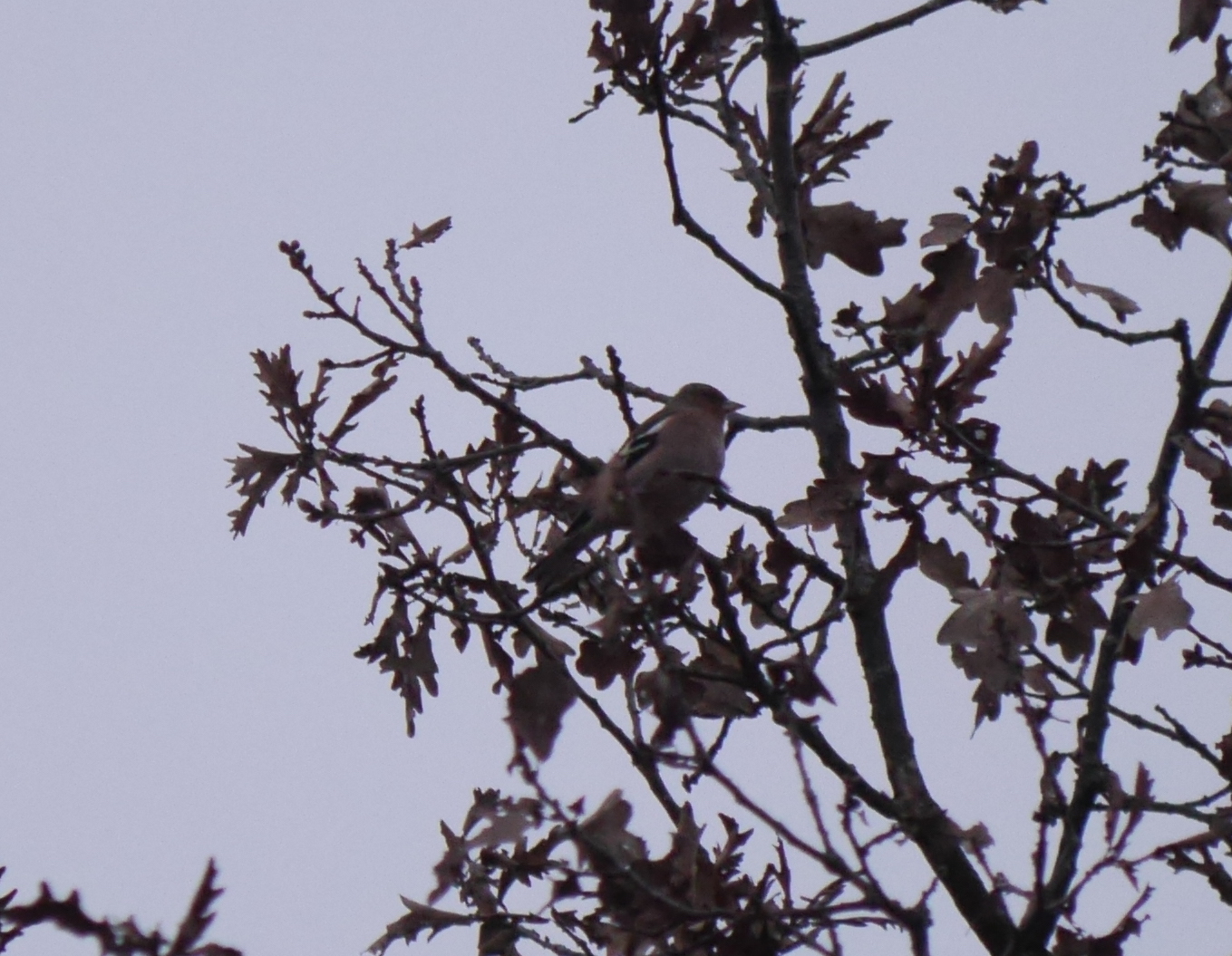
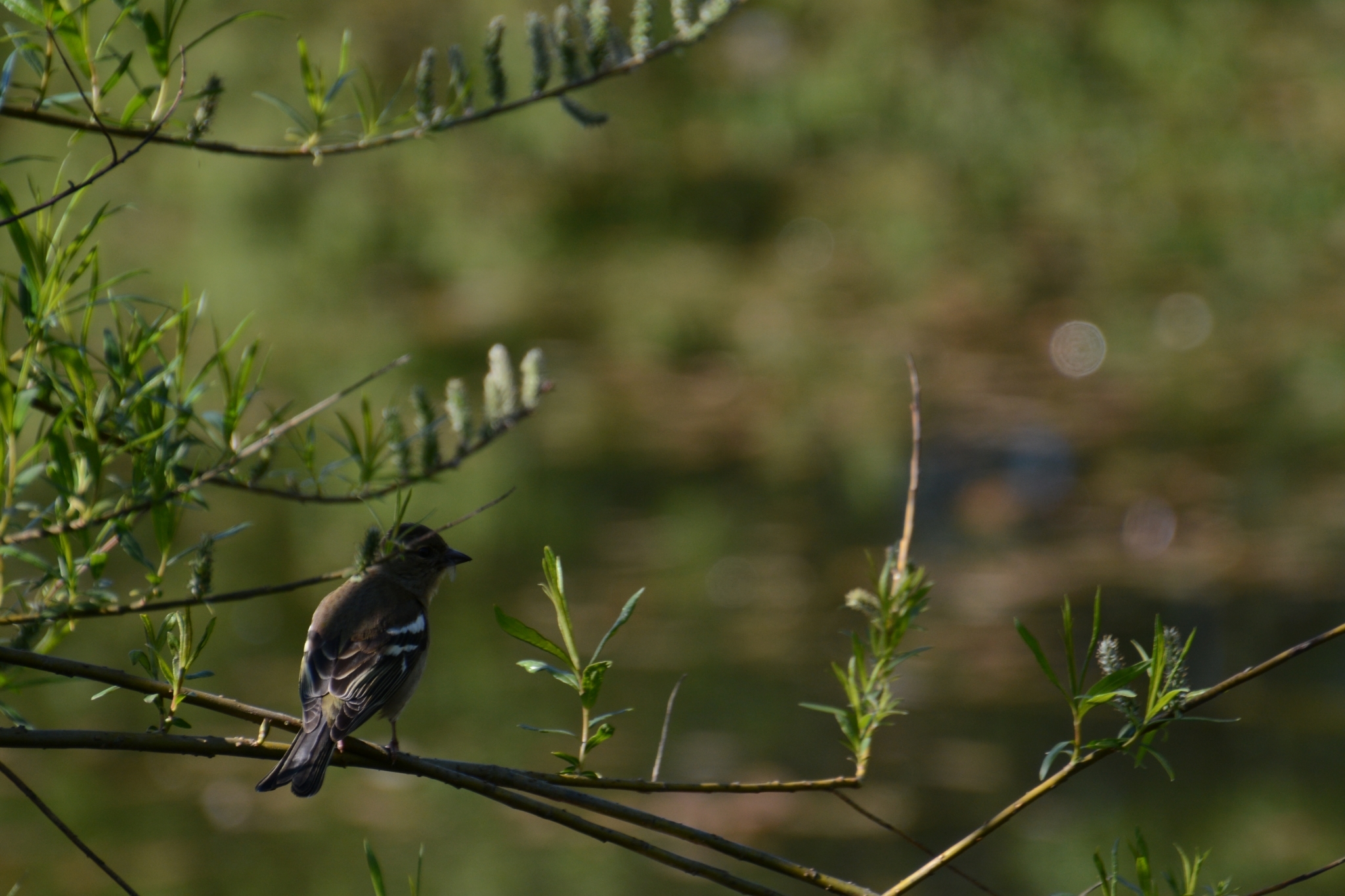
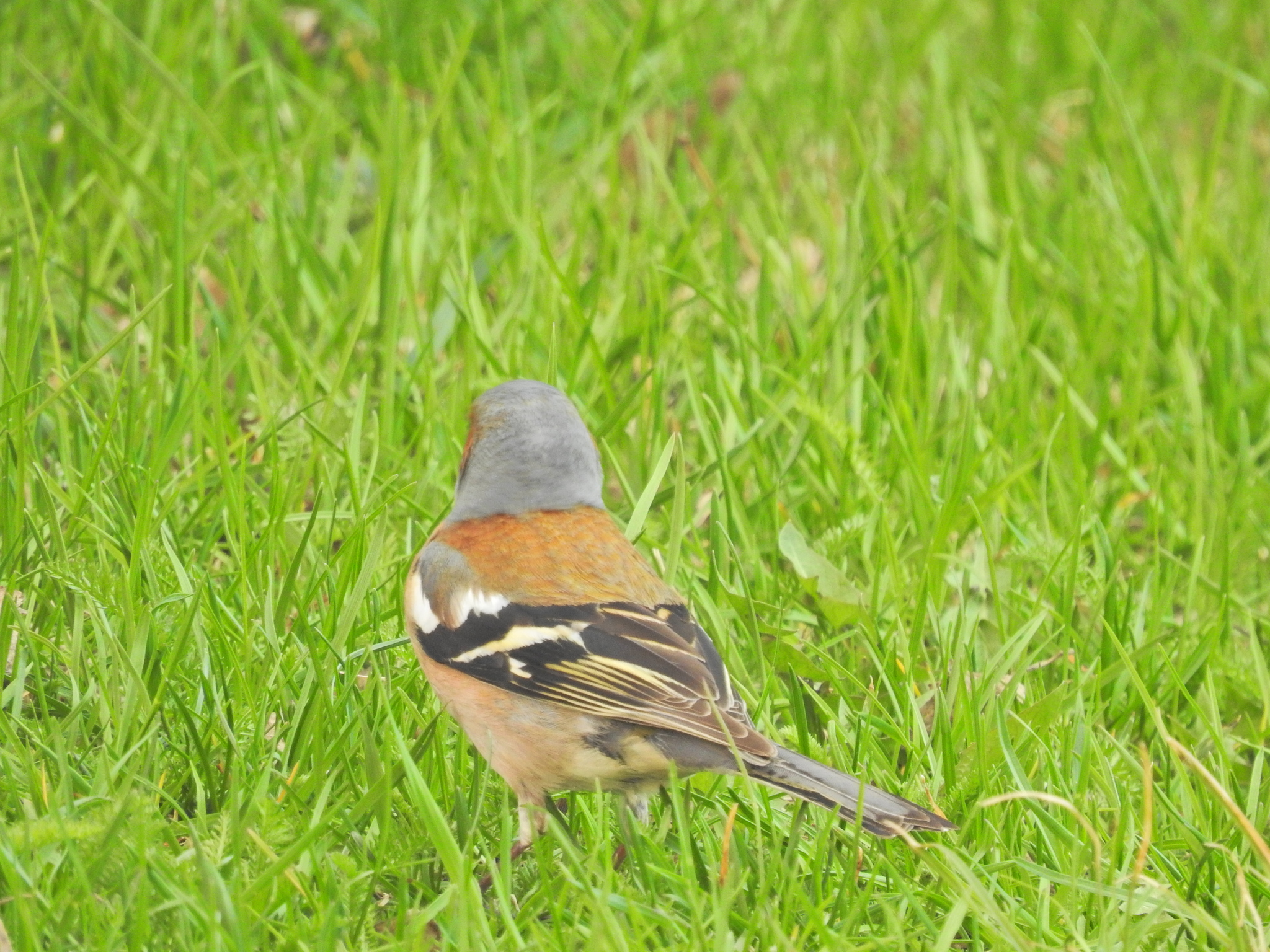
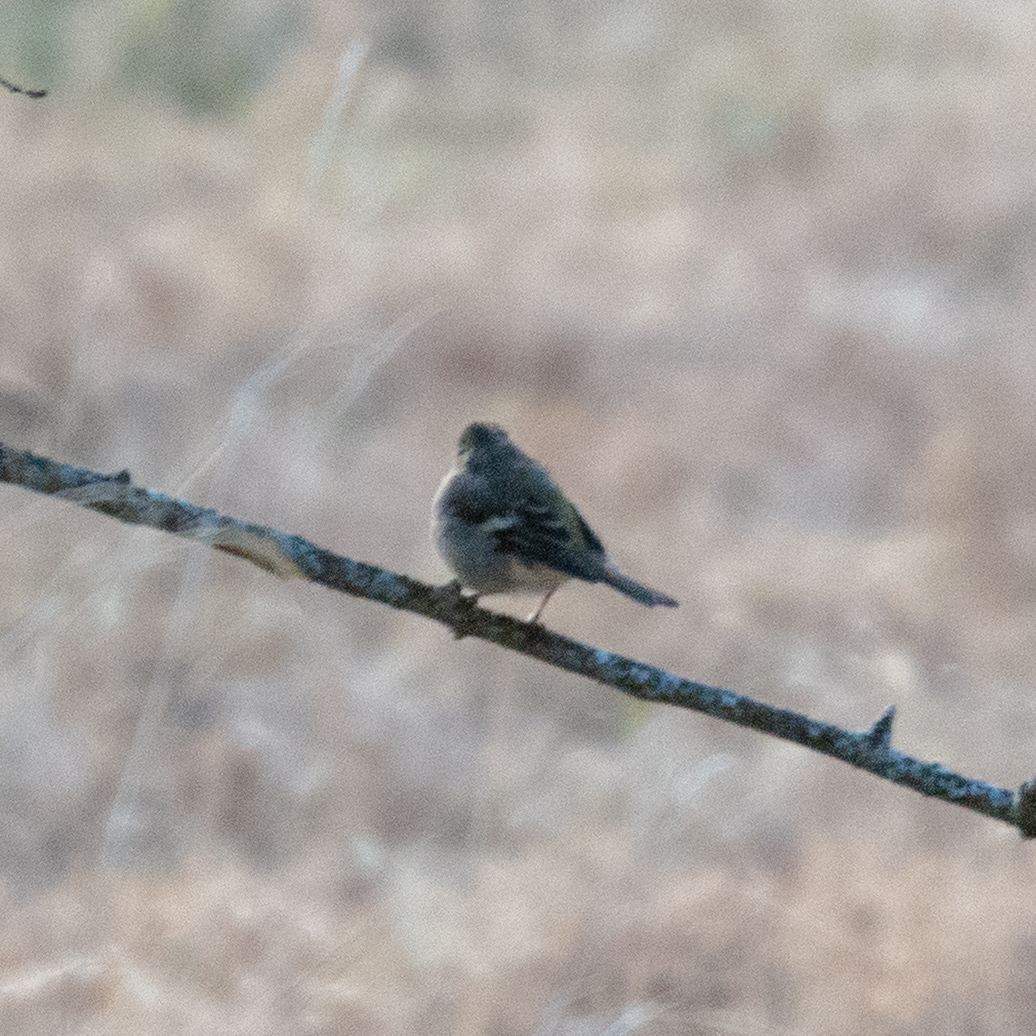
Length is about 14.5 cm (5.7 in), wingspan 24.5–28.5 cm (9.6–11.2 in), and weight 18–29 g (0.63–1.02 oz). The adult male of the nominate subspecies has a black forehead, blue-grey crown, nape, and upper mantle. The rump is light olive-green, and the lower mantle forms a brown saddle. Underparts are dull rust-red merging to pale creamy-pink on the belly. Wings feature contrasting white panels on coverts and a buff-white bar on secondaries and inner primaries. Tail feathers are black with white wedges on the outer two feathers of each side. The bill is pale grey in winter, becoming bluish-grey with a black tip in spring. The adult female is duller, with grey-brown head and upperparts, paler underparts, and a dull olive-green lower back and rump. Juveniles resemble females.
Identification
Both sexes display two contrasting white wing bars and white sides to the tail. Males are distinguished by bright blue-grey caps and rust-red underparts, while females are subdued grey-brown. Flight involves black flight feathers with white basal vanes. Vocal cues include a flight call ('tupe'), separation-alarm call ('chink'), and predator warning calls ('seee' and 'uh-weet').
Distribution & Habitat
Breeds in wooded areas across most of Europe and eastwards through temperate Asia to the Angara River and southern Lake Baikal in Siberia. Introduced populations exist in New Zealand (both islands) and a small colony in Cape Town, South Africa. Partially migratory; birds in milder regions are sedentary, while those in colder northern areas winter further south. Occasionally strays to eastern North America.
Behavior & Ecology
Breeding occurs once birds are one year old, typically monogamous. Females build deep-cup nests in tree forks, lined with roots, feathers, lichen, and spider silk. Clutches of 4–5 eggs are incubated by the female for 10–16 days. Chicks fledge in 11–18 days and are fed by both parents for several weeks. Diet switches from seeds on the ground in winter to invertebrates, especially caterpillars, in trees during breeding. Survival rate for juveniles is 53% in the first year; adult annual survival is 59%. Maximum recorded lifespan is 15 years and 6 months.
Conservation
Classified as Least Concern by the International Union for Conservation of Nature. The estimated range is 7 million square kilometres, with 130–240 million breeding pairs in Europe and a total global population between 530 and 1,400 million individuals. No evidence of serious overall decline. Threats include predation by crows, squirrels, and cats, and infection by the protozoal parasite Trichomonas gallinae, which caused declines in related species but only small changes in chaffinch numbers.
Culture
Historically popular as a caged songbird, leading to trapping that depleted local populations until outlawed in Great Britain by the Wild Birds Protection Acts of 1880–1896. Featured in Thomas Hardy's poem 'The Blinded Bird'. In Belgium, the traditional sport of vinkenzetting involves contests where male birds compete to produce the most calls in an hour.
Source: Wikipedia · CC BY-SA 3.0
Taxonomy
- Order
- Passeriformes
- Family
- Fringillidae
- Genus
- Fringilla
Subspecies (7)
-
Fringilla coelebs alexandrovi
northern Iran
Data Sources
Species description from Wikipedia, licensed under CC BY-SA 3.0.
Bird images and sounds sourced from GBIF, contributed by citizen scientists worldwide under Creative Commons licenses.
Taxonomy data from AviList 2025.