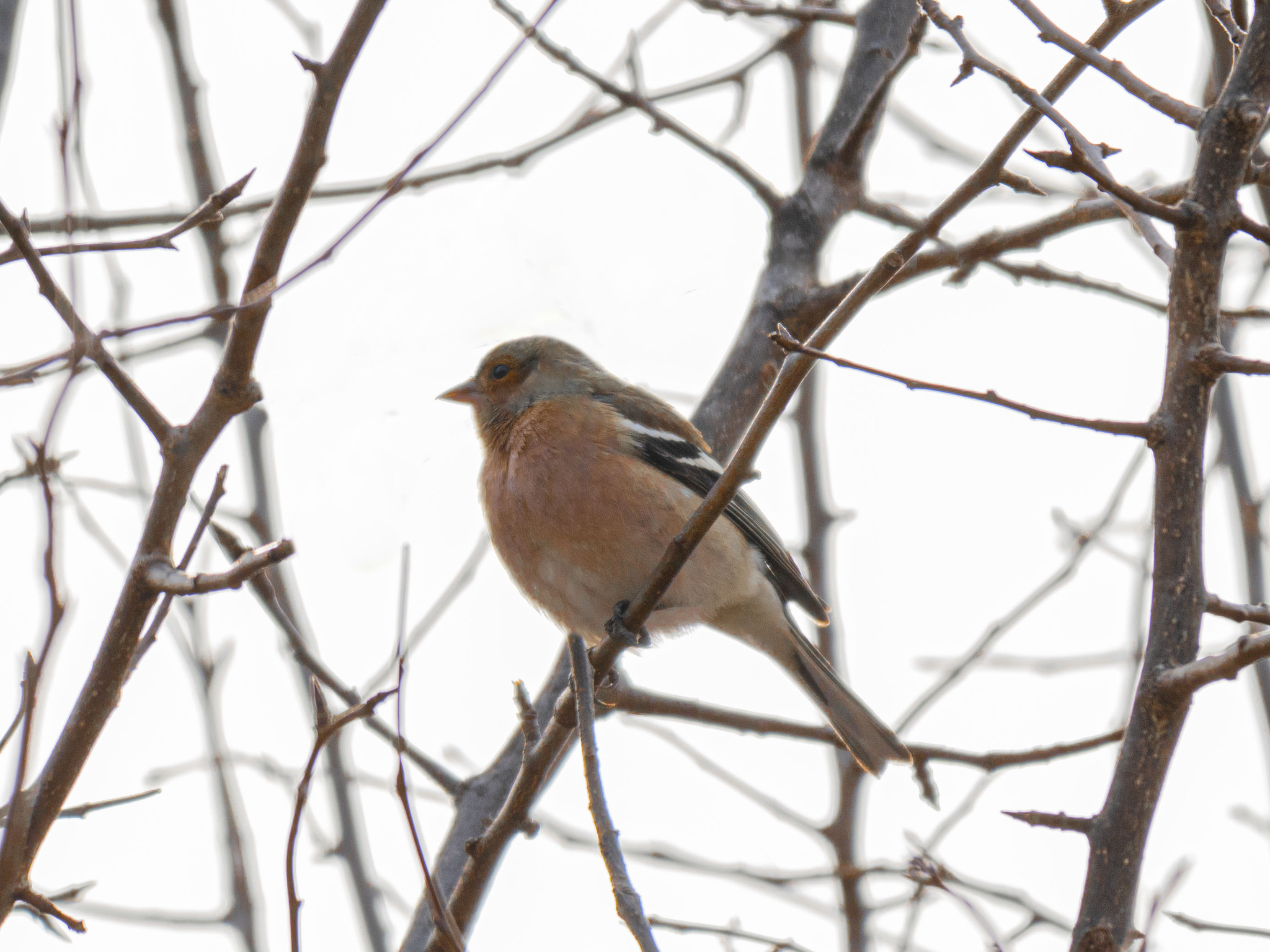
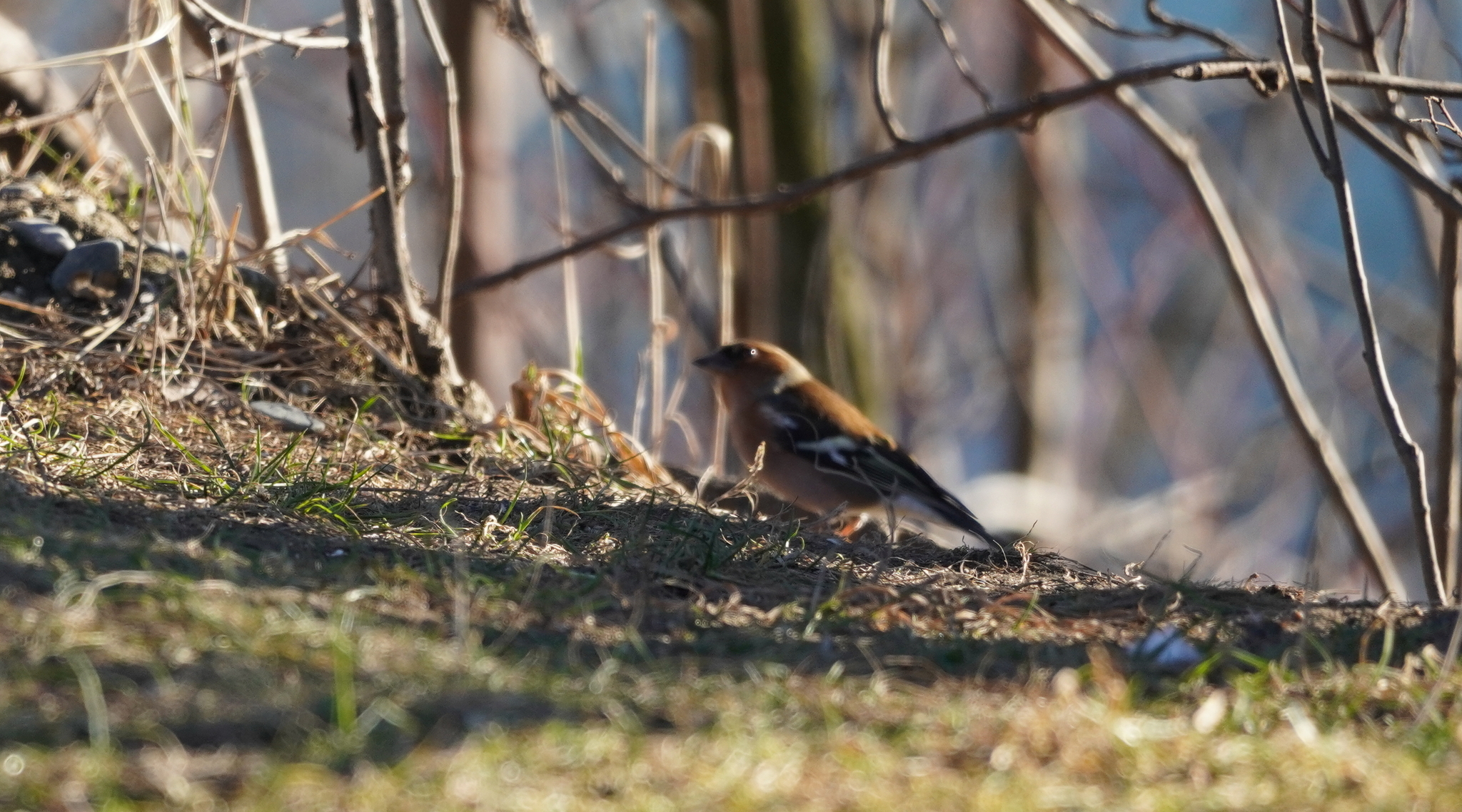
Eurasian Chaffinch
Fringilla coelebs
苍头燕雀
Introduction
A small passerine bird in the finch family (Fringillidae), belonging to the genus Fringilla. It breeds across most of Europe and extends eastward across temperate Asia to Siberia. Inhabits wooded areas where the July isotherm ranges from 12-30°C. Displays strong territorial behavior with males singing from exposed perches. Partial migrant: sedentary in warmer regions, northern populations winter further south. Classified as Least Concern by the IUCN due to its huge range and large population.
Description
Length approximately 14.5 cm, wingspan 24.5–28.5 cm, weight 18–29 g. Adult male has black forehead with blue-grey crown, nape and upper mantle, and rust-red throat and breast fading to pale creamy-pink on the belly. Rump is light olive-green. Wings display contrasting white panels on coverts and buff-white bars on secondaries and inner primaries; flight feathers are black with white basal portions. Tail is black with white outer feathers. Adult female is duller with grey-brown upperparts and paler underparts. Both sexes show two white wing bars and white sides to the tail. Winter plumage has buff fringes that wear away by spring.
Identification
Distinctive combination of two white wing bars and white outer tail feathers visible in flight. Males are unmistakable with blue-grey cap and rust-red underparts. Female resembles other brown finches but distinguished by prominent white wing bars and white-sided tail. The brambling (F. montifringilla) is similar but lacks the white-sided tail and has orange rather than grey shoulder patches.
Distribution & Habitat
Breeds across most of Europe and eastward through temperate Asia to the Angara River and southern Lake Baikal in Siberia. Introduced to New Zealand (both main islands by 1900) and a small colony persists in Cape Town, South Africa. Sedentary in mild regions; northern populations migrate south for winter, often forming loose flocks with bramblings. Occasional vagrants reach eastern North America. Inhabits wooded areas during breeding season; forages in open countryside outside breeding period.
Behavior & Ecology
Primarily monogamous; pairs may persist across seasons in resident populations. Female builds a deep cup nest lined with roots and feathers, covered with lichen and spider silk in tree forks. Clutch typically 4-5 eggs (average 19×15 mm), incubated 10-16 days by female. Chicks fledge 11-18 days after hatching and are fed by both parents for three weeks thereafter. Diet switches seasonally: seeds on ground outside breeding season; invertebrates, especially caterpillars, during breeding. Produces 2-8 calls including flight call (tupe), separation-alarm (chink), and rain call (uh-weet). Males sing 2-3 song types with regional dialects.
Conservation
IUCN Least Concern. Global population estimated at 530–1.4 billion individuals, including 130–240 million breeding pairs in Europe. No significant overall decline detected. Threats include predation on eggs and nestlings by crows, squirrels, cats, stoats and weasels. Trichomonas gallinae parasite caused mortality events in Europe beginning in 2005, particularly affecting greenfinches; chaffinch populations showed relative resilience. Can develop papillomavirus tumors on feet and legs, though disease is uncommon.
Culture
Featured in the 15th-century English illuminated manuscript the Sherborne Missal. Historically popular as caged songbirds in Britain; trapping depleted urban populations by late 19th century. Practice of blinding birds with hot needles to encourage singing inspired Thomas Hardy's poem 'The Blinded Bird.' Keeping chaffinches as pets declined after the Wild Birds Protection Acts of 1880-1896 outlawed trapping. The Belgian traditional sport of vinkenzetting pits male chaffinches against each other in competitions for the most calls in one hour.
Source: Wikipedia · CC BY-SA 3.0
Taxonomy
- Order
- Passeriformes
- Family
- Fringillidae
- Genus
- Fringilla
- eBird Code
- comcha
Subspecies (7)
-
Fringilla coelebs alexandrovi
northern Iran
-
Fringilla coelebs coelebs
continental Europe eastward to central Asia and south to western and northern Türkiye and northwestern Iran
-
Fringilla coelebs gengleri
British Isles, Orkneys, and Outer Hebrides
-
Fringilla coelebs sarda
Sardinia
-
Fringilla coelebs solomkoi
Crimean Peninsula and Caucasus
-
Fringilla coelebs syriaca
Cyprus and Levant
-
Fringilla coelebs transcaspia
northeastern Iran (southern Transcaspia in Kopet Dagh and Khorasan)
Data Sources
Species description from Wikipedia, licensed under CC BY-SA 3.0.
Bird images and sounds sourced from GBIF, contributed by citizen scientists worldwide under Creative Commons licenses.
Taxonomy data from AviList 2025.