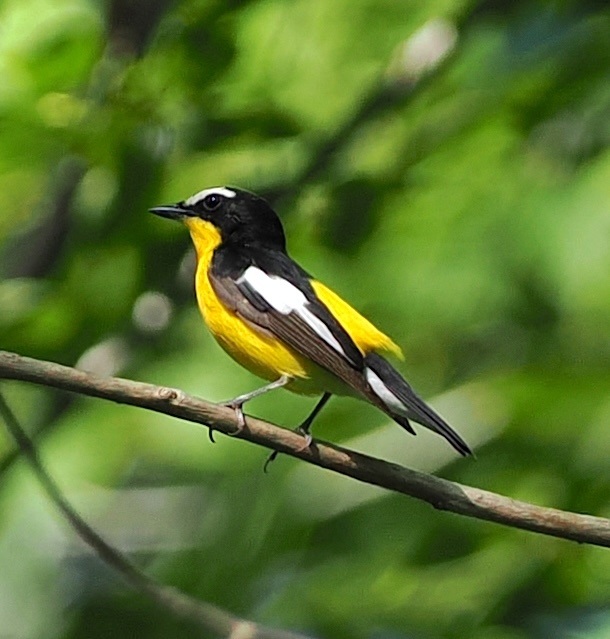
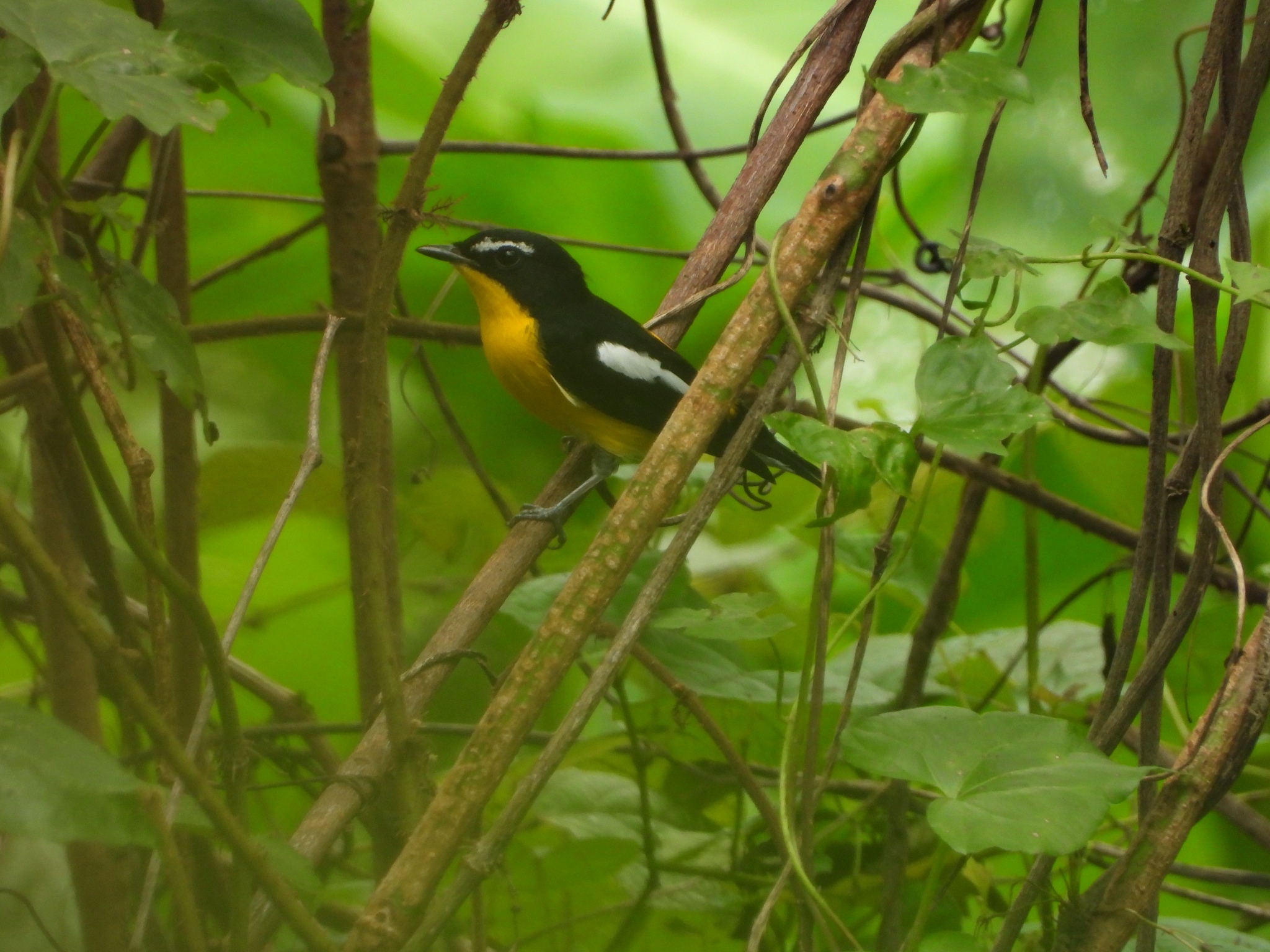
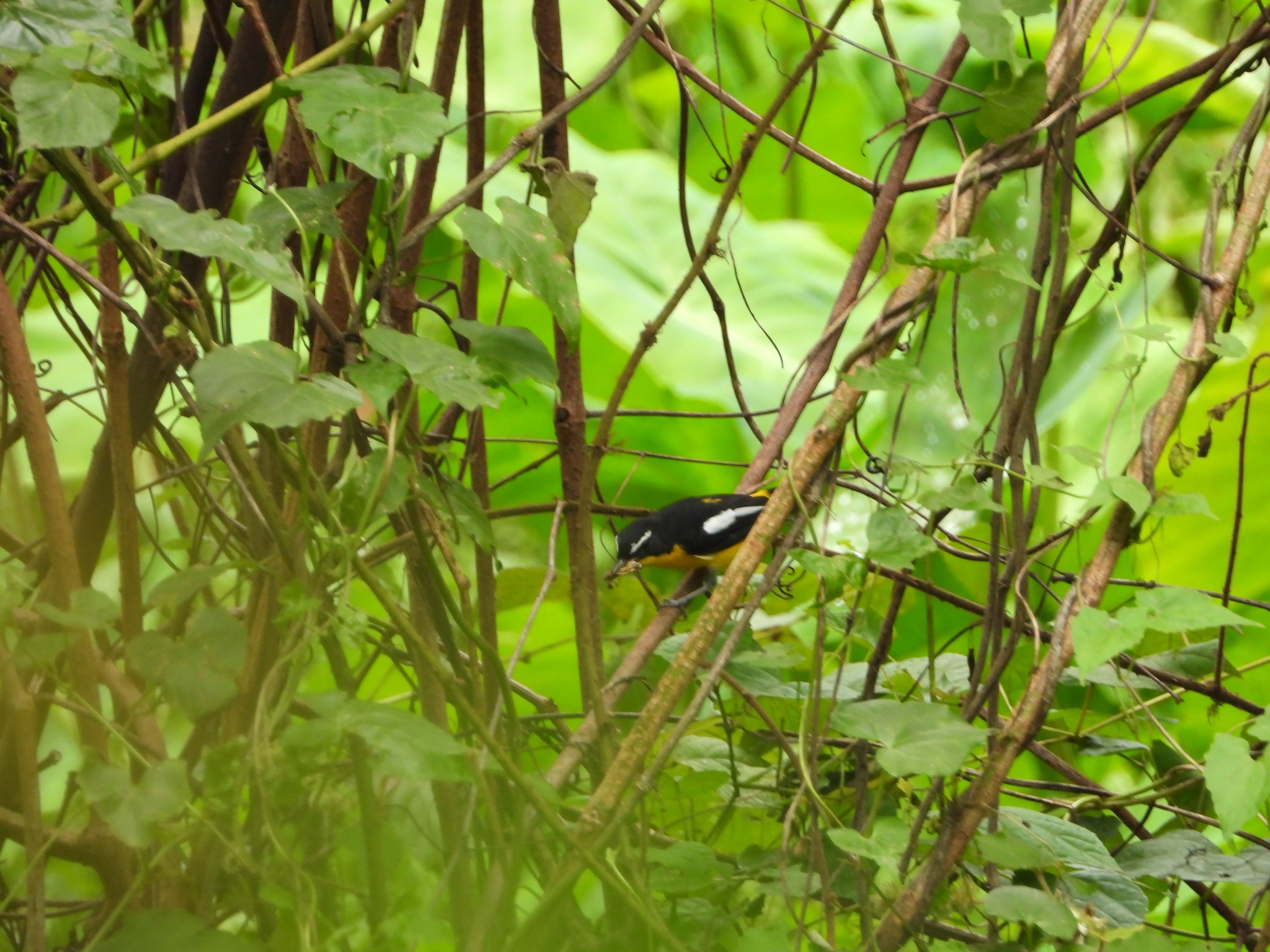
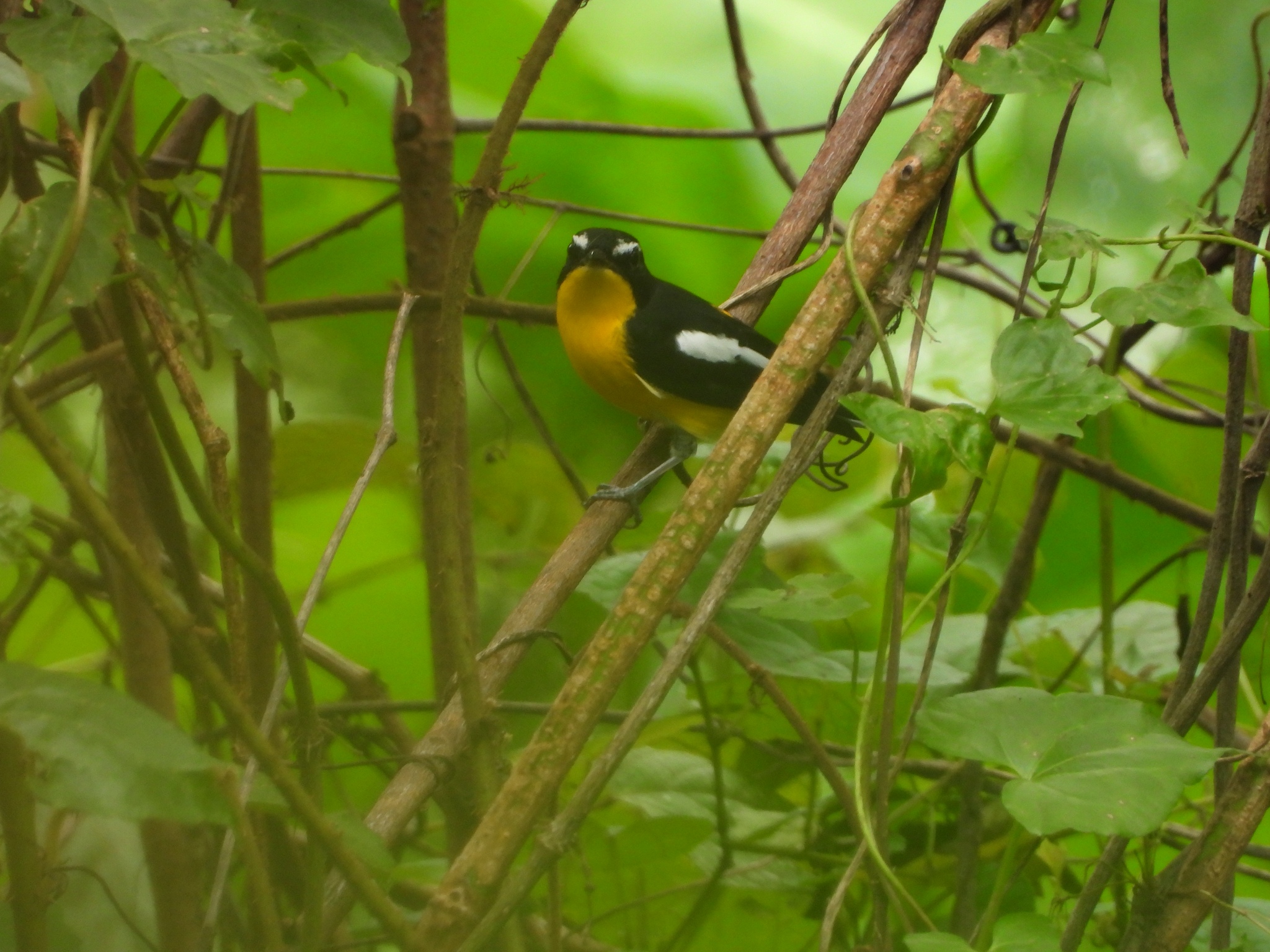
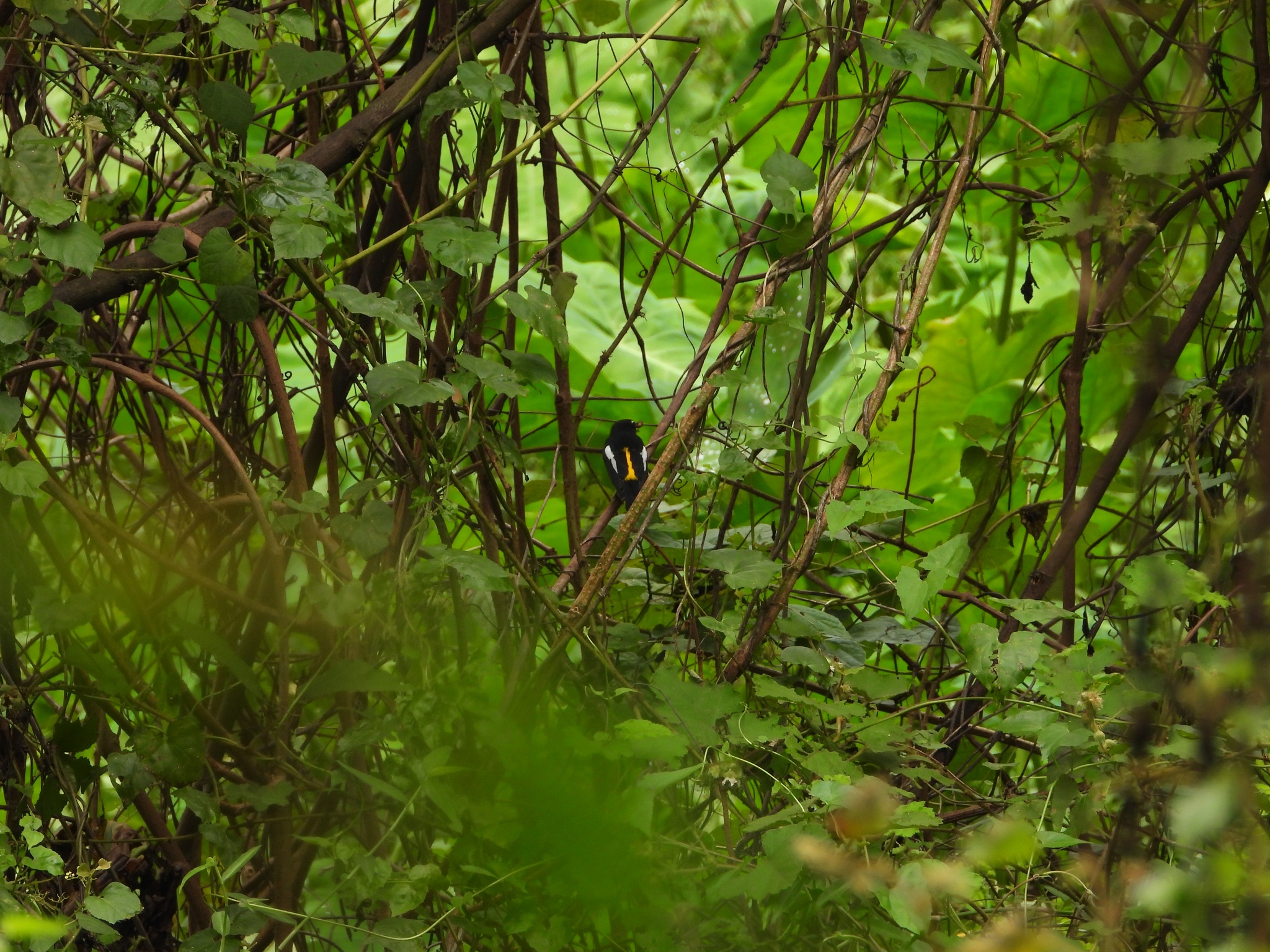
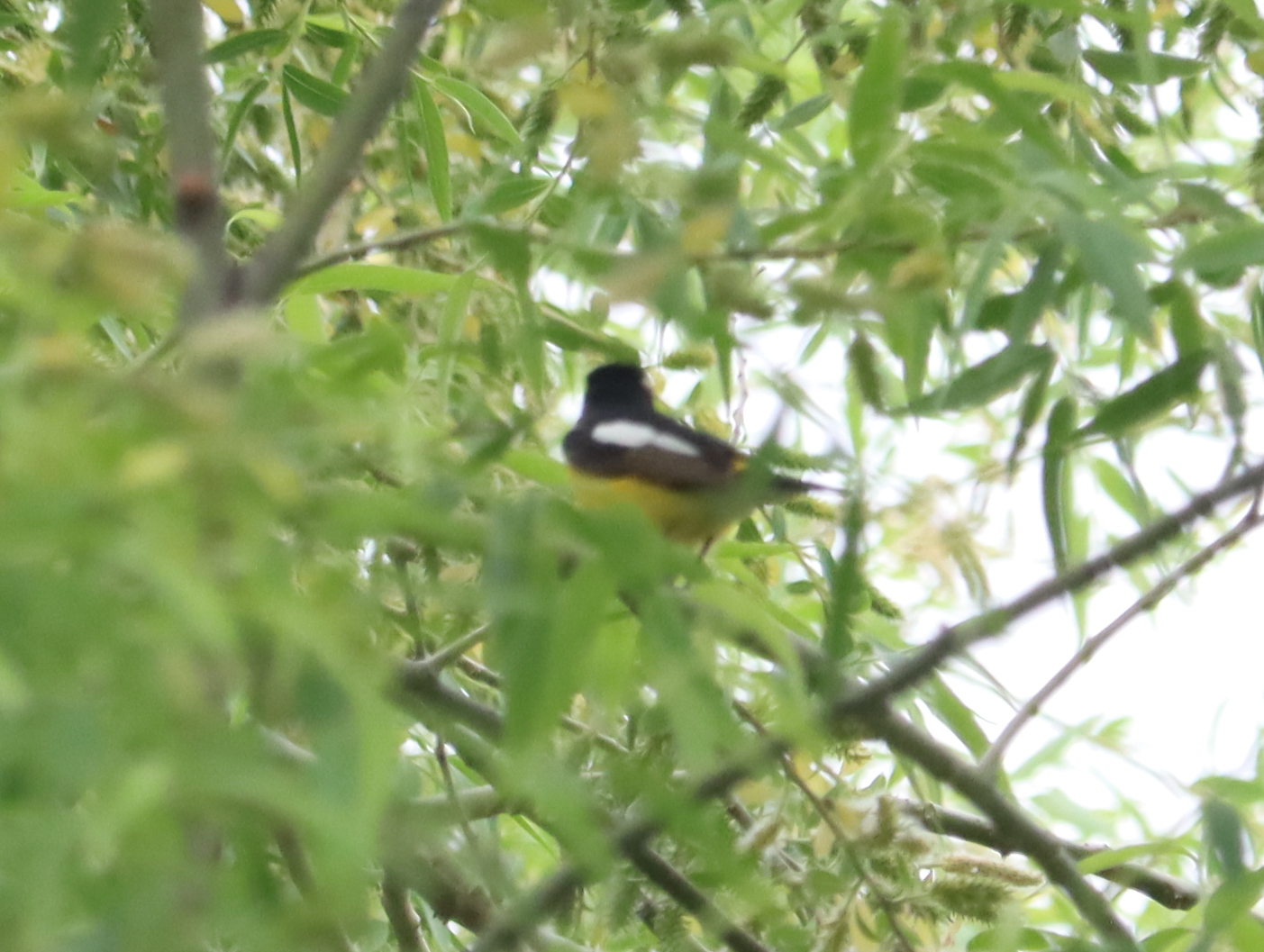
Yellow-rumped Flycatcher
Ficedula zanthopygia
白眉姬鹟
Introduction
A small flycatcher of the genus Ficedula. Formerly classified within Muscicapa, this species originated and diversified in east Asia during the Pliocene epoch. It breeds in eastern Asian forests, favoring hill base valleys with oak forests for nesting. Wintering range includes central India (first documented 1989), the Indian subcontinent, Sri Lanka, and the Malay Peninsula. Males display black, white, and yellow plumage; females are olive-grey with a yellow rump present in all plumages.
Description
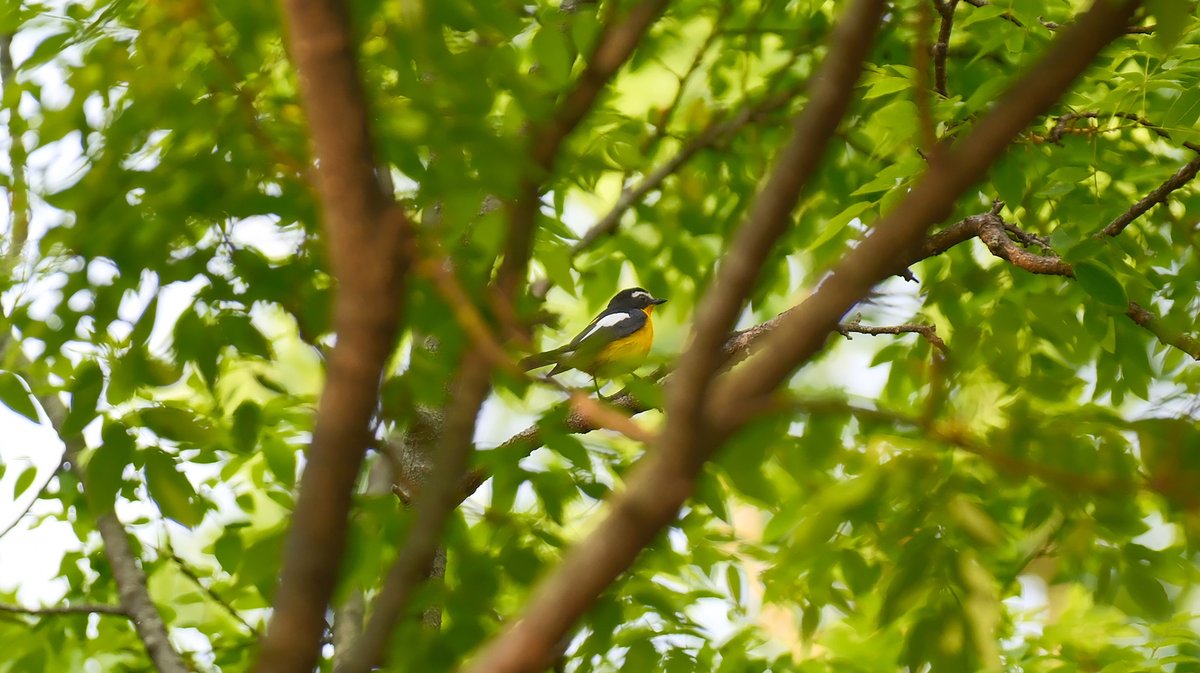
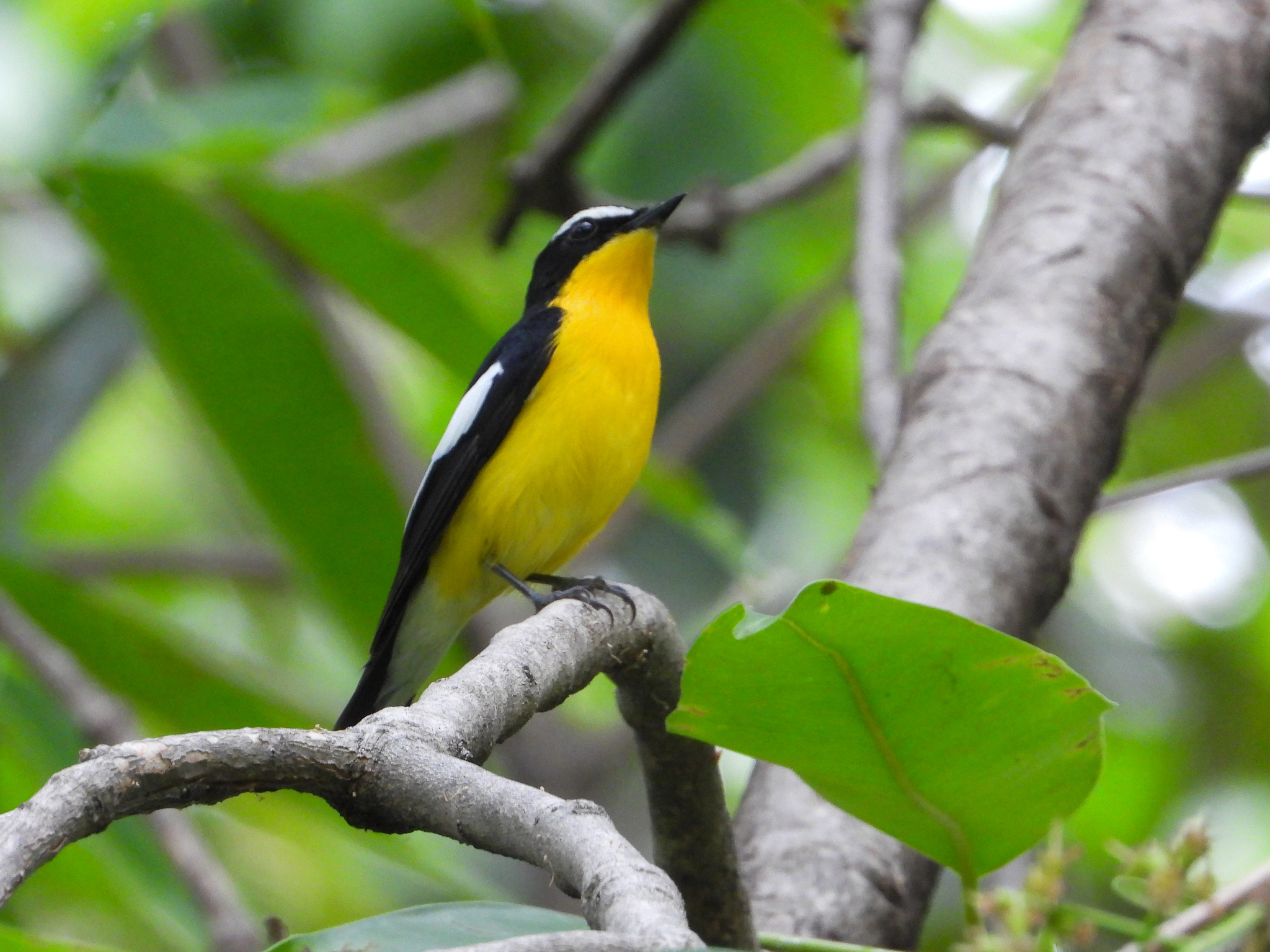
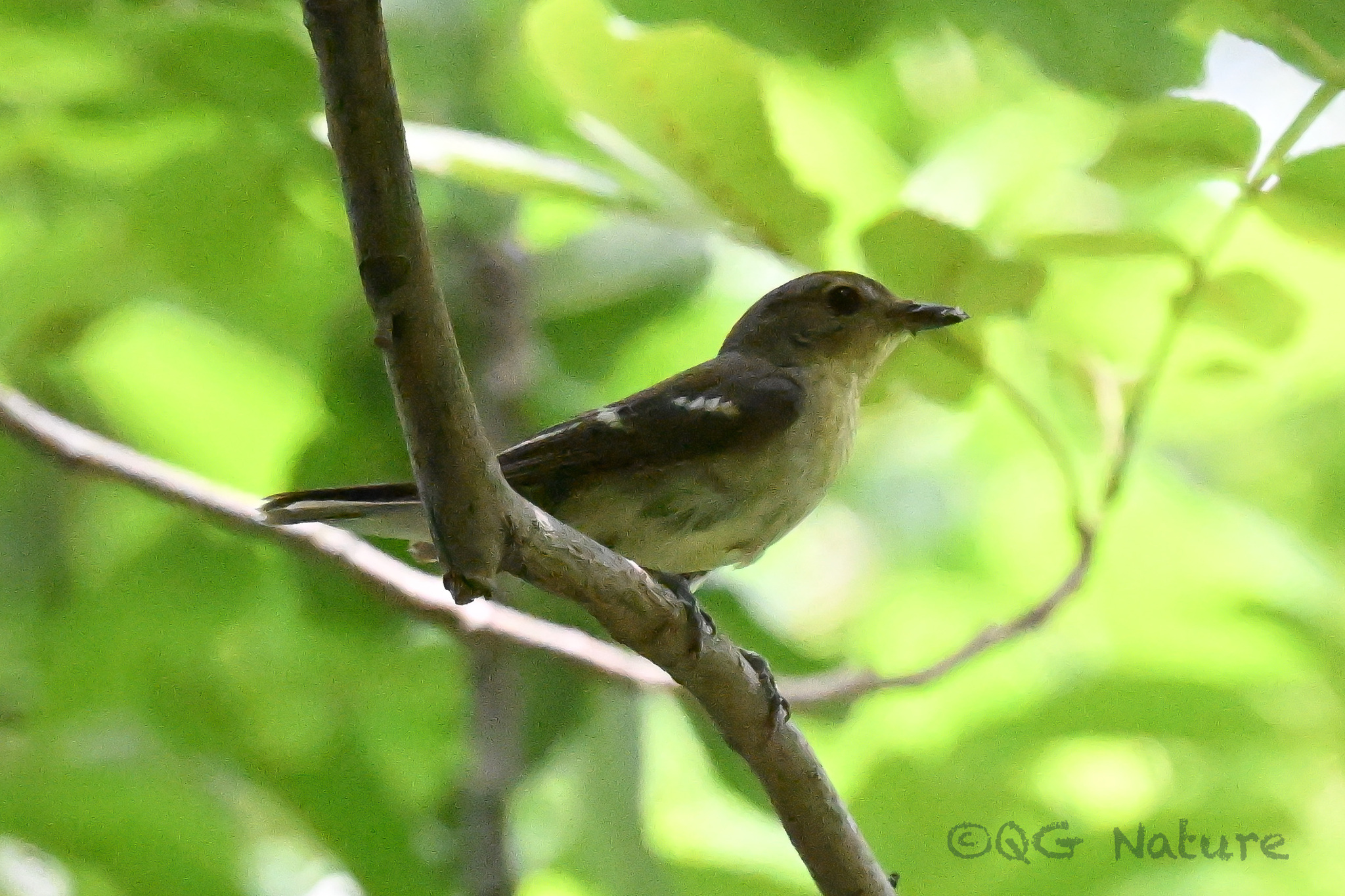
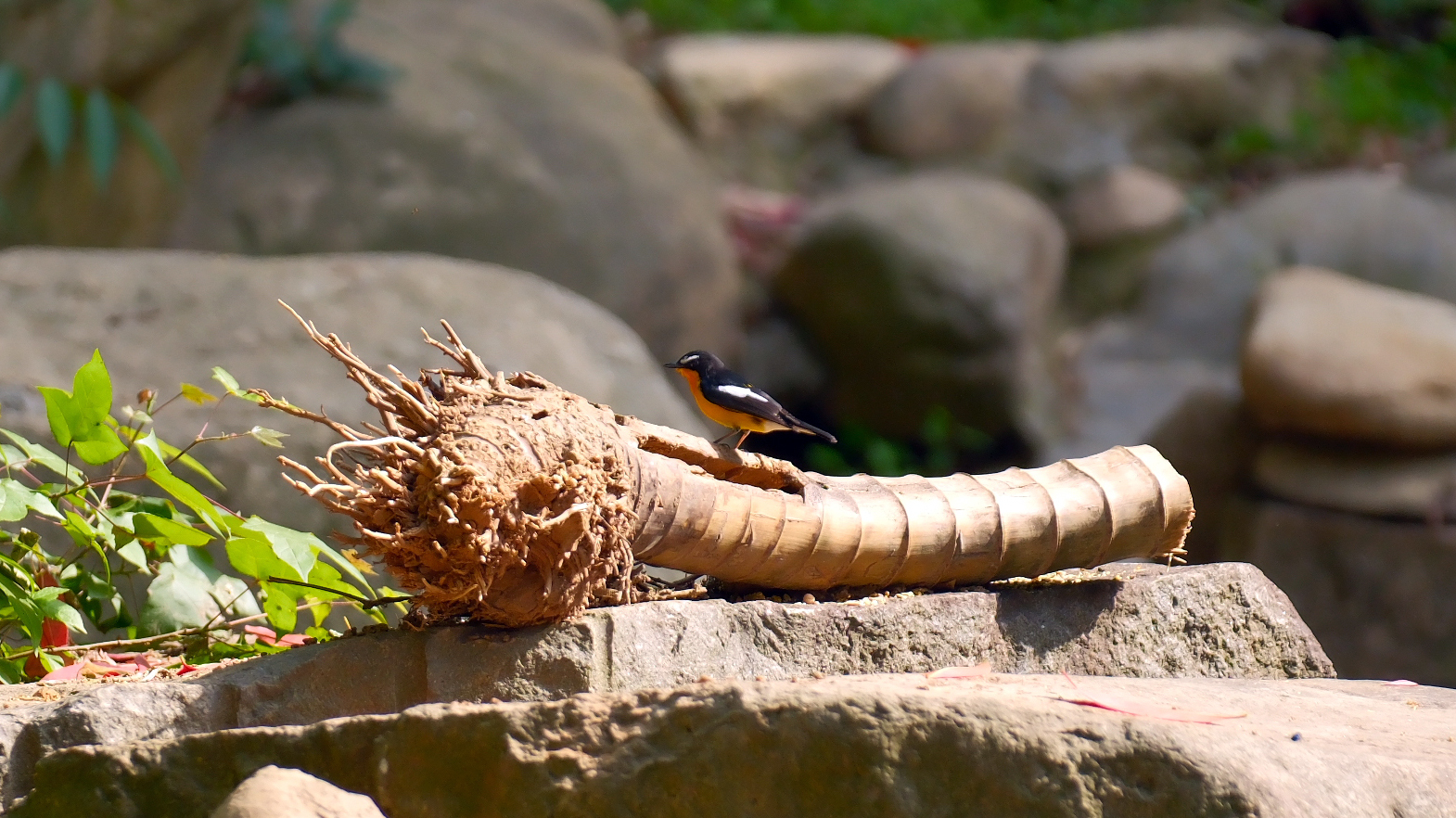
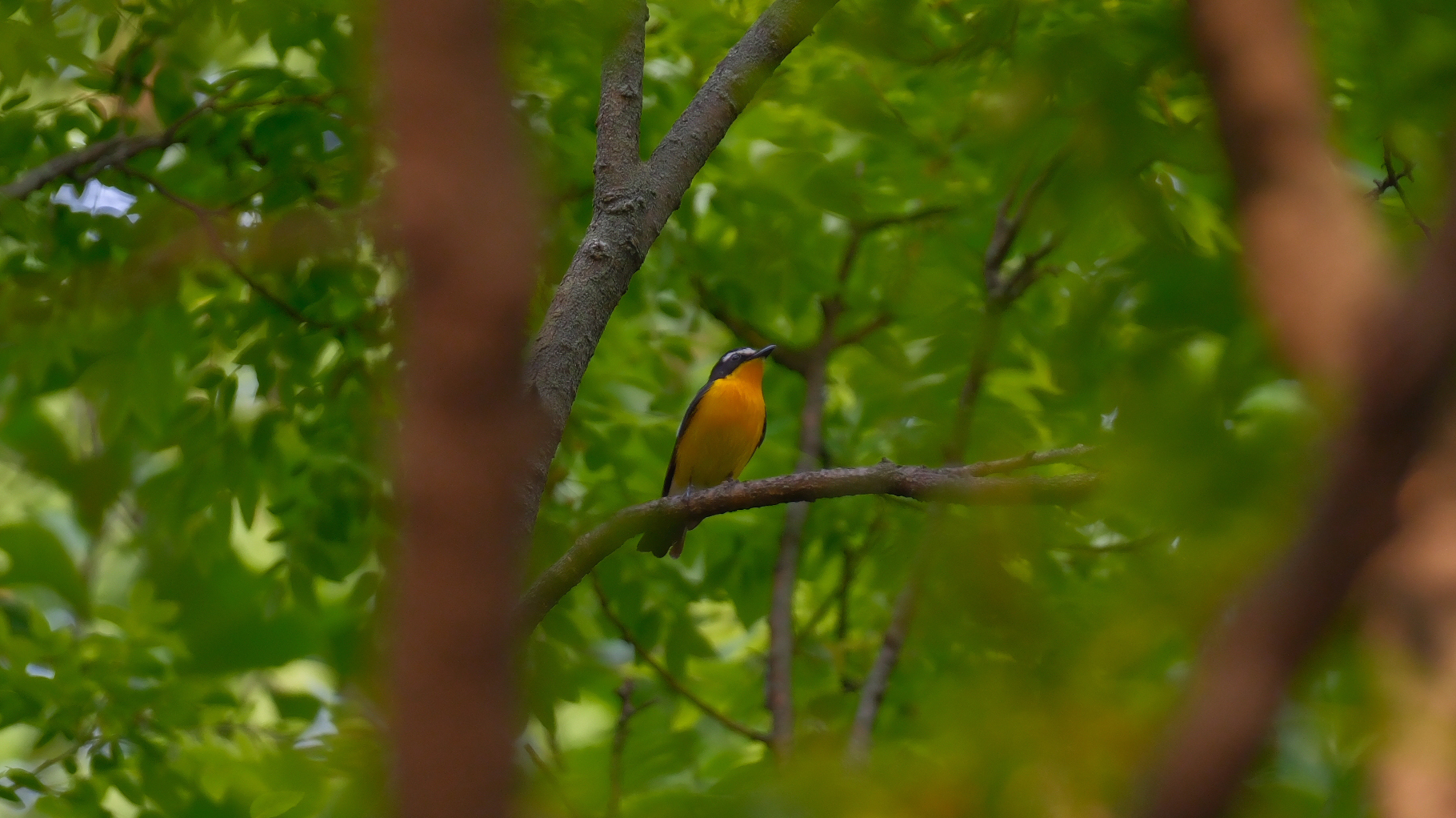
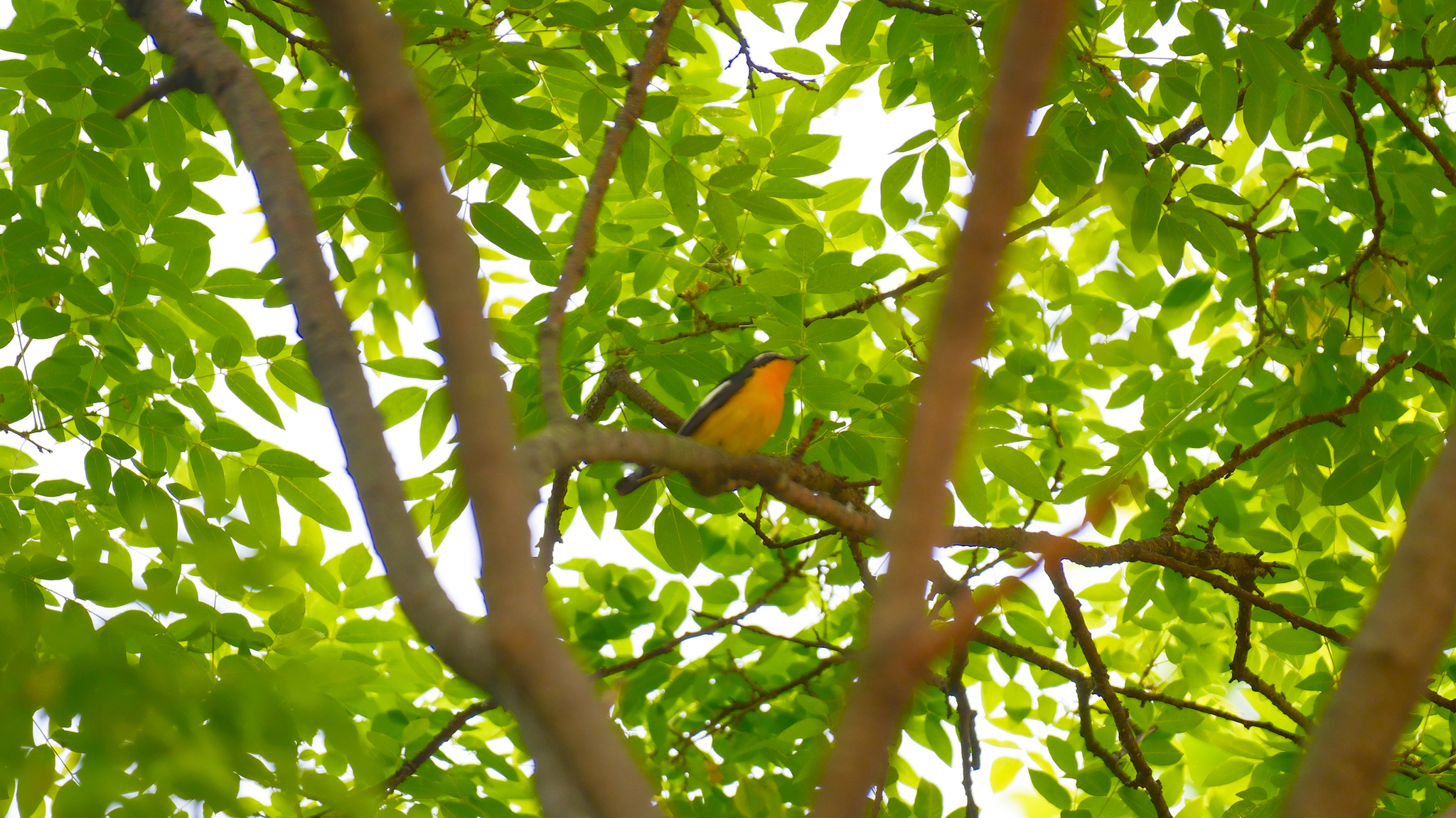
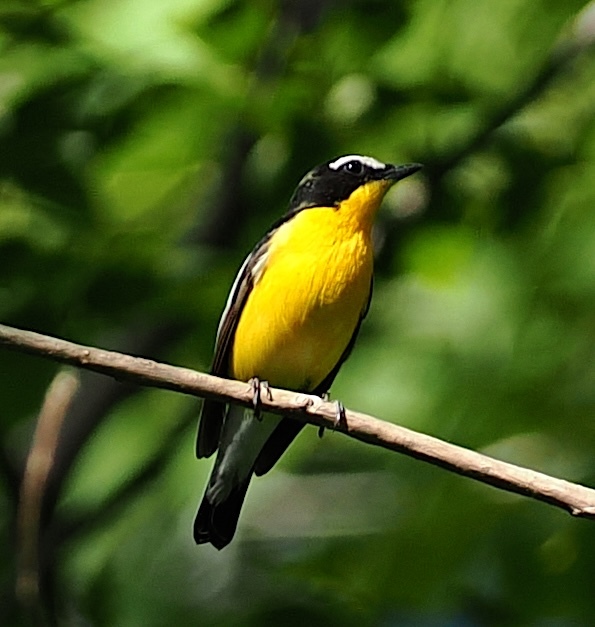
Males display bold black upperparts contrasting with a prominent white supercilium and wingpatch, while the underparts, rump, and lower back are a rich, warm yellow. Females present a more subdued appearance with greyish to olive-green upperparts and paler underparts, marked by wingbars and the characteristic yellow rump. Some females may also show yellow coloration on the throat. First-year males resemble females but gradually acquire adult plumage. All age classes share the diagnostic yellow rump that serves as the species' most reliable field mark.
Identification
The yellow rump is the defining characteristic visible in every plumage and immediately separates this species from most other flycatchers. The male's bright white supercilium is key for distinguishing it from the similar narcissus flycatcher and green-backed flycatcher, neither of which shows this feature. Females and first-year males can be identified by their olive-grey upperparts, blackish tail, wingbars, and yellow rump. Birdwatchers should note that some individuals showing yellow on the supercilium may represent hybrids with the narcissus flycatcher, complicating identification in areas where the two species overlap.
Distribution & Habitat
This species breeds across eastern Asia, including Manchuria, Korea, China, parts of Mongolia, Transbaikal, and western Japan. It favors low valley habitats at the base of hills for breeding. The wintering range extends through the Malay Peninsula and South Asia, with the species first documented wintering in central India in 1989. It now regularly winters in southwestern India and Sri Lanka as well.
Behavior & Ecology
Breeding season occurs from May through June in core areas like the Xiaoxingan region. The female alone constructs the nest over three to four days, typically in a tree cavity or similar protected site. Clutches consist of 4-7 eggs incubated solely by the female for 11-12 days. Both parents feed the chicks, foraging within approximately 70 meters of the nest. Young fledge after 14-15 days. Breeding pairs maintain territories of about 2000-5000 square meters. The species has been observed breeding in oak forests near Peking alongside the similar elisae flycatcher, with clear differences in calls and morphology supporting their classification as separate species.
Conservation
No specific IUCN assessment or population trend data was provided in the source article.
Culture
No cultural significance, folklore, or mythological references were documented in the source article.
Source: Wikipedia · CC BY-SA 3.0
Taxonomy
- Order
- Passeriformes
- Family
- Muscicapidae
- Genus
- Ficedula
- eBird Code
- korfly1
Distribution
breeds mountains of northeastern Asia; winters in southeastern Asia and Greater Sundas
Vocalizations
Data Sources
Species description from Wikipedia, licensed under CC BY-SA 3.0.
Bird images and sounds sourced from GBIF, contributed by citizen scientists worldwide under Creative Commons licenses.
Taxonomy data from AviList 2025.