Passeriformes / Muscicapidae / Ficedula
Narcissus Flycatcher
Ficedula narcissina · 黄眉姬鹟
Introduction
Passerine bird in the Old World flycatcher family, native to the East Palearctic. It is highly migratory, breeding in deciduous woodlands and wintering in Southeast Asia.
Description
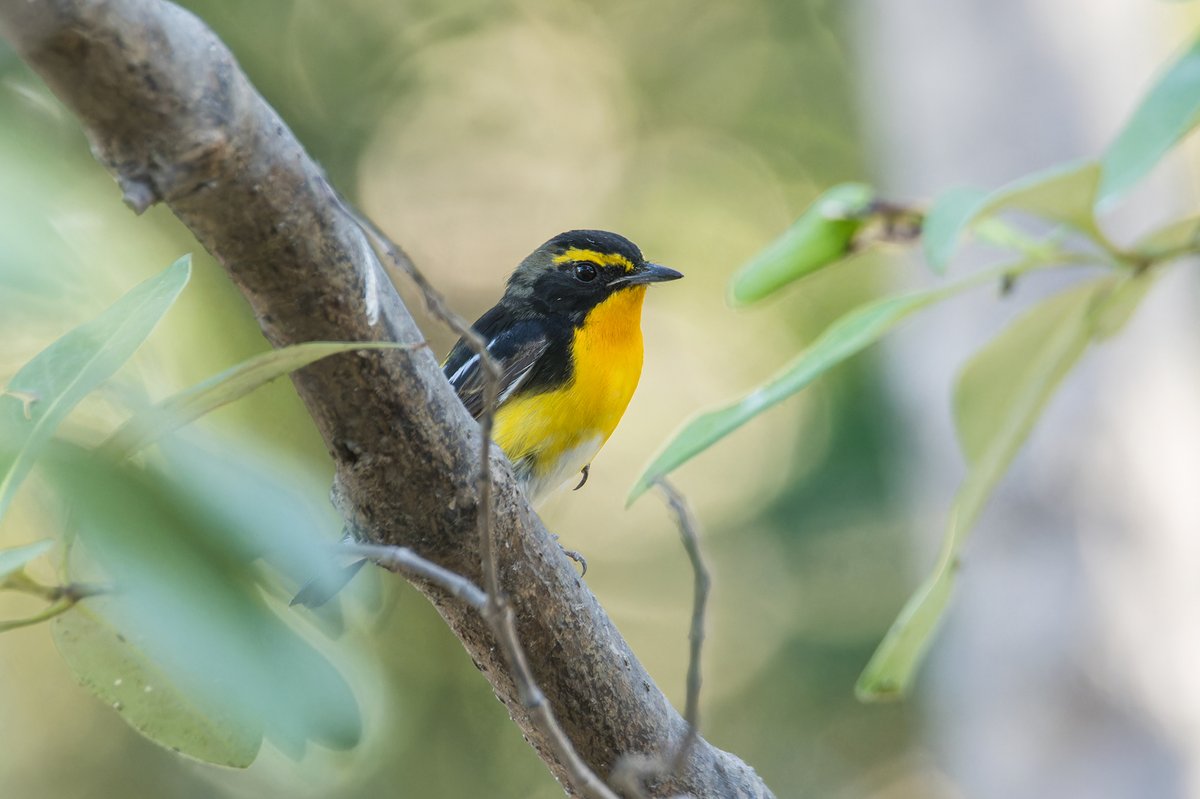
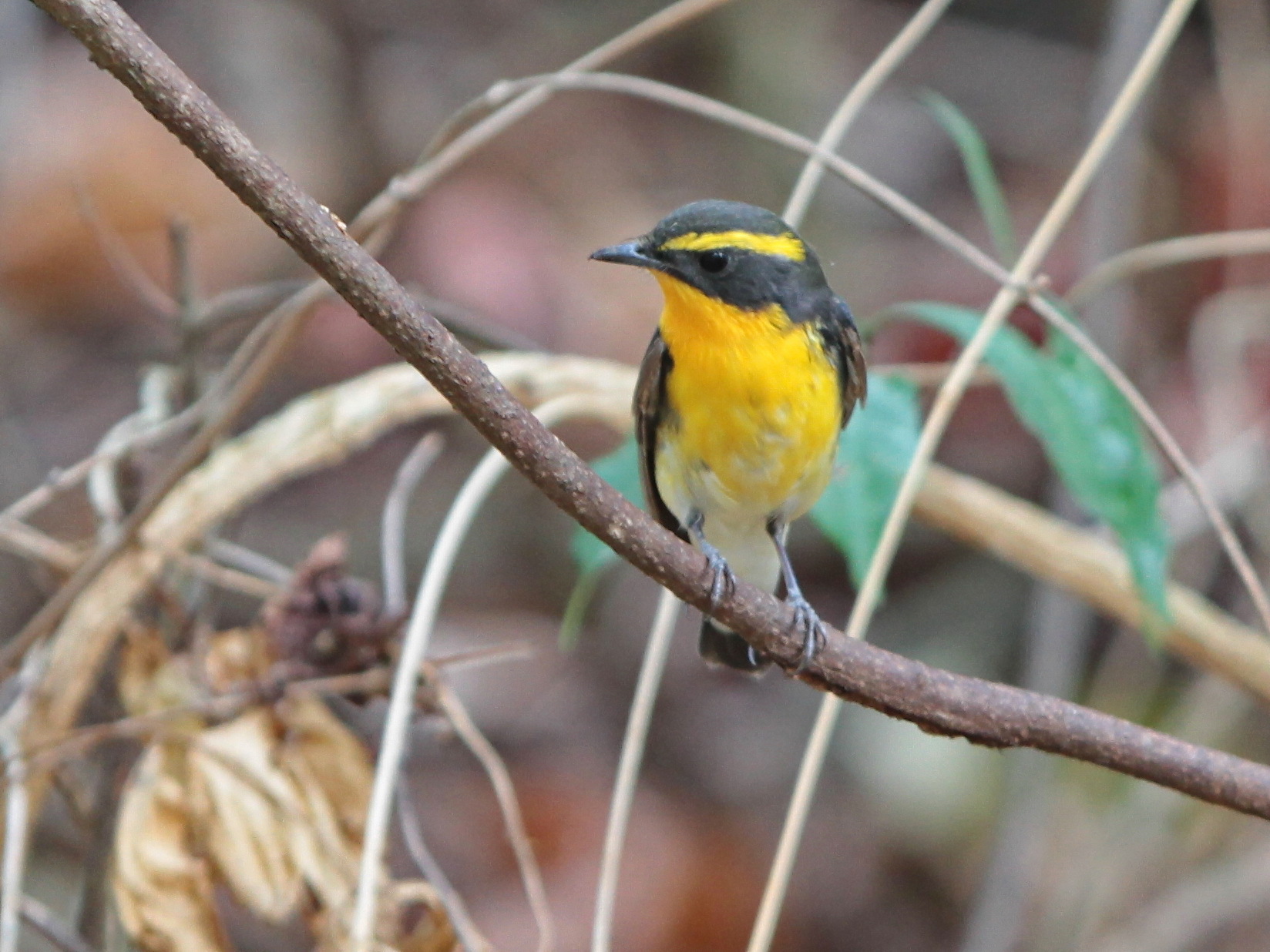
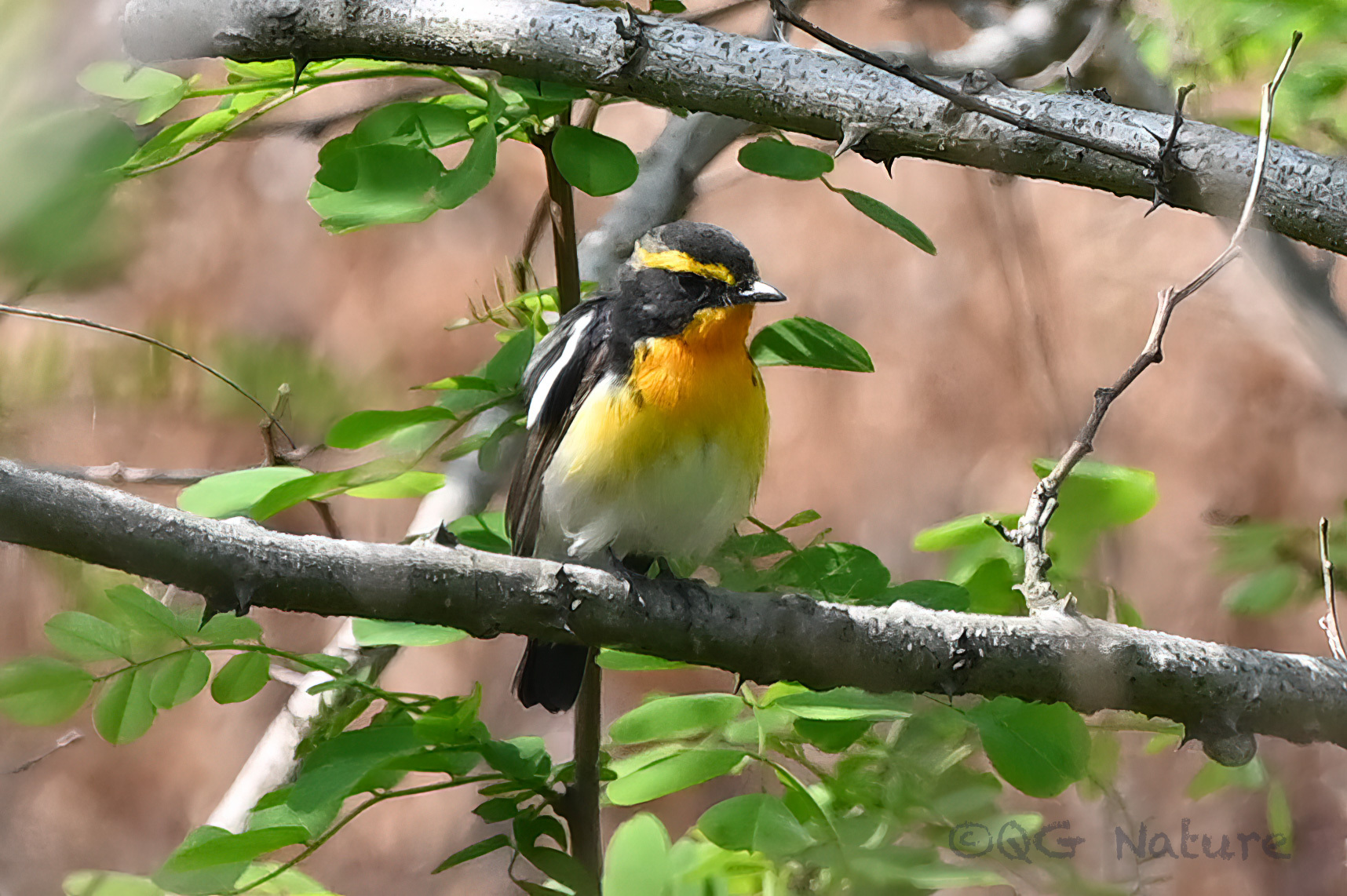
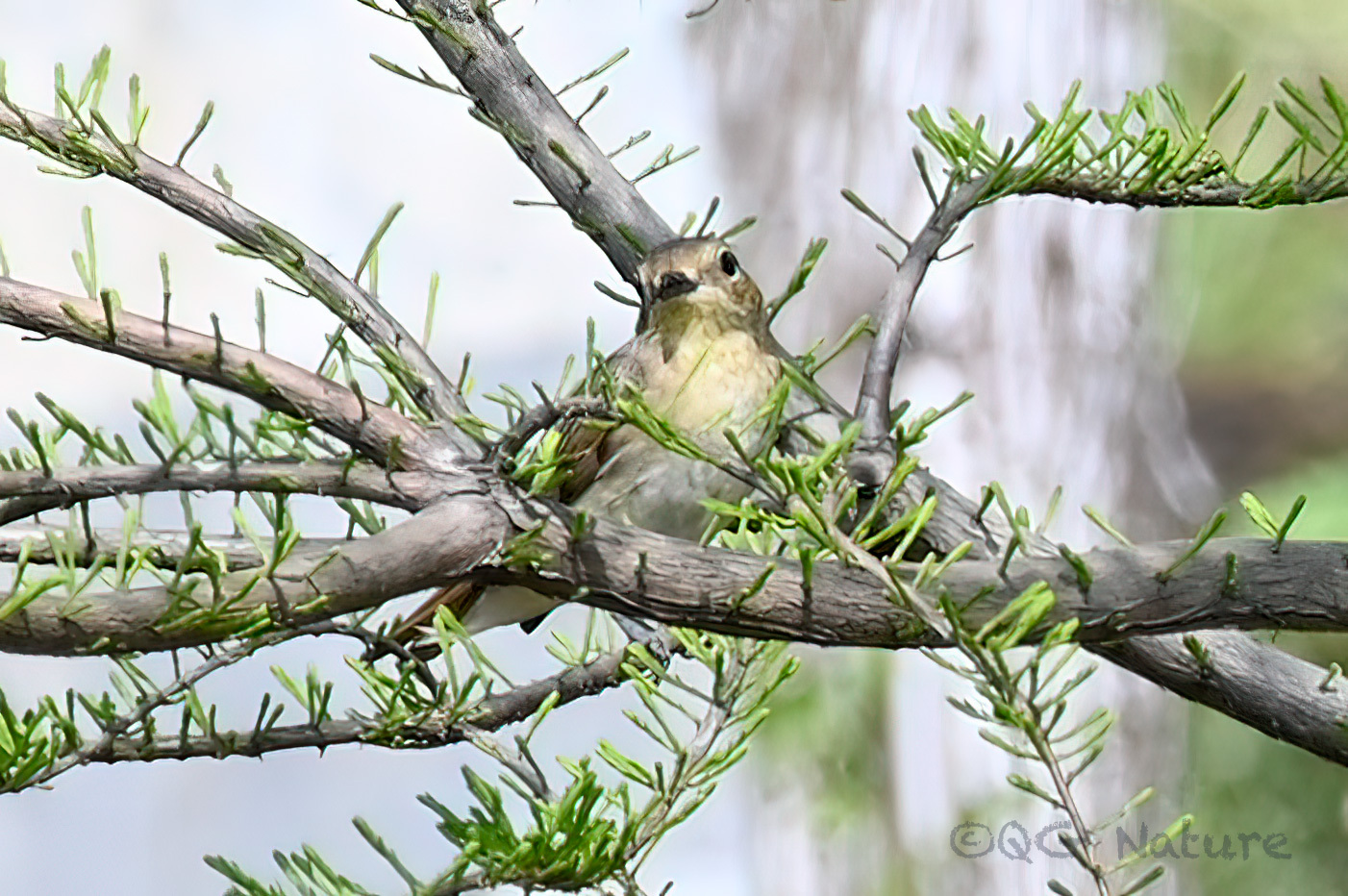
Breeding males have a black crown and mantle, bright orange throat with paler chest and underparts, orange-yellow eyebrow, black wings with a white wing patch, orange-yellow rump, and black tail. Non-breeding males show varying levels of yellow. Females are buff-brown with rusty-colored wings and a two-toned eyering.
Identification
Breeding males are distinctive with black upperparts, orange throat, and white wing patch. Females are buff-brown with rusty wings and a two-toned eyering. Breeding males sing repeated melodious whistles.
Distribution & Habitat
Native to the East Palearctic, ranging from Sakhalin through Japan, Korea, mainland China, and Taiwan. Winters in Southeast Asia, including the Philippines, Vietnam, and Borneo. Vagrants recorded from Australia to Alaska. Subspecies F. n. narcissina ranges from Sakhalin south to the Philippines.
Behavior & Ecology
Primarily feeds on insects in deciduous woodlands. Males arrive before females in early May to prepare nests for mate selection and shelter. Older males typically arrive sooner than younger ones.
Culture
The name references the yellow color of many varieties of the narcissus flower.
Source: Wikipedia · CC BY-SA 3.0
Taxonomy
- Order
- Passeriformes
- Family
- Muscicapidae
- Genus
- Ficedula
Distribution
breeds Sakhalin to Japan; winters to Philippines and Borneo
Vocalizations
Data Sources
Species description from Wikipedia, licensed under CC BY-SA 3.0.
Bird images and sounds sourced from GBIF, contributed by citizen scientists worldwide under Creative Commons licenses.
Taxonomy data from AviList 2025.