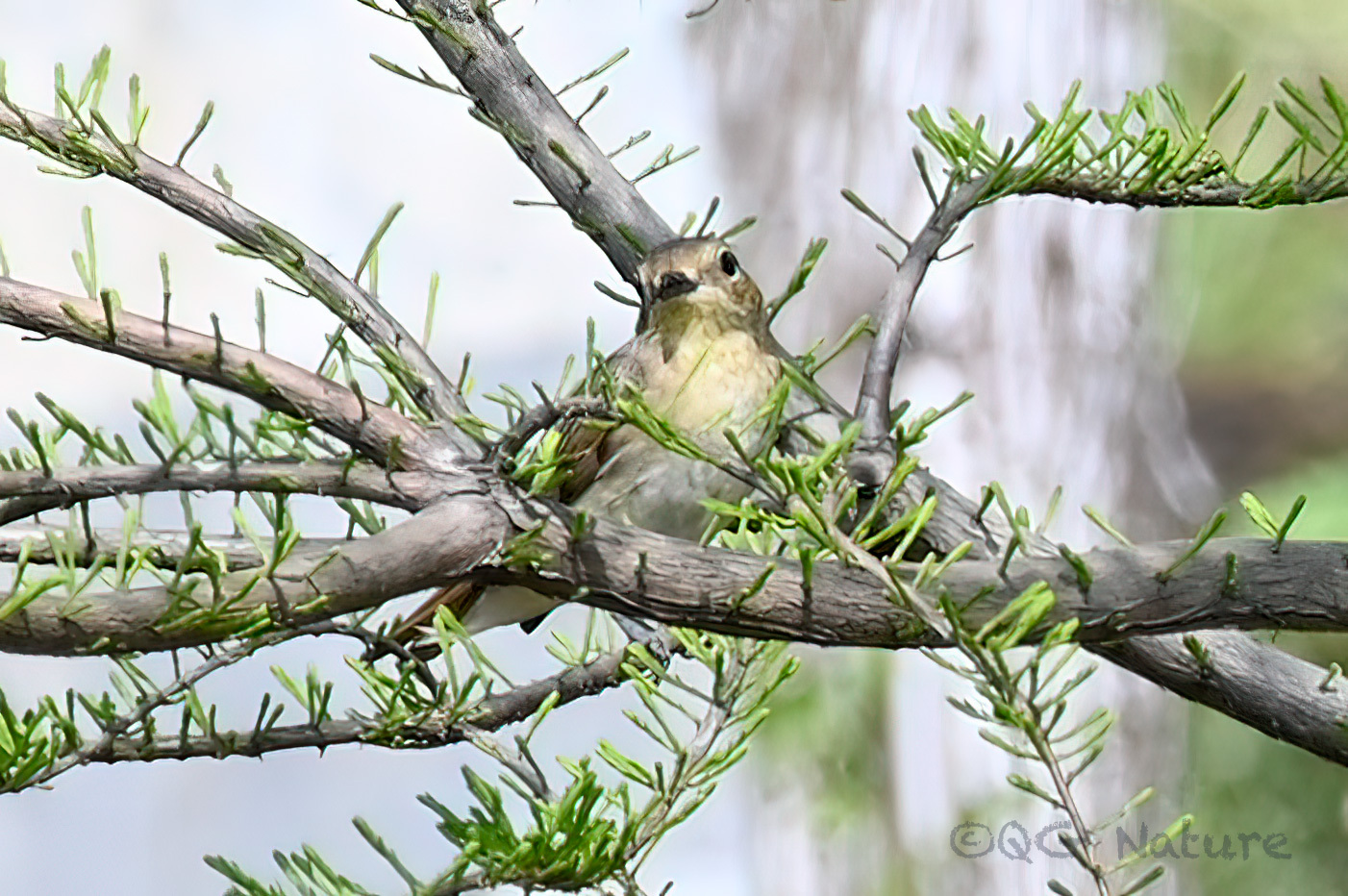
Narcissus Flycatcher
Ficedula narcissina
黄眉姬鹟
Introduction
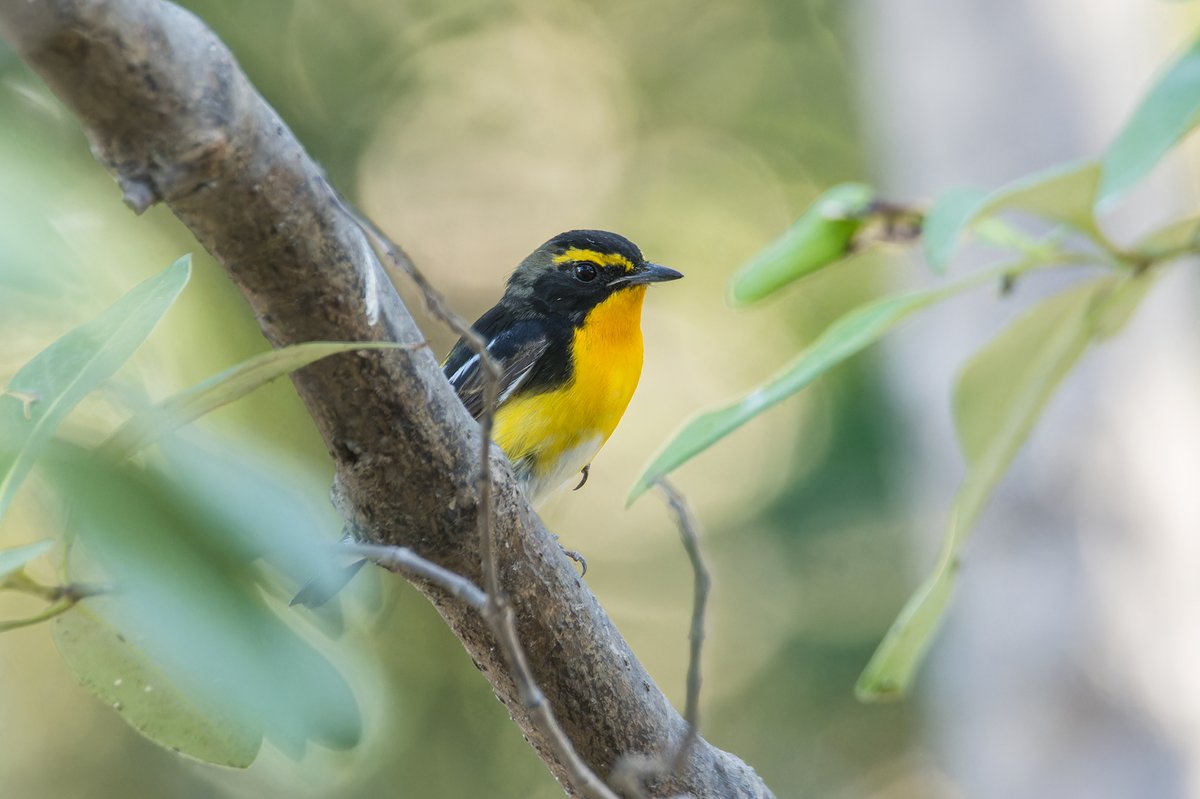
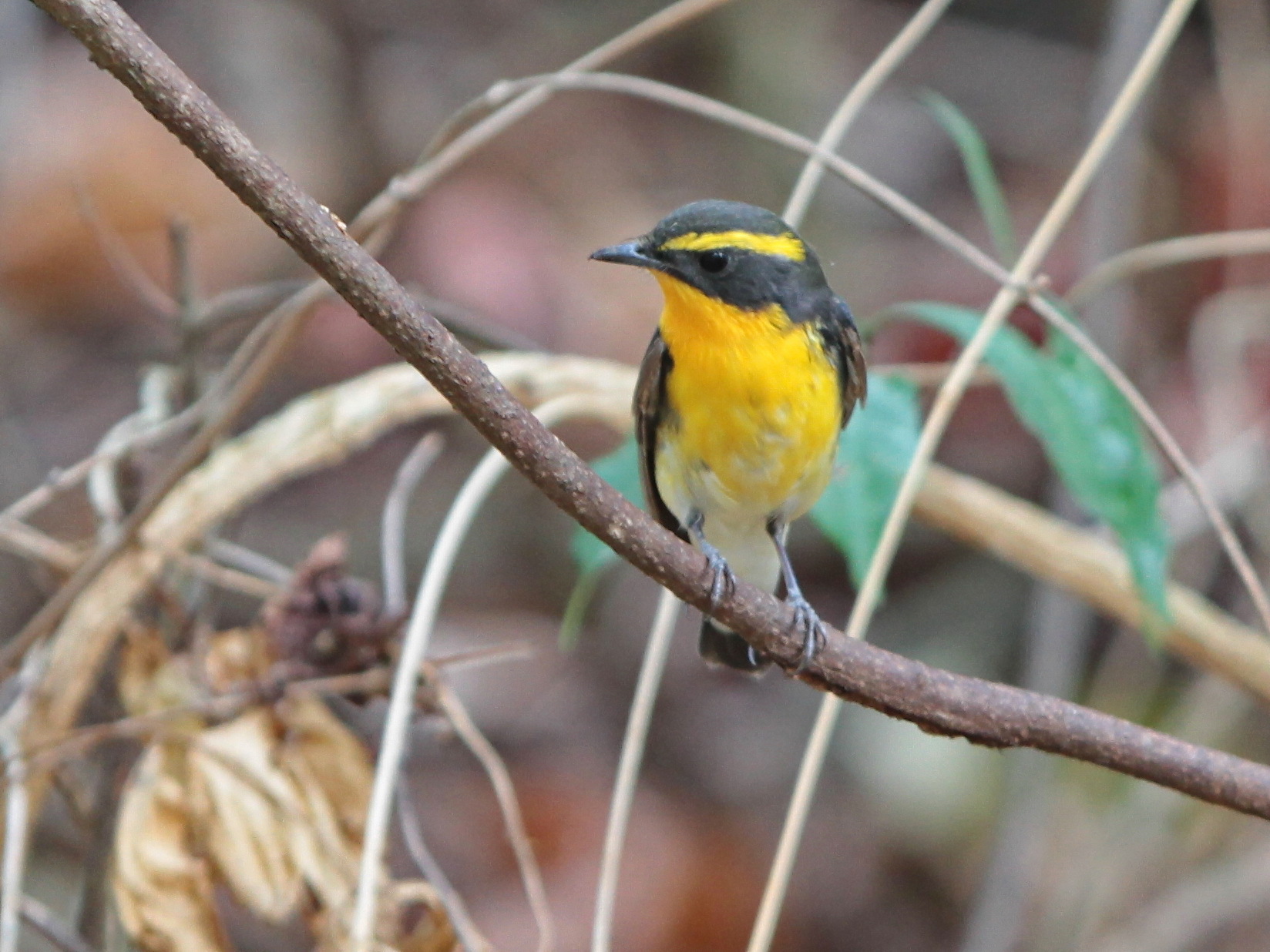
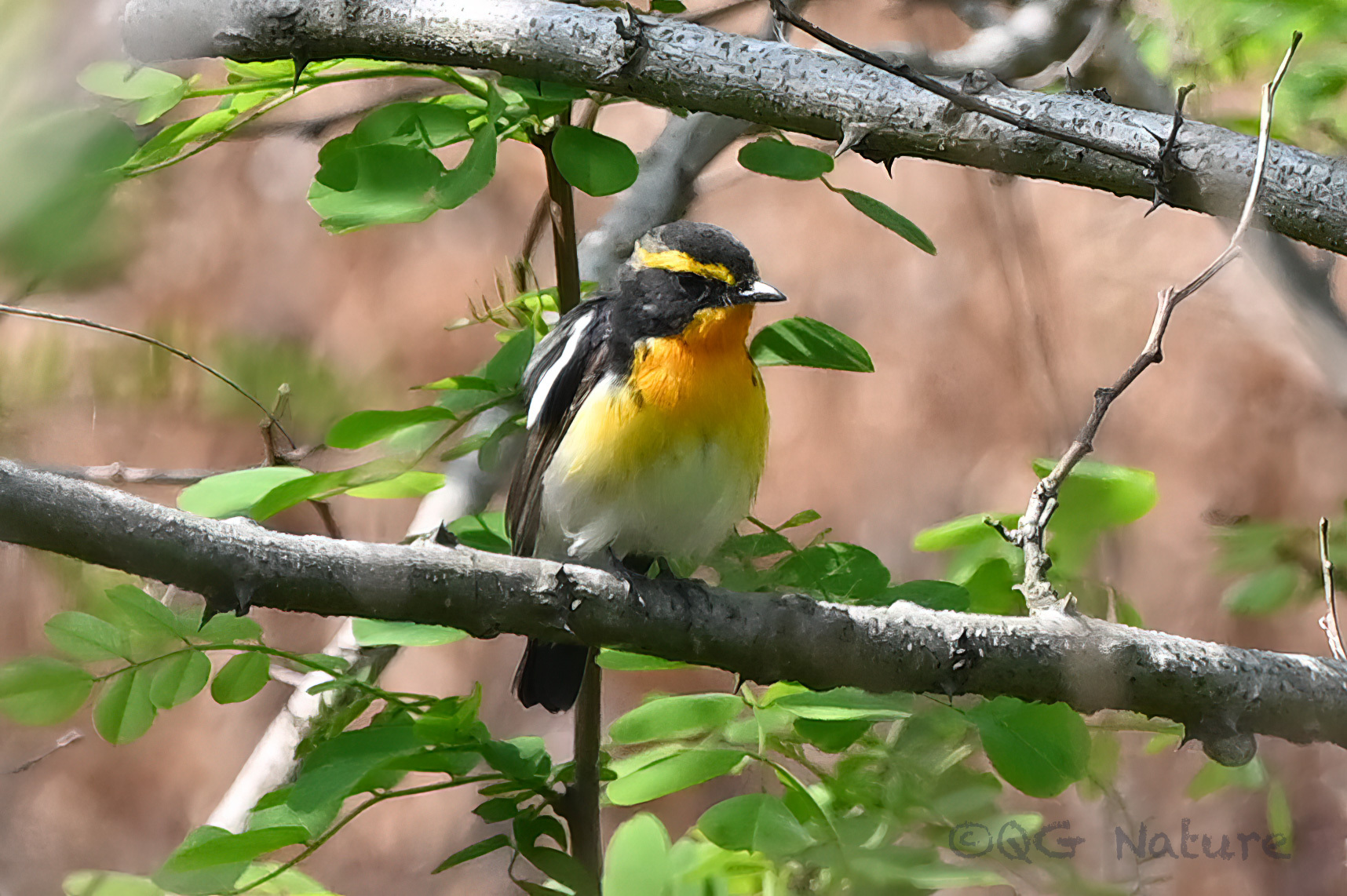
The Narcissus Flycatcher is a migratory songbird of the family Muscicapidae. It breeds in the deciduous forests of East Asia and winters in Southeast Asia. The species exhibits pronounced sexual dimorphism, with breeding males displaying bright yellow plumage on the underparts and rump, black upperparts, and a white supercilium. The name derives from the yellow coloration reminiscent of Narcissus flowers. During the breeding season, males deliver a melodious whistled song from prominent perches within the forest canopy.
Description
This small passerine measures approximately 13-14 centimeters in length. Males in full breeding plumage are unmistakable, featuring a black crown and mantle that contrast sharply with a bright orange throat extending to the upper chest. The underparts are paler orange to yellowish. A distinctive orange-yellow eyebrow stripe adorns the face. The wings are black with a prominent white wing patch, while the rump displays orange-yellow coloration. The tail is black. Non-breeding males show varying amounts of yellow in their plumage. Females are far more subdued, dressed in buff-brown upperparts with rusty-colored wings. They possess a distinctive two-toned eyering and generally lack the bright colors of the male.
Identification
Breeding males are virtually unmistakable across their range due to the unique combination of black upperparts, bright orange throat and yellow rump. The white wing patch is diagnostic when visible. Females present more identification challenges, appearing similar to several other flycatcher species. However, the two-toned eyering and rusty wing coloration help distinguish them from similar species. The green-backed flycatcher (Ficedula elisae) of northern China and the Ryukyu flycatcher (F. owstoni) were formerly considered subspecies and can be confused, though range separation assists identification in most cases.
Distribution & Habitat
This species breeds across the East Palearctic, from Sakhalin southward through Japan, Korea, mainland China, and Taiwan. It is highly migratory, spending the northern winter in Southeast Asia including the Philippines, Vietnam, and Borneo. Spring migration brings individuals to breeding grounds by early May. The species has occurred as a vagrant far beyond its normal range, with records from Australia in the south and Alaska in the north. It inhabits deciduous woodlands during the breeding season.
Behavior & Ecology
Insectivorous by nature, this species actively hawks and gleans insects from foliage in deciduous forest habitats. During breeding season, males arrive at nesting areas before females, with older, more experienced birds typically appearing earlier than younger individuals. This timing advantage allows established males to establish territories and prepare nests before females arrive. Males sing repeated melodious whistles from prominent perches to attract mates and defend territories. The species is known for its ritualized mating behaviors centered around nest site selection.
Conservation
Not assessed in the provided source material.
Culture
The species name references the yellow coloration shared with many varieties of the Narcissus flower. This botanical naming connection reflects the historical practice of using flower colors as inspiration for bird names, particularly for species displaying prominent yellow plumage. No additional folklore or cultural significance is documented in the available source material.
Source: Wikipedia · CC BY-SA 3.0
Taxonomy
- Order
- Passeriformes
- Family
- Muscicapidae
- Genus
- Ficedula
- eBird Code
- narfly2
Distribution
breeds Sakhalin to Japan; winters to Philippines and Borneo
Vocalizations
Data Sources
Species description from Wikipedia, licensed under CC BY-SA 3.0.
Bird images and sounds sourced from GBIF, contributed by citizen scientists worldwide under Creative Commons licenses.
Taxonomy data from AviList 2025.