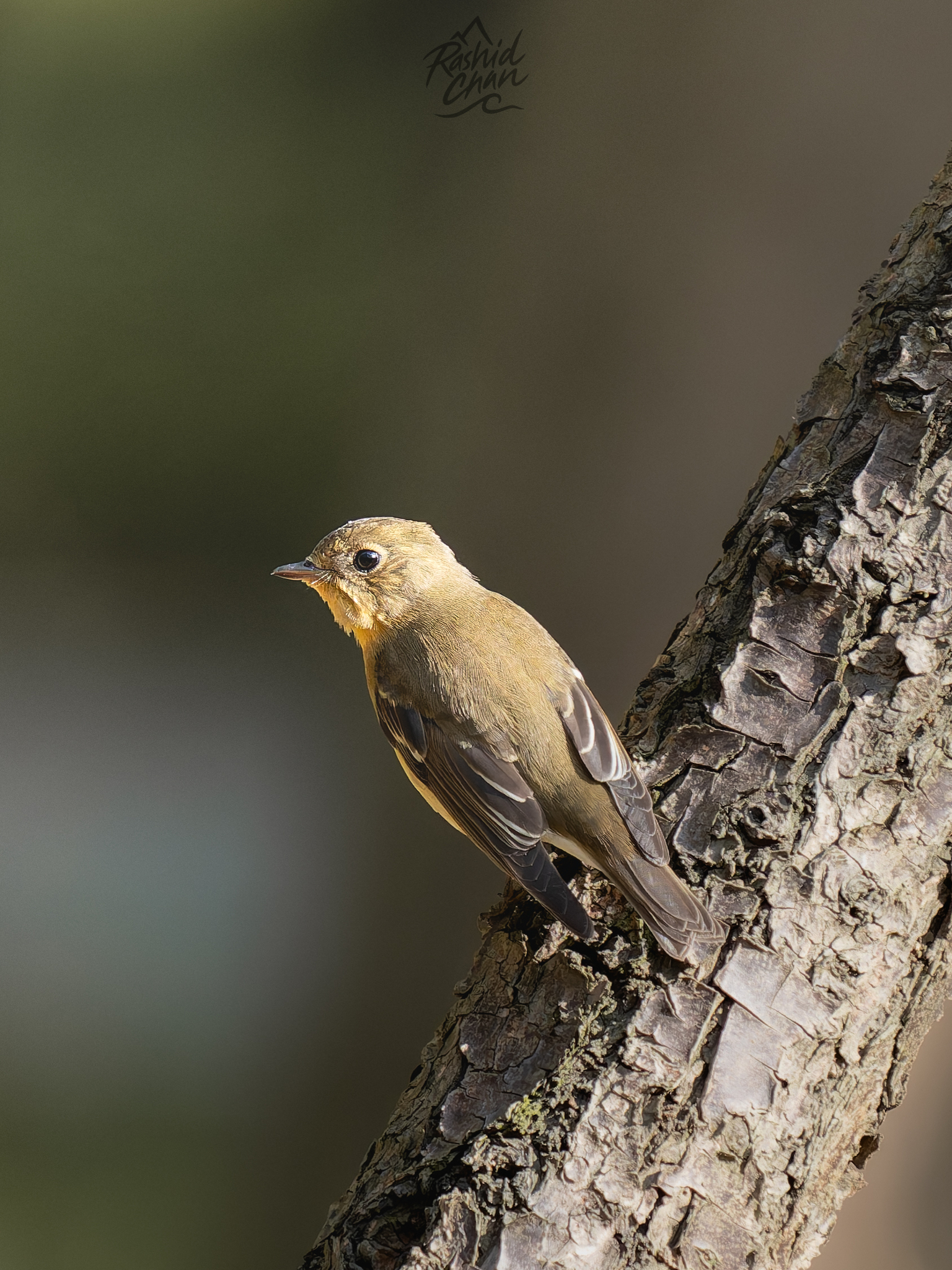
Passeriformes / Muscicapidae / Ficedula
Mugimaki Flycatcher
Ficedula mugimaki · 鸲姬鹟
Introduction
A small passerine of the genus Ficedula in the family Muscicapidae, native to eastern Asia. It inhabits forests and woodlands, particularly at higher elevations, and feeds on flying insects in the tree canopy, often occurring alone or in small groups.
Description
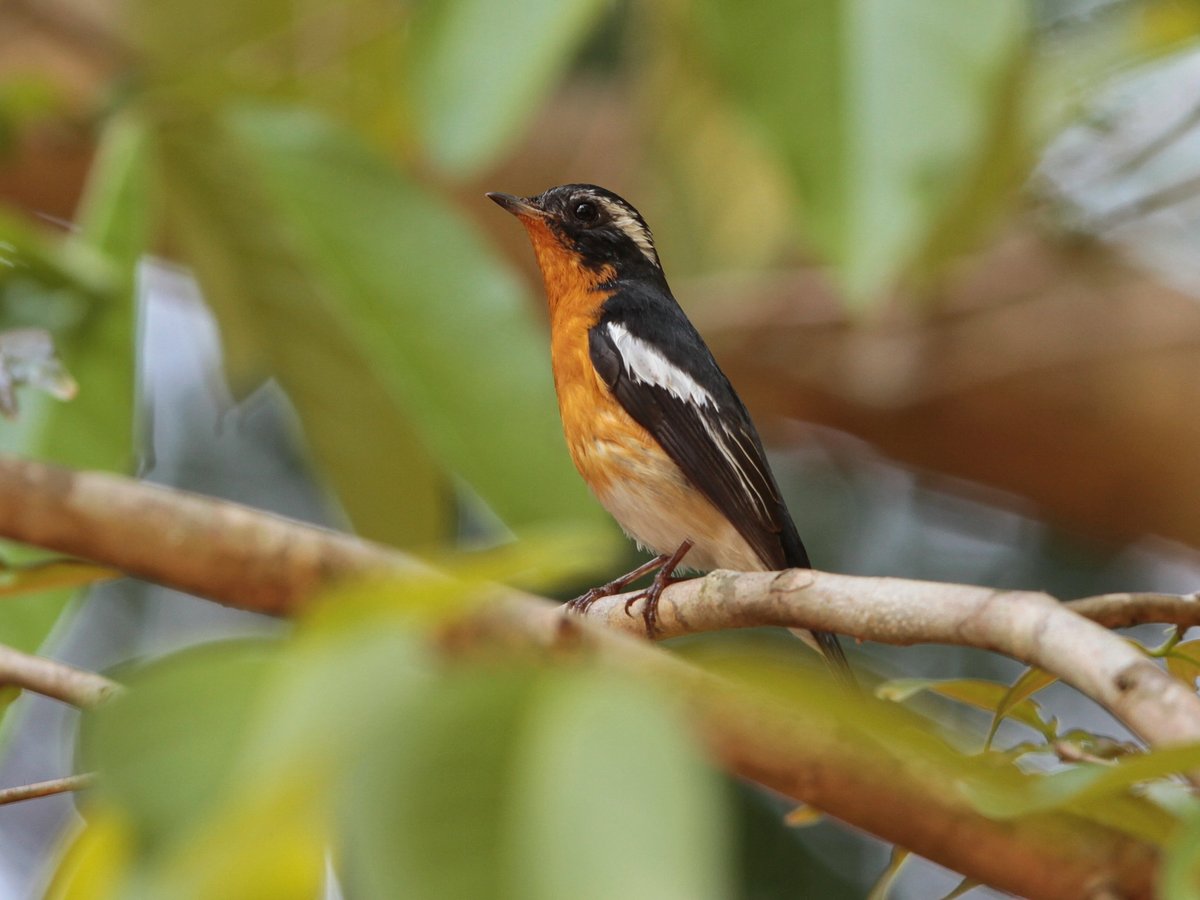
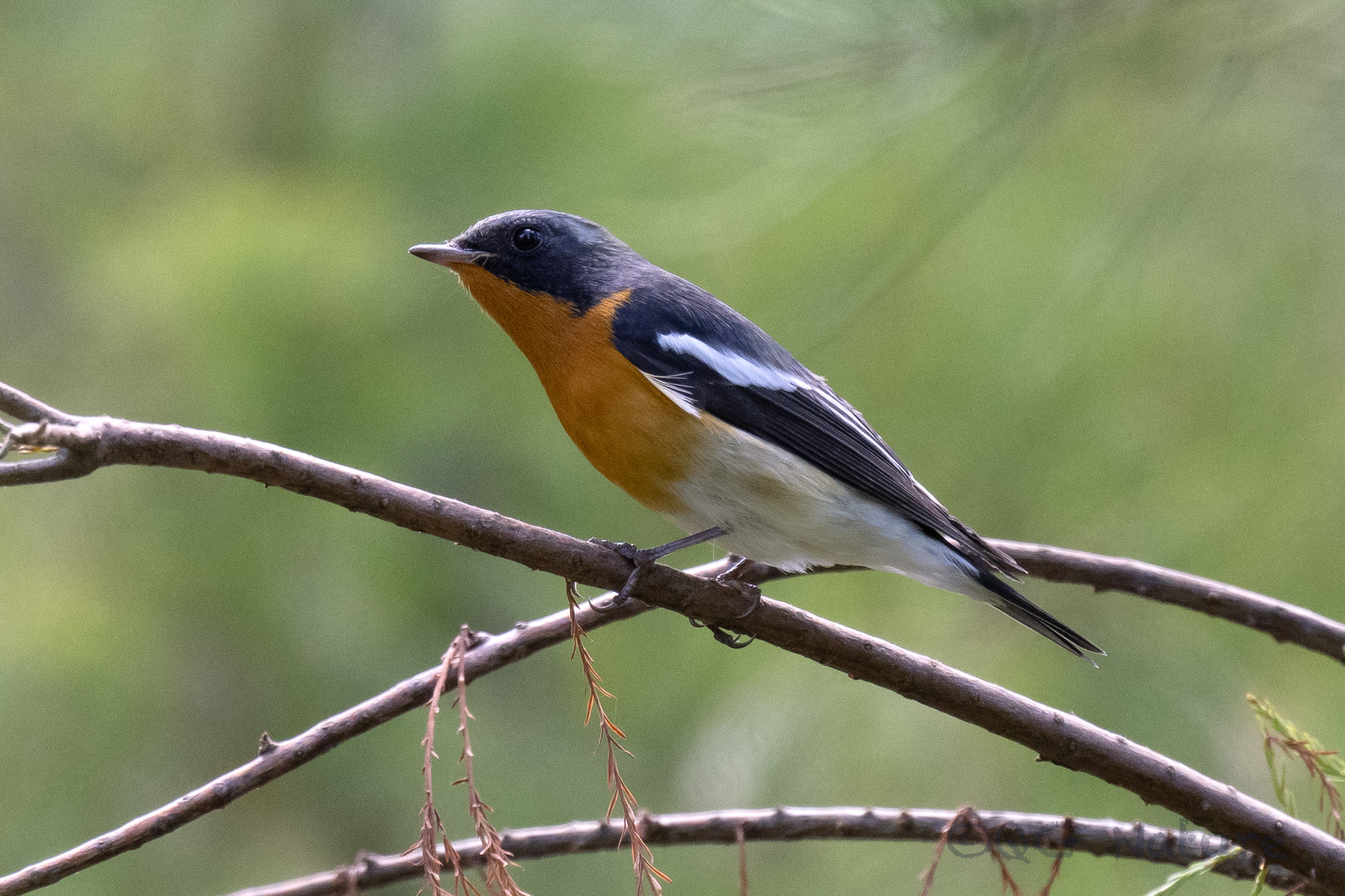
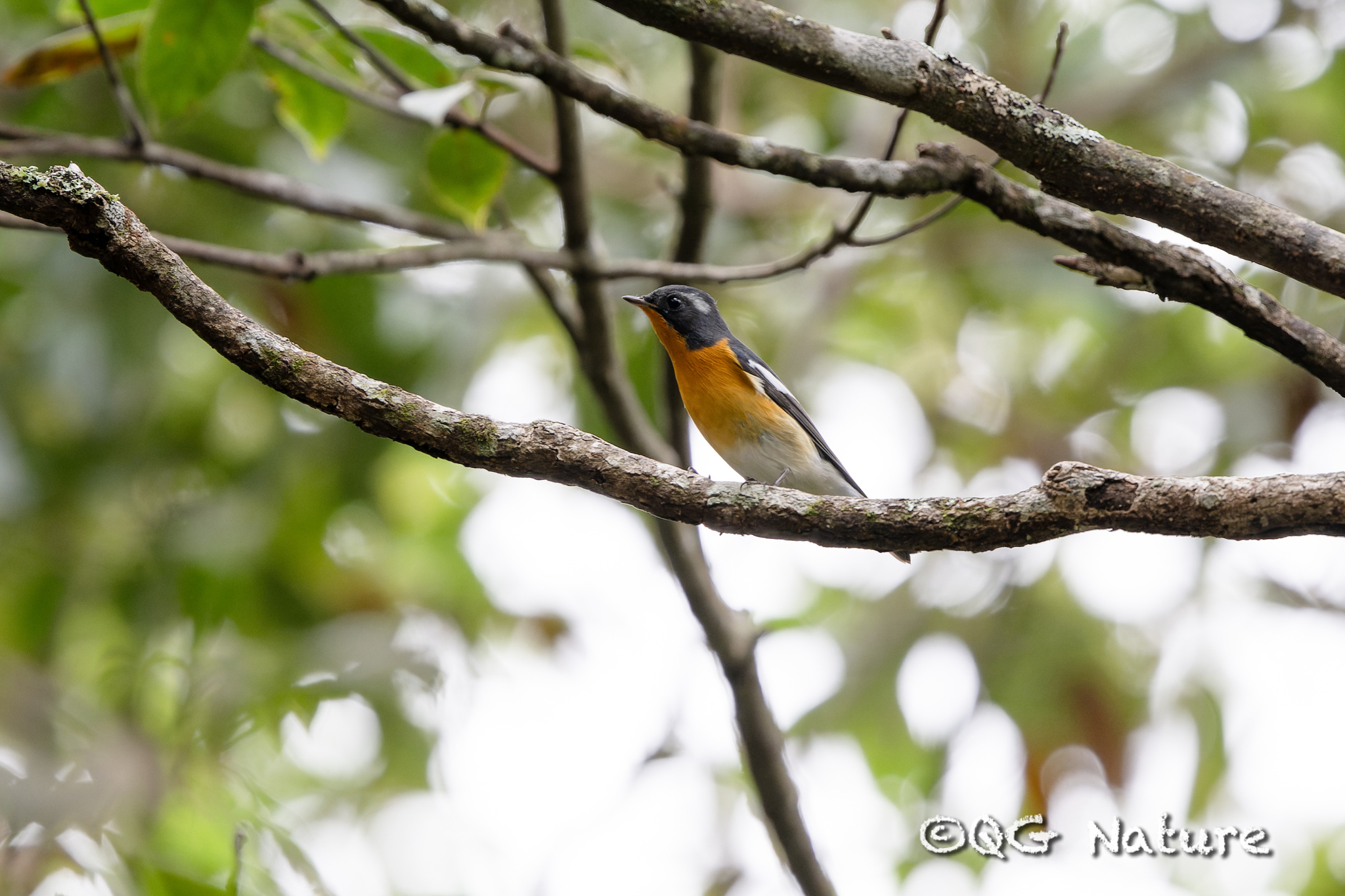
Measures 13 to 13.5 centimetres in length. The adult male has blackish upperparts, a short white supercilium behind the eye, a white wing-patch, white edges to the tertials, and white at the base of the outer tail-feathers. The breast and throat are orange-red, while the belly and undertail-coverts are white. The female is grey-brown above with a pale orange-brown breast and throat, lacking white in the tail. She exhibits one or two pale wingbars instead of a white wing-patch, and her supercilium is faint or absent. Young males resemble females but possess a brighter orange breast, white in the tail, and a more obvious supercilium.
Identification
Key marks include the male's orange-red throat and breast contrasted with blackish upperparts and a distinct white wing-patch. Females are identified by grey-brown upperparts, pale orange-brown underparts, and lack of white in the tail. Often flicks wings and tail.
Distribution & Habitat
Breeds in eastern Siberia and north-east China. Migrates through eastern China, Korea, and Japan in spring and autumn. Winters in Southeast Asia, including western Indonesia and the Philippines. A vagrant was recorded in Alaska (Shemya Island) in 1985. Primarily inhabits forest and woodland at higher elevations, also found in parks and gardens during migration.
Behavior & Ecology
Feeds on flying insects in the tree canopy. Usually occurs alone or in small groups. Produces a rattling call and frequently flicks its wings and tail.
Source: Wikipedia · CC BY-SA 3.0
Taxonomy
- Order
- Passeriformes
- Family
- Muscicapidae
- Genus
- Ficedula
Distribution
breeds southeastern Siberia, Sakhalin, and northeastern China; winters to southeastern Asia and Indonesia
Data Sources
Species description from Wikipedia, licensed under CC BY-SA 3.0.
Bird images and sounds sourced from GBIF, contributed by citizen scientists worldwide under Creative Commons licenses.
Taxonomy data from AviList 2025.