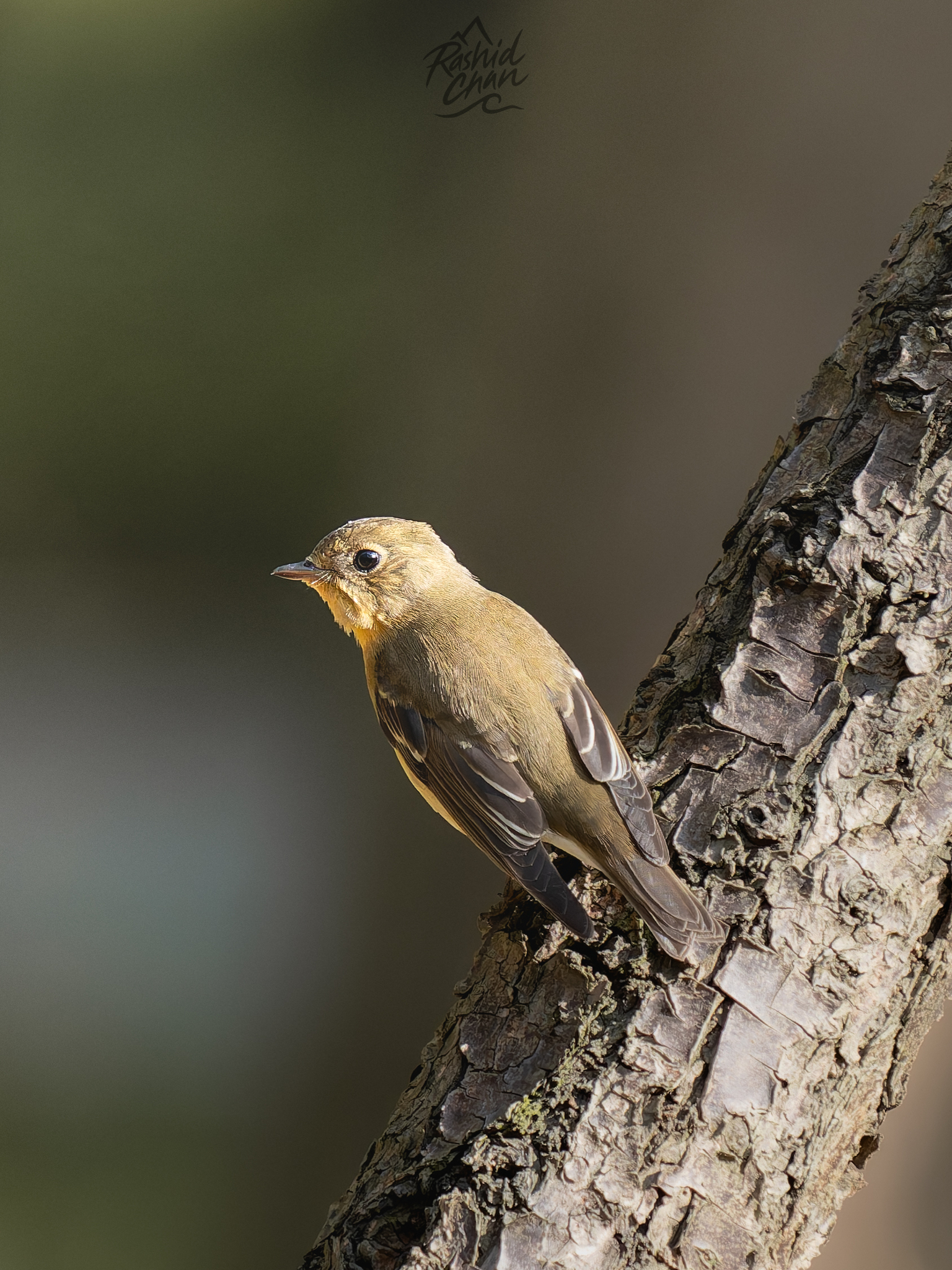
Mugimaki Flycatcher
Ficedula mugimaki
鸲姬鹟
Introduction
This small flycatcher belongs to the Old World flycatcher family (Muscicapidae). It breeds in boreal and temperate forests of the Russian Far East, northeastern China, and northern Japan. During migration, it passes through China, Korea, and Japan. It winters in Southeast Asia, including Thailand, Malaysia, Indonesia, and the Philippines, where it inhabits tropical woodlands and forest edges. The species forages by hawking insects from perches in the mid and upper canopy, making repeated sallies to capture flying prey. Its common name derives from the Japanese words "karugamo" (wheat-sower), referring to its tendency to appear in agricultural areas during migration.
Description
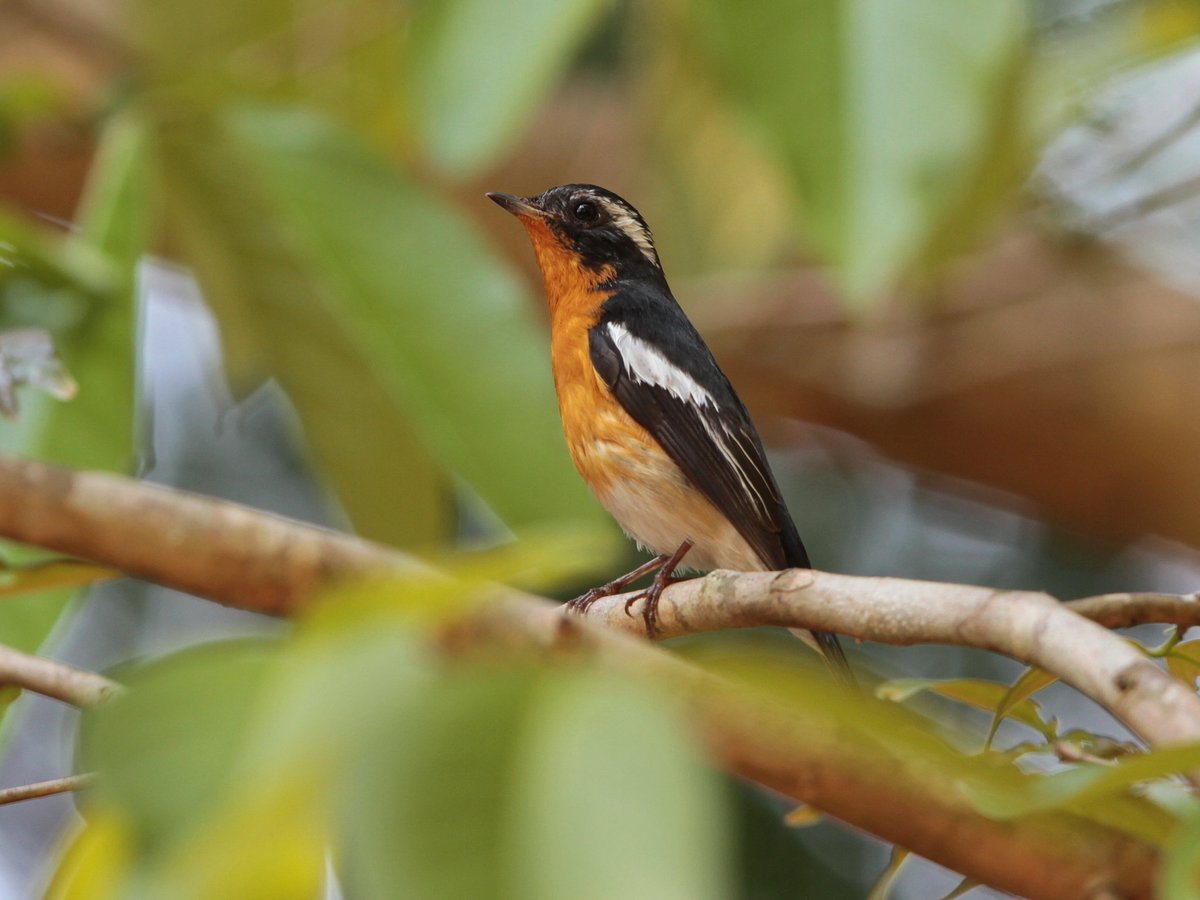
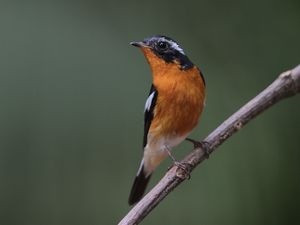
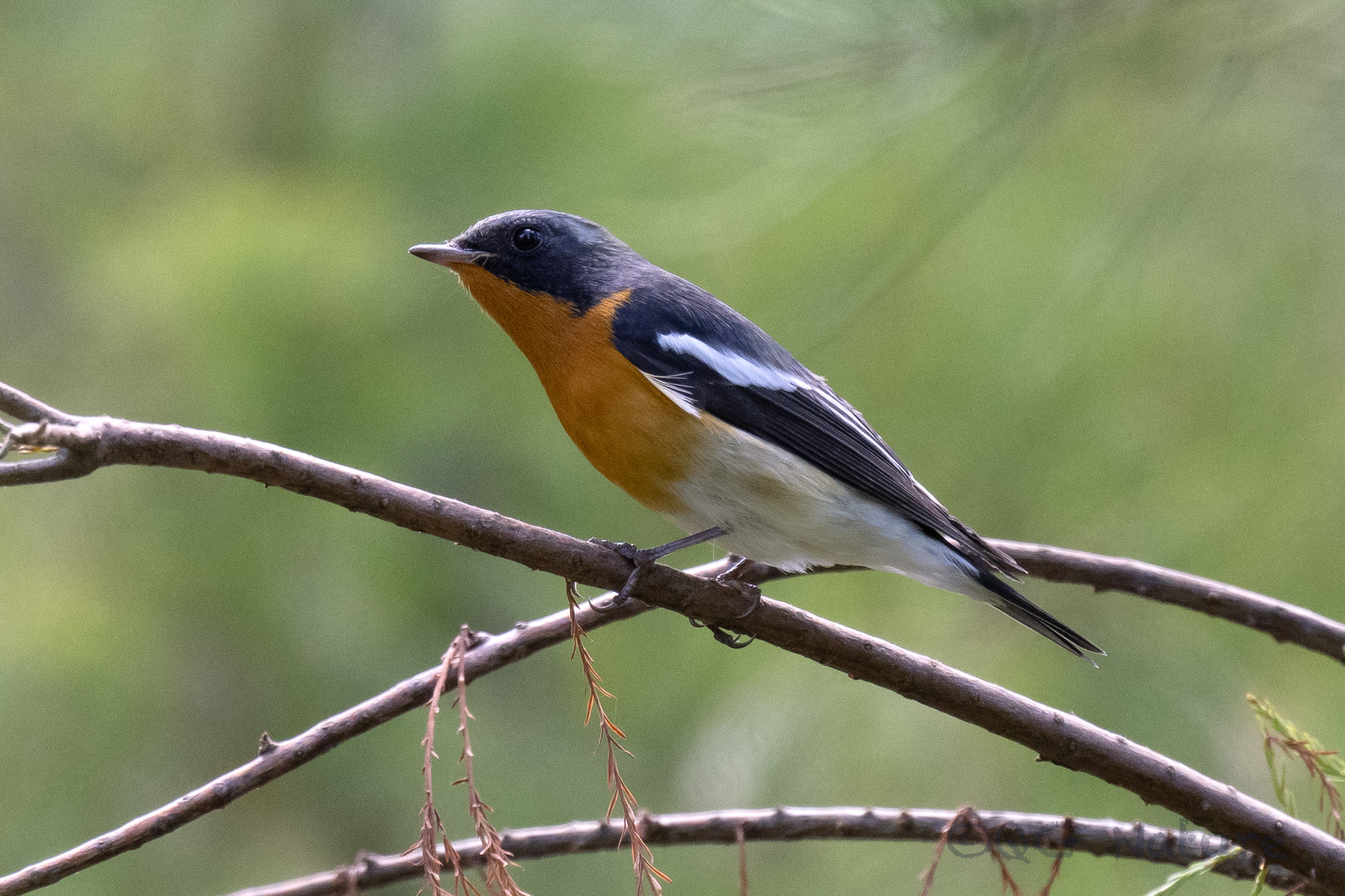
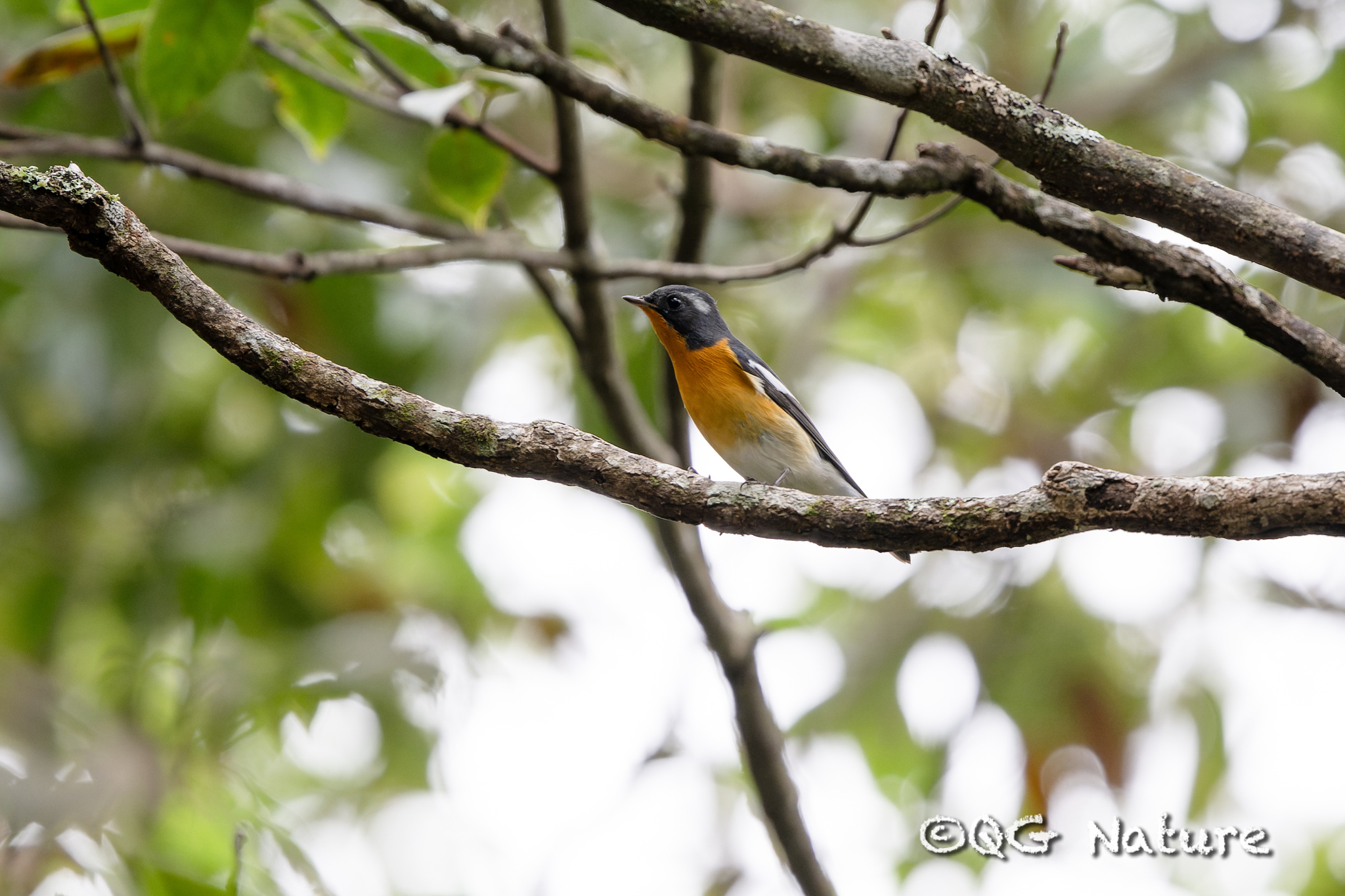
One of the smaller flycatchers, this species measures a compact 13 to 13.5 centimeters in length. The adult male presents a striking contrast between its blackish upperparts and bright orange-red underparts. Key identifying features include a short white supercilium behind the eye, a distinct white wing-patch, white edges to the tertial feathers, and white at the base of the outer tail-feathers. The breast and throat glow in orange-red while the belly and undertail-coverts remain pure white. Females are considerably more subdued, dressed in grey-brown upperparts with pale orange-brown coloring on the breast and throat. They lack the male's white tail patches, possessing instead one or two faint wingbars, and their supercilium is either very weak or absent entirely. Young males resemble females but show a brighter orange breast, white markings in the tail, and a more prominent supercilium. All ages exhibit a distinctive rattling call and frequent wing and tail movements.
Identification
The combination of size, plumage pattern, and behavior provides the key to identification. Adult males in breeding plumage are unmistakable with their black upperparts, orange breast and throat, and the distinctive white wing-patch and tail-base markings. Females and first-year birds can be more challenging but are distinguished from similar flycatchers by their relatively plain grey-brown upperparts, pale orange breast coloration, and the presence of wingbars rather than a solid wing-patch. The frequent flicking of wings and tail, combined with the habit of sallying from exposed perches to catch flying insects, further helps distinguish this species. The relatively small size and compact build separate it from larger flycatcher species in the same regions.
Distribution & Habitat
This species breeds across eastern Siberia and northeastern China in boreal and temperate forest habitats. During migration, it passes through eastern China, Korea, and Japan in both spring and autumn. The wintering grounds extend through Southeast Asia to western Indonesia and the Philippines, where it inhabits forest and woodland areas. Vagrants have been recorded far outside the normal range, including a documented individual on Shemya Island in Alaska in 1985—an exceptional range expansion. An unverified record from Humberside, England in 1991 was ultimately attributed to possible captive origin. The species prefers forested habitats at higher elevations during breeding and may be found in parks and gardens during migration stops. It typically occurs as a solitary bird or in small groups while feeding.
Behavior & Ecology
This species is an active aerial insectivore, typically feeding alone or in loose pairs in the tree canopy. It employs the classic flycatcher strategy of perching on exposed branches and making short sallies to capture flying insects in mid-air before returning to its observation post. The breeding behavior follows the typical pattern for its family, with both parents involved in raising the young. A distinctive rattling call is frequently given, and individuals are almost constantly on the move, displaying characteristic flicking of both wings and tail during foraging and while perched. During migration, it may join mixed-species foraging flocks but generally maintains a somewhat solitary lifestyle even on the wintering grounds.
Culture
The species carries an evocative Japanese name meaning 'wheat-sower,' a reference to its habit of appearing in agricultural landscapes during migration periods when it follows the seasonal movements of flying insects associated with grain crops. This cultural naming reflects the long-standing attention paid to bird movements and seasonal patterns in Japanese natural history traditions, where even small passerines often carry descriptive names tied to their habits or appearance. The species is sometimes also known as the robin flycatcher, though this alternative name is less commonly used and may cause confusion with other similarly named species.
Source: Wikipedia · CC BY-SA 3.0
Taxonomy
- Order
- Passeriformes
- Family
- Muscicapidae
- Genus
- Ficedula
- eBird Code
- mugfly
Distribution
breeds southeastern Siberia, Sakhalin, and northeastern China; winters to southeastern Asia and Indonesia
Data Sources
Species description from Wikipedia, licensed under CC BY-SA 3.0.
Bird images and sounds sourced from GBIF, contributed by citizen scientists worldwide under Creative Commons licenses.
Taxonomy data from AviList 2025.