Falconiformes / Falconidae / Falco
Common Kestrel
Falco tinnunculus · 红隼
Introduction
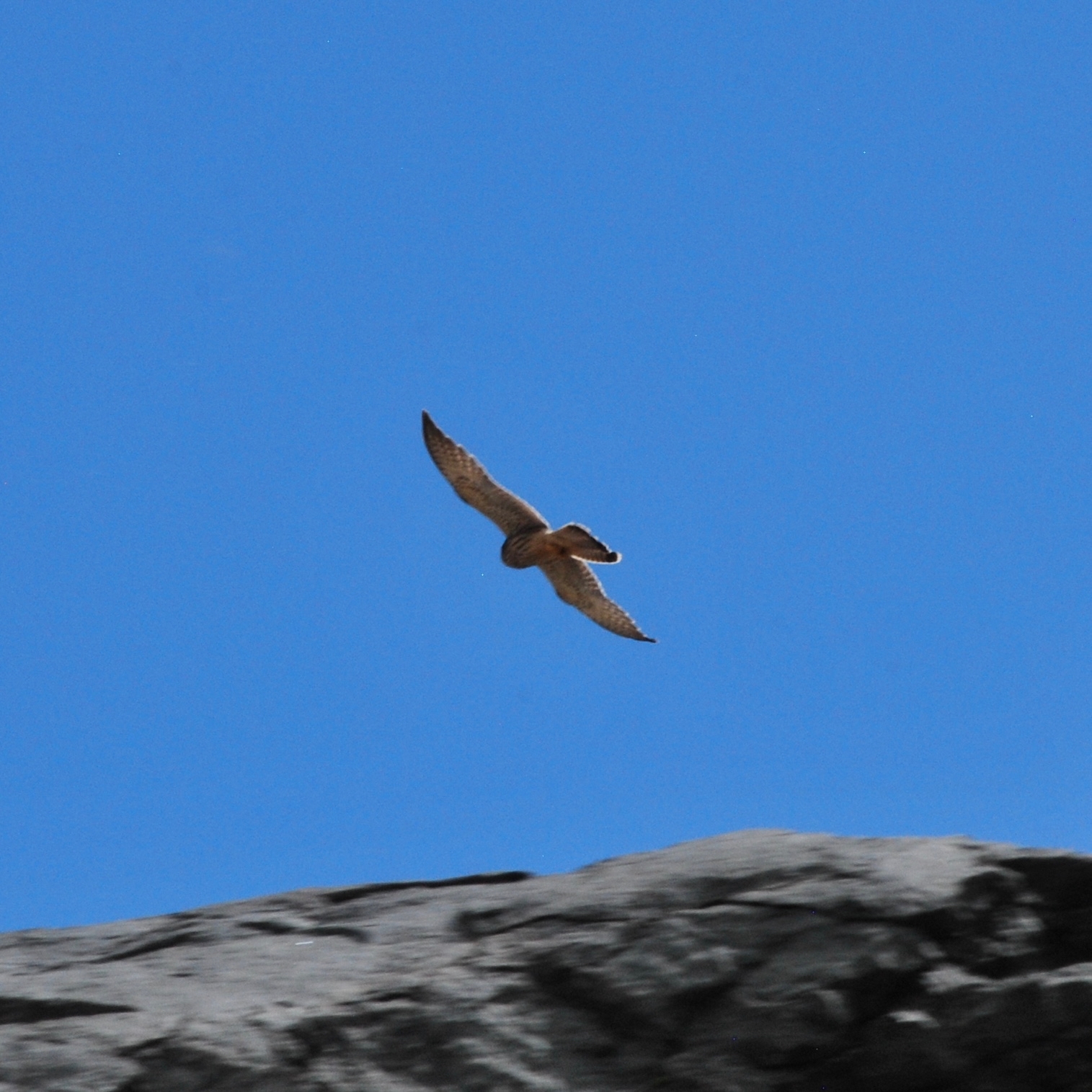
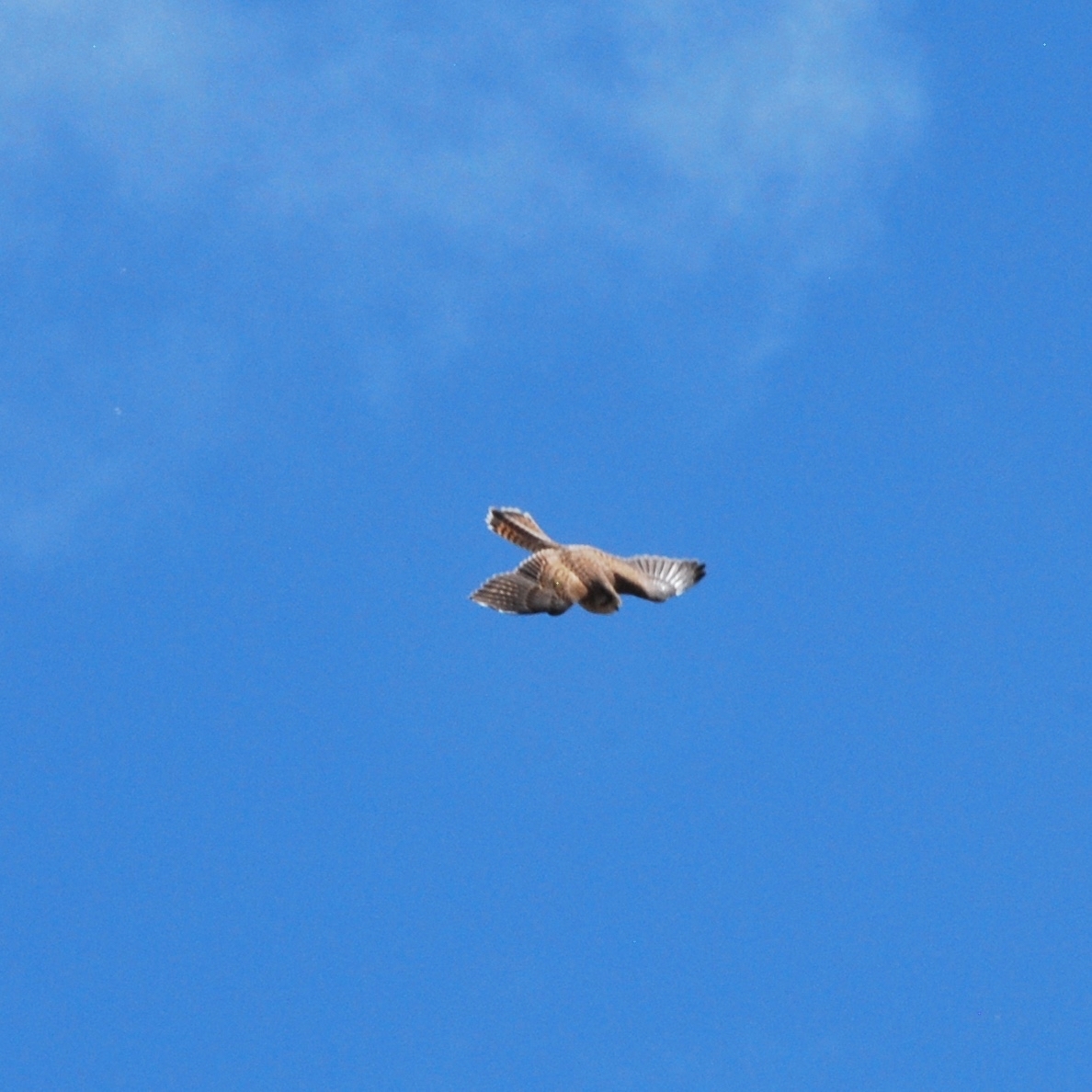
A predatory bird in the falcon family Falconidae, widespread across Europe, Asia, and Africa, with occasional records on the east coast of North America. It inhabits open landscapes including fields, heaths, shrublands, and steppes, adapting to human settlements if vegetation is available. Distinctive for its ability to hover while hunting and its capacity to see near-ultraviolet light to detect rodent urine trails. Globally not considered threatened by the IUCN.
Description
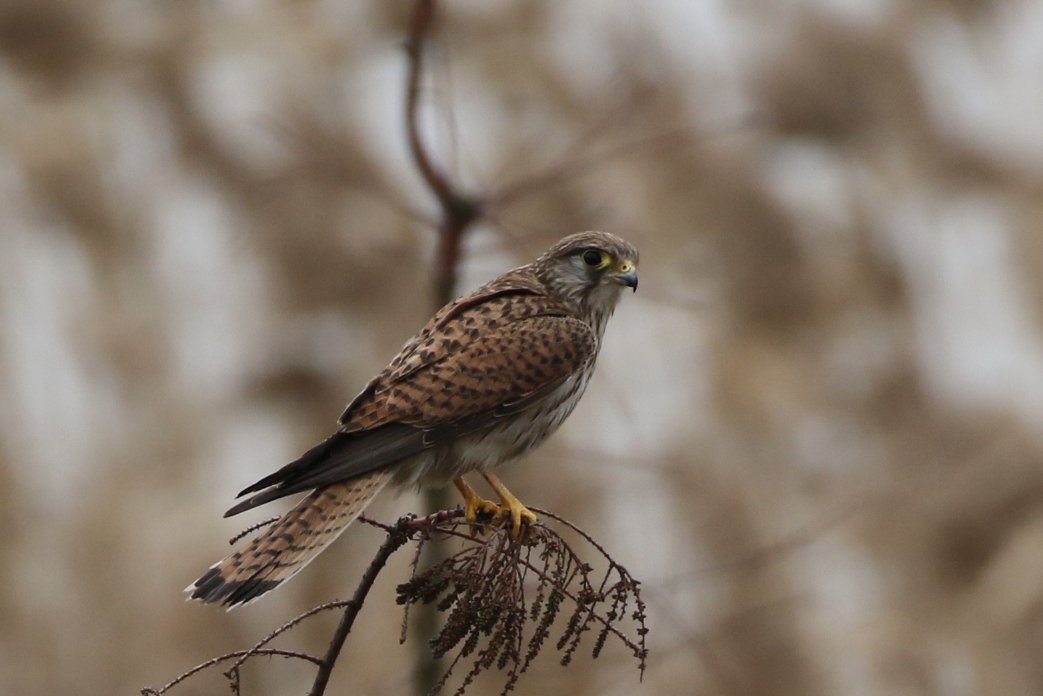
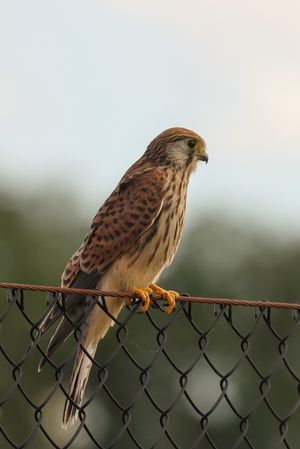
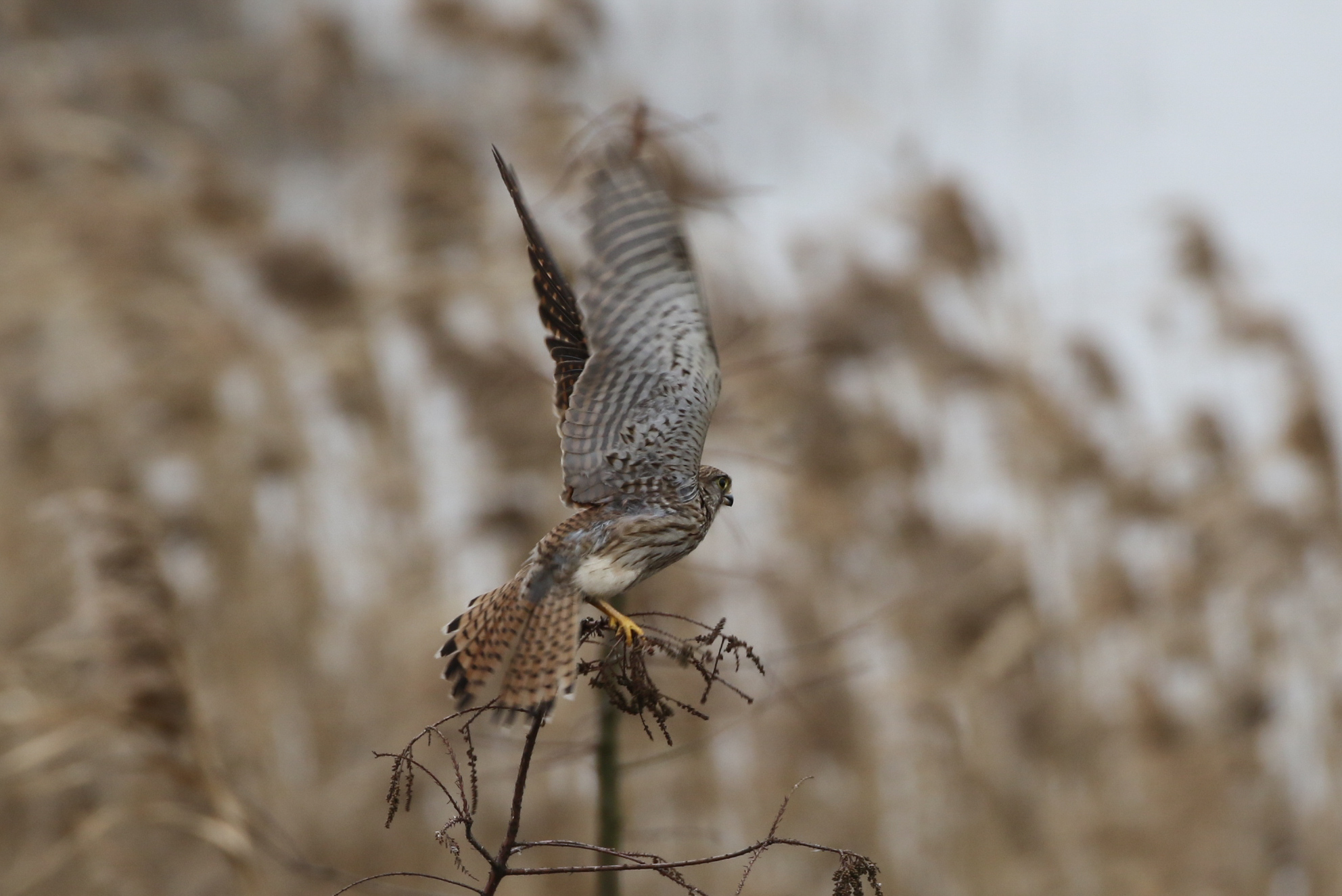
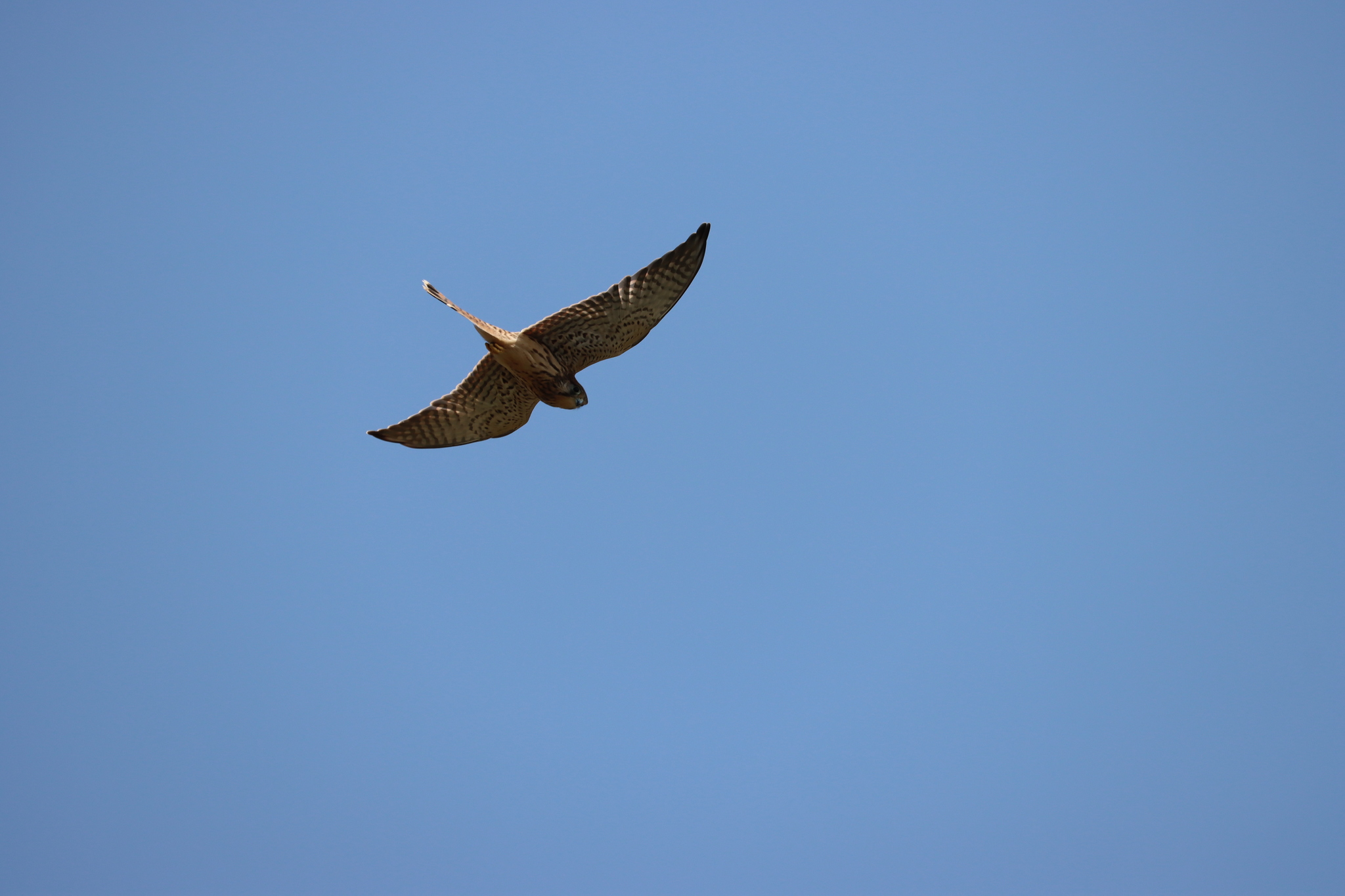
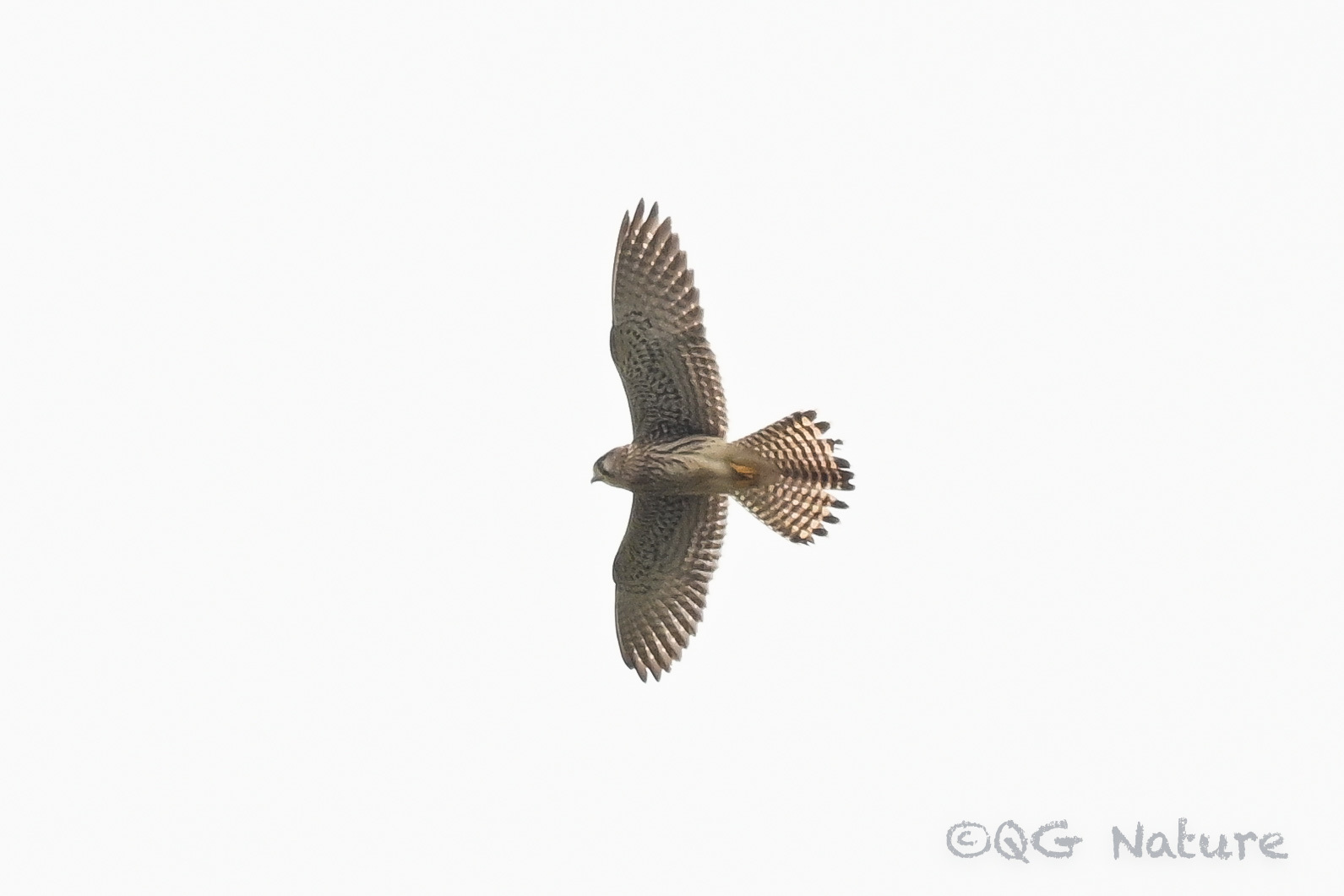
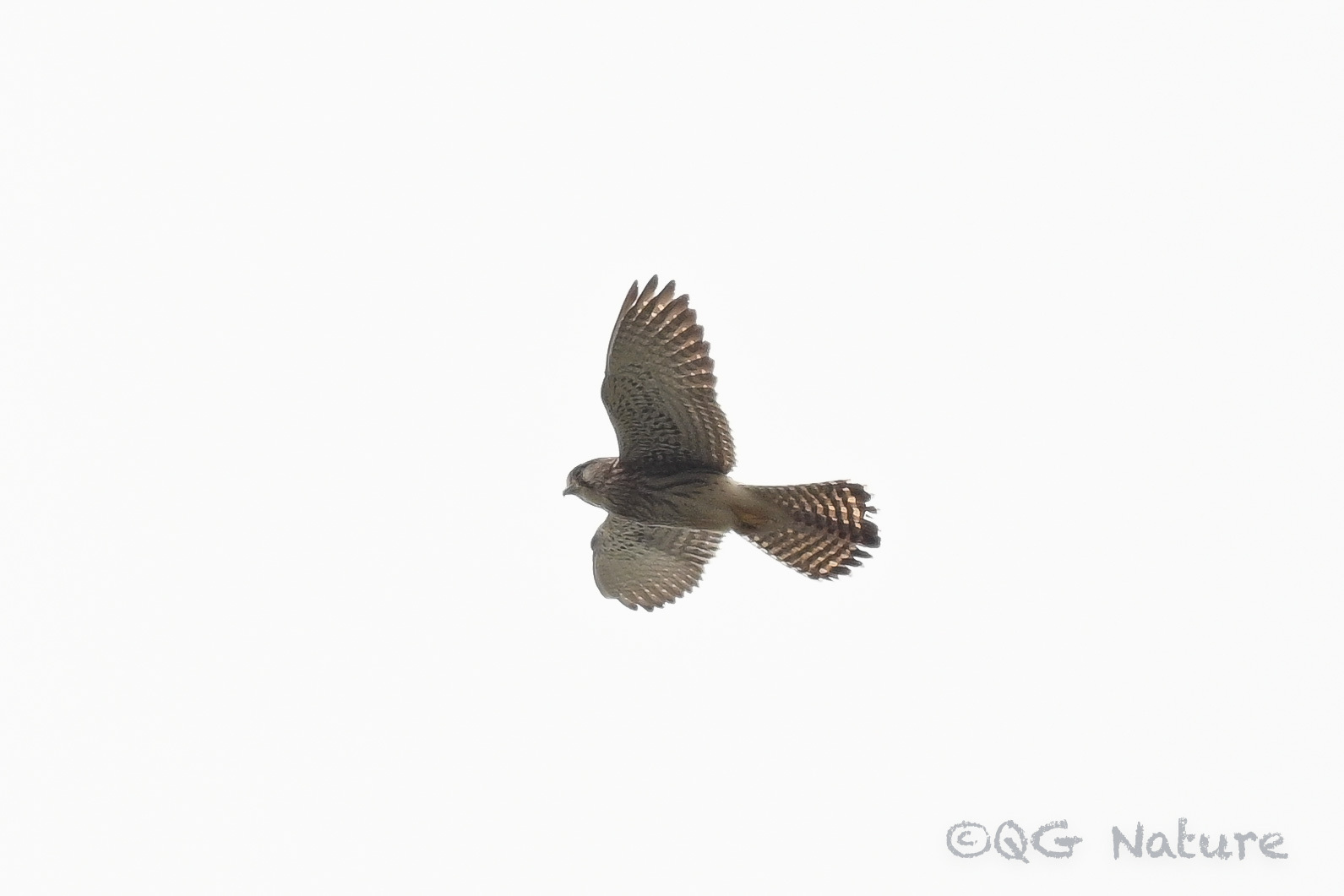
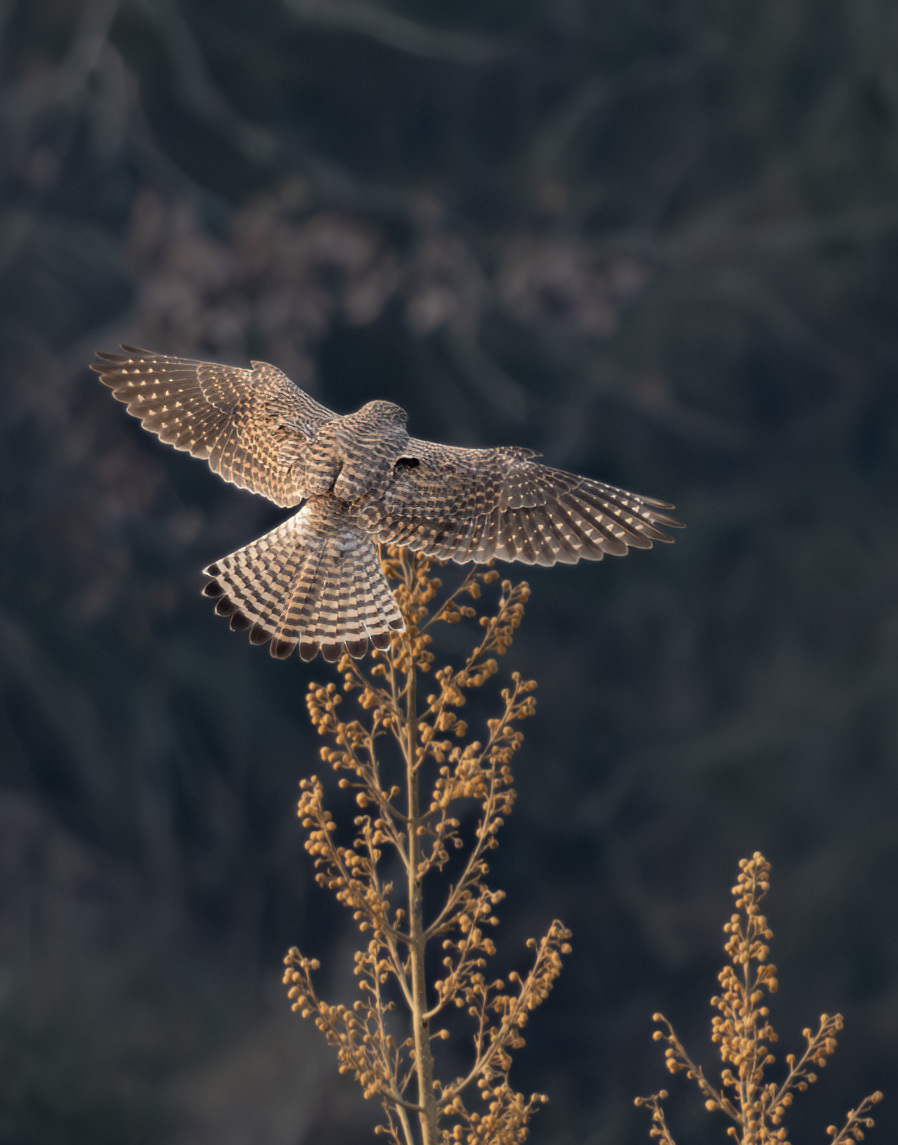
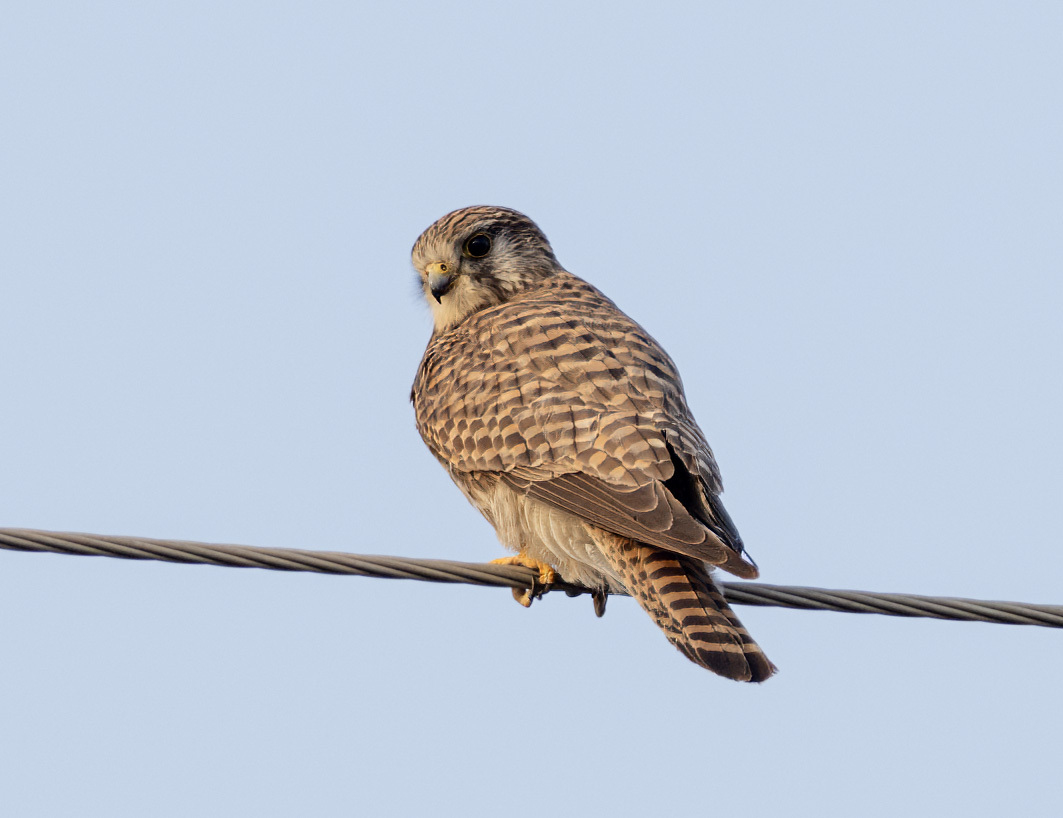
Measures 32–39 cm in length with a wingspan of 65–82 cm. Exhibits sexual dimorphism: males have a blue-grey cap and tail with fewer black spots, while females have a brown tail with black bars and more heavily streaked plumage. Both sexes feature a light chestnut brown upperside with blackish spots, buff underside with narrow blackish streaks, and a prominent black malar stripe. The tail has a black tip with a narrow white rim in both sexes. Cere, feet, and eye ring are bright yellow; bill and iris are dark. Juveniles resemble adult females but with wider underside streaks and paler bare parts.
Identification
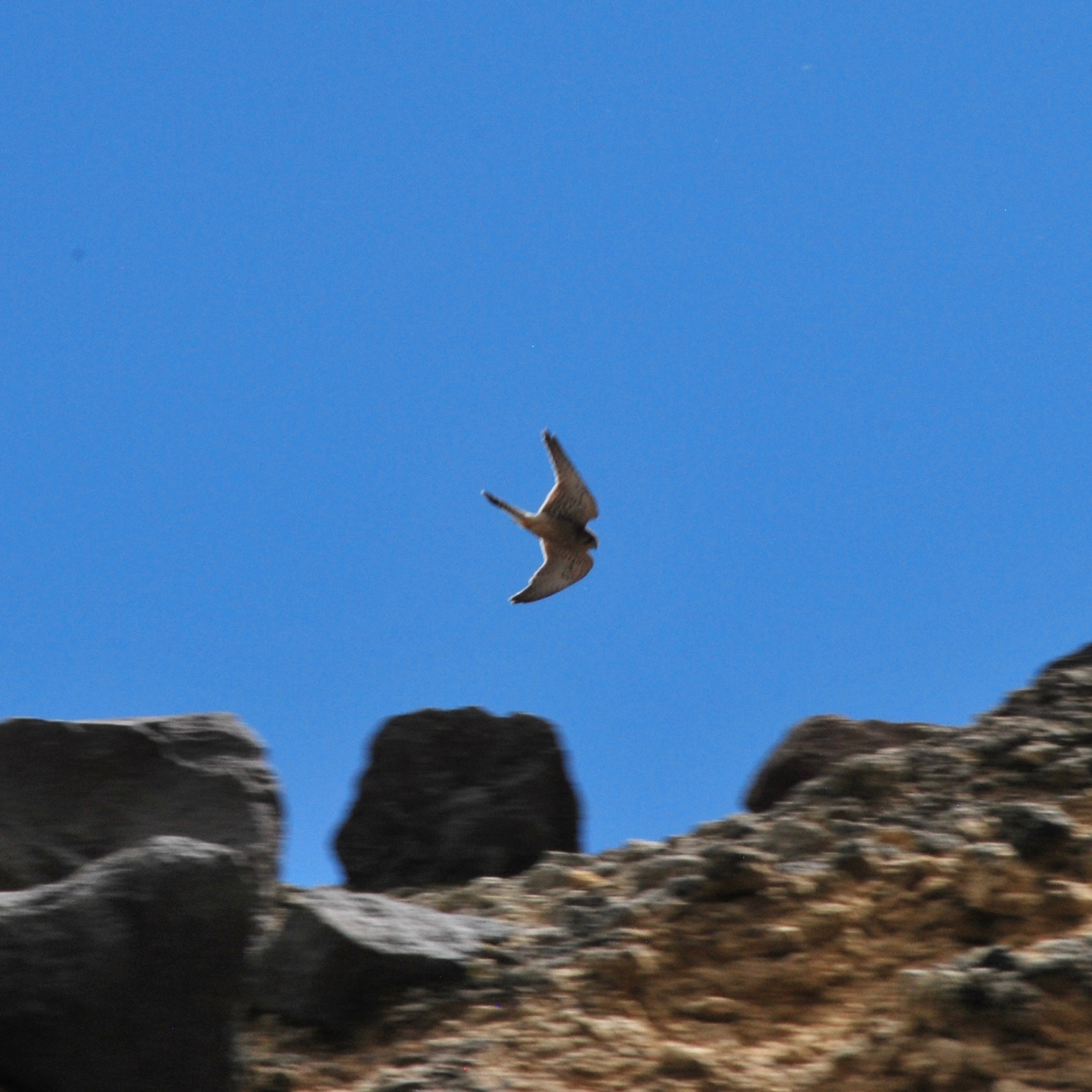
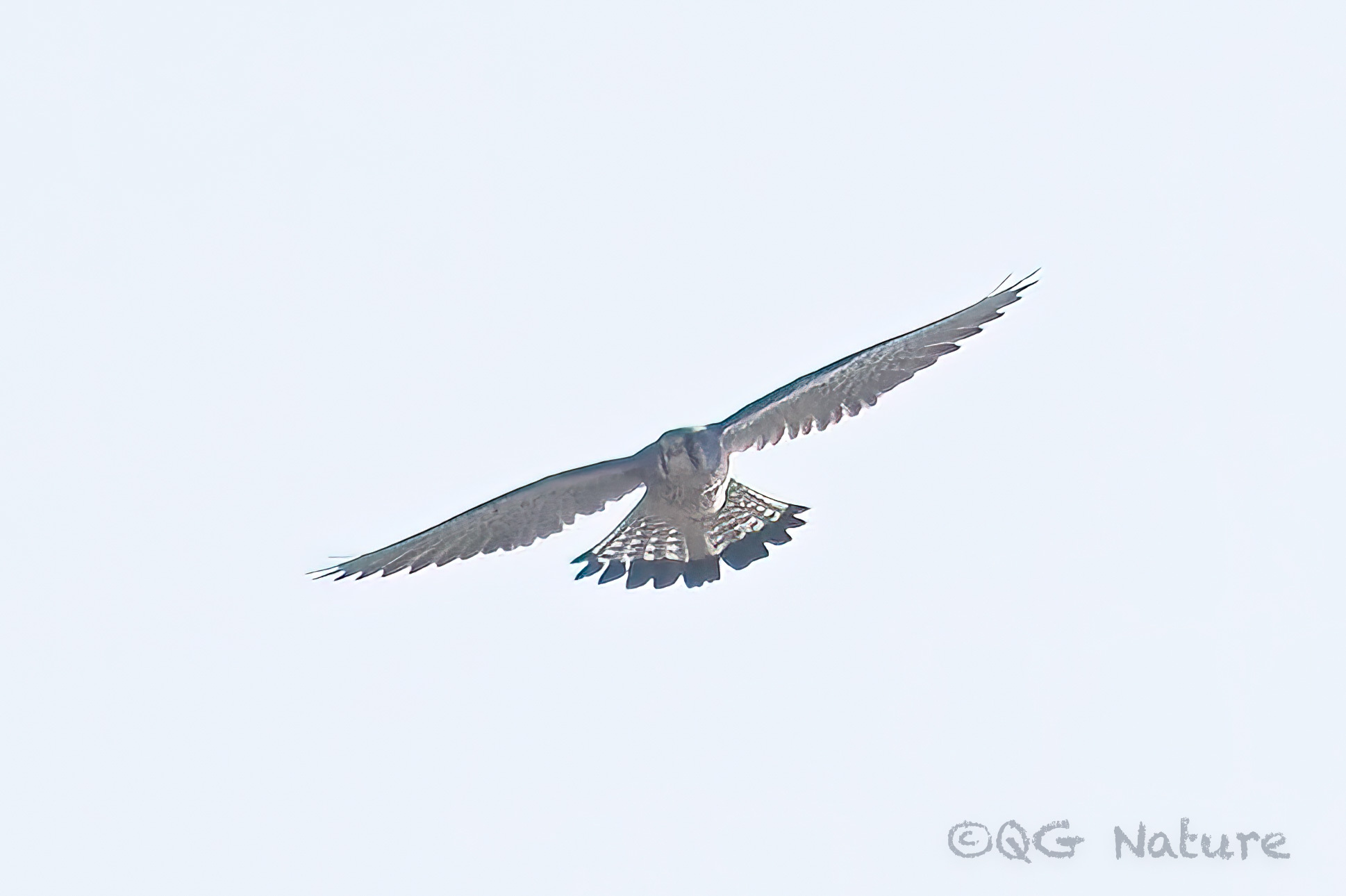
Key field marks include the hovering flight style 10–20 m above ground, blue-grey head and tail in males, and prominent black malar stripe. Distinguished from the similar lesser kestrel by the presence of black markings on the upperside (except wing and tail tips in the lesser) and lack of extensive grey in male wings. Flight involves short, steep dives toward prey rather than long high-speed stoops.
Distribution & Habitat
Native range covers Europe, Asia, and Africa; vagrants occasionally reach North America. Eleven subspecies recognized, varying slightly by geography. Temperate populations migrate south in winter; tropical populations are largely sedentary. Habitats range from sea level to 4,500 m in tropical zones and 1,750 m in subtropical Himalayas. Prefers open country, steppes, and agricultural areas, avoiding dense woodland unless perching sites exist.
Behavior & Ecology
Diurnal hunter that primarily feeds on mouse-sized mammals like voles, shrews, and mice, which constitute up to three-quarters of biomass intake. On oceanic islands, diet shifts to small birds. Also consumes insects, lizards, and frogs. Hunts by hovering into the wind, perching, or low ground-hugging flights. Uses near-ultraviolet vision to track rodent urine trails. Breeds in cavities in cliffs, trees, or buildings, often reusing corvid nests. Clutch size is 3–7 eggs; incubation lasts about 4 weeks. Young fledge after 4–5 weeks. High juvenile mortality, with up to 70% dying before their first birthday.
Conservation
Globally not considered threatened by the IUCN. Population estimated at 1–2 million pairs, with about 20% in Europe. Stocks declined in the mid-20th century due to organochlorine pesticides but recovered due to high reproductive rate. Recent declines noted in parts of Western Europe, such as Ireland. Subspecies dacotiae is rare, with fewer than 1,000 adults recorded in 1990.
Culture
Featured in literature such as Julian Grenfell's 'Into Battle' and Gerard Manley Hopkins' 'The Windhover'. Central character in Barry Hines' novel 'A Kestrel for a Knave' and the film 'Kes'. Historically used in Persia and Arabia as a decoy to capture other birds of prey and to train greyhounds by distracting jerboa-rats. Archaic names include 'windhover'.
Source: Wikipedia · CC BY-SA 3.0
Taxonomy
- Order
- Falconiformes
- Family
- Falconidae
- Genus
- Falco
Subspecies (11)
-
Falco tinnunculus alexandri
southeastern Cape Verde Islands
Data Sources
Species description from Wikipedia, licensed under CC BY-SA 3.0.
Bird images and sounds sourced from GBIF, contributed by citizen scientists worldwide under Creative Commons licenses.
Taxonomy data from AviList 2025.