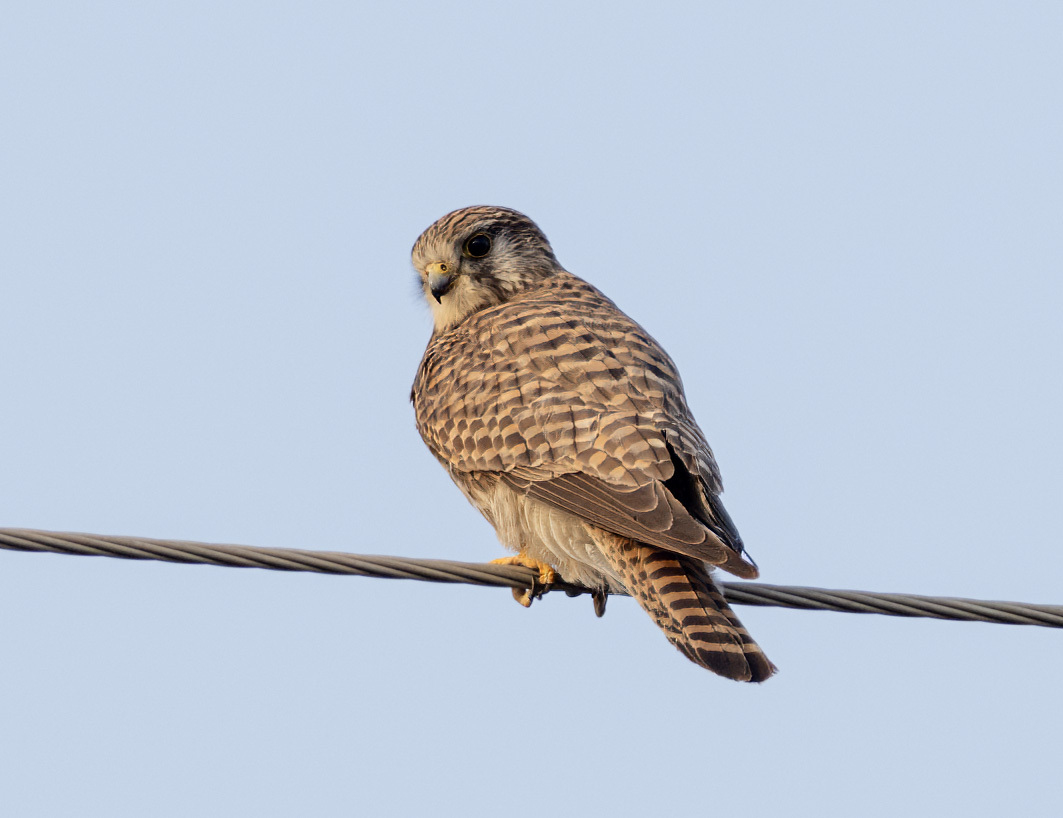
Common Kestrel
Falco tinnunculus
红隼
Introduction
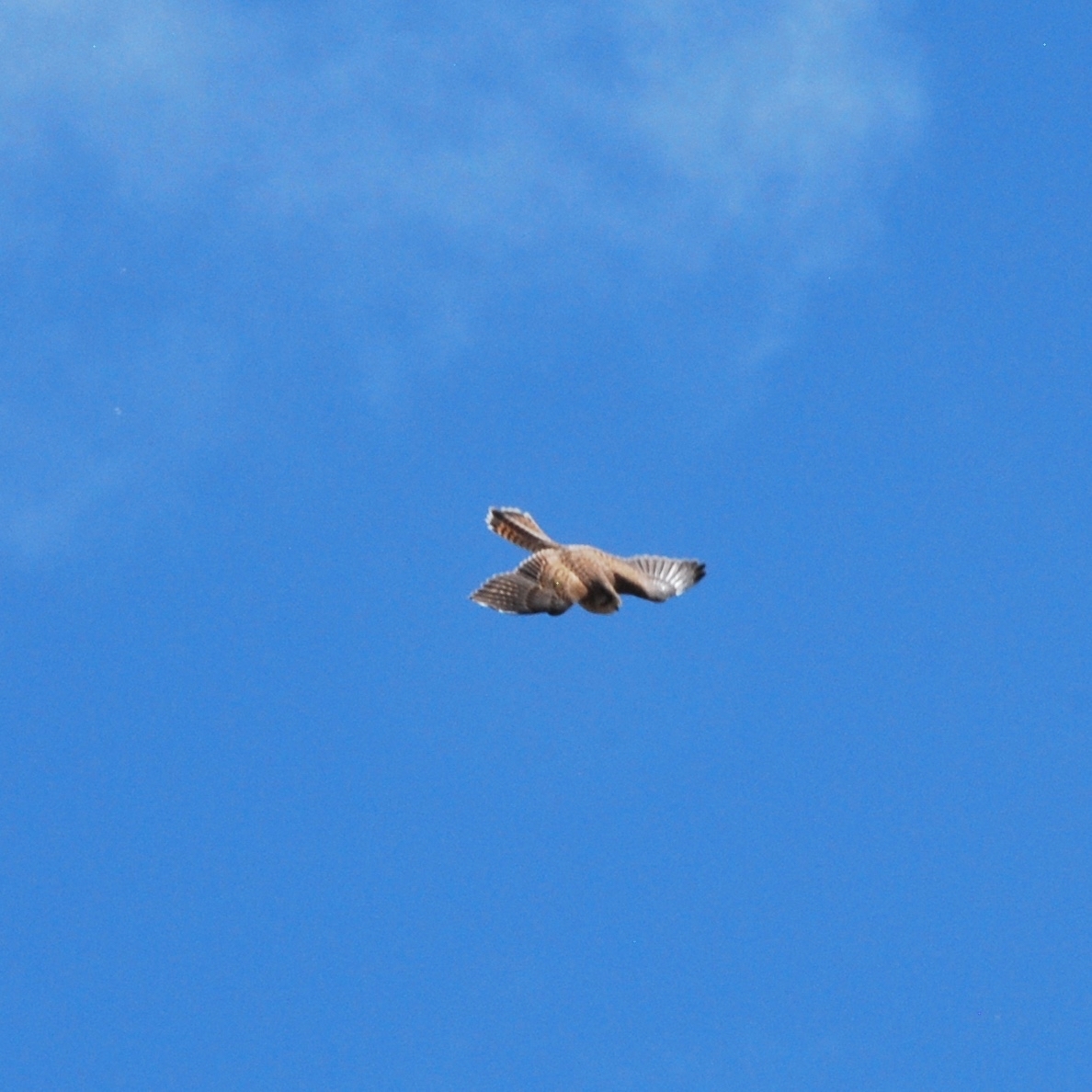
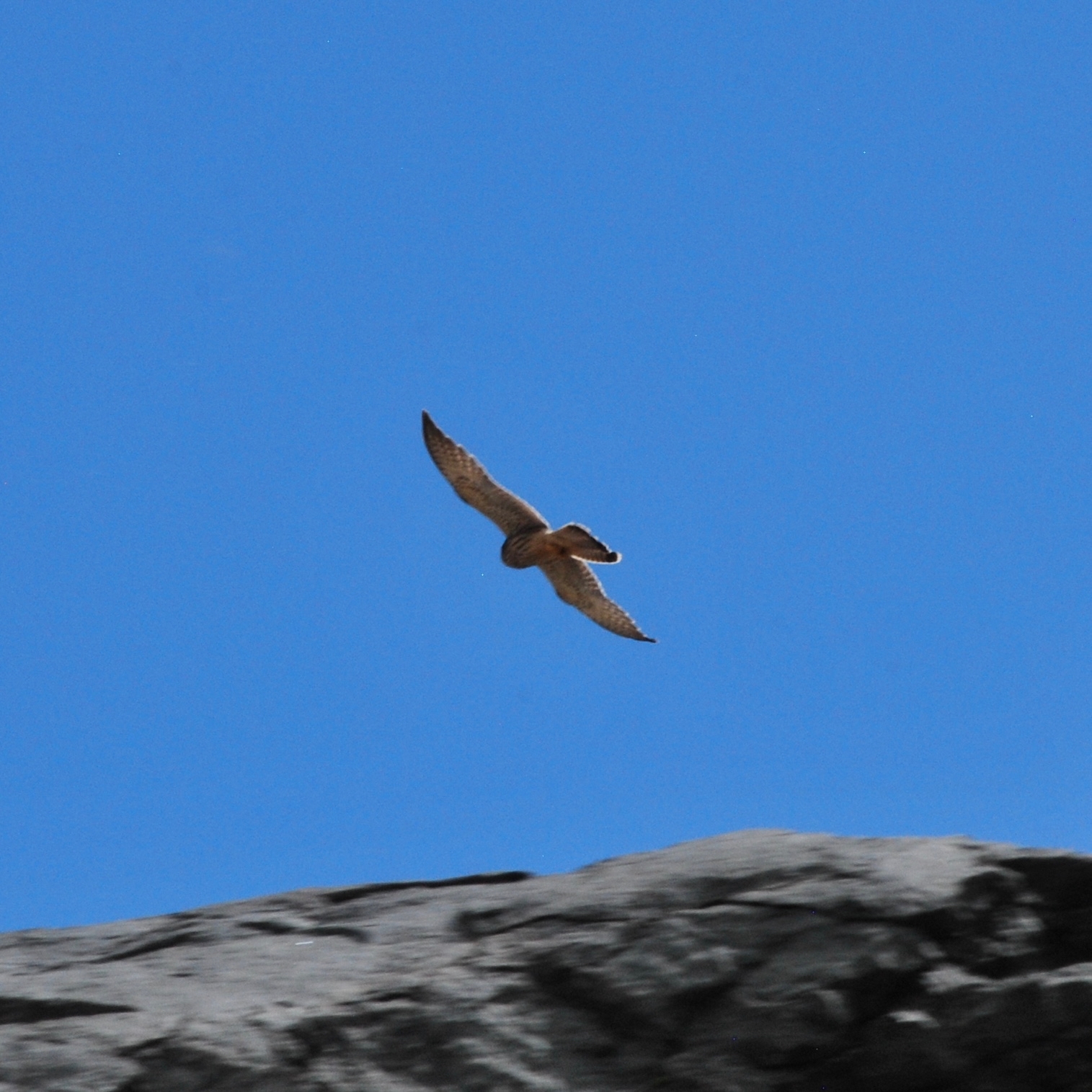
The common kestrel is a falcon species with a distribution spanning Europe, Asia and Africa. It occupies open habitats including agricultural fields, coastal heaths, urban parks and mountain grasslands. It is the only commonly occurring kestrel species in the United Kingdom, where it is referred to as 'the kestrel.' This species hunts using a distinctive hovering technique, remaining stationary in the air with rapid wingbeats while searching for prey. The common kestrel recovered from mid-20th century pesticide impacts more successfully than many larger raptors. Global population is estimated at 1-2 million breeding pairs, though populations have declined in parts of Western Europe.
Description
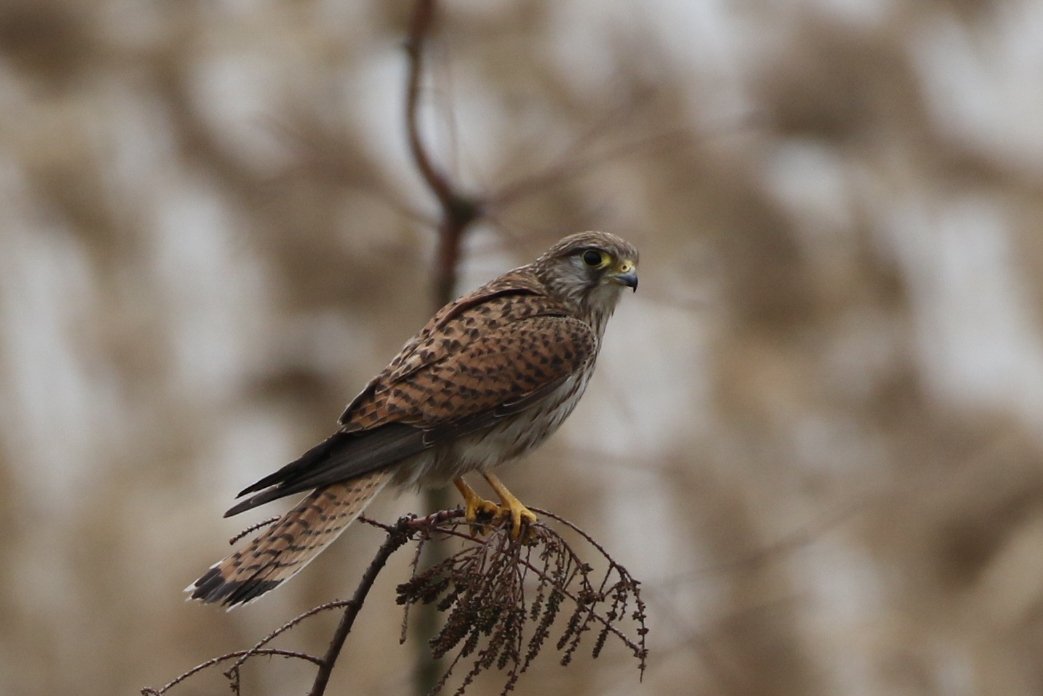
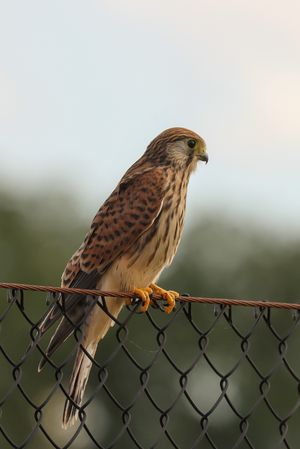
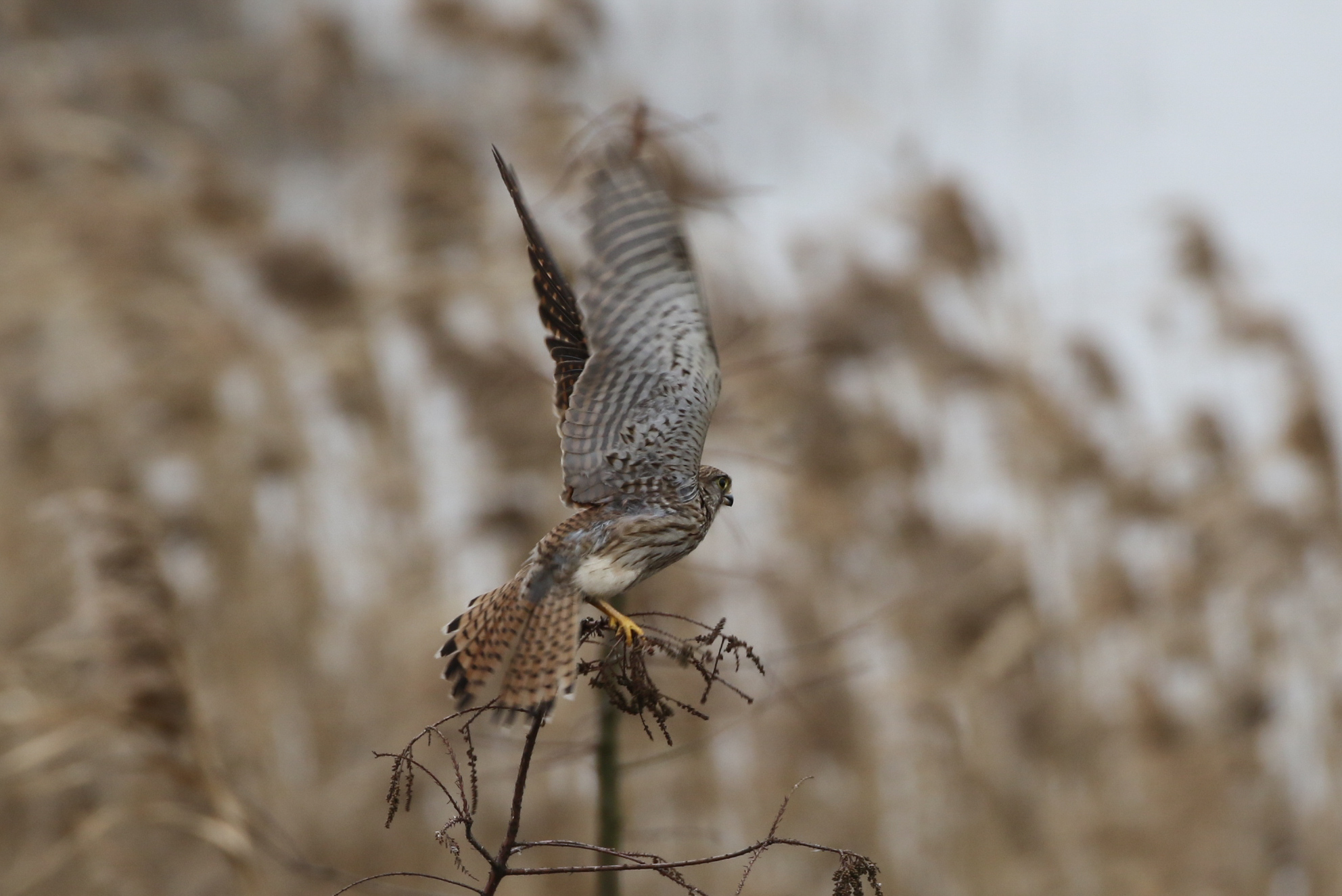
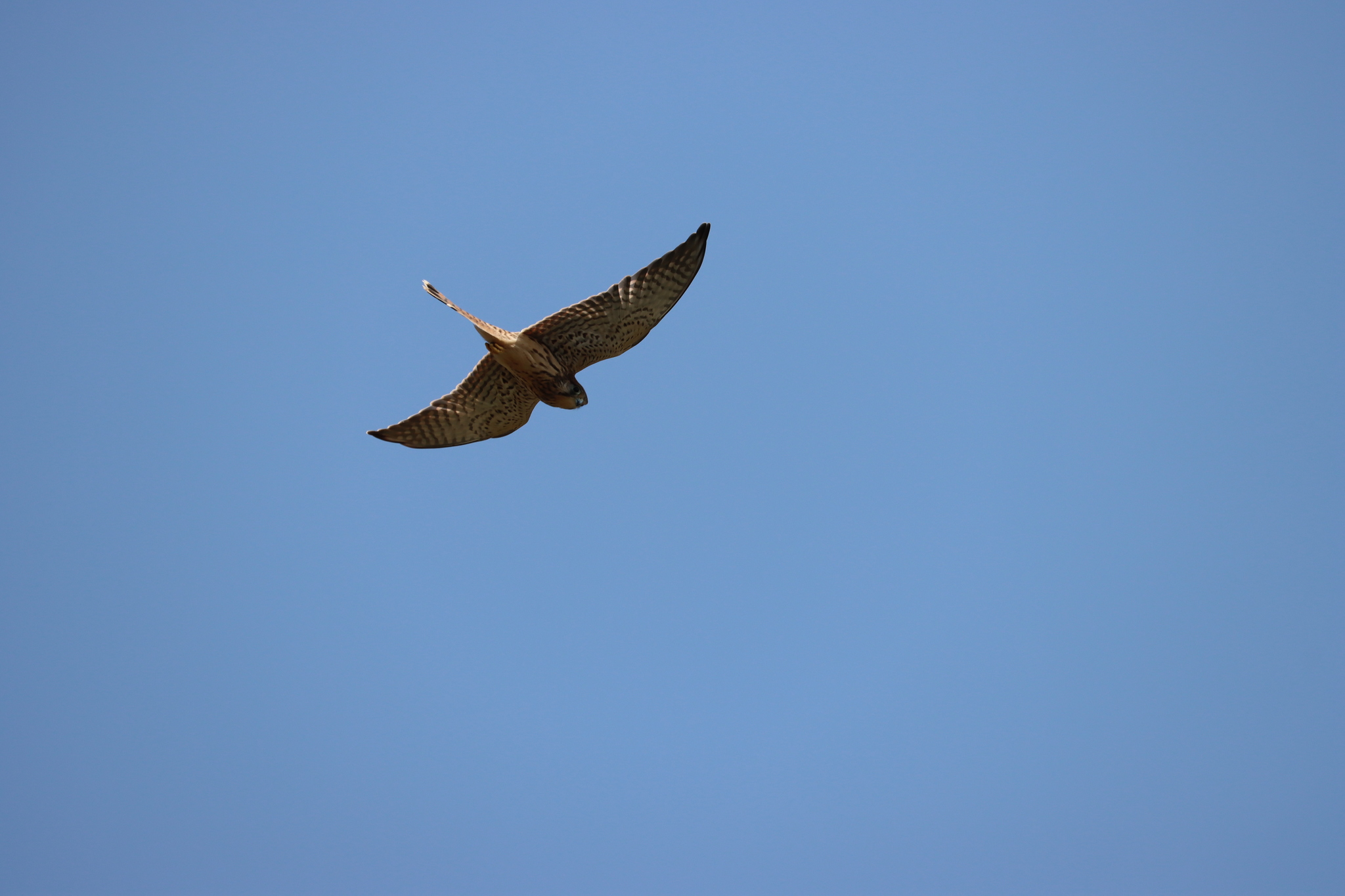
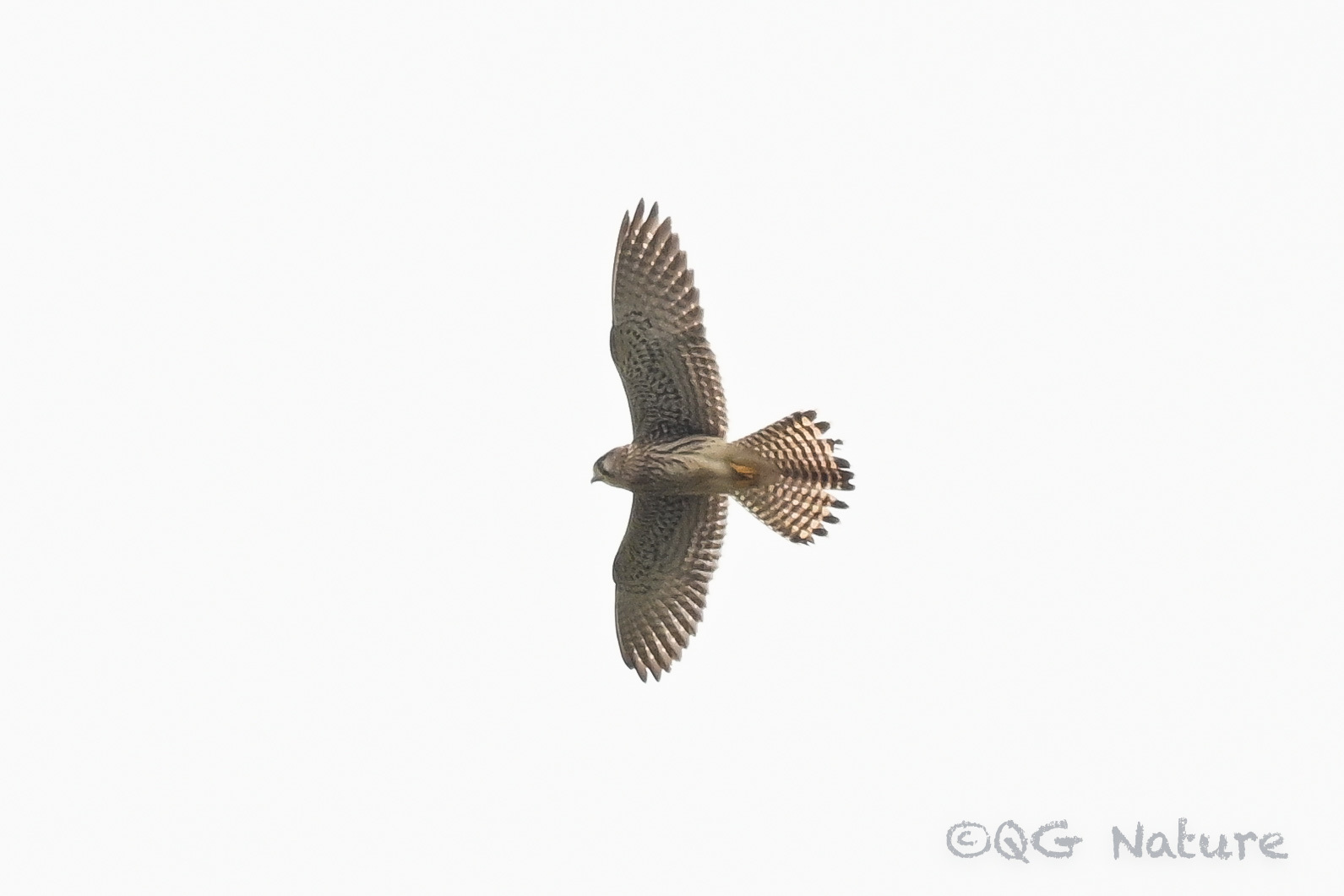
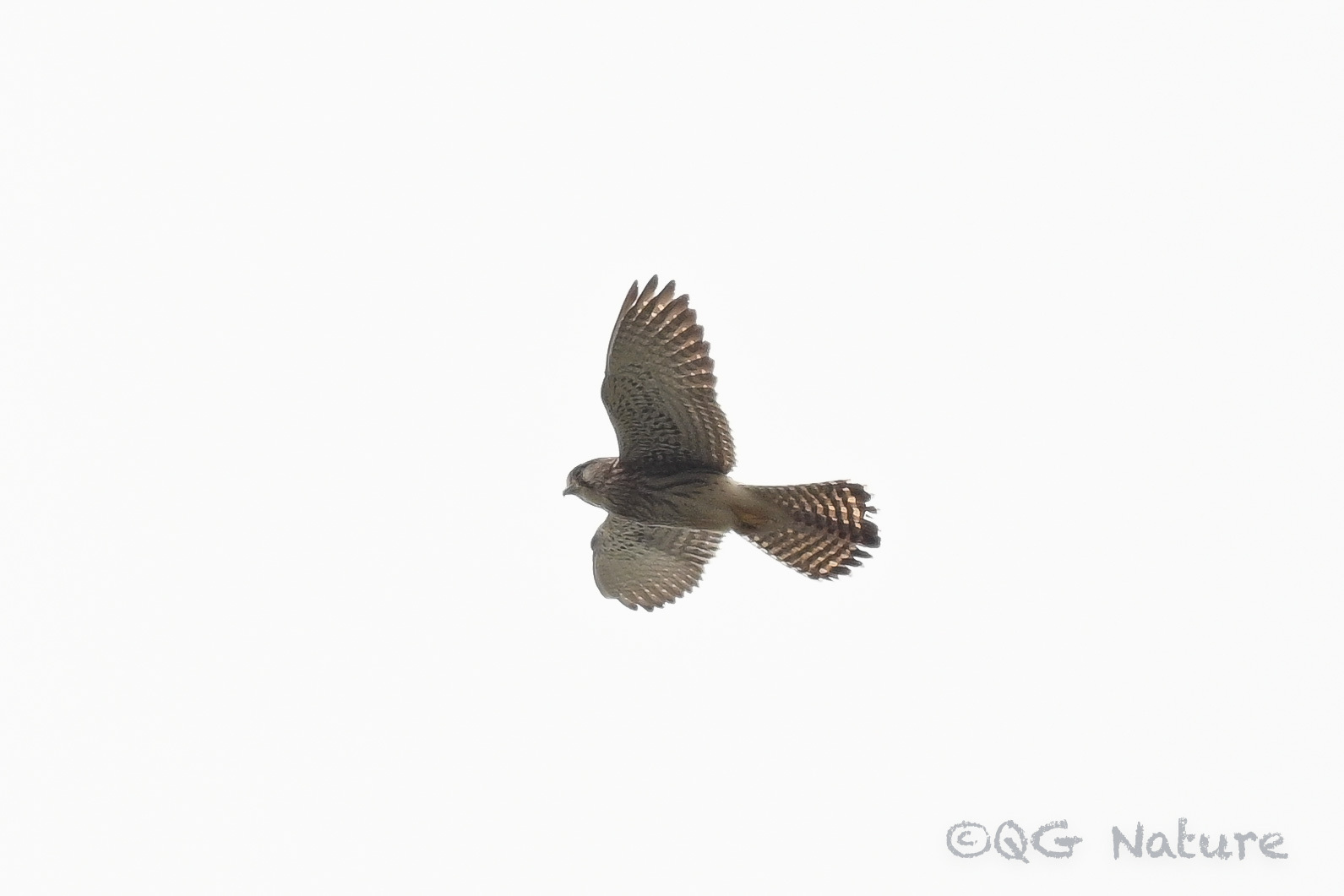
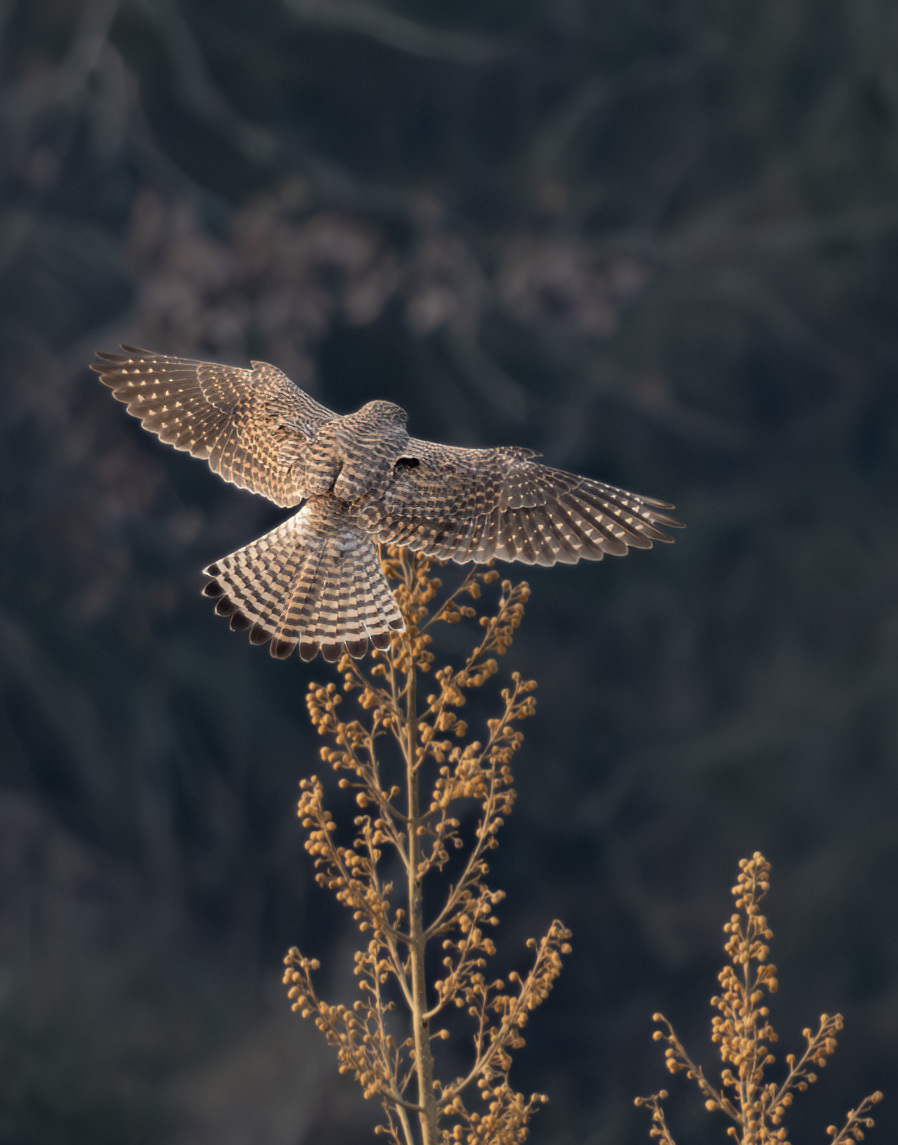
This is a small falcon, measuring 32-39 cm in length with a wingspan of 65-82 cm. Females are noticeably larger and heavier than males, with males typically weighing 136-252 g and females 154-314 g. The plumage is predominantly light chestnut brown above with blackish spots, while the underparts are buff with narrow blackish streaks. The remiges are blackish. Unlike many raptors, this species shows marked sexual dimorphism in plumage: males have fewer black spots and streaks, a blue-grey cap and a blue-grey tail with a black tip and narrow white rim. Females have a brown tail with black bars. Both sexes possess the distinctive black malar stripe characteristic of its close relatives. The bare parts are striking: the cere, feet and eye ring are bright yellow, contrasting with the dark toenails, bill and iris. Juveniles resemble adult females but have wider underside streaks and paler yellow bare parts.
Identification
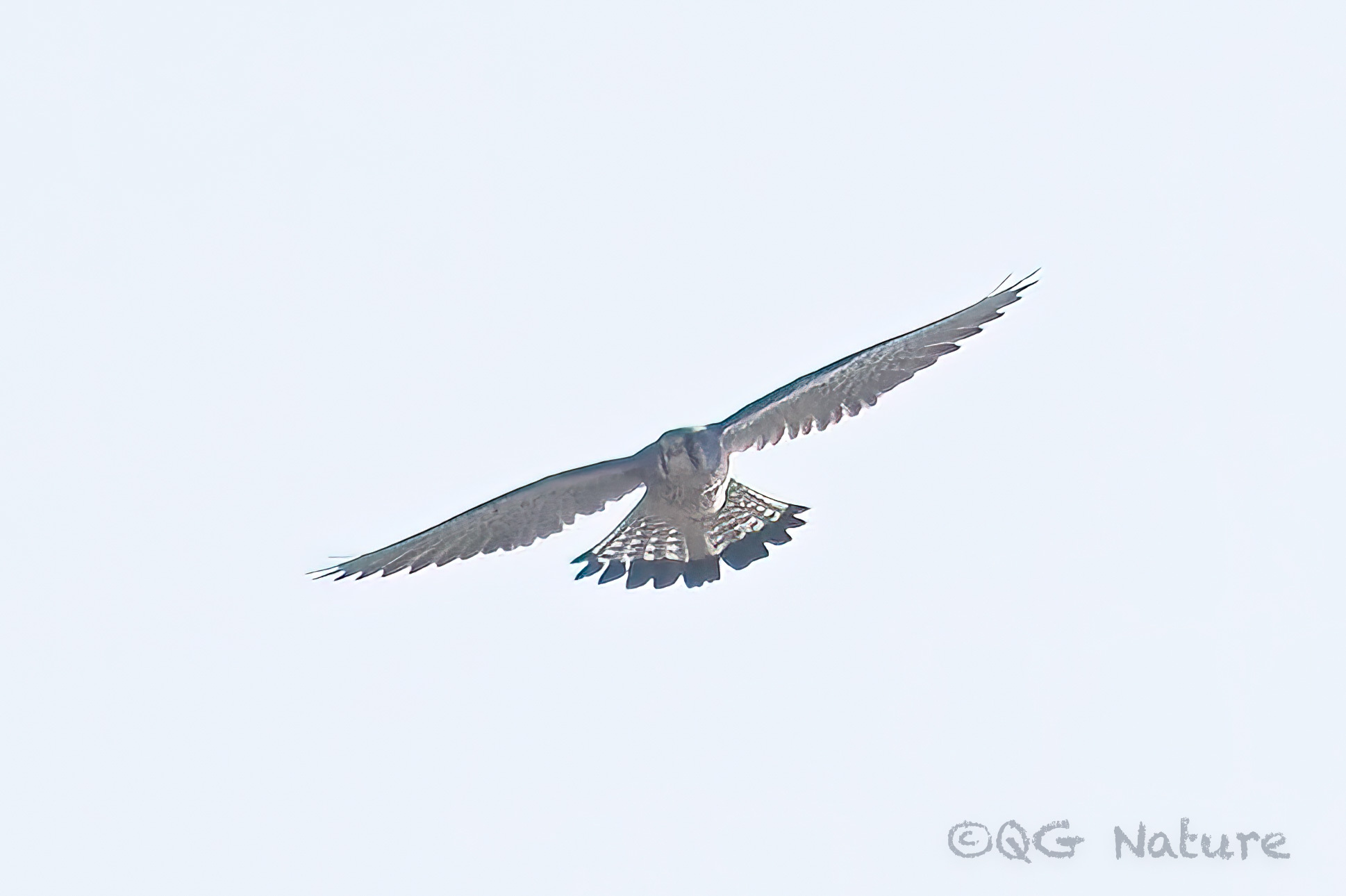
In the field, the hovering hunting technique is the most distinctive identification clue, as few similar-sized raptors hunt this way. The black malar stripe is prominent and helps separate it from some confusion species. The lesser kestrel is smaller and lacks black on the upperside except for wing and tail tips. The American kestrel, found in North America, has much grey in the male's wings, which does not occur in this species. The rock kestrel, formerly considered a subspecies, is now treated as a distinct species but is very similar; identification in the field can be challenging where their ranges meet. Males are told by their blue-grey head and tail, while the female's barred tail pattern is diagnostic. The combination of hovering behavior, small size and rusty brown upperparts should distinguish it from other falcons.
Distribution & Habitat
This species occupies an enormous native range across Europe, Asia and Africa. It breeds across most of temperate Eurasia from Ireland and Portugal east to the Sea of Okhotsk, throughout Africa south of the Sahara, and in tropical Asia. Northern populations migrate south in winter, while birds in milder climates are largely sedentary. It has colonized several oceanic islands including the Canary Islands, Madeira and Cape Verde. Vagrants occasionally reach the east coast of North America, though records are extremely rare in most areas. The species adapts to a wide range of open habitats including fields, heaths, shrubland, marshland and treeless steppe. It readily uses human structures for nesting and perching, making it common in rural and suburban areas. It occurs from sea level to 4,500 m elevation in tropical regions, though only to about 1,750 m in the Himalayan foothills.
Behavior & Ecology
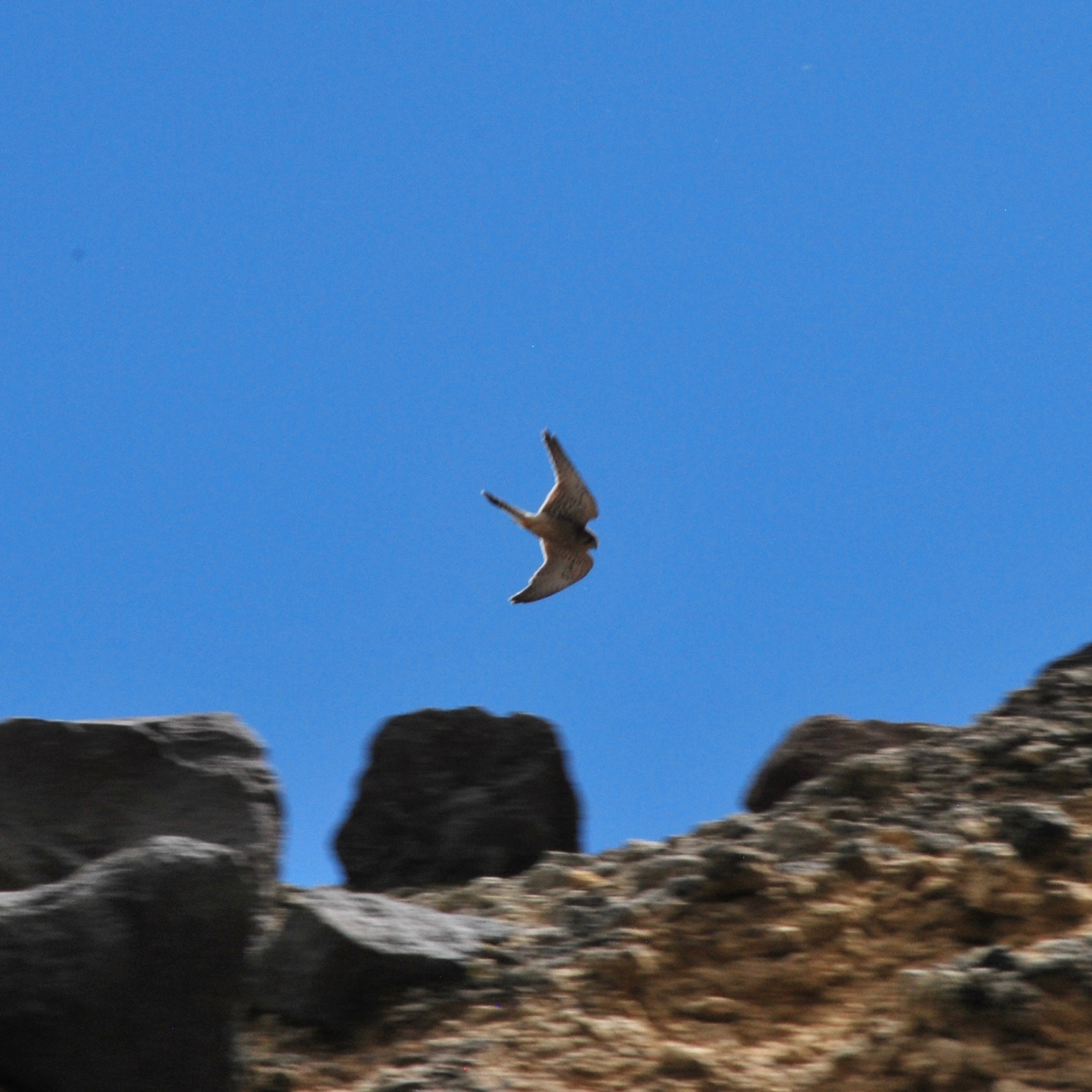
This species hunts characteristically by hovering 10-20 m above ground, searching for prey with its exceptional vision. It can detect ultraviolet light, allowing it to see urine trails around rodent burrows. When prey is spotted, it makes a short, steep dive. It also hunts from perches and by low ambushing flight. The diet consists almost exclusively of mouse-sized mammals, particularly voles, shrews and mice, which can supply three-quarters or more of food intake. On islands without mammals, small birds may dominate the diet. Breeding begins in April-May in temperate regions, using cavities in cliffs, trees or buildings, and readily adopting old corvid nests. The clutch contains 3-7 eggs, incubated by both parents for 4 weeks to one month. Both parents share hunting and brooding duties, though only the female feeds the chicks. Young fledge after 4-5 weeks and become sexually mature the following year. Most die before age two, though lifespans of 16 years or more are recorded.
Conservation
The species is currently listed as Least Concern by the IUCN, with a global population estimated at 1-2 million breeding pairs. While not considered threatened globally, populations have fluctuated significantly over the decades. Mid-20th century pesticide use affected stocks but, as a fast-reproducing species, it recovered better than many larger raptors. Europe holds roughly 20% of the global population. Recent declines have been noted in parts of Western Europe, including Ireland. The eastern Canary Islands subspecies dacotiae is rare, with fewer than 1,000 adult birds recorded in 1990. The western Canary Islands subspecies canariensis numbered about ten times as many birds at that time. Overall, the species remains common and widespread across most of its extensive range.
Culture
The kestrel has captured human imagination throughout history, appearing in literature, poetry and folklore. The war poet Julian Grenfell invoked its qualities in his 1915 poem 'Into Battle,' praising its keenness and swiftness as desirable warrior traits. Gerard Manley Hopkins famously celebrated this species in his poem 'The Windhover,' exalting in its mastery of flight and aerial majesty. In traditional culture, the Pathan name Bād Khurak means 'wind hover,' while in Punjab it is called Larzānak or 'little hoverer.' Historically, kestrels were used practically as decoys to capture other birds of prey in Persia and Arabia, and to train greyhounds for hunting gazelles in parts of Arabia. The species features prominently in Barry Hines' novel 'A Kestrel for a Knave' and Ken Loach's acclaimed 1969 film 'Kes,' which brought the bird to wider cultural attention in Britain. It is also one of the main characters in the children's series 'The Animals of Farthing Wood.'
Source: Wikipedia · CC BY-SA 3.0
Taxonomy
- Order
- Falconiformes
- Family
- Falconidae
- Genus
- Falco
- eBird Code
- eurkes
Subspecies (11)
-
Falco tinnunculus alexandri
southeastern Cape Verde Islands
-
Falco tinnunculus archeri
Somalia, coastal Kenya, and Socotra
-
Falco tinnunculus canariensis
Madeira and western Canary Islands
-
Falco tinnunculus dacotiae
eastern Canary Islands
-
Falco tinnunculus interstinctus
breeds Tibet to China and Japan; winters to India, Malaya, and Philippines
-
Falco tinnunculus neglectus
northern Cape Verde Islands
-
Falco tinnunculus objurgatus
southern India (Western and Eastern Ghats) and Sri Lanka
-
Falco tinnunculus perpallidus
breeds eastern Siberia (east from the Lena Basin) to Korea and northern China; in winter to eastern China and southeastern Asia
-
Falco tinnunculus rufescens
West Africa to Ethiopia, Tanzania, and northern Angola
-
Falco tinnunculus rupicolaeformis
northeastern Africa and Arabia
-
Falco tinnunculus tinnunculus
breeds from Europe, northwestern Africa, and the Middle East eastward to east-central Siberia, Afghanistan, and western and northern Pakistan east in the Himalayas to Nepal and Bhutan; in winter also to eastern Africa and southern Asia
Data Sources
Species description from Wikipedia, licensed under CC BY-SA 3.0.
Bird images and sounds sourced from GBIF, contributed by citizen scientists worldwide under Creative Commons licenses.
Taxonomy data from AviList 2025.