
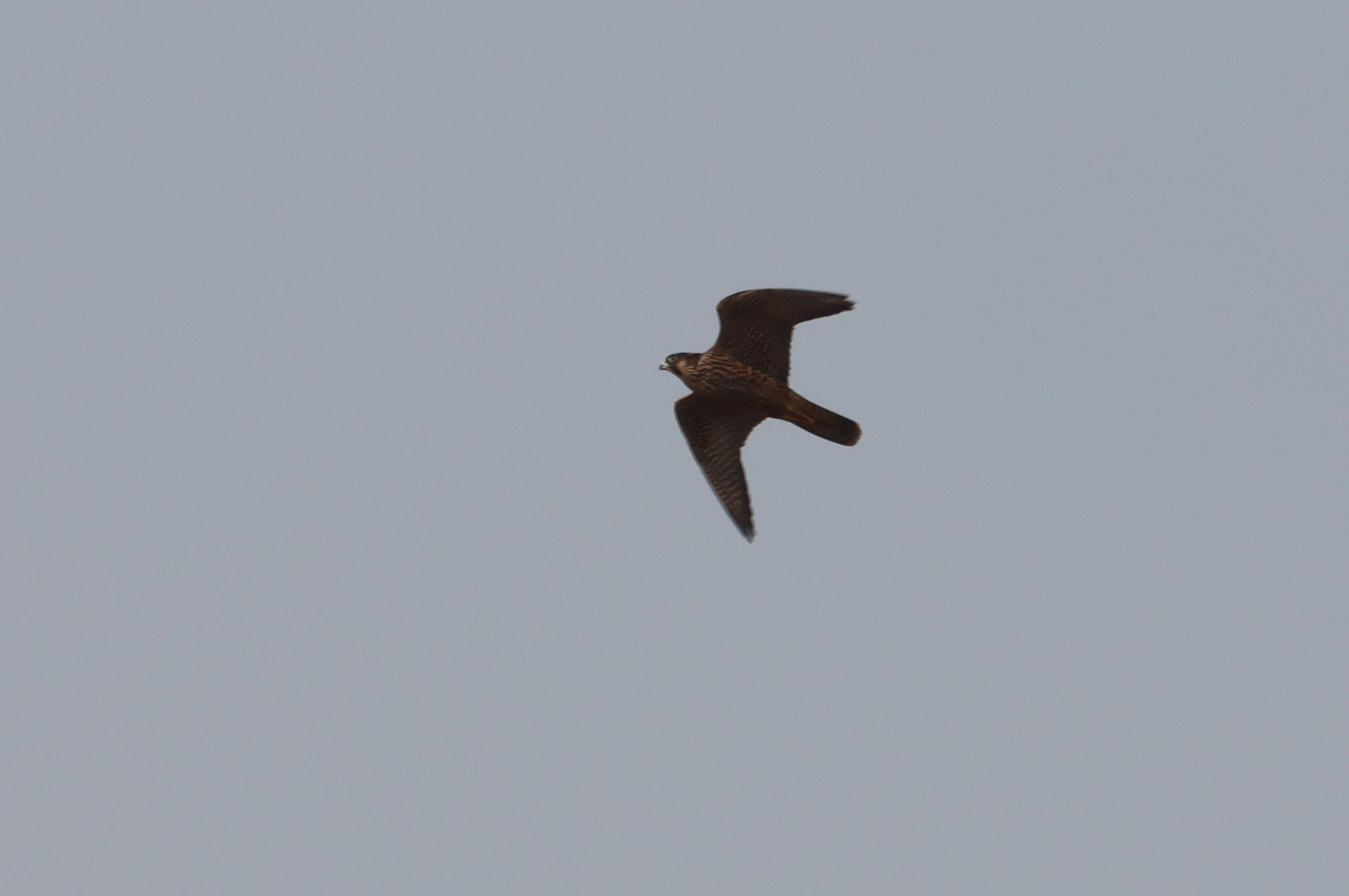
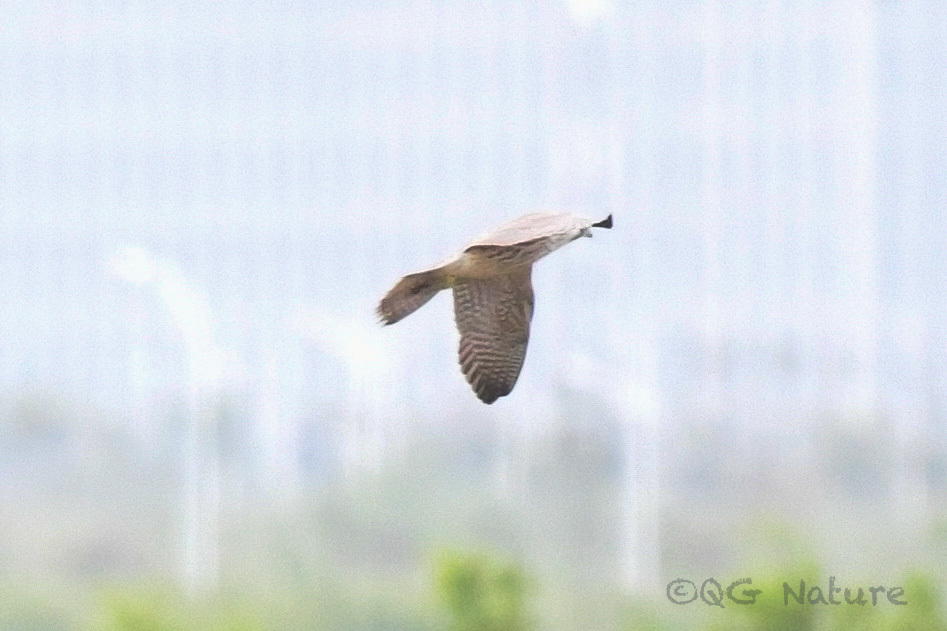
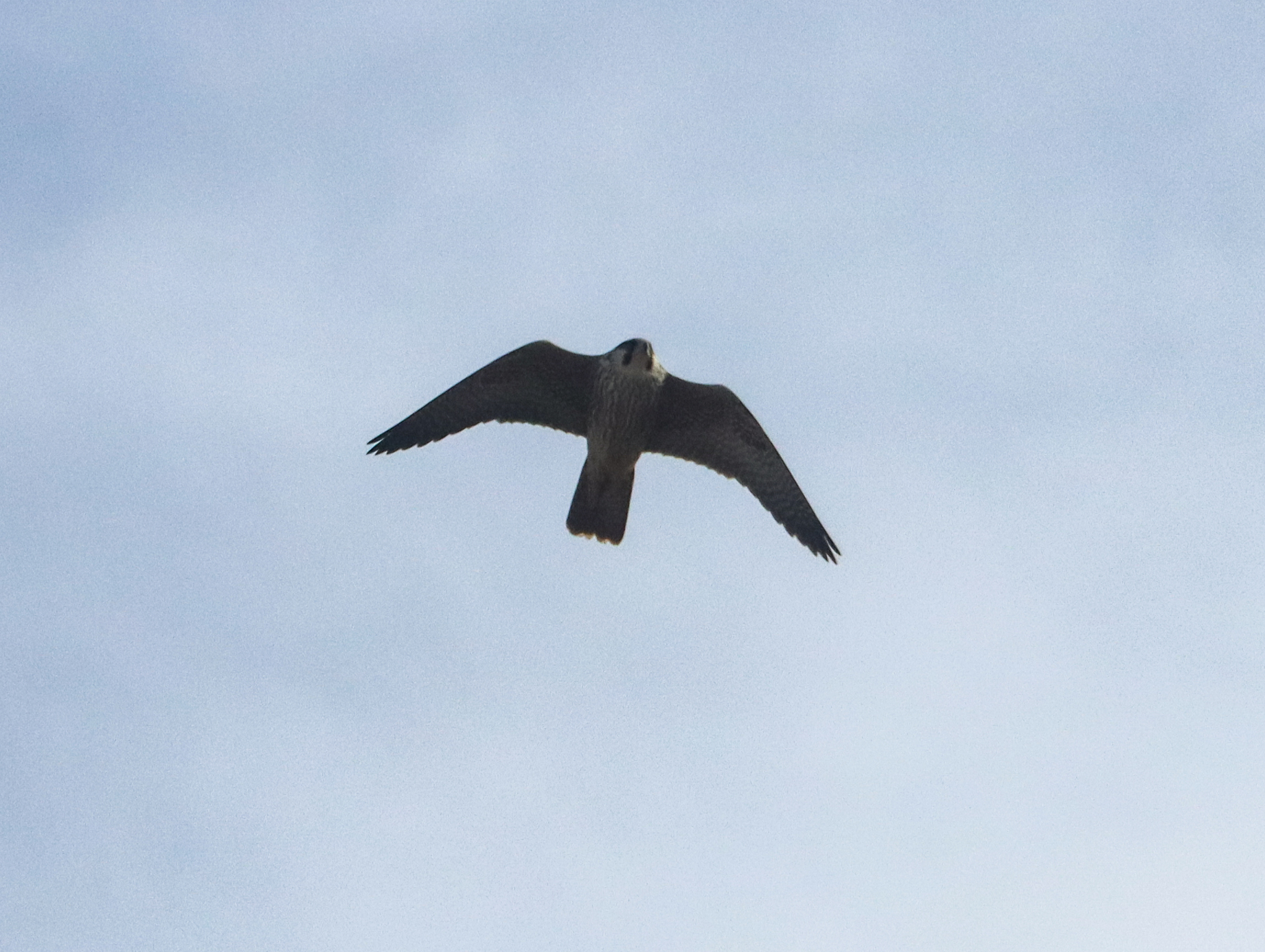
Falconiformes / Falconidae / Falco
Peregrine Falcon
Falco peregrinus · 游隼
Introduction
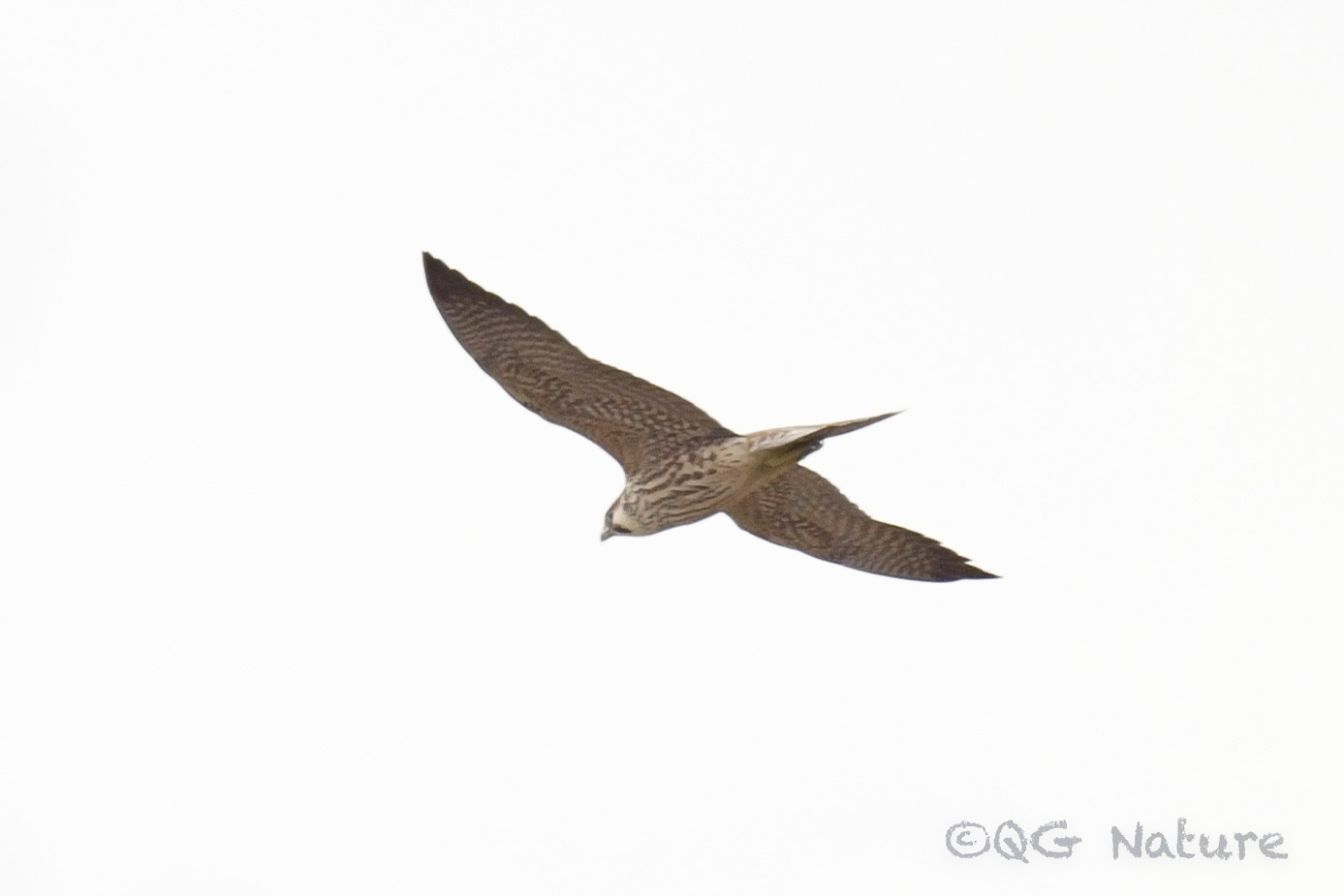
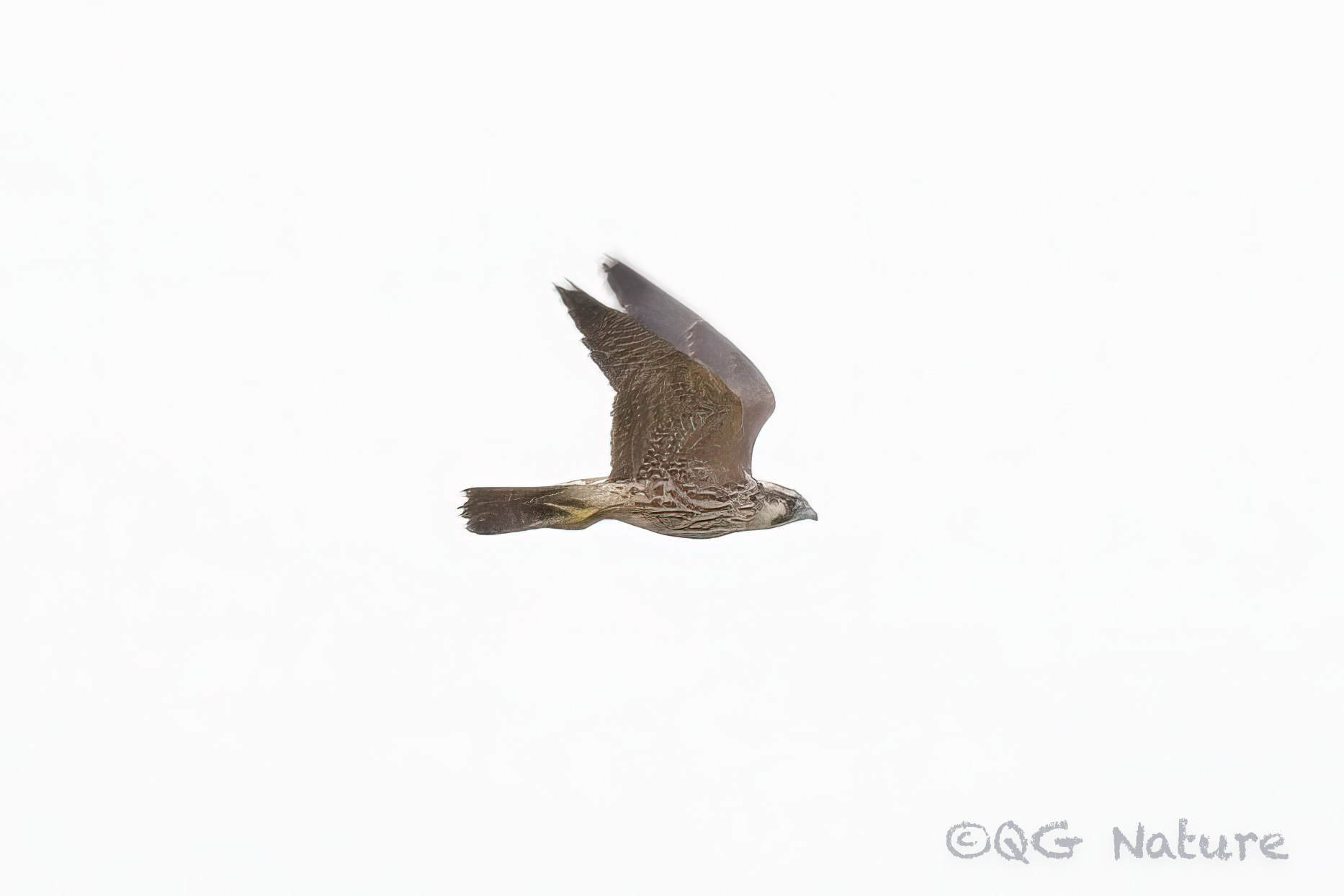
A cosmopolitan bird of prey in the family Falconidae, known for its speed. It is a large, crow-sized falcon with a blue-grey back, barred white underparts, and a black head. Sexually dimorphic, with females considerably larger than males. The breeding range extends from Arctic tundra to the tropics, found nearly everywhere except extreme polar regions, very high mountains, most tropical rainforests, and New Zealand. It is the world's most widespread raptor.
Description
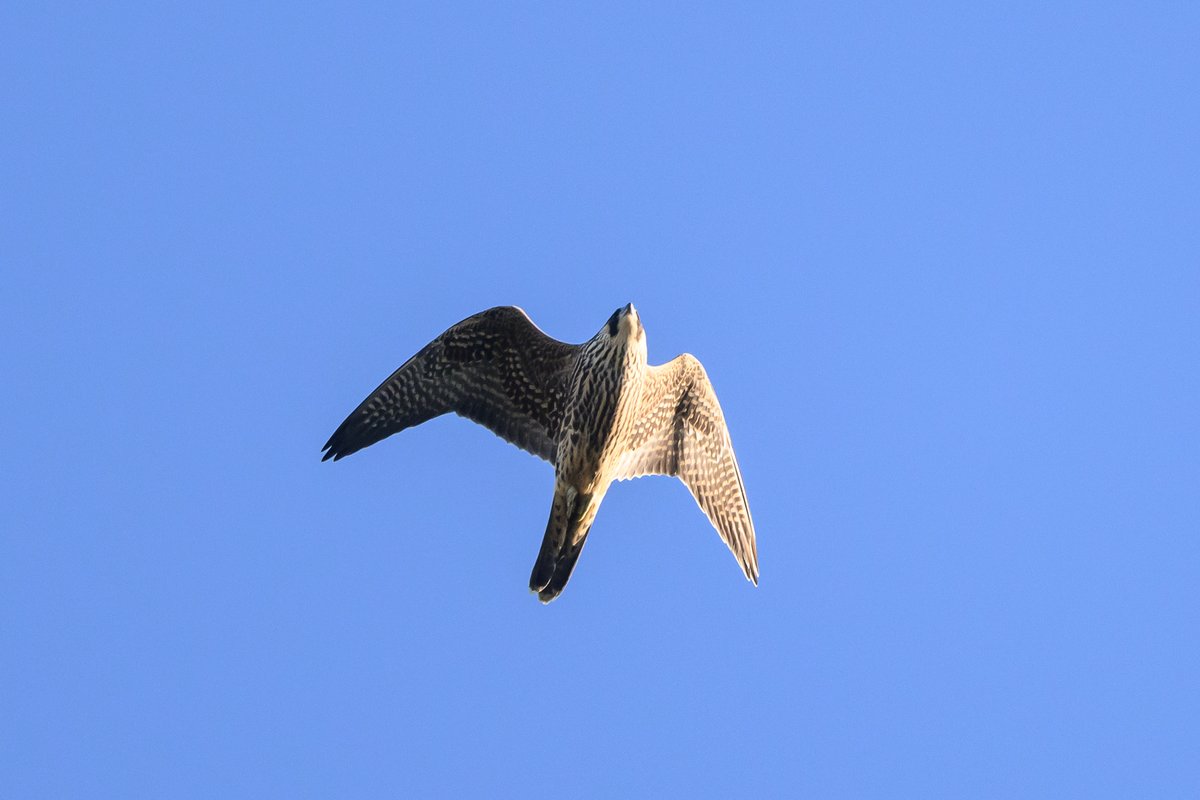
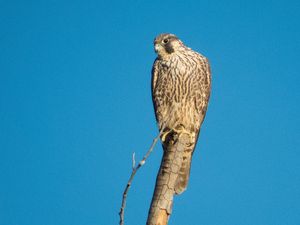
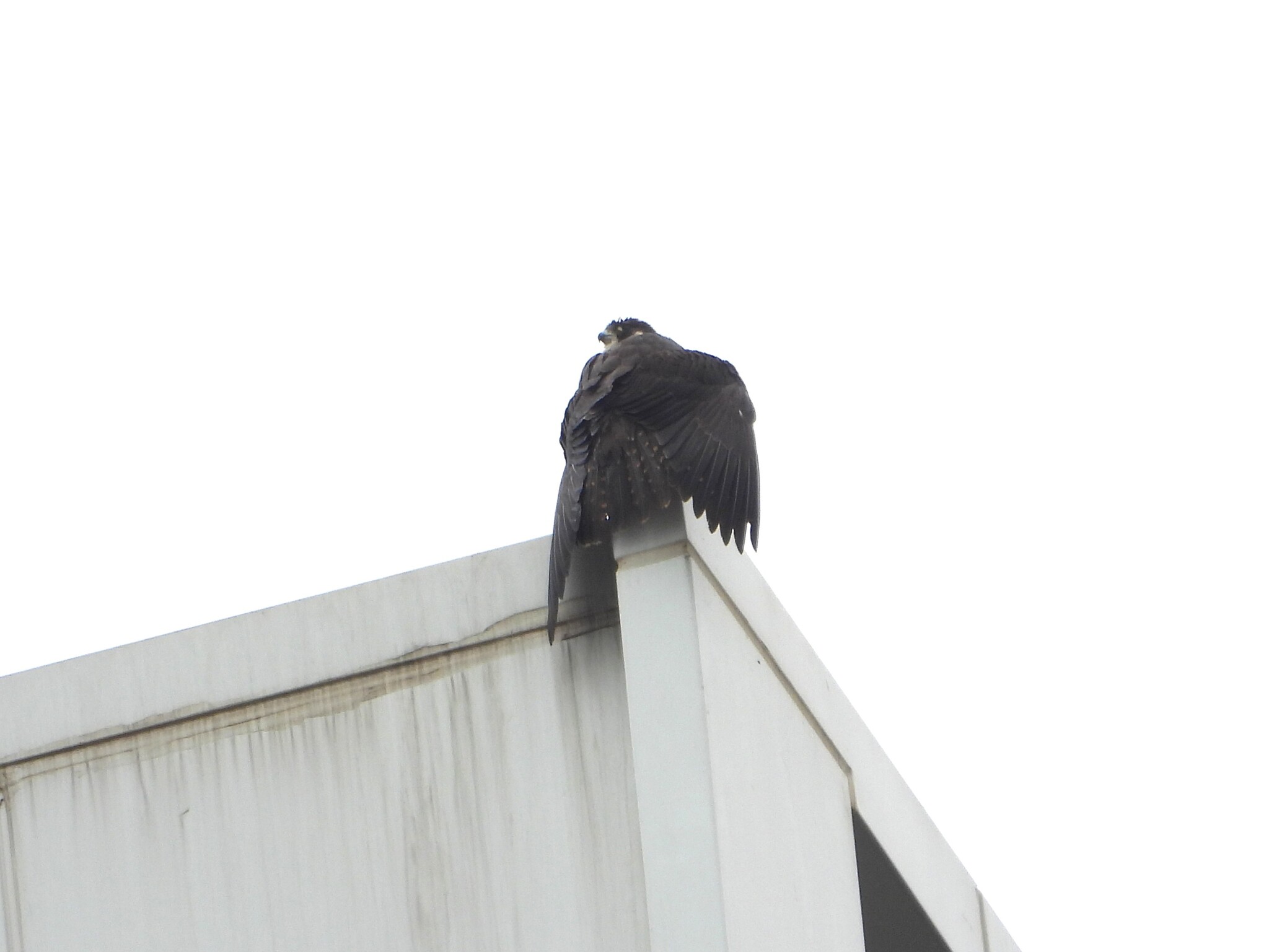
Body length 34–58 cm (13–23 in); wingspan 74–120 cm (29–47 in). Males weigh 330–1,000 g; females weigh 700–1,500 g, up to 30% larger. Wing chord 26.5–39 cm; tail 13–19 cm; tarsus 4.5–5.6 cm. Adults have bluish-black to slate-grey backs and long pointed wings with black tips. Underparts are white to rusty, barred with thin dark brown or black bands. Tail is long, narrow, rounded, with a black tip and white band. Head top and cheek 'moustache' are black, contrasting with pale neck sides and white throat. Cere and feet are yellow; beak and claws are black. Upper beak has a notch near the tip. Immatures are browner with streaked underparts and a pale bluish cere.
Identification
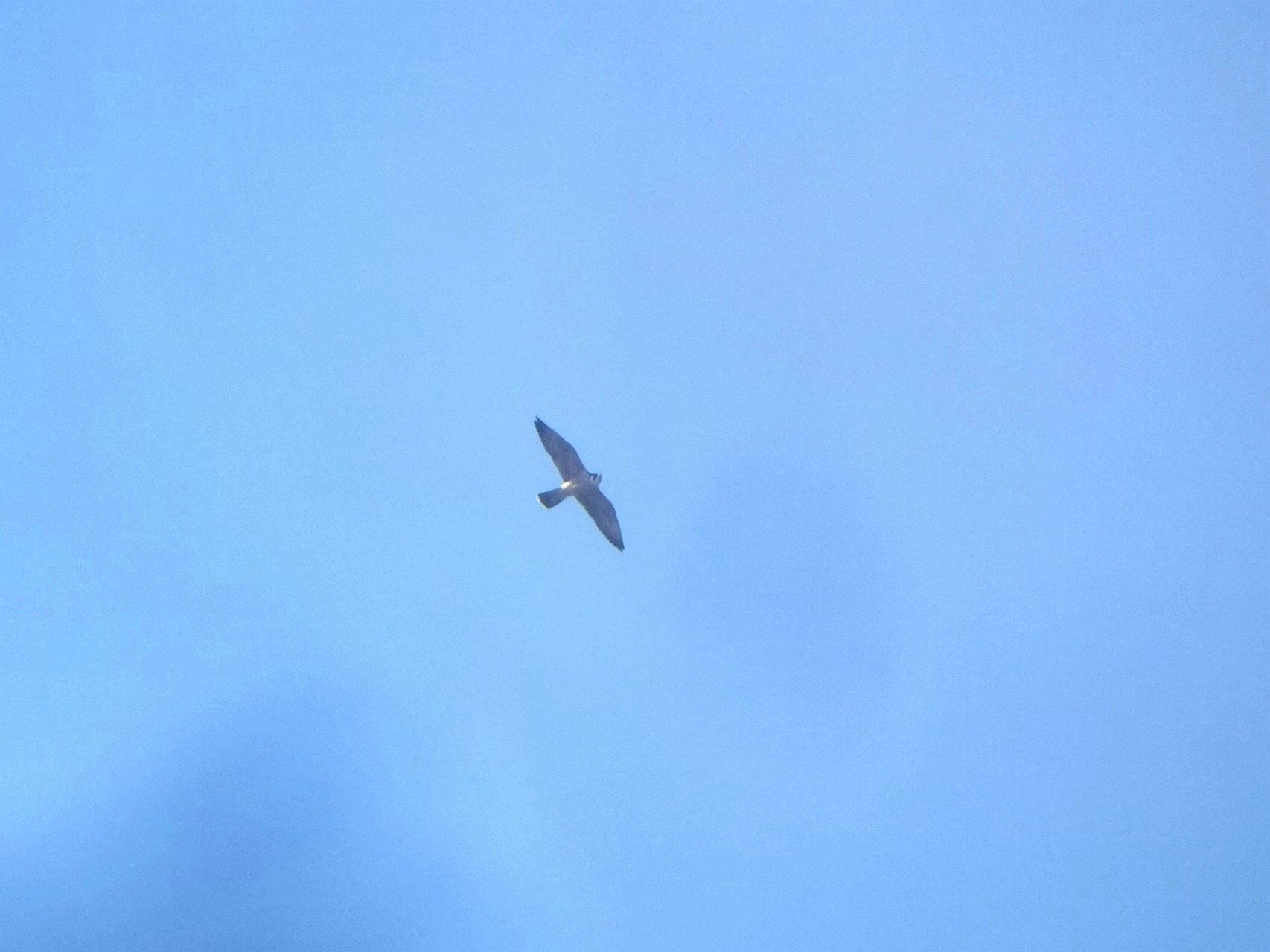
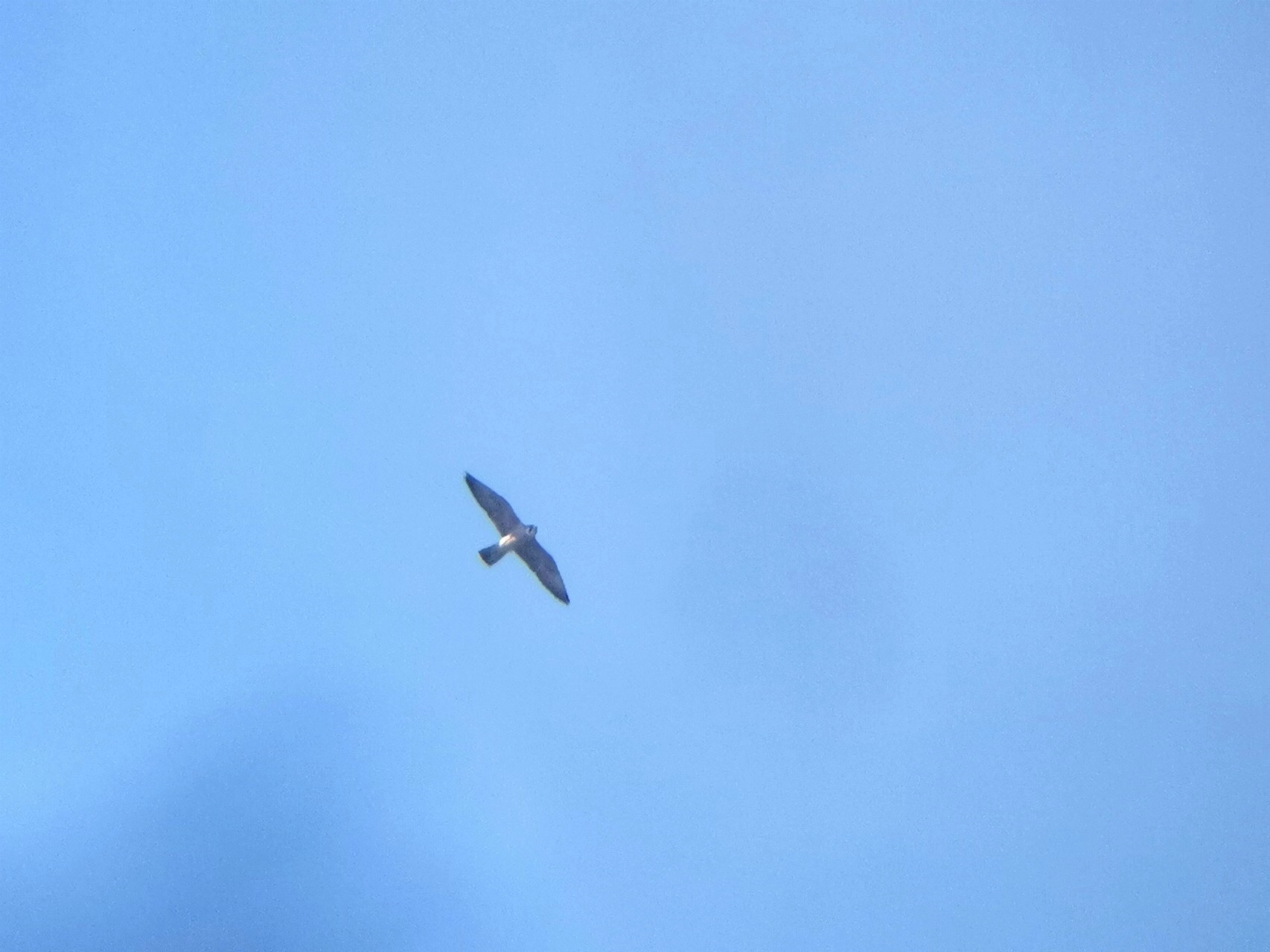
Key marks include the black head with a distinct black 'moustache' stripe below the eye, blue-grey back, and barred underparts. The malar stripe helps reduce glare. Flight involves soaring and steep, high-speed dives (stoops). Distinguished from similar species by size, plumage patterns, and flight style. Subspecies vary in appearance; for example, the Barbary falcon has a slimmer body and red neck patch, while the tundrius subspecies has a conspicuous white forehead.
Distribution & Habitat
Breeding range includes land regions from Arctic tundra to tropics. Absent from New Zealand, extreme polar regions, very high mountains, and most tropical rainforests. 18 or 19 regional subspecies accepted. Migratory habits vary: Arctic populations migrate great distances; temperate populations are often permanent residents. Urban populations are common worldwide, utilizing tall buildings as nest sites.
Behavior & Ecology
Diet consists almost exclusively of medium-sized birds (pigeons, doves, waterfowl, songbirds), occasionally small mammals, reptiles, or insects. Hunts primarily at dawn and dusk using a high-speed stoop, striking prey in mid-air. Reaches speeds over 320 km/h (200 mph). Sexually mature at one year; mates for life. Nests in a scrape on cliff edges or tall human-made structures. Clutch size typically 3–4 eggs; incubation 29–33 days. Chicks fledge 42–46 days after hatching. Territorial during breeding season.
Conservation
Became endangered in many areas due to pesticides like DDT, which thinned eggshells. Populations recovered following DDT bans in the early 1970s, supported by nesting protection and captive breeding releases. Removed from the U.S. Endangered Species list in 1999. Declared no longer at risk in Canada in 2017. Some subspecies, such as F. p. madens in Cape Verde, remain endangered with only six to eight pairs surviving. Threats include illegal poaching, collision with human-made objects, and predation by larger raptors.
Culture
Used in falconry for over 3,000 years, valued for hunting ability and trainability. Symbol of aggression and martial prowess; associated with Ancient Egyptian deity Ra and Native American Mississippian culture. In Medieval Europe, associated with princes. Official mascot of Bowling Green State University. Featured on the 2007 Idaho state quarter. Official city bird of Chicago. Subject of J. A. Baker's book 'The Peregrine'. Name 'Hayabusa' used for a Suzuki motorcycle model.
Source: Wikipedia · CC BY-SA 3.0
Taxonomy
- Order
- Falconiformes
- Family
- Falconidae
- Genus
- Falco
Vocalizations
Subspecies (18)
-
Falco peregrinus anatum
North America (south of tundra) to northern Mexico
Data Sources
Species description from Wikipedia, licensed under CC BY-SA 3.0.
Bird images and sounds sourced from GBIF, contributed by citizen scientists worldwide under Creative Commons licenses.
Taxonomy data from AviList 2025.