



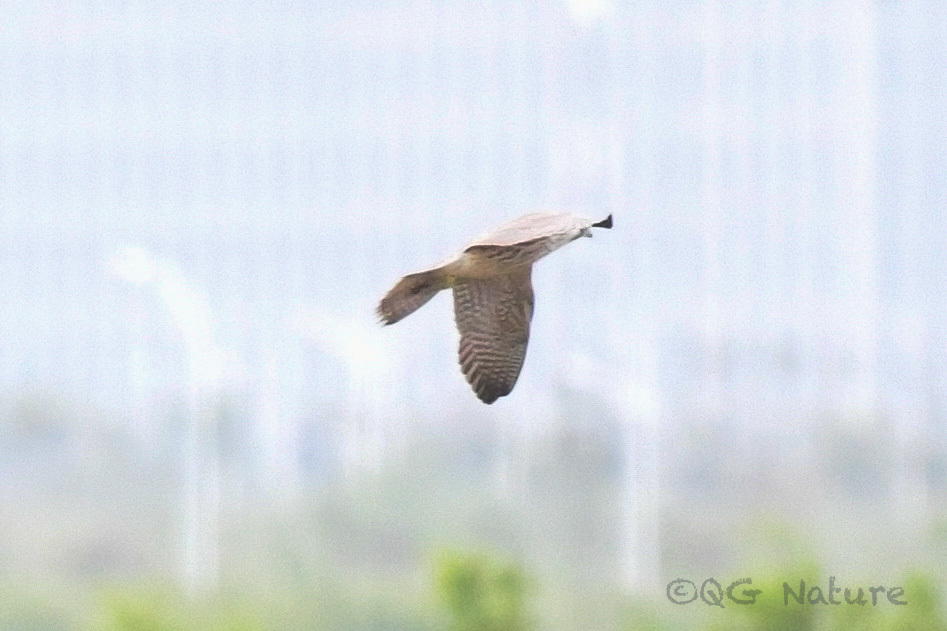
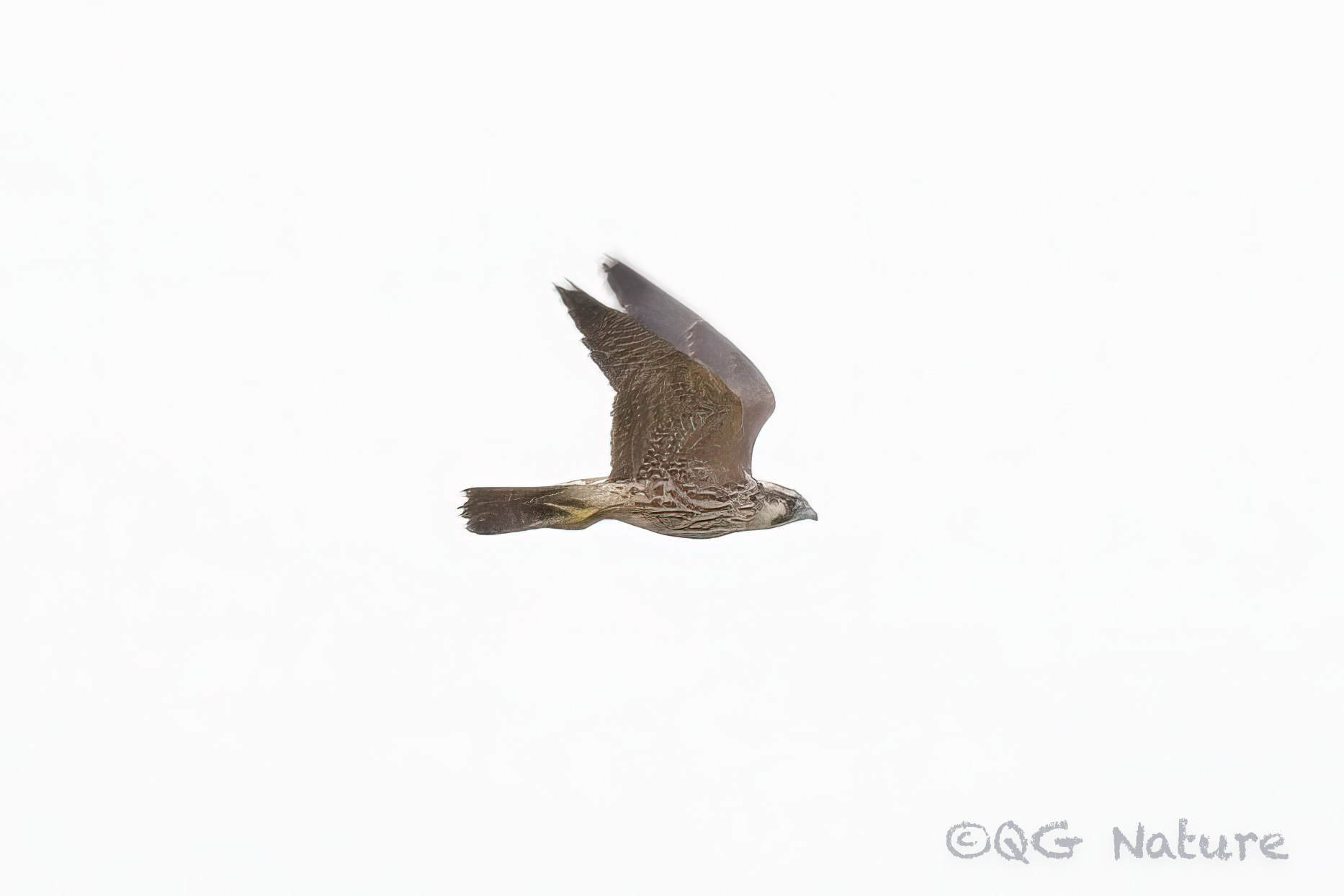
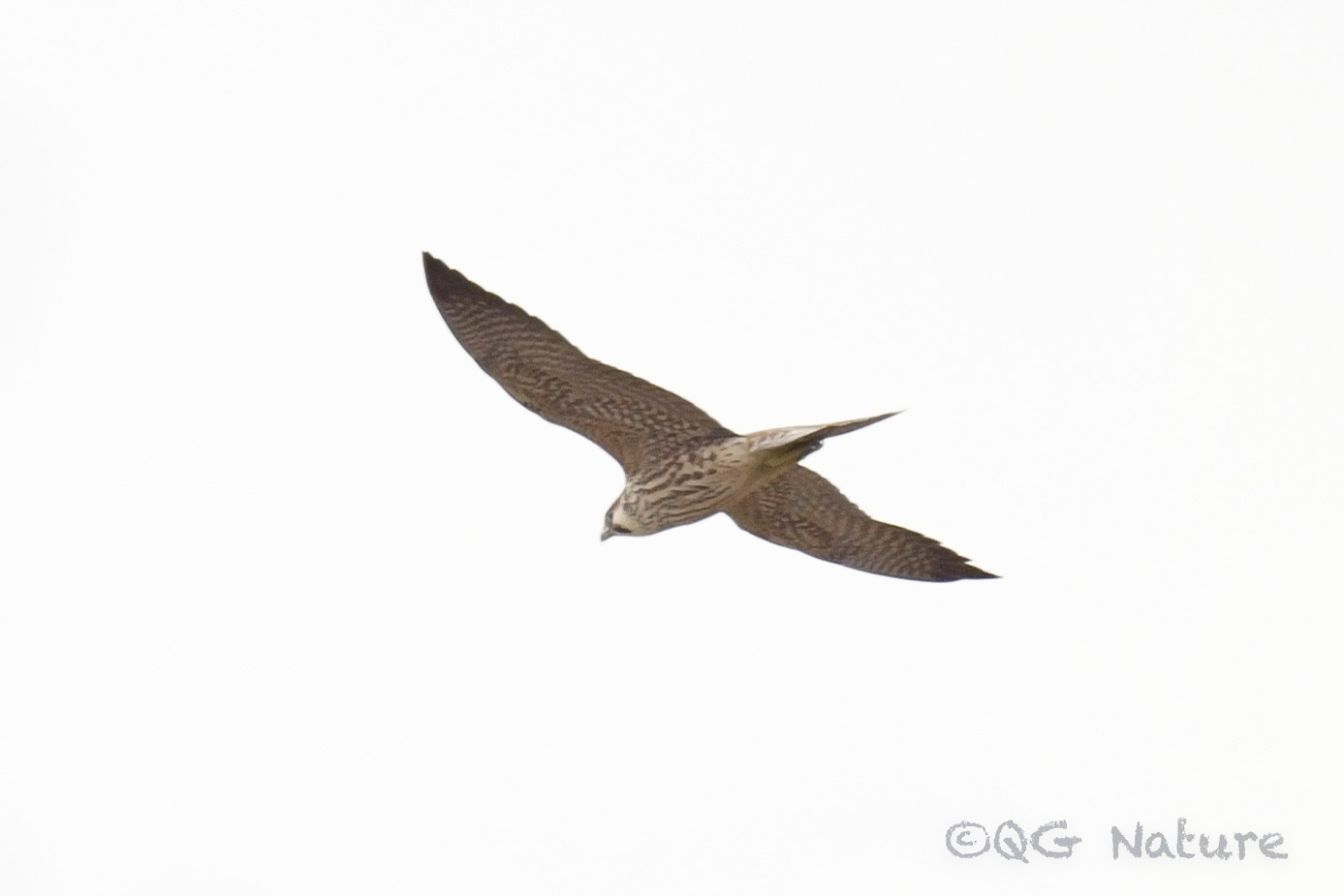
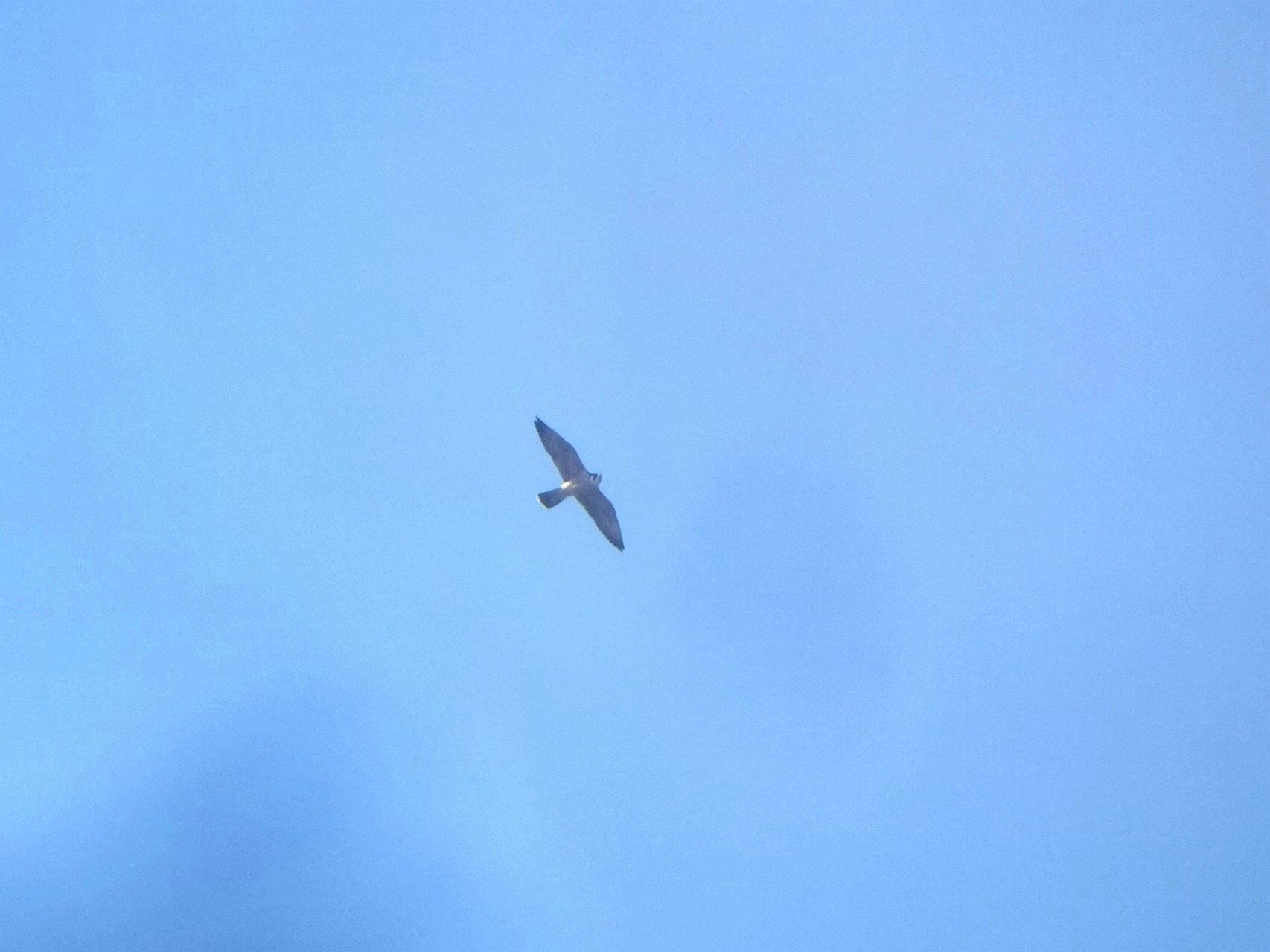
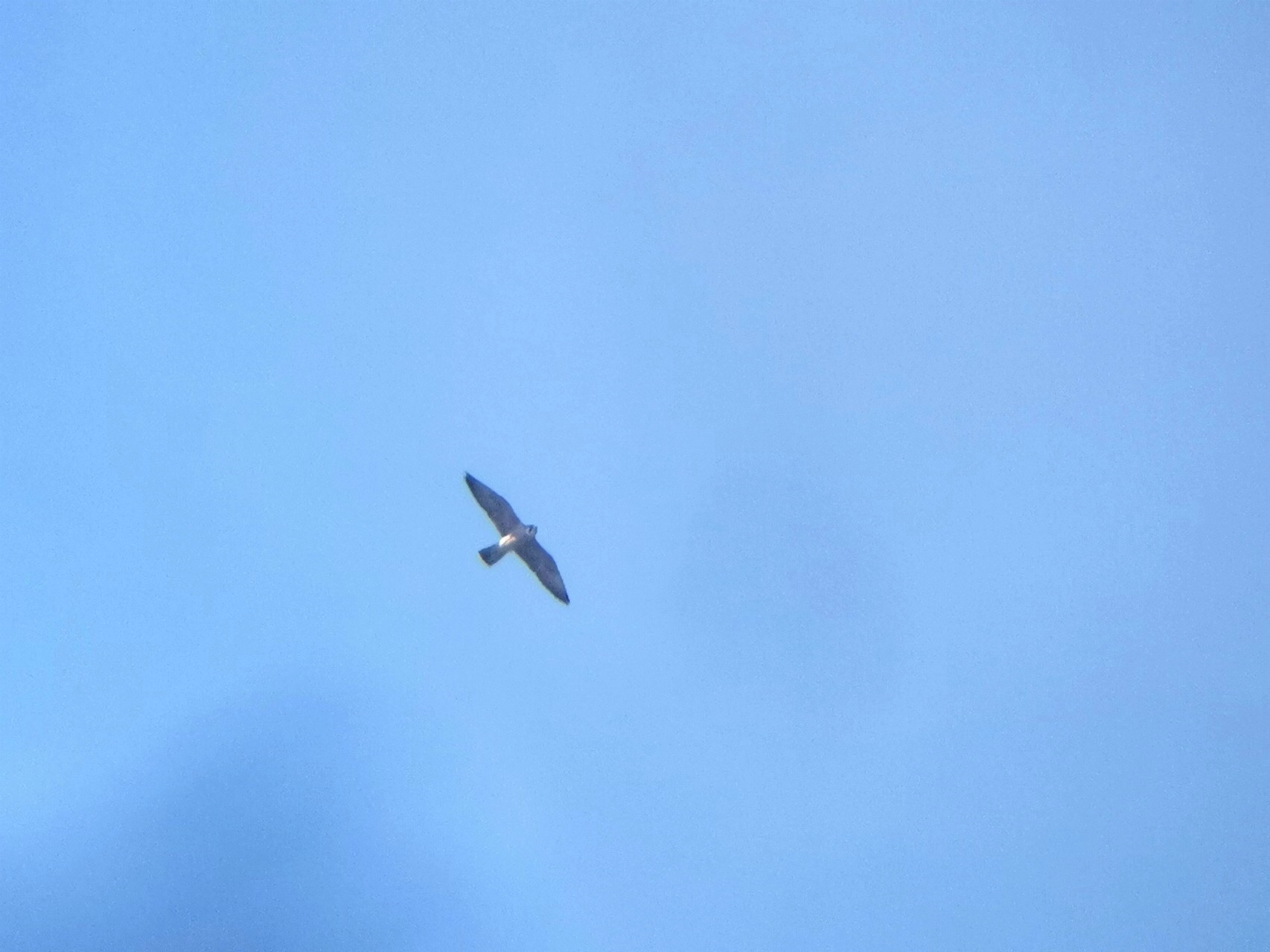
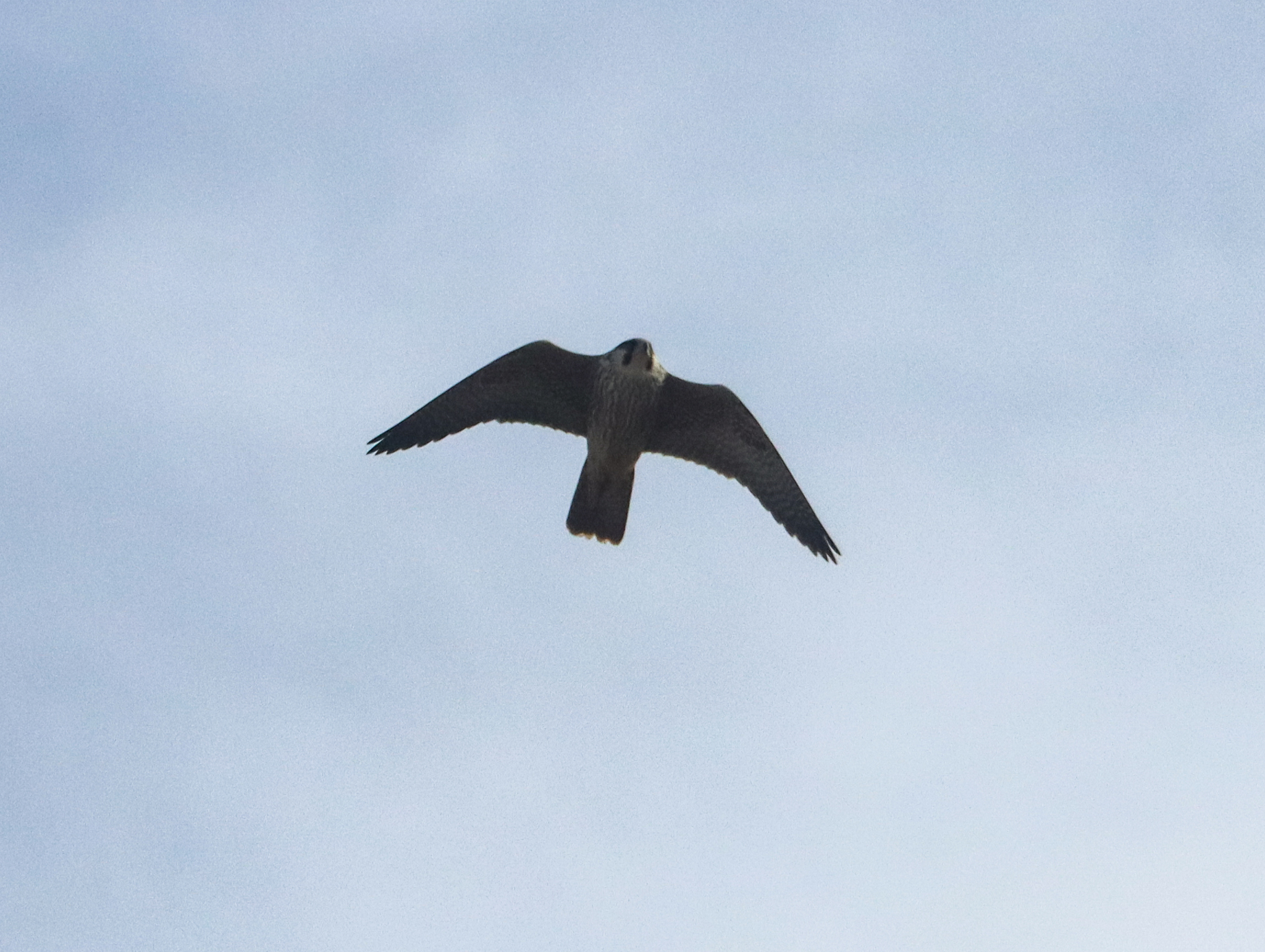
Peregrine Falcon
Falco peregrinus
游隼
Introduction
The Peregrine Falcon (Falco peregrinus) is a cosmopolitan falcon species found worldwide except in extreme polar regions and New Zealand. It inhabits diverse environments including coastal cliffs, mountainous terrain, and urban areas. Adults measure 34-58 cm in body length with a wingspan of 80-120 cm. Females are significantly larger than males, sometimes weighing up to 30% more. The species is characterized by blue-grey upperparts, white underparts with dark barring, and a dark head with a pale neck. It has adapted successfully to urban environments, nesting on tall structures including cathedral towers, skyscraper ledges, and bridge towers while hunting primarily avian prey such as pigeons. During hunting dives or territorial displays, individuals reach speeds exceeding 320 km/h, making it the fastest animal.
Description
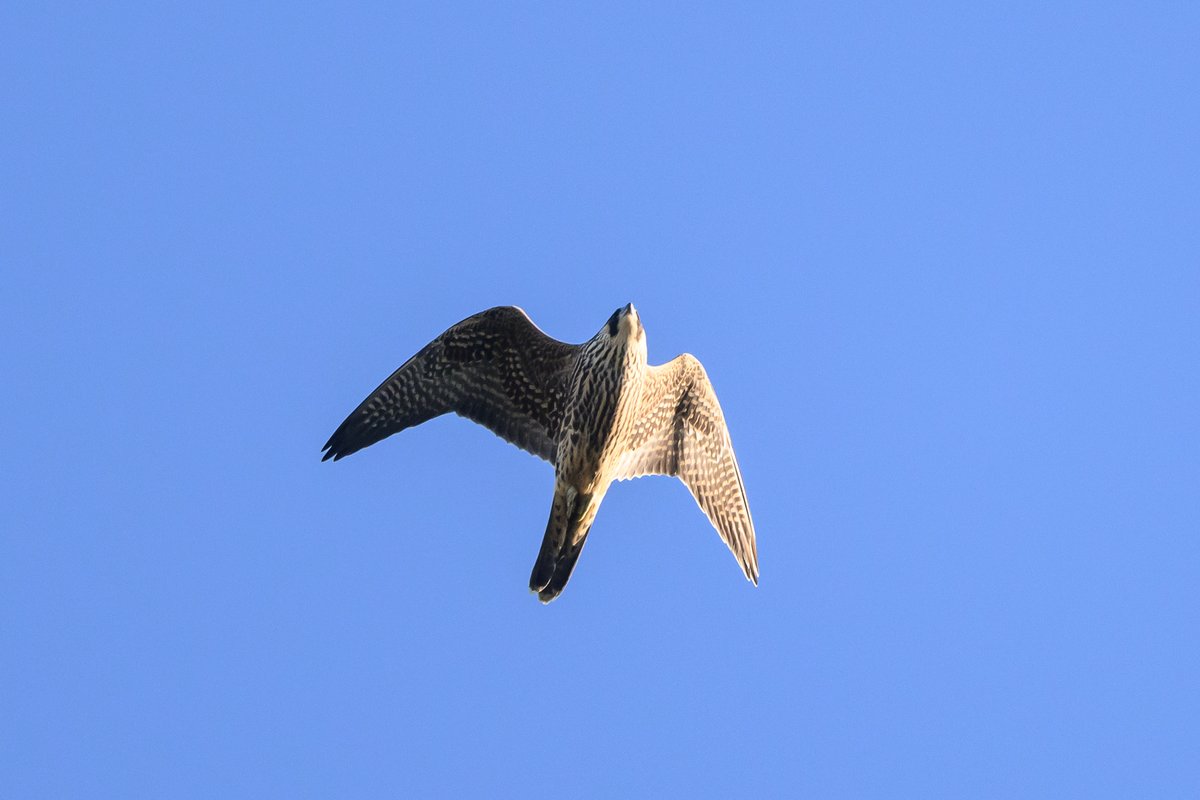
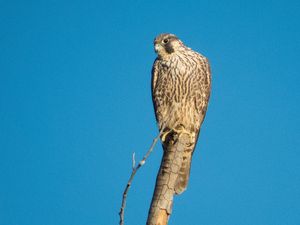
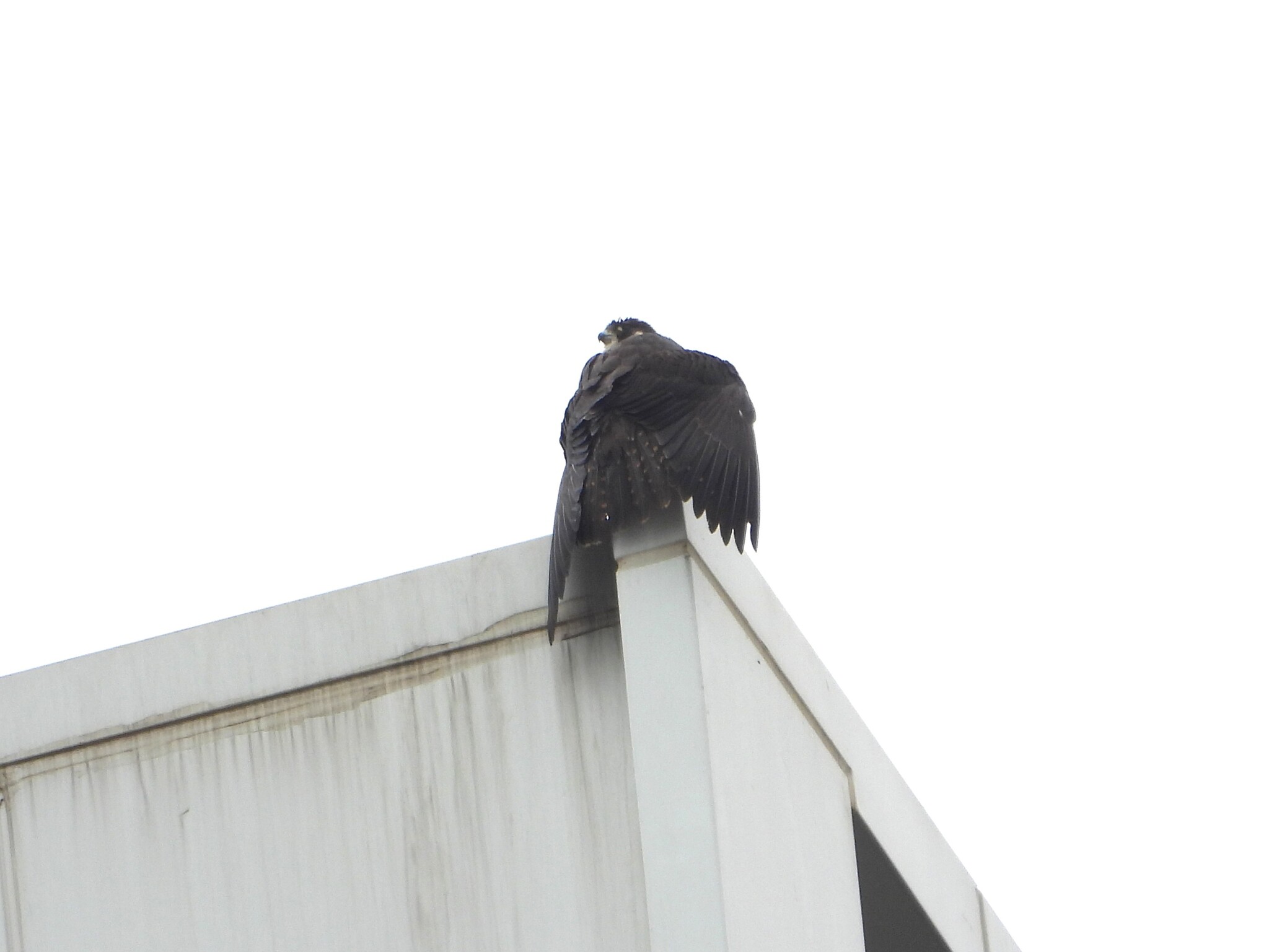
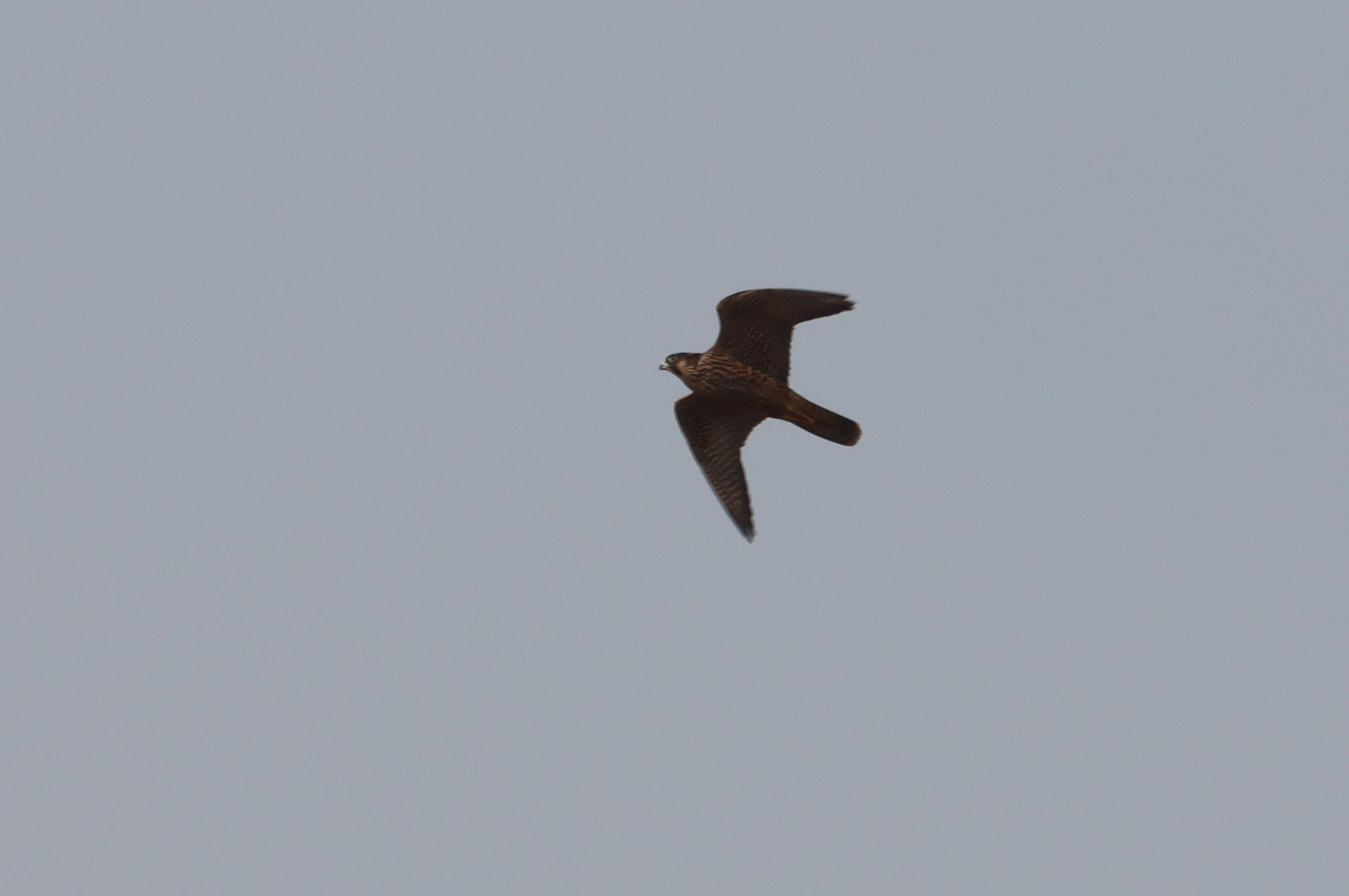
This is a large falcon measuring 34-58 cm in body length with a wingspan of 74-120 cm. Males weigh 330-1000 g while the considerably larger females reach 700-1500 g. Adults display bluish-black to slate-grey upperparts with indistinct darker barring on the back and pointed wings. The underparts range from white to rusty, crossed by thin clean bands of dark brown or black. The long, narrow tail is rounded at the tip with a black terminal band. A black crown and distinctive 'moustache' marking along the cheeks contrast sharply with the pale sides of the neck and white throat. The cere and feet are yellow, while the beak and claws are black. Immature birds are browner overall with streaked rather than barred underparts and a pale bluish cere and orbital ring.
Identification
The combination of large size, long tail, and distinctive head pattern makes this species relatively straightforward to identify. The black 'moustache' and cap against the white throat and pale neck sides is diagnostic among falcons throughout most of its range. In flight, the long, pointed wings and rapid wingbeats are characteristic. The similar lanner falcon is smaller with a rusty crown and less distinct moustache markings. Prairie falcons show a prominent dark axillar patch and pale underwings. Gyrfalcons are larger and generally browner or greyer without the bold head pattern. Subspecies vary in size and overall coloration intensity, with northern populations typically larger and paler than southern ones.
Distribution & Habitat
This is the world's most widespread raptor, found on every continent except Antarctica and New Zealand. Breeding habitat spans Arctic tundra to tropical regions, with populations on all major landmasses except the extreme polar zones and highest mountains. The species has adapted brilliantly to urban environments, nesting on tall buildings, bridges, and cathedrals while hunting abundant feral pigeons. Northern populations are highly migratory, traveling to Central and South America, South Asia, and sub-Saharan Africa for the winter. Temperate populations are largely resident year-round. Coastal cliffs, river valleys, and mountain ranges support breeding populations in less developed areas.
Behavior & Ecology
This species employs one of hunting's most dramatic techniques: soaring to great heights before executing a steep, high-speed dive called a stoop to strike prey in midair with a clenched foot. Its diet consists almost exclusively of birds, from small passerines to waterfowl and gamebirds up to 3 kg, though bats, small mammals, and insects supplement the diet seasonally. Hunting occurs primarily at dawn and dusk. Pairs mate for life and return annually to the same nesting territory. Courtship involves spectacular aerial acrobatics. The female scrapes a shallow depression on cliff ledges or human structures where 3-4 eggs are laid. Both parents share incubation and feeding duties. Life span reaches nearly 20 years in the wild.
Conservation
Following severe population declines from DDT and other pesticides during the 1950s-1970s, this species became endangered across much of its range. Pesticide accumulation caused eggshell thinning and widespread breeding failure. Recovery programs using captive breeding and reintroduction, combined with DDT bans beginning in the early 1970s, led to remarkable population recovery. The species was removed from the U.S. Endangered Species List in 1999, and UK populations reached approximately 1,500 breeding pairs by 2011. Current global populations are considered stable or increasing, though local threats including illegal egg collection, persecution, and collisions with human structures persist in some areas.
Culture
Throughout history, this powerful bird has symbolized aggression, martial prowess, and royal authority. Ancient Egyptian deities were often depicted with falcon heads, and medieval European nobility considered it a royal bird associated with princes in formal hierarchies of falconry species. The Western nobility used it for hunting below the gyrfalcon reserved for kings. Native American cultures of the Mississippian period used the species as a symbol of celestial power, burying men of high status in associations with raptorial birds. In modern times, it has appeared on currency, serves as university mascots, and inspired acclaimed literature including J.A. Baker's 'The Peregrine,' considered one of the finest nature books of the twentieth century.
Source: Wikipedia · CC BY-SA 3.0
Taxonomy
- Order
- Falconiformes
- Family
- Falconidae
- Genus
- Falco
- eBird Code
- perfal
Vocalizations
Subspecies (18)
-
Falco peregrinus anatum
North America (south of tundra) to northern Mexico
-
Falco peregrinus babylonicus
eastern Iran to Mongolia
-
Falco peregrinus brookei
Mediterranean basin eastward to the Caucasus Mountains
-
Falco peregrinus calidus
tundra of Eurasia (Lapland eastward to northeastern Siberia); winters southward to south-eastern Asia and Australia
-
Falco peregrinus cassini
western South America (Ecuador to Tierra del Fuego and Falkland Islands)
-
Falco peregrinus ernesti
Thai-Malay Peninsula, Philippines, Greater Sundas, New Guinea, and Bismarck Archipelago; birds of Solomon Islands probably also this subspecies
-
Falco peregrinus furuitii
Volcano Islands and Bonin Islands
-
Falco peregrinus japonensis
northeastern Siberia to Kamchatka Peninsula and Japan
-
Falco peregrinus macropus
Australia including Tasmania
-
Falco peregrinus madens
Cape Verde Islands
-
Falco peregrinus minor
Morocco, Mauritania, and sub-Saharan Africa
-
Falco peregrinus nesiotes
Vanuatu and New Caledonia
-
Falco peregrinus pealei
coastal western North America (Aleutian Islands to Washington)
-
Falco peregrinus pelegrinoides
Canary Islands; locally from northern Africa (Morocco) to western Iran
-
Falco peregrinus peregrinator
Pakistan, India, and Sri Lanka to southeastern China
-
Falco peregrinus peregrinus
northern Eurasia (south of the tundra)
-
Falco peregrinus radama
Madagascar and Comoros
-
Falco peregrinus tundrius
Arctic tundra of North America (Alaska to Greenland)
Data Sources
Species description from Wikipedia, licensed under CC BY-SA 3.0.
Bird images and sounds sourced from GBIF, contributed by citizen scientists worldwide under Creative Commons licenses.
Taxonomy data from AviList 2025.