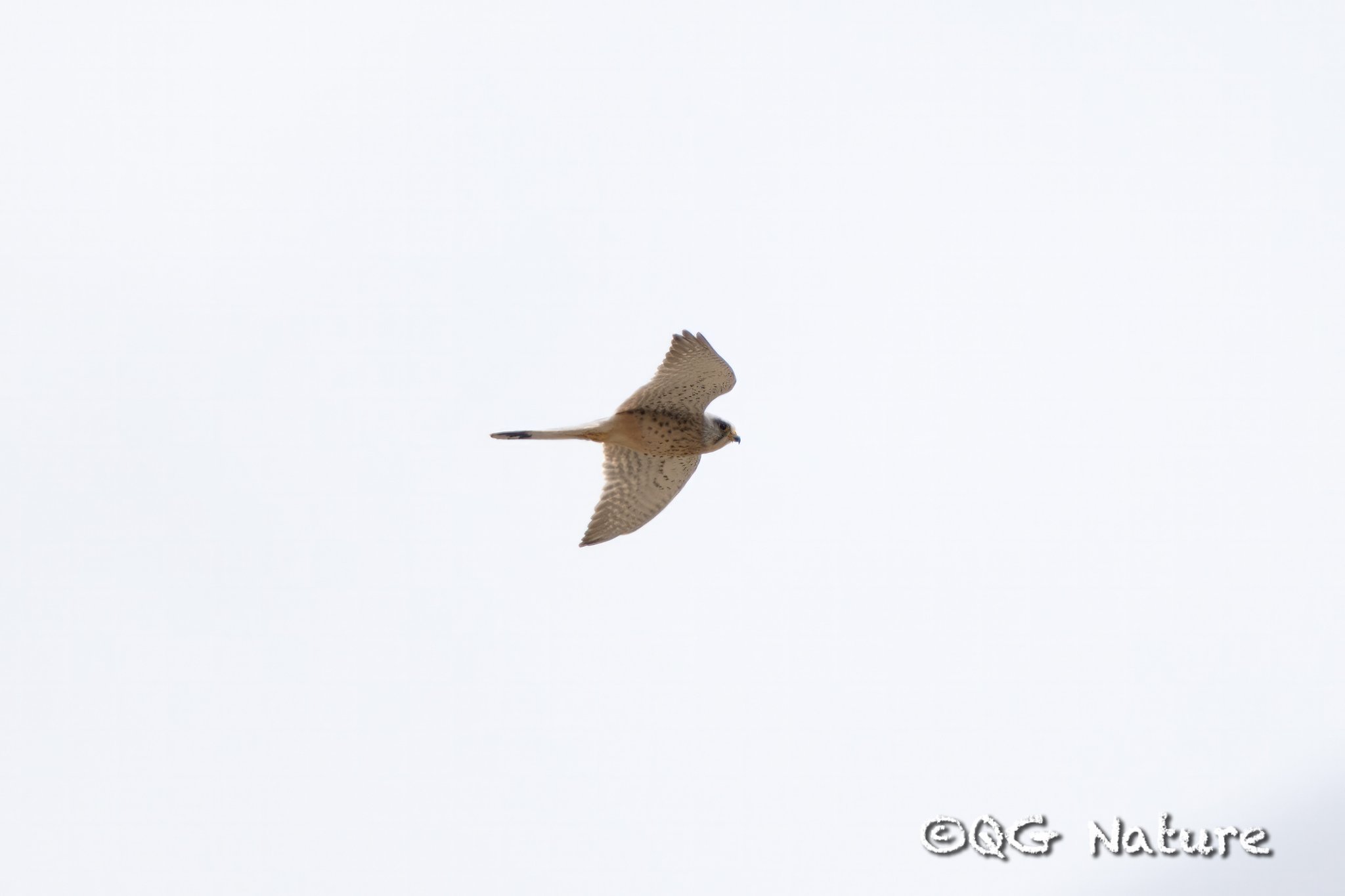
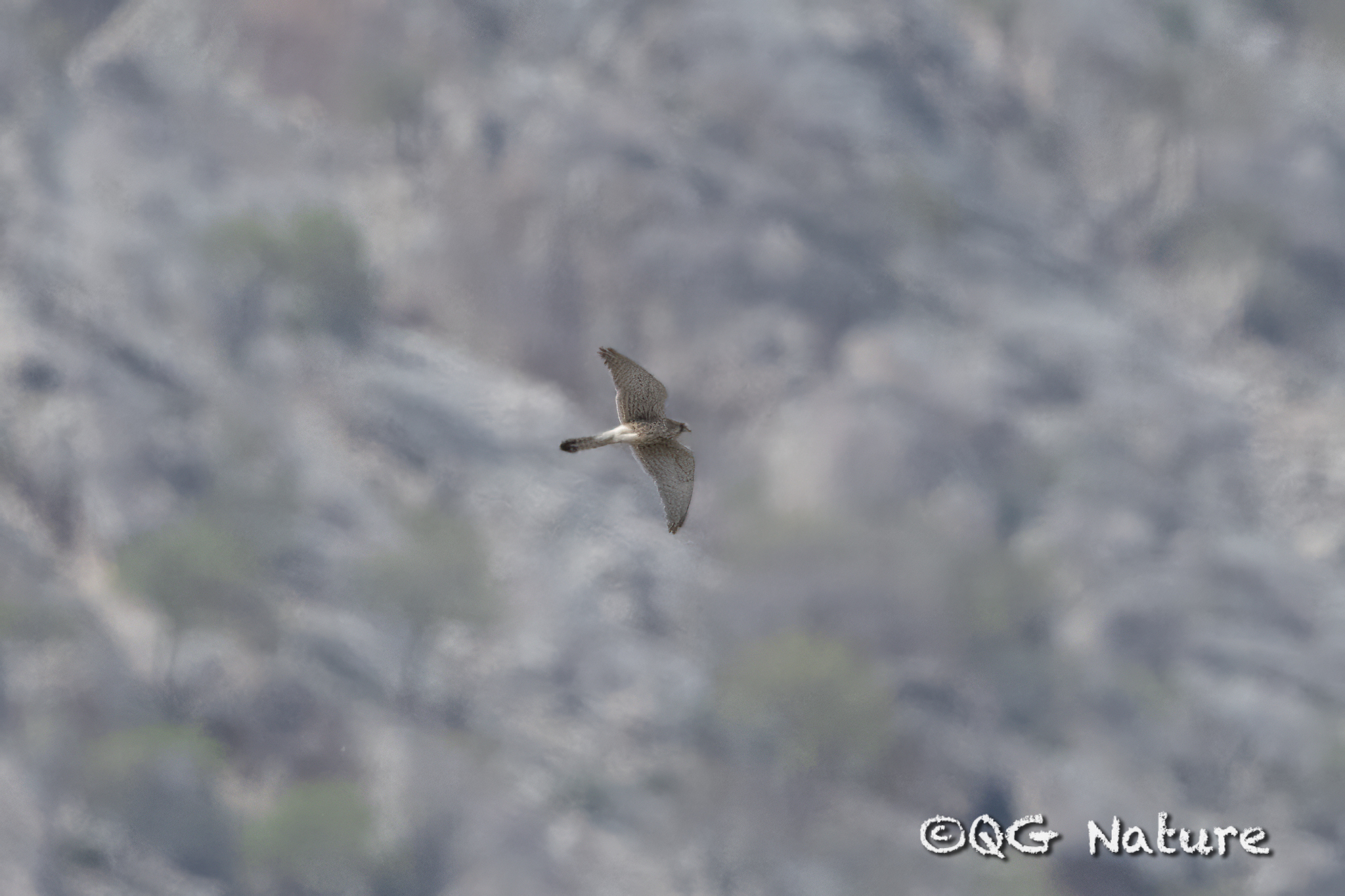
Falconiformes / Falconidae / Falco
Lesser Kestrel
Falco naumanni · 黄爪隼
Introduction
A small falcon breeding from the Mediterranean across Afghanistan and Central Asia to China and Mongolia. It is a summer migrant wintering in Africa, Pakistan, India, and Iraq. The species nests colonially and feeds primarily on insects. It is classified as Least Concern by the IUCN but is declining in its European range.
Description
Length 27–33 cm (11–13 in) with a 63–72 cm (25–28 in) wingspan. Proportionally shorter wings and tail than the common kestrel. Males have a grey head and tail, lacking dark back spotting, black malar stripe, and featuring grey wing patches. Females and young are slightly paler than the common kestrel. Both sexes possess unusual whitish-horn colored talons instead of dark ones.
Identification
Distinguished from the common kestrel by proportionally shorter wings and tail, lack of dark back spotting and black malar stripe in males, and grey wing patches. Diagnostic vocalization is a harsh 'chay-chay-chay', unlike the common kestrel's 'kee-kee-kee'. Whitish-horn talons are visible only at close range.
Distribution & Habitat
Breeds from the Mediterranean through Afghanistan and Central Asia to China and Mongolia. Winters in Africa (Sahel region from Senegal to Sudan for southwestern populations; Ethiopia to South Africa for northeastern populations), Pakistan, India, and Iraq. A 2025 study identified a genetic divide between southwestern and northeastern populations separated by the Caucasus Mountains.
Behavior & Ecology
Feeds on insects, small birds, reptiles, and rodents, often taken on the ground. Nests colonially on buildings, cliffs, or in tree holes without building a nest structure, laying 3–6 eggs. On West African wintering grounds, favors areas with plentiful locusts and grasshoppers. Roosts communally; one surveyed roost in Senegal held 28,600 individuals.
Conservation
Classified as Least Concern by the IUCN. Populations are declining in Europe. Threats include habitat destruction and indiscriminate pesticide use, which strongly affects the species due to its insectivorous diet.
Source: Wikipedia · CC BY-SA 3.0
Taxonomy
- Order
- Falconiformes
- Family
- Falconidae
- Genus
- Falco
Distribution
breeds Mediterranean basin to eastern China; winters to southern Asia and southern Africa
Vocalizations
Data Sources
Species description from Wikipedia, licensed under CC BY-SA 3.0.
Bird images and sounds sourced from GBIF, contributed by citizen scientists worldwide under Creative Commons licenses.
Taxonomy data from AviList 2025.