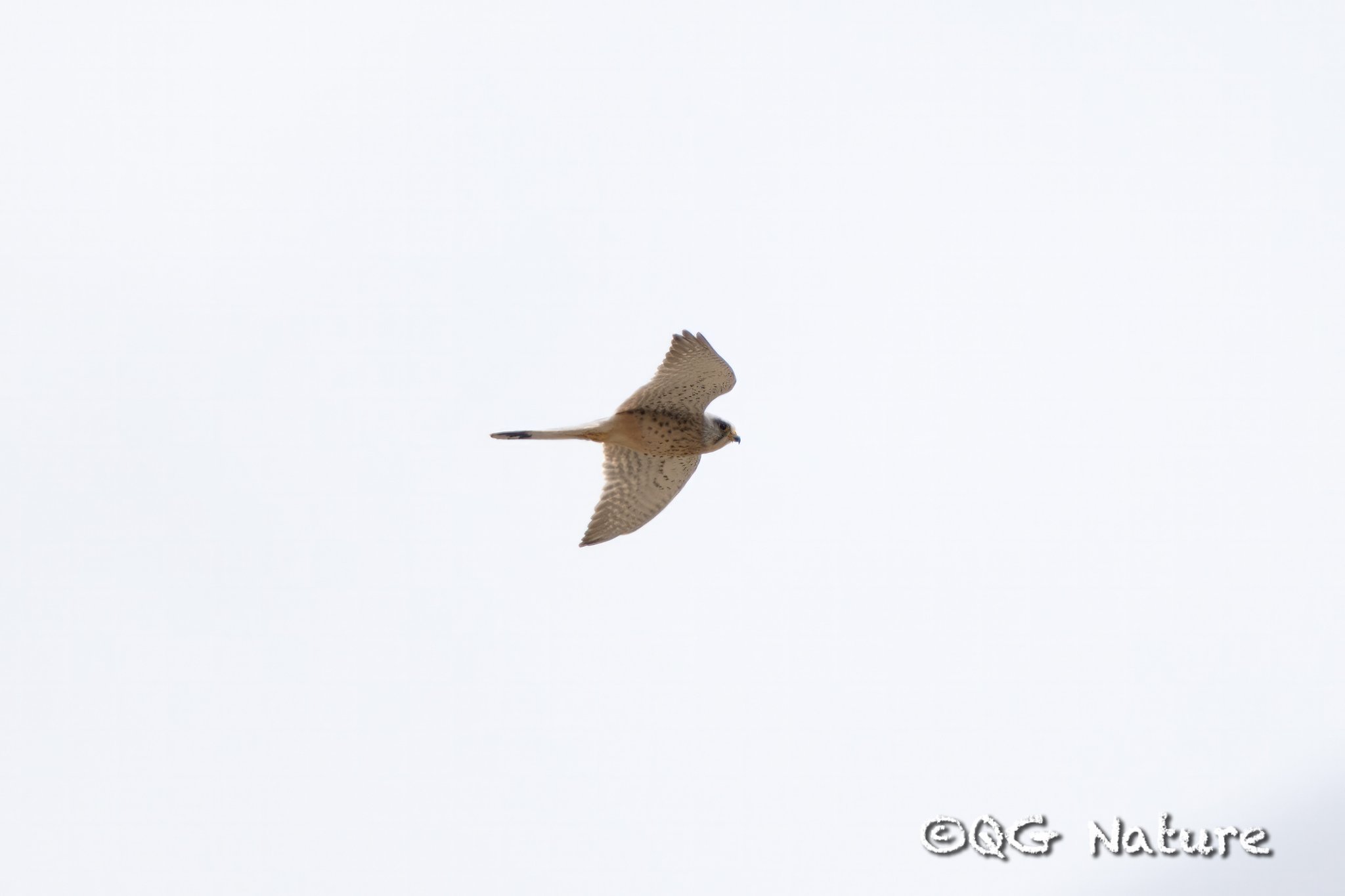
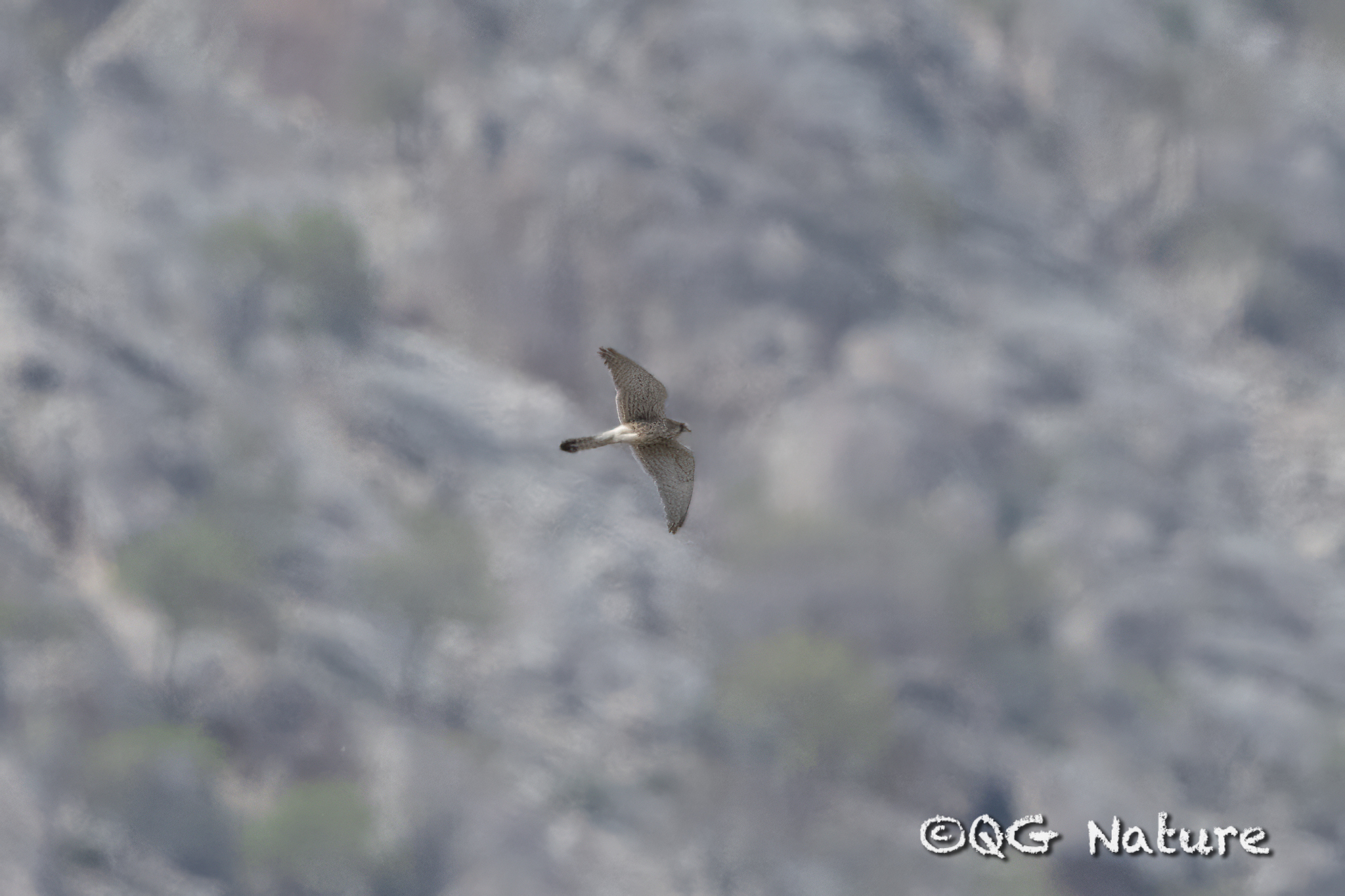
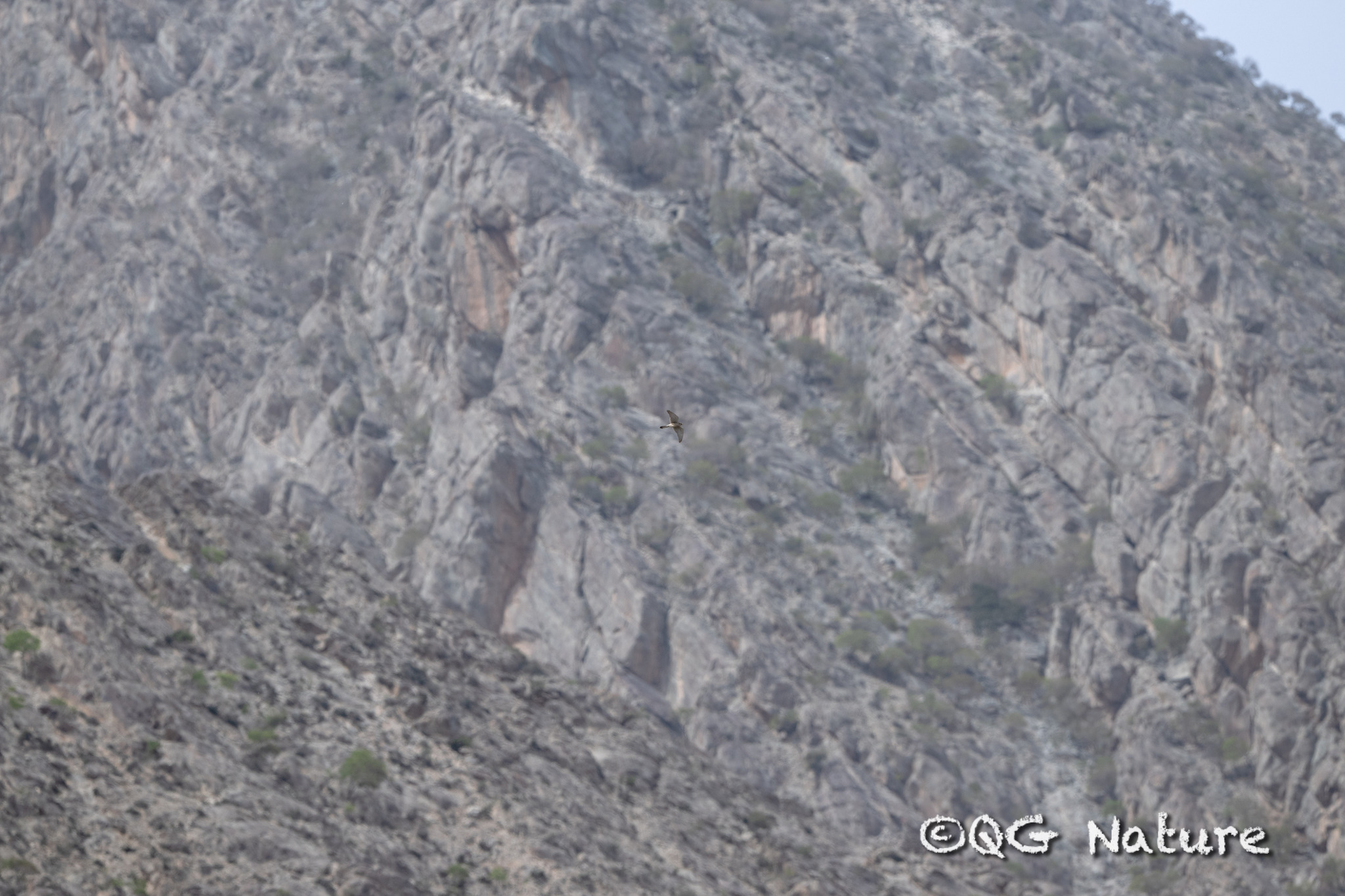
Lesser Kestrel
Falco naumanni
黄爪隼
Introduction
A small falcon (Falco naumanni) that breeds from the Mediterranean across Afghanistan and Central Asia to China and Mongolia. It is a summer migrant, wintering in Africa and Pakistan, occasionally extending to India and Iraq. The species is rare north of its breeding range and has declined in Europe. It nests colonially on buildings, cliffs, or in tree holes. The global population is widespread and plentiful, classified as Least Concern by the IUCN. Threats include habitat destruction and indiscriminate pesticide use due to its insectivorous habits.
Description
A small bird of prey measuring 27-33 cm in length with a 63-72 cm wingspan. It resembles the larger common kestrel but has proportionally shorter wings and tail. The upperparts are brown with barred grey underparts. Males have a grey head and tail similar to male common kestrels, but lack dark spotting on the back, the black malar stripe, and instead display grey wing patches. Females and juveniles are slightly paler but otherwise very similar to the common kestrel. Neither sex possesses the dark talons typical of falcons; both have unusually pale whitish-horn coloured talons, visible only at very close range.
Identification
Field identification relies heavily on voice: the diagnostic call is a harsh chay-chay-chay, contrasting sharply with the common kestrel's kee-kee-kee. Structure and call are more reliable than plumage, as females and young are nearly identical to common kestrels. Males can be distinguished by the absence of a black malar stripe and the presence of grey patches on the wings. Proportionally shorter wings and tail compared to the common kestrel are also distinguishing features.
Distribution & Habitat
Breeds across the Mediterranean basin through Afghanistan and Central Asia to China and Mongolia. Winters primarily in Africa and Pakistan, occasionally ranging to India and Iraq. Genetic analysis has revealed two distinct populations separated by the Caucasus Mountains: a southwestern population wintering in the Sahel from Senegal to Sudan, and a northeastern population wintering from Ethiopia south to South Africa. The species is rare north of its breeding range and has declined significantly in Europe.
Behavior & Ecology
Feeds primarily on insects, but also takes small birds, reptiles, and rodents, especially mice, typically caught on the ground. During winter in West Africa, it concentrates in a latitude belt through Senegal where locusts and grasshoppers are abundant. Nests colonially on buildings, cliffs, or in tree holes, laying 3-6 eggs without constructing a nest structure. On wintering grounds, birds roost communally; one roost in Senegal was recorded holding 28,600 individuals alongside 16,000 scissor-tailed kites.
Conservation
Classified as Least Concern by the IUCN due to its large global population and wide distribution. The primary threats are habitat destruction and indiscriminate pesticide use, which poses particular risk given the species' insectivorous diet. European populations have declined significantly, though the species remains widespread and plentiful overall.
Culture
No cultural information provided in the source article.
Source: Wikipedia · CC BY-SA 3.0
Taxonomy
- Order
- Falconiformes
- Family
- Falconidae
- Genus
- Falco
- eBird Code
- leskes1
Distribution
breeds Mediterranean basin to eastern China; winters to southern Asia and southern Africa
Vocalizations
Data Sources
Species description from Wikipedia, licensed under CC BY-SA 3.0.
Bird images and sounds sourced from GBIF, contributed by citizen scientists worldwide under Creative Commons licenses.
Taxonomy data from AviList 2025.