Falconiformes / Falconidae / Falco
Amur Falcon
Falco amurensis · 红脚隼
Introduction
A small raptor of the falcon family, breeding in south-eastern Siberia and Northern China. It migrates in large flocks across India and over the Arabian Sea to winter on Southern and East African coasts. Assessed as Least Concern due to a wide breeding range and large population size.
Description
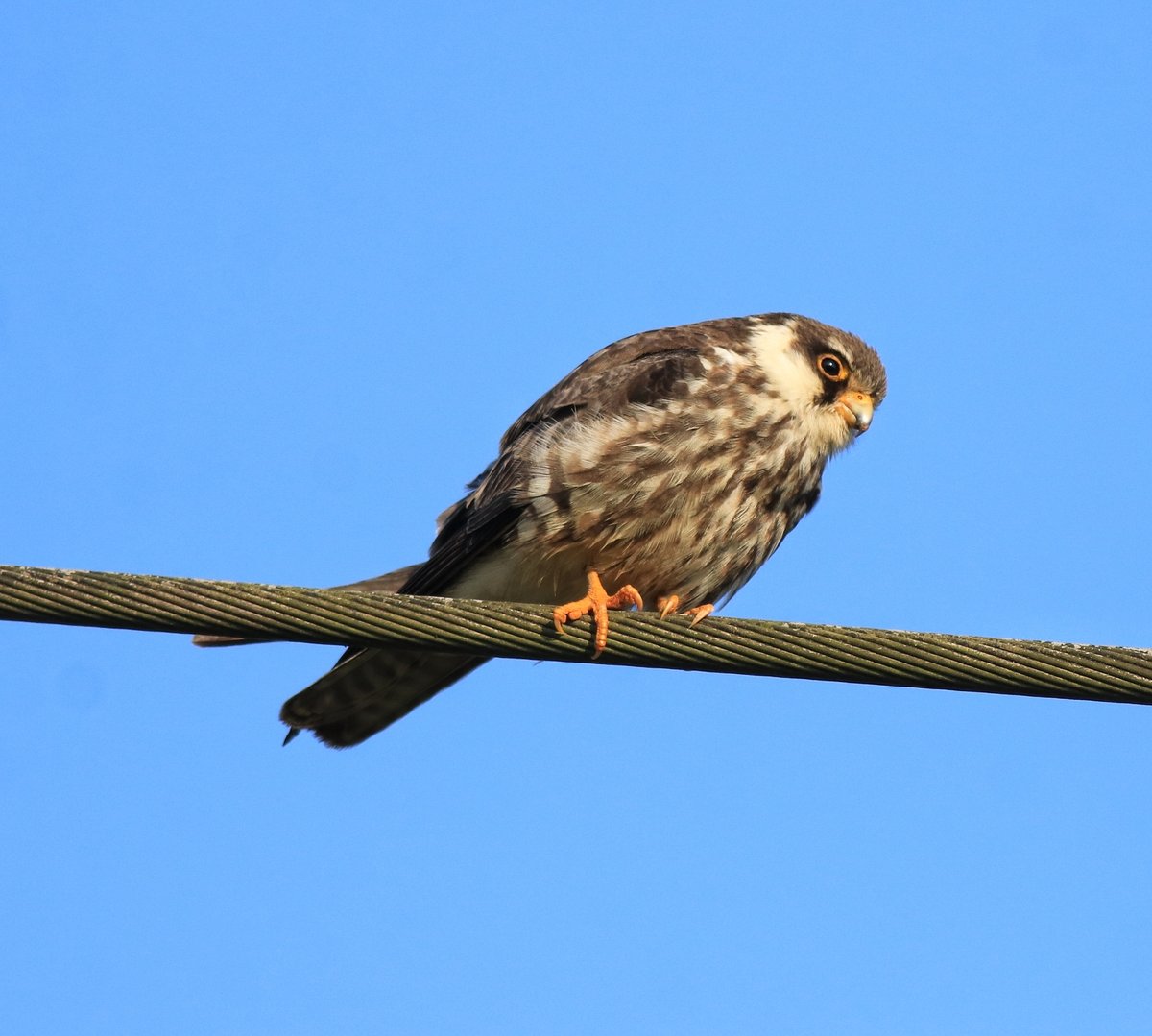
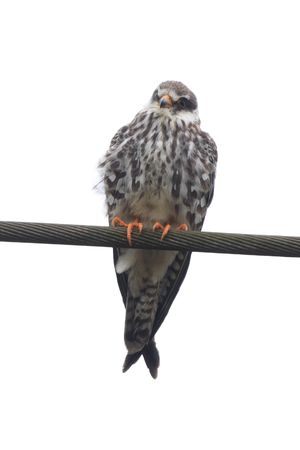
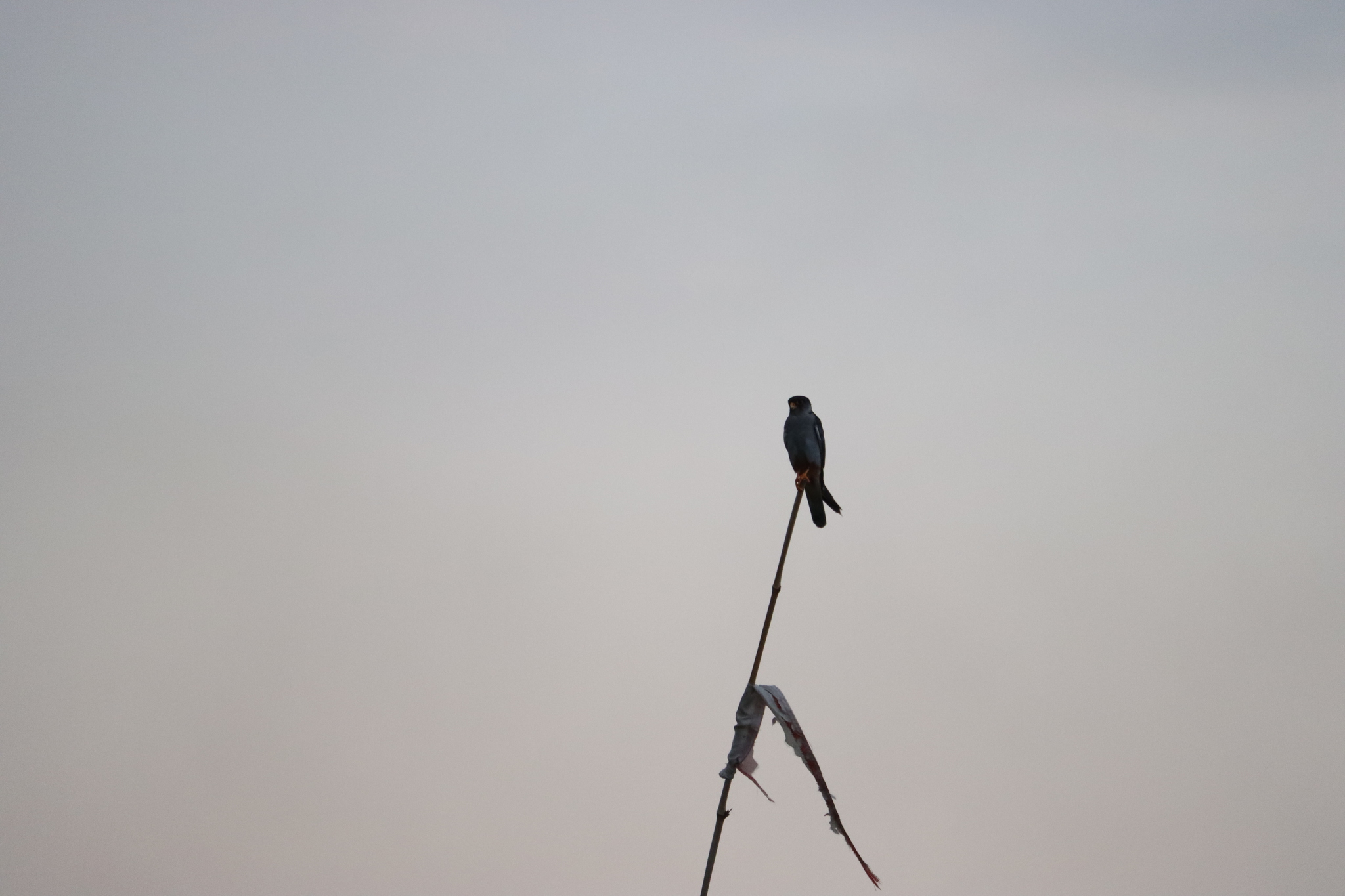
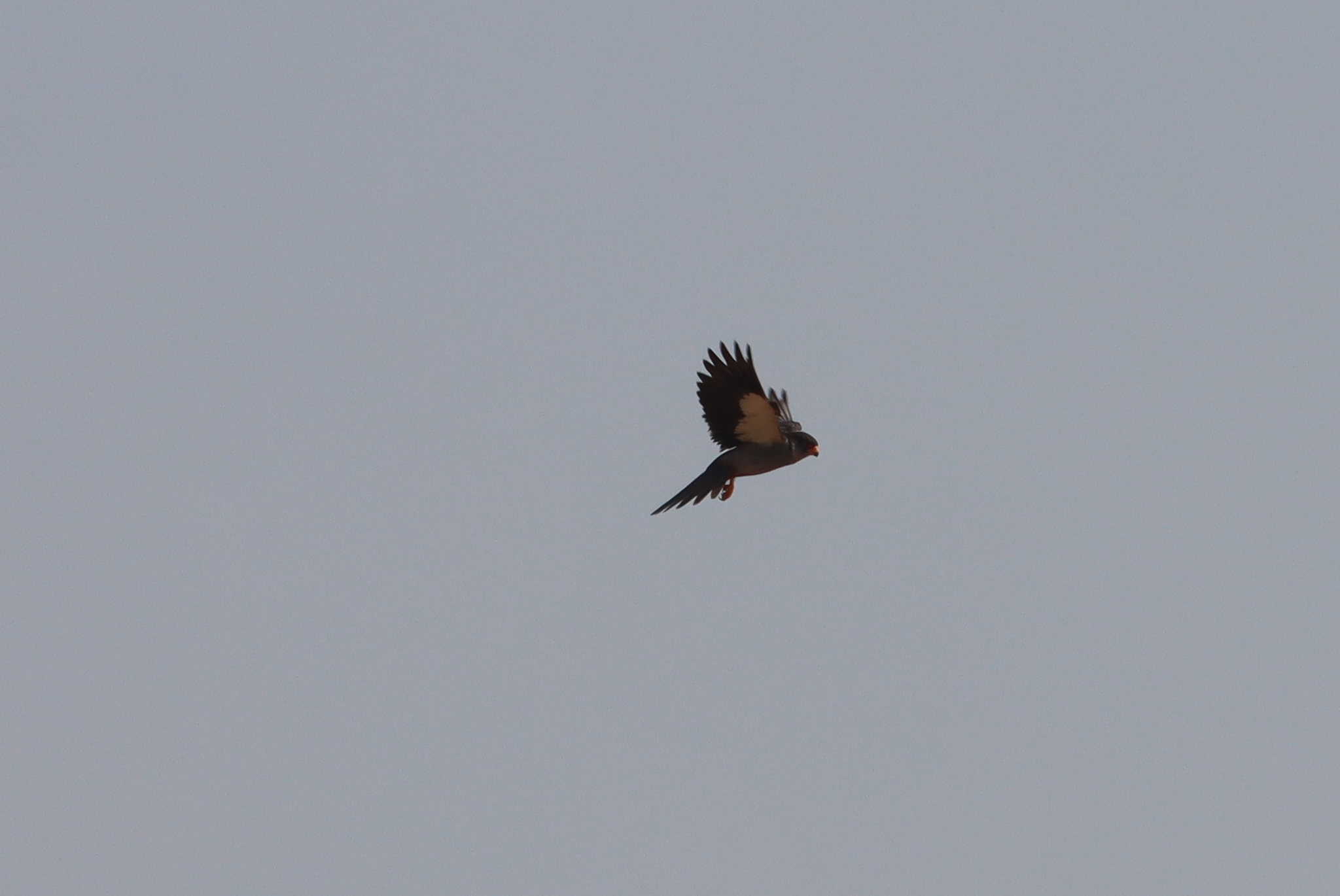
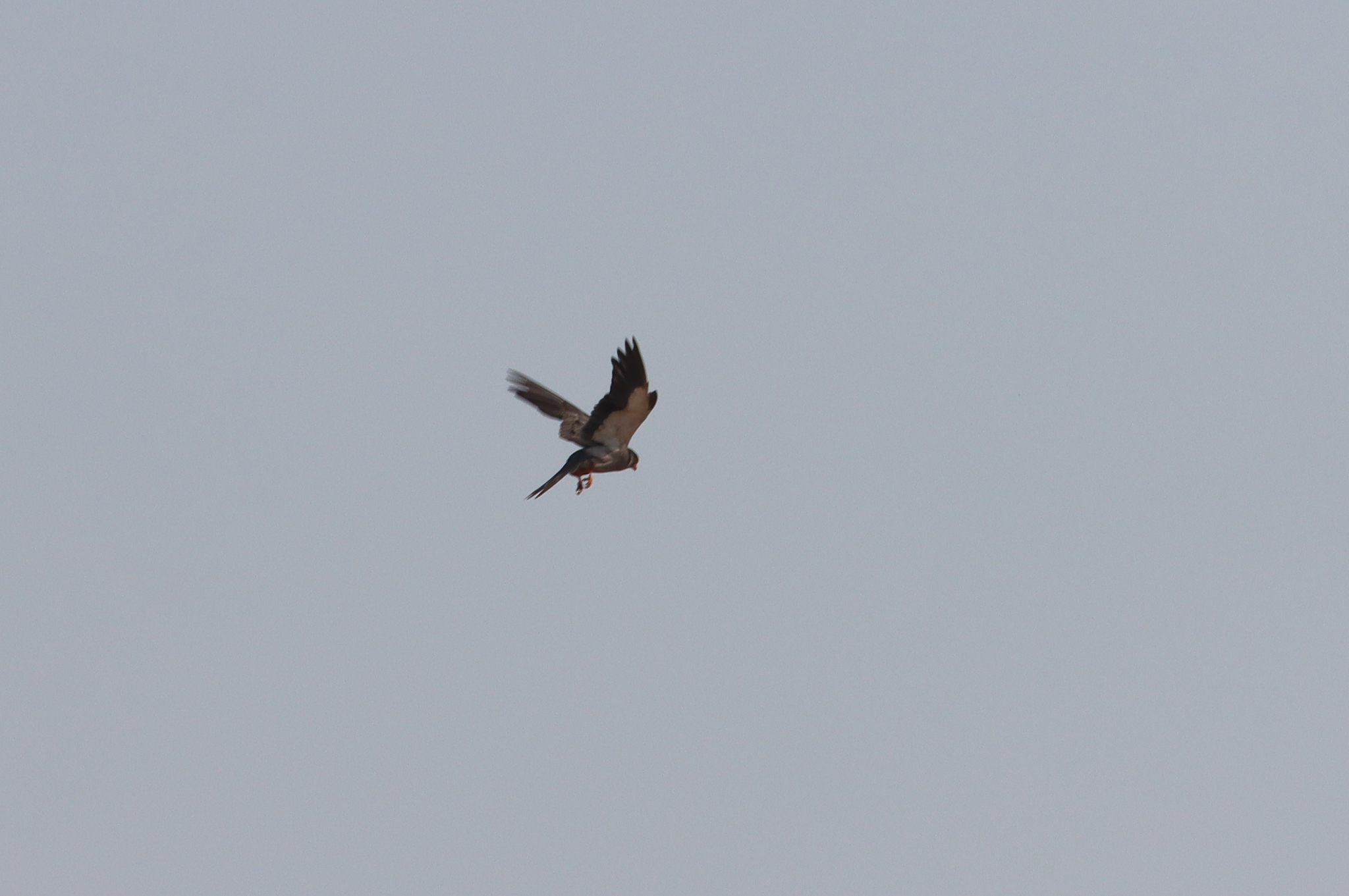
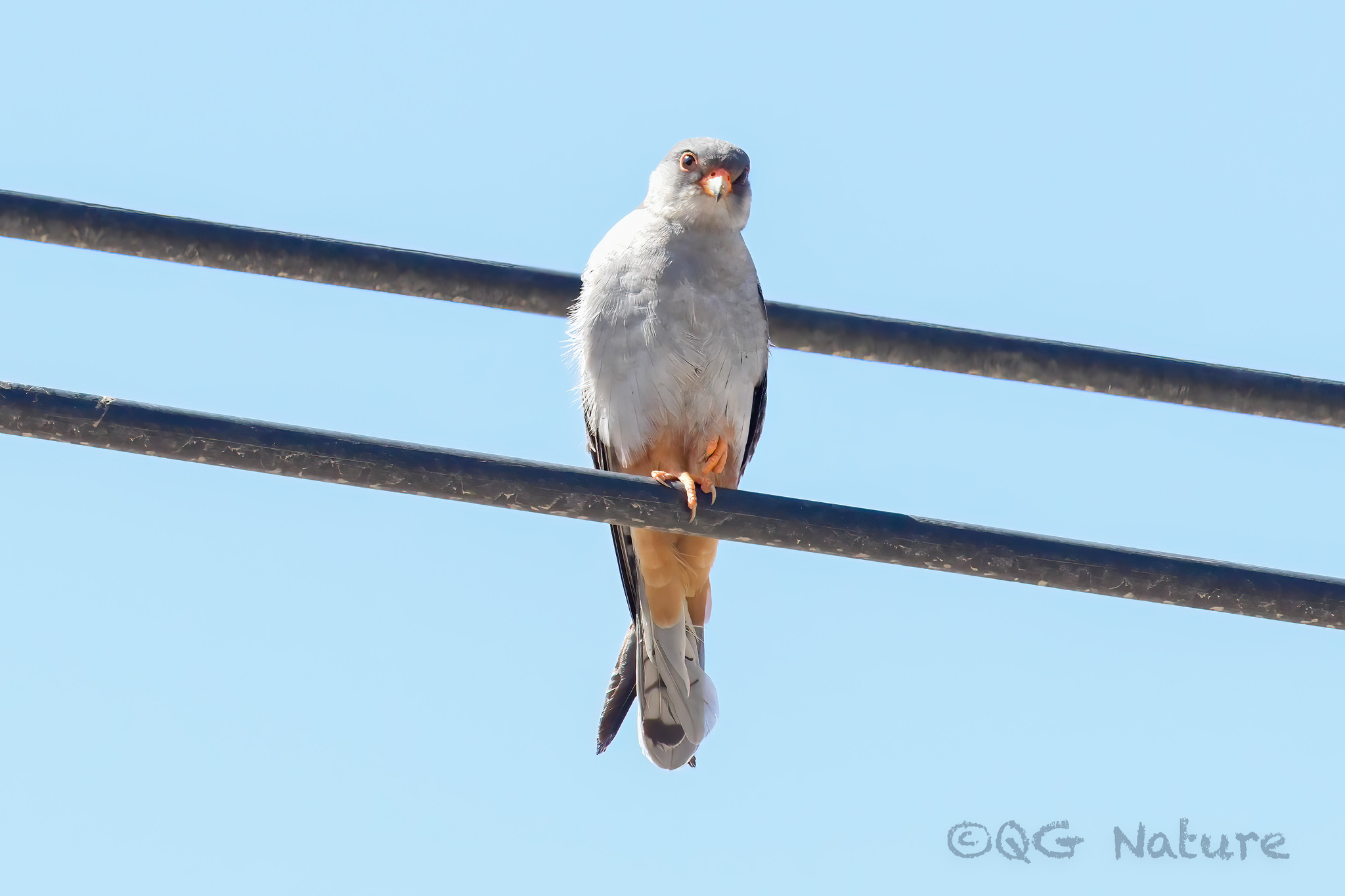
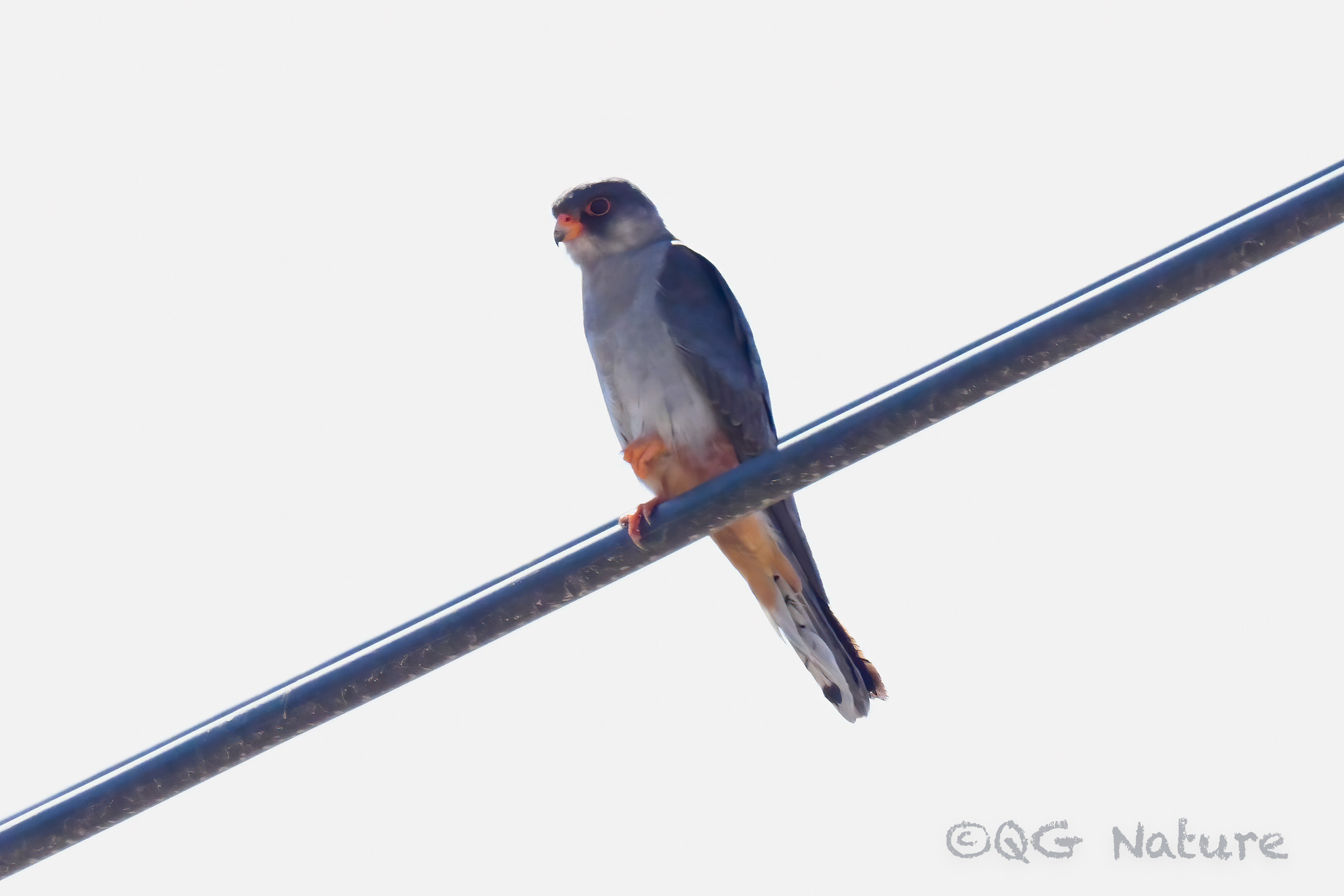
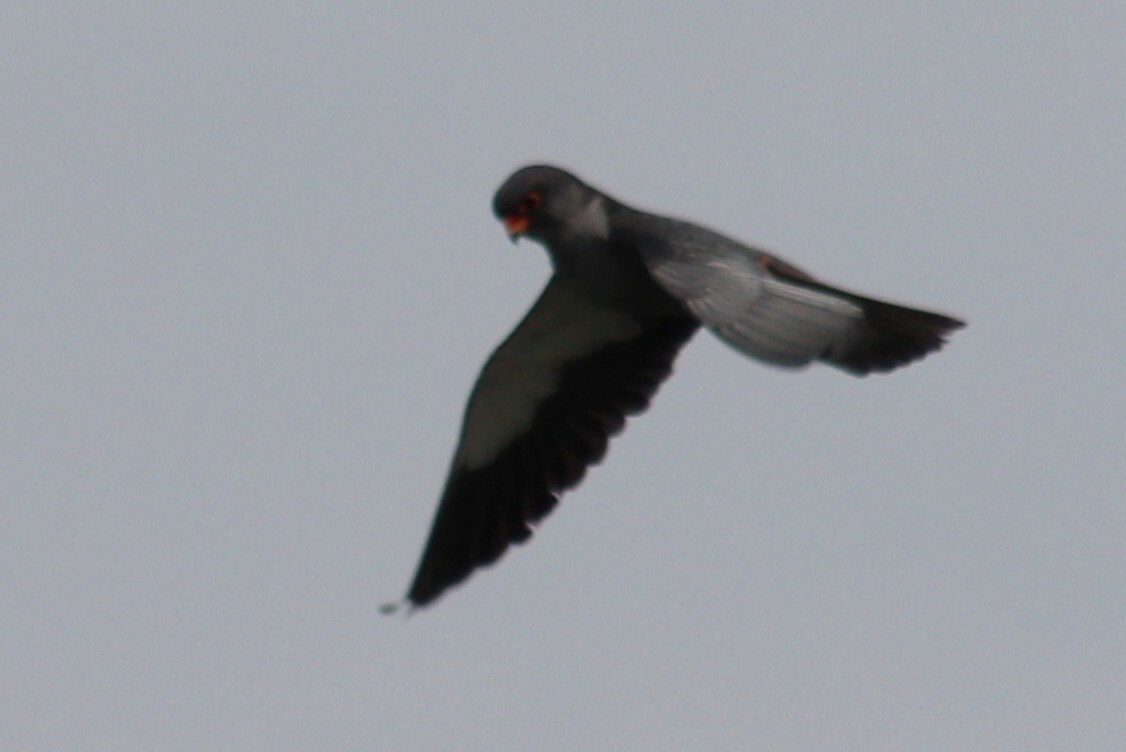
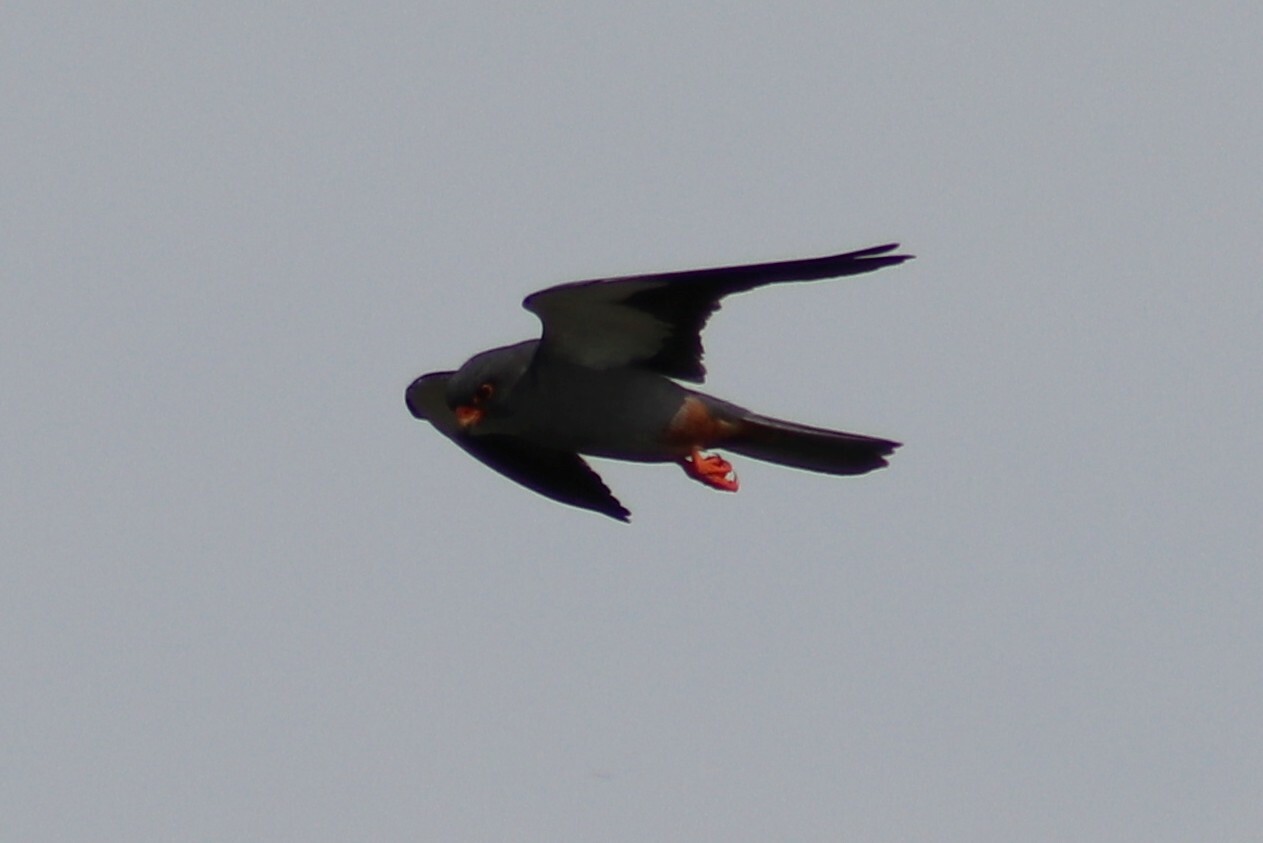
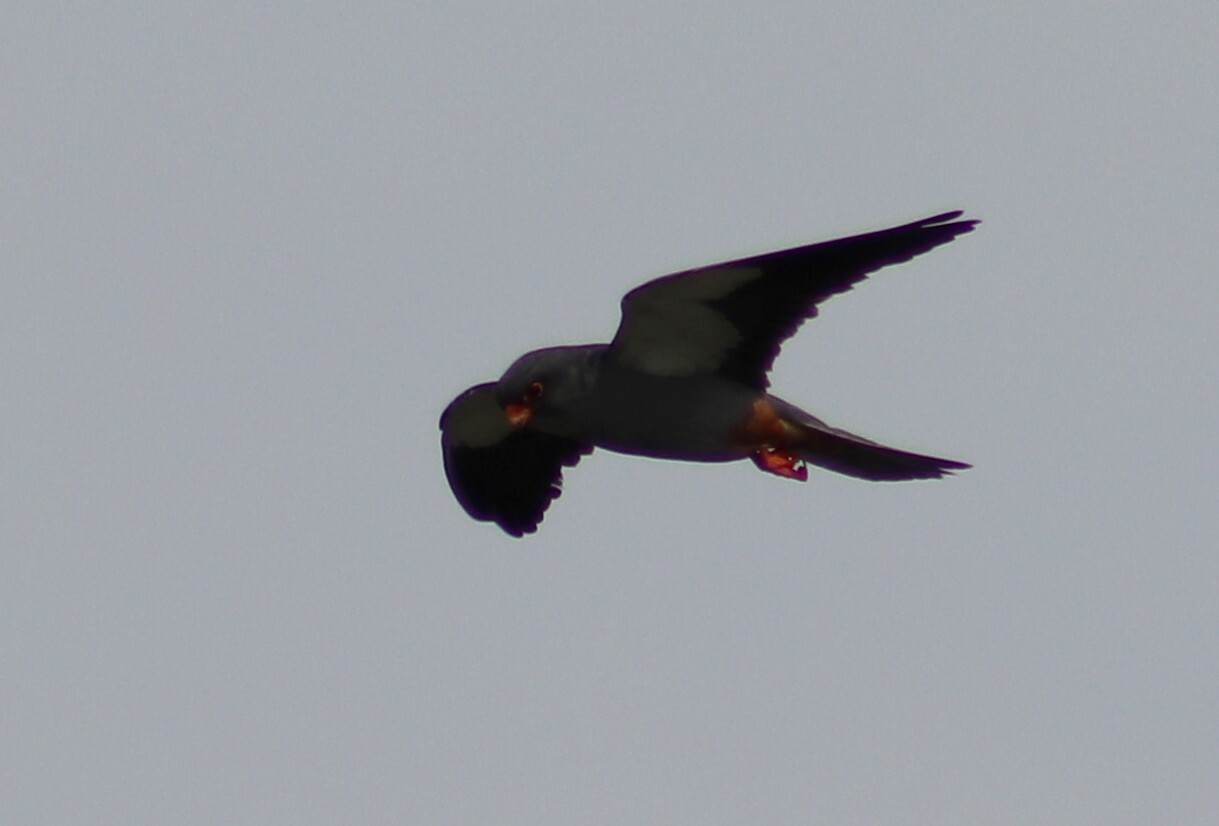
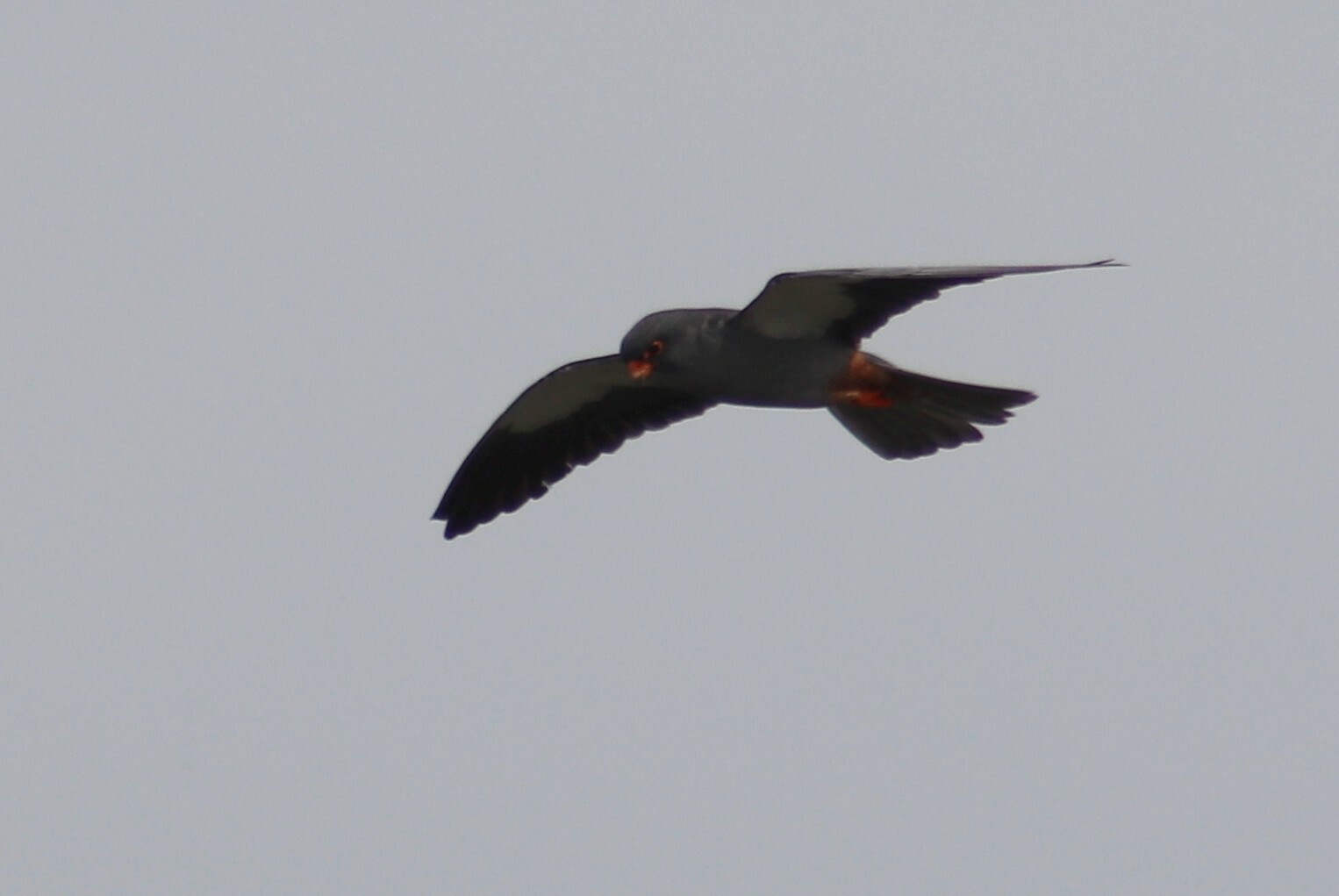
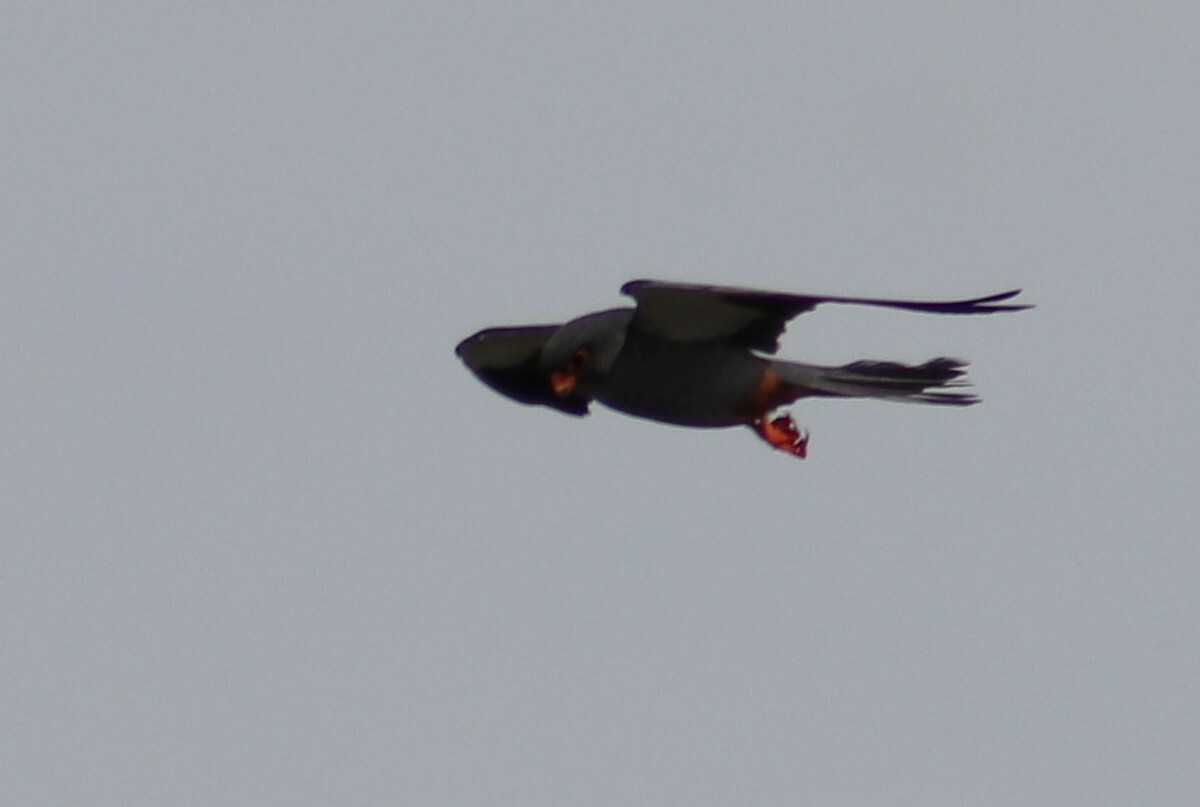
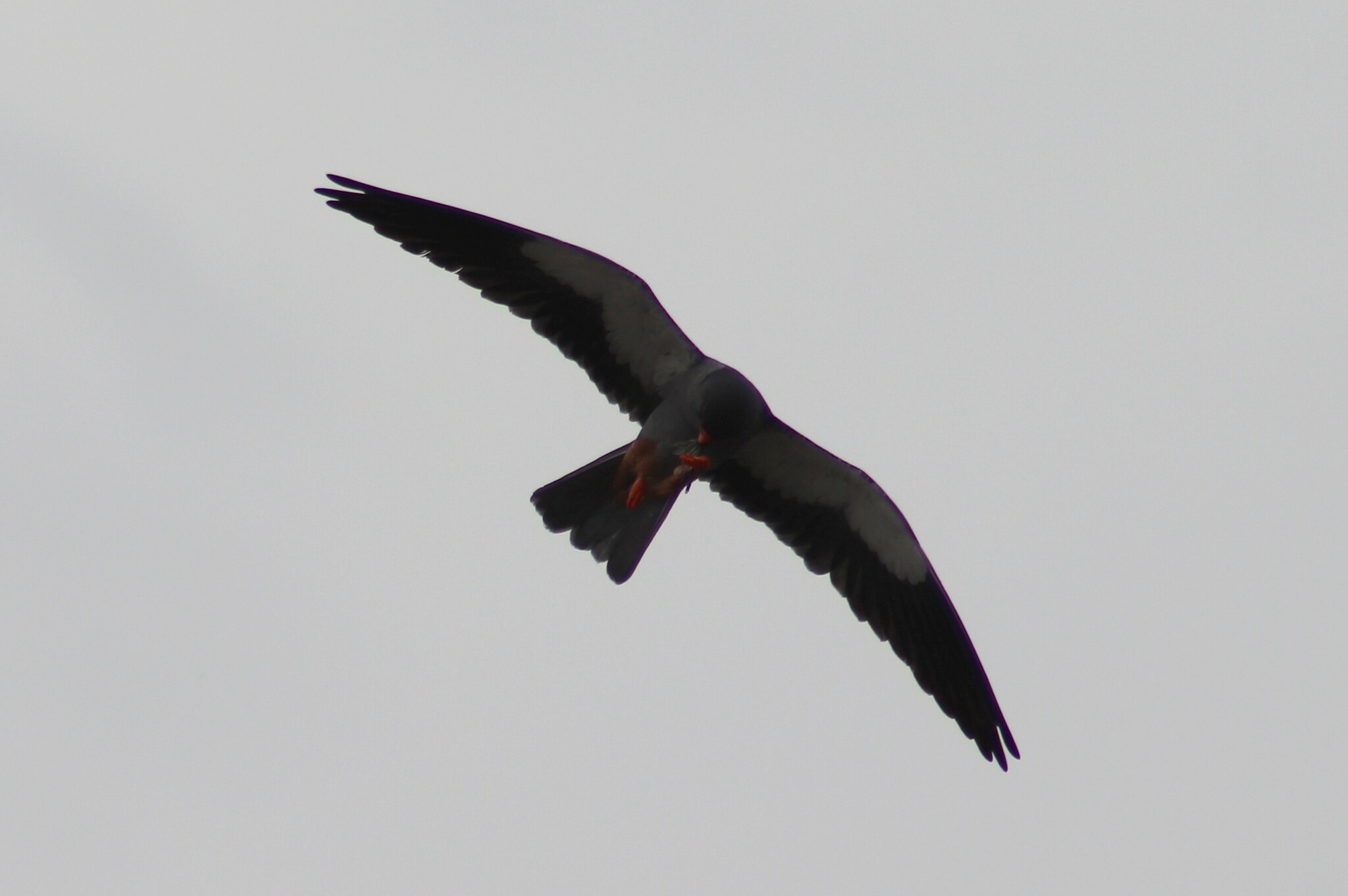
Males are dark sooty grey above with rufous thighs and vent; wing lining is white in flight. Wingspan is 63–71 cm, with wing tips reaching or extending just beyond the tail-tip at rest. Females have an orange eye-ring, red cere, and reddish orange feet. Juveniles lack the buffy underwing coverts seen in similar species.
Identification
Males distinguished by white wing linings contrasting with dark wing feathers (unlike the dark grey lining of the red-footed falcon) and chestnut vent (distinguishing from melanistic Gabar goshawks). Sooty falcon and grey kestrel have yellow feet and cere. Females identified by orange eye-ring, red cere, and reddish orange feet. Juveniles distinguished from red-footed falcon juveniles by lacking buffy underwing coverts.
Distribution & Habitat
Breeds in east Asia from Transbaikalia, Amurland, and northern Mongolia to parts of North Korea. Migrates in a broad front through India and Sri Lanka, sometimes via Thailand and Cambodia, crossing the Arabian Sea to southern Africa. Return route is slightly more northward. Vagrants recorded in Italy, Sweden, Tristan da Cunha, St. Helena, and the United Kingdom.
Behavior & Ecology
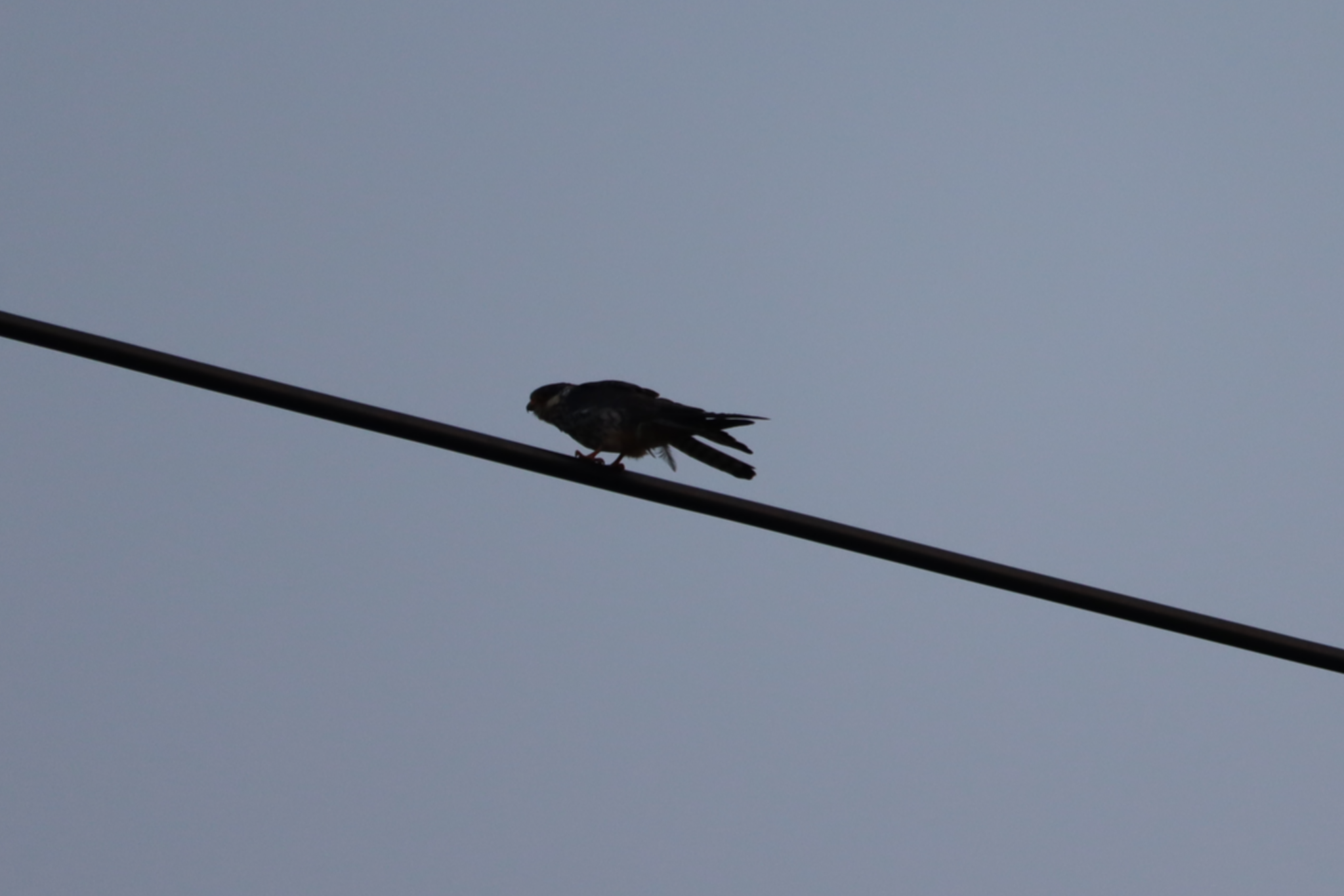
Feeds mainly late evening or early morning on insects captured in flight or on the ground; winter diet is almost entirely insects. Breeding diet includes small birds, mammals, and amphibians. Migration coincides with dragonfly swarms, which provide food. Roosts colonially on exposed perches or wires during migration. Breeds May to June in open wooded country with marshes, using abandoned nest platforms or tree hollows. Lays 3-4 eggs at two-day intervals; both parents incubate and feed chicks. Chicks hatch after about a month and fledge after about a month.
Conservation
Assessed as Least Concern. Threatened by hunting during migration in northeastern India and eastern Africa due to flocking behavior. Mass trapping reported in Pangti village, Nagaland, in 2012 led to conservation campaigns involving satellite tracking and community engagement, resulting in reduced killing and air gun bans.
Source: Wikipedia · CC BY-SA 3.0
Taxonomy
- Order
- Falconiformes
- Family
- Falconidae
- Genus
- Falco
Distribution
breeds steppes of northeastern Asia; winters from Malawi to South Africa
Data Sources
Species description from Wikipedia, licensed under CC BY-SA 3.0.
Bird images and sounds sourced from GBIF, contributed by citizen scientists worldwide under Creative Commons licenses.
Taxonomy data from AviList 2025.