Amur Falcon
Falco amurensis
红脚隼
Introduction
A small falcon species breeding in East Asia that migrates to Southern and East Africa for the boreal winter. It crosses the Indian subcontinent during autumn migration, forming large flocks numbering in the thousands. In Africa, it inhabits savanna and coastal habitats. It feeds on flying insects, particularly termites and locusts that emerge after rains, and hunts at dusk. It roosts communally during migration. A population in Nagaland, India, has been the focus of conservation efforts that engage local communities in protection.
Description
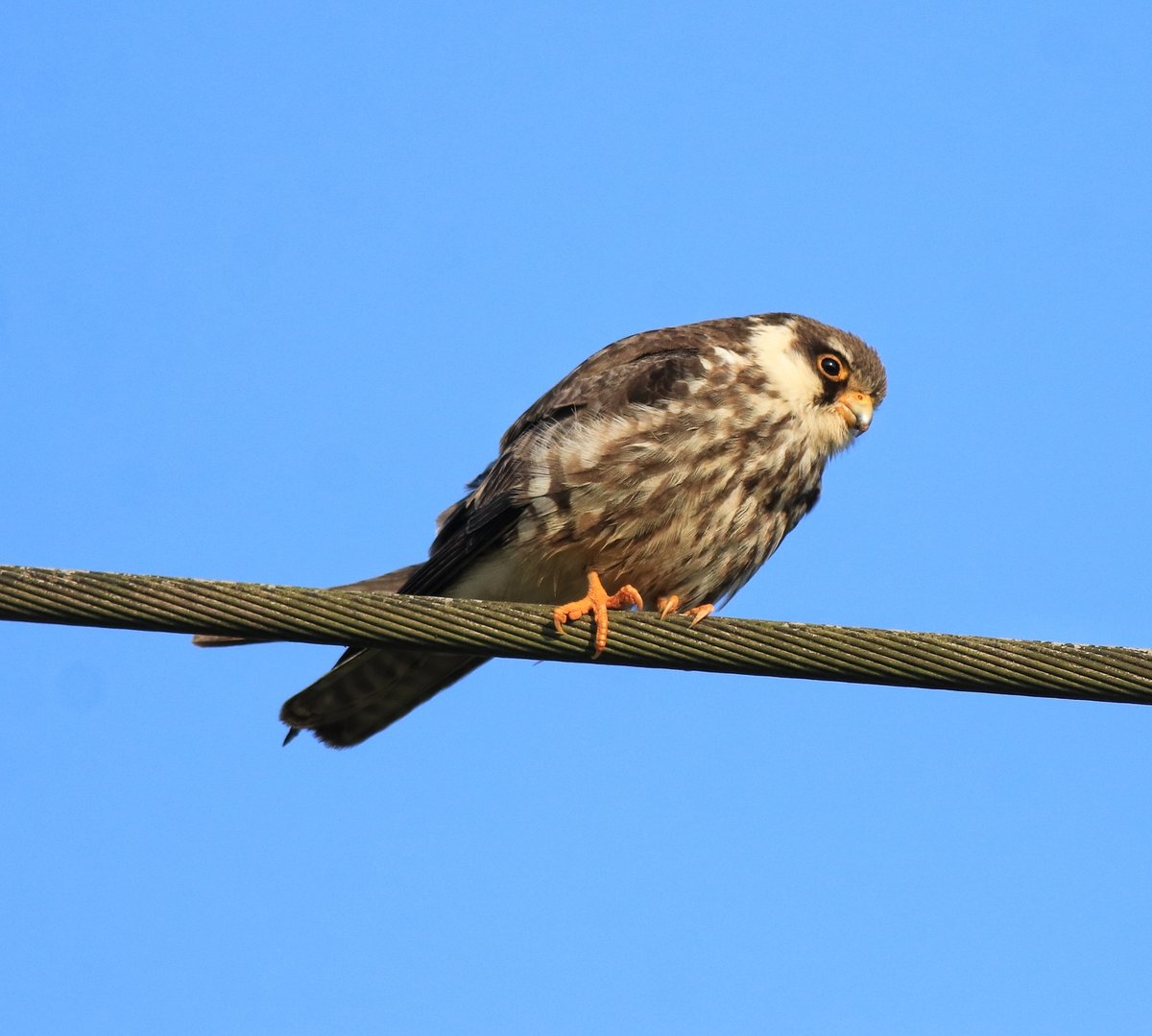
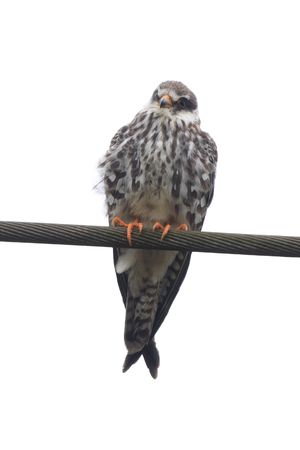
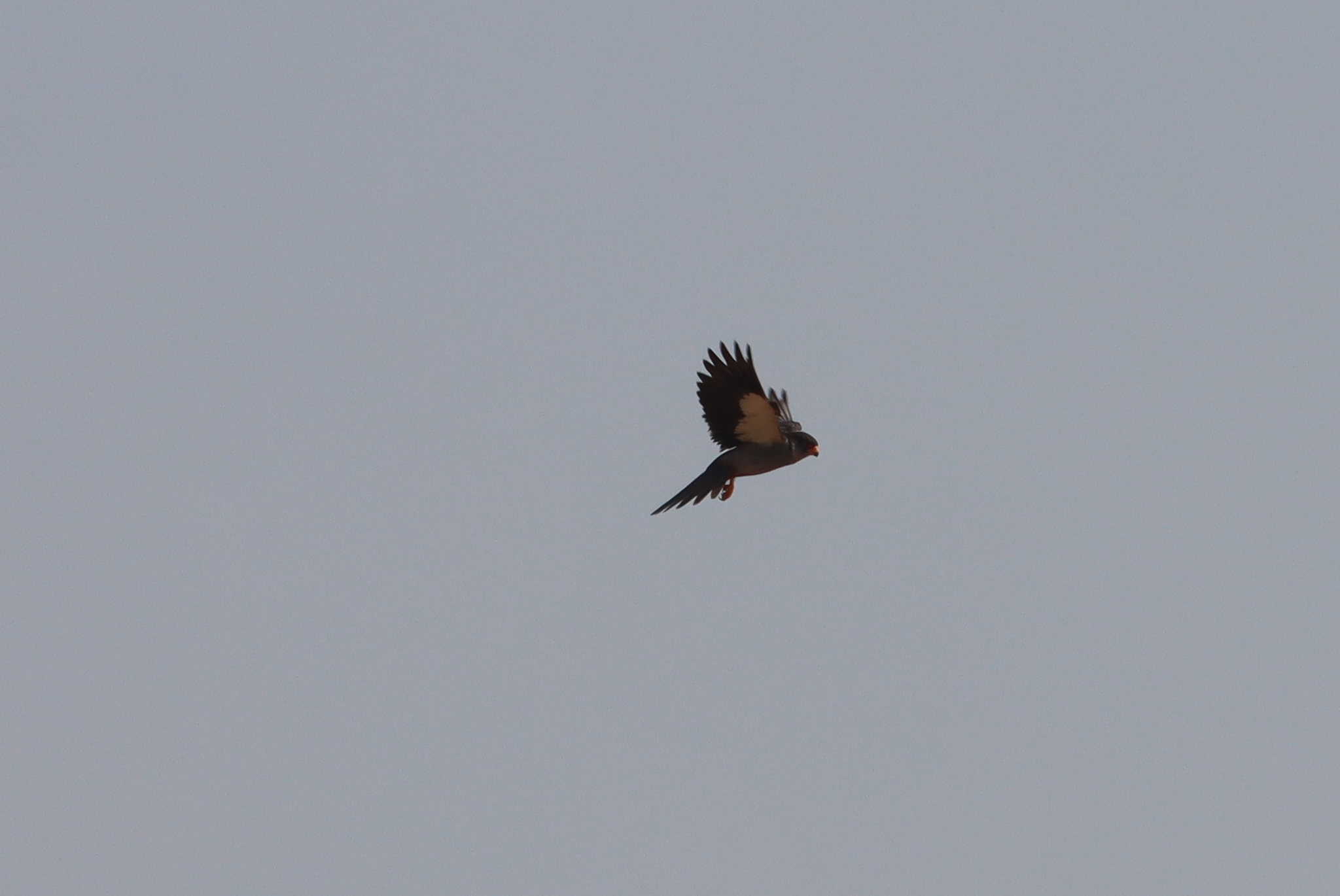
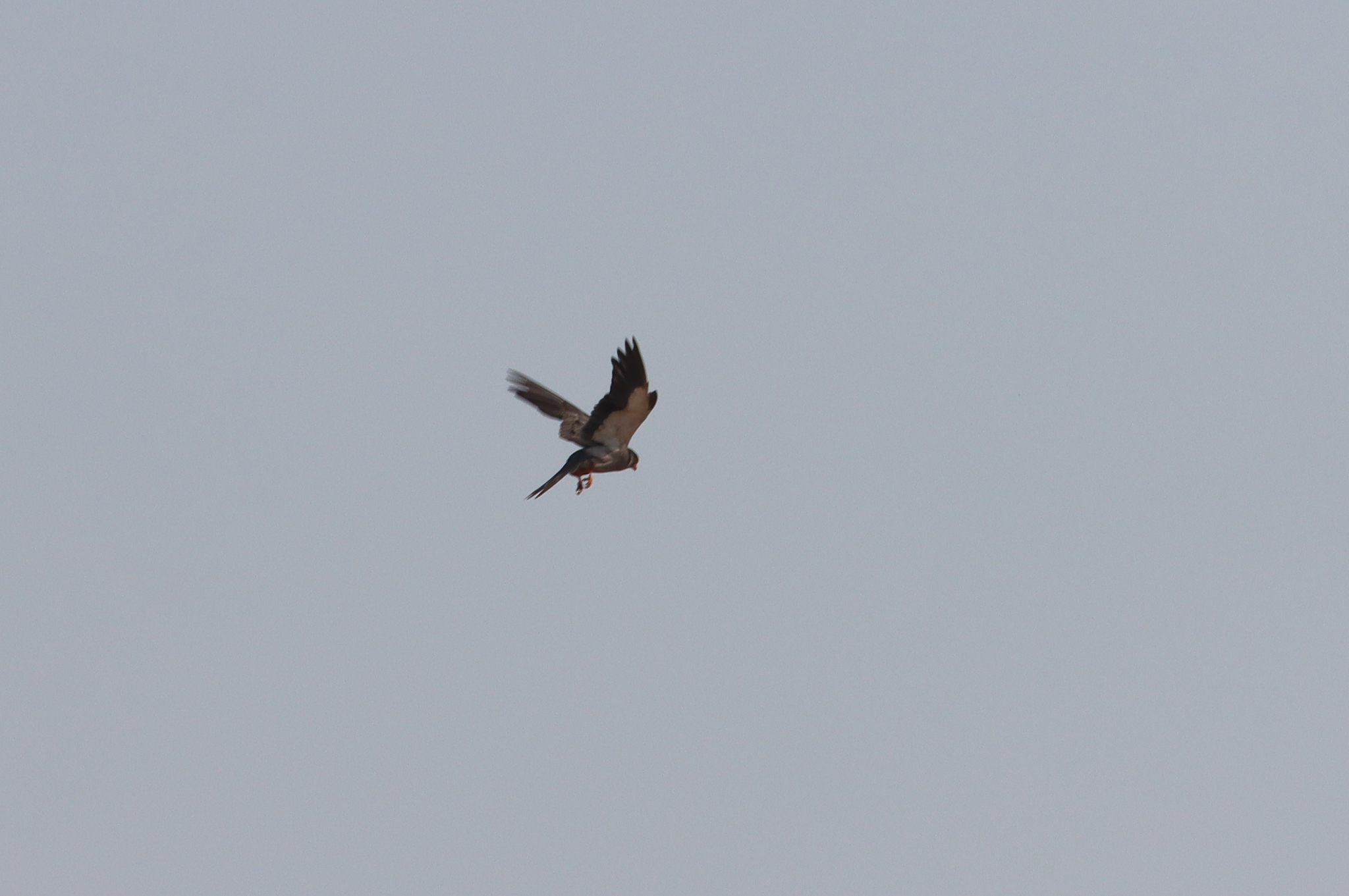
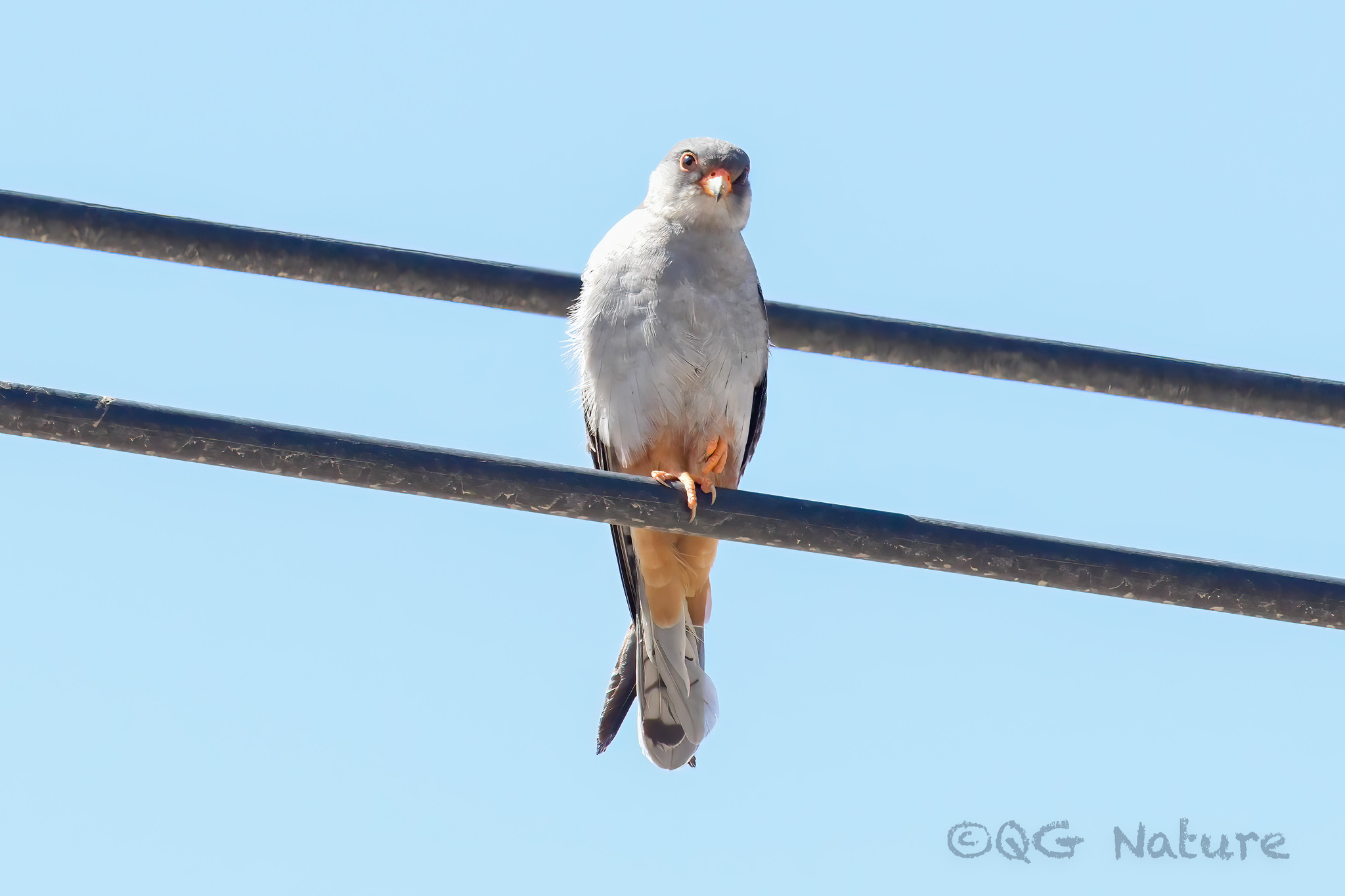
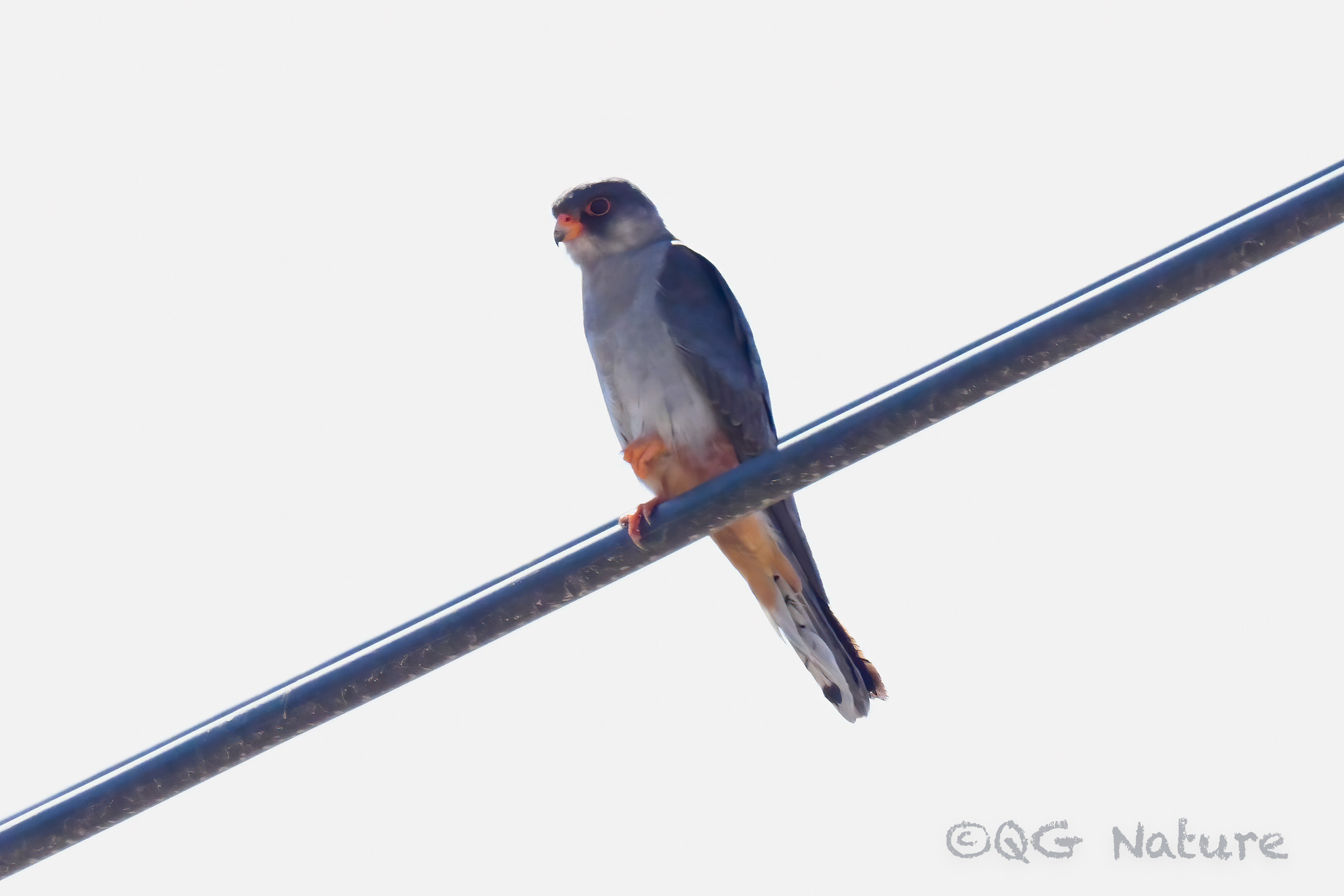
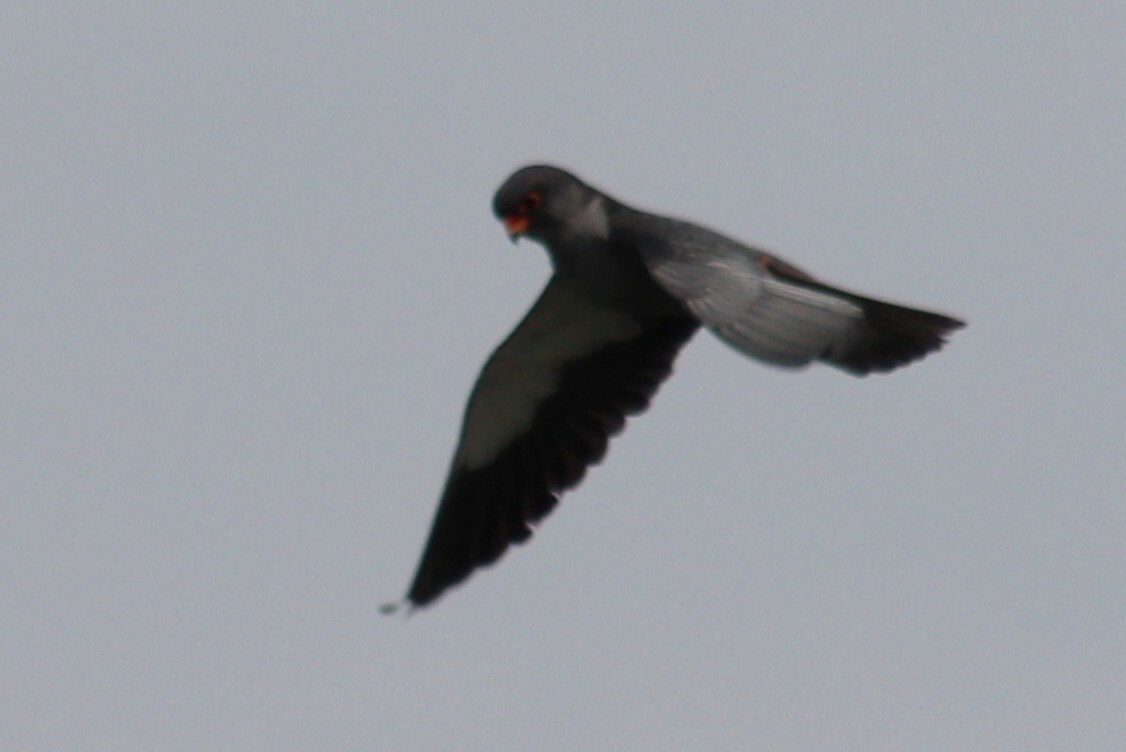
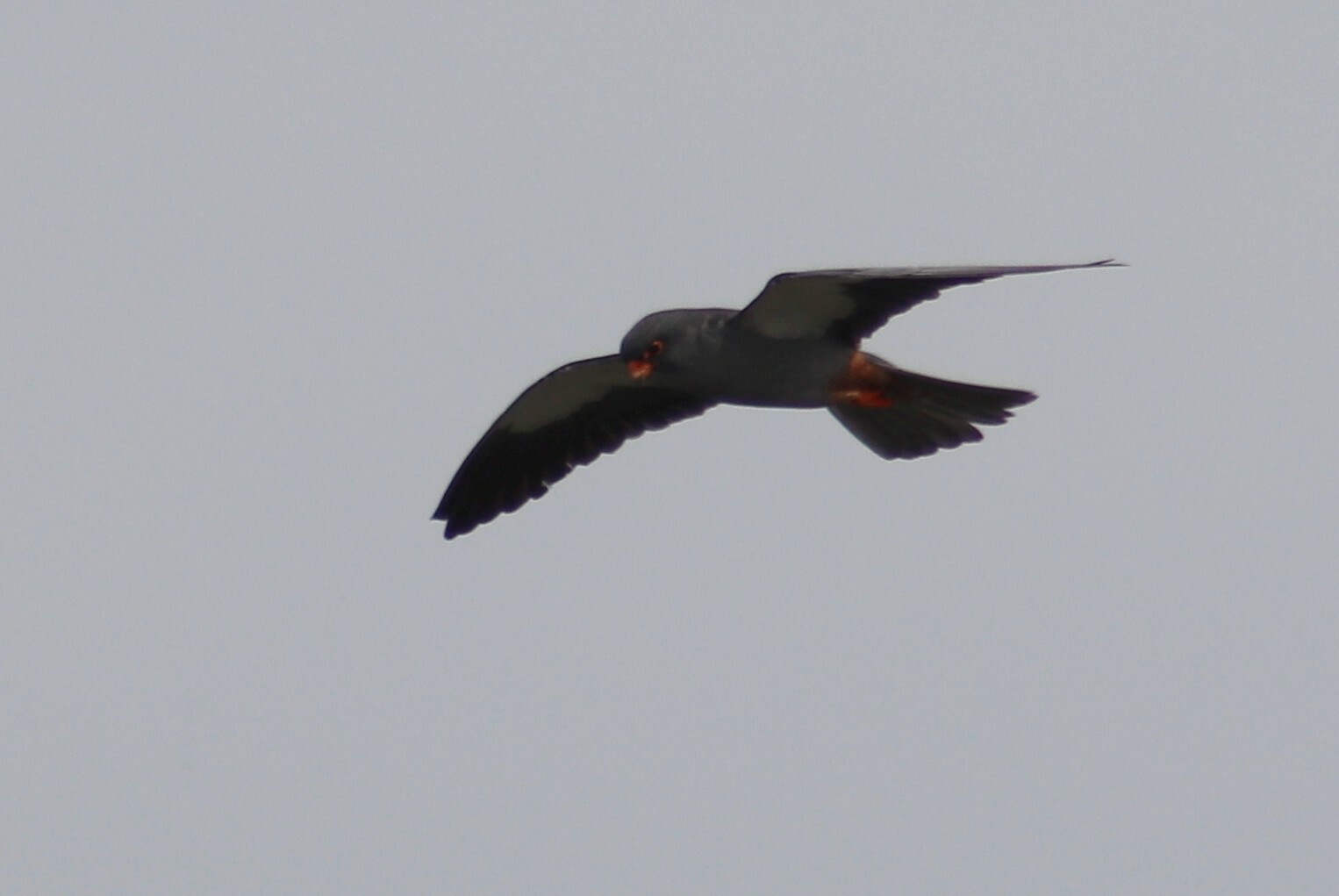
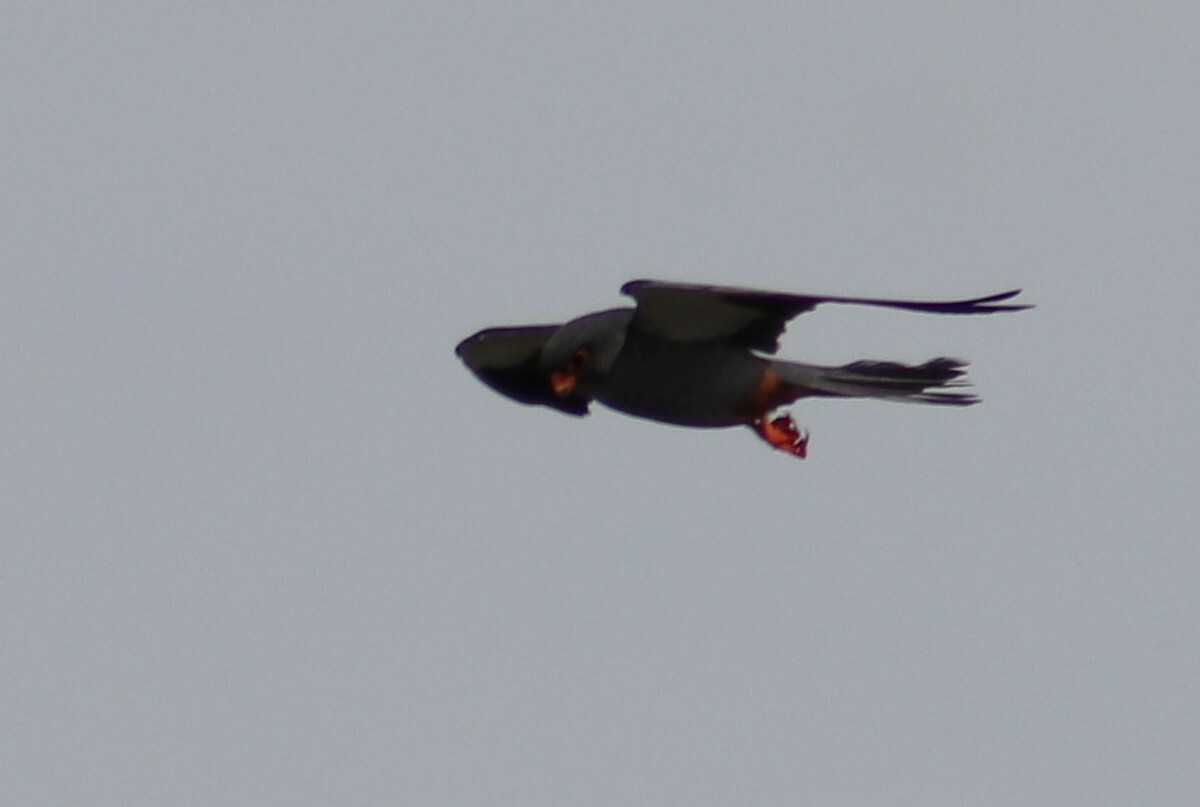
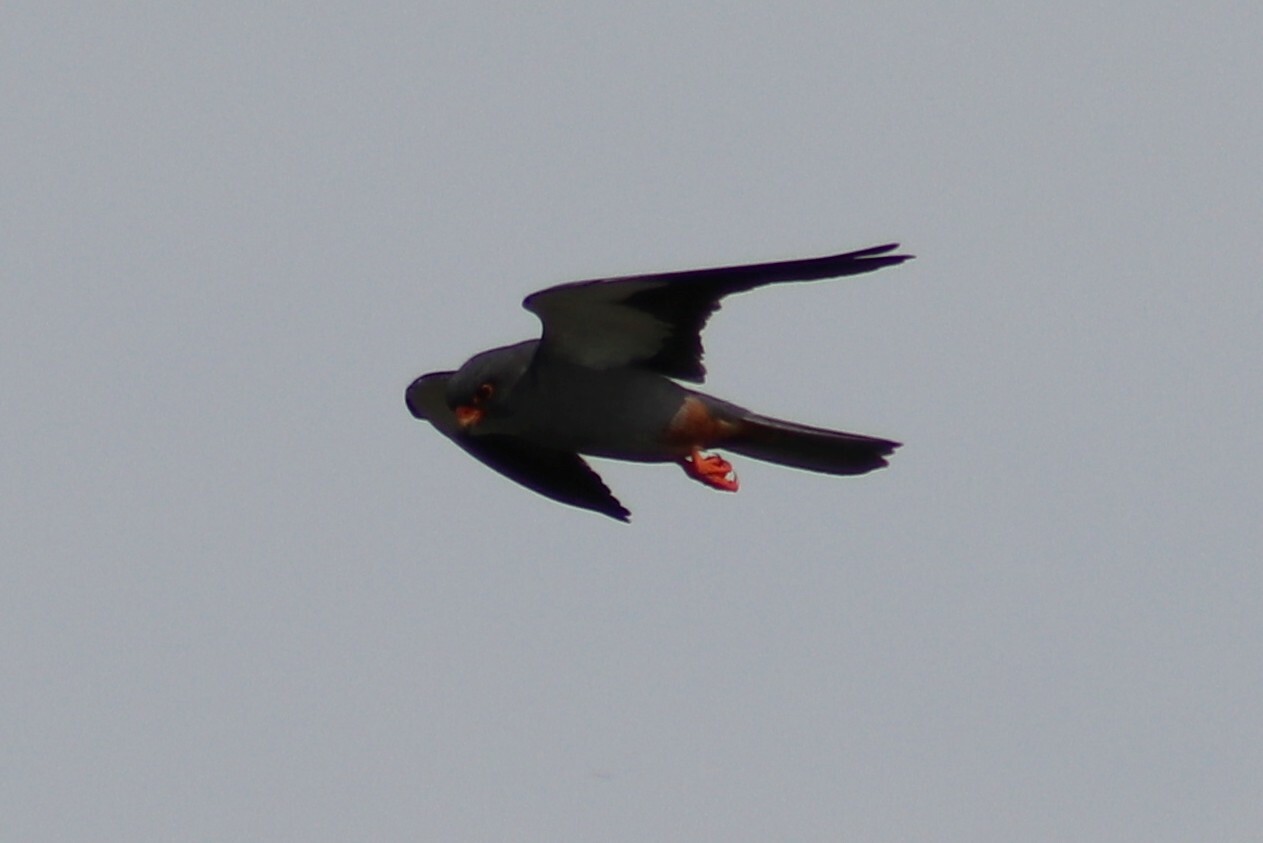
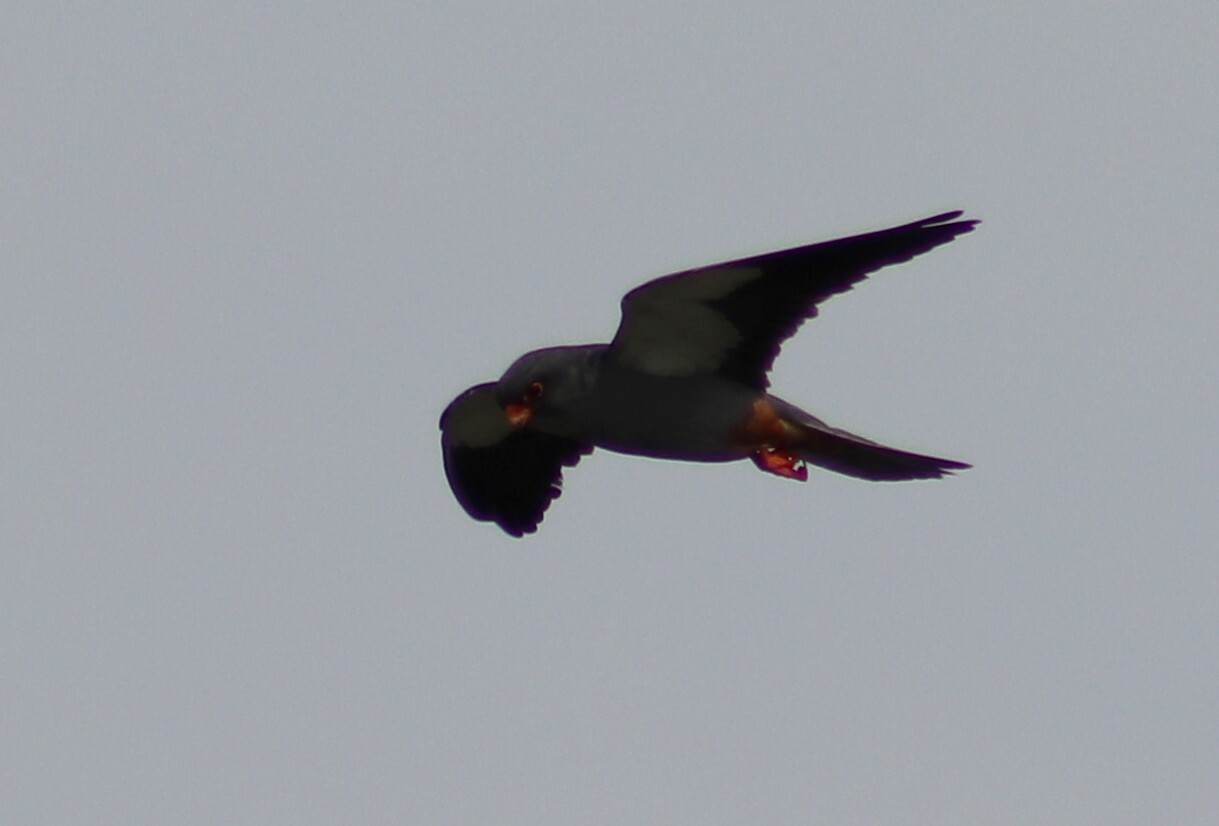
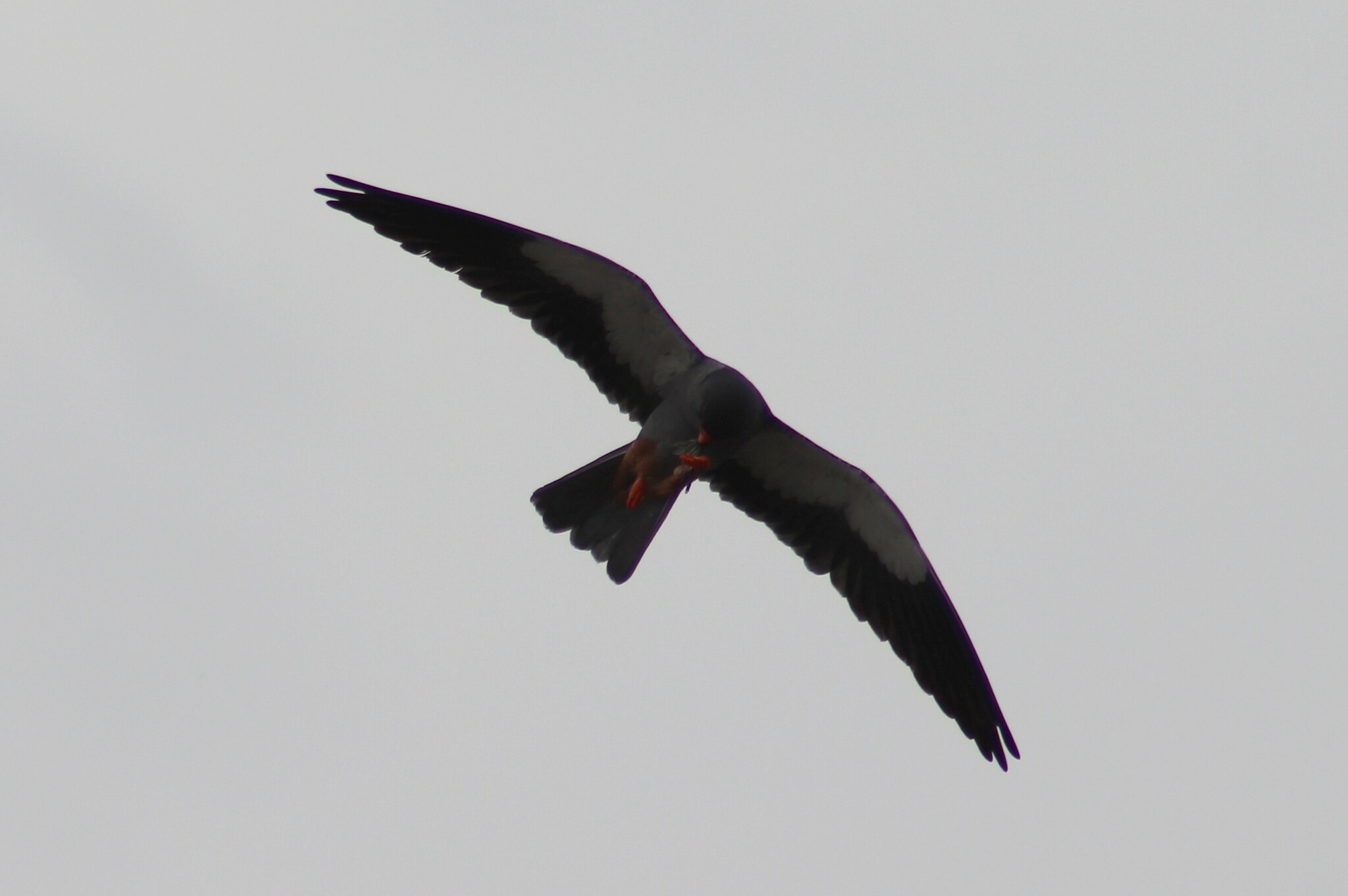
A small, compact falcon measuring 25-30 cm in length with a wingspan of 63-71 cm. Males display dark sooty grey upperparts with contrasting rufous thighs and vent region. The white wing lining creates a striking visual contrast against the darker flight feathers in flight. The long, pointed wings extend to or just beyond the tail tip when at rest. Females are less distinctive, sharing a falcon-typical pattern, but can be recognized by their orange eye-ring, bright red cere, and reddish-orange feet. Juveniles resemble females but lack the buffy underwing coverts seen in young red-footed falcons.
Identification
Adult males are most easily distinguished from the similar red-footed falcon by their white wing lining versus dark grey in the latter. Melanistic Gabar goshawks can cause confusion, but the chestnut coloration on the vent provides a reliable distinguishing mark. The sooty falcon and grey kestrel may appear superficially similar but both possess yellow feet and cere, unlike the Amur falcon. Females require closer observation, with their orange eye-ring, red cere, and orange-red feet being key field marks. Juveniles closely resemble young red-footed falcons but can be separated by the absence of buffy underwing coverts.
Distribution & Habitat
Breeds across south-eastern Siberia from Transbaikalia and Amurland through northern Mongolia to parts of North Korea. The migration follows a broad front through India and Sri Lanka, with some birds passing over Thailand and Cambodia before crossing the Arabian Sea. Wintering grounds extend along Southern and East African coasts. The return migration follows a slightly more northerly route. Strong winds at approximately 3000 meters altitude assist their westward passage, with birds typically flying above 1000 meters. This species is a known long-distance ocean wanderer, with vagrant records from Italy, Sweden, Tristan da Cunha, St. Helena, and the United Kingdom.
Behavior & Ecology
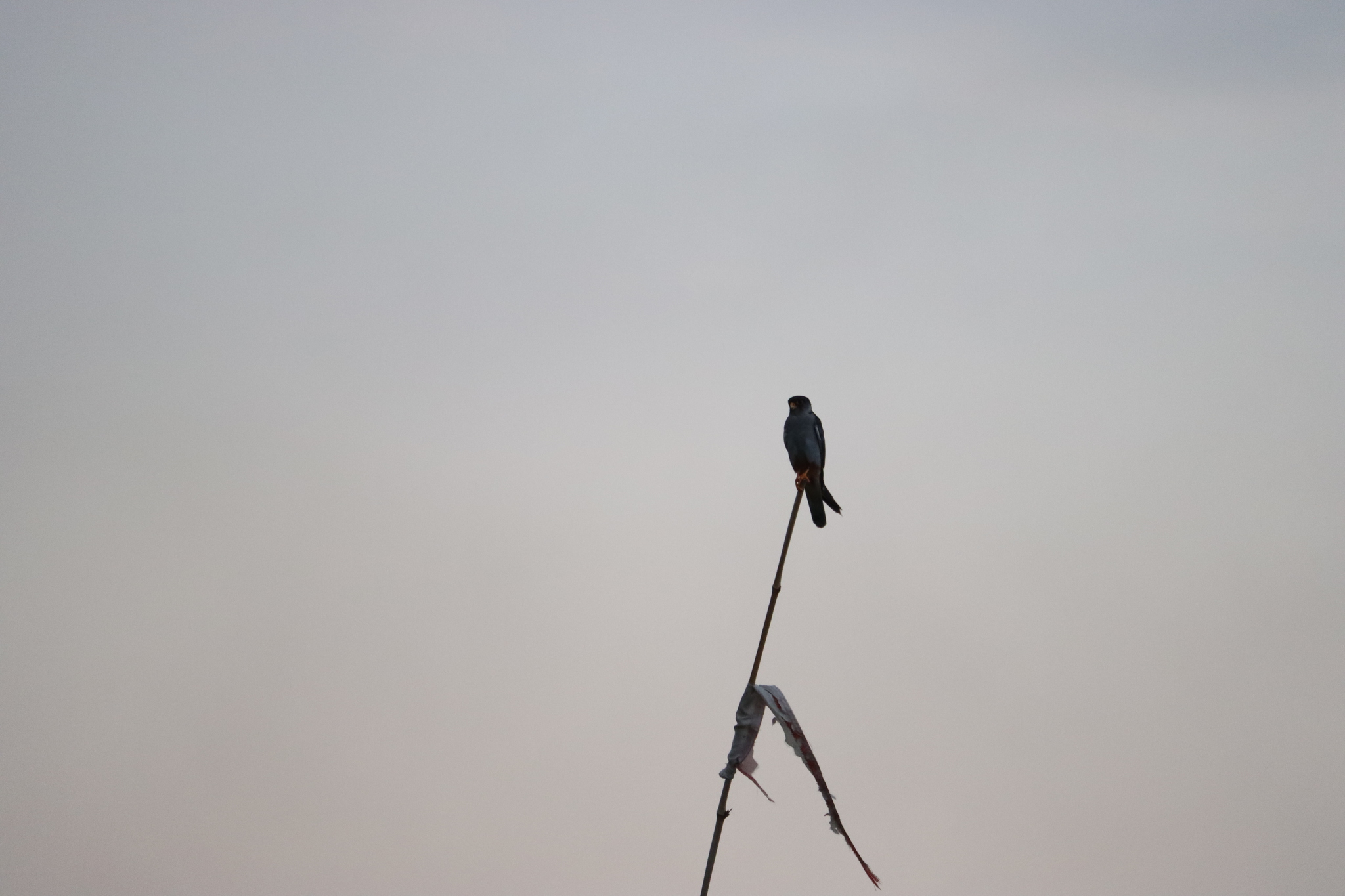
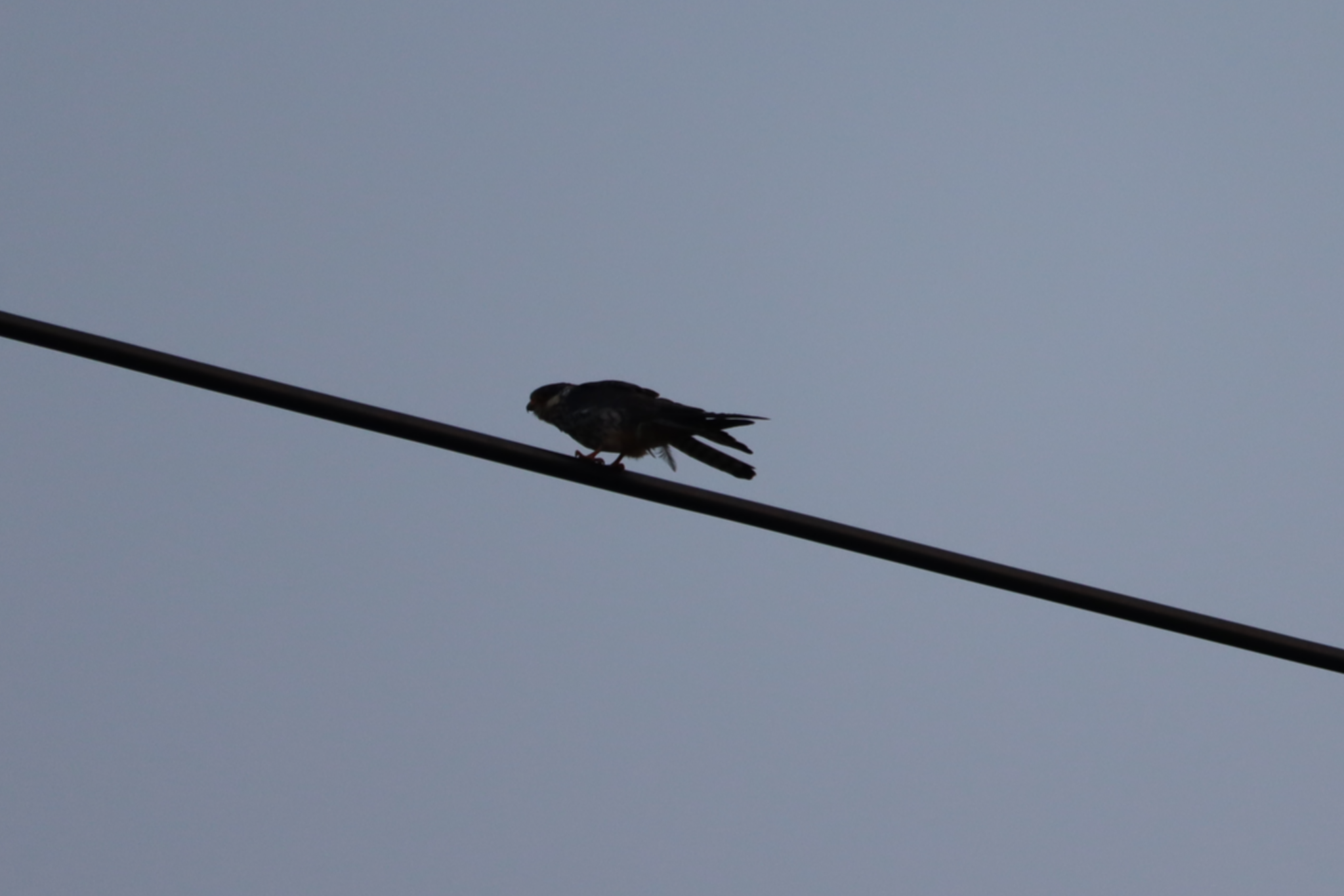
Primarily crepuscular hunters, these falcons feed most actively in late evening or early morning. Prey consists almost entirely of insects during the winter months, including termites, locusts, ants, and beetles that emerge following African rains. Dragonflies form an important food source during the arduous Arabian Sea crossing. During breeding, diet expands to include small birds, mammals, and amphibians for provisioning young. Breeding occurs from May to June in open wooded country with marshes, where pairs may nest colonially. Nests are re-used platforms from other birds or tree hollows, with 3-4 eggs laid at two-day intervals. Both parents share incubation duties over roughly one month, with chicks fledging after another month. Roosting occurs communally on exposed perches or wires during migration.
Conservation
Listed as Least Concern due to extensive breeding range and large population size. However, their tendency to migrate in dense flocks makes them vulnerable to hunting pressure. During migration, birds accumulate fat reserves and become targeted for food in northeastern India and eastern Africa. A significant conservation milestone occurred in 2012 when mass trapping at Pangti village in Nagaland gained media attention, sparking a successful campaign that equipped three birds with satellite transmitters. Research indicates that strong local leadership, village institution involvement, and community pride from awards and tourism transformed hunters into conservation advocates. These efforts extended to policy changes including air gun bans and restricted hunting seasons, though ongoing development agreements remain important for maintaining local support.
Culture
The species gained international conservation attention following the 2012 media coverage of mass trapping in Pangti village, Nagaland, India. This exposure catalyzed a remarkable community-led transformation, with village leaders successfully navigating competing interests from NGOs and government agencies to establish unified protection measures. The tracking of three falcons with satellite transmitters captured public imagination and demonstrated how technology could support conservation outcomes. Recognition through awards and media praise fostered local pride, establishing the village as a model for community-based wildlife protection. The Amur falcon's extraordinary migration has made it a symbol of international cooperation in conservation, connecting East Asian breeding grounds with African wintering areas through the flyway countries along its route.
Source: Wikipedia · CC BY-SA 3.0
Taxonomy
- Order
- Falconiformes
- Family
- Falconidae
- Genus
- Falco
- eBird Code
- amufal1
Distribution
breeds steppes of northeastern Asia; winters from Malawi to South Africa
Data Sources
Species description from Wikipedia, licensed under CC BY-SA 3.0.
Bird images and sounds sourced from GBIF, contributed by citizen scientists worldwide under Creative Commons licenses.
Taxonomy data from AviList 2025.