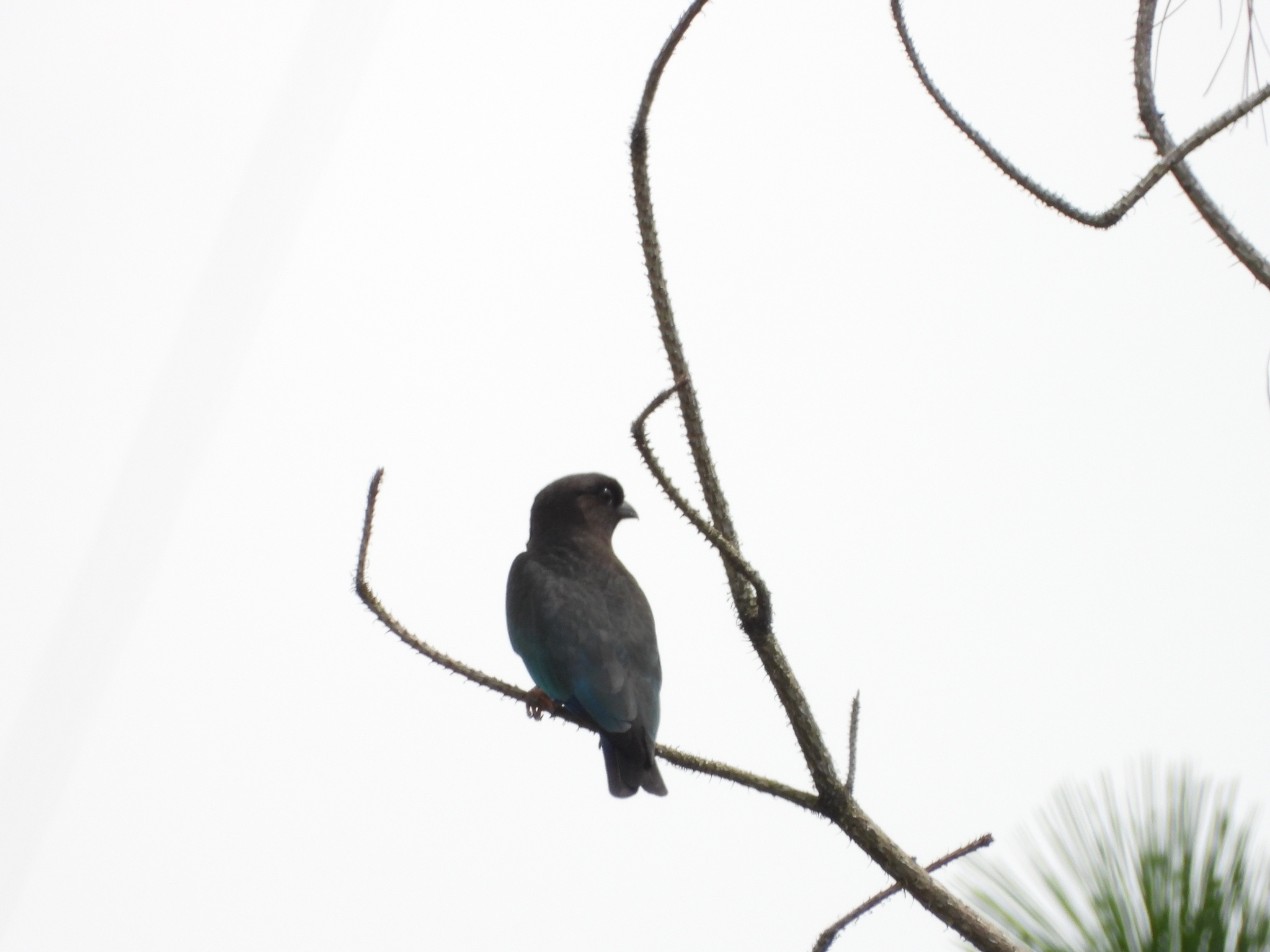
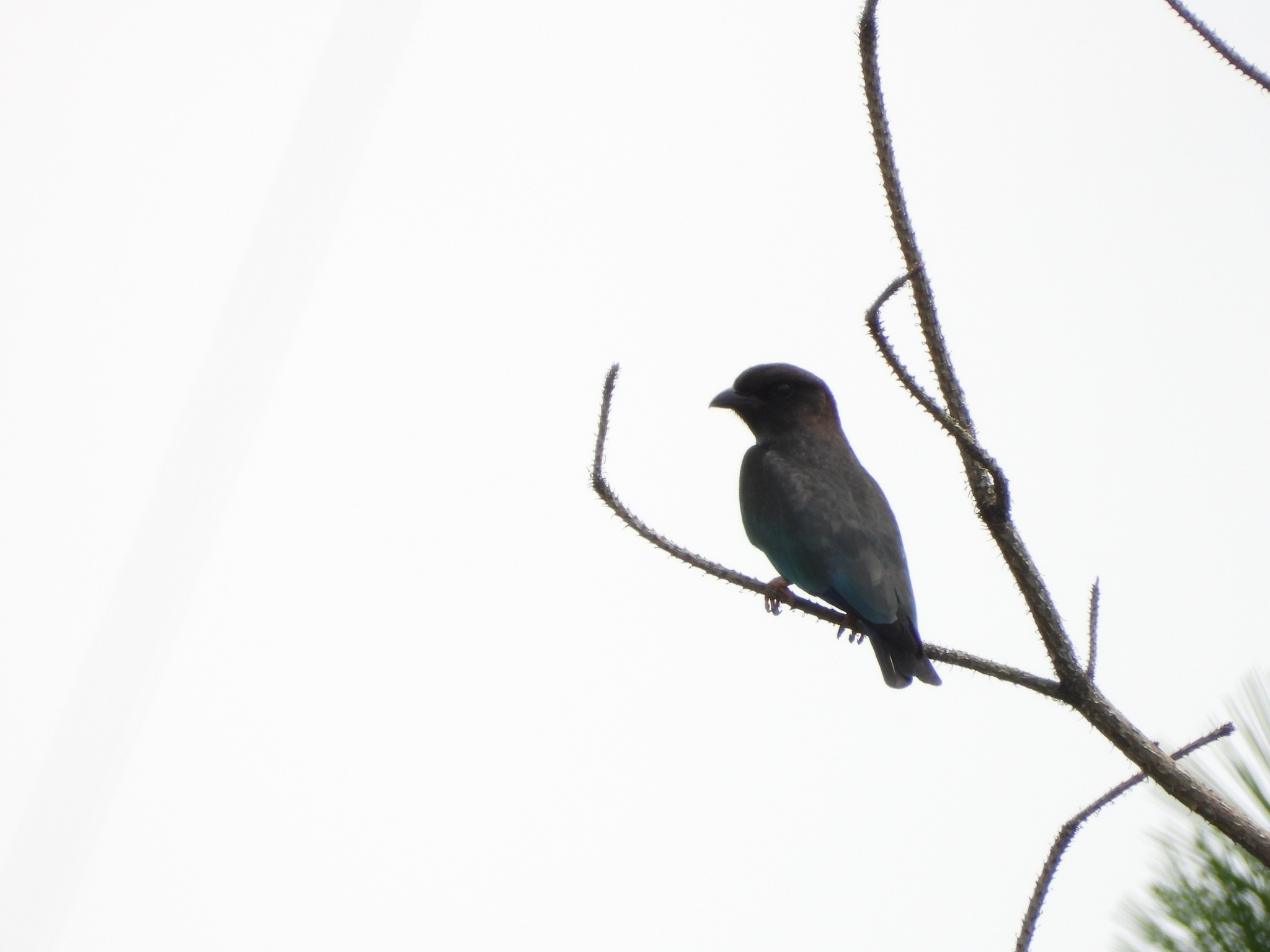
Coraciiformes / Coraciidae / Eurystomus
Oriental Dollarbird
Eurystomus orientalis · 三宝鸟
Introduction
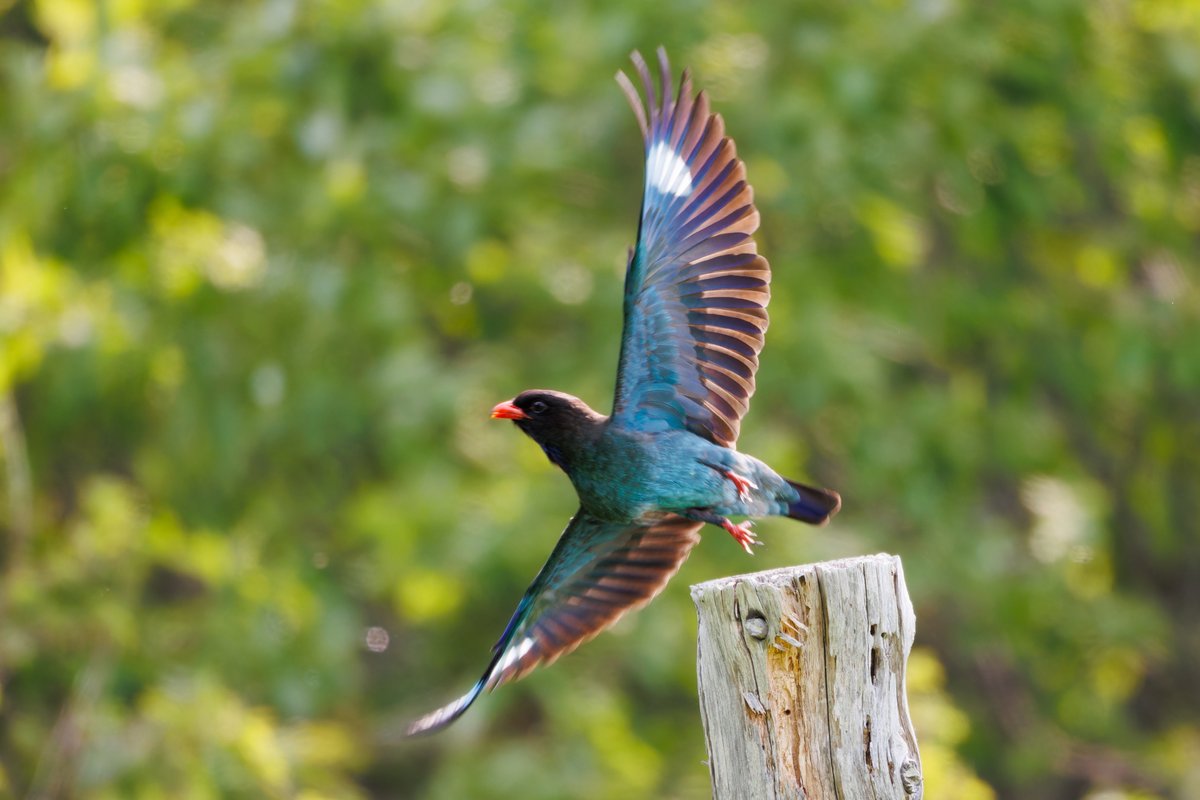
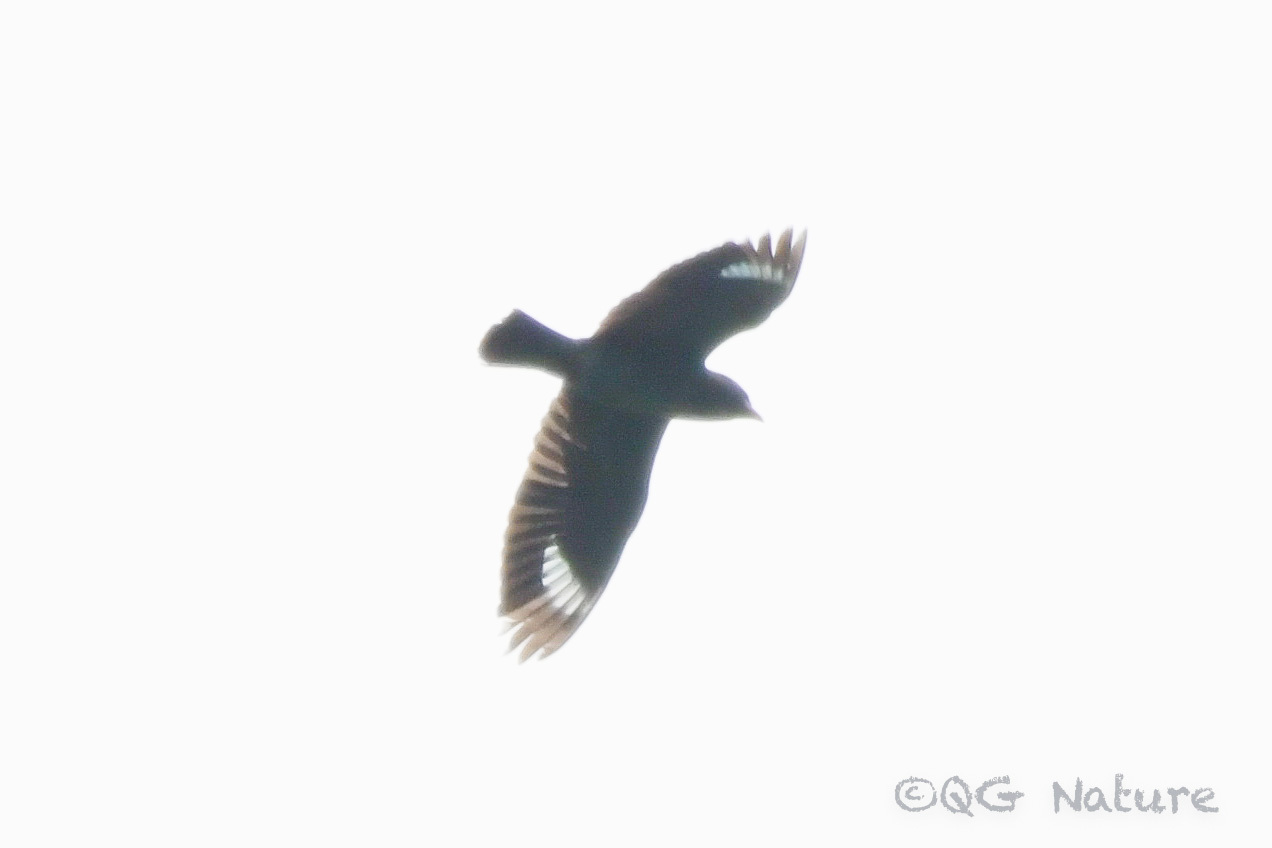
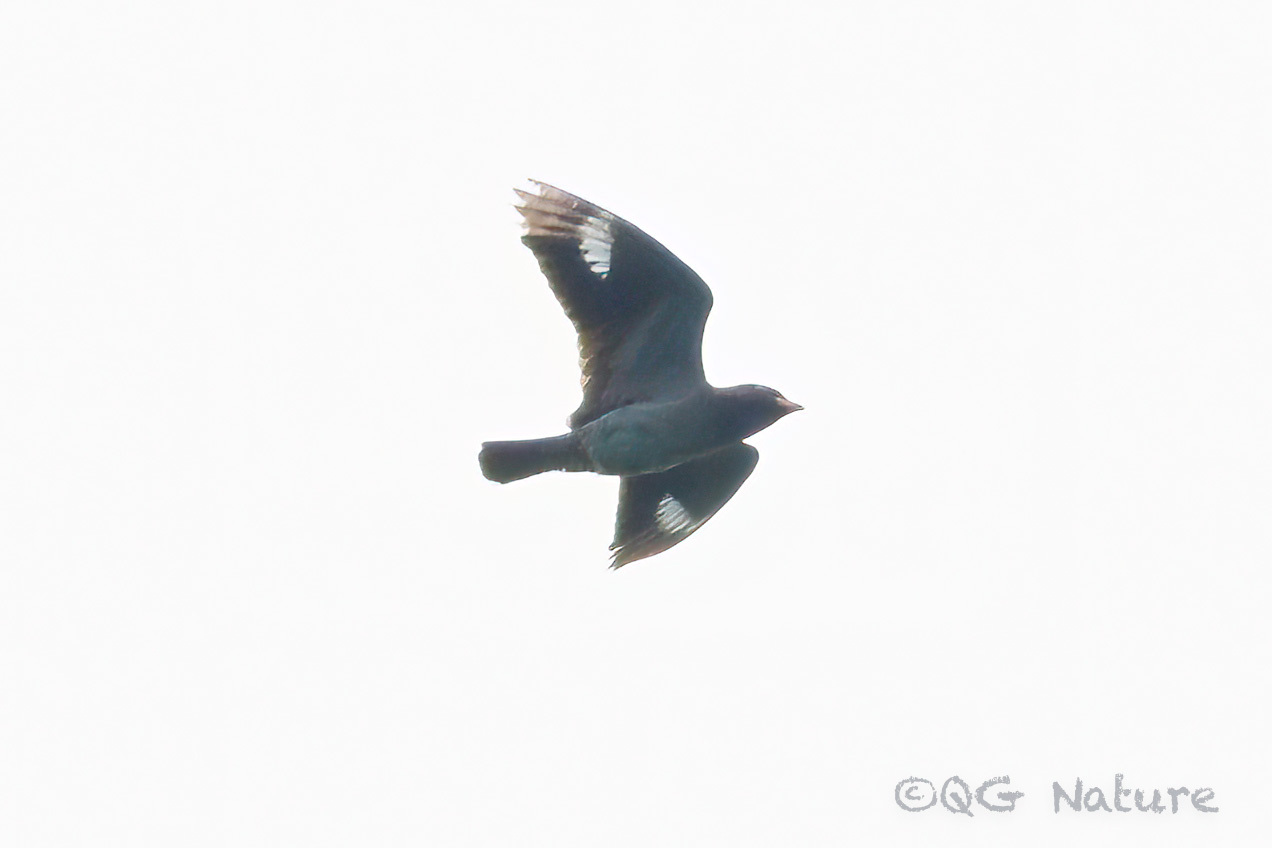
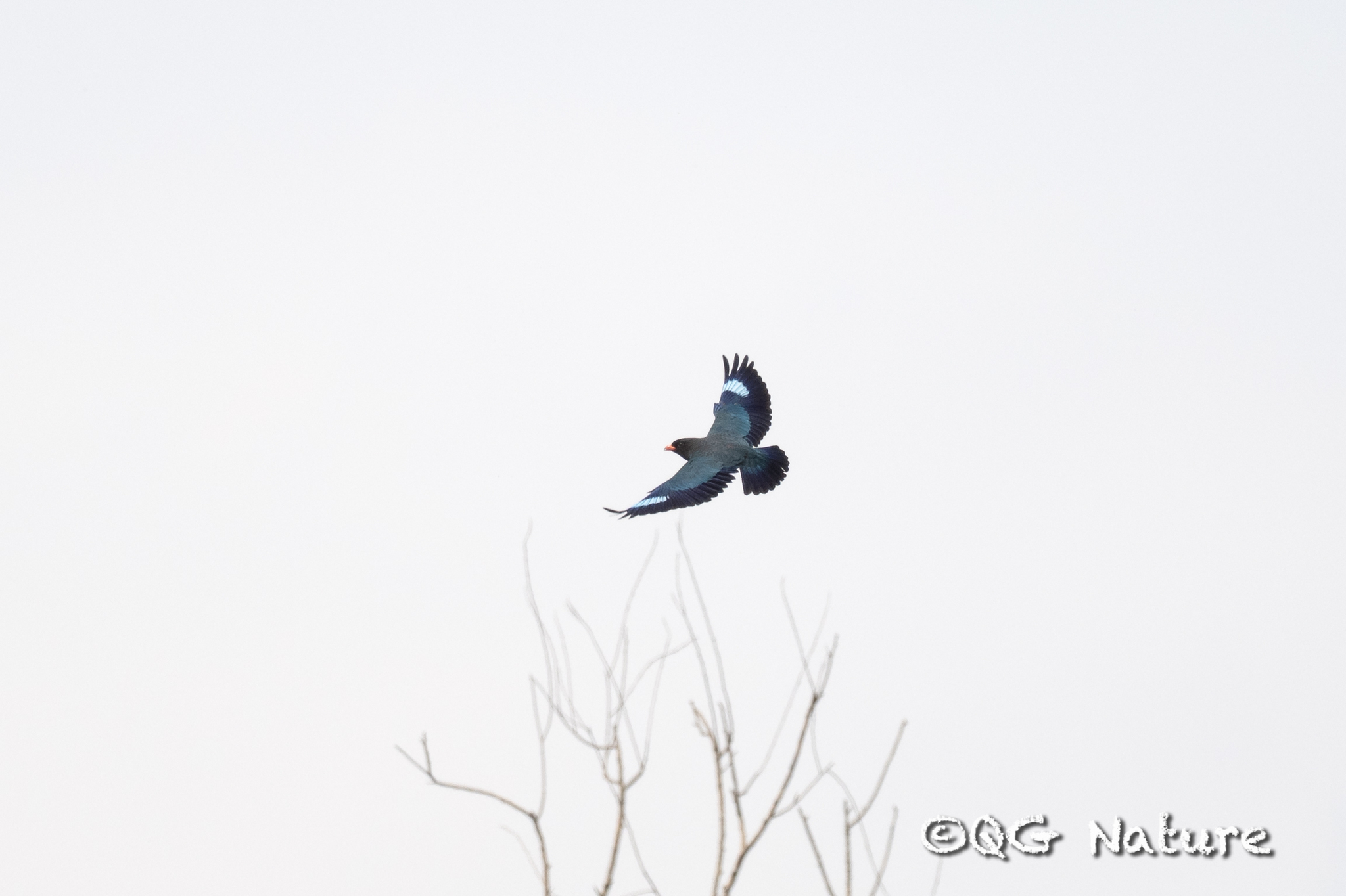
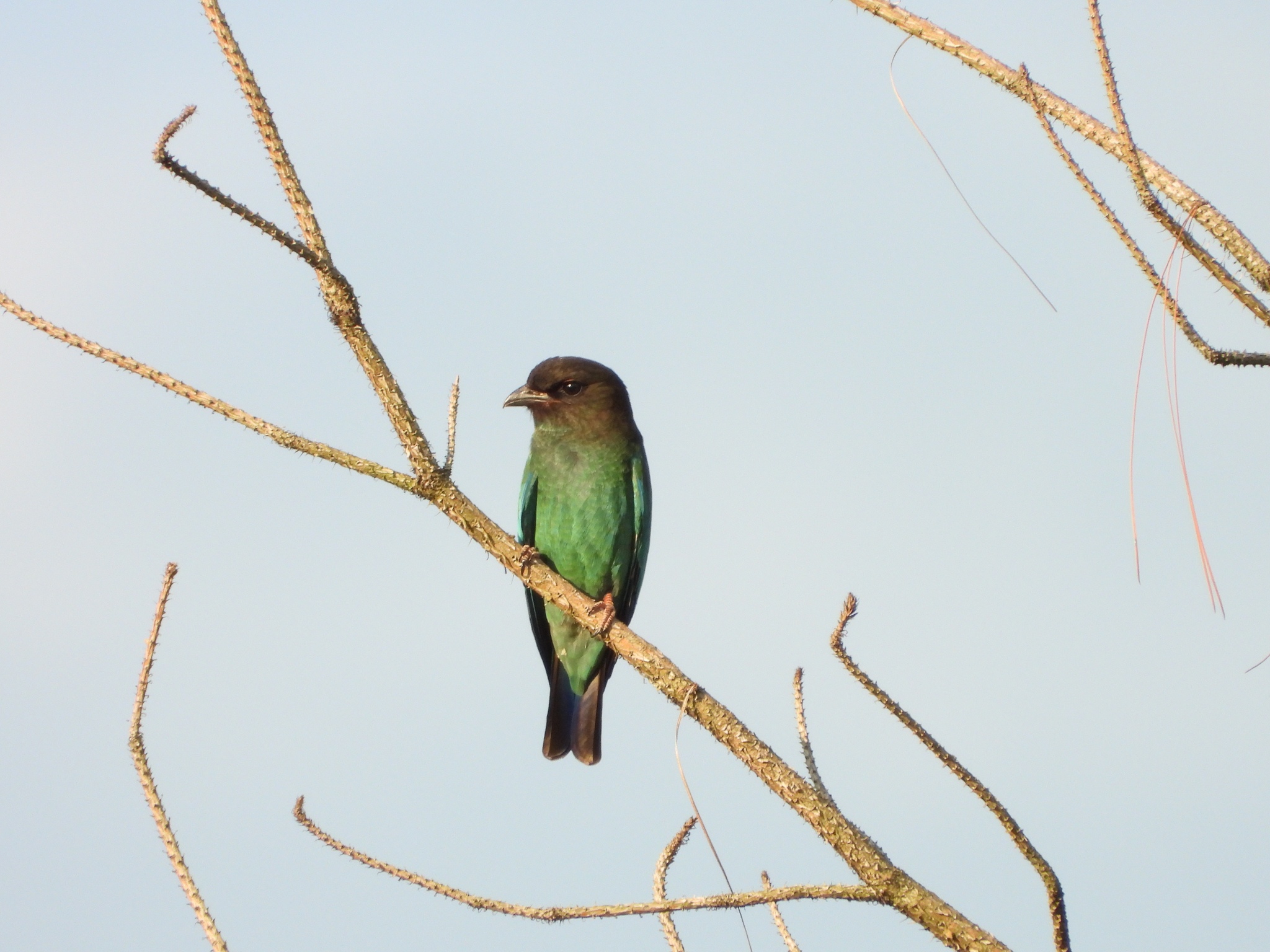
A member of the roller family found from Australia to Korea, Japan, and India. It is named for distinctive pale blue or white, coin-shaped spots on its wings. The species prefers open wooded areas with hollow-bearing trees.
Description
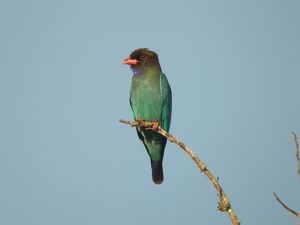
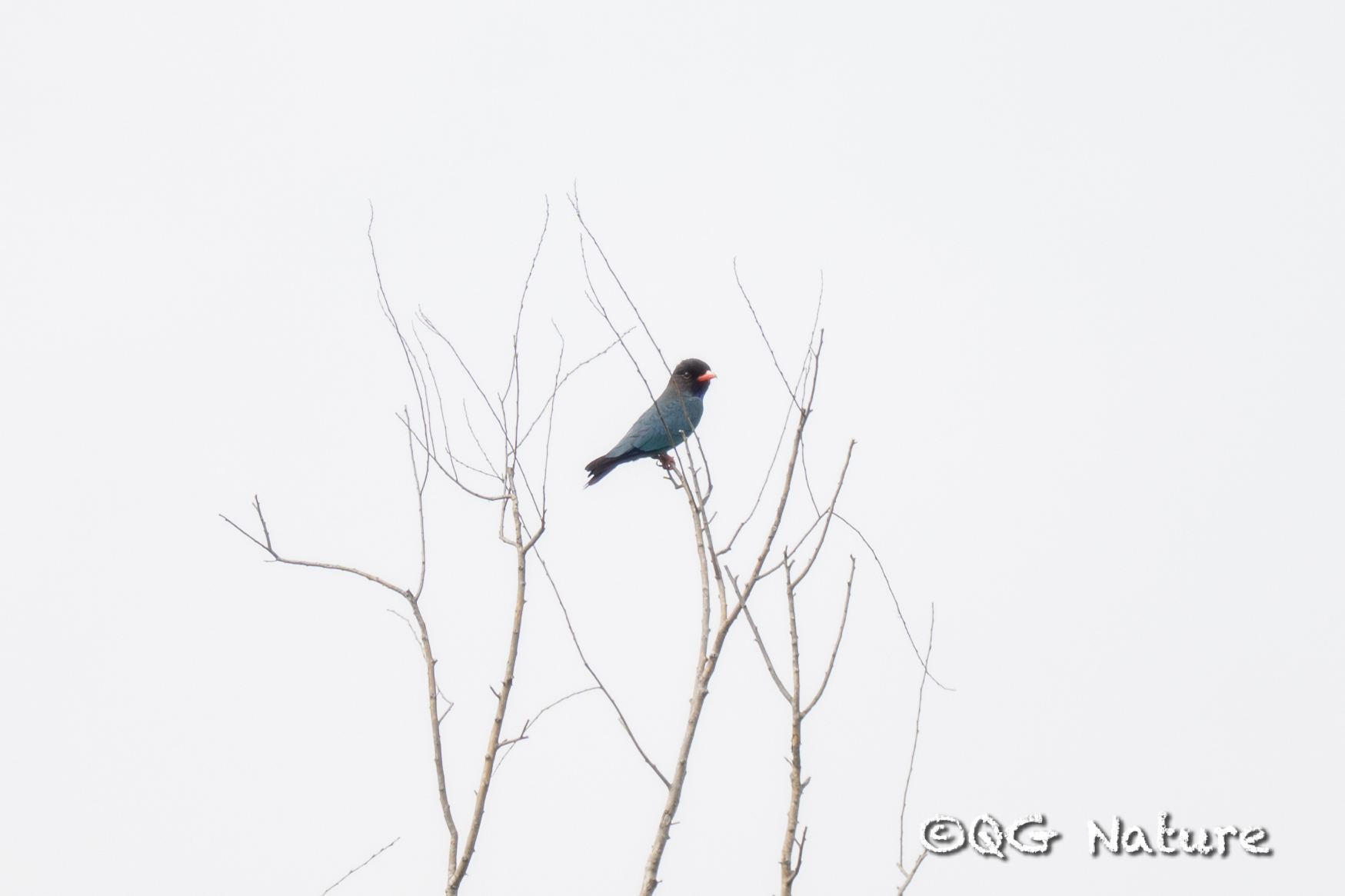
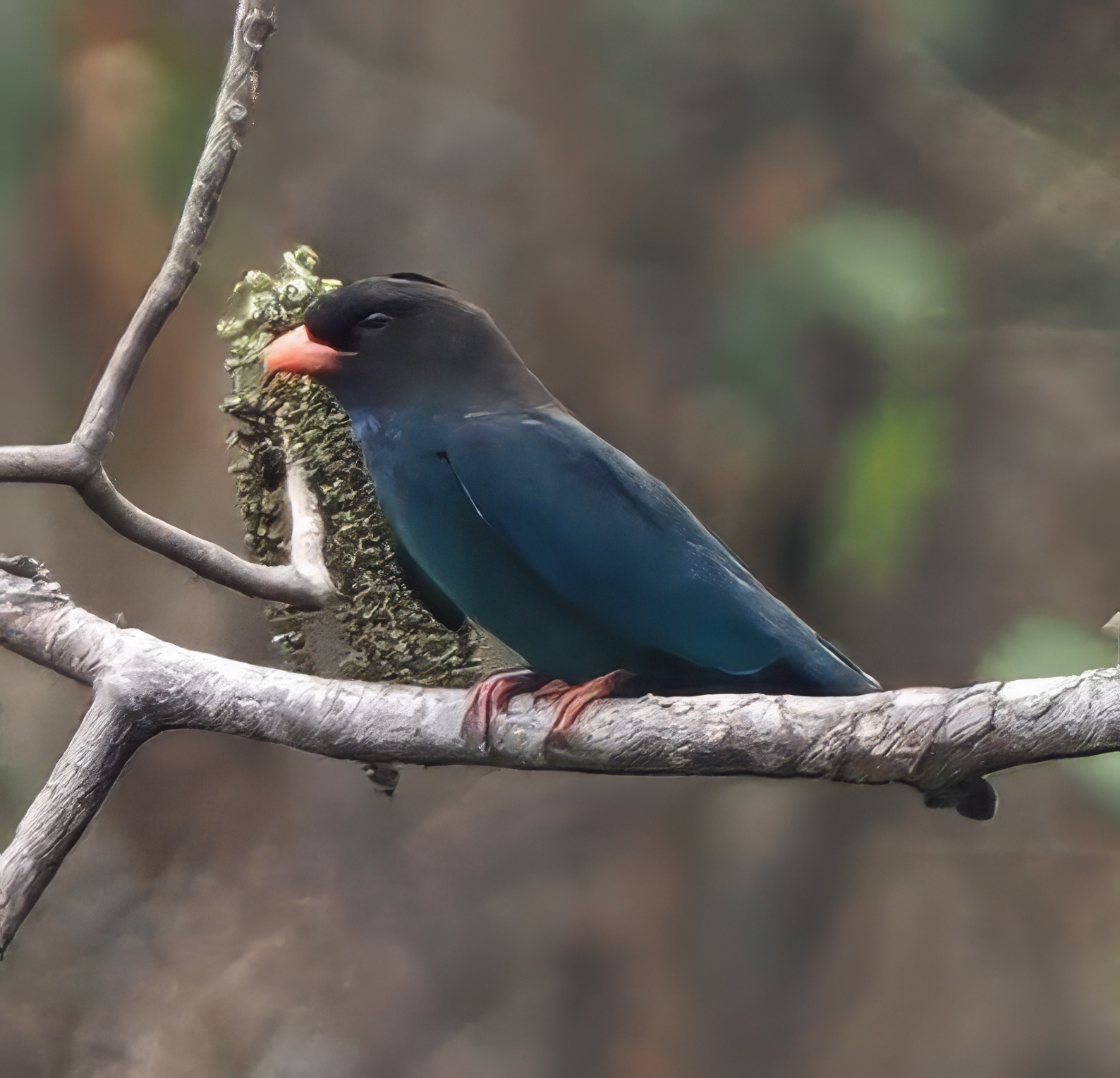
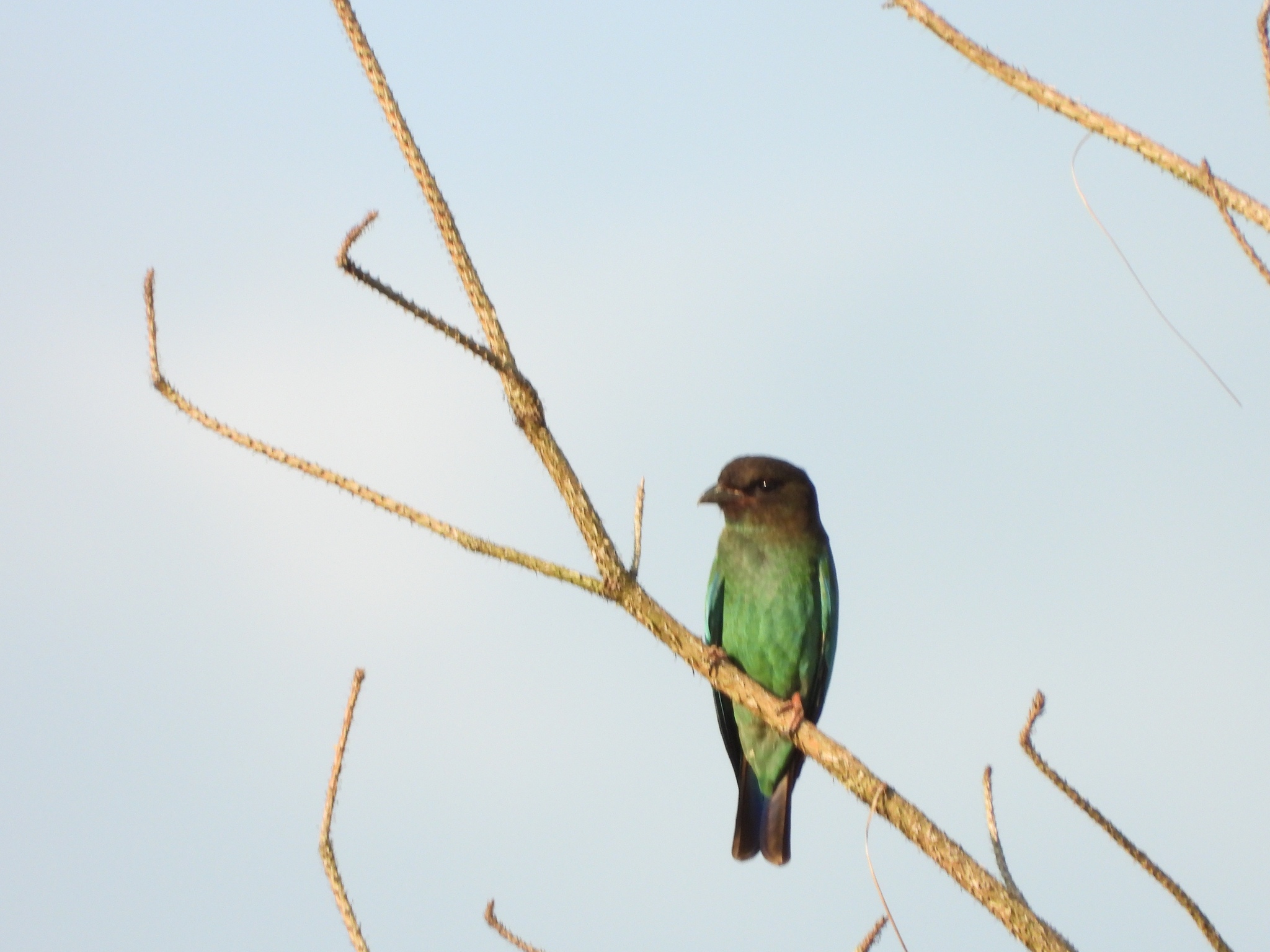
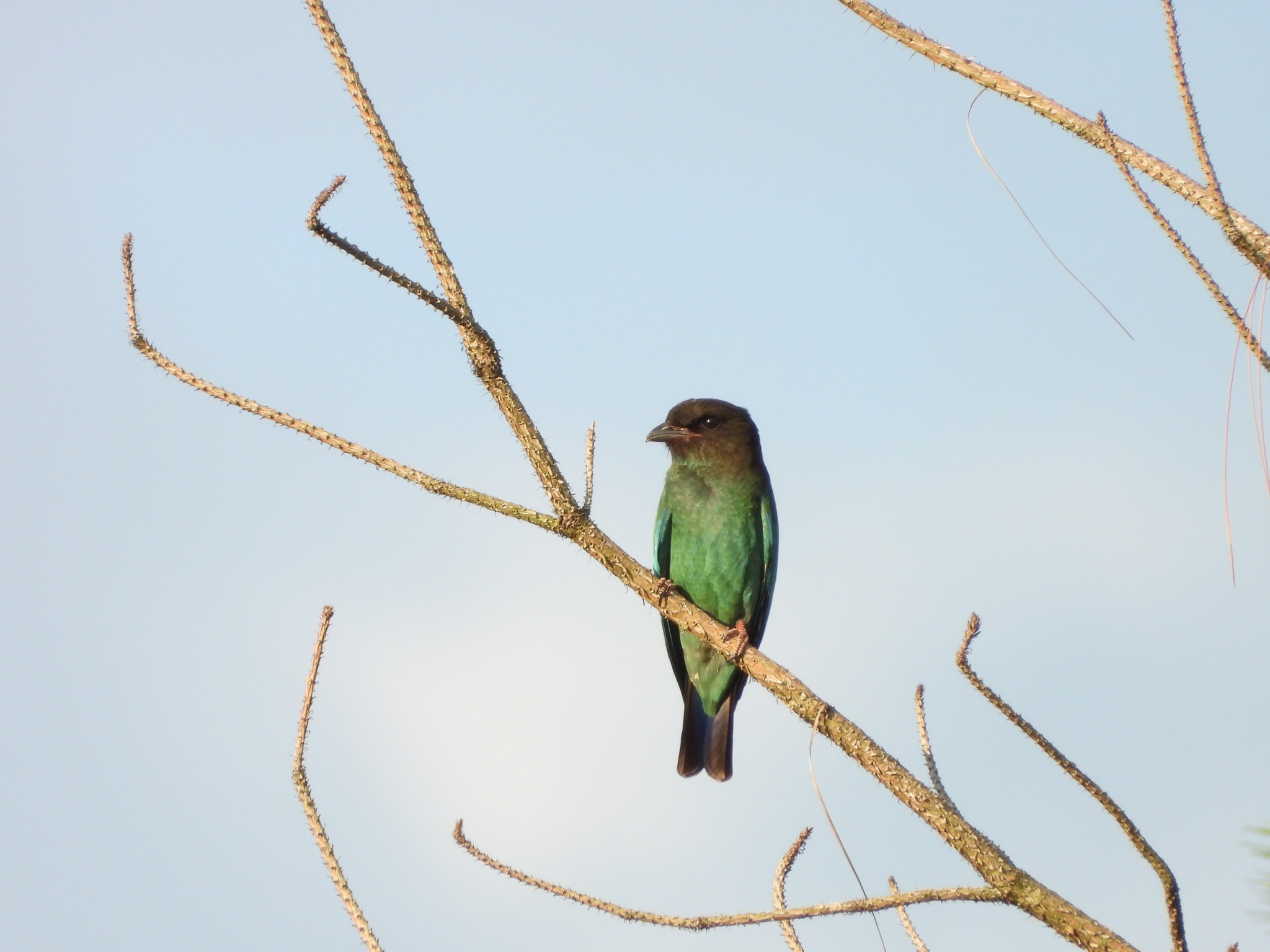
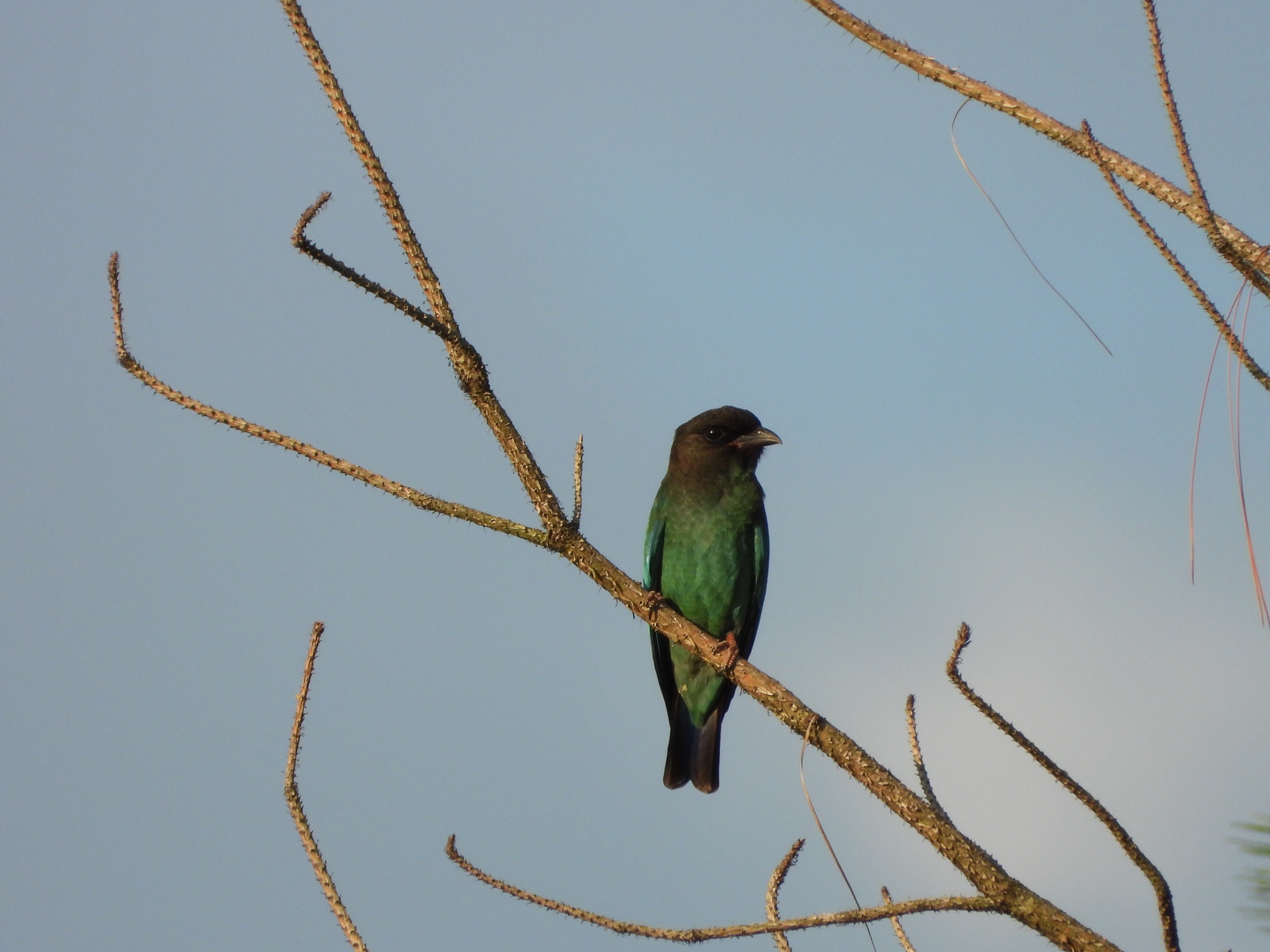
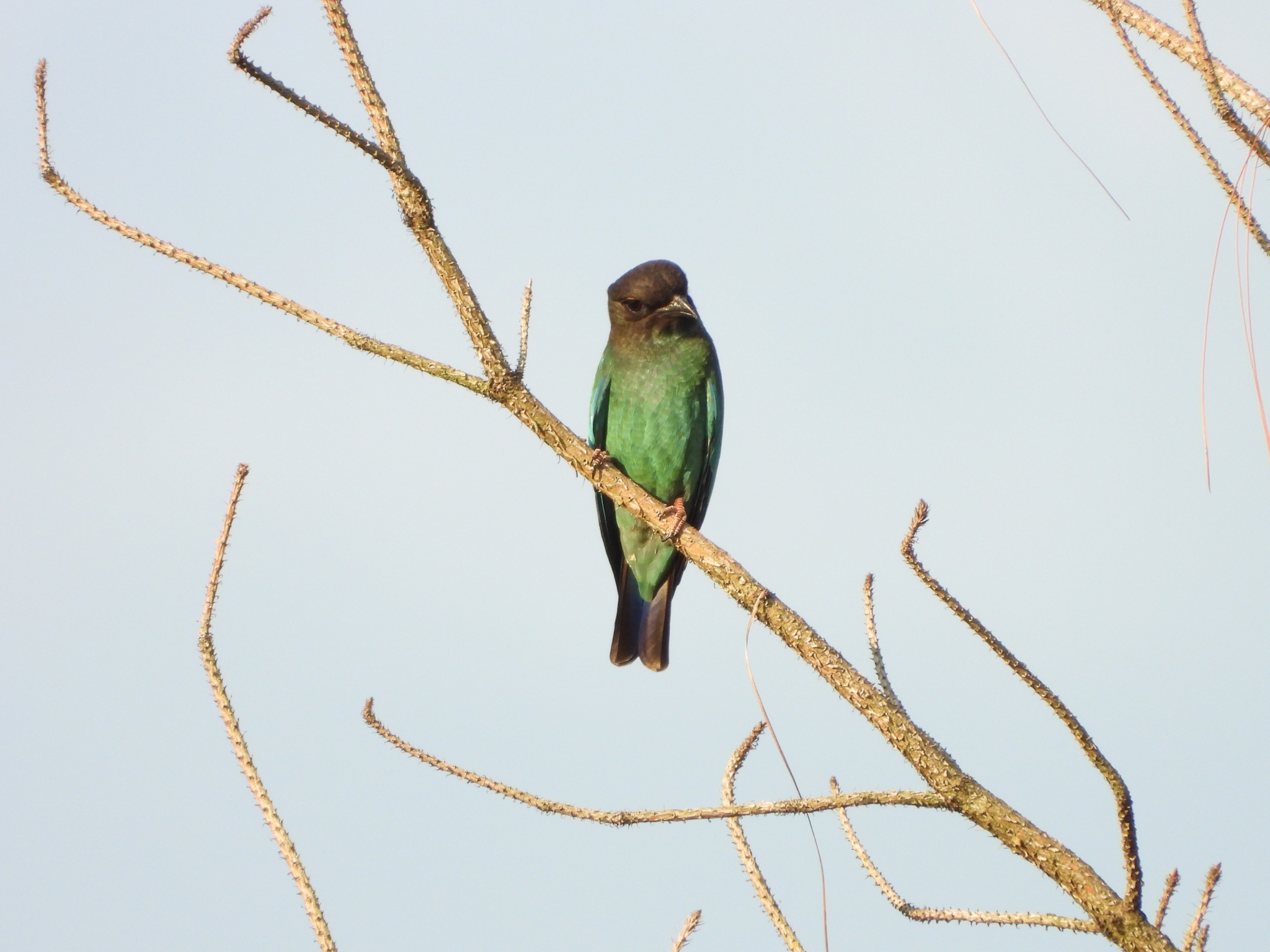
Length up to 30 cm. Plumage is dark brown heavily washed with a bluish-green sheen on the back and wing coverts. The belly and undertail coverts are light coloured, with glossy bright blue on the throat and undertail. Flight feathers are darker blue. Very light blue patches on the outer wings are highly visible in flight. The bill is short and wide; mature birds have orange-red bills with black tips, while immature birds have brown bills and feet. Females are slightly duller than males. Immature birds lack blue throat colouring and are much duller overall.
Distribution & Habitat
Range extends from Australia to Japan and India. Ten subspecies are recognized with distributions including the Himalayas, China, south-eastern Siberia, Korea, Japan, Indochina, Malay Peninsula, Sumatra, Java, Borneo, Philippines, south-western India, Andaman Islands, Sri Lanka, Simeulue, Lesser Sunda Islands, northern and eastern Australia, New Guinea, western Papuan islands, D'Entrecasteaux Islands, Louisiade Archipelago, Bismarck Archipelago, and Solomon Islands. At least some subspecies are migratory; those breeding in northern and eastern Australia between September and April winter in New Guinea and nearby islands. Habitat consists of open wooded areas with hollow-bearing trees.
Behavior & Ecology
Most commonly seen singly with a distinctive upright silhouette on a bare branch high in a tree. It hawks for insects, returning to the same perch after a few seconds.
Source: Wikipedia · CC BY-SA 3.0
Taxonomy
- Order
- Coraciiformes
- Family
- Coraciidae
- Genus
- Eurystomus
Vocalizations
Subspecies (10)
-
Eurystomus orientalis crassirostris
Bismarck Archipelago
Data Sources
Species description from Wikipedia, licensed under CC BY-SA 3.0.
Bird images and sounds sourced from GBIF, contributed by citizen scientists worldwide under Creative Commons licenses.
Taxonomy data from AviList 2025.