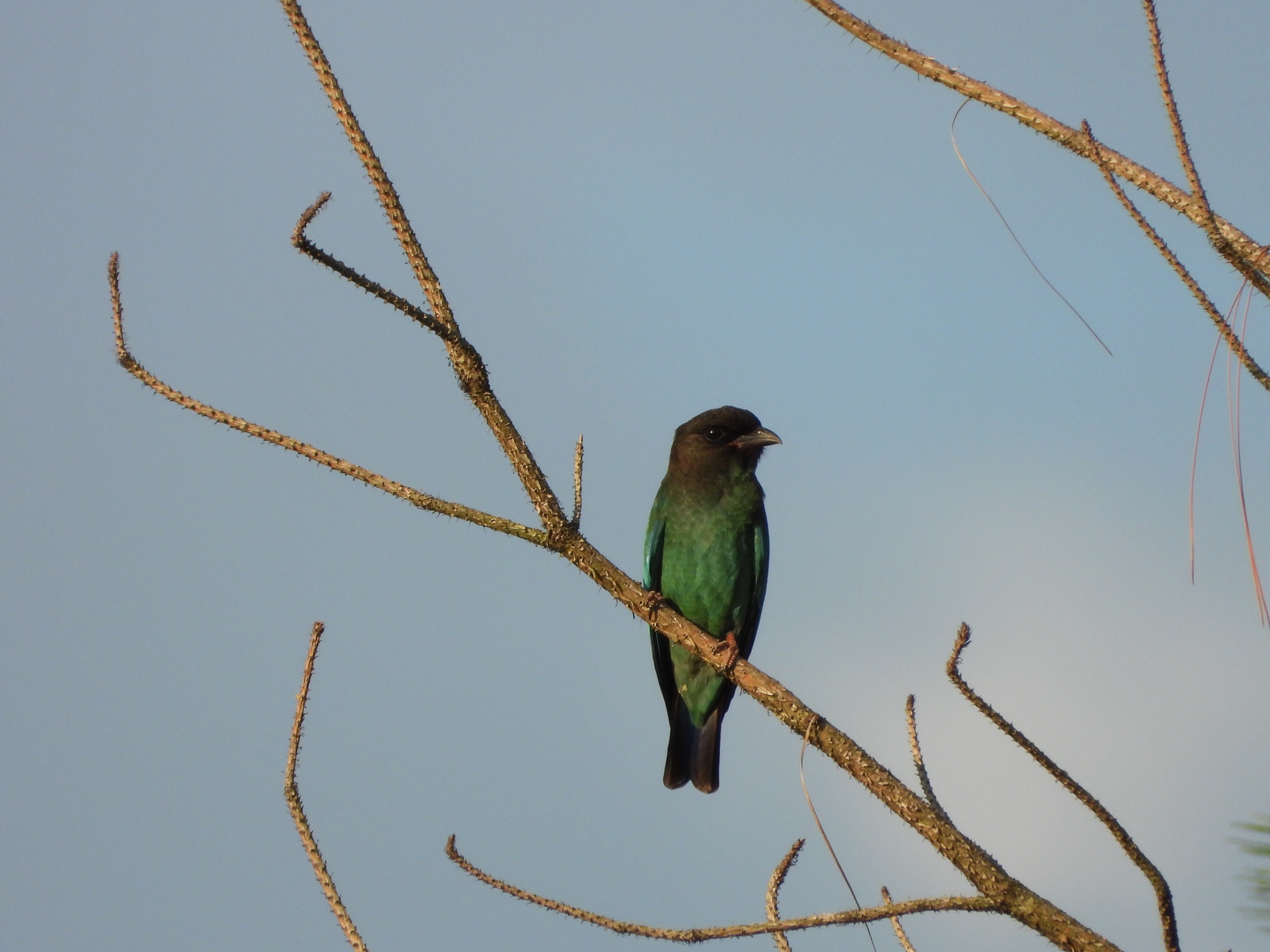
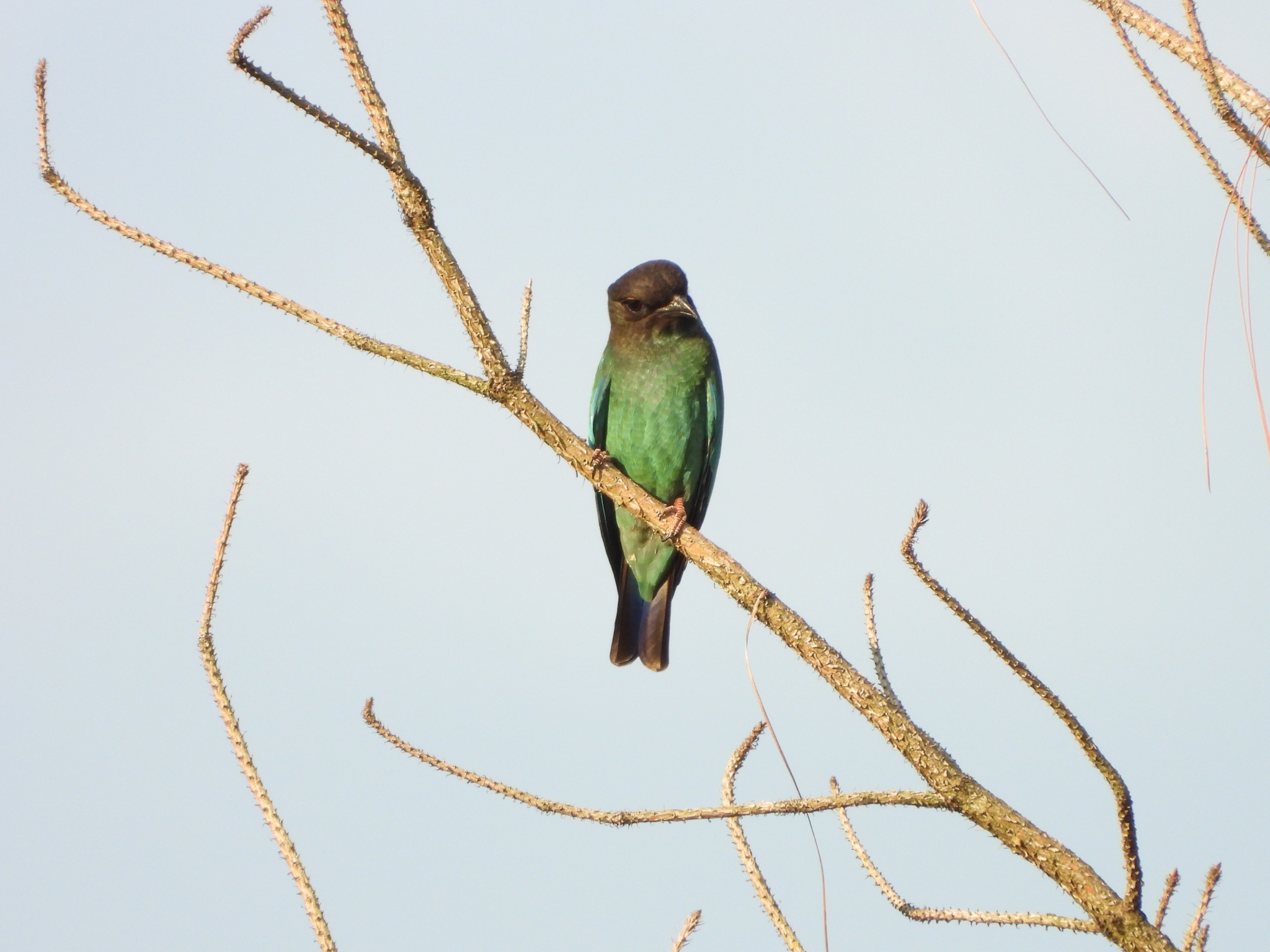
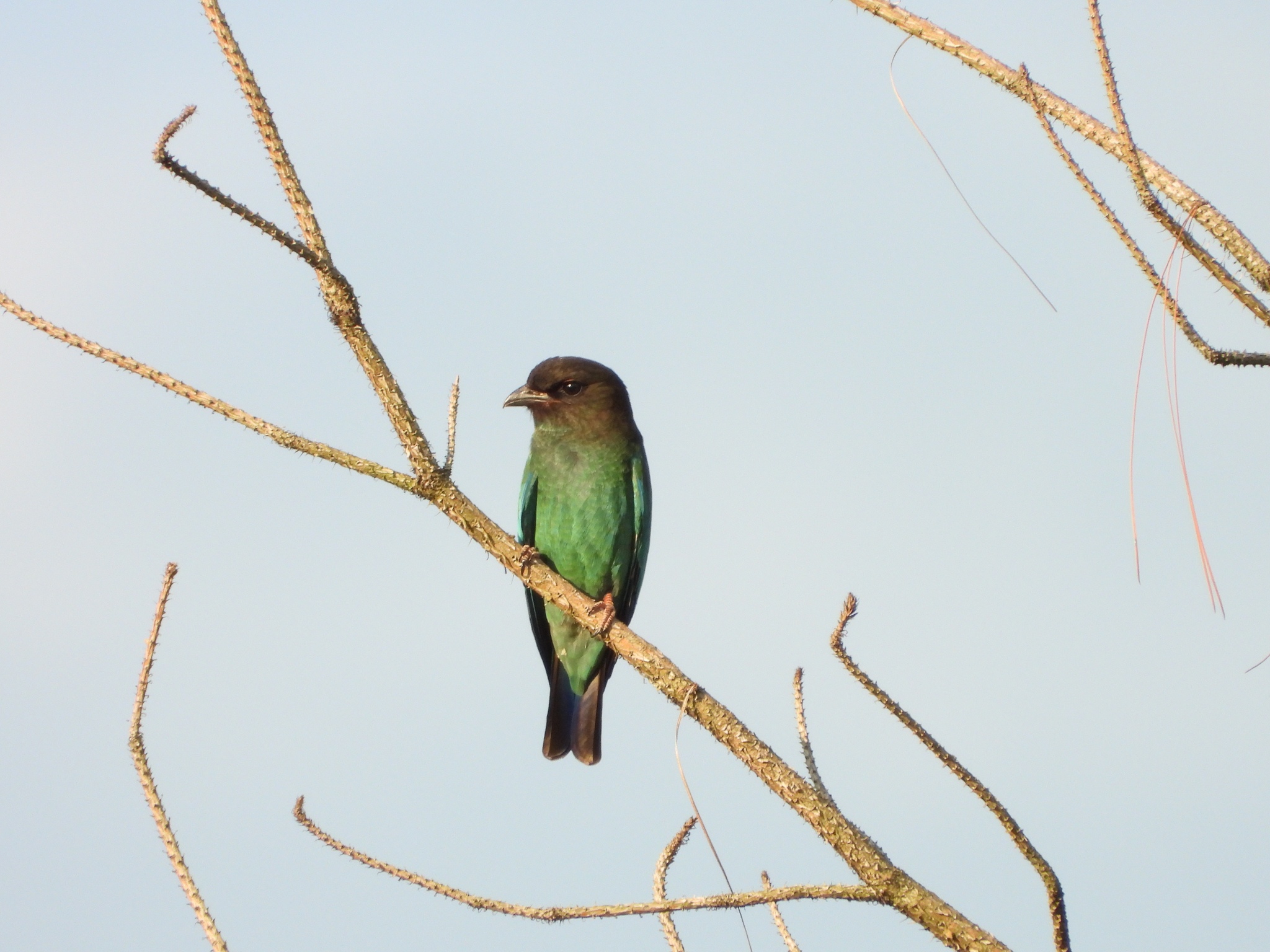
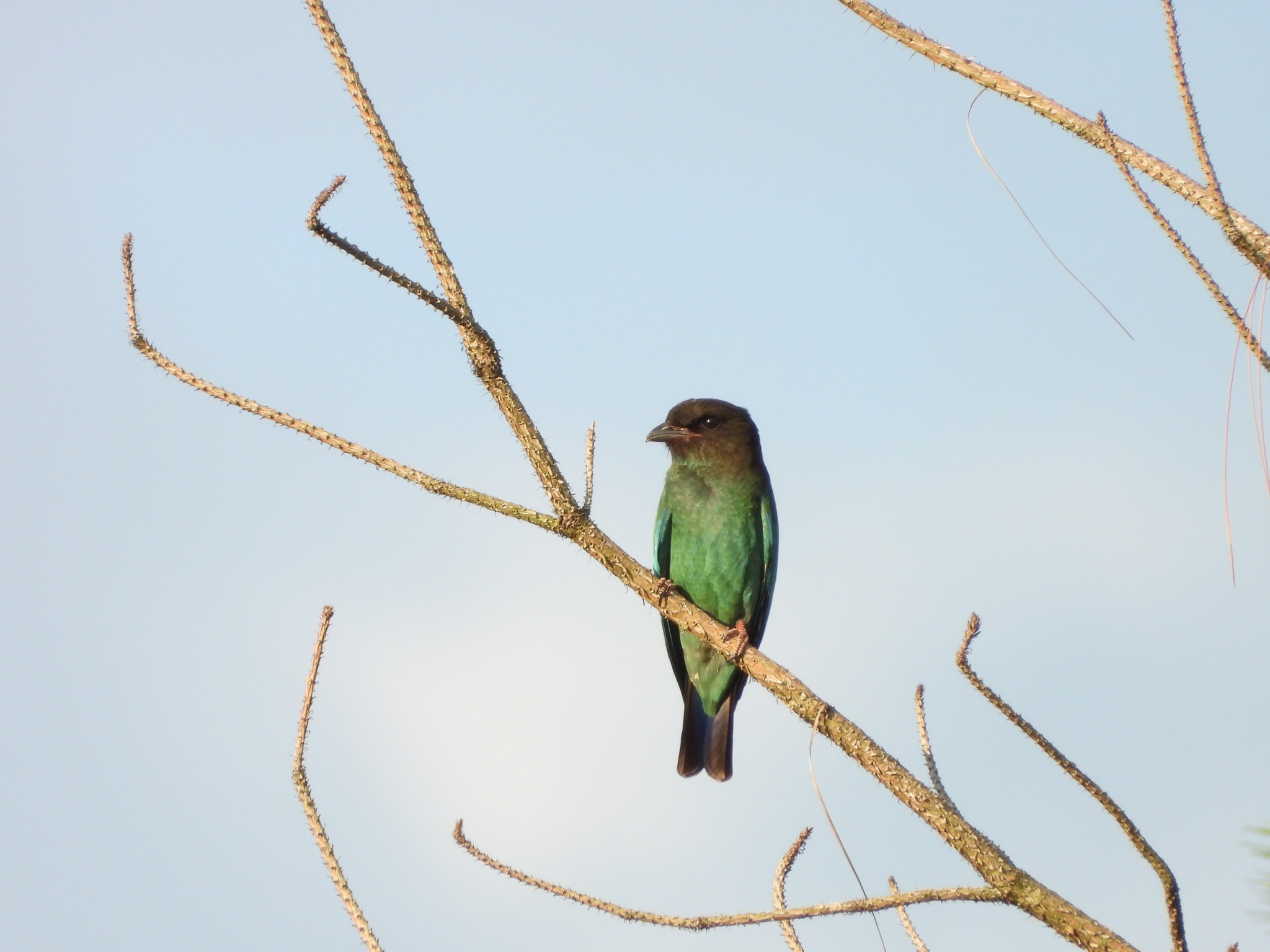
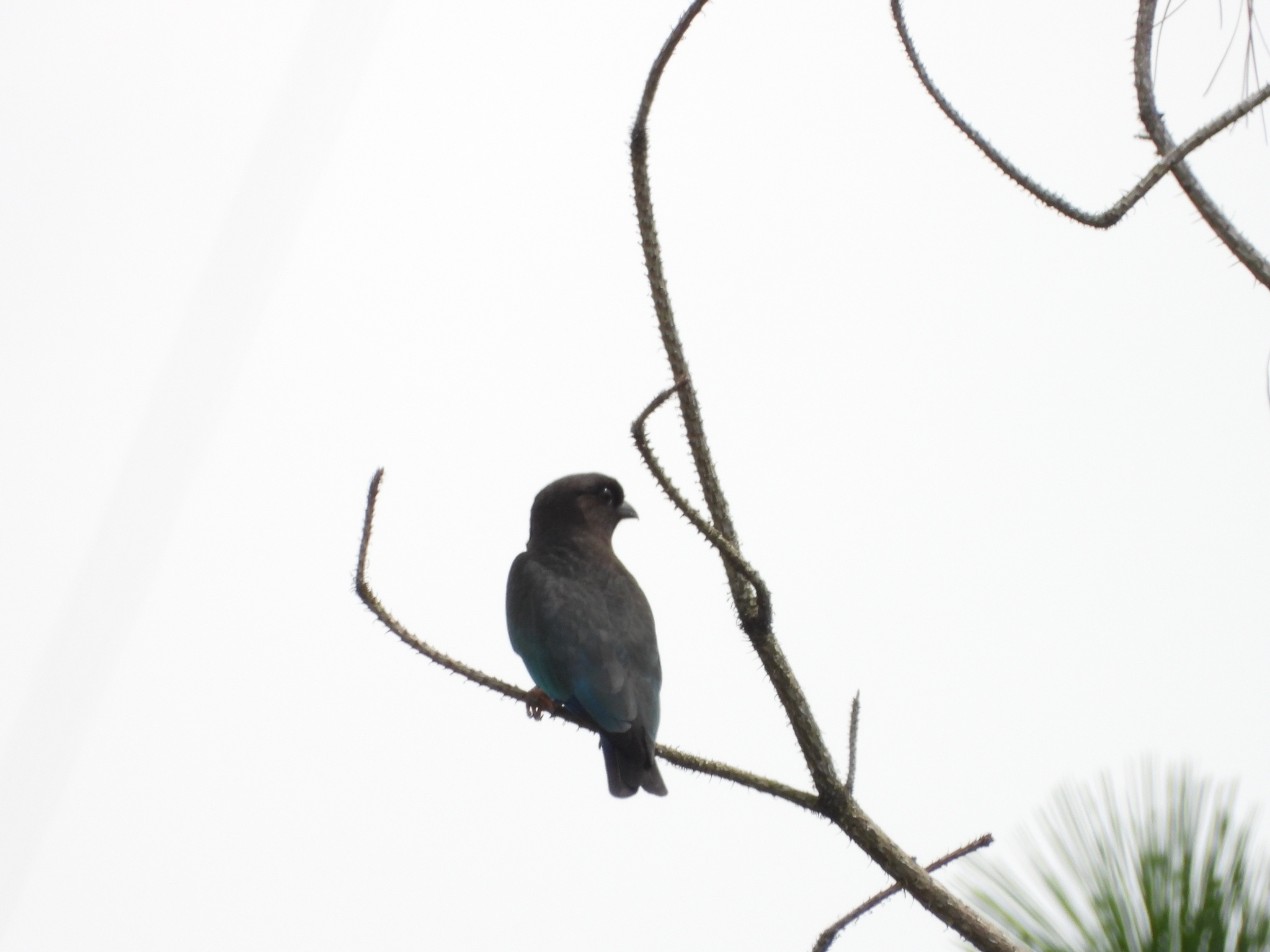
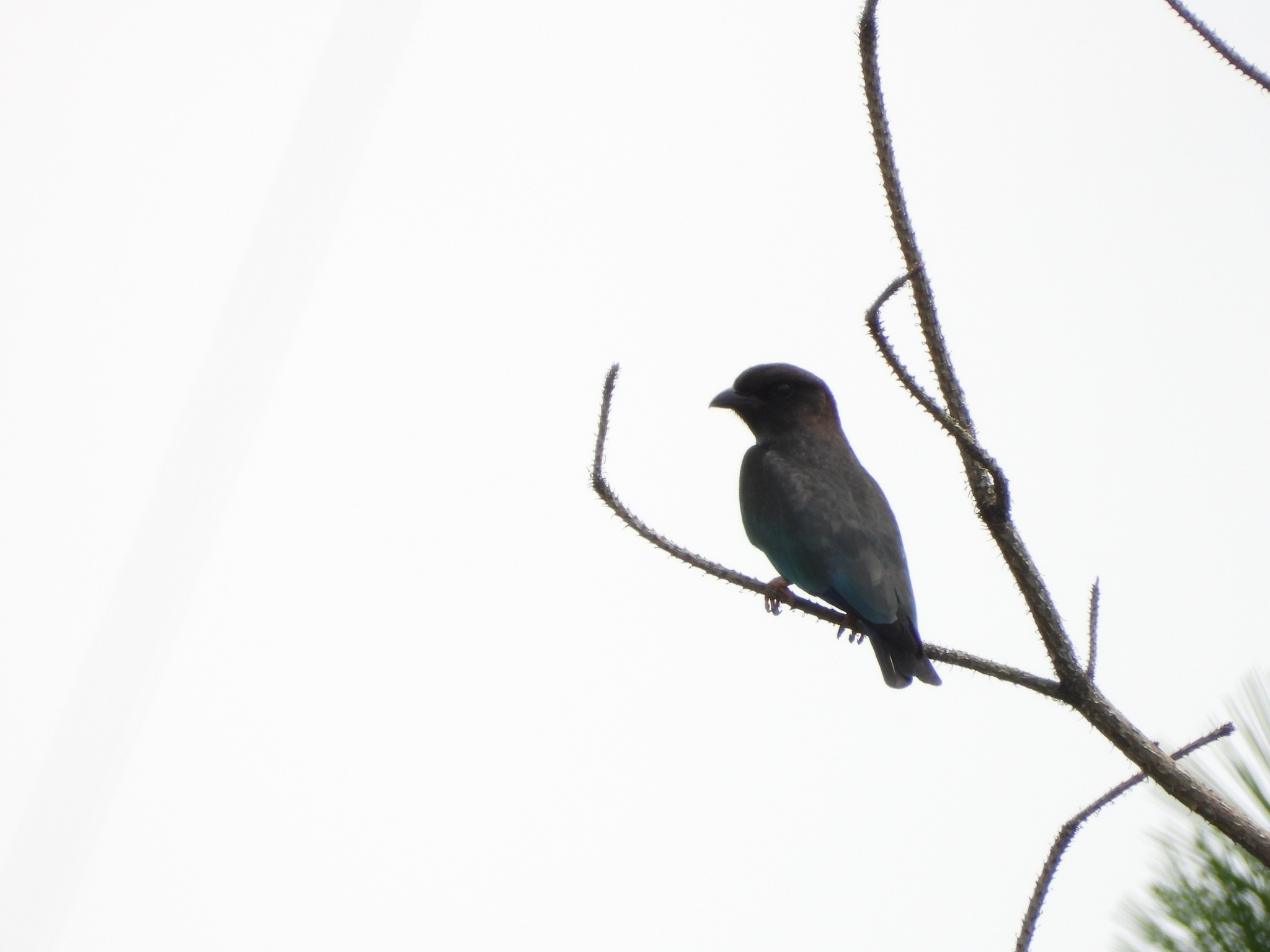
Oriental Dollarbird
Eurystomus orientalis
三宝鸟
Introduction
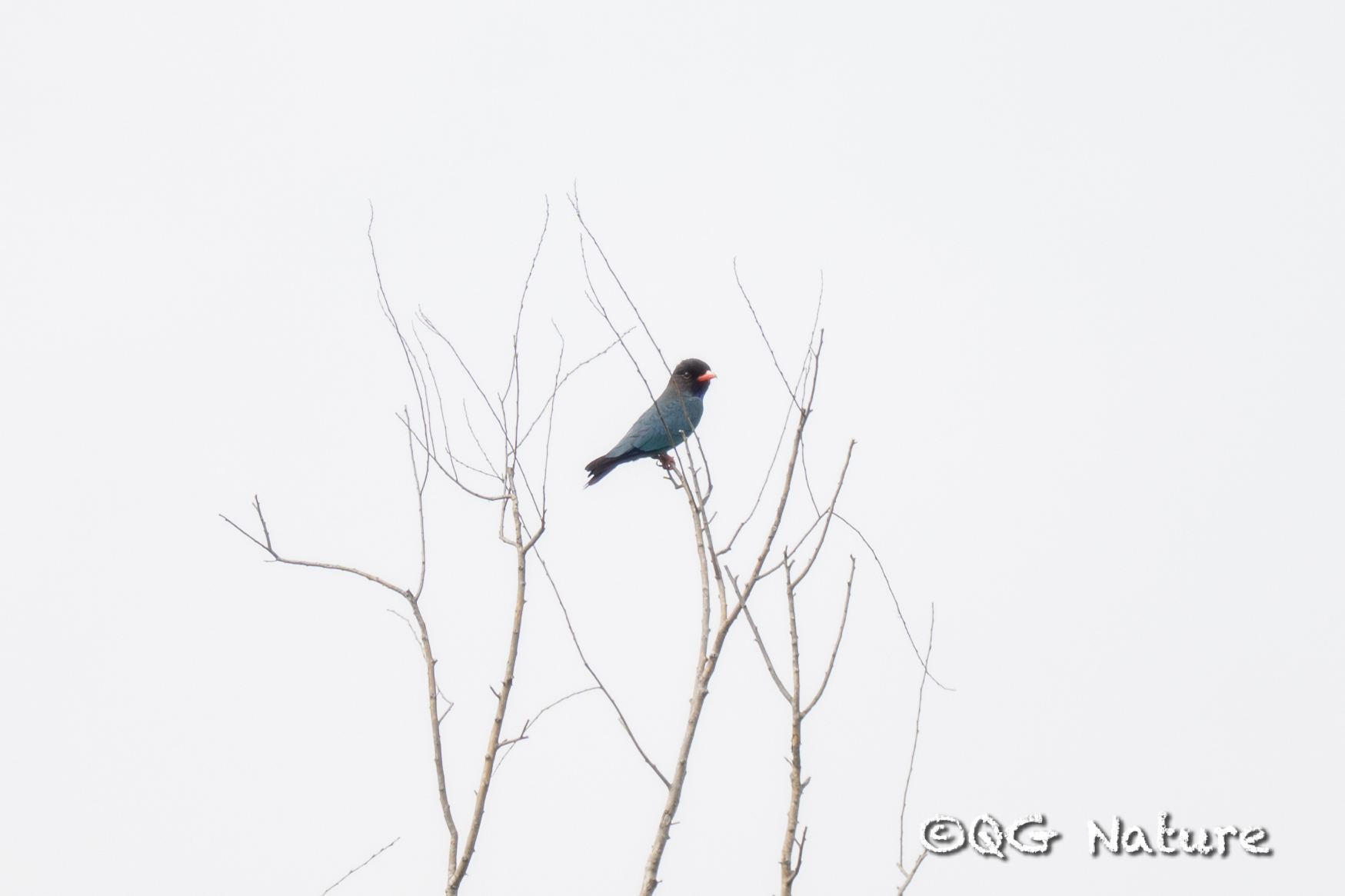
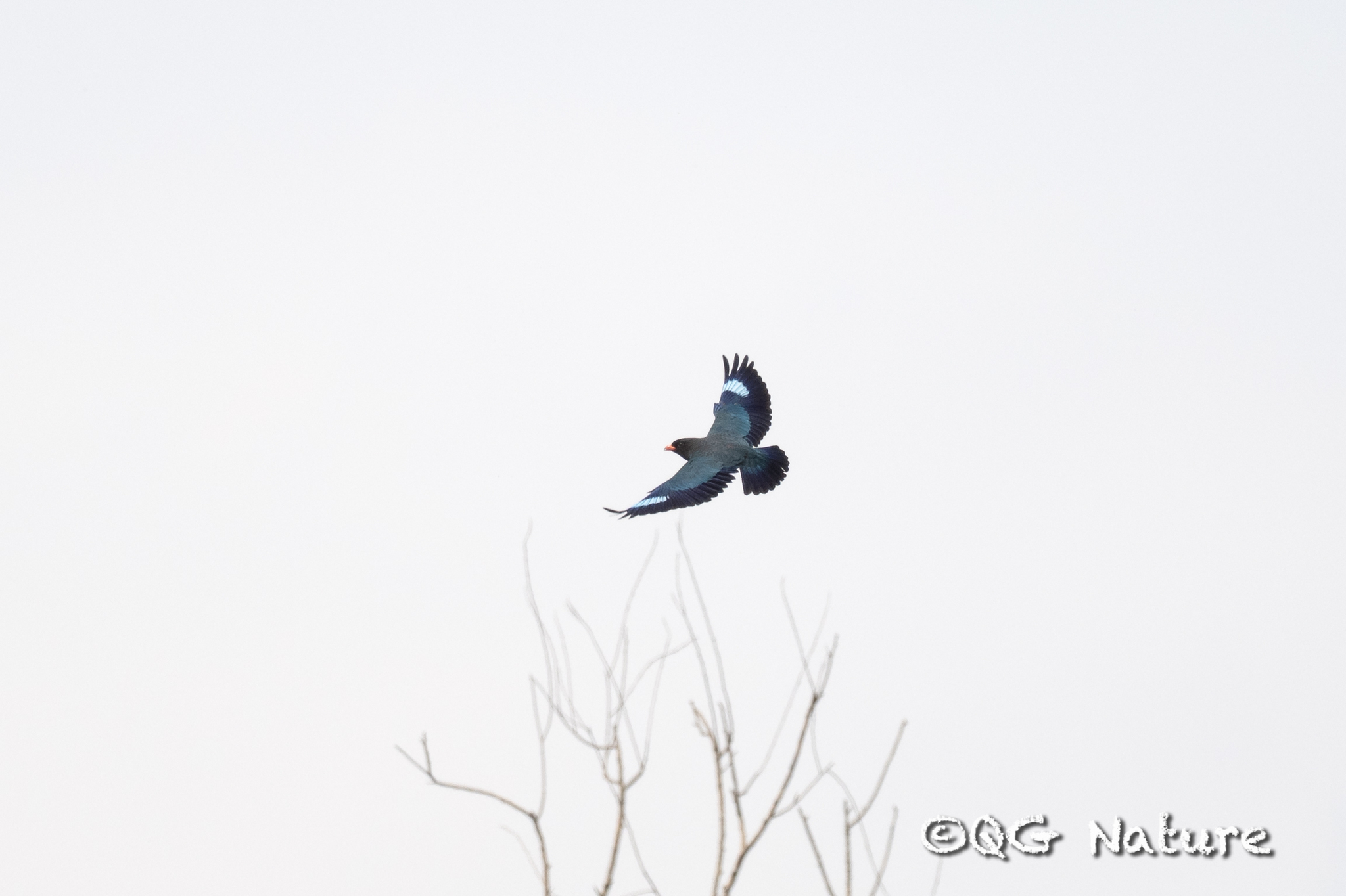
The Oriental Dollarbird (Eurystomus orientalis) is a medium-sized roller found in woodlands across an extensive range from India and Japan to Australia. The species is characterized by pale blue or white wing patches. It typically perches at the canopy edge on bare branches and hawks insects from elevated vantage points, repeatedly sallying forth to capture prey. Ten subspecies are recognized across its range. Northern populations are migratory, while southern Australian populations move to New Guinea for the austral winter.
Description
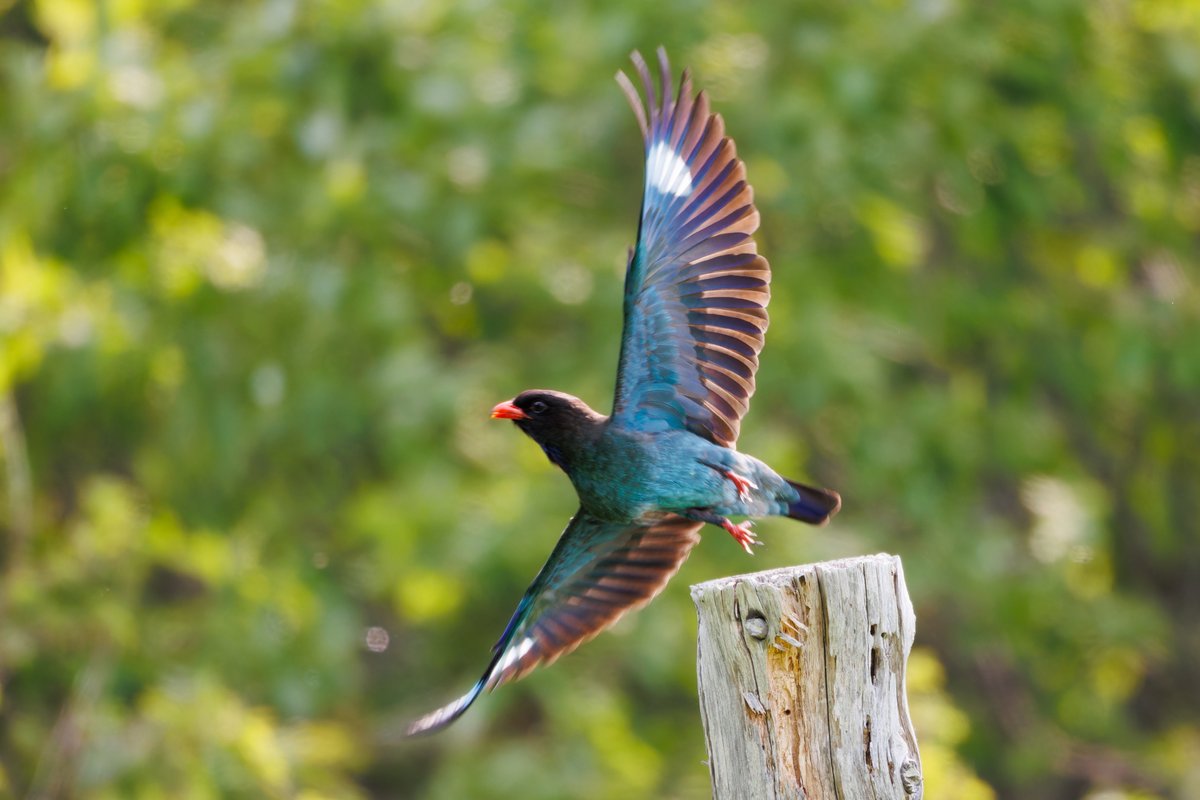
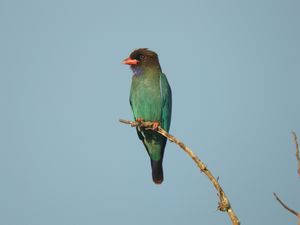
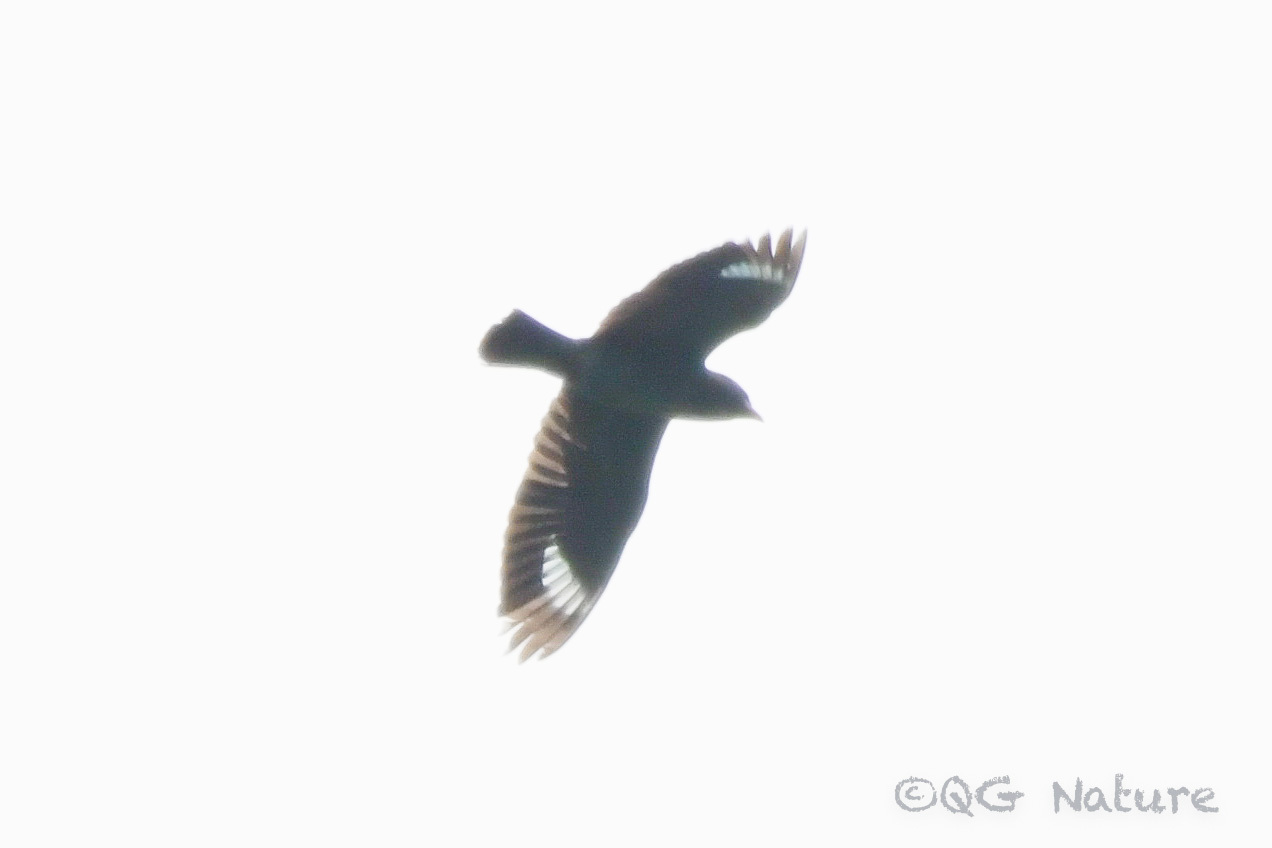
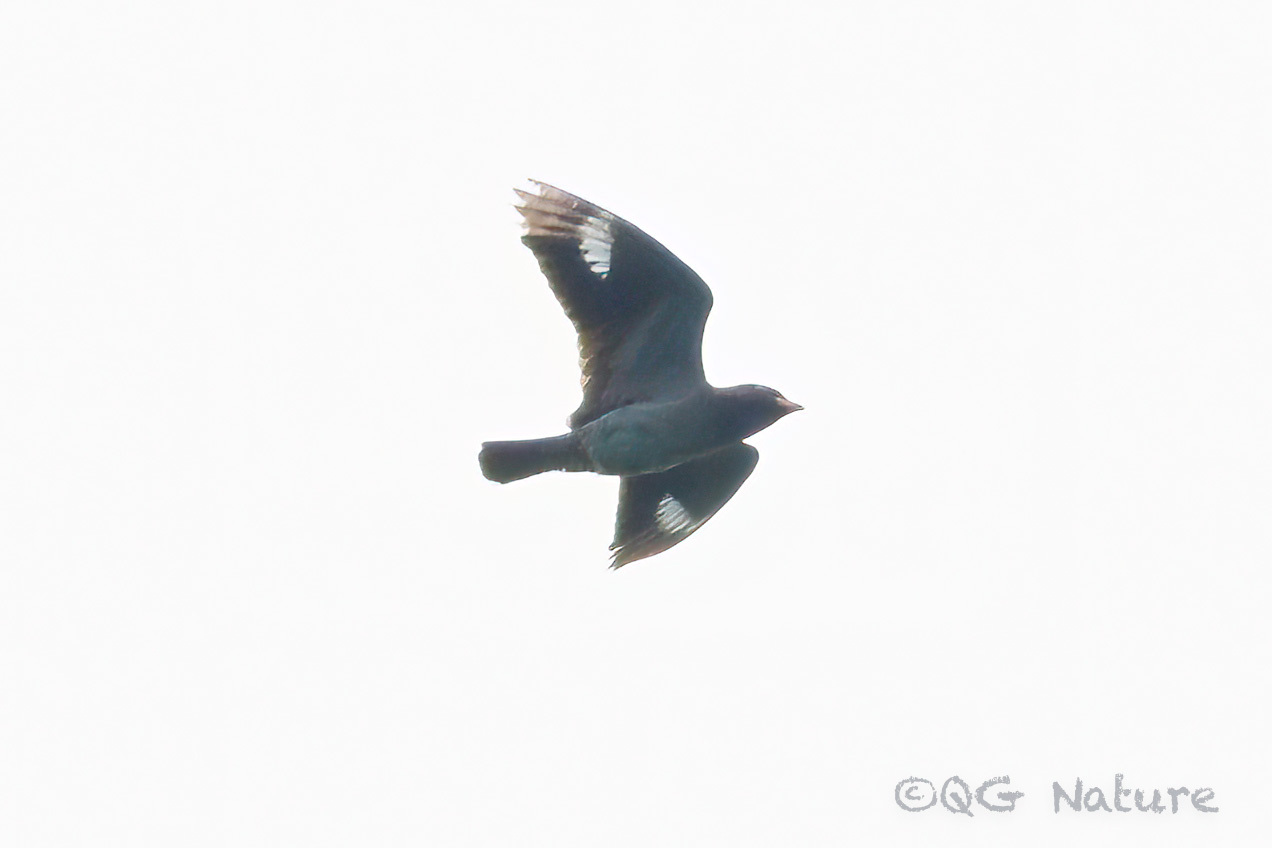
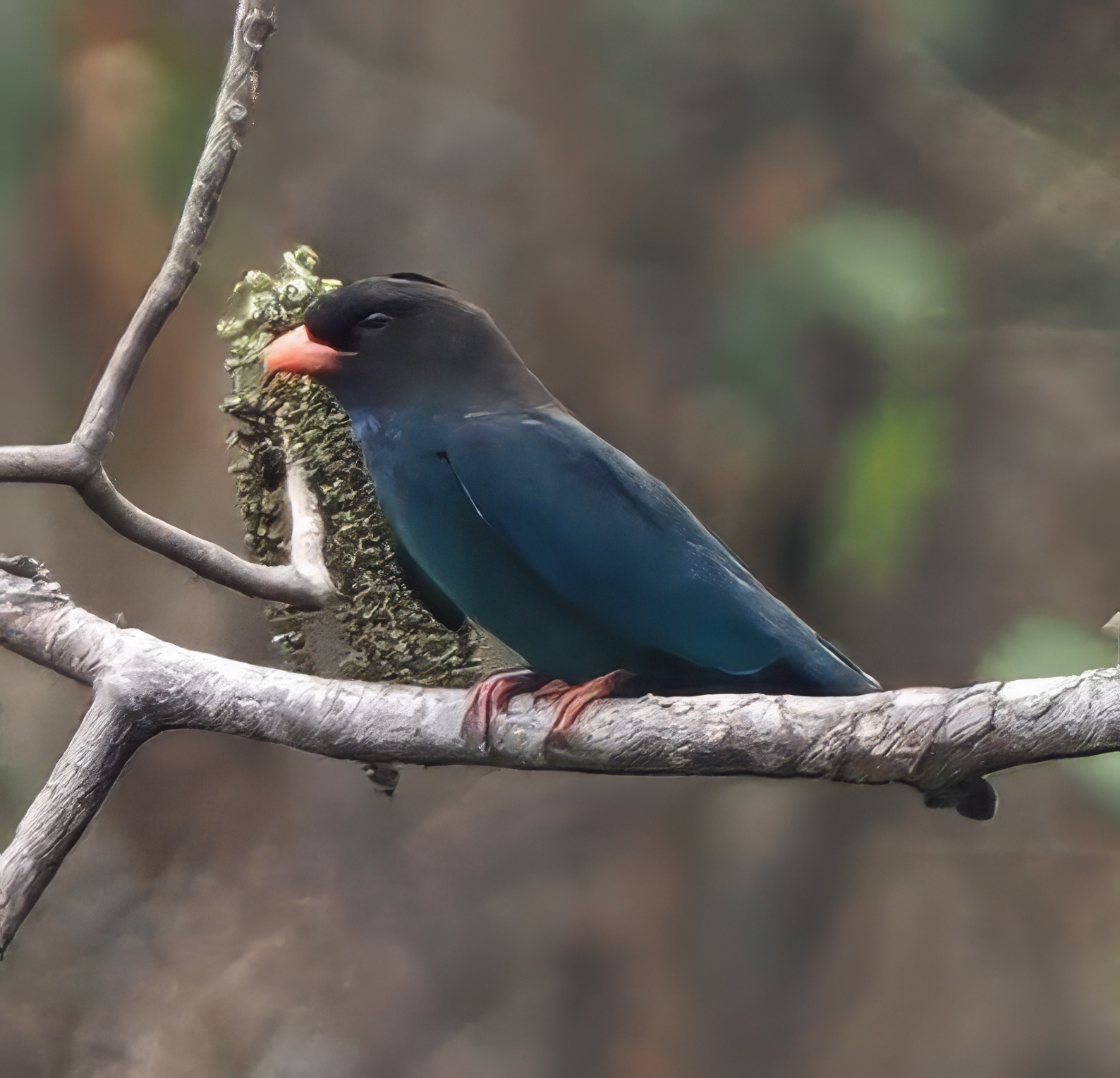
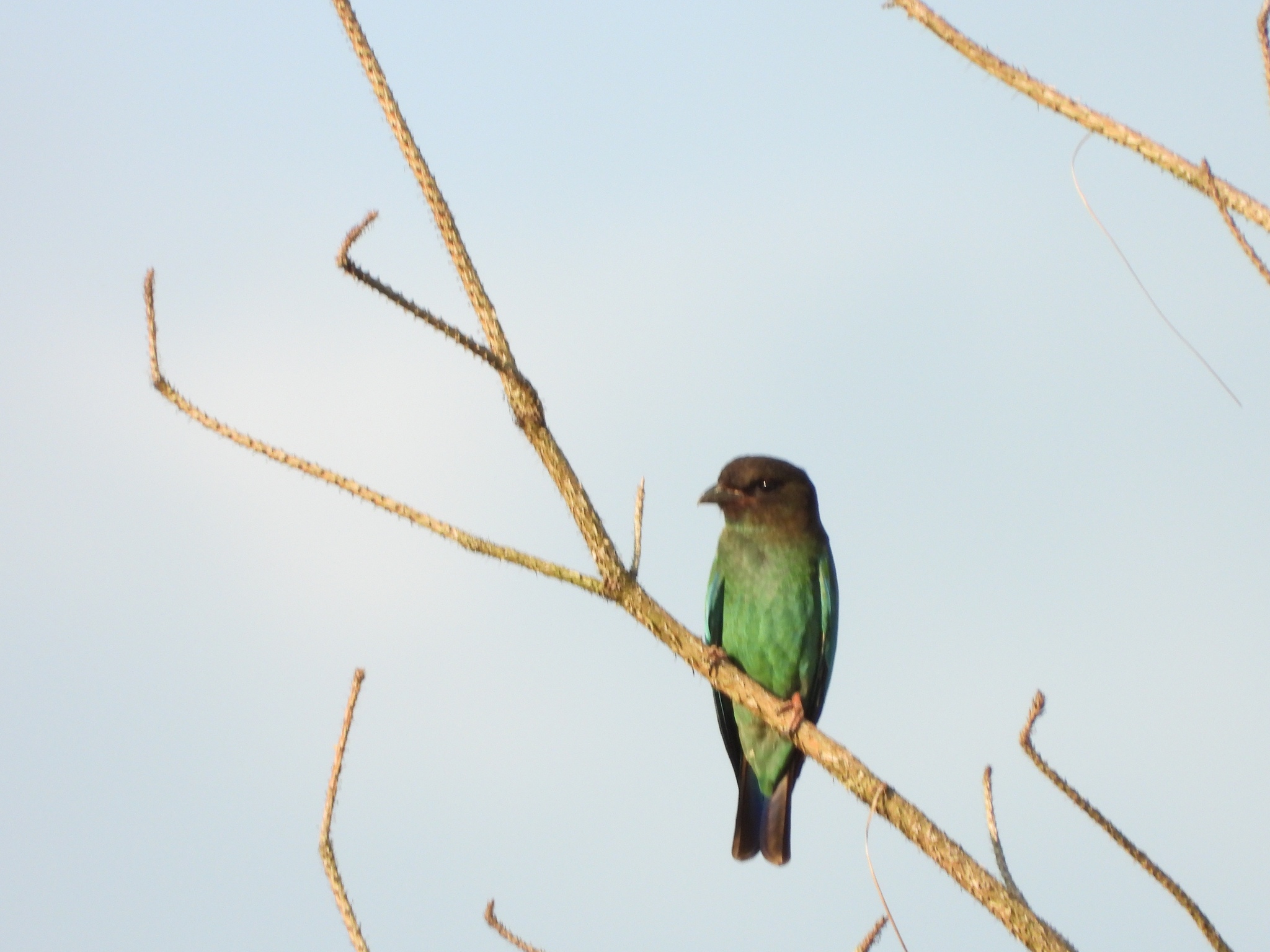
This compact roller reaches lengths of up to 30 centimeters, presenting a generally dark brown plumage washed with a striking bluish-green sheen across the back and wing coverts. The underparts are notably lighter in color, while the throat and undertail feature glossy bright blue coloration that catches the light beautifully. The flight feathers appear in a darker blue shade. Adults possess a characteristic short, wide bill colored orange-red with a distinctive black tip. The most identifying features are the very light blue patches on the outer wings, which resemble coins and give the species its common name. Females closely resemble males but appear slightly duller overall. Immature birds are significantly duller than adults, lacking the blue throat coloration entirely and possessing brown bills and feet rather than the red of mature individuals.
Distribution & Habitat
This species occupies an extensive range stretching from Australia north through the Asian mainland to Korea, Japan, and India. At least some subspecies, particularly the Australian roller (E. o. pacificus), undertake significant migratory movements. Populations breeding in northern and eastern Australia nest between September and April before migrating to New Guinea and surrounding islands for the austral winter. The species demonstrates a clear preference for open wooded environments where suitable nesting habitat exists. The presence of hollow-bearing trees proves essential for successful breeding, as the birds utilize these natural cavities for nesting sites rather than constructing elaborate nests.
Behavior & Ecology
Birdwatchers most commonly encounter this species as solitary individuals maintaining a distinctive upright posture on bare branches high in the tree canopy. The species employs a classic hawking strategy, watching from an elevated perch before launching into swift flight to capture flying insects. After each foraging sortie, the bird characteristically returns to the same perch, creating predictable observation opportunities for patient watchers. This perching behavior, combined with the species' tendency to use the same favored vantage points repeatedly, makes it relatively easy to observe once located.
Conservation
This field was omitted because the article contains no relevant conservation information.
Culture
This field was omitted because the article contains no relevant cultural information.
Source: Wikipedia · CC BY-SA 3.0
Taxonomy
- Order
- Coraciiformes
- Family
- Coraciidae
- Genus
- Eurystomus
- eBird Code
- dollar1
Vocalizations
Subspecies (10)
-
Eurystomus orientalis crassirostris
Bismarck Archipelago
-
Eurystomus orientalis cyanocollis
breeds Himalayas to China, Manchuria, and Korea; winters to Indonesia
-
Eurystomus orientalis gigas
southern Andaman Islands
-
Eurystomus orientalis irisi
Sri Lanka
-
Eurystomus orientalis laetior
southwestern India (southern Western Ghats)
-
Eurystomus orientalis oberholseri
Simeulue Island (off Sumatra)
-
Eurystomus orientalis orientalis
breeds from southeastern India to Ryukyu Islands (southern Japan) and southeastern Asia, the Thai-Malay Peninsula, Sumatra, Java, Borneo, and Philippines; winters to southeastern India, Philippines, Sulawesi, and Halmahera
-
Eurystomus orientalis pacificus
resident in the Lesser Sundas and northernmost Australia, probably also southern Sulawesi and the Sula Islands; also breeds northern and eastern Australia (Kimberley region, northern Western Australia eastward to eastern Victoria); southern populations winter northward to New Guinea and Wallacea
-
Eurystomus orientalis solomonensis
Feni Islands (northeastern Bismarck Archipelago) and Solomon Islands
-
Eurystomus orientalis waigiouensis
New Guinea, including Raja Ampat Islands (off western New Guinea), and D'Entrecasteaux and Louisiade archipelagos (off southeastern New Guinea)
Data Sources
Species description from Wikipedia, licensed under CC BY-SA 3.0.
Bird images and sounds sourced from GBIF, contributed by citizen scientists worldwide under Creative Commons licenses.
Taxonomy data from AviList 2025.