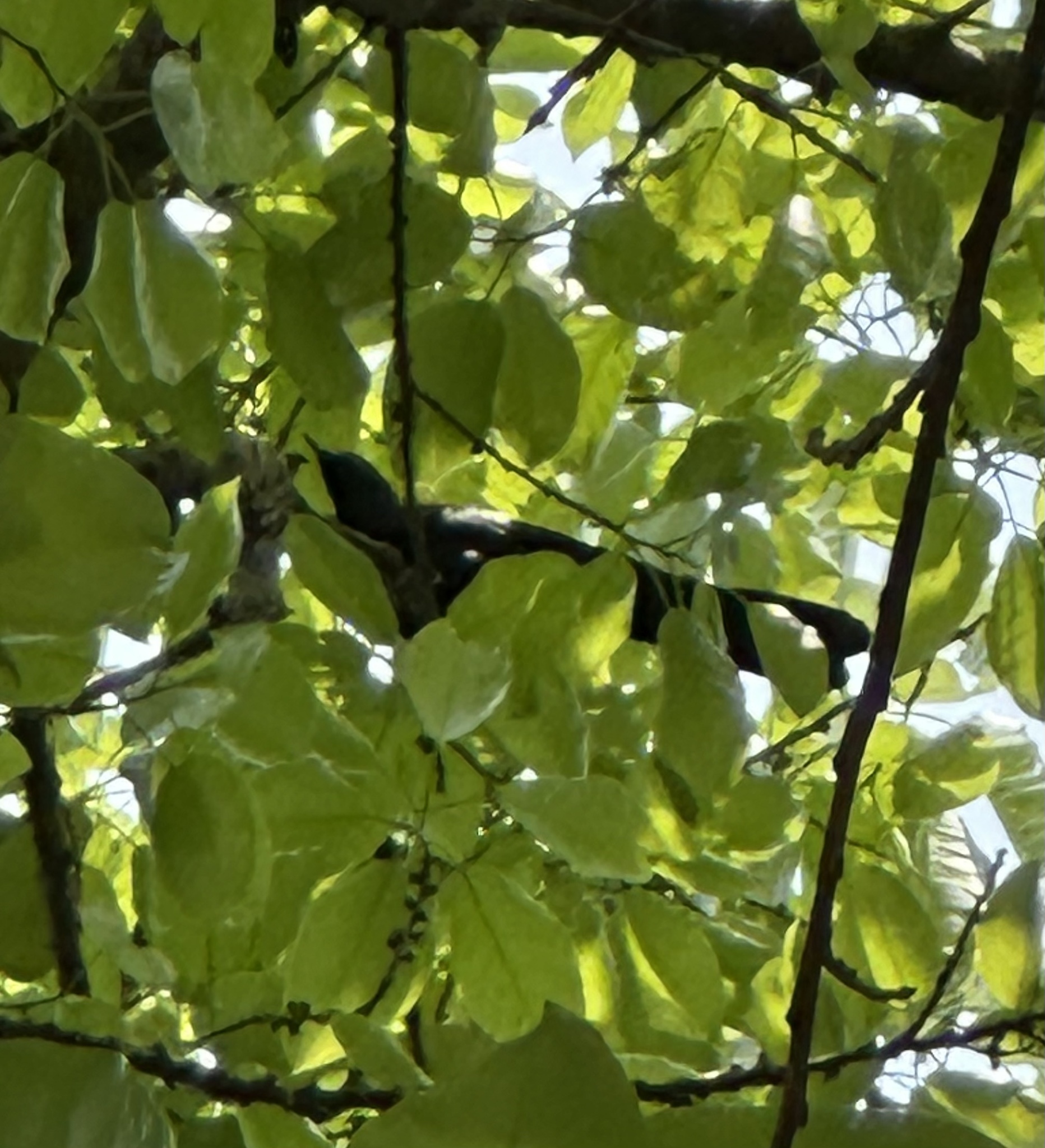
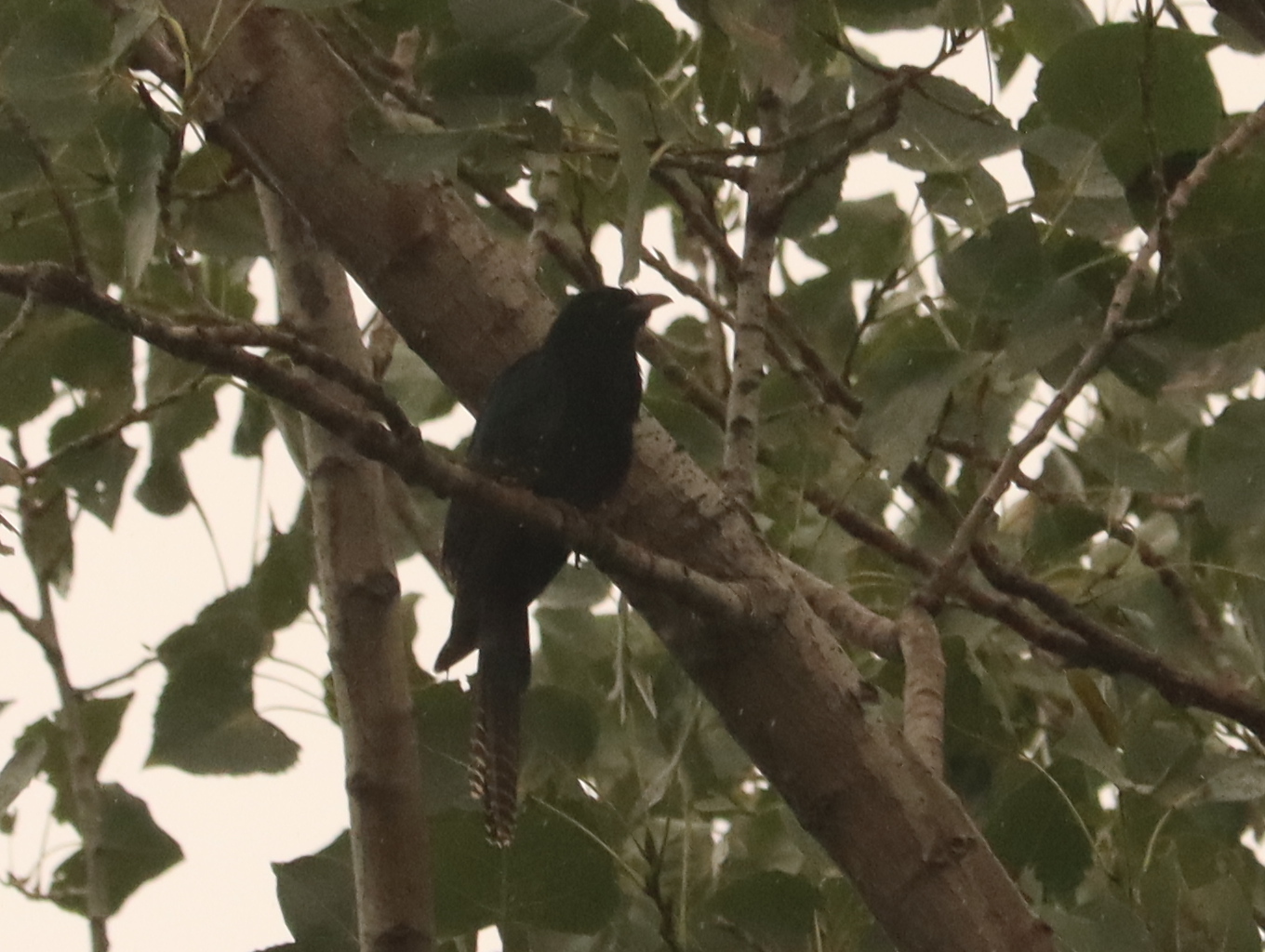
Cuculiformes / Cuculidae / Eudynamys
Asian Koel
Eudynamys scolopaceus · 噪鹃
Introduction
Member of the cuckoo family Cuculidae, found in the Indian subcontinent, China, and Southeast Asia. Forms a superspecies with black-billed and Pacific koels. Distinctive for being a brood parasite that lays eggs in crow nests and for being largely frugivorous as adults, unlike many related cuckoos.
Description
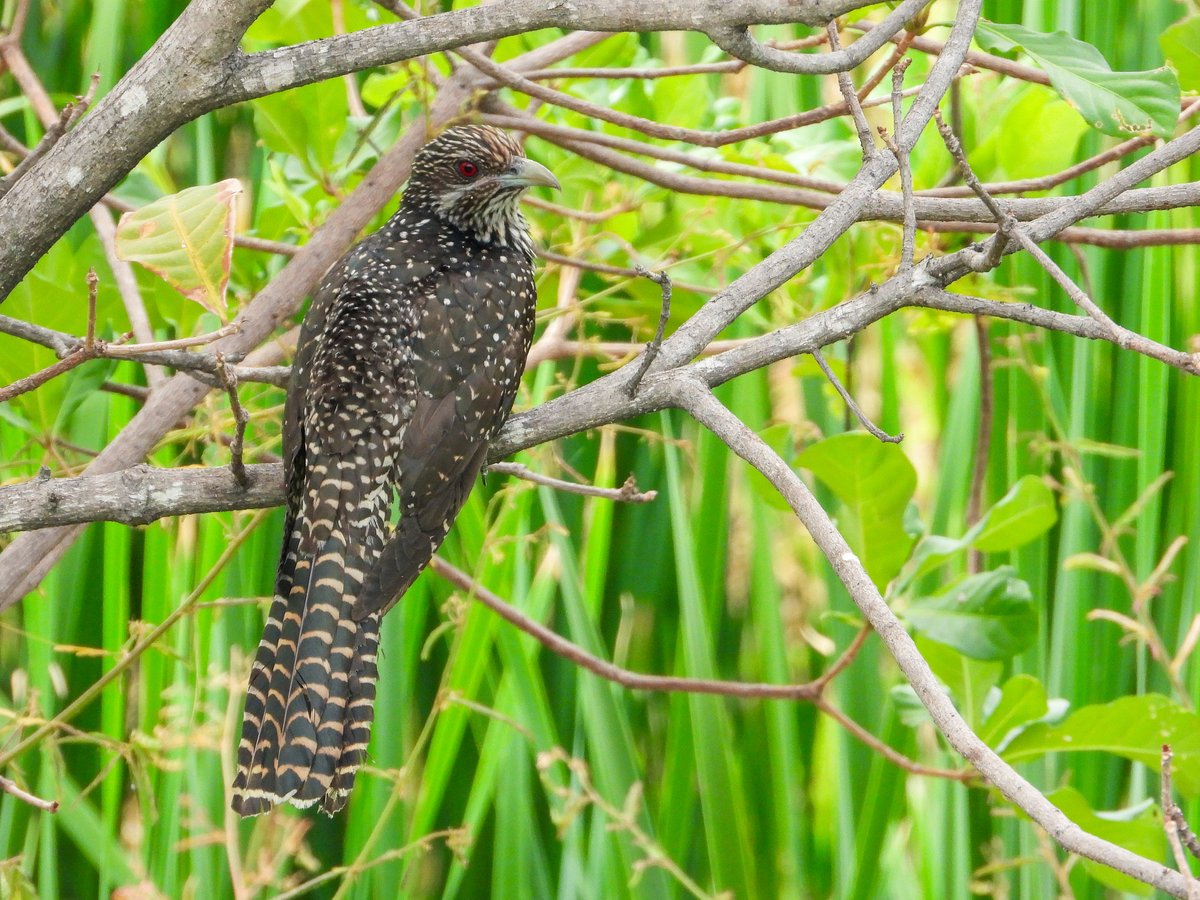
Large, long-tailed cuckoo measuring 39–46 cm (15–18 in) and weighing 190–327 g (6.7–11.5 oz). Male of nominate race is glossy bluish-black with a pale greenish-grey bill, crimson iris, and grey legs. Female has a brownish crown with rufous streaks on the head; back, rump, and wing coverts are dark brown with white and buff spots; underparts are whitish and heavily striped. Young birds resemble males but have a black beak.
Identification
Male is glossy bluish-black with crimson eyes. Female is brown with heavy white/buff spotting on wings and streaking below. Vocal during breeding season: male sings repeated 'koo-Ooo'; female calls with shrill 'kik-kik-kik...'. Calls vary across populations.
Distribution & Habitat
Resident breeder in tropical southern Asia, ranging from Iran, Pakistan, India, Bangladesh, Maldives, and Sri Lanka to southern China and the Greater Sundas. Subspecies include E. s. scolopaceus (South Asia), E. s. chinensis (Southern China, Indochina), E. s. harterti (Hainan), E. s. malayana (Thai-Malay Peninsula, Sundas), and E. s. mindanensis (Philippines, Maluku). Inhabits light woodland and cultivation. Colonized Krakatau and arrived in Singapore in the 1980s. Some populations make long-distance movements to Australia.
Behavior & Ecology
Brood parasite laying single eggs in nests of jungle crows, house crows, long-tailed shrikes, common mynas, black drongos, European magpies, and Coletos. Prefers host nests at low heights near fruit trees. Eggs hatch in 12–14 days; chicks fledge in 20–28 days. Chicks do not evict host young. Adults are omnivorous but mainly frugivorous, consuming fruits like sandalwood, Arenga, Livistona, and toxic Cascabela thevetia. Important for seed dispersal. Defends fruiting trees. Males may distract hosts while females lay eggs.
Culture
Name is onomatopoeic. Symbol in Indian, Pakistani, and Nepali poetry. Revered in Manusmriti. Vedas (c. 2000 BC) refer to it as Anya-Vapa ('raised by others'), an early reference to brood parasitism. State bird of Puducherry, India. Popular cagebird in India, living up to 14 years in captivity. In Sri Lanka, its call signifies the arrival of the Sinhalese New Year in April.
Source: Wikipedia · CC BY-SA 3.0
Taxonomy
- Order
- Cuculiformes
- Family
- Cuculidae
- Genus
- Eudynamys
Vocalizations
Subspecies (6)
-
Eudynamys scolopaceus chinensis
southern China and Indochina; winters to Borneo
Data Sources
Species description from Wikipedia, licensed under CC BY-SA 3.0.
Bird images and sounds sourced from GBIF, contributed by citizen scientists worldwide under Creative Commons licenses.
Taxonomy data from AviList 2025.