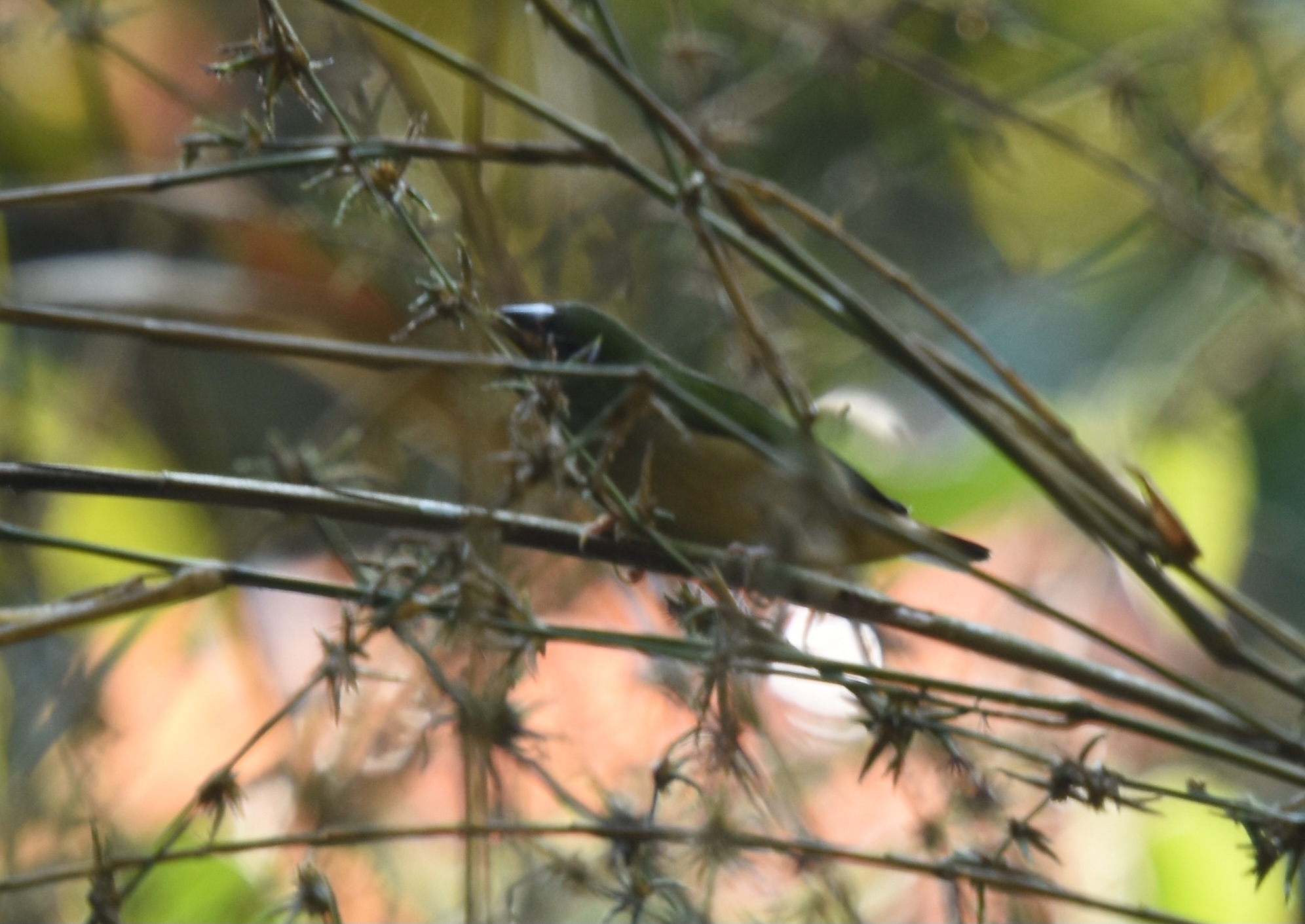
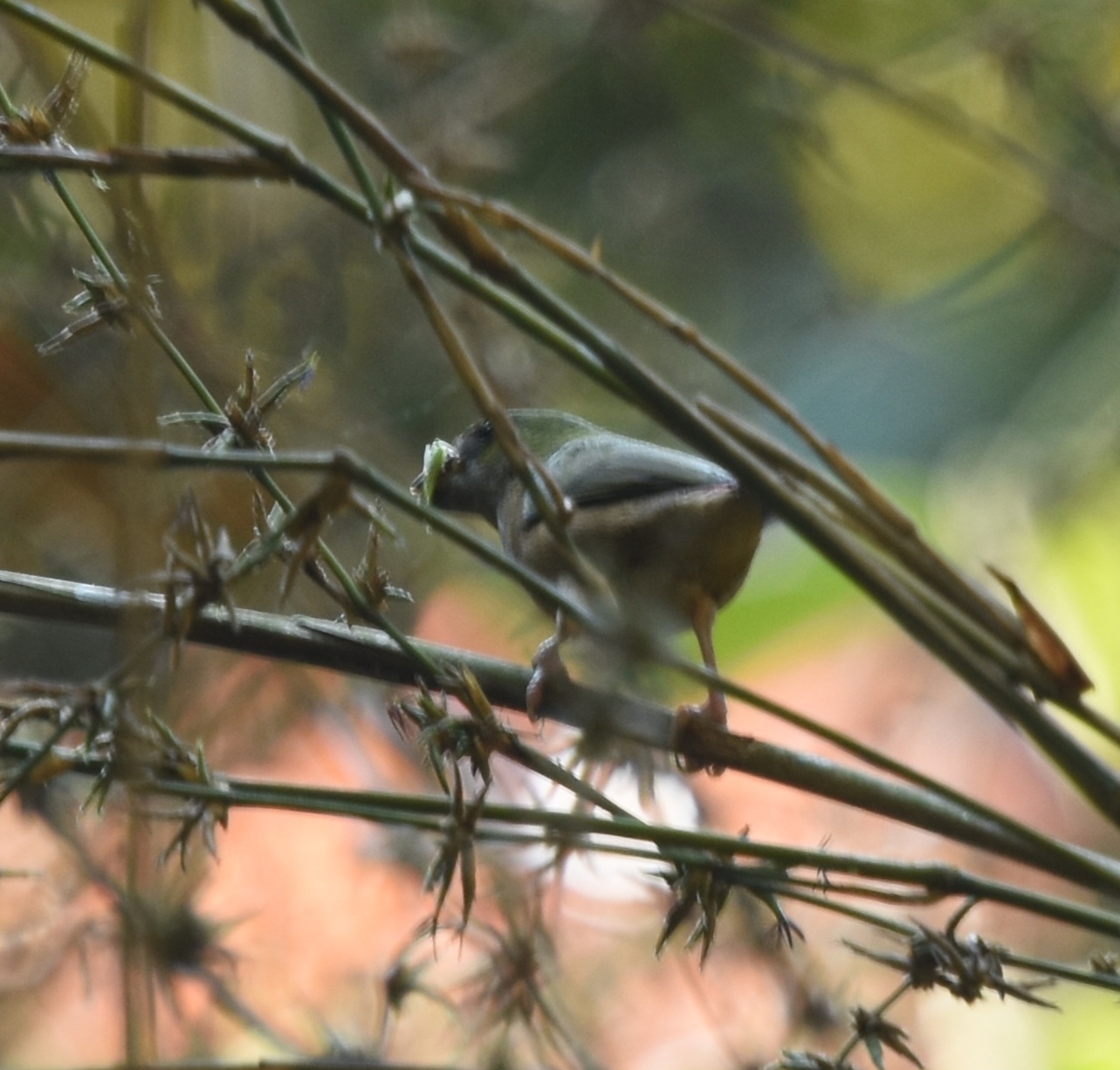
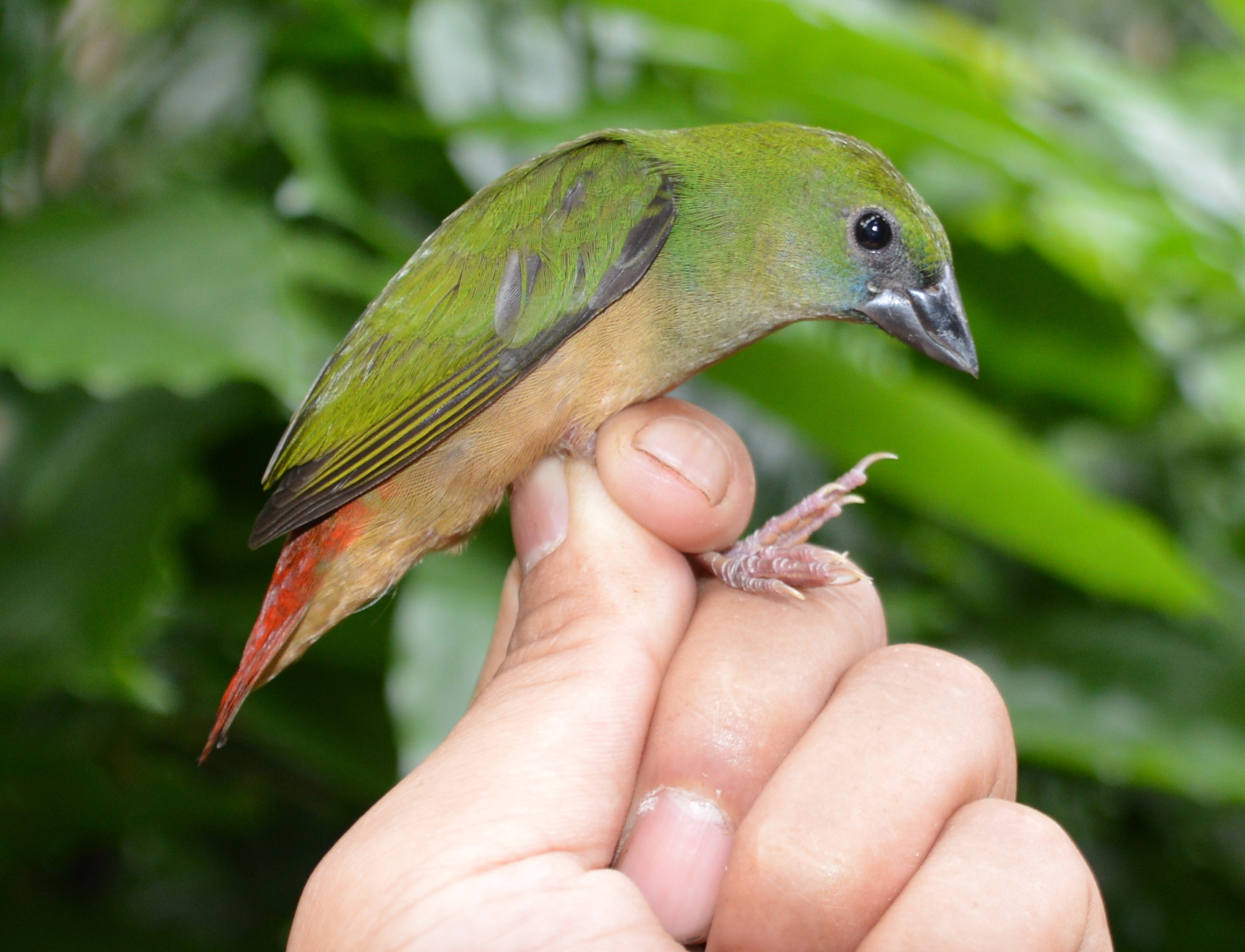
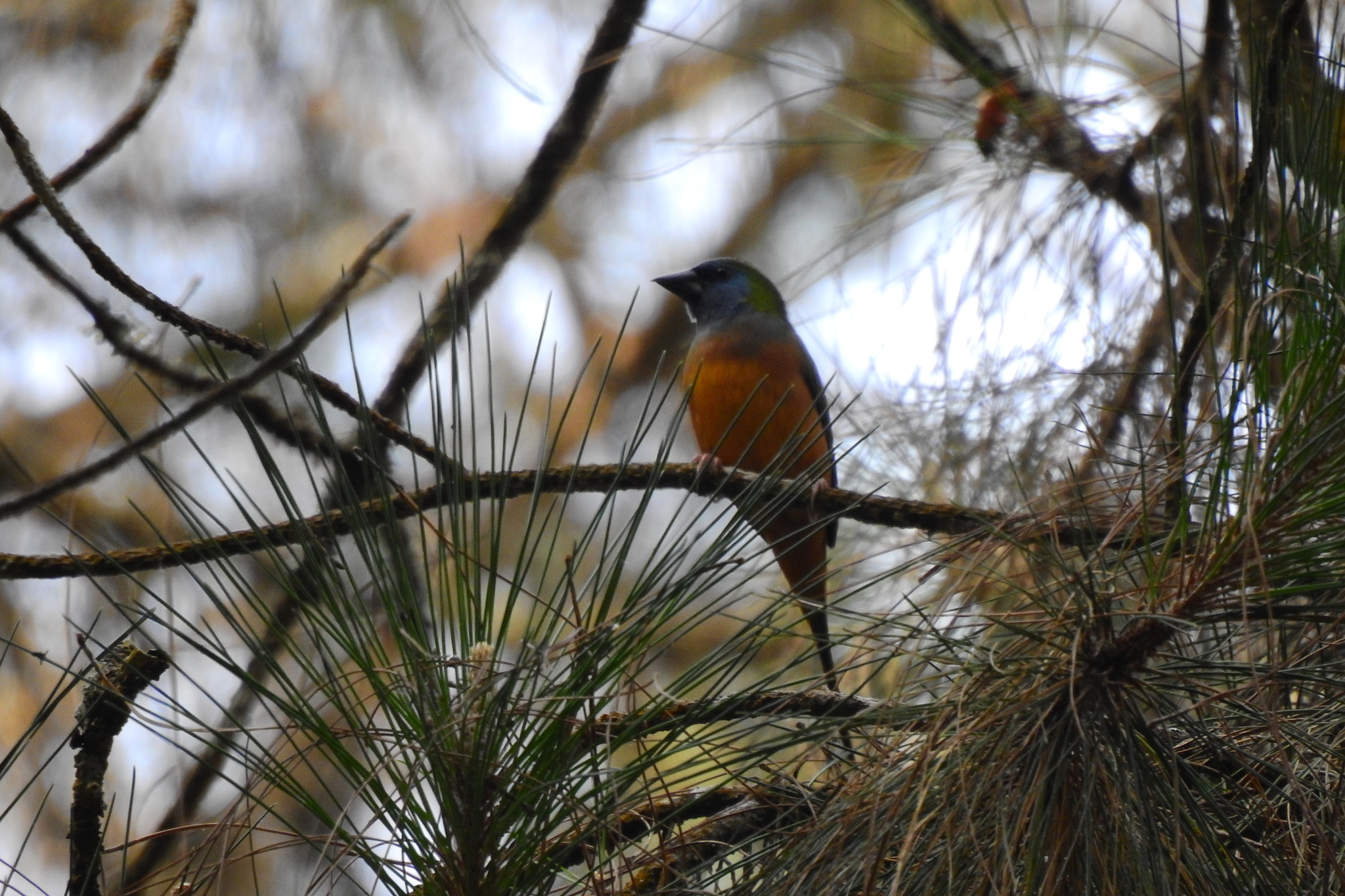
Passeriformes / Estrildidae / Erythrura
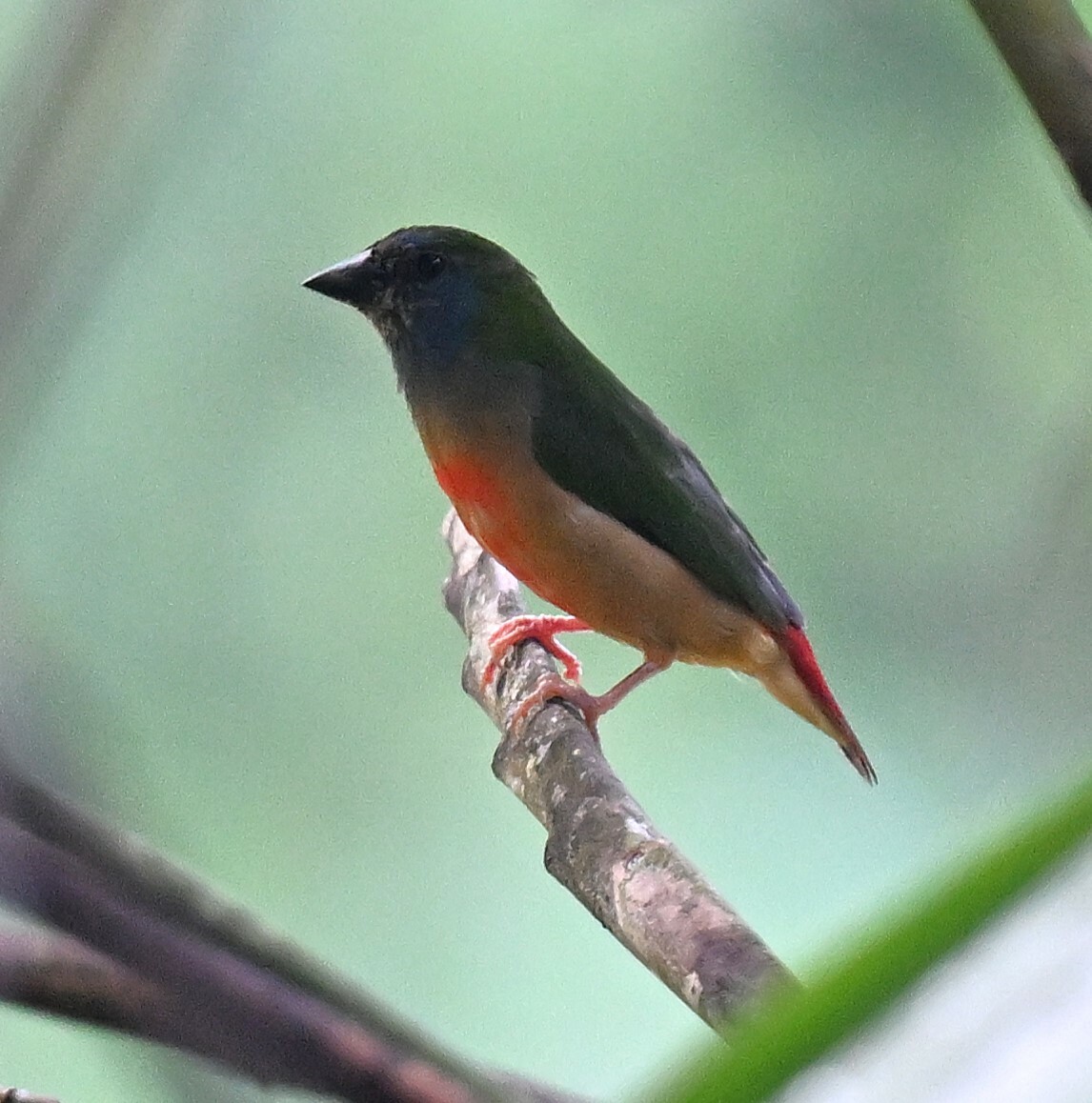
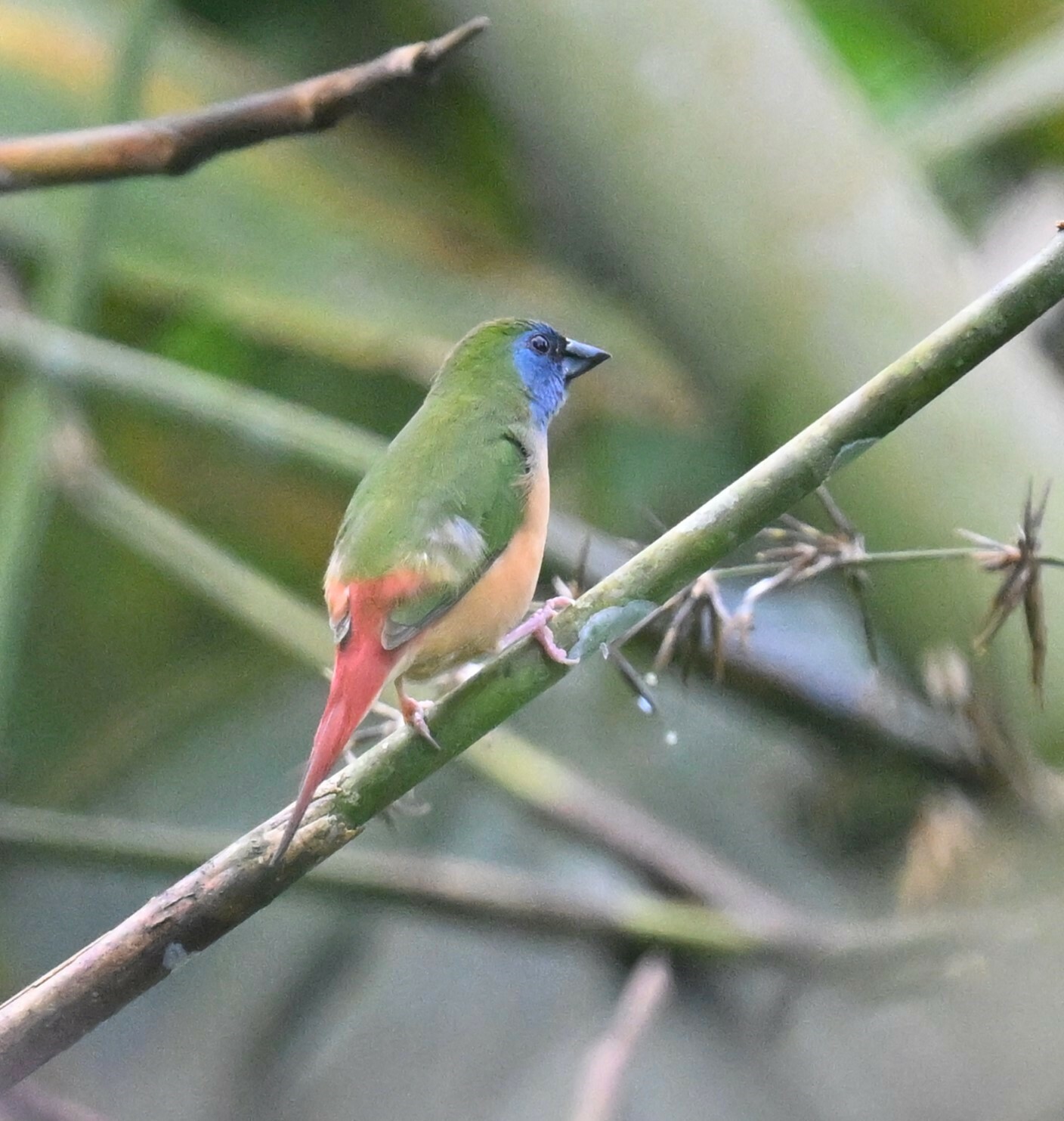
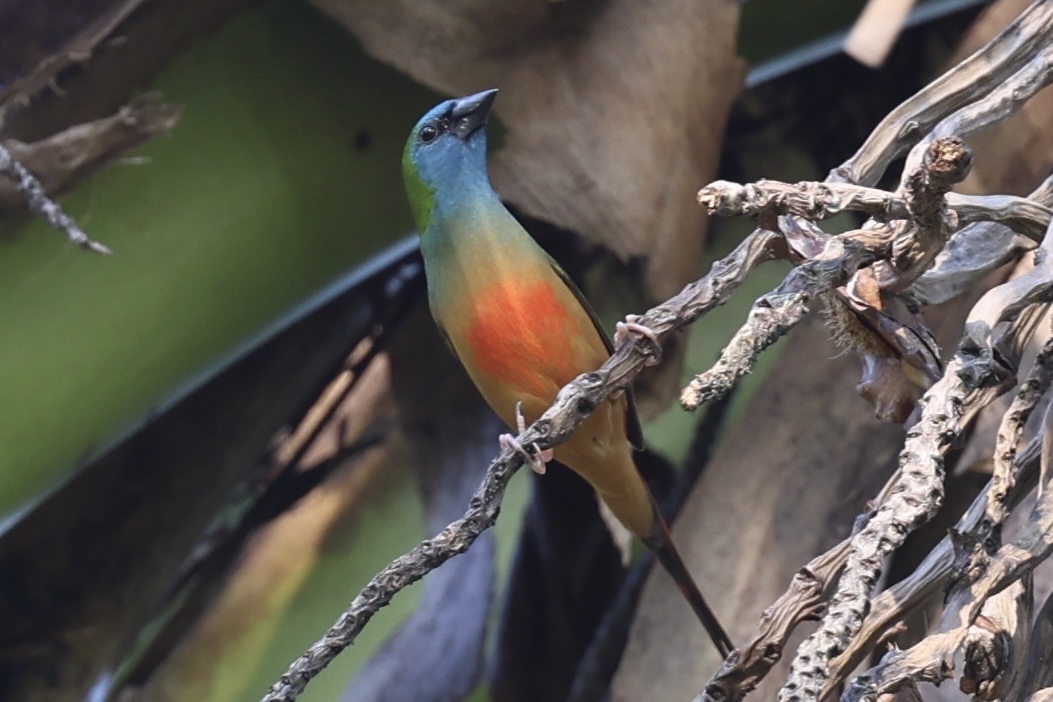
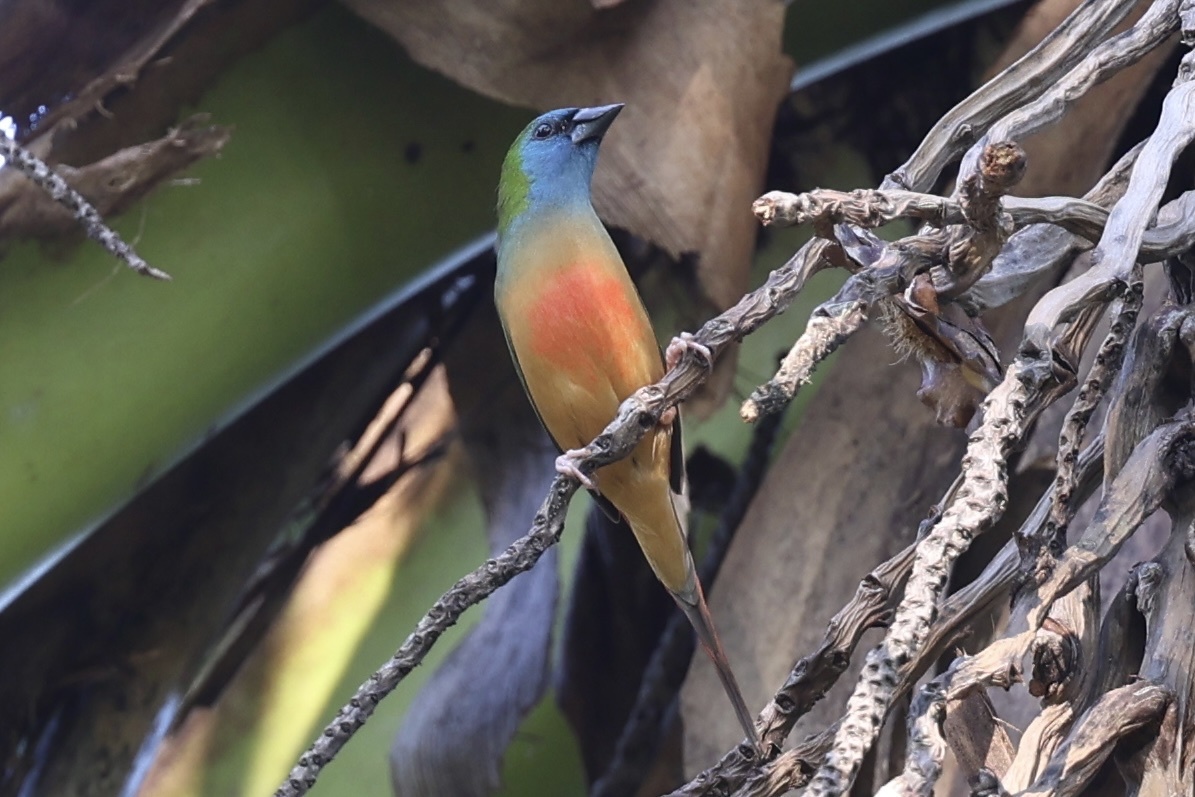
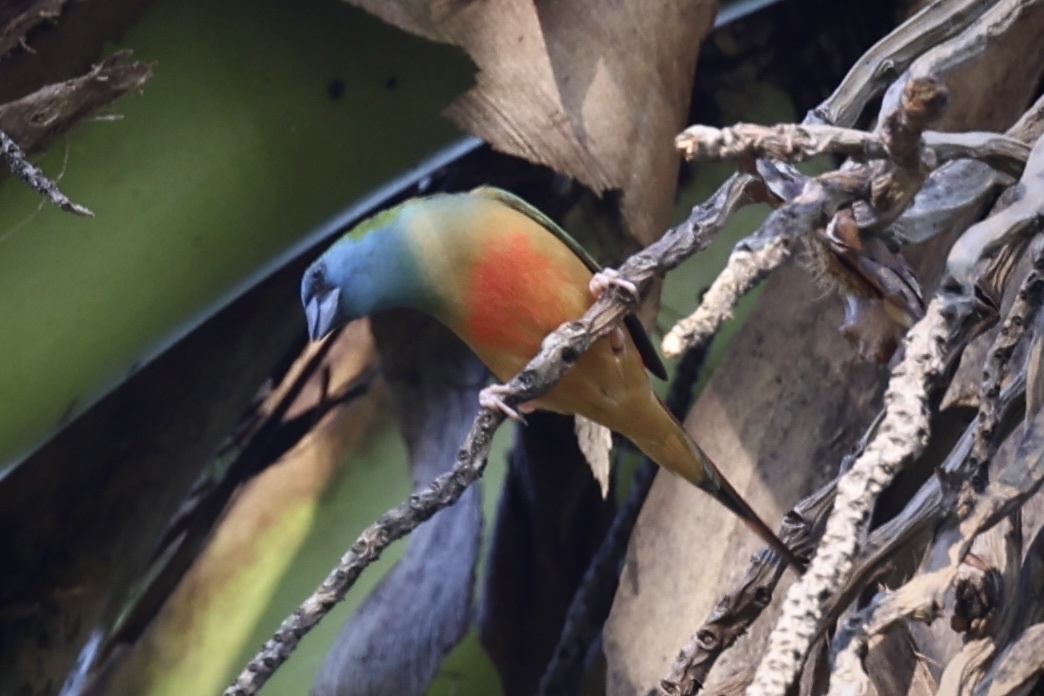
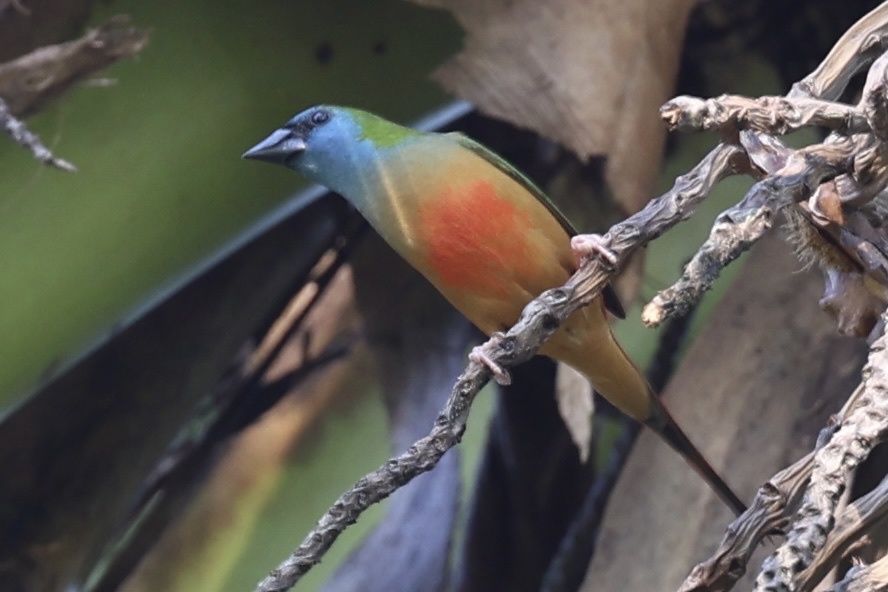
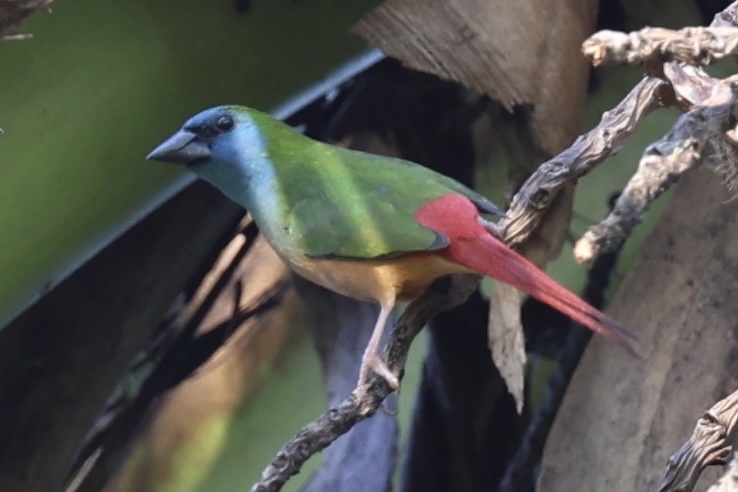
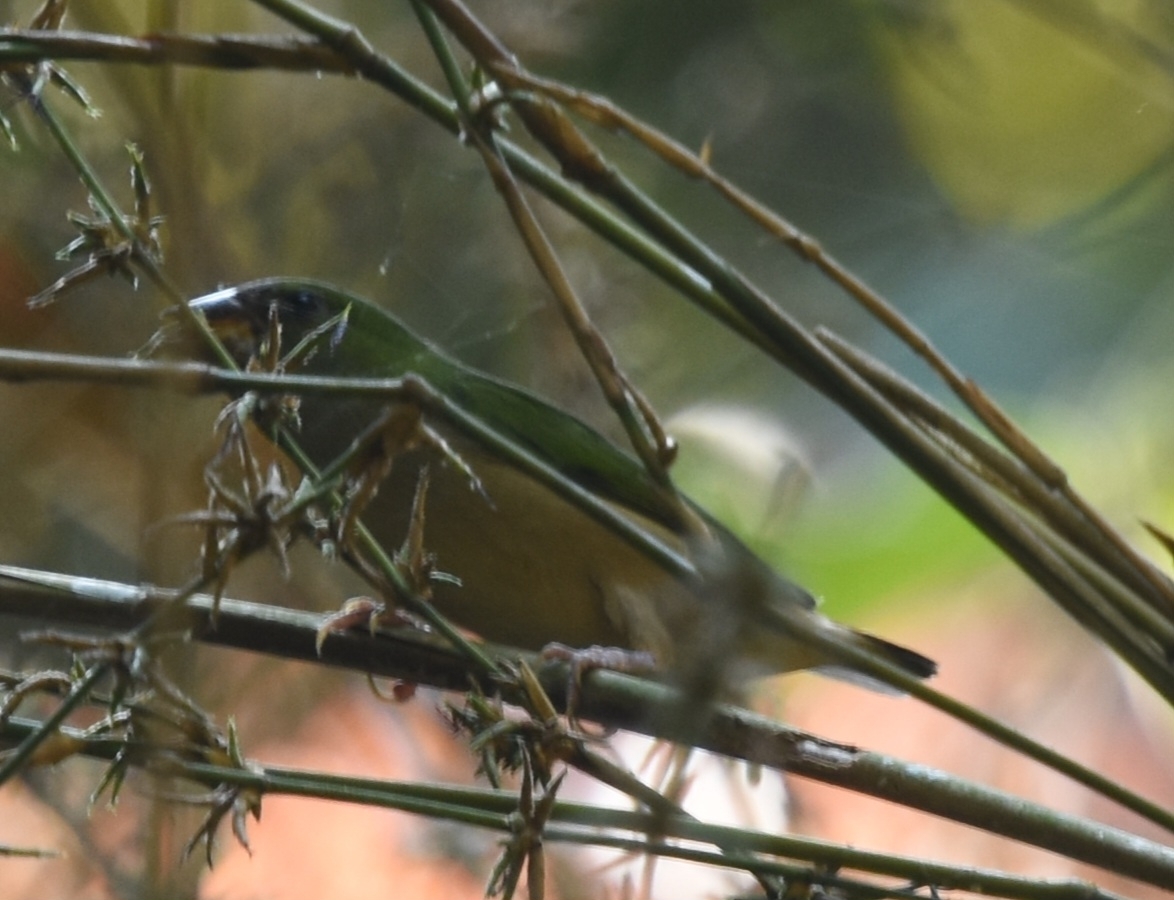
Pin-tailed Parrotfinch
Erythrura prasina · 长尾鹦雀
Introduction
An estrildid finch species with a widespread distribution across Southeast Asia, including Malaysia, Brunei, Cambodia, Indonesia, Laos, Burma, Vietnam, Thailand, and China. Its global extent of occurrence is estimated at 10,000,000 km². Inhabits subtropical and tropical environments in both montane and lowland moist forests, as well as bamboo thickets and rice plantations. Notable for forming large flocks that can cause significant damage to rice crops, leading to pest classification in parts of its range. The IUCN lists the species as Least Concern.
Distribution & Habitat
Found throughout Southeast Asia including Malaysia, Brunei, Cambodia, Indonesia, Laos, Burma, Vietnam, Thailand, and China. A 2007 discovery extended known range to include the Philippines (Mount Mantalingahan, Palawan province). Inhabits subtropical and tropical moist forests at both montane and lowland elevations, also utilizes bamboo thickets and agricultural areas, particularly rice plantations.
Behavior & Ecology
Forms large flocks that can travel considerable distances in search of food. Exhibits strong association with rice cultivation, where flock feeding behavior results in substantial crop damage. This foraging behavior has led to the species being classified as an agricultural pest in portions of its range.
Conservation
IUCN Red List status: Least Concern. The species remains common and widespread throughout its extensive geographic range, with no immediate conservation concerns documented at the time of assessment.
Culture
Popular as a cage bird, contributing to its presence in the pet trade across its range and internationally.
Source: Wikipedia · CC BY-SA 3.0
Taxonomy
- Order
- Passeriformes
- Family
- Estrildidae
- Genus
- Erythrura
Subspecies (2)
-
Erythrura prasina coelica
Borneo and perhaps Palawan
Data Sources
Species description from Wikipedia, licensed under CC BY-SA 3.0.
Bird images and sounds sourced from GBIF, contributed by citizen scientists worldwide under Creative Commons licenses.
Taxonomy data from AviList 2025.