Horned Lark
Eremophila alpestris
角百灵
Introduction
A lark species (Alaudidae) found across the northern hemisphere. Breeds from the high Arctic south to the Isthmus of Tehuantepec, in northernmost Europe and Asia, in mountains of southeast Europe, and has an isolated population on a plateau in Colombia. Inhabits open ground: above tree line in mountains and far north in Eurasia, seashore flats in winter across most of Europe, and in North America found on farmland, prairies, deserts, golf courses, and airports. Distinguished by black 'horns' in summer males and a striking black and yellow face pattern. Mainly resident in the south of its range, but northern populations are migratory, moving further south in winter. Populations are declining according to the North American Breeding Bird Survey; the streaked horned lark subspecies was listed as threatened under the U.S. Endangered Species Act in 2013.
Description
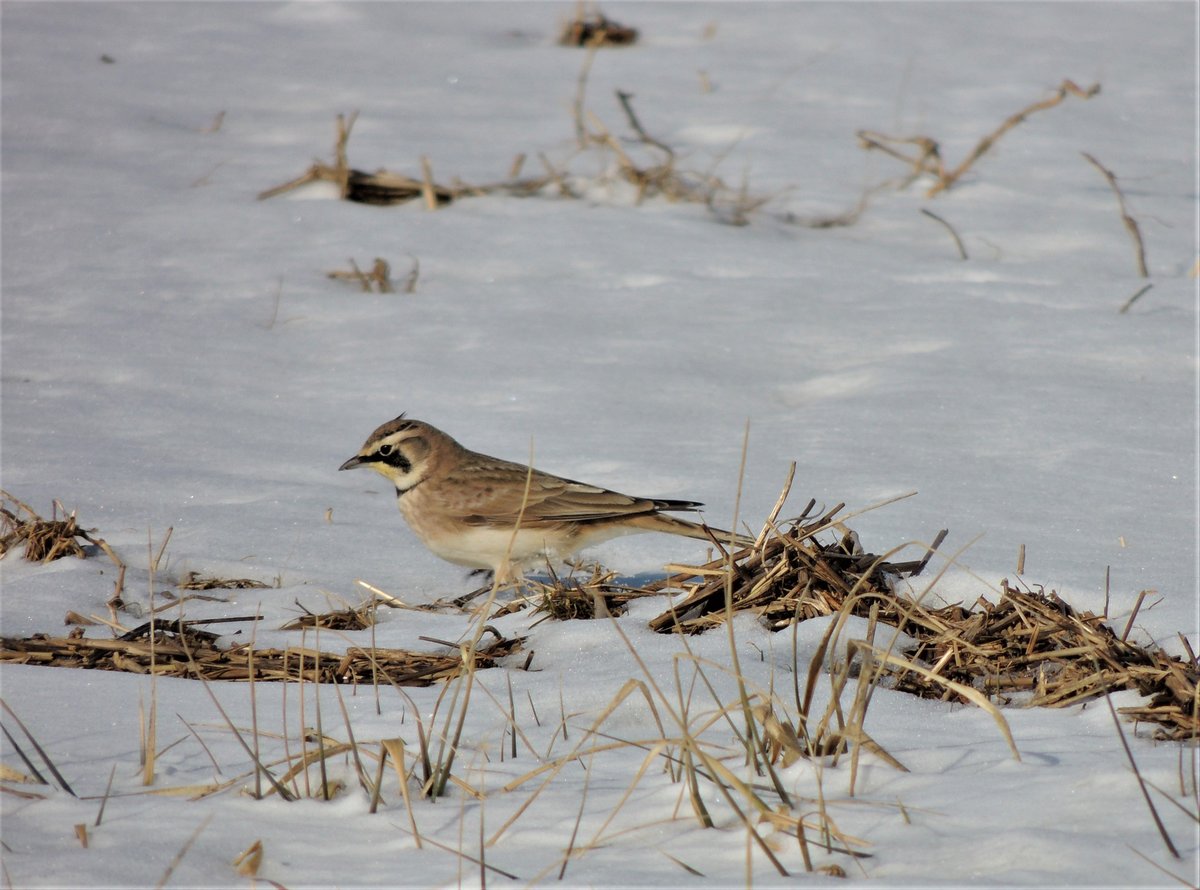
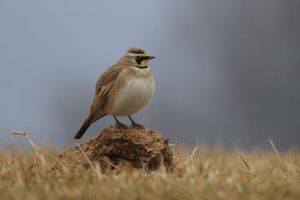
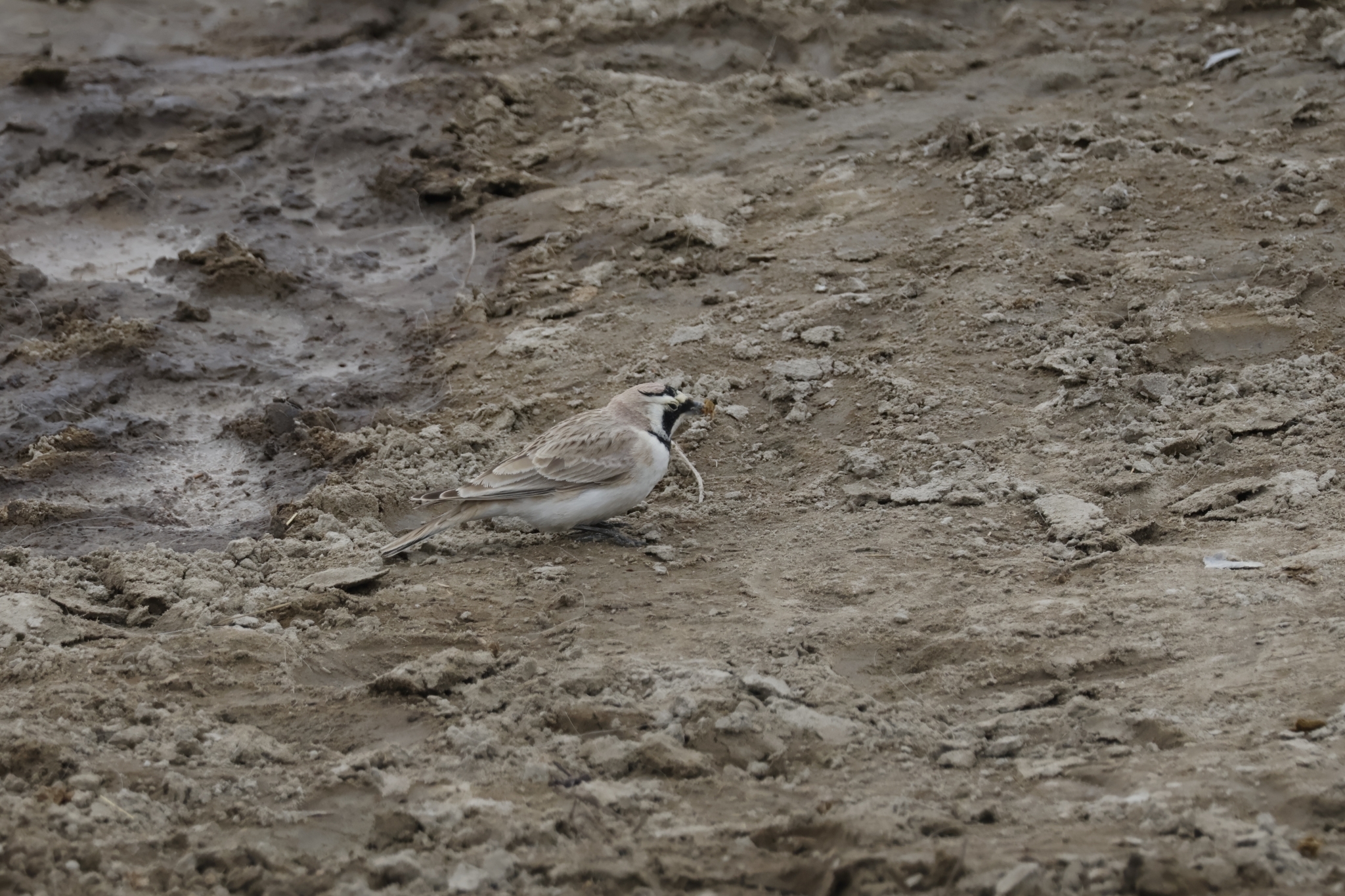
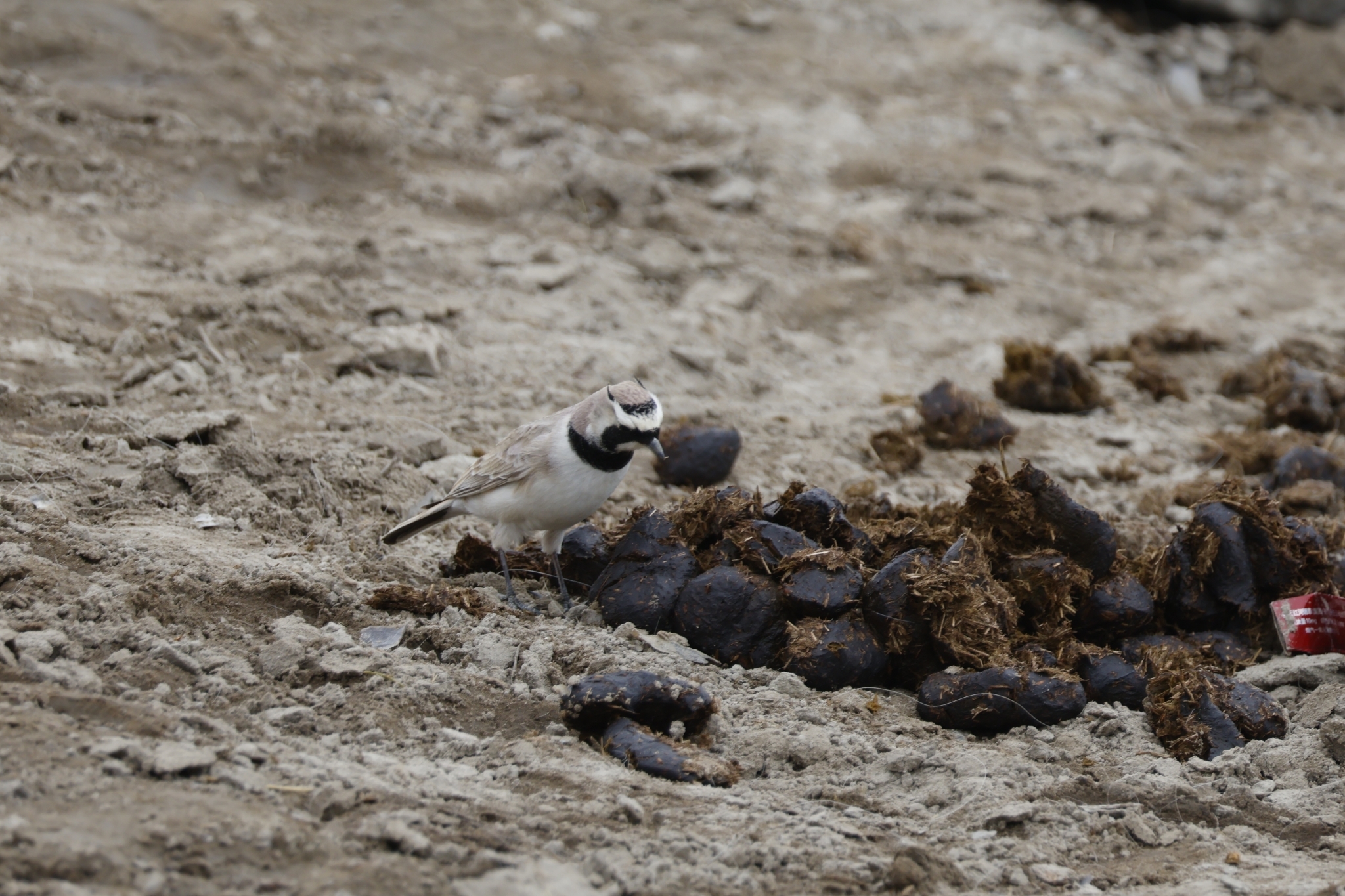
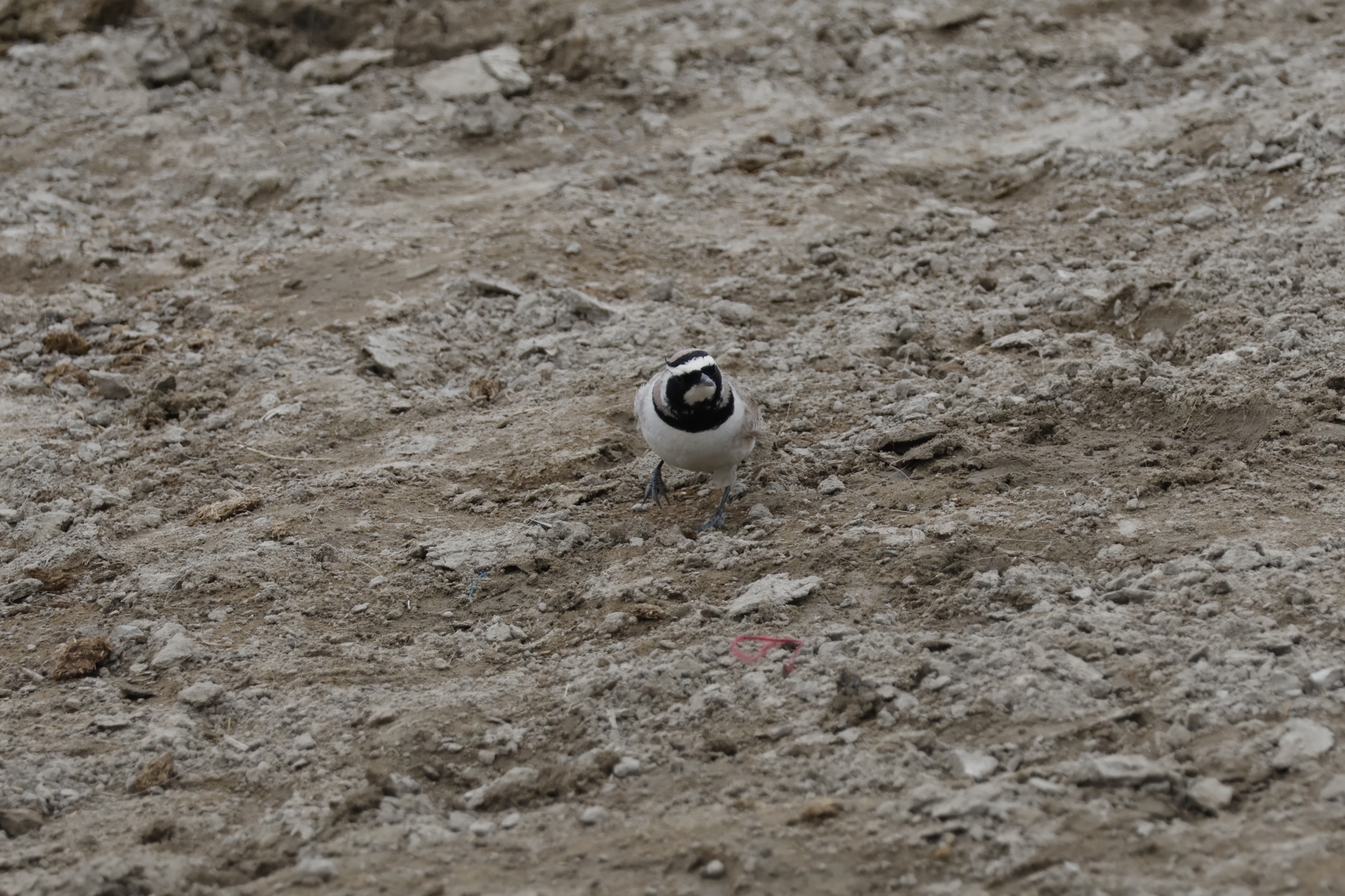
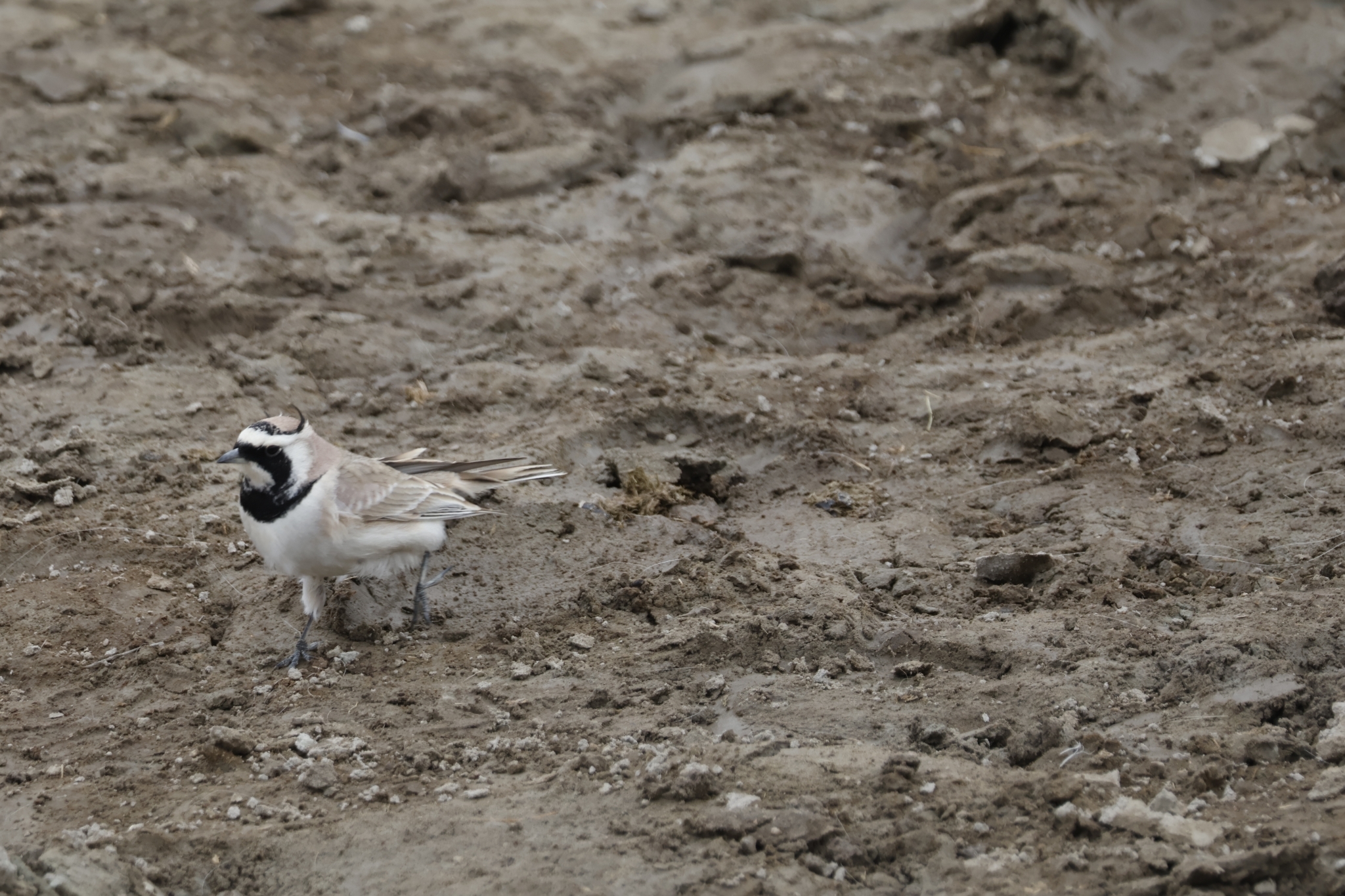
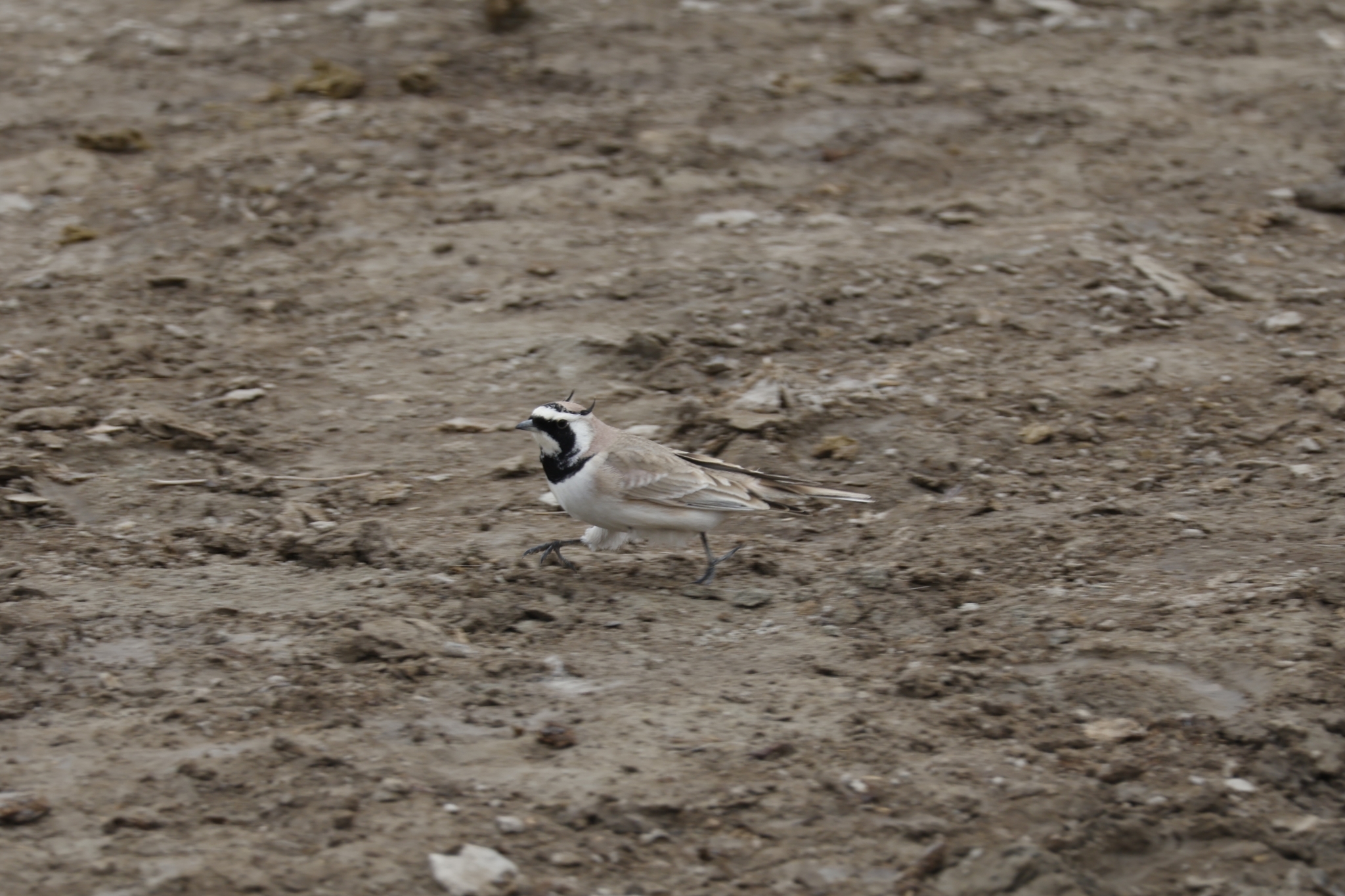
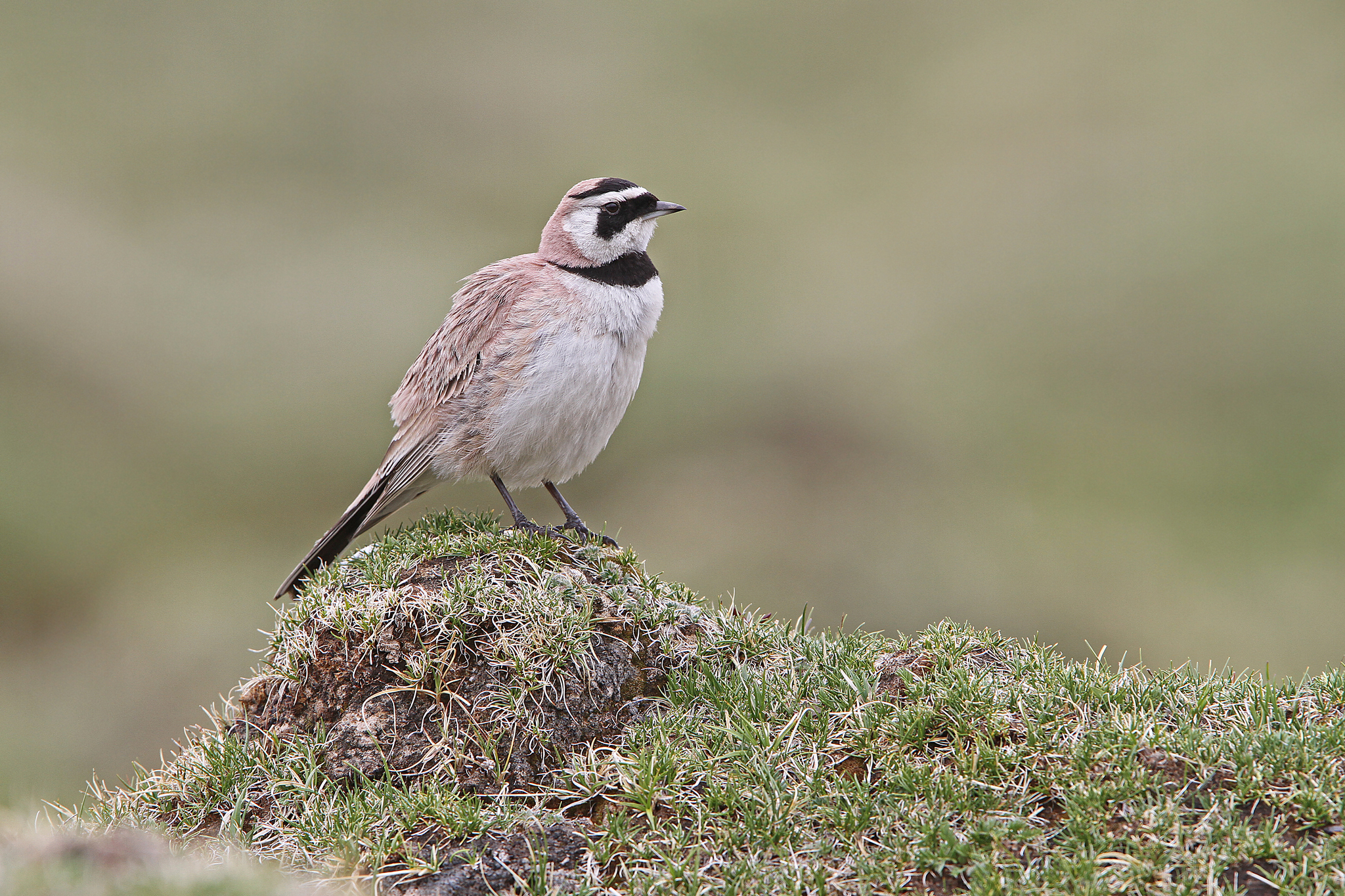
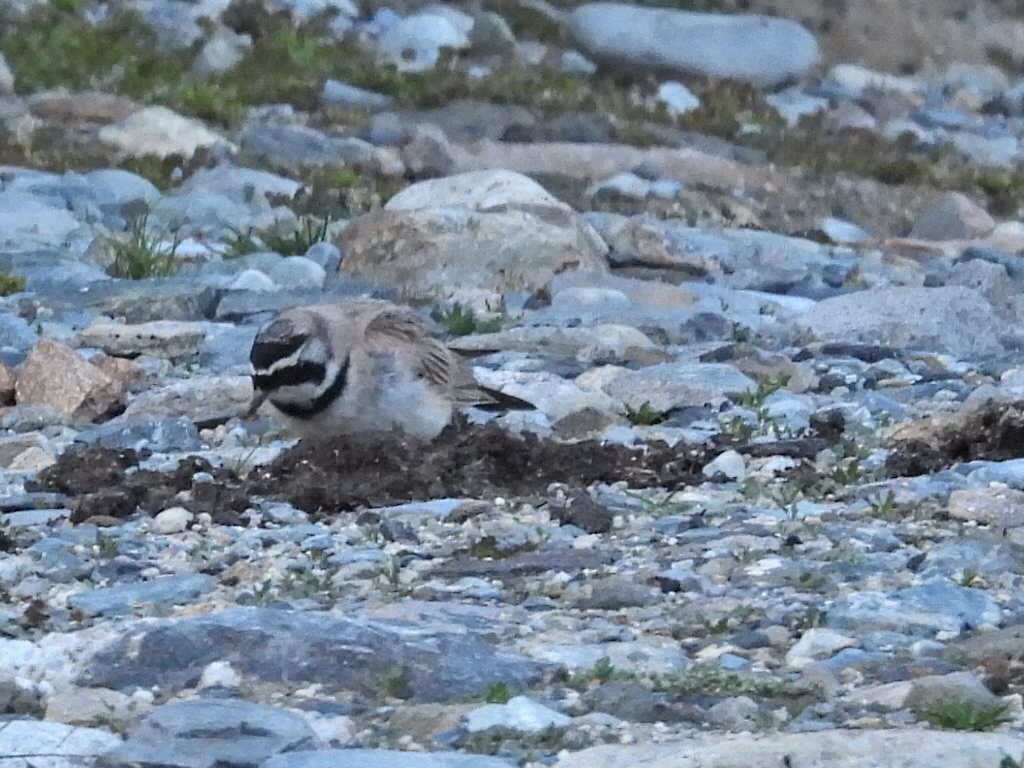
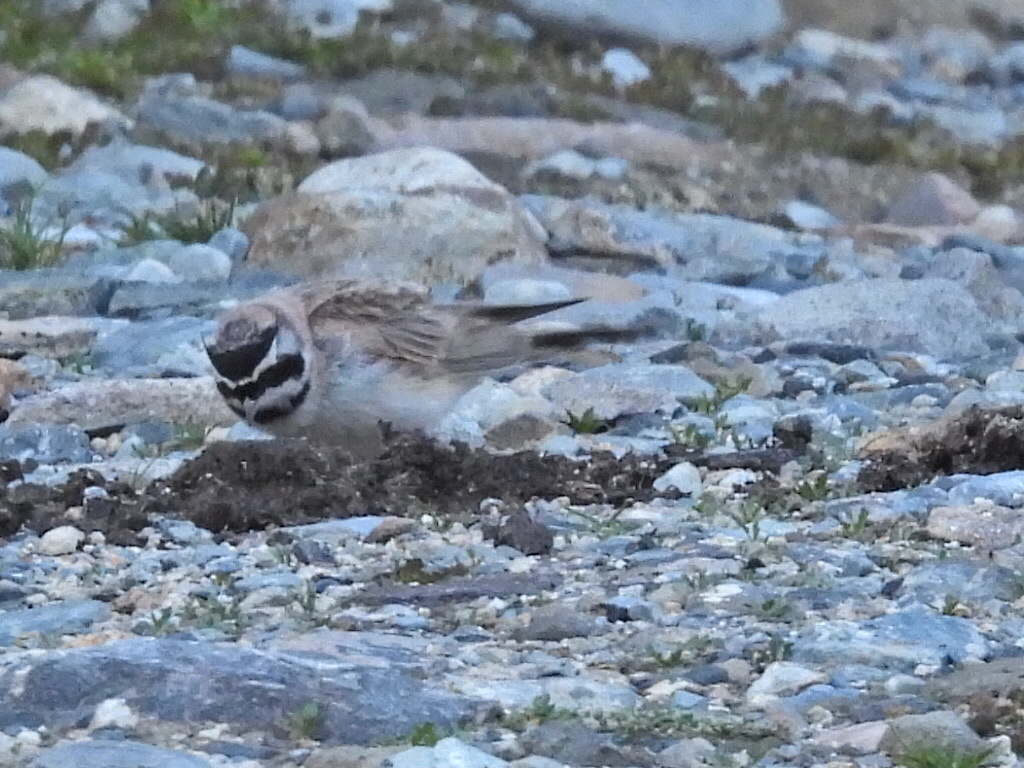
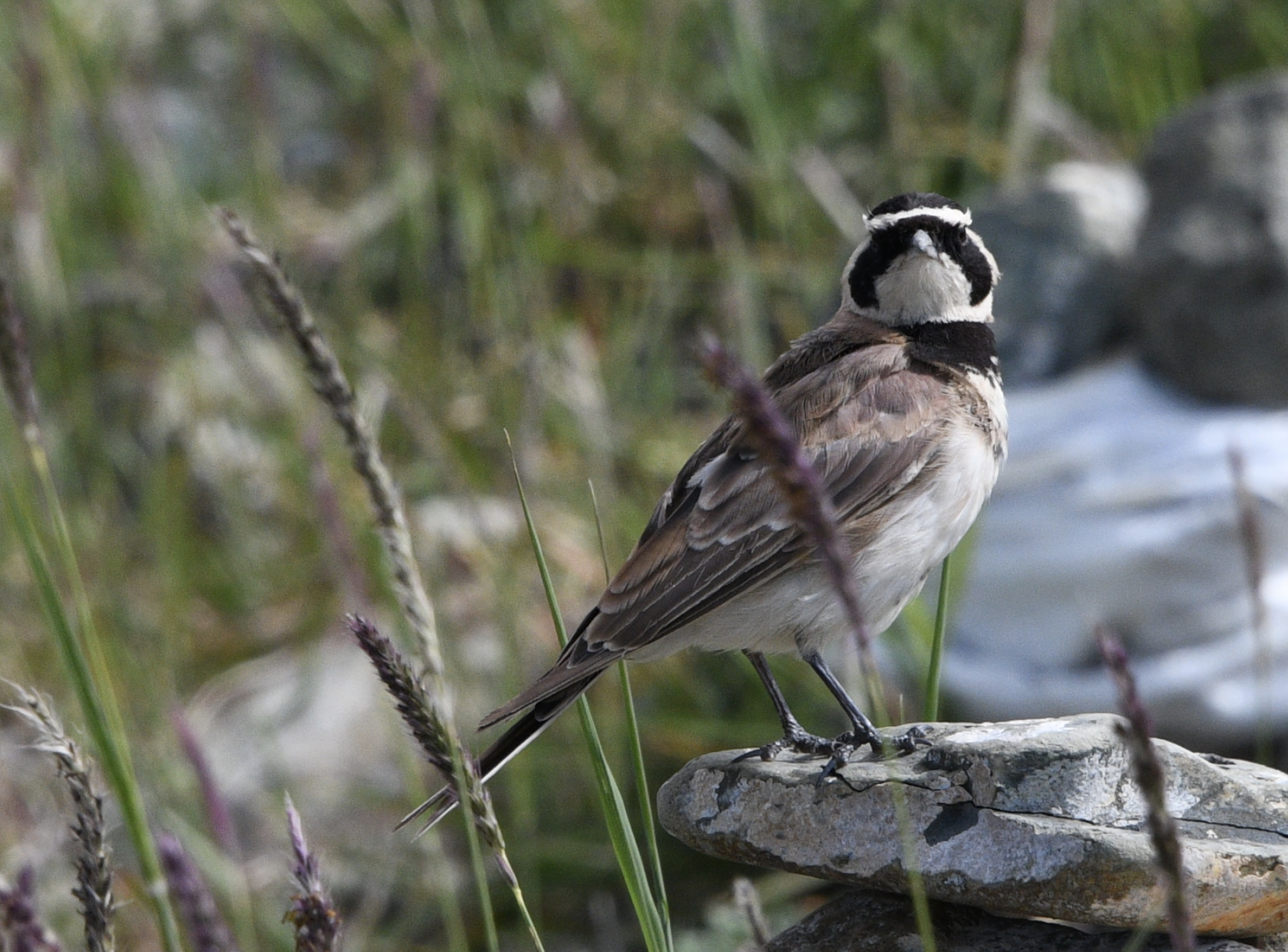
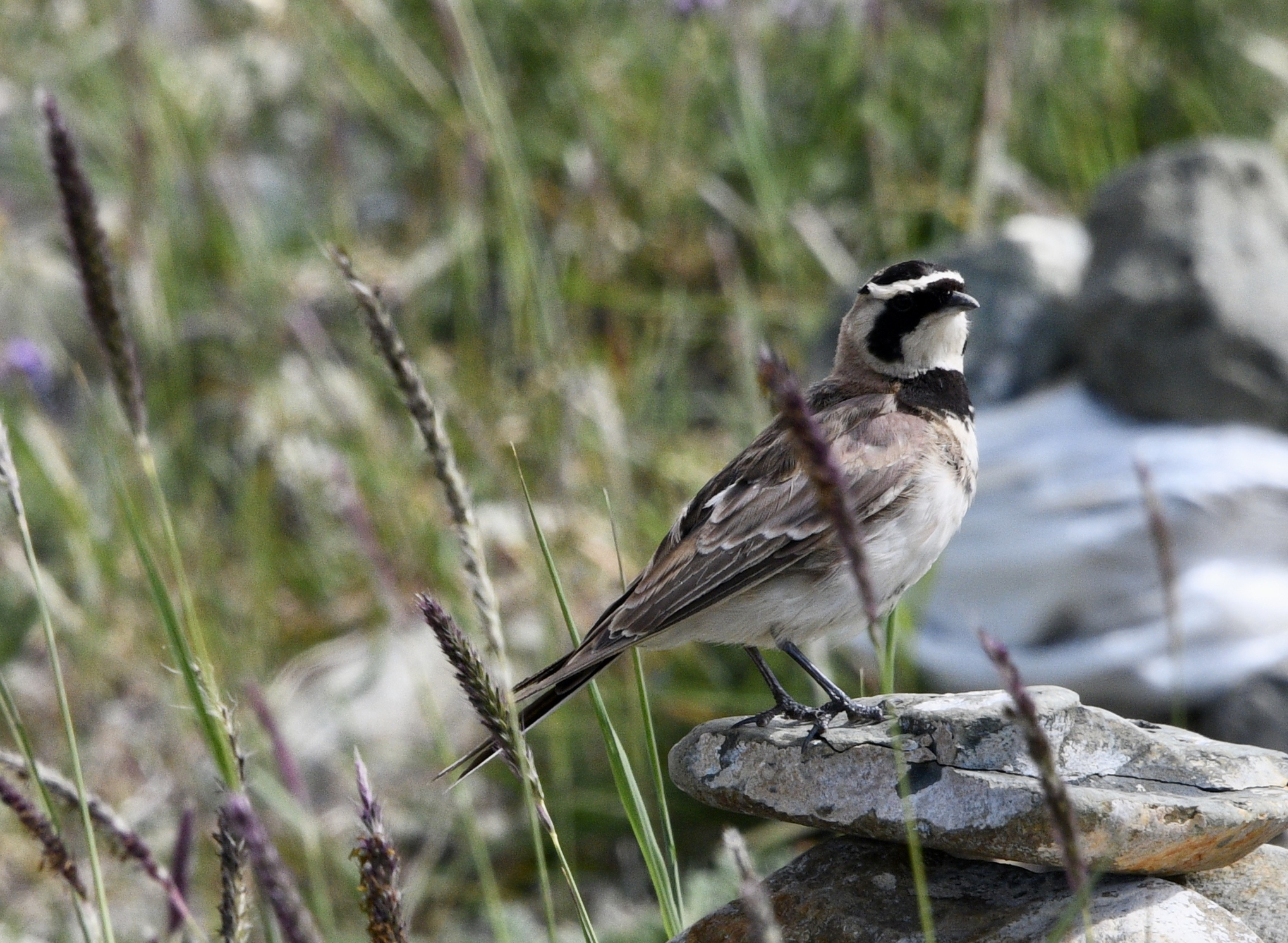
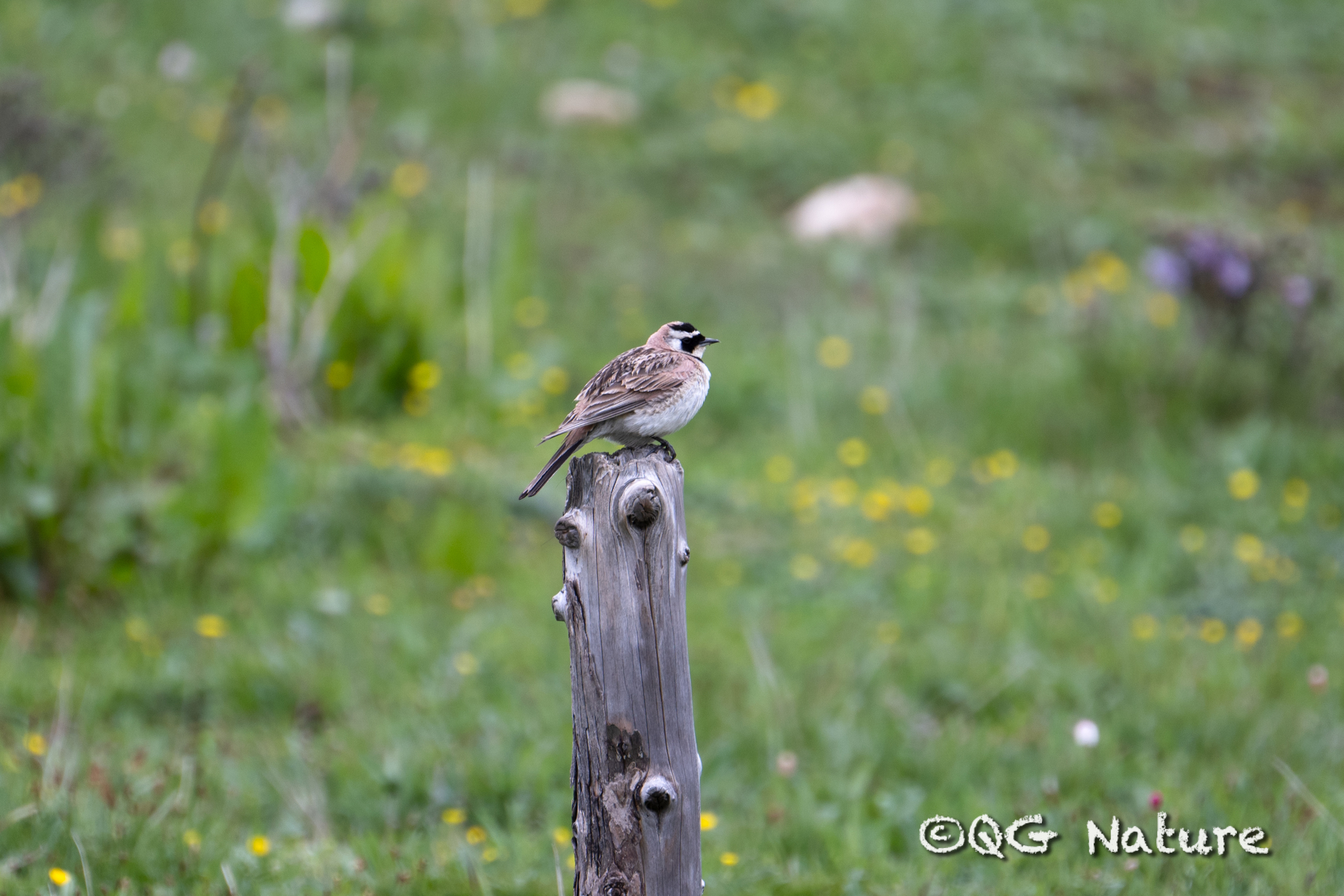
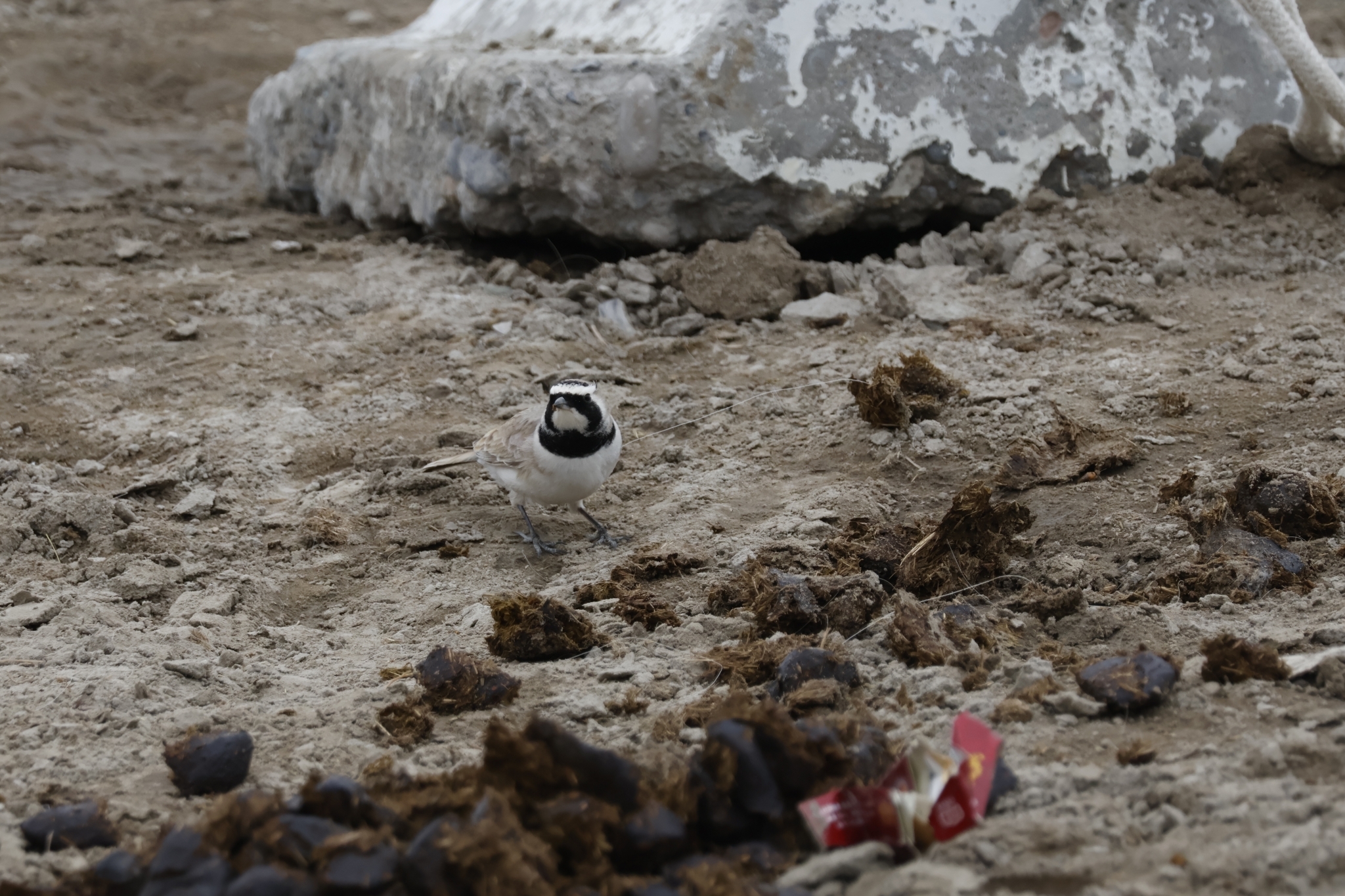
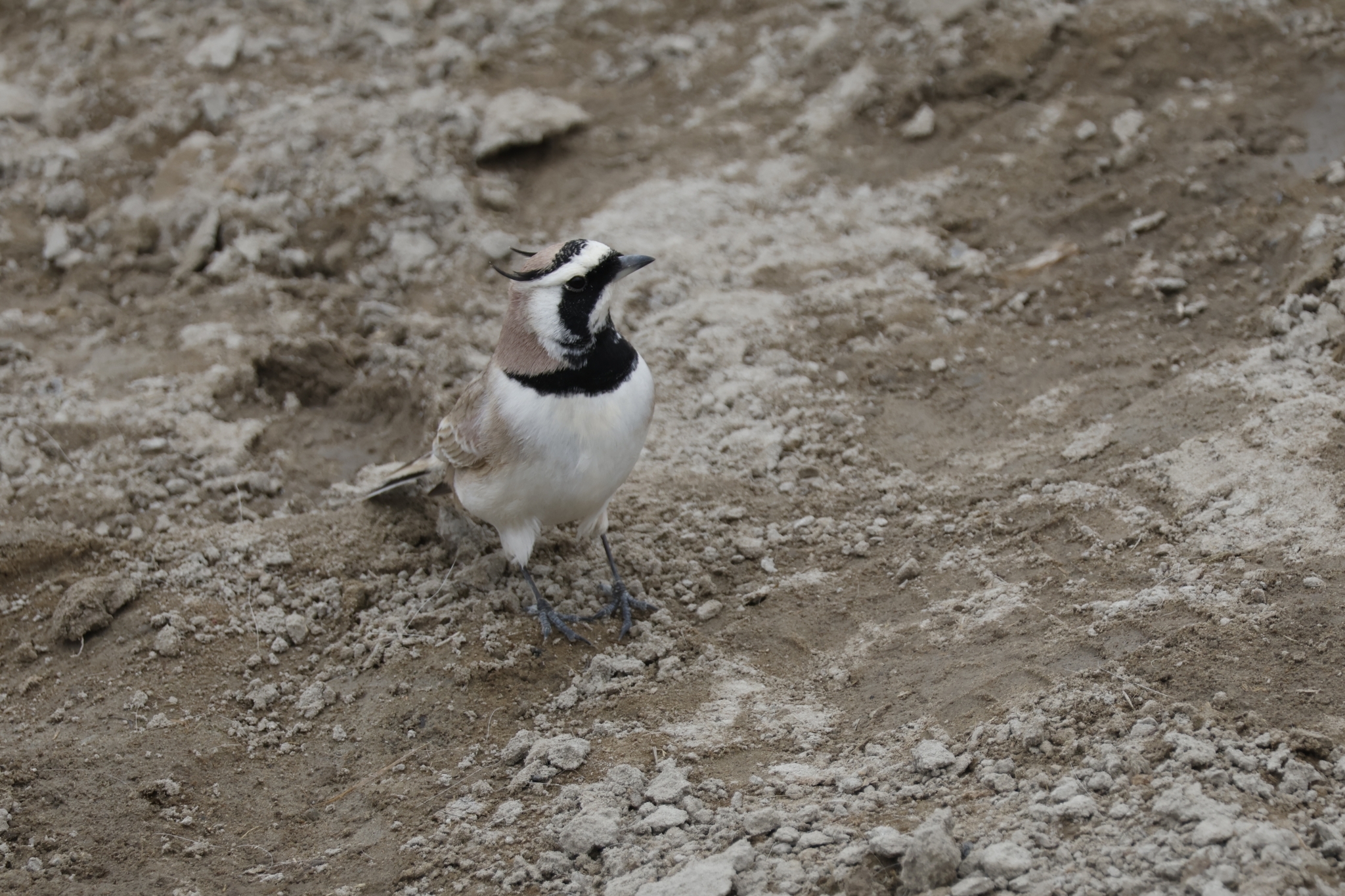
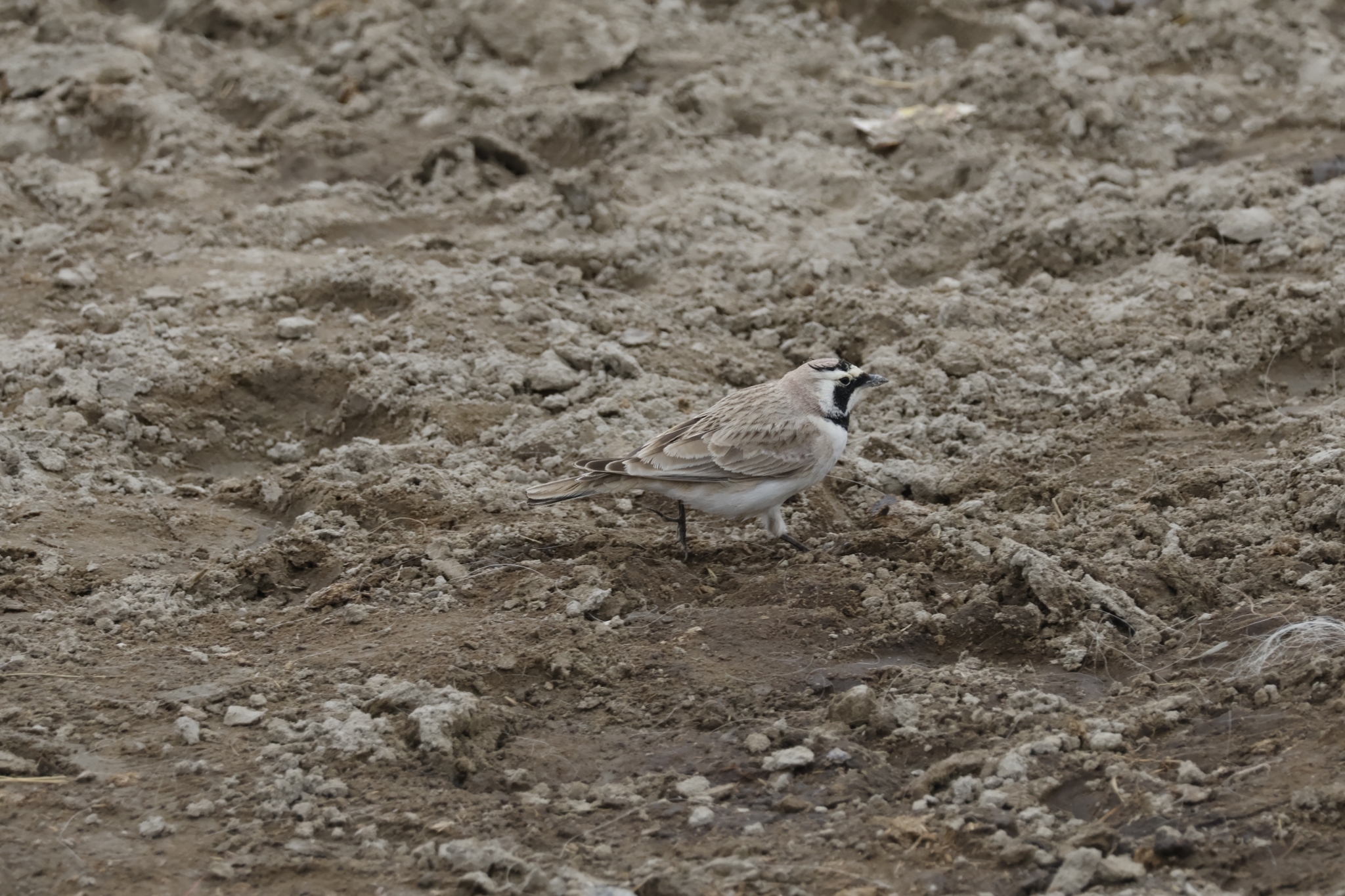
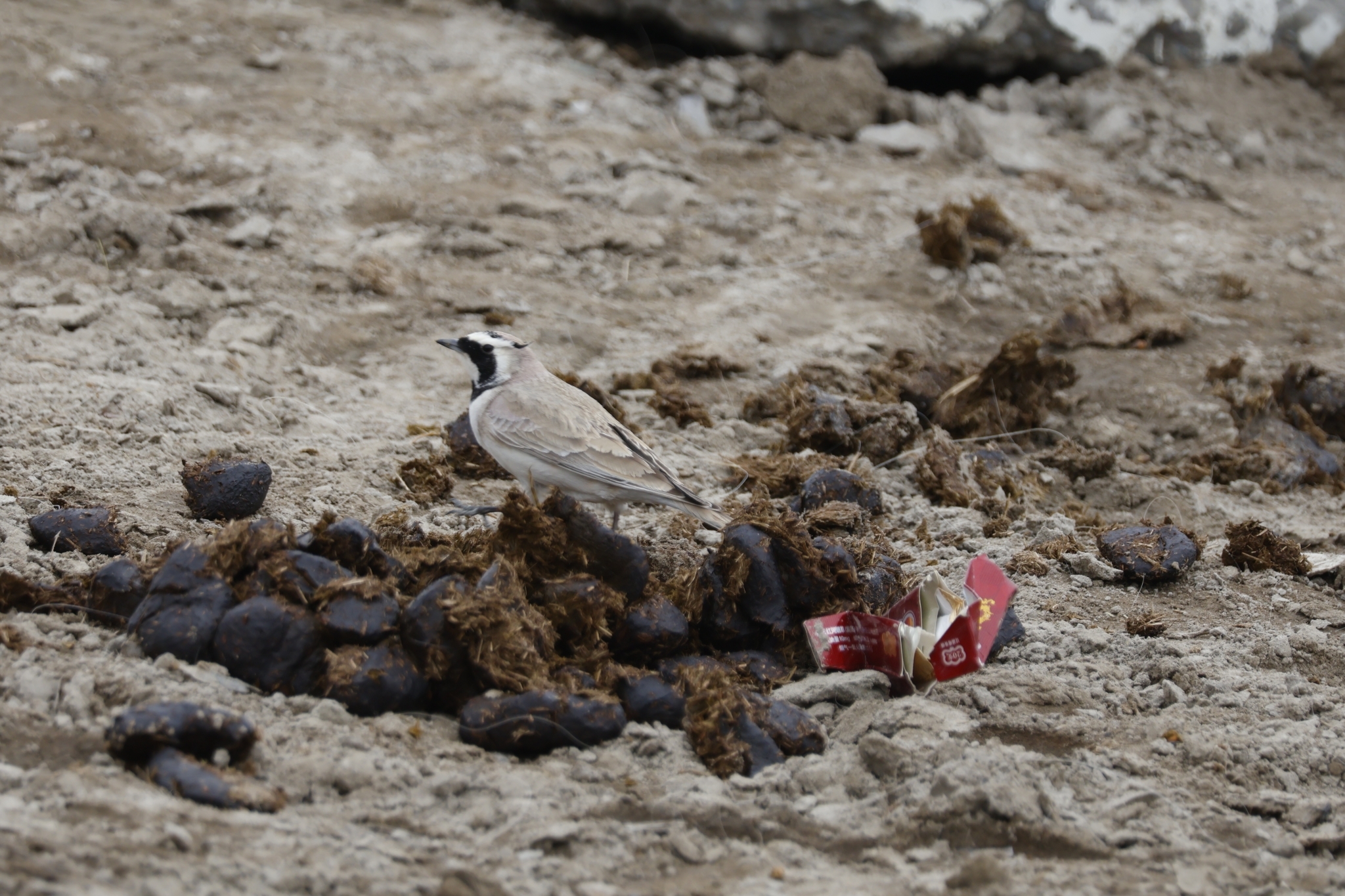
A distinctive-looking lark, brown-grey above and pale below with a striking black and yellow face pattern. The tail is mostly black except for central feathers, creating a bold contrast with the paler body, especially visible in flight. Summer males possess distinctive black 'horns' on the head. North American races vary in face pattern and back colour, particularly in summer plumage. The southern European mountain race (E. a. penicillata) is greyer above with white replacing the yellow face pattern. Length 16-20 cm, weight 28-48 g, wingspan 30-34 cm.
Identification
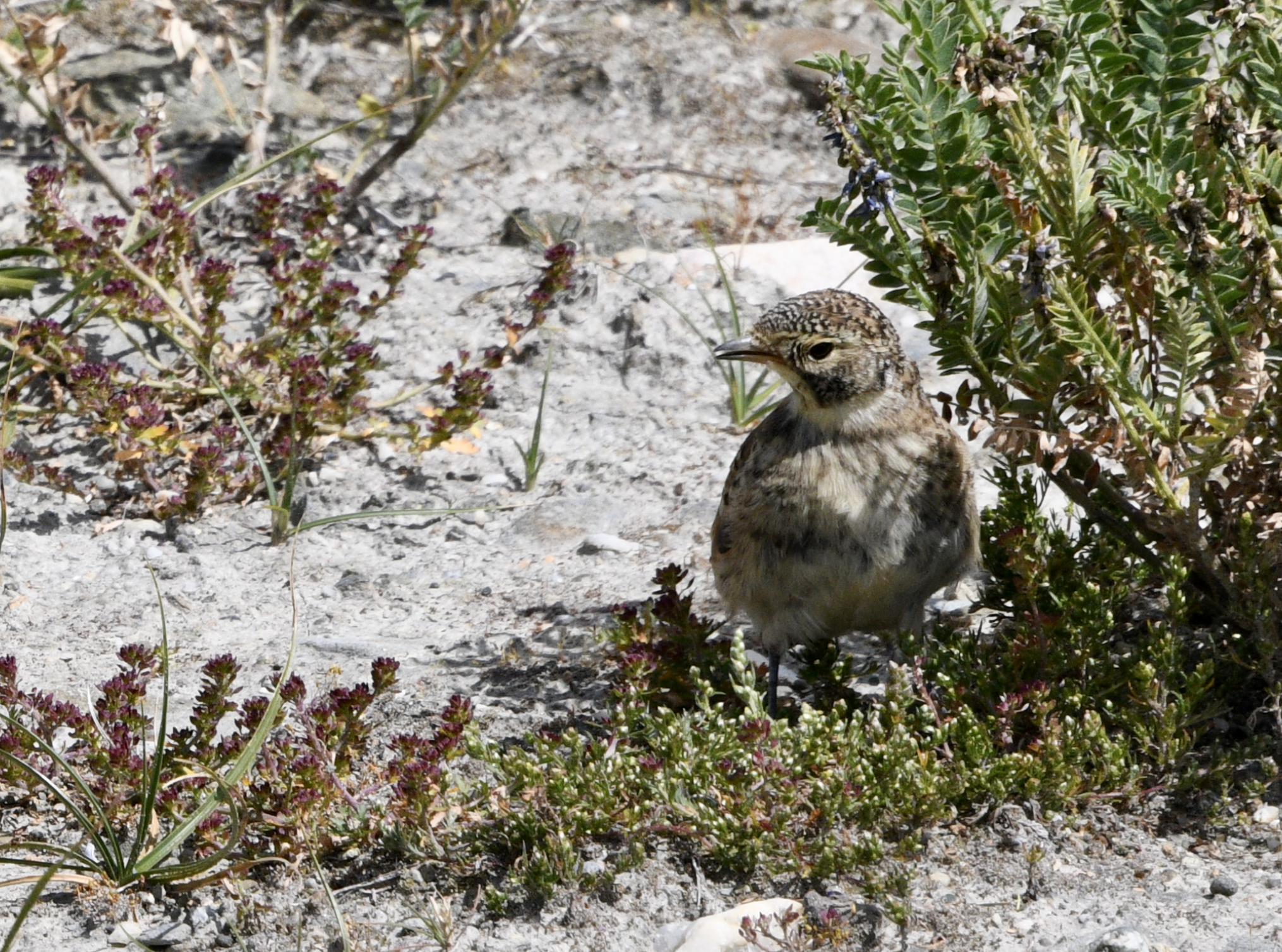
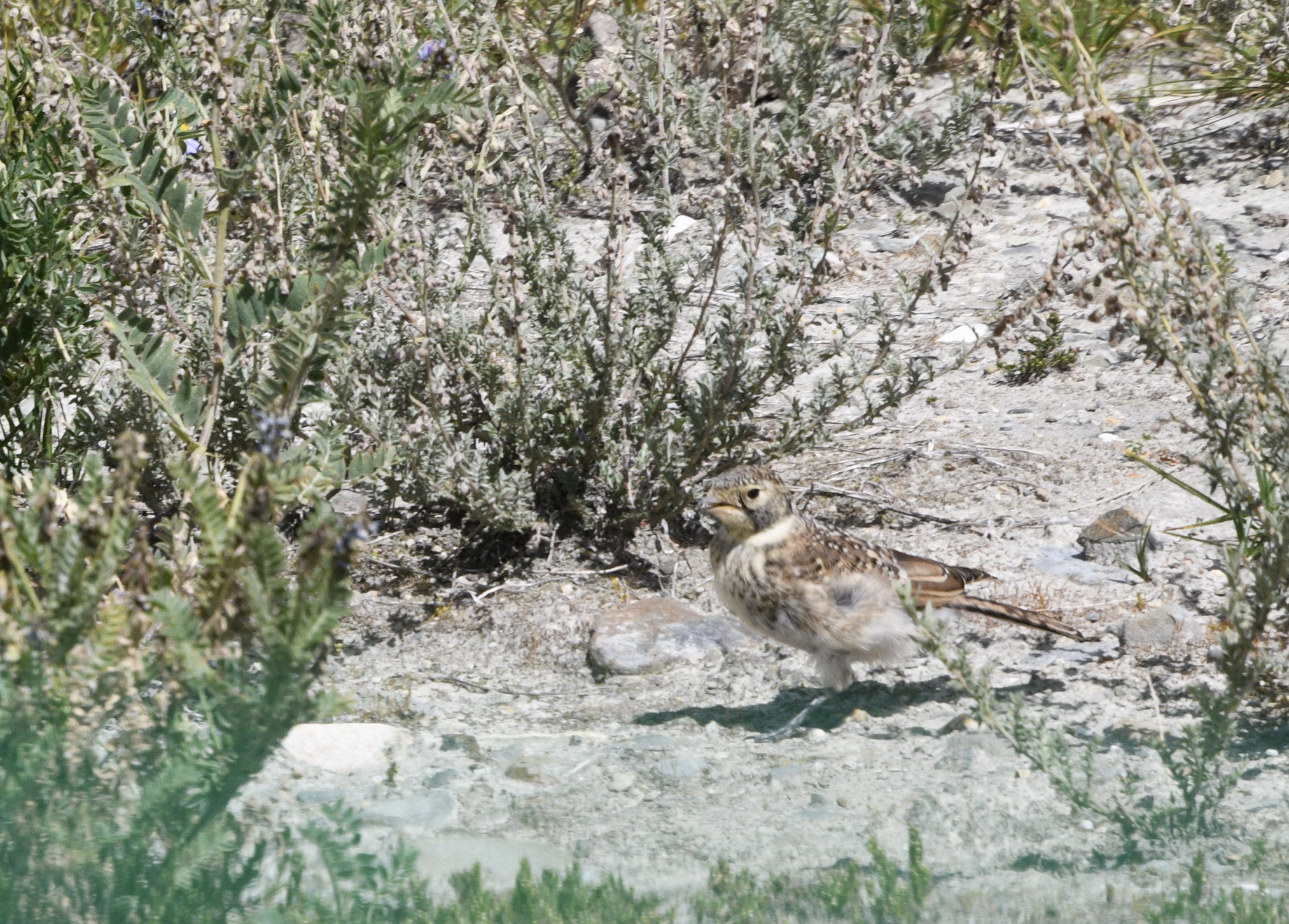
Distinctive appearance with striking black and yellow face pattern sets this species apart from other larks. The black tail contrasts markedly with the pale underparts in flight. Summer males show conspicuous black horns, absent in females and juveniles. The southern European race lacks yellow on the face, appearing greyer overall. No other lark species occur in most of North America, reducing confusion.
Distribution & Habitat
Breeds across much of North America from the high Arctic to the Isthmus of Tehuantepec, also found in northern Europe and Asia, mountains of southeast Europe, and has an isolated population in Colombia. Northern populations are migratory, moving south in winter. In Eurasia, breeds above the tree line in mountains and the far north. In most of Europe, most often seen on seashore flats in winter. In the UK, occurs as a winter stopover along coasts and in eastern England. In North America, also inhabits farmland, prairies, deserts, golf courses, and airports.
Behavior & Ecology
Vocalizations are high-pitched, lisping or tinkling, and weak. The song, given in flight, consists of a few chips followed by a warbling, ascending trill. Males defend territories during breeding season and sing while flying above females in circles during courtship, then dive with wings folded before opening them near the ground. Females select nest sites in natural depressions or dig cavities, building nests 3-4 inches in diameter lined with down, fur, and feathers. Clutch size is 2-5 gray eggs with brown spots, incubated for 10-12 days. Nestlings fledge after 8-10 days. Southern females raise 2-3 broods annually; northern females typically raise one.
Conservation
Populations are declining according to the North American Breeding Bird Survey. The 2016 Partners in Flight Landbird Conservation Plan classified it as a 'Common Bird in Steep Decline,' though it was not included on the State of North America's Birds' Watch List that year. The streaked horned lark subspecies was listed as threatened under the U.S. Endangered Species Act in 2013. Threats include habitat loss from agricultural pesticides, reforestation of disturbed sites, urbanization, human encroachment, and collisions at wind farms and airports.
Culture
Known as 'horned lark' in North America due to its horn-like feathers and 'shore lark' in Europe due to winter occurrence on shorelines.
Source: Wikipedia · CC BY-SA 3.0
Taxonomy
- Order
- Passeriformes
- Family
- Alaudidae
- Genus
- Eremophila
- eBird Code
- horlar
Subspecies (42)
-
Eremophila alpestris actia
coastal range of California to northern Baja California
-
Eremophila alpestris adusta
southern Arizona (south of Tucson) to far southwestern New Mexico and northern Sonora
-
Eremophila alpestris albigula
mountains of northern and eastern Iran to Pamirs, Afghanistan, and western China
-
Eremophila alpestris alpestris
breeds Arctic northeastern Canada to Newfoundland; winters to coastal southeastern USA
-
Eremophila alpestris alpina
arctic-alpine summits of northwestern USA (mounts Rainier and St. Helens)
-
Eremophila alpestris ammophila
desert of southwestern Nevada and southeastern California; winters to northwestern Mexico
-
Eremophila alpestris aphrasta
northwestern Mexico (Chihuahua and Durango)
-
Eremophila alpestris arcticola
northern Alaska to mountains of British Columbia and northern Washington
-
Eremophila alpestris argalea
western China (far southwestern Xinjiang) to northwestern India (Kashmir to Ladakh)
-
Eremophila alpestris atlas
high plateaux of Morocco
-
Eremophila alpestris balcanica
southeastern Europe (Balkans)
-
Eremophila alpestris bicornis
western Türkiye (Taurus Mountains) to Lebanon and Palestine
-
Eremophila alpestris brandti
steppes of central Asia to mountains of western Mongolia and northern China
-
Eremophila alpestris chrysolaema
southern Mexican Plateau (Jalisco to Michoacán, Puebla, and Veracruz)
-
Eremophila alpestris diaphora
northeastern Mexico (southeastern Coahuila to southern Tamaulipas, Hidalgo, and northeastern Puebla)
-
Eremophila alpestris elwesi
western China (southern Qinghai and southern Tibet) to northern Sikkim
-
Eremophila alpestris enertera
west-central Baja California and coastal islands south of Magdalena Bay
-
Eremophila alpestris enthymia
breeds Great Plains of central Canada to central USA; winters to northern Mexico
-
Eremophila alpestris flava
northern Palearctic region
-
Eremophila alpestris giraudi
coastal prairie region of southeastern Texas (USA) to eastern Mexico (northeastern Tamaulipas)
-
Eremophila alpestris hoyti
breeds Arctic coast of North America to southern Canada; winters to northern USA
-
Eremophila alpestris insularis
Channel Islands (off southern California)
-
Eremophila alpestris khamensis
southwestern China (Kham region of western and southern Sichuan)
-
Eremophila alpestris kumerloevei
western and central Türkiye
-
Eremophila alpestris lactea
northeastern Mexico (Coahuila)
-
Eremophila alpestris lamprochroma
southeastern Oregon to southwestern Idaho, northeastern California, and western Nevada
-
Eremophila alpestris leucansiptila
Colorado Desert (southwestern Nevada, western Arizona, northeastern Baja California, and northwestern Sonora)
-
Eremophila alpestris leucolaema
breeds southern Canada to southwestern USA and northwestern Texas; winters to northwestern Mexico
-
Eremophila alpestris longirostris
northwestern Himalayas
-
Eremophila alpestris merrilli
east slope of Cascades and adjacent lowlands from British Columbia to northeastern California
-
Eremophila alpestris nigrifrons
western China (Kokonor to western Gansu)
-
Eremophila alpestris oaxacae
southern Mexico (eastern Oaxaca)
-
Eremophila alpestris occidentalis
northern and central Arizona to north-central New Mexico; winters to northern Mexico
-
Eremophila alpestris penicillata
mountains of Türkiye, the Caucasus, and western Iran
-
Eremophila alpestris peregrina
eastern Andes of Colombia
-
Eremophila alpestris praticola
breeds southeastern Canada to central and east-central USA; some winter to Florida
-
Eremophila alpestris przewalskii
western China (northwestern Qinghai)
-
Eremophila alpestris rubea
central California (Sacramento Valley)
-
Eremophila alpestris sierrae
mountains of northeastern California (southern Cascades and northern Sierra Nevada)
-
Eremophila alpestris strigata
humid coastal belt of southwestern British Columbia and northwestern USA west of the Cascades
-
Eremophila alpestris teleschowi
mountains of western China (far southeastern Xinjiang)
-
Eremophila alpestris utahensis
south-central Idaho to east-central Nevada and west-central Utah
Data Sources
Species description from Wikipedia, licensed under CC BY-SA 3.0.
Bird images and sounds sourced from GBIF, contributed by citizen scientists worldwide under Creative Commons licenses.
Taxonomy data from AviList 2025.