Passeriformes / Fringillidae / Eophona
Japanese Grosbeak
Eophona personata · 黑头蜡嘴雀
Introduction
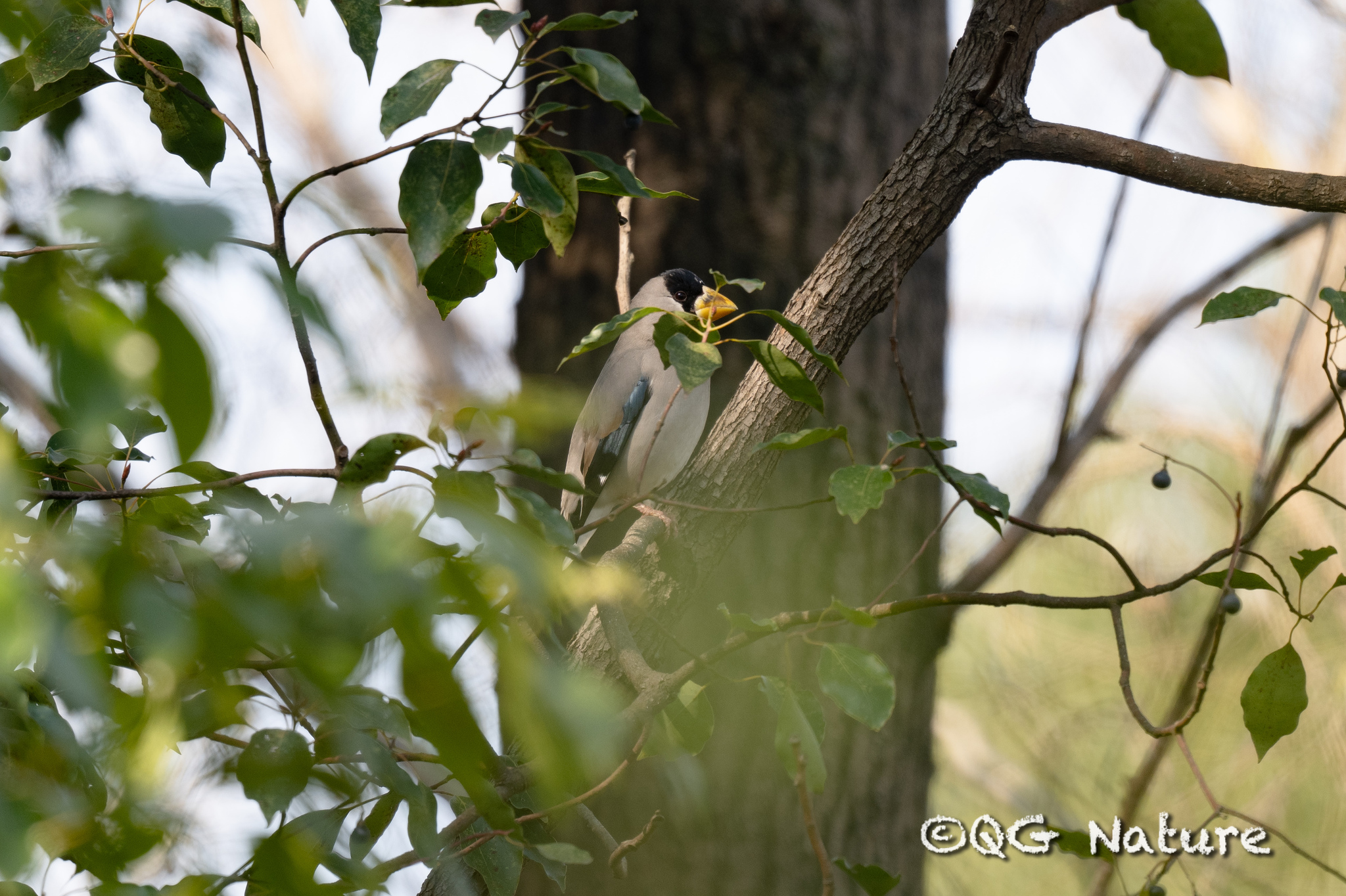
A large finch native to the East Palearctic, occurring in deciduous or mixed forests, valleys, and wooded parks. It is locally common, often abundant near prime feeding areas, and typically found in pairs or small flocks. The species is deceptively secretive, frequently hiding in foliage near the tree canopy.
Description
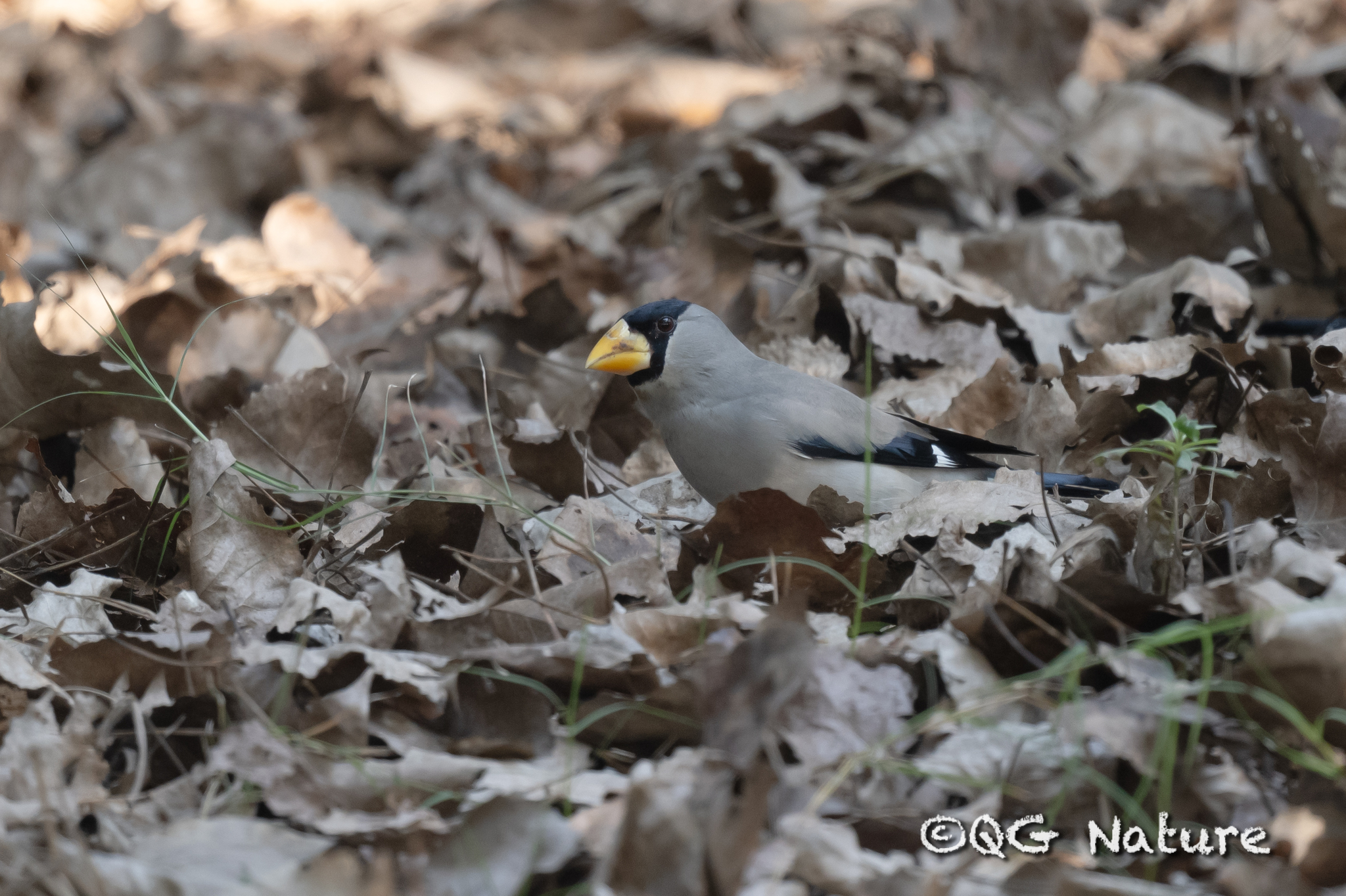
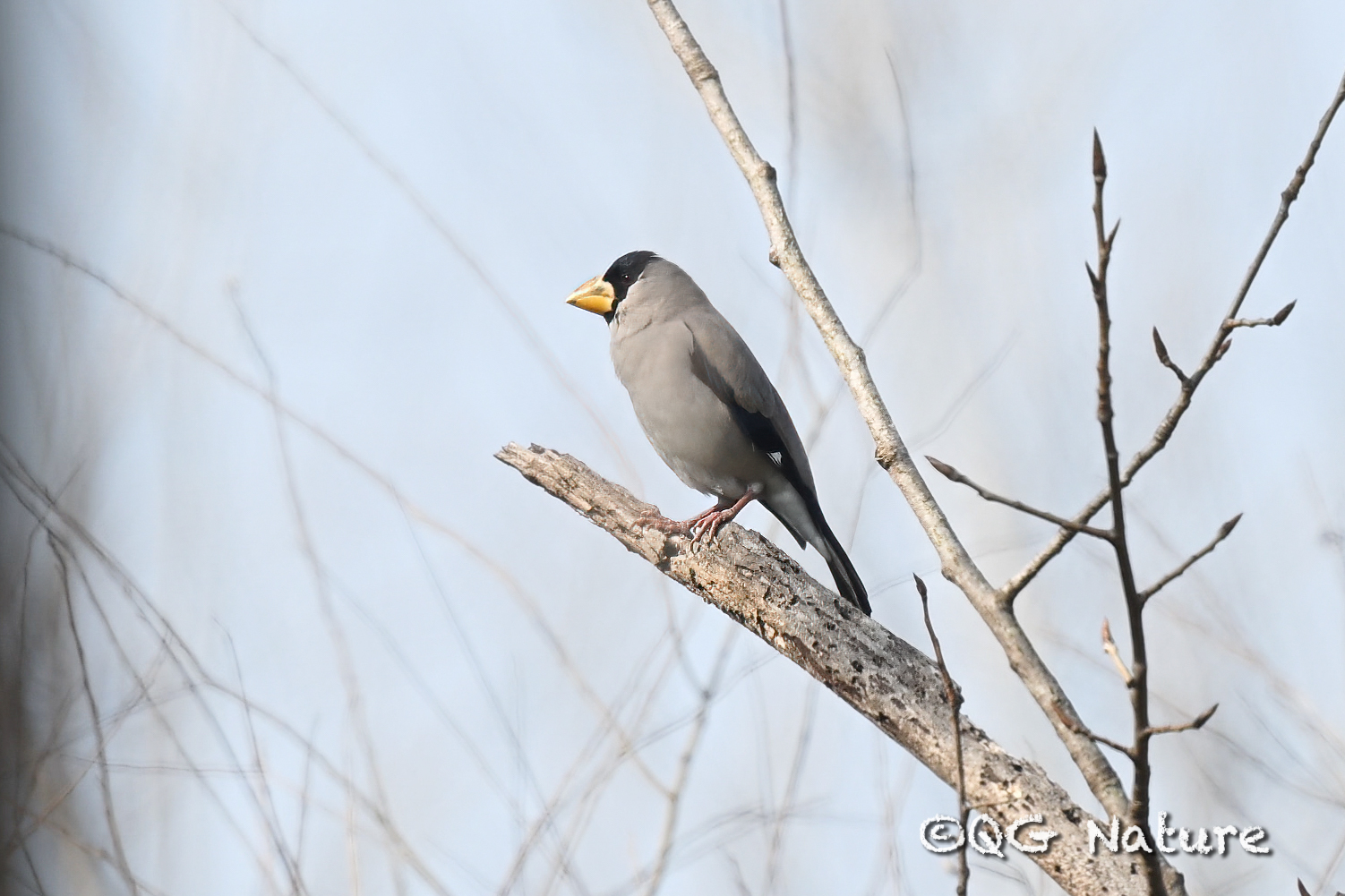
Length 18–23 cm (7.1–9.1 in), weight reported at 80 g (2.8 oz) for a single male. Wing chord 10.2–11.7 cm, tail 8.3–9.5 cm, culmen 2.1–2.6 cm. Features a large, pointed bright yellow bill. Adults have a large black marking from nape to chin and ear-coverts to neck, with contrasting pale whitish-grey sides of the neck. Underside is dull grey; back is greyish-brown; flanks are washed with gingery or tawny-brown. Wings and tail are black with a white patch on inner-coverts and a white band across the primaries. Juveniles are duller grey overall with no black on the head. Subspecies E. p. magnostris is slightly larger, paler, and has a smaller white patch on the primaries.
Identification
Key marks include the large bright yellow bill and distinct black head pattern contrasting with pale grey neck sides. In flight, a white band across the middle of the primaries is visible. Vocalizations include a short, hard 'tak tak' note in flight and a song consisting of four flutey whistles.
Distribution & Habitat
The nominate race occurs in Japan from Hokkaido to Kyushu, wandering considerably in winter but not fully migratory. Subspecies E. p. magnostris breeds around the Amur, Ural, and Manchurian regions, migrating completely to winter in Hebei and Beijing, occasionally ranging south to North Korea. Habitat includes deciduous or mixed forests, valleys, oak and birch woods, and well-wooded parks.
Behavior & Ecology
Occurs in pairs or small flocks. Feeds on seeds and insects; diet shifts seasonally. Winter diet consists mainly of cedar nuts, birch seeds, and berries. Summer diet is largely insectivorous, including caterpillars and beetles. Often stays hidden in foliage near the tree canopy.
Source: Wikipedia · CC BY-SA 3.0
Taxonomy
- Order
- Passeriformes
- Family
- Fringillidae
- Genus
- Eophona
Vocalizations
Subspecies (2)
-
Eophona personata magnirostris
eastern Manchuria to northeastern China (Shandong)
Data Sources
Species description from Wikipedia, licensed under CC BY-SA 3.0.
Bird images and sounds sourced from GBIF, contributed by citizen scientists worldwide under Creative Commons licenses.
Taxonomy data from AviList 2025.