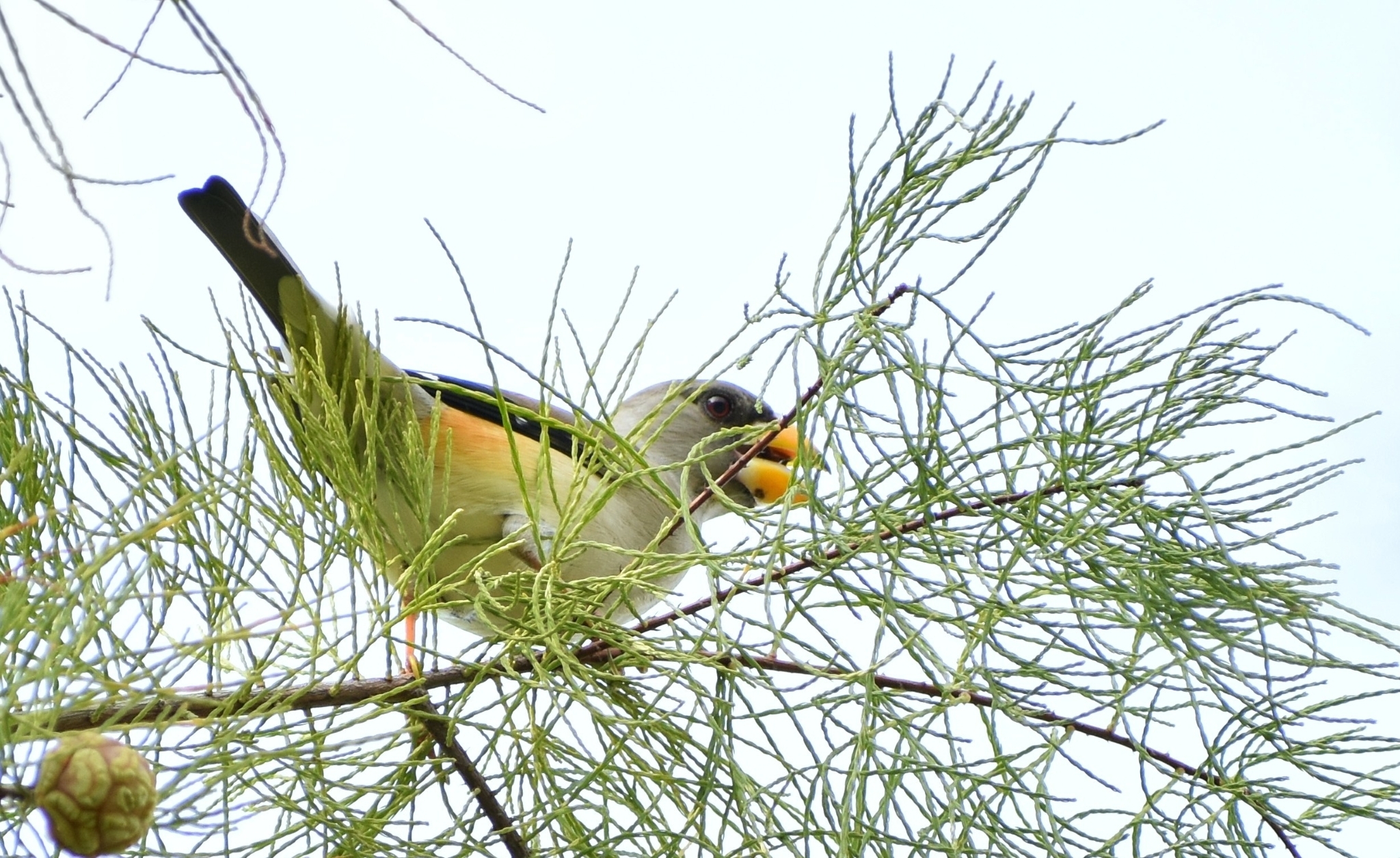
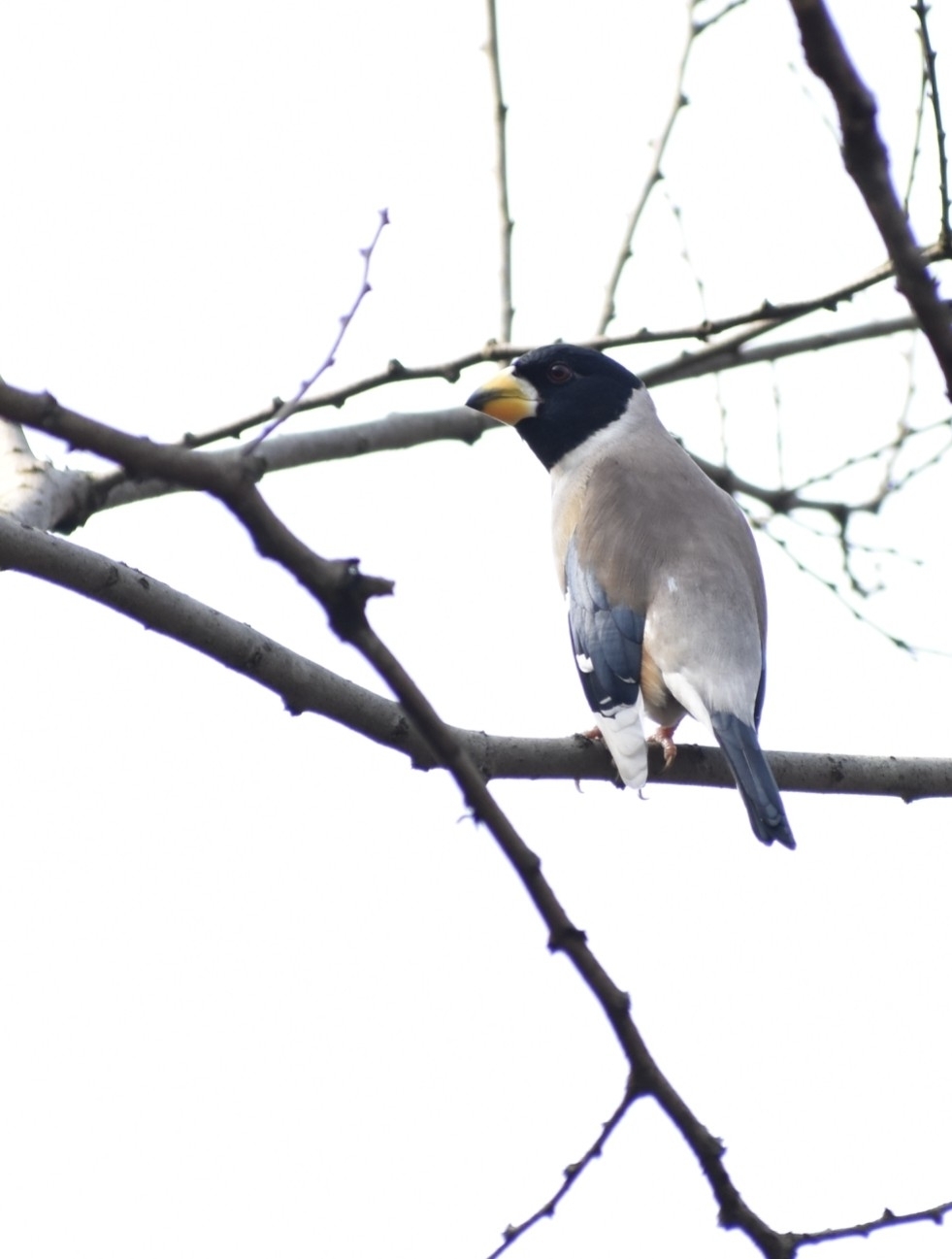
Passeriformes / Fringillidae / Eophona
Chinese Grosbeak
Eophona migratoria · 黑尾蜡嘴雀
Introduction
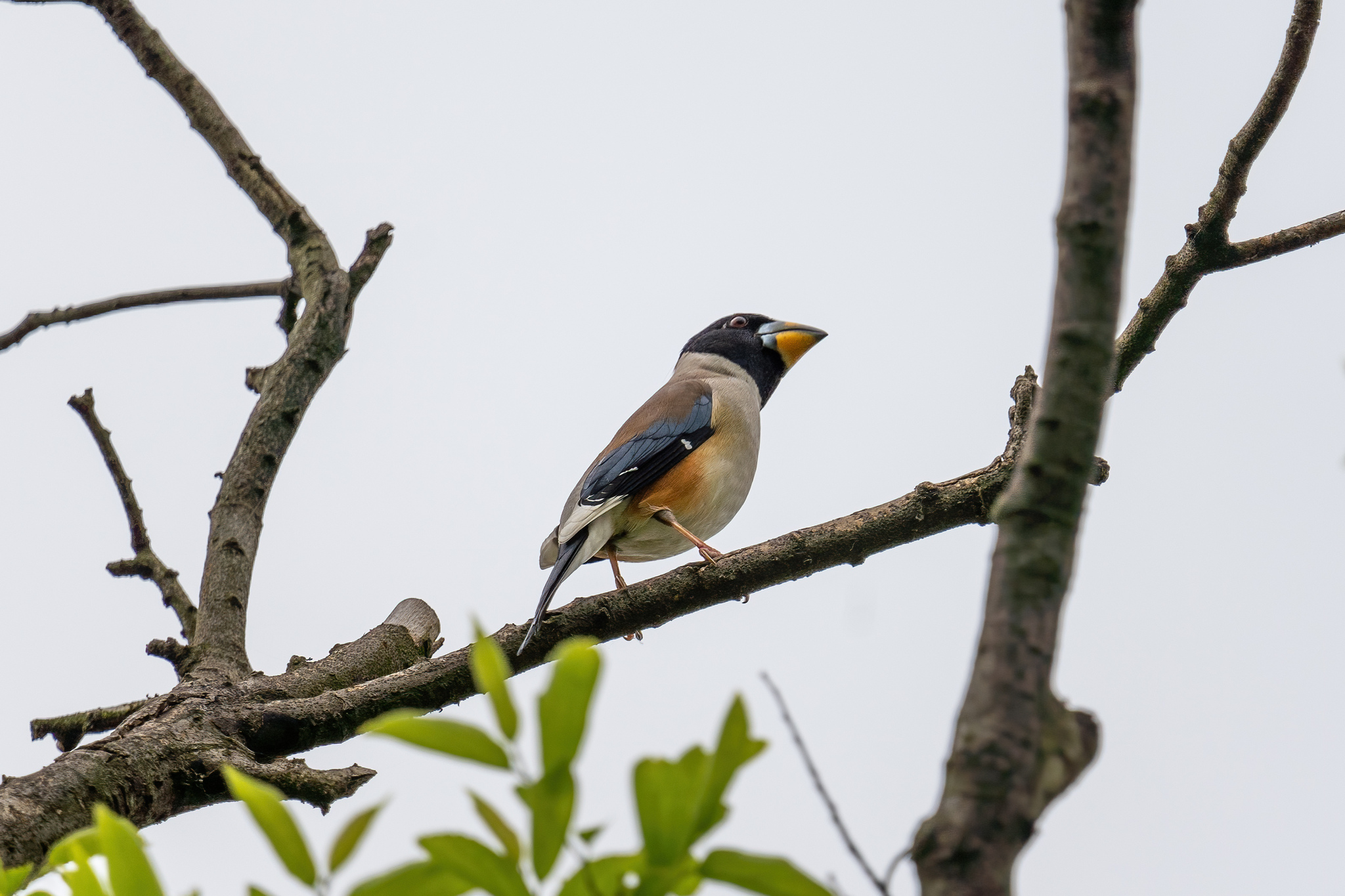
A species of finch in the family Fringillidae. It inhabits forests, mixed woods, and bamboo forests in hilly and mountainous areas across the Russian Far East, China, Manchuria, and Korea. Distinctive traits include a massive build with a strong, conical yellow beak tipped in black, and a granivorous diet facilitated by this robust bill. The species is not shy around humans and frequently visits gardens and orchards.
Description
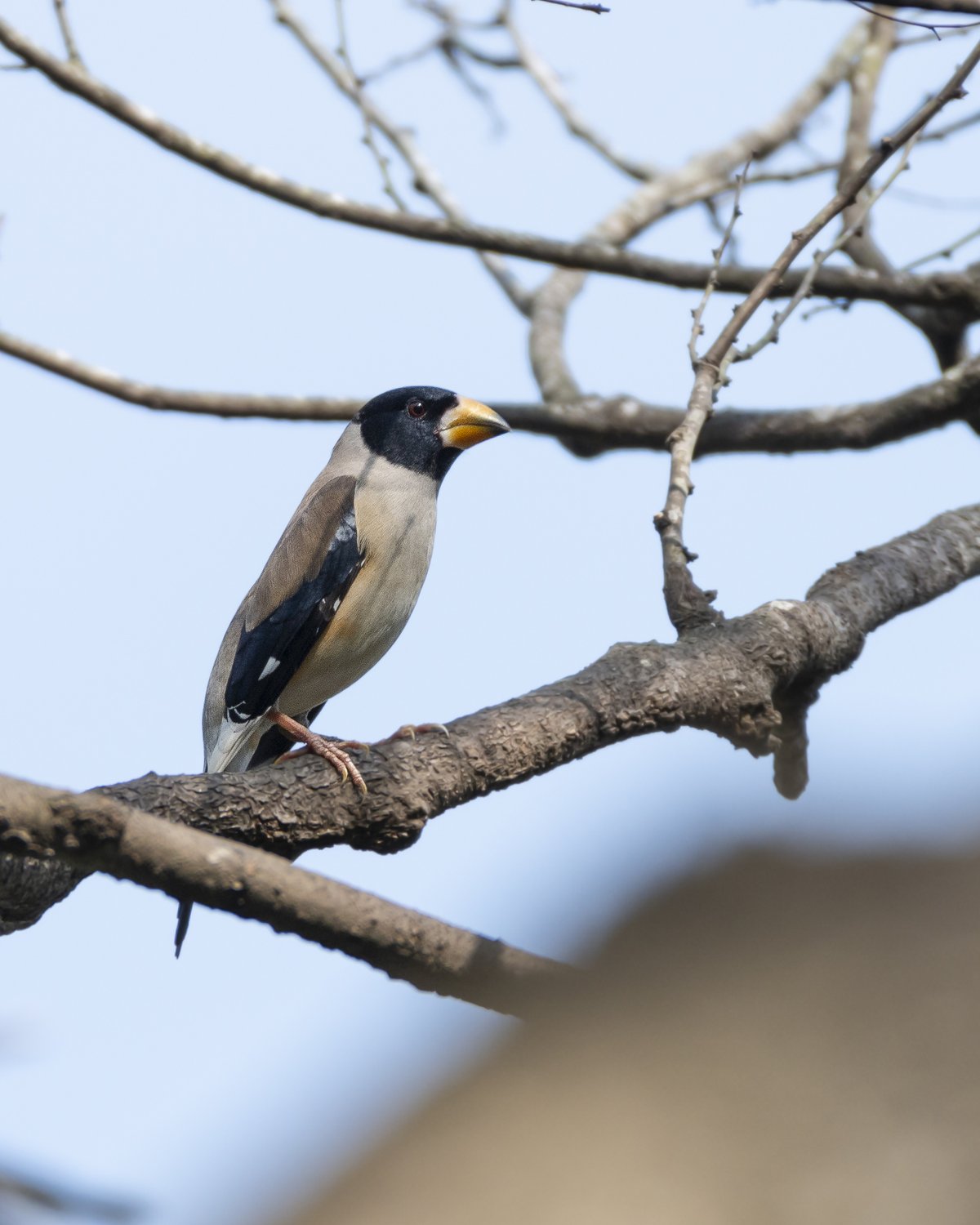
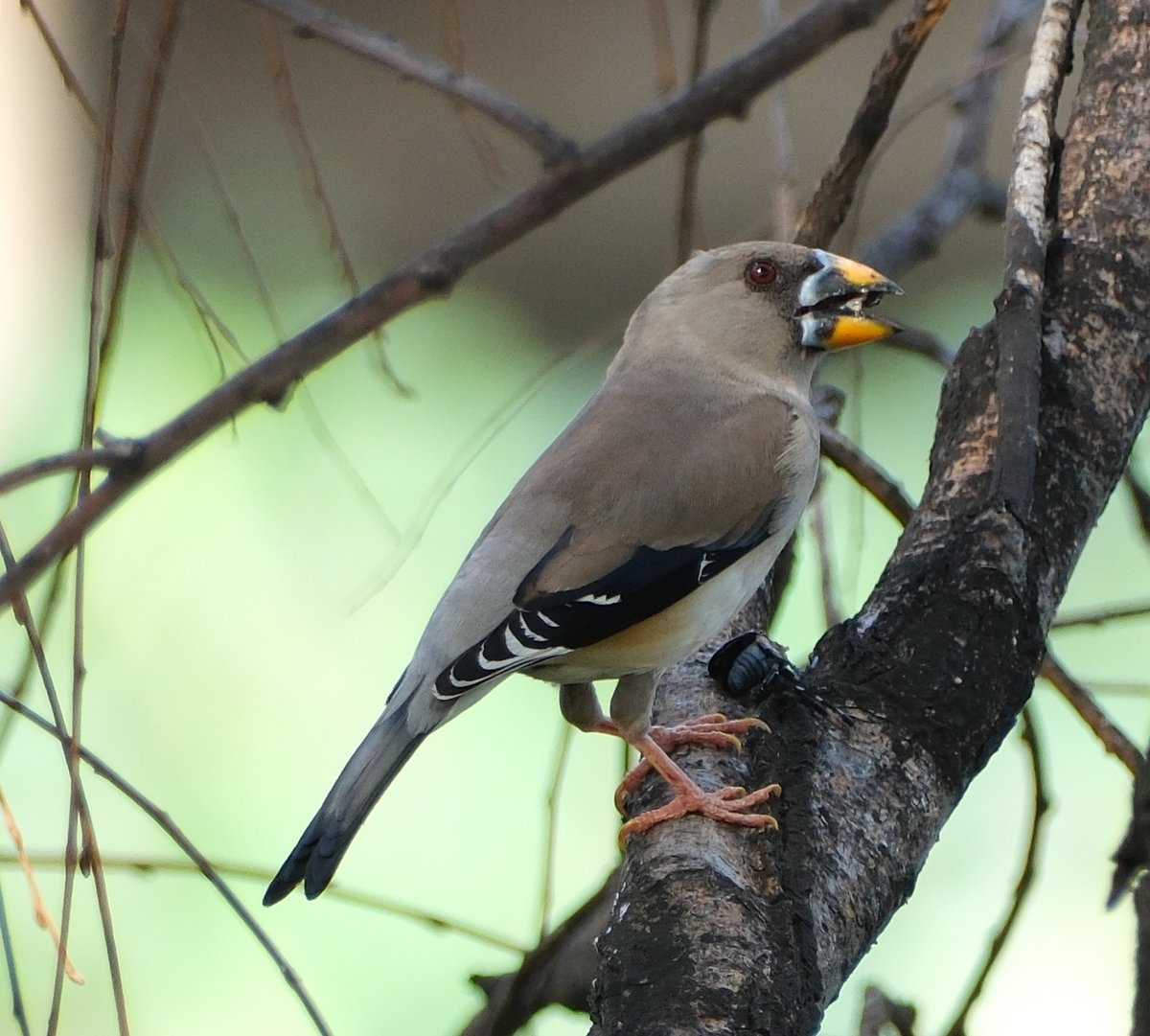
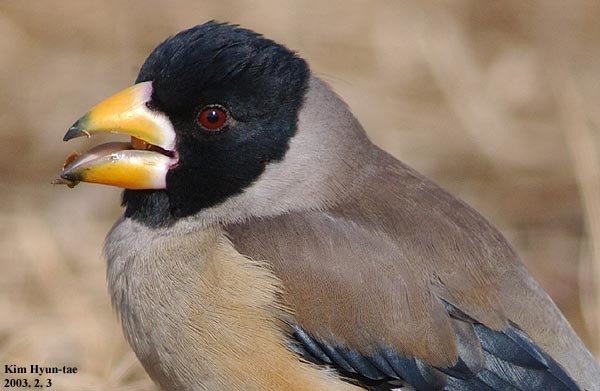
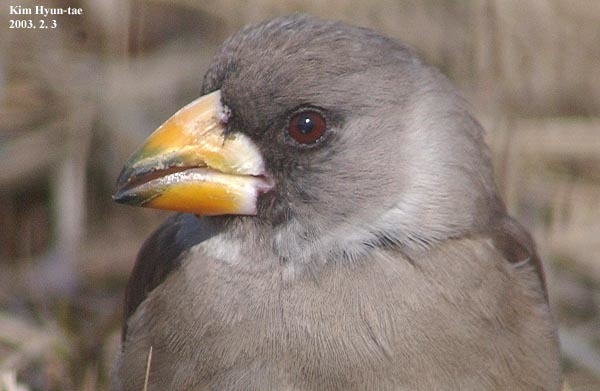
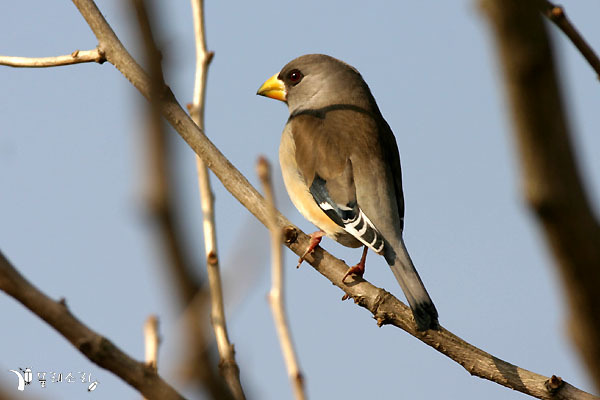
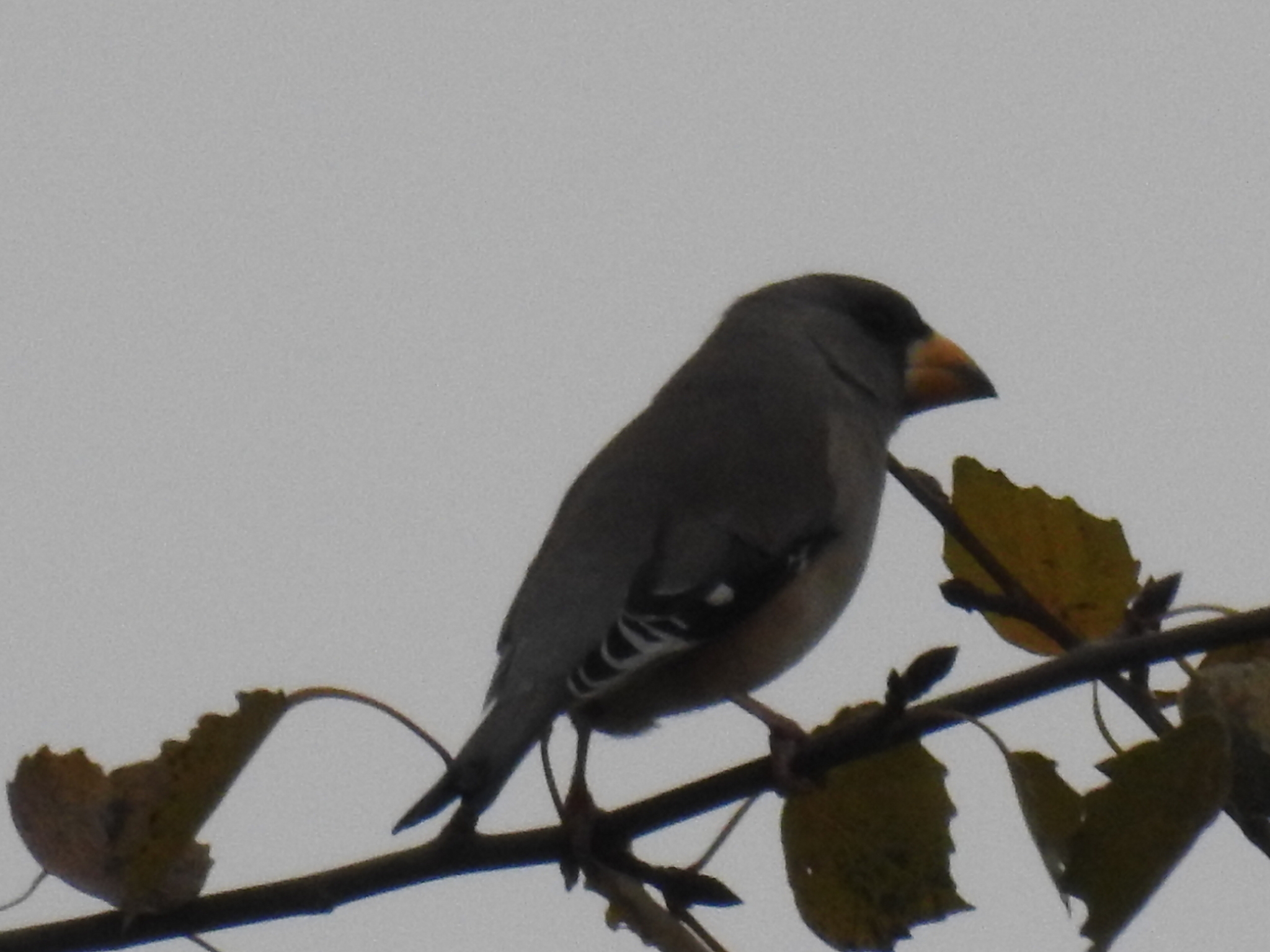
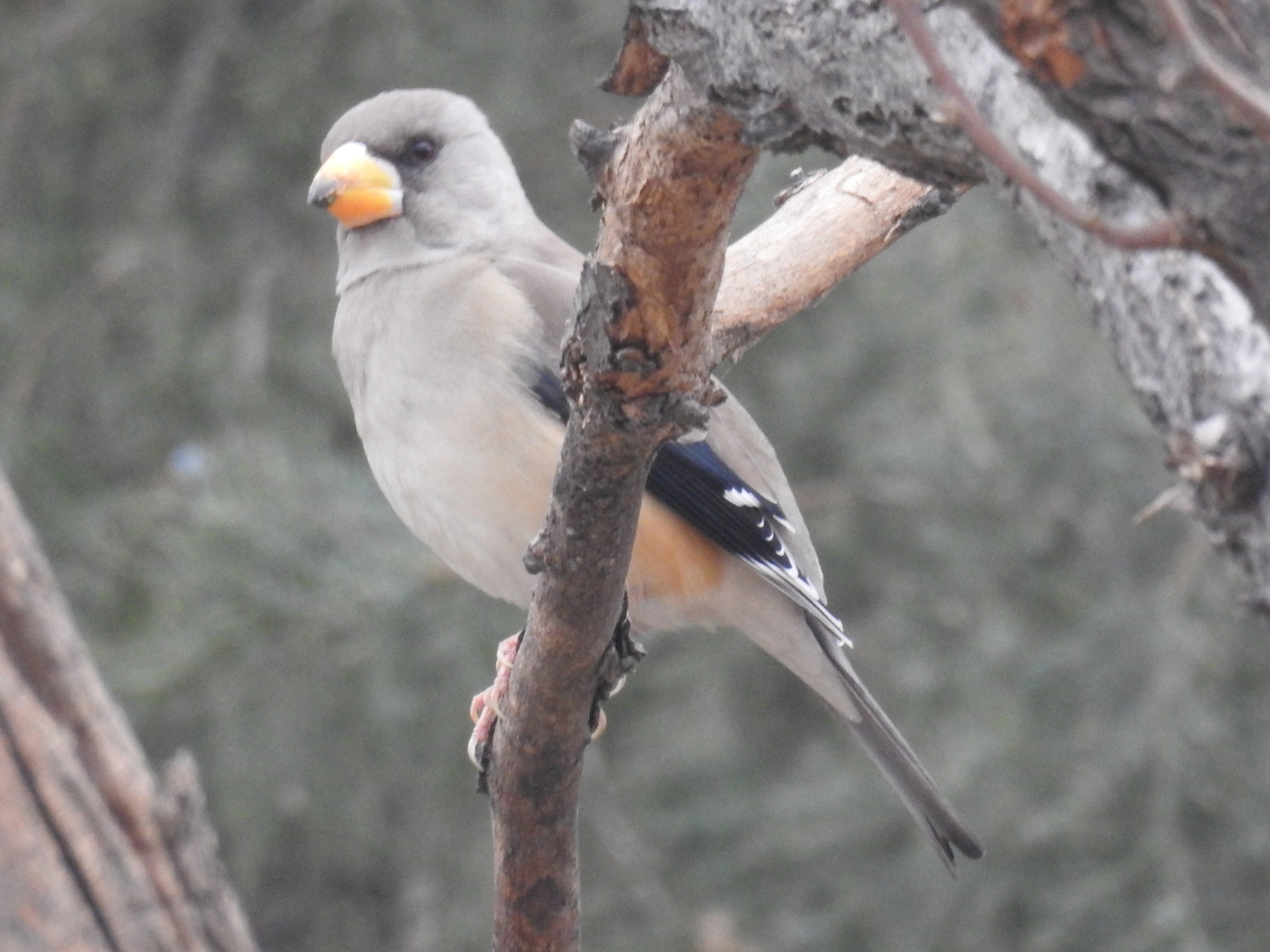
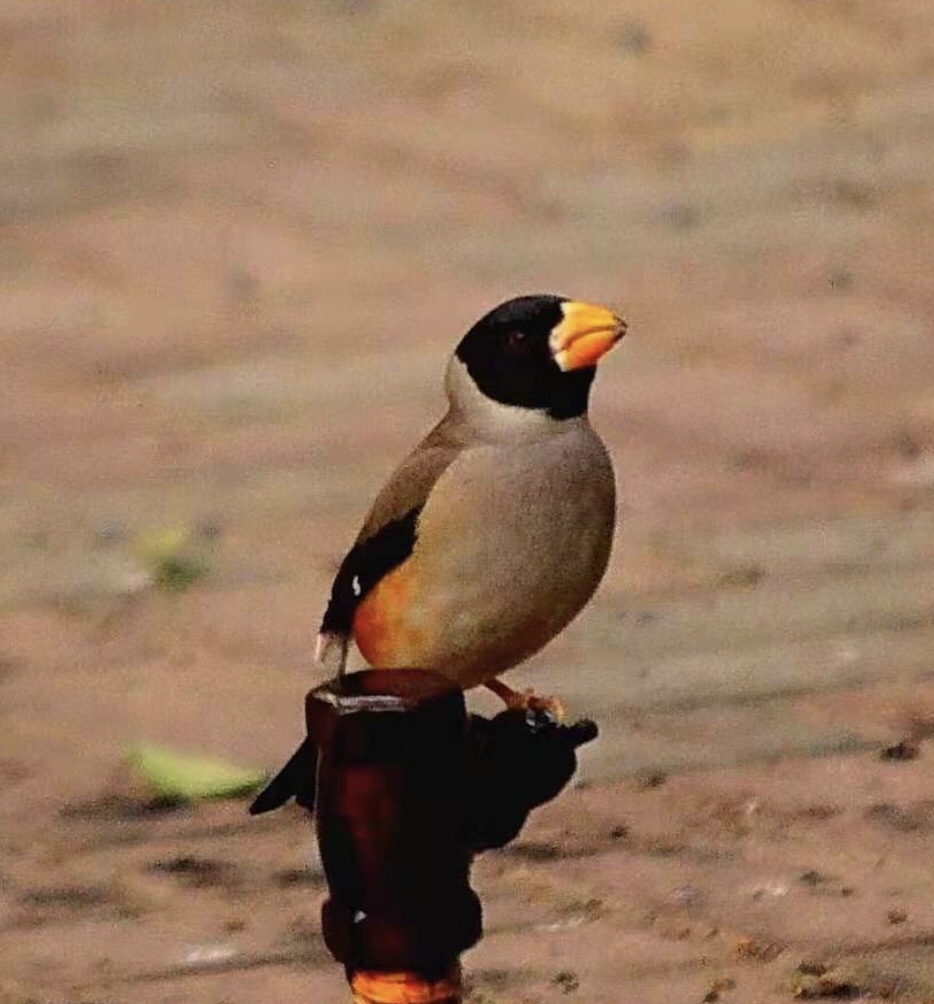
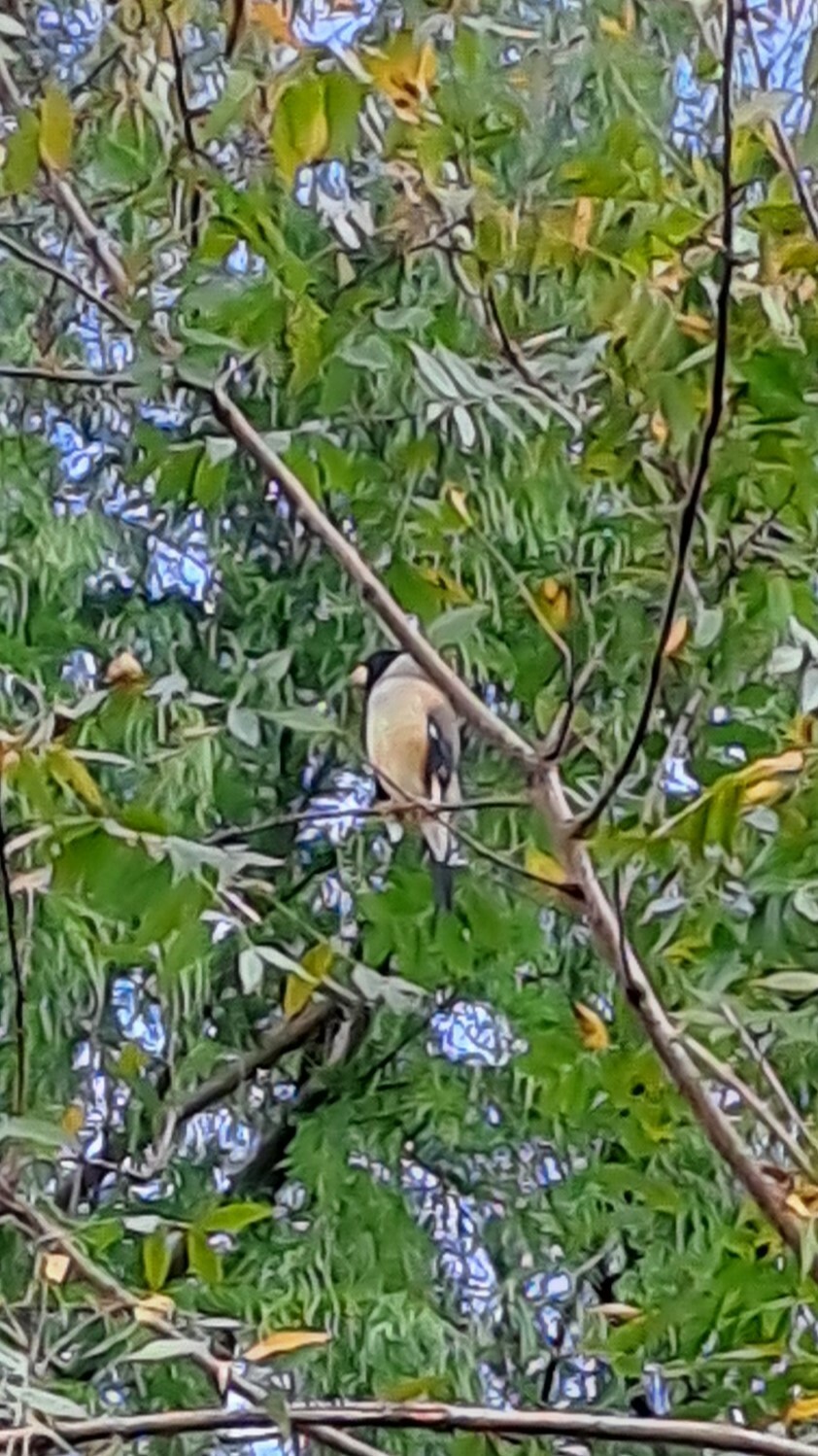
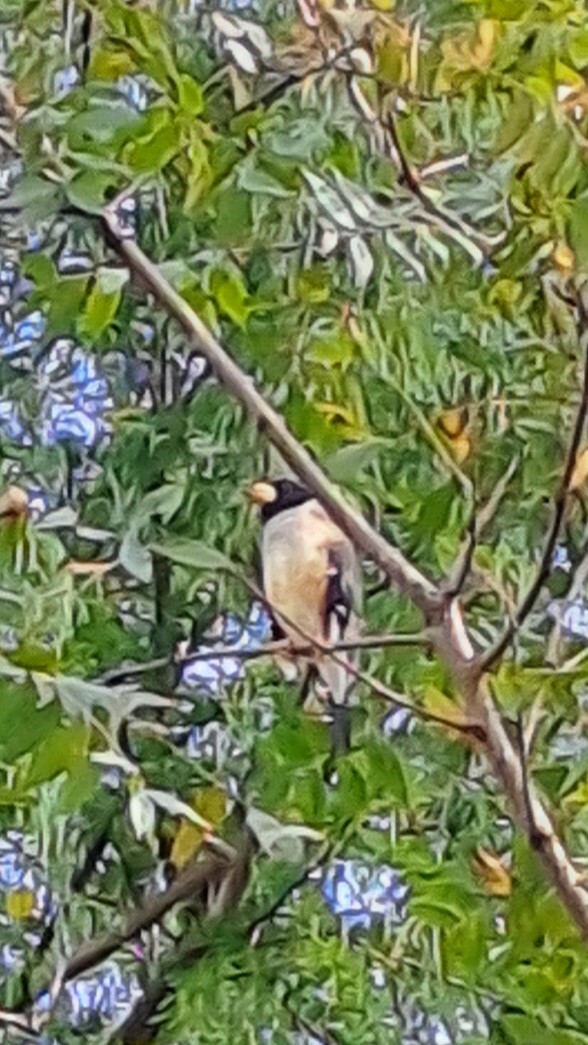
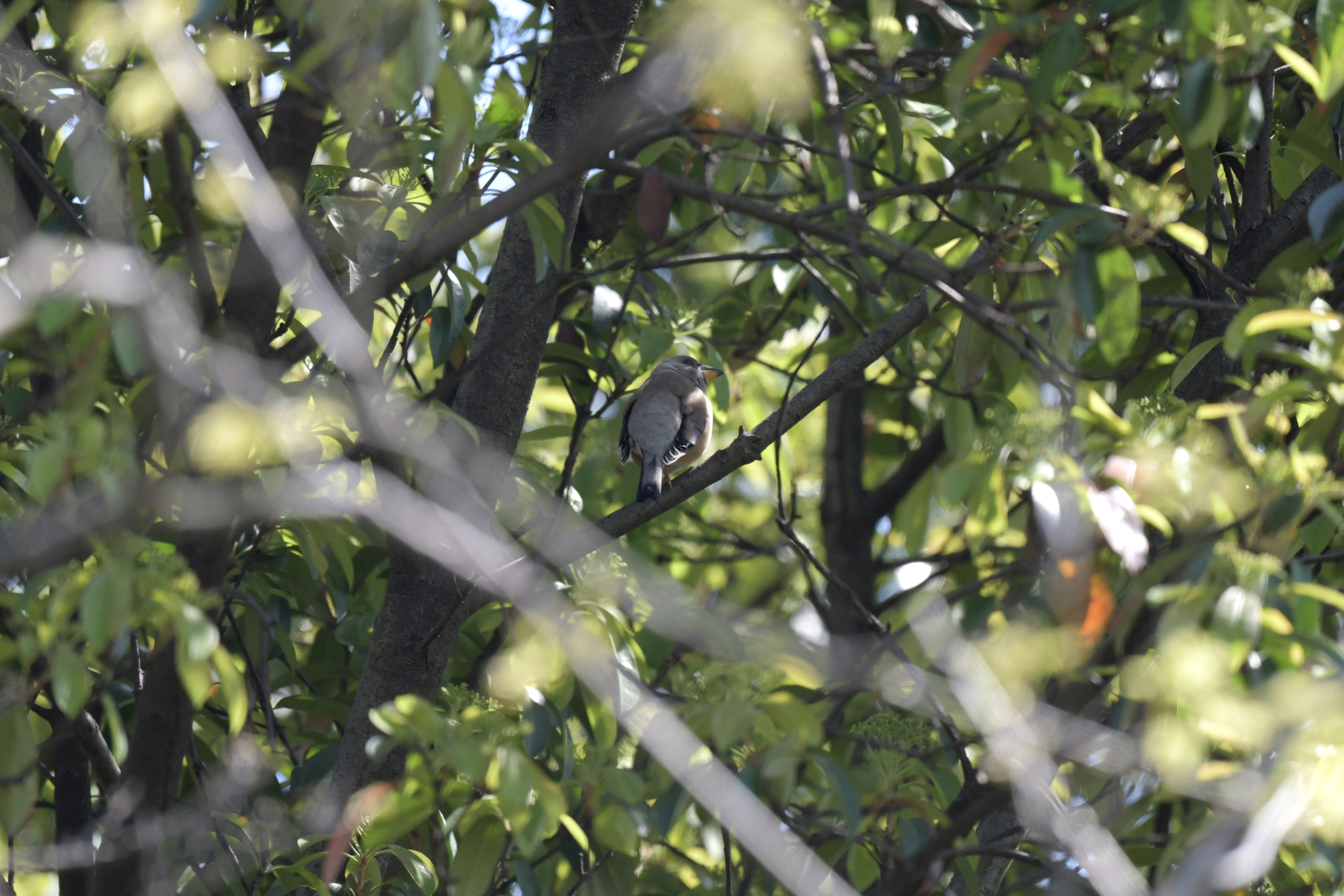
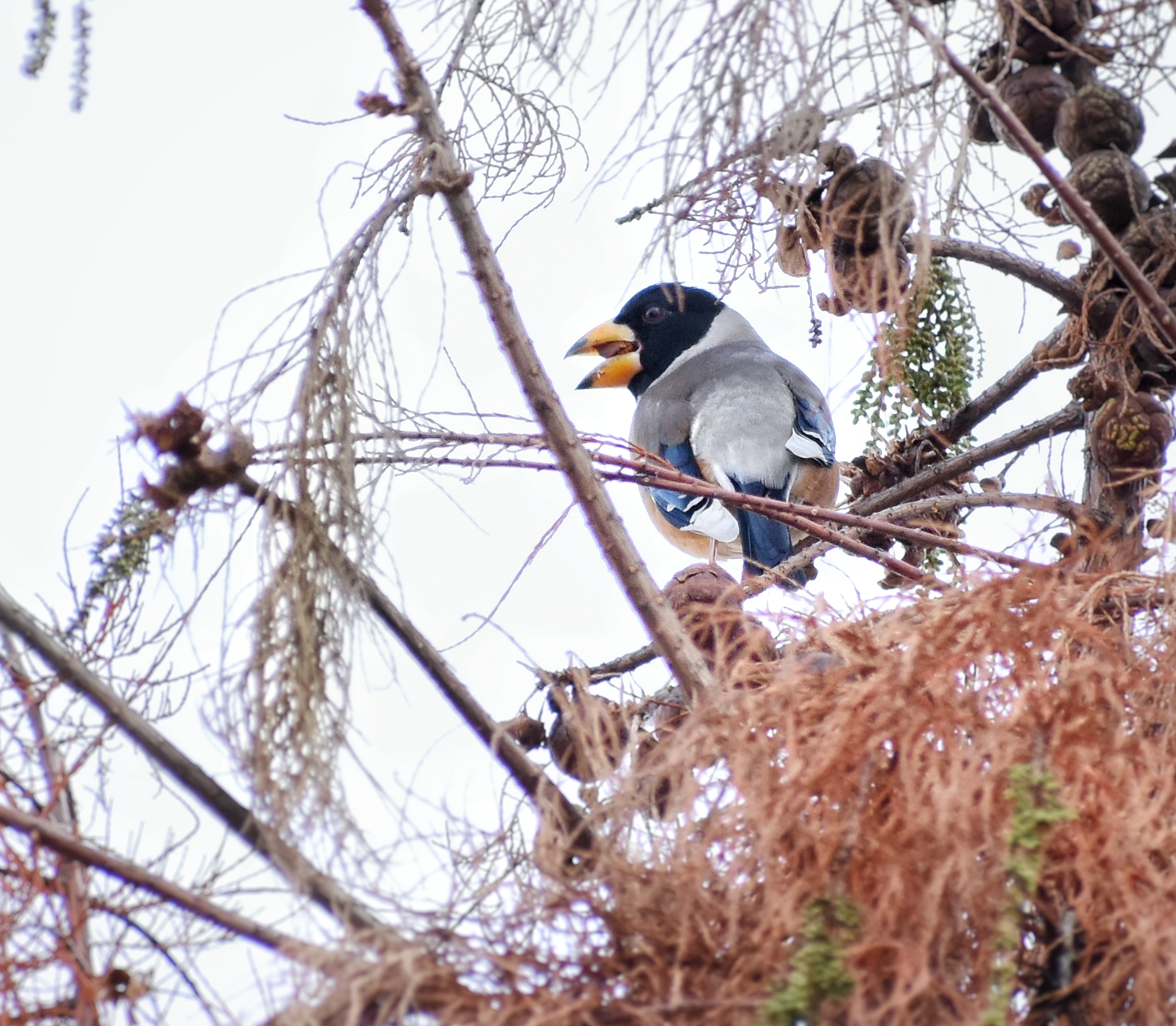
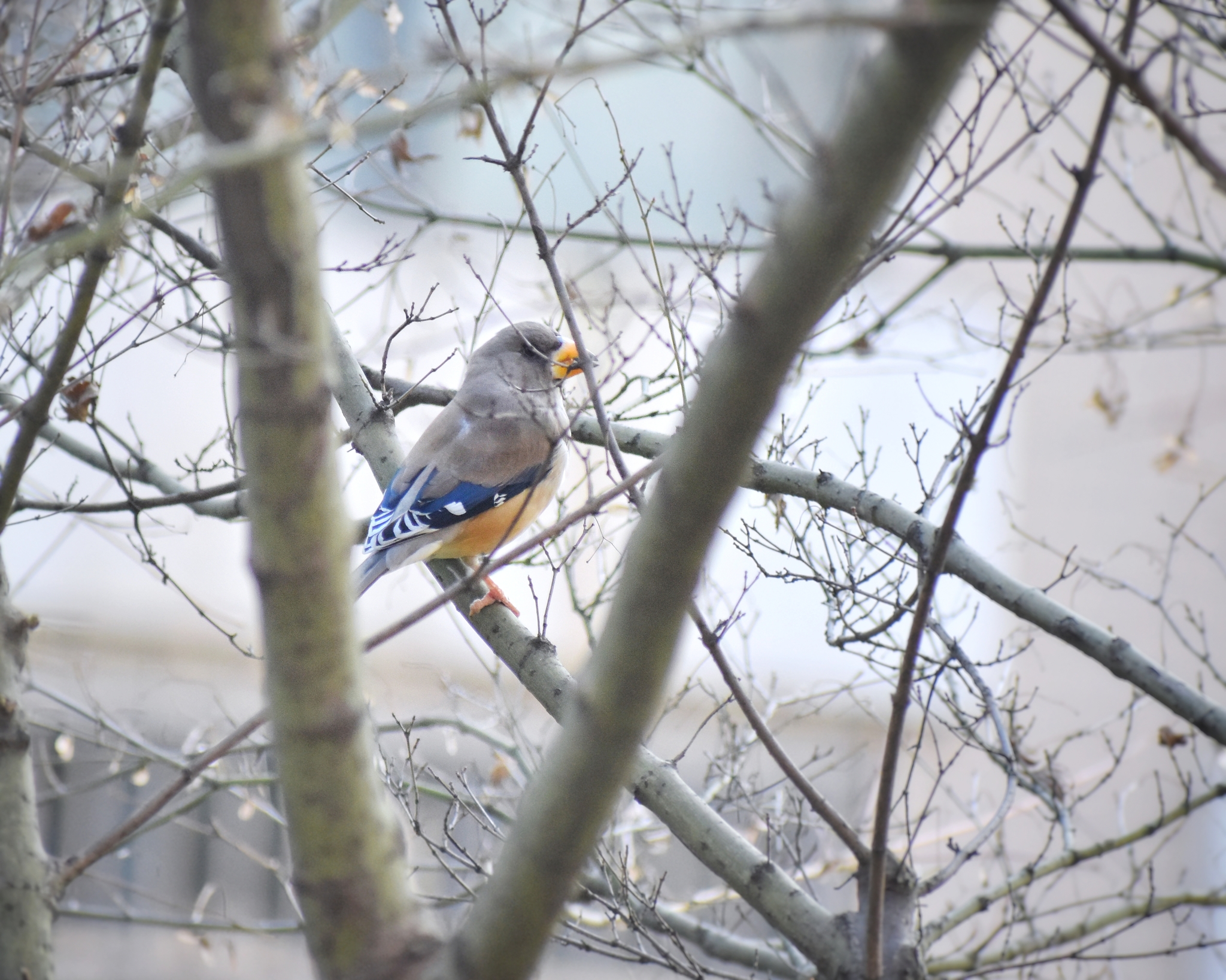
Measures 18–20 cm in length, with a wingspan of 23–24 cm and a weight of 55–60 g. The appearance is massive with a large head. The beak is strong, conical, and yellow with a black tip. Plumage is uniform gray, darker on the back and wings, lighter and silvery on the belly, with brown shades on the sides. Wings are black with a rounded white spot at the tip. The tail is black, legs are pale flesh-colored, and eyes are brown. Sexual dimorphism is present: males have a black head mask, while females have a gray head mask.
Identification
Key marks include the massive yellow beak with a black tip and the black wings featuring a distinct rounded white spot. Males are distinguished by a black head mask, whereas females have a gray head mask. The body is generally gray with brownish sides and a black tail.
Distribution & Habitat
Present in the Russian Far East, China, Manchuria, and Korea. Subspecies E. m. migratoria occurs in Eastern Siberia, Manchuria, and Korea; E. m. sowerbyi is found in east-central China. Habitat includes forests, mixed woods, and bamboo forests in hilly and mountainous areas. The species breeds in temperate forests and winters in southern China, Japan, Taiwan, and northern Southeast Asia.
Behavior & Ecology
Breeds in temperate forests. The female builds a cup-shaped nest in thick vegetation among trees and lays 4 bluish eggs with brown spots. She incubates them alone for 12–13 days while the male provides food. Both parents feed the young, which fledge at 12–14 days but remain with parents for another 2–3 weeks. Outside breeding season, it lives in small groups of about ten individuals, moving through trees to forage. Granivorous, feeding mainly on seeds broken by its strong beak, also consuming sprouts, berries, and fruit; insect consumption is rare.
Source: Wikipedia · CC BY-SA 3.0
Taxonomy
- Order
- Passeriformes
- Family
- Fringillidae
- Genus
- Eophona
Vocalizations
Subspecies (2)
-
Eophona migratoria migratoria
breeds eastern Manchuria to North Korea; winters to eastern China
Data Sources
Species description from Wikipedia, licensed under CC BY-SA 3.0.
Bird images and sounds sourced from GBIF, contributed by citizen scientists worldwide under Creative Commons licenses.
Taxonomy data from AviList 2025.