Chinese Grosbeak
Eophona migratoria
黑尾蜡嘴雀
Introduction
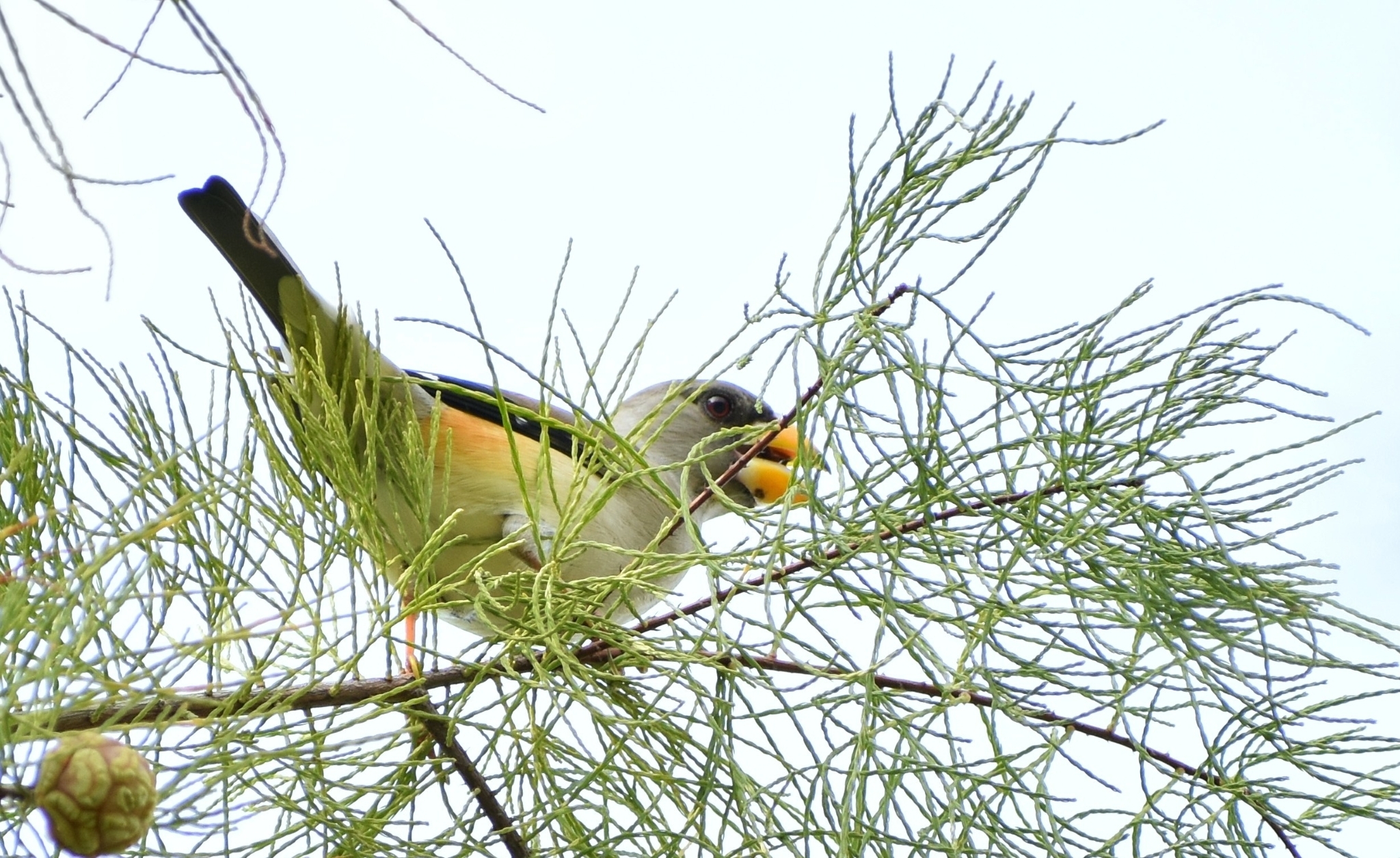
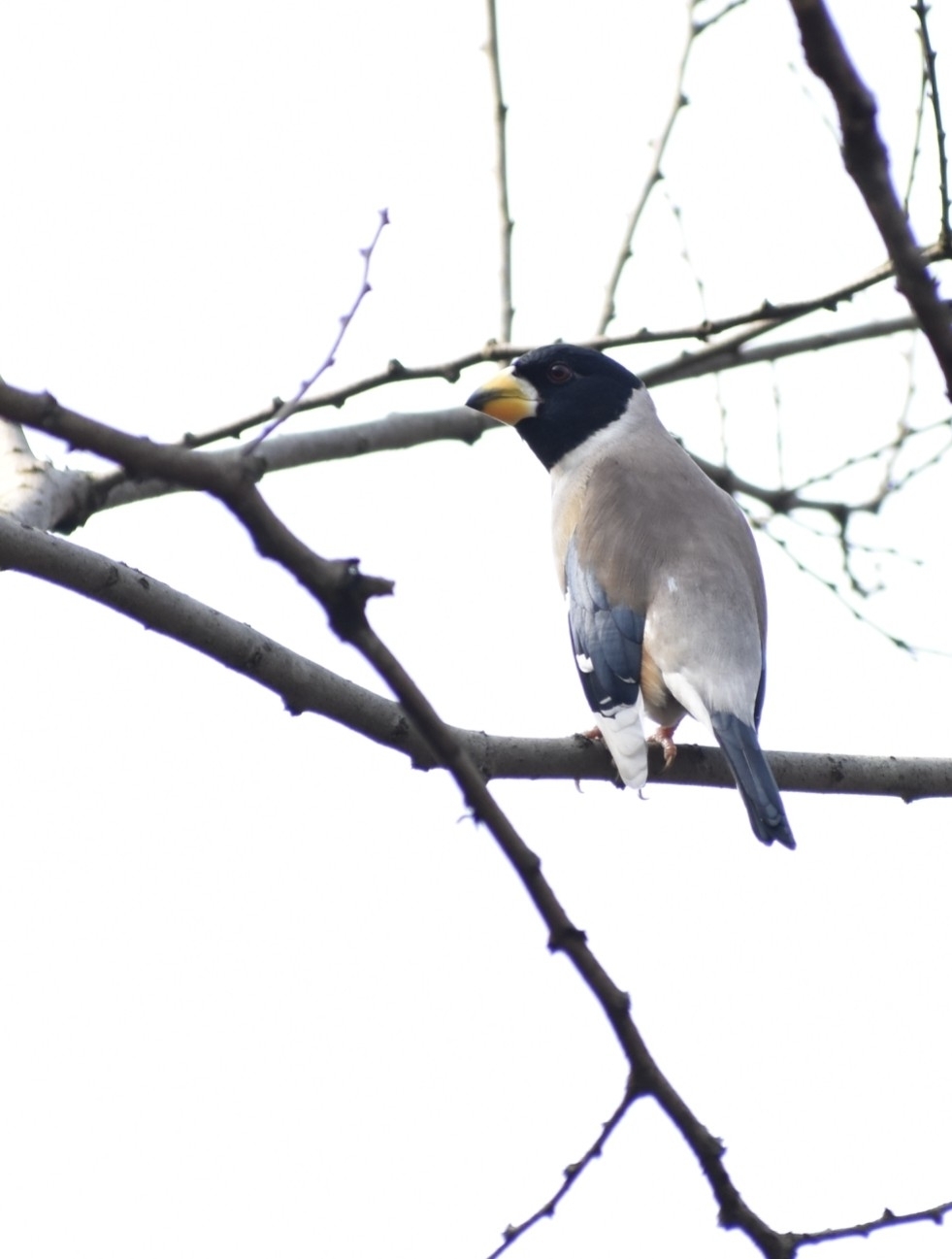
A finch species native to East Asian woodlands. Adults have gray body plumage, black wings with white spots, and a yellow beak with a black tip. Inhabits forest canopies where it remains concealed until detected by its seed-cracking calls. Forms mixed flocks during the non-breeding season.
Description
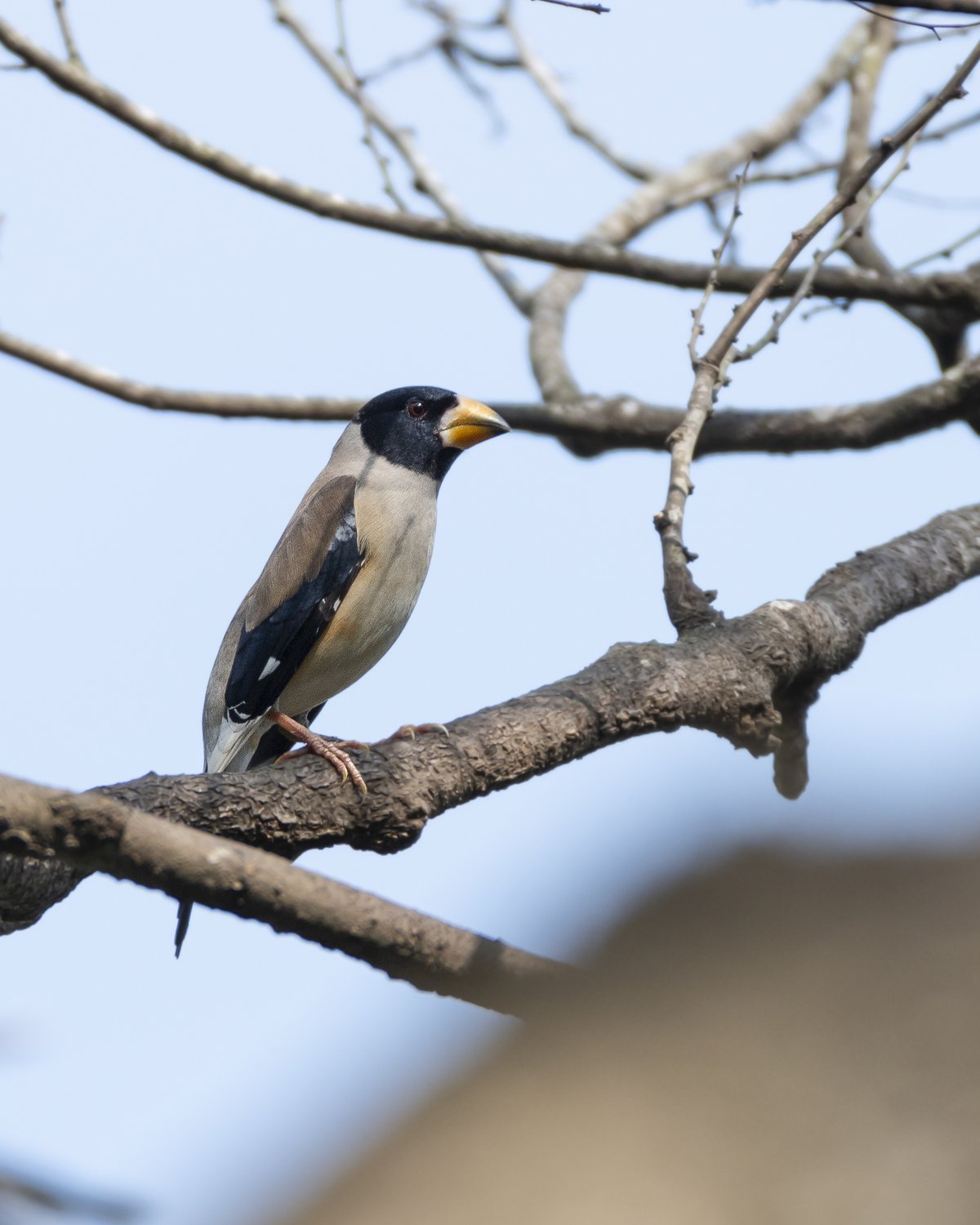
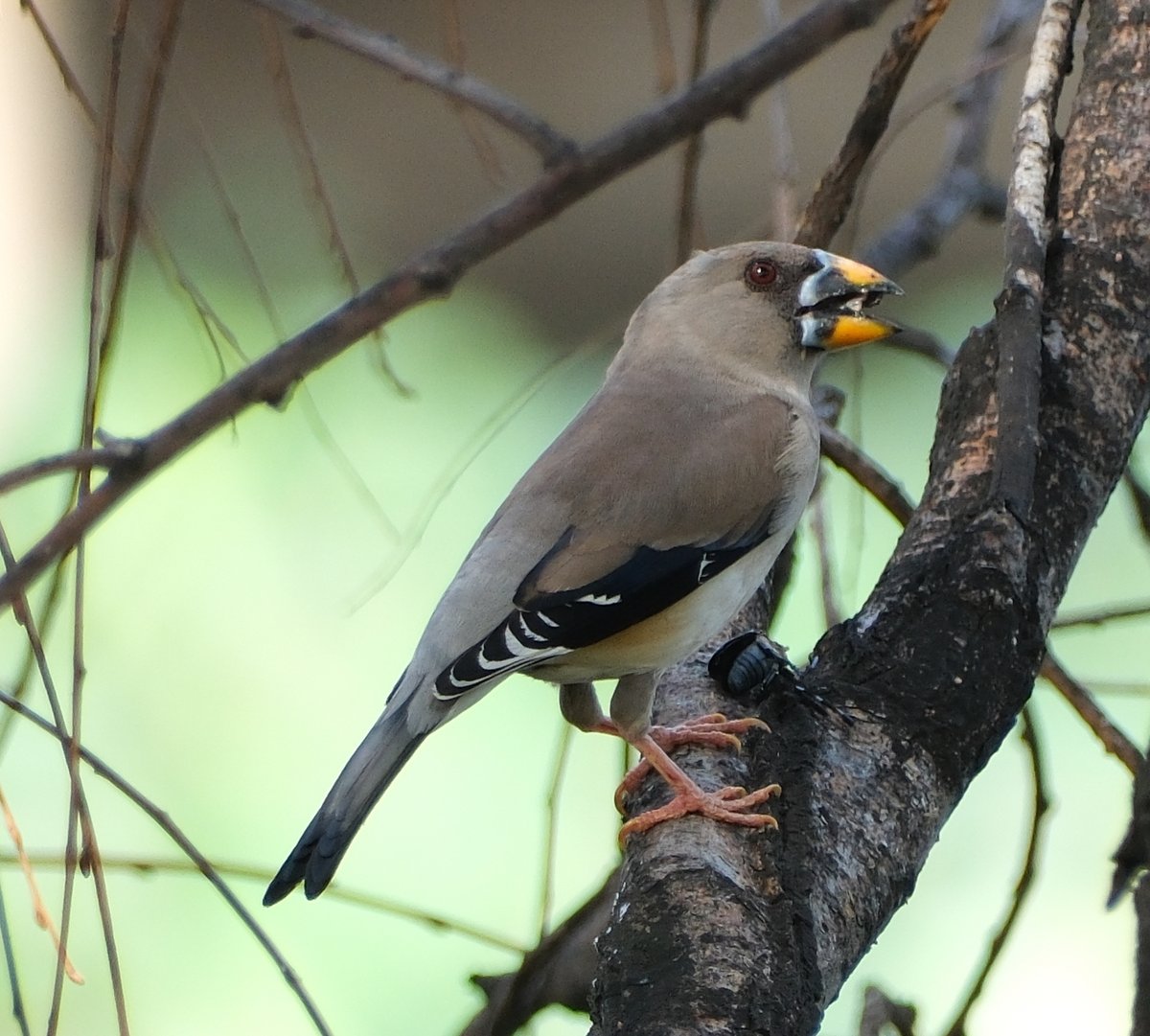
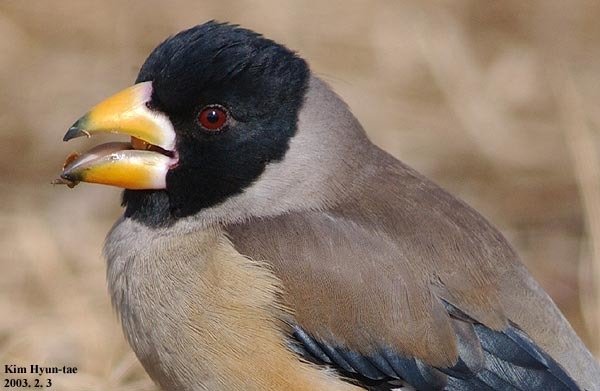
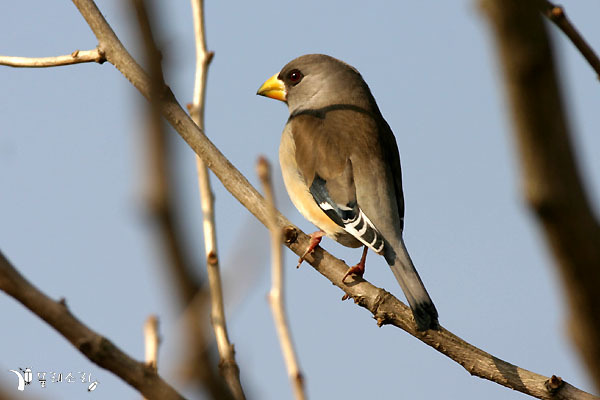
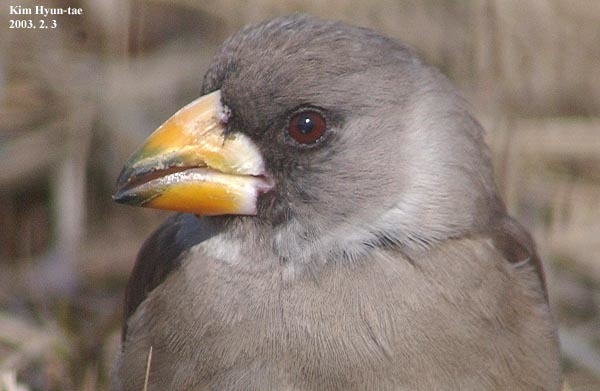
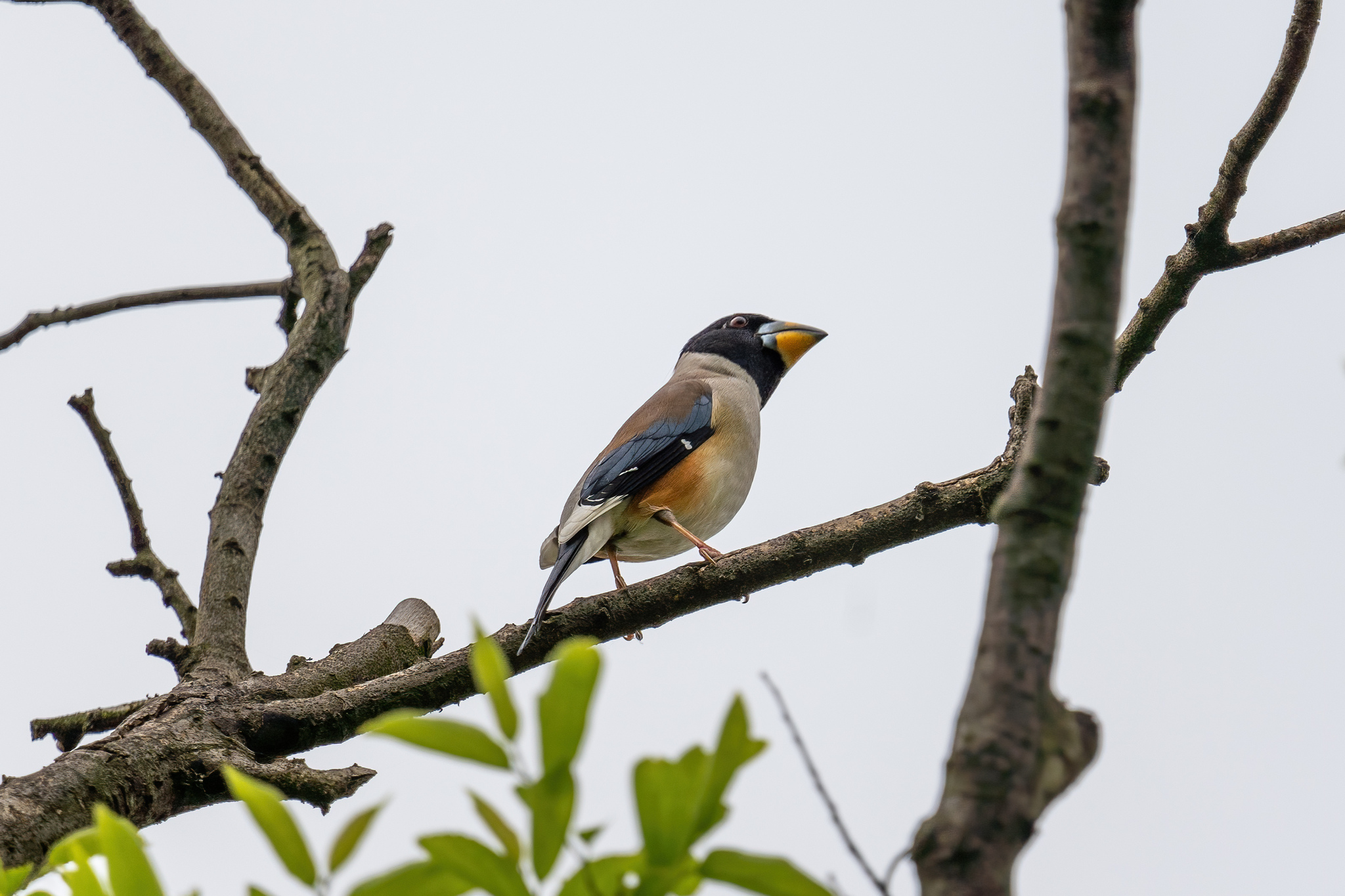
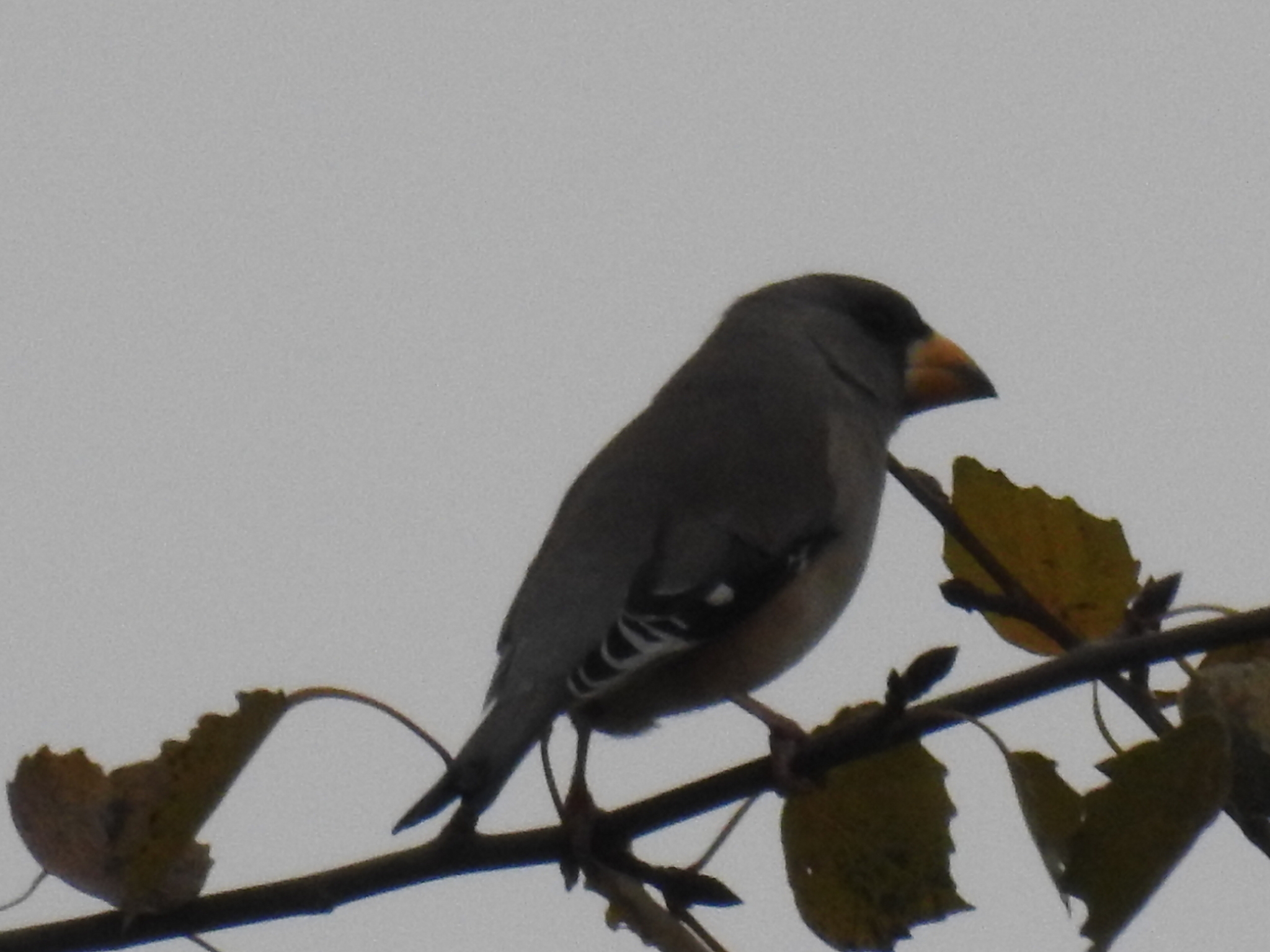
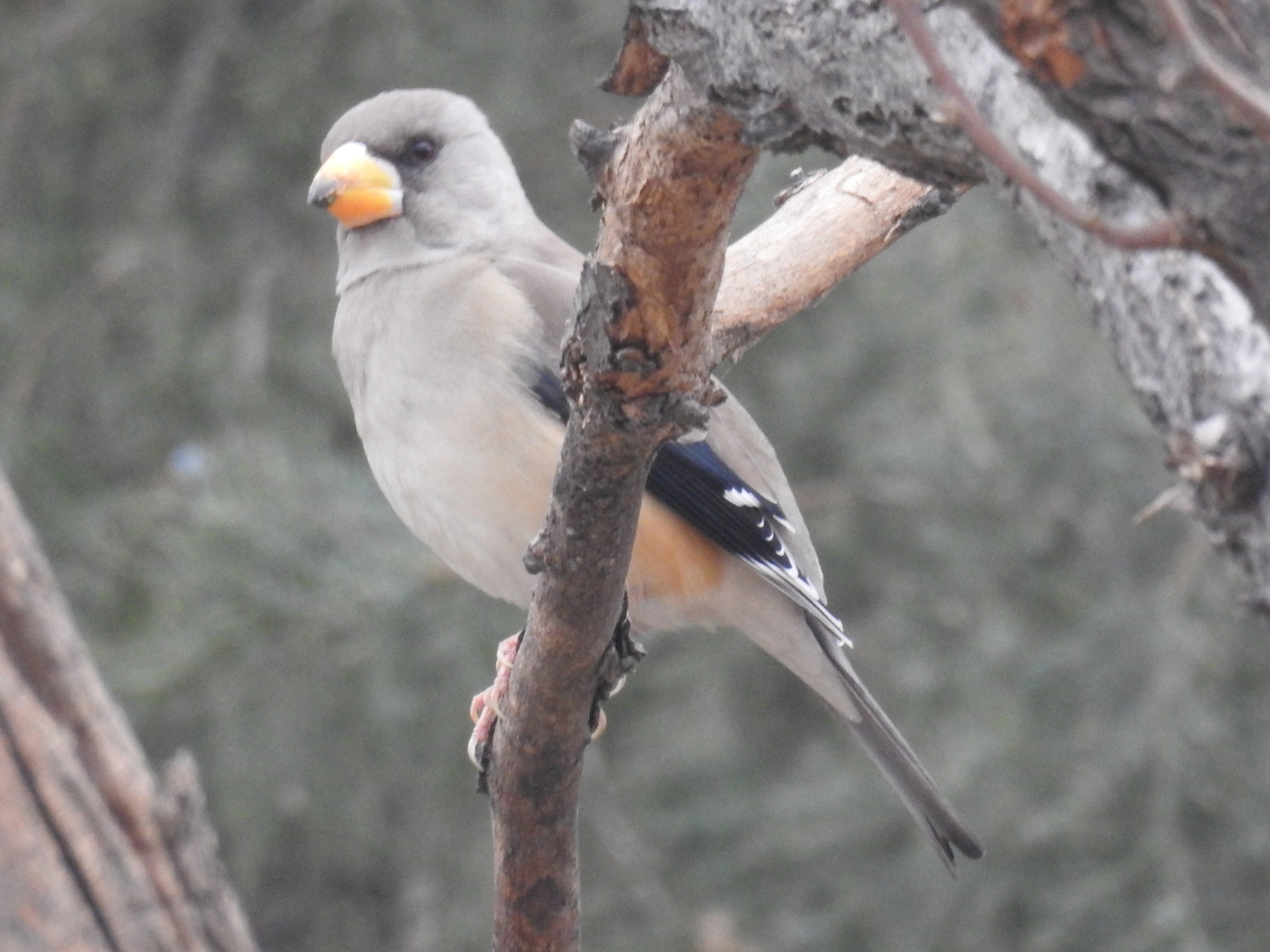
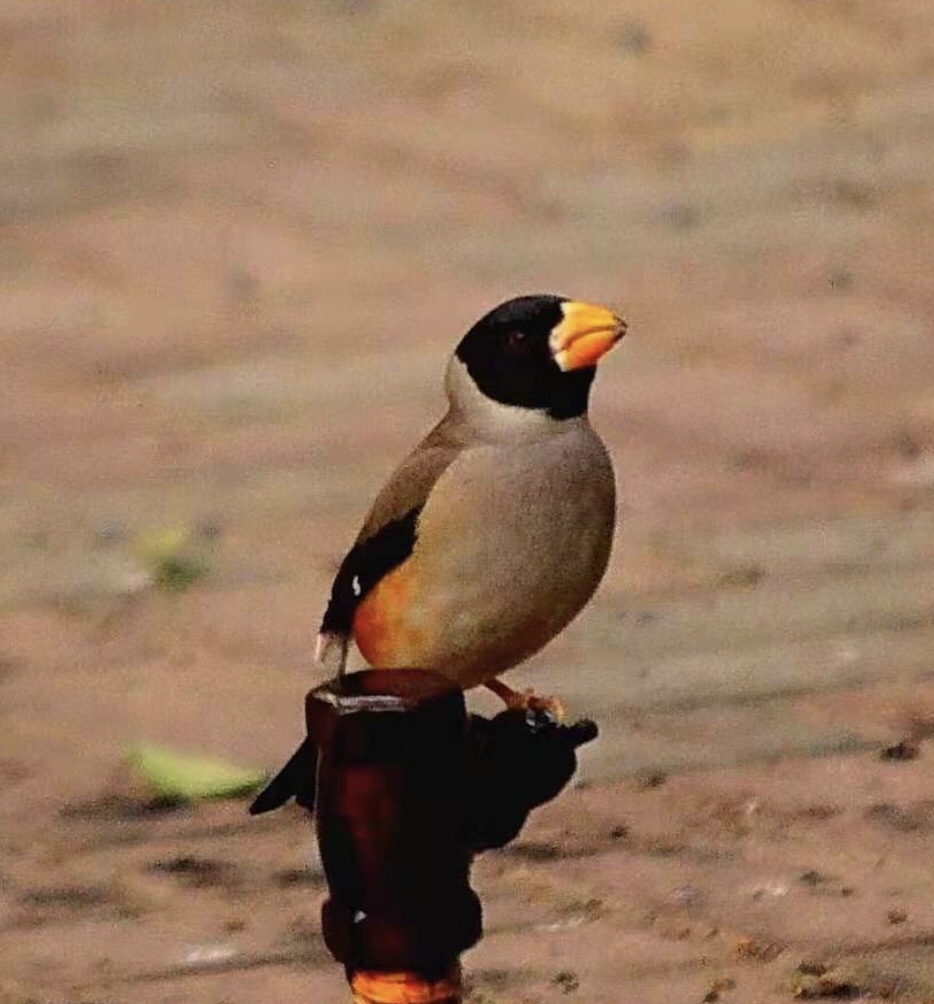
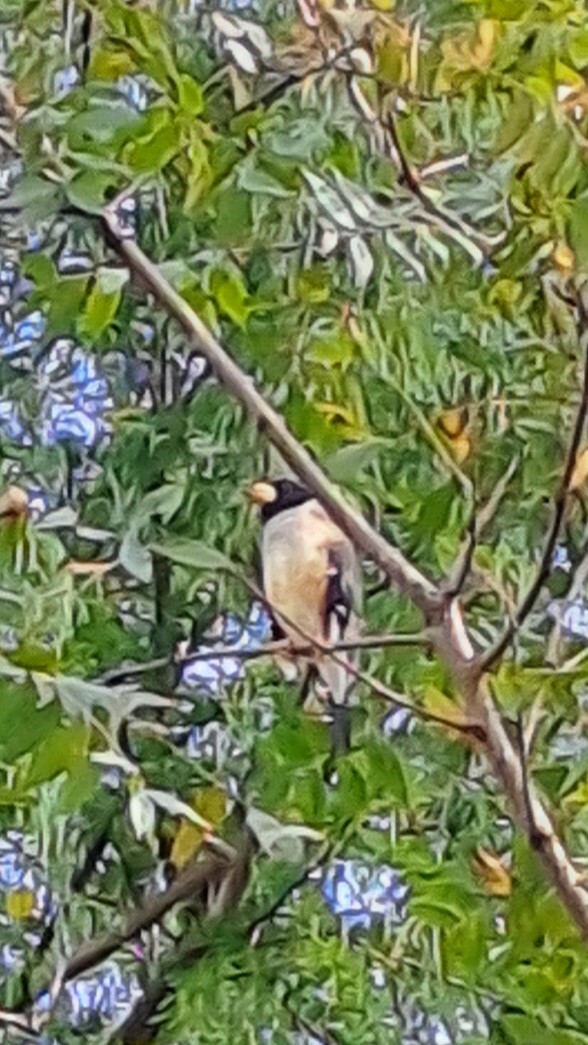
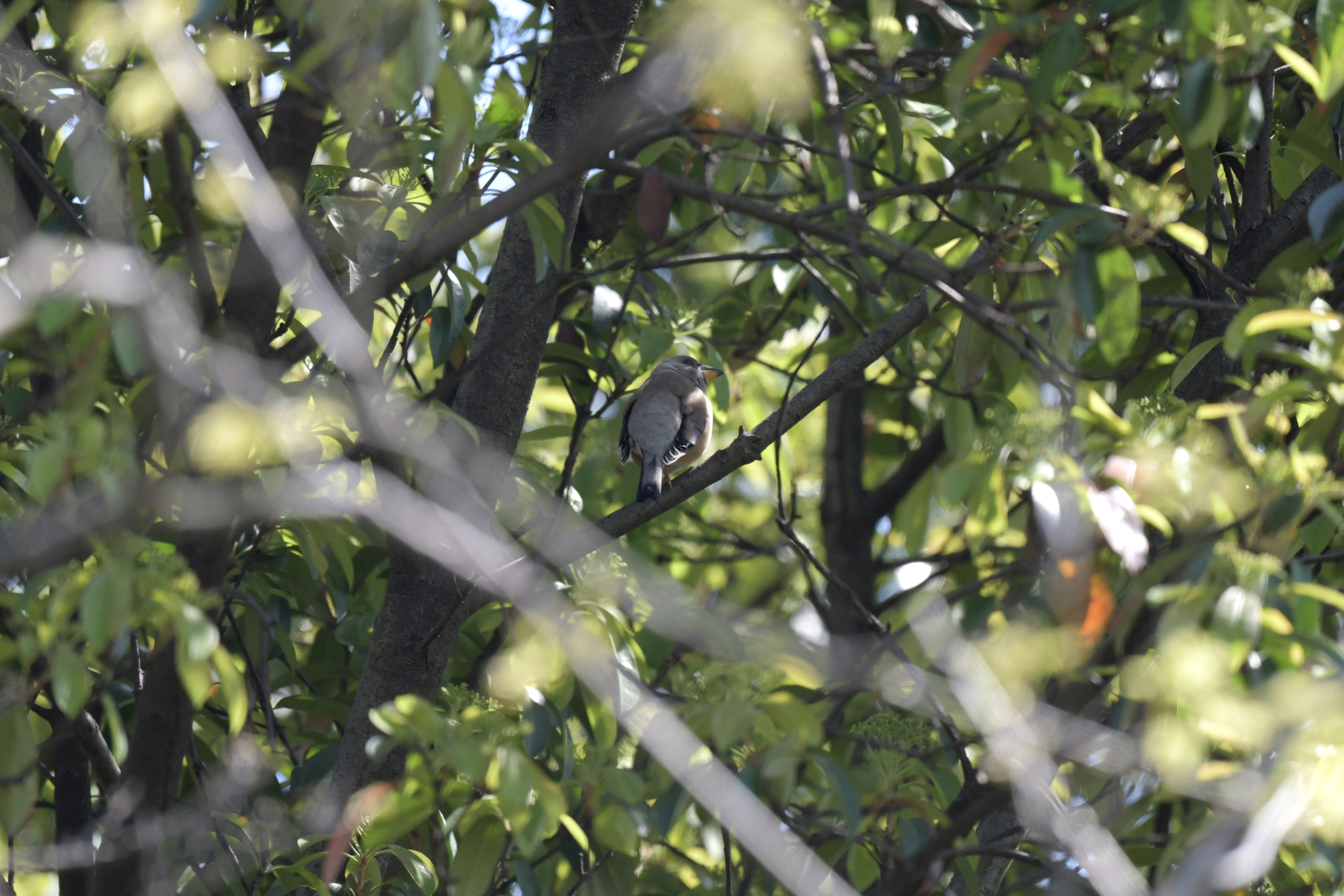
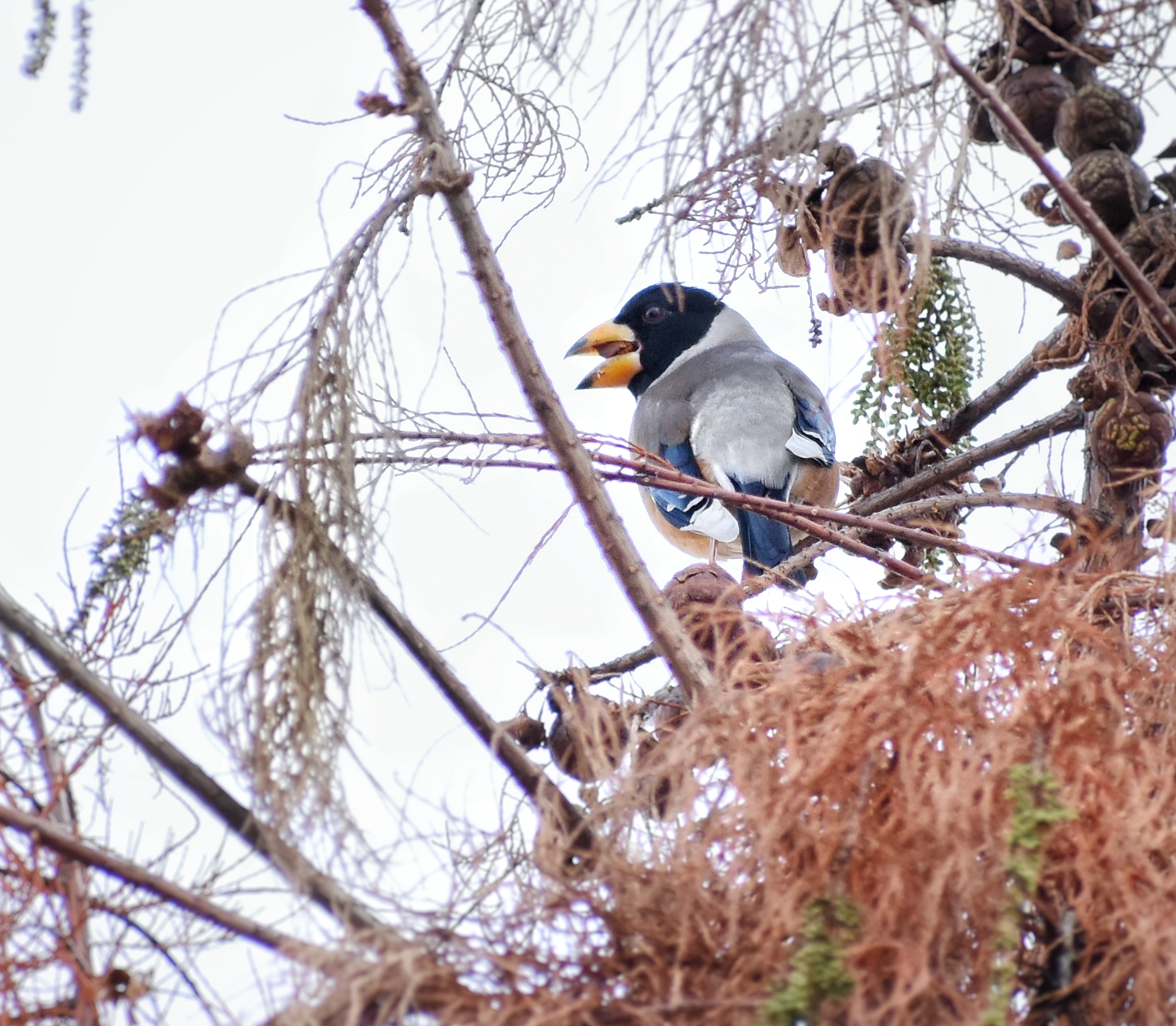
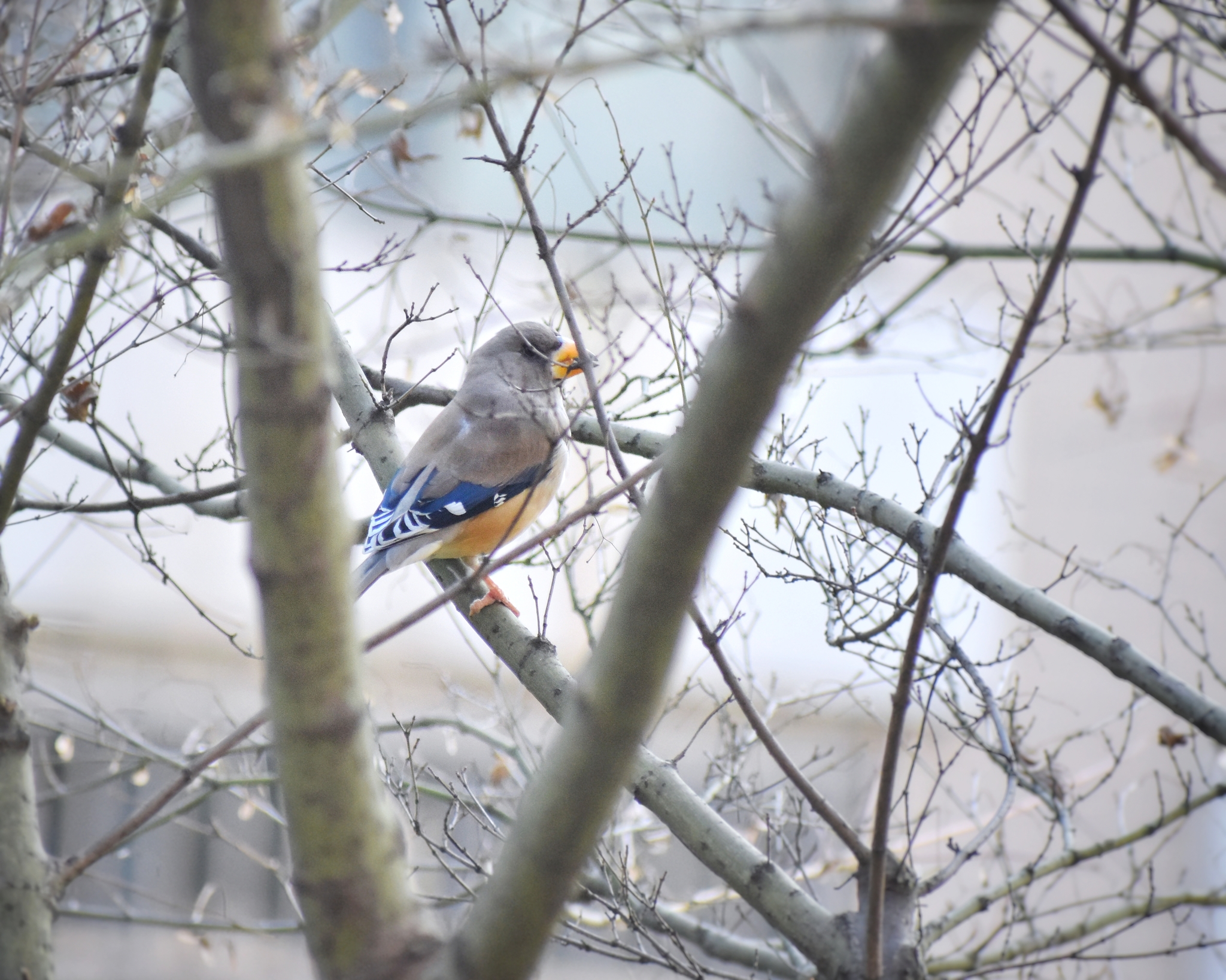
A large, heavily built finch measuring 18-20 cm in length with a wingspan of 23-24 cm and weighing 55-60 g. The most striking feature is its massive, conical beak, bright yellow with a black tip. The overall plumage is gray, darker on the upperparts and wings, lighter and somewhat silvery on the belly with brownish tones on the flanks. The wings are black with a rounded white spot at the tips, and the tail is black. Legs are pale flesh-colored and eyes are brown. Pronounced sexual dimorphism exists: males display a black head mask while females have a gray head mask.
Identification
The large size, massive yellow-and-black beak, and gray plumage distinguish this species from other finches in its range. The combination of black wings with white spots and black tail is characteristic. The genus Eophona is separated from similar grosbeaks by wing pattern and beak coloration. In flight, the white wing spots and black tail are visible at some distance. Males are readily identified by their black head mask, while females show gray on the head.
Distribution & Habitat
This species inhabits the Russian Far East, China, Manchuria, and Korea. It favors forests, mixed woodlands, and bamboo forests in hilly and mountainous terrain. It is not particularly shy of humans and readily visits gardens and orchards. It breeds in temperate forested regions and migrates south for winter to southern China, Japan, Taiwan, and northern Southeast Asia.
Behavior & Ecology
Breeding occurs in temperate forests where the female builds a cup-shaped nest in dense vegetation, typically laying 4 bluish eggs with brown spots. She incubates alone for 12-13 days while the male provides food. Both parents feed the young, which fledge at 12-14 days but remain with parents for another 2-3 weeks. Outside breeding season, it forms small groups of about ten individuals, moving through trees feeding on seeds. The powerful beak easily cracks hard seeds. It occasionally eats sprouts, berries, and fruit, rarely insects.
Conservation
The species is currently assessed as Least Concern by the IUCN. Population numbers appear stable across its range. While no major threats are documented, habitat changes in forested regions could potentially impact local populations. The species' tolerance of human-modified landscapes such as gardens and orchards provides some resilience.
Culture
No significant cultural or folklore associations were documented for this species.
Source: Wikipedia · CC BY-SA 3.0
Taxonomy
- Order
- Passeriformes
- Family
- Fringillidae
- Genus
- Eophona
- eBird Code
- yebgro1
Vocalizations
Subspecies (2)
-
Eophona migratoria migratoria
breeds eastern Manchuria to North Korea; winters to eastern China
-
Eophona migratoria sowerbyi
eastern China
Data Sources
Species description from Wikipedia, licensed under CC BY-SA 3.0.
Bird images and sounds sourced from GBIF, contributed by citizen scientists worldwide under Creative Commons licenses.
Taxonomy data from AviList 2025.