Passeriformes / Muscicapidae / Enicurus
Slaty-backed Forktail
Enicurus schistaceus · 灰背燕尾
Introduction
A slim, medium-sized forktail in the family Muscicapidae. It inhabits edges of fast-flowing streams and rivers in tropical and subtropical regions across the Himalayas, Indian Sub-continent, southern China, and Southeast Asia. Distinctive traits include a slate grey forehead, crown, and mantle, and a long, deeply forked tail. It hunts small invertebrates by hopping among rocks or flying over water. Classified as Least Concern by the IUCN with a stable population.
Description
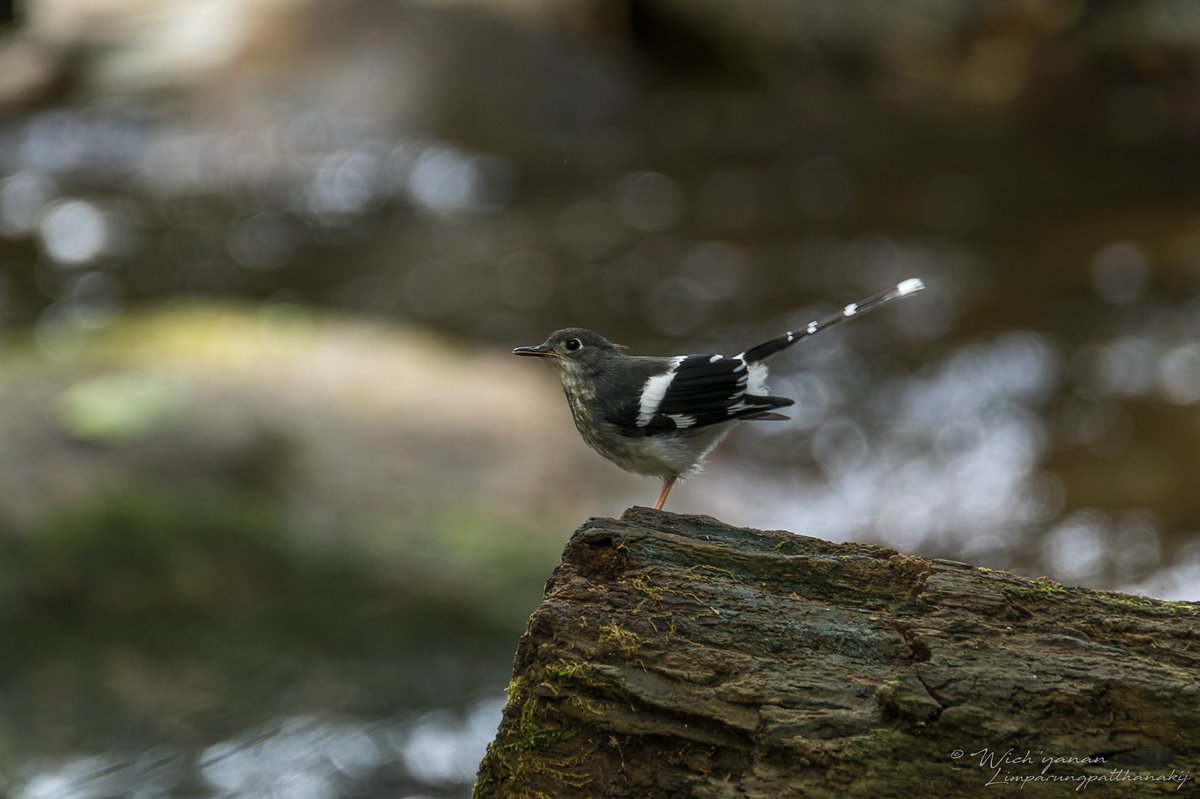
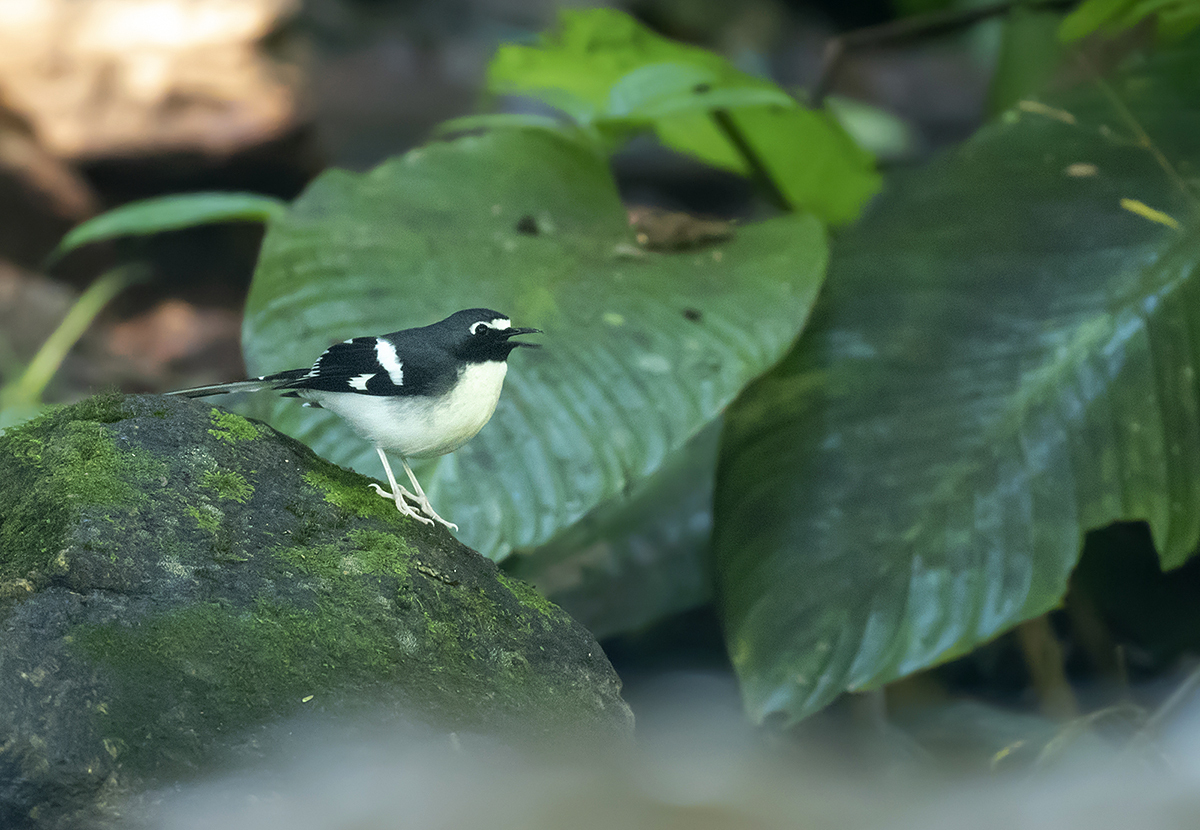
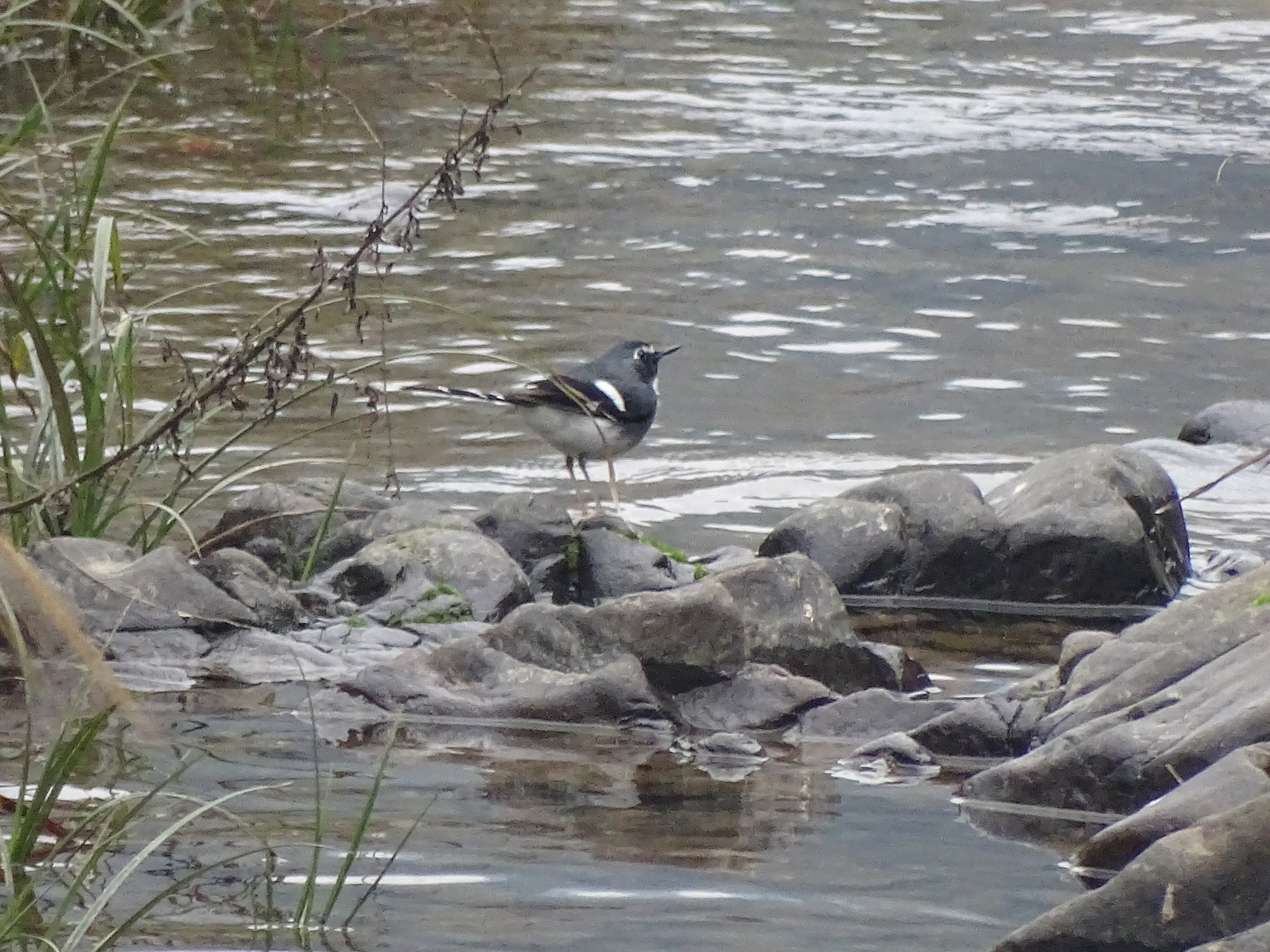
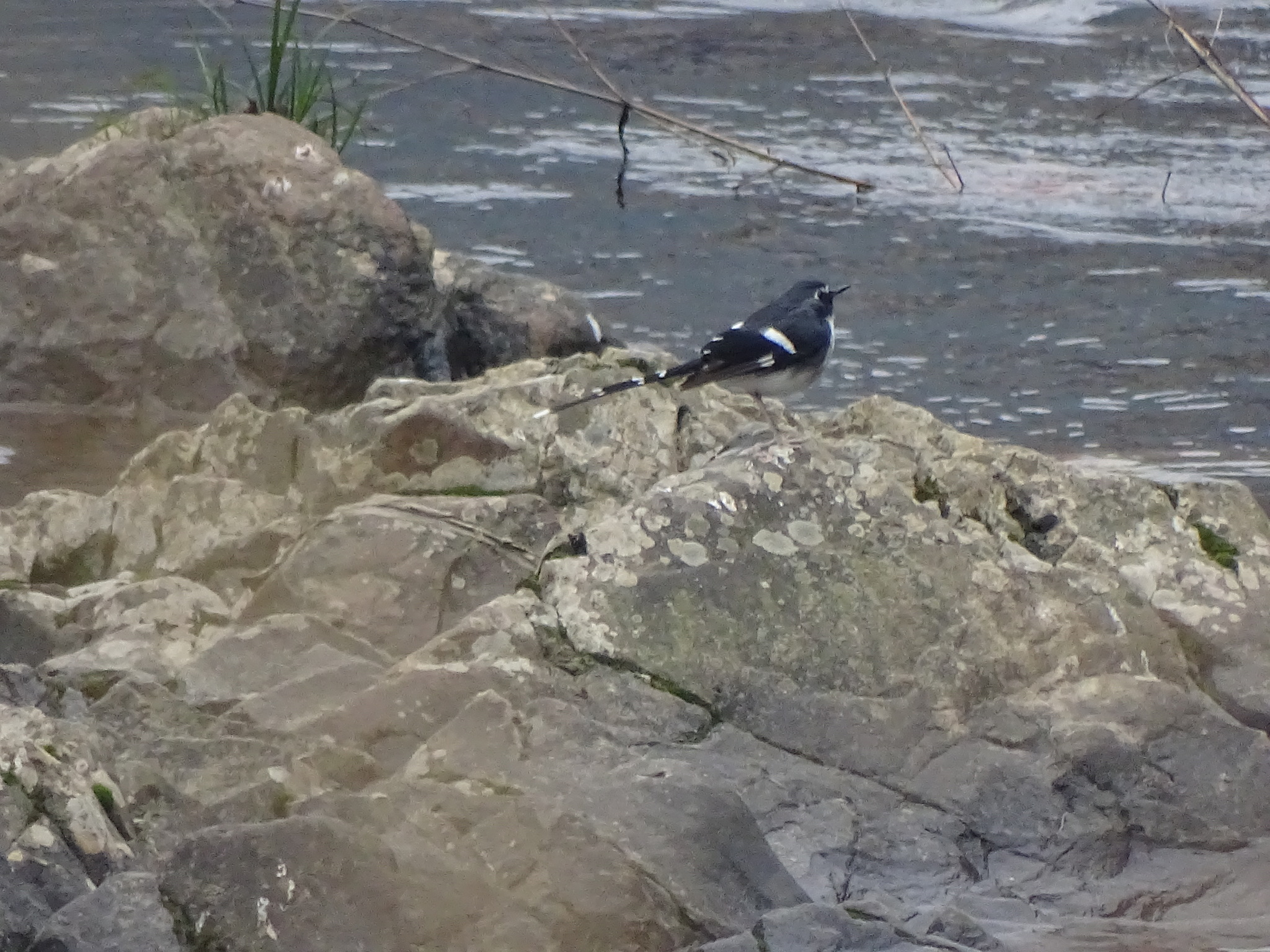
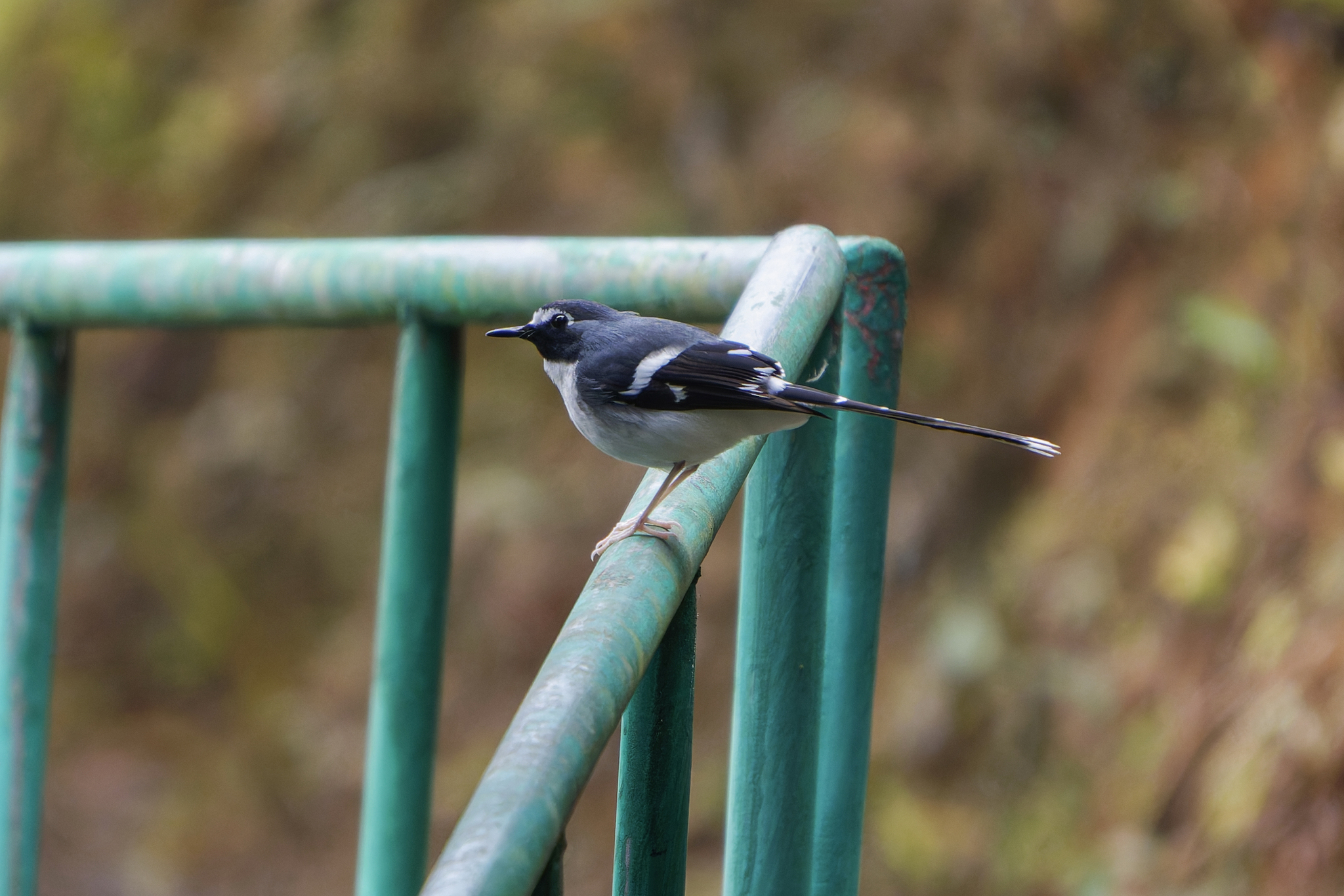
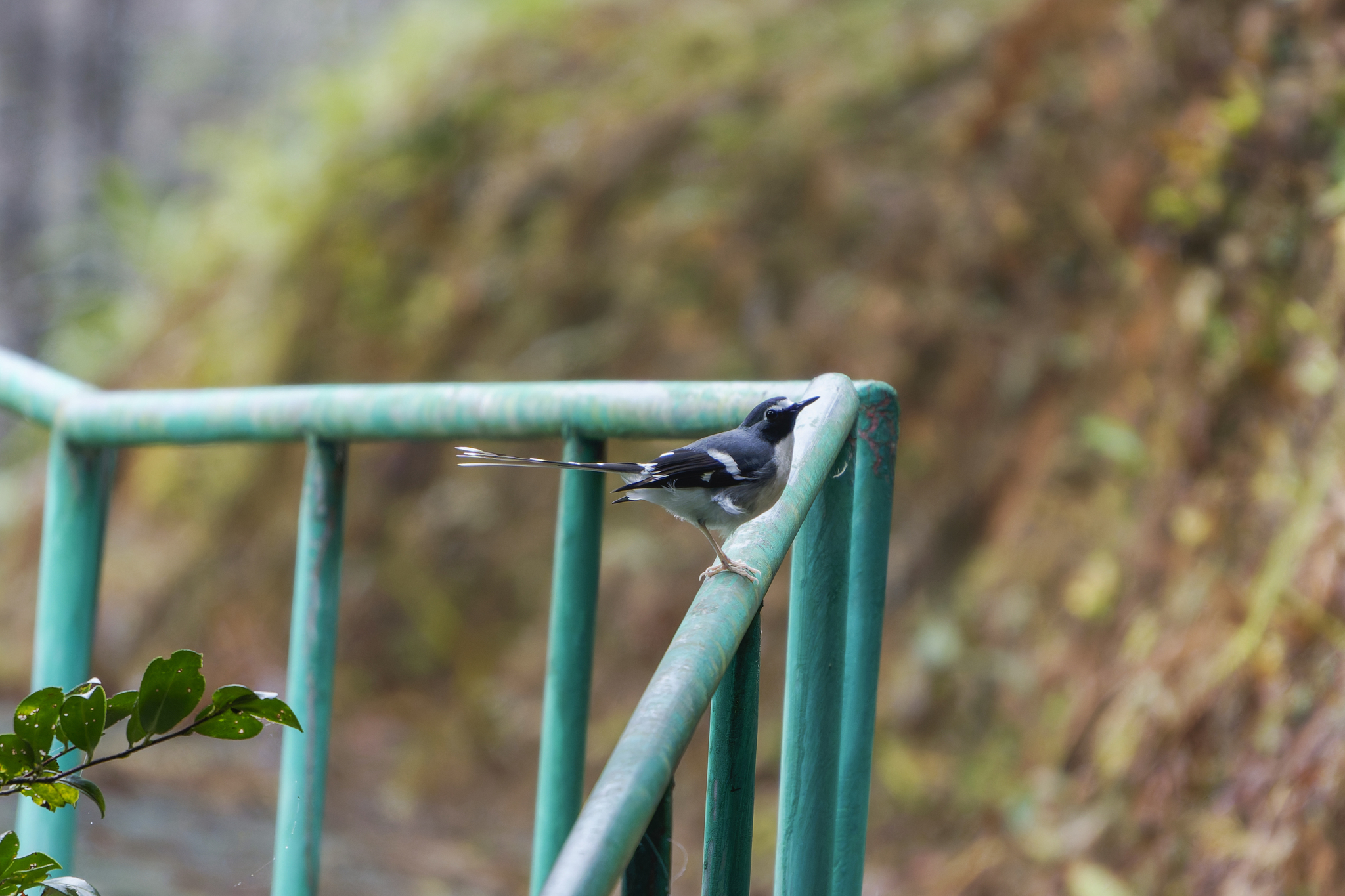
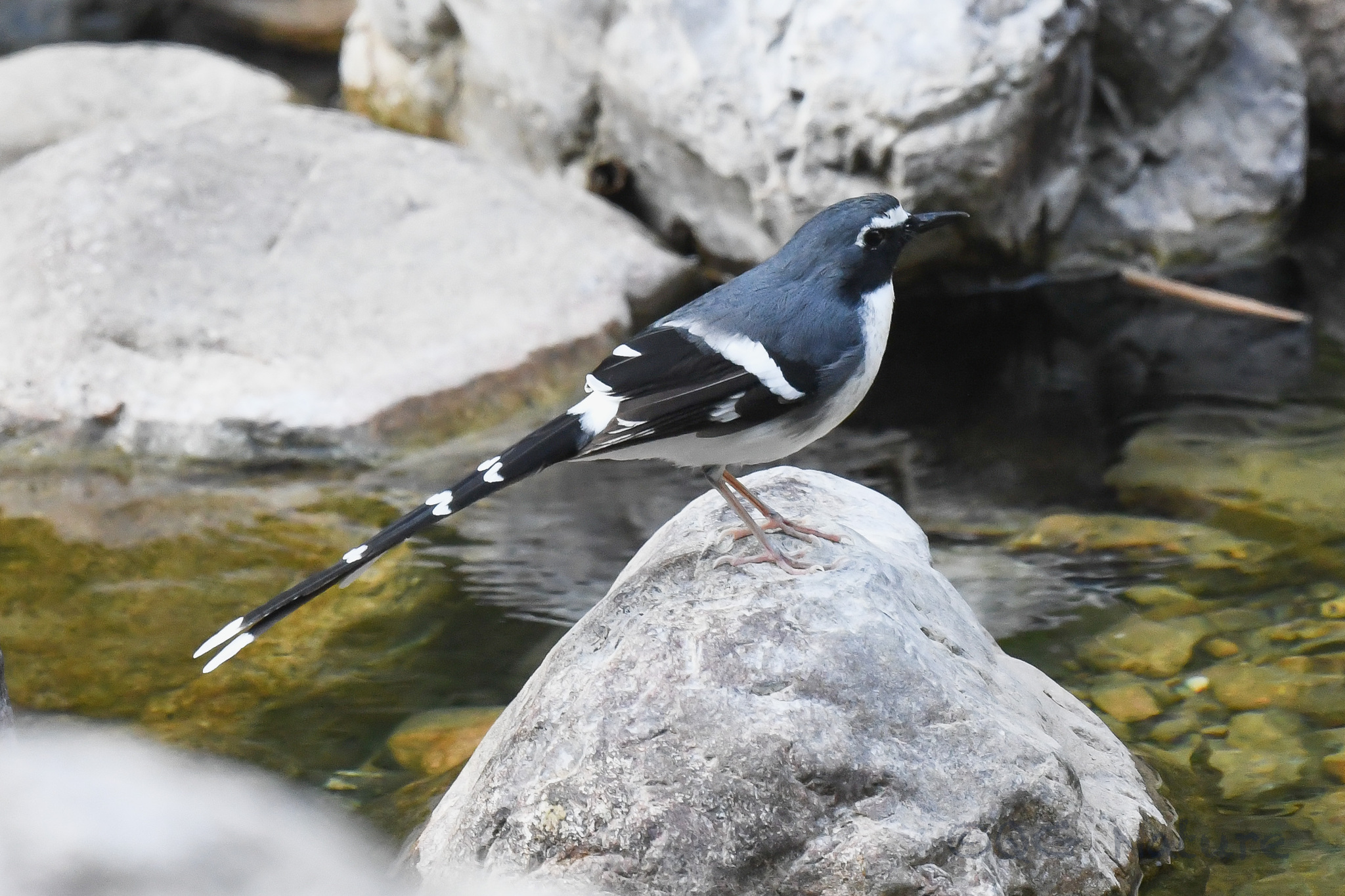
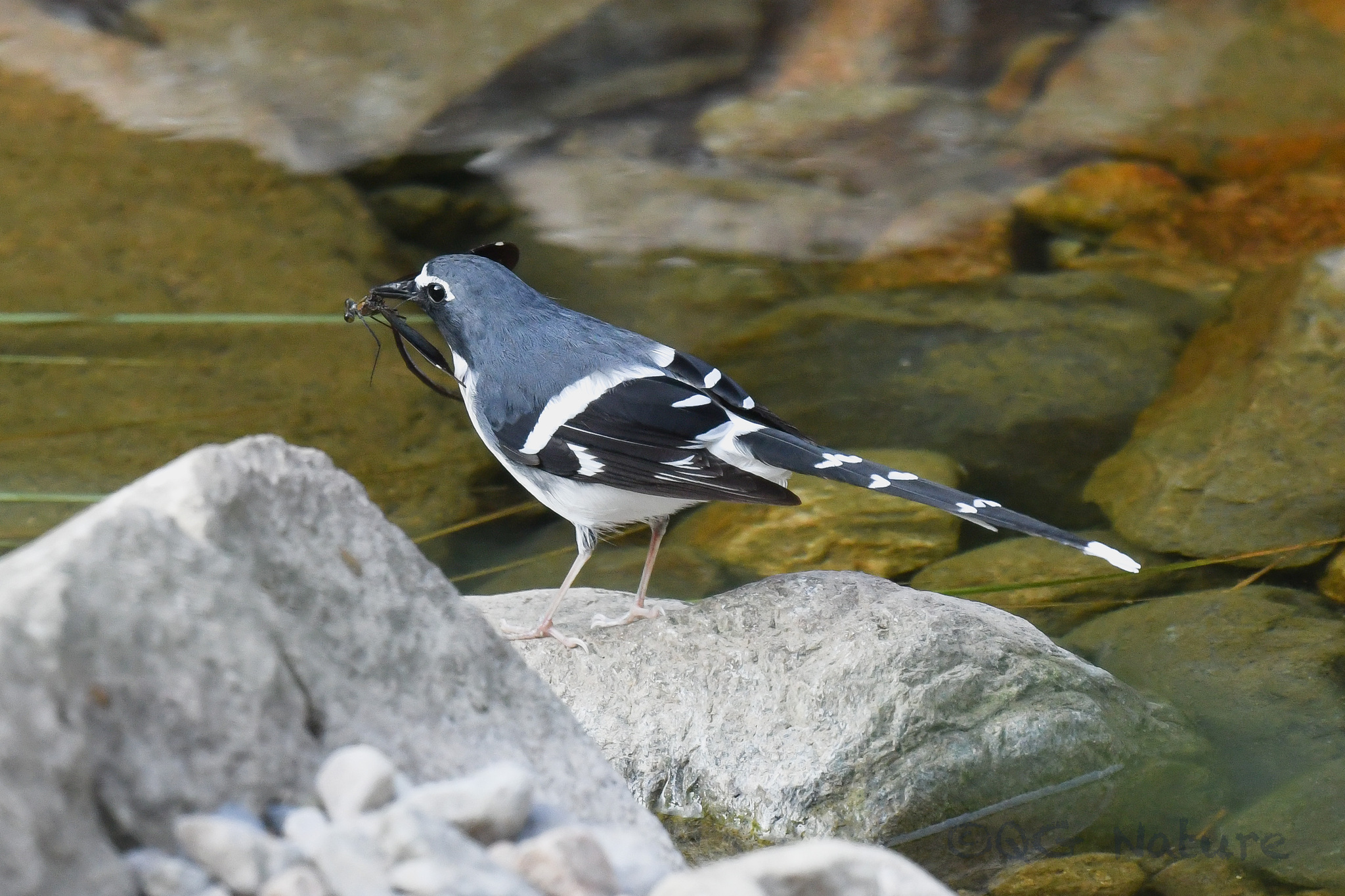
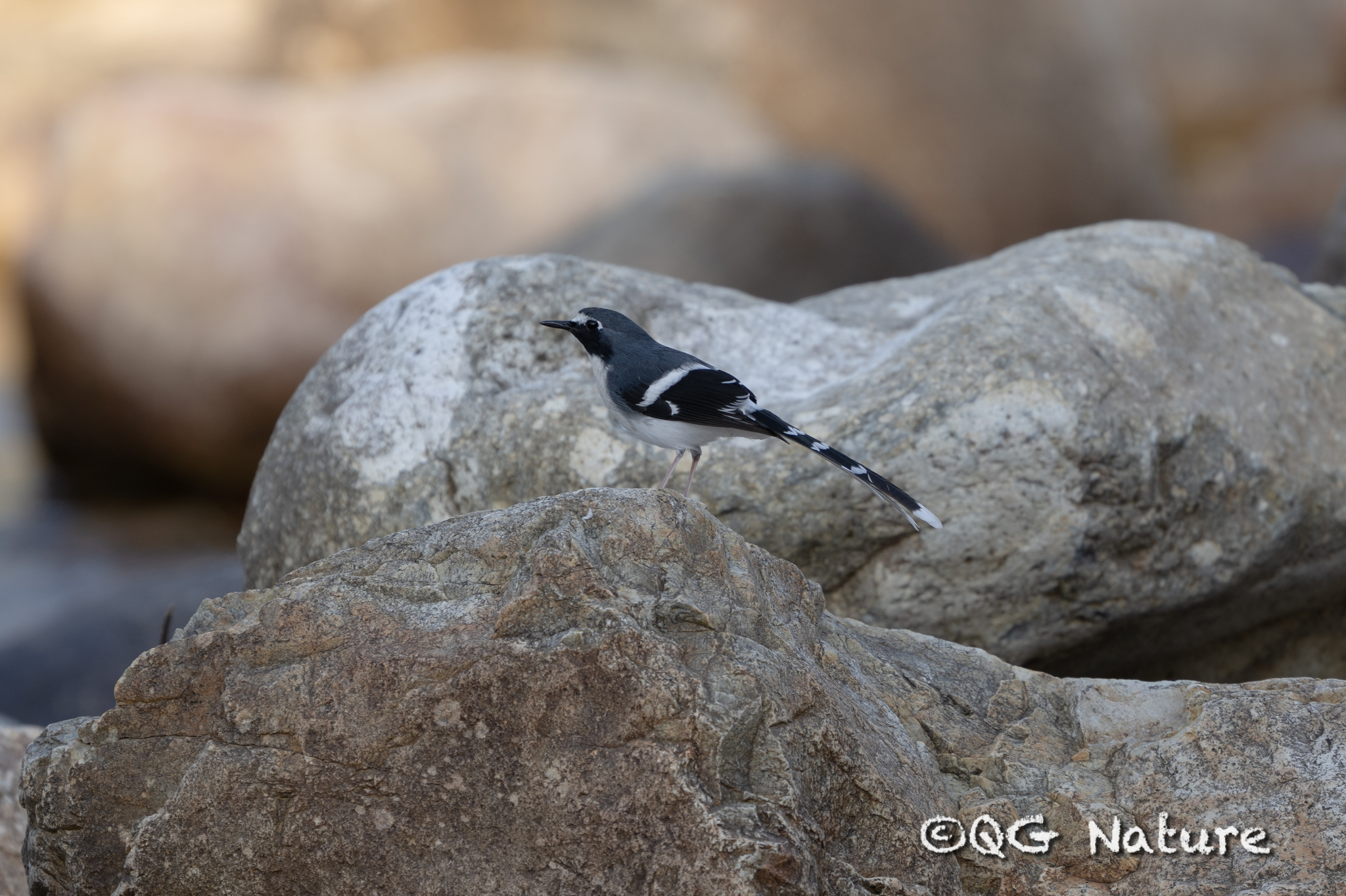
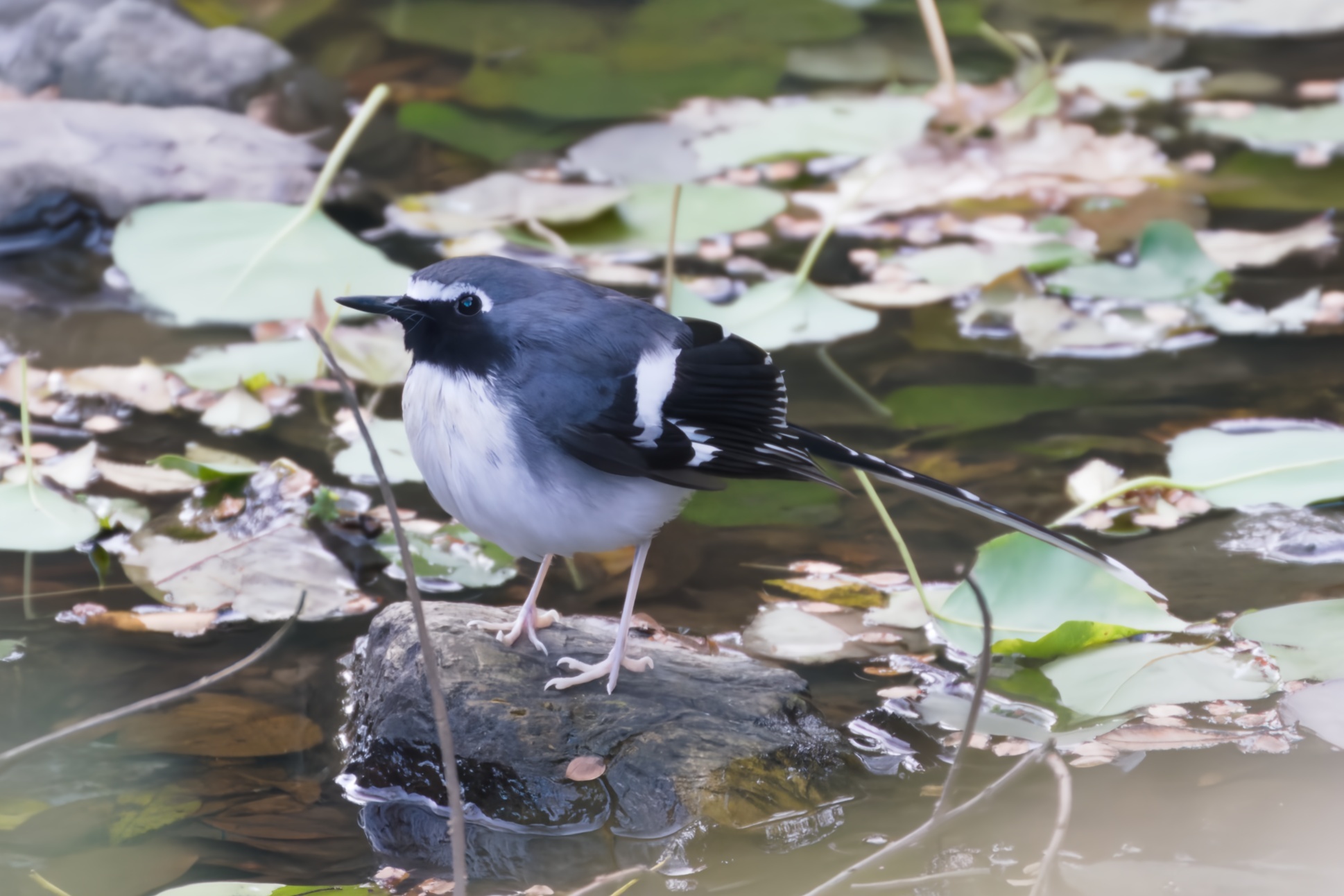
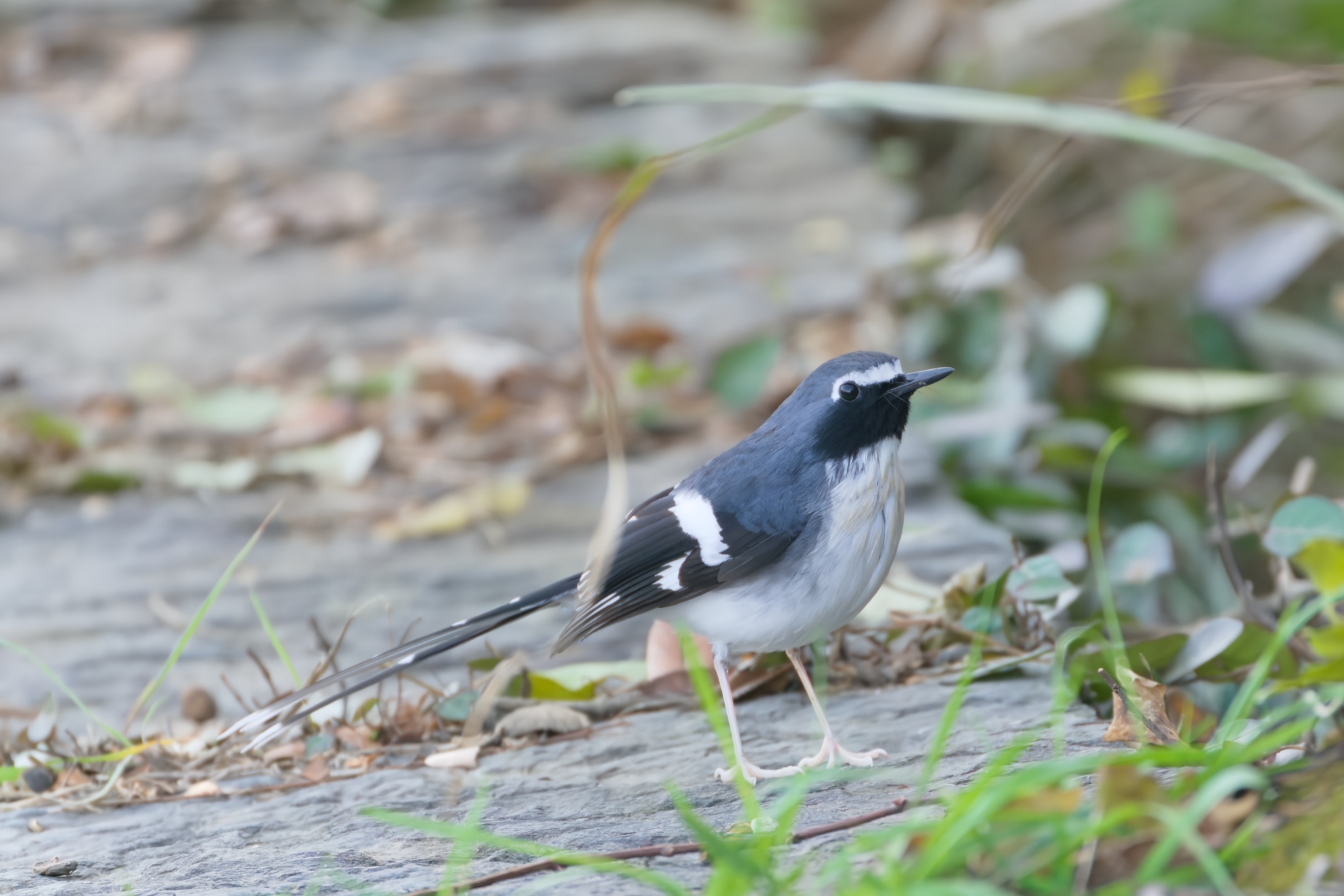
Length 22–25 cm; weight 26–38 g. Plumage is slate-grey, black, and white. The forehead, crown, sides of the neck, and scapulars are slate grey. The throat, ear coverts, chin, and face are black, with a narrow white stripe across the face (sometimes including an eye ring). Wings have black coverts, wide white bars, and a white patch at the base of the primaries. The rump and lower back feature a large white patch. The tail is long, deeply forked, largely black with a white tip and three white bands. The bill is black; feet are pale pinkish or greyish; iris is dark brown or black. Juveniles lack a white forehead, are brown above with dark scaled breasts, shorter tails, and greyish or yellowish lores. Sexes are alike.
Identification
Distinguished from the similar black-backed forktail by its slate-grey mantle and crown, slightly larger bill, and less white on the forehead. Key field marks include the slate grey upperparts, white rump, and long, deeply forked black-and-white banded tail. Flight is quick, direct, and slightly undulating, resembling a large wagtail. Vocalizations include a high, thin, sharp, metallic screech ('teenk') similar to Blyth's kingfisher, a mellow 'cheet', and a harsh screeching call when alarmed.
Distribution & Habitat
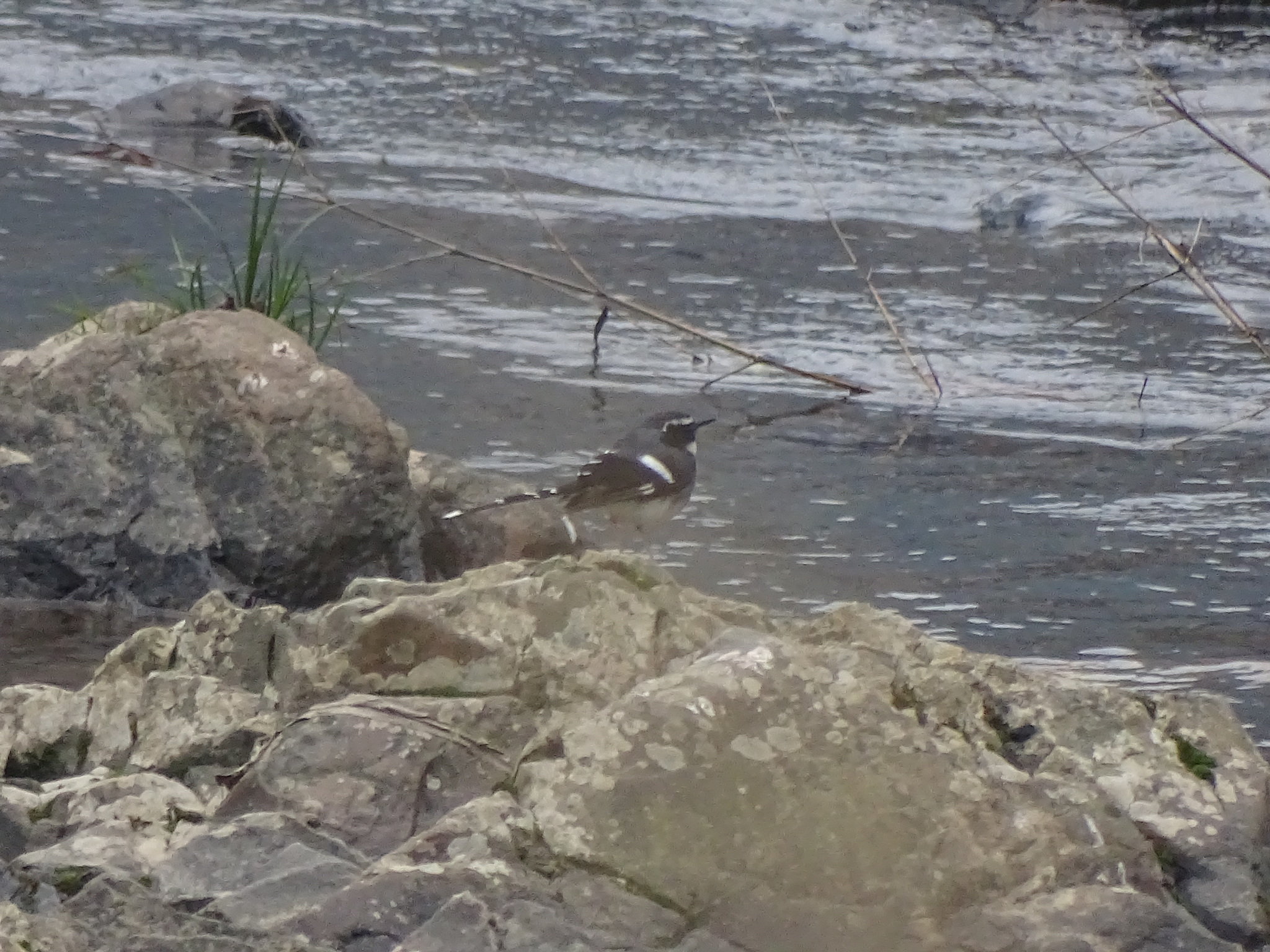
Found in central and eastern Himalayas (Uttarakhand to Myanmar, including Nepal and Bhutan), southern China (Sichuan, Yunnan, Guizhou, Fujian, Zhejiang, southeast Tibet), and continental Southeast Asia (Thailand, Vietnam, Laos, Cambodia, peninsular Malaysia). Vagrant in Bangladesh; occasional winter visitor or uncommon resident in Hong Kong. Inhabits tropical and subtropical montane broadleaf forests near fast-flowing rocky streams and rivers, occasionally cultivated areas. Elevational range varies: 300–1600 m in northern India, 900–1675 m in Nepal, 400–1800 m in southern China/Thailand, >500 m in Cambodia, >800 m in Malaysia, and 800–2200 m in Bhutan. Moves to foothills and plains (as low as 200 m) in winter. Sedentary in Southeast Asia; altitudinal migrant in Himalayas.
Behavior & Ecology
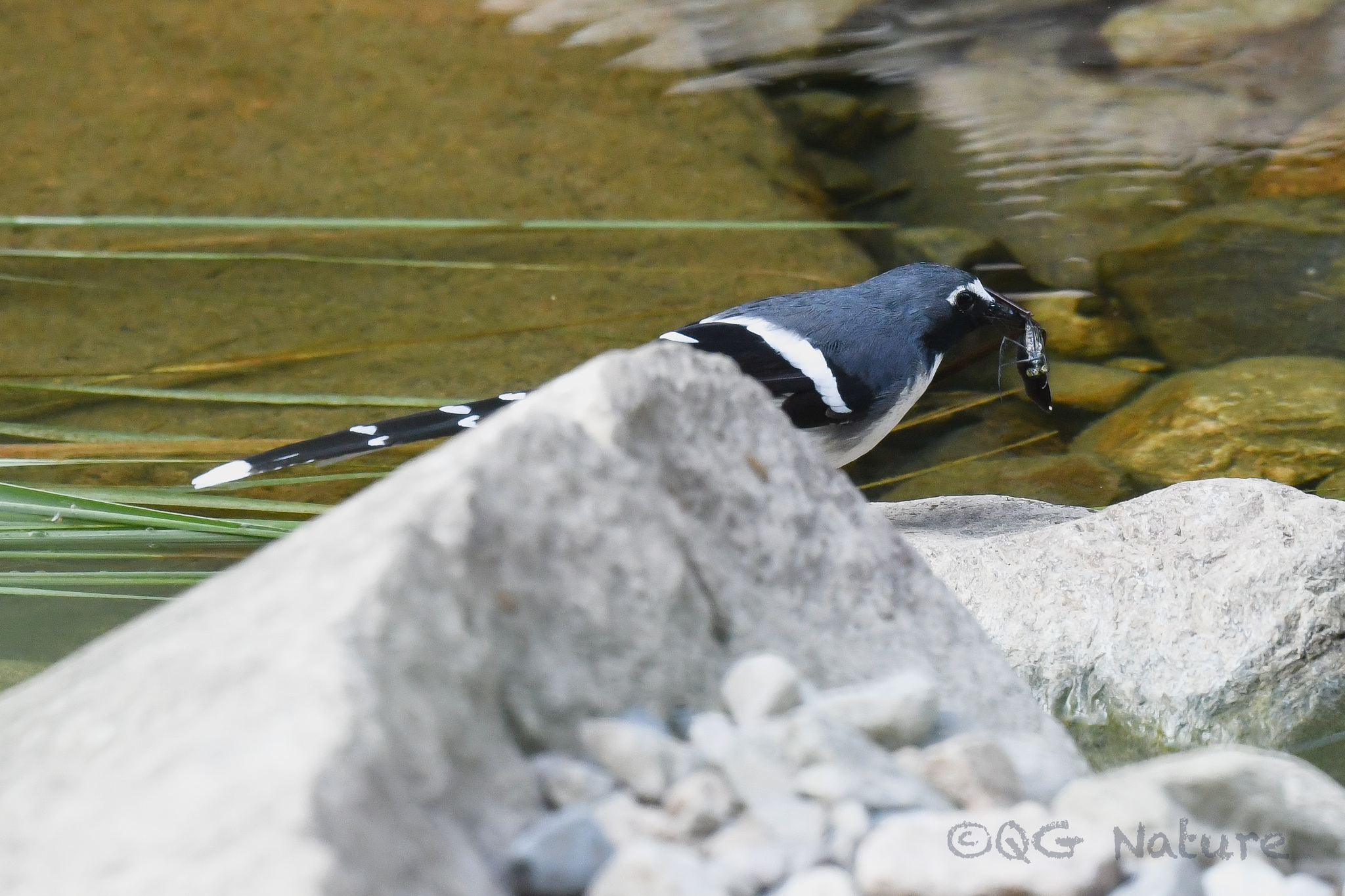
Generally solitary, occasionally in pairs or family groups during breeding. Forages restlessly on rocks at water edges and in mid-stream for small invertebrates, larvae, and crustaceans, sometimes entering water or making brief flights to snatch surface prey. Constantly bobs tail; raises and opens tail in scissor-like movement when disturbed. Breeds February–July, potentially producing two or three broods. Nests in ground holes, tree trunks, roots, hollows, or rock crevices using bryophytes, leaves, grass, and mud. Lays 3–4 white, pinkish, or bluish eggs with lavender or reddish-brown spots; both sexes incubate.
Conservation
Classified as Least Concern by the International Union for Conservation of Nature. Population is thought to be stable and greater than 10,000 individuals.
Source: Wikipedia · CC BY-SA 3.0
Taxonomy
- Order
- Passeriformes
- Family
- Muscicapidae
- Genus
- Enicurus
Distribution
rocky mountain streams of northern India to southern China and southeastern Asia
Data Sources
Species description from Wikipedia, licensed under CC BY-SA 3.0.
Bird images and sounds sourced from GBIF, contributed by citizen scientists worldwide under Creative Commons licenses.
Taxonomy data from AviList 2025.