






Slaty-backed Forktail
Enicurus schistaceus
灰背燕尾
Introduction
A forktail in the family Muscicapidae (Old World flycatchers and chats). Found in the central and eastern Himalayas from Uttarakhand to Myanmar including Nepal and Bhutan, extending through southern China (Sichuan, Yunnan, Guizhou, Fujian, Zhejiang, possibly Hainan) and continental Southeast Asia (Thailand, Vietnam, Laos, Cambodia, peninsular Malaysia). Occasional vagrant in Bangladesh and winter visitor to Hong Kong. Inhabits edges of fast-flowing streams and rivers in tropical and subtropical montane broadleaf forests, occasionally near roads and trails. Distinguished by slate-grey forehead, crown, and mantle, and long deeply forked black-and-white tail. Classified as Least Concern by IUCN due to wide distribution and apparently stable population.
Description
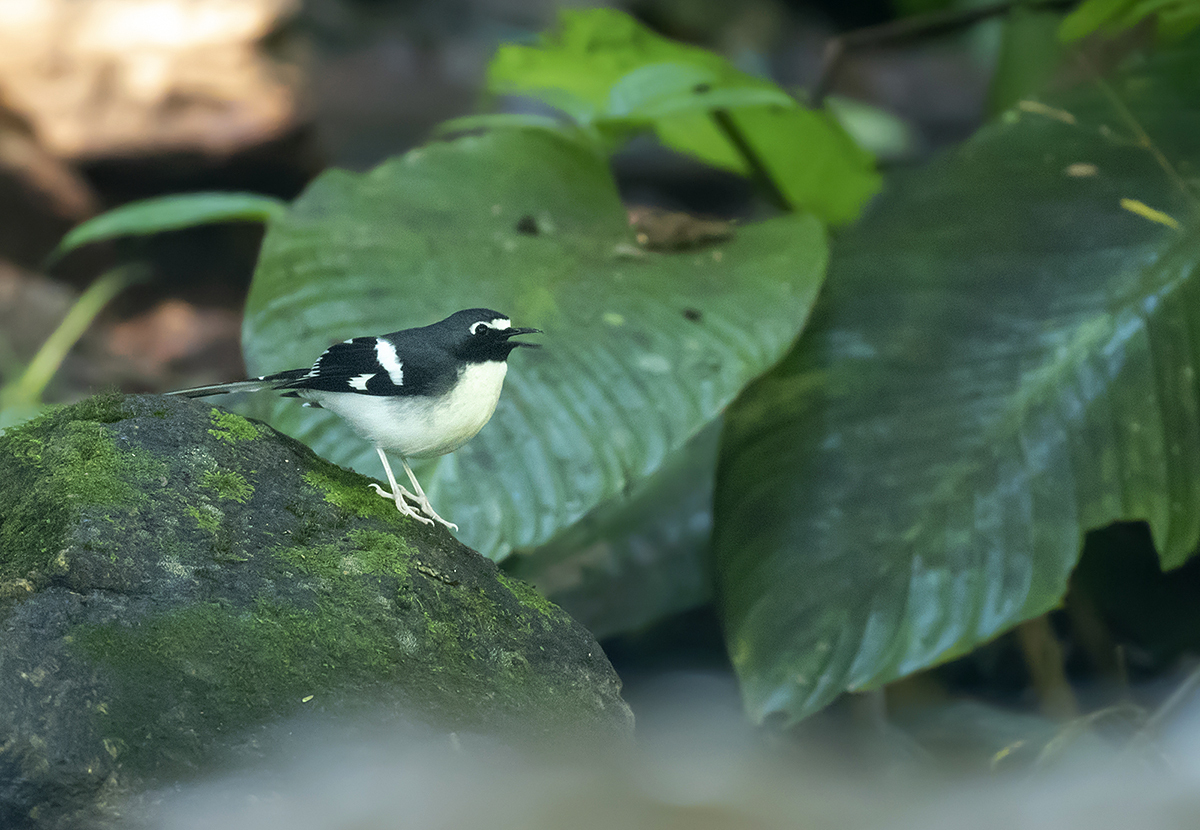
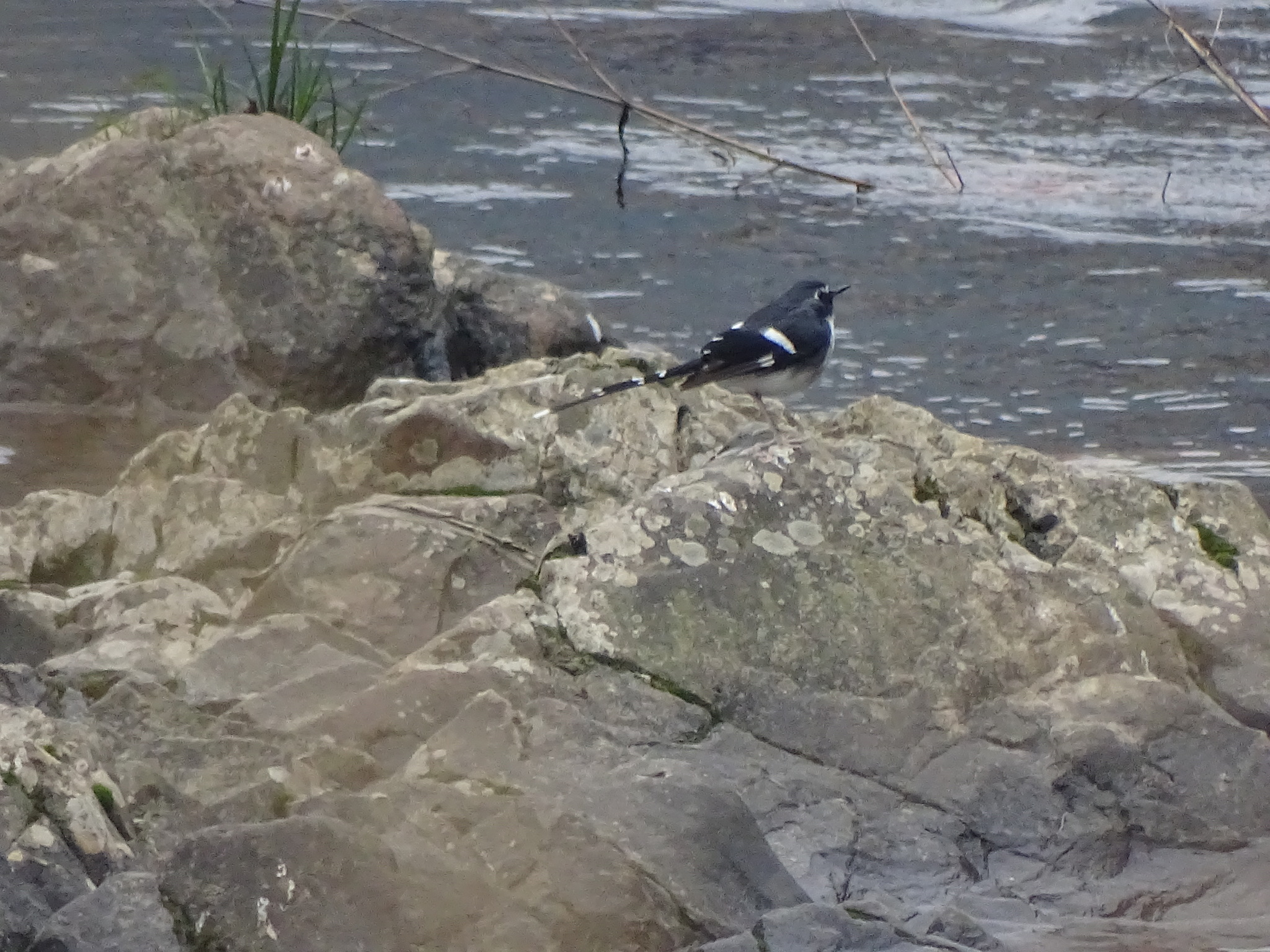
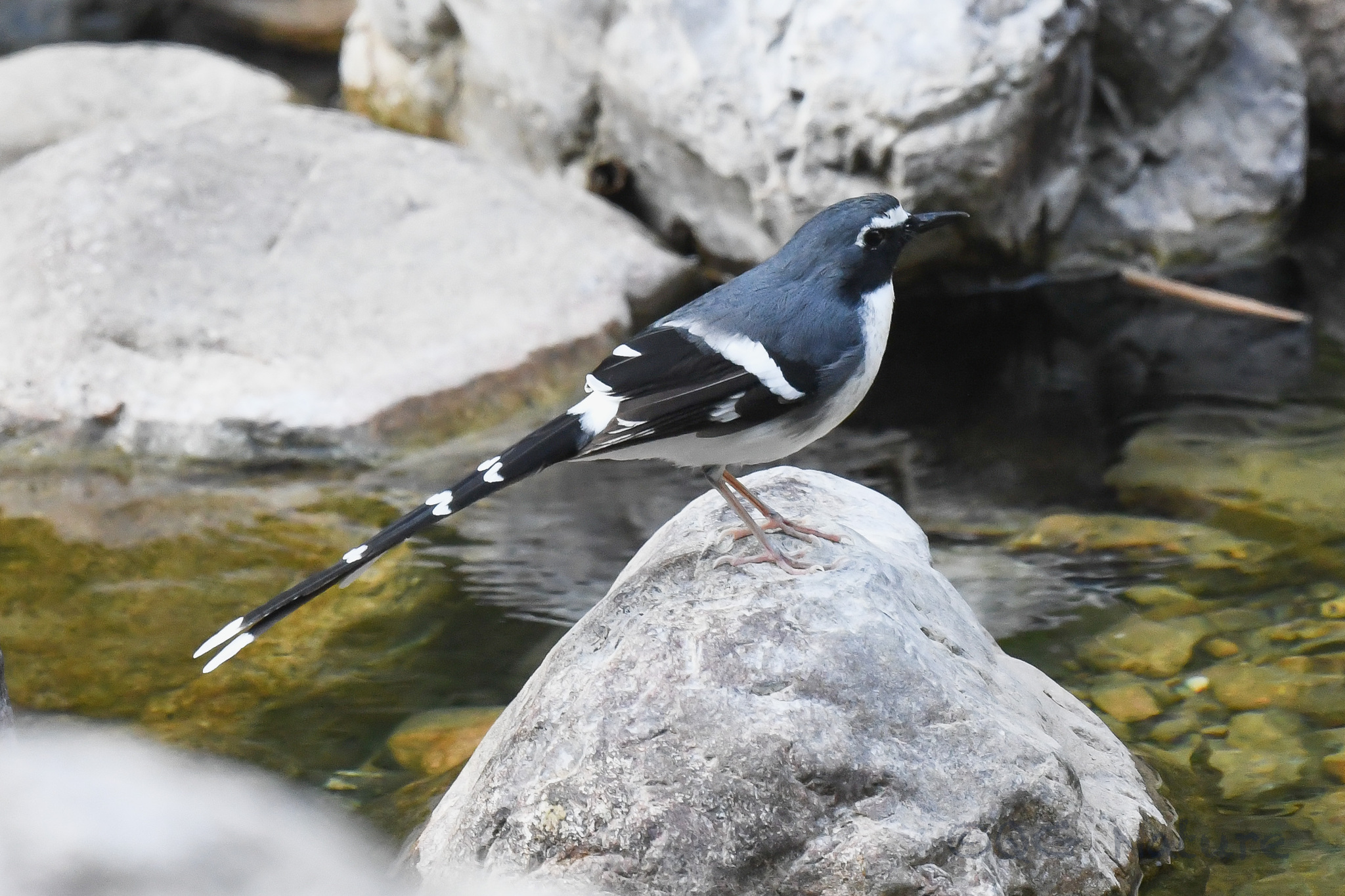
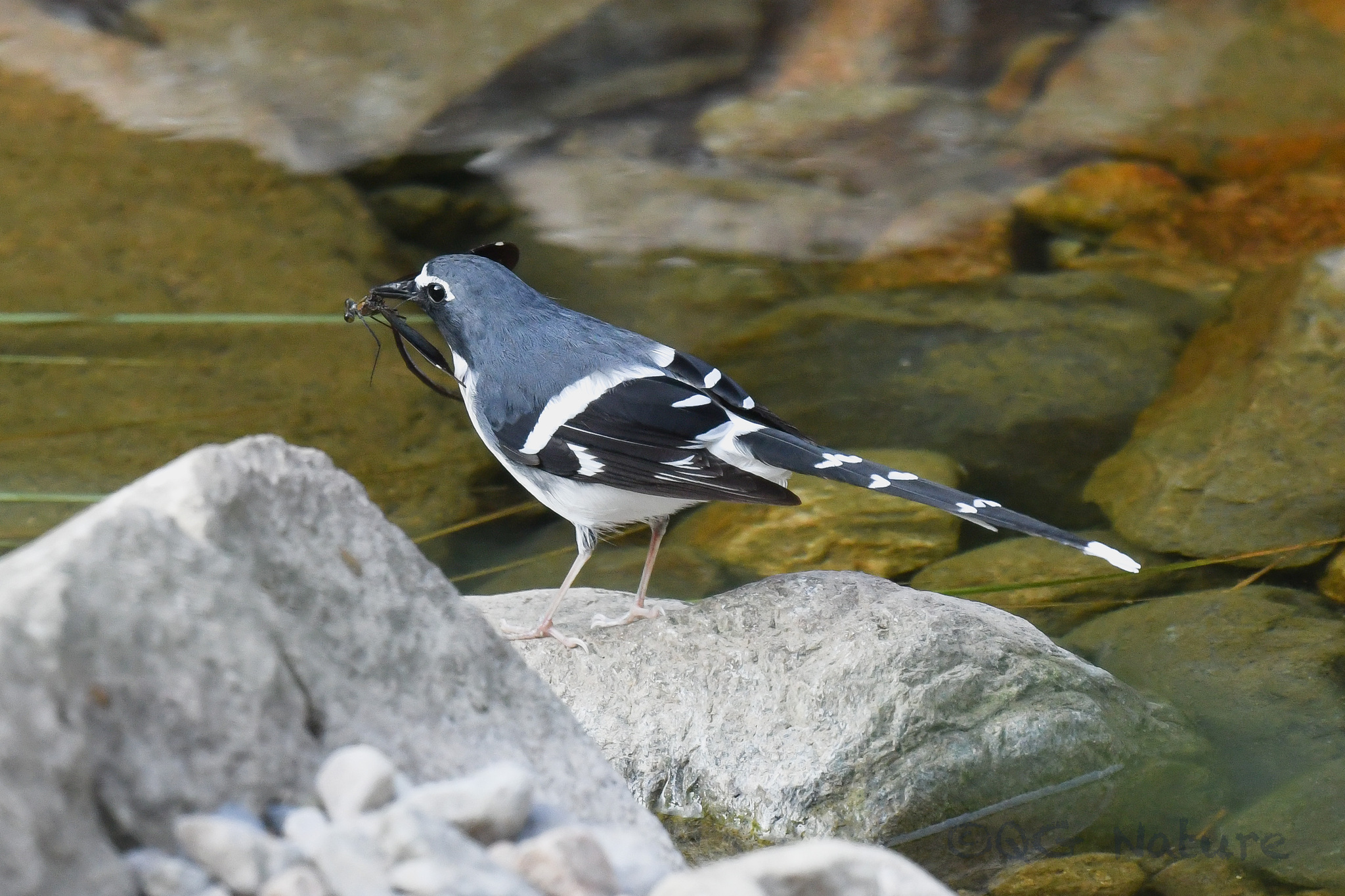
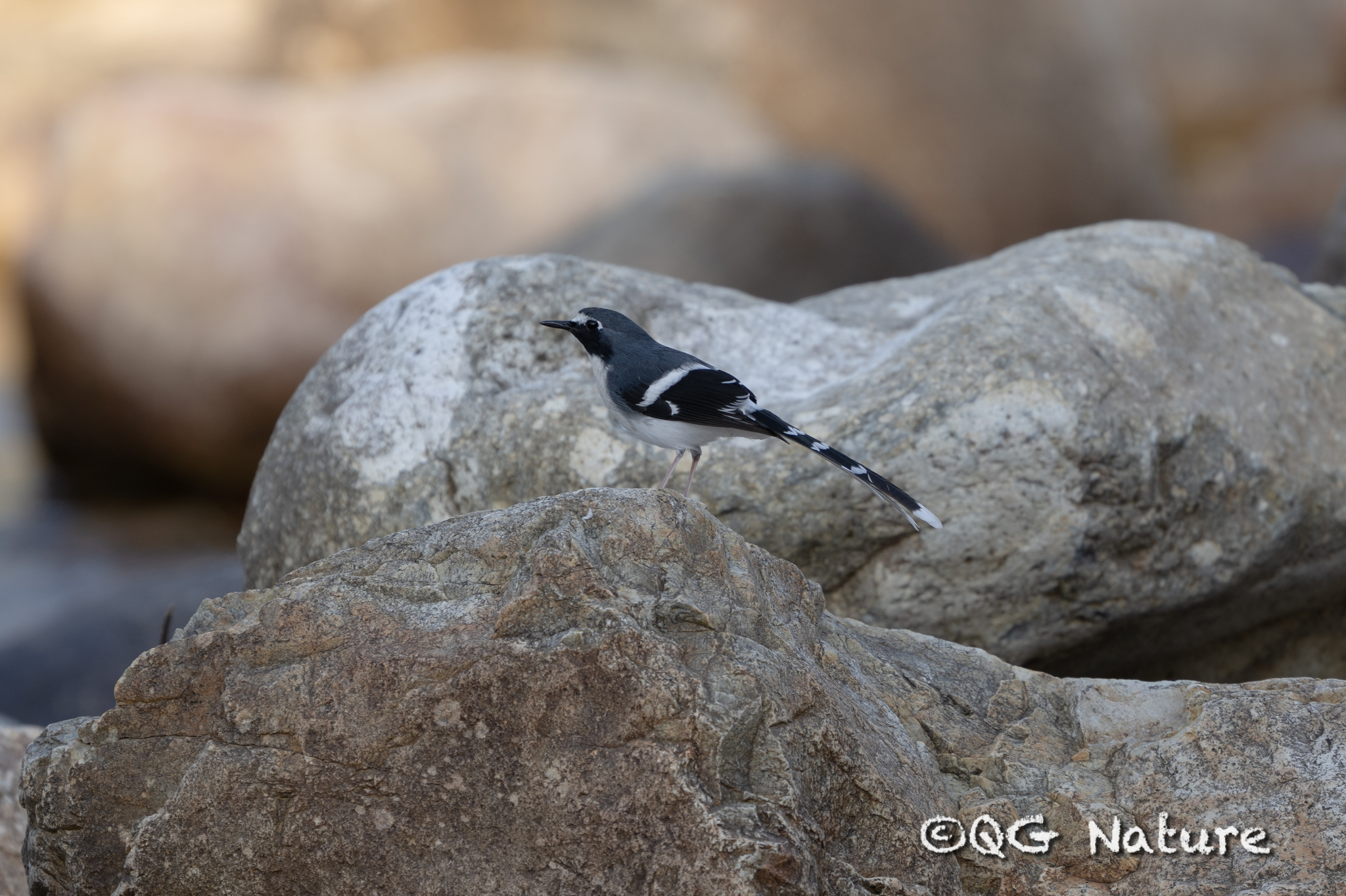
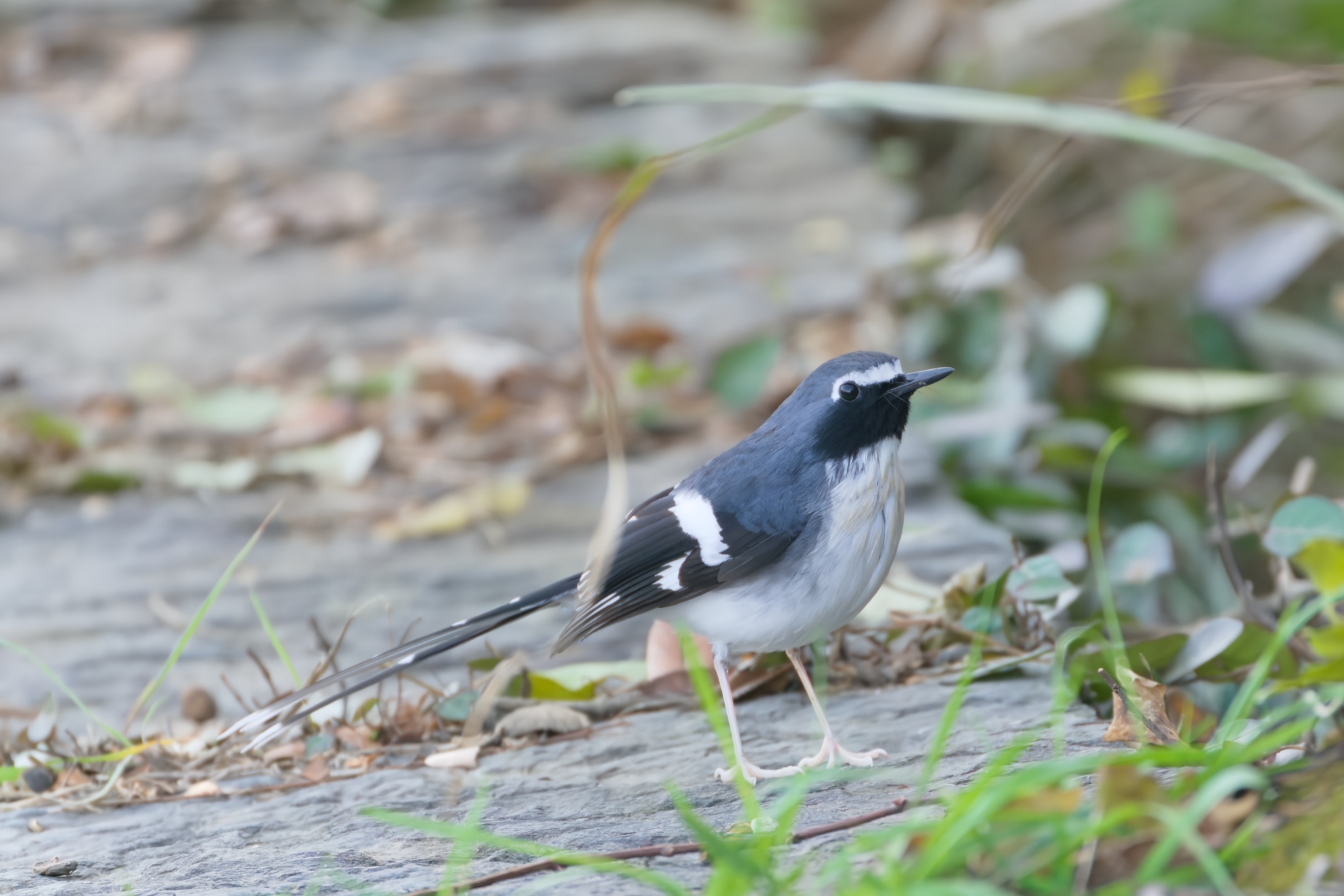
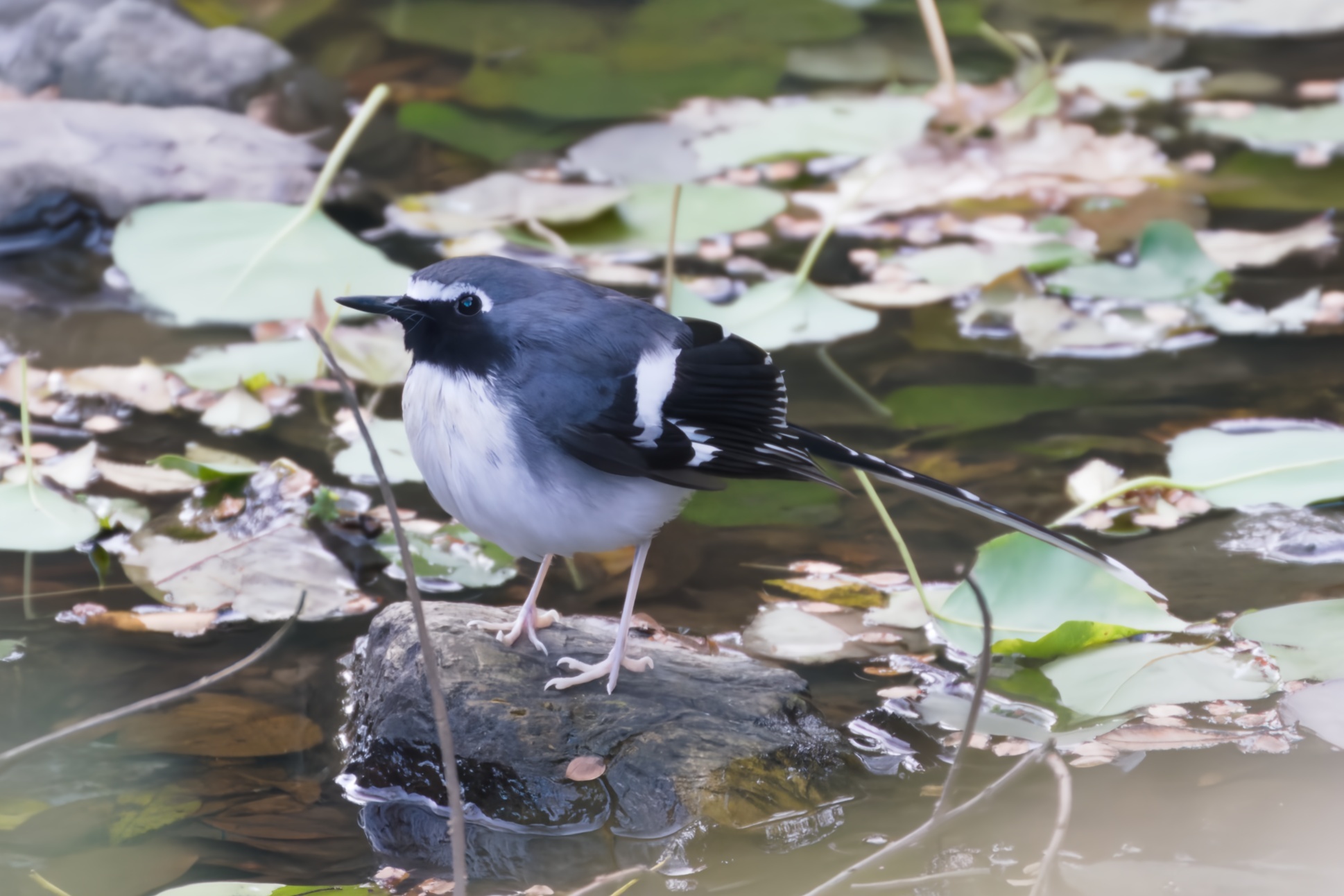
A slim, medium-sized forktail measuring 22-25 cm in length and weighing 26-38 g. Plumage is slate-grey, black, and white. The black bill contrasts with pale pinkish or greyish feet; the iris is dark brown (occasionally black). Features a black throat, narrow white stripe across the face forming a partial or complete white eye ring, black ear coverts, chin, and face. The forehead, crown, sides of neck, and scapulars are slate-grey. Black wings display white patches at the base of primaries and wide white bars; a large white patch covers the rump and lower back. The long, deeply forked tail is black with a white tip and three white bands. The sexes are alike. Juveniles are brown above with no white forehead, dark breast scaling, and shorter tails.
Identification
Very similar to the black-backed forktail (Enicurus immaculatus) but distinguished by its slate-grey mantle and crown (not black), slightly larger bill, and less white on the forehead. The deeply forked black-and-white tail with three white bands is diagnostic. The high, thin, sharp screech 'teenk' is sometimes mistaken for Blyth's kingfisher, but the forktail's habitat near streams and its distinctive tail pattern help confirm identification.
Distribution & Habitat
Occurs along fast-flowing water bodies in tropical and subtropical montane broadleaf forests across the central and eastern Himalayas (west to Uttarakhand, east to Myanmar), Nepal, Bhutan, and southern China (including southeast Tibet). Range extends through Thailand, Vietnam, Laos, Cambodia, and peninsular Malaysia; discontinuous distribution in Southeast Asia. Elevational range varies: 300-1600m in northern India, 900-1675m in Nepal, 400-1800m in southern China and Thailand, above 500m in Cambodia, 800-2200m in Bhutan, and above 800m in Malaysia. Makes elevational movements seasonally, descending to foothills and plains in winter (recorded as low as 200m).
Behavior & Ecology
Feeds on small invertebrates including larvae and crustaceans found in and around water. Forages by hopping agilely among rocks at water edges and making brief flights to snatch prey from the water surface. Flight is quick, direct, and slightly undulating, similar to a large wagtail. Breeds February-July, building cup- or dome-shaped nests of bryophytes, leaves, and grass with a mud outer layer, placed in ground holes, tree roots, tree hollows, or rock crevices. Lays 3-4 white, pinkish, or bluish eggs with lavender or reddish-brown spots; both sexes incubate. Raises 2-3 broods annually. Solitary or in pairs; occasionally in small family groups during breeding season. Constantly bobs tail and performs scissor-like tail movements when disturbed.
Conservation
Classified as Least Concern by the International Union for Conservation of Nature. Population size is not precisely known but estimated to exceed 10,000 individuals and thought to be stable. Very large range with common occurrence in China, Nepal, and Southeast Asia. No significant threats identified; the species' adaptability to cultivated areas near water and stable population trend support its current conservation status.
Culture
One of its calls, a high, thin, sharp screech 'teenk', has been described as similar to that of Blyth's kingfisher, for which it has been mistaken. This vocal similarity has led to identification confusion between the two species.
Source: Wikipedia · CC BY-SA 3.0
Taxonomy
- Order
- Passeriformes
- Family
- Muscicapidae
- Genus
- Enicurus
- eBird Code
- slbfor1
Distribution
rocky mountain streams of northern India to southern China and southeastern Asia
Data Sources
Species description from Wikipedia, licensed under CC BY-SA 3.0.
Bird images and sounds sourced from GBIF, contributed by citizen scientists worldwide under Creative Commons licenses.
Taxonomy data from AviList 2025.