Passeriformes / Muscicapidae / Enicurus
White-crowned Forktail
Enicurus leschenaulti · 白额燕尾
Introduction
A species of forktail in the family Muscicapidae, formally described in 1818. It is the largest of the forktails, inhabiting subtropical or tropical moist lowland and montane forests near water across South and Southeast Asia. Distinctive traits include a prominent white crown, black mantle, and long deeply forked tail. It forages for invertebrates along river edges and builds nests near or over water. Categorized as Least Concern by the IUCN.
Description
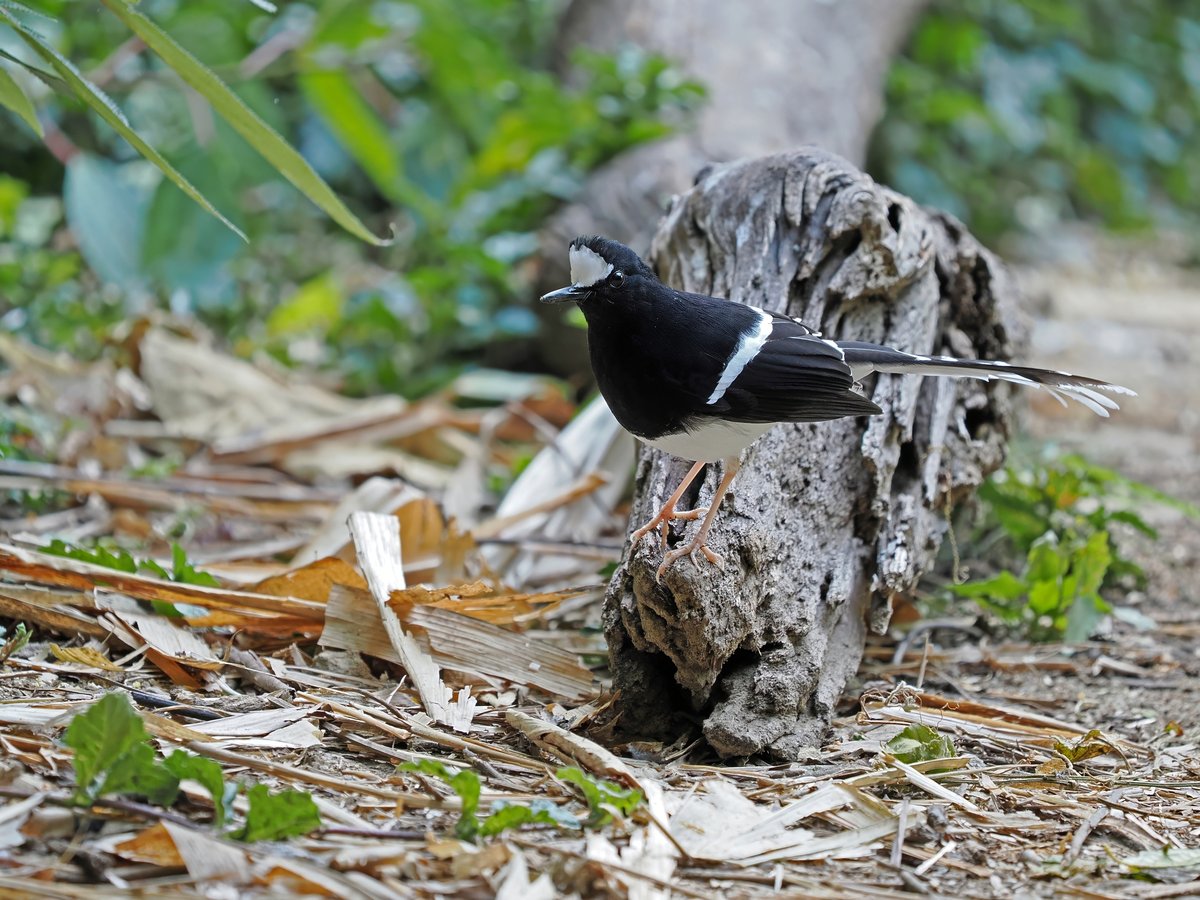
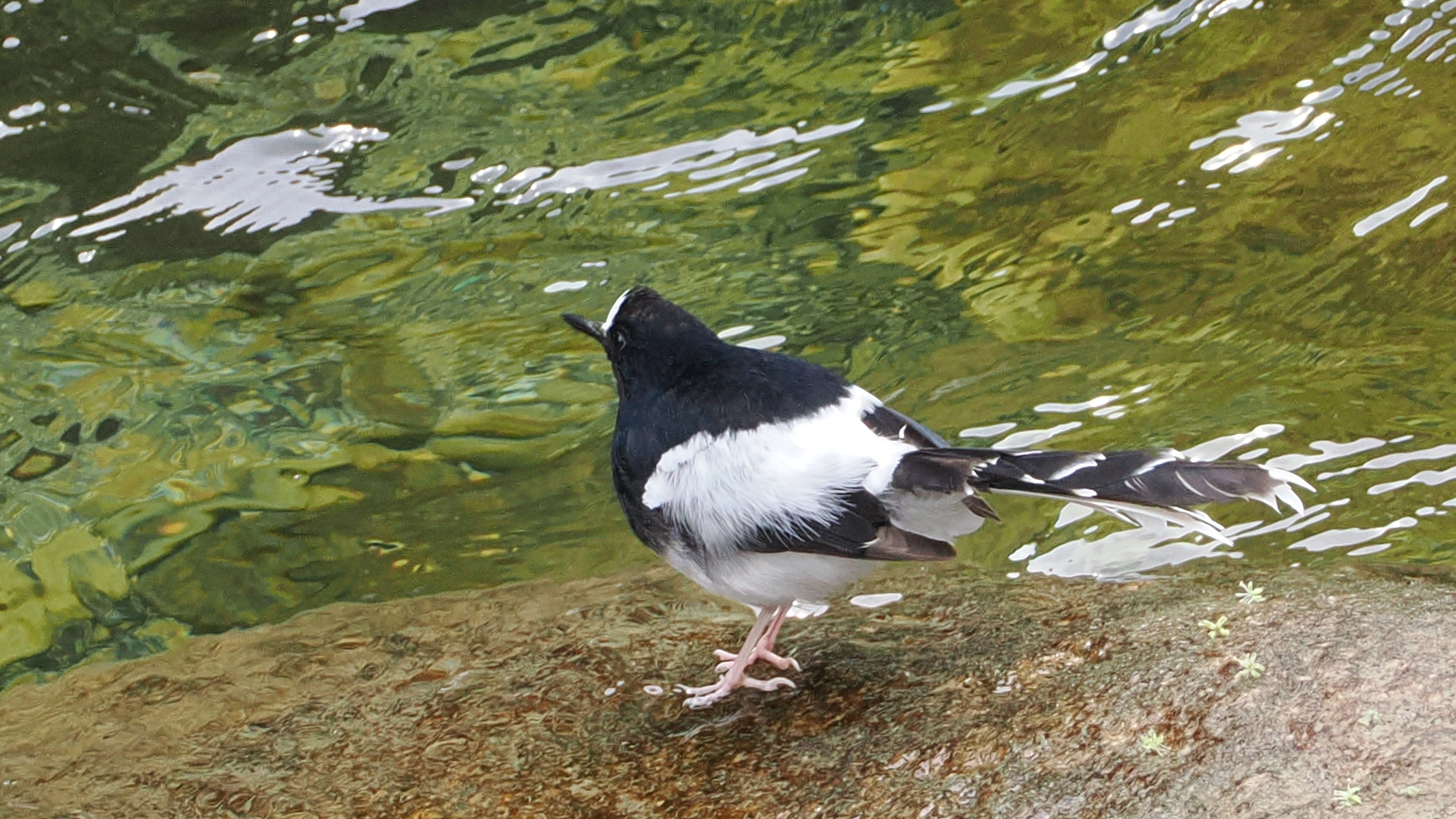
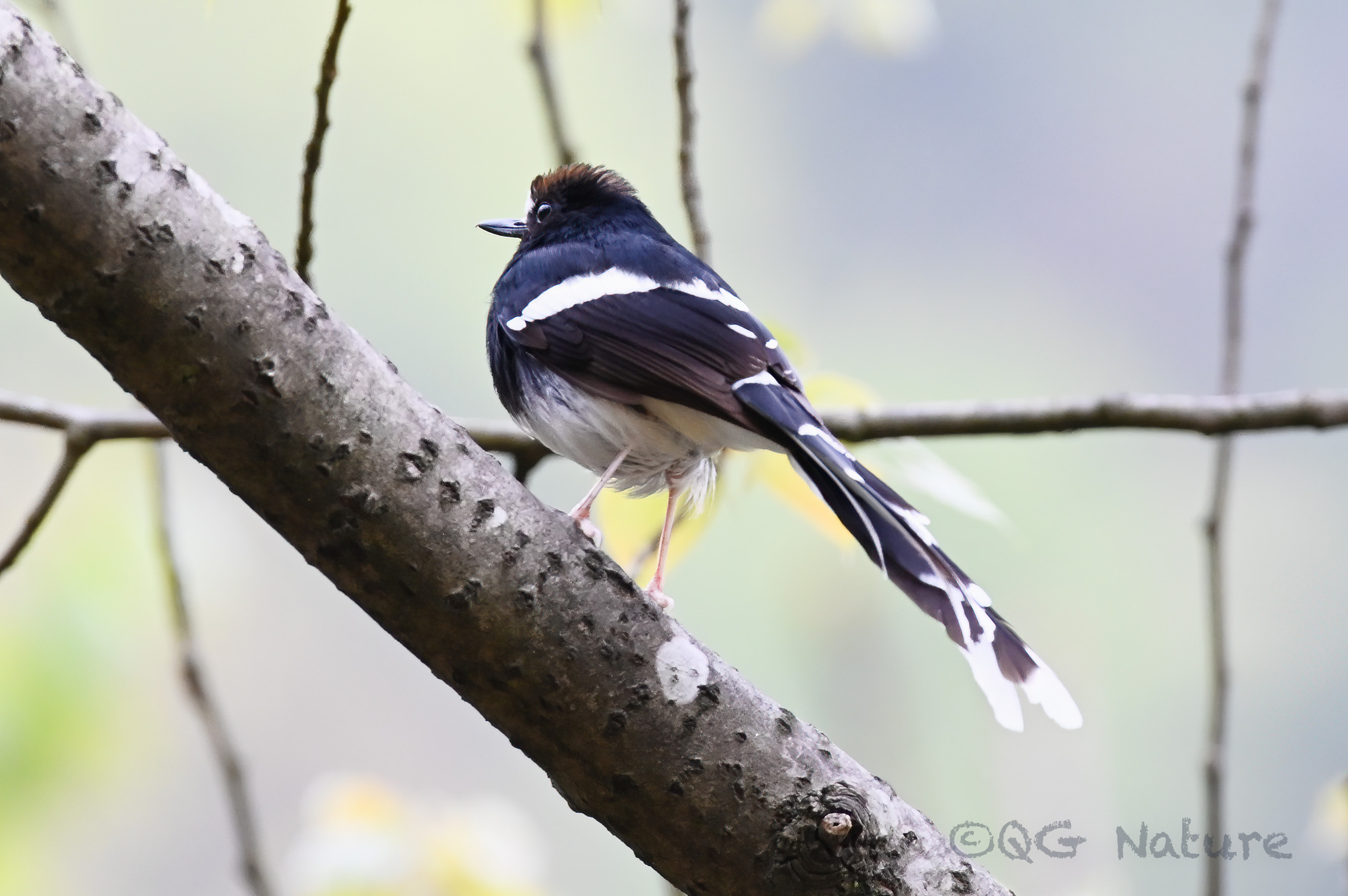
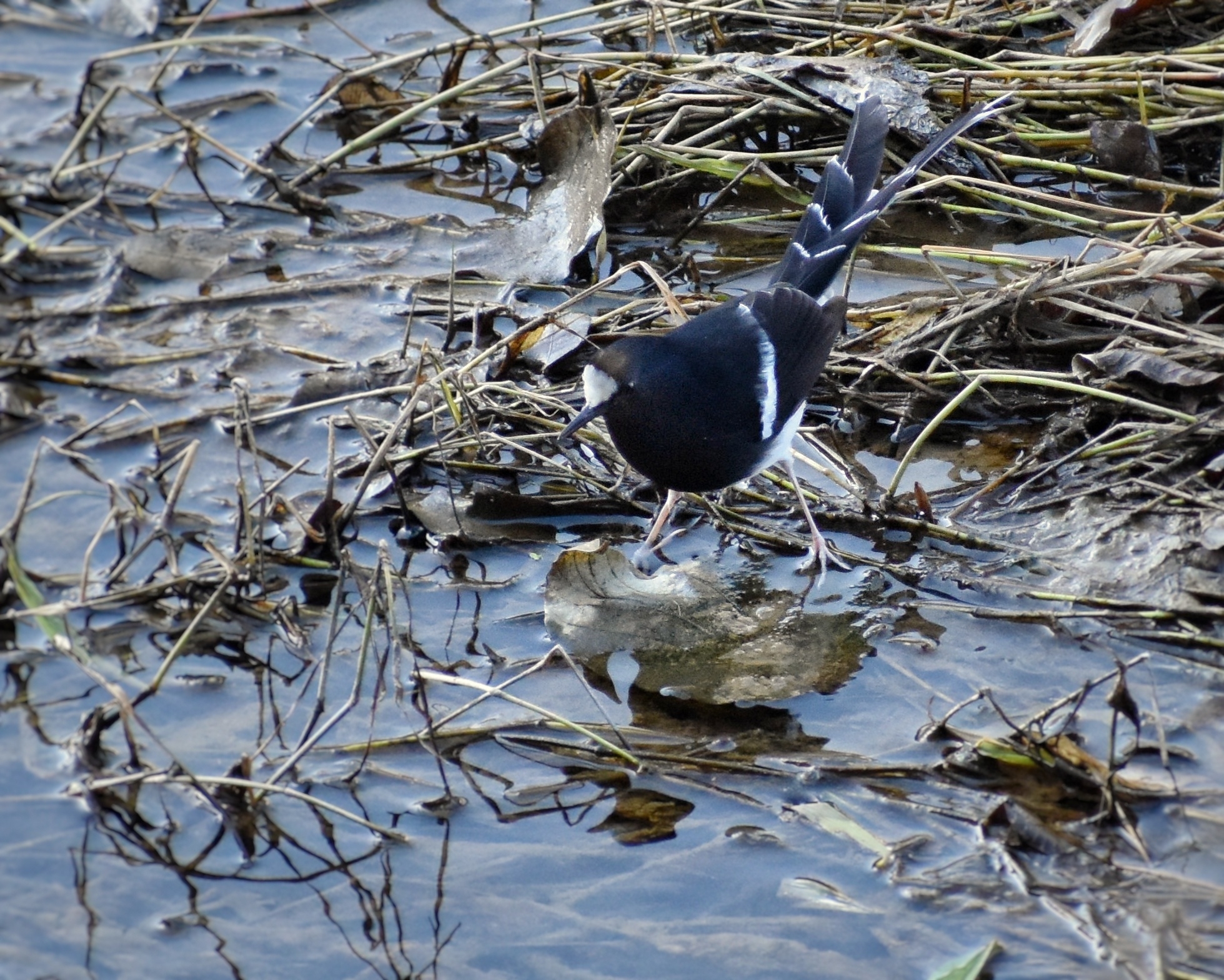
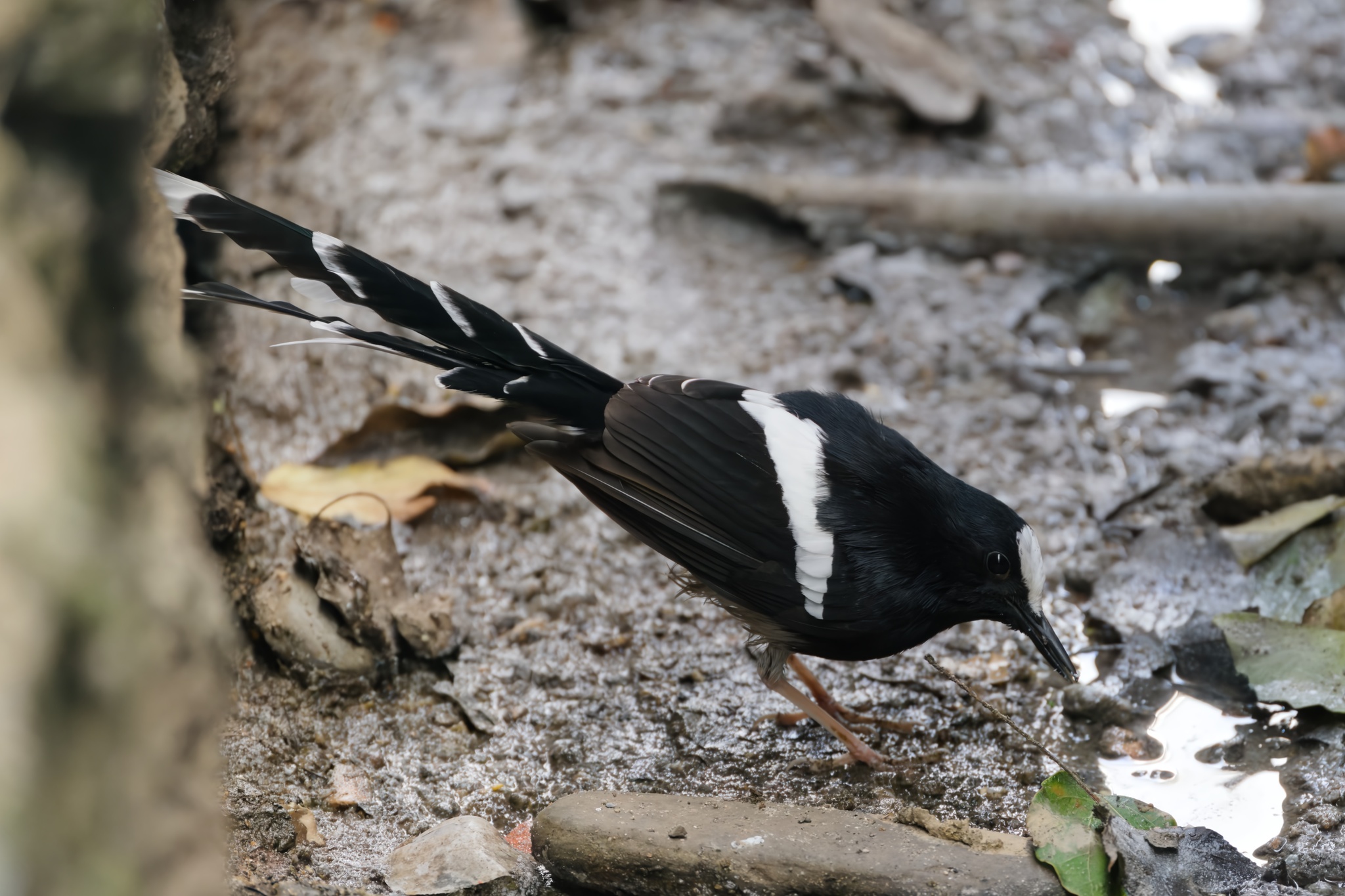
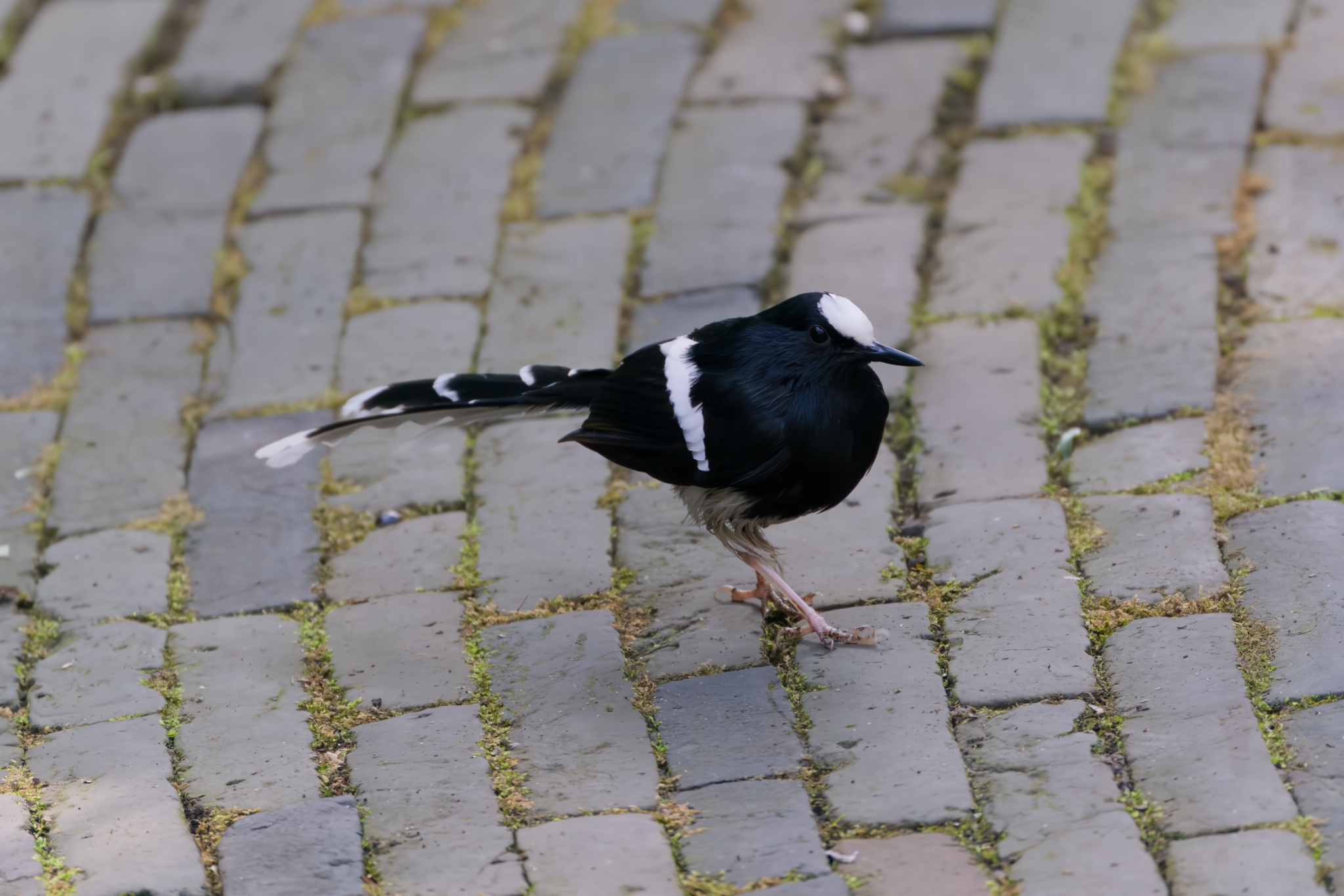
Length 25–28 cm (9.8–11.0 in); weight typically 27–38 g (0.95–1.34 oz), up to 53 g (1.9 oz). Features a prominent white crown and forehead, black face, throat, breast, mantle, and scapulars. The belly, lower back, and rump are white. Wings are largely black with a prominent white band across the greater coverts. The tail is long, deeply forked, and banded black and white with white tips on outer feathers. Bill is black; feet are pinkish. Juveniles have brownish-black upperparts, breast, and throat, brown flanks, mottled belly, and lack the white crown.
Identification
Distinguished from the spotted forktail by its completely black mantle (vs. speckled) and from the slaty-backed forktail by its black mantle (vs. slate-grey). Larger with a longer tail than the black-backed forktail. Subspecies vary slightly in bill length and crown white extent. Key field marks include the white crown, black breast contrasting with white belly, and white wing band.
Distribution & Habitat
Found in China, Southeast Asia, and northeastern Indian subcontinent (India, Bangladesh, Myanmar, Bhutan, Thailand, Laos, Vietnam, Malaysia, Indonesia). Five subspecies occupy ranges including Java, Bali, Sumatra, Borneo, Malay Peninsula, and mainland Asia. Habitat includes moist lowland and montane forests near fast-flowing rivers, streams, and waterfalls. Elevational range varies: generally below 800 m in Eastern Himalayas (exceptionally to 2,400 m), up to 1,400 m in Sumatra and Borneo. Seasonal migration occurs in some regions, such as Bangladesh.
Behavior & Ecology
Shy bird staying close to water, frequently wagging its tail. Forages for insects (beetles, crickets, springtails, caterpillars) along stream edges and in water. Flies close to the ground, often calling. Breeding season March–September (possibly October). Nests are cup-shaped structures of moss and plant material placed in damp locations near or over water, such as bank holes, tree roots, or behind waterfalls. Clutch size 2–5 eggs, varying with latitude. Up to two broods per year observed in China. Nests may be parasitized by the Drongo cuckoo.
Conservation
Categorized as Least Concern by the International Union for Conservation of Nature. Population estimated to be greater than 10,000 individuals and stable.
Source: Wikipedia · CC BY-SA 3.0
Taxonomy
- Order
- Passeriformes
- Family
- Muscicapidae
- Genus
- Enicurus
Subspecies (5)
-
Enicurus leschenaulti chaseni
Tanahmasa Island (Batu Islands off western Sumatra)
Data Sources
Species description from Wikipedia, licensed under CC BY-SA 3.0.
Bird images and sounds sourced from GBIF, contributed by citizen scientists worldwide under Creative Commons licenses.
Taxonomy data from AviList 2025.