

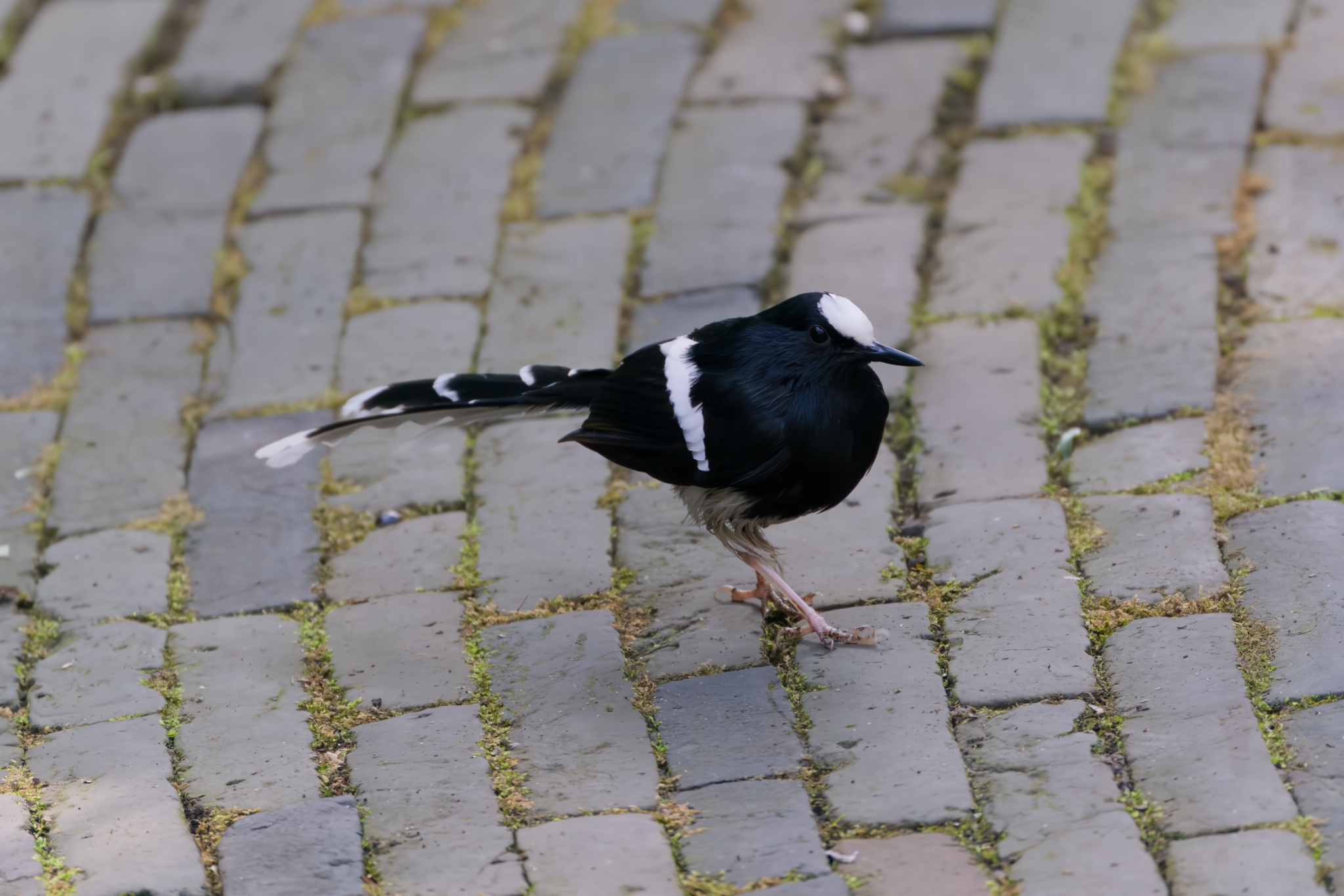
White-crowned Forktail
Enicurus leschenaulti
白额燕尾
Introduction
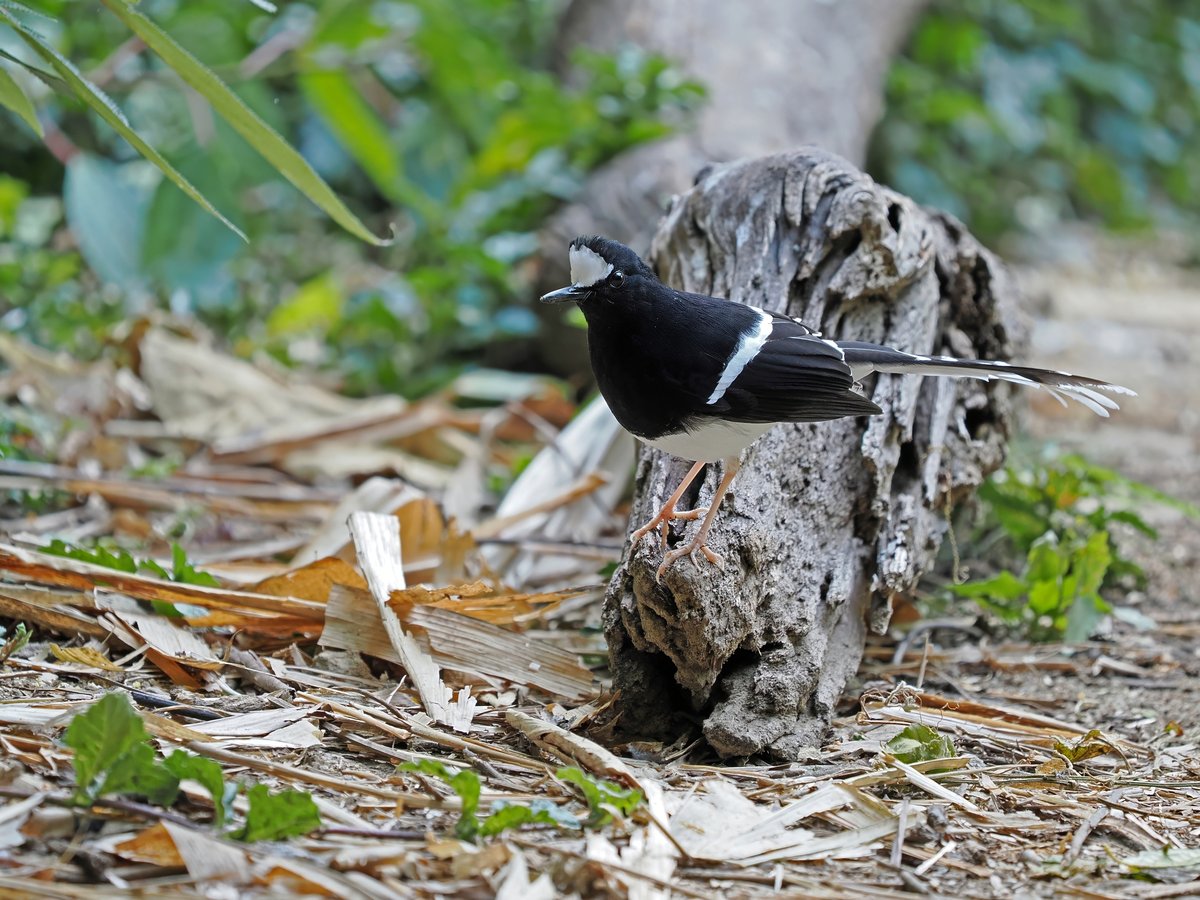
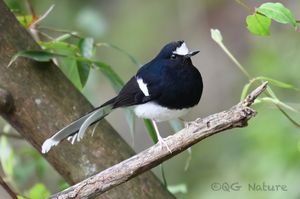
The White-crowned Forktail is a forktail found from northeastern India through Southeast Asia to southern China. It inhabits fast-flowing forest streams and rivers. This species measures approximately 20-22 cm in length. It has jet-black upperparts, a white crown patch, black throat and breast, white belly, and a long deeply forked tail with black and white banding. The mantle is solid black. It shares its habitat with other forktail species but is distinguished by its larger size and the solid black mantle. The species bobs and wags its tail while perching. Its vocalizations include high-pitched whistles and clicking sounds.
Description
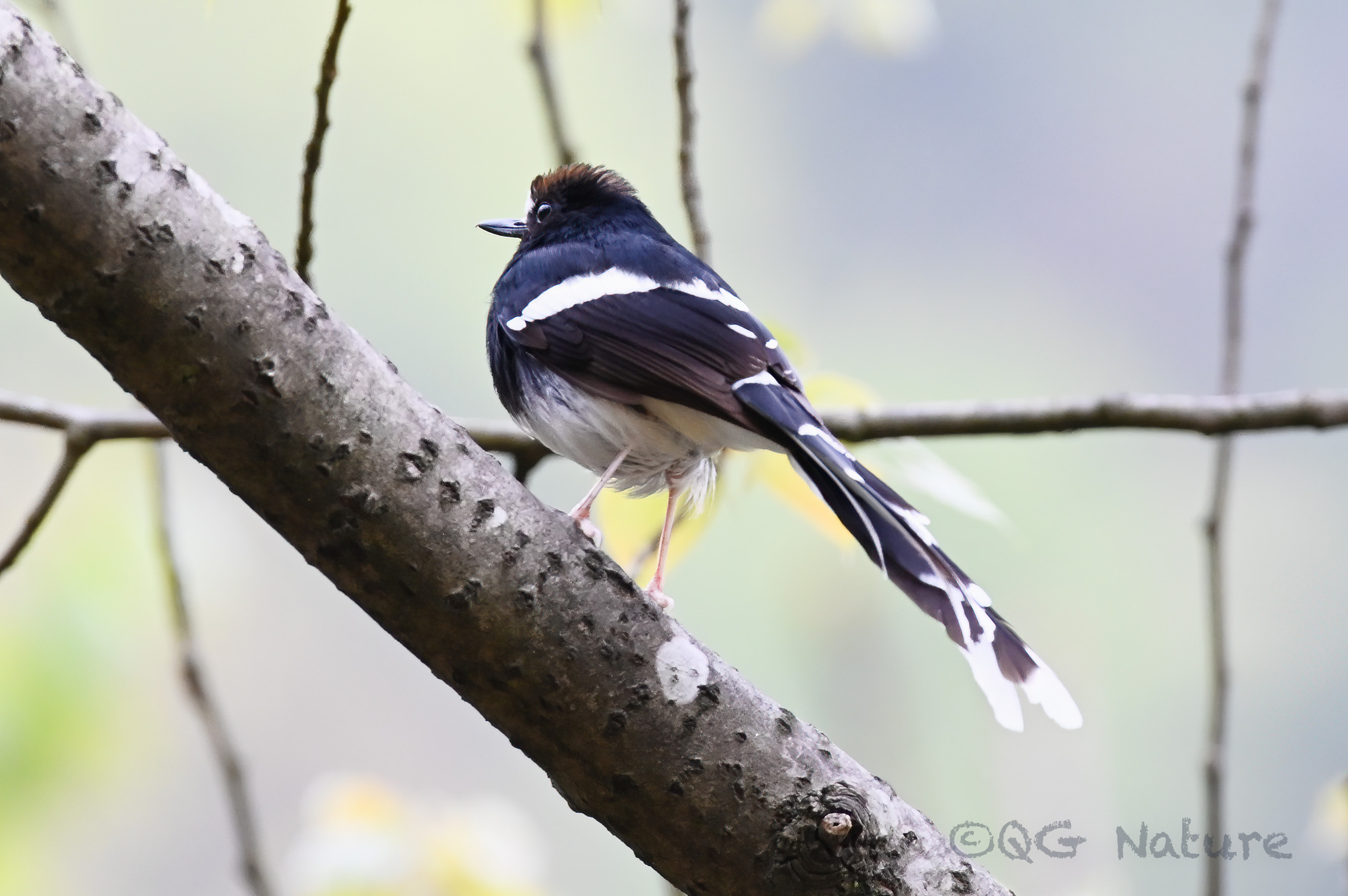
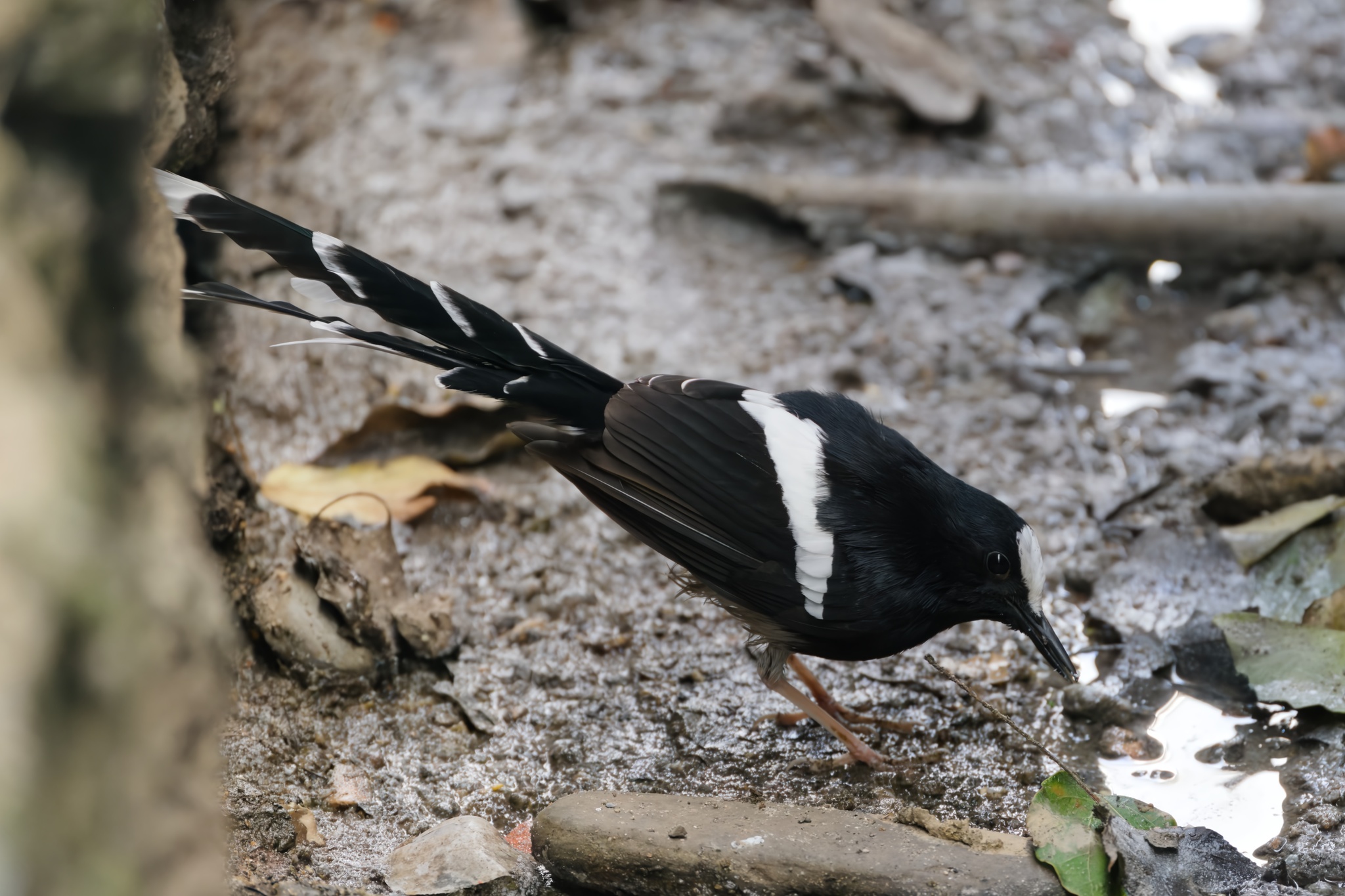
This is the largest forktail species, measuring 25-28 centimeters in length with a weight typically ranging from 27-38 grams, though individuals up to 53 grams have been recorded. The plumage is predominantly black on the face, throat extending to the breast, scapulars, and mantle. A prominent white patch adorns the crown and forehead, sometimes appearing as a slight crest. The underparts show a sharp contrast, with the white belly clearly delineated from the black throat. The lower back and rump are white. The tail is long and deeply forked, with white tips on the feathers and three narrower white bands created by shorter tail feather tips. The wings are largely black with a conspicuous white band across the greater coverts. The bill is black and the legs are pinkish. Juveniles lack the white crown, having brownish-black upperparts with brown mottling on the belly instead.
Identification
The combination of size and plumage pattern makes this species relatively distinctive. The prominent white crown is a key field mark, as is the solid black mantle—separating it from the spotted forktail, which has a speckled mantle, and the slaty-backed forktail, which shows a slate-grey mantle. The black-backed forktail is smaller with a shorter tail. The subspecies vary slightly in size and bill length, with the Malayan subspecies being somewhat smaller with less extensive white on the crown. All subspecies share the characteristic forktail shape and the black-and-white tail pattern. The species frequently wags its tail, a behavior typical of forktails.
Distribution & Habitat
This species occurs across a vast range in South and Southeast Asia, including northeastern India, Bangladesh, Myanmar, Bhutan, China, Thailand, Laos, Vietnam, Malaysia, and Indonesia. It inhabits subtropical and tropical moist lowland forests and moist broadleaf montane forests, typically staying close to fast-flowing rivers, waterfalls, and streams. Elevational range varies regionally: in the Eastern Himalayas it occurs mainly below 800 meters (occasionally to 2,400 meters), while in Sumatra and Borneo it is found up to 1,400 meters. Some seasonal elevational migration occurs in the northeastern parts of its range, with birds moving to lower elevations in winter. It favors areas with dense vegetation cover and may utilize slower-moving water sources during the non-breeding season.
Behavior & Ecology
A shy, ground-dwelling bird that stays close to water, this species forages along stream edges and in shallow water, primarily consuming insects such as black beetles, water crickets, springtails, and caterpillars. It flies low over the ground when disturbed, often calling as it goes. The breeding season extends from March to September, possibly into October, with some regional variation. Nests are large cup-shaped structures built from moss, plants, leaves, and wood fiber, placed near or over water—sometimes behind waterfalls, with birds flying through the water to access them. Clutch size ranges from two to five eggs, which are creamy, pinkish, or greyish-white with red-brown, salmon, and lilac speckles. Multiple broods per year have been observed in southern China. Vocalizations include high-pitched alarm calls described as 'scree' or 'scree chit chit,' contact calls as repeated 'tseee' whistles, and a complex territorial song of whistling notes, clicking sounds, and bell-like tones.
Conservation
The species is categorized as Least Concern by the IUCN. While the global population has not been precisely quantified, it is estimated to exceed 10,000 individuals and is considered stable. It is generally common through most of its range, though less so in the Himalayas. In China, it is reported as the most common forktail species. No significant population declines have been documented, though like all forest-dependent birds, it faces potential threats from habitat degradation and deforestation in parts of its range. The species' preference for intact forest habitats near water makes it a good indicator of healthy stream ecosystems.
Source: Wikipedia · CC BY-SA 3.0
Taxonomy
- Order
- Passeriformes
- Family
- Muscicapidae
- Genus
- Enicurus
- eBird Code
- whcfor1
Subspecies (5)
-
Enicurus leschenaulti chaseni
Tanahmasa Island (Batu Islands off western Sumatra)
-
Enicurus leschenaulti frontalis
Thai-Malay Peninsula, Sumatra, Nias Island, and lowlands of Borneo
-
Enicurus leschenaulti indicus
Himalayas of northeastern India to Myanmar, northern Thailand, and Indochina
-
Enicurus leschenaulti leschenaulti
Java and Bali
-
Enicurus leschenaulti sinensis
western and southern China; Hainan
Data Sources
Species description from Wikipedia, licensed under CC BY-SA 3.0.
Bird images and sounds sourced from GBIF, contributed by citizen scientists worldwide under Creative Commons licenses.
Taxonomy data from AviList 2025.