Passeriformes / Emberizidae / Emberiza
Common Reed Bunting
Emberiza schoeniclus · 芦鹀
Introduction
A passerine bird in the bunting family Emberizidae. Breeds throughout Europe and much of the Palearctic region. Inhabits reedbeds, moorland, arable land, and poorly drained neutral and acid soils of lowlands and upland fringes. Most individuals migrate south in winter, while those in milder southern and western areas are resident. Listed as Least Concern by the IUCN.
Description
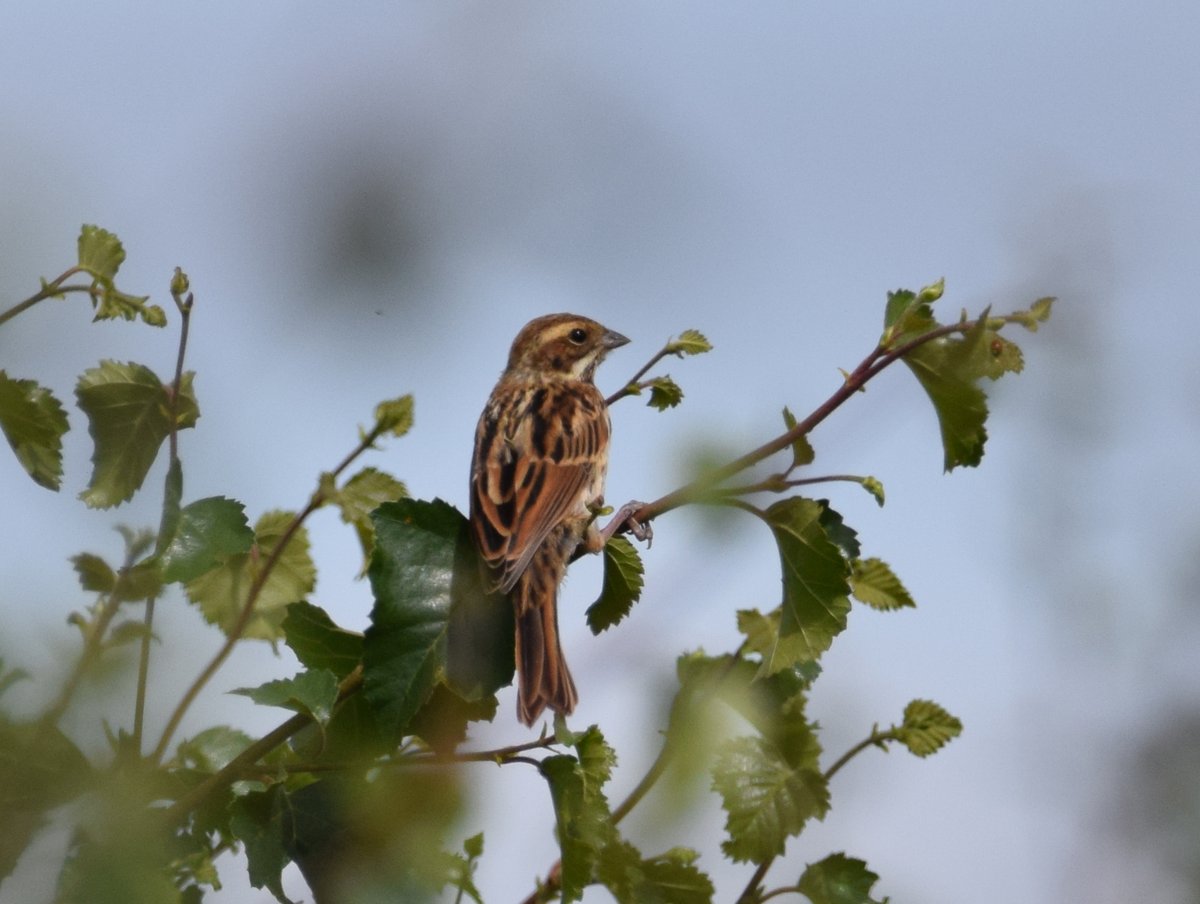
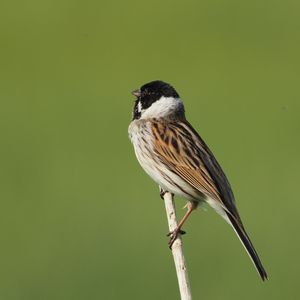
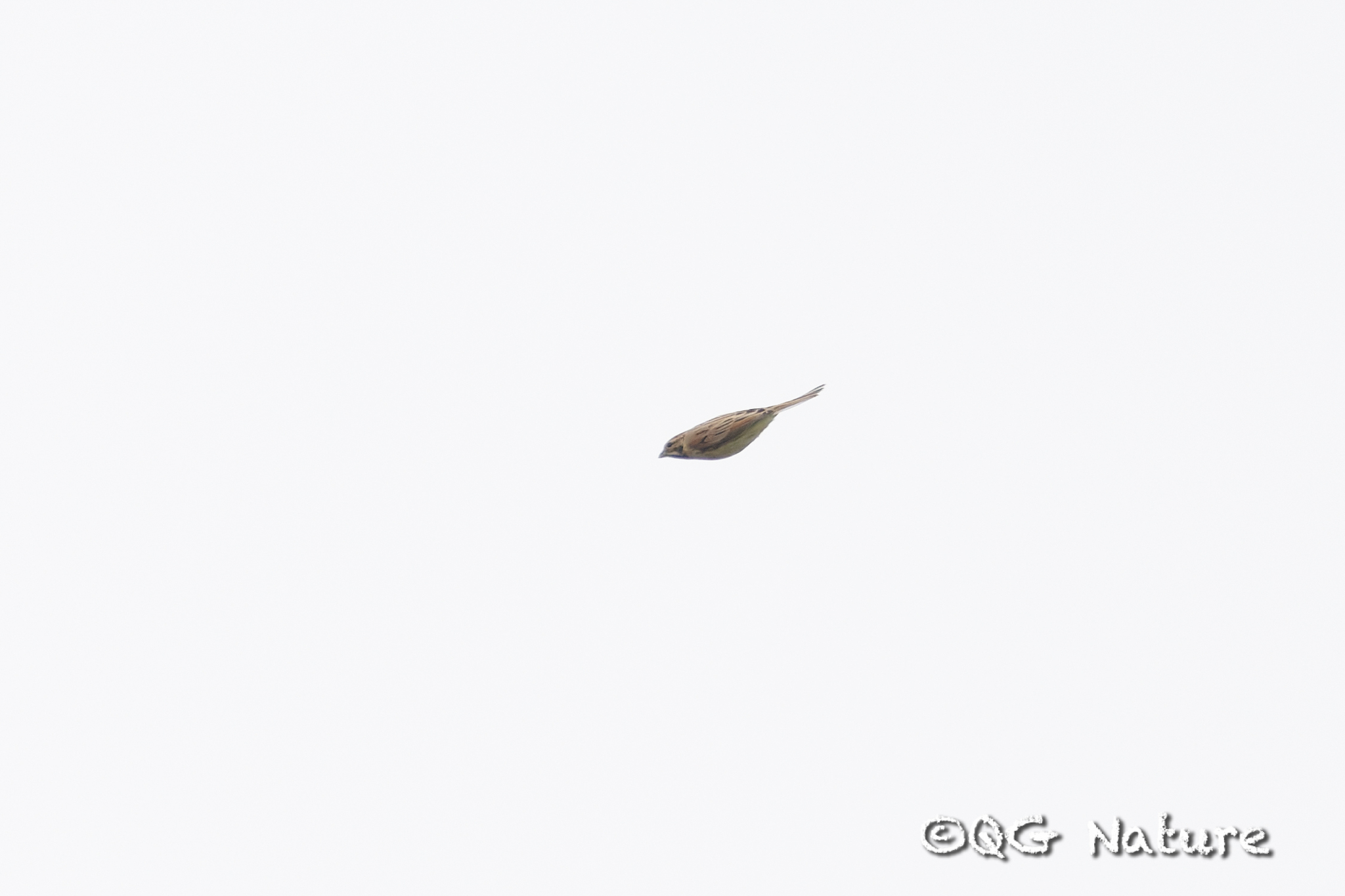
Medium-sized, 13.5–15.5 cm (5.3–6.1 in) long, weighing 10–28 g, with a small but powerful seed-eating bill. The male has a black head and throat, white neck collar and underparts, and a heavily barred brown back. The female is duller, with a streaked brown head and more barring underneath.
Identification
Male identified by black head and throat with white neck collar. Female distinguished by streaked brown head. Song is a repetitive srip.
Distribution & Habitat
Breeds throughout Europe and much of the Palearctic. Nineteen subspecies are recognised, including populations in Portugal, Spain, France, Italy, Turkey, Iran, Siberia, Mongolia, China, Japan, and Korea. Migratory patterns vary by subspecies; some winter in South Asia, northern China, central Japan, Korea, and eastern China.
Behavior & Ecology
Diet consists of insects when feeding young and seeds at other times. Monogamous. Breeding occurs from early April to late August. Nests are made of twigs, grass, and reeds, lined with hair, moss, and rootlets, located in bushes or reed tussocks. Clutches contain four to five olive-grey eggs with hair-like markings. Incubation lasts 12–15 days, with both parents feeding chicks.
Conservation
Listed as Least Concern by the IUCN. Estimated European population is at least 4.8 million pairs, with strongholds in Sweden, Poland, and Norway. Populations are declining in Norway, Sweden, Denmark, and Germany.
Source: Wikipedia · CC BY-SA 3.0
Taxonomy
- Order
- Passeriformes
- Family
- Emberizidae
- Genus
- Emberiza
Subspecies (19)
-
Emberiza schoeniclus caspia
eastern Caucasus to western and southern Iran, Syria, adjacent southeastern Türkiye, and northeastern Iraq
Data Sources
Species description from Wikipedia, licensed under CC BY-SA 3.0.
Bird images and sounds sourced from GBIF, contributed by citizen scientists worldwide under Creative Commons licenses.
Taxonomy data from AviList 2025.