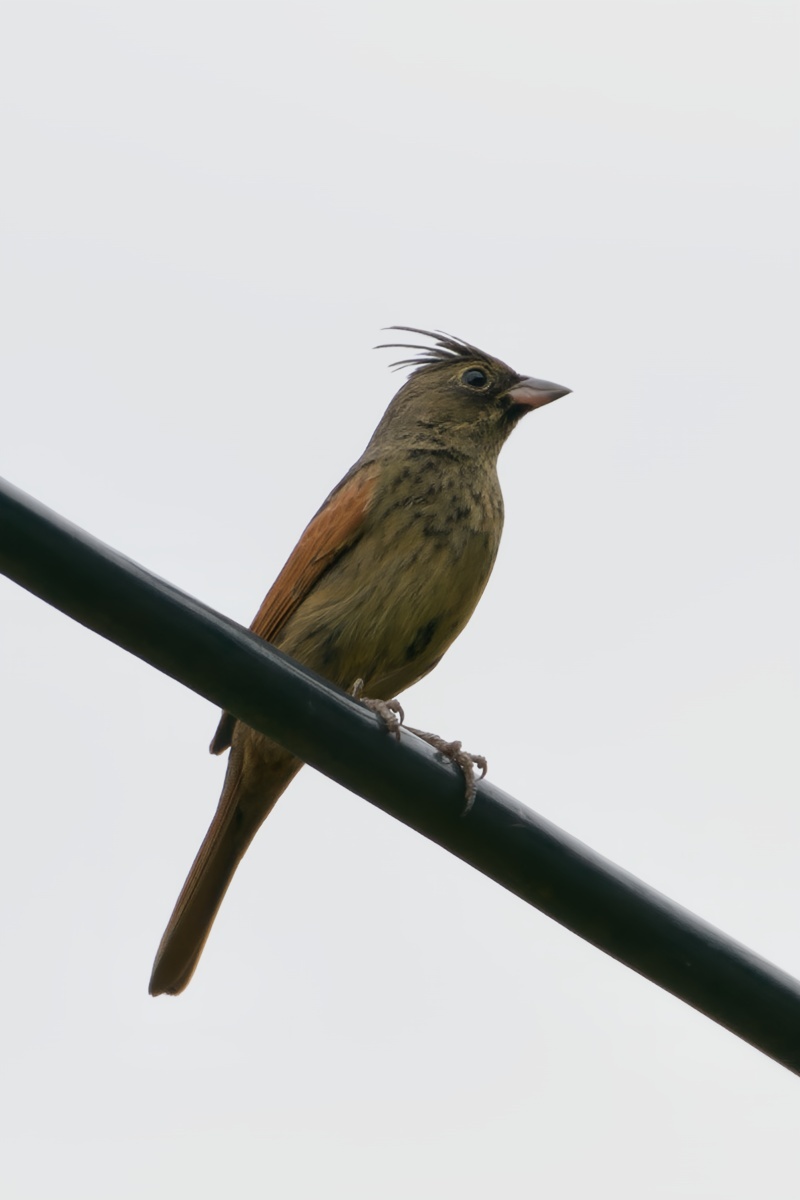
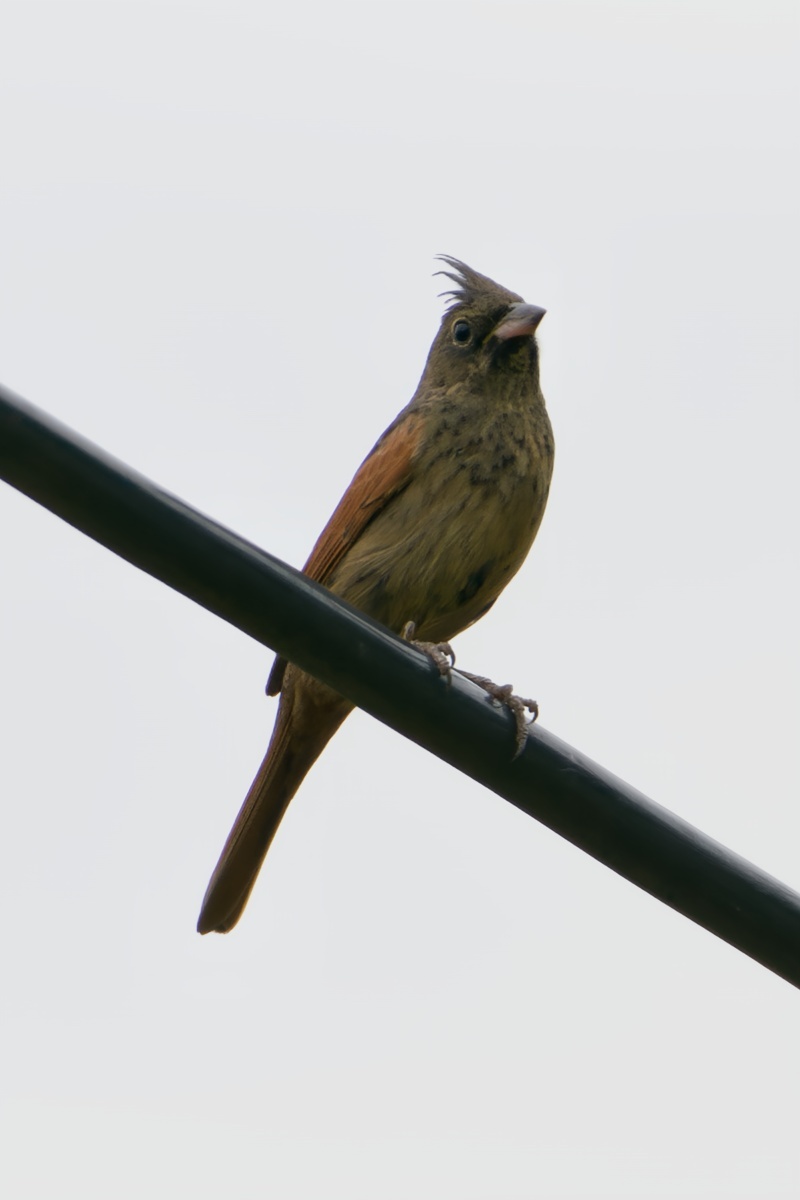
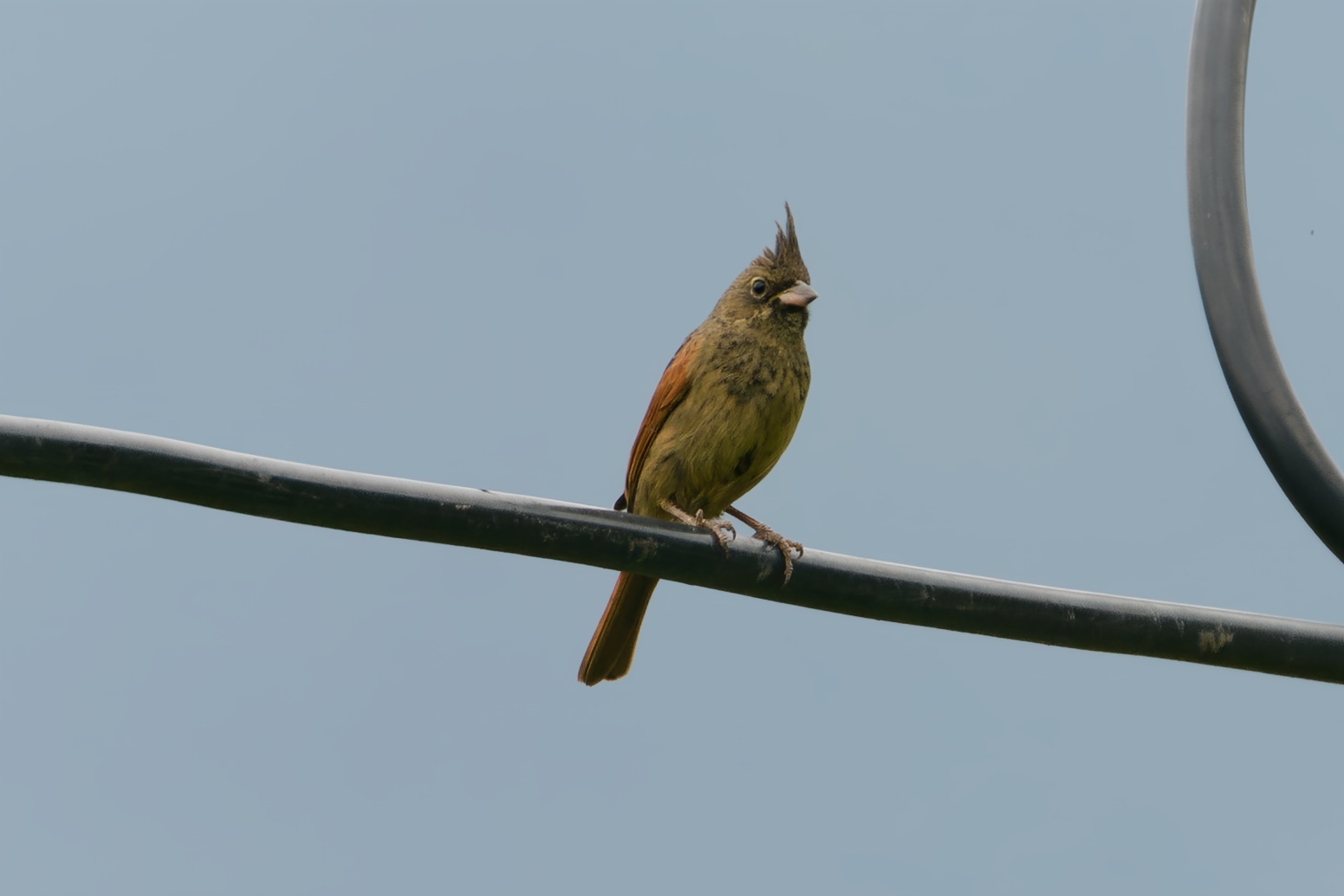
Passeriformes / Emberizidae / Emberiza
Crested Bunting
Emberiza lathami · 凤头鹀
Introduction
A sparrow-sized species in the family Emberizidae, formerly placed in the monotypic genus Melophus due to its unique crest among buntings. It has a wide but scattered distribution across Asia, inhabiting open and dry habitats over a range of altitudes. Populations in higher Himalayan elevations exhibit seasonal altitudinal movements, and the species becomes more gregarious in winter.
Description
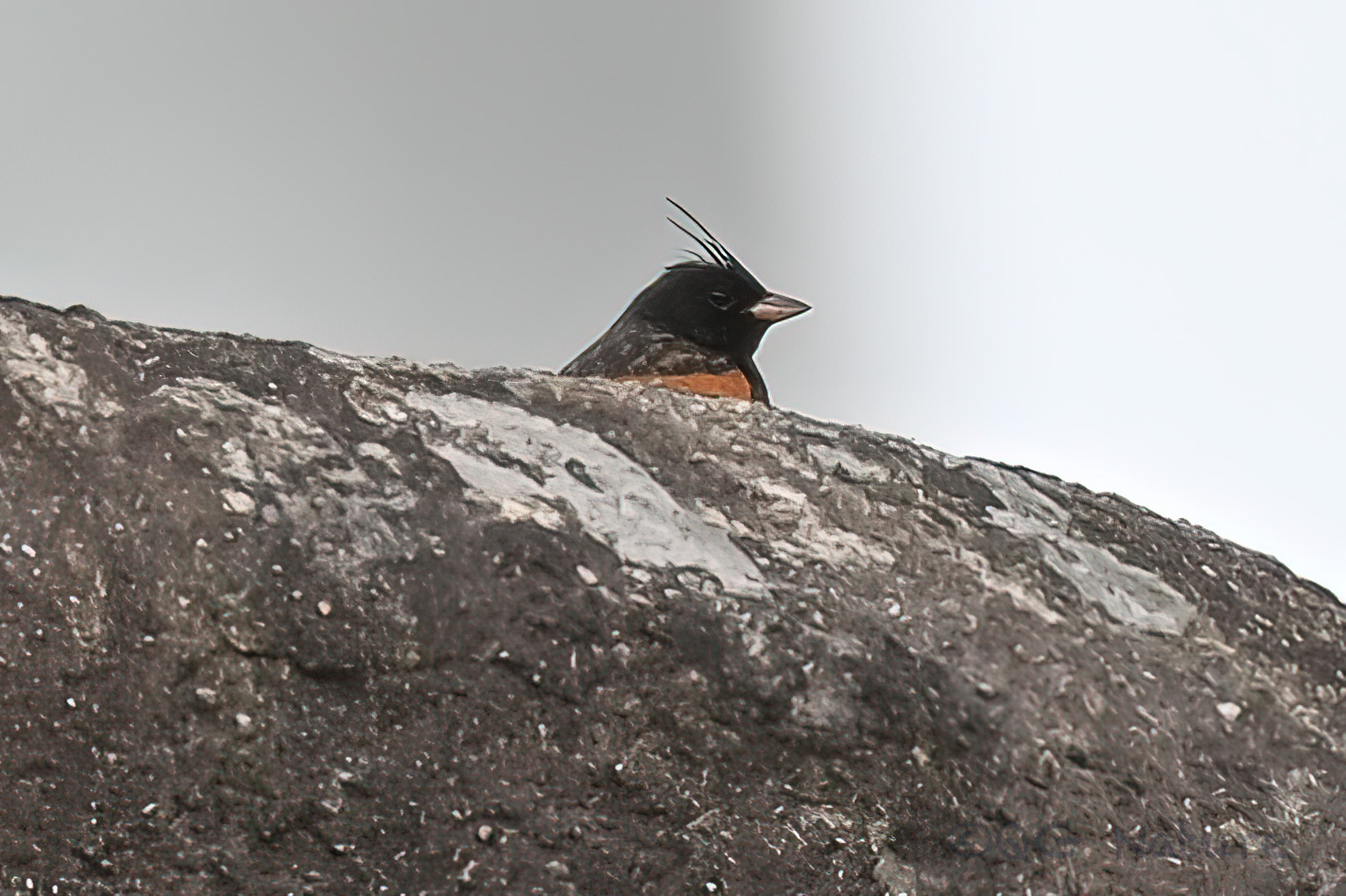
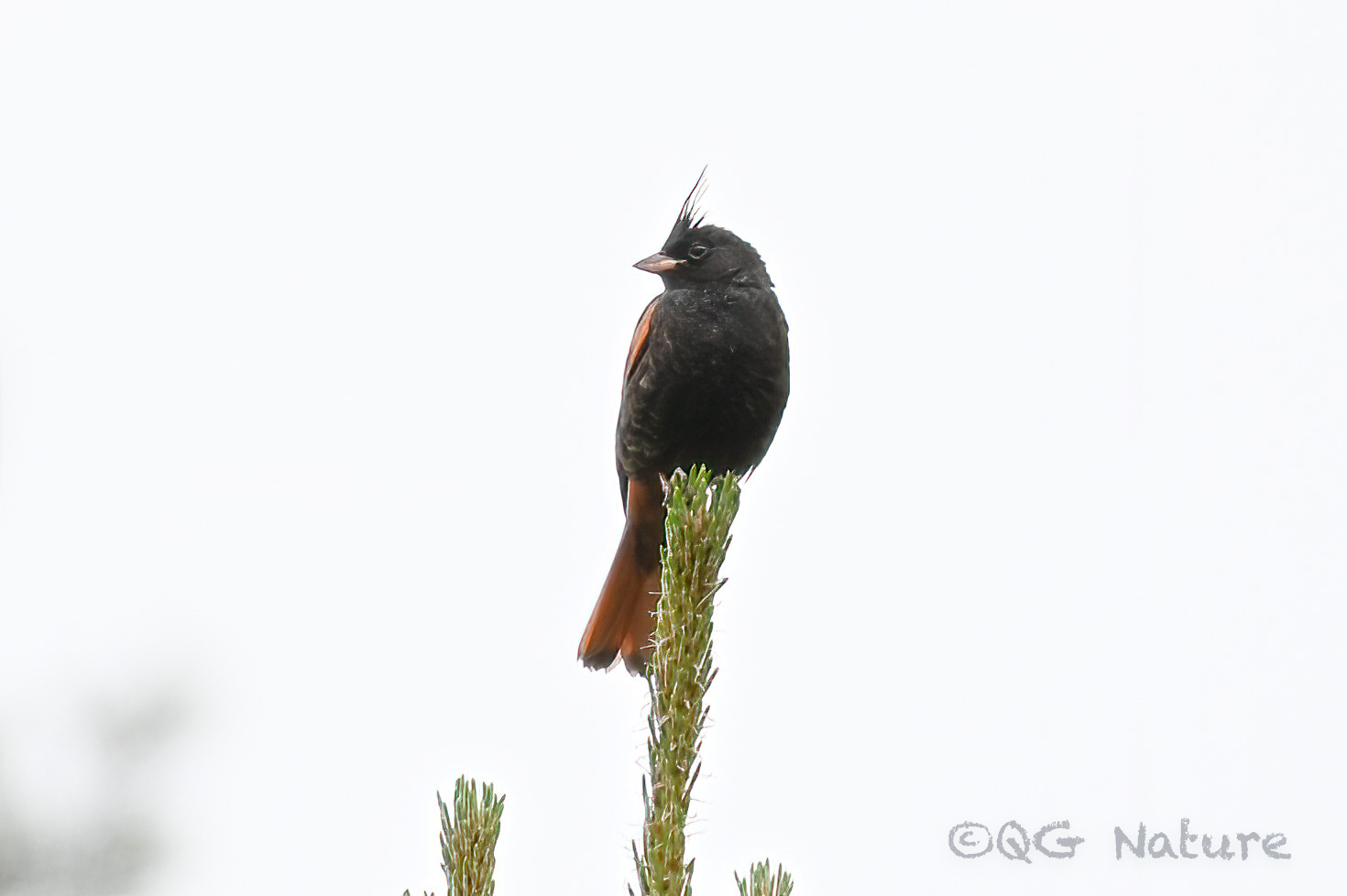
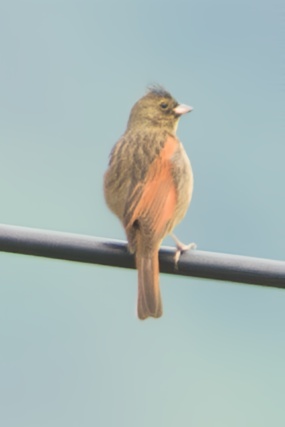
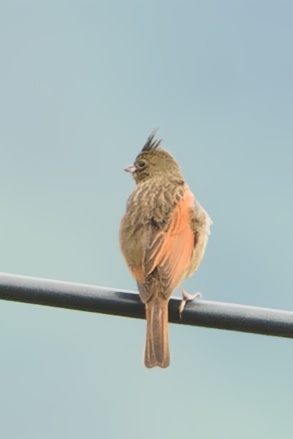
Males possess a prominent crest, yellowish beak, and black body plumage that contrasts with rufous flight feathers on the wings and tail. Females are shorter-crested with overall dull-olive brown coloration, dark brown streaks, and cinnamon-fringed wing and tail feathers; they have a grey beak. Non-breeding males appear buffish grey, while subadults display black tips on their rufous primary coverts. The species has 40 pairs of chromosomes.
Identification
Both sexes display a distinctive crest. Males are identified by the striking contrast between the black body and rufous wings and tail. Females are distinguished by dull-olive brown plumage with dark streaks and cinnamon feather fringes, differing from the high-contrast male pattern.
Distribution & Habitat
Found along the Himalayas in India, with seasonal altitudinal movements. Range extends across the plains of India south of the Himalayas to Gujarat and Rajasthan, and into central and peninsular India. Distribution continues east along the Himalayas into China, Laos, Thailand, Vietnam, and Indonesia. Habitats include open thorny scrub, rocky dry hillsides, grassland, and savannah.
Behavior & Ecology
During breeding season, males sing from tall plants and perform courtship displays involving fanning and cocking the tail, raising one wing, and walking around the female. They feed mainly on plant seeds and termite alates, foraging in groups that maintain contact via short piping calls. Nests are cup-shaped structures made of fine fiber and hair, placed on the ground in stone walls or sheltered by rocks. Clutches consist of 3 to 4 white eggs with greenish to reddish spots, denser at the broad end. Breeding is triggered by long daylengths. Interspecific feeding by an olive-backed sunbird has been observed.
Source: Wikipedia · CC BY-SA 3.0
Taxonomy
- Order
- Passeriformes
- Family
- Emberizidae
- Genus
- Emberiza
Distribution
northern Pakistan to southeastern Tibet, southern China, Laos, and northern Vietnam (Tonkin)
Data Sources
Species description from Wikipedia, licensed under CC BY-SA 3.0.
Bird images and sounds sourced from GBIF, contributed by citizen scientists worldwide under Creative Commons licenses.
Taxonomy data from AviList 2025.