Crested Bunting
Emberiza lathami
凤头鹀
Introduction
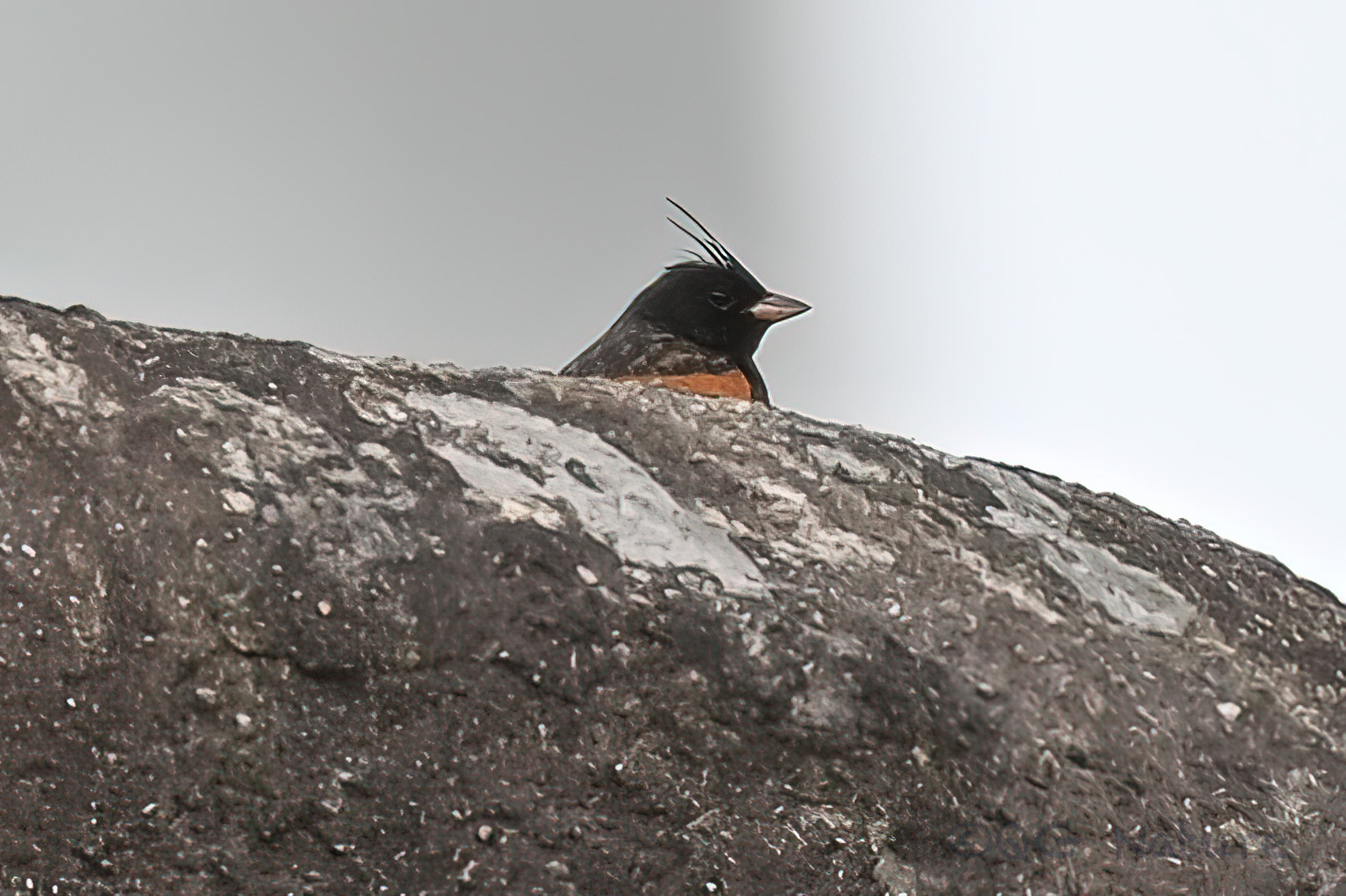
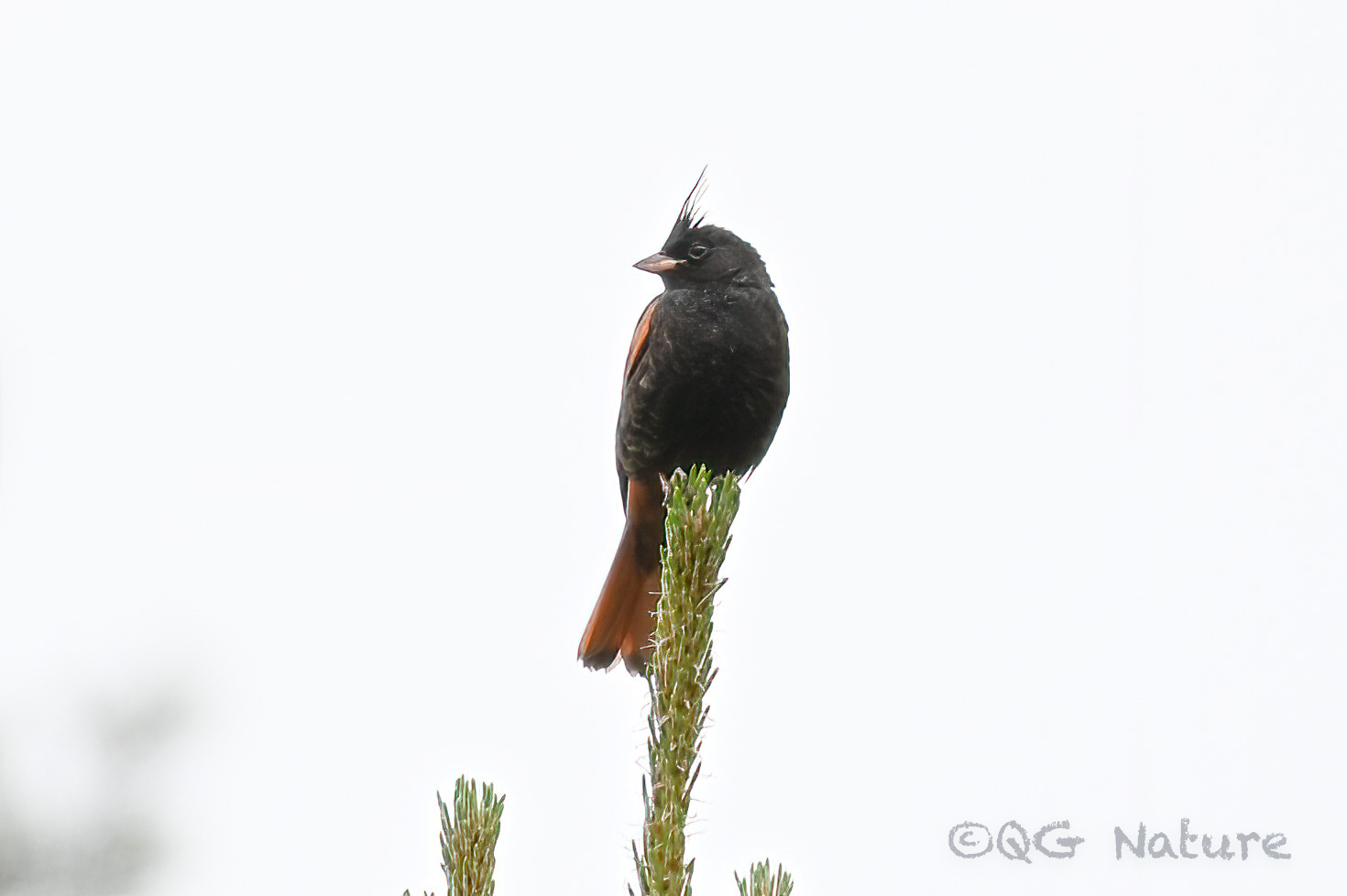
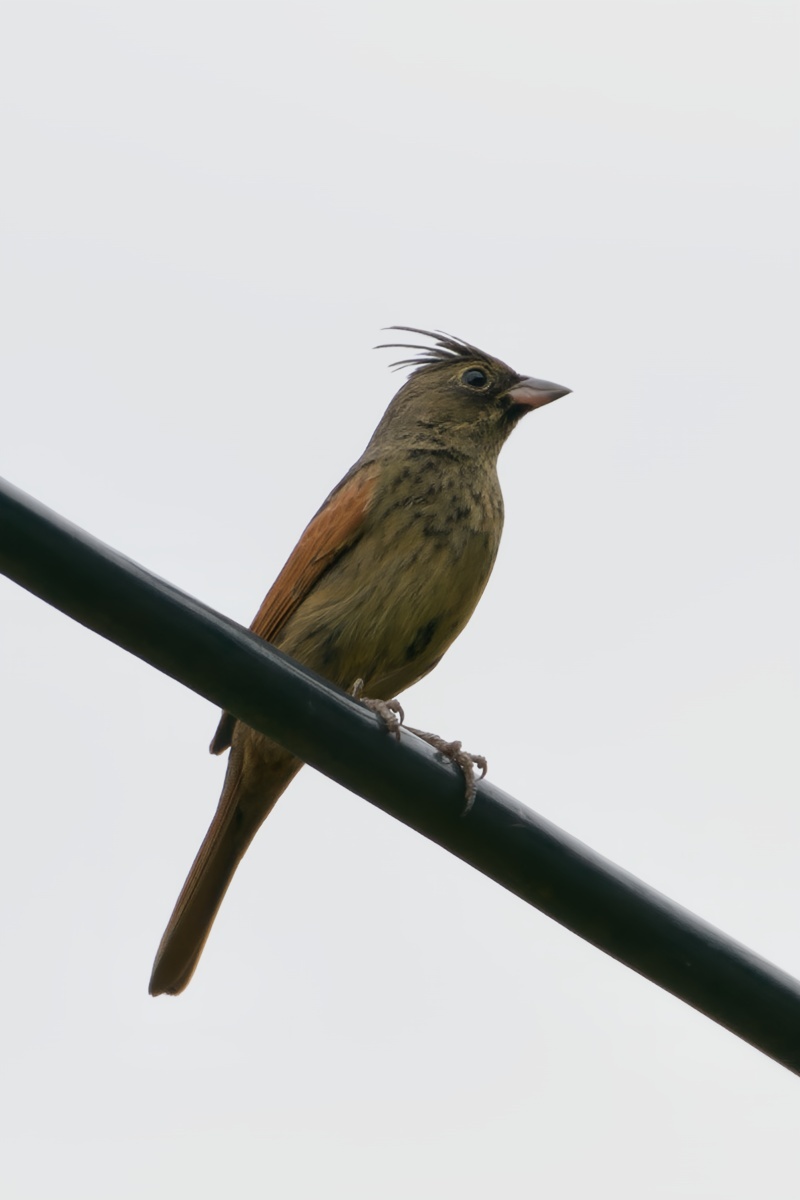
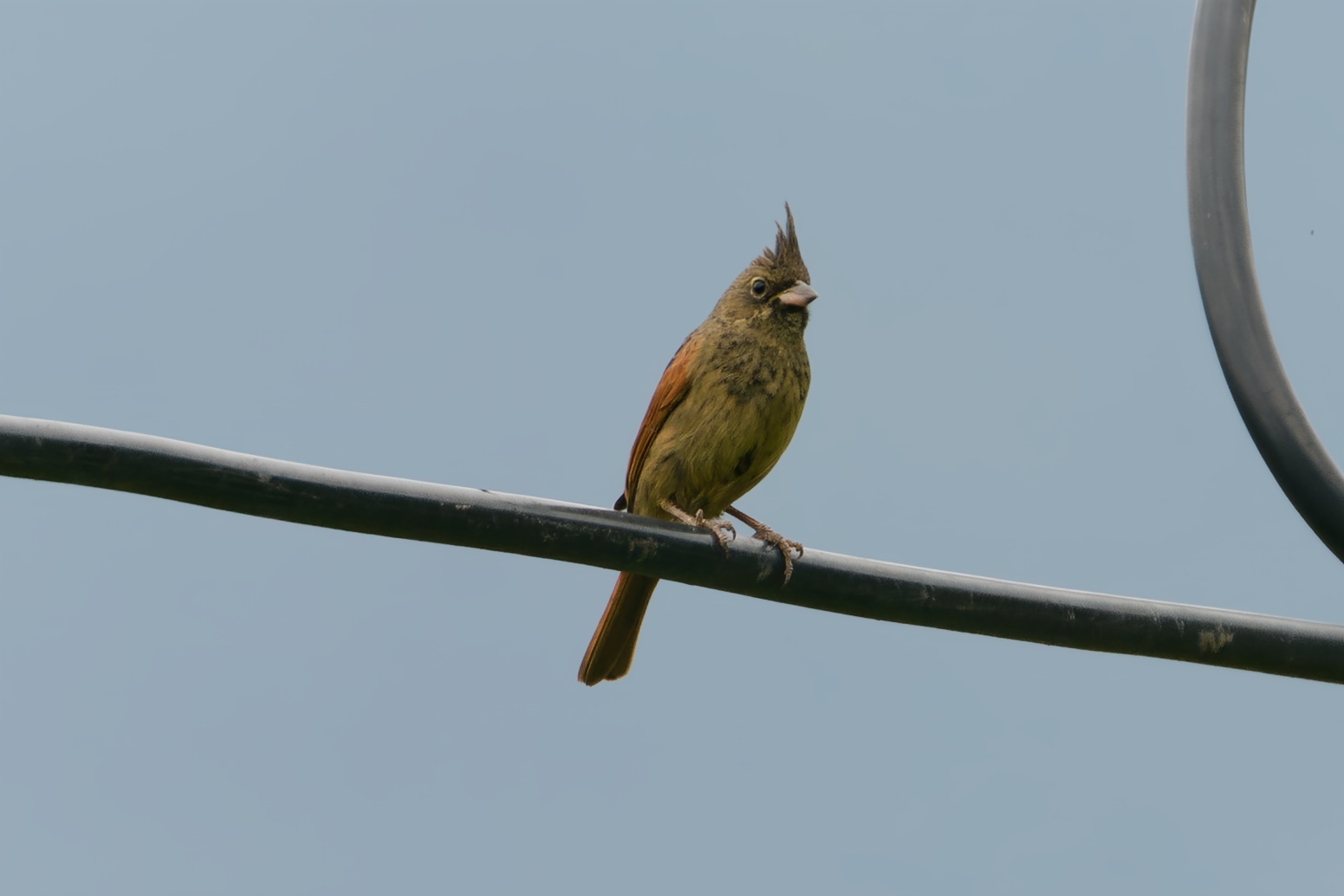
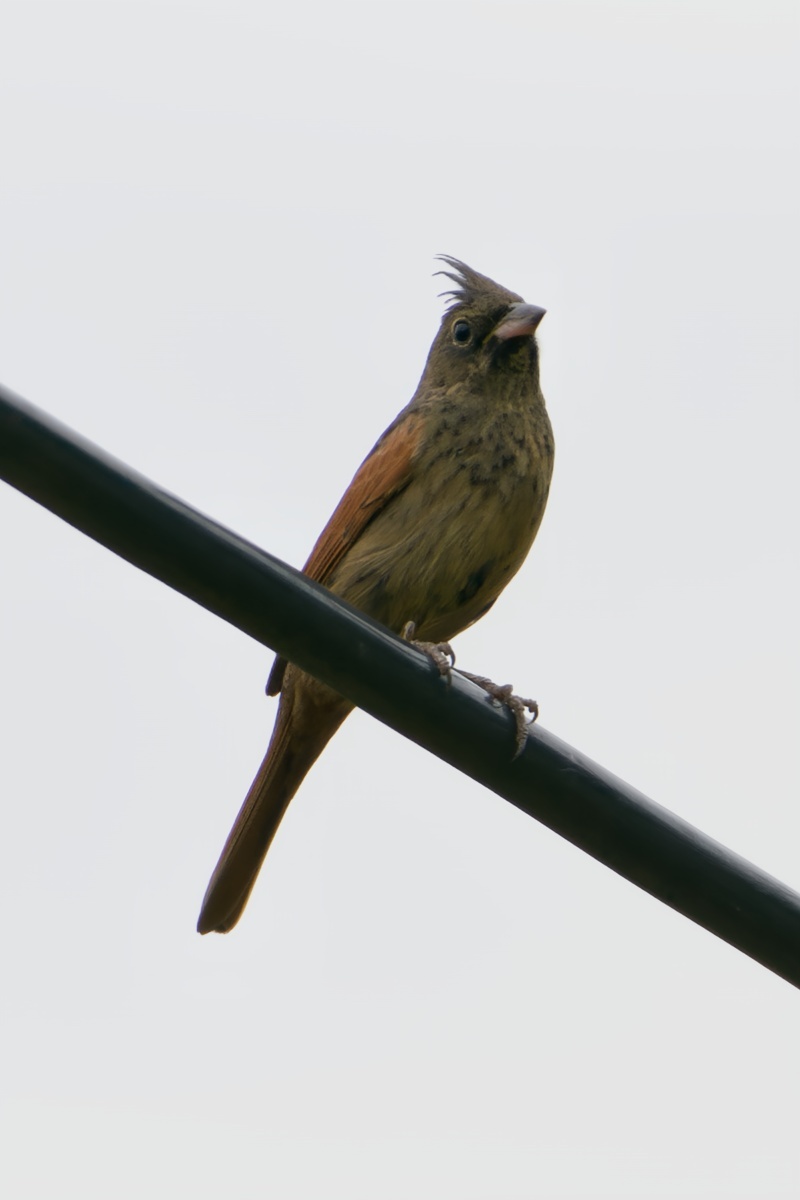
A sparrow-sized passerine in the family Emberizidae with a distinctive crest. Males have black body plumage contrasting with rufous flight feathers on wings and tail, while females are dull olive-brown with dark brown streaks. Formerly placed in the monotypic genus Melophus due to its unique crest among buntings. The species has a wide but scattered distribution across Asia, inhabiting open and dry habitats across various altitudes. Populations in higher elevations of the Himalayas exhibit seasonal altitudinal movements and become more gregarious in winter.
Description
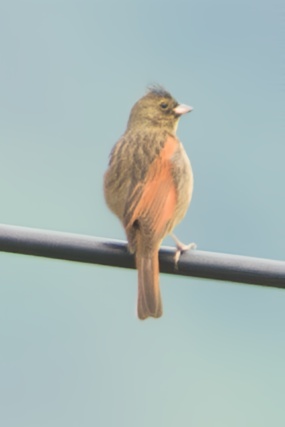
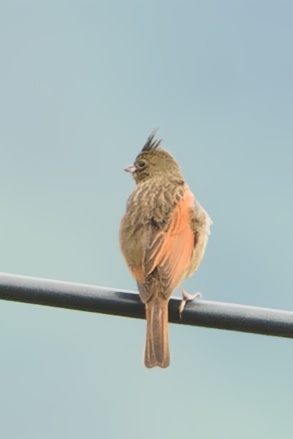
Males possess a prominent crest, yellowish beak, and black body plumage contrasting sharply with rufous flight feathers on wings and tail. Females have a shorter crest, overall dull-olive brown coloration with dark brown streaks, cinnamon-fringed wing and tail feathers, and a grey beak. Non-breeding males appear buffish grey, while subadults show black tips to the rufous primary coverts. The species is considered monotypic, though peninsular Indian populations have been given the subspecies name subcristata without external morphological differentiation. Chromosome count is 40 pairs.
Identification
The prominent crest combined with sexual dimorphism provides key identification clues. Males are unmistakable with black bodies and rufous wings and tail. Females are distinguished by their dull olive-brown plumage, shorter crest, cinnamon-fringed wing and tail feathers, and grey beak. The species differs from other buntings by its prominent crest and the male's striking black-and-rufous plumage pattern.
Distribution & Habitat
Found along the Himalayas in India with seasonal altitudinal movements, extending across the Indian plains south of the Himalayas to Gujarat and Rajasthan. Also occurs in central and peninsular India and east along the Himalayas through China, Laos, Thailand, Vietnam, and Indonesia. Inhabits open thorny scrub, rocky dry hillsides, grassland, and savannah. In winter, forms flocks and sometimes forages with other finches, buntings, and larks, visiting small waterbodies in mornings and late afternoons.
Behavior & Ecology
During breeding season, males sing from atop tall plants. Courtship display involves the male fanning and cocking its tail, raising one wing, and walking around the female. Captive males perform displays carrying nesting material with bowed wings and fanned tail. Diet consists mainly of seeds supplemented by termite alates; foraging groups maintain contact with short piping calls. Breeding occurs in summer, with nests built as cup-shaped structures of fine fibre placed on the ground in stone walls or under rock shelter. Clutch size is 3-4 white eggs with greenish to reddish spots concentrated at the broad end. An olive-backed sunbird in China was documented feeding crested bunting young at a nearby nest.
Conservation
No IUCN assessment mentioned in available sources. Trapping for food has been documented in southern Nepal.
Culture
No cultural significance or folklore documented in available sources.
Source: Wikipedia · CC BY-SA 3.0
Taxonomy
- Order
- Passeriformes
- Family
- Emberizidae
- Genus
- Emberiza
- eBird Code
- crebun1
Distribution
northern Pakistan to southeastern Tibet, southern China, Laos, and northern Vietnam (Tonkin)
Data Sources
Species description from Wikipedia, licensed under CC BY-SA 3.0.
Bird images and sounds sourced from GBIF, contributed by citizen scientists worldwide under Creative Commons licenses.
Taxonomy data from AviList 2025.