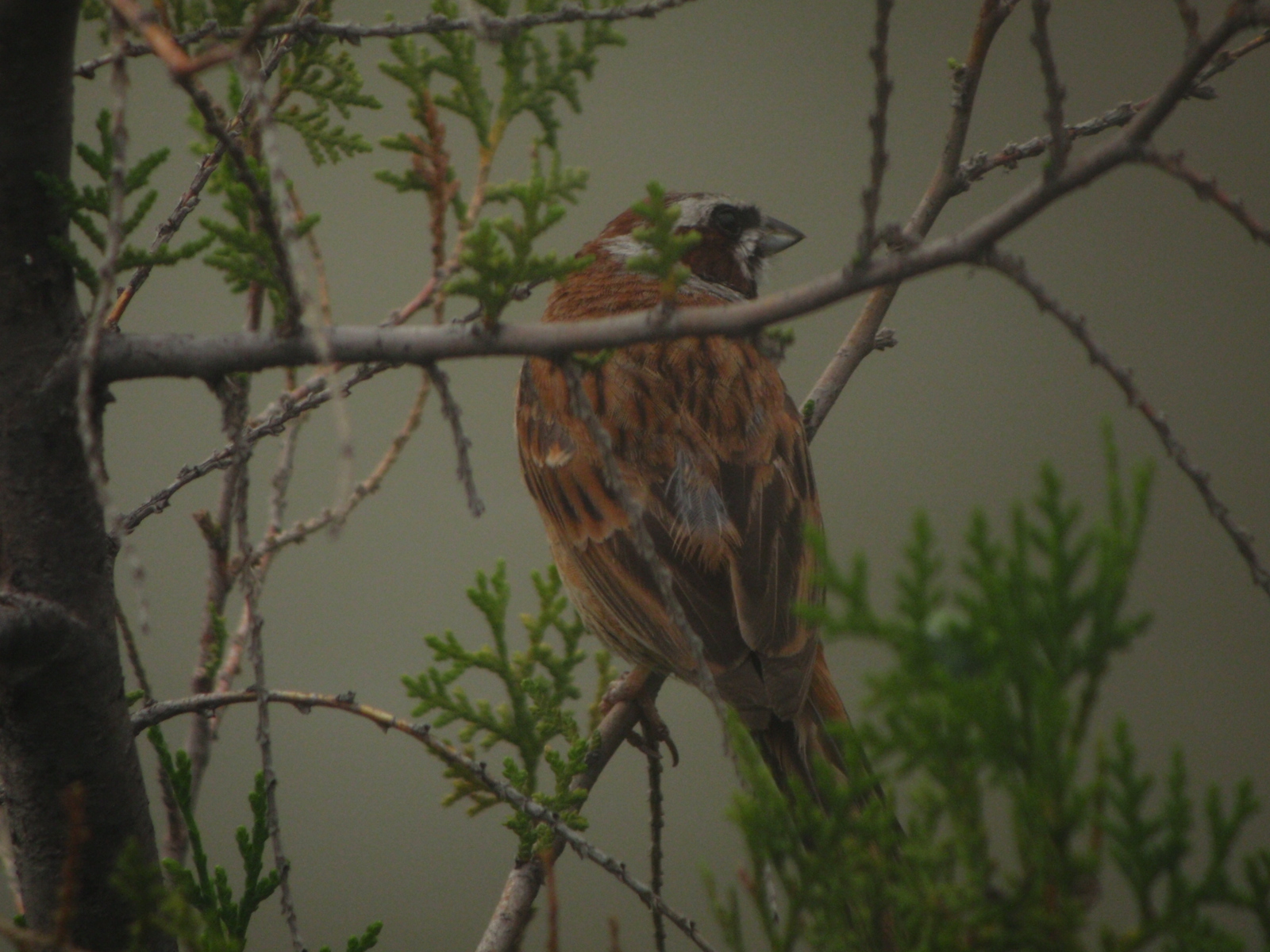
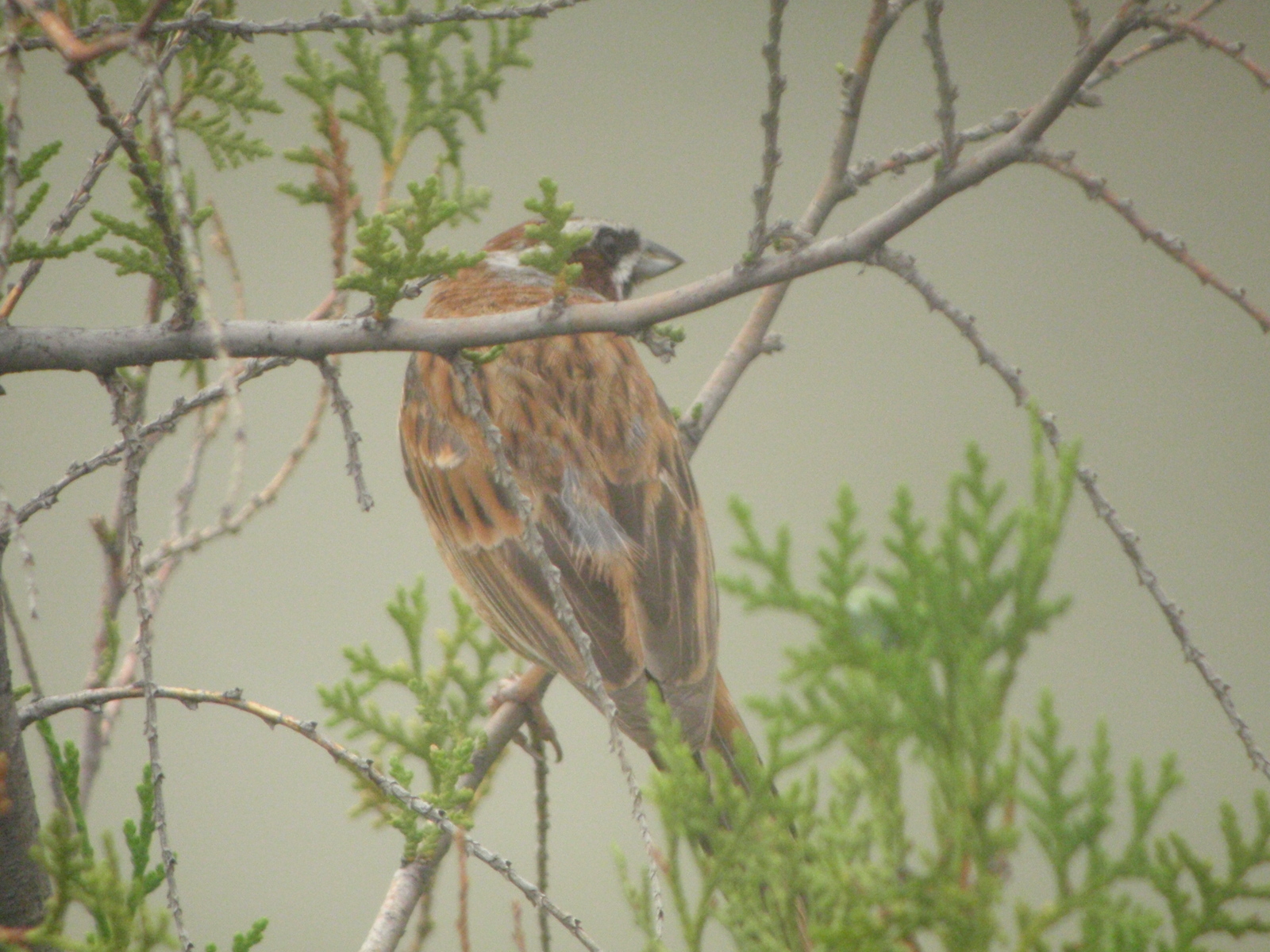
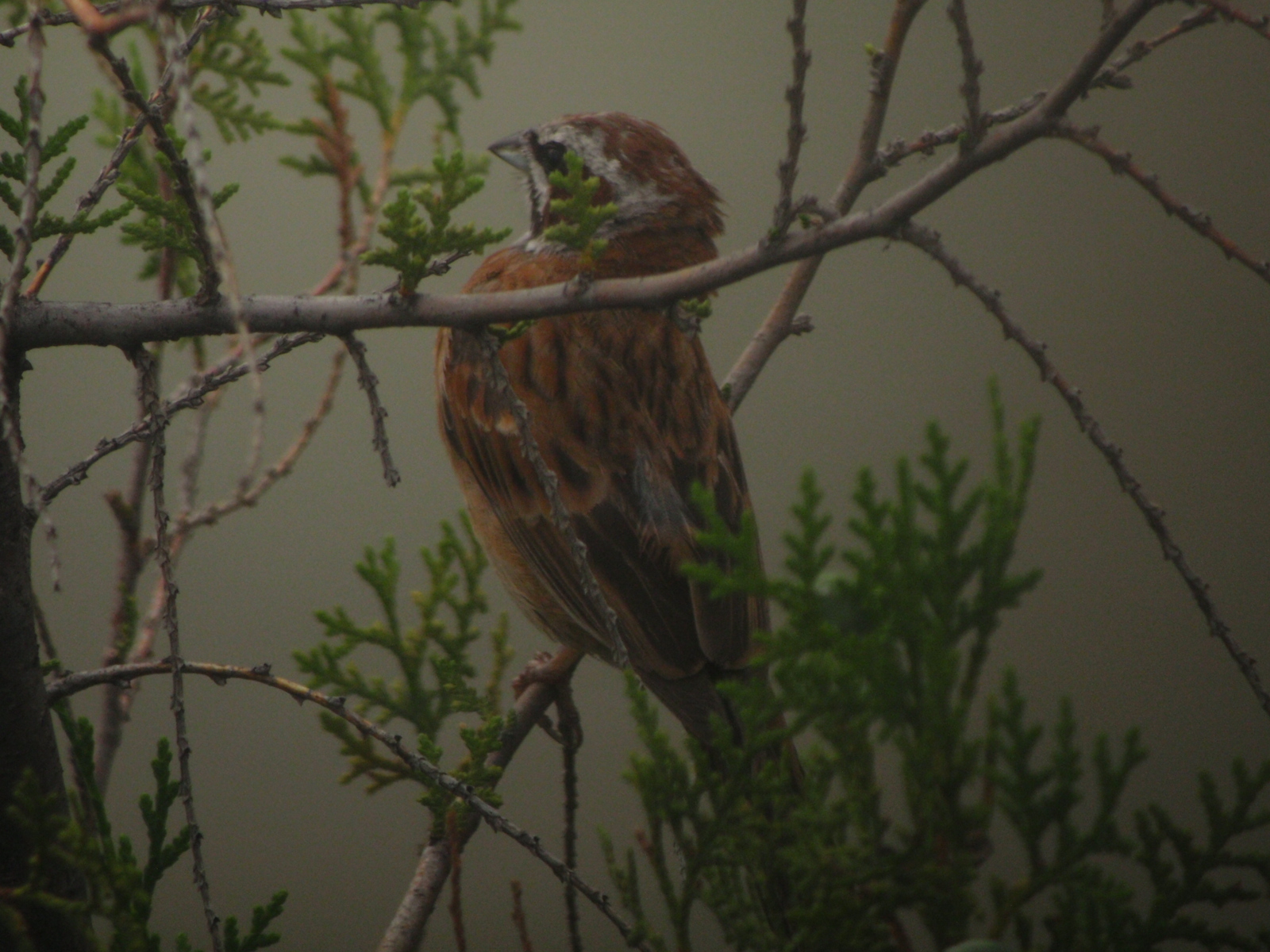
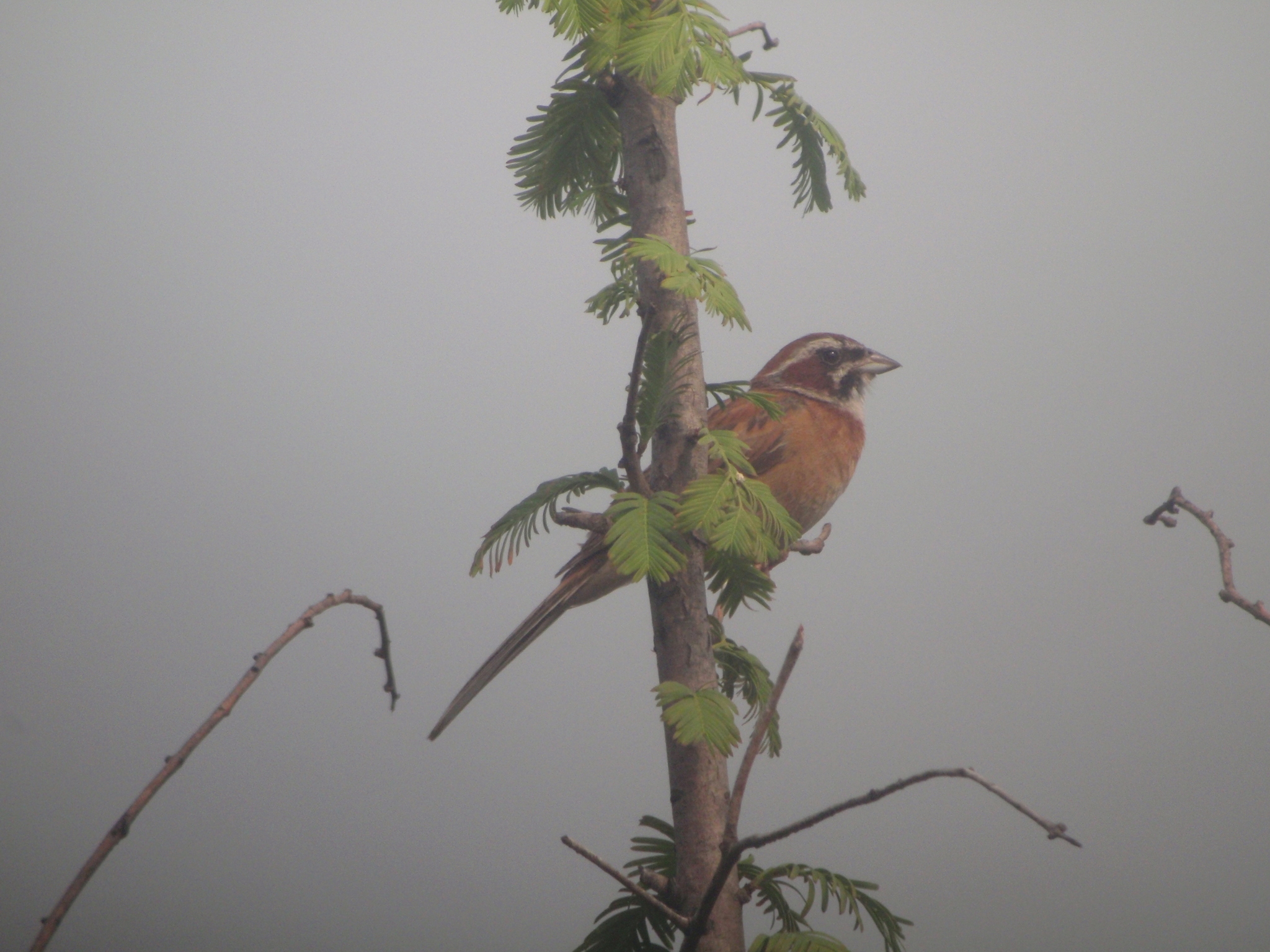
Meadow Bunting
Emberiza cioides
三道眉草鹀
Introduction
The species is a Emberiza bunting occurring across eastern Asia. It inhabits dry scrubland, farmland, grassland, mountain valleys, steppe edges and cultivated areas with scattered scrub. It sings from prominent perches and forages methodically through vegetation while pumping its tail. Northern populations move southward in winter, extending the range to southern China and Taiwan. The species has a patchy distribution and is locally common where suitable habitat occurs. It associates with shrikes, larks and pipits.
Description
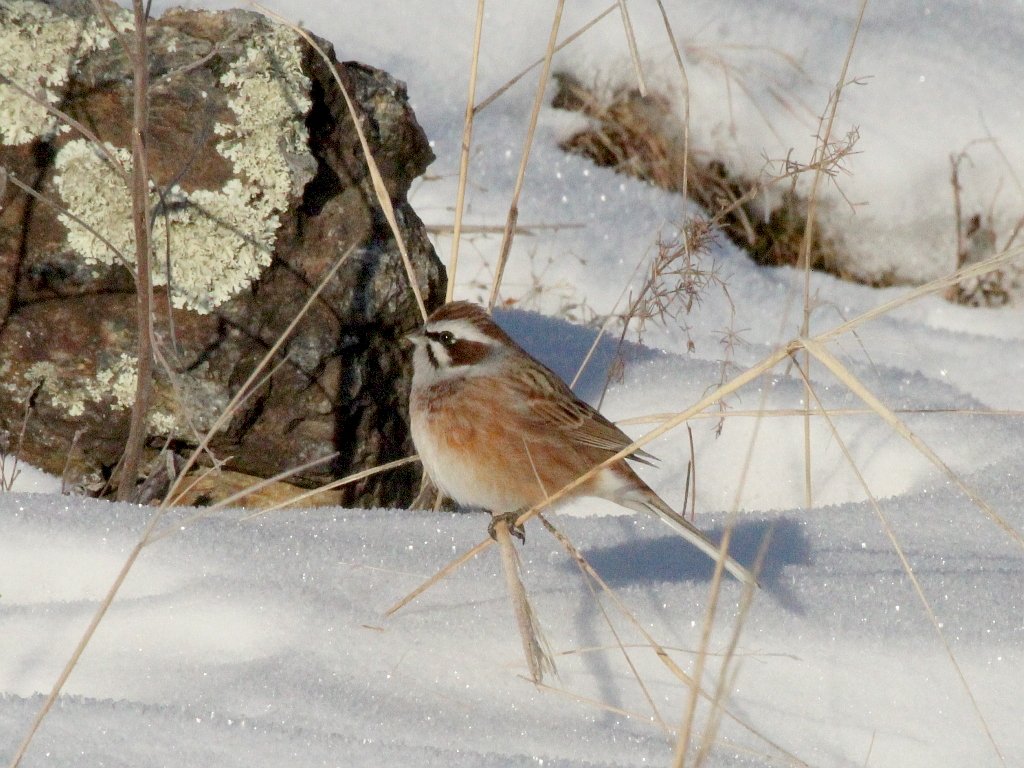
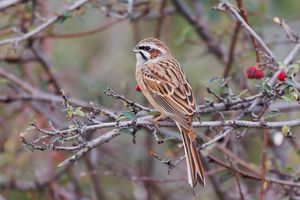
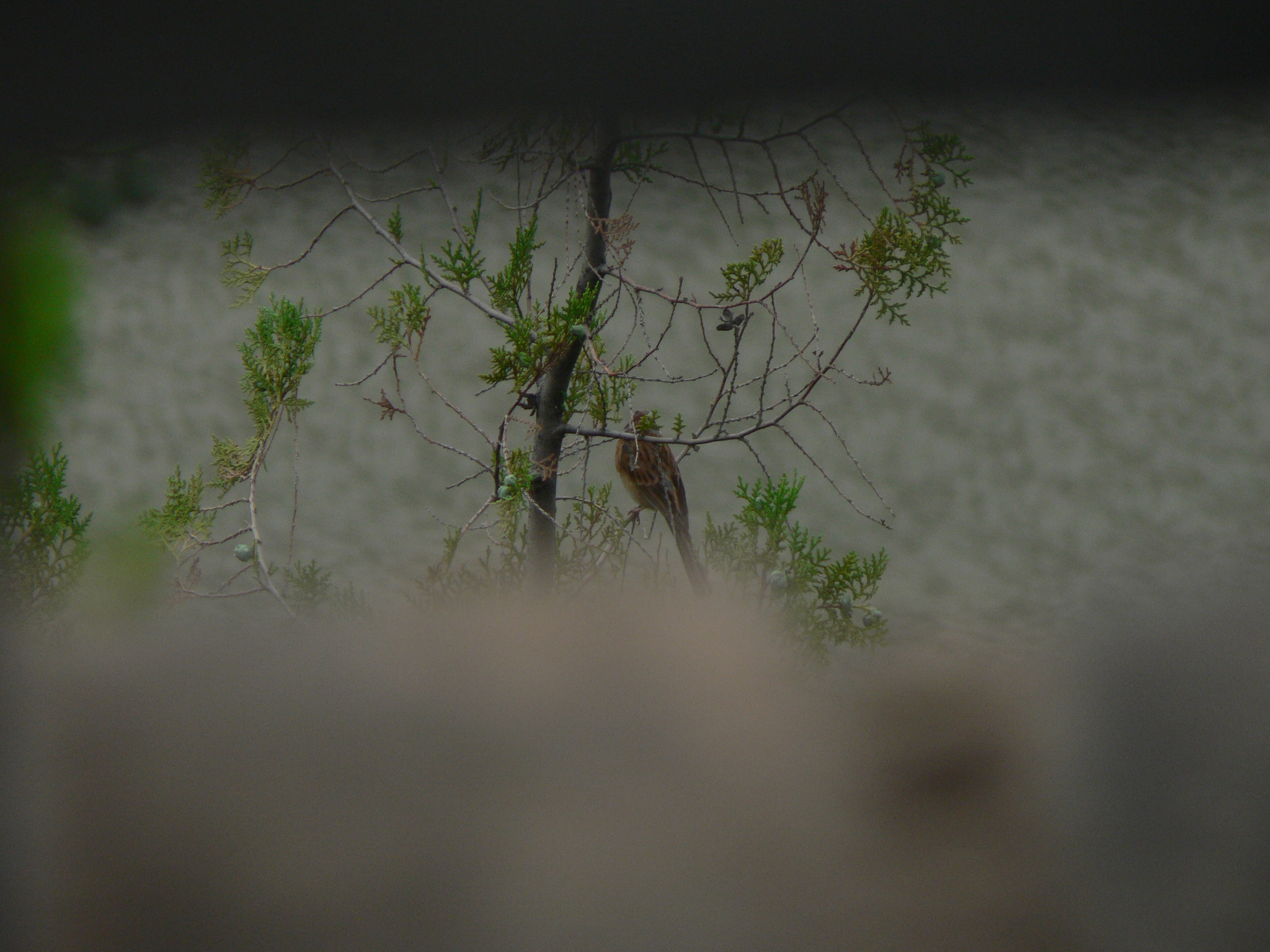
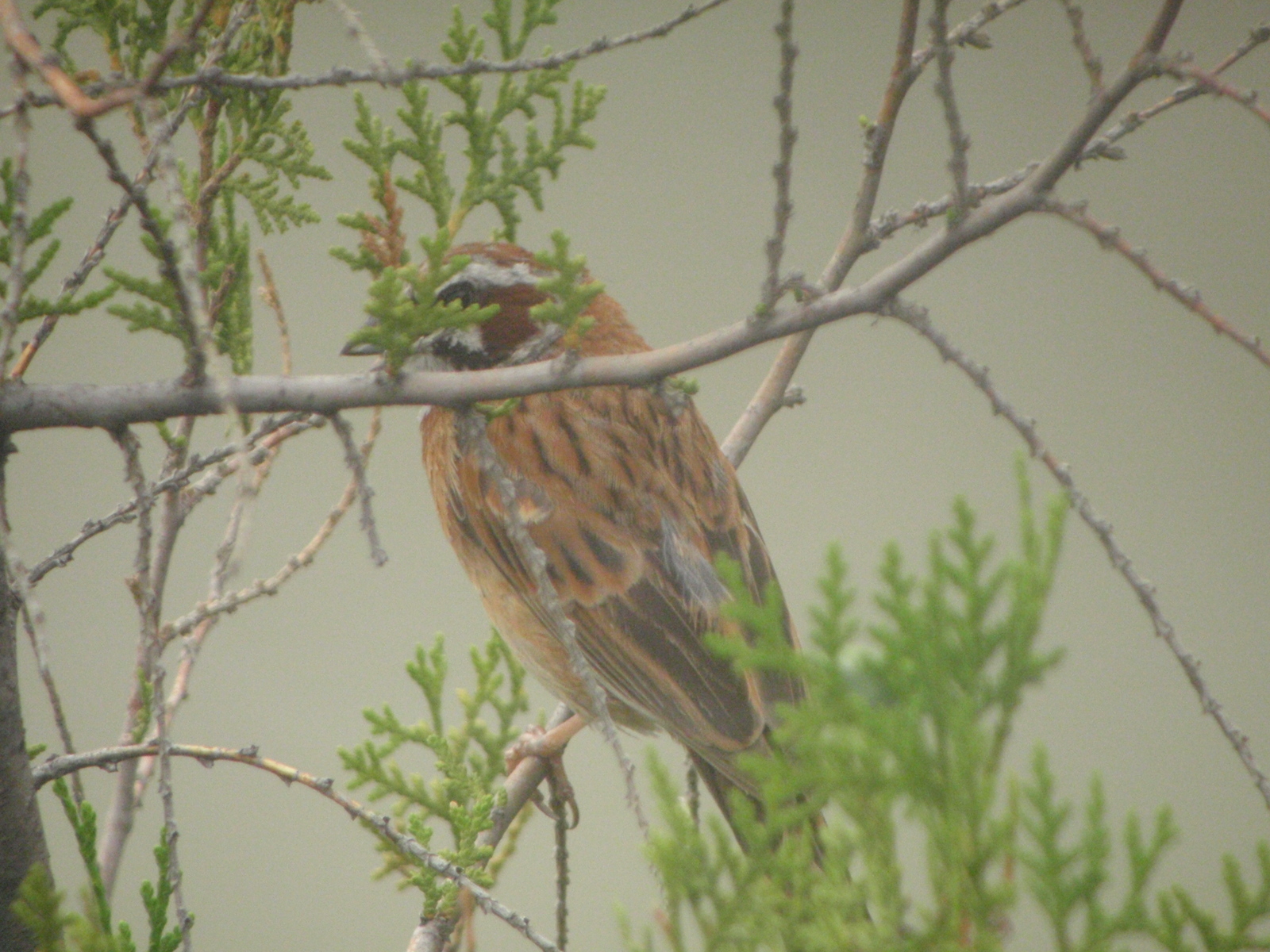
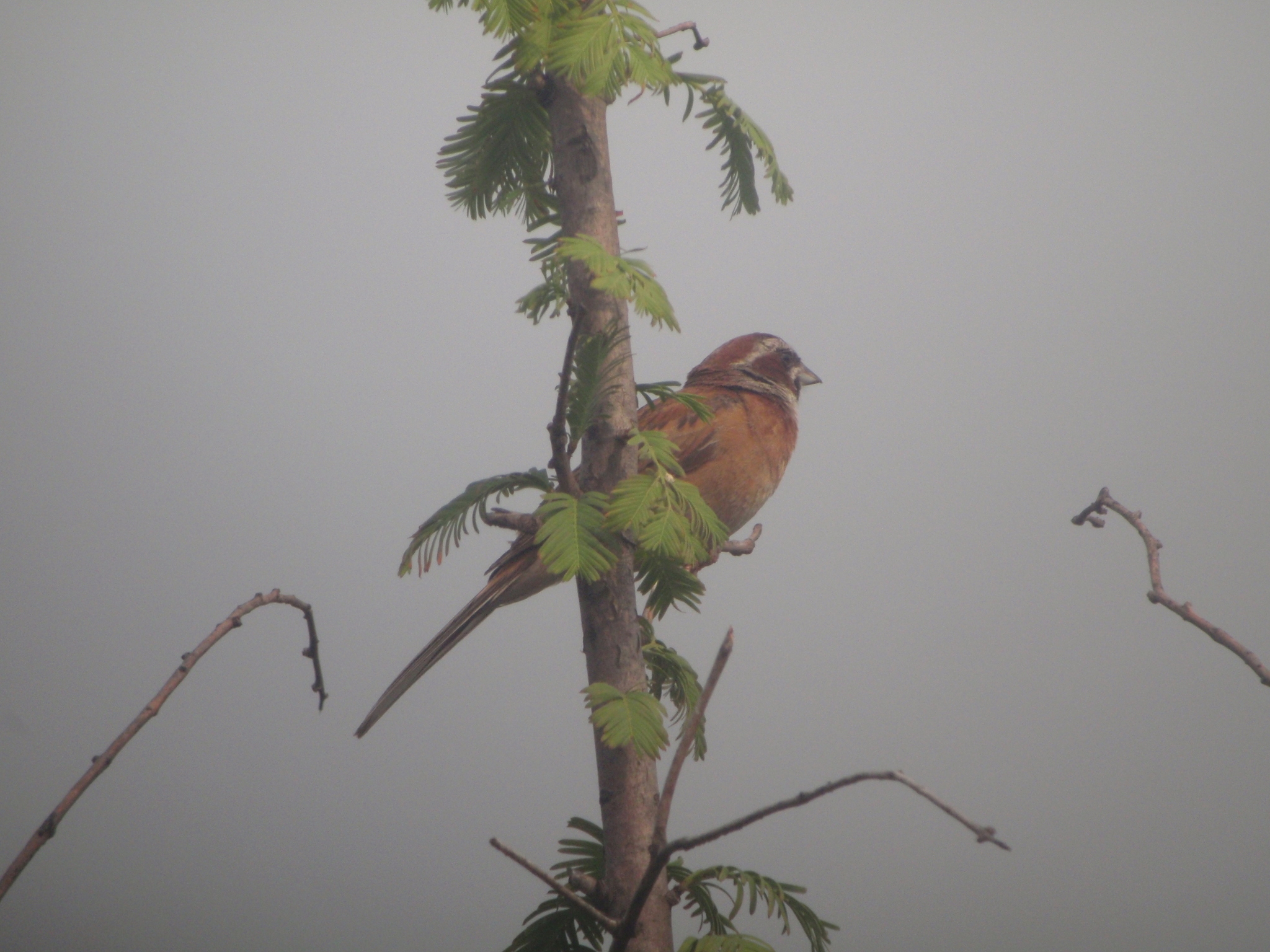
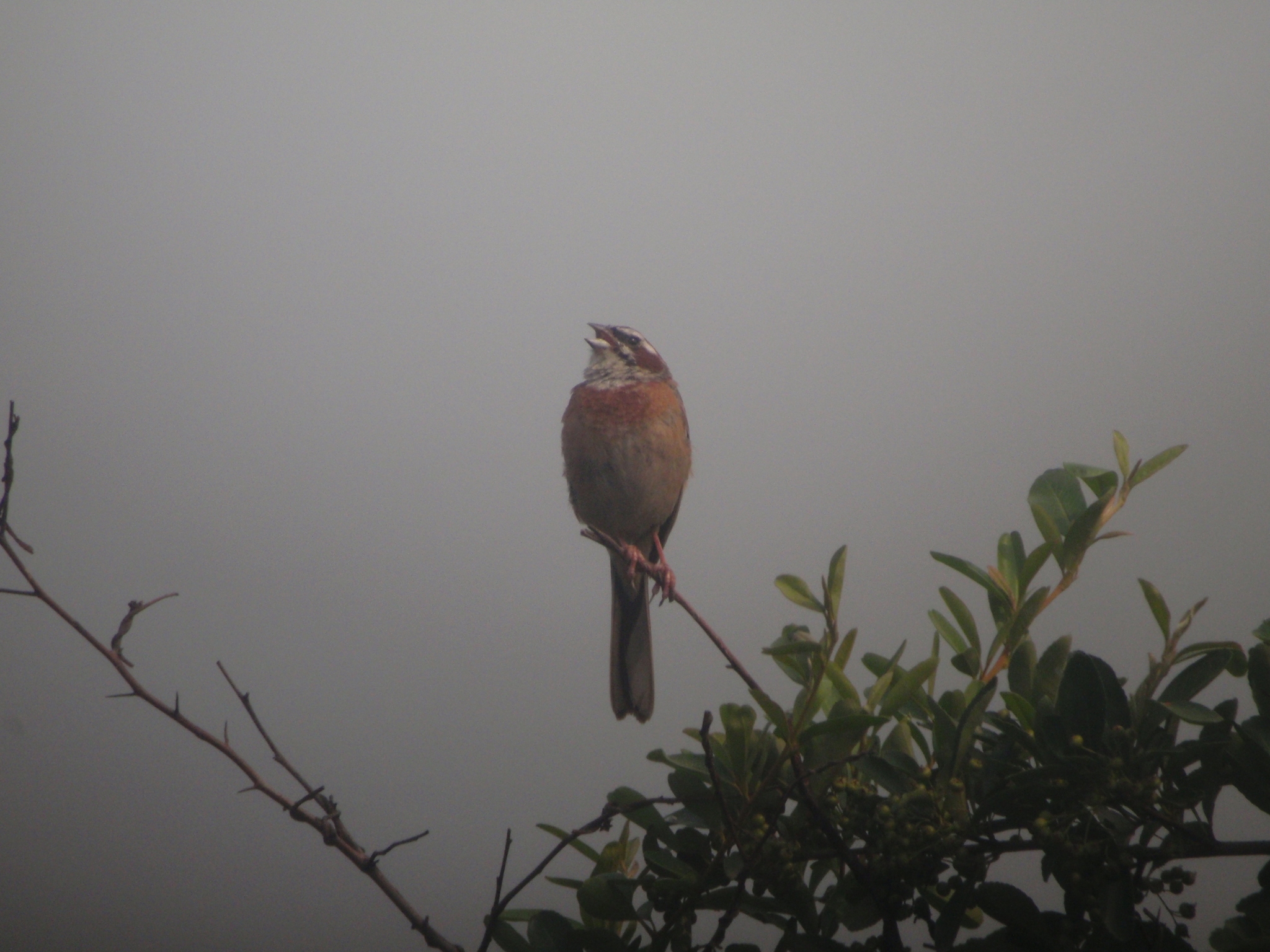
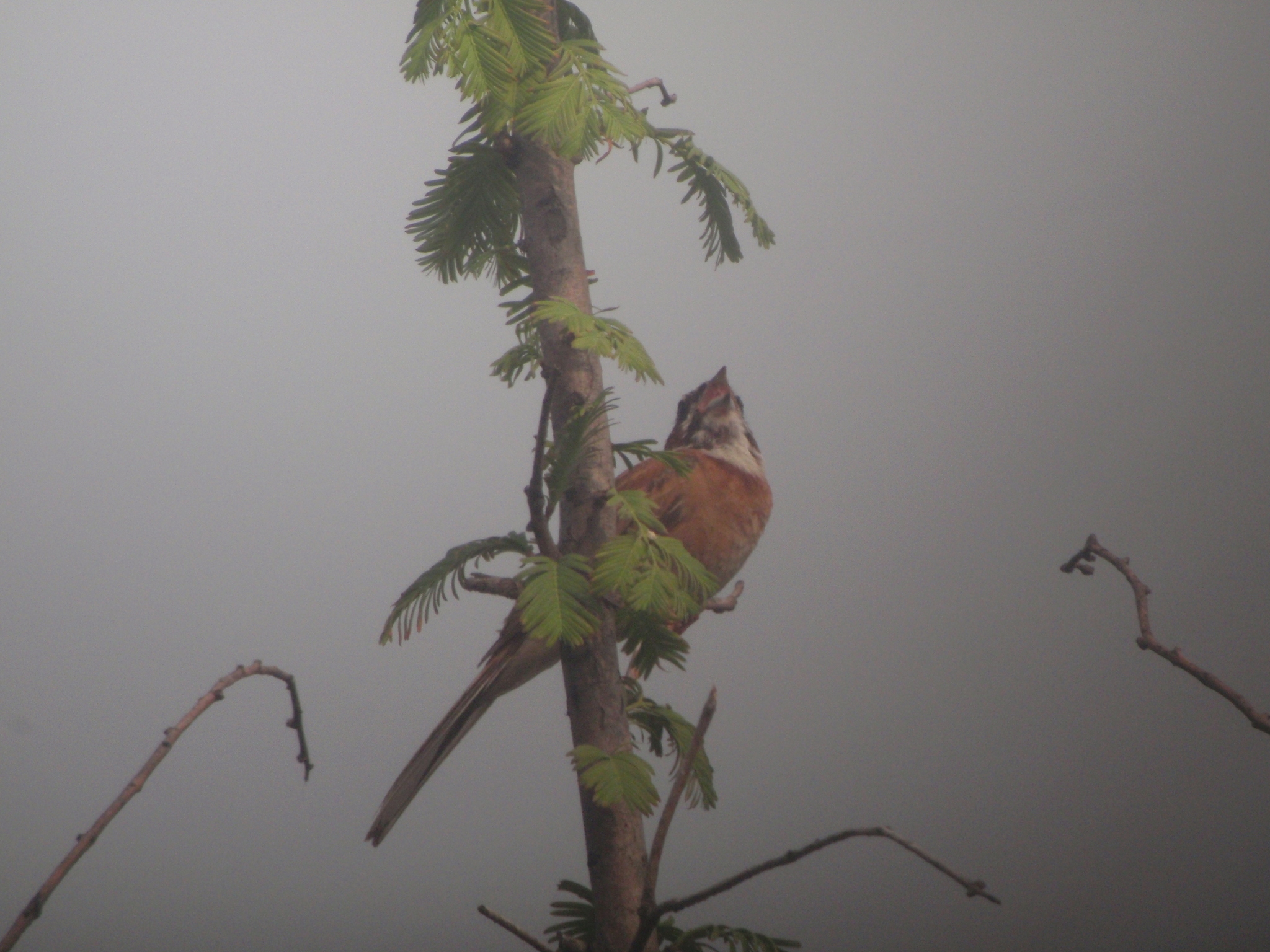
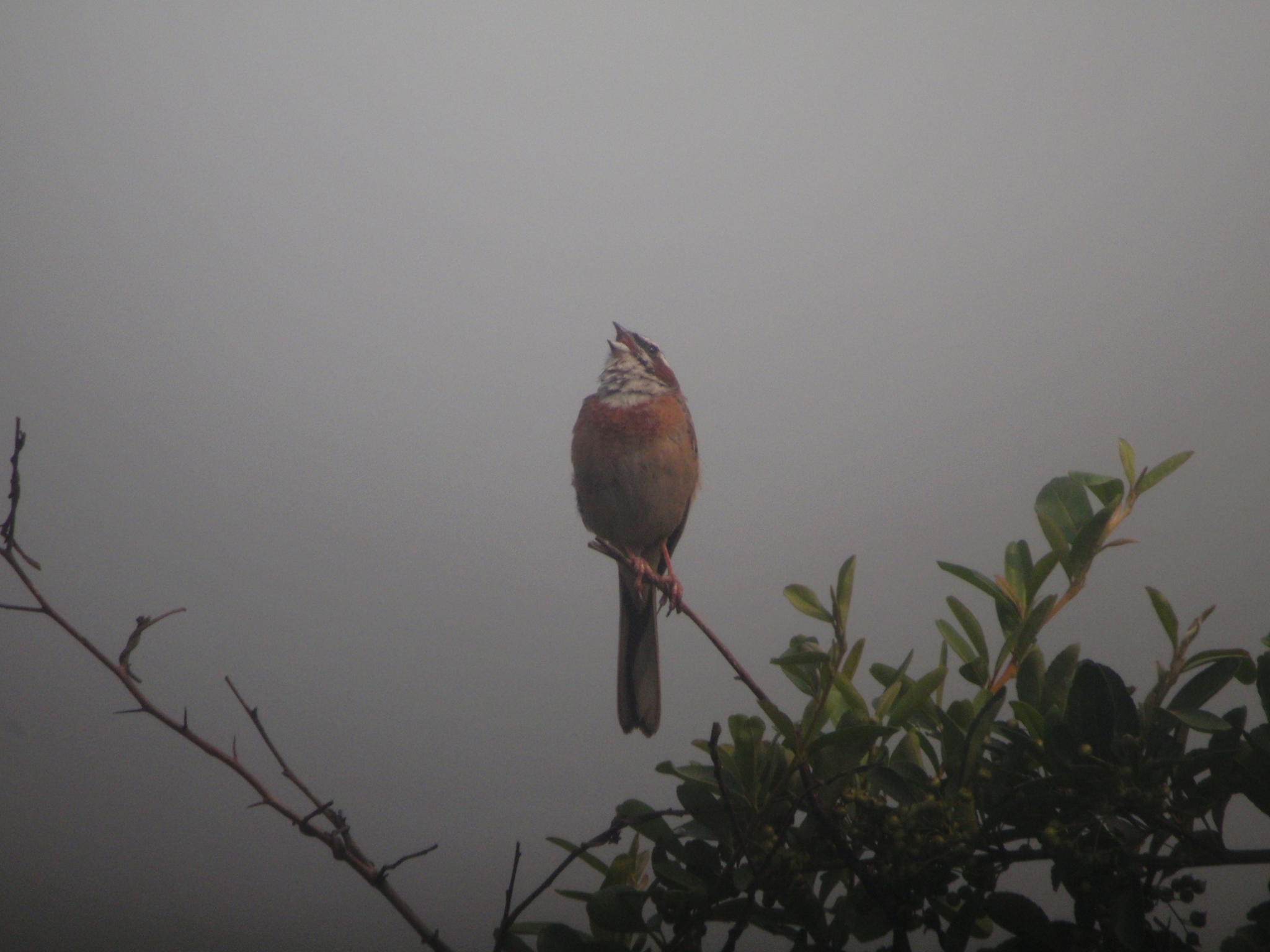
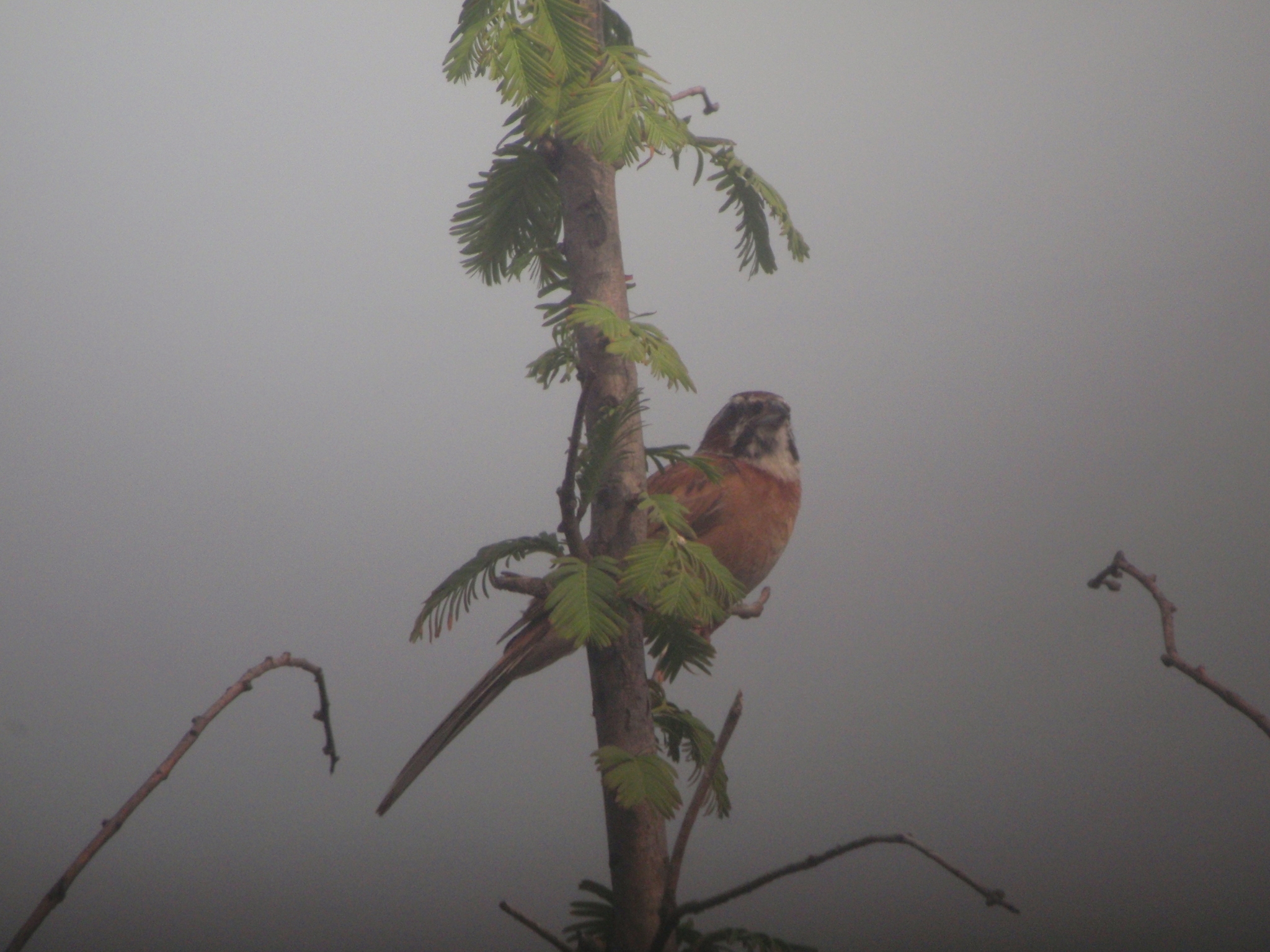
A medium-sized bunting measuring 15 to 16.5 centimeters in length. The male is richly colored in rufous-brown tones across the upperparts, with dark streaking visible on the back. Its most striking feature is the boldly patterned head in brown, accentuated by prominent white eyebrows, a moustachial stripe and a white throat. Grey markings adorn the sides of the neck. The tail feathers are notably white on the outer edges, and the legs are a distinctive pinkish-brown color. Females resemble males but appear noticeably duller and paler overall, with a much less distinctly marked head pattern that can be difficult to discern in poor lighting.
Identification
The bold head pattern with white eyebrow, moustachial stripe and throat creates a distinctive facial appearance unlike most other buntings in its range. The white outer tail feathers are visible in flight and help separate it from similar species such as the Pine Bunting and Ortolan Bunting. The pinkish-brown legs are also a useful identification feature. In the field, watch for its habit of singing from the top of bushes or small trees, where the rufous-brown upperparts and contrasting head pattern become apparent. Females are best identified by their white outer tail feathers and the faint ghost of the male's head pattern.
Distribution & Habitat
This species breeds across a wide swath of eastern Asia, including southern Siberia, northern and eastern China, eastern Kazakhstan, Kyrgyzstan, Mongolia, Korea and Japan. While it is largely non-migratory, populations in the northern parts of its range move southward during winter, reaching southern China and Taiwan. Scattered records exist from Europe, though many of these are believed to represent escaped cage birds rather than genuine vagrants. It occupies dry, open habitats including scrubland, farmland, natural grassland and open woodland with sparse tree cover.
Behavior & Ecology
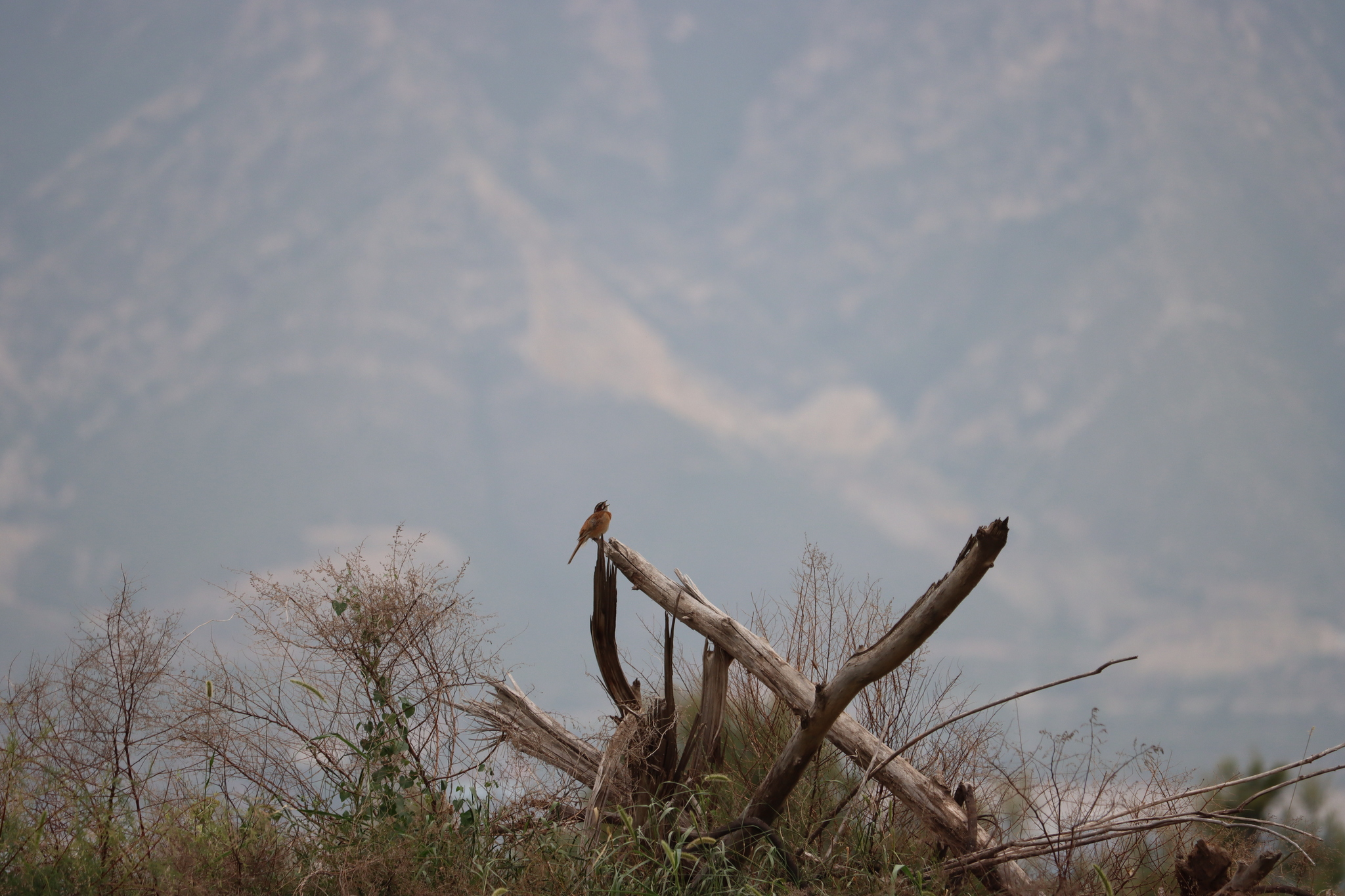
The song is a brief, hurried phrase delivered with urgency from a prominent perch such as a bush top or small tree. The call consists of a short series of up to four sharp, distinct notes. Pairs form monogamous bonds and return to the same breeding territory year after year. The nest is constructed low in bushes or directly on the ground, providing camouflage among vegetation. Clutches contain three to five eggs, incubated for approximately eleven days. The young fledge after another eleven days of parental care. Information on diet is limited but like other buntings it likely feeds on seeds and insects.
Source: Wikipedia · CC BY-SA 3.0
Taxonomy
- Order
- Passeriformes
- Family
- Emberizidae
- Genus
- Emberiza
- eBird Code
- meabun1
Vocalizations
Subspecies (5)
-
Emberiza cioides castaneiceps
southern and central Korea and eastern China
-
Emberiza cioides cioides
northwestern Altai Mountains to Transbaikalia and mountains of Mongolia
-
Emberiza cioides ciopsis
breeds southern Kuril and Japanese islands; winters from Honshu southward
-
Emberiza cioides tarbagataica
breeds mountains of central Asia; winters in northern Mongolia
-
Emberiza cioides weigoldi
eastern Transbaikalia to Manchuria, northern Liaoning, and northern Korea
Data Sources
Species description from Wikipedia, licensed under CC BY-SA 3.0.
Bird images and sounds sourced from GBIF, contributed by citizen scientists worldwide under Creative Commons licenses.
Taxonomy data from AviList 2025.