
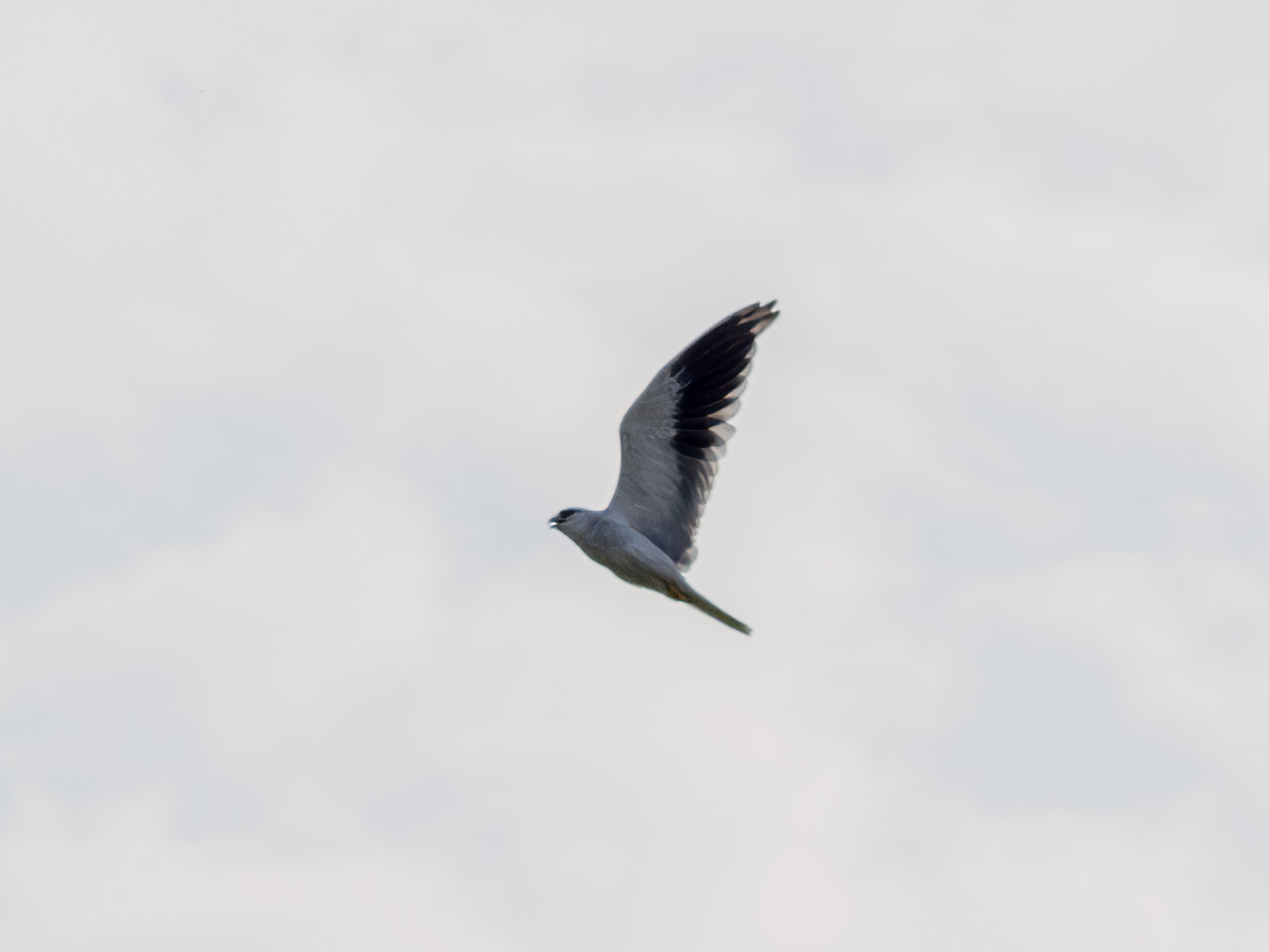
Accipitriformes / Accipitridae / Elanus
Black-winged Kite
Elanus caeruleus · 黑翅鸢
Introduction
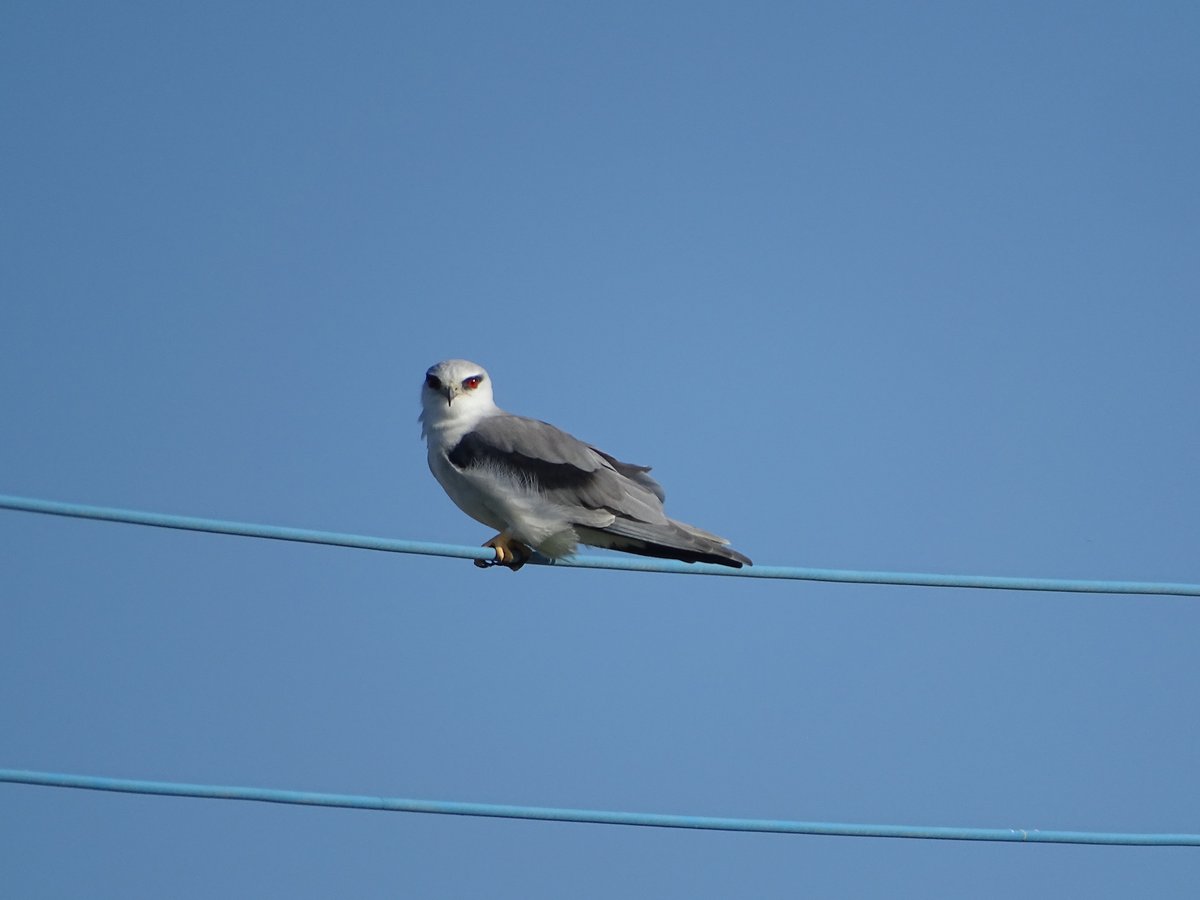
A small diurnal bird of prey in the family Accipitridae, found in the Palearctic and Afrotropical regions. It inhabits open grasslands and semi-deserts, known for hovering over fields like kestrels and having owl-like forward-facing eyes with red irises. The species is non-migratory but exhibits nomadism in response to weather and food availability.
Description
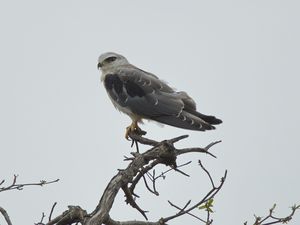
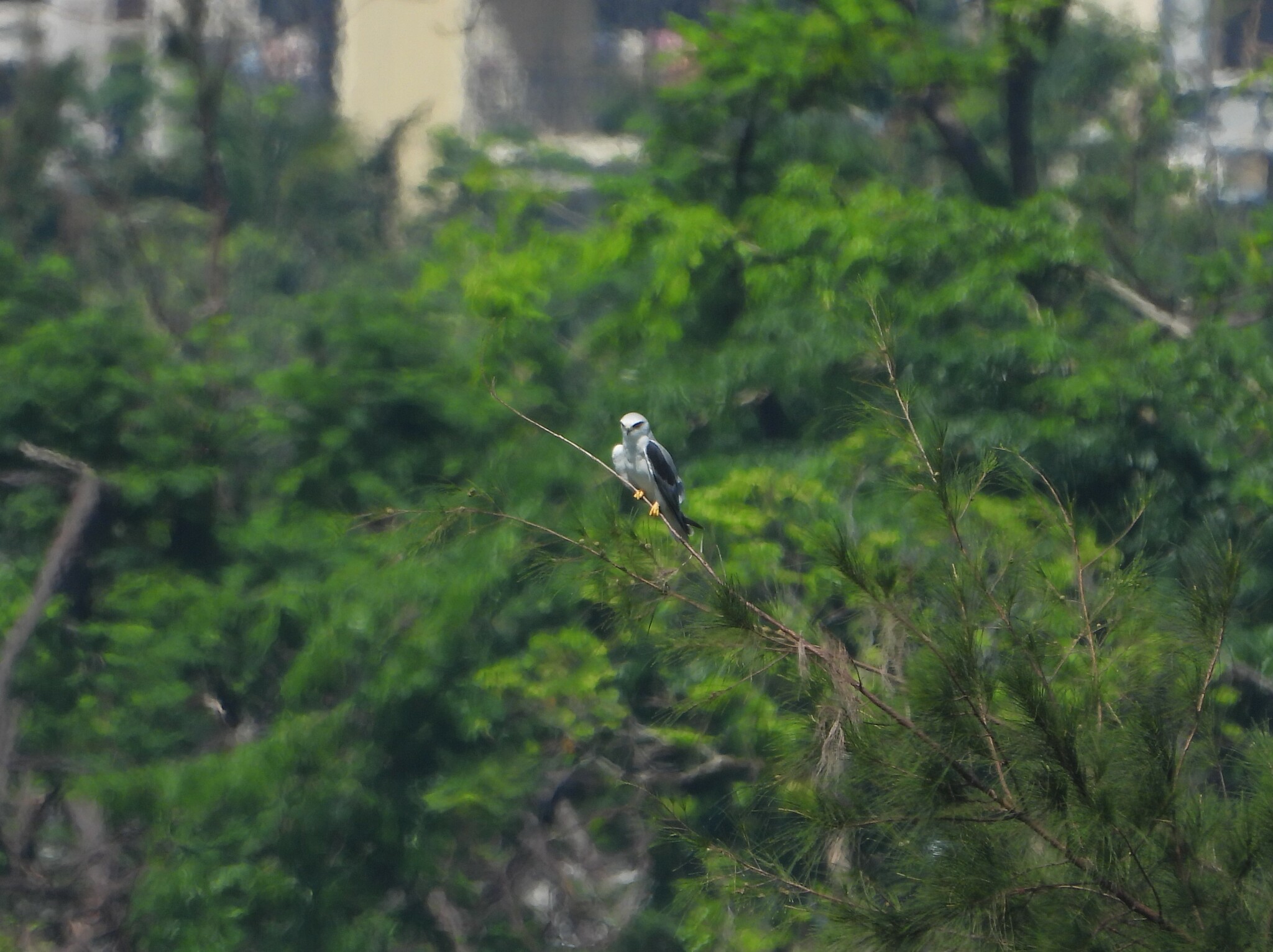
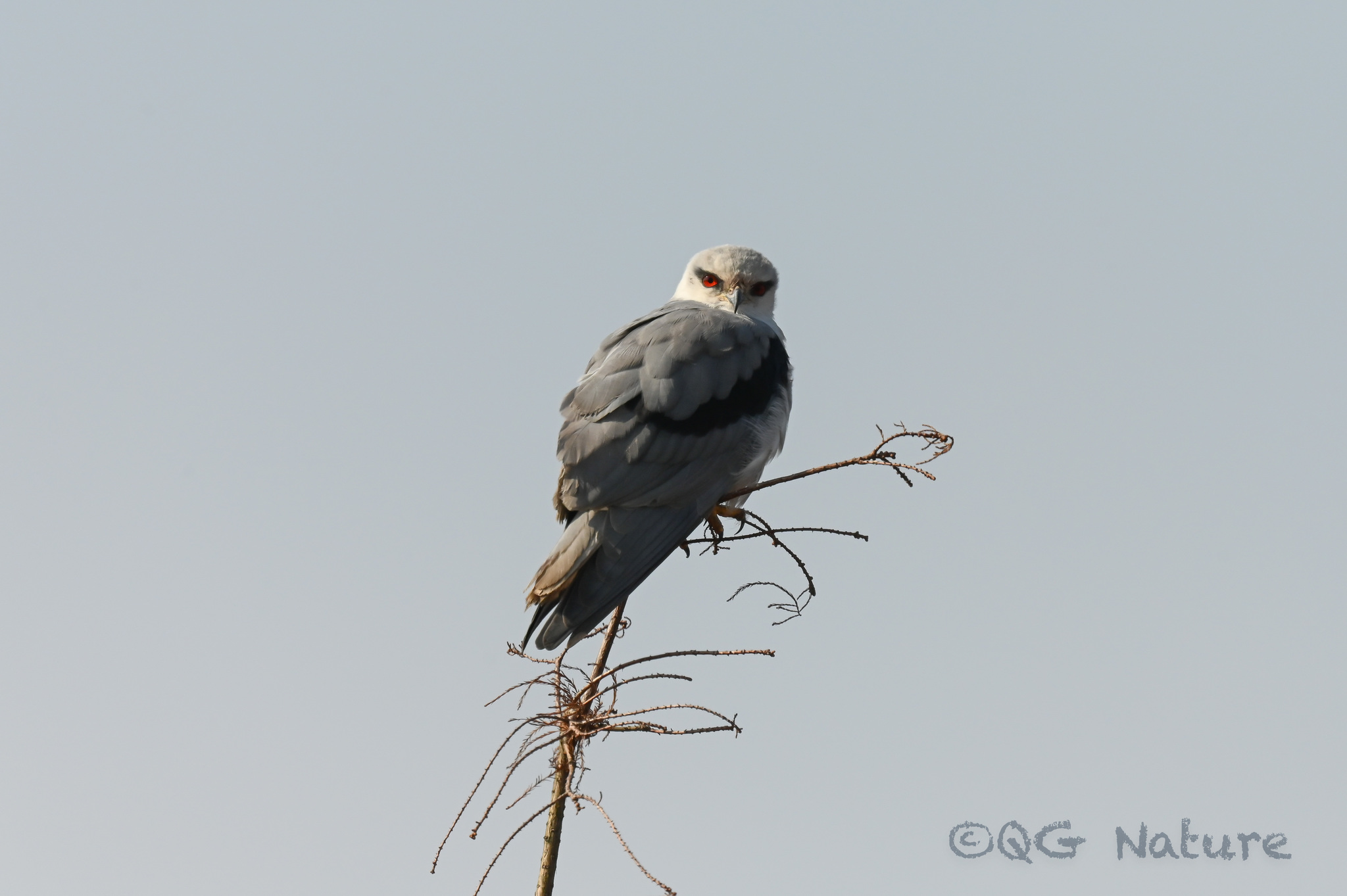
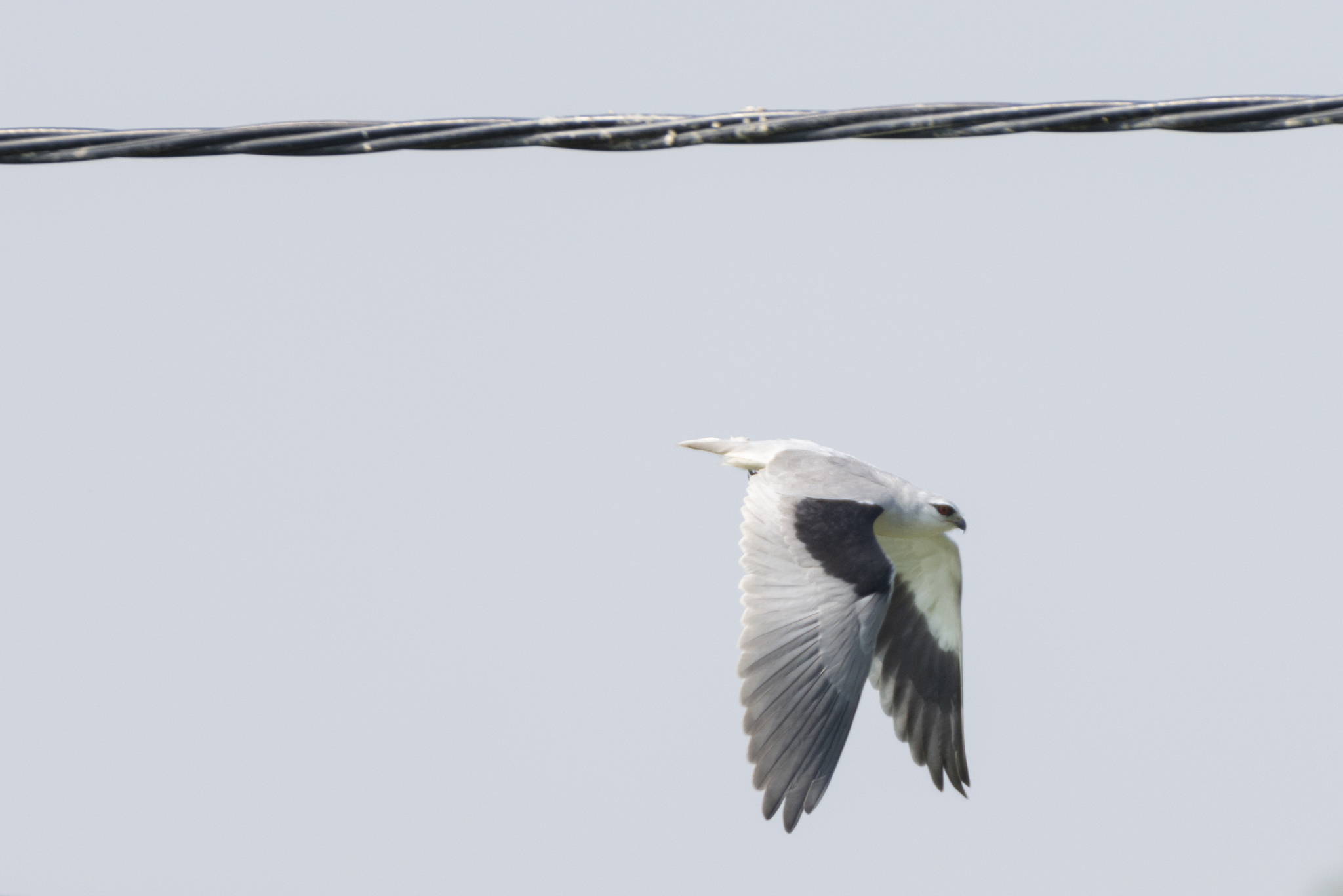
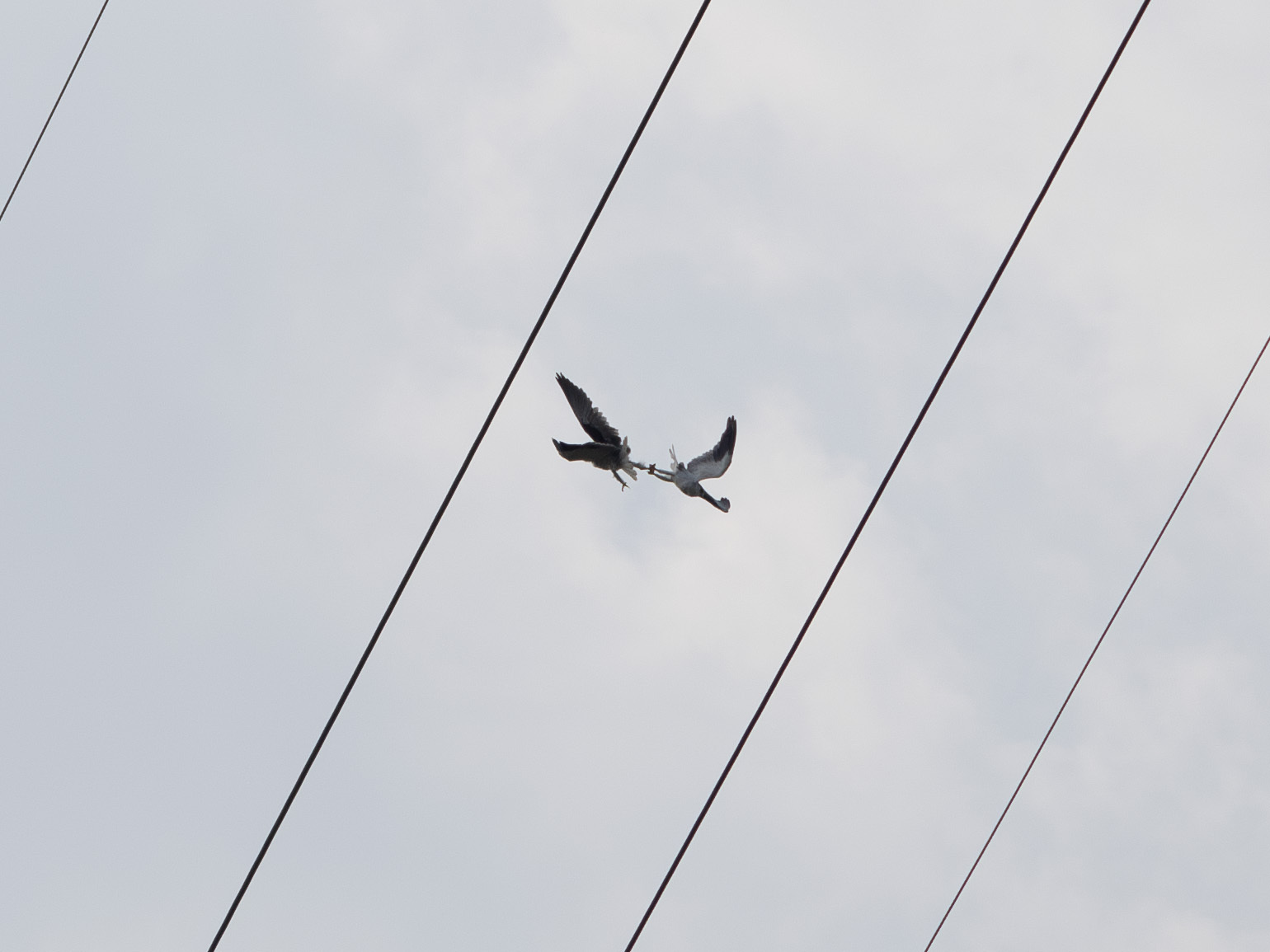
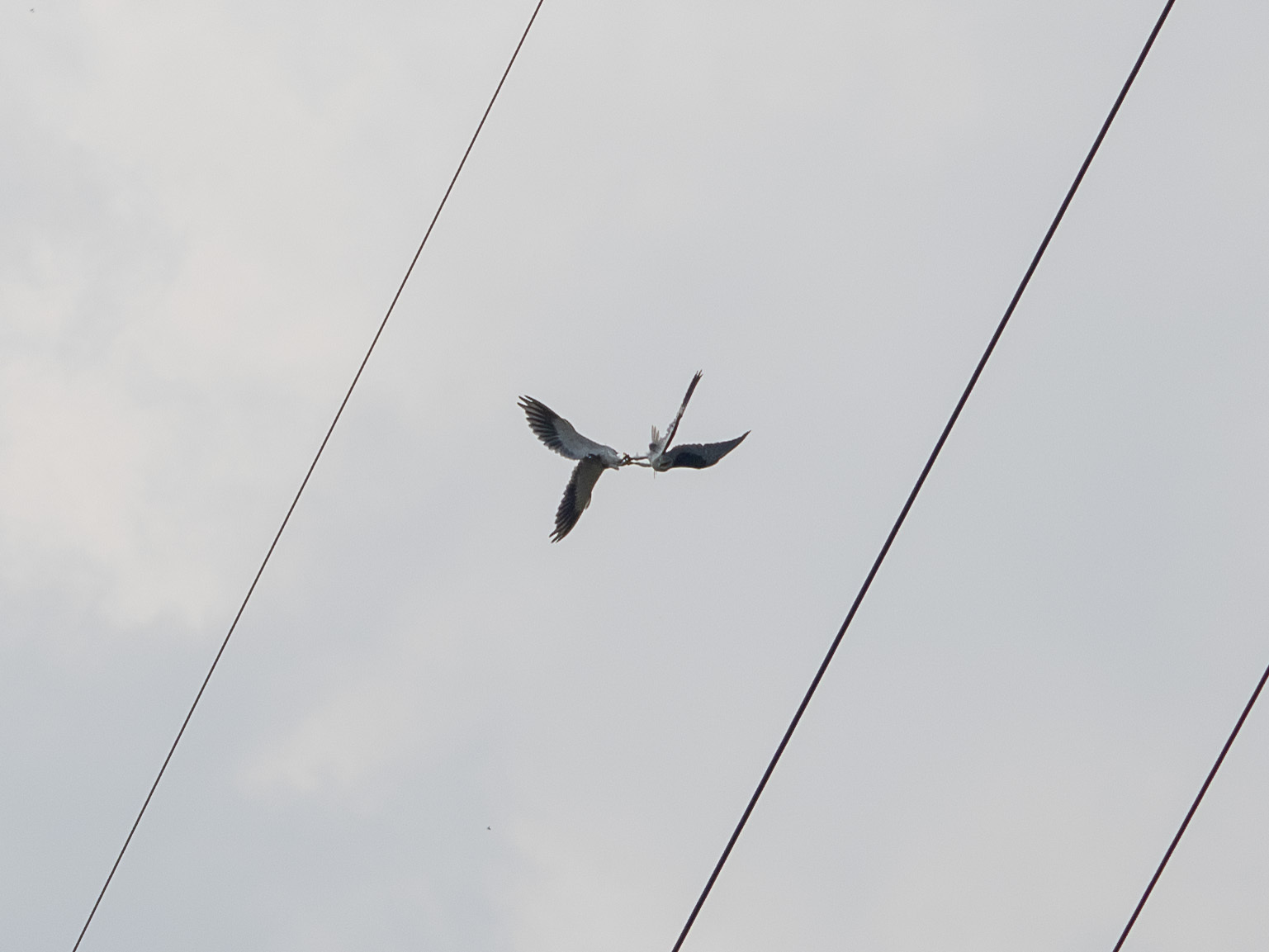
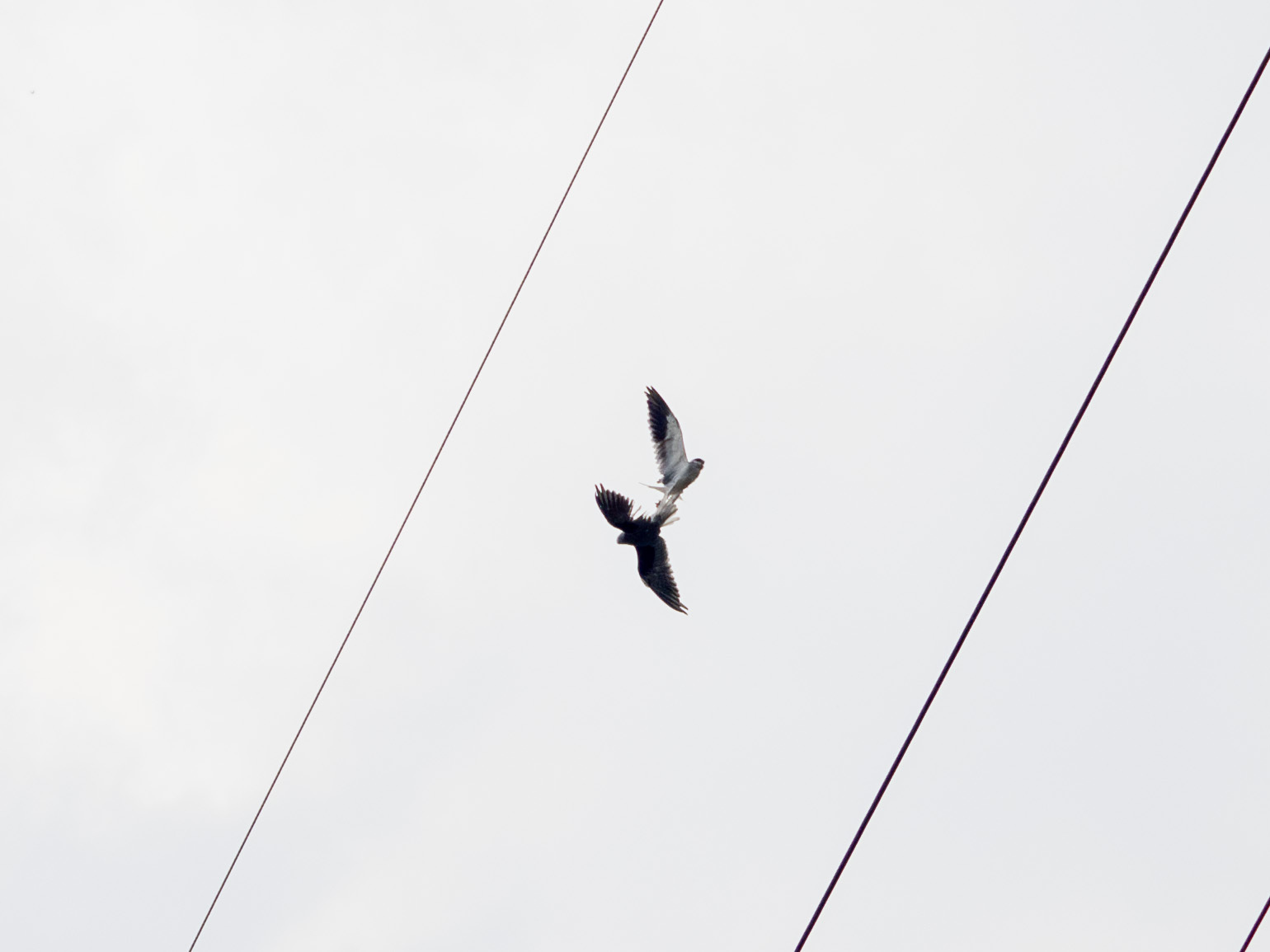
Predominantly grey or white plumage with black shoulder patches, wing tips, and an eye stripe. Long falcon-like wings extend beyond the tail when perched. In flight, the tail appears short and square, not forked. Sexes are alike in plumage. Young birds have reddish-brown feathers on the upperparts and breast. Large forward-facing eyes are placed under a bony shelf. Velvety plumage and zygodactyl feet are shared with owls.
Identification
Distinctive long wings and black shoulder patches. Hovering flight style similar to kestrels. Short, square tail visible in flight distinguishes it from typical kites of the genus Milvus. Often perches on roadside wires, adjusting wings and jerking the tail up and down. Extremely silent except for high-pitched squeals or soft whistles during breeding or at roosts.
Distribution & Habitat
Range includes sub-Saharan Africa, tropical Asia, southwest Arabia, and the Iberian Peninsula (Spain and Portugal). Populations are expanding in southern Europe and West Asia. Three subspecies: E. c. caeruleus (southwest Iberian Peninsula, Africa, southwest Arabia), E. c. vociferus (Pakistan to east China, Malay Peninsula, Indochina), and E. c. hypoleucus (Greater and Lesser Sunda Islands, Philippines, Sulawesi, New Guinea). Found mainly on plains but recorded at elevations up to 3,650 m in Sikkim.
Behavior & Ecology
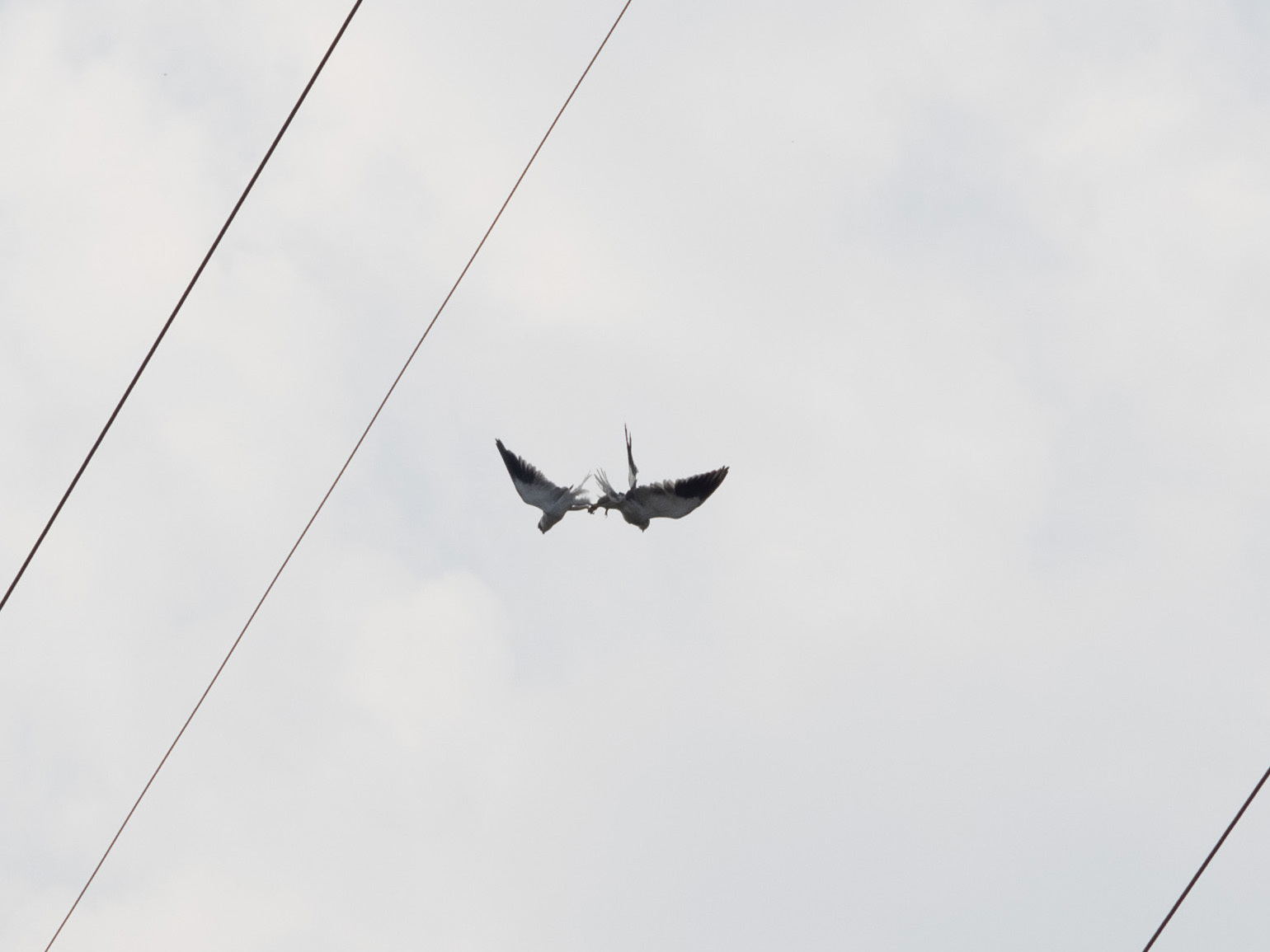
Hovers like a kestrel or flies slowly like a harrier to hunt rodents, insects, lizards, and small snakes. Opportunistic breeder capable of raising multiple broods in a single year. Nest is a loose platform of twigs; female lays 3-4 pale creamy eggs with deep red spots. Both parents incubate, but male provides most food after hatching. Young remain dependent on the male for about 80 days post-fledging. Roosts communally in groups of 15 to 35, sometimes larger in Europe. Shows irregular moult patterns; young retain feathers for a season before rapid serial moult.
Source: Wikipedia · CC BY-SA 3.0
Taxonomy
- Order
- Accipitriformes
- Family
- Accipitridae
- Genus
- Elanus
Vocalizations
Subspecies (3)
-
Elanus caeruleus caeruleus
southwestern France, Iberian Peninsula, Africa (except Sahara), and southwestern Arabia
Data Sources
Species description from Wikipedia, licensed under CC BY-SA 3.0.
Bird images and sounds sourced from GBIF, contributed by citizen scientists worldwide under Creative Commons licenses.
Taxonomy data from AviList 2025.